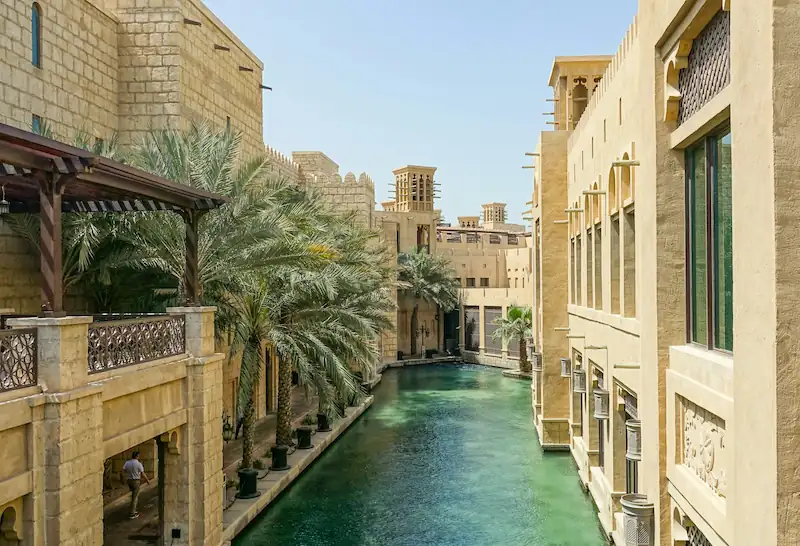
Where to stay in Dubai
Find the best neighborhoods and hotels in Dubai.
Open page →
Plan a smarter trip to Dubai by understanding how its districts, climate, transport, beaches, heritage areas, and major attractions fit together. Dubai is not one continuous city centre but a chain of distinct clusters: Downtown for architectural spectacle, the Creek for trading history, Jumeirah for beaches and cultural stops, Marina and JBR for waterfront evenings, Palm Jumeirah for resort life, and the desert for the landscape that makes the city’s scale possible. The strongest stay combines these contrasts without turning every day into a long transfer.
Find the best neighborhoods and hotels in Dubai.
Open page →
Prioritize the activities that deserve your time in Dubai.
Open page →
1 Day in Dubai: Best Itinerary
Open itinerary →
2 Days in Dubai: Best Itinerary
Open itinerary →
3 Days in Dubai: Best Itinerary
Open itinerary →
5 Days in Dubai: Best Itinerary
Open itinerary →
Dubai is a long, coastal, cluster-based metropolis rather than a compact walking city. Its defining experiences are spread between Downtown, Sheikh Zayed Road, Jumeirah, Marina–JBR, Palm Jumeirah, the Creek, and the desert edge. The city becomes much more coherent when you choose one primary base, group activities geographically, and alternate spectacle with heritage, food, waterfront time, and a genuine desert or cultural counterpoint.
Dubai is compelling because of the speed and confidence with which it brings together architecture, artificial islands, beaches, desert landscapes, migrant food cultures, Islamic and Emirati heritage, global hospitality, and future-facing institutions. The city is most rewarding when Burj Khalifa and the Museum of the Future are balanced with an abra crossing, Al Shindagha Museum, a neighborhood meal, a public beach morning, and time beyond the controlled interiors. At dusk, the contrast between desert light, glass towers, mosque silhouettes, and busy waterfronts gives Dubai a more atmospheric identity than its daytime image suggests.
Best time: November to March for the broadest outdoor freedom; late October and April can still work with early starts and indoor midday plans.
Ideal trip length: 3 full days for Downtown, old Dubai, and one beach or desert contrast; 5 days for Marina, Jumeirah, culture, and a major excursion; 7 days for resort downtime, neighborhoods, and Abu Dhabi or Hatta.
Dubai can be expensive, but costs vary more by routing and trip style than by the city alone. Hotels, beach resorts, observation decks, waterparks, fine dining, and taxis can add up quickly, while the metro, abras, public beaches, neighborhood restaurants, souks, and several waterfront walks remain accessible. Spend first on the right hotel location and the experiences that are genuinely distinctive; avoid paying repeatedly for similar views, malls, or long cross-city taxi routes.
Think in geographic clusters. Downtown and Business Bay form the landmark core; Sheikh Zayed Road links DIFC, the Museum of the Future, and the Trade Centre; Jumeirah combines beaches, the mosque, Etihad Museum, and resort dining; Marina, JBR, and Bluewaters form a separate waterfront city; Palm Jumeirah is a resort island; Al Fahidi, Al Shindagha, Bur Dubai, Deira, and the Creek create the historic trading core; Al Quoz and Alserkal provide a contemporary creative layer. Each cluster works best as a half-day or full-day sequence.
Dubai stretches southwest along the Arabian Gulf, with the desert immediately inland and Sheikh Zayed Road acting as its principal urban spine. The airport and historic Creek districts sit in the northeast; Downtown occupies the central high-rise zone; Jumeirah runs along the coast; Marina, JBR, Bluewaters, and the Palm lie much farther southwest. This elongated geography explains why the best hotel is not simply the one nearest the map’s centre.
Outdoor life is strongest early and after sunset. Mornings suit beaches, the Creek, heritage districts, and walking; afternoons move toward museums, malls, hotel pools, spas, and indoor attractions; evenings belong to fountains, promenades, rooftops, neighborhood restaurants, and the desert. Winter supports a fuller all-day rhythm, while summer compresses most exposed activity into short early or late windows.
Build the first trip around four contrasts: Downtown or another major architectural statement, old Dubai and the Creek, one coastline or waterfront zone, and the desert. Add one deeper cultural layer — Al Shindagha Museum, Jumeirah Mosque and Etihad Museum, Alserkal Avenue, or an Emirati meal — so the city feels like more than a sequence of superlatives.
Open the planner
Choose one primary hotel district and accept that Dubai is experienced through planned clusters rather than spontaneous citywide wandering. Give Downtown, old Dubai and the Creek, Jumeirah, Marina–JBR–Bluewaters, Palm Jumeirah, and the desert separate time blocks instead of linking them through repeated taxis. Start exposed activities early: beaches, Al Fahidi, Al Shindagha, souks, promenades, and nature are much easier before the strongest heat. Use the hottest part of the day for the Museum of the Future, Al Shindagha Museum, Etihad Museum, galleries, aquariums, malls, or a deliberate hotel reset. Choose one principal observation experience. Burj Khalifa explains the city’s overall scale, Dubai Frame contrasts old and new, and The View at The Palm explains the artificial coastline. Treat the desert as a true half-day or full-evening contrast and choose the operator according to whether you value adventure, conservation, privacy, or entertainment. Let food reveal the city’s population: combine one Emirati experience with neighborhood restaurants in Deira, Satwa, Karama, or Bur Dubai rather than eating only in hotels and malls. Keep seasonal attractions, resort days, waterparks, and major family venues optional unless they directly match the trip profile.
Vibe: Vertical, polished, theatrical, and highly structured.
Why go: For Burj Khalifa, Dubai Fountain, Dubai Mall, skyline dining, and the easiest first-time landmark sequence.
Who it fits: First-time visitors, short stays, architecture travelers, and business-leisure trips.
Not for: Travelers prioritizing beaches, heritage streets, or neighborhood nightlife.
Where to stay: The simplest base for a short first visit, but distinguish fountain-side Downtown from Business Bay and road-heavy outer edges.
Vibe: High-rise waterfront living with beaches and late-evening energy.
Why go: For Marina Walk, JBR, Bluewaters, beach access, boat trips, restaurants, and a self-contained night rhythm.
Who it fits: Couples, longer stays, beach-and-city trips, nightlife, and apartment-style stays.
Not for: Travelers whose itinerary focuses on the Creek, Deira, or airport-side Dubai.
Where to stay: Strong for four nights or more when beach access and evenings matter, though traffic and the exact metro or tram walk require attention.
Vibe: Engineered island luxury built around resorts, beaches, and controlled leisure.
Why go: For destination hotels, Aquaventure, private beaches, Palm West Beach, spas, and skyline views back toward the city.
Who it fits: Families, honeymooners, resort travelers, and stays where hotel time is a priority.
Not for: Travelers seeking metro access, spontaneous neighborhood exploration, or a packed first-time itinerary.
Where to stay: Best when the resort is part of the destination; Palm West Beach is more connected, while crescent hotels are more isolated.
Vibe: Lower-rise, historic, commercial, and more connected to everyday urban life.
Why go: For Al Fahidi, Al Shindagha Museum, the Creek, abras, textile streets, souks, and affordable regional food.
Who it fits: Culture-first travelers, budget-conscious stays, food travelers, and repeat visitors.
Not for: Travelers wanting resort infrastructure, private beaches, or Marina nightlife.
Where to stay: A meaningful value and heritage base when chosen carefully, especially around Al Seef, the Creek, and useful metro stations.
Vibe: Low-rise coastal Dubai with public beaches, villas, museums, mosques, and luxury resorts.
Why go: For beach mornings, Jumeirah Mosque, Etihad Museum, Madinat Jumeirah, Burj Al Arab views, and easy road access to Downtown.
Who it fits: Families, couples, beach-focused stays, and travelers wanting a calmer central coast.
Not for: Travelers relying exclusively on the metro or seeking dense nightlife outside the hotel.
Where to stay: A balanced coastal base between Downtown and resort Dubai, but the experience varies from public-beach hotels to isolated luxury compounds.
Dubai becomes most convincing when its major contrasts are placed beside one another: a record-breaking skyline and a working Creek, a future-focused museum and a heritage house, private resort beaches and public waterfront life, polished dining and migration-shaped neighborhood restaurants. These experiences define the city without trying to catalogue every attraction.
Planning tip: Choose one major anchor, one complementary district, and one evening or food sequence per day. Reserve timed icons early, but keep beaches, the Creek, neighborhood meals, and waterfront walks flexible around heat, traffic, and energy.
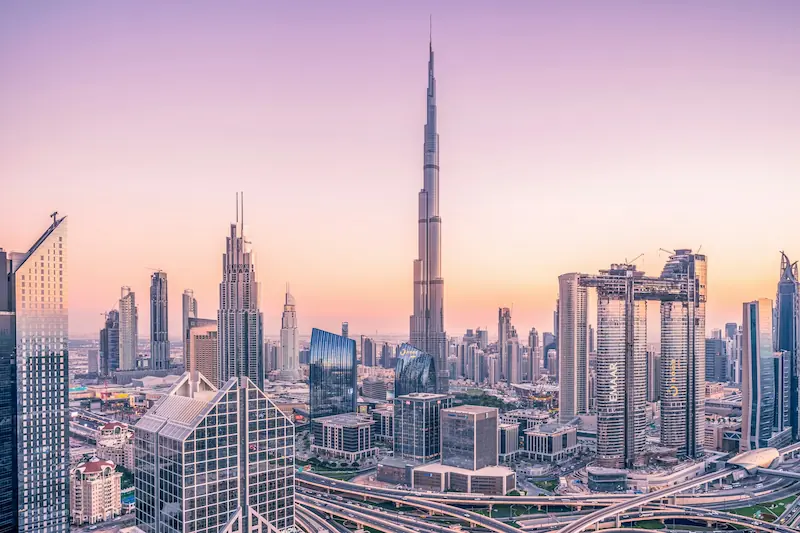
From above, the city’s geometry becomes legible — highways, islands, and towers arranged with deliberate symmetry.
Tip: Book the first time slot to avoid mid-day congestion.
Choreographed water arcs against glass towers create a calibrated urban spectacle.
Tip: Stand on the Souk Al Bahar side for slightly more space.
Check guided tours →
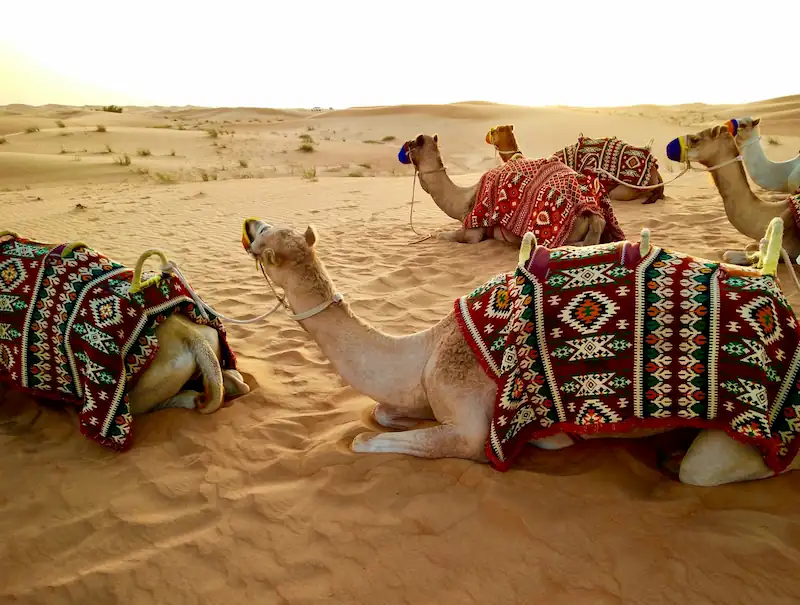
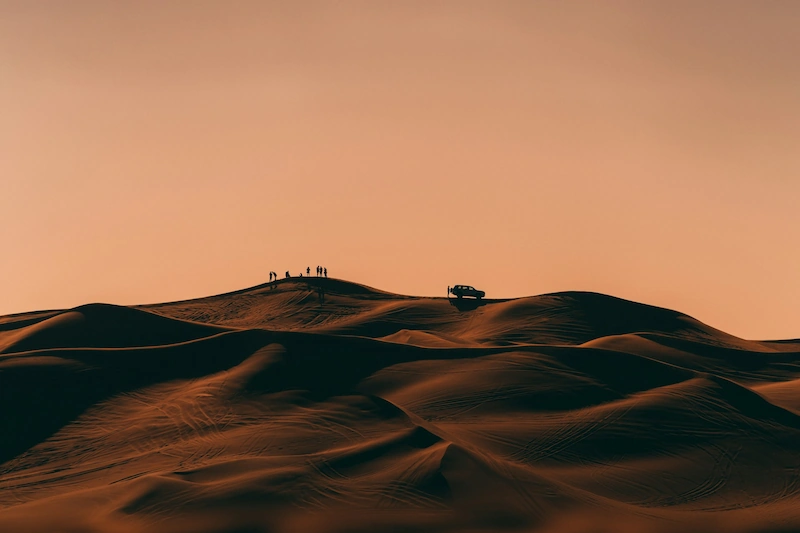
The essential contrast to Dubai’s glass geometry — open silence, shifting sand, and the horizontal scale that gives the city its desert backdrop real meaning.
Tip: Choose late-afternoon departures so the dune drive aligns with the softest light.
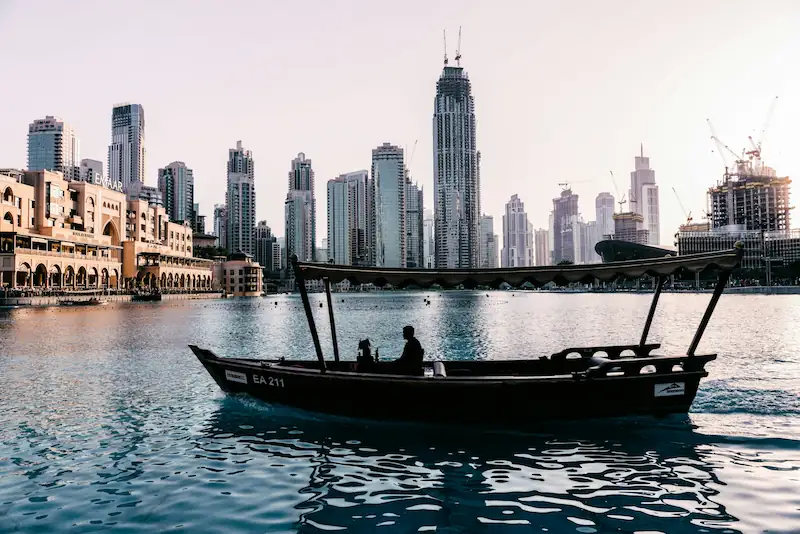
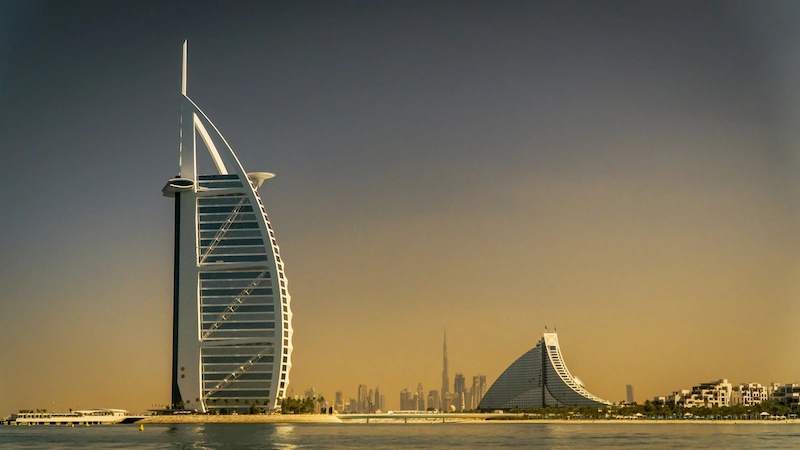
From the water, Dubai reads differently — less as a collection of landmarks and more as a continuous engineered edge of towers, beaches, and islands.
Tip: Sunset departures give the strongest balance between skyline clarity and softer temperatures.
The museum is both an architectural landmark and an immersive statement about the version of progress Dubai wants to represent, making it one of the clearest bridges between the city’s design language and its future-focused narrative.
Tip: Book a timed ticket and combine the visit with DIFC, Emirates Towers, or a Sheikh Zayed Road architecture sequence.
The Palm’s geometry is almost impossible to understand at street level. A high viewpoint turns the island from a collection of resorts into a legible piece of urban engineering and clarifies how it relates to Marina, JBR, and the Gulf.
Tip: Use the viewpoint to decide whether the rest of the Palm visit should focus on Atlantis, Palm West Beach, dining, or resort time.
A short crossing reveals the commercial roots beneath the skyline.
Tip: Carry small cash for the fare.
Old Dubai becomes fully legible here — dense commerce, bargaining, scent, and surface detail replacing the city’s polished choreography.
Tip: Go late afternoon when the light softens but the lanes still feel active.
Beyond the postcard of wind towers, the district offers the clearest spatial reading of how Dubai functioned before highways and vertical spectacle.
Tip: Pair it with the Creek crossing so the historical logic of the area feels continuous.
Al Shindagha gives old Dubai far more depth than a quick walk through Al Fahidi alone, connecting the Creek, maritime trade, ruling history, Emirati family life, and perfume traditions across restored historic houses.
Tip: Allow enough time for selected houses rather than trying to rush every exhibition, then continue by the Creek or toward Al Fahidi.
The mosque visit introduces Islamic belief and Emirati social customs, while Etihad Museum explains the creation of the UAE and the political context behind the modern city. Together they add substance to a Jumeirah beach or coastal day.
Tip: Check the current guided-visit schedule and dress guidance before building the day around the mosque.
Alserkal Avenue reveals a creative city that exists beyond landmark architecture, bringing together contemporary galleries, design, independent cinema, performance, and cafés inside Al Quoz’s industrial fabric.
Tip: Check exhibitions and screenings before visiting because the strength of the experience depends on what is active that day.
Check guided tours →
High-rise living compresses into a single shared walkway where evening air softens the heat.
Tip: Arrive after 7pm for comfortable temperatures.
This is one of the clearest examples of Dubai’s real evening rhythm — public-facing, social, climate-aware, and built around movement once the heat drops.
Tip: Come after dinner rather than at sunset if you want the full local evening flow.
A morning beach session is one of the city’s simplest real-life patterns — short, strategic, and timed around climate rather than all-day leisure.
Tip: Go early and leave by late morning unless it is deep winter.
Check guided tours →
Satwa and Karama show how Dubai functions for many of the people who live and work here, through dense restaurant choices, small shops, tailoring, groceries, sweets, and a street rhythm largely absent from resort and mall districts.
Tip: Go with a specific meal or shopping objective and use the neighborhood as an evening sequence rather than as a conventional sightseeing stop.
Check guided tours →
The canal offers a quieter urban-waterfront experience than Marina or Downtown, connecting walking, bridges, residential towers, and skyline fragments without requiring another paid attraction.
Tip: Choose a defined section and finish near a meal or hotel; the full canal is longer and less continuous than a quick glance at the map suggests.
Check guided tours →
Modern Emirati restaurants translate local ingredients, spice profiles, seafood, rice dishes, dates, and hospitality traditions into a more deliberate dining experience, helping visitors recognize a cuisine that can otherwise disappear inside Dubai’s international restaurant scene.
Tip: Choose the meal for its Emirati perspective rather than only for a luxury setting.
Old Dubai and the Creek districts offer Lebanese, Iraqi, Iranian, Yemeni, Syrian, Afghan, and other regional food traditions alongside simple grills and shared mezze. The value comes from the city’s trading and migration history rather than from a single universal local menu.
Tip: Look beyond tourist-facing Creek terraces and choose a busy dining room with a clear regional specialty.
Dinner in the desert can be atmospheric when the operator protects space, darkness, and landscape. The quality varies widely, from intimate conservation-led meals to large entertainment camps, so choose according to the experience you actually want.
Tip: Compare group size, camp style, food format, wildlife or conservation content, and the intensity of dune driving before booking.
Check food options →
An Emirati breakfast introduces sweet-and-savory combinations, breads, eggs, dates, tea, and hospitality rituals in a format that fits naturally before Al Fahidi, Al Shindagha, or a Jumeirah cultural day.
Tip: Ask about unfamiliar dishes and share several plates rather than ordering only the most recognizable option.
Indian, Pakistani, Bangladeshi, Filipino, Iranian, Afghan, and Arab restaurants are central to how Dubai actually eats. A meal in Deira, Karama, Satwa, or Bur Dubai often explains the city’s population and working life more clearly than another destination restaurant.
Tip: Choose a specific cuisine or dish and travel for that meal rather than expecting one street to summarize the whole food scene.
Dubai expands quickly when every observation deck, mall, beach, resort, and large attraction is treated as essential. A stronger first trip establishes the city’s architecture, historic Creek, coastline, food, and desert before adding specialist experiences.
Dubai is one of the easiest large cities to structure with children because hotels, malls, aquariums, waterparks, wildlife attractions, beaches, theme parks, and indoor venues are built around practical family use. The challenge is not a lack of options but overloading the trip. Choose one major family anchor per day, protect pool or rest time, and use evenings for promenades, fountains, Global Village, or simple meals.
Choose the duration according to how much contrast you want. Three days delivers the architecture, Creek, and one major outdoor layer; five days makes room for the desert, beaches, culture, and a more natural evening rhythm; seven days supports resort time, neighborhoods, and a major UAE excursion without turning the trip into constant transit.
Open the planner →
Dubai is operationally easy but geographically demanding. The trip improves when hotel location, climate, transport, dress, reservations, and the legal or cultural context are treated as part of the itinerary rather than as background details.
November to March is the strongest general period because beaches, heritage districts, desert outings, outdoor dining, and waterfront walks can all work comfortably. October and April remain viable with earlier starts and indoor afternoons. Summer often brings lower hotel prices and excellent indoor facilities, but the experience becomes far more dependent on cars, air conditioning, pools, malls, and late-night movement.
Three full days allows a coherent first trip built around Downtown, old Dubai and the Creek, plus one coastline or desert contrast. Five days is the more satisfying baseline for Marina or Jumeirah, cultural institutions, food, and a desert outing. Seven days makes resort time or a full Abu Dhabi or Hatta excursion practical.
Downtown is the simplest short-stay landmark base; Marina suits beach-and-evening trips; Palm Jumeirah is for resort-led travel; Jumeirah Beach balances coast and central road access; Al Fahidi and Bur Dubai suit heritage and value. Verify the exact building, metro or tram walk, road access, beach arrangements, and evening environment because broad district names can conceal very different practical locations.
Dubai International Airport is the main arrival point and is closest to Deira, Bur Dubai, the Creek, and the northern city. Downtown is usually straightforward to reach, while Marina and Palm Jumeirah require a much longer transfer. Some travelers also use Al Maktoum International Airport, which is closer to Dubai South and the southwest but less convenient for most classic sightseeing bases. Confirm the airport code before planning transfers.
The Dubai Metro is the best structural option along the airport–Bur Dubai–Trade Centre–Downtown–Marina corridor, with the tram supporting Marina and JBR. Taxis and ride-hailing remain necessary for Jumeirah beaches, many Palm resorts, Alserkal Avenue, parts of old Dubai, and outer attractions. Abras are both practical and experiential on the Creek. Walking is useful inside selected clusters, but heat, road crossings, internal mall distances, and last-mile gaps make Dubai cluster-walkable rather than continuously walkable.
Dubai is generally safe, highly serviced, and equipped with strong healthcare and emergency infrastructure. Heat, dehydration, sun exposure, sea conditions, desert driving, and fatigue are the main practical risks for most visitors. Local laws are enforced seriously: respect rules around alcohol, public behavior, photography, medication, drones, dress in religious or government settings, and driving. Travel insurance remains useful for healthcare, disruption, and adventure activities.
Dubai operates throughout the year, but climate changes the nature of the trip. Cooler months support the complete city: beaches, Creek walks, desert outings, terraces, waterfronts, seasonal gardens, and evening venues. Summer supports a different trip built around resorts, pools, museums, malls, indoor attractions, business, and late movement. Prices, school holidays, religious calendars, major events, and seasonal attraction dates should be considered alongside temperature.
The strongest all-round period for a first trip, with the most reliable conditions for old Dubai, beaches, the desert, Marina walks, public spaces, outdoor dining, and seasonal attractions. Demand and hotel prices are highest, particularly around holidays and major events.
Useful shoulder months for travelers comfortable with warmer days. Outdoor plans work best early and late, while museums, pools, malls, and longer meals protect the middle of the day. Hotel value may improve compared with peak winter.
A heat-led version of Dubai built around resorts, waterparks, museums, malls, indoor attractions, spas, and late evenings. Outdoor heritage walks, beaches, and desert activities require careful timing, and some seasonal venues close. It can suit budget-conscious hotel stays or travelers prioritizing indoor comfort.
Ramadan, Eid periods, New Year, school holidays, exhibitions, concerts, and major sporting or business events can change restaurant hours, traffic, hotel demand, alcohol service, entertainment, and the atmosphere of public spaces. Check the calendar once dates are fixed.
These answers cover the decisions that most strongly shape a Dubai trip: how long to stay, where to base yourself, what to prioritize, how to manage the climate, and which skyline, cultural, desert, beach, and family experiences deserve time.
Three full days covers Downtown, old Dubai and the Creek, plus one desert, beach, or Marina contrast. Five days is a stronger first trip because it adds Jumeirah, culture, food, and a calmer pace. Seven days supports resort time and Abu Dhabi or Hatta.
Prioritize one Downtown skyline experience, Al Fahidi and Al Shindagha, Dubai Creek and an abra crossing, the Deira souks, one beach or waterfront district, and the desert. Add the Museum of the Future, Jumeirah Mosque, Etihad Museum, or Alserkal according to your interests.
Downtown is the easiest base for a short landmark-focused visit. Marina works better for beach access and evening life, Palm Jumeirah for resort travel, Jumeirah Beach for a calmer coast, and Al Fahidi or Bur Dubai for heritage and value.
Dubai is walkable within selected clusters such as Downtown, Marina, JBR, Al Fahidi, parts of the Creek, and some waterfronts. It is not continuously walkable between districts. Metro, tram, taxis, ride-hailing, and geographic planning are essential.
November to March is best for a complete outdoor-and-indoor trip. October and April can work with heat-aware planning. Summer is better suited to resorts, pools, malls, museums, waterparks, indoor attractions, and late evenings.
Yes on a first trip if a skyline viewpoint matters. Choose a clear daytime slot for geography or a late-afternoon slot for changing light. It becomes less essential when you already have a strong rooftop or prefer Dubai Frame or The View at The Palm.
Choose Burj Khalifa for the overall city and desert scale, Dubai Frame for the contrast between older and newer Dubai, The View at The Palm for artificial-island geography, and Sky Views for a more adventure-oriented skyline experience. Most short trips need only one.
It is particularly worthwhile for architecture, design, technology, and families with children interested in immersive exhibits. The building is a major experience in itself. Book a timed ticket because popular dates and hours can fill.
Start with Al Fahidi or Al Shindagha Museum, continue along the Creek, cross by abra, and finish in Deira’s trading streets and souks. Add a regional or South Asian meal so the area feels like a living commercial district rather than a heritage photo stop.
Yes if you want to understand Dubai beyond the skyline. Its restored houses cover the Creek, maritime trade, ruling history, Emirati life, and perfume traditions. It provides more depth than a quick walk through Al Fahidi alone.
Jumeirah Mosque is known for organized cultural visits open to people of different faiths. Check the current schedule, arrive in respectful clothing, and follow guidance on access, photography, and behavior.
The strongest choices include Al Shindagha Museum for Dubai and Creek history, Etihad Museum for the formation of the UAE, Jumeirah Mosque for cultural understanding, Museum of the Future for future-facing Dubai, and Alserkal Avenue for contemporary art.
Yes when the desert experience matches your priorities. Compare dune-driving intensity, group size, wildlife or conservation content, camp style, food, entertainment, and pickup duration. A smaller or conservation-led option often provides a stronger landscape experience.
Kite Beach suits active mornings and Burj Al Arab views, JBR combines beach and restaurants, Palm West Beach provides a polished promenade, and resort beaches offer facilities and privacy. Public and resort beaches should be chosen according to access, atmosphere, and budget.
Yes when you choose a clear purpose: The View at The Palm, Atlantis or Aquaventure, Palm West Beach, a destination meal, or a beach club. Simply driving the island is unlikely to explain its scale or justify the travel time.
Walk Al Fahidi, the Creek, Dubai Marina, JBR, Kite Beach, the Water Canal, Palm West Beach, or selected public areas of Madinat Jumeirah and Expo City. Abra rides and souk browsing add high value for very little cost.
Downtown and the fountain area, Marina and JBR, Bluewaters, Madinat Jumeirah, Palm West Beach, Global Village in season, rooftops, shows, and desert dinners are strong choices. Outdoor areas usually become more comfortable and social after sunset.
Use the Museum of the Future, Al Shindagha Museum, Etihad Museum, Alserkal galleries, Dubai Aquarium, The Green Planet, AYA Universe, Ski Dubai, malls, spas, waterparks, or indoor shows. Avoid forcing exposed beaches, souks, and desert plans into unsafe weather.
Yes. Resorts, pools, beaches, aquariums, waterparks, wildlife attractions, theme parks, malls, and indoor venues make logistics easy. The key is selecting by age and energy, keeping one major anchor per day, and confirming hotel room capacity and child policies.
Book high-demand Burj Khalifa times, the Museum of the Future, quality desert experiences, waterparks, popular shows, some Palm viewpoints, major family attractions, and day trips when timing matters. Beaches, the Creek, souks, and neighborhood meals can stay flexible.
Try an Emirati breakfast or meal with dishes such as balaleet, regag, machboos, and luqaimat, then explore the city’s Lebanese, Iranian, Iraqi, Yemeni, Indian, Pakistani, Afghan, Filipino, and other migration-shaped food traditions.
No. Those are major parts of its identity, but the city also includes the Creek, maritime and trading history, Emirati traditions, Islamic culture, contemporary art, migrant neighborhoods, public beaches, desert reserves, and a highly diverse food scene.
The biggest mistakes are underestimating distance and heat, choosing the wrong hotel area, stacking similar viewpoints, spending unplanned hours inside malls, rushing old Dubai, eating only in hotels, and selecting attractions or desert tours by price alone.
A day trip makes most sense on stays of five days or more. Abu Dhabi adds the strongest civic and architectural contrast, Hatta adds mountains and outdoor activity, Sharjah adds museums and heritage, and Ras Al Khaimah or Musandam suit longer adventure-led trips.
Respect rules around alcohol, drugs and controlled medication, public behavior, photography, drones, driving, and religious sites. Dress expectations are relaxed in many visitor areas but more conservative clothing is appropriate in mosques, heritage settings, government buildings, and during religious periods.
Dubai feels most complete when its architecture and resorts are balanced with the Creek, Emirati culture, neighborhood food, public waterfront life, and the desert.
Find the best places to stay, how to get there, and move around with ease.
Build a smarter trip base
Once you understand how Dubai works and what matters most for your trip, the next step is turning that direction into a real itinerary. Use the planner to organize your days around the right areas, experiences, and rhythm so the trip feels clear before you go.