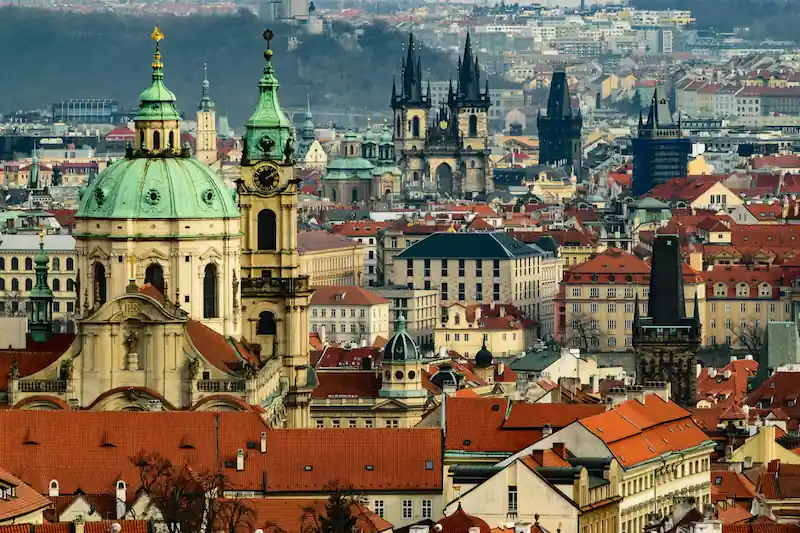
Where to stay in Prague
Find the best neighborhoods and hotels in Prague.
Open page →
Plan a trip to Prague that moves beyond the postcard route. This guide explains how the city fits together, where to stay, which experiences deserve priority, and how to combine Prague Castle, Charles Bridge, Old Town, Josefov, Malá Strana, parks, museums, food, beer, and local neighborhoods without turning the visit into a crowded checklist.
Find the best neighborhoods and hotels in Prague.
Open page →
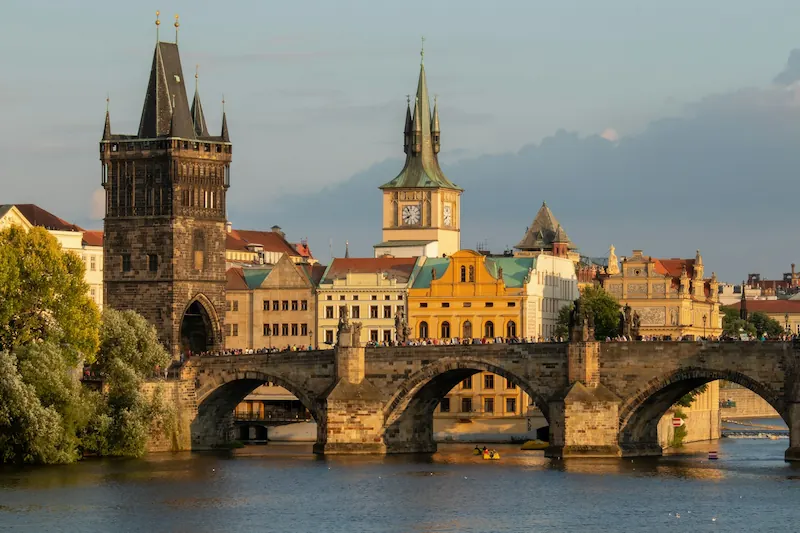
Prioritize the activities that deserve your time in Prague.
Open page →
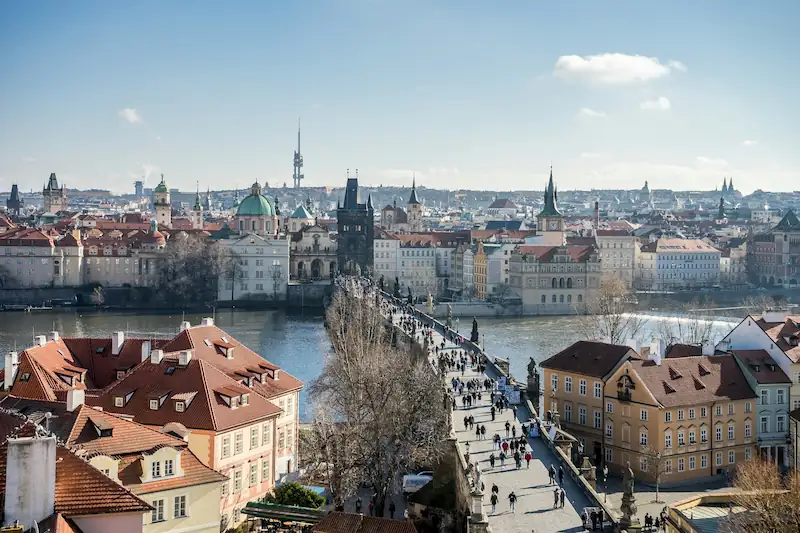
2 Days in Prague: Best Itinerary
Open itinerary →
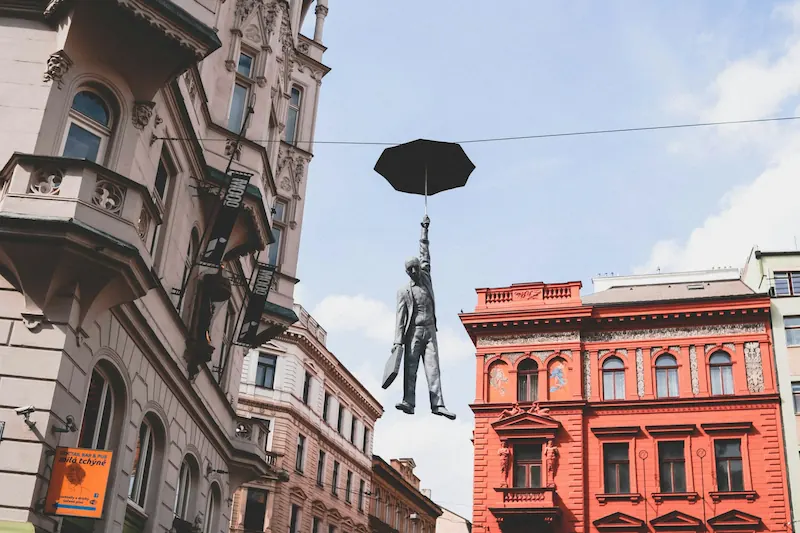
3 Days in Prague: Best Itinerary
Open itinerary →
4 Days in Prague: Best Itinerary
Open itinerary →
Prague is a compact river city built in visible layers: the Castle and Hradčany above the west bank, Malá Strana beneath them, Old Town and Josefov on the east bank, New Town’s boulevards farther south, and tram-connected residential districts beyond the historic core. Its greatest strength is concentration; its main challenge is crowd compression around a few famous routes.
Prague combines an unusually complete historic skyline with deep cultural contrast. Gothic cathedrals, Baroque palaces, Jewish heritage, Cubist architecture, modern political history, riverside parks, beer halls, concert venues, and residential neighborhoods all sit within a relatively small urban area. The city rewards visitors who use the famous center for orientation, then widen the trip through gardens, museums, viewpoints, performances, and districts such as Vinohrady, Holešovice, Karlín, and Žižkov.
Best time: April–June and September–October for comfortable walking, gardens, and long cultural days; December for festive atmosphere.
Ideal trip length: Three full days cover the essential city; four to five days allow local districts, Prague Zoo, deeper museums, or one day trip.
Prague remains good value compared with many major Western European capitals, but prices vary sharply by street and season. Old Town and Malá Strana carry the highest accommodation and restaurant premiums, especially during spring weekends, summer, Easter, and December. Public transport is inexpensive, while the largest budget differences come from hotel location, guided visits, concerts, river cruises, and dining directly beside major landmarks.
Prague’s visitor geography starts with the Vltava. Old Town, Josefov, New Town, the main railway station, and most metro connections sit on the east bank. Malá Strana, Kampa, Petřín, Hradčany, and Prague Castle occupy the west bank and higher ground. Beyond them, trams and metro lines connect residential and cultural districts such as Vinohrady, Žižkov, Karlín, Letná, Holešovice, and Troja.
The river provides Prague’s clearest orientation line, while the Castle ridge and Petřín create the main vertical layer. Old Town is compact and mostly flat, but Malá Strana and Hradčany introduce steep streets, steps, and long ascents. Letná and Vítkov offer elevated views from the east and north, while Vyšehrad opens the city farther south.
Early morning belongs to Charles Bridge, Old Town Square, riverside approaches, and Castle viewpoints. Late morning and afternoon are better used for interiors, museums, gardens, cafés, Josefov, or districts outside the most congested core. Evenings divide between illuminated river walks, performances, breweries, historic pubs, and neighborhood dining.
Think of Prague as five connected layers: the Castle ridge; Malá Strana and Kampa below it; Old Town and Josefov across the river; New Town’s museums, passages, and modern history; and the tram-connected local city of Vinohrady, Žižkov, Karlín, Letná, and Holešovice. A strong first trip touches each layer without trying to exhaust every church, museum, or tower.
Open the planner
Begin with Old Town and the river to understand Prague’s central geography before committing to longer hill routes. Protect a separate half day for Prague Castle, Hradčany, and either Strahov or Malá Strana; combining everything west of the river into one rushed block weakens the experience. Visit Charles Bridge, Old Town Square, and exposed viewpoints early or later in the day, then use peak hours for Josefov, museums, libraries, cafés, gardens, or lunch. Choose viewpoints by purpose: Old Town Hall Tower for orientation, Letná for the bridges, Petřín for green space, Vyšehrad for quieter river views, and Žižkov Tower for modern Prague. Use one serious cultural anchor each day, such as Josefov, the Klementinum, the National Museum, the National Technical Museum, the National Gallery, DOX, or a performance. Give at least one meal and one evening to Vinohrady, Karlín, Žižkov, Letná, or Holešovice so the trip is not confined to tourist-facing streets. With children, place Prague Zoo, Petřín, the National Technical Museum, boats, parks, and trams ahead of long sequences of historic interiors. Leave one flexible weather block for gardens, parks, towers, and river activities.
Vibe: Historic, central, theatrical, and intensely walkable.
Why go: Old Town is Prague’s most efficient first-visit base, placing Old Town Square, the Astronomical Clock, the Klementinum, Charles Bridge, Josefov, Municipal House, Cubist landmarks, and the Vltava within easy walking distance.
Who it fits: First-time visitors, two- or three-night stays, landmark-focused trips, and travelers who want to walk almost everywhere.
Not for: Travelers seeking quiet nights, consistently strong restaurant value, larger rooms, or a residential atmosphere.
Where to stay: Choose it for short-trip efficiency, but favor quieter side streets or the edges toward Republic Square, Josefov, or the river.
Vibe: Romantic, hilly, historic, and quieter after daytime visitors leave.
Why go: Malá Strana connects Charles Bridge, Kampa, St. Nicholas Church, Wallenstein Garden, Petřín, embassy streets, and the Castle climb. It becomes especially appealing after day visitors leave and the west-bank lanes grow quieter.
Who it fits: Couples, luxury and boutique stays, architecture lovers, repeat visitors, and travelers prioritizing atmosphere.
Not for: Travelers with limited mobility, very tight budgets, heavy luggage, strollers, or a strong nightlife priority.
Where to stay: Prague’s most atmospheric historic base, with hills and cobbles as the main trade-off.
Vibe: Practical, central, urban, and more functional than romantic.
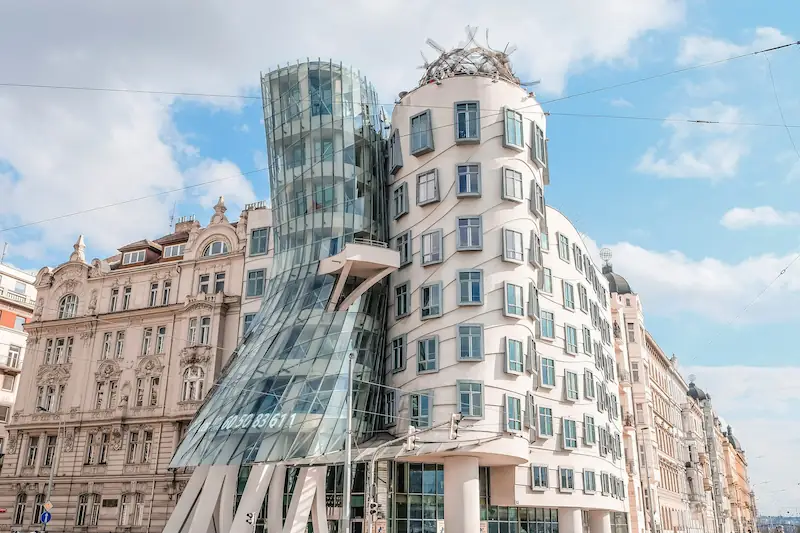
Why go: New Town offers the broadest central hotel choice and easy access to Wenceslas Square, the National Museum, State Opera, historic passages, Dancing House, Náplavka, the main station, and the edges of Old Town and Vinohrady.
Who it fits: Families, rail travelers, day-trip planners, value-conscious visitors, business-leisure stays, and travelers wanting larger hotels.
Not for: Travelers who want intimate medieval streets or a consistently quiet residential environment.
Where to stay: The strongest practical central base when transport, room choice, and value matter more than historic immersion.
Vibe: Residential, polished, café-led, and easygoing.
Why go: Vinohrady combines leafy streets, neighborhood cafés, bakeries, parks, wine bars, restaurants, and quick metro or tram links to the center. It is especially useful for four- or five-night stays when evening quality matters as much as sightseeing convenience.
Who it fits: Couples, food-focused travelers, longer stays, remote workers, LGBTQ+ travelers, and visitors seeking a polished local base.
Not for: Travelers with only one or two nights who want every famous sight outside the hotel.
Where to stay: The best all-round residential choice for dining, calm evenings, and reliable transport.
Vibe: Edgier, casual, hilly, and bar-heavy.
Why go: Žižkov offers lower prices, pubs, alternative nightlife, Vítkov Hill, the National Memorial, and easy access toward Vinohrady and Karlín. Its slopes and uneven street character are part of the experience.
Who it fits: Budget travelers, younger visitors, pub-focused stays, repeat visitors, and travelers comfortable with trams and hills.
Not for: Luxury travelers, families prioritizing calm streets, or visitors seeking a polished romantic base.
Where to stay: A strong value and nightlife option when atmosphere matters more than refinement.
Vibe: Creative, practical, spacious, and increasingly design-led.
Why go: Holešovice places DOX, the Trade Fair Palace, Prague Market, Stromovka, Letná, contemporary venues, and tram connections close at hand. It is one of the clearest ways to experience Prague beyond the preserved center.
Who it fits: Repeat visitors, art and design travelers, longer stays, families using parks, and people seeking a contemporary base.
Not for: First-time visitors with a very short stay or travelers who want historic architecture immediately outside.
Where to stay: Best for contemporary culture, parks, space, and strong tram access rather than postcard atmosphere.
Prague’s essential experiences fall into four layers: the iconic river-and-castle city, the cultural city of Jewish history, museums, architecture, and performance, the local city of parks and tram-connected districts, and the food city of pubs, breweries, cafés, bakeries, and modern Czech restaurants.
Planning tip: Protect one major landmark or museum block at a time, then pair it with a river, garden, park, café, or neighborhood transition.
Charles Bridge is not just a crossing; it is Prague’s central hinge between Old Town, the river, Malá Strana, and the castle hill. Early light gives the statues, water, and skyline enough space to be read without the daytime crush.
Tip: Arrive shortly after sunrise if you want the bridge to feel architectural rather than performative.
Check guided tours →
The castle complex reveals Prague’s political and religious layers in one long sequence of courtyards, towers, chapels, and views. It is one of the places where the city’s vertical structure becomes physically clear.
Tip: Treat the castle as a half-day zone, not a single building stop.
Old Town Square concentrates Prague’s medieval, Gothic, Baroque, and civic layers in one open space. The clock matters, but the stronger experience is reading the surrounding façades, towers, arcades, and street exits together.
Tip: Look at the square from its edges before joining the crowd near the clock.
The river gives Prague breathing room and helps connect its otherwise dense historic layers. Moving along the embankments changes the city from close stone detail to skyline, water, bridge rhythm, and hill views.
Tip: Use the river as a reset between dense sightseeing blocks.
Check guided tours →
Prague’s rooftops are one of its clearest visual systems: towers, domes, red tiles, river bends, and castle slopes line up from above. Viewpoints turn the city from a maze into a legible layered map.
Tip: Choose one tower or hill view rather than chasing every lookout.
Check guided tours →
Josefov carries one of Prague’s most complex historical layers, where synagogues, cemetery space, urban redevelopment, and memory sit close together. Interpretation matters here because the district’s visible form only tells part of the story.
Tip: Allow enough time for the synagogues and cemetery rather than passing through Josefov as a shortcut.
The Klementinum adds scholarship, astronomy, Baroque architecture, and a compact rooftop panorama to the Old Town experience. Its timed route is one of the clearest ways to add a substantial historic interior without committing to another large museum.
Tip: Reserve a timed visit and place it within an Old Town or Josefov day.
Malá Strana deserves more than a transit route between Charles Bridge and Prague Castle. St. Nicholas Church, Wallenstein Garden, Kampa, Čertovka, palace streets, and Petřín access form a coherent half-day layer beneath the Castle.
Tip: Explore the district after the morning Castle flow or return in the evening when the streets are calmer.
Prague’s architectural depth is not limited to Gothic and Baroque. Cubist façades, Art Nouveau interiors, and early modern details reveal a more experimental city beneath the medieval postcard layer.
Tip: Pair the Municipal House area with Cubist landmarks for a sharper architectural contrast.
Concert halls, churches, and evening performances add another rhythm to Prague, especially after the daytime sightseeing routes quiet down. Music gives the city an interior scale, where sound replaces skyline and stone becomes acoustic space.
Tip: Choose a venue as carefully as the program; the setting often defines the evening.
Check guided tours →
Wenceslas Square is less visually intimate than Old Town, but it carries the city’s modern political memory. Its scale, boulevard form, and museum axis shift Prague from medieval texture to 20th-century public space.
Tip: Use it as a historical axis, not just a shopping street.
Vyšehrad offers a quieter historical layer south of the main visitor circuit, with ramparts, cemetery, church towers, and broad river views. It helps Prague feel less compressed and more spacious.
Tip: Go when you need a calmer half-day away from Old Town and Castle crowds.
Check guided tours →
The National Technical Museum brings transport, architecture, engineering, photography, astronomy, and industrial design into one visually immediate collection. It is one of the city’s best large museums for families and a strong rainy-day choice near Letná.
Tip: Allow at least two hours and combine it with Letná Park rather than adding another central museum.
Check guided tours →
The Trade Fair Palace and DOX reveal a Prague shaped by modern art, architecture, design, literature, and industrial transformation. Together they prevent the city from being reduced to medieval streets and Baroque interiors.
Tip: Choose one institution according to the current exhibitions, then spend time in Holešovice rather than returning immediately to Old Town.
Check guided tours →
New Town explains Prague’s modern civic and political identity through Wenceslas Square, the National Museum, the State Opera, passages, and sites connected to occupation, Communism, 1968, and the Velvet Revolution.
Tip: Treat the square as a historical axis and pair it with one museum or guided modern-history route.
Vinohrady softens the trip with residential streets, cafés, wine bars, and restaurants that feel detached from the central sightseeing loop. Evening here has a steadier local cadence than the Old Town corridors.
Tip: Use it for dinner when you want a calmer, less tour-driven night.
Check guided tours →
Letná gives Prague a break in elevation and pace, with park paths, beer garden energy, and one of the clearest views across the river bridges. It is where the city opens after the tightness of the center.
Tip: Time it for late afternoon when the bridges line up in softer light.
Check guided tours →
Holešovice shows Prague’s newer cultural geography through galleries, studios, markets, and converted industrial spaces. It is less ornate, more open, and useful for seeing the city outside heritage preservation.
Tip: Pair a gallery visit with lunch or coffee nearby rather than treating the area as a quick detour.
Check guided tours →
Trams reveal how Prague connects beyond the walking core, slipping from grand avenues to residential slopes, parks, and river crossings. They make the city’s practical rhythm visible.
Tip: Use trams not only to save steps, but to understand the relationship between districts.
Check guided tours →
Prague Zoo is substantial enough to justify leaving the center and is one of the city’s strongest family experiences. Troja Château, the botanical garden, vineyards, Stromovka, and river connections can broaden the outing for longer stays.
Tip: Give the zoo at least half a day and avoid pairing it with a demanding Castle or Old Town afternoon.
Check guided tours →
Karlín combines restaurants, cafés, modern architecture, converted industrial spaces, and quick access to Vítkov Hill and its National Memorial. It is one of the easiest districts to add when you want a contemporary meal and a different view of Prague.
Tip: Use Karlín for lunch or dinner and extend the visit through Vítkov if the weather is good.
Check guided tours →
Traditional Czech food is best approached as comfort cooking rather than fine-dining spectacle: sauces, dumplings, roast meats, soups, and beer-led meals. The quality difference is strongest once you step away from the most visible central routes.
Tip: Choose places where locals are eating full meals, not just where menus display photos outside.
Beer culture in Prague is social infrastructure, not only a drink category. The best pub experiences feel rhythmic and practical: quick service, shared tables, simple food, and a room that fills steadily after work.
Tip: Look for tank beer or well-kept local lagers rather than novelty tasting flights.
Prague’s café culture gives the trip interior pauses between stone streets, museums, and cold-weather walking. Historic cafés and newer neighborhood spots both help slow the city down.
Tip: Use cafés as recovery points between dense walking blocks, especially in winter or rain.
Check food options →
Markets and casual food spaces show a more contemporary Prague, less bound to historic dining rooms and central beer halls. They work well when the trip needs a looser, more local-feeling meal.
Tip: Check opening days before building a meal around a market stop.
Check food options →
Prague’s daytime food culture is lighter and more varied than the familiar pub menu suggests. Bakeries, pastry shops, cafés, and delicatessens introduce koláče, buchty, větrník, chlebíčky, and contemporary Czech baking.
Tip: Use a bakery or deli stop for breakfast or lunch rather than saving every meal for a heavy traditional plate.
Check food options →
Modern Czech restaurants reinterpret regional ingredients, sauces, freshwater fish, fermentation, vegetables, and familiar comfort dishes. Pairing one classic pub meal with one contemporary dinner gives a far more complete picture of Prague’s food scene.
Tip: Look in Vinohrady, Karlín, New Town, or Holešovice when the most central restaurant streets feel repetitive.
Prague rewards a clear hierarchy. The essential trip needs the river, Castle ridge, Old Town, Josefov, and one elevated view; additional value comes from Malá Strana, a substantial interior, a performance or museum, and time in a neighborhood that is not organized around visitors.
Prague works well for families when historic sightseeing is balanced with animals, transport, parks, boats, and interactive museums. Cobbles, hills, stairs, and dense bridge traffic are the main sources of fatigue, so hotel location and daily sequencing matter more than the city’s compact size suggests.
Prague itineraries should protect contrast: castle hill, Old Town density, river perspective, cultural interiors, and at least one residential evening. Three days gives you the city’s core logic; five days lets the layers breathe; seven days adds neighborhoods, slower museums, and day-trip potential.
Open the planner →
Prague is easy to navigate, but crowd timing, slopes, cobbles, hotel micro-location, and the concentration of attractions around a few corridors can change the trip significantly. The city feels simplest when each day is organized by bank, hill, or district rather than by a scattered list of attractions.
April to June and September to October are the best overall periods for walking, gardens, viewpoints, and cultural programming. July and August bring long days but heavier crowds and heat. December offers Christmas markets and lights at higher prices, while January and February are quieter and better for museums, cafés, and performances.
Three full days is the best minimum for a first trip. Four to five days provide enough time for Prague Zoo, contemporary art, local neighborhoods, deeper museums, or a day trip without sacrificing the essential city.
Stay in Old Town for short-trip walkability, Malá Strana for atmosphere and the west bank, New Town for transport and hotel choice, Vinohrady for restaurants and longer stays, Žižkov for budget and informal nightlife, or Holešovice for contemporary culture and parks.
Václav Havel Airport is connected to the city by public buses linking with the metro, airport and rail-oriented services, taxis, ride-hailing, and private transfers. Prague Main Station is central and well positioned for trains from Vienna, Berlin, Dresden, Munich, Bratislava, Budapest, Brno, and other Czech destinations.
Walking is best inside Old Town, Josefov, Malá Strana, and the river corridor. Trams are especially useful for Castle-side routes, Petřín, Letná, Vinohrady, Žižkov, Karlín, and Holešovice, while the metro handles longer cross-city movements. A car is unnecessary and inconvenient for most visitors.
Prague is generally safe for visitors, including at night in central and residential districts, but pickpocketing and overcharging risks exist in crowded tourist areas. Standard European city awareness is enough: watch belongings in dense areas, use licensed transport, and be cautious with exchange offices or unclear pricing.
Prague changes markedly by season. Spring and autumn provide the best combination of light, gardens, comfortable walking, and manageable visitor pressure. Summer supports long outdoor days, river activity, and festivals but requires early starts. Winter shifts the city toward museums, cafés, performances, beer halls, and illuminated streets, with December operating as a separate high-demand festive season.
March is changeable, while April to June brings longer days, flowering parks, reopening gardens, river activity, and excellent walking conditions. Easter and spring weekends can create sharp demand around the historic core.
June to August offers the longest days, outdoor concerts, parks, terraces, cruises, and late sunsets. Start central sightseeing early and use afternoons for museums, gardens, Prague Zoo, river time, or neighborhoods because heat and crowds peak around exposed landmarks.
September and October are among the strongest months, with comfortable temperatures, cultural programming, and attractive light across parks and rooftops. November becomes colder and quieter before the Christmas season gathers pace.
December is atmospheric but busy and expensive around Christmas markets. January and February bring short daylight and cold weather, yet offer calmer museums, easier restaurant reservations, concerts, cafés, and a more restrained historic-center atmosphere.
Build a personalized route through Prague and the wider Czech Republic, including castles, historic towns, spa destinations, wine regions, and rail-connected city breaks.
These answers cover the main decisions behind a Prague trip: how many days to stay, where to base yourself, which sights deserve priority, how to handle Prague Castle and crowds, and what works for families, winter visits, food, nightlife, and day trips.
Three full days is the best minimum for a first visit. It allows Prague Castle, Charles Bridge, Old Town, Josefov, Malá Strana, one viewpoint, and one cultural or neighborhood experience. Four to five days add Prague Zoo, deeper museums, contemporary art, local districts, or one day trip.
Yes, but the trip will be concentrated. Use one day for Old Town, Josefov, Charles Bridge, and the river, and the other for Prague Castle, Hradčany, and Malá Strana. Avoid long day trips and multiple specialist museums.
Prague is best known for Prague Castle, Charles Bridge, Old Town Square, the Astronomical Clock, Gothic and Baroque architecture, Jewish heritage, the Vltava, classical music, beer culture, and a remarkably intact historic skyline.
Prioritize Charles Bridge at a quiet hour, Prague Castle and St. Vitus Cathedral, Old Town Square, Josefov, Malá Strana, the Vltava, and one panoramic viewpoint. Add the Klementinum, Strahov, a concert, or a substantial museum according to your interests.
Old Town is the easiest choice for a short first trip. Malá Strana offers more atmosphere and quieter evenings, while New Town provides better transport and broader hotel choice. Vinohrady is best for visitors who value restaurants and local rhythm over doorstep landmarks.
Old Town is better for maximum walkability, short stays, Josefov, and easy access to New Town. Malá Strana is better for atmosphere, Castle access, Kampa, gardens, and quieter historic evenings. Malá Strana is hillier and generally less convenient for nightlife and mobility.
The historic core is highly walkable, but cobbles, slopes, stairs, and crowd bottlenecks make distances more tiring than they appear. Trams are useful for Castle-side routes, Petřín, Letná, Vinohrady, Žižkov, Karlín, and Holešovice.
No. Walking, trams, metro, buses, and trains cover almost every visitor need. Parking, restricted central streets, traffic, and one-way systems make a car more inconvenient than helpful unless Prague is part of a wider road trip.
April to June and September to October offer the best overall balance. Summer has long days and outdoor activity but heavier crowds. December is festive and expensive. January and February are colder and darker but work well for museums, cafés, performances, and lower visitor pressure.
Yes. Winter favors museums, Josefov, Castle interiors, libraries, cafés, pubs, opera, concerts, and illuminated evening walks. December is busy for Christmas markets, while January and February are quieter and often better value.
Prague is moderately priced compared with many Western European capitals, but Old Town and Malá Strana can be expensive. Public transport is good value. Hotels, central restaurants, concerts, river cruises, and guided visits create the largest differences in daily cost.
Yes. It is Prague’s most important landmark complex and deserves three to five hours. Focus on St. Vitus Cathedral, the Old Royal Palace, St. George’s Basilica, Golden Lane, viewpoints, and any additional collection that matches your interests.
Allow at least three hours for the main route and closer to half a day if you add Lobkowicz Palace, gardens, a guided tour, lunch, Nový Svět, or Strahov. Security and uphill access add time.
Yes. Josefov is one of Prague’s most important cultural areas. Its synagogues, Old Jewish Cemetery, memorials, collections, and altered urban fabric deserve several hours and benefit from guided or well-prepared historical context.
Yes for historic libraries, Baroque architecture, astronomy, and a central rooftop view. The visit is structured through timed access, making it easy to combine with Old Town, Josefov, or Charles Bridge.
Old Town Hall Tower is best for central orientation, Letná for the bridge panorama, Petřín for green space and skyline distance, Vyšehrad for quieter river views, and Žižkov Tower for a modern high view. One or two viewpoints are enough for most trips.
Yes. Prague Zoo, Petřín, the National Technical Museum, Railway Kingdom, boats, parks, trams, and selective Castle visits work well with children. The main challenges are cobbles, slopes, stairs, crowds, and long sequences of historic interiors.
Yes, especially for families and animal lovers. Its hillside setting, extensive habitats, viewpoints, playgrounds, and Children’s Zoo can fill most of a day. Plan transport to Troja and avoid adding a demanding central sightseeing block afterward.
Use Josefov, the Klementinum, Strahov, the National Museum, National Technical Museum, National Gallery, DOX, historic passages, cafés, brewery visits, and evening performances. Keep Petřín, Letná, Vyšehrad, Troja gardens, and long river walks flexible.
Prague offers historic pubs, breweries, cocktail bars, wine bars, jazz clubs, theatres, opera, concerts, and late-night clubs. Old Town is convenient but tourist-heavy; Žižkov is pub-led; Vinohrady is calmer and more polished; Holešovice and Karlín feel more contemporary.
Try one well-prepared Czech pub meal, seasonal soups or sauces with dumplings, roast dishes, schnitzel, chlebíčky, koláče, buchty, and Czech pastries. A modern Czech restaurant adds a lighter and more contemporary perspective.
Choose a respected pub, tank-beer hall, working brewery, or small tasting focused on styles, brewing, cellaring, and pouring. Large pub crawls provide party nightlife rather than much insight into Czech beer culture.
A short sightseeing cruise can be a useful low-effort way to understand the bridges, Castle skyline, islands, and embankments. Evening cruises are atmospheric. Dinner cruises are best chosen for convenience and fixed seating rather than exceptional food.
Reserve Castle tours, Klementinum slots, strong opera and concert performances, Villa Müller, popular food or beer tours, evening cruises, and long day trips. Book central boutique hotels and family rooms early for spring, summer weekends, Easter, and December.
It can be worthwhile when your schedule includes several covered museums, towers, Castle attractions, public transport, and other included experiences within a concentrated period. Compare the current inclusions with your actual itinerary before buying.
Vinohrady is best for cafés and restaurants, Žižkov for pubs and value, Karlín for modern food and architecture, Letná for park views, and Holešovice for contemporary art, markets, and industrial spaces.
Kutná Hora is the strongest easy cultural excursion. Karlštejn offers a classic castle trip, Terezín provides serious wartime history, Pilsen suits beer enthusiasts, and Český Krumlov or Karlovy Vary work better with a longer stay because of travel time.
Usually not on a first visit. Prague can comfortably fill three days with the Castle, Old Town, Josefov, Malá Strana, museums, viewpoints, food, and neighborhoods. Add a day trip from four or five days unless the excursion is a central priority.
Prague is most rewarding when the Castle ridge, river, Old Town, Josefov, modern city, and residential neighborhoods are treated as distinct but connected layers.
Find the best places to stay, how to get there, and move around with ease.
Build a smarter trip base
Once you understand how Prague works and what matters most for your trip, the next step is turning that direction into a real itinerary. Use the planner to organize your days around the right areas, experiences, and rhythm so the trip feels clear before you go.