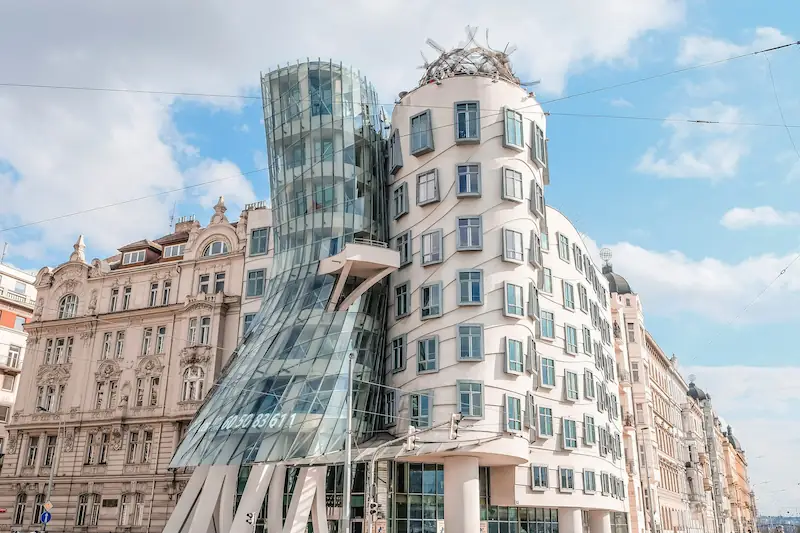
Best things to do in Prague, from iconic sights to local experiences
Discover the best things to do in Prague, from Prague Castle, Charles Bridge, and the Jewish Quarter to hilltop gardens, Cubist architecture, contemporary galleries, Czech food, beer culture, family attractions, and neighborhoods beyond the postcard center. Prague is compact, but its steep routes, bridge bottlenecks, and dense historic interiors make sequencing important. The strongest visits combine one early landmark window, one serious cultural block, one elevated or riverside pause, and one district where daily life replaces the tour-group rhythm.
Best time
April to June and September to October offer the best balance of daylight, comfortable walking, gardens, and cultural activity. December is atmospheric for Christmas markets, while January and February suit quieter museum-led visits.
Ideal trip length
Three full days give the best first-time balance. Two days cover the essentials; four to five days allow Prague Zoo, contemporary culture, outer neighborhoods, or one day trip without rushing the historic core.
Continue planning your prague trip
Use the Prague city guide to understand the river, Castle hill, historic core, and residential districts, then compare the best areas to stay and connect these activities into a realistic itinerary. Grouping sights by bank, hill, and neighborhood will save more time than simply booking the most famous attractions.
Best things to do in Prague at a glance
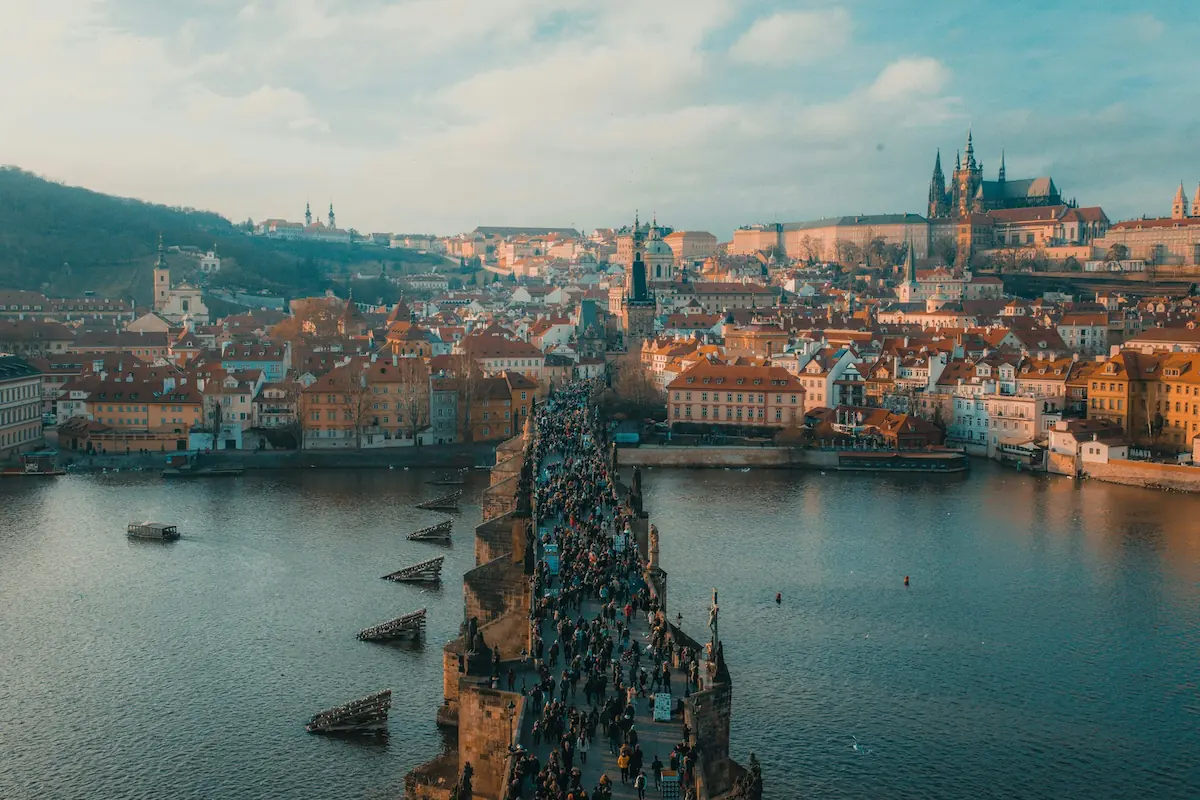
Charles Bridge at sunrise or late evening – Area: Old Town / Malá Strana · Best for: Prague’s classic river-and-castle view without peak crowds · Time needed: 30 to 75 minutes · Worth it: Essential, but the experience depends more on timing than on the bridge itself. · Book ahead: No booking needed.
Prague Castle and St. Vitus Cathedral – Area: Hradčany · Best for: State history, Gothic architecture, palaces, and city views · Time needed: 3 to 5 hours · Worth it: Prague’s most substantial landmark complex and a true half-day commitment. · Book ahead: Recommended for tours, peak periods, and selected interiors.
Old Town Square, Astronomical Clock, and Old Town Hall Tower – Area: Old Town · Best for: First-time orientation, architecture, and a central panorama · Time needed: 1.5 to 3 hours · Worth it: High payoff when the square, tower, churches, and surrounding lanes are treated as one cluster. · Book ahead: Useful for the tower; not needed for the square.
Jewish Quarter and Old Jewish Cemetery – Area: Josefov · Best for: Jewish history, synagogues, memory, and cultural depth · Time needed: 2.5 to 4 hours · Worth it: One of Prague’s most meaningful and intellectually substantial experiences. · Book ahead: Recommended in busy periods and for guided context.
Malá Strana, Wallenstein Garden, and St. Nicholas Church – Area: Malá Strana · Best for: Baroque Prague, palace gardens, quiet lanes, and a slower castle-side route · Time needed: 2 to 4 hours · Worth it: Essential for understanding the west bank beyond the bridge and castle climb. · Book ahead: Usually not; check seasonal garden access and concert schedules.
Klementinum tower and Baroque Library – Area: Old Town · Best for: Historic interiors, astronomy, and rooftop views · Time needed: 1 to 1.5 hours · Worth it: A compact, visually memorable alternative to another church or palace interior. · Book ahead: Yes for timed guided access.
Strahov Monastery, library, and hilltop views – Area: Strahov / Hradčany · Best for: Historic libraries, monastery atmosphere, and a quieter hill route · Time needed: 1.5 to 3 hours · Worth it: Excellent after Prague Castle or before descending through Petřín. · Book ahead: Useful for library access and guided visits.
Petřín Hill and tower – Area: Petřín · Best for: Green space, family time, viewpoints, and a break from the old city · Time needed: 2 to 4 hours · Worth it: Best when you want outdoor contrast rather than another museum. · Book ahead: No; check current funicular operations before relying on it.
Vyšehrad fortress, basilica, and cemetery – Area: Vyšehrad · Best for: Calmer history, river views, and Czech national memory · Time needed: 2 to 3 hours · Worth it: One of the strongest second- or third-day experiences. · Book ahead: No for the grounds; check individual interiors.
Letná Park and Holešovice – Area: Letná / Holešovice · Best for: Bridge views, contemporary art, parks, and local cafés · Time needed: 3 to 5 hours · Worth it: The best counterpoint to medieval Prague for longer or repeat visits. · Book ahead: Only for major exhibitions or events.
Prague Zoo and Troja – Area: Troja · Best for: Families, animals, gardens, and a full outdoor day · Time needed: Half to full day · Worth it: One of Prague’s best family attractions and substantial enough to justify leaving the center. · Book ahead: Helpful on busy weekends and school holidays.
Czech food and beer with context – Area: Old Town, New Town, Karlín, Vinohrady · Best for: Traditional dishes, brewing culture, and better restaurant choices · Time needed: 2.5 to 4 hours · Worth it: High value when the experience avoids mass pub crawls and tourist-only dining rooms. · Book ahead: Yes for small-group food tours, tastings, and brewery visits.
How to choose what is actually worth doing
Prague’s landmarks are concentrated, but its best experiences are not interchangeable. The city becomes tiring when every hour is spent in medieval lanes, churches, and ticket queues. Build around distinct layers: one Castle-side half day, one Old Town and Josefov block, one park or river reset, and one local or contemporary district.
See Charles Bridge, Old Town Square, and the Castle viewpoints early or late; timing can matter more than the number of attractions you cover.
Treat Prague Castle as a district. St. Vitus Cathedral, the Old Royal Palace, St. George’s Basilica, Golden Lane, Lobkowicz Palace, gardens, and viewpoints compete for several hours.
Give Josefov enough uninterrupted time. The synagogues and Old Jewish Cemetery lose their meaning when squeezed between photo stops.
Choose viewpoints strategically: Old Town Hall Tower for the historic core, Letná for the bridges, Petřín for green space, Vyšehrad for river distance, and Žižkov Tower for a modern panorama.
Use Prague’s gardens, islands, parks, riverbanks, and trams to break up dense interiors and cobbled walking.
Separate Czech beer culture from party tourism. A brewery, historic pub, or guided tasting offers more context than a mass pub crawl.
With children, prioritize Prague Zoo, Petřín, boats, towers, the National Technical Museum, Railway Kingdom, and parks rather than long sequences of historic interiors.
For a repeat visit, follow architecture and contemporary culture through Cubist Prague, Villa Müller, DOX, Holešovice, Karlín, Vítkov, and the city’s passages.
Iconic things to do in Prague
Prague’s famous sights deserve their reputation, but the quality of the visit depends on route, timing, and how much you choose to enter. Use the bridge, Castle, Old Town, Malá Strana, towers, and river as a connected urban story rather than a collection of isolated photographs.
Cross Charles Bridge before the city fully wakes up – Charles Bridge is still one of the best things to do in Prague, but only if you respect its timing. Go early for stone statues, low river light, and the Castle rising above Malá Strana before the bridge becomes a moving bottleneck. (First-time essential · Best for: Early atmosphere and classic Prague views)
Give Prague Castle enough time to make sense – The Castle is not one building but a high district of courtyards, cathedral scale, palaces, lanes, and viewpoints. It works best as a structured half-day, not a quick uphill photo stop. (High payoff · Best for: Architecture, history, and city views)Find tours & experiences
Watch the Astronomical Clock without overcommitting – The clock is worth seeing because it anchors Old Town’s theater of facades and movement. The hourly show is brief, so use it as a punctuation mark before climbing a tower, entering a church, or moving toward quieter lanes. (Best for: Old Town orientation)
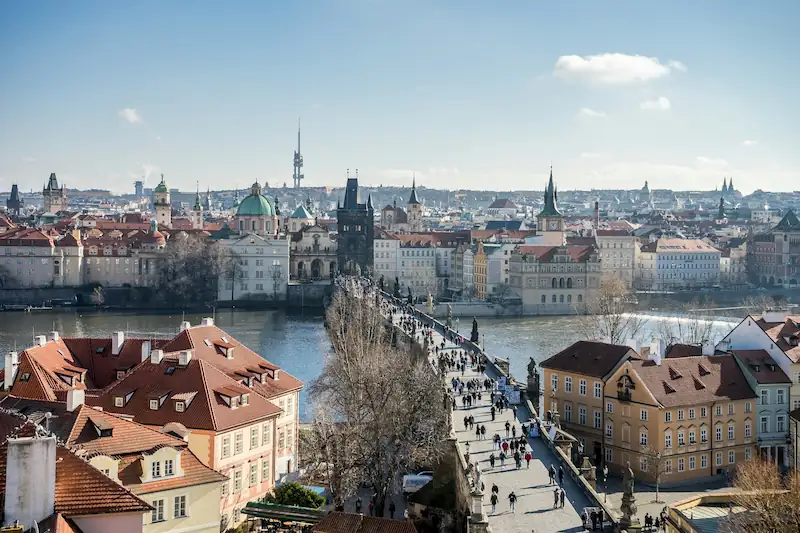
Climb Old Town Hall Tower for the cleanest central view – The view from Old Town Hall Tower explains Prague better than the square itself: red roofs, church spires, tight lanes, and the castle ridge beyond. It is especially useful if you want a visual map of the old city before walking it. (Worth it · Best for: First-day orientation)Find tours & experiences
See St. Vitus Cathedral from inside and outside – St. Vitus dominates Prague from a distance, but its value is in the transition from exterior mass to interior height. Go early or later in the day if possible; the nave loses much of its force when it becomes a queue corridor. (Best for: Gothic scale and stained glass)Find tours & experiences
Use the Vltava as a visual reset – A short river cruise or riverside walk helps you understand why Prague feels so layered: bridges cut across the view, the Castle sits high, and the Old Town presses close to the water. Choose sunset or early evening rather than treating the river as midday filler. (Best for: Low-effort views and spacing out the day)Find tours & experiences
Walk through Malá Strana slowly, not as a shortcut – Many visitors rush through Malá Strana between Charles Bridge and the Castle. It deserves its own time: church domes, palace walls, steep side streets, garden edges, and quieter corners just beyond the main uphill route. (Best for: Soft transitions between major sights)
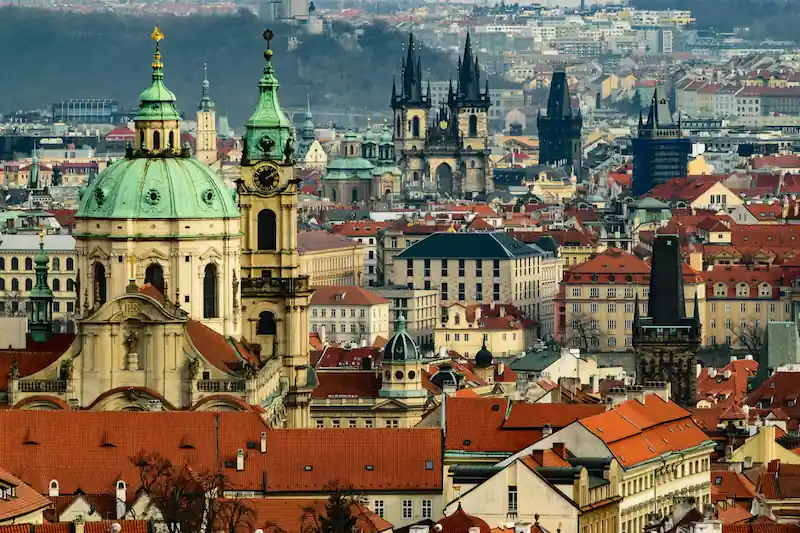
Enter St. Nicholas Church and explore Malá Strana’s Baroque core – The green dome of St. Nicholas Church defines Malá Strana from across the river, but the interior reveals the district’s full Baroque scale. Combine it with Wallenstein Garden, Kampa, palace-lined streets, and quieter lanes rather than treating Malá Strana only as the route between Charles Bridge and the Castle. (Worth it · Best for: Baroque architecture, west-bank atmosphere, and an easy cultural stop)Find tours & experiences
Tour the Klementinum and climb its Astronomical Tower – The Klementinum combines a Baroque library hall, historic scientific instruments, Meridian Hall, and a central tower view over tiled roofs and church domes. Access is typically through a timed guided route, making it a compact, structured indoor activity near Charles Bridge and Old Town. (High visual payoff · Best for: Libraries, astronomy, Baroque interiors, and central views)Find tours & experiences
See the Castle collections at Lobkowicz Palace – Lobkowicz Palace adds private collections, musical manuscripts, decorative arts, and family history to the state-focused Castle circuit. It is especially rewarding for visitors interested in music, collecting, and a more personal interpretation of European history. (Best for: Music history, private collections, and a deeper Castle visit)Find tours & experiences
Walk Kampa Island and the Čertovka canal – Kampa offers a quieter river-level contrast to Charles Bridge, with mill wheels, waterside paths, sculptures, gardens, and views back toward the Old Town. It works naturally before or after Malá Strana and is especially atmospheric early, late, or in softer weather. (Best for: Riverside walking, couples, photography, and low-pressure sightseeing)Find tours & experiences
Cultural things to do in Prague
Prague’s cultural depth spans Jewish history, Czech statehood, Gothic and Baroque architecture, music, Communism, decorative arts, Cubism, technology, and contemporary art. Choose by subject and give each major institution enough time; the city offers far more than castle interiors and concert packages.
Spend a serious block of time in the Jewish Quarter – Josefov is one of the most important cultural areas in Prague, with synagogues, the Old Jewish Cemetery, and a dense sense of memory within a small urban footprint. It is best approached calmly, without trying to squeeze it between two photo stops. (High payoff · Best for: History, memory, and focused cultural depth)Find tours & experiences
Visit Strahov Library and monastery grounds – Strahov works well after the Castle because it keeps you on the hill but shifts the mood from state grandeur to scholarship, silence, and long views. The library halls are especially strong on a rainy or colder day. (Best for: Historic interiors and quieter hilltop culture)Find tours & experiences
Choose one classical concert with the right setting – Prague’s concert options vary widely, so the venue matters as much as the program. A chamber concert in a historic hall or church can be memorable; a low-quality tourist package can feel interchangeable. (Best for: Evening culture without late-night intensity)Find tours & experiences
Go to Vyšehrad for a different national story – Vyšehrad gives Prague a calmer, more spacious form of history: fortress walls, river views, the Basilica of St. Peter and St. Paul, and the cemetery where major Czech figures are buried. It is less theatrical than Old Town and more reflective. (Worth it · Best for: Second-day culture and quieter views)
Use the National Museum as a rainy-day anchor – At the top of Wenceslas Square, the National Museum is useful when weather turns or when you want a structured cultural block outside the medieval core. The building itself also changes how you read New Town’s grand boulevard. (Best for: Rainy-day structure and national context)
See Czech art across the National Gallery collections – Prague’s National Gallery is spread across several buildings rather than one universal museum. The Trade Fair Palace is strongest for modern and contemporary art, while the Convent of St. Agnes offers medieval art in an atmospheric setting. Choose the collection that matches your interests instead of expecting a single central gallery. (Culture-first pick · Best for: Czech art, modernism, medieval collections, and serious museum time)
Visit the National Technical Museum with or without children – Historic aircraft, cars, trains, photography, architecture, astronomy, and industrial design make this one of Prague’s most varied museums. Its large transport hall gives immediate visual impact, while the wider collections reward families, engineering enthusiasts, and rainy-day visitors. (Family-friendly · Best for: Transport, technology, design, families, and rainy days)
Understand 20th-century Prague at the Museum of Communism – The Museum of Communism introduces daily life, propaganda, repression, resistance, and the Velvet Revolution. It is a useful counterweight to Prague’s medieval image, especially when combined with Wenceslas Square, the National Museum, or sites connected to Václav Havel and 1989. (Best for: Modern Czech history, Communism, and first-time context)Find tours & experiences
Follow Prague’s unique Cubist architecture – Prague has an unusually rich concentration of Cubist buildings, furniture, and decorative arts. Start with the House at the Black Madonna and its museum, then look for Cubist façades around Old Town, beneath Vyšehrad, and in residential streets. This is one of the city’s most distinctive architecture-led experiences. (Unique to Prague · Best for: Architecture, design, Cubism, and repeat visitors)Find tours & experiences
Explore contemporary art at DOX – DOX transforms former industrial buildings in Holešovice into a major center for contemporary art, architecture, literature, and public debate. The rooftop Gulliver airship and changing exhibitions make it a strong reason to spend time beyond the historic center. (Best for: Contemporary art, architecture, design, and repeat visits)
Choose a theatre, opera, or high-quality music performance – Prague’s evening culture includes the National Theatre, State Opera, Rudolfinum, Municipal House, Estates Theatre, jazz clubs, chamber concerts, and experimental stages. Compare performers, repertoire, venue, and seating rather than choosing only by the beauty of the room or a generic Mozart label. (Best in the evening · Best for: Opera, theatre, jazz, classical music, and evening culture)Find tours & experiences
Visit Villa Müller for Prague’s modern architectural legacy – Adolf Loos’s Villa Müller is one of Prague’s most important modern houses, built around his Raumplan concept of interconnected spaces at different levels. Timed access and the residential location make it a specialist choice, but architecture and design enthusiasts should place it high on a repeat-visit list. (Book ahead · Best for: Modern architecture, interiors, Adolf Loos, and design specialists)
Local-feeling things to do in Prague
Local Prague appears in parks, tram corridors, market mornings, residential squares, converted industrial spaces, river embankments, and neighborhood restaurants. These experiences are particularly valuable after the central routes begin to feel compressed or repetitive.
Watch the city from Letná Park – Letná gives one of Prague’s most useful views because it shows the bridges in sequence and the Old Town from above. It is also a good place to pause with locals rather than just photograph the skyline. (Best for: Views, breathing space, and sunset walks)
Spend a café-and-street block in Vinohrady – Vinohrady is a strong antidote to the historic core: broad streets, neighborhood restaurants, parks, and a more residential pace. It is not about one blockbuster sight; it is about letting Prague feel current. (Best for: Local rhythm and relaxed food stops)
Explore Holešovice for galleries and industrial edges – Holešovice works well for repeat visitors or anyone who wants Prague beyond medieval texture. Go for contemporary art, cafés, market spaces, and a flatter, more urban district that feels different from the postcard center. (Best for: Contemporary culture and repeat visits)
Walk the riverside around Náplavka – Náplavka is at its best when the river is part of the city’s social life rather than just a view. Come for a market morning, a drink by the embankment, or a simple walk that loosens the pace of the day. (Best for: Casual river life)
Use trams to connect the city above ground – A tram ride is not a formal attraction, but in Prague it can be one of the best ways to feel the city’s slopes, bridges, and neighborhood transitions. Choose it when moving between the center, Letná, Vinohrady, or the Castle side instead of defaulting underground. (Best for: Low-cost spatial orientation)
Explore Karlín for restaurants, cafés, and renewed city life – Karlín combines broad streets, converted industrial buildings, modern offices, cafés, restaurants, and access to Vítkov Hill. It feels contemporary and purposeful rather than picturesque, making it a useful lunch, dinner, or repeat-visit district east of the center. (Best for: Food, architecture, local cafés, and a contemporary neighborhood)
Climb Vítkov Hill and visit the National Memorial – Vítkov offers a broad city view, a monumental equestrian statue, park paths, and a museum linked to modern Czech and Czechoslovak history. It works well with Žižkov or Karlín and provides a less familiar elevated perspective than Petřín or Letná. (Best for: Views, modern history, parks, and repeat visitors)
Browse a Prague market beyond the souvenir streets – Farmers’ markets at Náplavka and neighborhood squares, the Prague Market in Holešovice, and seasonal food events reveal a more everyday food culture. Schedules vary, so treat markets as timed neighborhood experiences rather than permanent attractions. (Best for: Local produce, casual food, weekend mornings, and neighborhood atmosphere)Find tours & experiences
Walk through Prague’s historic passages – Lucerna, Světozor, Koruna, Adria, and other passages form an indoor network of cinemas, cafés, shops, staircases, and 20th-century design around New Town. They are especially useful in rain, winter, or when you want an architectural route that differs from churches and palaces. (Best for: Architecture, rainy days, cinema history, and unusual urban spaces)Find tours & experiences
Spend a slow afternoon in Troja – Troja combines Prague Zoo, the Baroque Troja Château, botanical gardens, vineyards, and river landscapes on the city’s northern edge. Families may devote the day to the zoo, while garden and architecture lovers can build a quieter seasonal route around the wider district. (Only if you have time · Best for: Families, gardens, architecture, animals, and longer stays)
Food and drink experiences worth your time
Prague’s food and drink culture extends beyond goulash and lager. Traditional pubs, modern Czech kitchens, bakeries, cafés, breweries, wine bars, markets, and seasonal dishes all serve different purposes. Aim for one well-chosen classic meal, one beer experience, one daytime bakery or market stop, and one contemporary neighborhood dinner.
Choose one proper Czech pub meal – A good Czech pub is about pace, beer quality, and a kitchen that does the classics well. Look for roast meats, dumplings, goulash, schnitzel, or seasonal dishes in places where locals still sit for more than one round. (Best for: Classic Czech food without overplanning)
Take a focused beer tasting, not a pub crawl – Beer is central to Prague, but the smartest version is guided, small-scale, and built around styles, breweries, and pouring culture. Avoid late-night mass crawls if you want the city’s beer tradition rather than its stag-party shadow. (Worth it · Best for: Beer culture with context)Find tours & experiences
Use a food tour to escape weak central choices – A good Prague food tour can be useful because the most visible restaurants are not always the best. It works especially well on a first trip if you want to understand Czech dishes, beer, cafés, and newer local addresses quickly. (Best for: First-time food orientation)Find tours & experiences
Stop at a bakery or café away from Old Town’s busiest lanes – Prague is good for slower café pauses, especially in Vinohrady, Letná, Karlín, and quieter New Town streets. Use them as recovery points between heavier cultural blocks rather than treating every break as a tourist-square coffee. (Best for: Soft breaks between major sights)
Try a market or riverside food stop – Markets and embankment food stalls give Prague a looser, more social rhythm than formal dining. They are best for daytime grazing, local produce, simple snacks, and seeing the city outside its monument circuit. (Best for: Casual local texture)
Visit a working brewery or historic brewpub – Prague beer culture becomes more meaningful when you see how beer is brewed, stored, poured, and paired with food. Choose an established brewpub, small brewery, or guided visit over attractions that rely mostly on unlimited consumption. (Worth it · Best for: Brewing, Czech beer traditions, and a structured tasting)Find tours & experiences
Try Czech pastries and open-faced sandwiches – Daytime eating in Prague includes koláče, buchty, větrník, chlebíčky, and newer bakeries that reinterpret Czech baking. A bakery, pastry shop, or deli stop gives a lighter view of local food than another meat-heavy pub meal. (Best for: Breakfast, snacks, cafés, bakeries, and budget-friendly food)Find tours & experiences
Compare traditional and modern Czech cooking – Contemporary Czech restaurants use regional ingredients, fermentation, seasonal vegetables, freshwater fish, and lighter interpretations of familiar dishes. Pair one classic pub meal with one modern Czech dinner to understand how the city’s food culture has evolved. (Best for: Food-focused travelers and a broader view of Czech cuisine)Find tours & experiences
Explore Czech wine, Moravian bottles, and Prague vineyards – Beer dominates Prague’s image, but Czech and Moravian wine offer another local drinking culture. Wine bars, seasonal young wine, and small historic vineyards around the city provide a calmer alternative to beer-led evenings. (Best for: Wine lovers, couples, quieter evenings, and repeat visitors)Find tours & experiences
Best things to do in Prague for first timers
First-time visitors should protect the city’s core sequence, but not turn the trip into a sprint. Prioritize Prague Castle, Charles Bridge, Old Town, Josefov, one viewpoint, and one local-feeling district.
Cross Charles Bridge early and continue through Malá Strana before the main visitor flow peaks.
Give Prague Castle at least half a day, choosing the cathedral, palace spaces, Golden Lane, Lobkowicz Palace, or gardens according to your interests.
Combine Old Town Square, the Astronomical Clock, surrounding churches, and Old Town Hall Tower rather than waiting only for the brief clock performance.
Protect a separate block for Josefov and the Jewish Museum route.
Choose one additional historic interior such as the Klementinum, Strahov Library, St. Nicholas Church, or the Municipal House.
Add one spacious counterpoint: Letná, Petřín, Vyšehrad, Kampa, or a short river cruise.
Use one evening for a credible concert, theatre performance, Czech dinner, brewery, or riverside walk.
With three days or more, add Vinohrady, Karlín, Holešovice, Prague Zoo, or a specialist museum.
Priority
BestChoices
Why
Essential core
Charles Bridge, Prague Castle, Old Town, Josefov
Together they explain Prague’s geography, history, and visual identity.
Strong cultural addition
Klementinum, Strahov, Lobkowicz Palace, National Museum
Adds depth beyond streets and viewpoints.
Pacing layer
Letná, Petřín, Kampa, Vyšehrad, river cruise
Creates space between dense historic areas.
Longer-stay layer
Holešovice, Karlín, Zoo, DOX, Cubist architecture
Shows Prague beyond its medieval center.
Free things to do in Prague
Prague is unusually strong for free experiences because many of its best moments happen in streets, bridges, courtyards, hills, and riverside spaces. The key is timing them well rather than treating them as filler.
Cross Charles Bridge before breakfast or after the main evening crowds.
Walk Prague Castle’s public courtyards, Hradčany Square, Nový Svět, and exterior viewpoints without buying every circuit.
Explore Old Town Square, Ungelt, church exteriors, river approaches, and quieter Old Town lanes.
Walk through Malá Strana, Kampa Island, Čertovka, and seasonal public gardens.
Use Petřín, Kinský Garden, Letná, Riegrovy Sady, Stromovka, and Vítkov for views and green space.
Walk the Vyšehrad ramparts, park paths, and river-facing viewpoints.
Follow the Vltava embankments, islands, and Náplavka outside paid events.
Explore Cubist façades, Art Nouveau buildings, modern architecture, and New Town passages from outside.
Spend time in Vinohrady, Karlín, Holešovice, Letná, or Žižkov to see residential Prague.
Visit seasonal Christmas markets and decorated squares; entry is free, while food, drinks, and attractions cost extra.
FreeOption
Where
WhyItWorks
Best landmark walk
Charles Bridge, Kampa, and Malá Strana
Combines river, architecture, and west-bank atmosphere.
Best city view
Letná Park
The bridges and Old Town align in one broad panorama.
Best historic escape
Vyšehrad
Fortress paths, views, and park space remain largely open.
Best green route
Petřín and Kinský Garden
Creates a long scenic break from the paved center.
Best local atmosphere
Vinohrady, Karlín, or Holešovice
Neighborhood streets and parks reveal contemporary Prague.
Unique and unusual things to do in Prague
The most distinctive Prague experiences usually sit just beside the obvious sights, not far outside them. Look for interiors, passages, cemeteries, beer rituals, hilltop libraries, and districts that shift the city out of postcard mode.
Tour the Klementinum’s Baroque Library, Meridian Hall, and Astronomical Tower.
Follow Prague’s Cubist architecture from the House at the Black Madonna to buildings beneath Vyšehrad.
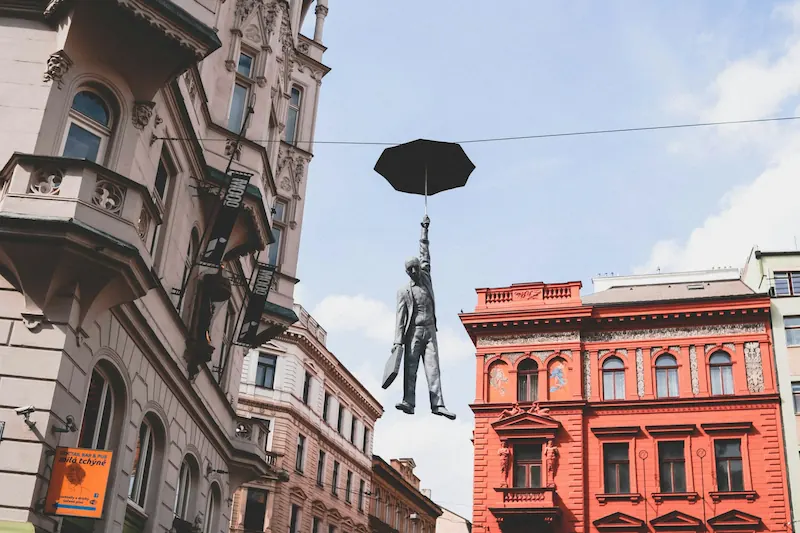
Look for David Černý works including the rotating Kafka head, hanging figures, babies, and other interventions around the city.
Visit Villa Müller or another modern architectural house with timed access.
Explore the network of New Town passages, cinemas, cafés, and Art Nouveau interiors.
See the historic lifts and machinery of one of Prague’s accessible towers or take a specialist paternoster tour where officially offered.
Visit the Old Wastewater Treatment Plant in Bubeneč for industrial architecture and underground engineering.
Explore the Museum of Alchemists, Speculum Alchemiae, or alchemy-themed history carefully, distinguishing documented sites from theatrical attractions.
Walk through the Central Cemetery at Vyšehrad or Olšany Cemetery for art, memory, and a quieter city landscape.
Take a small boat through Čertovka and the canals around Kampa rather than only a large river cruise.
Visit DOX and its rooftop Gulliver airship for contemporary art in a converted industrial setting.
Use a vintage tram, public-transport museum visit, or tram-led route to experience Prague through its transport history.
Things to do in Prague at night
Prague is beautiful at night, but the best evening plan is not necessarily the loudest one. Prioritize lit bridges, music, cellar-like pubs, river reflections, and carefully chosen cultural venues.
Walk Charles Bridge, Kampa, and the riverbanks after dinner when the lamps and Castle reflections reshape the center.
See Prague Castle illuminated from the Old Town riverbank, Letná, or a boat.
Attend a performance at the National Theatre, State Opera, Rudolfinum, Municipal House, Estates Theatre, or a carefully chosen chamber venue.
Choose a jazz club, theatre production, or contemporary performance when classical music is not your priority.
Book a simple evening cruise for views, or a dinner cruise only if the onboard meal and fixed format appeal to you.
Have one deliberate beer-hall, brewery, or tasting evening rather than joining a large pub crawl.
Use Vinohrady, Karlín, Letná, or Holešovice for restaurants, wine bars, cocktails, and a less visitor-heavy night.
See Old Town Square and Wenceslas Square illuminated, then leave the busiest nightlife corridors before they dominate the evening.
Visit seasonal night events such as Signal Festival, Christmas markets, open-air cinema, or summer cultural programming when dates align.
EveningChoice
BestArea
BestFor
Best landmark atmosphere
Charles Bridge, Kampa, and the river
Illuminated views and walking
Best formal culture
Old Town and New Town venues
Opera, theatre, orchestral music, and concerts
Best local dinner and drinks
Vinohrady, Karlín, Letná
Restaurants, wine bars, breweries, and cocktails
Best low-effort sightseeing
Vltava River
Cruises and Castle views
Best contemporary night
Holešovice and Žižkov
Alternative venues, bars, and events
Things to do in Prague with kids
Prague works well with kids if you keep distances short and mix castles, towers, parks, boats, and tram rides. Avoid overloading the day with dense interiors.
Spend a half or full day at Prague Zoo, combining animal pavilions, viewpoints, playgrounds, and the Children’s Zoo.
Use Petřín Hill for the tower, Mirror Maze, gardens, playgrounds, and open space; verify current funicular operations before planning around it.
Choose the National Technical Museum for aircraft, cars, trains, photography, and engineering.
Visit Railway Kingdom for a large interactive model railway and an indoor activity suited to younger children.
Take a short boat ride or river cruise when walking fatigue builds.
Explore Prague Castle selectively through courtyards, St. Vitus Cathedral, Golden Lane, and views rather than every interior.
Use the National Museum’s family-oriented exhibitions, Prague Planetarium, or Public Transport Museum on rainy days.
Add Karel Zeman Museum, Museum of Fantastic Illusions, or another interactive attraction when children need something playful.
Use trams as part of the experience and build park stops into routes through Letná, Stromovka, Kampa, or Children’s Island.
Reserve Josefov and more demanding historical museums for children old enough to engage with the subject respectfully.
Activity
AgeFit
TimeFit
WeatherFit
Prague Zoo
All ages
Half to full day
Best in dry or mixed weather
Petřín and Mirror Maze
Young children to teens
2 to 4 hours
Best in dry weather
National Technical Museum
School-age children and teens
2 to 4 hours
Excellent rainy-day choice
Railway Kingdom
Young children and train enthusiasts
1.5 to 3 hours
Excellent rainy-day choice
River cruise or small boat
All ages
45 to 90 minutes
Good in mixed weather
Prague Castle highlights
School-age children and teens
2 to 3 hours
Mixed indoor and outdoor
Things to do in Prague when it rains
Rain does not ruin Prague, but it changes what deserves your time. Shift from viewpoints and long exposed walks to libraries, museums, synagogues, cafés, covered passages, concerts, and well-chosen food experiences.
Use Josefov’s synagogues and museums as a concentrated cultural block, allowing for short outdoor transfers.
Tour the Klementinum or visit Strahov Library for historic interiors and a structured timed experience.
Choose the National Museum, National Technical Museum, Museum of Decorative Arts, Museum of Communism, or a National Gallery collection according to your interests.
Visit DOX for contemporary art or the House at the Black Madonna for Cubism and design.
Explore Lucerna and nearby New Town passages, cinemas, cafés, and shops.
Take children to Railway Kingdom, the National Technical Museum, a family exhibition, or an interactive museum.
Book a concert, theatre performance, opera, food tour, beer tasting, or brewery visit as a planned indoor anchor.
Use cafés and restaurants as deliberate pauses, but avoid spending the entire day moving between tourist cafés without a substantial cultural stop.
Save Petřín, Letná, Troja gardens, long river walks, and panoramic tower visits for clearer weather when possible.
RainyDayChoice
Where
Why
Best historic depth
Jewish Quarter
Several major interiors sit close together.
Best atmospheric interior
Klementinum or Strahov
Libraries and historic rooms suit a grey day.
Best large museum
National Museum or National Technical Museum
Both can structure several indoor hours.
Best contemporary option
DOX or Trade Fair Palace
Large exhibitions offer a complete alternative to historic Prague.
Best family option
National Technical Museum or Railway Kingdom
Visual and interactive exhibits maintain attention.
Things to do in Prague by area
Old Town and the river edge
Old Town contains Prague’s highest concentration of famous sights. Start early, combine the square with a tower or interior, and use the river edge and passages to escape the most congested pedestrian routes.
Old Town Square, Astronomical Clock, and Old Town Hall Tower
Týn Church, St. Nicholas Church, Ungelt, and surrounding lanes
Klementinum tower and Baroque Library
Municipal House, Powder Tower, and Art Nouveau interiors
House at the Black Madonna and Cubist design
Charles Bridge approaches and the Vltava riverbank
Josefov
Josefov is geographically compact but historically dense. Treat the Jewish Museum route as a serious cultural experience, then use the nearby river or Old Town edge to decompress.
Old Jewish Cemetery
Old-New, Pinkas, Spanish, Klausen, and Maisel synagogues
Jewish Museum collections and memorials
Pařížská and the altered urban fabric of the former Jewish Town
Rudolfinum and the Museum of Decorative Arts nearby
Easy continuation to the river or Old Town
Malá Strana and Kampa
Malá Strana is the Baroque and garden-filled west-bank district beneath the Castle. Its value lies in slowing down between churches, palaces, canals, and hidden lanes rather than using it only as an uphill transit route.
Charles Bridge and bridge towers
St. Nicholas Church
Wallenstein Garden and palace exterior
Kampa Island, Čertovka canal, and riverside art
Lennon Wall and quieter embassy streets
Access to Petřín, Hradčany, and the Castle
Hradčany, Prague Castle, and Strahov
This elevated district combines state history, cathedral architecture, private collections, monastery culture, and panoramic routes. It deserves at least half a day and can easily expand further.
Prague Castle courtyards and visitor circuits
St. Vitus Cathedral, Old Royal Palace, and St. George’s Basilica
Golden Lane and Daliborka
Lobkowicz Palace
Castle gardens and viewpoints when seasonally accessible
Strahov Monastery, library, brewery, and Nový Svět
New Town and Náplavka
New Town reveals Prague’s grand boulevards, 20th-century history, passages, performance venues, and river social life. It is especially strong for museums, architecture, rain, shopping, and evening culture.
Wenceslas Square and the National Museum
Museum of Communism and sites connected to 1968 and 1989
Lucerna, Světozor, Adria, and other passages
Dancing House and modern riverfront architecture
Náplavka markets and embankment life
National Theatre, State Opera, and nearby performance venues
Petřín, Smíchov, and the west-bank parks
This area works best for green space, families, viewpoints, and a transition away from dense historic streets. Build around weather and current transport conditions rather than assuming the funicular will always be available.
Petřín Tower and Mirror Maze
Petřín and Kinský Garden paths
Štefánik Observatory
Children’s playgrounds and open space
Railway Kingdom in Smíchov
Easy descent toward Újezd, Kampa, or the river
Letná, Holešovice, and Stromovka
The northern inner city combines Prague’s best bridge panorama with parks, museums, contemporary art, markets, and converted industrial spaces. It is ideal for a third day, families, or repeat visits.
Letná Park, Metronome, and bridge viewpoints
National Technical Museum and National Museum of Agriculture
Trade Fair Palace and National Gallery collections
DOX Centre for Contemporary Art
Prague Market and neighborhood cafés
Stromovka Park and access toward Troja
Troja
Troja is Prague’s strongest full-day family and garden zone. The zoo is the principal draw, while the château, botanical gardens, vineyards, and river setting can create a broader seasonal visit.
Prague Zoo
Troja Château and formal gardens
Prague Botanical Garden
St. Clare’s Vineyard
River and ferry connections when operating
Easy combination with Stromovka for a long outdoor day
Vinohrady and Žižkov
These eastern inner districts provide restaurants, cafés, parks, bars, modern history, and residential Prague. Vinohrady is calmer and more polished; Žižkov is steeper, more informal, and better for alternative nightlife and Vítkov.
Náměstí Míru and Jiřího z Poděbrad
Riegrovy Sady and sunset views
Cafés, bakeries, restaurants, wine bars, and pubs
Žižkov Television Tower
Vítkov Hill and National Memorial
Olšany Cemetery and less tourist-oriented streets
Karlín
Karlín is a contemporary food-and-architecture district shaped by restoration, offices, converted industrial buildings, and access to the Vltava and Vítkov. It works best around lunch, dinner, or a repeat-visit walk.
Restaurants, cafés, bakeries, and modern Czech cooking
Karlín Square and Church of Saints Cyril and Methodius
Industrial and contemporary architecture
River and cycling routes
Access to Vítkov through the pedestrian tunnel or hill paths
Easy metro and tram links to the center
Vyšehrad and Podolí
Vyšehrad offers a spacious and reflective version of Prague through fortress walls, national legends, cemetery art, Cubist architecture below the hill, and broad river views.
Vyšehrad ramparts and park
Basilica of St. Peter and St. Paul
Vyšehrad Cemetery and Slavín
Casemates and underground spaces when accessible
Cubist houses beneath the fortress
Walks toward Náplavka, Podolí, or the river
How to prioritize Prague by trip length
Prague rewards selective planning. The mistake is not missing a minor attraction; it is doing the right sights at the wrong pace.
Profile
Prioritize
Skip
Structure
Half day
Old Town Square, Charles Bridge, Malá Strana edge, one tower or river view
Full Castle circuit, Josefov museum route, outer districts
Stay central and choose one continuous walking direction.
1 full day
Old Town, Charles Bridge, Malá Strana, Prague Castle highlights, illuminated river walk
Zoo, DOX, Vyšehrad, long museum visits
Start early and move from Old Town toward the Castle side.
2 days
Add a complete Castle block, Josefov, one viewpoint, one performance or food experience
Day trips and several specialist museums
Separate iconic Prague from the deeper cultural day.
3 days
Add Klementinum or Strahov, Vyšehrad or Petřín, and Vinohrady, Letná, or Karlín
Repeating the central route at peak hours
Use the third day for contrast and local rhythm.
4 to 5 days
Add Prague Zoo, Holešovice, DOX, technical or art museums, Troja, Cubist architecture, or one day trip
Filling every day with medieval sights
Let personal interests determine the additional layers.
Culture-first trip
Josefov, Castle collections, National Gallery, National Museum, theatre or concert, Cubist or modern architecture
Low-quality tourist concert packages and novelty museums
Build each day around one serious cultural anchor.
Family trip
Zoo, Petřín, boats, National Technical Museum, Railway Kingdom, parks, selective Castle time
Long consecutive museum routes and too many tower climbs
Alternate structured attractions with movement and play.
Repeat visit
Holešovice, Karlín, Vítkov, Villa Müller, Troja, Cubism, passages, contemporary performance
Peak-hour repeats of Charles Bridge and Old Town
Use the center as a connecting backdrop rather than the entire destination.
Best day trips from Prague
Prague can easily fill three days, so day trips make most sense on a longer stay or repeat visit. Choose one based on the kind of contrast you want: bones and silver, castle landscape, spa-town elegance, or a full medieval town.
Excursion
Best for
Time needed
First trip?
Transport
Book ahead
Kutná Hora and Sedlec Ossuary
The Bone Church, Gothic St. Barbara’s Cathedral, silver-mining history, and the strongest easy cultural contrast
6 to 9 hours
Best with at least 4 days in Prague, or 3 days if it is a priority
Train plus local connections, or organized tour
Recommended for guided combinations, busy weekends, and simplified logistics Check options
Karlštejn Castle
A classic Bohemian castle, countryside walking, and a manageable rail excursion
5 to 8 hours
A good choice with 4+ days or a strong castle interest
Direct regional train plus an uphill walk, or tour
Reserve the relevant castle interior tour in busy periods Check options
Terezín Memorial
Holocaust history, wartime imprisonment, propaganda, and serious historical study
6 to 8 hours
Appropriate when the subject is a clear priority
Bus, car, or guided tour
A knowledgeable guide is strongly valuable because the sites are dispersed and historically complex Check options
Český Krumlov
A preserved medieval and Renaissance town, castle views, and a full-day visual escape
10 to 13 hours
Only with 4 or 5 days, or when it is one of your main Czech priorities
Direct bus, car, or organized tour
Yes; the journey is long and castle access can require planning Check options
Karlovy Vary
Spa architecture, colonnades, forested slopes, and a slower resort-town atmosphere
9 to 11 hours
Better for longer stays or repeat visitors
Bus, car, or organized tour
Useful for guided transport; independent bus travel is straightforward with planning Check options
Pilsen
Pilsner brewing history, brewery visits, architecture, and an easy city excursion
7 to 9 hours
Best for beer enthusiasts or longer stays
Direct train or organized brewery trip
Yes for brewery tours and timed underground visits Check options
Konopiště Castle
Habsburg history, castle interiors, gardens, and the story of Archduke Franz Ferdinand
6 to 8 hours
Better for castle enthusiasts and extended stays
Train to Benešov plus local connection or walk, car, or tour
Check seasonal opening and interior-tour times Check options
Smart activity combinations that work well together
These are not full itineraries; they are practical pairings that reduce backtracking and keep the day’s energy balanced.
Charles Bridge, Malá Strana, and Prague Castle – This is the classic Prague sequence, but it works best if started early. Cross the bridge before crowds build, climb gradually through Malá Strana, and give the Castle side enough time instead of rushing straight back down.
Old Town, Jewish Quarter, and a riverside pause – This combination keeps distances short while adding cultural weight. Use Old Town for orientation, Josefov for depth, then the river to decompress after the density of cemeteries, synagogues, and crowded lanes.
Strahov, Petřín, and Malá Strana – This is a good hill-and-garden mix for a slower day. It moves from historic interiors to open views and then back down into Malá Strana’s softer streets.
Vyšehrad, Náplavka, and New Town – This pairing shifts Prague away from its busiest medieval core. Start with fortress views, follow the river toward Náplavka, then use New Town for cafés, passages, or a museum block.
Letná, Holešovice, and a local dinner – This combination works especially well on a second or repeat visit. Letná gives the view, Holešovice adds contemporary texture, and dinner outside the historic core makes the evening feel more local.
Old Town Square, Municipal House, Powder Tower, and Cubist Prague – This compact architecture route moves from Gothic and Baroque Old Town into Art Nouveau and Cubism. Begin around the square, continue through Celetná Street to the House at the Black Madonna, then finish at the Powder Tower and Municipal House. Add a café or exhibition rather than another major monument.
Prague Castle, Lobkowicz Palace, Nový Svět, and Strahov – This extended hill route works for visitors who want a deeper Castle day. Use the main Castle circuit first, add Lobkowicz Palace if music and collections appeal, then leave through Hradčany toward Nový Svět and Strahov. Descend through Petřín or take transport back rather than retracing the busiest route.
National Technical Museum, Letná, and Holešovice – Begin indoors with transport and technology, move through Letná for the bridge panorama and park space, then continue toward Holešovice for DOX, the Trade Fair Palace, Prague Market, or dinner. This is one of the strongest family or repeat-visit days.
Vinohrady, Žižkov Tower, Vítkov, and Karlín – This eastern route replaces postcard Prague with residential squares, modern views, parks, and contemporary food. It can be shortened to Vinohrady and Žižkov or extended downhill through Vítkov to a Karlín dinner.
Prague Zoo, Troja Château, and botanical gardens – Families should let the zoo dominate the day rather than forcing every Troja attraction. Adults or garden-focused visitors can combine the château and botanical gardens seasonally. Check opening hours and transport carefully because this is a full outer-city cluster.
Klementinum, Josefov, Rudolfinum, and the river – This central cultural route links Baroque scholarship, Jewish history, decorative arts, music, and river space. Keep the Klementinum’s timed entry fixed, give Josefov several hours, then use the Rudolfinum area and embankment as a calmer ending.
What to book ahead in Prague
Prague is walkable and spontaneous in many ways, but a few experiences work better with timed entry, guided context, or advance planning. Use bookings selectively; the city still needs unstructured walking time.
Helpful for weekends, holidays, and family peak periods
Start in the morning and allow at least half a day
No guide is necessary for most families; special programs may add value
Villa Müller and specialist architecture visits
Essential because capacity is limited and access is timed
Plan the rest of the route around the fixed appointment
Yes; the interpretation is central to understanding the architecture and interiors
National Technical Museum and major exhibitions
Usually optional, but useful for major temporary exhibitions or family peak days
Allow two to four hours and combine with Letná
Most visitors can explore independently
Christmas concerts, markets, and seasonal events Check options
Yes for concerts, special dinners, and central hotels; markets themselves generally do not require tickets
Late November through December, with the highest pressure on weekends and around Christmas
A themed walk can help with history and quieter locations, but central markets are easy to visit independently
FAQ: best things to do in Prague
These answers cover the main decisions behind planning Prague: what is essential, how many days to allow, which Castle and museum experiences to choose, what works with children, and how to handle crowds, weather, nightlife, winter, summer, and day trips.
What are the best things to do in Prague for a first visit?
Prioritize Charles Bridge, Prague Castle and St. Vitus Cathedral, Old Town Square and Old Town Hall Tower, the Jewish Quarter, Malá Strana, and one viewpoint or river experience. Add a Czech meal or beer experience and one evening concert, theatre performance, or illuminated walk.
How many days do you need in Prague?
Two full days cover the major landmarks at a fast pace. Three days is the best first-time length because it allows Josefov, Prague Castle, a viewpoint, local dining, and one quieter district without rushing. Four or five days make room for Prague Zoo, specialist museums, contemporary culture, or a day trip.
Can you see Prague in one day?
Yes, but focus on a single route. Begin in Old Town, cross Charles Bridge early, walk through Malá Strana, and visit selected Prague Castle highlights. Return along the river or through the illuminated center. Do not attempt the full Jewish Museum route, several museums, and distant districts on the same day.
Is Prague Castle worth visiting?
Yes. Prague Castle is a large district of courtyards, cathedral architecture, palace rooms, churches, collections, gardens, lanes, and viewpoints. Allow three to five hours and choose the interiors that interest you rather than trying to complete every available option.
How long should you spend at Prague Castle?
Allow about three hours for the principal circuit and closer to half a day if you add Lobkowicz Palace, gardens, a guided tour, meals, or Strahov. Security, queues, and the scale of the site make short visits less efficient than they appear.
What should you see inside Prague Castle?
For most first-time visitors, prioritize St. Vitus Cathedral, the Old Royal Palace, St. George’s Basilica, and Golden Lane. Add Lobkowicz Palace for private collections and music history. The gardens, towers, exhibitions, and smaller interiors are best selected according to season and personal interest.
When is the best time to visit Charles Bridge?
Sunrise and early morning offer the quietest atmosphere and clearest views. Late evening is the best alternative for illuminated architecture and fewer day groups. Midday is usually the most crowded and least atmospheric period.
Is the Astronomical Clock show worth seeing?
The short hourly display is worth seeing once when you are already in Old Town Square, but it should not determine a large part of your day. The architecture of the clock, the square, and the view from Old Town Hall Tower are more substantial than the performance itself.
Is the Jewish Quarter worth visiting?
Yes. Josefov is one of Prague’s most important cultural areas, with historic synagogues, the Old Jewish Cemetery, memorials, and exhibitions connected to centuries of Jewish life and persecution. Allow several hours and consider a guide because the history is complex.
Is the Klementinum worth visiting?
Yes for visitors interested in Baroque interiors, historic libraries, astronomy, and central views. Access is generally through a timed guided route, and the visit is compact enough to combine with Old Town, Josefov, or Charles Bridge.
Is Strahov Library worth visiting?
Strahov is worth visiting for its historic library halls, monastery atmosphere, collections, and elevated location. It works best with Prague Castle, Nový Svět, or Petřín. Check exactly which rooms and viewing areas are included in the current ticket.
Which Prague viewpoint is best?
Old Town Hall Tower is best for understanding the historic center; Letná gives the clearest sequence of bridges; Petřín offers green space and a broad skyline; Vyšehrad provides quieter river views; and Žižkov Television Tower gives the most modern high panorama. Choose one or two rather than climbing every tower.
What are the best free things to do in Prague?
The best free activities include Charles Bridge, Prague Castle courtyards, Old Town streets, Kampa, Petřín paths, Letná views, Vyšehrad ramparts, riverside walks, historic passages, and neighborhood exploration in Vinohrady, Karlín, or Holešovice.
What are the best unusual things to do in Prague?
Explore Cubist architecture, tour Villa Müller, follow David Černý sculptures, visit the Klementinum, walk New Town passages, take a small boat through Čertovka, explore industrial heritage, visit DOX, or follow tram and transport history.
What are the best things to do in Prague with kids?
Prague Zoo, Petřín and the Mirror Maze, the National Technical Museum, Railway Kingdom, short boat trips, parks, trams, and selective Prague Castle highlights work especially well. Alternate historic sightseeing with play, animals, transport, or outdoor space.
Is Prague Zoo worth visiting?
Yes, especially for families and animal lovers. Its hillside setting, extensive walking routes, major animal pavilions, playgrounds, and Children’s Zoo can fill most of a day. It is outside the center, so plan transport and avoid pairing it with a dense afternoon of central sightseeing.
What should you do in Prague when it rains?
Choose Josefov, the Klementinum, Strahov Library, the National Museum, National Technical Museum, Museum of Communism, DOX, the National Gallery, historic passages, cafés, brewery visits, or an evening performance. Save the long viewpoints and park routes for clearer weather.
What are the best things to do in Prague at night?
Walk Charles Bridge and Kampa, see the Castle illuminated from the river, attend opera, theatre, jazz, or a classical concert, take an evening cruise, visit a historic pub or brewery, or have dinner and drinks in Vinohrady, Karlín, Letná, or Holešovice.
How do I choose a classical concert in Prague?
Check the actual performers, ensemble, repertoire, venue, duration, and seating. The Rudolfinum, Municipal House, National Theatre, State Opera, Estates Theatre, churches, and palace halls offer very different standards and formats. Do not choose only because a concert uses Mozart or Vivaldi in its title.
Is a Vltava river cruise worth it?
A short sightseeing cruise can be worthwhile as a low-effort way to understand the bridges, riverbanks, and Castle skyline. Evening departures are usually more atmospheric. Dinner cruises suit travelers who value convenience and fixed seating, but the food is not necessarily the main reason to book.
What Czech food should you try in Prague?
Try a well-prepared Czech pub meal, seasonal soups, roast meats or sauces with dumplings, schnitzel, chlebíčky, koláče, buchty, and Czech pastries. Add a modern Czech restaurant if you want a broader view than traditional heavy dishes alone.
What is the best way to experience Czech beer in Prague?
Choose a respected pub, working brewery, small-group tasting, or brewery tour focused on styles, brewing, cellaring, and pouring. Large pub crawls mainly provide nightlife and socializing rather than meaningful beer culture.
What are the best neighborhoods to explore beyond Old Town?
Vinohrady is best for cafés, restaurants, and residential streets; Letná for park views and bars; Holešovice for contemporary culture and industrial spaces; Karlín for modern food and architecture; Žižkov for pubs, Vítkov, and a rougher local edge; and Troja for the zoo and gardens.
What are the best things to do in Prague in winter?
Use winter for museums, Josefov, Castle interiors, libraries, cafés, beer halls, theatre, opera, concerts, passages, and Christmas markets from late November through December. Daylight is short, so place outdoor landmarks earlier and use evenings for illuminated walks and performances.
What are the best things to do in Prague in summer?
Start central sightseeing early, then use gardens, islands, riverbanks, boat trips, Prague Zoo, Petřín, Letná, Stromovka, Troja, open-air events, and neighborhood evenings. Reserve exposed hill climbs and crowded squares for cooler parts of the day.
What should you book ahead in Prague?
Book Prague Castle tours, Klementinum access, strong concerts and theatre, Villa Müller, popular food and beer tours, evening cruises, selected exhibitions, and major day trips. Prague Zoo and large museums are often more flexible, though advance tickets can help during peak periods.
Is the Prague Visitor Pass worth it?
It can be worthwhile when your itinerary includes several covered towers, museums, Prague Castle sites, public transport, and a cruise within a concentrated period. Compare the current inclusion list and your actual schedule rather than buying it automatically.
What are the best day trips from Prague?
Kutná Hora offers the strongest easy mix of Gothic architecture, silver history, and the Sedlec Ossuary. Karlštejn is the simplest castle trip. Terezín is important for serious historical study. Český Krumlov and Karlovy Vary are attractive but involve much longer days. Pilsen is best for brewing enthusiasts.
Should you take a day trip if you only have three days in Prague?
Usually no on a first visit. Prague can easily fill three days with the Castle, Old Town, Josefov, Malá Strana, viewpoints, local districts, food, and evening culture. Add a day trip from four days onward unless the excursion is one of your principal reasons for visiting the Czech Republic.
What can repeat visitors do in Prague?
Explore DOX, the Trade Fair Palace, Villa Müller, Cubist architecture, Karlín, Vítkov, Troja, Holešovice, Olšany Cemetery, industrial heritage, modern theatre, specialist museums, markets, and longer walking routes through residential Prague.
Prague is most rewarding when its landmark core is balanced with Jewish history, parks, river space, Czech culture, and at least one neighborhood beyond the main visitor route.
Find the best places to stay, how to get there, and move around with ease.
Build a smarter trip base
Turn the right experiences into the right itinerary
Once you know what you want to do in Prague, the next step is turning those ideas into a trip that actually works day by day. Use the planner to organize the right mix of highlights, neighborhoods, and pace into a route that feels coherent, not crowded.