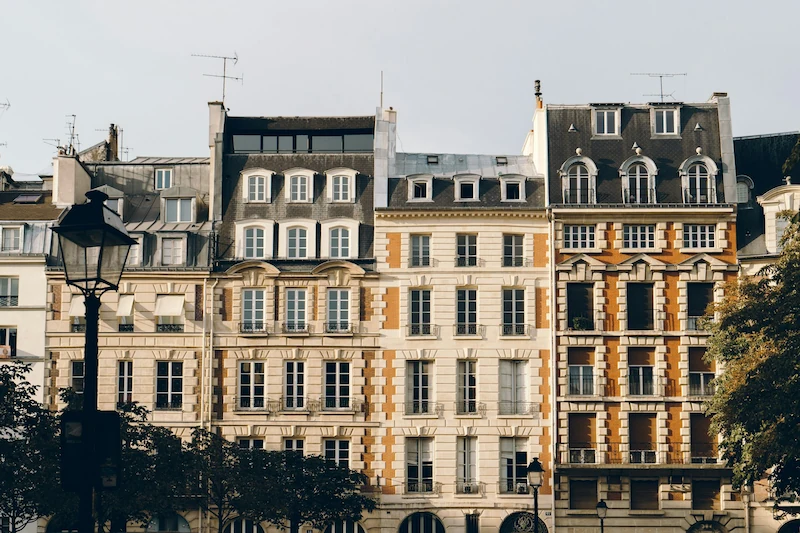
Where to stay in Paris
Find the best neighborhoods and hotels in Paris.
Open page →
Plan your trip to Paris with a structure that matches how the city actually works: river first, banks second, neighborhoods third, and monuments only once the geography makes sense. Paris is not best understood as a checklist of famous sights. It is a compact but layered capital where museum clusters, market streets, formal boulevards, residential quarters, gardens, terraces, and river crossings each reveal a different version of the city. The strongest trips use the Seine as an orientation tool, choose the right base for the rhythm of the stay, and alternate headline culture with quieter neighborhood time so the city feels composed rather than consumed.
Find the best neighborhoods and hotels in Paris.
Open page →
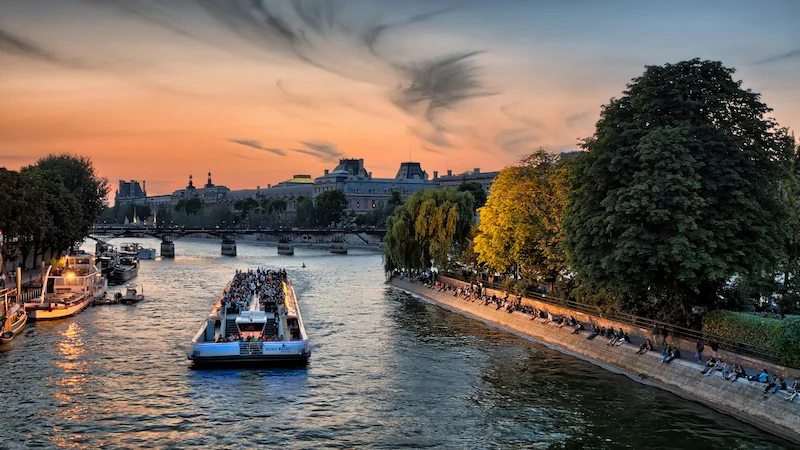
Prioritize the activities that deserve your time in Paris.
Open page →
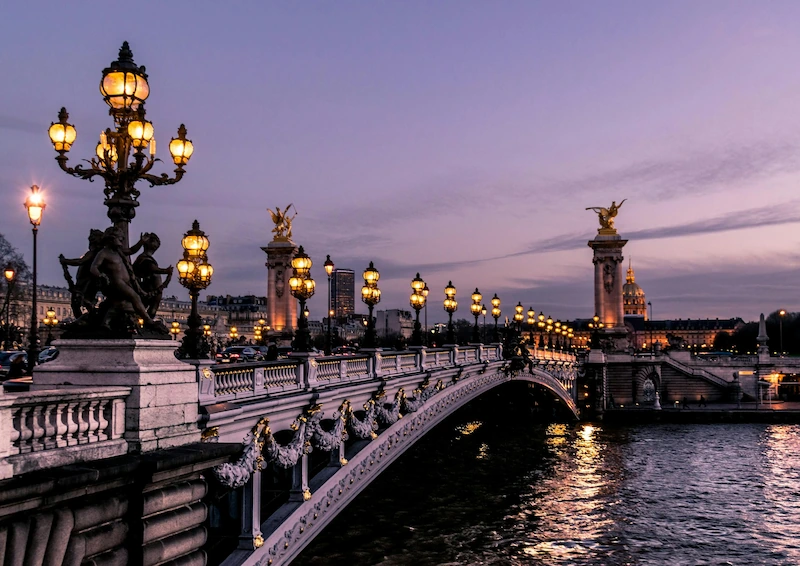
2 Days in Paris: Best Itinerary
Open itinerary →
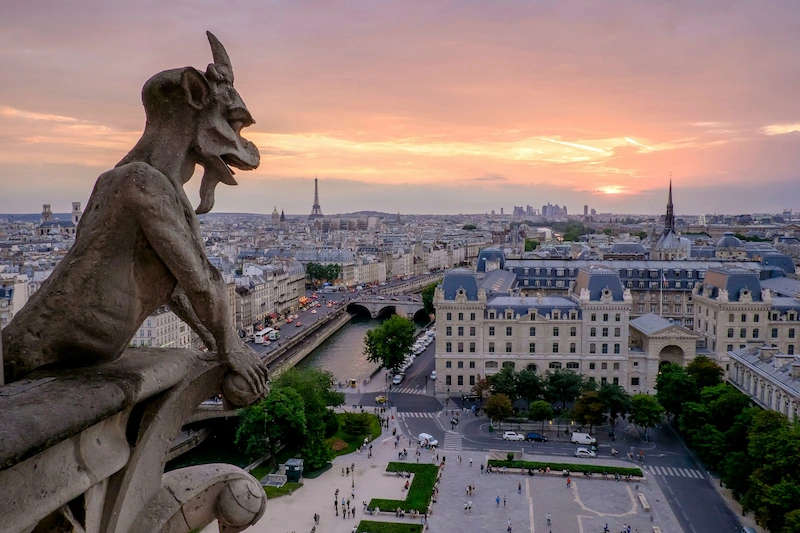
3 Days in Paris: Best Itinerary
Open itinerary →
5 Days in Paris: Best Itinerary
Open itinerary →
7 Days in Paris: Best Itinerary
Open itinerary →
Paris is a capital of layers rather than a city of single highlights: royal axes, intellectual quarters, residential streets, market corridors, museum clusters, and boulevard culture sit inside a compact footprint. It rewards travelers who read the city by connected zones, not isolated monuments, and who understand when to use the Right Bank for grandeur, the Left Bank for intellectual and museum depth, and outer neighborhoods for a more contemporary rhythm. The city is walkable, but only when the day is sequenced intelligently.
Few cities compress cultural influence, recognizable form, and lived neighborhood texture into such a legible center. Paris is worth structuring a trip around because it offers both symbolic density and true local continuity: museums, markets, terraces, river walks, gardens, historic interiors, and residential streets all belong to the same urban composition. The city is strongest when you let it unfold in sequences — Seine to Louvre, Saint-Germain to Luxembourg, Opéra to Grands Boulevards, Marais to Canal Saint-Martin — rather than forcing every famous name into one exhausting route. As evening light settles on pale stone, Paris feels less crowded than precisely arranged.
Best time: April–June and September–October for mild weather, terrace life, strong museum-and-walking conditions, and fewer compromises than peak summer.
Ideal trip length: 3 days for a focused first visit; 5 days for the best balance of icons, museums, neighborhoods, and food; 7 days if you want slower Paris or a Versailles / outer-neighborhood layer.
Paris rewards smart positioning more than constant spending. Central stays near the Seine, Le Marais, Saint-Germain, and the 7th can be expensive, but a well-located hotel saves time, reduces taxi dependence, and keeps evenings flexible. The biggest avoidable costs come from weak hotel geography, late booking, monument-adjacent dining, and trying to compensate for poor sequencing with taxis. Spend for location first, use lunches and market streets intelligently, and let walking do some of the work.
The Seine is the original axis; nearly every meaningful first-trip decision still relates back to it. The Right Bank historically concentrates commerce, administration, grand urban display, shopping corridors, and major formal perspectives, while the Left Bank carries scholarship, museums, gardens, and a denser intellectual register. Haussmann’s boulevards made the city newly readable, but older districts such as Le Marais, the Latin Quarter, and Île de la Cité preserve tighter medieval and pre-modern texture. A smart Paris trip moves between these registers rather than treating every stop as the same kind of attraction.
The twenty arrondissements spiral outward in a clockwise shell, but for visitors the more useful mental map is river, banks, and clusters. The Louvre-Tuileries-Opéra axis behaves differently from Saint-Germain-Luxembourg, which behaves differently from Le Marais, Montmartre, Canal Saint-Martin, or the 7th. Central Paris is compact enough to reward walking, but each bank change, metro transfer, or hill climb changes the energy of the day. The city reads less as one continuous field than as connected urban chambers.
Mornings belong to quieter quays, markets, bakeries, museum entries, and residential streets before the city fully thickens. Midday concentrates museum traffic, office movement, and dense flows through central corridors. Late afternoon softens into terraces, gardens, and neighborhood circulation, while evenings work best when they stay close to the district you already inhabit. Paris rewards travelers who protect one unhurried evening and do not let every day collapse into transport between famous names.
Read Paris first as a relationship between river, banks, and districts rather than a checklist of famous names. Use one anchor per half-day — a museum, a viewpoint, a market street, a garden, or a neighborhood — then build the surrounding route from nearby texture. Once you understand that each zone carries its own density, tone, and historical register, Paris becomes less sprawling than layered.
Open the planner
Build each day around one major anchor, one surrounding neighborhood arc, and one evening zone. Separate Left Bank days, Right Bank days, and river-crossing sequences instead of repeatedly zigzagging across the city. Use major museums as fixed pillars, then shape the surrounding hours with walking, gardens, food streets, terraces, or slower neighborhood time. Choose one headline museum or one major viewpoint per day; stacking several usually weakens the rhythm. Treat the Eiffel Tower, Louvre, Montmartre, and Île de la Cité as timing-sensitive zones where early or late access changes the experience. Protect one slower half-day beyond three nights so Paris can be experienced as a city, not only covered as a list of sites. Use transport mainly to reset between meaningful zones, not to fragment every short movement. Keep evenings attached to the district you are already in whenever possible: Le Marais, Saint-Germain, Canal Saint-Martin, Opéra, or Montmartre all behave differently after dark.
Vibe: Historic, central, walkable, stylish, and dense with cultural texture.
Why go: Le Marais is one of the strongest all-round areas for understanding Paris because it combines older street fabric, mansion courtyards, museums, boutiques, Jewish heritage, LGBTQ+ nightlife, cafés, and easy Right Bank movement in one compact district. It works as both a stay base and a neighborhood experience, which makes it especially powerful for first-time visitors who want depth without losing centrality.
Who it fits: First-time visitors, couples, design-minded travelers, food-led stays, repeat visitors who still want central access, and travelers who like to wander without over-planning.
Not for: Travelers who want grand boulevard scale, quiet hotel surroundings, large rooms, or the most budget-friendly central stay.
Where to stay: Best for travelers who want central Paris to feel lived-in, walkable, and layered rather than purely monumental.
Vibe: Polished, literary, elegant, museum-adjacent, and highly walkable.
Why go: Saint-Germain is one of the safest premium choices for a first Paris stay because it keeps the Seine, Louvre-Orsay corridor, Luxembourg Gardens, serious cafés, galleries, bookshops, and refined dining within a coherent walking radius. It gives Paris a calmer Left Bank rhythm without feeling remote or overly residential.
Who it fits: First-time visitors who want low-friction days, couples, museum-focused travelers, premium-but-not-flashy stays, and travelers who prefer elegance to nightlife.
Not for: Travelers seeking edgy contemporary Paris, late-night energy, larger-value hotels, or a younger local scene.
Where to stay: One of the most reliable bases for a classic but intelligent Paris trip, especially when museums, cafés, river walks, and refined Left Bank atmosphere matter.
Vibe: Residential, composed, monument-adjacent, spacious, and quieter than the central core.
Why go: The 7th gives access to the Eiffel Tower, Invalides, Rodin Museum, Rue Cler-style food streets, and calmer residential blocks without the constant compression of the most central tourist corridors. It is best understood as a scenic and composed base rather than the liveliest version of Paris.
Who it fits: Couples, families who want calmer streets, Eiffel Tower-focused first trips, premium stays, and travelers who prefer quiet evenings over nightlife.
Not for: Travelers who want immediate Marais-style density, late-night restaurants, creative edge, or the easiest access to every Right Bank zone.
Where to stay: Excellent for calm, monument access, and polished residential Paris, but less dynamic after dark than Le Marais, Saint-Germain, or Opéra.
Vibe: Historic, academic, central, animated, and uneven by micro-location.
Why go: The Latin Quarter is valuable because it places you near the Seine, Notre-Dame axis, Panthéon, Luxembourg Gardens, older universities, bookish streets, and Left Bank history at a price-positioning mix that can be more accessible than Saint-Germain. The key is choosing the right street, because the area shifts quickly from atmospheric to tourist-heavy.
Who it fits: First-time visitors on a more practical budget, students-at-heart, history-minded travelers, walkers, and short stays where centrality matters.
Not for: Travelers who want guaranteed calm, luxury hotel polish, or an entirely local-feeling stay without tourist spillover.
Where to stay: A strong central base if chosen carefully; prioritize quieter streets over the most obvious restaurant corridors.
Vibe: Atmospheric, village-like, hilly, romantic, and slightly removed from the core.
Why go: Montmartre gives Paris a different register: elevation, steps, studios, neighborhood cafés, Sacré-Cœur views, and a village-like street pattern that breaks from the central river logic. It is emotionally rich, but it is not the easiest operational base for a first trip unless atmosphere matters more than efficiency.
Who it fits: Repeat visitors, couples, photographers, atmosphere-led travelers, and visitors who do not mind hills or slightly longer transfers.
Not for: Very short first visits, travelers with mobility concerns, museum-heavy itineraries, or anyone who wants immediate access to both banks.
Where to stay: Best as an atmospheric stay or half-day experience; less efficient as the default first-time base.
Vibe: Central, formal, theatrical, efficient, and boulevard-driven.
Why go: Opéra and Grands Boulevards are useful when logistics matter: strong metro connections, major department stores, Palais Garnier, hotel supply, Right Bank access, and a clear Haussmannian reading of the city. The area is less intimate than Le Marais or Saint-Germain, but it performs very well for short stays and travelers who want central movement without paying only for romance.
Who it fits: Short stays, first-time visitors who prioritize transit, architecture-led travelers, shoppers, business-leisure trips, and visitors who want easy Right Bank access.
Not for: Travelers looking for village softness, quiet evenings, or the most poetic version of Paris outside the hotel door.
Where to stay: One of the most efficient central bases when transport, hotel availability, and boulevard-scale Paris matter.
Vibe: Contemporary, local, relaxed, younger, and less monumental.
Why go: Canal Saint-Martin is where Paris feels less curated and more current: canal-side evenings, independent dining, neighborhood cafés, boutiques, and a local social rhythm that contrasts with central museum-and-monument Paris. It is better for repeat visitors or longer stays than for a first trip built around the Louvre, Seine, and Left Bank.
Who it fits: Repeat visitors, younger travelers, food and café-led stays, longer trips, and visitors who want evenings that feel more local than ceremonial.
Not for: Monument-first itineraries, very short stays, travelers who want classic Paris outside the hotel door, or those who dislike a less polished setting.
Where to stay: Best for contemporary local Paris and relaxed evenings, but not the strongest base if this is your only Paris trip.
Paris reveals itself in layers: the Seine and the major monuments give the city its structure, museums and historic interiors add cultural depth, while markets, gardens, terraces, and residential streets bring the local rhythm into focus. The strongest experiences are not all equal in priority: some are essential on a first trip, others work best once the classic core is secure.
Planning tip: Book the major timed-entry anchors first, then build each half-day around nearby neighborhoods, gardens, market streets, terraces, and food stops so the city feels coherent rather than overfilled.
The Louvre is not simply a museum stop; it is one of the main structural anchors of central Paris. Entering through the Carrousel keeps the visit calmer and helps the day work as a Louvre–Tuileries–Palais-Royal or Louvre–Seine sequence rather than a queue-driven obligation.
Tip: Choose one wing or theme before entering; breadth is where Louvre visits fail.
The Seine is the clearest orientation tool in Paris. Walking it early reveals how the banks, bridges, islands, museums, and monuments connect before traffic and visitor pressure make the city feel more fragmented.
Tip: Use the river as your first-day spine, especially between Île Saint-Louis, Pont Neuf, the Louvre, and the Tuileries.
Check guided tours →
The Arc de Triomphe is most valuable because it explains Parisian geometry from above. From the terrace, Haussmannian avenues, the Champs-Élysées axis, and the city’s formal westward expansion become legible in one view.
Tip: Choose this or another viewpoint; do not stack multiple paid heights on a short stay.
For many first-time visitors, the Eiffel Tower is more powerful as an urban symbol seen from the right perspective than as a long queue or summit commitment. Trocadéro gives the visual payoff quickly, letting the rest of the day stay functional.
Tip: Go early, take the view, then continue into the 7th, Seine, or Invalides rather than letting the tower consume the morning.
Île de la Cité is essential because it compresses Paris’s origin story: river settlement, medieval power, religious architecture, bridges, courts, and civic geography in one compact walk. It should be treated as a central sequence, not a single cathedral stop.
Tip: Approach via Pont Neuf, then connect to Sainte-Chapelle, Notre-Dame exterior, or the Left Bank depending on timing.
Montmartre gives Paris a different spatial register: hill, village, steps, views, artists’ mythology, and residential texture. It is strongest when approached slowly through side streets rather than reduced to Sacré-Cœur and the busiest stairs.
Tip: Use it early morning or late afternoon; midday Montmartre is rarely the best version of the hill.
Palais Garnier explains Parisian urban theater: spectacle, staircase, boulevard culture, decorative ambition, and the Opéra district’s formal identity. It helps make sense of Right Bank grandeur from the inside.
Tip: Pair it with Opéra / Grands Boulevards, not with a random cross-city museum day.
Musée d’Orsay is the best counterweight to the Louvre for many visitors: more manageable, visually rich, and tightly connected to Paris’s modern cultural identity. Reading it chronologically turns the museum into a story of rebellion, light, and urban change.
Tip: If you only have time for one art museum and want high payoff without Louvre scale, choose Orsay.
The Orangerie is a strategic museum choice because it gives serious cultural return without draining a full half-day. It works especially well when paired with the Tuileries, Place de la Concorde, the Louvre area, or a softer central afternoon.
Tip: Use it when you want cultural depth but not another large institution.
Cluny is a repeat-visitor or depth-first card: it reveals Roman and medieval Paris beneath the better-known Haussmannian and royal city. It is not essential for every first trip, but it strengthens the Latin Quarter and early-Paris narrative.
Tip: Best after you already understand the river-and-bank logic of central Paris.
The Rodin Museum is useful because it mixes collection, garden, mansion scale, and the quieter elegance of the 7th. It is a strong second-layer cultural stop when the trip needs relief from larger museums.
Tip: Pair it with Invalides, Rue Cler, or the Eiffel Tower area rather than making it a detached museum errand.
Independent bookshops are not a headline attraction, but they express Paris’s intellectual continuity at a small scale. This card works as a local-cultural pause, especially in Saint-Germain, the Latin Quarter, or the Marais.
Tip: Treat it as texture inside a neighborhood sequence, not as a standalone detour.
Check guided tours →
A church concert adds a night-time cultural layer that feels spatially Parisian: architecture, acoustics, history, and music in one compact evening. It is best for travelers who want atmosphere without another restaurant-led night.
Tip: Use it on a longer stay or after a museum-heavy day when you want a quieter evening.
Markets are one of the clearest ways to see Paris as a lived city rather than a monument field. They give food, neighborhood rhythm, everyday transactions, and seasonal texture in a format that fits naturally into the morning.
Tip: Choose a market near the area you are already exploring; do not cross the city just for one market.
Check guided tours →
Terrace time is a strategic pause in Paris, not filler. It slows the itinerary, lets a district register, and prevents the day from becoming a museum-and-monument sprint.
Tip: The best terrace is often not famous; it is simply well placed in the neighborhood you are already in.
Check guided tours →
Luxembourg Gardens are central to understanding Left Bank Paris because they connect civic order, student life, family routines, and garden culture. They work best as a deliberate reset between Saint-Germain, the Latin Quarter, and the Panthéon.
Tip: Use the gardens to hold the Left Bank together rather than as a random rest stop.
Check guided tours →
The Promenade Plantée is a repeat-visitor layer that shows Paris repurposing infrastructure before the High Line made the idea famous globally. It is valuable, but it belongs after the classic core is already secure.
Tip: Save it for a longer stay or an east-Paris day built around Bastille, Aligre, or local neighborhoods.
Check guided tours →
Palais-Royal is one of the most efficient pauses in central Paris: formal, calm, architectural, and close to the Louvre without feeling like the Louvre. It helps soften a dense Right Bank day.
Tip: Use it when the Louvre/Tuileries/Opéra axis starts to feel too hard-edged.
Check guided tours →
Canal Saint-Martin gives Paris a contemporary local rhythm: informal evenings, water, bridges, friends along the edge, and a less ceremonial mood than the central quays. It is a high-value layer for repeat visitors or longer stays.
Tip: Attach it to a north/east Paris evening, not to a classic Left Bank museum day.
Check guided tours →
Rue Montorgueil is a compact lesson in Paris as an edible, walkable city. It is central enough to fit a first trip and local enough to shift the day away from monument-only movement.
Tip: Use it before lunch or as a food-led bridge between the Louvre/Palais-Royal and Grands Boulevards.
Check guided tours →
Père Lachaise is a repeat-visitor or longer-stay layer that reveals a more introspective Paris: memory, literature, music, political history, trees, and stone paths away from the central ceremonial city.
Tip: Do not force it into a three-day first trip unless this mood is a personal priority.
Check guided tours →
A classic bistro lunch is one of the smartest food strategies in Paris because midday often gives better value, calmer rooms, and less pressure than dinner. It also keeps evenings free for neighborhood wandering or lighter wine-bar plans.
Tip: Reserve lunch in the district you are already exploring; do not make food break the geography of the day.
Paris is better understood through comparison than through one viral bakery. A pastry or bakery sequence works best when it is contained inside one neighborhood and supports the route rather than hijacking it.
Tip: Build a short route in Saint-Germain, Le Marais, Opéra, or the 7th instead of chasing scattered addresses.
Check food options →
A fromagerie stop gives the food story of Paris more depth than another restaurant booking. Guidance matters because ripeness, order, and timing change the experience.
Tip: Mention when you plan to eat the cheese; the answer changes what you should buy.
Check food options →
A market street is often one of the best food-led ways to experience Paris: it combines shops, rhythm, appetite, and neighborhood orientation without needing a formal reservation. Rue Montorgueil and Rue Cler serve different versions of this logic.
Tip: Use market streets as a half-day framework, not as a five-minute shopping detour.
Check food options →
A structured food tour makes sense when time is short or when you want a guide to compress neighborhood, food history, and tasting decisions into one efficient arc. It belongs more to strategy than indulgence.
Tip: Choose small-group tours focused on one neighborhood; broad citywide food tours usually dilute the value.
A wine bar or cave à manger is a strong evening strategy because it feels local, flexible, and adult without requiring a formal multi-course dinner. It works especially well after a heavy museum or monument day.
Tip: Use it as your lighter evening layer after a dense cultural day.
Check food options →
Paris becomes difficult when every famous name is treated as equally important. The right strategy is to separate the experiences that explain the city from the ones that add texture, and then choose based on trip length, season, and traveler profile.
Paris works well with children if you resist the urge to over-program it. The city is visually rich, compact enough for strategic walking, and full of easy rewards — carousels, gardens, boats, viewpoints, and strong pastry breaks — but museum density and long crossings can tire younger travelers quickly. In the softer pace of a park afternoon or an early Seine cruise, the city becomes much easier to inhabit as a family.
The city rewards calibrated pacing — choose a duration that protects curiosity rather than exhausting it.
Open the planner →
Paris logistics become easier once the trip is aligned with the city’s actual tempo rather than with an abstract list of sights. The key decisions are where to stay, how to group Left Bank and Right Bank days, when to book museums, when to walk, and when not to defend the original plan. A good Paris itinerary should reduce friction while leaving enough room for the city to breathe. Timed-entry attractions and restaurant reservations should be treated as structural decisions: book the Louvre, Orsay, Sainte-Chapelle, Eiffel Tower access, Versailles, and high-demand restaurants only when they support the day’s geography rather than breaking it.
Late spring and early autumn are the easiest all-around choices because daylight, walking comfort, terraces, gardens, and cultural rhythm stay in balance. Winter is strong for museum-led and dining-led stays with lower crowd pressure, while peak summer requires early starts, heat-aware pacing, and more booking discipline. Choose spring or autumn for a first general visit, winter for a calmer cultural trip, and summer only if long days and maximum energy matter more than ease.
Three nights are enough to understand the city’s basic structure if you stay central and choose ruthlessly. Five days is the better threshold for a satisfying first trip because it allows one major museum, one second museum, river time, both banks, Montmartre or a viewpoint, and a few real neighborhood meals. Seven days lets you add Versailles, Canal Saint-Martin, Père Lachaise, or deeper food and culture without weakening the core.
For a first stay, prioritize a base within practical reach of the Seine, Le Marais, Saint-Germain, the Latin Quarter, Opéra, or the 7th depending on your style. In Paris, location compounds: a smaller room in the right district usually performs better than a larger room that forces constant transit. First-timers should choose central readability; repeat visitors can move toward Canal Saint-Martin, Montmartre, or more residential zones once the classic geography is familiar.
Paris is reached mainly through Charles de Gaulle for long-haul arrivals and Orly for many European and domestic routes, while Gare du Nord, Gare de Lyon, Gare de l’Est, Saint-Lazare, and Montparnasse shape rail arrivals depending on direction. Airport-to-city time varies sharply with traffic and luggage friction, so decide the transfer before arrival rather than improvising. Train arrivals are often easier, but the station location should influence your first-night plan.
Walk whenever the geography makes sense; central Paris is one of the clearest major capitals to understand on foot once nearby zones are grouped properly. The metro is best for longer resets, but not every short hop needs it because transfers and station depth can erase time saved. Buses can be scenic but slower, while taxis and ride-hailing are useful late, with luggage, or for mobility needs; bridge bottlenecks and rush-hour traffic make them weaker for daytime central movement.
Paris is generally straightforward from a health and safety perspective, with reliable pharmacies, medical care, and routine services. The main traveler risks are practical: pickpocketing in dense visitor zones, distraction theft on transport, fatigue from overpacked days, and poor routing that leaves you tired and reactive. Calm awareness matters more than anxiety, especially around major monuments, crowded metro interchanges, train stations, and luggage-heavy arrival moments.
Paris works year-round, but the best season depends on whether you want ease, atmosphere, daylight, museums, food, or lower pressure. Spring and early autumn are the best first-trip windows because they support walking, terraces, gardens, and museums without the harshest crowd or weather trade-offs. Winter favors interiors and dining, while summer gives long days but demands more discipline around heat, queues, and early starts.
Spring is one of the strongest moments for a first trip: temperatures are usually mild, daylight stretches longer, gardens and terraces re-enter the daily rhythm, and full museum-and-walking days remain sustainable. Book major sights, but expect the city to feel balanced rather than compressed.
Summer gives maximum daylight and open-air energy, but it also brings heat, crowd pressure, reservation scarcity, and heavier congestion around the Eiffel Tower, Louvre, Montmartre, and Île de la Cité. It works best with early starts, late evenings, and a willingness to retreat indoors during the hardest midday hours.
September and October are among the best months for Paris: cultural life is fully active, walking becomes easier again, and the city regains a steadier rhythm after peak-season compression. It is an excellent fit for first-timers, couples, food-led stays, and museum-heavy trips.
Winter suits travelers who care more about museums, dining rooms, bookshops, wine bars, and lower crowd pressure than long daylight. It is a strong repeat-visitor season and can be excellent for serious culture, though outdoor pacing and riverside time need more realism.
These answers cover the practical decisions that most affect a Paris stay: how long to spend, where to stay, what to prioritize, what to skip, how to move, and how to avoid flattening the city into a checklist.
Three days are enough for a strong first read of central Paris if you structure the trip around one major museum, a Seine sequence, both banks, one viewpoint, and two or three neighborhood arcs. Five days is the better first-trip length because it allows museums, food, gardens, Montmartre, and slower evenings to breathe. Seven days lets you add Versailles, Canal Saint-Martin, Père Lachaise, or repeat-visitor layers without weakening the core.
Le Marais, Saint-Germain-des-Prés, the Latin Quarter, Opéra / Grands Boulevards, and parts of the 7th are the strongest first-trip bases. Le Marais is best for central texture, Saint-Germain for polished Left Bank access, the Latin Quarter for practical centrality, Opéra for transport and hotel supply, and the 7th for calm and Eiffel Tower proximity.
There is no single best arrondissement for every traveler. The 4th works well for Le Marais and central walking, the 6th for Saint-Germain and museum access, the 5th for Latin Quarter history and value, the 7th for calm and Eiffel proximity, and the 9th/Opéra edge for efficient transport and hotel choice.
Choose Le Marais if you want central energy, historic streets, boutiques, food, galleries, and a more contemporary Right Bank rhythm. Choose Saint-Germain if you want refined Left Bank atmosphere, bookshops, cafés, museums, and calmer elegance. For many first-time visitors, Le Marais feels livelier; Saint-Germain feels more polished.
The Left Bank is stronger for Saint-Germain, the Latin Quarter, Luxembourg Gardens, Orsay, and a more intellectual or classic rhythm. The Right Bank is stronger for Le Marais, the Louvre, Opéra, shopping corridors, nightlife pockets, and broader hotel choice. First-timers can do well on either side if the base keeps the Seine and metro access close.
Protect a Seine walk, one major museum, Île de la Cité, one viewpoint, and a proper neighborhood sequence such as Le Marais, Saint-Germain, Montmartre, or Opéra. Paris is stronger when the day is geographically coherent than when famous sights are collected at random.
It can be worth going up if the tower itself is a personal priority, but it is not essential for every trip. Many travelers get a better time-to-reward ratio by seeing it from Trocadéro, the Seine, or the 7th, then using the saved time for a stronger neighborhood or museum experience.
Choose the Louvre if you want scale, antiquities, royal-palace context, and one of the world’s defining museum experiences. Choose Musée d’Orsay if you want a more manageable visit with very high art-history payoff, especially around Impressionism and 19th-century Paris. On a short first trip, do one well rather than both badly.
Yes, Montmartre is worth visiting if you approach it through quieter residential streets and understand it as a hilltop neighborhood, not only as Sacré-Cœur. It is best early morning or late afternoon. Staying there is more debatable: atmospheric, but less efficient for a short first visit.
Canal Saint-Martin is excellent for longer stays, repeat visitors, and travelers who want contemporary local Paris, but it is not a top priority on a very short first trip. Add it when the classic river, museum, and central neighborhood logic is already covered.
Skip multiple major museums in one day, Eiffel Tower summit queues if the view is not essential, restaurants directly beside monuments when food quality matters, and long suburban detours on a short stay. Also avoid crossing the city for isolated cafés or pastries unless they support the day’s geography.
Versailles is worth it if you have at least five days, strong interest in royal history, or a repeat visit to Paris. On a three-day first trip, it often consumes too much time and weakens the city itself. Treat Versailles as a full-day commitment, not a casual add-on.
Disneyland Paris makes sense for families or Disney-focused travelers on a longer stay, but it should not be added casually to a short first Paris trip. It is a full-day out-of-city reset and competes directly with museums, neighborhoods, and the classic Paris core.
Paris is very walkable within connected central areas, and walking is often the best way to understand the city. The mistake is trying to walk everything. Use the metro for longer resets, then walk within meaningful zones such as Le Marais, Saint-Germain, the Seine, Opéra, Montmartre, or the Latin Quarter.
Use walking for central sequences, the metro for longer resets, and taxis or ride-hailing for late nights, luggage, mobility needs, or bad weather. Buses can be scenic but slower. The best transport strategy is to reduce unnecessary movement by planning days geographically.
April to June and September to October are the best all-around periods for most visitors because walking, terraces, museums, and evening rhythm all work well. Winter is good for calmer cultural trips. Summer has long days but more heat, crowds, and booking pressure.
Yes, Paris can be excellent in winter if the trip is built around museums, dining, bookshops, wine bars, and lower crowd pressure. It is less ideal for long park afternoons and outdoor lingering, but the city’s interior culture performs very well.
Paris is generally safe for tourists, but practical awareness matters. Watch for pickpockets in crowded metro stations, around major monuments, on busy bridges, and during luggage-heavy arrivals. Most issues are avoidable with calm attention rather than anxiety.
Avoid eating directly beside major monuments, be cautious around restaurants with aggressive menus in several languages, and move one or two streets away from the obvious viewpoint before choosing a meal. Use lunch menus, market streets, neighborhood bistros, and food shops to get better value and more local rhythm.
Saint-Germain is the safest polished choice for couples, Le Marais is better for lively central wandering, Montmartre is strongest for atmosphere, and the 7th suits couples who want calm and Eiffel Tower proximity. The right choice depends on whether romance means elegance, energy, views, or quiet.
The 7th, Saint-Germain, and parts of the Latin Quarter are strong for families because they combine calmer streets, parks, food access, and manageable movement. Le Marais can also work with older children. Prioritize room size, transit, parks, and easy meals over pure centrality.
Le Marais, Saint-Germain, the Latin Quarter, Rue Montorgueil, Canal Saint-Martin, and parts of the 9th/10th are strong for food depending on style. For a first trip, choose food routes that support the day’s geography rather than crossing the city for one famous address.
Yes, Opéra / Grands Boulevards can be a very practical place to stay, especially for short visits, shopping, transport, and hotel choice. It is less intimate than Le Marais or Saint-Germain, but it performs well when efficiency and central movement matter.
The biggest mistake is treating Paris as a list of sights instead of a set of connected zones. This leads to unnecessary bank crossings, rushed museums, weak restaurant choices, and tired evenings. A better trip uses one anchor, one neighborhood arc, and one evening zone each day.
Read Paris by zones, not isolated icons, and the city begins to organize itself.
Find the best places to stay, how to get there, and move around with ease.
Build a smarter trip base
Once you understand how Paris works and what matters most for your trip, the next step is turning that direction into a real itinerary. Use the planner to organize your days around the right areas, experiences, and rhythm so the trip feels clear before you go.