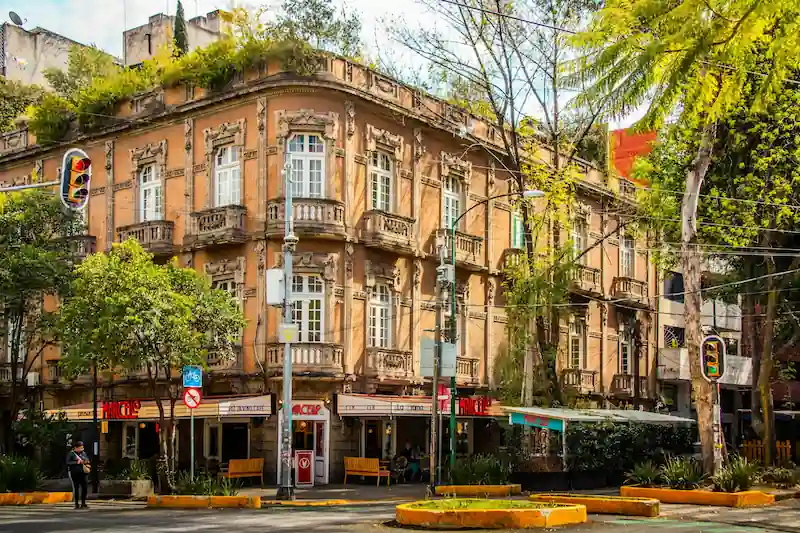
Where to stay in Mexico City
Find the best neighborhoods and hotels in Mexico City.
Open page →
Plan your trip to Mexico City, find the best areas to stay, and understand how to experience one of North America’s most layered capitals. Mexico City is not a single sightseeing zone; it is a vast highland metropolis shaped by ceremonial avenues, ancient foundations, museum corridors, food markets, leafy residential districts, creative neighborhoods, religious landmarks, modernist architecture, and late-night local rituals. The best trips work by rhythm: one strong cultural anchor, one walkable district, one food experience, and enough margin for traffic, altitude, and street life to become part of the trip rather than a problem to solve.
Find the best neighborhoods and hotels in Mexico City.
Open page →
Prioritize the activities that deserve your time in Mexico City.
Open page →
2 Days in Mexico City: First-Time Itinerary for Centro, Chapultepec & Roma
Open itinerary →
3 Days in Mexico City: First-Time Itinerary with Coyoacán & Xochimilco
Open itinerary →
4 Days in Mexico City: Culture, Coyoacán & Xochimilco Itinerary
Open itinerary →
5 Days in Mexico City: Complete Neighborhood Itinerary
Open itinerary →
Mexico City is not one center but a set of overlapping cities: historic, political, residential, artistic, culinary, devotional, modernist, and deeply local. The strongest trips understand how Centro Histórico, Reforma, Chapultepec, Roma-Condesa, Juárez, Polanco, Coyoacán, San Ángel, Xochimilco, and the northern pilgrimage axis around Guadalupe each carry a different rhythm rather than trying to compress them into one continuous sightseeing route.
Mexico City rewards travelers who like cities with density, history, food, and street-level intelligence. It holds major archaeological, colonial, modernist, religious, and contemporary layers within the same urban field, but its real distinction is how formal culture and everyday life sit close together. A morning can move from Mexica ruins to murals, a shaded park, a taquería counter, a design hotel lobby, and a plaza where the soundscape keeps changing. Few cities offer that much cultural range without losing the feeling of lived-in urban life.
Best time: March–May or October–November for mild days, clearer skies, strong street life, and the most comfortable walking conditions.
Ideal trip length: 4–5 days is the best first-trip threshold; 3 days works only with strict area choices, while 7 days allows Teotihuacán, Xochimilco, UNAM, San Ángel, Guadalupe, Casa Barragán and deeper food planning.
Mexico City can feel excellent value for food, museums, transport, and neighborhood wandering, but costs rise sharply in Polanco, top restaurants, design hotels, private guiding, and high-demand cultural tickets. The main budget pressure is not basic daily spending; it is choosing the most comfortable location and deciding how many premium meals, guided experiences, and fixed-time activities to anchor in advance.
Mexico City is built as a layered capital rather than a single visitor core. Centro Histórico holds the ceremonial and colonial center, Reforma stretches west as a monumental axis, Chapultepec forms a green and museum-heavy hinge, and Roma-Condesa, Juárez, Polanco, Coyoacán, and San Ángel each operate as distinct urban worlds. The city’s most revealing areas connect less like a compact European old town and more like a constellation of districts separated by scale, traffic, atmosphere, and daily rhythm.
The city sits in a high-altitude basin, broad and horizontal, with mountains and volcanoes shaping the distant frame on clear days. Movement is affected less by topography inside the central districts than by distance, traffic corridors, and the huge spread of the metropolitan area. The flatness can make walking feel easy within a neighborhood, while the jump between neighborhoods often requires deliberate transport.
Mexico City changes through the day with unusual clarity: market movement and office traffic in the morning, museum and park life through the day, restaurant terraces and residential streets later, then arena energy, mariachi, mezcal, and late taquerías after dark. Centro feels strongest early, Roma and Condesa gather pace later, Coyoacán has a slower weekend pulse, and Reforma often works best as a transition rather than a destination.
Read Mexico City as a layered urban atlas, not a checklist. Each day works best when it has one main zone, one strong cultural anchor, and enough margin to absorb food, traffic, altitude, and street life without flattening the city. The reward is not only seeing the capital’s highlights, but understanding how its districts carry different versions of Mexican urban life.
Open the planner
Anchor each day around one primary district rather than treating the city as a continuous walk. Pair Centro Histórico with Alameda, Bellas Artes, Palacio Nacional, or Reforma, not with far southern neighborhoods. Use Chapultepec as a full half-day or longer, especially if anthropology, the castle, modern art, the zoo, and park time all matter. Give Roma, Condesa, and Juárez a slower late-day role, when food, design, galleries, and street movement are strongest. Treat Coyoacán, San Ángel, UNAM, Anahuacalli and Xochimilco as southern planning clusters, not as short add-ons between central sights. Reserve Teotihuacán as a separate outside-the-city excursion with a lighter evening afterward. Use Basilica de Guadalupe as a specific cultural and devotional detour rather than forcing it into a standard Centro day. Book Casa Azul, Casa Barragán, major restaurants, and specialized guided visits before locking a culture-heavy itinerary. Build one flexible meal window each day because restaurants, markets, cantinas, taquerías, bakeries, and street food are part of the city’s structure, not secondary extras.
Vibe: Creative, walkable, food-led, and residentially textured.
Why go: Roma Norte is where many first-time visitors best feel Mexico City’s contemporary rhythm: galleries, restaurants, independent shops, restored houses, shaded streets, and a strong evening cadence. It is polished in places but still layered enough to avoid feeling like a hotel district.
Who it fits: First-timers who want restaurants, walkability, design, nightlife, and easy access to Condesa, Juárez, Reforma, and central museums.
Not for: Travelers who want the quietest possible stay, lowest hotel prices, or immediate proximity to the Zócalo.
Where to stay: One of the best overall bases for a first trip, especially if food, evenings, and neighborhood life matter as much as monuments.
Vibe: Leafy, relaxed, residential, and easy to settle into.
Why go: Condesa is less intense than Roma Norte and better for travelers who want softer streets, parks, cafés, and a neighborhood that works well between sightseeing days. Its curved avenues and shaded sidewalks create a slower domestic rhythm within a very large city.
Who it fits: Couples, families, remote workers, longer stays, and travelers who prefer calm evenings near good restaurants.
Not for: Travelers who want the densest nightlife, a grand landmark setting, or the most direct access to Centro.
Where to stay: A comfortable base for travelers who want Mexico City to feel walkable, green, and livable between major sights.
Vibe: Central, eclectic, evolving, and useful.
Why go: Juárez sits between Reforma’s formal city and Roma’s creative life, making it practical without feeling sterile. It has embassies, bars, restaurants, galleries, LGBTQ+ nightlife around Zona Rosa, and an urban texture that changes block by block.
Who it fits: Travelers who want central access, strong dining, nightlife, and a base between museums, Reforma, and Roma-Condesa.
Not for: Visitors looking for a uniformly quiet residential stay or the most polished luxury hotel environment.
Where to stay: A smart central base for travelers who want movement flexibility and a slightly more mixed urban edge.
Vibe: Upscale, composed, museum-adjacent, and dining-focused.
Why go: Polanco is Mexico City’s most refined visitor base, with luxury hotels, high-end restaurants, boutiques, and proximity to Chapultepec’s museums. It is useful for comfort and dining, and works especially well for travelers who want Soumaya, Jumex, Chapultepec, and top restaurants within easier reach.
Who it fits: Luxury travelers, business travelers, museum-focused visitors, and anyone prioritizing comfort, service, and top restaurants.
Not for: Travelers seeking local grit, lower prices, nightlife variety, or a strongly historic setting.
Where to stay: Best for a polished stay with strong hotel infrastructure and easy access to Chapultepec, Polanco museums, and major restaurants.
Vibe: Historic, monumental, crowded, and intensely layered.
Why go: Centro Histórico concentrates Mexico City’s political, colonial, and pre-Hispanic layers around the Zócalo, Templo Mayor, cathedral, palaces, churches, murals, and commercial streets. It is essential to understand the capital, but its energy can feel more demanding as the day advances.
Who it fits: History-focused travelers, short stays centered on major landmarks, and visitors who want early access to the historic core.
Not for: Travelers who want relaxed evenings, leafy streets, boutique restaurants, or the easiest first-time base.
Where to stay: Powerful for sightseeing, less balanced as an all-around base unless your trip is short and history-led.
Vibe: Village-like, artistic, slower, and southern.
Why go: Coyoacán gives Mexico City a different scale: plazas, colonial streets, markets, museums, and a slower public life shaped by the south of the city. It is deeply rewarding but less convenient for a full-city itinerary because it sits away from the central-west visitor circuit.
Who it fits: Return visitors, families, Frida Kahlo Museum visitors, and travelers who prefer quieter streets and a more local weekend rhythm.
Not for: First-timers who want maximum logistical efficiency or nightly access to Roma-Condesa and Reforma.
Where to stay: A characterful base for slower stays, but usually better as a dedicated day trip within the city for first-timers.
The best things to do in Mexico City work when they are layered rather than rushed: archaeology, murals, museums, food, religious landmarks, street life, parks, architecture, popular culture, and monumental space each reveal a different version of the capital. The city rewards depth more than speed, especially when a day moves from stone plazas to shaded parks, markets, galleries, and late restaurants.
Planning tip: Keep major experiences grouped by district and let food, market time, or park time act as part of the day, not a break from it.
The Zócalo is the city’s ceremonial center and the most direct way to read Mexico City’s political, colonial, and pre-Hispanic layers together. The scale of the square, the cathedral, the National Palace exterior, and the streets around it set the tone for the historic core.
Tip: Arrive early enough to see the plaza before commercial foot traffic thickens.
Templo Mayor gives the historic center its deepest layer: the Mexica capital visible beneath and beside the colonial city. It turns Centro Histórico from a monumental district into a palimpsest where stone, excavation, and power occupy the same ground.
Tip: Pair it with the Zócalo rather than treating it as a separate museum stop.
This is the single most important museum for understanding Mexico’s archaeological and cultural depth. Its scale is substantial, and the building itself creates a powerful transition between Chapultepec’s trees and the country’s ancient worlds.
Tip: Choose priority galleries before entering; trying to absorb everything weakens the visit.
Chapultepec is more than a park; it is the city’s green hinge between museums, memory, views, and public space. The castle adds history and elevation, while the park’s paths give the city a different breathing rhythm.
Tip: Leave enough time for the climb, views, and museum interiors rather than treating the castle as a quick lookout.
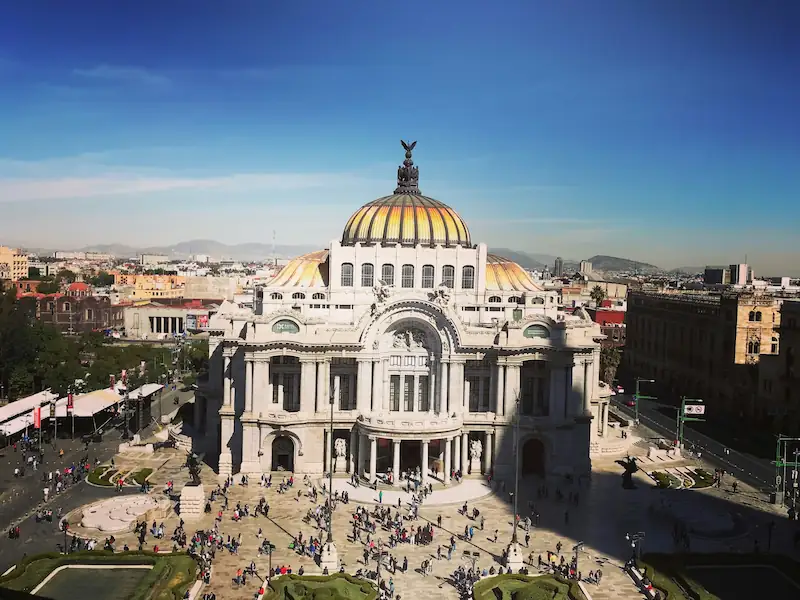
Bellas Artes is one of the city’s strongest visual thresholds, sitting between the historic center, Alameda Central, and the western movement toward Reforma. Inside, murals and performance spaces add cultural depth to the architectural presence.
Tip: Approach through Alameda Central for a better sense of its urban setting.
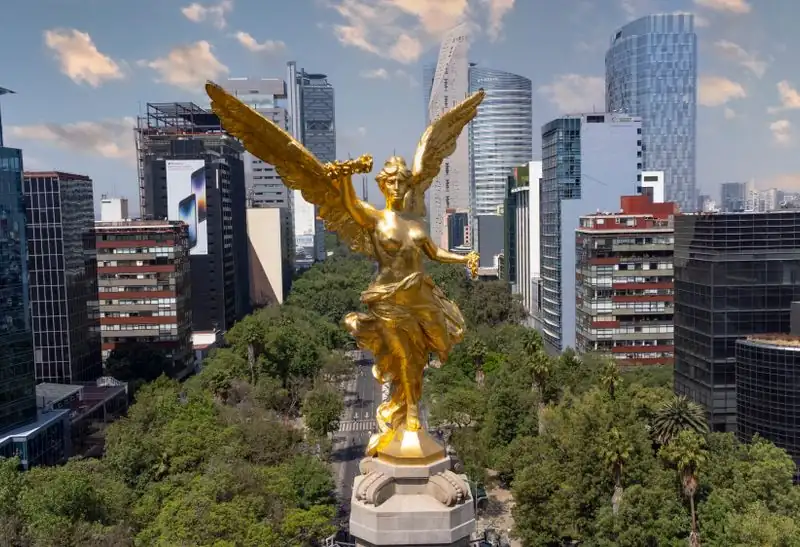
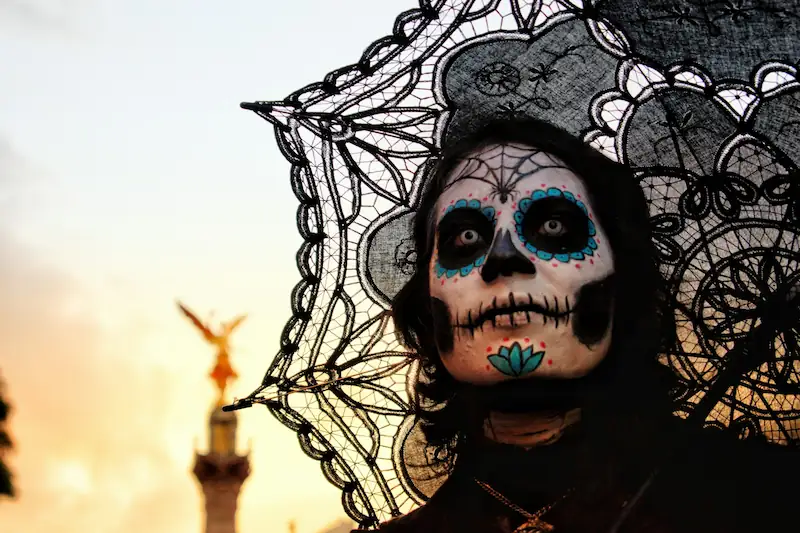
Reforma is Mexico City’s grand urban axis, and the Ángel de la Independencia is its most recognizable marker. Walking even a short stretch gives you a useful reading of the modern capital: monuments, offices, embassies, cyclists, protests, towers, and the transition between Centro, Juárez, Chapultepec, and Roma-Condesa.
Tip: Use it as a connector before dinner or after Chapultepec rather than treating it as only a photo stop.
Check guided tours →
Basilica de Guadalupe adds a major devotional and national layer to a Mexico City trip. It is one of the clearest ways to understand the capital beyond museums, cafés, and colonial monuments, especially if you want to see how pilgrimage, architecture, symbolism, and everyday faith occupy urban space.
Tip: Treat it as a dedicated northern detour, not as a casual stop between Centro and Chapultepec.
Teotihuacán adds a different scale to a Mexico City trip: ceremonial avenues, pyramids, open sky, and archaeological vastness beyond the urban basin. It is outside the city, but it often becomes one of the defining memories of a first visit.
Tip: Treat it as a dedicated excursion rather than forcing it between central sights.
Casa Azul is intimate by Mexico City standards and works best when understood as a domestic, artistic, and political space rather than just a biographical stop. Its scale creates a pause after the city’s larger museums and plazas.
Tip: Timed tickets matter here more than at many other city sights.
Casa Barragán adds a crucial architectural and design layer to a Mexico City trip. It is not just a house museum; it explains how light, color, modernism, privacy, and Mexican material culture can shape space with extraordinary restraint. For design-minded travelers, it is one of the city’s most important small-scale cultural experiences.
Tip: Book well ahead and treat it as a fixed appointment; it should shape the day around it, not be treated as a walk-in stop.
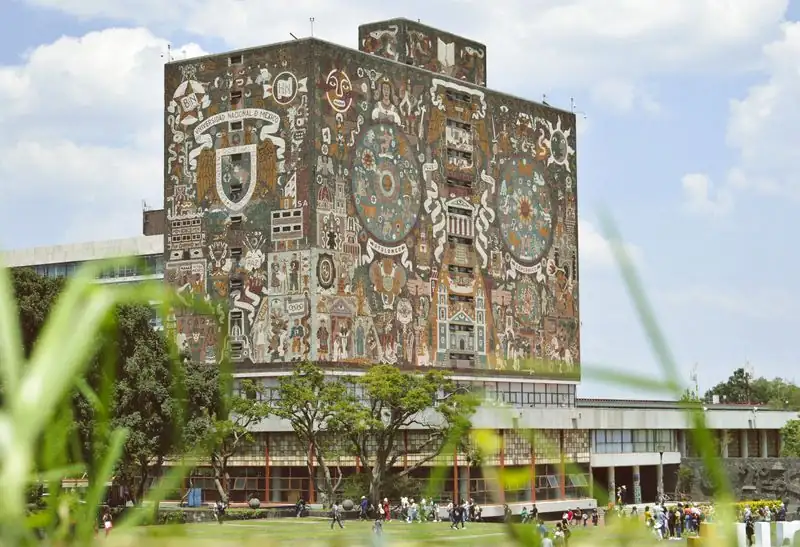
UNAM expands the city’s cultural map beyond the central-west circuit. The campus brings together modernist planning, murals, student life, monumental public art, and a UNESCO-listed cultural landscape at a scale that feels different from museums and colonial spaces.
Tip: Combine it with southern-city planning rather than inserting it into a Centro or Polanco day.
Check guided tours →
Museo Tamayo gives Chapultepec a contemporary counterpoint to the Anthropology Museum and the castle. Its architecture, exhibitions, and park setting make it a strong cultural pause without the density of the city’s largest institutions.
Tip: Use it as a second cultural stop only if the day still has enough energy.
Check guided tours →
Mexico City’s mural tradition turns public architecture into historical narrative. Seeing the murals inside official or cultural buildings helps connect politics, revolution, education, and visual culture in a way a standard museum sequence cannot.
Tip: Check access conditions before building a day around a specific interior.
Soumaya and Jumex make Polanco more than a dining or luxury-shopping district. Soumaya gives the visit architectural spectacle and a broad collection, while Jumex adds contemporary art and a cleaner museum rhythm. Together, they work especially well as a rainy-day cultural pair or a lighter counterpoint after Chapultepec.
Tip: Do both only if you want a Polanco cultural block; otherwise choose the one that best fits your energy and interests.
Check guided tours →
These neighborhoods reveal Mexico City at its most contemporary and lived-in: coffee, galleries, parks, design shops, restaurants, and streets that shift gradually from day to evening. Their value comes from movement and texture rather than a single landmark.
Tip: Let one or two fixed stops guide the walk, then leave space between them.
Check guided tours →
Coyoacán’s plazas show a softer public rhythm: families, markets, cafés, churches, and slow movement beneath trees. It gives the city a different pace after the formality of Centro and the intensity of major museums.
Tip: Keep the surrounding streets in the plan, not only Casa Azul.
Check guided tours →
Mercado de Jamaica is a useful reminder that Mexico City’s market culture is not only about eating. Flowers, vendors, movement, and narrow aisles create a working environment with strong visual rhythm and very little tourist choreography.
Tip: Go with patience and a simple route plan; the point is observation as much as buying.
Check guided tours →
Xochimilco is a logistics-heavy experience, but it shows another dimension of the city’s southern landscape and social life. The canals, boats, music, and water movement create a very different spatial register from the central city.
Tip: Go with clear expectations: it is social, slow, and best when not treated as a quiet nature escape.
Plaza Garibaldi gives Mexico City a louder, rougher-edged music experience than the polished Roma-Condesa evening circuit. It is not the city’s most refined night out, but it adds mariachi, old-school urban atmosphere, and a soundscape that feels specific to Mexico rather than interchangeable with any global nightlife district.
Tip: Go as a targeted evening stop, preferably with a clear route in and out rather than as an open-ended wander.
Check guided tours →
Lucha libre adds a popular-culture layer that museums and restaurants cannot provide: masks, spectacle, family crowds, arena rituals, comedy, athleticism, and a version of Mexico City that is loud, performative, and deeply local. It works best when framed as cultural theater rather than a throwaway night activity.
Tip: Book a reputable ticket or guided option if you want simpler logistics, and avoid building a late-night plan that depends on wandering afterward.
San Ángel is one of the strongest additions when you want a southern-city experience beyond Casa Azul. On Saturdays, the neighborhood’s art, craft, courtyards, and slower streets give the city a more intimate, textured rhythm that pairs naturally with Coyoacán, UNAM, or Anahuacalli.
Tip: Prioritize Saturday if possible; the neighborhood is much more rewarding when the art market and weekend rhythm are active.
Check guided tours →
Tacos al pastor are essential not because they are famous, but because they show Mexico City’s speed, technique, late eating rhythm, and street-food precision. A good taquería is a spatial experience as much as a meal: standing, ordering, watching, eating, moving.
Tip: Order a few first, then repeat; taquería rhythm rewards small rounds.
Markets turn Mexican cooking into a visible system: ingredients, breakfast counters, juices, tortillas, stews, and vendors all operating in tight space. They add everyday context that restaurants alone cannot provide.
Tip: Go earlier in the day when counters feel active and the food rhythm is clearest.
Mexico City’s restaurant scene is one of the reasons to structure a trip carefully. A single ambitious meal can connect regional ingredients, contemporary technique, and the city’s design culture without needing every dinner to become a destination.
Tip: Choose the meal that fits your itinerary location rather than crossing the city late just for prestige.
Check food options →
Breakfast is one of the easiest ways to feel the city’s daily cadence before museums and traffic take over. Chilaquiles, tamales, coffee, juice, and bakery counters make morning a real part of the itinerary.
Tip: Do breakfast near your first district of the day so the morning does not disappear in transit.
Check food options →
A classic cantina can reveal Mexico City better than another formal restaurant. It gives you tiled rooms, older social codes, snacks that stretch into lunch, and a slower civic rhythm that fits especially well around Centro, Juárez, or a museum-heavy day.
Tip: Use it as a long lunch or early-evening pause rather than a late-night substitute.
Check food options →
A churros and hot chocolate stop is one of the easiest ways to soften a dense Centro day. It works after Bellas Artes, Alameda, Zócalo, or an evening walk, and adds a small but memorable food ritual without turning every meal into a major reservation.
Tip: Use it as a reset between sightseeing and dinner rather than as a rushed dessert errand.
Check food options →
Mexico City has more depth than a first trip can hold, so the smartest itinerary protects the experiences that explain its layers rather than chasing every famous address. The best allocation gives weight to one major historical anchor, one museum-heavy day, one neighborhood-led evening, one food experience with real texture, and one optional excursion or symbolic detour.
Mexico City can work well with kids, but the scale and altitude make pacing more important than ambition. Chapultepec is the easiest family anchor because it combines open space, museums, the zoo, paths, and shorter resets between activities. The city feels smoother when days alternate one major cultural stop with something open-air or food-led, rather than stacking interiors from morning to evening.
Mexico City itineraries should be built around layers, not volume. Three days gives a focused first reading, five days lets the city breathe, and seven days allows southern neighborhoods, food, excursions, and cultural detours to sit properly inside the trip.
Open the planner →
Mexico City is easy to enjoy but harder to plan well because scale, traffic, altitude, museum density, safety perception, weather, and fixed-time cultural anchors all shape the trip. A good practical plan keeps movement realistic, protects a few high-demand experiences, and leaves room for the street-level texture that gives the city its force.
The best time to visit Mexico City is March to May or October to November, when temperatures are mild and outdoor life feels strong without the heaviest summer rain pattern.
Three days is the minimum for a compressed first look; five days is the more satisfying first-trip length for Centro, Chapultepec, Reforma, Roma-Condesa, Coyoacán, and food. Seven days lets you add Teotihuacán, Xochimilco, UNAM, San Ángel, Basilica de Guadalupe, Casa Barragán, lucha libre, and deeper food or museum planning.
Stay in Roma Norte or Condesa for the best first-trip balance of walkability, restaurants, evenings, and access; choose Polanco for comfort, dining, and museum proximity, Juárez for central flexibility, Centro for history-heavy short stays, and Coyoacán for a slower southern base. Reforma and Cuauhtémoc can also be practical hotel corridors, especially when you want central access without committing fully to Roma, Condesa, Polanco, or Centro.
Mexico City International Airport is close to the center by distance but transfer times vary heavily with traffic. Ride-hailing and authorized taxis are the simplest arrival options for most visitors, especially with luggage. Build more airport margin than the map suggests, particularly for weekday peak periods.
Use a mix of walking within districts, ride-hailing between zones, and metro or metrobus for selected efficient corridors. The city is highly walkable at neighborhood level but not across the visitor map as a whole. Ride-hailing is usually the simplest cross-zone tool at night or with luggage, while metro and metrobus can be efficient when stations match your route and you are comfortable with big-city transit. Treat Teotihuacán, Xochimilco, Basilica de Guadalupe, UNAM, and Casa Barragán as dedicated routing decisions, not quick pins between central sights.
Altitude can cause fatigue, dehydration, or headaches on arrival, so the first day should not depend on maximum stamina. Standard city awareness applies: use official or app-based transport at night, watch belongings in crowded areas, avoid poorly lit unfamiliar streets after dinner, and choose an evening area that fits your hotel location. Centro is strongest earlier in the day; Garibaldi, late markets, and unfamiliar nightlife areas work better with a clear route in and out. Keep the arrival day lighter, hydrate before long museum or walking days, and avoid combining a heavy museum morning, far transfer, ambitious dinner, and late-night plan too early in the trip.
The best time to visit Mexico City depends less on a single perfect month than on how you want the city to feel. Spring brings mild weather, outdoor dining, jacaranda color in parts of the city, and strong walking conditions, while autumn offers a similar balance with a slightly different cultural calendar. Summer can still work well, especially for museums and food, but afternoon rain changes the daily shape. Winter is generally dry and usable, with cooler mornings and clearer highland light on good days.
March to May is one of the strongest windows, with warm days, lively terraces, and excellent neighborhood walking. This is also a high-demand period, so the city’s best restaurants, Casa Azul, Casa Barragán, and major hotels can require earlier planning.
June to September brings warmer conditions and a more reliable afternoon rain pattern. Mornings can still be highly productive, while later-day plans work better indoors or in areas where cafés, museums, markets, cantinas, and restaurants are close together.
October and November are especially good for comfortable temperatures, cultural energy, and clearer trip structure after the rainiest months. The city often feels active without the same springtime pressure, though major dates can still affect crowds and hotel demand.
December to February is cooler and usually drier, with crisp mornings and good sightseeing conditions when the air is clear. Evenings can feel cooler than expected at altitude, and holiday periods bring their own crowd and pricing patterns.
Mexico City planning is mostly about scale, neighborhood choice, timing, safety, transport, altitude, and prioritization. The answers below help first-time visitors make the key decisions before building a detailed itinerary.
Three days is enough for a focused first visit, but five days is a better target if you want Centro Histórico, Chapultepec, major museums, Reforma, Roma-Condesa, Coyoacán, and a real food rhythm. Seven days allows Teotihuacán, UNAM, Xochimilco, Basilica de Guadalupe, San Ángel, Casa Barragán, lucha libre, and slower neighborhood time.
Roma Norte is the strongest all-around choice for many first-time visitors because it balances restaurants, walkability, evening life, and access to other central neighborhoods. Condesa is calmer, Juárez is more central and mixed, Polanco is more upscale, and Centro Histórico is best for history-focused short stays.
Mexico City is very walkable within specific neighborhoods such as Roma, Condesa, Juárez, Centro, Coyoacán, Polanco, and parts of Reforma. It is not walkable as a whole visitor map because distances, traffic corridors, and the city’s overall scale require transport between zones.
March to May and October to November are the strongest periods for mild weather and outdoor city life. Summer can work if you plan around afternoon rain, while winter is drier and cooler, especially in the morning and evening.
Many central visitor areas are comfortable with normal big-city awareness, especially during the day. Use app-based or official transport at night, watch belongings in crowded places, avoid poorly lit unfamiliar streets after dinner, and choose a hotel area that fits your evening plans.
For a first trip, do not miss Centro Histórico with the Zócalo and Templo Mayor, the National Museum of Anthropology, Chapultepec, a Roma-Condesa-Juárez evening, and at least one serious food experience. Teotihuacán, Coyoacán, Casa Azul, Casa Barragán, and lucha libre become high-value additions when your trip has enough time.
Roma Norte is better if you want restaurants, galleries, bars, and stronger evening energy. Condesa is better if you want a softer, greener, more residential base. Many travelers can use them together because they sit close enough to share the same broader rhythm.
Polanco is better for luxury hotels, refined restaurants, business travel, and easier access to Chapultepec and Polanco museums. Roma is better for a more walkable, creative, restaurant-led city experience. The better choice depends on whether comfort or neighborhood texture matters more.
Centro Histórico can work for a short, history-heavy stay if you want early access to the Zócalo, Templo Mayor, Bellas Artes, and murals. It is less balanced as an all-around base because evenings can feel more demanding and many restaurants or nightlife plans sit elsewhere.
Coyoacán is atmospheric and slower, but it is usually better as a dedicated day within the city for first-timers. It can work as a base for return visitors, families, or travelers who prefer a village-like southern rhythm over central logistics.
Reforma and Cuauhtémoc can be very practical, especially for business-leisure stays, short first trips, and travelers who want a corridor between Chapultepec, Juárez, Roma-Condesa, and Centro. Reforma is worth comparing when you want strong central access, larger hotels, and a more transport-friendly base.
Yes. The Anthropology Museum is one of the most important cultural experiences in Mexico City and often changes how visitors understand the rest of the trip. The key is to visit selectively rather than trying to absorb every gallery in one pass.
Yes, Teotihuacán is worth it if you can give it a proper half-day or full-day block. It is not a quick add-on, but it offers a scale and archaeological force that central Mexico City cannot replicate.
Xochimilco is worth it for travelers who understand it as a social canal experience rather than a quiet nature escape. It requires time and logistics, so it fits best on longer stays or when the southern city is a priority.
The Frida Kahlo Museum is worth it if you want an intimate artistic and domestic space rather than a large museum. Tickets and timing matter, and it works best when paired with Coyoacán rather than visited as an isolated transfer.
Casa Barragán is very worthwhile for travelers interested in architecture, design, color, light, and Mexican modernism. It is not a casual walk-in attraction, so book ahead and build the day around the appointment.
Lucha libre is worth seeing if you want a popular-culture night that feels specific to Mexico City. It is loud, theatrical, funny, athletic, and local in a way that contrasts well with museum-heavy days. A guided or pre-booked option can simplify seating and transport.
Book Casa Azul, Casa Barragán, top restaurants, specialized guided tours, Teotihuacán transport or tours, and high-demand food experiences ahead. Lucha libre and Xochimilco are also easier when logistics are handled in advance.
Walk within neighborhoods, then use ride-hailing, metro, metrobus, or planned transfers between zones. Ride-hailing is often easiest at night or across longer distances, while metro and metrobus can work well on efficient corridors if you are comfortable with big-city transit.
Ride-hailing is very useful for many visitors, especially at night, with luggage, during cross-city transfers, or when a route is awkward by public transport. Traffic still matters, so it does not magically make distant areas close.
Yes. Mexico City is one of the world’s great food cities because it combines street food, markets, taquerías, bakeries, cantinas, regional cooking, and high-end restaurants. The best approach mixes casual and serious meals rather than booking only formal dining.
Roma Norte, Condesa, and Juárez are the easiest food-led bases for first-time visitors because restaurants, cafés, bars, bakeries, and taquerías sit close together. Polanco is strongest for high-end dining, while Centro and markets add older civic food rhythms.
Roma Norte and Juárez are the most practical nightlife areas for many visitors, with Condesa offering a calmer nearby option. Lucha libre and Garibaldi can be memorable, but they should be targeted evening plans rather than vague late-night wandering.
Condesa and Polanco are often easiest for families because they offer calmer streets, parks, restaurants, and better hotel comfort. Roma can also work well if the family wants more food and evening energy, while Coyoacán suits slower southern stays.
Chapultepec Park, the zoo, selective museum visits, Coyoacán plazas, markets, and Xochimilco can work well with children. The main rule is to avoid stacking too many long interiors or cross-city transfers in one day.
Use mornings for outdoor neighborhoods or Centro, then shift to museums, Casa Barragán if booked, cantinas, restaurants, markets, and indoor cultural sites later in the day. Rainy-season planning works best when afternoon flexibility is built in.
Yes, Mexico City works for a long weekend if you keep the plan disciplined: Centro, Chapultepec or Anthropology Museum, one Roma-Condesa-Juárez evening, and one food-led experience. Do not try to force Teotihuacán, Xochimilco, Coyoacán, and every museum into three days.
On a short trip, skip far-flung single stops that do not connect to the rest of your day. Xochimilco, UNAM, San Ángel, Guadalupe, and Teotihuacán are all worthwhile, but they need enough time to make sense.
Mexico City can be good value for food, museums, and everyday movement, but premium hotels, top restaurants, private guides, and design-led experiences can raise costs quickly. The value depends heavily on where you stay and how many fixed premium experiences you book.
Altitude is not usually a major problem for healthy travelers, but it can cause fatigue, dehydration, headaches, or lower stamina. Keep the first day lighter, drink water, and avoid planning the most demanding combination immediately after arrival.
Mexico City is strongest when culture, food, and nightlife are allowed to interact. A museum-heavy morning can lead into a cantina, a neighborhood walk, a restaurant, or lucha libre. The city is not only one thing; its power is the range between formal culture and popular urban life.
Basilica de Guadalupe is worthwhile if you want to understand Mexico City’s devotional and national-symbolic scale. It is not essential for every first trip, but it adds a layer that restaurants, museums, and Roma-Condesa alone cannot provide.
Yes, if you want top restaurants, Museo Soumaya, Museo Jumex, or easier access to parts of Chapultepec. If luxury dining and contemporary museums are not priorities, Polanco can remain secondary on a short trip.
The biggest mistake is treating Mexico City like a compact city where famous places can be linked casually across the map. The best plan groups experiences by zone and protects time for traffic, altitude, food, and the city’s street-level rhythm.
The best Mexico City trip is not the one that covers the most ground, but the one that gives each layer enough space to register.
Find the best places to stay, how to get there, and move around with ease.
Build a smarter trip base
Once you understand how Mexico City works and what matters most for your trip, the next step is turning that direction into a real itinerary. Use the planner to organize your days around the right areas, experiences, and rhythm so the trip feels clear before you go.