Best things to do in Mexico City beyond the obvious
Discover the best things to do in Mexico City, from iconic landmarks and major museums to neighborhood walks, food-led experiences, markets, architecture, nightlife, family activities and day trips that actually justify the time. The city rewards travelers who plan by zone and energy rather than checklist: one dense museum, one walkable district, one strong meal, one meaningful pause, and enough room for altitude, traffic and street life to become part of the experience rather than friction.
Best time
Mornings are best for major sights such as Anthropology, Centro, Chapultepec, Teotihuacan, Basilica de Guadalupe, Casa Azul and Casa Barragán; late afternoon works especially well for Roma, Condesa, Coyoacán, Reforma, mercados, galleries, food walks and neighborhood wandering.
Ideal trip length
3 to 4 days covers the essential attractions; 5+ days lets you add southern neighborhoods, Casa Barragán, UNAM, Polanco museums, Xochimilco, stronger food depth, markets, nightlife and one major excursion.
Continue planning your Mexico City trip
Use the main Mexico City guide for broader planning, then refine your stay with itineraries, neighborhood-focused pages and lodging recommendations by area.
What to do in Mexico City first
National Museum of Anthropology – Area: Chapultepec · Best for: Understanding Mexico before seeing more · Time needed: 2.5 to 4 hours · Worth it: Essential: this is the one museum that genuinely changes how the rest of the city reads. · Book ahead: Helpful for guided visits; standard entry is usually manageable.
Historic Center and Zócalo – Area: Centro Histórico · Best for: First-time orientation and monumental scale · Time needed: Half day · Worth it: Essential, but best done with a tight route around the Zócalo, cathedral, Bellas Artes, Alameda and nearby historic streets. · Book ahead: No for the area; yes for structured history walks.
Templo Mayor – Area: Centro Histórico · Best for: Seeing the city’s pre-Hispanic layer · Time needed: 1.5 to 2 hours · Worth it: High payoff because it reveals the ancient city directly beside the colonial and modern center. · Book ahead: Usually not necessary.
Paseo de la Reforma and the Ángel de la Independencia – Area: Reforma / Juárez · Best for: Feeling the city’s grand urban axis · Time needed: 1 to 2 hours · Worth it: Yes, especially as a connective walk between Chapultepec, Juárez, Roma-Condesa or Centro rather than a photo stop only. · Book ahead: No.
Chapultepec Castle and Park – Area: Chapultepec · Best for: Views, history and breathing space · Time needed: 2 to 4 hours · Worth it: Very worthwhile, especially when paired with Anthropology or used as a softer counterpoint to dense museum time. · Book ahead: No for most visits; guided context can help.
Frida Kahlo Museum and Coyoacán – Area: Coyoacán · Best for: Art, biography and a slower southern-city rhythm · Time needed: Half day · Worth it: Worth it if you secure timed tickets and leave enough time for Coyoacán’s plazas, market and streets. · Book ahead: Yes — timed tickets are essential.
Roma and Condesa on foot – Area: Roma Norte / Condesa · Best for: Cafés, parks, design shops and low-pressure wandering · Time needed: 2 to 4 hours · Worth it: The easiest way to feel contemporary Mexico City between bigger cultural blocks. · Book ahead: No, unless booking a food tour or specific restaurant.
Lucha libre night – Area: Arena México · Best for: A loud, local evening that is easy to enjoy · Time needed: 2 to 3 hours · Worth it: One of the city’s best night activities if you want energy, crowd rhythm and popular culture rather than polish. · Book ahead: Recommended, especially for weekends or guided formats.
Teotihuacan – Area: Outside the city · Best for: A major archaeological day trip · Time needed: Half to full day · Worth it: The outside-the-city excursion most first-timers should consider if they have enough time and energy. · Book ahead: Yes if you want transport, early access or a guide.
Casa Estudio Luis Barragán – Area: Tacubaya / San Miguel Chapultepec · Best for: Architecture, design and slow-looking · Time needed: 1 to 1.5 hours · Worth it: Excellent for design-minded travelers, but it works only if you secure timed access and build the day around it. · Book ahead: Yes — limited entry makes advance planning important.
How to choose what is actually worth doing
Mexico City is too large to treat as a single sightseeing circuit. The smartest trips group activities by zone, protect mornings for heavier sights, and leave food, parks and neighborhood walks to soften the day rather than overload it.
Start with one anchor per day: Anthropology, Centro Histórico, Coyoacán, Reforma, Teotihuacan or a food-led plan. Build around that rather than stacking distant icons.
Do not combine every major museum in one run. Mexico City’s best museums are dense, and fatigue arrives before the collections run out.
Pair high-intensity areas with decompression: Centro with Alameda, Anthropology with Chapultepec, Casa Azul with Coyoacán streets, Reforma with Roma or Juárez.
Book the Frida Kahlo Museum and Casa Barragán before shaping those days; they are two of the activities most likely to dictate timing.
Treat Xochimilco as a social half-day, not a quick stop. The value is in the ride, the sound, the color and the collective mood.
Leave space for food. In Mexico City, meals are not a break from the experience; they are often the most revealing part of it.
Keep rainy-day pivots ready: Polanco museums, Jumex, Soumaya, MUNAL, cantinas, cafés, longer lunches, lucha libre and indoor cultural stops all work better than forcing outdoor plans.
Iconic things to do in Mexico City
Mexico City’s headline sights are not just famous stops; they explain why the capital feels layered rather than linear. The strongest choices put pre-Hispanic ruins, colonial power, mural-scale history, national memory, devotional space and contemporary public life within a few days of one another.
Use the National Museum of Anthropology as your starting point – This is the single most useful cultural activity in Mexico City. The museum gives structure to everything else: Templo Mayor, Teotihuacan, regional food, symbols, masks, stone, gold, and the long continuity of Mexican identity. (First-time essential · Best for: Travelers who want the city to make sense)Find tours & experiences
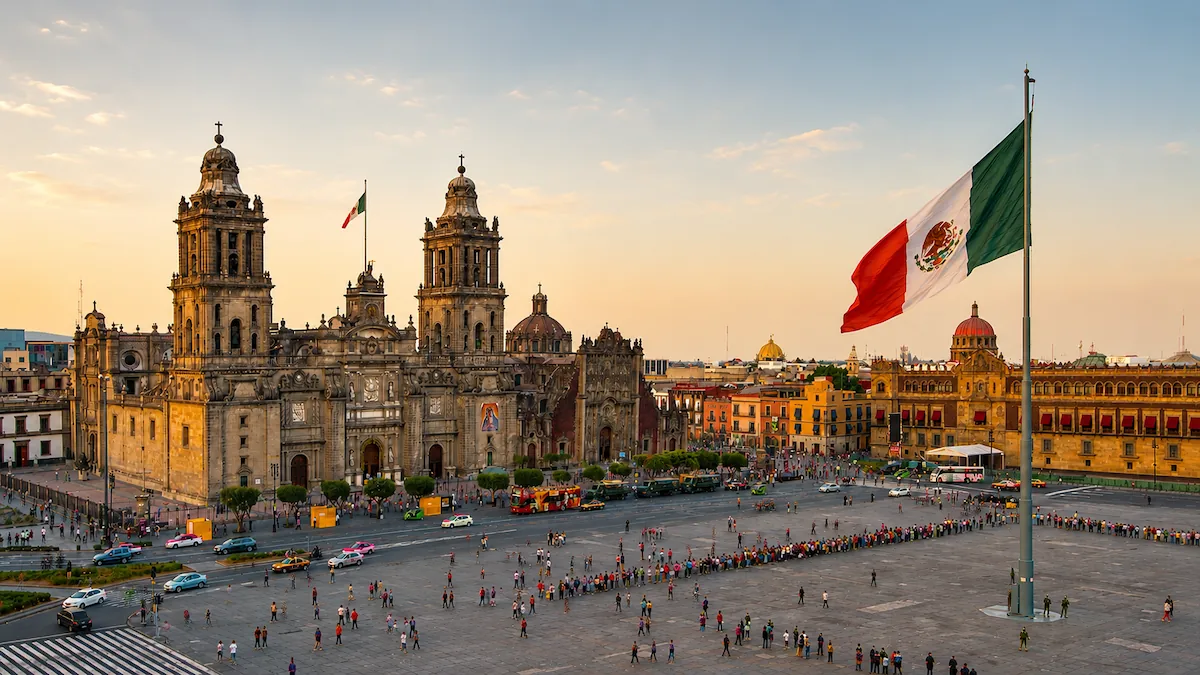
Walk the Zócalo with Templo Mayor and Palacio Nacional in mind – The Zócalo is most powerful when you see it as a compressed history of the city rather than a broad square to photograph. Move between the cathedral, the National Palace exterior and, when accessible, its murals, then the Templo Mayor archaeological zone to understand how each era was built over the last. (High payoff · Best for: First-time orientation)Find tours & experiences
Enter Templo Mayor before the Historic Center gets too loud – Templo Mayor makes the city’s buried logic visible. Go early enough to avoid the harshest crowd rhythm, then let the ruins reset how you read the surrounding streets, church façades, vendors and stone. (Worth it · Best for: Archaeology without leaving the center)
Step inside the Metropolitan Cathedral as part of a Centro route – The cathedral should not be treated only as a backdrop to the Zócalo. Its scale, side chapels, layered construction and position over the former Mexica ceremonial center make it one of the easiest places to feel how Mexico City stacks its histories in the same square. (Best for: Historic-center depth)
See Palacio de Bellas Artes inside, not just from the plaza – The exterior is the obvious photograph, but the interior gives the visit its weight: marble, murals, staircases and a sense of civic theater. It works especially well when the weather turns or when Centro needs a quieter pause. (Best for: Murals, architecture, and indoor culture)Find tours & experiences
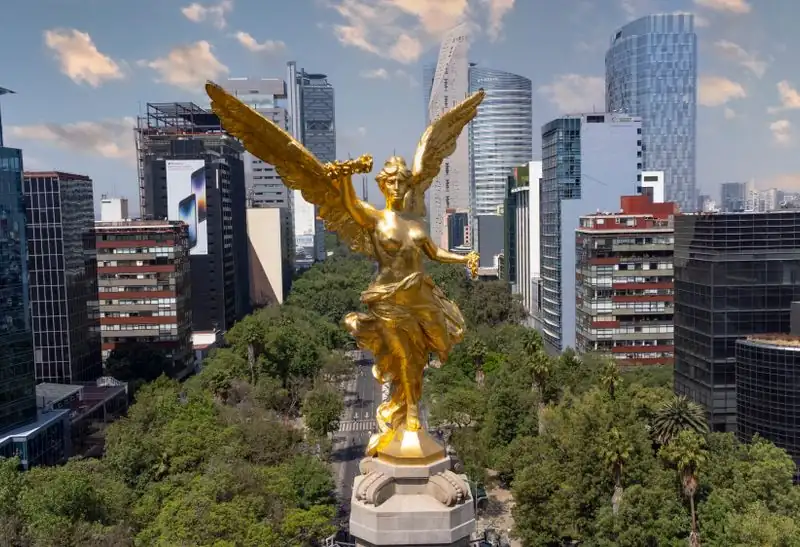
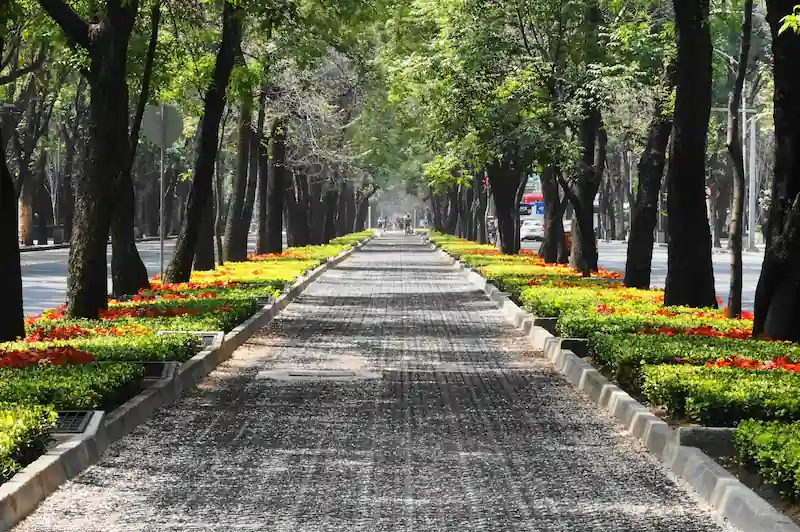
Use Paseo de la Reforma and the Ángel to read the modern city – Reforma is where the capital opens into boulevards, monuments, towers, offices, protest routes and public rituals. The Ángel de la Independencia is not just a photo stop; it helps frame the city’s ceremonial spine between Centro, Juárez, Chapultepec and the modern skyline. (Urban classic · Best for: Travelers who want the city beyond museums)
Treat Sunday Reforma as a public-city experience – When Paseo de la Reforma becomes more open to cyclists, runners and families, the avenue feels less like a traffic corridor and more like civic space. It is one of the easiest free ways to see modern Mexico City as lived public space rather than only monuments. (Best on Sunday · Best for: Free urban rhythm)
Climb to Chapultepec Castle for the city’s most legible view – The castle is not just a viewpoint. From the terraces, Mexico City’s scale opens across trees, avenues, towers and haze, while the rooms inside add a national-history layer that is easier to absorb than another dense museum. (Worth it · Best for: Views with context)Find tours & experiences
Use Chapultepec’s second section if you need a quieter park day – Most first-timers stay around the castle and Anthropology Museum, but Chapultepec’s wider park system can support a slower family, walking or decompression day. It is not mandatory, but it helps if you want Mexico City to feel green rather than constantly dense. (Best for: Families, repeat visitors and decompression)
Make Casa Azul part of a Coyoacán plan, not a standalone errand – The Frida Kahlo Museum is intimate, controlled and ticket-dependent. Its best use is as the anchor of a slower Coyoacán half-day, followed by plazas, markets, churros and streets that feel detached from the city’s central pressure. (Book ahead · Best for: Art, biography, and Coyoacán atmosphere)Find tours & experiences
Visit the Basilica de Guadalupe if you want the city’s devotional scale – The Basilica de Guadalupe adds a different Mexico City register altogether: pilgrimage, religious symbolism, national identity and an atmosphere that feels distinct from the polished first-timer museum circuit. It is one of the strongest additions when you want the trip to feel broader than the standard core. (Major landmark · Best for: Religion, history, and national symbolism)Find tours & experiences
Take Xochimilco seriously as a half-day experience – Xochimilco is often sold as a colorful boat ride, but the experience depends on mood, group, timing and expectations. Go when you want music, movement, floating food and a festive southern-city atmosphere rather than a quiet canal escape. (Best with others · Best for: Groups, families, and social travelers)Find tours & experiences
Choose Teotihuacan if you have one major excursion – Teotihuacan is the day trip that most clearly extends the city’s archaeological story. It needs an early start and a measured pace; the reward is scale, open sky, and the rare sense of history expanding rather than compressing. (Best day trip · Best for: First-timers with an extra half day or full day)Find tours & experiences
Use Torre Latinoamericana for a compact skyline read – Torre Latinoamericana is a quick way to understand the city’s basin, density, monuments and sprawl from above. It is not as essential as Anthropology or Centro, but it works beautifully after Bellas Artes or Alameda when you want the urban scale to click. (Good viewpoint · Best for: Views and orientation)
Walk Madero, Casa de los Azulejos and Alameda as the softer Centro layer – Centro is not only the Zócalo. Madero, Casa de los Azulejos, Alameda Central and the streets around Bellas Artes add pedestrian movement, architecture, cafés, shops and a more human-scale transition between monumental stops. (Best for: Centro without rushing)
Best cultural things to do in Mexico City
Culture in Mexico City is not confined to formal museums, but the city’s best indoor, design-led and interpretation-heavy stops are unusually strong. Choose carefully: one mural space, one art house, one archaeological layer, one contemporary museum and one architectural detour will tell you more than a rushed museum marathon.
Read the murals before chasing more museums – Mexico City’s mural tradition is central to understanding how public buildings became political and cultural stages. Bellas Artes is the easiest entry point, while Palacio Nacional adds one of the most powerful historical readings of the country if access aligns with your dates. (Best for: Art with political context)Find tours & experiences
Visit Museo Anahuacalli for a more elemental Frida-and-Diego angle – Anahuacalli is less crowded in feeling than Casa Azul and much more architectural. Its volcanic-stone mass, pre-Hispanic collection and southern location give it a darker, slower charge than the better-known Frida route. (High payoff · Best for: Architecture, collectors, and return visitors)
Make the Luis Barragán House a deliberate design pilgrimage – Casa Estudio Luis Barragán is not a casual walk-in attraction. Its power lies in quiet rooms, controlled light, color, shadow and proportion, so it belongs on a design-focused day rather than a packed first-timer checklist. (Book ahead · Best for: Design, architecture, and slow looking)
Consider Casa Gilardi if Barragán architecture is a priority – Casa Gilardi is a deeper architectural layer for travelers already interested in Luis Barragán’s light, color and spatial control. It should not replace the main city anchors, but it can make a design-led trip feel much more specific. (Design depth · Best for: Architecture-focused travelers)
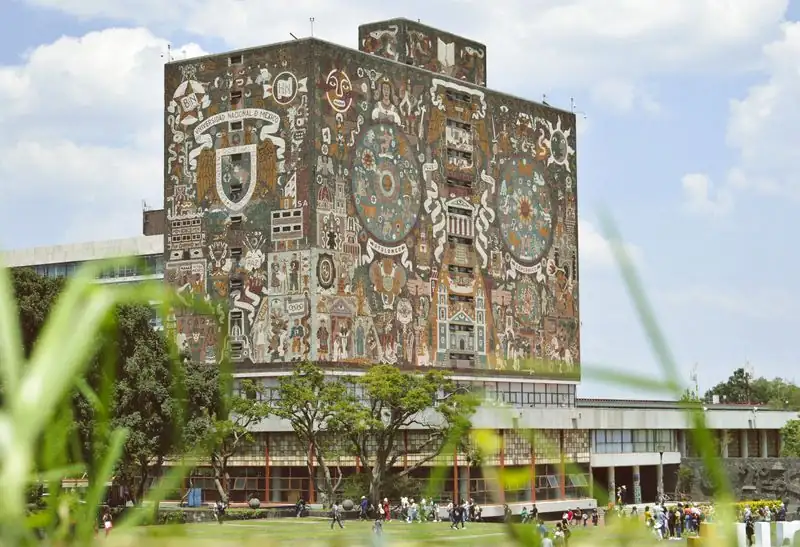
Use UNAM’s Central Campus for architecture, murals, and a wider cultural map – Ciudad Universitaria adds a different kind of cultural authority: modernist planning, monumental campus scale, mural integration and the sense of a living intellectual city rather than a museum-only route. It is one of the best additions for travelers who want architecture and public space, not just headline attractions. (High-value gap filler · Best for: Architecture, modern Mexico, and repeat visitors)
Go to MUAC when you want contemporary art beyond the central circuit – MUAC belongs to a more deliberate UNAM and southern-city plan. It is not a first-trip essential, but it is one of the best options for travelers who want contemporary art, campus scale and a less predictable cultural day. (Repeat-visitor layer · Best for: Contemporary art and UNAM planning)
Use Museo Soumaya as a short Polanco contrast – Museo Soumaya is visually dramatic and easy to combine with Polanco, but it works best as a compact contrast rather than the cultural core of the trip. Go for the building, the collection highlights and the shift in urban texture. (Best for: A free museum stop in Polanco)
Pair Museo Jumex with Polanco if you want contemporary art done efficiently – Jumex gives Polanco a stronger cultural payoff than a Soumaya-only stop. It is easy to pair, manageable in scale and one of the cleanest ways to add contemporary art to a trip without committing to another oversized museum block. (Free museum · Best for: Contemporary art and rainy-day culture)
Use Museo Tamayo as a contemporary Chapultepec counterpoint – Museo Tamayo works when you want contemporary art and architecture without leaving Chapultepec. It is best as a second cultural layer after a park or museum morning, not as something to force after a full Anthropology visit. (Best for: Contemporary art and architecture)
Add Museo de Arte Popular for craft, color and everyday visual culture – Museo de Arte Popular is one of the best cultural stops when you want Mexico’s craft traditions, color systems, folk art and object culture without another archaeological or mural-heavy visit. It is compact enough to fit around Alameda and Bellas Artes. (Rainy-day friendly · Best for: Craft, folk art and families)
Use Museo Nacional de Arte for a classic art-museum pause in Centro – MUNAL gives the historic center a grand, indoor art layer that pairs naturally with Bellas Artes, Palacio Postal and Alameda. It is best for travelers who want a formal cultural pause without leaving Centro. (Best for: Art, architecture and rainy days)
Visit Palacio Postal for a short architectural hit – Palacio Postal is one of the easiest high-payoff interiors in the historic center. It does not need to become a major activity, but its staircases, metalwork and Belle Époque detail make it a smart stop between Bellas Artes, MUNAL and the Zócalo. (Short stop · Best for: Architecture and quick indoor beauty)
Explore contemporary galleries in Roma and San Miguel Chapultepec – The city’s gallery scene is strongest when treated as a neighborhood activity: doorways, courtyards, small rooms and sharp contrasts with the street outside. Check openings and keep expectations flexible, because the rhythm is more exploratory than institutional. (Best for: Contemporary art without a museum format)
Use a guided architecture route for Barragán, modernism and city context – Mexico City is one of the best architecture cities in North America, but its best examples are dispersed. A guided route can connect Barragán, UNAM, modernist buildings, Art Deco streets and contemporary spaces more intelligently than a self-guided pin chase. (Best for: Design-minded travelers)Find tours & experiences
Local experiences and everyday city texture
The most memorable local experiences in Mexico City often happen between formal attractions: parks after school, markets at lunch, a sidewalk taquería at night, a plaza where the soundscape keeps changing, an avenue that becomes civic theater, or a square that feels ordinary until the musicians arrive. These are not filler stops; they are how the city becomes legible at human scale.
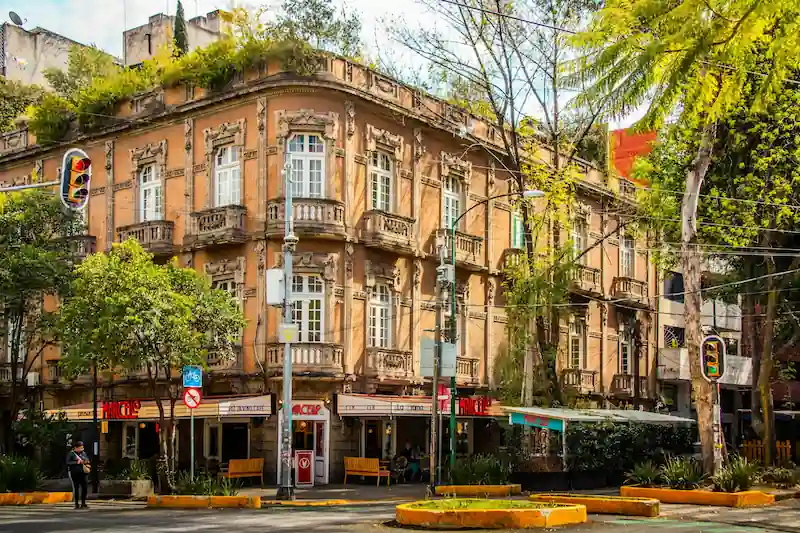
Walk Roma Norte and Condesa without turning them into a checklist – The value here is pace: shaded streets, dogs in the parks, cafés, small boutiques and façades that make the city feel residential rather than monumental. Give the area a few unstructured hours instead of racing between pins. (Easy win · Best for: Low-pressure urban wandering)
Watch the city loosen around Parque México – Parque México works because it is ordinary and theatrical at the same time. The paths, benches, dogs, fountains and surrounding streets make it one of the easiest places to pause without feeling you have stopped traveling. (Best for: A free reset between bigger activities)
Use Reforma as a walk, not just a traffic corridor – Reforma is one of the easiest ways to feel the city’s civic, corporate and ceremonial energy at once. Even a limited stretch around the Ángel, Juárez and the Chapultepec edge gives you a more contemporary reading of the capital than a museum-only trip ever will. (Best for: Urban rhythm and modern-city context)
Spend a morning in Coyoacán beyond Casa Azul – Coyoacán’s best moments are often outside the museum: a slow plaza, a market snack, low façades, church bells and weekend movement that feels separate from the capital’s busier corridors. It justifies time even if you do not enter every attraction. (Best for: A softer southern-city atmosphere)
See San Ángel if you want craft, courtyards, and Saturday energy – San Ángel is most rewarding when the art market is active and the streets carry a weekend pace. It is a good alternative or addition to Coyoacán for travelers who prefer texture, houses and craft over another major museum. (Best on Saturday · Best for: Markets, crafts, and slower wandering)
Explore Santa María la Ribera and the Kiosco Morisco – Santa María la Ribera gives you a different local rhythm from Roma and Condesa: an older residential grid, the Kiosco Morisco, simpler food stops and a less polished pace. It is a useful repeat-visitor or hidden-gem layer rather than a first-day priority. (Hidden-gem layer · Best for: Repeat visitors and neighborhood explorers)
Visit Mercado de Jamaica when flowers and commerce are the point – Mercado de Jamaica is less about eating and more about color, flowers, vendors, narrow aisles and working-market movement. It adds a different everyday layer from the polished café and museum circuit. (Best for: Markets, photography and everyday commerce)
Browse La Lagunilla only if you want a rougher flea-market rhythm – La Lagunilla can be fascinating for antiques, clothes, objects and street energy, but it is not a gentle shopping stop. It suits confident travelers who like markets with character and know how to keep the visit targeted. (Best with awareness · Best for: Flea markets and confident explorers)
Use Narvarte for a taco-led evening – Narvarte is one of the best ways to make food the reason for moving beyond the standard visitor neighborhoods. It is especially strong for tacos, casual counters and a less polished local night than Roma-Condesa. (Food local layer · Best for: Taco-focused evenings)Find tours & experiences
Go to Plaza Garibaldi if you want mariachi with rougher edges – Garibaldi is not polished, and that is part of the point. It gives you a louder, more performative evening texture than the standard cocktail-bar route and can work well for travelers who want music, atmosphere and a more old-school urban mood. (Best at night · Best for: Music-led local texture)
Go to lucha libre for an evening with volume – Lucha libre is not subtle, and that is the point. The masks, crowd reactions, vendors, entrances and theatrical rhythm make it one of the most accessible local night experiences for visitors who do not want a polished bar-only evening. (Best at night · Best for: A lively, easy-to-enjoy evening)Find tours & experiences
Use a pulquería or mezcal bar with intention – A pulquería or mezcal bar can add a real local drinks layer, but it works best when chosen deliberately rather than as random nightlife. Use it after dinner in Roma, Juárez, Centro or Condesa when the route back is simple. (Best for: Local drinks and evening atmosphere)Find tours & experiences
Watch football or a major live event if timing aligns – A football match or large live event can show Mexico City’s collective energy in a way museums cannot. It is not essential for every visitor, but it can be a high-payoff add-on for sports fans, families with teens or return trips. (Schedule-dependent · Best for: Sports fans and teens)
Use local bookshops and cafés as low-friction pauses – Bookshops, café-bookstore hybrids and small cultural cafés are not headline attractions, but they help slow the city down between museums and food stops. They are especially useful in Roma, Condesa, Coyoacán and Centro. (Best for: Slow travel and rainy breaks)
Food experiences worth building time around
Food is one of the best things to do in Mexico City because it is both everyday and deeply specialized. The mistake is treating it as a list of famous restaurants only; markets, tacos, breakfasts, cantinas, bakeries, mezcal, pulque and neighborhood meals often carry more of the city’s rhythm than the big reservation chase.
Take a proper Mexico City food tour early in the trip – A strong food tour does more than feed you; it teaches ordering rhythm, market behavior, salsa logic, neighborhood differences and how much of Mexico City happens at counters. It is especially useful on a first visit if food is central. (First-trip food win · Best for: First-time food travelers)Find tours & experiences
Use a taco crawl to understand neighborhoods, not just fillings – A good taco route reveals how Mexico City changes block by block: standing counters, late-night lights, busy griddles, salsas and the difference between a quick bite and a serious meal. It works best with a guide if you want range without guesswork. (High payoff · Best for: Food-first travelers)Find tours & experiences
Try tlacoyos, quesadillas and antojitos beyond the taco list – Tacos are essential, but Mexico City’s street food range is much broader. Tlacoyos, quesadillas, gorditas, tamales and other antojitos help visitors understand corn, masa and regional influence beyond the most famous late-night counters. (Street food depth · Best for: Food-first travelers)Find tours & experiences
Visit Mercado de San Juan for ingredients and curiosity – San Juan is more compact and specialized than a casual market wander. It suits travelers interested in produce, seafood, meats, imported ingredients and the professional food culture behind the city’s restaurants. (Best for: Curious eaters and market people)
Plan a food-market morning around Medellín, Coyoacán or San Juan – Different markets do different jobs: Medellín works well around Roma-Condesa, Coyoacán adds a classic southern stop, and San Juan is more ingredient-focused. Choose by itinerary geography rather than fame. (Best for: Markets and practical routing)
Make a breakfast stop part of the plan – Breakfast in Mexico City has its own momentum: coffee, pan dulce, chilaquiles, tamales, juice stands and restaurants filling gradually rather than theatrically. It is one of the easiest ways to start a day without immediately entering sightseeing mode. (Best for: Slow mornings and practical pacing)
Use pan dulce and coffee as a morning ritual – A bakery stop can structure the morning as effectively as any attraction. Pan dulce, coffee and a slow first walk help the day begin at local speed before museums, markets or long transfers take over. (Best for: Breakfast and low-cost food moments)
Use a market lunch instead of another formal stop – A market meal can be faster, cheaper and more revealing than a second sit-down restaurant. Choose by area: Coyoacán for a classic neighborhood stop, San Juan for ingredient curiosity, or Medellín for a Roma-adjacent everyday feel. (Best for: Budget-conscious and texture-led travelers)
Use a classic cantina as an experience, not just a meal – A traditional cantina can give you exactly the kind of Mexico City pause that restaurant lists miss: tiled rooms, old rhythms, snacks turning into lunch and an atmosphere that feels social rather than performative. It works especially well on a Centro or Juárez day. (Local classic · Best for: Travelers who want atmosphere with lunch or drinks)
Use churros and hot chocolate as a Centro reset – A churros stop is not just dessert in Mexico City; it is one of the easiest ways to punctuate a dense historical day without losing momentum. It works especially well after Bellas Artes, Alameda or an evening walk through the center. (Best for: Short pauses and easy local treats)
Do a mezcal or pulque tasting instead of generic cocktails – Mexico City’s drinks scene is strongest when it feels rooted rather than interchangeable. A mezcal or pulque stop can connect region, ritual, taste and neighborhood nightlife without needing a long bar crawl. (Best for: Nightlife, couples and food-first trips)Find tours & experiences
Use a cooking class if you want food context without another restaurant – A cooking class can be worthwhile when you want to understand ingredients, salsas, masa, markets or regional dishes rather than simply eating through a list. It works especially well on longer stays or rainy afternoons. (Best for: Hands-on food experiences)Find tours & experiences
Book one serious restaurant if food is a priority – Mexico City can support a high-end food trip, but not every visitor needs to chase reservations. If you care about contemporary Mexican cooking, book one anchor meal early, then let the rest of the trip stay looser and more street-level. (Book ahead · Best for: Food-forward city breaks)
Save room for late-night tacos after a show or arena night – Late tacos are one of the cleanest ways to end a Mexico City evening without turning it into a complicated nightlife plan. They pair naturally with lucha libre, Roma-Condesa bars, Juárez evenings or a simple ride-hailing route back to your hotel. (Night food classic · Best for: Night activities and casual food)
Best things to do in Mexico City for first-timers
First-time visitors should prioritize clarity over quantity. The best first trip combines one historic core, one major museum, one neighborhood-led walking area, one southern or devotional detour, one food-led experience, and one optional day trip.
Start with the National Museum of Anthropology if you want the rest of the city to feel less fragmented.
Spend a half day in Centro Histórico, but keep the route tight: Zócalo, Templo Mayor, Bellas Artes, Alameda and possibly Torre Latinoamericana.
Add Palacio Nacional if access aligns; it gives the center much stronger historical depth.
Use Paseo de la Reforma and the Ángel to understand the city beyond the colonial core.
Choose Coyoacán plus Casa Azul only if you have timed tickets or enough flexibility to enjoy the area without them.
Add Basilica de Guadalupe if you want a fuller, more nationally symbolic reading of the city.
Use Roma and Condesa as your low-pressure walking zone between heavier cultural blocks.
Add lucha libre if you want a night activity that feels local, loud and easy to access.
Make Teotihuacan your one major excursion if you have at least three full days.
Priority
BestChoices
WhyItMatters
Essential
Anthropology Museum, Centro Histórico, Templo Mayor
They explain the city’s historical and cultural layers quickly.
Strong add-on
Reforma, Chapultepec, Coyoacán, Casa Azul
They give the trip atmosphere, urban rhythm and visual variety.
High-value optional
Basilica de Guadalupe, Roma and Condesa, lucha libre
They broaden the trip beyond the standard museum-core reading.
Only with enough time
Xochimilco, San Ángel, UNAM, Teotihuacan, Casa Barragán
They are rewarding but take more time and planning.
Free things to do in Mexico City
Mexico City is unusually generous for free or low-cost wandering, especially if you organize the day around parks, plazas, architecture, monuments and neighborhoods rather than paid entries.
Walk the Zócalo, cathedral exterior, surrounding streets, Madero and Alameda Central for a free first look at the historic core.
Spend time in Chapultepec Park even if you skip the castle or museums.
Use Paseo de la Reforma and the Ángel for one of the city’s easiest free urban reads.
Use Roma and Condesa for shaded streets, parks, architecture and people-watching without a fixed ticket.
Visit Museo Soumaya or Museo Jumex if Polanco fits your route and you want a free museum stop.
Explore Coyoacán’s plazas, church exterior, market area and side streets without making Casa Azul mandatory.
Use UNAM’s central campus if you want architecture and mural-scale space without turning the day into another paid museum run.
Go to Santa María la Ribera and the Kiosco Morisco for a free hidden-gem neighborhood layer.
FreeOption
BestFor
TimeNeeded
Chapultepec Park
Green space and decompression
1 to 3 hours
Paseo de la Reforma and the Ángel
Monuments, skyline and urban atmosphere
1 to 2 hours
Roma and Condesa walk
Cafés, parks, architecture and everyday rhythm
2 to 4 hours
Zócalo, Madero and Alameda
Historic scale and first-time orientation
2 to 3 hours
Museo Soumaya / Museo Jumex
A free Polanco museum stop
1.5 to 3 hours
UNAM Central Campus
Architecture, murals and open-campus scale
1.5 to 3 hours
Unique and unusual things to do in Mexico City
The most distinctive Mexico City experiences usually combine place, ritual and timing. They are not always obscure, but they feel specific to the city when done with the right expectations.
Go to lucha libre at Arena México for theatrical energy, masks, crowd noise and an evening that does not feel interchangeable with another city.
Visit Anahuacalli for volcanic-stone architecture and a more elemental Diego Rivera collection experience.
Book Casa Estudio Luis Barragán if controlled light, color and design matter more to you than big-name museums.
Use UNAM’s Central Campus for a modernist, mural-rich cultural detour that many first-timers miss.
Take Xochimilco as a floating social ritual rather than a scenic canal cruise.
Explore San Ángel on a Saturday, when art, craft, courtyards and weekend rhythm make the area more rewarding.
Go to Plaza Garibaldi if you want mariachi and a rougher-edged nightlife texture than the standard Roma-Condesa circuit.
Explore Santa María la Ribera or Narvarte when you want food and neighborhood texture beyond the standard visitor map.
Things to do in Mexico City at night
At night, Mexico City works best when you choose a clear format: arena energy, food, mezcal, mariachi, performance, a neighborhood dinner route or a guided experience. Avoid overcomplicating the evening with long cross-city transfers.
Watch lucha libre at Arena México for the city’s most accessible high-energy night experience.
Plan a taco-focused evening in Roma, Condesa, Centro, Juárez or Narvarte with a limited route rather than random hopping.
Book a performance at Palacio de Bellas Artes if the calendar aligns with your dates.
Use Roma Norte or Condesa for dinner, mezcal bars and a walkable evening with less logistical friction.
Choose Plaza Garibaldi if you want music and atmosphere over polish.
Use Reforma after dark if you want skyline views, monuments and a more contemporary city feel before or after dinner.
Choose a guided night food or bar experience if you want structure, especially on a first visit.
Keep Xochimilco mostly for daytime or early evening unless you are joining a well-organized group experience.
NightOption
BestFor
PlanningLevel
Lucha libre
Energy and spectacle
Book tickets or a guided experience
Roma / Condesa dinner and bars
Low-friction evening
Reserve key restaurants
Plaza Garibaldi
Mariachi and atmosphere
Best as a targeted stop, not an all-night plan
Bellas Artes performance
Formal culture
Check calendar and book ahead
Taco crawl
Food-led night
Best with a planned route
Things to do in Mexico City with kids
With kids, the city works best when you alternate one structured attraction with one open-air release. Distances and museum density matter more than the number of famous places covered.
Use Chapultepec Park as the family anchor: open space, museums nearby and enough room to reset.
Choose Papalote Museo del Niño for an explicitly kid-focused indoor activity.
Add Chapultepec Zoo if you want a free family stop that fits naturally into a park day.
Pick Xochimilco if your children enjoy color, boats, music and a social atmosphere.
Keep the Anthropology Museum short and selective rather than trying to cover the whole building.
Use Coyoacán for plazas, snacks and a gentler walking pace.
Consider the aquarium or indoor museums for rainy afternoons when parks stop being practical.
Avoid overscheduling cross-city transfers; with kids, one major anchor and one decompression block is usually enough.
Activity
BestAgeFit
WhyItWorks
Chapultepec Park
All ages
Space, variety and easy breaks
Chapultepec Zoo
Younger children
Free, familiar and easy to pair with the park
Papalote Museo del Niño
Younger children
Interactive and weather-proof
Xochimilco
School-age children and teens
Boat ride, music, color and movement
Anthropology Museum
Older children and teens
Strong if kept selective
Things to do in Mexico City when it rains
Rain in Mexico City often turns the day into a timing problem rather than a cancellation. Keep mornings open for outdoor areas, then use museums, markets, restaurants and performances when afternoon weather closes in.
Go to the National Museum of Anthropology if you want a substantial indoor plan that can absorb several hours.
Use Palacio de Bellas Artes, MUNAL, Palacio Postal or Museo de Arte Popular for a central rainy-day pause.
Choose Palacio Nacional if access is available and you want mural-heavy historical depth indoors.
Choose Casa Azul, Barragán or Anahuacalli if you already have tickets or a southern/design route planned.
Shift lunch to a market, cantina or long restaurant stop instead of forcing another outdoor walk.
Use Museo Soumaya or Museo Jumex if you are already in Polanco and want an indoor cultural pair.
Use a cooking class, food tour, mezcal tasting or café-bookstore break to make the rain useful.
Save Roma and Condesa wandering for clearer windows rather than pushing through heavy rain.
RainyDayChoice
BestFor
TimeFit
Anthropology Museum
A full indoor cultural block
2.5 to 4 hours
Bellas Artes / MUNAL / Museo de Arte Popular
Central culture and architecture
1 to 3 hours
Palacio Nacional
History and Diego Rivera murals
1 to 1.5 hours
Market lunch or cantina stop
Food without losing the day
1 to 1.5 hours
Soumaya / Jumex
Polanco indoor art pairing
2 to 3 hours
Best museums in Mexico City
Mexico City is a museum-heavy destination, but the best plan is selective. Choose the museum that explains the trip rather than stacking interiors until the day loses shape.
Choose the National Museum of Anthropology first if you want the strongest single cultural anchor.
Use Templo Mayor for archaeology inside the historic center rather than a separate day.
Use Palacio de Bellas Artes and Palacio Nacional for mural-scale history and civic interiors.
Add Casa Azul for Frida Kahlo and Coyoacán, but only with timed tickets.
Use Anahuacalli for Diego Rivera, volcanic-stone architecture and a less crowded southern layer.
Choose Soumaya and Jumex if Polanco already fits your day or rain changes the plan.
Use Museo de Arte Popular or MUNAL for compact Centro culture near Alameda.
Use MUAC or UNAM when you want the cultural map to move beyond the central visitor circuit.
Museum
BestFor
PlanningNeed
National Museum of Anthropology
First-time context
Give it a major half-day
Frida Kahlo Museum
Artist-house visit
Timed tickets essential
Templo Mayor
Archaeology in Centro
Pair with Zócalo
Bellas Artes / Palacio Nacional
Murals
Check access and schedules
Soumaya / Jumex
Polanco indoor pair
Best as a targeted block
Best things to do in Mexico City for food lovers
A food-first Mexico City trip should mix street food, markets, breakfast, cantinas, one serious restaurant and at least one neighborhood where eating shapes the walk.
Start with a guided taco or market tour early if you want practical confidence fast.
Use tacos al pastor as a must-do, but do not stop there: tlacoyos, quesadillas, tamales, breakfast and cantinas matter too.
Choose one ambitious restaurant rather than turning every dinner into a reservation.
Use Mercado de San Juan, Mercado Medellín, Mercado de Coyoacán or Mercado Jamaica depending on your route.
Add Narvarte if tacos are a reason to go beyond the usual visitor districts.
Use pan dulce and coffee to make breakfast part of the trip instead of hotel filler.
Treat mezcal, pulque or a classic cantina as cultural experiences, not just drinks.
FoodGoal
BestChoice
TradeOff
Classic first taste
Taco crawl or market tour
Best with structure
Everyday food rhythm
Market lunch and breakfast stop
Less polished
High-end dining
One serious restaurant reservation
Book ahead
Local night food
Narvarte or late tacos
Needs a route
Romantic and couple-friendly things to do in Mexico City
Mexico City is not romantic in a single postcard way. It works for couples when days balance culture, parks, design, food and one evening that does not require complicated transfers.
Walk Condesa or Roma late afternoon before dinner.
Use Chapultepec Castle for views and a slower cultural block.
Book Casa Barragán if design and quiet atmosphere matter.
Choose one serious restaurant or mezcal tasting instead of overloading the evening.
Use Coyoacán for plazas, snacks and a softer day outside the central intensity.
Visit Museo Jumex, Tamayo or galleries if contemporary art fits the trip.
Avoid far cross-city transfers after dinner unless you have a clear route back.
Style
BestChoice
Design-focused couple trip
Casa Barragán, galleries, Polanco or Roma dinner
Classic culture plus views
Chapultepec Castle, Anthropology, Reforma
Soft neighborhood day
Coyoacán, Condesa, Roma
Night out
Mezcal, dinner, lucha libre or Bellas Artes performance
Things to do in Mexico City with teenagers
Teen trips work best when the city feels vivid rather than purely educational. Mix archaeology, arena energy, food, viewpoints, markets and one or two museums kept selective.
Lucha libre is one of the easiest high-energy choices for teens.
Teotihuacan works well if the day starts early and avoids excessive heat.
Use tacos, markets and late-night food as part of the experience.
Choose Torre Latinoamericana or Chapultepec Castle for visual orientation.
Keep the Anthropology Museum focused on priority rooms rather than an all-building visit.
Use Xochimilco for color, music and a social boat ride if your group enjoys that energy.
Consider football or a major live event if the schedule fits.
TeenFit
BestChoice
High energy
Lucha libre or football
History with scale
Teotihuacan or Templo Mayor
Food-led
Taco crawl or market lunch
Views
Torre Latinoamericana or Chapultepec Castle
Cheap and budget-friendly things to do in Mexico City
Mexico City can be excellent value if you rely on parks, plazas, markets, free museums, neighborhood walks and selective paid entries rather than tours and restaurants for every activity.
Use Chapultepec Park, Reforma, Alameda, Roma-Condesa and Coyoacán plazas as free or low-cost anchors.
Choose Museo Soumaya, Museo Jumex or UNAM for free cultural depth.
Use market lunches, tacos, bakeries and cantinas to keep food quality high without constant formal dining.
Prioritize one paid museum or ticket per day rather than stacking expensive experiences.
Use metro or metrobus for simple routes, but avoid saving money on transfers when time or safety would suffer.
Skip expensive day trips if you only have three days; the city itself has enough low-cost depth.
BudgetGoal
BestChoice
Free culture
Soumaya, Jumex, UNAM, public murals
Low-cost food
Markets, tacos, bakeries
Free walking
Reforma, Roma-Condesa, Coyoacán, Alameda
One paid priority
Anthropology, Casa Azul or Teotihuacan
Markets and shopping experiences in Mexico City
Shopping in Mexico City is best when it feels connected to neighborhoods, craft, food or daily commerce rather than generic retail.
Use Mercado de San Juan for ingredients and curiosity.
Use Mercado de Coyoacán for food and a classic southern stop.
Use Mercado de Jamaica for flowers and working-market color.
Use San Ángel on Saturday for craft and courtyard atmosphere.
Use La Lagunilla for flea-market energy only if you are comfortable with rougher, busier market settings.
Use Polanco for luxury retail context, not as a substitute for the city’s more distinctive market culture.
Use Roma and Condesa for independent shops, design, books and slow browsing.
ShoppingStyle
BestChoice
Food market
San Juan, Coyoacán, Medellín
Flowers and visual commerce
Mercado de Jamaica
Craft and weekend atmosphere
San Ángel
Flea market
La Lagunilla
Design and boutiques
Roma, Condesa, Polanco
Architecture and design things to do in Mexico City
Mexico City is one of the strongest architecture cities in the Americas, but its best design experiences need planning because they are dispersed and often ticket-limited.
Book Casa Estudio Luis Barragán early if it is central to the trip.
Consider Casa Gilardi or a guided Barragán route for deeper design focus.
Use UNAM Central Campus for modernist planning and mural integration.
Use Palacio Postal, Bellas Artes and MUNAL around Centro for historic interiors.
Use Anahuacalli for a darker, volcanic-stone architectural experience in the south.
Use Roma, Condesa and Juárez for Art Deco, restored houses and contemporary adaptive reuse.
Use Museo Jumex, Tamayo and Soumaya as contemporary museum-architecture contrasts.
DesignGoal
BestChoice
Barragán
Casa Estudio Luis Barragán, Casa Gilardi
Modernist public scale
UNAM Central Campus
Historic interiors
Palacio Postal, Bellas Artes, MUNAL
Contemporary museum architecture
Jumex, Tamayo, Soumaya
Things to do in Mexico City in rainy season
Rainy season does not ruin Mexico City; it changes the day’s order. Use mornings for outdoor anchors and afternoons for museums, markets, restaurants, cafés, cantinas and performances.
Do Teotihuacan, Centro walks, Chapultepec Castle or Xochimilco early if weather looks unstable.
Keep Anthropology, Bellas Artes, MUNAL, Museo de Arte Popular, Soumaya and Jumex as indoor pivots.
Book lunch or a market meal for the period when storms are most likely.
Use Roma, Condesa and Coyoacán walks in clearer windows rather than forcing them during heavy rain.
Keep a flexible ride-hailing budget because short transfers become more valuable in storms.
Use Casa Azul, Barragán or Anahuacalli only if timing and tickets are secure.
WeatherWindow
BestUse
Morning clear spell
Outdoor sights and neighborhoods
Afternoon rain
Museums, markets, restaurants
Evening rain
Dinner, mezcal, performance or nearby tacos
Best excursions and day trips from Mexico City
The best excursions from Mexico City are high-impact, but they compete with a city that already needs time. Choose one or two according to trip length rather than trying to collect them all.
Teotihuacan is the best first excursion for archaeology and scale.
Xochimilco plus Coyoacán works as a southern city day, not a classic day trip.
Puebla and Cholula are strong for architecture, food and a full-day change of scale.
Tepoztlán suits travelers who want a mountain-town feel and market atmosphere.
Taxco is dramatic but long, so it works best with more time or a strong specific interest.
Tolantongo and Nevado de Toluca are nature-heavy excursions with serious logistics and are usually better for longer stays.
Excursion
BestFor
TimeNeeded
Teotihuacan
First major day trip
Half to full day
Puebla / Cholula
Colonial architecture and food
Full day
Tepoztlán
Smaller-town mountain escape
Full day
Taxco
Dramatic townscape
Long full day
Tolantongo / Nevado de Toluca
Nature and landscape
Very long day or overnight
Things to do in Mexico City by area
Centro Histórico
Centro is where the city’s political, colonial and pre-Hispanic layers sit closest together. It is best handled as a structured half-day, not an open-ended wander.
Zócalo and cathedral exterior
Templo Mayor archaeological site
Palacio Nacional murals when accessible
Palacio de Bellas Artes and murals
Madero, Casa de los Azulejos and Palacio Postal
Alameda Central and Torre Latinoamericana for a softer pause or view
Chapultepec
Chapultepec is the best zone for combining major culture with open space. It can be heavy if you stack too much, so choose between depth and breadth.
National Museum of Anthropology
Chapultepec Castle
Chapultepec Park walks
Museo Tamayo and nearby culture
Chapultepec Zoo for families
Easy rainy-day pivot to museums
Paseo de la Reforma / Juárez
Reforma is where the capital reads as boulevard city rather than museum city. It is best used as a connective urban axis: monuments, skyline, public life and an easier transition between Centro, Chapultepec and dinner districts.
Ángel de la Independencia
Broad avenue walks and city views
Sunday cycling and public-space rhythm
Monuments and civic atmosphere
Easy pairing with Chapultepec or Roma
Good late-afternoon or evening timing
Roma Norte and Condesa
Roma and Condesa are not about one defining monument. Their value is street-level rhythm: cafés, parks, galleries, design shops, restaurants and an easier walking pace.
Parque México and Parque España
Cafés, bakeries and casual food stops
Contemporary galleries and boutiques
Dinner and mezcal bar evenings
Low-pressure walking between bigger sightseeing days
Good base for food tours and architecture walks
Coyoacán
Coyoacán works as a slower southern half-day. Casa Azul is the headline, but the area is strongest when you leave room for plazas, markets and unhurried streets.
Frida Kahlo Museum with timed tickets
Coyoacán market snacks
Plaza Hidalgo and Jardín Centenario
Nearby Anahuacalli if you want more depth
A gentler pace for families or repeat visitors
Polanco
Polanco is best used selectively, especially for museums, design and dining. It is not the emotional core of a first trip, but it can add a clean contrast to older districts.
Museo Soumaya
Museo Jumex
Restaurant reservations and polished dining
Avenida Presidente Masaryk for luxury retail context
Easy pairing with Chapultepec if planned carefully
Xochimilco
Xochimilco is a destination zone, not an add-on. Go for the social boat experience, the sound of mariachi and vendors across the water, and the shift into the city’s southern edge.
Trajinera boat ride
Group-friendly floating experience
Food and music on the canals
Possible pairing with Coyoacán on a long day
Better with planned transport
San Ángel / University South
This part of the city is strongest when you want a slower, more architectural day. San Ángel gives you courtyards and weekend texture, while UNAM adds campus scale, murals and a modernist cultural layer that most fast itineraries miss.
San Ángel on Saturdays
UNAM Central Campus
MUAC and modernist public art
Architecture and public space
Pairing with Coyoacán or Anahuacalli
Good return-visitor territory
Villa de Guadalupe
Villa de Guadalupe is not part of the standard café-and-museum rhythm, which is exactly why it matters. It adds spiritual scale, national symbolism and a very different visitor atmosphere from the rest of the city’s classic first-timer route.
Basilica de Guadalupe complex
Religious and cultural significance
Architecture old and new
Easy pairing with a history-heavy day
High payoff if you want a broader reading of the city
Tacubaya / San Miguel Chapultepec
This western cluster matters most for design and architecture. It is the practical orbit for Casa Barragán, Casa Gilardi, galleries and a quieter cultural rhythm near Chapultepec.
Casa Estudio Luis Barragán
Casa Gilardi if accessible
Gallery and architecture routes
Easy design-focused add-on for longer trips
Santa María la Ribera
Santa María la Ribera gives a quieter, older neighborhood layer with the Kiosco Morisco as its visual anchor. It is best for repeat visitors or hidden-gem itineraries rather than a first compressed trip.
Kiosco Morisco
Older residential streets
Lower-pressure neighborhood wandering
Pairing with nearby museums or Centro-adjacent planning
Narvarte / Del Valle
This central-south zone is strongest for everyday food, residential rhythm and a less visitor-shaped evening. It is not essential for a first trip but very useful for deeper food plans.
Taco routes
Casual local dining
Residential city texture
Good food-first or repeat-visitor layer
Arena México / Doctores edge
This area matters mainly for lucha libre. It is best used as a targeted evening plan with clear transport, not as a neighborhood to wander loosely at night.
Lucha libre at Arena México
Easy guided night formats
Pairing with tacos or a simple dinner route
Clear ride-hailing plan after the show
What to prioritize with limited time
Mexico City rewards sharp choices. The goal is not to see everything; it is to avoid spending your best hours in transit or half-absorbing too many major stops.
Profile
Prioritize
Skip
Structure
Half day
Centro Histórico with Zócalo, Templo Mayor exterior or visit, Bellas Artes, Alameda and possibly Torre Latinoamericana.
Xochimilco, Teotihuacan, Casa Azul, UNAM and distant museums.
Stay central, walk a tight route, and avoid adding a cross-city transfer.
1 full day
Anthropology Museum in the morning, Chapultepec or Reforma in the afternoon, Roma or Condesa for dinner.
Casa Azul unless timed tickets fit perfectly; Xochimilco and Teotihuacan.
Use one major cultural anchor, one outdoor reset and one easy evening area.
2 days
Day one for Anthropology and Chapultepec; day two for Centro plus Reforma, Roma, Condesa, food or lucha libre.
Trying to add both Xochimilco and Teotihuacan.
Keep each day zone-led and save the evening for food or one clear activity.
3 days
Add Coyoacán and Casa Azul, Basilica de Guadalupe, Teotihuacan or a food-led route depending on your interests.
A long southern day if you dislike logistics or group-heavy experiences.
Build around three anchors: Chapultepec, Centro / Reforma, and one southern, devotional, food or excursion day.
4 to 5 days
Layer in Xochimilco, San Ángel, UNAM, Anahuacalli, Polanco museums, Casa Barragán, deeper food routes and one serious restaurant.
Repeating the same Roma-Condesa café rhythm every day.
Alternate heavy cultural days with slower neighborhood and food-led blocks.
Food-first trip
Taco crawl, market lunch, pan dulce, cantina, one serious restaurant, mezcal or pulque, and at least one area beyond Roma-Condesa.
Overbooking every meal and losing casual food rhythm.
Give food one major slot per day and let neighborhoods shape the route.
Culture-first trip
Anthropology, Templo Mayor, murals, Bellas Artes, Casa Azul, Anahuacalli, Barragán, UNAM and one contemporary museum.
Museum marathons that flatten attention.
Choose one major cultural anchor per day and pair it with a walk, meal or park.
Family trip
Chapultepec Park, Chapultepec Zoo, Papalote, Xochimilco, Coyoacán, selective Anthropology and easy food stops.
Long cross-city days with multiple dense museums.
Alternate structured attractions with outdoor resets and snacks.
Teen trip
Lucha libre, Teotihuacan, tacos, markets, viewpoints, Xochimilco and one selective museum.
Long quiet museum blocks unless the teen is strongly interested.
Use scale, food and energy to balance educational stops.
Repeat visit
Anahuacalli, Barragán, UNAM, San Ángel, Santa María la Ribera, Narvarte, gallery routes, markets and cantinas.
Rebuilding the whole trip around the Zócalo and headline museums.
Use familiar areas as bases for more specific, lower-volume experiences.
Best day trips and excursions from Mexico City
Day trips from Mexico City are worthwhile, but only after the city itself has enough space. For most first-timers, choose one excursion rather than letting outside trips consume the visit.
Excursion
Best for
Time needed
First trip?
Transport
Book ahead
Teotihuacan
Archaeology, scale, and a major first-trip extension
Half to full day
Yes, if you have at least 3 days
Tour, private transfer, or bus
Recommended for early access, transport, and guiding Check options
Xochimilco and Coyoacán combined
A southern-city day with boats, plazas, and Casa Azul
Full day if combined properly
Yes, if Casa Azul or Xochimilco is a priority
Tour or rideshare-heavy independent route
Yes for Casa Azul; useful for combined logistics Check options
Puebla
Colonial architecture, food, ceramics, and a full-day change of scale
Thermal pools, landscape and a very long nature-focused outing
Very long full day or overnight
Usually no unless it is a specific priority
Tour or private transfer recommended
Recommended because logistics are significant Check options
Nevado de Toluca
High-altitude landscape and hiking outside the city
Full day
Only for active travelers with extra time
Private driver or guided outing recommended
Recommended for logistics and weather checks
Cuernavaca
Warmer weather, gardens, history and an easier lower-altitude escape
Full day
Optional, better for longer stays
Bus, private driver or tour
Not essential unless using private transport
Smart activity combinations that work well together
These are not full itineraries. They are practical pairings that respect distance, energy and the way Mexico City changes across a day.
Anthropology Museum + Chapultepec Castle + park reset – This combination keeps you in one high-value zone and avoids wasting time in traffic. Start with the museum while your attention is fresh, then use the castle and park for views, air and a slower finish.
Zócalo + Templo Mayor + Bellas Artes + Alameda – This is the cleanest way to handle Centro Histórico without letting it sprawl. The sequence moves from ancient layers to civic architecture, then gives you a softer edge at Alameda when the center becomes crowded.
MUNAL + Palacio Postal + Bellas Artes – This is a strong rainy-day or Centro-culture trio. It gives you art, architecture and civic interiors without needing to leave the historic center.
Palacio Nacional + Zócalo + Reforma walk – This works when you want the city to move from power and murals into a broader urban reading. It gives you a stronger narrative arc than staying in Centro only.
Casa Azul + Coyoacán market + San Ángel – This works when you want a southern day with texture rather than constant transit. Casa Azul gives the day an anchor, Coyoacán adds everyday rhythm, and San Ángel brings a quieter craft-and-courtyard atmosphere.
UNAM + San Ángel + Coyoacán – This is one of the smartest alternatives to another museum-heavy day. It gives you modernist public architecture, slower streets, and a southern-city atmosphere that feels very different from the center.
Casa Barragán + San Miguel Chapultepec galleries + Condesa dinner – This is the best design-led half day when you want light, color, architecture and a soft evening finish. It works because the geography stays relatively tight and the mood remains slow.
Roma galleries + Condesa parks + dinner – This is the best low-friction afternoon-to-evening mix. It gives you contemporary city texture, walkable streets, a green pause and a natural handoff into food without needing another major ticketed attraction.
Xochimilco + Coyoacán on a long social day – This combination can be rewarding but should not be rushed. Use Xochimilco for the boat experience, then shift to Coyoacán for plazas and food, accepting that the day is about atmosphere more than efficiency.
Soumaya + Jumex + Polanco meal – This is the cleanest Polanco cultural format. It gives you one high-contrast architectural stop, one contemporary museum, and an easy transition into lunch or dinner without overcommitting the day.
Lucha libre + tacos + simple ride back – This is the cleanest high-energy night structure. Keep dinner casual, enjoy the arena, then use a planned taco stop or direct ride back rather than turning the night into a complicated bar crawl.
Santa María la Ribera + Kiosco Morisco + Centro edge – This gives repeat visitors a neighborhood layer that stays close enough to the center without feeling like the standard first-trip circuit.
What to book ahead in Mexico City
Mexico City does not require every activity to be reserved, but a few choices strongly shape the trip. Book timed or logistics-heavy experiences early, and keep neighborhood wandering flexible.
Best in the morning before the area becomes more crowded.
Worth it for first-timers who want context quickly.
Day trips beyond Teotihuacan
Recommended
Book Puebla, Taxco, Tolantongo or Nevado de Toluca only after protecting core city time.
Often useful because logistics can be the hard part.
Roma, Condesa, Reforma wandering
No
Late afternoon into dinner works especially well.
Only for food, architecture, or gallery-specific interests.
Mexico City things to do FAQ
These answers cover the practical choices behind the biggest Mexico City activity searches: top attractions, museums, food, free activities, nightlife, kids, rainy days, unique experiences and day trips.
What are the top 10 things to do in Mexico City?
For most first-time visitors, the top things to do are the National Museum of Anthropology, Centro Histórico and the Zócalo, Templo Mayor, Palacio de Bellas Artes, Chapultepec Castle and Park, Paseo de la Reforma, Frida Kahlo Museum in Coyoacán, Roma-Condesa wandering, lucha libre, and Teotihuacan if you have time for a day trip.
What should you not miss in Mexico City?
Do not miss the Anthropology Museum, Centro Histórico, Templo Mayor, Chapultepec, and at least one food experience that goes beyond a formal restaurant. If your stay is long enough, add Casa Azul, Teotihuacan, Basilica de Guadalupe, Casa Barragán or lucha libre depending on your interests.
How many days do you need for the main things to do in Mexico City?
Three full days is the practical minimum for the main highlights without rushing. Four or five days is much better if you want Teotihuacan, Xochimilco, Coyoacán, food experiences, UNAM, Polanco museums, Casa Barragán and more than one major museum.
What are the best things to do in Mexico City for a first visit?
Start with the National Museum of Anthropology, Centro Histórico, Templo Mayor, Paseo de la Reforma, Chapultepec, and one neighborhood-led area such as Roma, Condesa, or Coyoacán. If you have enough time, add Casa Azul, Basilica de Guadalupe, lucha libre, Xochimilco, or Teotihuacan.
Is the National Museum of Anthropology worth it?
Yes. It is the most important museum for understanding Mexico City and the wider country. It is large, so choose priority rooms rather than trying to absorb everything in one visit.
Is the Frida Kahlo Museum worth it?
Yes, if you are interested in Frida Kahlo, Diego Rivera, or intimate artist-house museums. It is less satisfying as a last-minute errand because timed tickets matter and the visit works best as part of a wider Coyoacán half-day.
Is Casa Barragán worth visiting?
Casa Estudio Luis Barragán is worth visiting for architecture, design and slow-looking travelers. It is not a casual attraction, and access is limited, so it should be booked ahead and treated as a deliberate design pilgrimage.
Is Museo Anahuacalli worth it?
Anahuacalli is worth it if you want Diego Rivera, volcanic-stone architecture, pre-Hispanic collections and a deeper southern-city layer beyond Casa Azul. It is especially good for repeat visitors or culture-first itineraries.
Is Teotihuacan worth a day trip from Mexico City?
Yes, especially for first-time visitors with at least three days in the city. It is the strongest archaeological excursion from Mexico City, but it deserves an early start and is better with transport or guiding if you want the day to feel efficient.
Is Xochimilco worth it?
Xochimilco is worth it if you want a colorful, social, music-filled boat experience and can give it a proper half-day. It is less worthwhile if you expect quiet nature or want to squeeze it between central sights.
Is Basilica de Guadalupe worth adding to a Mexico City trip?
Yes, especially if you want a broader sense of Mexico City’s religious, historical, and national symbolism. It is one of the clearest ways to move beyond the standard museum-and-neighborhood first-timer circuit.
Is lucha libre worth it in Mexico City?
Yes. Lucha libre is one of the easiest visitor-friendly night activities in Mexico City because it is energetic, theatrical, local and simple to enjoy even without deep context. It is best with tickets or a guided format on busy nights.
What are the best free things to do in Mexico City?
The best free options include walking Centro Histórico, spending time in Chapultepec Park, exploring Reforma, Roma and Condesa, visiting Coyoacán’s plazas, and going to Museo Soumaya, Museo Jumex, UNAM’s central campus or Santa María la Ribera. Free activities work best when used as breathing space between denser paid sights.
What are the best unique things to do in Mexico City?
Unique experiences include lucha libre, Casa Barragán, Anahuacalli, UNAM, Xochimilco, San Ángel on Saturday, Plaza Garibaldi, Santa María la Ribera, Narvarte taco routes and guided food or architecture walks.
What are the best things to do in Mexico City at night?
Lucha libre is the most distinctive visitor-friendly night activity. Roma and Condesa are strong for dinner and bars, while Bellas Artes performances, Plaza Garibaldi, taco routes, mezcal tastings and guided night food experiences work well if you want a more structured evening.
What can you do in Mexico City when it rains?
Use rainy periods for the Anthropology Museum, Palacio de Bellas Artes, Palacio Nacional when accessible, MUNAL, Museo de Arte Popular, Museo Soumaya, Museo Jumex, Casa Azul if booked, market lunches, cantina stops, or a longer restaurant block. In rainy season, mornings are often better for outdoor areas and afternoons for indoor culture.
What are the best things to do in Mexico City with kids?
Chapultepec Park, Chapultepec Zoo, Papalote Museo del Niño, Xochimilco, Coyoacán, and selective museum visits work well with kids. The key is to avoid overloading the day with dense indoor culture and to build in parks, snacks and short transfers.
What are the best things to do in Mexico City with teenagers?
Teens often respond well to lucha libre, Teotihuacan, taco crawls, markets, Torre Latinoamericana, Xochimilco, football or live events, and selective museums kept focused rather than exhaustive.
What are the best museums in Mexico City?
The best museums depend on your priorities. Anthropology is the essential first museum, Templo Mayor is the key archaeology stop in Centro, Bellas Artes and Palacio Nacional are strongest for murals, Casa Azul and Anahuacalli anchor the Frida/Diego layer, and Soumaya, Jumex, Tamayo, MUAC, MUNAL and Museo de Arte Popular add art, design and rainy-day options.
What are the best food experiences in Mexico City?
The best food experiences include tacos al pastor, a guided taco or market tour, a market lunch, pan dulce and coffee, a classic cantina, churros in Centro, mezcal or pulque, and one serious restaurant if food is a major reason for the trip.
Should I book a food tour in Mexico City?
A food tour is worth it if you want to understand taco counters, markets, ordering rhythm, salsas and neighborhood differences quickly. It is especially useful early in a first trip because it makes later independent eating easier.
What should I book ahead in Mexico City?
Book the Frida Kahlo Museum, Casa Estudio Luis Barragán, high-demand restaurants, lucha libre on busy nights, food tours or cooking classes, and Teotihuacan tours if you want transport or guiding. Most parks, neighborhood walks, markets and many standard museum visits can stay flexible.
What should you skip in Mexico City on a short trip?
On a short trip, skip long single-purpose transfers, trying to do both Xochimilco and Teotihuacan, museum marathons, and far-flung stops that do not connect to your main route. Protect Anthropology, Centro, Chapultepec, Reforma and one food or neighborhood block first.
Is Mexico City good for a long weekend?
Yes, but the itinerary needs discipline. A strong long weekend can cover Anthropology, Chapultepec, Centro, Reforma, Roma-Condesa, one food experience and either Coyoacán, lucha libre or Teotihuacan. It cannot cover the whole city comfortably.
Is Mexico City expensive for activities?
Mexico City can be very good value for museums, parks, markets, public spaces and casual food. Costs rise with private guides, top restaurants, boutique experiences, day trips, design-house access and premium hotels.
What are the best neighborhoods to explore in Mexico City?
Roma Norte, Condesa, Juárez, Centro Histórico, Coyoacán, Polanco, San Ángel, Santa María la Ribera and parts of Reforma all reward exploration, but they serve different purposes. For first-timers, Roma-Condesa, Centro and Coyoacán are the most immediately useful.
Roma or Condesa: which is better for things to do?
Roma is better for restaurants, galleries, nightlife and a slightly denser creative rhythm. Condesa is better for parks, calmer walks, cafés and a softer residential feel. They are close enough to combine on foot.
What is the best area for a food-focused day in Mexico City?
Roma-Condesa is the easiest first food base, Centro works well for churros, cantinas and markets, Coyoacán is good for a southern market-and-plaza rhythm, and Narvarte is excellent for taco-focused evenings beyond the obvious visitor circuit.
Is Polanco worth visiting?
Polanco is worth visiting if you want Soumaya, Jumex, Chapultepec adjacency, luxury retail context or serious restaurants. It is less essential if you are seeking Mexico City’s historic or street-level core.
Is Plaza Garibaldi worth it?
Plaza Garibaldi is worth it if you specifically want mariachi and a rougher-edged night atmosphere. It is best as a targeted stop with clear transport rather than an aimless late-night wander.
Is UNAM worth visiting?
UNAM is worth visiting for architecture, murals, campus scale and modern Mexican cultural history. It is not a first-trip must for everyone, but it is a high-value addition on longer or culture-first stays.
What are the best day trips from Mexico City?
Teotihuacan is the best first day trip for most visitors. Puebla and Cholula are strong for architecture and food, Tepoztlán for a smaller-town mountain escape, Taxco for dramatic townscape, and Tolantongo or Nevado de Toluca for travelers seeking nature-heavy excursions with more logistics.
Can you visit Teotihuacan and Xochimilco on the same trip?
Yes, but they should usually be on separate days or only attempted together with careful tour logistics on a longer stay. Both need real time, and trying to compress them can weaken the city experience.
What is the best thing to do first in Mexico City?
For most travelers, start gently with either Roma-Condesa and a food stop on arrival day or the Anthropology Museum on the first full morning. Avoid an overloaded first day because altitude and traffic make Mexico City more tiring than it looks.
How should I plan Mexico City if I only care about culture?
Prioritize Anthropology, Templo Mayor, Centro murals, Bellas Artes, Casa Azul, Anahuacalli, Casa Barragán, UNAM, one contemporary museum and a market or cantina for everyday context. Keep each day anchored by one major cultural stop.
How should I plan Mexico City if I only care about food?
Build the trip around tacos, markets, breakfast, cantinas, one serious restaurant, mezcal or pulque and at least one neighborhood beyond Roma-Condesa. Use a food tour early, then leave room for casual discoveries.
The best Mexico City activity plan is not the fullest one; it is the one that chooses strong anchors, respects distance, and leaves the city room to breathe.
Find the best places to stay, how to get there, and move around with ease.
Build a smarter trip base
Turn the right experiences into the right itinerary
Once you know what you want to do in Mexico City, the next step is turning those ideas into a trip that actually works day by day. Use the planner to organize the right mix of highlights, neighborhoods, and pace into a route that feels coherent, not crowded.