Where to stay in Kuala Lumpur: the best areas for every trip
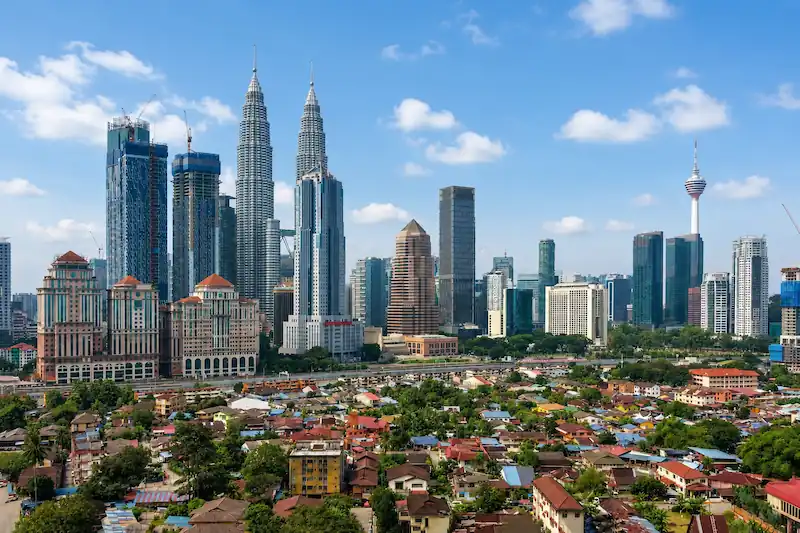
Choose where to stay in Kuala Lumpur by matching the neighborhood to the way you plan to use the city. KLCC is the easiest first-time base, Bukit Bintang keeps food and nightlife close, Chinatown gives the strongest heritage atmosphere, Brickfields and KL Sentral simplify transport, Bangsar suits longer and more residential stays, and Kampung Baru offers Malay food and skyline contrast. The exact street, station approach, mall connection, and evening radius matter as much as the district name.
Best areas
KLCC is best for first-time convenience and families, Bukit Bintang for food, shopping, and nightlife, Chinatown for heritage and boutique value, Brickfields for KL Sentral and airport rail, Bangsar for longer stays, and Kampung Baru for Malay food and a more local evening rhythm.
Booking timing
Book early for KLCC skyline rooms, Bukit Bintang weekends, Chinatown boutiques, family suites, serviced apartments, major conferences, public holidays, school breaks, and New Year periods. Standard chain inventory is usually more flexible than small design hotels or connected family rooms.
Best areas to stay in Kuala Lumpur at a glance
KLCC – Best for: First-time visitors, families, luxury, skyline views, and short stays · Vibe: Polished, vertical, convenient, and internationally oriented · Stay here if: You want the Petronas Towers, KLCC Park, family attractions, malls, strong hotels, and covered access toward Bukit Bintang. · Avoid if: You prefer heritage streets, traditional food immediately outside, lower hotel prices, or a more local neighborhood atmosphere.
Bukit Bintang – Best for: Food, nightlife, shopping, couples, solo travelers, and weekend stays · Vibe: Busy, commercial, energetic, and active late · Stay here if: You want Jalan Alor, restaurants, bars, malls, TRX access, and easy evening movement close to the hotel. · Avoid if: You need quiet nights, easy ride-hailing pick-ups, or a residential environment.
Chinatown – Best for: Heritage, boutique hotels, central value, cafés, and walkability · Vibe: Historic, textured, compact, creative, and less polished · Stay here if: You want temples, shophouses, Central Market, Merdeka Square, cafés, food, and smaller hotels within a walkable cluster. · Avoid if: You want extensive luxury facilities, immediate KLCC access, or consistently polished streets.
Brickfields – Best for: KL Sentral, airport rail, stopovers, rail trips, and practical family stays · Vibe: Transport-led, Indian-influenced, functional, and busy · Stay here if: You have early flights or trains, a multi-city Malaysia itinerary, or want airport rail and major transport connections beside the hotel. · Avoid if: You want Kuala Lumpur’s most atmospheric leisure base or easy walking access to KLCC and Bukit Bintang.
Bangsar – Best for: Longer stays, restaurants, serviced apartments, families, and remote work · Vibe: Residential, leafy in parts, dining-led, and calmer · Stay here if: You want more space, neighborhood dining, Mid Valley access, and a less visitor-shaped daily rhythm. · Avoid if: You have only two or three days or want headline sights immediately outside.
Kampung Baru – Best for: Malay food, repeat visits, local evenings, and skyline contrast · Vibe: Low-rise, food-focused, traditional, and close to the modern center · Stay here if: You want Kampung Baru food streets, Saloma Link, Chow Kit, and a base near KLCC without staying inside its corporate core. · Avoid if: You want the broadest hotel choice, polished pavements, or the simplest first-time logistics.
How to choose where to stay in Kuala Lumpur
Kuala Lumpur rewards travelers who choose a usable cluster rather than a vaguely central address. Heat, rain, major roads, rail interchanges, mall corridors, and evening traffic make the wrong micro-location tiring even when the hotel looks close on a map. For short first trips, reduce movement; for longer stays, prioritize room space, food access, and neighborhood rhythm.
Choose KLCC for the simplest first trip, especially with children, limited time, or a preference for full-service hotels.
Choose Bukit Bintang when restaurants, Jalan Alor, bars, malls, and late evenings matter more than calm.
Choose Chinatown for the city’s best heritage base, boutique value, cafés, temples, and walkable access to Merdeka Square.
Choose Brickfields when KLIA Ekspres, KL Sentral, regional trains, or a short stopover define the itinerary.
Choose Bangsar for longer stays, serviced apartments, residential dining, Mid Valley, and a slower daily rhythm.
Choose Kampung Baru when Malay food and local evening atmosphere matter enough to accept a thinner and more uneven hotel market.
Treat Chow Kit as a useful extension of Kampung Baru for design hotels, markets, rail access, and lower central prices.
Treat TRX and Imbi as extensions of Bukit Bintang for newer hotels, shopping, and transport rather than separate first-time neighborhoods.
Check the exact station approach, covered connection, road crossing, ride-hailing pick-up point, and nearby dinner options before booking.
How Kuala Lumpur’s geography affects where you stay
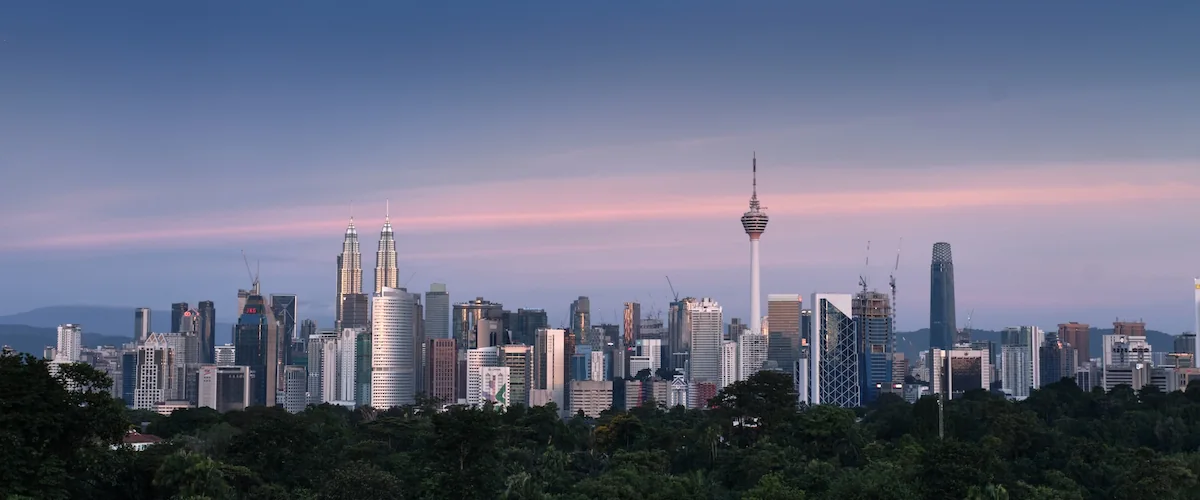
Kuala Lumpur’s hotel geography is shaped by the KLCC–Bukit Bintang commercial core, the historic river center, KL Sentral, major roads, fragmented rail systems, and residential districts extending west and north. The best hotel sits inside a useful daily cluster, not merely at the midpoint between several areas.
KLCC and Bukit Bintang form the strongest first-time pair, linked by covered walkways, malls, roads, MRT, and monorail connections.
Chinatown, Pasar Seni, Merdeka Square, and Masjid Jamek form the city’s most coherent heritage-and-walking cluster.
Brickfields and KL Sentral sit west of the core and dominate airport rail, regional transport, and multi-city logistics.
Bangsar Village, Bangsar South, KL Eco City, and Mid Valley are separate micro-locations and should not be treated as one interchangeable hotel zone.
Kampung Baru and Chow Kit sit close to KLCC but differ greatly in infrastructure, hotel supply, street texture, and evening atmosphere.
TRX and Imbi extend Bukit Bintang’s commercial zone and can work well when the hotel is directly connected to MRT, malls, or main roads.
Ampang Park and the eastern KLCC edge suit business-leisure travelers and provide access to ILHAM, embassies, and quieter upscale hotels.
Lake Gardens and Titiwangsa are important activity zones but generally weaker hotel bases than the six principal areas.
A station’s line, entrance, interchange complexity, and sheltered walking route matter more than a generic distance claim.
Landmark and family core – KLCC and Ampang Park provide towers, parks, malls, family attractions, convention access, and the strongest luxury hotel supply.
Food, shopping, and nightlife core – Bukit Bintang, Imbi, and TRX concentrate restaurants, shopping, nightlife, hotels, and late urban energy.
Heritage and boutique core – Chinatown, Pasar Seni, Merdeka Square, and Masjid Jamek provide walkable heritage, temples, cafés, markets, and design hotels.
Transport and stopover core – Brickfields and KL Sentral dominate airport rail, trains, urban transport, and practical short stays.
Residential and long-stay west – Bangsar, Bangsar South, Mid Valley, and KL Eco City offer dining, services, serviced apartments, offices, and longer-stay comfort.
Malay food and northern central edge – Kampung Baru, Chow Kit, and Medan Tuanku provide Malay food, markets, design hotels, and skyline contrast close to KLCC.
Secondary culture and park zones – Lake Gardens, Titiwangsa, and the National Art Gallery are valuable activity areas but rarely the strongest general hotel bases.
Best areas to stay in Kuala Lumpur
Kuala Lumpur’s best neighborhoods for hotels serve different kinds of trips. The strongest choice depends on whether you want first-time efficiency, food and nightlife, transport convenience, local texture, or a quieter base that still connects well.
KLCC
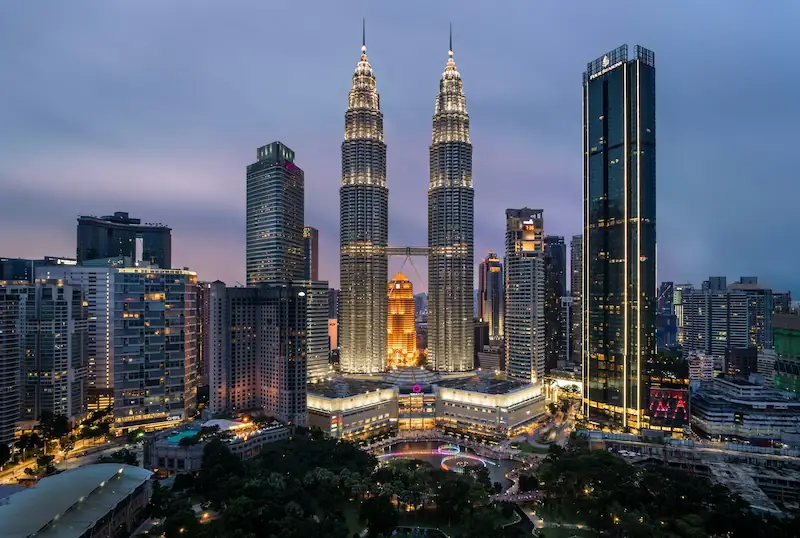
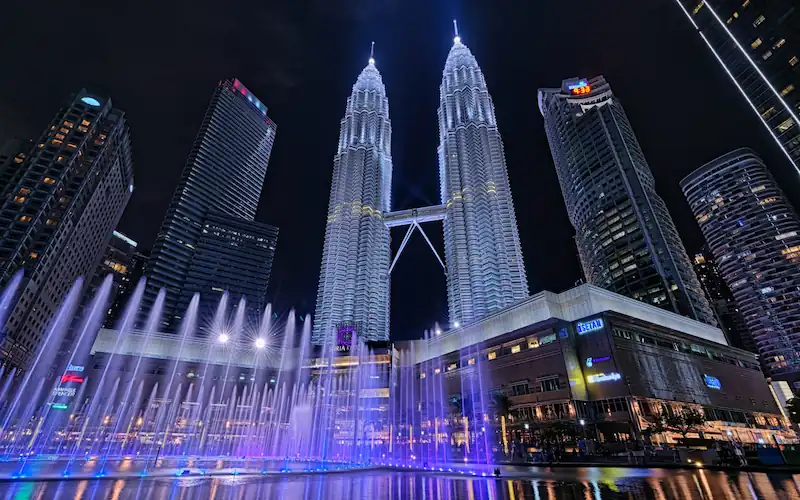
KLCC is Kuala Lumpur’s easiest all-round base for a first visit. The Petronas Twin Towers, KLCC Park, Suria KLCC, Aquaria, Petrosains, the convention center, ILHAM Gallery, luxury hotels, and the covered route toward Bukit Bintang create the city’s most complete low-friction cluster.
Why stay here: Stay here when convenience, family infrastructure, landmark access, skyline views, and predictable hotel standards matter more than heritage atmosphere or low prices. The district also gives you an easy evening route across Saloma Link into Kampung Baru.
Best for: First-time visitors, families, luxury stays, skyline views, business-leisure trips, short city breaks, and travelers wanting the simplest central base.
Pros
Best overall base for first-time visitors and short stays
Immediate access to the Petronas Towers, KLCC Park, Suria, Aquaria, and Petrosains
Strongest concentration of luxury hotels, serviced residences, and skyline rooms
Covered and air-conditioned movement toward Bukit Bintang
Excellent for families, business-leisure trips, and travelers managing rain or heat
Easy evening transition to Saloma Link and Kampung Baru
Cons
Higher rates for skyline views, park-facing rooms, and the best-connected hotels
Less traditional food and street texture than Chinatown, Brickfields, or Kampung Baru
Some office-heavy blocks become quiet or corporate after business hours
Hotels marketed as KLCC can sit farther from the park than expected
Ride-hailing pick-ups can slow during rain, conferences, and evening peaks
Nearby highlights
Petronas Twin Towers and skybridge
KLCC Park and evening fountains
Suria KLCC
Aquaria KLCC and Petrosains
Kuala Lumpur Convention Centre
ILHAM Gallery and Ampang Park
Covered walkway to Bukit Bintang
Saloma Link to Kampung Baru
Budget
de King Boutique Hotel KLCC – A simple, practical hotel very close to Suria KLCC and the LRT. Best for travelers who want location over design polish. Why we recommend: One of the few lower-cost options that keeps you genuinely close to the KLCC core. Check availability
Corus Hotel Kuala Lumpur – An older large-scale hotel near KLCC with straightforward rooms and strong walking convenience. It suits travelers prioritizing location and value. Why we recommend: It keeps costs lower than many KLCC hotels while still giving real central access. Check availability
Holiday Inn Express Kuala Lumpur City Centre by IHG – A clean, functional city-center hotel between KLCC and Bukit Bintang. Rooms are compact but efficient for short stays. Why we recommend: Useful for travelers who want predictable standards without paying full KLCC luxury pricing. Check availability
Mid
Impiana KLCC Hotel – A well-positioned hotel close to the convention center, KLCC, and the covered walkway. It works especially well for practical first-time stays. Why we recommend: The location gives you KLCC access without the full premium of the top luxury towers. Check availability
Wyndham Suites KLCC – A suite-style option near KLCC with larger rooms and apartment-style comfort. Good for travelers who want more space than a standard hotel room. Why we recommend: The room format is useful for longer stays or families who need space near the city center. Check availability
Traders Hotel, Kuala Lumpur – A dependable KLCC hotel with strong skyline access and direct relevance for Petronas Tower views. It suits travelers who want a classic central stay. Why we recommend: It has one of the clearest location-and-view propositions in the KLCC area. Check availability
Upscale
The RuMa Hotel and Residences – A refined luxury hotel with Malaysian design references, calm interiors, and a strong central address. It suits travelers who want KLCC convenience without a generic chain feel. Why we recommend: It delivers the best combination of design character and first-time KLCC practicality. Check availability
Mandarin Oriental, Kuala Lumpur – A landmark luxury hotel beside KLCC Park and the Petronas Towers. Best for travelers who want classic service and the easiest landmark access. Why we recommend: Few hotels place you this directly into the KLCC landmark zone. Check availability
Banyan Tree Kuala Lumpur – A high-rise luxury stay with polished rooms and strong city views near Pavilion and KLCC. It works for travelers who want a more elevated, design-led city stay. Why we recommend: It offers a more boutique-luxury feel than many large KLCC hotels while staying highly central. Check availability
Bukit Bintang
Bukit Bintang is Kuala Lumpur’s strongest stay area for food, shopping, nightlife, and late urban energy. Jalan Alor, Pavilion, Lot 10, Starhill, Berjaya Times Square, bars, restaurants, monorail access, and the covered link toward KLCC reduce the need for evening transfers.
Why stay here: Stay here when the hotel should sit inside the evening plan. Bukit Bintang is particularly effective for couples, solo travelers, weekends, shopping trips, and first-time visitors who value restaurant choice more than quiet surroundings.
Best for: Food-focused travelers, nightlife, shopping, couples, solo travelers, weekend breaks, and first-time visitors who want central evening convenience.
Pros
Best overall area for food, shopping, nightlife, and late dining
Jalan Alor, major malls, bars, and restaurants within a compact radius
Covered route toward KLCC and useful monorail or MRT access
Very broad hotel choice across budget, design, family, and luxury categories
Easy hotel returns between sightseeing, shopping, and dinner
Useful access toward Imbi and the newer TRX district
Cons
Evening traffic and ride-hailing pick-ups can be slow
Noise varies significantly around Jalan Alor, Changkat, and the busiest crossings
Crowds and commercial intensity may overwhelm travelers seeking calm
Some cheaper hotels have small rooms or inconsistent maintenance
The district offers little heritage atmosphere outside selected streets
Nearby highlights
Jalan Alor
Pavilion Kuala Lumpur
Lot 10 and Hutong food hall
Changkat Bukit Bintang
Berjaya Times Square
TRX and The Exchange
Covered walkway to KLCC
Monorail and MRT connections
Budget
Travelodge Bukit Bintang – A straightforward value hotel close to Jalan Alor and the main shopping streets. It suits travelers who want central access without paying for extras. Why we recommend: The location is hard to beat in this price band if you prioritize food and nightlife. Check availability
Metro Hotel Bukit Bintang – A simple hotel near Berjaya Times Square and the southern edge of Bukit Bintang. Best for budget travelers who still want a central district. Why we recommend: It keeps you in the action while avoiding the higher rates around Pavilion. Check availability
ANSA Hotel Kuala Lumpur – A practical hotel near Pavilion and the Bukit Bintang monorail. Rooms are functional, with the location doing most of the work. Why we recommend: It is useful for travelers who want immediate shopping access without a luxury-hotel budget. Check availability
Mid
citizenM Kuala Lumpur Bukit Bintang – A compact, modern hotel with smart rooms and a social lobby close to the district’s food and nightlife. It suits solo travelers and couples who value design efficiency. Why we recommend: It gives Bukit Bintang a sharper, more contemporary mid-range option than many older hotels nearby. Check availability
The Kuala Lumpur Journal Hotel – A design-conscious hotel near Bukit Bintang’s restaurants and shopping streets. It works well for travelers who want personality without going full luxury. Why we recommend: It has more character than most mid-range hotels in this central zone. Check availability
Meliá Kuala Lumpur – A large, reliable hotel near Berjaya Times Square and the monorail. It suits travelers who want predictable comfort and easy movement. Why we recommend: It is a dependable choice for families or first-timers who want central convenience with less boutique risk. Check availability
Upscale
PARKROYAL COLLECTION Kuala Lumpur – A polished upscale hotel close to Pavilion and the main Bukit Bintang axis. It suits travelers who want greenery, comfort, and central movement. Why we recommend: It offers a calmer high-end stay than many hotels in the busiest shopping corridor. Check availability
JW Marriott Hotel Kuala Lumpur – A classic luxury hotel directly on the shopping spine of Bukit Bintang. It works for travelers who want high service levels and immediate retail access. Why we recommend: It is one of the strongest choices for travelers who want to stay inside the district’s premium shopping core. Check availability
The Ritz-Carlton, Kuala Lumpur – A luxury hotel with a quieter feel just off Bukit Bintang’s busiest frontage. It suits travelers who want classic service near the action but not directly inside it. Why we recommend: It gives access to Bukit Bintang while feeling more sheltered than the main shopping strip. Check availability
Chinatown
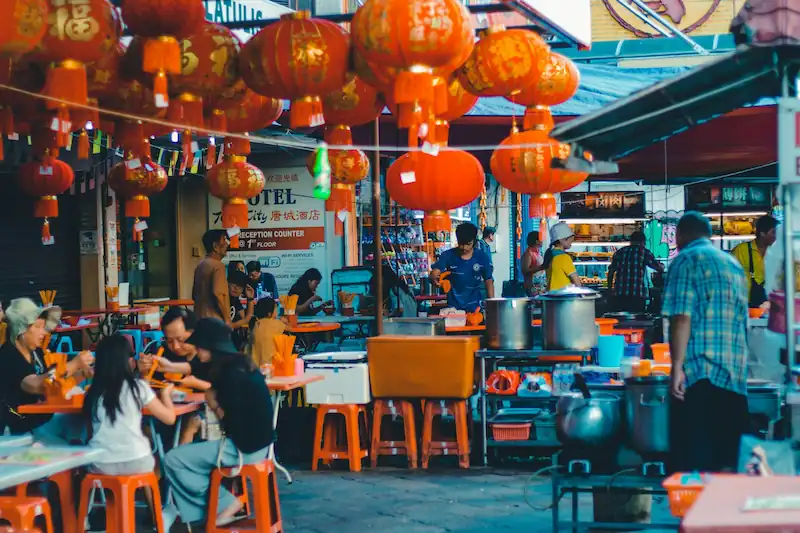
Chinatown is Kuala Lumpur’s strongest heritage base and one of its best-value central choices. Petaling Street, Central Market, Chinese and Hindu temples, restored shophouses, cafés, RexKL, Kwai Chai Hong, Merdeka Square, and Masjid Jamek form the city’s most coherent walkable cultural cluster.
Why stay here: Stay here when neighborhood texture, architecture, food, boutique character, and central value matter more than polished pavements or extensive resort-style hotel facilities.
Best for: Culture-focused travelers, boutique stays, budget trips, food, cafés, photographers, solo travelers, and visitors wanting a walkable heritage base.
Pros
Best central area for heritage streets, temples, cafés, and design-led stays
Walkable access to Central Market, Merdeka Square, Masjid Jamek, and the river confluence
Strong budget and boutique value compared with KLCC
Good rail access from Pasar Seni and Masjid Jamek
Restaurants, kopitiams, bakeries, bars, and creative spaces close to hotels
More characterful mornings and evenings than the commercial tower districts
Cons
Street quality, noise, and cleanliness vary by block
Limited true luxury inventory compared with KLCC or Bukit Bintang
Less convenient for repeated KLCC, TRX, or airport travel
Some budget rooms are very compact or windowless
Petaling Street itself can feel commercial and crowded
Nearby highlights
Petaling Street
Central Market and Kasturi Walk
Sri Mahamariamman Temple
Guan Di and Sin Sze Si Ya temples
RexKL
Kwai Chai Hong
Merdeka Square and Sultan Abdul Samad Building
Masjid Jamek and River of Life
Budget
Space Hotel @ Chinatown Kuala Lumpur – A capsule-style budget hotel close to Petaling Street. It is best for solo travelers or short stays where cost and location matter most. Why we recommend: It is one of the strongest ultra-budget options that still keeps you inside Chinatown. Check availability
Travelodge Chinatown Kuala Lumpur – A simple, practical hotel near Central Market and the heritage core. It supports travelers who want easy walking access without boutique pricing. Why we recommend: The location is more useful than most budget stays in this part of the city. Check availability
SCC Hotel Chinatown – A basic budget stay in the Chinatown area with straightforward rooms. It works best for travelers who need a central bed rather than hotel atmosphere. Why we recommend: It can keep costs low while preserving access to Petaling Street and the old-city cluster. Check availability
Mid
Tian Jing Hotel – A small shophouse-style hotel with more personality than standard mid-range options. It suits travelers who want Chinatown texture built into the stay. Why we recommend: It is one of the best fits for travelers choosing Chinatown for atmosphere rather than just price. Check availability
Mingle Highstreet – A compact hotel with social energy and a location near the old-city edge. It suits younger travelers and short urban stays. Why we recommend: It gives better neighborhood character than many plain mid-range hotels nearby. Check availability
Cosmo Hotel Kuala Lumpur – A practical hotel near Central Market, Masjid Jamek, and the heritage core. It works for travelers who want a clean base near older Kuala Lumpur. Why we recommend: It is a useful compromise between price, centrality, and access to the civic core. Check availability
Upscale
Four Points by Sheraton Kuala Lumpur, Chinatown – A modern hotel set directly in the Chinatown area, with reliable rooms and a stronger service level than most local options. It suits travelers who want heritage access without giving up comfort. Why we recommend: It is the clearest upscale choice inside Chinatown itself. Check availability
Else Kuala Lumpur, a Member of Design Hotels – A refined design hotel in a restored building close to Chinatown’s heritage streets. It suits travelers who want Kuala Lumpur’s old-city layer with a polished stay. Why we recommend: It brings rare boutique sophistication to a district better known for value hotels. Check availability
Park Hyatt Kuala Lumpur – A high-end hotel in the Merdeka 118 precinct, close to Chinatown and the old-city edge. It suits travelers who want spectacle, comfort, and heritage access nearby. Why we recommend: It is the strongest luxury option for travelers who want to stay near Chinatown without choosing a small heritage hotel. Check availability
Bangsar
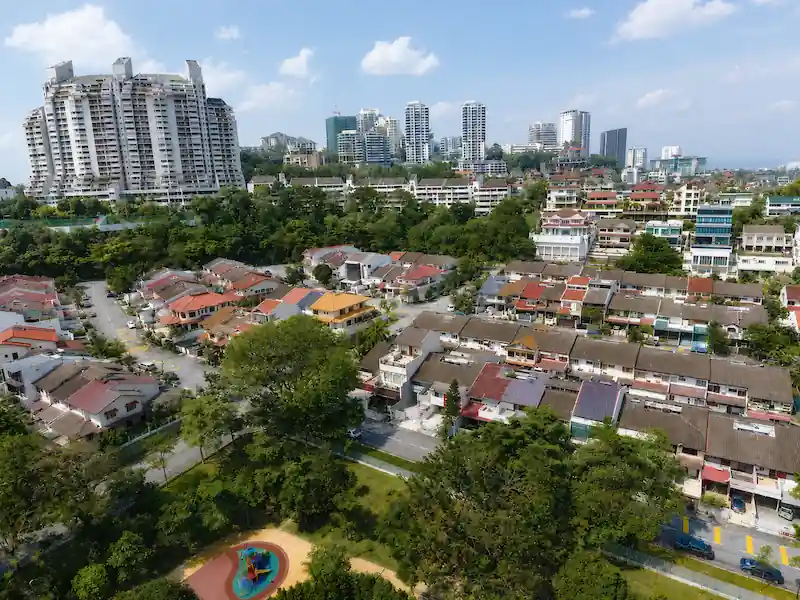
Bangsar is Kuala Lumpur’s strongest residential choice among the six principal stay areas, though the label covers several different micro-locations. Bangsar Village, Bangsar South, KL Eco City, and Mid Valley offer different combinations of restaurants, cafés, serviced apartments, offices, shopping, and transport.
Why stay here: Stay here when a longer trip benefits from more space, neighborhood dining, laundry, work facilities, supermarkets, and calmer evenings. It is a lifestyle base rather than the most efficient sightseeing base.
Best for: Longer stays, serviced apartments, families, remote workers, repeat visitors, dining-led trips, and business-leisure travelers.
Pros
Strong restaurants, cafés, bars, supermarkets, and neighborhood services
Good choice for serviced apartments, remote work, and stays of five nights or more
Calmer evenings than Bukit Bintang or the central nightlife corridors
Useful access to Mid Valley, KL Eco City, and Bangsar South
Often better room space and residential comfort for the price
Suitable for repeat visitors and business-leisure stays
Cons
Not a single compact neighborhood; exact micro-location is critical
More reliance on ride-hailing, rail, or mall connections
Weak choice for a two-night first visit
Hotels in Bangsar South or Mid Valley may be far from Bangsar Village
Traffic can slow trips into the center at peak times
Nearby highlights
Bangsar Village and Telawi dining streets
Bangsar South
Mid Valley Megamall
The Gardens Mall
KL Eco City
Restaurants, cafés, bars, and supermarkets
Access toward Brickfields and KL Sentral
Long-stay accommodation options
Budget
Komune Living – A modern value hotel in Bangsar South with shared facilities and a practical long-stay feel. It suits independent travelers who do not need classic hotel luxury. Why we recommend: It is one of the better-value choices near the Bangsar South and Mid Valley axis. Check availability
Imperial Regency Suites & Hotel Kuala Lumpur – A straightforward suite-style hotel near the Bangsar and Kerinchi side of the city. It works for travelers who want space and value over atmosphere. Why we recommend: It gives more room flexibility than many central budget hotels. Check availability
Signature Hotel Bangsar South – A basic budget option serving the Bangsar South area. It suits short practical stays rather than design-led travel. Why we recommend: It keeps costs contained in an area where hotel choice can skew toward business and serviced stays. Check availability
Mid
VE Hotel & Residence – A contemporary hotel and residence option in Bangsar South. It suits business travelers, longer stays, and visitors who value room function. Why we recommend: It is one of the most practical mid-range choices for Bangsar South and Mid Valley access. Check availability
Wyndham Grand Bangsar Kuala Lumpur – A large hotel close to Bangsar South and Mid Valley with business-friendly facilities. It works for travelers who want comfort outside the main tourist core. Why we recommend: It gives stronger full-service hotel infrastructure than many smaller options in the area. Check availability
St Giles Boulevard – A practical hotel connected to the Mid Valley retail and transport ecosystem. It suits travelers who want mall access, dining choice, and easy urban services. Why we recommend: It is especially useful when Mid Valley convenience matters more than classic sightseeing proximity. Check availability
Upscale
Alila Bangsar Kuala Lumpur – A design-led high-rise hotel above the Bangsar transport edge. It suits travelers who want a stylish stay outside the main tourist districts. Why we recommend: It is the strongest boutique-upscale hotel for a Bangsar-oriented trip. Check availability
Amari Kuala Lumpur – A polished hotel near Mid Valley and KL Eco City with modern rooms and strong facilities. It works for travelers who want a newer business-leisure stay. Why we recommend: It gives better contemporary comfort than many older hotels around Mid Valley. Check availability
The Gardens – A St Giles Signature Hotel & Residences – An upscale hotel and residence option connected to the Gardens and Mid Valley complex. It suits travelers who want shopping, dining, and serviced comfort in one zone. Why we recommend: It is the most convenient upscale choice for travelers using the Mid Valley side of Bangsar. Check availability
Brickfields
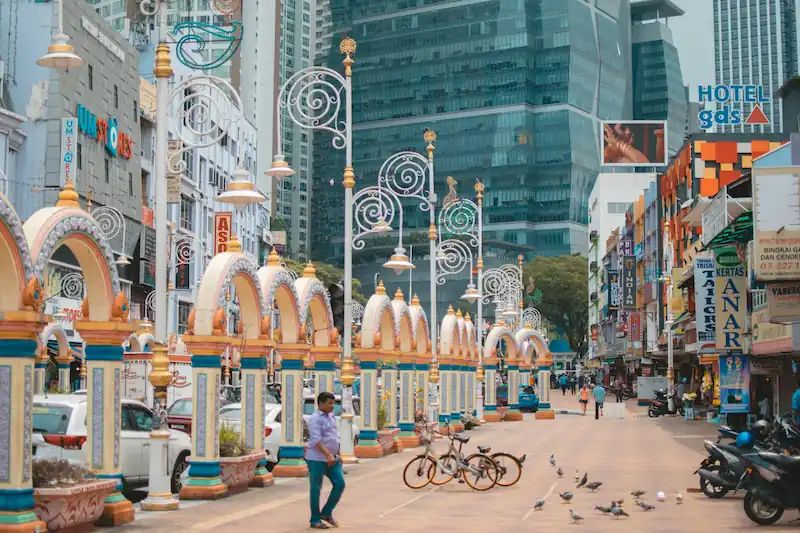
Brickfields and KL Sentral form Kuala Lumpur’s principal transport base. Airport trains, regional rail, urban rail, buses, hotels, NU Sentral, Little India, South Indian food, the National Museum, and access toward Lake Gardens make the area exceptionally practical despite its functional street character.
Why stay here: Stay here when airport rail, early departures, multi-city travel, a stopover, or transfer simplicity matters more than being beside the Petronas Towers or nightlife.
Best for: Stopovers, airport rail, train travelers, multi-city itineraries, business travel, families needing transfer simplicity, and short practical stays.
Pros
Best area for KLIA Ekspres, KLIA Transit, regional trains, and urban transport
Ideal for stopovers, early flights, and multi-city Malaysia itineraries
Hotel range from basic overnight stays to major luxury properties
Little India provides strong South Indian food and everyday street life
NU Sentral offers weather-proof food, shopping, and services
Convenient for the National Museum, Lake Gardens edge, and Thean Hou Temple
Cons
Street environment is functional and busy rather than scenic
Not the best leisure base for travelers focused on KLCC or nightlife
Pedestrian routes between the station, hotels, and Little India can feel indirect
Some station-area budget hotels prioritize convenience over room quality
Traffic and transport flows dominate several blocks
Nearby highlights
KL Sentral
KLIA Ekspres and KLIA Transit
NU Sentral
Little India Brickfields
National Museum of Malaysia
Perdana Botanical Garden edge
Thean Hou Temple
Easy connections across the city
Budget
NU Hotel @ KL Sentral – A simple budget hotel near KL Sentral and NU Sentral mall. It suits travelers who want transport access without paying for a full-service hotel. Why we recommend: It is a practical low-cost choice for airport rail and station-based stays. Check availability
Hotel Sentral KL @ KL Sentral Station – A basic station-area hotel with straightforward rooms and easy access to Brickfields. It is best for short stays and early departures. Why we recommend: It keeps the focus on transport convenience at a low price point. Check availability
Easy Hotel KL Sentral – A compact value hotel close to KL Sentral and Little India. It suits travelers who need a clean, simple base near transport. Why we recommend: It is useful for overnight stays when the station matters more than hotel facilities. Check availability
Mid
Aloft Kuala Lumpur Sentral – A modern hotel connected to the KL Sentral ecosystem with bright rooms and strong facilities. It suits short stays, families, and transport-led itineraries. Why we recommend: It is the most energetic and traveler-friendly mid-range choice at KL Sentral. Check availability
Ascott Sentral Kuala Lumpur – A serviced-apartment style stay near KL Sentral with larger rooms and practical facilities. It suits longer stays or travelers who want more independence. Why we recommend: It gives better room flexibility than most standard station-area hotels. Check availability
Scott Hotel KL Sentral – A straightforward hotel near the Brickfields and KL Sentral area. It suits practical stays where transport and value matter most. Why we recommend: It is a sensible mid-budget compromise close to the transport hub. Check availability
Upscale
Hilton Kuala Lumpur – A major luxury hotel directly connected to the KL Sentral area. It suits travelers who want airport rail efficiency with high-end service. Why we recommend: It is one of the best hotels in Kuala Lumpur for combining luxury with transport logic. Check availability
Le Méridien Kuala Lumpur – A polished hotel beside KL Sentral with strong facilities and easy rail access. It works well for business, stopovers, and comfortable first nights. Why we recommend: It offers high-end reliability without needing to stay in KLCC. Check availability
The St. Regis Kuala Lumpur – A luxury hotel near KL Sentral and the Lake Gardens side of the city. It suits travelers who want a quieter grand-hotel feel with transport access nearby. Why we recommend: It is the strongest luxury option for travelers who want station convenience without station-area compromise. Check availability
Kampung Baru
Kampung Baru is Kuala Lumpur’s most distinctive local-food base, where Malay houses, mosques, markets, and restaurants sit beside the towers of KLCC. Saloma Link strengthens access from the modern center, while nearby Chow Kit adds boutique hotels, markets, rail connections, and more accommodation choice.
Why stay here: Stay here when Malay food, lower-rise streets, evening atmosphere, and skyline contrast matter more than uniform infrastructure. Many of the best hotel options are technically around Chow Kit, Medan Tuanku, or the edge of Kampung Baru.
Best for: Malay food, repeat visits, photographers, local evenings, boutique stays near Chow Kit, and travelers wanting to remain close to KLCC without its corporate feel.
Pros
Best access to Malay food streets and a distinctive local evening atmosphere
Close to KLCC while feeling culturally and physically different
Saloma Link provides a memorable pedestrian connection
Chow Kit expands the choice of boutique, budget, and full-service hotels
Strong skyline photography and local-market potential
Good fit for repeat visitors and food-focused trips
Cons
Hotel inventory is thinner and spread across several adjoining areas
Pavements, crossings, and station access vary significantly
Less predictable for a first visit than KLCC or Bukit Bintang
Nightlife is food-led rather than bar-led
Some hotels marketed for Kampung Baru are functionally closer to Chow Kit or Medan Tuanku
Nearby highlights
Kampung Baru food streets
Saloma Link
Petronas skyline views
Chow Kit Market
Design hotels around Chow Kit
Medan Tuanku transport
Short connections to KLCC
Malay restaurants and mosques
Budget
Hotel WP Kuala Lumpur – A simple city hotel near Chow Kit and Kampung Baru with functional rooms. It suits budget travelers who want to stay north of the main commercial core. Why we recommend: It provides low-cost access to the Kampung Baru and Chow Kit side of central KL. Check availability
MoMo's Kuala Lumpur – A compact, style-conscious budget hotel near Chow Kit. It suits younger travelers who want value with more personality than a basic chain. Why we recommend: It is one of the best budget-design options near the Kampung Baru edge. Check availability
Prescott Hotel Kuala Lumpur Medan Tuanku – A straightforward hotel near Medan Tuanku and Chow Kit. It works for travelers who want central access at a restrained price. Why we recommend: It keeps you near the northern city-center rail axis without paying KLCC rates. Check availability
Mid
Tamu Hotel & Suites Kuala Lumpur – A sizeable hotel in Kampung Baru with views toward the skyline and practical rooms. It suits travelers who specifically want this neighborhood. Why we recommend: It is the most direct hotel choice for staying inside Kampung Baru itself. Check availability
The Chow Kit - an Ormond Hotel – A design-led hotel on the Chow Kit side of the city, close to Kampung Baru and the northern center. It suits travelers who want style without KLCC polish. Why we recommend: It gives this area a sharper boutique option than most nearby hotels. Check availability
RED by Sirocco – A modern hotel near Medan Tuanku and Chow Kit with central access and practical rooms. It suits travelers who want value, views, and northern-city convenience. Why we recommend: It balances price and centrality better than many hotels around the Chow Kit edge. Check availability
Upscale
Hotel Stripes Kuala Lumpur, Autograph Collection – A boutique-upscale hotel near Chow Kit with design character and a central position. It suits travelers who want style close to older city-center streets. Why we recommend: It is the strongest design hotel near Kampung Baru and Chow Kit for travelers avoiding KLCC sameness. Check availability
Sheraton Imperial Kuala Lumpur Hotel – A large upscale hotel near Medan Tuanku with strong facilities and central access. It suits travelers who want reliable comfort near the northern city center. Why we recommend: It offers full-service hotel depth in a location that still connects to Kampung Baru and Chow Kit. Check availability
Santa Grand Signature Kuala Lumpur – A newer upscale-leaning hotel near the northern central corridor. It works for travelers who want a polished stay close to Chow Kit, Medan Tuanku, and Kampung Baru. Why we recommend: It gives this part of the city a cleaner, more contemporary hotel option than many older properties nearby. Check availability
Where to stay in Kuala Lumpur for first-time visitors
First-time visitors should choose between maximum landmark convenience, evening energy, heritage character, and transport practicality. KLCC, Bukit Bintang, and Chinatown are the strongest leisure bases; Brickfields is the specialist choice for stopovers and transfer-heavy trips.
Choose KLCC for the easiest first-time experience, especially with children, limited time, or a preference for full-service hotels.
Choose Bukit Bintang when food, shopping, bars, and late urban energy are central to the trip.
Choose Chinatown for boutique value, heritage streets, cafés, temples, and a more walkable old-city base.
Choose Brickfields when airport rail or onward trains matter enough to outweigh sightseeing convenience.
Consider Kampung Baru or Chow Kit for a repeat visit or a food-first trip rather than as the default first-time answer.
Avoid outer business districts and ambiguous city-centre listings unless a direct rail connection or specific hotel justifies the location.
TravelerType
BestArea
Reason
Easiest first visit
KLCC
Landmarks, park, family attractions, hotels, and covered movement
Food and nightlife first visit
Bukit Bintang
Restaurants, Jalan Alor, bars, malls, and easy evenings
Heritage and boutique first visit
Chinatown
Walkable culture, design hotels, and central value
Stopover or rail-led first visit
Brickfields
KL Sentral, airport rail, and low transfer friction
Where to stay in Kuala Lumpur with family
Families should prioritize room configuration, pool quality, breakfast, mall or food access, weather protection, and short transfers. Kuala Lumpur offers strong serviced apartments and large hotel rooms, but connecting rooms, real beds, kitchen facilities, and laundry should be verified carefully.
KLCC is the best overall family base for KLCC Park, Petrosains, Aquaria, Suria KLCC, pools, and reliable dining.
Bukit Bintang suits families who prioritize shopping and food, but choose a quieter hotel away from Jalan Alor and nightlife frontage.
Brickfields works for airport and train logistics, especially at hotels directly connected or very close to KL Sentral.
Bangsar, Mid Valley, and Bangsar South suit longer family stays with serviced apartments, malls, supermarkets, and larger rooms.
Chinatown can work for older children and culture-focused families, but pavements, compact rooms, and street variation require more checking.
Look for true connecting rooms, washing machines, kitchenettes, lift access, pools, and practical breakfast rather than relying on family-room labels.
FamilyNeed
BestArea
WatchOut
Best overall first family trip
KLCC
Higher rates and busy event periods
Food and shopping convenience
Bukit Bintang
Noise and evening traffic
Airport and rail simplicity
Brickfields
Less leisure atmosphere
Long stay and more space
Bangsar / Mid Valley
More transfers to major sights
Heritage-focused family stay
Chinatown
Smaller rooms and uneven pavements
Where to stay in Kuala Lumpur for nightlife
Kuala Lumpur nightlife ranges from street-food evenings and casual bars to rooftop venues, hotel lounges, clubs, cocktails, and lower-key creative spaces. The best base depends on whether nightlife means bar-hopping, skyline drinks, late food, or neighborhood atmosphere.
Bukit Bintang is the strongest overall nightlife base for Changkat, Jalan Alor, bars, late food, and easy venue-to-hotel movement.
KLCC is better for rooftop bars, luxury hotel lounges, skyline views, and polished evenings.
Chinatown suits cocktail bars, cafés, creative venues, RexKL, and lower-key nights among older streets.
Kampung Baru is best for food-led evenings and Saloma Link rather than conventional nightlife.
TRX and Imbi extend Bukit Bintang’s restaurant and entertainment radius but should be judged by exact hotel access.
Bangsar works for dining, wine, and neighborhood bars on longer stays, though return transport is more important.
NightStyle
BestArea
TradeOff
Bars, clubs, and late food
Bukit Bintang
Noise, crowds, and traffic
Rooftops and skyline drinks
KLCC
Higher prices and polished atmosphere
Cocktails and creative venues
Chinatown
Smaller nightlife scene and variable streets
Malay food evening
Kampung Baru
Limited bar scene
Residential dining and bars
Bangsar
Ride-hailing required
Where to stay in Kuala Lumpur on a budget
Kuala Lumpur offers excellent accommodation value, but apparent bargains can lose their advantage through poor station access, small windowless rooms, traffic-heavy locations, or daily ride-hailing. Compare total convenience, not only the nightly price.
Chinatown is the strongest central budget area for heritage, food, rail, cafés, and walkability.
Bukit Bintang has extensive budget inventory, but room size, windows, noise, and maintenance vary sharply.
Brickfields is the smartest budget choice for airport rail, stopovers, and onward travel.
Chow Kit and Medan Tuanku can provide central value, design hostels, and boutique hotels near Kampung Baru.
Bangsar South offers long-stay value and larger rooms, but it is not efficient for a short sightseeing trip.
KLCC bargains should be checked carefully because broad location labels may hide long walks, major roads, or weaker pedestrian routes.
Avoid remote hotels unless the saving remains meaningful after transport time and ride-hailing costs.
BudgetPriority
BestArea
Why
Best central value
Chinatown
Heritage, rail, food, and lower rates than KLCC
Night food and shopping
Bukit Bintang
Large budget supply inside the evening district
Airport and rail access
Brickfields
KL Sentral saves transfer time and cost
Design value near local food
Chow Kit / Kampung Baru edge
Boutique and budget options near markets and Malay dining
Long-stay space
Bangsar South
Serviced stays and larger rooms at lower centrality
Where to stay depending on trip length
Trip length changes the value of centrality. Two or three nights reward KLCC, Bukit Bintang, Chinatown, or KL Sentral; longer stays make room size, laundry, food access, serviced apartments, and neighborhood rhythm more important.
Label
Stay
Avoid
Why
1 night or stopover
Brickfields / KL Sentral, or KLCC if the stopover includes a full evening
Bangsar, distant apartments, or traffic-dependent outer districts
Airport and departure logistics outweigh neighborhood depth.
2 nights
KLCC or Bukit Bintang
Bangsar, Bangsar South, or weakly connected value hotels
Landmarks, meals, and evenings should require minimal transfers.
3 days
KLCC, Bukit Bintang, or Chinatown
Choosing an area only for one hotel view or one low rate
These bases support the clearest first-time structure.
4 to 5 days
KLCC, Chinatown, Bukit Bintang, Brickfields, or Bangsar according to trip style
Paying maximum central rates for a small room if longer-stay comfort matters
The trip can trade some centrality for space, food, or atmosphere.
1 week
Bangsar, Bangsar South, Mid Valley, Brickfields serviced apartments, or a quiet KLCC edge
The loudest nightlife streets and very small design rooms
Laundry, kitchens, storage, work space, and local services become decisive.
Family trip
KLCC, quieter Bukit Bintang hotels, Brickfields, or Bangsar for longer stays
Windowless budget rooms, nightlife frontage, and complex station approaches
Weather protection, room configuration, pools, food, and transport reduce friction.
Food-focused trip
Bukit Bintang, Chinatown, Kampung Baru / Chow Kit, or Bangsar
Isolated business hotels requiring rides for every meal
The evening radius should match the food experience you want.
Luxury city break
KLCC or Bukit Bintang
Paying for a view without park, mall, dining, or transport access
These areas have the strongest service, facilities, and premium inventory.
Return visit
Chinatown, Bangsar, Kampung Baru / Chow Kit, or a design-led central edge
Repeating a generic KLCC stay by default
Neighborhood food, craft, markets, and local evenings provide more new value.
Business-leisure trip
KLCC, Ampang Park, TRX, KL Sentral, Bangsar South, or Mid Valley according to meetings
Choosing a leisure district far from the work location
Peak traffic can dominate the working part of the stay.
How to choose the right hotel in Kuala Lumpur
Kuala Lumpur has abundant hotels and serviced residences, but quality depends on the exact building, entrance, room type, connection, and management. A skyline photograph or broad neighborhood label is not enough to judge daily convenience.
Topic
WhatToDo
WhatToAvoid
WhyItMatters
Verify the exact pin and entrance
Check the building entrance, road crossing, station exit, covered route, and ride-hailing pick-up point.
Trusting broad labels such as KLCC, Bukit Bintang, or city centre.
Major roads, podiums, construction, and indirect entrances can turn a short map distance into a difficult walk.
Check whether the property is a hotel or managed residence
Confirm reception hours, housekeeping, luggage storage, pool access, security, deposits, and support.
Assuming every tower apartment operates like a full-service hotel.
Kuala Lumpur has many privately managed units inside residential or mixed-use towers.
Verify the room category and view
Confirm whether the booked room has the advertised skyline view, window, floor level, and bed configuration.
Assuming all rooms in a tower face the Petronas Towers or city skyline.
View premiums and room differences can be substantial within the same property.
Prioritize weather-protected movement
Value direct mall links, covered walkways, sheltered station routes, and easy lobby pick-ups.
Dismissing mall or station connections as purely commercial.
Rain, heat, children, and luggage can make sheltered access highly valuable.
Match room format to the stay
Compare hotels, serviced apartments, kitchenettes, washing machines, and separate living areas.
Booking the smallest design room for a week-long, family, or work-leisure stay.
Kuala Lumpur often offers excellent value for larger rooms and serviced residences.
Confirm family-room reality
Check connecting doors, real beds, sofa-bed size, occupancy limits, bathroom count, and child policies.
Relying only on a family-room or suite label.
Nominal capacity may not translate into comfortable multi-night use.
Check noise and nightlife orientation
Request a higher, inward-facing, or quieter room near Jalan Alor, Changkat, major roads, rail tracks, and nightlife.
Booking directly above the evening action when sleep matters.
Traffic, music, motorbikes, and late crowds vary sharply by façade.
Treat pools as a practical amenity
Check pool hours, shade, children’s access, closures, and whether the pool belongs to the hotel or shared residence.
Choosing a property for a heavily photographed pool without reading access rules.
Pools can be valuable recovery space in a hot city, especially for families.
Compare breakfast and nearby food
Decide whether a hotel breakfast, mall connection, kopitiam, or neighborhood restaurants best match your mornings.
Paying for breakfast when strong affordable food sits nearby, or skipping it where morning options are weak.
The right choice varies greatly between KLCC, Brickfields, Chinatown, and residential districts.
Use KL Sentral for transport-heavy stays
Prioritize direct or genuinely short access to KLIA Ekspres and train platforms.
Choosing a property marketed near KL Sentral that requires difficult road crossings.
The value of the area is transfer simplicity.
Calculate the total price
Include taxes, deposits, breakfast, parking, extra beds, laundry, transfers, and cancellation terms.
Comparing only the headline room rate.
Serviced residences and third-party managed units may use different fee structures.
Check recent renovation and construction reports
Review recent comments for building works, closed facilities, lift delays, and neighboring development.
Relying only on older reviews or polished official photography.
Kuala Lumpur’s fast development can change access, noise, and views.
Book specialist inventory early
Reserve small Chinatown boutiques, true family suites, connected rooms, park-facing KLCC rooms, and standout design hotels early.
Assuming all central inventory is interchangeable.
The most distinctive or practical room types are limited even when the city has abundant hotel supply.
FAQ: where to stay in Kuala Lumpur
These answers compare Kuala Lumpur’s principal stay areas and the secondary zones travelers often consider for first visits, families, nightlife, budget, luxury, stopovers, business, and longer stays.
What is the best area to stay in Kuala Lumpur for first-time visitors?
KLCC is the easiest overall choice because it combines the Petronas Towers, KLCC Park, family attractions, malls, strong hotels, and covered movement. Bukit Bintang is better for food and nightlife, while Chinatown is better for heritage and boutique value.
Is KLCC or Bukit Bintang better to stay in?
Choose KLCC for landmarks, families, luxury, park space, and a calmer first-time base. Choose Bukit Bintang for restaurants, shopping, Jalan Alor, bars, and late urban energy. The two areas are linked by a covered pedestrian route.
Is Chinatown a good place to stay in Kuala Lumpur?
Yes. Chinatown is the strongest heritage base, with temples, shophouses, cafés, food, Central Market, Merdeka Square, Pasar Seni transport, and several boutique hotels. It is less polished and has less luxury inventory than KLCC.
Should I stay near KL Sentral?
Stay near KL Sentral when airport rail, trains, a stopover, or onward travel is important. Brickfields offers excellent transport and strong Indian food, but it is less atmospheric for a leisure-first trip than KLCC, Bukit Bintang, or Chinatown.
Is Bangsar a good area to stay in Kuala Lumpur?
Bangsar suits longer stays, serviced apartments, restaurants, cafés, families, remote work, and business-leisure travel. Check the exact micro-location because Bangsar Village, Bangsar South, Mid Valley, and KL Eco City provide very different experiences.
Is Kampung Baru a good place to stay?
Kampung Baru is best for Malay food, local evenings, Saloma Link, and skyline contrast. Hotel choice is limited inside the neighborhood, so many practical options sit around Chow Kit or Medan Tuanku. It is better for repeat visitors than a default first trip.
Is Chow Kit a good area to stay in Kuala Lumpur?
Chow Kit can be a strong design-and-value alternative near Kampung Baru, markets, Medan Tuanku rail, and the northern center. Street character varies, so the exact hotel and walking route matter more than the broad district name.
Where should families stay in Kuala Lumpur?
KLCC is the best overall family base for KLCC Park, Petrosains, Aquaria, malls, pools, and reliable hotels. Brickfields is useful for transport, while Bangsar or Mid Valley can provide more space for longer stays.
Where should couples stay in Kuala Lumpur?
Choose KLCC for luxury and skyline views, Bukit Bintang for food and nightlife, Chinatown for boutique character, or Bangsar for slower restaurant-led evenings. The best choice depends on whether atmosphere, service, or nightlife matters most.
Where should solo travelers stay in Kuala Lumpur?
Bukit Bintang is easy for food and nightlife, Chinatown offers hostels, cafés, heritage, and central value, and KLCC provides the simplest polished base. Brickfields works for short solo stopovers and onward travel.
Where should I stay in Kuala Lumpur on a budget?
Chinatown usually offers the best central value. Bukit Bintang has extensive low-cost inventory but variable quality, Brickfields is best for airport rail, and Chow Kit can provide design-led value near Kampung Baru.
Where should I stay in Kuala Lumpur for nightlife?
Bukit Bintang is the strongest overall nightlife base for bars, Changkat, Jalan Alor, and late dining. KLCC suits rooftops and luxury lounges, Chinatown lower-key cocktails and creative venues, and Kampung Baru food-led evenings.
Where should I stay in Kuala Lumpur for food?
Bukit Bintang is easiest for variety and late dining, Chinatown for kopitiams and Chinese-Malaysian food, Kampung Baru and Chow Kit for Malay food, Brickfields for South Indian cuisine, and Bangsar for restaurants and cafés.
What is the safest area to stay in Kuala Lumpur?
KLCC often feels easiest for first-time visitors because it is polished, hotel-heavy, well lit, and connected to malls. Other central areas are generally manageable with normal precautions, but exact streets, late-night routes, traffic, and valuables still matter.
What is the best area for luxury hotels in Kuala Lumpur?
KLCC has the strongest concentration of luxury hotels, skyline rooms, park access, and major facilities. Bukit Bintang is better for luxury shopping and nightlife, while KL Sentral offers premium hotels with excellent airport and rail connections.
What is the best area for boutique hotels in Kuala Lumpur?
Chinatown is the strongest boutique-hotel district because restored buildings and heritage streets create more character. Chow Kit has several design-led alternatives, while KLCC and Bukit Bintang offer upscale design hotels in larger modern buildings.
Where should I stay for a Kuala Lumpur stopover?
Brickfields and KL Sentral are best when airport rail and departure timing dominate. Choose KLCC for a stopover with a full sightseeing evening, or Bukit Bintang when late food matters more than the fastest airport connection.
Where should I stay for a business trip to Kuala Lumpur?
Choose according to the meeting location: KLCC for the convention and corporate core, Ampang Park for the eastern business district, TRX for the financial district, KL Sentral for transport, and Bangsar South or Mid Valley for western offices.
Is TRX a good place to stay in Kuala Lumpur?
TRX is useful for business, newer hotels, MRT access, shopping, and proximity to Bukit Bintang. It is best treated as an extension of the commercial center rather than a heritage or neighborhood base.
Is Mid Valley a good place to stay?
Mid Valley suits shopping, business, families, longer stays, and direct mall convenience. It is less efficient for classic sightseeing than KLCC or Chinatown, but strong when space, food choice, and the western side of the city matter.
Is Ampang Park a good area to stay?
Ampang Park and the eastern KLCC edge suit business-leisure travelers, embassies, quieter upscale hotels, ILHAM Gallery, and access to KLCC without staying directly beside the towers. Exact walking and rail connections should be checked.
How many nights should I stay in Kuala Lumpur?
Three nights is a strong first-time minimum. Four or five nights allow deeper museums, neighborhoods, food, craft, and parks. A week justifies Bangsar, serviced apartments, or a more residential base.
Is it worth paying more to stay in KLCC?
For a short first visit, families, or a luxury break, the convenience can justify the premium. For longer stays, Chinatown, Brickfields, Bangsar, or Chow Kit may provide more space, food character, or value.
Are serviced apartments a good choice in Kuala Lumpur?
Yes, especially for families, work trips, and stays of five nights or more. Verify management, housekeeping, reception, luggage storage, security, kitchen equipment, washing machines, deposits, and pool access.
What should I check before booking a Kuala Lumpur hotel?
Check the exact pin, entrance, station route, covered access, room window and view, bed configuration, management model, deposits, breakfast, pool rules, construction, cancellation terms, and nearby dinner options.
Should I stay near a mall in Kuala Lumpur?
Mall proximity can be highly practical because malls provide food, supermarkets, toilets, family facilities, weather protection, and pedestrian connections. It is especially valuable in KLCC, Bukit Bintang, Mid Valley, and KL Sentral.
Which area is best without using many taxis?
KLCC and Bukit Bintang work best together through covered walking links and rail. Chinatown is highly walkable internally and well served by Pasar Seni. Brickfields is best for rail-based airport and regional transport.
Which area has the best Petronas Towers views?
KLCC has the broadest choice of tower-view rooms, but the exact orientation and room category must be confirmed. Kampung Baru and Chow Kit can provide more contextual skyline views from a lower-rise or local setting.
Which Kuala Lumpur area is best for a week-long stay?
Bangsar, Bangsar South, Mid Valley, Brickfields serviced apartments, or a quieter KLCC edge work well for a week. Prioritize laundry, kitchens, storage, work space, supermarkets, and comfortable daily transport.
Is Kuala Lumpur city centre one single area?
No. Listings may use city centre for KLCC, Bukit Bintang, Chow Kit, Pudu, Imbi, or other central districts. Always verify the exact map pin and daily route rather than relying on the marketing label.
Choose the district first, then verify the exact building entrance, transport line, weather-protected route, room type, and evening food radius.
Continue planning your Kuala Lumpur trip
Once you have chosen the right base, use the Kuala Lumpur city guide to understand the city’s clusters, the things-to-do guide to select activities, and the itinerary pages to group days around transport, heat, rain, and realistic travel times.
Find the best places to stay, how to get there, and move around with ease.
Build a smarter trip base
Turn the right neighborhood into the right itinerary
Once you know where to stay in Kuala Lumpur, the next step is structuring the rest of your trip around that base. Use the planner to build a route that fits your pace, priorities, and how you actually want your days to unfold.