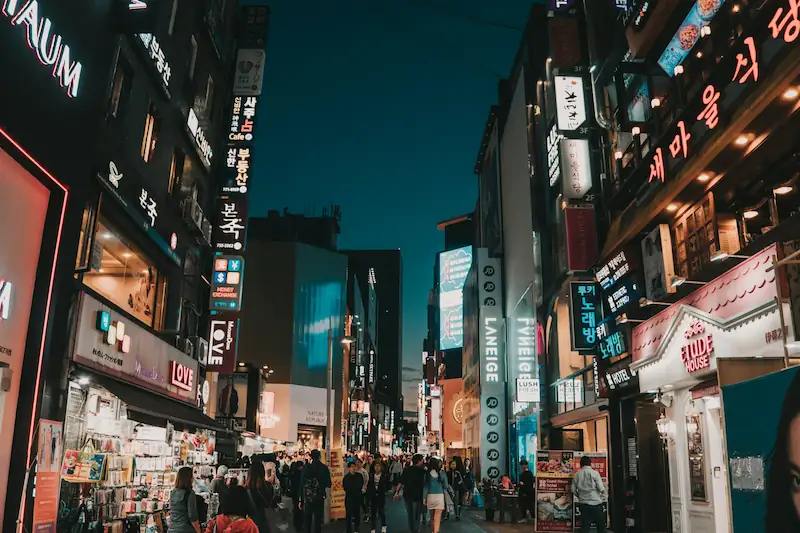
Where to stay in Seoul
Find the best neighborhoods and hotels in Seoul.
Open page →
Plan a smarter trip to Seoul by understanding how its royal districts, contemporary neighborhoods, river parks, mountains, markets and nightlife fit together. Seoul is not one continuous centre but a network of distinct urban worlds: Jongno for palaces and hanok streets, Myeongdong for central convenience, Hongdae for youth culture, Yongsan and Itaewon for museums and dining, Seongsu for design, and Gangnam or Jamsil for the modern city south of the Han. The strongest stay combines these contrasts without turning every day into a long chain of transfers.
Find the best neighborhoods and hotels in Seoul.
Open page →
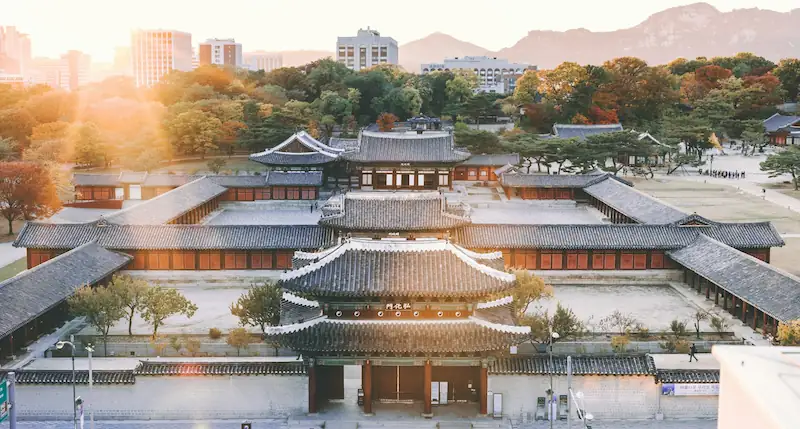
Prioritize the activities that deserve your time in Seoul.
Open page →
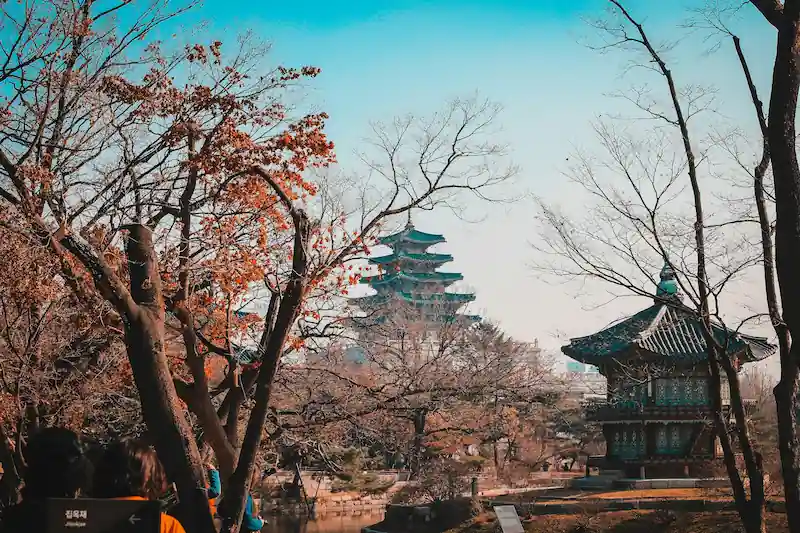
2 Days in Seoul: Best Itinerary
Open itinerary →
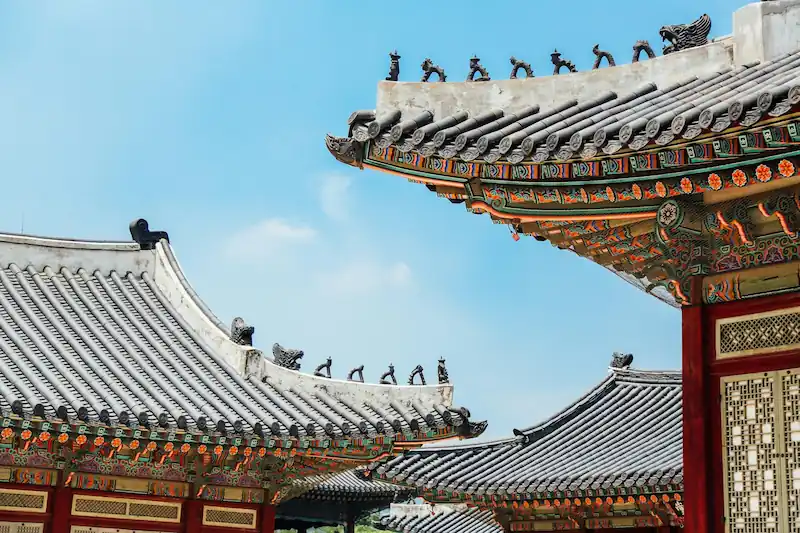
3 Days in Seoul: Best Itinerary
Open itinerary →
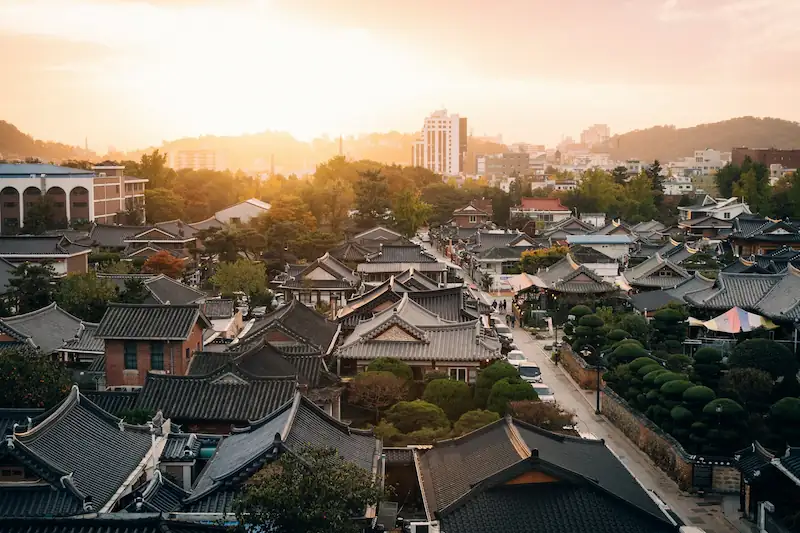
4 Days in Seoul: Best Itinerary
Open itinerary →
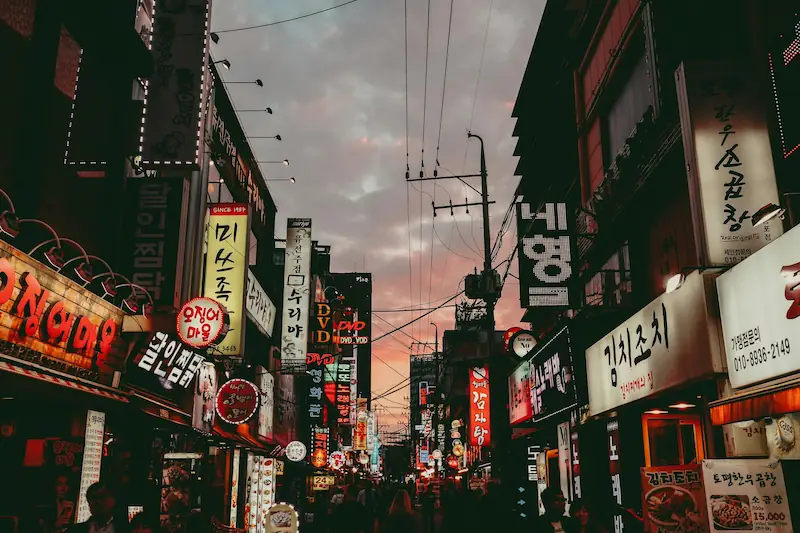
5 Days in Seoul: Best Itinerary
Open itinerary →
Seoul is a mountain-ringed megacity divided by the Han River and organized around highly distinct districts. Its defining experiences move between Joseon palaces, residential hanok lanes, national museums, market food, K-culture, university nightlife, forested ridges and river parks. The city becomes much easier to read when each day stays within one geographic cluster and one major north–south contrast is added only when it meaningfully changes the trip.
Seoul is compelling because dynastic architecture, Buddhist and Confucian traditions, post-war history, hyper-modern design, nightlife, food and mountain geography exist in immediate tension. Gyeongbokgung and Changdeokgung explain royal Seoul; Cheong Wa Dae, the War Memorial and national museums add modern political and social context; Hongdae, Seongsu, Gangnam and Jamsil show the city’s contemporary energy; the Han River and surrounding ridges prevent the capital from feeling like an uninterrupted commercial grid. The city is strongest when a palace morning can lead naturally into market food, contemporary art, a river sunset or a late neighborhood dinner.
Best time: April–May and September–October for the broadest mix of palace walks, hiking, markets and river time; winter suits museums and clear views, while summer requires heat, humidity and monsoon planning.
Ideal trip length: 3 full days for palaces, a market, a museum, one modern district and a viewpoint; 5 days for the Han River, Seongsu or Jamsil, food depth and a DMZ or hiking day; 7 days for slower neighborhoods and multiple excursions.
Seoul offers strong everyday value through public transport, market food, casual restaurants, free parks and many public museums, but costs rise with central hotels, premium cafés, beauty services, concerts, nightlife and highly sought-after dining. Spend first on a well-located hotel and the experiences that need interpretation or advance access; avoid losing time and money through repeated cross-city travel.
Historic Seoul is concentrated north of the Han around Jongno, Gwanghwamun, Bukchon, Insadong and the royal palaces. Myeongdong, City Hall, Euljiro and Dongdaemun form the commercial-central bridge; Hongdae and Mapo anchor the creative west; Yongsan, Hannam and Itaewon combine museums, art and international dining; Seongsu and Ttukseom create an eastern design-and-river cluster; Gangnam, COEX and Jamsil represent the larger-scale southern city. Each zone works best as a half-day or full-day system.
The Han River is Seoul’s largest planning divide, while Bukhansan, Namsan, Inwangsan and other ridges compress the city into valleys and corridors. This geography creates dramatic viewpoints but also slopes, indirect walking routes and longer transfers. North-central Seoul offers the easiest first-time base; southern Seoul becomes more logical when business, Jamsil, COEX, beauty, luxury or contemporary culture are central to the trip.
Mornings belong to palaces, hanok lanes, temples and mountain routes; afternoons suit museums, galleries, shopping, workshops and cafés; sunset brings the Han River, Namsan and city-wall viewpoints; evenings belong to markets, barbecue, Hongdae, Euljiro, Itaewon, Dongdaemun and Gangnam. Seoul remains active late, but the last useful train, station exit and hotel location still shape the return.
Build the first trip around four contrasts: one principal palace zone, one museum or modern-history layer, one contemporary neighborhood, and one river or mountain reset. Add a planned food experience and a single evening district. Gangnam, Jamsil, the DMZ and deeper outer neighborhoods should be chosen according to interest rather than treated as universal requirements.
Open the planner
Keep palace, hanok and traditional-culture days north of the Han whenever possible. Start Gyeongbokgung, Changdeokgung, Bukchon and mountain walks early, when crowds, heat and residential pressure are lower. Choose one principal palace and one complementary historic site instead of flattening every royal compound into the same day. Use museums as geographic anchors: National Museum and War Memorial in Yongsan, Leeum with Hannam, Folk Museum with Gyeongbokgung, and Seoul Museum of History with Deoksugung or Gwanghwamun. Choose one main skyline experience: Namsan for central geography, Seoul Sky for metropolitan scale, or a Seoul City Wall section for a free active alternative. Let markets and meals structure the route. Gwangjang pairs with Jongmyo, Euljiro and DDP; Mangwon pairs with Hongdae and the river; temple food or a cooking class deserves its own deliberate slot. Use Hongdae, Euljiro, Itaewon or Gangnam for different evening styles rather than trying to sample several nightlife districts in one night. Protect one open-space block at the Han River, Seoul Forest, Olympic Park or in the mountains so the trip is not only dense streets and interiors.
Vibe: Royal, historic, walkable, and strongest in the morning.
Why go: For Gyeongbokgung, Changdeokgung, Cheong Wa Dae, Bukchon, Insadong, Jongmyo, museums and traditional culture.
Who it fits: First-time visitors, culture travelers, photographers and short heritage-led stays.
Not for: Travelers whose priority is late nightlife, large rooms or southern Seoul.
Where to stay: The most rewarding first-time base when palace and cultural access matter; choose the exact station carefully and respect Bukchon’s residential character.
Vibe: Central, commercial, convenient, and active into the evening.
Why go: For simple subway connections, shopping, street food, Namsan, City Hall and easy first-night logistics.
Who it fits: Short stays, shopping-focused visitors, families and travelers prioritizing operational ease.
Not for: Travelers seeking quiet residential streets or deep neighborhood character.
Where to stay: The most plug-and-play base for two or three nights, particularly when airport transfers and central transport matter more than atmosphere.
Vibe: Youthful, creative, social, and late-running.
Why go: For nightlife, music, casual food, cafés, shopping, Yeonnam, Mangwon and direct airport-rail access.
Who it fits: Younger travelers, social trips, nightlife visitors and longer stays focused on western Seoul.
Not for: Early sleepers or travelers starting every day in the palace district.
Where to stay: A strong contemporary base when evenings are central; choose a quieter side street near Hongik University Station rather than the loudest nightlife block.
Vibe: Polished, dispersed, corporate, and contemporary.
Why go: For COEX, business, clinics, luxury hotels, southern dining, beauty, shopping and access toward Jamsil.
Who it fits: Business travelers, repeat visitors, comfort-led stays and southern-Seoul itineraries.
Not for: First-time visitors focused primarily on palaces, traditional markets and old central Seoul.
Where to stay: Best when meetings or southern attractions justify the river crossing; exact station choice is more important than the broad Gangnam name.
Vibe: International, hillside, food-led, and connected to Namsan and Hannam.
Why go: For international and Korean dining, Leeum, Hannam, bars, Namsan access and a more mixed longer-stay atmosphere.
Who it fits: Couples, food travelers, repeat visitors and travelers seeking nightlife outside Hongdae.
Not for: Travelers wanting flat streets, the easiest airport transfer or the cleanest palace-first routing.
Where to stay: A characterful midpoint for longer stays, but hills, nightlife pockets and distance from individual stations make micro-location essential.
Seoul is most legible when royal history, modern institutions, contemporary neighborhoods, river life, mountain geography and food are placed beside one another. Together, these experiences reveal the contrasts that define the city without overwhelming a first itinerary.
Planning tip: Choose one major anchor, one nearby neighborhood layer and one evening or food sequence per day. Reserve timed access where necessary, but keep markets, parks, river walks and neighborhood time flexible around weather and energy.
Gyeongbokgung provides the clearest royal and ceremonial introduction to Seoul, particularly when the palace is connected to Gwanghwamun, Cheong Wa Dae or the National Folk Museum.
Tip: Arrive near opening, then continue toward the presidential district or Bukchon before midday pressure builds.
Bukchon reveals how traditional residential architecture survives beside modern Seoul, but it remains a lived-in neighborhood with visitor restrictions and a need for quiet, respectful movement.
Tip: Follow current visiting hours and signs, avoid intrusive photography, and connect the walk to Insadong or Changdeokgung.
Namsan combines a central mountain, city-wall traces and a skyline view that still shows Seoul’s surrounding ridges and dense urban valleys before full darkness.
Tip: Choose the walking, bus or cable-car approach according to weather and energy, and arrive before sunset.
Changdeokgung is the strongest counterpoint to Gyeongbokgung: less ceremonial, more integrated with terrain, and especially atmospheric when the timed garden route is available.
Tip: Secure the garden time first, then build Bukchon, Jongmyo, Insadong or Ikseon-dong around it.
Seoul Sky reveals the full metropolitan scale south of the Han and makes Jamsil, the river, apartment districts and distant ridges far more legible than they are from street level.
Tip: Choose it instead of, not in addition to, another paid observation deck, and pair it with Seokchon Lake, Lotte World or Olympic Park.
Seoul’s mountains are part of the city’s structure. A shorter Naksan or Inwangsan route, or a more demanding Bukhansan hike, explains the capital’s compressed valleys better than another commercial district.
Tip: Choose the route by difficulty, weather, daylight and season rather than by the most dramatic photograph.
The National Museum of Korea provides the best broad introduction to Korean archaeology, Buddhist art, ceramics, calligraphy and material culture, with free permanent galleries that reward a selective visit.
Tip: Choose two or three collection areas and allow time for the building, grounds and views rather than attempting every gallery.
Jongmyo expresses royal ancestral ritual through long paths, restrained buildings and Confucian order, offering a very different historical atmosphere from the palaces.
Tip: Check the current guided-entry or free-access format before planning the visit.
Leeum connects Korean antiquities, contemporary art and distinctive architecture in a compact visit that fits naturally with Hannam-dong’s design stores, cafés and dining.
Tip: Check current exhibition and reservation arrangements, then continue through Hannam rather than treating the museum as an isolated stop.
Cheong Wa Dae adds modern presidential history to the Gyeongbokgung axis, while the National Folk Museum helps translate royal sightseeing into everyday Korean customs, housing, work and seasonal life.
Tip: Use one or both according to interest; together they can extend a palace morning into a substantial historical block.
The museum gives essential context on Korean conflict, division and military history, complementing the longer chronology of the National Museum and the geopolitical immediacy of a DMZ tour.
Tip: Allow several hours, select galleries according to interest, and combine it with the National Museum or Yongsan rather than rushing both.
Check guided tours →
A well-chosen workshop—hanji, bojagi, mother-of-pearl, calligraphy, cooking or tea—adds hands-on cultural understanding that another passive photo stop cannot provide.
Tip: Book a specialist small-group format with meaningful making time and connect it to Bukchon, Insadong or Namsangol.
The Han River functions as everyday leisure infrastructure, with distinct parks for cycling, picnics, festivals, family facilities and evening views.
Tip: Choose Yeouido, Banpo, Ttukseom or Mangwon according to the surrounding itinerary rather than selecting a park at random.
Seoul’s late-running districts depend on a clean, heavily used transport network, but large interchanges and final train times still shape how freely an evening can unfold.
Tip: Use a reloadable transport card and check the last practical route before committing to a distant late-night district.
Check guided tours →
Gwangjang is best approached with appetite and a short dish list, using shared counters and narrow aisles as a compact market-food experience rather than a long sightseeing visit.
Tip: Share portions, circle once before ordering, and continue toward Jongmyo, Euljiro or DDP.
Seongsu becomes more than a trend-led café district when its converted factories, stores and pop-ups are connected to Seoul Forest and the Ttukseom riverfront.
Tip: Choose a few current stops, then protect time for the park or river instead of queuing across the entire neighborhood.
Check guided tours →
The west side works as a progression: quieter cafés and lanes in Yeonnam, market or casual food around Mangwon, then Hongdae’s performances, shops, bars and late-night energy.
Tip: Start before dinner and choose the final nightlife intensity according to the group rather than arriving only at the busiest streets.
Korean barbecue is a social meal structured by grilling, shared side dishes and table rhythm. The strongest experience comes from choosing the meat, restaurant style and district intentionally rather than entering the nearest tourist-facing venue.
Tip: Let staff guide the grill when offered and order one focused specialty rather than an oversized mixed menu.
Kalguksu, mandu, gomtang, seolleongtang and other everyday soups or noodles reveal a more daily Seoul food culture than market snacks and celebratory barbecue alone.
Tip: Use older central districts and markets for a focused bowl between major activities.
Fried chicken and beer remain one of Seoul’s easiest late-night social meals, working naturally after baseball, the Han River, Hongdae or a casual evening with friends.
Tip: Share portions and compare one plain or crisp style with one seasoned option.
Check food options →
A modest neighborhood meal organized around rice, soup and multiple banchan often explains everyday Korean dining more clearly than a formal tasting menu.
Tip: Choose a busy restaurant with a clear specialty and follow the table’s refill and sharing rhythm.
Temple cuisine connects plant-based eating with Buddhist practice, seasonality, fermentation and restraint, offering a cultural experience distinct from both street food and contemporary fine dining.
Tip: Choose a specialist restaurant or structured program and allow the meal to unfold slowly.
A good cooking class explains ingredients, fermentation, seasoning and meal structure while making later restaurant and market experiences easier to understand.
Tip: Choose a small-group format with hands-on preparation and, when possible, a market or ingredient component.
Seoul becomes repetitive when every palace, market, shopping district, café zone and viewpoint is treated as essential. A strong first trip establishes royal history, modern cultural context, one contemporary neighborhood, one river or mountain experience and one deliberate food sequence.
Seoul works very well with children when the itinerary alternates palace courtyards, parks, interactive museums, simple food and a reliable indoor option. Large stations, humid summers, winter cold and repeated cross-city transfers create more fatigue than the attractions themselves. Choose one major family anchor per day and keep evenings close to the hotel.
Choose the trip length according to how many versions of Seoul you want to experience. Three days gives the historic core, food and one modern contrast; five days makes room for museums, the river, Seongsu or Jamsil and an excursion; seven days supports mountains, repeat-visit districts and slower evenings.
Open the planner →
Seoul’s public transport makes the city accessible, but a good trip still depends on station choice, geographic grouping, weather planning, reservations and enough unstructured time. The network solves distance; it does not automatically solve fatigue.
April to May and late September to October provide the broadest freedom for palaces, hiking, markets, river parks and evening walking. Summer is hot, humid and affected by monsoon rain, while winter can be very cold but often offers clear views and quieter cultural sites.
Three full days creates a coherent first trip; five days is the stronger baseline for museums, neighborhoods, the Han River and one excursion; seven days allows hiking, Jamsil, western Seoul and deeper food without constant movement.
Jongno and Bukchon are best for a culture-first visit, Myeongdong for simple short-stay logistics, Hongdae for nightlife and airport-rail access, Gangnam for business and southern Seoul, and Itaewon–Noksapyeong for dining, Hannam and longer stays. A direct walk to a useful subway station matters more than the prestige of the district name.
Incheon International Airport handles most long-haul arrivals and connects to Seoul by airport rail, express and all-stop trains, buses and taxis. Hongdae and Seoul Station are particularly straightforward by rail, while other districts may require a transfer. Gimpo is closer and useful for domestic and selected regional flights.
The subway and bus networks are the foundation of the trip. Use a reloadable transport card, map the exact station exit, and expect major interchanges to involve long underground walks. Taxis are useful late at night, with children, luggage or awkward last-mile routes. Walking works best inside districts, while public bikes and river paths can support selected open-space days.
Seoul is generally safe and highly serviced. The main visitor risks are weather exposure, poor air-quality days, hiking conditions, traffic awareness, alcohol-related late-night fatigue and overprogramming. Carry water in summer, layer properly in winter, check mountain conditions and use travel insurance for medical care, disruption and active excursions.
Seoul changes substantially with the seasons. Spring brings blossoms and high demand; summer brings humidity, monsoon rain and late-evening energy; autumn offers the strongest combination of clear air, foliage and walking; winter brings sharp cold, possible snow, clearer views and more museum-led pacing. Festival dates, school holidays, blossom and foliage timing, outdoor events and air quality should be checked once travel dates are fixed.
April and May are excellent for palace grounds, Seoul Forest, Seokchon Lake, river parks and mountain routes. Cherry-blossom timing varies each year and popular locations become crowded, so early mornings and secondary parks can be more rewarding.
June to August requires tactical planning around heat, humidity and monsoon rain. Use outdoor sites early, museums and indoor districts during the heaviest conditions, and the Han River or nightlife later. Carry rain protection and preserve flexibility.
Late September through October is the strongest all-round period for clear views, palace walks, hiking, river parks and neighborhood evenings. Changdeokgung, Namsan, Bukhansan, Seoul Forest and city-wall routes become especially attractive as foliage changes.
December to February can be very cold, but crisp air, snow and lower outdoor crowd pressure create beautiful palace and skyline conditions. Build shorter outdoor blocks around museums, food, cafés, performances and jjimjilbang-style indoor recovery.
These answers cover the decisions that most strongly shape a Seoul trip: duration, neighborhoods, palaces, museums, food, transport, seasons, reservations, hiking, families and day trips.
Three full days covers a principal palace district, a market, a museum, one modern neighborhood and a skyline or river experience. Five days allows Seongsu or Jamsil, deeper food and a DMZ or hiking day. Seven days supports slower districts and multiple excursions.
Prioritize Gyeongbokgung or Changdeokgung, Bukchon and Insadong, one major museum, a focused market meal, one viewpoint, the Han River or a city-wall walk, and one evening district such as Hongdae or Euljiro.
Jongno and Bukchon are best for palaces and culture, while Myeongdong is strongest for simple short-stay logistics. Hongdae works when nightlife matters, and Gangnam should be chosen mainly for business or southern-Seoul plans.
Seoul is highly walkable within individual districts but too large and topographically varied to explore continuously on foot. Use the subway or buses between clusters, then walk inside Jongno, Myeongdong, Hongdae, Seongsu, Hannam or Gangnam.
April to May and late September to October offer the best overall conditions for palaces, hiking, river parks and neighborhood walking. Summer is humid and rainy, while winter is cold but often clearer and quieter.
Gyeongbokgung is best for scale and first-time orientation. Changdeokgung is more atmospheric and integrates with the Secret Garden. Deoksugung works well for modern-history context, while Jongmyo offers ritual and architectural restraint rather than palace spectacle.
Yes for travelers interested in landscape, palace architecture and seasonal atmosphere. Timed access can fill, so confirm the garden arrangement before building the wider Jongno day.
Yes when visited early, quietly and respectfully. Bukchon is a residential neighborhood with visitor-management rules, not an open-air museum. Follow current visiting hours and connect it to Changdeokgung or Insadong.
Cheong Wa Dae is worthwhile for modern political history and the relationship between the presidential complex, Gyeongbokgung and Bugaksan. It works best as part of a broader Gwanghwamun and palace sequence rather than as a standalone detour.
The National Museum of Korea is the best broad history-and-art museum. Leeum is strongest for Korean and contemporary art, the War Memorial for modern conflict, the National Folk Museum for everyday culture and the Seoul Museum of History for the city itself.
Yes. The permanent galleries are free and provide the strongest broad cultural context in the city. Select two or three collection areas and allow time for the building and grounds instead of attempting every gallery.
It is highly valuable for travelers interested in modern Korean history, conflict and division. Allow several hours and treat it as a complement to the National Museum or a DMZ tour.
Choose N Seoul Tower for a classic central mountain experience with Namsan walking and older-city geography. Choose Seoul Sky for the highest panoramic view and a Jamsil day. A Seoul City Wall route is the best free active alternative.
Choose a park according to the surrounding itinerary: Yeouido for events and access, Banpo for bridge views, Ttukseom for youthful energy, Mangwon for western neighborhoods or Jamsil for family facilities. Sunset, picnics and cycling are often more rewarding than treating the river as a single attraction.
Yes. Bukhansan offers serious mountain routes, while Namsan, Naksan, Inwangsan and Seoul City Wall sections provide shorter urban hikes. Choose according to difficulty, weather, daylight and footwear.
Plan one market-food session, Korean barbecue, an everyday soup or noodle meal and one late-night or neighborhood dinner. Temple food, a cooking class, traditional tea and a formal Korean meal can add further depth.
Yes for a focused, high-energy food experience. Choose a few dishes, share portions and connect the market to Jongmyo, Euljiro, Cheonggyecheon or DDP rather than spending an entire day there.
Hongdae is best for youth nightlife and music, Euljiro for food and small bars, Itaewon for international dining and mixed nightlife, and Gangnam for more polished and dispersed venues.
Gangnam is worthwhile when COEX, beauty, luxury shopping, business, K-culture or southern dining are genuine priorities. It is not essential merely because the name is famous, especially on a short palace- and culture-focused visit.
Yes for travelers interested in contemporary design, cafés, fashion and adaptive industrial architecture. Pair it with Seoul Forest or Ttukseom so the visit has more range than a sequence of popular cafés.
Yes. Palaces, interactive museums, parks, aquariums, Lotte World, Seoul Sky, the Han River and workshops make the city family-friendly. Reduce transfers, confirm children’s reservations and keep dense markets or nightlife areas short.
Book the DMZ, Changdeokgung Secret Garden in busy periods, workshops, cooking classes, concerts, K-pop activities, Lotte World and selected exhibitions or children’s museums. General palace visits, neighborhoods and river parks usually remain flexible.
Yes for travelers interested in Korean division and geopolitics. It requires organized access, passport details and schedule flexibility. Protect at least three full days for Seoul before adding it to a first trip.
Choose the DMZ for modern history, Suwon for fortress heritage, Bukhansan for hiking, Incheon for port history, and the Korean Folk Village or Nami Island for family- or scenery-led outings.
The biggest mistakes are crossing the Han repeatedly, stacking similar palaces or markets, underestimating station walking, visiting Bukchon disrespectfully, chasing distant cafés, skipping museums and leaving food or nightlife disconnected from the day’s geography.
Seoul feels most complete when royal history, modern culture, food, one contemporary neighborhood and the city’s river or mountains are balanced geographically.
Find the best places to stay, how to get there, and move around with ease.
Build a smarter trip base
Once you understand how Seoul works and what matters most for your trip, the next step is turning that direction into a real itinerary. Use the planner to organize your days around the right areas, experiences, and rhythm so the trip feels clear before you go.