Find the best area to stay in Seoul for your itinerary, budget, hotel style and preferred pace. Seoul is not built around one universal centre: Jongno puts palaces and traditional neighborhoods first, Myeongdong simplifies short stays, Hongdae makes evenings easier, Gangnam serves business and southern Seoul, and Itaewon–Noksapyeong suits dining-led and longer visits. Other areas such as City Hall, Euljiro, Seoul Station, Yeonnam, Yongsan, Hannam, Seongsu, Jamsil and Yeouido become useful for more specific trip profiles. The right micro-location can save hours of transfers and make the city feel far more coherent.
Best areas
Jongno & Bukchon are best for palaces and culture, Myeongdong for short-stay convenience, Hongdae for nightlife and airport-rail access, Gangnam for business and southern Seoul, and Itaewon & Noksapyeong for dining, Hannam and longer stays. City Hall–Euljiro, Seoul Station, Seongsu, Yongsan, Jamsil and Yeouido are strong specialist alternatives.
Booking timing
Book early for April–May, September–October, cherry-blossom and foliage weekends, major concerts, exhibitions, school holidays and well-located family rooms. In Seoul, the exact station, exit, slope and street noise matter as much as the district name.
Best areas to stay in Seoul at a glance
Jongno & Bukchon – Best for: first-time visitors, palaces, museums, hanok streets and culture-led stays · Vibe: royal, historic, walkable and strongest in the morning · Stay here if: you want Gyeongbokgung, Changdeokgung, Bukchon, Insadong, Jongmyo and Cheong Wa Dae to shape the trip naturally · Avoid if: you want late nightlife outside the hotel, large rooms or easy southern-Seoul access every day
Myeongdong – Best for: short stays, first-time logistics, shopping and easy central transport · Vibe: commercial, central, active and highly practical · Stay here if: you want simple subway connections, airport access, Namsan, City Hall and food close to the room · Avoid if: you prefer quiet residential streets, deeper neighborhood character or nightlife beyond shopping and casual dining
Hongdae – Best for: nightlife, youth culture, airport rail, casual dining and social stays · Vibe: creative, energetic, social and late-running · Stay here if: you want Hongdae, Yeonnam, Mangwon and western Seoul to be part of the daily rhythm · Avoid if: you need early nights or plan to begin every morning in Jongno and the palace district
Gangnam – Best for: business, COEX, clinics, upscale hotels and southern-Seoul itineraries · Vibe: polished, dispersed, corporate and contemporary · Stay here if: meetings, Jamsil, COEX, Apgujeong, beauty or southern dining matter more than palace proximity · Avoid if: this is a short first trip centered on palaces, markets and traditional Seoul
Itaewon & Noksapyeong – Best for: international dining, Hannam, Leeum, nightlife, couples and longer stays · Vibe: hillside, mixed, food-led and globally textured · Stay here if: you want restaurants, bars, Namsan and Hannam close by and accept a less conventional sightseeing base · Avoid if: you want flat streets, the simplest airport transfer or the cleanest palace-first itinerary
How to choose where to stay in Seoul
Choosing where to stay in Seoul means deciding which daily cluster should be easiest: the royal north, the commercial centre, western nightlife, southern business districts or the Yongsan–Hannam–Itaewon corridor. The subway is excellent, but long interchanges, river crossings, hills and late-night returns still affect the trip. Choose the area first, then verify the exact station, exit, walking gradient, airport route, room size and evening noise.
For a first culture-led trip, stay north of the Han in Jongno, Myeongdong, City Hall or Euljiro rather than defaulting to Gangnam.
Treat Jongno, Bukchon, Insadong, Gwanghwamun and Ikseon-dong as related but different micro-areas with varying subway access and evening atmosphere.
Myeongdong is strongest for convenience, while City Hall–Euljiro can offer a calmer or more food-led central alternative.
Hongdae, Yeonnam, Hapjeong and Mangwon form one western cluster but differ sharply in nightlife noise, airport access and residential calm.
Gangnam is not one hotel district: Gangnam Station, Yeoksam, Seolleung, Samseong–COEX, Apgujeong and Jamsil serve different itineraries.
Itaewon, Noksapyeong, Hannam and Yongsan should be separated by slope, station access, museum proximity and nightlife intensity.
Seongsu is a strong repeat-visit or design-led base, but less efficient for palace-heavy first trips.
Jamsil and Songpa work well for families, Lotte World, Seoul Sky, Olympic Park and longer southern stays.
Seoul Station is useful for airport rail and rail trips, but the immediate streets vary; verify the exact walking route and evening environment.
For families and long stays, room size, laundry, connecting rooms, lifts and a direct station route often matter more than boutique atmosphere.
How Seoul’s geography affects where you should stay
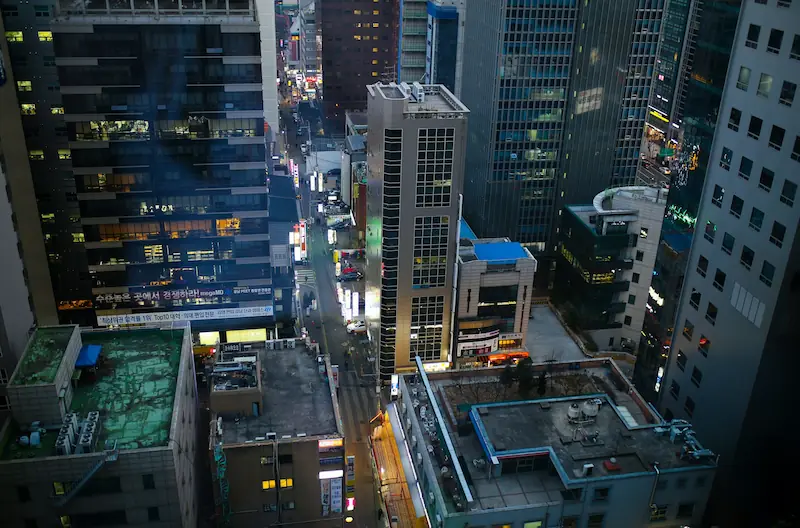
Seoul’s hotel geography follows several high-density clusters divided by the Han River and shaped by mountains. Historic Jongno sits north-central; Myeongdong, City Hall, Euljiro and Seoul Station form the commercial core; Hongdae and Mapo anchor the west; Yongsan, Hannam and Itaewon occupy the central river corridor; Seongsu lies east of the centre; Gangnam, COEX and Jamsil form distinct southern zones. The subway connects them well, but large interchanges, slopes and river crossings still reward a precise base.
Jongno, Gwanghwamun, Bukchon, Insadong and Ikseon-dong create the strongest historic cluster but offer different station and evening conditions.
Myeongdong, City Hall and Euljiro form the most efficient central cluster for short stays, shopping, food and broad transport.
Seoul Station is best viewed as an airport-and-rail hub rather than a single atmospheric neighborhood.
Hongdae, Yeonnam, Hapjeong and Mangwon form the western creative cluster, with increasing calm as you move away from the nightlife core.
Yongsan, Hannam, Itaewon and Noksapyeong connect museums, restaurants, Namsan and the river but include hills and uneven station access.
Seongsu and Seoul Forest suit repeat visitors, design travelers and longer stays, not the simplest palace-first trip.
Gangnam Station, Yeoksam, Seolleung and Samseong–COEX should be chosen according to meetings and subway lines.
Jamsil and Songpa are separate from central Gangnam and better for families, Lotte World, Seoul Sky and Olympic Park.
Yeouido suits finance, business, river access and larger hotels but can feel quiet outside working hours.
Crossing the Han is easy once; repeating it several times in a day creates unnecessary fatigue.
Royal and historic north – Jongno, Gwanghwamun, Bukchon, Insadong and Ikseon-dong are best for palaces, museums, hanok streets and culture-led first visits.
Central commercial and transport core – Myeongdong, City Hall, Euljiro, Namdaemun and Seoul Station suit short stays, shopping, airport rail and broad city access.
Western creative and nightlife cluster – Hongdae, Yeonnam, Hapjeong and Mangwon suit nightlife, cafés, casual food, social stays and airport access.
Yongsan, Hannam and Itaewon corridor – This cluster combines museums, art, international dining, Namsan and nightlife, with hills and more complex micro-location.
Seongsu and eastern contemporary Seoul – Seongsu, Seoul Forest and Ttukseom suit design, cafés, pop-ups, parks and repeat visits.
Gangnam business and luxury cluster – Gangnam Station, Yeoksam, Seolleung, Samseong and COEX serve business, exhibitions, clinics, shopping and upscale hotels.
Jamsil and Songpa family cluster – Jamsil, Seokchon Lake and Olympic Park are best for Lotte World, Seoul Sky, sports, parks and family-led stays.
Yeouido business and river cluster – Yeouido offers finance-district hotels, river access, parks and strong transport, but less evening neighborhood texture.
Best areas to stay in Seoul
These five areas offer the clearest stay strategies for most Seoul trips: historic access, central convenience, western nightlife, southern business comfort, or a dining-led midpoint. Other useful hotel districts appear through the traveler profiles and geographic guidance, allowing you to compare specialist alternatives without losing sight of the strongest all-round choices.
Jongno & Bukchon
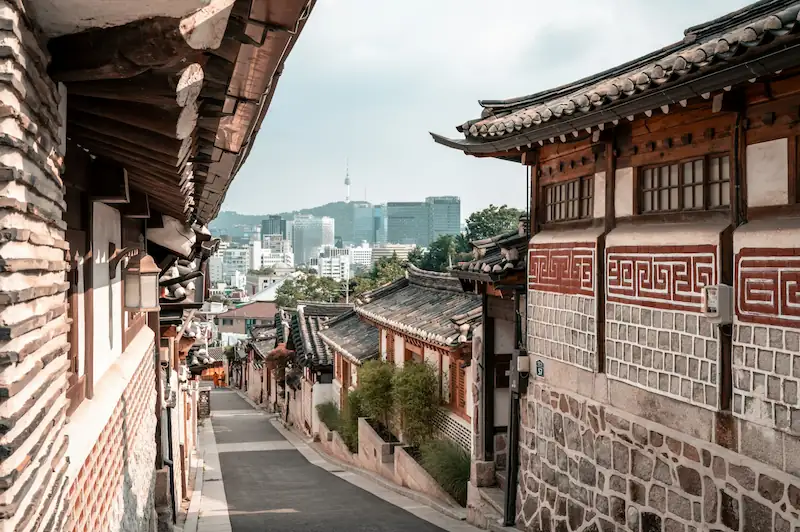
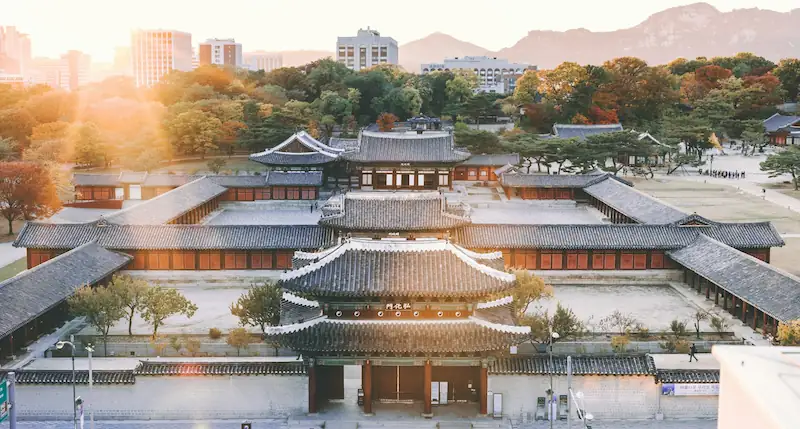
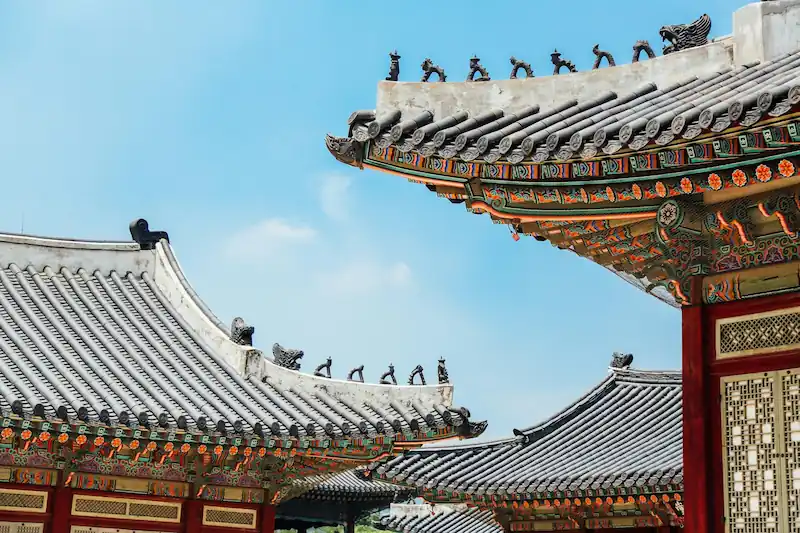
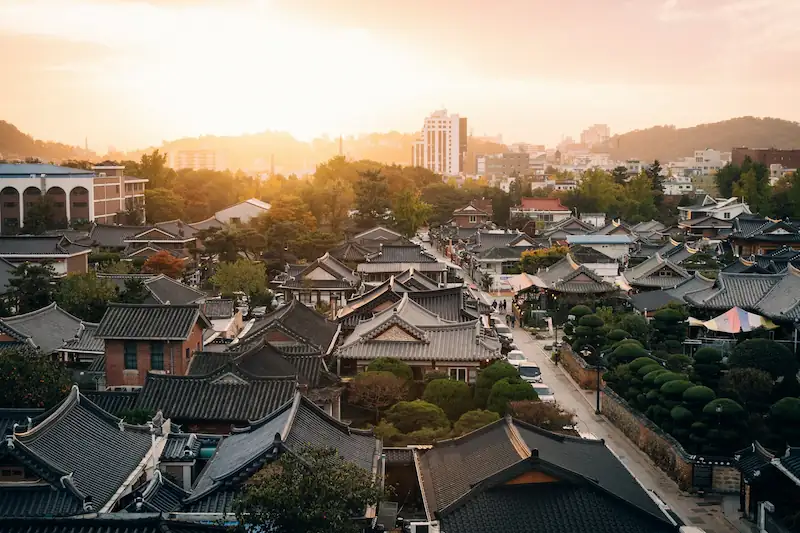
Jongno & Bukchon are the strongest base for travelers who want royal Seoul, museums and traditional neighborhoods to shape the trip from the first morning. The wider stay zone includes Gwanghwamun, Insadong, Ikseon-dong, Anguk, Jongmyo and parts of Daehakro, each with different station access and evening rhythm. Hotels range from compact guesthouses and hanok stays to reliable business hotels. Bukchon itself is residential, so most visitors are better staying near Anguk, Insadong or central Jongno than inside the quietest lanes.
Why stay here: Choose Jongno & Bukchon for Gyeongbokgung, Changdeokgung, Cheong Wa Dae, Bukchon, Insadong, Jongmyo, traditional culture and easy north-central routing. It is the most strategically satisfying base for a culture-first first trip.
Best for: first-time visitors, palace and museum trips, culture travelers, photographers, traditional food and short heritage-led stays
Pros
Best access to Seoul’s principal palaces, shrines, hanok streets and traditional-culture sites
Excellent morning walking before the busiest visitor periods
Strong links to Gwanghwamun, City Hall, Euljiro, Gwangjang Market and central museums
Choice of guesthouses, boutique stays and practical chain hotels
Calmer evenings than Hongdae, Itaewon or the busiest Myeongdong streets
Natural base for visitors prioritizing history, architecture, crafts and traditional food
Cons
Nightlife is limited and many streets quiet earlier than western or southern districts
Bukchon slopes, residential restrictions and uneven pavements require attention
Some smaller hotels have compact rooms, limited lifts or unconventional layouts
The exact subway line and station exit vary considerably across the district
Repeated travel to Gangnam, Jamsil or southern Seoul can become tiring
Nearby highlights
Gyeongbokgung, Gwanghwamun and Cheong Wa Dae
Changdeokgung, Secret Garden, Bukchon and Insadong
National Folk Museum, Jongmyo and Seoul Museum of History
Ikseon-dong, tea houses, craft shops and traditional workshops
Easy routes toward Gwangjang Market, Euljiro, City Hall and DDP
Multiple quieter hotel pockets near Anguk, Jongno 3-ga and Gwanghwamun
Budget
Noble Hotel – A simple stay near Changdeokgung, Jongmyo and Anguk-side heritage routes, best for travelers prioritizing location over room size or facilities. Why we recommend: One of the rare budget options in Jongno that keeps palace access genuinely walkable. Check availability
SimpleStay Hotel in Jongno – Compact accommodation in central Jongno with practical access to subway lines, Ikseon-dong, markets and the historic core. Why we recommend: A useful budget pick when location matters more than extra facilities. Check availability
Five Hotel Jongno – A straightforward hotel toward the Gwangjang–Dongdaemun side of Jongno, better for market and central-east access than for immediate Bukchon atmosphere. Why we recommend: It keeps costs controlled without pushing you out of the cultural core. Check availability
Mid
The Prima Hotel Jongno – A modern hotel near Jogyesa, Insadong and Gwanghwamun-side routes, offering a polished base within the historic north. Why we recommend: It gives Jongno a more polished mid-range option than many older nearby properties. Check availability
Moxy Seoul Insadong – A social lifestyle hotel beside Jongno 3-ga and Ikseon-dong, with strong transport and evening food access rather than a quiet Bukchon setting. Why we recommend: It adds a sharper contemporary hotel feel to one of Seoul’s most traditional stay zones. Check availability
Hotel Nafore – A practical hotel between Jongno, Euljiro and Cheonggyecheon, useful for central routing and calmer nights than the busiest shopping streets. Why we recommend: A sensible choice when you want central access without paying for a branded chain. Check availability
Upscale
Nine Tree Premier Hotel Insadong – Large, reliable hotel directly useful for Insadong, palaces, and central Seoul. Suits travelers who want scale, convenience, and predictable comfort. Why we recommend: It is one of the strongest full-service bases in the historic north without feeling detached from the neighborhood. Check availability
Orakai Daehakro Hotel – A polished hotel near Daehakro and the northeastern side of Jongno, suitable for quieter stays but less immediate for Gwanghwamun and Bukchon. Why we recommend: It offers a quieter Jongno angle with stronger room standards than many central alternatives. Check availability
AMID Hotel Seoul – Central hotel near Insadong, Jogyesa, and the palace axis. Good for travelers who want a comfortable, practical base rather than a highly stylized stay. Why we recommend: It balances central location and room reliability in a district where smaller hotels can be uneven. Check availability
Myeongdong
Myeongdong is Seoul’s easiest short-stay base, combining dense hotel inventory, shopping, casual food, central subway lines and straightforward access to Namsan, City Hall, Euljiro, Namdaemun and Seoul Station. The broader central stay zone extends beyond the pedestrian shopping streets: hotels near City Hall or Euljiro can provide more calm, easier business access or a stronger food-and-nightlife balance. Choose the micro-location according to whether you value immediate shopping, airport transfers, palace access or evening quiet.
Why stay here: Choose Myeongdong when simplicity matters more than neighborhood subtlety. It is particularly effective for two- or three-night trips, late arrivals, first-time visitors and families who want food, shops and transport close to the hotel.
Best for: two- or three-night stays, first-time convenience, shopping, families, late arrivals and central transport
Pros
Strongest overall central convenience for a short first trip
Large choice of hotels across budget, mid-range and upscale categories
Easy access to Namsan, City Hall, Euljiro, Namdaemun and Seoul Station
Useful transport toward Jongno, Hongdae, Yongsan and southern Seoul
Active evening streets with food, shopping, cafés and convenience stores
Practical for airport transfers and tired first-night arrivals
Cons
Commercial atmosphere can feel repetitive and tourist-heavy
Street noise and crowd pressure vary sharply by block
Many restaurants in the core prioritize visitors over neighborhood regulars
Rooms are often compact despite central prices
It lacks the deep historical atmosphere of Jongno and the nightlife identity of Hongdae
Nearby highlights
Myeongdong shopping, street food and beauty stores
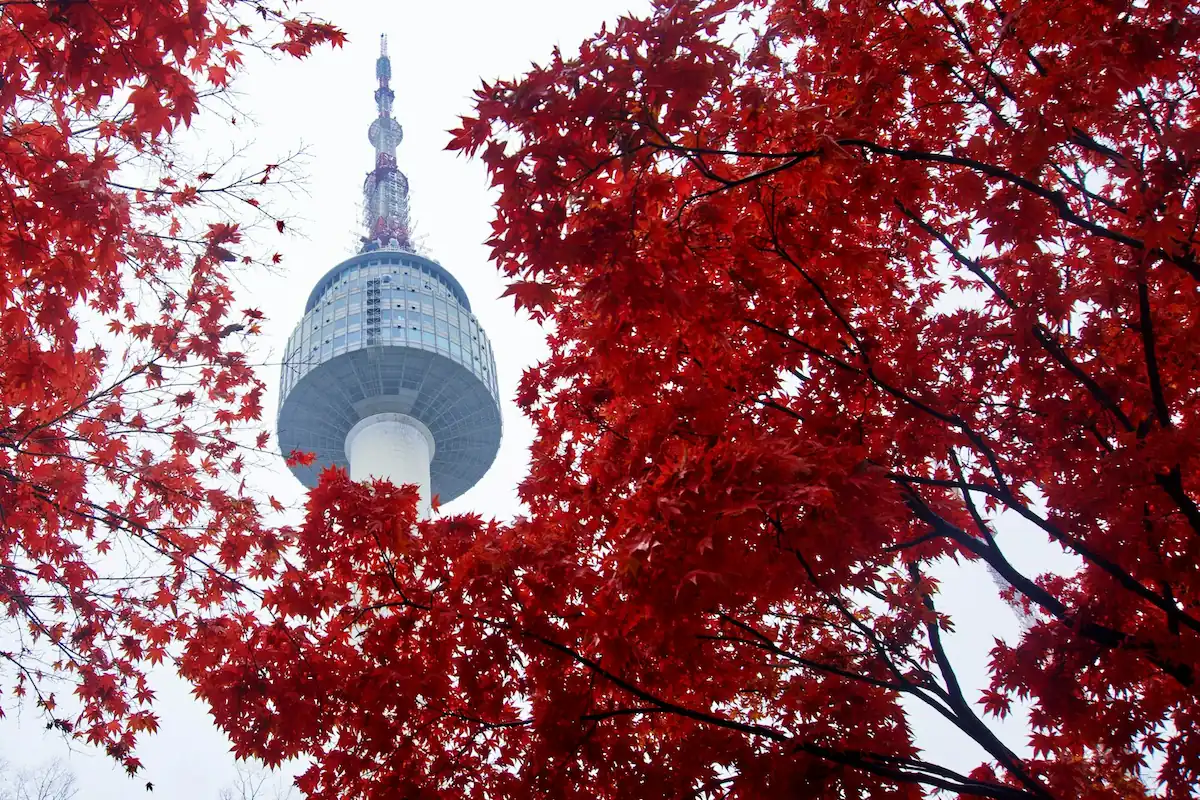
Namsan, cable-car access and N Seoul Tower
City Hall, Deoksugung, Jeongdong and Seoul Museum of Art
Euljiro food alleys, Cheonggyecheon and central nightlife
Namdaemun Market and Seoul Station connections
Quick subway access toward Jongno, Hongdae, Yongsan and Gangnam
Budget
Hotel Firststay Myeongdong – A compact value hotel closer to City Hall and Namdaemun than the heart of the pedestrian Myeongdong streets, with useful central transport. Why we recommend: It keeps you close to the action without forcing a full mid-range spend. Check availability
New Seoul Hotel Myeongdong – An older central hotel near City Hall, Deoksugung and Gwanghwamun routes; practical for sightseeing but not truly inside the Myeongdong shopping core. Why we recommend: A useful value option for travelers who want central Seoul without paying for newer branding. Check availability
Step Inn Myeongdong 1 – Budget-friendly stay in the Myeongdong core with simple rooms and guesthouse-style efficiency. Suits travelers who will spend most of the day outside. Why we recommend: It is hard to beat for pure central access at a restrained price point. Check availability
Mid
Hotel Midcity Myeongdong – A practical hotel between City Hall, Euljiro and Myeongdong, offering easier central routing and less street noise than the pedestrian core. Why we recommend: Its position is calmer than the busiest Myeongdong streets while staying highly convenient. Check availability
G2 Hotel Myeongdong – Modern mid-range hotel slightly off the most crowded shopping lanes. Good for travelers who want Myeongdong convenience with a more controlled street feel. Why we recommend: It offers better room quality and calm than many similarly placed central hotels. Check availability
Hotel PJ Myeongdong – A larger-room hotel toward Euljiro and Chungmuro, useful for central-east routes and families but not directly inside the busiest Myeongdong streets. Why we recommend: A strong mid-range pick when room comfort matters but you still want central Seoul within reach. Check availability
Upscale
L7 Myeongdong by LOTTE – Lifestyle hotel with a polished feel in one of Seoul’s easiest central locations. Best for travelers who want convenience with stronger design than a standard business hotel. Why we recommend: It turns Myeongdong’s logistical strength into a more stylish, comfortable stay. Check availability
Aloft Seoul Myeongdong – Modern branded hotel close to shopping, central sights, and transport. Works well for travelers who want predictable upscale comfort in the center. Why we recommend: It is more contemporary than many central hotels while keeping Myeongdong access effortless. Check availability
Royal Hotel Seoul – Long-standing full-service hotel in the heart of Myeongdong. Suits travelers who want a classic central stay with strong on-foot access. Why we recommend: It remains one of the safest upscale choices for travelers prioritizing location over novelty. Check availability
Hongdae
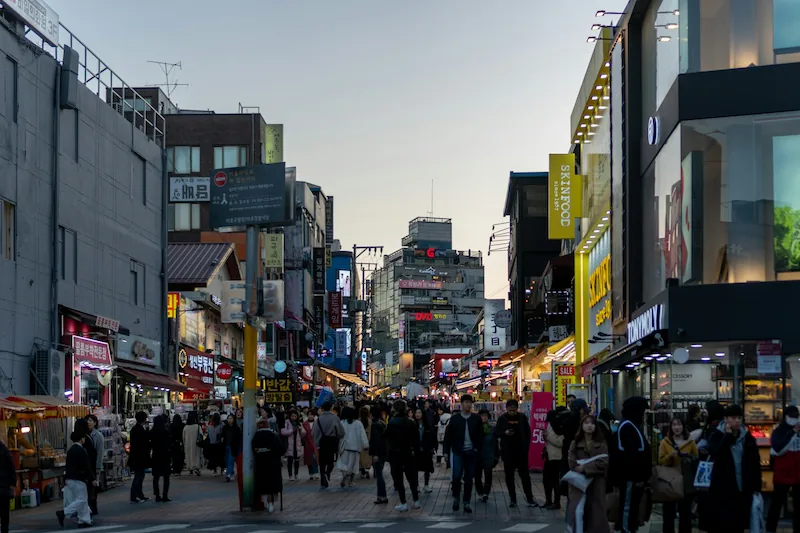
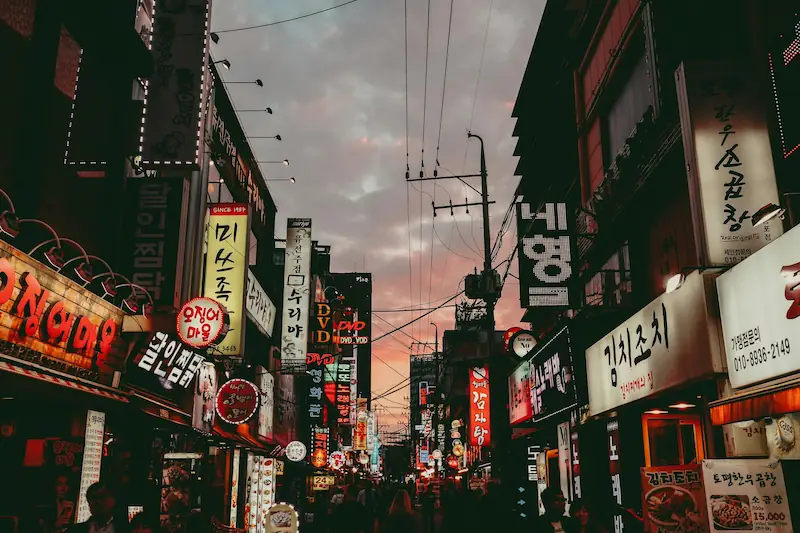
Hongdae is the strongest base for travelers who want youth culture, nightlife, cafés, shopping, music and airport-rail convenience to shape the stay. The wider western cluster includes Yeonnam, Hapjeong, Sangsu and Mangwon. Hongdae’s core is loud and social, Yeonnam is calmer and café-led, Hapjeong balances restaurants and transport, and Mangwon offers a more local market-and-river rhythm. The right street matters as much as the district name.
Why stay here: Choose Hongdae when evenings are central to the trip and you want late food, bars, music, shops and western-Seoul neighborhoods close to the hotel. It is also one of the simplest areas for direct airport rail from Incheon.
Best for: nightlife, youth culture, solo travelers, airport access, social stays, teens, cafés and western Seoul
Pros
Best all-round base for nightlife, social energy and casual late dining
Direct airport-rail access at Hongik University Station
Wide choice of hostels, guesthouses, lifestyle hotels and branded properties
Easy access to Yeonnam, Hapjeong, Mangwon, the Han River and western Seoul
Good for teens, younger travelers, solo visitors and repeat trips
Strong evening spontaneity without relying on taxis
Cons
Less efficient for repeated palace, Bukchon and Gwanghwamun mornings
Noise can be substantial near clubs, busking zones and late-night streets
Weekends can feel crowded and fragmented
The district covers several station exits with very different walking experiences
Not ideal for travelers seeking quiet, ceremonial or business-led surroundings
Nearby highlights
Hongdae nightlife, street performance, shops and late food
Yeonnam cafés, restaurants and quieter residential streets
Hapjeong dining, music venues and transport
Mangwon Market and Mangwon Hangang Park
Airport rail and useful subway links
Easy access to Oil Tank Culture Park, Haneul Park and western Seoul
Budget
Bunk Guesthouse Hongdae – Social guesthouse close to Hongdae’s evening streets. Best for budget travelers who want interaction and location more than hotel facilities. Why we recommend: It captures Hongdae’s social logic better than a remote low-cost hotel would. Check availability
DW Design Residence – Small budget stay near Hongdae with a more personal scale. Works for travelers who want local cafés and nightlife without a chain-hotel feel. Why we recommend: A useful low-cost option with more neighborhood texture than the cheapest dorm-style stays. Check availability
BOA Travel House – Simple guesthouse-style accommodation near Hongdae transport and casual dining. Suits independent travelers who need a practical base. Why we recommend: It keeps budget travelers close to Hongdae rather than pushing them into a weaker outer location. Check availability
Mid
Amanti Hotel Seoul Hongdae – A comfortable hotel on the quieter western side of Hongdae, close enough for nightlife while offering more separation from the loudest streets. Why we recommend: It gives Hongdae access without placing you directly on top of the busiest nightlife blocks. Check availability
Mercure Ambassador Seoul Hongdae – Modern hotel very close to Hongdae transport and evening activity. Suits travelers who want reliable standards in the middle of the district. Why we recommend: Its location is especially strong for travelers using Hongdae as both a social and transit base. Check availability
Junibino Hotel Hongdae – A contemporary hotel closer to Hapjeong than the Hongdae core, well placed for restaurants, music venues and western-Seoul exploration. Why we recommend: It gives a slightly more composed Hongdae stay than the core nightlife hotels. Check availability
Upscale
L7 HONGDAE by LOTTE HOTELS – Polished lifestyle hotel in the Hongdae core with strong design and reliable facilities. Best for travelers who want the district’s energy with better comfort controls. Why we recommend: It is one of Hongdae’s strongest upscale choices for location, style, and predictability together. Check availability
RYSE, Autograph Collection Seoul – Design-forward hotel with a strong creative identity near Hongdae’s main routes. Suits travelers who want the hotel to reflect the neighborhood’s culture. Why we recommend: It has more personality than most Seoul chain hotels while staying highly usable. Check availability
Holiday Inn Express Seoul Hongdae – A highly practical branded hotel integrated with Hongik University Station, especially useful for airport rail, subway connections and short social stays. Why we recommend: Its transport position makes Hongdae much easier to use for a broader Seoul itinerary. Check availability
Gangnam
Gangnam is best understood as a large southern-Seoul hotel zone rather than one compact neighborhood. Gangnam Station and Yeoksam suit business and nightlife; Seolleung balances offices and hotels; Samseong and COEX serve exhibitions and upscale stays; Apgujeong and Cheongdam suit luxury, beauty and dining; Jamsil lies farther east and works for families and leisure. Choose the exact subdistrict according to meetings, attractions and subway lines rather than the Gangnam name alone.
Why stay here: Choose Gangnam when business, COEX, clinics, Jamsil, southern restaurants or larger polished hotels matter more than palace proximity. It becomes more rewarding on repeat visits or work-plus-leisure trips.
Best for: business, COEX, clinics, upscale hotels, southern Seoul, Jamsil access and repeat visitors
Pros
Strongest supply of polished business and upscale hotels south of the Han
Best for COEX, exhibitions, clinics, offices and southern business districts
Often larger rooms and stronger hotel facilities than in the historic centre
Good access to Jamsil, Seoul Sky, Lotte World and Olympic Park
Wide choice of restaurants, cafés, shopping and beauty services
Logical for repeat visitors and business-leisure stays
Cons
Not efficient for palace-heavy first-time itineraries
The area is too large for the district name alone to be meaningful
Cross-river travel to Jongno and Bukchon can consume significant time
Some business zones feel quiet or impersonal outside working hours
Nightlife and dining can be spread across taxi-dependent pockets
Nearby highlights
COEX, Starfield Library, Bongeunsa and Samseong
Gangnam Station, Yeoksam and Seolleung business districts
Apgujeong, Cheongdam and luxury dining or shopping
Jamsil, Seoul Sky, Lotte World and Olympic Park
K-pop, beauty and fashion experiences selected by interest
Larger hotels, serviced apartments and strong business facilities
Budget
Toyoko Inn Seoul Gangnam – Simple, efficient chain hotel in Gangnam with practical rooms and predictable standards. Best for budget-conscious travelers who need the southern grid. Why we recommend: It is one of the more dependable low-cost ways to stay in Gangnam without sacrificing location completely. Check availability
Hotel NewV – Value-focused hotel near Seolleung and Gangnam business routes. Works for travelers who want southern access and a straightforward room. Why we recommend: It offers a useful price-position balance in a district where hotels can climb quickly. Check availability
Hotel Peyto Gangnam – A compact business-style hotel near Yangjae rather than the central Gangnam Station nightlife core, best for southern business routes and transport. Why we recommend: It feels sharper than many budget hotels while remaining more accessible than Gangnam’s upscale addresses. Check availability
Mid
Dormy Inn Seoul Gangnam – Comfortable Japanese-style business hotel with useful facilities and efficient rooms. Best for travelers who want reliable comfort and easy Gangnam access. Why we recommend: Its facilities and consistency make it stronger than many standard mid-range business hotels nearby. Check availability
Shilla Stay Yeoksam – Business-oriented hotel near Gangnam office routes with clean rooms and reliable service. Works well for work trips or comfort-led leisure stays. Why we recommend: It gives Gangnam practicality with stronger brand assurance than many independent hotels. Check availability
L7 Gangnam by LOTTE – Contemporary hotel near Seolleung with a polished lifestyle feel. Good for travelers who want Gangnam access without a formal luxury atmosphere. Why we recommend: It is one of the better mid-to-upscale choices for style, transport, and usability together. Check availability
Upscale
GLAD Gangnam COEX Center – A modern hotel near Samseong and COEX, designed for exhibitions, business and Jamsil-side access rather than Gangnam Station nightlife. Why we recommend: Its COEX-side location solves a specific Gangnam stay need better than many broader luxury hotels. Check availability
Park Hyatt Seoul – A high-end hotel beside Samseong and COEX with excellent southern-business access and city views, far from the palace district. Why we recommend: It is one of the most convincing luxury options when Gangnam, not central Seoul, is the right base. Check availability
Josun Palace, a Luxury Collection Hotel, Seoul Gangnam – Luxury hotel with large rooms, strong service, and a polished Gangnam setting. Best for travelers making the hotel a major part of the stay. Why we recommend: It gives Gangnam a true high-luxury option rather than simply a premium business address. Check availability
Itaewon & Noksapyeong
Itaewon & Noksapyeong offer a hillside, food-led base between central Seoul, Yongsan, Hannam and the Han. The wider cluster includes Leeum Museum, Hannam-dong, the War Memorial, Namsan and international dining. Itaewon Station is the most nightlife-oriented, Noksapyeong is quieter but hillier, Hannam is more design- and dining-led, and Yongsan provides stronger museum and rail logic. The district rewards longer stays and couples more than short first-time sightseeing.
Why stay here: Choose Itaewon & Noksapyeong when restaurants, bars, Hannam, Leeum, Namsan and a mixed international atmosphere are central to the stay. It is a strong alternative for repeat visitors who want more neighborhood texture than Myeongdong.
Best for: couples, food travelers, international dining, nightlife, Hannam, Leeum and longer stays
Pros
Excellent restaurant and bar variety across Korean and international cuisines
Useful access to Leeum, Hannam, Namsan, Yongsan and the War Memorial
More distinctive for couples and longer stays than conventional central business zones
Boutique, lifestyle and luxury hotels with stronger personality
Good midpoint between central Seoul and southern districts
Nightlife available without staying in Hongdae
Cons
Hills, stairs and uneven routes can be difficult with luggage or strollers
Less direct for palace-heavy first trips than Jongno or Myeongdong
Noise varies sharply around nightlife streets
Airport transfers are less straightforward than Hongdae or Seoul Station
Hotel inventory is more uneven than in Myeongdong or Gangnam
Nearby highlights
Itaewon restaurants, bars and late-night dining
Noksapyeong hillside streets and Namsan access
Leeum Museum of Art and Hannam-dong
War Memorial of Korea and Yongsan
Grand Hyatt and Namsan luxury stays
Reasonable access toward both central and southern Seoul
Budget
G Guesthouse Itaewon In Seoul – Social budget stay near Itaewon’s restaurants and subway access. Best for travelers who want the neighborhood’s energy at a low cost. Why we recommend: It keeps budget travelers in the heart of Itaewon rather than pushing them to a less useful outer area. Check availability
Seoul Cube Itaewon – Capsule-style budget accommodation close to Itaewon nightlife and transport. Works for solo travelers who need a cheap, central neighborhood base. Why we recommend: It is a practical choice when location and price matter more than room size. Check availability
Amazon Guesthouse – Small affordable guesthouse in Itaewon with simple rooms and a quiet-enough location for the price. Suits low-cost longer stays. Why we recommend: It offers one of the more accessible ways to stay in Itaewon without losing the neighborhood advantage. Check availability
Mid
Hamilton Hotel – An established hotel beside Itaewon Station with immediate nightlife and dining access; room orientation matters because the location is highly active. Why we recommend: Its location is extremely direct for Itaewon, which is useful if nightlife and dining are the point of staying here. Check availability
Imperial Palace Boutique Hotel Itaewon – Design-leaning hotel with a stronger personality than standard mid-range properties. Suits travelers who want Itaewon’s style rather than only its location. Why we recommend: It fits the neighborhood’s boutique logic better than a generic business hotel would. Check availability
Nouvelle Seoul Hotel Itaewon – Modern mid-range option in the Itaewon area with a practical base for dining and nightlife. Works for travelers who want a newer-feeling stay without luxury pricing. Why we recommend: It gives Itaewon a cleaner mid-range option in a hotel market that can be uneven. Check availability
Upscale
Mondrian Seoul Itaewon – A design-led hotel on the Yongsan side of the district, with restaurants and lifestyle facilities but a less direct walk to Itaewon Station. Why we recommend: It is the most convincing upscale choice for a stylish Itaewon-based stay. Check availability
Grand Hyatt Seoul – A large luxury hotel on Namsan above Itaewon, offering views, grounds and facilities in exchange for taxi dependence and a steep approach. Why we recommend: It offers a very different Seoul stay: close to Itaewon, but lifted out of its street-level noise. Check availability
Banyan Tree Club & Spa Seoul – A secluded luxury retreat on Namsan with wellness and resort-style facilities, best when the hotel itself is an important part of the stay. Why we recommend: It works when you want proximity to central Seoul without sleeping in its densest commercial zones. Check availability
Where to stay in Seoul for first-time visitors
First-time visitors should choose a base that makes the royal north and central city easy before adding one modern contrast. Jongno and Myeongdong remain the defaults, while City Hall–Euljiro and Seoul Station can provide strong specialist alternatives.
Choose Jongno & Bukchon for the strongest palace, hanok, museum and traditional-culture access.
Choose Myeongdong for a two- or three-night stay when simplicity, food, shopping and central subway connections matter most.
Consider City Hall or Euljiro for a more balanced central base near Deoksugung, Gwanghwamun, Cheonggyecheon, food alleys and nightlife.
Consider Seoul Station for direct airport rail and intercity trains, but verify the exact street and final walk.
Use Hongdae on a first trip only when nightlife, youth culture and airport access are central priorities.
Avoid Gangnam as the default first-trip base unless the itinerary is genuinely concentrated south of the Han.
A smaller room near a useful station is usually better than a larger hotel requiring repeated long transfers.
Do not split a two- or three-night stay between districts.
TravelerNeed
BestArea
Why
Classic culture-first trip
Jongno & Bukchon
Palaces, hanok streets and traditional neighborhoods shape the day naturally.
Shortest and easiest stay
Myeongdong
Central transport, hotels, food and evening activity are highly concentrated.
Central food and nightlife balance
City Hall or Euljiro
They remain central while offering more evening texture than Myeongdong.
Airport rail and western nightlife
Hongdae
Direct AREX access and late evenings reduce arrival and nightlife friction.
Where to stay in Seoul with family
Families should prioritize a direct station route, lifts, practical room layouts, laundry, breakfast and a calm return in the evening. The best area changes according to whether the trip is palace-led, theme-park-led or a longer apartment-style stay.
Choose Myeongdong for a short family trip with easy food, transport, Namsan and central attractions.
Choose Jongno for palace mornings, quieter evenings and the National Folk Museum, provided the hotel has lifts and simple station access.
Choose Jamsil or Songpa when Lotte World, Seoul Sky, Seokchon Lake and Olympic Park are major family priorities.
Gangnam and Samseong can offer larger rooms, serviced apartments and weather-proof access to COEX and aquariums.
Hongdae and Yeonnam suit families with teens who value shopping, cafés, music and airport rail, but avoid the loudest streets.
Seoul Station can be useful for airport rail, train day trips and larger chain hotels, though the immediate environment varies.
In Itaewon and Noksapyeong, check hills, stairs and stroller routes before booking.
Confirm legal occupancy, bed layout, connecting rooms, washing machines and breakfast charges before comparing prices.
FamilyScenario
BestBase
Reason
First trip with younger children
Myeongdong or Jongno
Central routes and cultural attractions are easier to manage.
Theme parks and southern family attractions
Jamsil or Songpa
Lotte World, Seoul Sky, Seokchon Lake and Olympic Park are close.
Longer comfort-led stay
Gangnam, Samseong or a serviced apartment
Room size and hotel facilities can be stronger.
Teenagers and evening energy
Hongdae or Yeonnam
Food, music, fashion and cafés are close to the hotel.
Where to stay in Seoul for nightlife
Seoul nightlife is highly district-specific. Hongdae is the best all-round social base, Itaewon is strongest for international dining and mixed crowds, Euljiro and Jongno suit food and smaller bars, and Gangnam is more polished and dispersed.
Choose Hongdae for the easiest combination of bars, music, clubs, casual food and late-night street energy.
Choose Yeonnam or Hapjeong for calmer rooms near Hongdae without sleeping directly in the nightlife core.
Choose Itaewon & Noksapyeong for international restaurants, cocktail bars, mixed nightlife and Hannam access.
Choose Euljiro or Jongno 3-ga for food alleys, small bars, older urban texture and a central location.
Choose Gangnam Station, Apgujeong or Cheongdam for polished dining, clubs and late venues spread across a larger area.
Myeongdong remains active but is better for shopping, beauty and casual food than true nightlife.
Book on a quieter side street and check recent room-specific noise comments.
Confirm the last practical subway route if the hotel and nightlife district are far apart.
NightStyle
BestArea
Caution
Youth nightlife, music and clubs
Hongdae
Weekend noise is intense near the core streets.
International dining and cocktails
Itaewon & Noksapyeong
Hills and street-by-street variation matter.
Food alleys and smaller bars
Euljiro or Jongno 3-ga
Hotel supply is more limited and some streets stay industrial.
Polished restaurants and clubs
Gangnam, Apgujeong or Cheongdam
Venues are dispersed and taxis may be needed.
Where to stay in Seoul on a budget
Budget accommodation in Seoul should be judged by transport, room size, lifts and total time cost rather than nightly price alone. Jongno, Myeongdong, Hongdae, Dongdaemun, Seoul Station and selected university districts can all work when the station and itinerary align.
Jongno offers strong value for culture-led trips through compact hotels and guesthouses near palaces, markets and subway lines.
Myeongdong has heavy hotel competition and occasional good value, but rooms can be very small and older properties uneven.
Hongdae is best for hostels, guesthouses, solo travelers, airport rail and nightlife value.
Dongdaemun and Euljiro can offer lower prices with strong central transport, late shopping and food access.
Seoul Station is useful for airport rail and train travel, but inspect the exact street, slope and final walking route.
Gangnam budget hotels make sense for business or southern Seoul, not automatically for a first sightseeing trip.
Consider serviced residences or rooms with laundry for longer stays because central Seoul rooms are often compact.
Avoid saving a small amount by staying far from the subway or on a complicated bus-only route.
BudgetPriority
BestArea
TradeOff
Best culture and central value
Jongno
Compact rooms and quieter evenings
Central convenience
Myeongdong or Euljiro
Commercial surroundings and room-size variability
Social stays and airport rail
Hongdae
Noise and longer palace transfers
Rail and airport connectivity
Seoul Station
Immediate streets vary considerably
Southern business value
Yeoksam, Seolleung or Gangnam
Less efficient for historic Seoul
Where to stay depending on your Seoul trip length
The shorter the trip, the more the hotel should protect time and simplify transfers. Longer visits make quieter, more contemporary or specialist districts increasingly attractive.
Label
Stay
Avoid
Why
Overnight airport stop
Hongdae, Seoul Station or a direct airport hotel
Itaewon hills or a distant southern district
Direct airport rail or a simple taxi protects sleep and the first or final day.
2 nights
Myeongdong, City Hall or Jongno
Gangnam or Jamsil unless the trip is specifically southern
Central access matters more than neighborhood originality on a very short stay.
3 days
Jongno & Bukchon for culture or Myeongdong for convenience
Changing hotels or crossing the Han repeatedly
Three days need one clean base for palaces, food, a museum and one modern evening.
4 to 5 days
Jongno, Myeongdong, Hongdae, City Hall or Itaewon according to evening priorities
Choosing only by room size or hotel prestige
The base still matters, but extra time makes nightlife and neighborhood character more valuable.
1 week
Hongdae, Itaewon, Seongsu, Gangnam, Jamsil or a serviced residence
A tiny room or purely commercial district if slower living matters
Room function, laundry, restaurants and neighborhood rhythm become more important over a longer stay.
First trip
Jongno & Bukchon or Myeongdong
Gangnam by default
North-central Seoul offers the clearest introduction to royal, cultural and commercial districts.
Return trip
Hongdae, Itaewon, Seongsu, Jamsil, Euljiro or Gangnam
Repeating Myeongdong without a practical reason
A specialist base reveals a more contemporary or neighborhood-led version of Seoul.
Family theme-park trip
Jamsil or Songpa
A palace-side base if most days are southern
Lotte World, Seoul Sky, Seokchon Lake and Olympic Park become much easier.
Business plus leisure
Gangnam, Samseong, Yeouido, Seoul Station or central Seoul according to meetings
Choosing a famous leisure area far from work
Proximity to the actual office or venue can save more time than any hotel amenity.
Rail-based Korea trip
Seoul Station, Myeongdong or City Hall
A distant nightlife district before early trains
Fast access to KTX and airport rail simplifies arrivals, departures and regional travel.
How to choose the right hotel in Seoul
Once the area is chosen, compare the exact station, exit, slope, room layout, noise and airport route. Seoul hotels are often compact, and a slightly better micro-location can improve the trip more than a nominal upgrade in category.
Topic
WhatToDo
WhatToAvoid
WhyItMatters
Exact subway station and exit
Map the entrance, exit number, lift access and real walking route before booking.
Do not accept a vague claim that the hotel is near the subway.
Large interchanges and long underground corridors can add significant walking every day.
Airport transfer
Check whether the hotel works naturally with AREX, airport bus or a direct taxi.
Do not make a late arrival depend on multiple transfers and a steep final walk.
Hongdae and Seoul Station are especially useful for airport rail, while other areas may need transfers.
District label versus micro-area
Distinguish Anguk from central Jongno, Yeonnam from Hongdae core, Samseong from Gangnam Station and Hannam from Itaewon.
Do not book by the broad district name alone.
Large Seoul districts create materially different daily and evening experiences.
Room size and bed layout
Read the room dimensions, bed widths and luggage space carefully.
Do not rely on wide-angle photography or star rating.
Compact rooms are common in central Seoul and can become uncomfortable quickly.
Do not assume a double room accepts two adults and two children.
Occupancy rules can change the number of rooms and total trip cost.
Hills, stairs and lifts
Check gradients and lift access in Bukchon, Itaewon, Noksapyeong and Namsan-side hotels.
Do not choose a picturesque hillside address without considering luggage, strollers or mobility.
Short-looking routes can be physically demanding.
Street and nightlife noise
Prefer a quiet side street near Hongdae, Itaewon, Myeongdong or Euljiro activity.
Do not book directly above clubs, bars or busking areas when sleep matters.
The best evening district can still produce a poor hotel stay.
Boutique, hanok or chain hotel
Choose boutique or hanok stays for atmosphere and chains for lifts, room consistency and operational reliability.
Do not prioritize design over comfort on a short high-movement trip.
Character is valuable only when the room and access remain practical.
Serviced residence or hotel
Consider kitchens, washing machines and living space for stays of five nights or more.
Do not pay for restaurant meals and laundry every day on a long family or business stay.
Gangnam, Yongsan, Seoul Station and selected central districts offer useful apartment-style inventory.
Breakfast and nearby food
Check breakfast price, opening time and whether simple local food is available nearby.
Do not assume a shopping district guarantees good early breakfast options.
Palace mornings, day trips and family schedules often start before cafés become useful.
Laundry and climate
Value guest laundry, drying space and easy indoor access during humid summer or winter stays.
Do not ignore practical facilities on a week-long trip.
Weather and compact packing make laundry unusually useful.
Cancellation and event pricing
Book flexible rates early around blossoms, foliage, concerts, exhibitions and holidays.
Do not wait for last-minute inventory when a specific district or room type is essential.
Demand can concentrate sharply by neighborhood and date.
FAQ — Where to stay in Seoul
These answers cover the accommodation decisions that most strongly shape a Seoul trip: first visits, short stays, families, nightlife, budget travel, business, airport access, southern Seoul, long stays and specialist neighborhoods.
What is the best area to stay in Seoul for first-time visitors?
Jongno & Bukchon are best for palaces, hanok streets and culture. Myeongdong is best for the easiest transport, shopping, food and short-stay logistics. Most first trips should begin with one of these two areas.
Where should you stay in Seoul for 2 or 3 nights?
Choose Myeongdong, City Hall, Euljiro or Jongno. These central areas reduce transfers and keep palaces, Namsan, markets, museums and evening districts manageable. Avoid splitting a short stay between hotels.
Should you stay in Jongno or Myeongdong?
Choose Jongno for history, atmosphere, palace mornings and quieter evenings. Choose Myeongdong for shopping, airport connections, central transport and simpler short-stay logistics.
Is Myeongdong a good place to stay?
Yes, especially for first-time visitors and short stays. It is central, active and well connected, but more commercial and tourist-oriented than Jongno, Euljiro or residential neighborhoods.
Is Jongno a good place to stay?
Yes. Jongno is the strongest culture-led base for Gyeongbokgung, Changdeokgung, Bukchon, Insadong, Jongmyo and traditional food. Choose the exact station carefully because the district is broad.
Is Bukchon a good place to stay?
Bukchon is atmospheric but residential, hilly and subject to visitor-management rules. Many travelers are better staying near Anguk or Insadong, within easy walking distance but outside the quietest residential lanes.
Is City Hall or Euljiro a good place to stay?
Yes. City Hall suits central transport, Deoksugung and business, while Euljiro adds food alleys, bars, Cheonggyecheon and access toward Dongdaemun. Both can be calmer or more characterful alternatives to Myeongdong.
Is Seoul Station a good place to stay?
Seoul Station is useful for airport rail, KTX trains, Namdaemun and central access. The immediate streets vary significantly, so check the exact exit, slope and evening environment before booking.
Should you stay in Hongdae on a first trip?
Hongdae works well when nightlife, youth culture and direct airport rail are major priorities. It is less efficient for repeated palace mornings, so culture-first travelers may prefer Jongno or Myeongdong.
Where should you stay near Hongdae for quieter nights?
Yeonnam, Hapjeong and the quieter western edges of Hongdae provide access to the area’s restaurants and nightlife with less noise. Verify the real walk to Hongik University or Hapjeong Station.
Where should you stay in Seoul for nightlife?
Choose Hongdae for youth nightlife and music, Itaewon for international dining and bars, Euljiro or Jongno 3-ga for food and smaller venues, and Gangnam for more polished nightlife.
Is Itaewon a good place to stay?
Itaewon suits couples, food travelers, nightlife, Hannam and longer stays. It is less convenient for palace-focused first trips, and hills or nightlife noise make the exact street particularly important.
Is Hannam-dong a good place to stay?
Hannam suits design, Leeum Museum, cafés, restaurants and upscale longer stays. Hotel inventory is limited and transport is less straightforward than Myeongdong or Hongdae, so it is better for repeat visitors.
Is Gangnam a good place to stay?
Gangnam is excellent for business, COEX, clinics, upscale hotels, Jamsil and southern Seoul. It is not the default first-trip base for palaces and traditional neighborhoods.
Where should you stay in Gangnam?
Choose Gangnam Station or Yeoksam for business and nightlife, Seolleung for a balanced business base, Samseong for COEX and exhibitions, Apgujeong or Cheongdam for luxury and dining, and Jamsil for family attractions.
Is Jamsil a good place to stay?
Jamsil is strong for families, Lotte World, Seoul Sky, Seokchon Lake, Olympic Park and longer southern stays. It is less efficient for Jongno and the historic north.
Is Seongsu a good place to stay?
Seongsu suits repeat visitors, design travelers, cafés, Seoul Forest and contemporary culture. It offers less hotel choice and is not the simplest base for a short palace-led first trip.
Is Yeouido a good place to stay?
Yeouido works well for finance, business, larger hotels, the Han River and strong transport. It can feel quiet outside working hours and is less atmospheric for a first leisure trip.
Where should families stay in Seoul?
Myeongdong and Jongno are best for a first family trip, while Jamsil suits Lotte World and southern attractions. Gangnam or serviced residences can provide larger rooms for longer stays.
Where should a family of four stay in Seoul?
Look for connecting rooms, family rooms or serviced residences in Myeongdong, Jongno, Gangnam, Jamsil or Seoul Station. Confirm occupancy and bed arrangements because many standard rooms are compact.
Where should you stay in Seoul on a budget?
Jongno offers strong culture value, Myeongdong and Euljiro offer central competition, Hongdae offers hostels and social stays, and Seoul Station can work for transport. Stay close to a useful subway line rather than choosing the cheapest outer hotel.
Where should solo travelers stay in Seoul?
Hongdae is best for social hostels and nightlife, Myeongdong for simple first-time logistics, and Jongno for culture and calmer evenings. Itaewon works for food and nightlife but requires more attention to hills and street position.
Where should couples stay in Seoul?
Jongno suits culture and atmospheric mornings, Hongdae suits social evenings, Itaewon and Hannam suit dining and design, and Gangnam suits upscale hotels and southern restaurants.
Where should business travelers stay in Seoul?
Choose Gangnam, Samseong–COEX, Yeouido, Seoul Station or central Seoul according to the actual office or venue. Work location should outweigh tourist prestige during the week.
Where should you stay for COEX?
Stay in Samseong, Seolleung or the COEX side of Gangnam. These areas reduce travel to exhibitions and meetings and provide easy access to Bongeunsa and Jamsil.
Where should you stay for Lotte World?
Choose Jamsil or Songpa for Lotte World, Seoul Sky, Seokchon Lake and Olympic Park. Staying there avoids repeated long transfers from central or western Seoul.
Where should you stay for Incheon Airport access?
Hongdae and Seoul Station are the strongest city bases for direct AREX access. Myeongdong can also work through nearby airport buses or transfers, while Itaewon and Gangnam are less direct.
Are serviced apartments a good option in Seoul?
Yes for families, business travelers and stays of five nights or more. Kitchens, washing machines and living space can compensate for Seoul’s typically compact hotel rooms.
How important is subway access when choosing a Seoul hotel?
It is essential. Check the exact station, exit, transfer complexity and walking route. A hotel five minutes from a useful line is usually more valuable than a larger room requiring buses or long walks.
Is it worth splitting a stay between north and south Seoul?
Usually not for fewer than six nights. A split can work when the second base serves a genuine purpose such as business, Jamsil family attractions or a longer Gangnam stay.
How early should you book a Seoul hotel?
Book early for spring blossoms, autumn foliage, weekends, major concerts, exhibitions, holidays and family-room inventory. Flexible rates are useful because event calendars and seasonal timing can change.
What should you check before booking a Seoul hotel?
Check the exact station and exit, lift access, slopes, room dimensions, bed layout, family occupancy, airport route, street noise, laundry, breakfast and cancellation terms.
The best Seoul base is the one that simplifies your main daily cluster, gives you a realistic station route and supports the evenings you actually want.
Continue planning your Seoul trip
Once the area is chosen, use the Seoul city guide to understand how the districts fit together, the things-to-do guide to select the right experiences, and the 3-, 5- or 7-day itineraries to confirm that the hotel supports the trip you are actually planning.
Find the best places to stay, how to get there, and move around with ease.
Build a smarter trip base
Turn the right neighborhood into the right itinerary
Once you know where to stay in Seoul, the next step is structuring the rest of your trip around that base. Use the planner to build a route that fits your pace, priorities, and how you actually want your days to unfold.