Discover the best things to do in Bangkok, from the Grand Palace, Wat Pho, Wat Arun and the Chao Phraya river to Chinatown food nights, markets, rooftops, museums, canals, parks, malls, and easy day trips. Bangkok can feel overwhelming on a first visit because temples, traffic, heat, food streets, shopping districts, riverside icons, and nightlife all compete for attention. This guide helps you choose well: what deserves your first morning, what works better at night, what can stay flexible, and which experiences are worth booking ahead.
Best time
November to February is usually the easiest period for temple-heavy sightseeing, river movement, markets, and rooftop views, with lower humidity and more manageable heat. March to May requires slower midday pacing, while the rainy season can still work well if you keep indoor culture, malls, spas, and covered food plans ready.
Ideal trip length
Three full days lets you cover the old-city temple core, one food-led evening, one skyline or market experience, and a lighter cultural stop. Four to five days is better if you want Thonburi canals, Chatuchak, Talat Noi, a cooking class, a serious spa or massage block, and one day trip without rushing.
Continue planning your Bangkok trip
Use the city guide to understand how Bangkok fits together, then move to where to stay and itineraries once you know which experiences deserve your time first. The strongest Bangkok trips are built around smart sequencing: old city, river, food, modern city, local texture, and selective day trips.
Top things to do in Bangkok first
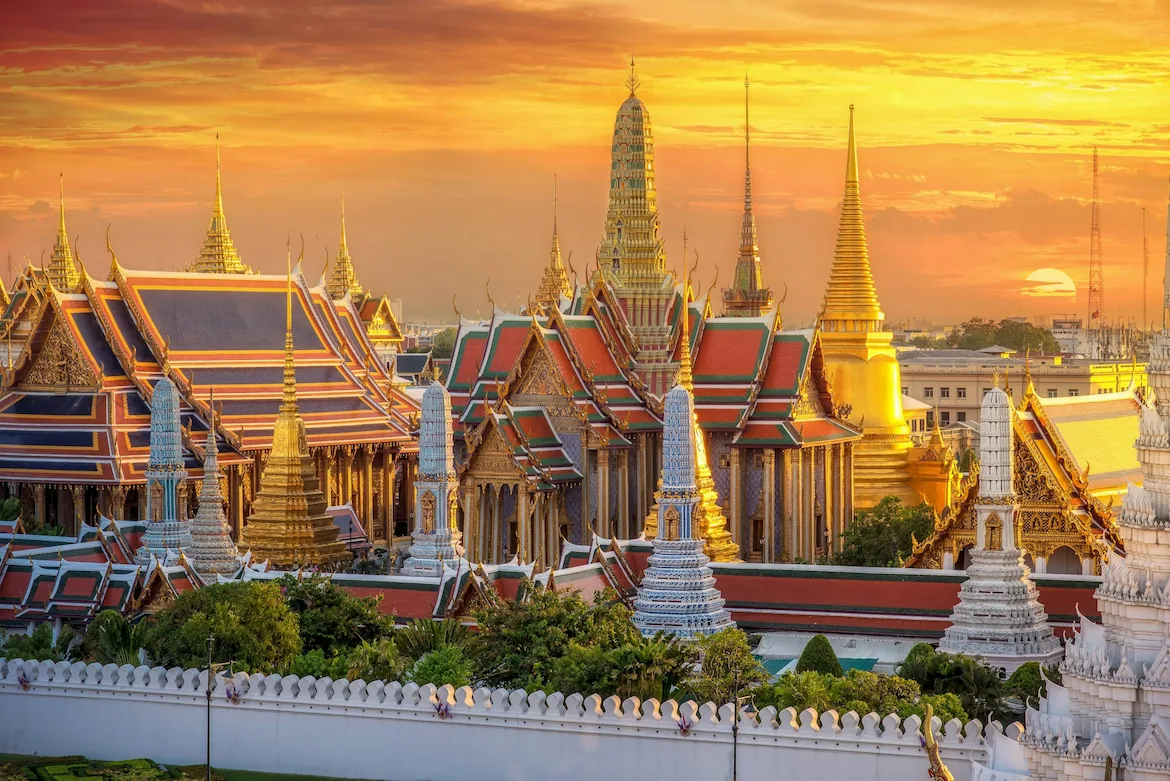
Grand Palace and Wat Phra Kaew – Area: Rattanakosin · Best for: first-time visitors who want Bangkok's highest-priority landmark · Time needed: 2 to 3 hours · Worth it: Yes, if you go early and treat it as the major set-piece visit it is. · Book ahead: Recommended, especially in high season or if you want a guided early start.
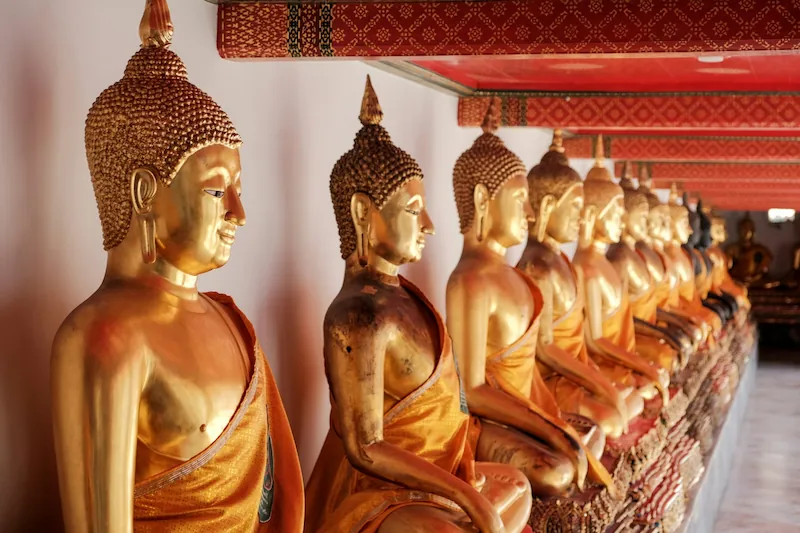
Wat Pho and a traditional Thai massage – Area: Rattanakosin / Tha Tien · Best for: temple culture with a softer, more usable follow-up experience · Time needed: 1.5 to 2.5 hours · Worth it: Very much; the reclining Buddha, temple complex, and massage tradition make it one of Bangkok's best all-round stops. · Book ahead: Usually not essential for the temple; useful for a specific massage or guided circuit.
Wat Arun by river crossing – Area: Thonburi riverside · Best for: iconic architecture, river views, and a clean visual contrast to Wat Pho · Time needed: 1 to 1.5 hours · Worth it: Yes, especially when paired with Wat Pho and the Tha Tien ferry. · Book ahead: No for normal entry.
Chao Phraya river ride or long-tail boat sequence – Area: Riverside / Thonburi · Best for: understanding Bangkok through water rather than road traffic · Time needed: 1 to 3 hours · Worth it: Yes; the river is both a practical route and one of the city's best orientation tools. · Book ahead: No for public boats; yes for a private long-tail boat or dinner cruise.
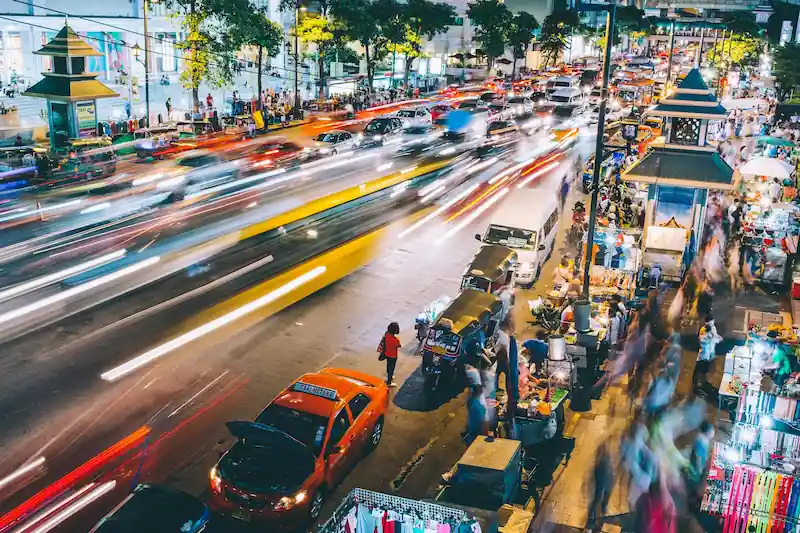
Bangkok street food in Chinatown – Area: Yaowarat · Best for: one high-energy food-led evening · Time needed: 2 to 3 hours · Worth it: Absolutely, if you go hungry and accept the crowds. · Book ahead: No for self-guided eating; recommended for a curated food tour.
Chatuchak Weekend Market – Area: Chatuchak · Best for: market lovers, snacks, browsing, and people-watching at Bangkok scale · Time needed: 2 to 4 hours · Worth it: Yes on a weekend, but only if you enjoy markets rather than ticking boxes. · Book ahead: No.
Mahanakhon SkyWalk or a rooftop view – Area: Silom / Sathorn · Best for: sunset, skyline perspective, and a modern counterpoint to temples · Time needed: 1 to 1.5 hours · Worth it: Yes if you want one polished city-view experience. · Book ahead: Yes for sunset slots and busy dates.
Jim Thompson House – Area: Siam · Best for: design-minded travelers, architecture, textiles, and a compact cultural stop · Time needed: 1 to 1.5 hours · Worth it: Yes, especially when you want something more intimate after the big monuments. · Book ahead: Usually no, but check opening days and times.
Talat Noi and Charoen Krung walk – Area: Riverside / Chinatown edge · Best for: street art, cafés, old warehouses, and a more local urban texture · Time needed: 1.5 to 3 hours · Worth it: Yes, especially for repeat visitors or a second-day neighborhood layer. · Book ahead: No, unless you want a guided walk.
Wat Saket and the Golden Mount – Area: Old Bangkok · Best for: a calmer temple climb, old-city views, and a different perspective from the palace zone · Time needed: 1 to 1.5 hours · Worth it: Yes if you want one additional temple that adds viewpoint value. · Book ahead: No.
Pak Khlong Talat flower market – Area: Old Bangkok / riverside edge · Best for: color, market atmosphere, and a low-friction add-on near the old city · Time needed: 45 minutes to 1.5 hours · Worth it: Yes when folded into a river, Chinatown, or old-city route. · Book ahead: No.
Ayutthaya day trip – Area: Outside Bangkok · Best for: the strongest historical day trip from the capital · Time needed: 7 to 9 hours · Worth it: Yes if you have at least 4 days or are strongly interested in history. · Book ahead: Recommended for a smooth guided or private-driver day.
How to choose well in Bangkok
Bangkok rewards filtering more than collecting. The city has world-class temples, street food, river movement, markets, malls, rooftops, spas, museums, neighborhood walks, and day trips, but stacking all of them creates heat, traffic, and decision fatigue. A strong Bangkok day usually needs one major anchor, one movement sequence, and one evening identity: temple-and-river, food-and-neon, skyline-and-dinner, market-and-recovery, or neighborhood-and-spa.
Treat the Grand Palace, Wat Pho, and Wat Arun as one old-city decision: do them early and efficiently, or choose two well rather than dragging temple sightseeing across multiple hot days.
Use the Chao Phraya and cross-river ferries whenever they fit. The river often gives a clearer sense of Bangkok than road transfers and can reduce traffic frustration.
Choose markets by purpose: Chatuchak for weekend scale, Yaowarat for food at night, Pak Khlong Talat for flowers and color, Or Tor Kor for cleaner food browsing, and night markets for easy evening atmosphere.
Separate temple Bangkok from skyline Bangkok. A rooftop, Mahanakhon, or riverside dinner works best after a heat-heavy day, not as another midday obligation.
Use Siam, BACC, Jim Thompson House, ICONSIAM, spas, or malls as strategic recovery zones when heat, rain, or children make exposed sightseeing harder.
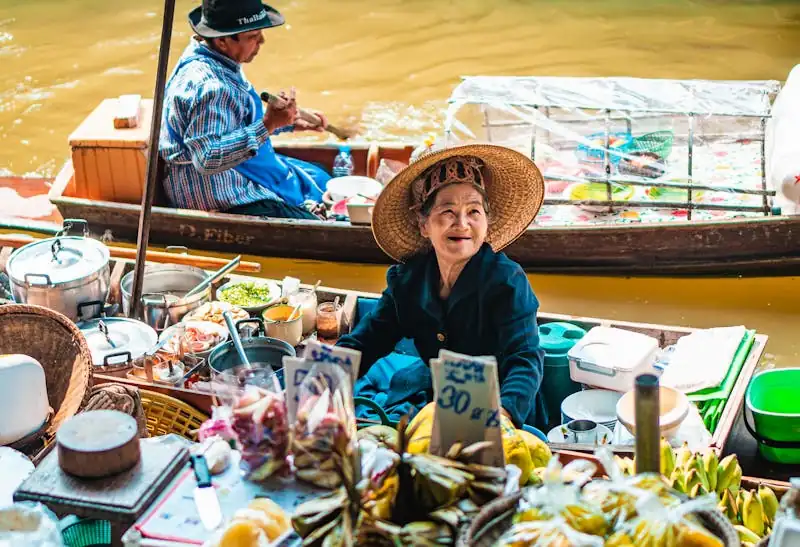
Be selective with floating markets. They can be enjoyable, but Ayutthaya usually gives a stronger first day-trip payoff if history matters.
Bangkok gets better when you leave white space for food, traffic, heat, and spontaneous stops instead of forcing every famous name into the same day.
Bangkok's iconic essentials
This is Bangkok at its most recognizable: royal compounds, major temples, river movement, markets, food streets, and vertical skyline views. The strongest first visit is not about seeing every famous name, but about building a sequence that explains the city: old Bangkok in the morning, water in motion, heat-aware pauses, then food or skyline after dark.
Start with the Grand Palace before the heat builds – The Grand Palace remains Bangkok's clearest first-time essential because it concentrates royal history, ceremonial architecture, and Wat Phra Kaew in one high-impact visit. Go early, dress correctly, and avoid making it the fourth stop of an already hot day. (First-time essential · Best for: travelers with limited time who want Bangkok's top landmark first)Find tours & experiences
Pair Wat Pho with a traditional massage stop – Wat Pho is one of Bangkok's best major sights because it combines the reclining Buddha, a large temple complex, and a credible link to Thai traditional medicine and massage. It works especially well after the Grand Palace or before crossing to Wat Arun. (High payoff · Best for: visitors who want culture without only monument-hopping)Find tours & experiences
See Wat Arun from both sides of the river – Wat Arun is strongest when treated as a river landmark rather than a standalone temple. Visit the temple, but also view it from the opposite bank or during a river movement sequence so its location and silhouette make sense. (Worth it · Best for: photography, temple circuits, and river-based sightseeing)Find tours & experiences
Use the Chao Phraya as part of the visit, not just transport – A public boat, ferry crossing, or short private boat route can make Bangkok easier to understand than another taxi through traffic. The river links heritage, commerce, hotels, temples, piers, and everyday movement in a way the road grid often hides. (Smart move · Best for: travelers trying to reduce transit friction)Find tours & experiences
Take a Thonburi canal or long-tail boat route if you want water-level Bangkok – Canal routes work best when you want Bangkok to feel less monumental and more lived-in. They are not essential for every short trip, but they can add stilt houses, local piers, temple backs, and slower water movement to a city otherwise experienced through traffic. (Local icon · Best for: travelers who want a more atmospheric river-and-canal layer)Find tours & experiences
Go up Mahanakhon SkyWalk late in the day – Mahanakhon gives Bangkok the kind of skyline read that temples and street-level wandering cannot. Use it around sunset or early evening as a modern counterpoint to the old city rather than as a midday priority. (Best in the evening · Best for: sunset views and a polished modern-city counterpoint)Find tours & experiences
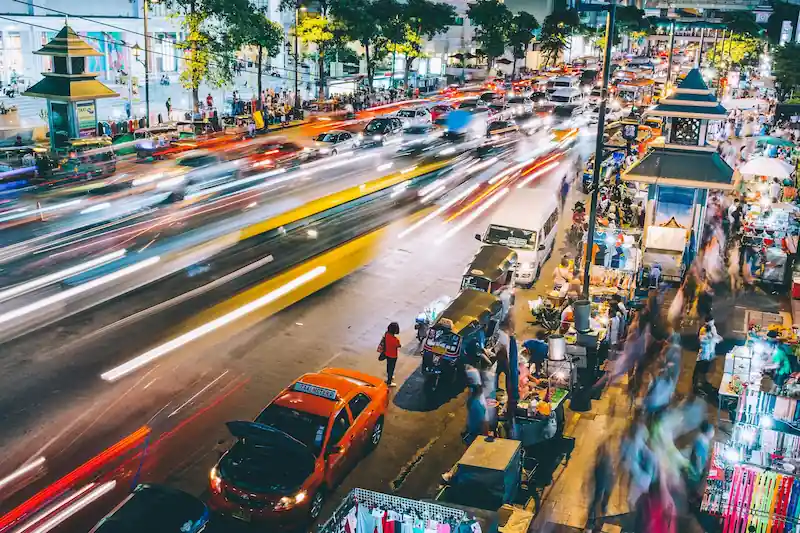
Visit Chinatown for a headline Bangkok evening – Yaowarat is iconic less because of monuments than because it condenses neon, density, traffic, gold shops, and high-turnover street food into one of Bangkok's strongest after-dark experiences. This is where the city feels unapologetically urban. (Best in the evening · Best for: food-first evenings and sensory city energy)Find tours & experiences
Do Chatuchak only if your dates and appetite match – Chatuchak is one of Bangkok's biggest urban experiences, but it is also hot, sprawling, and easy to overdo. It is worth it on a weekend if you enjoy markets, snacks, browsing, and people-watching at scale. (Weekend only · Best for: market lovers and travelers with an extra half day)
Climb Wat Saket and the Golden Mount for an old-city view – Wat Saket adds something different from the palace-zone temples: a gentle climb, old-city context, and a more relaxed viewpoint. It is a smart second-temple choice when you want perspective without committing to another huge monument. (Underrated · Best for: travelers who want a temple plus viewpoint in one stop)
Use ICONSIAM selectively as a riverside modern-Bangkok stop – ICONSIAM is not a substitute for the city's historic core, but it can be useful when you want air-conditioning, food choices, river access, and a polished modern contrast in one place. It works best as a practical pause or evening add-on, not as the main reason to visit Bangkok. (Good in heat or rain · Best for: travelers who want comfort, food variety, and river-side logistics)
Cultural things to do in Bangkok that add depth
Bangkok's cultural layer is wider than temple-hopping. The city becomes more interesting when you add domestic architecture, royal collections, contemporary art, old trading districts, design, flower markets, smaller temples, and museums that explain how Bangkok became a capital of water, ceremony, commerce, and everyday improvisation.
Take the guided visit at Jim Thompson House – The Jim Thompson House is one of Bangkok's most satisfying compact cultural visits: teak houses, textiles, collecting, architecture, and a story that connects Thai silk with twentieth-century Bangkok. It works especially well near Siam when you need a quieter cultural block. (Worth it · Best for: design, architecture, textiles, and compact culture)
Use BACC for contemporary Bangkok – The Bangkok Art and Culture Centre gives you a different city reading: contemporary exhibitions, a public cultural space, and a useful indoor stop near Siam. It is one of the easiest ways to move beyond royal and temple culture without a complicated detour. (Free · Best for: rainy days, contemporary culture, and short add-ons near Siam)
Add Bangkok National Museum if you want more context after the Grand Palace – The Bangkok National Museum is not as instantly visual as the major temples, but it helps travelers who want a clearer historical frame for Thai art, royal objects, Buddhist imagery, and the old-city setting. It is best after, not before, the palace core. (For depth · Best for: history-focused travelers and culture-first itineraries)
Use Museum Siam when you want a lighter, more accessible cultural stop – Museum Siam can be a useful old-city add-on if you want Thai identity, history, and social context in a more approachable format than a traditional museum. It works well with Wat Pho, the flower market, or a river-based route. (Accessible culture · Best for: families, first-timers, and rainy-day old-city plans)
Visit Wat Saket if you want one extra temple with real variety – Wat Saket and the Golden Mount offer a very different payoff from the Grand Palace or Wat Pho: a climb, bells, old-city rooftops, and a calmer sense of place. It is one of the better secondary temples because it changes the rhythm of the day. (Smart add-on · Best for: travelers who want temple atmosphere without repeating the same experience)
Consider Wat Benchamabophit for a quieter architectural temple stop – The Marble Temple is useful when you want a graceful, less chaotic temple experience away from the palace crowds. It is not mandatory on a short first trip, but it adds elegance and architectural variety if you have more time. (Only if you have time · Best for: architecture-minded travelers and repeat visitors)
Walk Pak Khlong Talat for color, commerce, and flower-market rhythm – Bangkok's flower market gives you a vivid, low-friction cultural stop that can be folded into an old-city or riverside day. It is strongest when treated as a working market rather than a formal attraction. (Low-friction stop · Best for: market lovers, photographers, and old-city walkers)
Explore Talat Noi and Charoen Krung for heritage, street art, and design edges – Talat Noi gives Bangkok a more textured urban layer: old warehouses, shrines, cafés, workshops, street art, and river-adjacent streets. It is one of the best areas for travelers who want the city beyond palace and mall logic. (Local culture · Best for: repeat visitors, photographers, and design-minded travelers)
Choose one royal or specialist museum instead of adding more temples – The Royal Barge Museum, MOCA, or a smaller specialist museum can make sense if you have already covered the main heritage circuit. The key is to choose the one that matches your interest rather than filling time mechanically. (Selective culture · Best for: travelers with four or more days)
Read temple Bangkok through one focused morning – Instead of scattering temples across several days, build one concentrated morning around the palace zone, Wat Pho, Wat Arun, and the river. The payoff comes from contrast: ceremonial scale, monastic texture, and river-facing drama. (Smart prioritization · Best for: first-time visitors who want cultural clarity)Find tours & experiences
Local experiences that make Bangkok feel lived-in
Bangkok becomes more memorable when you stop treating it as a list of monuments and start reading its neighborhoods, ferries, markets, backstreets, parks, malls, canals, cafés, and everyday routines. The city's local texture often comes through movement and pauses rather than formal sightseeing.
Cross the river and walk Thonburi at a slower pace – Thonburi gives you a looser, more residential side of Bangkok than the main tourist core. Use it for canals, small temples, local streets, and a break from constant high-intensity sightseeing. (Local texture · Best for: repeat visitors and travelers who prefer neighborhoods to checklists)Find tours & experiences
Ride local boats with purpose – Bangkok's waterways are not only scenic; they help you understand how the city functions across river edges and ferry links. Even a short public-boat segment can turn transit time into one of the day's most memorable parts. (Smart move · Best for: practical travelers who like moving through a city rather than around it)
Walk Talat Noi before or after Chinatown – Talat Noi is one of the easiest ways to add neighborhood texture to a Bangkok trip without committing to a full hidden-city mission. It works well for street art, shrines, old shopfronts, cafés, and river-edge wandering. (Great add-on · Best for: travelers who want texture near Chinatown and the river)
Use Benjakitti or Lumphini Park for breathing room – Bangkok's parks are not headline sights in the same way as temples, but they are extremely useful for balancing the trip. A morning or late-afternoon walk in Benjakitti or Lumphini can reset a day that would otherwise be all heat, traffic, and concrete. (Open-air reset · Best for: families, joggers, longer stays, and heat-aware planners)
Browse a market where shopping is not the only point – Bangkok markets are strongest when you use them to read local consumption, snacks, flow, and habits rather than just hunt souvenirs. Chatuchak is the big version, Or Tor Kor is cleaner and more food-focused, and smaller markets can be better when time is short. (Everyday Bangkok · Best for: travelers who enjoy people-watching as much as buying)
Get a Thai massage or spa treatment as part of the itinerary – Massage is not just a recovery add-on in Bangkok; it is one of the most useful ways to manage heat, walking, jet lag, and long sightseeing days. Keep it flexible unless you want a specific high-end spa. (Practical pleasure · Best for: travelers who need recovery between heavy sightseeing blocks)Find tours & experiences
Use a backstreet walk to reset the pace – A quieter neighborhood walk between major sights keeps Bangkok from becoming a sequence of queues and transfers. The best version might be a canal edge, a coffee stop, a small shrine, or a market street that was never the headline plan. (Slow travel · Best for: slower travelers and second afternoons)
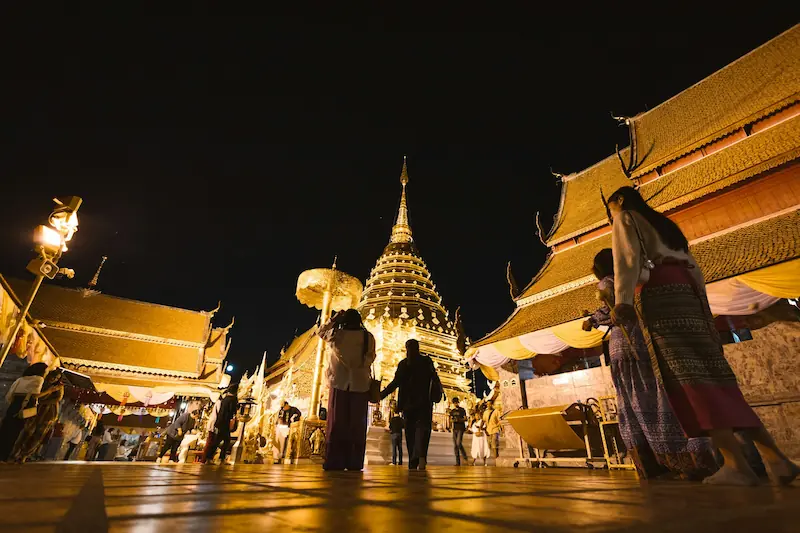
See Bangkok after dark outside formal nightlife – Not every evening needs a rooftop or club. Chinatown, river edges, night markets, late-opening food streets, and illuminated temples show a more everyday night rhythm that suits travelers who want energy without full nightlife mode. (Best in the evening · Best for: couples, solo travelers, and food-led city breaks)
Use Siam and Ratchaprasong as a practical urban reset – Siam is not romantic Bangkok, but it is useful Bangkok: transit, malls, food courts, BACC, Jim Thompson House nearby, and air-conditioned recovery. Use it when heat, rain, children, or logistics require a controlled pause. (Rain and heat backup · Best for: families, shoppers, rainy days, and first-time visitors needing a reset)
Visit Khlong Bang Luang or the Artist's House for a softer Thonburi layer – This canal-side pocket is best for travelers who want a slower, residential, artsy stop rather than another landmark. It is not a first-morning priority, but it can make Bangkok feel more intimate on a longer stay. (Offbeat local · Best for: repeat visitors and slow travelers)
Food experiences worth making time for
Food is not a side activity in Bangkok; for many travelers it is the city's most immediate form of local culture. The best approach is to use different food formats for different moments: Chinatown for intensity, markets for grazing, food courts for heat-aware recovery, river dining for atmosphere, a cooking class for participation, and a guided tour when time is short.
Spend one serious evening eating through Yaowarat – Chinatown is still the strongest single area for a food-led Bangkok evening because it concentrates variety, turnover, neon, and atmosphere. Go hungry, keep the plan flexible, and do not reduce the evening to one famous stall. (High payoff · Best for: first-timers who want one memorable food night)Find tours & experiences
Use Chatuchak for grazing, not a formal meal plan – At Chatuchak, food works best as part of the market rhythm rather than a separate destination. Snack as you browse, keep moving, and treat it as a running tasting session. (Weekend only · Best for: market days and casual eaters)
Try Or Tor Kor if you want a cleaner, food-focused market stop – Or Tor Kor is useful when you want market food, fruit, snacks, and ingredients without the sprawl of Chatuchak. It is not as famous with first-timers, but it can be a smarter food-focused stop if you are already in the north of the city. (Food market · Best for: travelers who care more about food than souvenir shopping)
Take a food tour when you want speed and curation – A guided food tour can be worth it in Bangkok when you want to sample more in one evening without spending half your time researching addresses or second-guessing choices. It is most useful on a short stay or first night. (Worth it · Best for: short trips and travelers who want confident variety fast)Find tours & experiences
Book a cooking class only if participation matters to you – Cooking classes are popular in Bangkok because they combine market context, ingredient reading, and a practical meal. They are not essential for every trip, but they make sense if Thai food is one of the reasons you chose the city. (Hands-on · Best for: food-motivated travelers and repeat visitors)Find tours & experiences
Use food courts strategically on hot or rainy days – Bangkok's mall food courts are not a failure of planning; they can be a smart way to eat well, cool down, and keep a day moving. They are especially useful around Siam, Sukhumvit, and riverside shopping complexes. (Practical food · Best for: families, rainy days, and heat-heavy afternoons)
Use riverside dining for atmosphere, not street-level intensity – Riverside dining gives you a calmer, more scenic version of Bangkok's evening energy. It works well after a heavy sightseeing day, especially if you want a softer finish than Chinatown or a rooftop. (Slower evening · Best for: couples and slower evenings)
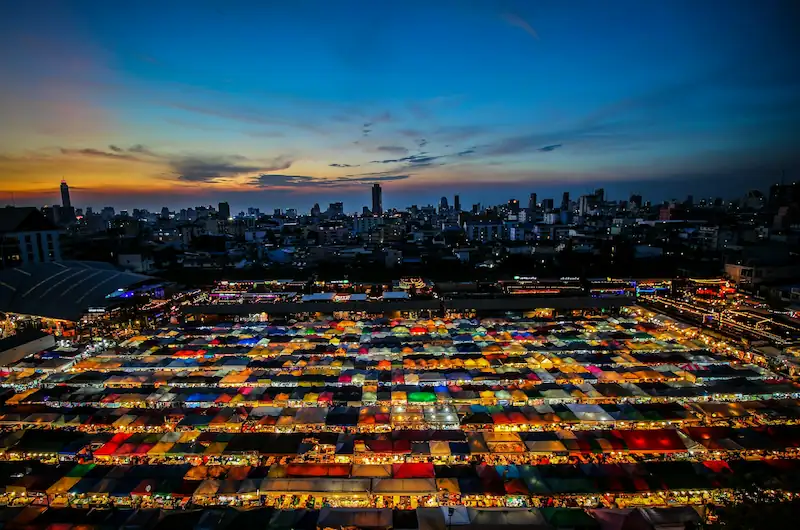
Try a night market when you want easy evening browsing – Bangkok's night markets are best for atmosphere, snacks, and casual browsing rather than the deepest culinary experience. Choose one that fits your location instead of crossing the whole city only for the name. (Easy evening · Best for: casual food, groups, and lower-pressure nights)
Build one meal around regional Thai cooking, not only street food – Bangkok is a national food capital, not just a street-food city. A serious Thai restaurant, regional menu, or chef-led meal can add depth if you are staying long enough and want more than snacks and famous stalls. (Food depth · Best for: food-focused travelers with three or more nights)
Best things to do in Bangkok for first-time visitors
On a first trip, Bangkok is easiest to understand through one temple-and-river sequence, one food-driven evening, one modern skyline or mall-based contrast, and one flexible cultural or market block. The mistake is not missing a minor sight; it is letting heat, traffic, and overplanning flatten the city.
Prioritize the Grand Palace, Wat Pho, and Wat Arun before adding secondary temples.
Use the river between old-city sights instead of relying on road transfers through heavy traffic.
Keep one evening for Chinatown, a guided food tour, or another food-first district rather than a generic restaurant plan.
Choose one modern contrast: Mahanakhon, a rooftop, ICONSIAM, Siam, or a high-performing mall-and-culture sequence.
Add Chatuchak only if you are in Bangkok over the weekend and genuinely enjoy large markets.
Use Jim Thompson House, BACC, Museum Siam, or a Thai massage block when heat or rain makes the day harder.
Leave floating market combinations for later unless they genuinely interest you; Ayutthaya usually has stronger historical value.
Trip length
Best focus
Optional add On
2 days
old-city temples + river + one food evening
Mahanakhon, Jim Thompson House, or a Thai massage
3 days
headline sights + Chinatown + market, skyline, or indoor culture
BACC, Talat Noi, Thonburi, or a food tour
4 days
full city core plus one deeper local layer
Ayutthaya, cooking class, Chatuchak, or canal route
5 days+
city core plus neighborhoods, parks, markets, and one day trip
Koh Kret, Muang Boran, Amphawa, or more specialist museums
Free and low-cost things to do in Bangkok
Bangkok is better described as low-cost than fully free. The best budget-friendly experiences are walks, markets, public boats, parks, shrines, contemporary culture, and food-led wandering where you control the spend.
Visit the Bangkok Art and Culture Centre for a free indoor cultural stop near Siam.
Walk Chinatown and Yaowarat for atmosphere even if you keep food spending light.
Browse Pak Khlong Talat flower market, Talat Noi, or market streets without turning the day into a shopping session.
Use riverside promenades, ferry crossings, and public boats for low-cost orientation.
Spend time in Lumphini or Benjakitti Park in the morning or late afternoon.
Visit Erawan Shrine respectfully as a short central stop rather than a long detour.
Walk old Bangkok's streets and temple exteriors if you do not want to pay for every entry.
Free option
Best for
Cost logic
BACC
rainy day, Siam stop, contemporary culture
free entry
Chinatown walk
evening atmosphere and food browsing
pay only for what you eat
Talat Noi
street art, cafés, old shopfronts
free to walk
Lumphini or Benjakitti Park
morning reset, families, heat management
free public space
Pak Khlong Talat
flowers, color, market rhythm
free unless buying
Unique things to do in Bangkok beyond the basic checklist
Bangkok's more memorable experiences usually come from combining sacred, local, water-based, food-led, and hyper-modern layers rather than chasing novelty for its own sake.
Pair Wat Pho with a traditional massage for a more specific Bangkok experience than a generic temple stop.
Take a Thonburi canal or long-tail boat route to read the city through water rather than road traffic.
Walk Talat Noi and Charoen Krung for old warehouses, street art, shrines, cafés, and river-edge texture.
Use Pak Khlong Talat flower market as a short, vivid working-market stop near the old city.
Visit Khlong Bang Luang or the Artist's House if you want a softer canal-side experience.
Combine old Bangkok and Mahanakhon in the same day to feel the city's vertical contrast.
Use a Thai cooking class or specialist food tour if participation matters more than another sightseeing stop.
Choose a park-and-skyline reset at Benjakitti instead of another mall when the weather allows.
Unique angle
Best pick
Best for
Canal-side Bangkok
Thonburi canal route or Artist's House
slow travelers and repeat visitors
Old trading Bangkok
Talat Noi and Charoen Krung
street texture and photography
Working market color
Pak Khlong Talat
short old-city add-on
Temple plus view
Wat Saket
secondary temple with variety
Hands-on food
Cooking class
food-motivated travelers
Things to do in Bangkok at night
Bangkok at night is not one thing. You can choose street food, skyline, river, night markets, rooftop bars, malls, a slower riverside dinner, or nightlife proper. The best evening depends on whether you want intensity, views, movement, or recovery.
Eat your way through Chinatown for the city's strongest food-led evening.
Head to Mahanakhon or a rooftop if views matter more than street-level energy.
Take a Chao Phraya dinner cruise only if you want a packaged, scenic evening rather than flexible exploration.
Use night markets for browsing, snacks, and atmosphere rather than as the city's deepest food experience.
Choose ICONSIAM or a riverside dinner when you want Bangkok with less overload.
Use Sukhumvit, Thonglor, or Silom for bars and late-night energy if nightlife is the point.
Keep the evening close to your base if the day has already involved heavy heat and transfers.
Evening type
Best for
Needs booking
Chinatown
food and urban energy
No, unless guided
Mahanakhon or rooftop
sunset and skyline
Usually yes for peak times
Dinner cruise
packaged scenic night
Yes
Night market
casual browsing and snacks
No
Riverside dinner / ICONSIAM
easier evening with views
Useful for restaurants
Things to do in Bangkok with kids
Bangkok with children works best when you keep transfers short, avoid overloading temple days, and mix one cultural anchor with one easy-payoff activity. Heat, rain, traffic, and crowds matter more than the attraction list itself.
Use the river as both transport and entertainment.
Limit the palace-and-temple block to a focused half day rather than a full marathon.
Choose Chatuchak only with older kids who can handle heat, crowds, and long browsing.
Use malls, food courts, SEA LIFE, BACC, or ICONSIAM as recovery time when weather gets difficult.
Pick one skyline stop or boat-based experience instead of too many formal museums.
Build in a Thai massage, pool break, or hotel reset after long outdoor mornings.
Favor Benjakitti or Lumphini Park for open-air breathing room when the weather is kind.
Option
Why it works
Best age fit
River ride or ferry sequence
movement and views without more road traffic
most ages
Mahanakhon SkyWalk
clear wow factor
older kids
BACC, SEA LIFE, or mall-based reset
heat and rain backup
flexible
Benjakitti or Lumphini Park
open-air reset and room to move
younger kids too
Chatuchak
market scale and snacks
older kids and teens
Things to do in Bangkok when it rains
Rain in Bangkok rarely ruins the day, but it should change the order. Shift exposed temples, river decks, and markets to clearer windows, then use indoor culture, malls, spas, cooking classes, covered food plans, and flexible neighborhoods while showers pass.
Go to BACC for an easy free indoor option near Siam.
Use Jim Thompson House when showers are light and you still want a compact cultural visit.
Choose Museum Siam, Bangkok National Museum, MOCA, or a specialist museum if you want more cultural depth.
Shift food plans toward covered markets, food courts, guided tastings, or a cooking class.
Use Siam, ICONSIAM, or EmQuartier-style malls as practical reset spaces, especially with kids.
Book or keep space for a Thai massage or spa block when outdoor sightseeing becomes inefficient.
Save the Grand Palace, Wat Arun, Chatuchak, and rooftop views for drier or clearer windows.
Rainy Day option
Best for
Time needed
BACC
free indoor culture
1 to 2 hours
Jim Thompson House
compact cultural visit
1 to 1.5 hours
Museum Siam or Bangkok National Museum
old-city culture in unstable weather
1.5 to 3 hours
Mall and food-court reset
families, heat, heavy showers
1 to 3 hours
Massage, spa, or cooking class
turning bad weather into recovery or participation
1 to 4 hours
Things to do in Bangkok by area
Rattanakosin and old Bangkok
This is Bangkok's first-time cultural core. Come here for the Grand Palace, Wat Phra Kaew, Wat Pho, Wat Saket, Museum Siam, and old-city streets, then use the river to avoid turning the day into a traffic exercise.
Grand Palace and Wat Phra Kaew
Wat Pho
Wat Saket and Golden Mount
Museum Siam
Tha Tien river links
best early in the day
Thonburi riverside and canals
Across the river, Bangkok loosens. This area makes sense for Wat Arun, canal-linked movement, local streets, small temples, and a more residential contrast to the ceremonial old city.
Wat Arun
river crossings
Thonburi canal routes
Artist's House / Khlong Bang Luang
slower local pacing
good add-on after Wat Pho
Yaowarat, Chinatown, and Talat Noi
Come here for food, neon, gold shops, old trading streets, street art, shrines, cafés, and dense urban texture. It is one of Bangkok's strongest day-to-night areas if you want the city to feel alive rather than polished.
Yaowarat street food
Talat Noi walk
Charoen Krung cafés and galleries
gold-shop and market atmosphere
best evening energy
easy food-led route
Siam and Ratchaprasong
Siam is practical rather than romantic, but very useful. It works for indoor culture, shopping, food courts, malls, rain and heat backup, and easier transit connections.
Jim Thompson House
BACC
major malls and food courts
Erawan Shrine nearby
rainy-day reset
easy BTS access
Silom and Sathorn
This is where modern Bangkok comes into focus through business-district energy, rooftops, Mahanakhon, bars, and easy access to Lumphini. It is strongest late in the day or as an evening contrast.
Mahanakhon SkyWalk
rooftop evenings
Silom nightlife edges
Lumphini Park
modern city contrast
good dinner-and-view zone
Sukhumvit, Thonglor, and modern east Bangkok
This corridor is not where most historic sightseeing happens, but it is important for restaurants, bars, malls, spas, shopping, and comfortable evenings. It works best when your Bangkok plan includes modern city life, not only monuments.
restaurants and bars
spa and massage options
shopping and malls
Benjakitti Park access
Thonglor and Ekkamai dining
easy BTS movement
Chatuchak and northern Bangkok
This area is about market scale, food browsing, and weekend momentum. It only deserves real time if your dates line up and you actually enjoy markets.
Chatuchak Weekend Market
Or Tor Kor Market
snacking while browsing
people-watching
weekend half day
best early before heat peaks
Riverside and Khlong San
The riverfront works when you want Bangkok to feel scenic, slower, and easier to frame. It is useful for boat movement, dinner cruises, ICONSIAM, temple views, and more polished evenings after heavier sightseeing days.
Chao Phraya river rides
ICONSIAM
dinner cruises
Wat Arun views
riverside restaurants
evening skyline from the water
What to prioritize in Bangkok depending on your trip
Bangkok improves when you accept trade-offs. The city is too large, hot, and layered to complete in one visit, so the best plan depends on time, weather, appetite, and how much intensity you want each day.
Profile
Prioritize
Skip
Structure
Half day
Wat Pho plus Wat Arun, a Chinatown food evening, or Mahanakhon plus dinner
markets, malls as main plans, and day trips
keep the route tight and choose one strong identity
1 day
Grand Palace, Wat Pho, river crossing to Wat Arun, then Chinatown or a rooftop
secondary museums, Chatuchak unless it is the point, and long detours
old-city culture in the morning, recovery pause, evening contrast
2 days
headline temples, river movement, Chinatown, one skyline or indoor culture block
trying to add Ayutthaya unless history outranks city depth
day one old Bangkok, day two modern, food, or local Bangkok
3 days
full city core plus Jim Thompson, BACC, Talat Noi, Chatuchak, or a canal route
forcing every market and every rooftop
temples, food, skyline, then add one neighborhood or market layer
4 to 5 days
city core, Thonburi, Chatuchak or Or Tor Kor, parks, spa/cooking, and one day trip
repeating similar temple experiences without a reason
alternate high-intensity days with recovery and local texture
First trip
Grand Palace, Wat Pho, Wat Arun, Chao Phraya, Chinatown, one skyline view, and one market or museum
over-optimizing for hidden gems before understanding the core
build clarity first, then nuance
Repeat visit
Talat Noi, Thonburi canals, markets, parks, food depth, smaller museums, and a well-chosen day trip
redoing every major icon unless someone with you has never seen them
use Bangkok more as a city to inhabit than a checklist
Family trip
short temple block, river rides, indoor resets, parks, malls, food courts, and one clear wow moment
full-day heat-heavy sightseeing without recovery
alternate outdoor anchors with air-conditioned breaks
Best day trips from Bangkok
Day trips make sense from Bangkok, but not all of them deserve equal priority. Ayutthaya is the strongest first choice for most travelers because it adds real historical depth without an excessive travel day. Floating-market combinations are more about atmosphere and logistics; Kanchanaburi and Erawan are heavier commitments; and closer options like Muang Boran or Koh Kret can work when you want a lighter extension.
Excursion
Best for
Time needed
First trip?
Transport
Book ahead
Ayutthaya
first-time visitors who want the most rewarding historical extension
7 to 9 hours
Yes, if you have 4 days or history is a priority
train, private car, boat combination, or organized day tour
Useful, especially for a smooth combined itinerary Check options
Damnoen Saduak and Maeklong Railway Market
classic market imagery and a busy Bangkok-region excursion
6 to 8 hours
Maybe, if markets interest you more than historical depth
These are not full itineraries. They are activity pairings that work because the geography, heat, transport, and energy level make sense together.
Grand Palace + Wat Pho + Wat Arun – This is Bangkok's clearest first-time heritage combination because each stop reveals a different register of the old city. Do it early, use the river crossing, and stop once the cultural point has been made rather than adding more temples out of guilt.
Wat Pho + Wat Arun + Pak Khlong Talat – A slightly softer old-city sequence that gives you temple culture, river movement, and a working market without the full intensity of the Grand Palace. It works well when you want a high-value half day rather than a marathon.
Jim Thompson House + BACC + Siam reset – This works well on a rainy afternoon or after a hard sightseeing morning. It keeps you in one practical zone and gives you culture, air-conditioning, food options, and transit access without another monument-heavy block.
Talat Noi + Chinatown dinner – Start with old warehouses, shrines, street art, and Charoen Krung texture, then let the evening build into Yaowarat's food energy. It is one of the best ways to make Chinatown feel like a wider district rather than a single dinner stop.
Chinatown dinner + rooftop or skyline finish – Start with street-level intensity and finish with distance. The combination works because Bangkok first feels dense and immediate, then suddenly legible from above.
Chatuchak + Or Tor Kor + massage or mall recovery – If you do Chatuchak properly, it is enough for a half day. Pairing it with nearby food browsing and a softer recovery plan protects the afternoon from becoming another hot, crowded block.
Old Bangkok morning + Thonburi canal slowdown – This pairing keeps the city's contrast intact. You begin with the ceremonial core and end with a looser, more local riverside rhythm that stops the day from becoming too monumental.
Mahanakhon + Silom dinner + Lumphini or Benjakitti edge – A strong modern-Bangkok sequence when you want skyline, food, and a less temple-led evening. It works best late in the day, especially after a quieter morning.
ICONSIAM + river ride + Wat Arun views – This is useful when you want a softer, more polished riverside version of Bangkok. It combines comfort, views, food, and boat movement without turning the evening into a formal dinner cruise.
What to book ahead in Bangkok and what can stay flexible
Bangkok does not require obsessive pre-booking, but a few experiences clearly benefit from advance timing. Book the activities where timing, language, transport, sunset windows, or food curation matter; keep neighborhood walks, public boats, parks, and most markets flexible.
Yes, especially for first-time visitors who want reduced logistics
Floating market and Maeklong combination Check options
Yes if doing both
early morning
Yes, because transport logistics drive the experience
Museums, BACC, parks, markets, Talat Noi walks
Usually no
use as flexible heat or rain adjustments
Only if you want specialist context
FAQ: what to do in Bangkok
These are the questions travelers usually ask once they move beyond a generic attraction list and start making real choices about time, heat, crowds, food, transport, and day trips.
What are the best things to do in Bangkok on a first trip?
Start with the Grand Palace, Wat Pho, Wat Arun, and a Chao Phraya river movement, then add one food-led evening in Chinatown and one modern contrast such as Mahanakhon, a rooftop, Siam, or ICONSIAM. That gives you Bangkok's clearest core without overloading the trip.
How many days do you need for Bangkok?
Three full days is the sweet spot for most travelers. Two days covers the essential old-city and food experiences, while four or five days lets you add Chatuchak, Talat Noi, Thonburi canals, a cooking class, more parks or museums, and one day trip without rushing.
Is the Grand Palace worth it in Bangkok?
Yes. It is still Bangkok's top-priority landmark for first-time visitors, especially if you go early, dress correctly, and understand that it will be busy. The main mistake is visiting too late in the day or expecting a quiet temple experience.
Should I visit Wat Pho, Wat Arun, and the Grand Palace on the same day?
Yes, that is usually the most efficient way to handle the old-city temple core. Start with the Grand Palace, continue to Wat Pho, and cross the river to Wat Arun. Stop there unless you still have energy; adding too many temples after that often reduces the quality of the day.
What is the best temple in Bangkok if I only choose one?
For pure first-time importance, choose the Grand Palace and Wat Phra Kaew. For a more balanced and usable visit, Wat Pho is often the better single stop because it combines the reclining Buddha, temple atmosphere, and the option of a traditional massage nearby.
Is Wat Arun better in the morning or evening?
Wat Arun works well in different ways. Visiting in the morning or late afternoon helps with heat and light, while viewing it from across the river around sunset or after dark can be more atmospheric. The best plan is to combine an actual visit with a separate river view if timing allows.
What should you book ahead in Bangkok?
Book ahead for Mahanakhon at sunset, dinner cruises, cooking classes, organized food tours, Ayutthaya, floating-market combinations, and private canal or long-tail boat routes. Regular temple visits, parks, public boats, Talat Noi walks, and most market browsing can stay flexible.
What are the best things to do in Bangkok at night?
Chinatown is the strongest evening choice for food and atmosphere. Rooftops or Mahanakhon work well for skyline views, dinner cruises suit travelers who want a packaged scenic format, and night markets or riverside malls work when you want an easier, lower-pressure evening.
Is Chinatown in Bangkok worth visiting?
Yes, especially at night. Yaowarat offers one of Bangkok's strongest combinations of food, neon, traffic, crowds, gold shops, and city energy. It is best approached as a flexible food walk rather than as a formal sightseeing stop.
What is the best food experience in Bangkok?
For most first-time visitors, a Chinatown food evening is the strongest choice. A guided food tour is useful if you want more confidence and variety quickly, while a cooking class is better if you want participation and ingredient context rather than only eating.
Are Bangkok floating markets worth it?
They can be, but they are not essential for every first trip. Floating-market combinations are often more about atmosphere, photography, and logistics than deep cultural payoff. If you have limited time, Ayutthaya usually offers a stronger first day-trip value.
What is the best day trip from Bangkok?
Ayutthaya is the strongest first choice because it adds real historical depth and is straightforward to organize from the city. Maeklong and floating market combinations are better for market imagery, while Kanchanaburi and Erawan require a longer and heavier day.
Is Chatuchak Weekend Market worth it?
Yes if you are in Bangkok over the weekend and enjoy markets, browsing, snacks, and crowds. It is not worth forcing into a short trip if your dates do not align or if heat and market scale drain your energy quickly.
What are the best free things to do in Bangkok?
Good free or low-cost options include BACC, Chinatown walking, Talat Noi, Pak Khlong Talat, Lumphini Park, Benjakitti Park, Erawan Shrine, river-edge walking, and public-boat or ferry sequences where the transport cost is minimal.
What should you do in Bangkok when it rains?
Shift toward BACC, Jim Thompson House, Museum Siam, Bangkok National Museum, malls, food courts, spas, massage, cooking classes, and covered food plans. Save exposed temple courtyards, markets, rooftops, and open river decks for clearer windows.
What are the best things to do in Bangkok with kids?
Use the river, keep temple time concentrated, and mix one cultural block with one easy-payoff activity like Mahanakhon, SEA LIFE, BACC, a mall reset, a park, or a food court. Bangkok works with children when the day stays geographically compact and has recovery built in.
What are the most unique things to do in Bangkok?
Thonburi canals, Talat Noi, Pak Khlong Talat, Wat Saket, Khlong Bang Luang, a traditional massage after Wat Pho, a cooking class, and a Chinatown food night all feel more specific to Bangkok than a generic attraction list.
Is Mahanakhon SkyWalk worth it?
Yes if you want one clear skyline experience. It is especially strong around sunset or early evening, when it gives you a modern, vertical contrast to temple-heavy sightseeing. It is less essential if your trip is very short and you do not care about viewpoints.
Are Bangkok rooftops worth it?
A rooftop is worth it if you want a polished evening view and are comfortable paying for the setting. It should not replace street-level food or river movement, but it can be a strong final act after an old-city or market day.
What is the best area for a local Bangkok walk?
Talat Noi and Charoen Krung are among the easiest choices because they combine old trading streets, cafés, shrines, street art, and river proximity. Thonburi canals, Khlong Bang Luang, and parts of old Bangkok also work well when you want slower local texture.
Should I include malls in a Bangkok itinerary?
Yes, but use them strategically. Bangkok malls are useful for food courts, air-conditioning, shopping, rain breaks, kids, and practical resets. They should support the itinerary rather than replace the city's temples, rivers, markets, and neighborhoods.
Is Bangkok good for museums?
Yes, if you choose selectively. Jim Thompson House, BACC, Bangkok National Museum, Museum Siam, MOCA, and specialist museums can add depth, especially on rainy or heat-heavy days. Do not try to stack too many unless culture is the main focus of your trip.
How do you avoid wasting time in Bangkok traffic?
Cluster sights geographically, use BTS or MRT where they fit, use the Chao Phraya for old-city and riverside movement, and avoid crossing the city repeatedly in one day. The best Bangkok itineraries are built around zones, not isolated attractions.
What should I skip in Bangkok on a short trip?
Skip secondary temples, distant markets, complicated day trips, and cross-city detours that do not match your interests. On a 2- or 3-day trip, it is better to do the old-city core, one food evening, and one modern or local contrast well.
Can you visit Bangkok without a guided tour?
Yes, many parts of Bangkok are easy to do independently, especially public boats, markets, parks, BACC, malls, Chinatown, and neighborhood walks. Guided tours are most useful for the Grand Palace context, food curation, canal routes, and day trips where logistics matter.
What is a good relaxed thing to do in Bangkok after temple sightseeing?
A Thai massage, riverside meal, mall food-court break, BACC visit, Jim Thompson House, Benjakitti Park, or a soft river ride can all work well. The key is to stop chasing intensity after a hot old-city morning.
In Bangkok, the best trip usually comes from choosing a few strong experiences well rather than trying to complete the city.
Turn the right experiences into the right itinerary
Once you know what you want to do in Bangkok, the next step is turning those ideas into a trip that actually works day by day. Use the planner to organize the right mix of highlights, neighborhoods, and pace into a route that feels coherent, not crowded.