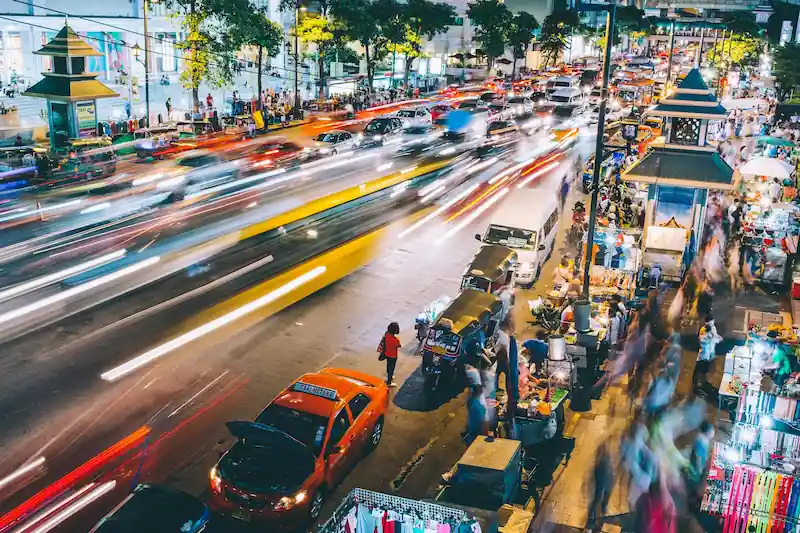
Where to stay in Bangkok
Find the best neighborhoods and hotels in Bangkok.
Open page →
Plan your trip to Bangkok with a guide built around how the city actually works: royal old-city landmarks, river movement, BTS-linked modern districts, food streets, markets, malls, canals, and heat-aware daily pacing. Bangkok can feel overwhelming when it is treated as a flat checklist, but it becomes far more readable once each day is organized around one transport logic, one strong district, and one meaningful evening rhythm.
Find the best neighborhoods and hotels in Bangkok.
Open page →
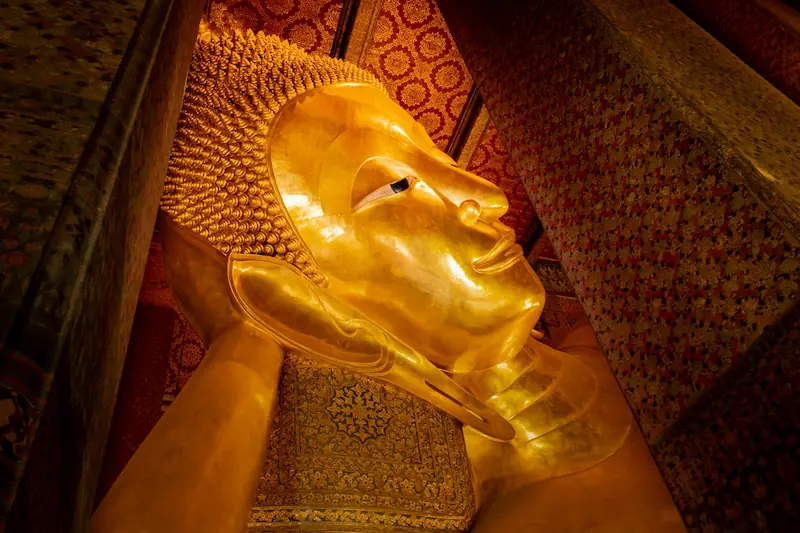
Prioritize the activities that deserve your time in Bangkok.
Open page →
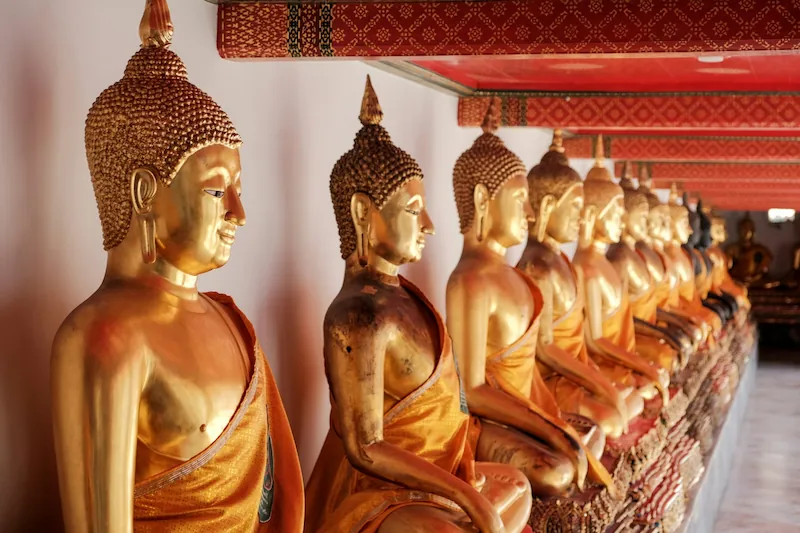
3 Days in Bangkok: First-Timer Itinerary by River, Temples and Canals
Open itinerary →
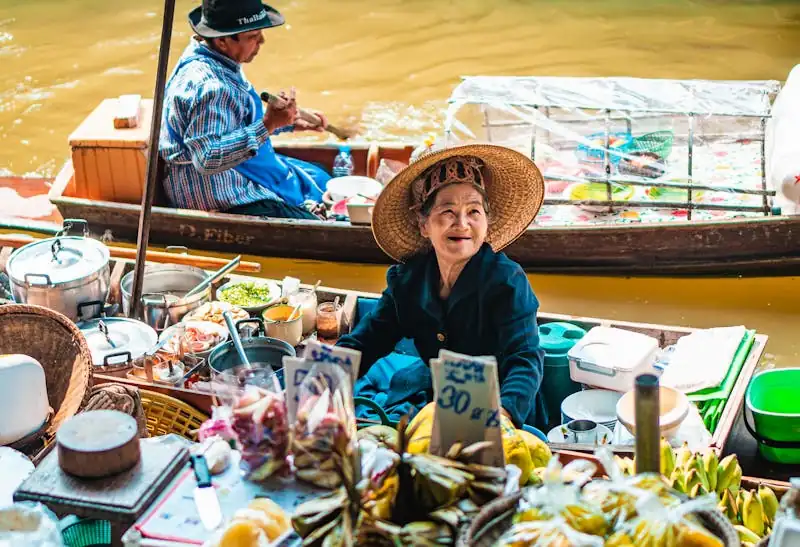
4 Days in Bangkok: Culture-First Itinerary with Temples, Canals and Modern Art
Open itinerary →
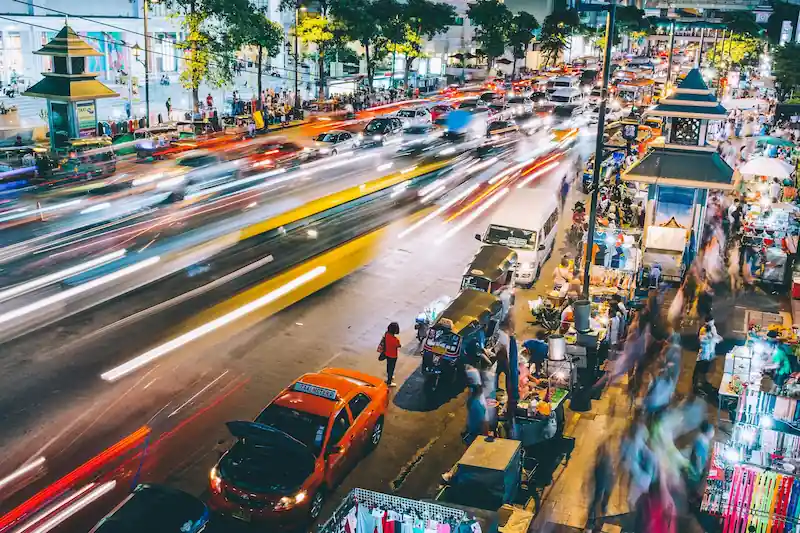
5 Days in Bangkok: Neighborhood-First Itinerary Beyond the Main Sights
Open itinerary →
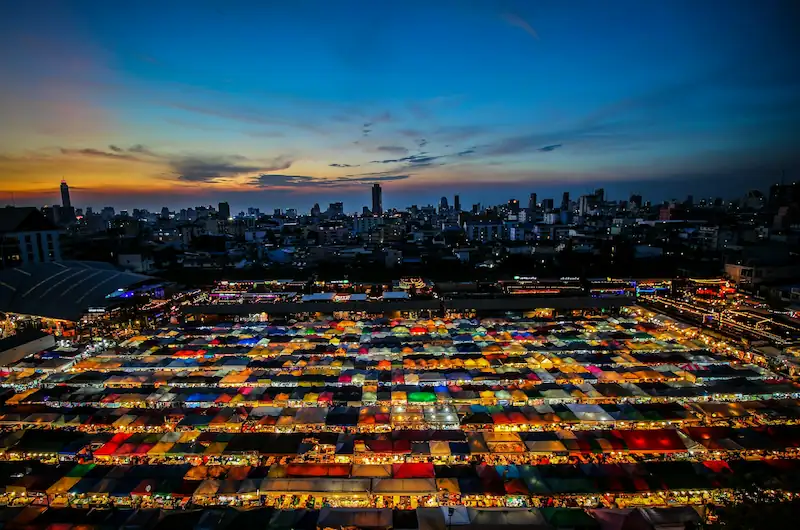
7 Days in Bangkok: Deep-Dive Itinerary for Return Visitors and Food Lovers
Open itinerary →
Bangkok is a huge, flat, river-fed metropolis whose real structure is defined by transport, heat, water, and district specialization more than by map distance. The Grand Palace and Rattanakosin explain the ceremonial city, the Chao Phraya and Thonburi explain the water city, Sukhumvit and Silom explain the rail-connected modern city, and Yaowarat, Ari, Siam, and market corridors explain everyday Bangkok. The city becomes clearer when travelers stop trying to cross it constantly and start reading it cluster by cluster.
Bangkok is compelling because it never resolves into a single identity. Monastic compounds sit beside expressways, gold shops and street kitchens feed into metro stations, luxury towers rise above river piers, and old canal geography still shapes local movement. Its strongest days are built on contrast: an early temple courtyard, a public boat ride, an air-conditioned cultural pause, a market or park reset, then a food-led evening as the city cools and street energy returns.
Best time: November to February is the easiest period for first-time visitors because heat and humidity are less punishing, temple mornings are more comfortable, and river, market, park, and evening food sequences can fit into the same day.
Ideal trip length: 3 full days for the essential Bangkok structure; 4 to 5 days if you want canals, Talat Noi, Siam, Chinatown, markets, parks, rooftops, and one day trip without rushing.
Bangkok can be excellent value, but the real cost of a poor plan is time, heat exposure, and repeated traffic friction. Street food, boats, rail transit, and taxis can all be affordable, yet a badly chosen hotel or an over-scattered itinerary quickly drains the trip. Spend first on location, air-conditioned recovery, and a base near BTS, MRT, or reliable pier access; then decide where a rooftop, guided food tour, spa, or private day trip genuinely improves the experience.
Bangkok works as overlapping systems rather than a single center. Rattanakosin holds the ceremonial old city, the Chao Phraya organizes the river corridor, Thonburi preserves a slower canal-and-neighborhood logic, Sukhumvit and Silom/Sathorn form rail-connected modern axes, Siam acts as a practical shopping, culture, and transit hub, and Yaowarat/Talat Noi reveal the commercial city. The smartest plan chooses one or two compatible systems per day instead of forcing them all together.
The city spreads across a low floodplain, so orientation comes less from hills or vistas than from waterways, rail lines, arterial roads, and district functions. The Chao Phraya still explains old-city and riverside movement, while canals remain most legible in Thonburi and selected inner-city routes. Eastern Bangkok has absorbed much of the hotel, office, mall, and nightlife growth, which is why many visitors sleep along BTS or MRT even when their first sightseeing day begins far away in the old city.
Bangkok has a strong daily rhythm: temples and markets work best early, midday belongs to air-conditioned pauses, spas, cafés, museums, malls, or hotel recovery, and evenings move toward food streets, rooftops, riverfronts, and neighborhood dining. The city does not reward continuous sightseeing at the same intensity all day. It works better when each day has a hard morning anchor, a protected middle, and a looser evening.
Think in four practical clusters: the old city and royal temples; the river and Thonburi; Siam, Silom, and Sukhumvit along rail corridors; and Chinatown, Talat Noi, and market districts for food and street texture. Build each day around one primary cluster and one compatible evening. Once Bangkok is read this way, it feels large but not chaotic.
Open the planner
Start the old city early and treat the Grand Palace, Wat Pho, Wat Arun, Wat Saket, and nearby river piers as one morning-oriented decision area rather than scattered landmarks. Use the Chao Phraya and selected canal routes as part of the experience, not just transport, because water movement explains Bangkok’s shape better than another taxi ride. Build midday protection into the itinerary through Siam, Jim Thompson House, BACC, Museum Siam, hotel breaks, massage, malls, or shaded cafés. Choose one evening mode per night: Chinatown food, a riverside dinner, a rooftop, Sukhumvit dining, or a night market. Do not cross the city repeatedly just for variety. Treat Siam as practical infrastructure: shopping, culture, food courts, transit, and rain or heat recovery, not merely a mall district. Use Sukhumvit for convenience and nights, Silom/Sathorn for a balanced business-and-river axis, Riverside for atmosphere, and Rattanakosin for early cultural focus. Reserve day trips for stays of four days or more unless Ayutthaya is a core priority. On longer stays, widen toward Ari, Talat Noi, Thonburi canals, Benjakitti, Or Tor Kor, and slower food or design neighborhoods after the essential city has become legible.
Vibe: Ceremonial, historic, low-rise, temple-heavy, and most rewarding early.
Why go: This is the clearest place to understand royal Bangkok, Buddhist monumentality, Sanam Luang, the Grand Palace, Wat Pho, Wat Saket, and the old-city river edge.
Who it fits: First-timers, temple-focused travelers, history-minded visitors, and short stays that prioritize the major cultural core.
Not for: Late risers, nightlife seekers, visitors who want BTS convenience, or travelers planning several cross-city evenings.
Where to stay: Excellent for culture-heavy first mornings, but less flexible as a full-trip base unless you deliberately want old-city immersion over rail convenience.
Vibe: Open, atmospheric, hotel-led, boat-connected, and visually calmer than inner-city corridors.
Why go: The river gives Bangkok scale, air, movement, and orientation, linking Wat Arun, old-city piers, ICONSIAM, heritage hotels, ferries, dinner cruises, and skyline transitions.
Who it fits: Couples, first-time visitors wanting visual clarity, luxury travelers, families who value calmer evenings, and anyone prioritizing river movement.
Not for: Travelers who want dense street life at the door or fast BTS access from every hotel.
Where to stay: One of Bangkok’s most memorable bases when the hotel has strong pier or shuttle logic; weaker if the property is scenic but isolated.
Vibe: Commercial, transit-linked, air-conditioned, and strategically practical.
Why go: Siam concentrates BTS access, malls, BACC, Jim Thompson House, food courts, shopping, and rainy-day recovery in one of the city’s most usable central hubs.
Who it fits: First-time visitors who want convenience, families needing easy resets, shoppers, and travelers who value indoor options.
Not for: Travelers looking for old Bangkok atmosphere or quiet residential texture.
Where to stay: A highly practical base for short stays and families, especially when heat, rain, shopping, and transit access matter more than riverside romance.
Vibe: Long, modern, BTS-driven, restaurant-heavy, convenient, and uneven by micro-area.
Why go: Sukhumvit is Bangkok’s easiest operational base for many travelers because hotels, restaurants, cafés, shopping, spas, nightlife, and BTS access line up along one major corridor.
Who it fits: Repeat visitors, nightlife-focused travelers, efficient movers, digital nomads, shoppers, and anyone who wants many hotel choices.
Not for: Visitors expecting old-city atmosphere, riverside views, or a compact neighborhood that can be understood in one walk.
Where to stay: The most logistically forgiving base when chosen near the right BTS stop, but less romantic and less efficient for temple-heavy mornings.
Vibe: Businesslike, central, green-edged, rooftop-friendly, and practical between river and rail.
Why go: Silom and Sathorn work because they sit between modern Bangkok, Lumpini, the river approach, MRT/BTS links, restaurants, offices, and skyline experiences like Mahanakhon.
Who it fits: Short-stay visitors with mixed priorities, business-plus-leisure travelers, rooftop seekers, and travelers who want a balanced base.
Not for: Travelers seeking old-city intimacy, residential quiet, or the most obvious first-time hotel strip.
Where to stay: A strong strategic base if you want to split time between river, old city, parks, rooftops, and rail-linked evenings.
Vibe: Dense, mercantile, food-driven, historic, sensory, and strongest after dark.
Why go: Yaowarat and nearby Talat Noi reveal Bangkok’s trade history, gold shops, shophouses, street food, temples, warehouses, and old commercial lanes in a way no mall or rooftop can.
Who it fits: Food-first travelers, photographers, urban observers, repeat visitors, and first-timers who want one unforgettable evening.
Not for: Travelers who need calm accommodation, wide pavements, or polished hotel convenience.
Where to stay: Better as an evening and walking district than a default base for most travelers, though boutique stays can work for food-led urban trips.
Vibe: Residential, leafy, café-led, slower, and more local than the main visitor corridors.
Why go: Ari shows a more everyday Bangkok of cafés, small restaurants, side streets, and apartment life while still retaining BTS access.
Who it fits: Longer stays, return visitors, remote workers, food-and-café travelers, and people who have already covered the core sights.
Not for: Checklist-heavy first trips, temple-focused short stays, or travelers who want riverside drama.
Where to stay: A good slower base after the first Bangkok visit, but not the best default if you only have two or three days.
Vibe: Canal-oriented, slower, local, fragmented, and more atmospheric by boat than by road.
Why go: Thonburi keeps the old water-city logic visible through canals, wooden houses, local temples, river crossings, and slower neighborhoods beyond the main hotel grid.
Who it fits: Curious travelers, repeat visitors, canal-tour planners, families wanting a gentler half-day, and urban readers.
Not for: Travelers dependent on BTS, late-night returns, or highly polished hotel surroundings.
Where to stay: Rewarding for context and selected river hotels, but usually better as a planned experience than a first-trip base.
Bangkok reveals itself through sequences rather than isolated stops: temple to river, ferry to market, mall to gallery, canal to shophouse, rooftop to street-food lane. The city becomes more rewarding when movement, heat management, and district contrast are treated as part of the experience.
Planning tip: Protect mornings for temples, markets, canals, and outdoor walks; use the middle of the day for interiors, massage, malls, museums, or hotel recovery; keep evenings focused around one food, river, rooftop, or neighborhood plan.
The palace establishes Thailand’s symbolic grammar — scale, ornament, hierarchy — and anchors historical orientation.
Tip: Arrive at opening to avoid heat accumulation and queue compression.
Viewing the temple during approach clarifies its river-facing design.
Tip: Board a public ferry rather than chartering a boat.
Functional waterways reveal commuting behavior still embedded in the city.
Tip: Carry small bills for rapid boarding.
Movement along the water clarifies how old and new districts interlock.
Tip: Ride mid-afternoon when glare is lower.
Scale rewards directional discipline rather than drifting.
Tip: Enter with a mapped section and exit once completed.
Elevation helps decode a city that can feel unreadable at street level, especially after an old-city or Chinatown sequence.
Tip: Book sunset if the view matters; choose a rooftop bar only when the evening mood matters more than the observation deck itself.
Check guided tours →
Wat Saket adds a gentler hilltop reading of old Bangkok, giving travelers a clearer sense of Rattanakosin’s low-rise spread before the city expands into modern corridors.
Tip: Use it before or after the main palace zone, but avoid making it a late-morning heat climb.
ICONSIAM is most useful when treated as Bangkok infrastructure: river access, food, air-conditioning, views, and an easy pause between old-city or riverside sequences.
Tip: Pair it with a river crossing or ferry ride rather than turning it into a full shopping day.
Check guided tours →
Sequential imagery offers insight into religious storytelling.
Tip: Move clockwise to follow narrative order.
Material culture remains visible in working streets.
Tip: Visit mid-morning before shutters close.
Performance traditions reveal courtly influence still embedded in culture.
Tip: Choose smaller venues for visibility.
Check guided tours →
The house gives Bangkok a quieter cultural register: silk history, collecting, architecture, gardens, and canal-edge calm within reach of Siam.
Tip: Use it after a hot morning or before BACC/Siam rather than as a far-flung standalone detour.
Check guided tours →
A museum stop helps explain the cultural and historical layers behind the temples, especially when travelers want more than exterior spectacle.
Tip: Pick one museum according to your day’s geography; do not add it after an already exhausting temple morning unless you have a real pause first.
Check guided tours →
BACC and nearby creative stops keep the city from being reduced to temples, malls, and food streets, while also serving as a strong rainy-day or heat-break option.
Tip: Best paired with Siam, Jim Thompson House, or a mall-based reset.
Check guided tours →
Daily rituals occur outside visitor circuits.
Tip: Observe quietly without obstructing the path.
Residential districts recalibrate the city’s tempo.
Tip: Arrive before midday when seating is available.
Check guided tours →
Transit offers a structured reading of urban spread.
Tip: Avoid 7–9am and 5–7pm.
The flower market shows Bangkok’s ritual, commercial, and daily-supply systems in one compact stop near the old city and river.
Tip: Use it as a short add-on near Wat Pho, Museum Siam, or the river rather than a cross-city destination.
Check guided tours →
Bangkok’s parks are not secondary fillers; they are practical recovery spaces that make longer stays more livable.
Tip: Use parks early or late, and pair them with Silom, Sukhumvit, or a hotel break.
Check guided tours →
A well-timed massage belongs to Bangkok’s daily pacing logic: it helps absorb temple heat, market crowds, long transfers, and heavy walking without turning the afternoon into wasted time.
Tip: Schedule it in the protected afternoon gap, after an exposed morning and before an evening food, river, or rooftop plan.
Check wellness options →
This corridor helps connect Chinatown, the river, galleries, cafés, and older trade streets into a more modern but still grounded Bangkok reading.
Tip: Best as a late-morning or late-afternoon walk, not under peak heat.
Check guided tours →
High turnover correlates with ingredient freshness.
Tip: Choose stalls with short but constant lines.
Portion size encourages sampling multiples.
Tip: Start with two bowls rather than one.
Evening service concentrates supply chains into a few streets.
Tip: Arrive before 7pm to reduce wait times.
Check food options →
Or Tor Kor gives a more polished and legible food-market experience than Chatuchak, useful for travelers who want quality, variety, and less chaos.
Tip: Pair it with Chatuchak or use it instead when food matters more than shopping.
Check food options →
Bangkok rewards structure more than accumulation. The most satisfying trips protect the experiences that explain the city — old royal Bangkok, river movement, street food, modern transit corridors, and heat-aware recovery — before adding markets, rooftops, galleries, and day trips.
Bangkok can work very well with children when the day is built around movement variety, short exposed walks, air-conditioned recovery, and one clear anchor at a time. Boats, ferries, skyline views, hotel pools, parks, malls, food courts, selected temples, and compact cultural stops often work better than long temple marathons or traffic-heavy transfers. Families should treat heat management as itinerary design, not as a detail.
Time determines whether Bangkok feels chaotic or intelligible. With three days, the goal is clarity; with five, the city starts to connect through river, rail, markets, food, and neighborhood contrast; with seven, Bangkok becomes less about coverage and more about rhythm.
Open the planner →
Bangkok is easy to access but demanding to sequence. The challenge is not whether the city has enough to do; it is whether heat, traffic, river logic, rail access, hotel location, and district choice are aligned well enough for the trip to feel intentional.
November to February is the strongest overall period because lower humidity makes old-city mornings, river movement, markets, parks, and evening food walks easier to combine. March to May can still work, but only with early starts, protected afternoons, and fewer exposed transfers. June to October needs rain flexibility rather than cancellation anxiety: the city remains active, but indoor backups and transport discipline become more important.
Three full days gives enough time for the Grand Palace and temple core, the river, one modern district, and one food-led evening. Four to five days is much stronger because you can add Talat Noi, Siam, Thonburi, a market, a park or spa reset, and possibly Ayutthaya. One or two days can work only if the itinerary is deliberately narrow.
Choose a base according to the trip’s dominant movement pattern. Riverside gives atmosphere and boat access; Sukhumvit gives hotel choice, restaurants, nightlife, and BTS convenience; Silom/Sathorn balances rail, park, river, and skyline access; Siam is highly practical for shopping, families, culture, food courts, and rainy-day flexibility; Rattanakosin works for old-city mornings but less for late-night mobility. A beautiful hotel in a weak transport position can cost more in fatigue than it saves in room quality.
Most long-haul arrivals use Suvarnabhumi, while Don Mueang remains important for domestic and regional low-cost routes. Airport rail, taxis, private transfers, and ride-hailing can all work, but arrival time and final hotel location matter. After a long flight, the best first decision is usually a simple transfer to a well-connected base rather than an ambitious first-evening plan across the city.
Use BTS and MRT for predictable longer movement, public boats and ferries for river logic, taxis or ride-hailing for targeted resets, and walking only inside compact districts. Bangkok is not a city where walking between all sights proves anything; it is a city where choosing the right transport mode for the right cluster keeps the trip alive. Avoid peak-hour road transfers when a rail or river alternative exists.
Bangkok is generally manageable for travelers, with strong convenience infrastructure, pharmacies, clinics, malls, hotels, and transport options. The most common practical problems are heat stress, dehydration, fatigue, mild stomach issues, and transport overpayment rather than broad danger. Use normal city awareness, protect yourself from heat, avoid leaving bags loose in vehicles or tuk-tuks, and choose busy food stalls with visible turnover.
Bangkok is open and usable year-round, but the trip changes dramatically with heat, humidity, rain, air quality, and holiday demand. The cooler season is the easiest for first-timers because outdoor sightseeing and evening food walks can coexist. Hot season requires a more tactical rhythm built around early starts and protected afternoons. Rainy season is still viable, but the plan needs flexible indoor anchors, shorter exposed walks, and less dependence on perfect river or market timing.
November to February is the best all-round period for most travelers. Temple mornings, river rides, markets, park walks, and Chinatown evenings are easier to combine because heat is less punishing. This is also when demand can be higher, so good hotels, rooftops, and guided experiences should be planned earlier.
March to May can be rewarding, but the itinerary needs discipline. Start early, avoid exposed midday walks, use Siam, museums, malls, massages, cafés, and hotel pools as real planning tools, and save food streets or rooftops for later in the day. This season works better for travelers who accept a slower daily rhythm.
June to October usually brings disruption in pulses rather than constant rain. It can still be a strong period for food, culture, shopping, spas, and flexible neighborhood time, but temple courtyards, parks, and open-air markets need tactical placement. Keep a rainy-day version of each day rather than treating bad weather as a failure.
Not seeing your next stop yet? Build a fully personalized itinerary anywhere in Thailand.
Direct answers to the questions that most often determine whether Bangkok feels exhausting or unexpectedly precise.
Three full days is the practical minimum for a strong first visit: one old-city and river day, one modern Bangkok and food evening, and one deeper layer such as markets, Siam, Thonburi, or a cultural stop. Four or five days is better because Bangkok needs recovery time and because traffic, heat, and rain make over-compressed plans feel harder than they look.
Start with the old city and river, then add a modern rail-connected district, one strong food evening, one market or neighborhood walk, and one indoor or recovery block. Bangkok works best when each day has a geographic logic rather than a random collection of famous names.
Rattanakosin for the Grand Palace and major temples, Riverside for orientation and boat movement, Siam for practical culture and recovery, Sukhumvit for modern hotels and evenings, Silom/Sathorn for skyline and rail access, Yaowarat for food and trade history, and Thonburi for canals and slower local texture.
Riverside is best for atmosphere and spatial clarity, Sukhumvit is best for operational convenience, Silom/Sathorn is a strong balanced option, and Siam is very practical for families, shoppers, and rainy-day flexibility. Rattanakosin works if the trip is heavily old-city focused, but it is less flexible at night.
Bangkok is walkable inside selected pockets, but not as a citywide walking destination. Rattanakosin, Talat Noi, Yaowarat, parts of Siam, selected Sukhumvit stretches, and park areas can work well on foot. Moving between districts should usually involve BTS, MRT, boats, taxis, or ride-hailing.
The biggest mistake is over-scattering the itinerary. A day that combines old-city temples, Chatuchak, Sukhumvit, a river cruise, and Chinatown may look possible on a map, but heat and traffic make it exhausting. Bangkok rewards cluster planning.
Yes, especially on a first trip. The Grand Palace explains ceremonial Bangkok, while Wat Pho gives a more usable temple experience and pairs well with Wat Arun by river. The key is to go early and avoid turning the whole day into an endless temple sequence.
Yes. Wat Arun is one of the sights where the approach matters. Seeing it from the opposite bank and crossing by ferry gives a stronger sense of its river-facing position than treating it as a standalone photo stop.
Wat Saket is worth adding if you want a gentler old-city viewpoint and a break from the palace circuit. It is not as essential as the Grand Palace, Wat Pho, or Wat Arun, but it helps explain Bangkok’s low-rise historic core.
Yes. Yaowarat is one of Bangkok’s strongest evening districts because it combines food, trade history, neon, crowds, side streets, and shophouse texture. It is best treated as a food-led evening or paired with Talat Noi and Charoen Krung in daylight.
It depends on the purpose. Chatuchak is best for scale and weekend browsing, Pak Khlong Talat for flowers and old-city market rhythm, Or Tor Kor for a cleaner food-market experience, and Yaowarat for street-food energy. These markets are not interchangeable.
They can be enjoyable, but they are not automatically essential on a short first trip. Many floating-market excursions require long transfers and can feel more touristic than central Bangkok’s river, canal, and market experiences. Prioritize them only if the format genuinely appeals.
Start early, use the middle of the day for museums, malls, massage, cafés, hotel breaks, or BACC/Jim Thompson House, then resume outdoor activity later. Heat-aware pacing is one of the main differences between a good Bangkok itinerary and an exhausting one.
Use Siam, BACC, Jim Thompson House, Museum Siam, shopping centers, food courts, spas, cafés, and covered markets as flexible anchors. Rain usually changes timing rather than ending the day, so the best plan has indoor alternatives ready.
Yes, if the trip is built around short transfers, boats, indoor breaks, hotel pools, parks, and one major anchor per day. Long temple marathons, hot markets, and traffic-heavy evenings are usually what make family trips difficult.
Yaowarat is the strongest single food evening for many first-timers, while Sukhumvit and Silom offer easier restaurant variety near hotels. Or Tor Kor and Chatuchak work for market food, while Ari and Charoen Krung are better for slower café and dining exploration.
Use BTS and MRT when they fit the route, boats for river movement, and taxis or ride-hailing for targeted resets. Taxis are useful but can be slow in traffic. The best approach is not loyalty to one mode but choosing the right mode for the day’s cluster.
Riverside is better for atmosphere, views, calm, and boat-based orientation. Sukhumvit is better for convenience, restaurant choice, nightlife, and BTS access. First-time couples often love Riverside; practical short stays and repeat visitors often prefer Sukhumvit.
Yes, especially for practical reasons. Siam is excellent for BTS access, malls, food courts, BACC, Jim Thompson House, shopping, rainy-day plans, and family logistics. It is not the most atmospheric old-Bangkok area, but it is one of the city’s most useful hubs.
Ari is better for longer stays or repeat visitors than for a very short first trip. It shows a calmer, café-led, residential Bangkok, but it should come after the old city, river, Chinatown, and one modern central district are already covered.
Ayutthaya is the strongest first day trip because it adds real historical depth and is relatively straightforward. Kanchanaburi, floating markets, Koh Kret, or Ancient City can work with more time, but they serve different interests and should not all be treated as equal priorities.
Most temples do not require obsessive advance booking, but guided palace tours, rooftops at sunset, dinner cruises, cooking classes, food tours, spa treatments, and day trips are better planned ahead on short stays or in peak periods.
Choose the type of evening first: Chinatown food, Sukhumvit restaurants and bars, a rooftop, a river dinner, a night market, or a calmer hotel-based finish. Bangkok nights become tiring when you try to combine several distant evening modes in one night.
Bangkok is generally manageable for visitors using normal city awareness. The more common issues are heat, fatigue, overcharging, traffic, and minor stomach trouble rather than major danger. Use reputable transport, watch bags in busy areas, and choose food with visible turnover.
Yes, but only as a focused introduction. Use one day for the Grand Palace, Wat Pho, Wat Arun, and river movement, then one day for Siam or Sukhumvit plus Chinatown or a rooftop. Do not add distant markets or day trips unless you accept major trade-offs.
Bangkok’s scale, river history, rail-connected modern corridors, food density, mall infrastructure, temple concentration, and nightlife variety all operate at once. It is less about one historic center and more about learning how several city systems overlap.
Bangkok rewards travelers who sequence rather than accumulate.
Find the best places to stay, how to get there, and move around with ease.
Build a smarter trip base
Once you understand how Bangkok works and what matters most for your trip, the next step is turning that direction into a real itinerary. Use the planner to organize your days around the right areas, experiences, and rhythm so the trip feels clear before you go.