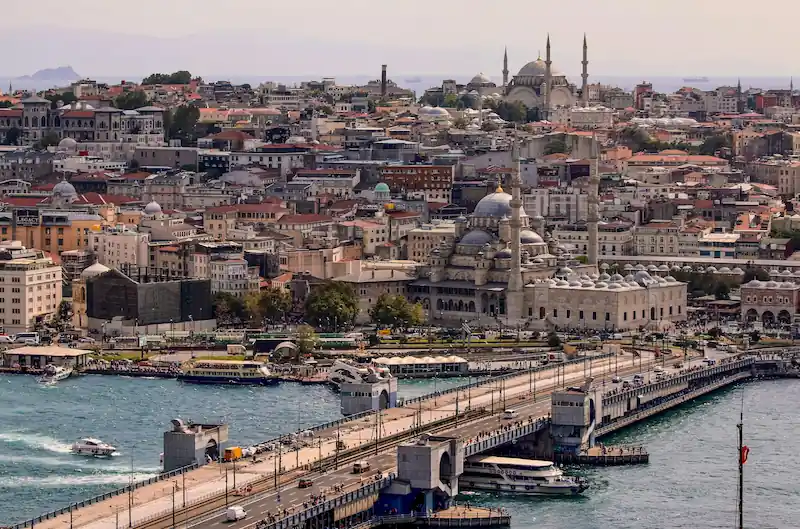
Where to stay in Istanbul
Find the best neighborhoods and hotels in Istanbul.
Open page →
Plan your trip to Istanbul with a city-first structure: where to stay, how to move between the historic peninsula, Beyoğlu, the Bosphorus, and the Asian shore, and which experiences genuinely shape a first or deeper visit. Istanbul is not a simple checklist city. It reveals itself through layers — imperial, religious, mercantile, residential, and waterfront — and the trip works best when those layers are connected through smart area choices, ferry logic, and a clear rhythm rather than scattered sightseeing.
Find the best neighborhoods and hotels in Istanbul.
Open page →
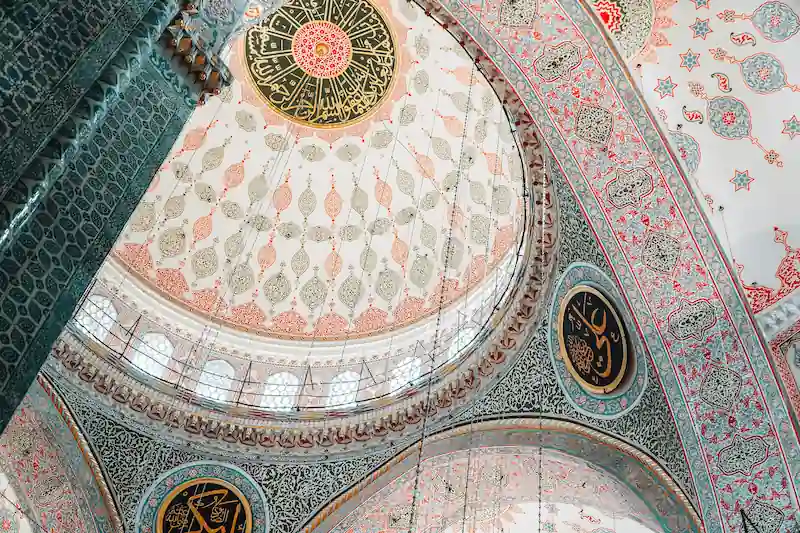
Prioritize the activities that deserve your time in Istanbul.
Open page →
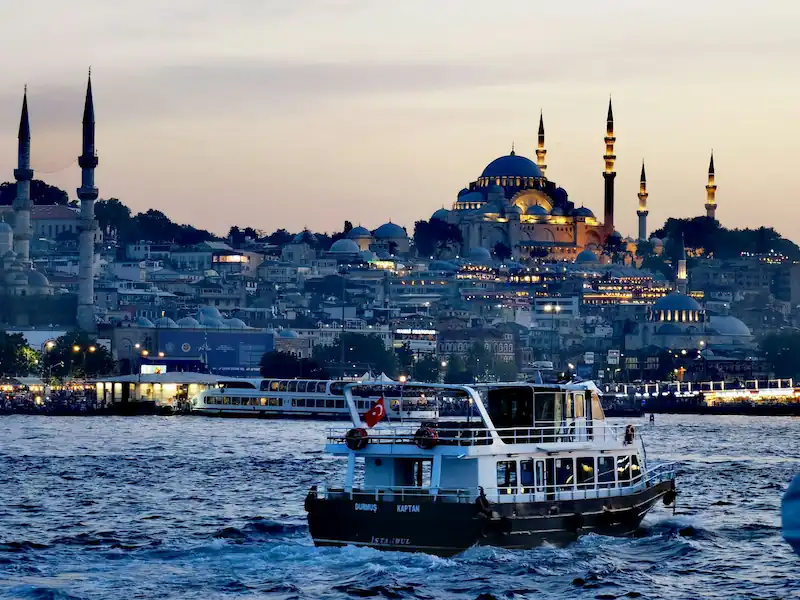
2 Days in Istanbul: Essential First-Time Itinerary
Open itinerary →
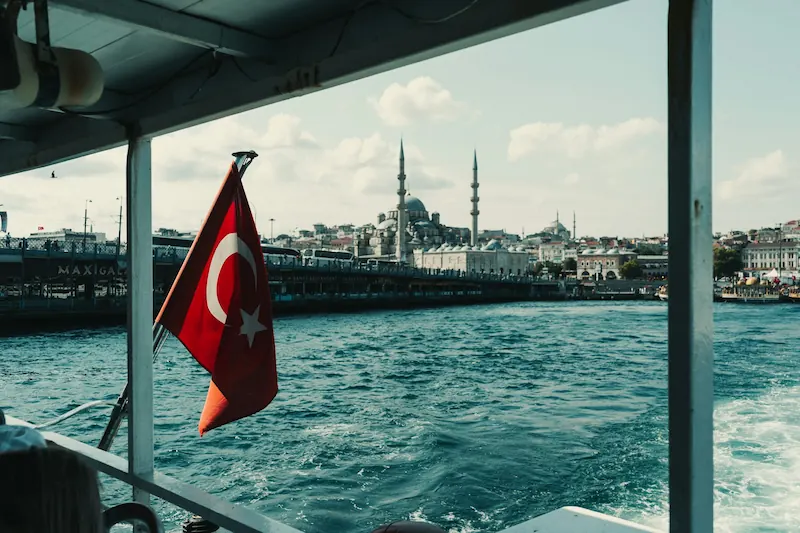
3 Days in Istanbul: Flow-First Itinerary
Open itinerary →
4 Days in Istanbul: Culture-First Itinerary
Open itinerary →
5 Days in Istanbul: Complete Neighborhood-Led Itinerary
Open itinerary →
Istanbul is a continental crossroads where water, hills, former imperial centers, market routes, and ferry lines still dictate how a trip should unfold. The city works as a set of connected but distinct urban worlds rather than one uniform center: Sultanahmet and the historic peninsula, Galata and Beyoğlu, the Bosphorus shore, and the Asian side each carry different tempos. The best Istanbul travel guide is therefore not just a list of attractions; it is a way to decide which layers matter most for your time, energy, and hotel base.
Few cities compress Byzantine, Ottoman, and modern urban life into such a dense and still-functioning fabric. Istanbul rewards structure because its strongest experiences come from contrast: Hagia Sophia and Topkapı before the crowds, Grand Bazaar corridors and Eminönü food streets, a ferry across the Bosphorus, a hillside mosque, a Kadıköy market loop, and an evening meyhane or waterfront tea stop. The call to prayer folding into ferry horns is not a postcard detail; it is a practical reminder that Istanbul operates on multiple timelines at once.
Best time: April to June and September to October for the best balance of weather, light, ferry comfort, and full-day walking.
Ideal trip length: 3 full days for a strong first visit; 4 to 5 days if you want the Asian side, Bosphorus depth, food-led time, and one slower neighborhood layer.
Istanbul can still deliver strong value compared with many major European city breaks, but the real cost of the trip is shaped by hotel location, paid heritage sights, daily routing, and whether you rely on taxis or use tram-and-ferry logic. Food and public transport remain major value layers, while waterfront hotels, polished rooftops, private cruises, and repeated cross-city transfers raise the budget quickly.
Istanbul unfolds along water and ridgelines. The Golden Horn separates the historic peninsula from later commercial expansion; the Bosphorus stretches north through palaces, ferry piers, waterfront villages, and residential shorelines; the Asian side gives the city a less monumental but more lived-in rhythm. Hills are not scenic background here — they shape walking speed, sightlines, and the logic of each day.
European Istanbul contains the densest concentration of imperial monuments around Sultanahmet and the surrounding peninsula. Cross Galata Bridge and the mood shifts toward trade, port history, Pera facades, nightlife, and modern cultural layers. Continue by ferry and Kadıköy or Üsküdar reveal the Asian shore’s markets, tea gardens, sunsets, and residential cadence.
Mornings are for major sites before tour groups thicken courtyards and security lines. Midday works best inside cisterns, museums, mosques, bazaars, or over a long food pause. Late afternoon belongs to ferries, waterfront walks, hilltop mosques, and Bosphorus light. Evenings should usually stay in one coherent area rather than forcing symbolic crossings after dark.
Think in arcs, not lists: one day anchored in the imperial peninsula, one across Galata–Karaköy–Beyoğlu, and one around the Bosphorus or Asian shore. Add Balat, Fener, hammam time, or deeper museums only when the main urban layers are already legible. Istanbul becomes easier when every day has one geographic logic and one emotional register.
Open the planner
Treat Sultanahmet as a morning-first district rather than an all-day open block. Build one day around the imperial core, one around Galata–Karaköy–Beyoğlu, and one around the Bosphorus or Asian side rather than sampling all of them in fragments. Use ferries as structural transport, not just as scenic extras, because they reset both geography and pacing. Add one high-payoff interior per half-day — Topkapı, Basilica Cistern, Dolmabahçe, a museum, or a hammam — instead of stacking too many enclosed sights together. Reserve the steepest neighborhood walks for cooler hours, especially Balat, Fener, Galata, and upper Beyoğlu. Let one evening stay on the same side of the water where the day already unfolded; late cross-city transfers often cost more energy than they return. Use rooftop views, ferry decks, and mosque terraces as orientation tools after street-level immersion rather than replacements for the neighborhoods themselves. On longer stays, add plural-history districts, Asian-side food time, and upper Bosphorus edges once the imperial and mercantile layers are already clear.
Vibe: Imperial, ceremonial, spatially concentrated.
Why go: Hagia Sophia, the Blue Mosque, Topkapı Palace, the Basilica Cistern, the Hippodrome, and nearby museums sit within minutes of each other. The density is unmatched, but it works best as a focused historic base rather than your only Istanbul experience.
Who it fits: First-time visitors prioritizing early access, historical continuity, and minimal morning transit.
Not for: Travelers seeking nightlife, residential texture, or the most local food scene.
Where to stay: Best for walking access to major monuments and early-entry advantages; evenings quiet down after day crowds leave, so pair it with deliberate dinners or ferry-connected plans.
Vibe: Layered, commercial, late-Ottoman to contemporary.
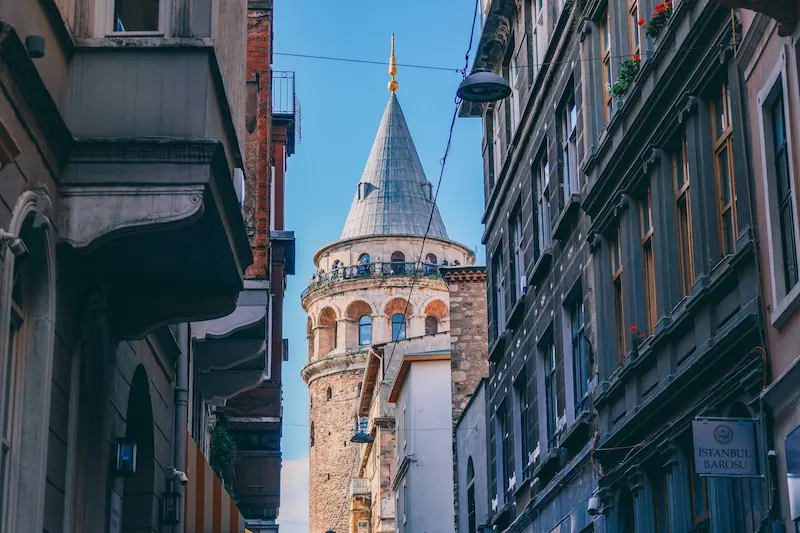
Why go: Istiklal Avenue, Pera passages, Galata Tower, meyhanes, cultural venues, and downhill movement toward Karaköy reveal the city’s late-Ottoman, commercial, and contemporary layers.
Who it fits: Travelers who want restaurants, evening energy, urban walking, and easier transitions between old city and modern Istanbul.
Not for: Those wanting quiet nights, open green space, or immediate access to the core mosque-and-palace circuit.
Where to stay: Strategic for nightlife, restaurants, and quick ferry access across the Golden Horn.
Vibe: Compact, creative, transitional.
Why go: Former port infrastructure now connects cafés, galleries, ferry piers, Galata Bridge, and quick access back to Sultanahmet or up toward Beyoğlu.
Who it fits: Short stays, food-led travelers, and visitors who want a strategic bridge between water, old city, and nightlife.
Not for: Quiet evenings.
Where to stay: Ideal for travelers wanting waterfront proximity and quick movement between historic peninsula and Beyoğlu.
Vibe: Residential, food-driven, grounded.
Why go: Market streets, ferry arrivals, casual restaurants, Moda’s seafront, and a slower Asian-side tempo give Istanbul a grounded everyday register.
Who it fits: Longer first trips, repeat visitors, food-focused travelers, and anyone wanting the city beyond the main monument circuit.
Not for: Those with only one full day or travelers who need every major sight within walking distance.
Where to stay: A strong base for a local rhythm with reliable ferry links to European landmarks.
Vibe: Textured, historic, residential.
Why go: Orthodox, Jewish, and Ottoman layers survive in steep streets, colored facades, churches, school buildings, workshops, and Golden Horn perspectives.
Who it fits: Photographers, slow walkers, and travelers who want historic texture after the headline monuments are already covered.
Not for: Travelers needing rapid monument access, flat walking, or an easy first-night base.
Where to stay: Atmospheric but less central; better for day exploration than first-time accommodation.
Istanbul rewards layered exploration — imperial scale, religious interiors, water crossings, market logic, food streets, and residential rhythms interlock. The city becomes more coherent when Hagia Sophia, Topkapı, the Basilica Cistern, ferries, bazaars, hillside mosques, Asian-side markets, and evening meals are treated as one connected urban sequence rather than separate checkboxes.
Planning tip: Book or time the highest-friction sights first, then leave ferries, market streets, food stops, and waterfront pauses flexible.
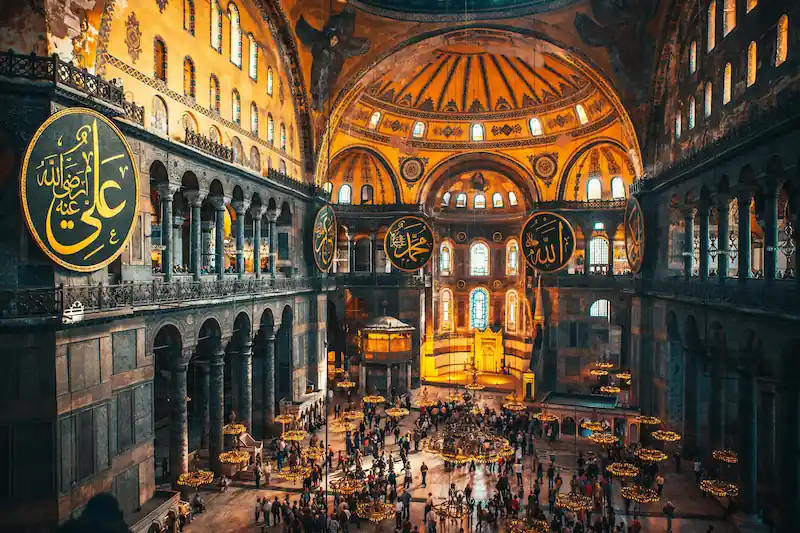
Use Hagia Sophia as the first spatial anchor of the trip, but treat it as an active mosque with a defined visitor route rather than a conventional museum. The payoff is strongest when the scale, dome, calligraphy, and surviving Byzantine layers are read before the surrounding square reaches full pressure.
Tip: Check current tourist access, ticketing, and prayer-time closures before fixing the morning.
The Blue Mosque works best as part of the Sultanahmet sequence: courtyard, square, Hippodrome traces, and the visual dialogue with Hagia Sophia. It is not about a long interior stay so much as understanding the ceremonial core of the old city.
Tip: Dress appropriately, avoid prayer times, and use the surrounding square to slow the visit down.
The cistern is one of Istanbul’s easiest high-payoff interiors: short, atmospheric, weather-proof, and perfectly placed between larger Sultanahmet sights. It gives the old city a subterranean layer that balances the open squares and domes above.
Tip: Use timed entry or go early; queues can feel disproportionate to the actual visit length.
The city realigns from water. Domes flatten into skyline; neighborhoods stack visibly.
Tip: Use public ferries rather than private cruises for authenticity.
Imperial life was oriented toward water. The terrace makes that hierarchy visible.
Tip: Allocate at least three hours for the full complex.
The Grand Bazaar is most valuable when read as a covered urban system: gates, vaulted lanes, hans, workshops, bargaining rituals, and spillover streets toward Beyazıt and Eminönü. Treat it as market culture and architecture, not just shopping.
Tip: Enter with one purpose — textiles, jewelry, ceramics, tea, or simply observation — so it does not become exhausting.
The Spice Bazaar works best as a gateway rather than a final stop. Move from covered stalls into Eminönü’s food shops, mosque courtyards, ferry piers, and Galata Bridge to see how commercial Istanbul opens directly onto the water.
Tip: Do not stop after the main hall; the surrounding streets carry much of the value.
Chora is not a first-hour checklist stop, but it is one of the strongest ways to widen Istanbul beyond Sultanahmet if mosaics, frescoes, and Byzantine visual culture matter to the trip.
Tip: Pair it with Balat and Fener rather than making a single-purpose detour.
An architectural statement of Ottoman power placed deliberately above the city.
Tip: Time your visit near sunset for softer light.
Dolmabahçe explains a different imperial register from Topkapı: waterfront ceremony, 19th-century modernization, European-facing ornament, and late-Ottoman political theatre.
Tip: Use it on a Bosphorus-facing day rather than squeezing it into the old city.
This is the most useful culture-first add-on near the old city when you want substance rather than another viewpoint. It deepens the region’s Greek, Roman, Byzantine, and Ottoman context without pulling the day out of Sultanahmet.
Tip: Use it as a rainy-day or heat-day pivot after Topkapı or Gülhane.
A hammam is not just a wellness add-on. In a city of hills, queues, ferries, and long sightseeing days, it can reset the rhythm of the trip while connecting to a living Ottoman bathing tradition.
Tip: Schedule it after a lighter sightseeing block, not after your most exhausting day.
This gives Beyoğlu a quieter cultural layer behind Istiklal’s surface energy. It works best as a focused pause for travelers interested in Sufi heritage rather than as a generic evening show.
Tip: Check schedules carefully; do not assume daily performance availability.
Kadıköy gives Istanbul a local, food-driven rhythm after the monument circuit. Market lanes, fishmongers, bakeries, casual restaurants, and the drift toward Moda create an Asian-side half day that feels grounded rather than staged.
Tip: Arrive by ferry and let the market loop lead into Moda instead of treating it as a quick meal stop.
Use Üsküdar to understand the Asian side without committing to a full neighborhood day. Tea by the water, ferry traffic, Maiden’s Tower views, and the old city silhouette make it one of Istanbul’s clearest low-effort orientation moments.
Tip: Go late afternoon and return by ferry after the skyline lights begin to shift.
Conversation stretches longer than courses; pace adjusts.
Tip: Order slowly; let dishes arrive in sequence.
Balat and Fener are most valuable as a walk, not a checklist. Their appeal is cumulative: steep streets, religious layers, school buildings, workshops, facades, and Golden Horn glimpses after the main monuments have already framed the city.
Tip: Keep the route compact and uphill-aware; this is better in cooler light than midday heat.
Moda turns the Asian side into a slower, breathable sequence after Kadıköy’s food streets. It is one of the simplest ways to let a day settle without adding another museum or monument.
Tip: Use it as the recovery end of a food-led afternoon before ferrying back.
Ortaköy is not a must for every short stay, but it gives the Bosphorus a more intimate neighborhood edge: mosque, bridge, waterside square, snack stops, and a useful bridge toward Beşiktaş or Bebek.
Tip: Use it on a Bosphorus-focused day, not as a standalone detour from Sultanahmet.
Balık ekmek is less about culinary complexity than setting: grilled fish in bread, ferry edges, gulls, traffic, and the everyday theater of Eminönü.
Tip: Treat it as part of an Eminönü and Galata Bridge sequence, not a destination meal.
Texture matters more than sweetness.
Tip: Ask for the freshest tray, not the display front.
Check food options →
Turkish breakfast is one of the best ways to slow Istanbul down: small plates, tea, eggs, cheese, olives, tomatoes, honey, and bread turn the start of the day into a social rhythm rather than a rushed hotel buffet.
Tip: Choose it on a lighter sightseeing morning, because it can easily replace lunch.
Check food options →
For food-led travelers, Kadıköy is the easiest district to turn into a flexible crawl: market browsing, pickles, fish, bakeries, lahmacun, sweets, coffee, and Moda as a soft landing.
Tip: Arrive hungry but avoid over-planning; the value comes from moving between several small stops.
A cooking class makes sense on longer stays when food should become more than grazing. It gives structure to ingredients, meze logic, home-style dishes, and the difference between street snacks and sit-down meals.
Tip: Choose this instead of another museum on a fourth or fifth day, not on a tight first visit.
Istanbul expands quickly if every mosque, palace, bazaar, viewpoint, ferry route, and neighborhood is given equal weight. Protect the layers that explain the city first: imperial scale, water geography, market life, and at least one lived-in district beyond the postcard core.
Istanbul can work well with children if the stay is built around ferry movement, one major anchor at a time, and enough rest between hills and monuments. Boats, courtyards, cisterns, waterfronts, sweets, and market color are usually stronger family experiences than trying to compress palace, mosque, bazaar, and museum visits into the same block.
Choose depth over distance; the city rewards structured pacing. More time does not just add attractions here — it changes how clearly the imperial, mercantile, Bosphorus, Asian-side, and food layers connect.
Open the planner →
Logistics define comfort in Istanbul more than raw distance alone. The city is navigable, but hills, water, traffic, prayer times, ticketing friction, and hotel position can either sharpen the trip or flatten it quickly.
April to June and September to October are the strongest overall periods because temperatures are milder, waterfront movement is easier, and district walking remains realistic for longer stretches of the day. Summer still works if mornings and evenings carry the main movement, but heat and crowd pressure reduce the quality of Sultanahmet quickly. Winter can be atmospheric and lower-pressure, but wind and rain shorten Bosphorus, rooftop, and hillside sequences.
Three full days is the threshold at which Istanbul stops feeling like a monument sprint and starts to reveal its internal logic. Four days allow a better balance between Sultanahmet, Beyoğlu, the Bosphorus, and the Asian side. Five days is where Kadıköy, Üsküdar, Balat, hammam time, and a deeper food rhythm begin to make real sense.
First stays work best in Sultanahmet, Karaköy, Galata, or nearby central zones that simplify access to ferries, trams, and evening returns. Sultanahmet wins for early monument access; Karaköy and Galata are stronger for balanced movement; Kadıköy is better for longer or repeat stays with a local food rhythm. The key is not only proximity to major sights but avoiding repeated cross-water or steep uphill resets at the start and end of every day.
Most international arrivals come through Istanbul Airport, with Sabiha Gökçen handling a meaningful share of regional and low-cost traffic. Airport transfers can be straightforward, but total time into the city depends heavily on traffic, arrival hour, and district. The first hotel location matters because a poorly placed arrival can consume more energy than the flight itself.
Use trams for the historic peninsula, ferries for cross-water movement, metro or Marmaray for longer axes, and funicular links where they cleanly solve hills. Taxis can help when weather, luggage, or fatigue intervene, but road traffic is rarely the most reliable primary strategy. Istanbul works best when transport modes are combined deliberately rather than chosen opportunistically at the last minute.
Istanbul is generally manageable from a practical safety perspective, with strong everyday urban services and a tourism infrastructure accustomed to high visitor volume. The more meaningful traveler issues are fatigue, traffic stress, minor scam avoidance in high-tourism pockets, heat management, and underestimating hills or long days on foot. Calm pacing and strong district logic matter more than vigilance theatrics.
Istanbul changes meaningfully with season because weather influences not just comfort but ferries, terraces, prayer-courtyard pacing, market tolerance, and the pleasure of hill-based neighborhoods. Spring and autumn are the strongest all-around choices because the city remains lively without becoming physically punitive. Summer suits travelers comfortable with heat and density in exchange for long evenings, while winter favors quieter interiors, museums, hammams, and a more atmospheric version of the city.
Spring is one of Istanbul’s strongest seasons because the city stays visually sharp and physically workable across long days. It suits first-time visitors especially well: monument courtyards, ferry crossings, markets, and hillside walks can all sit in one itinerary without making the day feel punitive.
Summer suits travelers who prioritize long evenings, rooftops, late meals, and a more outward social city despite heavier crowds and stronger heat. The historic core becomes tiring by midday, so the best summer plan pushes Hagia Sophia, Topkapı, and exposed walks into the morning and uses ferries, interiors, or long food pauses later.
Autumn is often the cleanest all-around period for a deeper visit because temperatures ease while the city retains full activity and strong day-to-night rhythm. It suits both first visits and slower repeat trips, especially those including Bosphorus time, Asian-side food, and longer neighborhood walks.
Winter works better for travelers who value quieter monuments, lower hotel pressure, museums, hammams, and interior-heavy itineraries. Wind, rain, and shorter daylight reduce some ferry and rooftop sequences, but the city gains a more focused and introspective atmosphere.
These are the planning questions that most strongly determine whether Istanbul feels coherent, exhausting, or deeply rewarding.
Three full days is the practical minimum for a first trip that covers Sultanahmet, Galata or Beyoğlu, a Bosphorus crossing, and one market or food-led block. Four to five days are much better if you want Kadıköy, Üsküdar, Dolmabahçe, Balat, hammam time, or a slower Bosphorus rhythm without rushing.
Sultanahmet is best for early access to the major monuments, while Karaköy and Galata are often better balanced for restaurants, ferries, and movement between old and modern Istanbul. Kadıköy is excellent for longer or repeat stays, but less efficient if you only have two or three days.
Within districts, yes. Between districts, Istanbul is less walkable than it appears because water, hills, bridges, traffic, and long approaches slow transitions. The best strategy is to walk deeply within one area, then use tram, ferry, metro, Marmaray, or funicular links between areas.
For a first trip, the European side usually works better because most major monuments and denser historical layers sit there. The Asian side suits longer or repeat stays that prioritize residential rhythm, food, markets, and ferry life over immediate access to the core sights.
Do not miss Hagia Sophia, the Blue Mosque and Sultanahmet Square, Topkapı Palace or the Basilica Cistern, a Bosphorus ferry crossing, and one market sequence such as the Grand Bazaar or Spice Bazaar with Eminönü. Add Galata–Beyoğlu or Kadıköy depending on your pace.
Hagia Sophia is an active mosque, but tourist access has changed in recent years and the visitor route is not the same as worship access. Check current ticketing, visitor hours, Friday prayer restrictions, and whether access is limited to specific areas before building your morning around it.
Guided visits are most useful for places like Topkapı Palace, Hagia Sophia, Chora / Kariye, or complex historical routes where context deepens the experience and saves time. They are less essential for ferries, market wandering, and neighborhood walks if you already have a clear route.
Yes, if it helps you understand the city’s water geography, but a public ferry can deliver much of the same city-scale perspective at lower cost. A formal cruise is most worthwhile for sunset, commentary, or a smoother evening format.
The biggest mistake is over-scheduling monuments without respecting transport flow, water crossings, hills, and recovery time. Istanbul punishes fragmented planning more than it punishes doing slightly less.
Istanbul can still be strong value compared with many major European capitals, especially for food and public transport. It becomes expensive fastest when hotel location is poor, private transport replaces ferries and trams, or polished tourist products become the default.
Spring and autumn are the strongest all-around choices because the weather supports long urban days without making ferries, hills, courtyards, and markets physically draining. Summer can work with early starts and late evenings, while winter is better for quieter interiors and lower-pressure sightseeing.
Yes, if the itinerary uses ferries, courtyards, waterfront pauses, sweets, and short high-impact interiors rather than long stacked museum days. The Basilica Cistern, ferry crossings, palace courtyards, markets, and Moda or Bosphorus waterfronts usually work better than trying to cover every major site.
Kadıköy is better for food, market streets, and a longer Asian-side half day. Üsküdar is better for a simpler sunset or tea-by-the-water experience with strong old-city views. With limited time, choose based on whether you want food energy or skyline calm.
Yes if you have at least three or four days and enjoy layered streets, photography, and uphill walking. If you only have two days, prioritize Sultanahmet, a Bosphorus crossing, and Galata or Kadıköy first.
The best way is usually a combination of tram for Sultanahmet, ferries for water crossings, metro or Marmaray for longer moves, and funicular links for hills. Taxis are useful in specific cases but should not be the default planning tool.
Approach Istanbul as a layered system — historic peninsula, water, markets, hills, food, and lived-in neighborhoods — and the city becomes far more legible.
Find the best places to stay, how to get there, and move around with ease.
Build a smarter trip base
Once you understand how Istanbul works and what matters most for your trip, the next step is turning that direction into a real itinerary. Use the planner to organize your days around the right areas, experiences, and rhythm so the trip feels clear before you go.