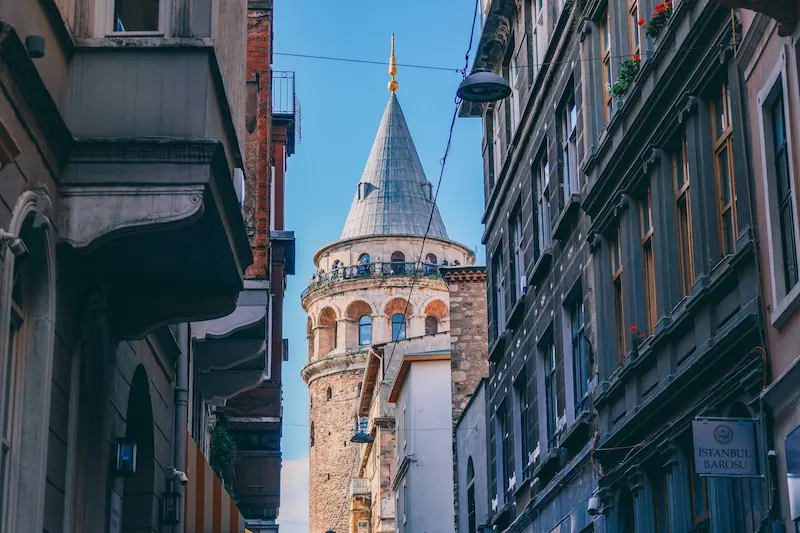
Find the best areas to stay in Istanbul based on how you want the city to work: early monument access, ferry movement, evening atmosphere, food-led neighborhoods, or a more characterful local base. Istanbul is shaped by water, hills, bridges, tram lines, and very different neighborhood rhythms, so the right hotel area does more than provide a bed. It decides whether your days feel fluid and atmospheric or fragmented by avoidable transfers.
Best areas
The strongest stay areas are Sultanahmet for classic first trips, Beyoğlu & Galata for atmosphere and nightlife, Karaköy for the smartest all-round central base, Kadıköy for food and Asian-side local rhythm, and Balat & Fener for character-led stays. Beşiktaş, Ortaköy, Üsküdar, Nişantaşı, and Şişli can work for specific trips, but they are usually better treated as specialist bases than default choices for most visitors.
Booking timing
Book early for the best-located boutique hotels in Sultanahmet, Galata and Karaköy, for strong family rooms in central areas, and for limited character properties in Balat and Fener. Spring, autumn, holidays, and major event periods reward earlier booking, especially if you want a quiet street in a lively district.
Best areas to stay in Istanbul at a glance
Sultanahmet – Best for: first-time visitors focused on the classics · Vibe: historic, compact, monument-heavy, early-start Istanbul · Stay here if: you want to walk to Hagia Sophia, the Blue Mosque, Topkapı Palace, and the Basilica Cistern before the day crowds build · Avoid if: you want nightlife, stronger contemporary dining, Bosphorus-resort comfort, or a more local evening rhythm
Beyoğlu & Galata – Best for: city breaks that mix culture, food, views, and nightlife · Vibe: lively, layered, hilly, late-Ottoman to contemporary · Stay here if: you want a base with cafés, bars, galleries, Pera streets, and easier evening returns after dinner · Avoid if: you are very sensitive to hills, weekend noise, or narrow streets with luggage
Karaköy – Best for: the smartest all-round base for first or second visits · Vibe: waterfront, connected, design-led, practical, fast-moving · Stay here if: you want ferries, trams, Galata Bridge, old-city access, and a modern hotel scene in one compact base · Avoid if: you want a calm residential stay, the cheapest room stock, or a purely historic old-city atmosphere
Kadıköy – Best for: food-focused stays, repeat visitors, and Asian-side local rhythm · Vibe: young, social, residential, ferry-linked, more lived-in than touristic · Stay here if: you want Istanbul beyond the obvious and are happy to use ferries or transit as part of the experience · Avoid if: your first trip is built mainly around Sultanahmet monuments and you want direct walking access to them
Balat & Fener – Best for: character, slower mornings, photography, and a less obvious base · Vibe: historic, colorful, residential, uneven, atmospheric · Stay here if: you care more about neighborhood identity than hotel variety or frictionless transport · Avoid if: you want the smoothest logistics, premium hotel density, or late-night convenience
How to choose the right area in Istanbul
The main mistake in Istanbul is assuming that a central-looking point on the map automatically means an easy stay. It does not. Water crossings, steep streets, tram dependence, ferry schedules, and very different neighborhood rhythms mean that convenience comes from the right kind of centrality, not from staying in the geographic middle. A good base should match how you will actually move through the city: classic monuments, ferry crossings, evening dining, Bosphorus access, Asian-side food, or a quieter character-led stay.
Choose Sultanahmet if your stay is short and the historic peninsula is the clear priority.
Choose Karaköy if you want the strongest all-round base for ferries, trams, Galata Bridge, and flexible day planning.
Choose Beyoğlu & Galata if restaurants, bars, Pera streets, and evening atmosphere matter almost as much as the monuments.
Choose Kadıköy if you want food, local rhythm, and the Asian side to be part of the stay rather than just a day trip.
Choose Balat & Fener only if neighborhood character matters more than hotel range and frictionless transport.
Treat Beşiktaş, Ortaköy, Üsküdar, Nişantaşı, and Şişli as specialist add-ons: useful for Bosphorus views, calmer Asian-side stays, luxury shopping, or business-style hotels, but usually less straightforward as default bases for most travelers.
In every district, the exact street matters: hills, traffic noise, tram distance, nightlife spillover, and luggage access can change the stay quickly.
How Istanbul works geographically from a stay perspective
Istanbul is not one center with neat concentric rings around it. It behaves like several urban zones stitched together by ferries, bridges, tram lines, hills, and radically different neighborhood rhythms. The five core stay areas cover the most useful hotel decisions for most visitors, while additional neighborhood names are best treated as nearby or specialist options rather than separate main bases.
The historic peninsula and the Beyoğlu-Karaköy side can feel close on the map but behave very differently during the day and at night.
Water crossings are part of the city's logic, and they can be either a pleasure or a source of daily friction depending on your base.
Steep streets matter around Galata and parts of Beyoğlu more than many travelers expect.
Karaköy is unusually efficient because it combines bridge, tram, ferry, Galataport, and old-city access in one compact base.
Kadıköy is enjoyable precisely because it is not trapped inside the main tourist circuit, but that same quality makes it less efficient for classic first trips.
Üsküdar is best understood as a calmer Asian-side alternative to Kadıköy, especially for Bosphorus views and sunset walks, not as a separate core stay card.
Beşiktaş and Ortaköy are valuable for Bosphorus-side hotels and comfort-led stays, but they work better as specialist choices than as the main short-stay framework.
Nişantaşı and Şişli are useful for upscale shopping, medical, business, or chain-hotel convenience, but they do not explain Istanbul as clearly as the five main areas.
Balat and Fener sit in a visually memorable but less frictionless part of the city, so they reward slower travel more than compressed itineraries.
Historic core – Sultanahmet and the old-city side work best for travelers building the trip around monuments, early starts, and walkable first-time sightseeing.
Urban evening cluster – Beyoğlu & Galata form the strongest core stay zone for dining, nightlife, Pera streets, cultural venues, and a more contemporary city rhythm.
Waterfront connector – Karaköy is the hinge district where ferries, bridge access, tram links, Galata, Galataport, and the old city connect most efficiently.
Asian-side local base – Kadıköy is the core Asian-side base for food, ferries, Moda, and local rhythm; Üsküdar is a calmer secondary option for waterfront views.
Golden Horn character pocket – Balat and Fener suit travelers willing to trade hotel range and convenience for a more atmospheric, residential, and visually distinctive stay.
Best areas to stay in Istanbul in depth
These are the five Istanbul stay areas that make the most sense for most travelers. They do not suit the same trip: Sultanahmet is the old-city shortcut, Karaköy is the strategic connector, Beyoğlu & Galata carry the evening city, Kadıköy gives the Asian side a real role, and Balat & Fener offer a character-led alternative. Other hotel pockets can be useful for specific needs, but these are the core bases that solve the main Istanbul stay decisions.
Sultanahmet
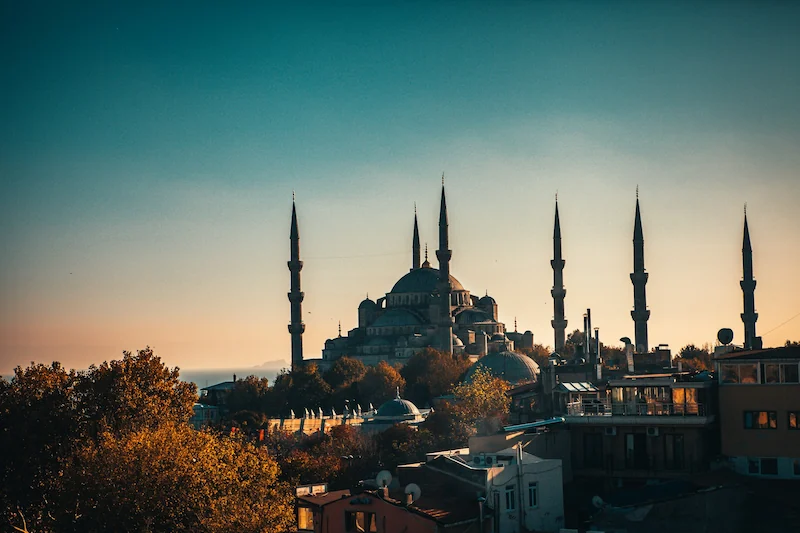
Staying in Sultanahmet puts you inside the historic core of Istanbul, where the city feels ceremonial in the early morning and monument-heavy throughout the day. The rhythm here is shaped by major landmarks, tram access, and the convenience of walking between Hagia Sophia, the Blue Mosque, Topkapı Palace, the Basilica Cistern, and the surrounding old-city streets before the crowds thicken. It is not the most modern or varied part of the city to sleep in, and evenings can feel more tourist-shaped than local, but it is still the most efficient base for a classic first trip. If your priority is to make the historic peninsula feel easy rather than to chase nightlife or local dining depth, Sultanahmet remains the clearest answer.
Why stay here: This is the strongest base for travelers who want the old city to be genuinely walkable. It reduces friction on a short first trip and makes early starts around the main sights much easier.
Best for: first-time visitors, short stays, families focused on the classics, and travelers who want the historic sights at walking distance
Pros
Best location for Hagia Sophia, the Blue Mosque, Basilica Cistern and Topkapı Palace
The easiest area for early starts before tour groups and cruise-day pressure build
Useful tram access toward Eminönü, Sirkeci, Karaköy and Galata Bridge
Good choice for families who want realistic hotel returns between sights
Plenty of boutique and historic hotel stock in restored buildings
Makes a short first trip feel structured rather than scattered
Cons
Evenings can feel quiet, tourist-shaped and less interesting than other central districts
Restaurants near the main landmarks are uneven and often less rewarding than elsewhere
Less useful for nightlife, modern galleries, design hotels or local food scenes
Some streets are charming but crowded, while others feel too hotel-heavy
Not ideal for repeat visitors who already understand the historic core
Nearby highlights
Walk to Hagia Sophia and the Blue Mosque without depending on transport timing
Reach Topkapı Palace, Gülhane Park and the Basilica Cistern before the worst queues
Use the tram for Sirkeci, Eminönü and the bridge toward Karaköy
Take quieter pre-breakfast or late-evening walks around the monumental core
Return to the hotel for a midday break on palace or mosque-heavy days
Pair old-city sightseeing with a later ferry or Karaköy dinner without changing hotels
Budget
Thank You Hotel Sultanahmet – Simple small-scale stay for travelers who want the old city on the doorstep without paying boutique rates. Why we recommend: One of the easier low-cost ways to stay genuinely central in Sultanahmet. Check availability
Sur Hotel Sultanahmet – Family-run option in a restored old-city setting with a practical location for major sights. Why we recommend: Good fit for travelers who care more about location and atmosphere than polished facilities. Check availability
Hotel Broken Column – Compact historic-area hotel suited to travelers spending most of the day out in the city. Why we recommend: Useful value pick when being close to the monuments matters more than room size. Check availability
Mid
Nowy Efendi Hotel - Special Category – Well-placed hotel near the main old-city sights, with the kind of location that keeps a short trip smooth. Why we recommend: Balances comfort and strong positioning without jumping into luxury pricing. Check availability
Antusa Design Hotel & Spa – Comfort-focused stay close to Sultanahmet Tram Stop, practical for travelers who want transit and landmarks within easy reach. Why we recommend: A dependable mid-range pick in one of the most convenient old-city pockets. Check availability
Aprilis Gold Hotel - Special Category – Smart mid-range base near the old city sights and tram links, with a slightly calmer feel than the most crowded lanes. Why we recommend: Stronger room quality than many similarly placed alternatives. Check availability
Upscale
Hotel Empress Zoe – Boutique-style stay with character and a setting that feels rooted in the old city rather than generic hospitality. Why we recommend: One of the few Sultanahmet hotels that feels genuinely distinctive rather than merely well located. Check availability
Hotel Saint Sophia – Refined hotel steps from Hagia Sophia, best for travelers who want a polished stay in the heart of the historic core. Why we recommend: The address is exceptionally hard to beat for a monument-first trip. Check availability
Seven Hills Palace & Spa – Fuller-service old-city stay with more resort-style comfort than many nearby boutique properties. Why we recommend: A strong upgrade choice if you want Sultanahmet convenience without a stripped-down hotel feel. Check availability
Beyoğlu & Galata
Beyoğlu and Galata suit travelers who want Istanbul to feel alive beyond the daylight hours. This is where the stay becomes less about ticking off monuments and more about cafés, bars, side streets, Pera heritage, Galata views, and the pleasure of moving between different urban moods in one evening. Galata gives you a denser, more photogenic pocket; wider Beyoğlu expands the range with stronger dining, nightlife, cultural venues, and easier access to Cihangir, Pera, and Taksim edges. It is a smarter base than Sultanahmet for many return visitors and often the best choice for a city break built around atmosphere as much as sights, as long as you choose the exact street carefully.
Why stay here: This area works when you want a stay that keeps evenings active and still leaves much of central Istanbul within reach. It is especially strong for short stays that need both movement and mood.
Best for: couples, nightlife, restaurants, culture-led travelers, and visitors who want a more urban version of Istanbul
Pros
Stronger restaurants, cafés, bars and late-night atmosphere than Sultanahmet
Excellent for Galata Tower, Pera, Istiklal side streets, meyhanes and cultural stops
Good range of boutique, heritage and design-led hotels
Easy downhill access toward Karaköy and ferry movement if positioned well
Better for couples and return visitors than a purely monument-led base
Works well for city breaks that mix sightseeing with evening energy
Cons
Steep streets around Galata and upper Beyoğlu can be tiring with luggage or children
Noise changes dramatically by street, especially near nightlife corridors
Less convenient than Sultanahmet for old-city-only sightseeing
Some budget hotels trade location for small rooms, poor insulation or awkward access
Weekends can feel crowded if you choose the wrong micro-location
Nearby highlights
Walk to Galata Tower, Pera passages and the sloping streets toward Karaköy
Use Istiklal side streets for restaurants, bars, galleries and meyhanes
Reach Karaköy ferries and Galata Bridge without relying on taxis if the hotel is well placed
Stay close to evening energy instead of returning to a quiet old-city hotel
Mix old-city sightseeing with a more contemporary base
Use the district as a natural bridge between cultural days and food-led nights
Budget
Walton Hotels Galata – Compact, well-located stay near Galata Tower for travelers who want this district without luxury pricing. Why we recommend: It gives you one of the strongest Galata positions in its price band. Check availability
Galata istanbul Hotel – Straightforward central hotel suited to short urban stays built around walking and late dinners. Why we recommend: Strong value for travelers who mainly want the neighborhood itself. Check availability
Meroddi Bağdatlıyan - 1892 Heritage Rooms by Galata Tower – Heritage-style stay in a restored building with immediate access to the Galata core. Why we recommend: More character than many similarly priced city hotels nearby. Check availability
Mid
World House Boutique Hotel Galata – Small-scale boutique stay that keeps Galata's streets, cafés, and tower area on your doorstep. Why we recommend: Feels more intimate and better placed than many larger alternatives. Check availability
Hotel Momento Golden Horn – Well-connected base on the edge of the district, useful for travelers who want views and transport flexibility. Why we recommend: A smart compromise between atmosphere and practical movement. Check availability
Louis Appartements Galata – Apartment-style boutique option that suits travelers wanting more space and a slightly more residential-feeling stay. Why we recommend: Excellent choice when room quality and neighborhood immersion matter equally. Check availability
Upscale
Pera Palace Hotel – Historic grand hotel with real sense of place, best for travelers who want old-world Istanbul with substance. Why we recommend: It is one of the city's landmark stays and still feels singular rather than generic luxury. Check availability
The Galata Hotel Istanbul - MGallery Collection – Polished upscale option in a former bank building, close to the Galata-Karaköy seam. Why we recommend: A strong choice for travelers who want design, comfort, and centrality without sacrificing character. Check availability
The Bank Hotel Istanbul, a Member of Design Hotels – Design-led heritage hotel with a more refined, urban feel than traditional old-city stays. Why we recommend: One of the best options here for travelers who care about both aesthetics and address quality. Check availability
Karaköy
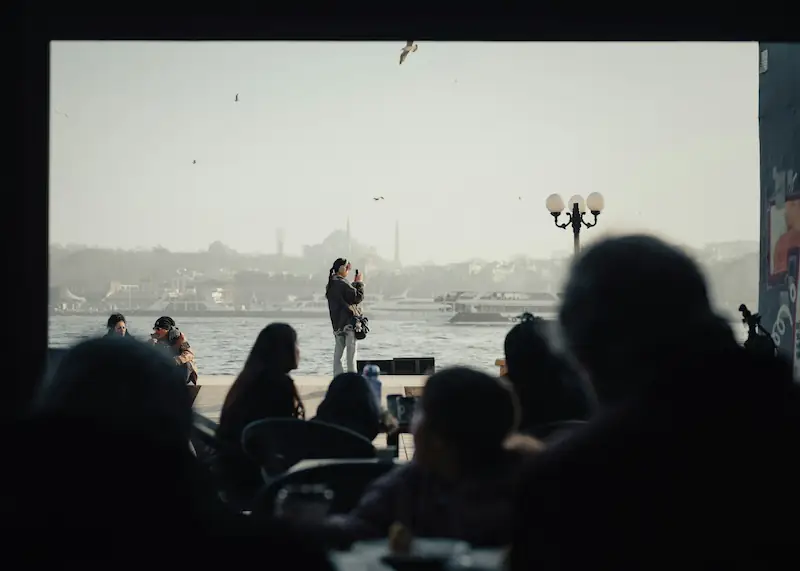
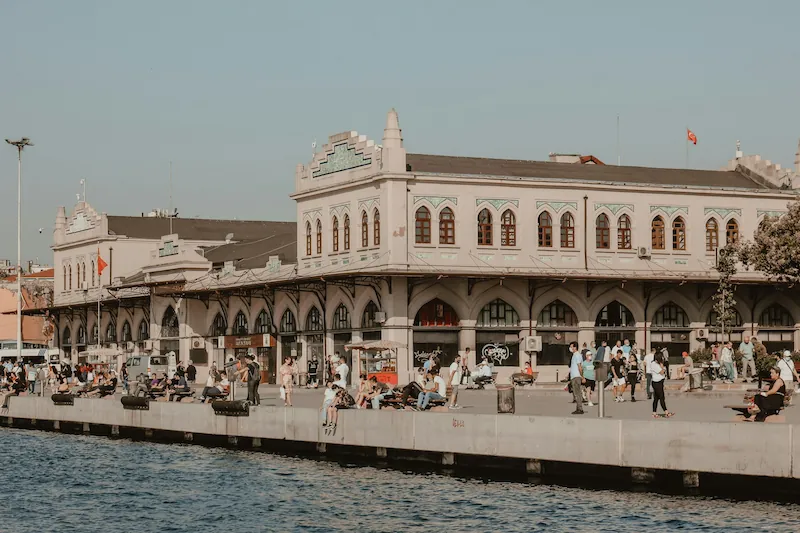
Karaköy is one of Istanbul's smartest bases because it solves more logistical problems than it creates. The district sits at a useful hinge point between ferries, tram lines, Galata's uphill streets, Galata Bridge, the historic peninsula, and the Bosphorus-facing edge around Galataport. It feels faster and more waterfront-oriented than Galata, with a broader range of polished city hotels, design-led stays, and practical restaurants. If you want a base that feels contemporary, well connected, and still recognizably Istanbul, Karaköy is hard to beat. It also lets travelers sample nearby Bosphorus districts such as Beşiktaş or Ortaköy without making them the core accommodation decision.
Why stay here: This is the area for travelers who want efficient connections without giving up dining, views, ferry access, and a more design-forward hotel scene. It is the strongest all-round choice for many mixed Istanbul itineraries.
Best for: first or second visits, short city breaks, ferry-heavy itineraries, design-led hotels, and travelers who want maximum practical centrality
Pros
Excellent ferry, tram, bridge and walking connections
One of the easiest bases for splitting time between the old city, Beyoğlu and the Asian side
Good selection of polished boutique, design and upscale hotels
Waterfront atmosphere without being locked into a resort-style Bosphorus base
Very useful for short stays because plans can pivot without losing half a day
Stronger evening options than Sultanahmet while staying more practical than upper nightlife pockets
Cons
Some blocks feel busy, commercial or transitional rather than picturesque
Street feel varies between polished waterfront, port edges and practical city traffic
Not as intimate as Galata for travelers chasing old-street atmosphere
Budget supply is thinner than in more residential areas
Road noise can matter near larger arteries and ferry approaches
Nearby highlights
Board ferries for Kadıköy, Üsküdar and Bosphorus movement without building the day around transfers
Walk or tram toward Sultanahmet and the historic peninsula
Climb into Galata and Beyoğlu for cafés, views, dinner and nightlife
Use Galata Bridge and Eminönü as a natural market-and-water sequence
Return easily between sightseeing blocks instead of committing to one side of the city all day
Choose from several stronger design-led hotels than the old city usually offers
Budget
Union Hotel Karaköy – Compact modern stay in a very useful location for walking, transit, and ferry moves. Why we recommend: One of the few budget-leaning options here that does not sacrifice positioning. Check availability
DORUK PALAS HOTEL – Small hotel with strong access to both the Galata side and the waterfront movement of Karaköy. Why we recommend: It offers more character than many low-to-mid alternatives nearby. Check availability
Center Port Hotel Karaköy – Well-placed option for travelers who want to be close to the transport logic that makes Karaköy so effective. Why we recommend: Excellent choice when location convenience matters more than hotel theatrics. Check availability
Mid
Karaköy in Karaköy Hotel – Practical city hotel for travelers who want a straightforward base near the district's core movement. Why we recommend: A good middle-ground pick for access, simplicity, and value. Check availability
Root Hotel Karaköy Bosphorus – Contemporary-feeling stay with the kind of location that works well for short stays and ferry-heavy itineraries. Why we recommend: Better style and room feel than many generic chain-like alternatives. Check availability
Ferman Port Hotel - Special Category – Comfortable hotel close to the district's transport and waterfront rhythm, useful for active city days. Why we recommend: Solid all-rounder for travelers who want Karaköy convenience with dependable comfort. Check availability
Upscale
10 Karakoy Istanbul – Upmarket city stay in the heart of Karaköy, suited to travelers who want polished design and a serious address. Why we recommend: One of the cleanest high-end fits for travelers who want Karaköy itself, not just nearby prestige. Check availability
Novotel Istanbul Bosphorus Hotel – Larger upscale hotel with broad amenities and a very practical Karaköy location near the waterfront. Why we recommend: A strong choice if you want comfort and facilities without losing the district advantage. Check availability
The Bank Hotel Istanbul, a Member of Design Hotels – Refined heritage property on the Karaköy side of the Galata seam, with a stronger sense of design and place. Why we recommend: It stands out for atmosphere and finish in a district where many hotels are more functional than memorable. Check availability
Kadıköy
Kadıköy is the right answer for travelers who want Istanbul as a real city rather than as a sequence of famous sights. On the Asian side, the stay feels more residential, food-led, and local, with ferry views, market streets, bars, Moda walks, and long stretches of everyday rhythm that many travelers end up preferring. It is not the most efficient base for a classic first trip, but it can be the most enjoyable one for longer stays or return visits. Üsküdar can be a calmer Asian-side alternative for Bosphorus views and sunset walks, but Kadıköy remains the stronger core base when food, social energy, and ferry-linked neighborhood life matter.
Why stay here: Choose Kadıköy when local texture, food culture, and a more lived-in rhythm matter more than instant monument access. It rewards travelers who are happy to use ferries and transit as part of the experience.
Best for: return visitors, food-focused travelers, longer stays, Asian-side stays, and travelers who want a more local feel
Pros
Excellent food streets, cafés, bars, breakfast spots and market energy
More residential and less tourist-scripted than central European-side districts
Strong ferry links make the water crossing part of the experience
Good value for longer stays compared with many central European-side areas
Moda adds calmer sea-facing walks and a softer daily rhythm
A smart base for return visitors who do not need monuments on the doorstep
Cons
Less efficient for a classic first trip focused on Sultanahmet every morning
Cross-water movement adds time if most plans remain on the European side
Hotel supply is practical but less romantic than Galata or Sultanahmet
Luxury options are more spread out and not always in the most walkable core
Late returns depend on ferry, metro, taxi and schedule logic rather than a simple stroll
Nearby highlights
Use ferries as part of the daily rhythm rather than a one-off cruise
Build evenings around Kadıköy’s bars, restaurants and market streets
Walk toward Moda for sea air, cafés and calmer residential texture
Use the district for Turkish breakfast, sweets, street food and seafood stops
Stay in a neighborhood that still functions strongly for locals
Cross to Karaköy, Eminönü or Beşiktaş when the itinerary calls for European-side sightseeing
Budget
Khalkedon Hotel Istanbul – Simple, well-located Kadıköy base near the ferry and center, suited to travelers who prioritize neighborhood access. Why we recommend: One of the most practical lower-cost choices in central Kadıköy. Check availability
MyKent Hotel – Central budget-friendly stay for travelers who want to be close to ferries, food streets, and transit. Why we recommend: Very good location logic for the price point. Check availability
Istanbul Life Hotel – Compact hotel near the waterfront side of Kadıköy, practical for short stays built around ferries and local dining. Why we recommend: A useful value option in one of the district's most convenient pockets. Check availability
Mid
Meet İstanbul Hotel Kadikoy – Straightforward contemporary option for travelers who want a comfortable base in the district without overspending. Why we recommend: A sensible mid-range pick when you want Kadıköy itself rather than a marina hotel outside the core. Check availability
Sun Suites – Apartment-style stay with more space and flexibility, useful for travelers staying several nights. Why we recommend: Especially practical for travelers who value extra room over hotel formality. Check availability
Riva's Moda – Moda-leaning option with a calmer setting and better sense of the district's sea-facing side. Why we recommend: Good fit for travelers who want Kadıköy with a little more breathing room. Check availability
Upscale
DoubleTree By Hilton Istanbul - Moda – Full-service upscale stay right in lively Kadıköy, convenient for ferries, cafés, and evening movement. Why we recommend: One of the best options if you want recognizable comfort in the heart of the district. Check availability
Holiday Inn Istanbul - Kadikoy by IHG – Reliable upscale-leaning hotel for travelers who prefer polished comfort and predictable service standards. Why we recommend: A smart choice for travelers who want Kadıköy without taking chances on small independents. Check availability
Wyndham Grand Istanbul Kalamış Marina Hotel – Marina-side upscale hotel for travelers who want more facilities, more space, and a calmer premium stay on the Asian side. Why we recommend: Best for those who want Kadıköy area access without sacrificing full-service comfort. Check availability
Balat & Fener
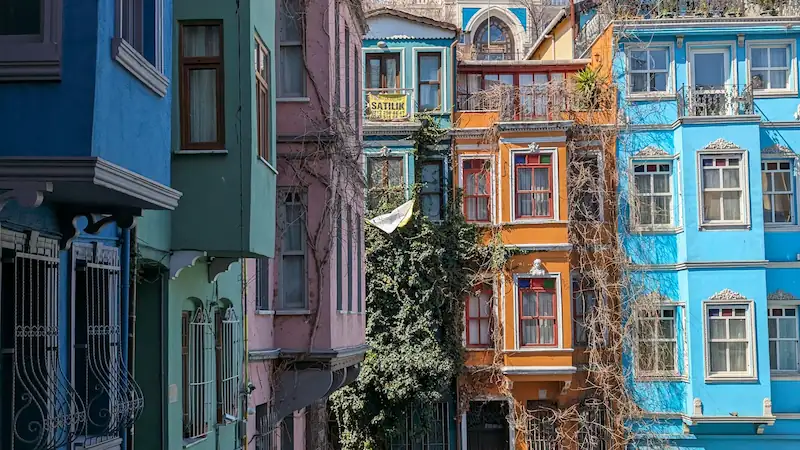
Balat and Fener offer one of the most distinctive neighborhood stays in Istanbul, but they are a niche choice rather than a default one. These old Golden Horn districts feel more residential, more uneven, and more rooted in local texture than the polished hotel zones elsewhere in the city. The appeal is real: colorful facades, steep lanes, layered religious history, slower mornings, and a stay that feels genuinely different from mainstream Istanbul. But hotel choice is thinner and convenience is less automatic, so this area works best for travelers who actively want character and can live with a little friction.
Why stay here: Stay here when neighborhood atmosphere matters more than maximum efficiency. It is a strong choice for travelers who want a more distinctive base and are comfortable sacrificing some transport ease and hotel range.
Best for: travelers who prioritize atmosphere, local character, photography, and a less obvious Istanbul base
Pros
One of the most visually distinctive and memorable bases in Istanbul
More residential, layered and local-feeling than the classic tourist core
Strong fit for photography, café mornings and slow Golden Horn exploration
Good contrast to Sultanahmet, Karaköy and Beyoğlu if you know the city already
Can make the hotel area feel like part of the trip rather than just a sleeping address
Cons
Hotel selection is much thinner than in Sultanahmet, Karaköy, Beyoğlu or Kadıköy
Transport is less frictionless, especially for first-time sightseeing days
Street quality, lighting, slopes and polish vary significantly by block
Not ideal for late-night convenience, luxury density or family logistics with young children
Can feel inconvenient if you plan to spend most days far from the Golden Horn
Nearby highlights
Walk directly into Balat and Fener’s colorful lanes, churches, old houses and Golden Horn viewpoints
Use the area for slower mornings rather than rushing straight into sightseeing crowds
Experience a less polished side of Istanbul without leaving the central city entirely
Pair the stay with Chora, Süleymaniye, Eminönü or Golden Horn walks
Make the neighborhood itself part of the trip’s identity
Choose a more memorable base when a standard central hotel would feel too generic
Budget
Fener sweet – Small, simple stay that places you directly in the atmosphere of the neighborhood rather than near it. Why we recommend: One of the clearest low-cost ways to actually sleep in Fener rather than commute into it. Check availability
Lotus Hotel – Practical lower-cost hotel on the Fatih side, useful for travelers targeting Balat and Fener without boutique pricing. Why we recommend: Good value base when you want to stay near the area and keep costs under control. Check availability
Daphnis Hotel – Small character stay in the Balat area, suited to travelers who value neighborhood atmosphere over standardized facilities. Why we recommend: A clearer fit for a character-led Balat stay than generic old-city budget hotels. Check availability
Mid
Hotel Troya Balat – Historic-feeling Balat base with more personality than most mid-range city hotels. Why we recommend: Best mid-range pick if the priority is staying in Balat itself rather than nearby. Check availability
Ramada by Wyndham Istanbul Old City – Comfortable practical hotel on the Fatih side, useful for travelers who want easier transport while staying within reach of Balat and Fener. Why we recommend: A smarter compromise when neighborhood charm alone is not enough. Check availability
DoubleTree By Hilton Istanbul - Old Town – Full-service option that trades immediate Balat immersion for stronger comfort and smoother logistics. Why we recommend: Useful when you want a more dependable hotel base while still exploring this side of the city. Check availability
Upscale
Arise Hotel Golden Horn – Golden Horn-facing upscale stay with more facilities than the neighborhood's small independents can offer. Why we recommend: Best for travelers who want to explore Balat and Fener but sleep somewhere more polished. Check availability
Akgun Istanbul Hotel, WorldHotels Elite – Larger upscale hotel on the Fatih side, better suited to travelers who want comfort and easy taxi or tram movement. Why we recommend: A sensible high-comfort fallback when boutique options in Balat feel too limited. Check availability
Mövenpick Istanbul Hotel Golden Horn – More polished premium option along the Golden Horn, best for travelers who want facilities and views with area access. Why we recommend: One of the strongest upscale alternatives when Balat charm matters but hotel quality matters too. Check availability
Where to stay in Istanbul for first-time visitors
For a first trip, the best area is usually the one that removes the most friction. In Istanbul, that means choosing between direct monument access and a base that keeps ferries, evenings, and cross-city movement easier.
Choose Sultanahmet if your first trip is built around Hagia Sophia, the Blue Mosque, Topkapı Palace, the Basilica Cistern, and early old-city starts.
Choose Karaköy if you want the smartest all-round first stay, with ferries, tram access, Galata Bridge, old-city reach, and better evening flexibility.
Choose Beyoğlu & Galata if evenings, restaurants, bars, Pera streets, and a more urban Istanbul matter almost as much as sightseeing.
Do not choose Kadıköy on a very short first trip unless food, ferries, and local rhythm matter more than direct monument access.
Treat Üsküdar, Beşiktaş, Ortaköy, Nişantaşı, and Şişli as specialist alternatives on a first trip, not the default base framework.
If unsure, pick Sultanahmet for a monument-first trip or Karaköy for the most balanced first-time Istanbul stay.
Where to stay in Istanbul with family
Families usually need calmer streets, easier returns to the hotel, realistic room layouts, and transport that does not make every outing feel like a project. The best family base depends on whether the trip is a short classic visit or a longer, slower stay.
Sultanahmet works well for short family trips because the big sights are close and midday breaks are realistic.
Karaköy can be a stronger family base if you want easier ferries, larger hotel formats, and more flexibility than the old city often offers.
Kadıköy suits families on longer stays who want a more local, less tourist-heavy environment and do not mind ferry movement.
Beyoğlu & Galata can work with older children or teens, but choose quieter streets and avoid the loudest nightlife pockets.
Balat & Fener are better for calm exploratory families than for monument-maximizing trips with young children.
Beşiktaş or Ortaköy can be considered for comfort-led family stays with Bosphorus views, but they are better treated as specialist hotel choices than core first-time bases.
Prioritize room size, quiet windows, lift access, and transport proximity over the most famous district name.
Where to stay in Istanbul for nightlife
If you want Istanbul to stay lively after dark, do not sleep in the old city unless daytime sightseeing clearly dominates the trip. The strongest evening bases are on the Beyoğlu side and, in a more local register, in Kadıköy.
Beyoğlu & Galata are the best overall nightlife base for bars, late dinners, meyhanes, rooftop evenings, and a fuller urban scene.
Karaköy works well if you want nightlife nearby but prefer better transport, waterfront access, and a more polished base.
Kadıköy is excellent for a younger, local, less visitor-scripted evening atmosphere on the Asian side.
Nişantaşı can work for polished restaurants and upscale bars, but it is better treated as a style-specific alternative than as a default nightlife base.
Choose your exact street carefully because nightlife convenience can quickly become noise fatigue.
Sultanahmet and Balat & Fener are the wrong picks if evenings are central to the trip.
Where to stay in Istanbul on a budget
Budget travelers do better in Istanbul when they choose value by location logic, not just by nightly rate. A cheaper room in the wrong area can cost more in time, taxis, and wasted energy than it saves.
Sultanahmet still offers useful budget options if the main goal is old-city sightseeing on foot.
Beyoğlu & Galata can offer strong value if you find a smaller hotel on the right street and accept some noise or room-size trade-offs.
Karaköy is usually less cheap, but paying slightly more here can save time on short trips.
Kadıköy is often one of the better value plays for longer stays, especially if you are happy using ferries.
Balat & Fener can work on a budget if character matters more than perfect transport convenience, but hotel choice is limited.
Şişli can provide functional business-style value, but it should be chosen for metro convenience and price, not for classic Istanbul atmosphere.
Do not book a budget hotel in a famous district without checking whether the exact street is practical, walkable, and manageable with luggage.
Where to stay in Istanbul based on your trip length
The shorter the trip, the less sense it makes to optimize for abstract charm or specialist hotel pockets. As your stay gets longer, a more local base or a style-specific area can start to pay off.
Label
Stay
Avoid
Why
1 night or layover
Karaköy or Sultanahmet
Kadıköy, Balat & Fener, and specialist Bosphorus or business districts unless the plan is very specific
With one night, the base should reduce decisions, not add ferry or taxi complexity.
2 nights
Sultanahmet or Karaköy
outer Asian-side bases, Balat & Fener, and distant comfort-led hotels unless you know Istanbul already
With only two nights, every avoidable transfer matters.
3 days
Karaköy, Sultanahmet, or Beyoğlu & Galata
Balat & Fener unless neighborhood character is your main goal
Three days is enough to enjoy the city beyond the monuments, but not enough to waste time on awkward positioning.
4 to 5 days
Karaköy, Beyoğlu & Galata, or Kadıköy
staying only for postcard logic if you want the city after dark
At this length, atmosphere, ferry movement, and evening rhythm start to matter more.
1 week
Kadıköy or a carefully chosen Beyoğlu/Karaköy base
locking yourself into Sultanahmet unless the trip is heavily heritage-focused
Longer stays reward a base with more local life, better dining depth, and less tourist repetition.
First trip
Sultanahmet for heritage focus or Karaköy for all-round efficiency
choosing only by hotel aesthetics, Bosphorus views, or a district name that sounds fashionable
The base should simplify the city, not make you solve it every day.
Return trip
Kadıköy, Beyoğlu & Galata, or Balat & Fener
defaulting back to Sultanahmet out of habit
A return visit benefits more from neighborhood depth than from monument proximity.
Luxury or comfort-led trip
Karaköy for central design hotels, Beyoğlu & Galata for heritage hotels, or consider Beşiktaş/Ortaköy and Nişantaşı as specialist alternatives
assuming the best hotel building automatically creates the best Istanbul base
Luxury in Istanbul can mean waterfront comfort, historic atmosphere, or urban polish; those are different stay logics.
Asian-side stay
Kadıköy as the main base; Üsküdar only if calm Bosphorus views matter more than food and nightlife
choosing the Asian side if nearly every planned sight is in Sultanahmet
The Asian side is rewarding when it is part of the trip's rhythm, not just a cheaper sleeping option.
How to choose the right hotel in Istanbul once the area is set
In Istanbul, a good district choice can still produce a disappointing stay if the hotel itself sits on the wrong street or solves the wrong problem. The final choice should be made at street level, not only district level, and specialist hotel pockets should be judged by what they actually improve.
Topic
WhatToDo
WhatToAvoid
WhyItMatters
Street-level positioning
Check whether the hotel is on a calmer side street within easy reach of the transport, waterfront, or landmarks you actually plan to use.
Booking on district name alone.
A strong area can still feel tiring if the exact street is noisy, steep, disconnected, or difficult with luggage.
Noise management
In Beyoğlu, Galata, Karaköy and Kadıköy, favor hotels with strong insulation or a slightly removed street position.
Assuming a lively nightlife district will automatically sleep well.
Even a great area becomes a poor base if every night is interrupted.
Historic charm vs room comfort
In Sultanahmet and Balat, decide early whether you want atmosphere or larger, more polished rooms.
Expecting every heritage-style hotel to deliver full-service comfort.
Character properties often trade space, lifts, facilities, or modern bathrooms for setting.
Transport realism
Prioritize tram access in Sultanahmet, ferry and tram access in Karaköy, practical walking routes in Galata, and ferry access in Kadıköy.
Choosing a hotel that is technically central but awkward with luggage or daily movement.
Istanbul rewards hotels aligned with the transport mode you will actually use.
Secondary hotel pockets
Use Beşiktaş or Ortaköy for Bosphorus-view comfort, Üsküdar for calmer Asian-side views, and Nişantaşı or Şişli for upscale shopping, medical, business, or chain-hotel convenience.
Treating every useful hotel pocket as a main base for a first-time Istanbul itinerary.
These areas can be excellent for specific traveler profiles, but they are usually less practical as default bases for most first trips.
Short stay logic
On a weekend trip, pay more for the right area and the right address within it.
Saving a little on the room and losing hours in movement.
On a compressed stay, time and energy are more valuable than a small nightly saving.
Family and longer stays
Look for more space, easier returns, quieter surroundings, and lift access rather than the most famous district label.
Booking the smallest central room simply because the map looks impressive.
Comfort compounds over several nights, especially with children.
Boutique vs chain-style comfort
Choose boutique hotels when neighborhood identity is part of the trip; choose larger full-service hotels when recovery, facilities, and predictability matter more.
Expecting a small design hotel to function like a large upscale property.
The right hotel type depends on what the trip needs, not on category alone.
FAQ: where to stay in Istanbul
These are the questions travelers most often get wrong when choosing a base in Istanbul, especially when they confuse useful hotel pockets with the best main areas for structuring a trip.
What is the best area to stay in Istanbul for a first-time visitor?
For a classic first trip, Sultanahmet is the easiest answer because the main historic sights are close together and largely walkable. If you want a more balanced stay with better evening life, ferry access, and stronger connections, Karaköy is often the smartest alternative.
Is Sultanahmet the best place to stay in Istanbul?
It is the best place if your trip is built around Hagia Sophia, the Blue Mosque, Topkapı Palace, the Basilica Cistern, and the old city. It is not the best place if dining, nightlife, Bosphorus views, and a broader urban feel matter as much as the monuments.
Is Karaköy a good area to stay in Istanbul?
Yes. Karaköy is one of the best all-round areas because it connects ferries, tram lines, Galata Bridge, the old city, Galata, and the waterfront more efficiently than most districts. It is especially strong for travelers who want a central base without sleeping in the monument-heavy old city.
Where should I stay in Istanbul for 3 days?
For three days, Sultanahmet works best if the trip is heavily historic. Karaköy or Beyoğlu & Galata usually work better if you want a more rounded city break with stronger evenings, food options, and easier movement across different parts of Istanbul.
Where should I stay in Istanbul for 5 days?
For five days, Karaköy, Beyoğlu & Galata, or Kadıköy usually make more sense than staying only for old-city proximity. At this length, the base should support ferries, evenings, food, and neighborhood rhythm, not just the first day of sightseeing.
Should I stay on the European or Asian side of Istanbul?
For a first trip, the European side is usually easier because Sultanahmet, Karaköy, Beyoğlu, and Galata put you closer to the main historic and urban layers. The Asian side, especially Kadıköy, is better for longer stays, food-focused trips, and repeat visitors who want local rhythm.
Is Kadıköy a good area to stay in Istanbul?
Yes, especially for return visitors, longer stays, and travelers who want food, ferries, and local neighborhood life. It is less efficient for a monument-heavy first trip, but often more enjoyable if you already know you want a less touristic base.
Is Üsküdar a good place to stay in Istanbul?
Üsküdar can be a good secondary choice if you want a calmer Asian-side stay, Bosphorus views, and easy ferry access. For most travelers, Kadıköy remains the stronger main Asian-side base because it has more food, nightlife, and neighborhood energy.
Where should I stay in Istanbul for nightlife?
Beyoğlu & Galata are usually the strongest answer for nightlife, with Karaköy close behind for a more polished and better-connected version. Kadıköy is also excellent if you want a more local, less visitor-shaped evening scene.
Where should I stay in Istanbul with family?
For a short family trip, Sultanahmet often works best because it reduces daily movement. For a more balanced stay, Karaköy can be better, while Kadıköy suits longer family trips that prioritize a more local pace and ferry-based movement.
What is the safest area to stay in Istanbul?
The main traveler districts in this guide are all commonly used by visitors, but the practical question is often less about district safety than about street quality, late-night noise, and comfort returning after dark. Sultanahmet, Karaköy, and the better-positioned parts of Beyoğlu, Galata, and Kadıköy are usually the easiest choices for most travelers.
Where should I stay in Istanbul on a budget?
Sultanahmet can work well for budget travelers focused on old-city sightseeing, while Kadıköy often offers better value for longer stays. Beyoğlu and Galata can also be good value if you choose the exact street carefully and accept smaller rooms or more nightlife noise.
Where should I stay in Istanbul for luxury hotels?
For luxury, the answer depends on the type of stay. Sultanahmet offers heritage prestige, Karaköy offers design-led centrality, Beyoğlu & Galata offer historic urban hotels, and Bosphorus pockets around Beşiktaş or Ortaköy can work for waterfront comfort. Those Bosphorus areas are useful luxury alternatives, but not separate main guide areas here.
Is Nişantaşı a good area to stay in Istanbul?
Nişantaşı can be a good specialist choice for upscale shopping, polished restaurants, medical or business trips, and travelers who prefer a modern urban base. It is not usually the clearest first-choice base because it does not connect Istanbul’s core sightseeing and ferry logic as directly as Sultanahmet, Karaköy, Beyoğlu, Galata, or Kadıköy.
Is Beşiktaş a good area to stay in Istanbul?
Beşiktaş can work well for Bosphorus-side comfort, Dolmabahçe access, local food, and a more everyday European-side rhythm. It is best treated as a specialist alternative for travelers who already know why they want that side of the city, rather than a default first-time base.
Is Balat a good place to stay in Istanbul?
Balat and Fener are good if you want character, color, slower mornings, and a less obvious base. They are not ideal if you want the smoothest transport, the widest hotel choice, or easy late-night returns.
Where should couples stay in Istanbul?
Couples usually do best in Beyoğlu & Galata for atmosphere and evenings, Karaköy for a polished and practical stay, or Sultanahmet for a classic heritage-focused trip. Kadıköy works well for couples who prefer food, ferries, and a more local rhythm.
Where should I stay in Istanbul without a car?
Most visitors should not plan around having a car. Sultanahmet works well for walking and tram access, Karaköy for ferries and trams, Beyoğlu & Galata for walking and funicular or metro links, and Kadıköy for ferries, metro, and local movement.
Is it worth paying more to stay central in Istanbul?
Usually yes on a short trip. In Istanbul, the right centrality can save major time and energy, especially when hills, ferries, and cross-city transport are involved. On longer stays, paying for the absolute center matters less if the neighborhood rhythm suits you better.
Which Istanbul area is best for food?
Kadıköy is one of the strongest bases for food-focused travelers because market streets, casual eating, bars, and local dining are part of daily neighborhood life. Beyoğlu & Galata also work well for restaurants and evening meals, while Karaköy is strong for a more polished central food scene.
Which Istanbul area is best for Bosphorus views?
Karaköy is the best core-area choice if you want Bosphorus access and central convenience together. Beşiktaş, Ortaköy, and Üsküdar can offer stronger view-led stays, but they are better treated as specialist hotel pockets than as the main framework for where to stay.
What areas should I avoid staying in Istanbul?
Avoid areas that are far from the transport you will actually use, even if the hotel looks attractive or cheap. For most first-time visitors, distant suburbs, awkward uphill locations, noisy nightlife streets without insulation, and poorly connected hotels create more problems than they solve.
In Istanbul, the smartest base is the one that makes the city feel easier in the hours you actually use it.
Keep planning your Istanbul trip
Once you have chosen the right base, continue with the full Istanbul city guide, the best things to do in Istanbul, and itinerary ideas that help you connect neighborhoods, sights, ferries, and day planning more intelligently.
Find the best places to stay, how to get there, and move around with ease.
Build a smarter trip base
Turn the right neighborhood into the right itinerary
Once you know where to stay in Istanbul, the next step is structuring the rest of your trip around that base. Use the planner to build a route that fits your pace, priorities, and how you actually want your days to unfold.