Where to stay in Vienna for the right kind of trip
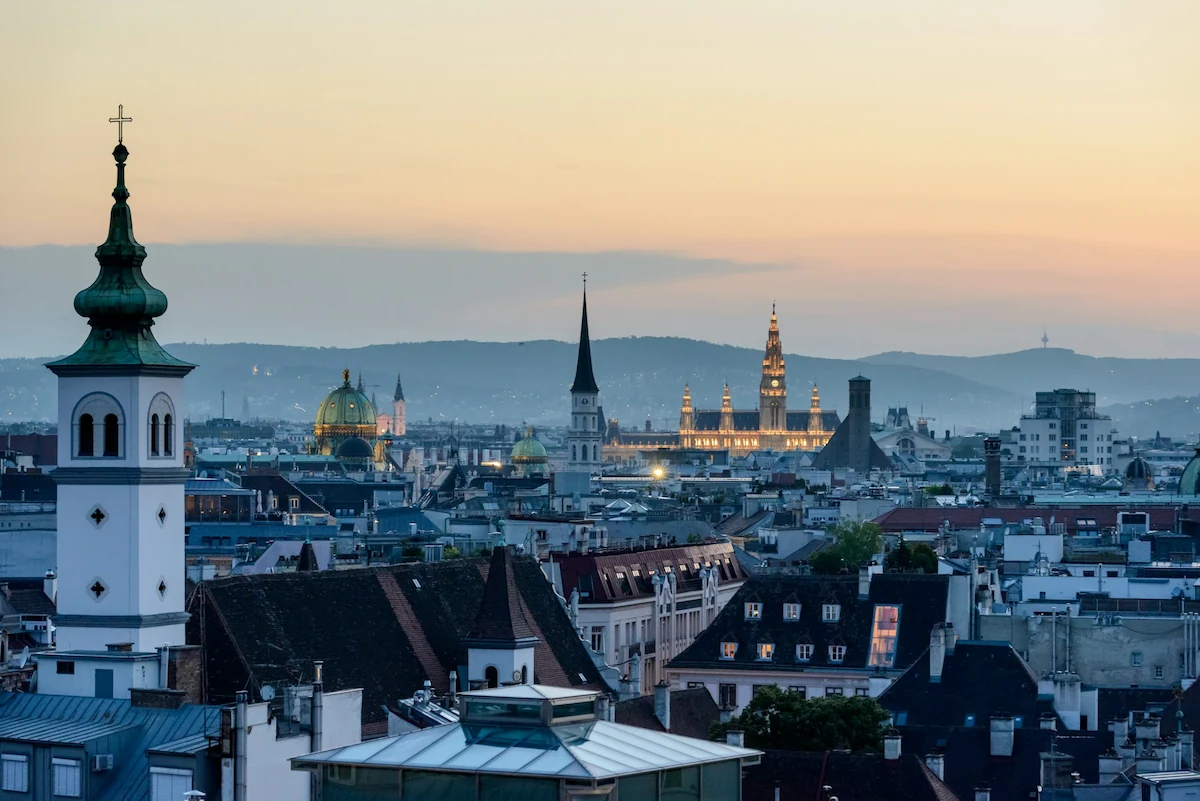
Find the best area to stay in Vienna for your itinerary, budget, and travel style. The city is easy to navigate, but its neighborhoods create very different trips: the Innere Stadt maximizes landmark access, Neubau balances museums with restaurants and design, Josefstadt offers quiet central elegance, Wieden connects Karlsplatz, Naschmarkt, and Belvedere, Leopoldstadt gives families and longer stays more space, and Landstrasse simplifies airport, rail, and Belvedere logistics. The right base reduces transfers while giving your evenings the atmosphere you actually want.
Best areas
Innere Stadt is best for first-time visitors and short stays; Neubau is the strongest all-round choice; Josefstadt suits quiet cultural trips; Wieden balances food, museums, and transport; Leopoldstadt is best for families, parks, and value; Landstrasse is strongest for Belvedere, Wien Mitte, airport access, and efficient arrivals.
Booking timing
Book 3 to 6 months ahead for spring weekends, September and October, December Christmas-market dates, New Year, major congresses, and sought-after boutique hotels. For summer weekdays or January and February, more choice often remains, but the best family rooms and central guesthouses still sell first.
Best areas to stay in Vienna at a glance
Innere Stadt – Best for: first-time visitors, 2- or 3-night stays, luxury, and opera evenings · Vibe: historic, prestigious, compact, and visitor-facing · Stay here if: you want to walk to St Stephen’s Cathedral, the Hofburg, State Opera, major cafés, and evening restaurants, and you are willing to pay for that convenience. · Avoid if: you want neighborhood life, larger rooms, quieter nights, or better value.
Neubau – Best for: the best all-round stay for culture, dining, design, and couples · Vibe: creative, cultured, lively without being nightlife-dominated, and close to the Ring · Stay here if: you want MuseumsQuartier, Spittelberg, restaurants, cafés, boutiques, and an easy walk or short ride into the old center. · Avoid if: you want immediate old-town atmosphere, palace-style hotels, or the calmest possible streets.
Josefstadt – Best for: quiet culture, couples, solo travelers, and calm central stays · Vibe: elegant, residential, composed, and close to Rathaus and the museum belt · Stay here if: you want a graceful local base near the Ring with quieter mornings and evenings. · Avoid if: you want dense nightlife, extensive shopping, or the widest restaurant choice outside the hotel.
Wieden – Best for: Karlsplatz, Naschmarkt, food, transport, and varied first trips · Vibe: cultured, practical, mixed, and urban rather than postcard-perfect · Stay here if: you want a flexible base between the old center, Belvedere, Secession, Naschmarkt, and strong U-Bahn links. · Avoid if: you want consistently romantic streets or a very quiet residential atmosphere.
Leopoldstadt – Best for: families, apartment stays, parks, runners, and better value · Vibe: open, green, practical, diverse, and more relaxed than the historic core · Stay here if: you want more room, Prater access, Karmeliterviertel, Danube Canal walks, and fast transport into the center. · Avoid if: you want every major sight and formal evening within a short walk.
Landstrasse – Best for: Belvedere, airport links, Wien Mitte, business-leisure, and efficient short stays · Vibe: connected, practical, residential in parts, and less atmospheric overall · Stay here if: you want smooth airport or rail logistics, Belvedere nearby, and quick links to the center. · Avoid if: you want the strongest boutique-hotel scene, late-night energy, or old-town character outside the door.
How to choose where to stay in Vienna
Choosing where to stay in Vienna is mainly a decision about what you want to protect: walking time, room size, restaurant choice, quiet, cultural access, or transport simplicity. The U-Bahn and tram network make most inner districts workable, but Vienna is not completely interchangeable block by block. A hotel beside a useful station or on the correct edge of a district can be more convenient than a nominally central address. Start with the type of days you plan to build, then choose the neighborhood and exact street that support them.
Choose the Innere Stadt for a first visit of two or three nights, especially when walking access, evening culture, and easy hotel returns justify the premium.
Choose Neubau for the best overall combination of MuseumsQuartier, restaurants, cafés, boutique hotels, shopping, and a contemporary neighborhood atmosphere.
Choose Josefstadt for a quiet, refined stay close to Rathaus, Parliament, Burgtheater, and the museum belt.
Choose Wieden for Karlsplatz, Naschmarkt, Secession, Belvedere access, useful U-Bahn connections, and a varied first or repeat visit.
Choose Leopoldstadt for family rooms, apartments, Prater, Karmeliterviertel, parks, running routes, and stronger value.
Choose Landstrasse when Wien Mitte, airport transfers, Belvedere, Stadtpark, or a smooth arrival and departure matter more than neighborhood romance.
Consider Mariahilf as an extension of Neubau for shopping and value, Alsergrund for a quieter longer stay, Hietzing only when Schönbrunn or calm residential space is central to the trip, and the Hauptbahnhof area mainly for rail convenience.
Always check walking time to the nearest U-Bahn or tram, nighttime street character, lift access, air conditioning, and room configuration before booking.
Vienna stay geography: how the map affects your base
Vienna’s stay geography is built around the Innere Stadt inside the Ringstrasse, the cultural and residential districts immediately outside it, and a set of transit-led alternatives farther out. Most visitors do not need to sleep beside every sight, but they do benefit from choosing the correct side of the center for their main plans. The useful question is not only “How far is the hotel from Stephansplatz?” but “Which sights, restaurants, stations, and evening routes sit naturally around it?”
Innere Stadt offers the strongest walkability but the highest prices and most visitor-facing environment.
Neubau and Josefstadt protect museum access and central proximity while giving very different evening moods: lively and contemporary versus quiet and residential.
Wieden is strongest on the Karlsplatz and Freihausviertel side; nearby Mariahilf and Margareten can offer similar access with different price points.
Leopoldstadt ranges from almost-central Karmeliterviertel to transport-led Praterstern and Messe areas, so the exact station matters.
Landstrasse works best around Wien Mitte, Stadtpark, Rochusmarkt, or Belvedere; the district name alone covers too wide an area to guarantee convenience.
Hietzing and Schönbrunn are attractive for calm, gardens, and families but less efficient for a short first visit.
Döbling, Grinzing, and the vineyard districts suit repeat visitors, romantic longer stays, or wine-focused trips rather than conventional first-time sightseeing.
Alsergrund is a useful quiet alternative near universities, hospitals, Freud-related sites, and the northern Ring, especially for longer stays.
Favoriten and the Hauptbahnhof area suit rail travelers and price-sensitive stays, but most visitors will use transport for central evenings.
Historic core – Innere Stadt is best for short stays, first-time orientation, luxury hotels, opera evenings, Christmas-market trips, and maximum landmark walkability.
Culture, design, and dining belt – Neubau and adjacent Mariahilf combine MuseumsQuartier, shops, restaurants, cafés, boutique hotels, and fast access to the old center.
Quiet Ring-adjacent streets – Josefstadt and nearby Alsergrund suit travelers who want residential calm, traditional pensions, and cultural access without intense nightlife.
Southern culture and food zone – Wieden, Karlsplatz, Naschmarkt, and the edges of Mariahilf and Margareten create a flexible base for food, Belvedere, modernism, and transport.
Family space and eastern local life – Leopoldstadt ranges from Karmeliterviertel near the center to Prater and Messe areas with more room, parks, apartments, and value.
Airport, rail, and Belvedere corridor – Landstrasse, Wien Mitte, Belvedere, and the Hauptbahnhof edge are strongest when arrivals, departures, and onward rail travel shape the stay.
Schönbrunn and residential west – Hietzing is a specialist choice for Schönbrunn, the zoo, calm streets, villas, and family space, but it increases travel time to the central evening city.
Vineyards and village atmosphere – Döbling, Grinzing, Nussdorf, and nearby wine districts fit repeat visits, romantic longer stays, hiking, and Heuriger evenings rather than short sightseeing trips.
Best areas to stay in Vienna
These six areas remain the most useful bases for most Vienna trips and match the city’s main visitor geography. They cover the historic core, the cultural belt, quiet central streets, the southern museum-and-food zone, family-friendly eastern districts, and the practical airport-and-rail side of the city. Other neighborhoods can work for specific needs, but they generally function as alternatives within these same stay strategies rather than stronger default choices.
Innere Stadt
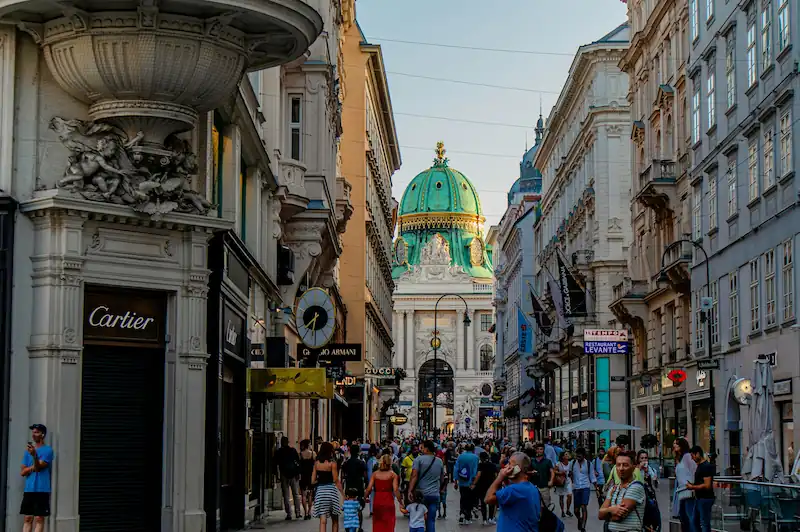
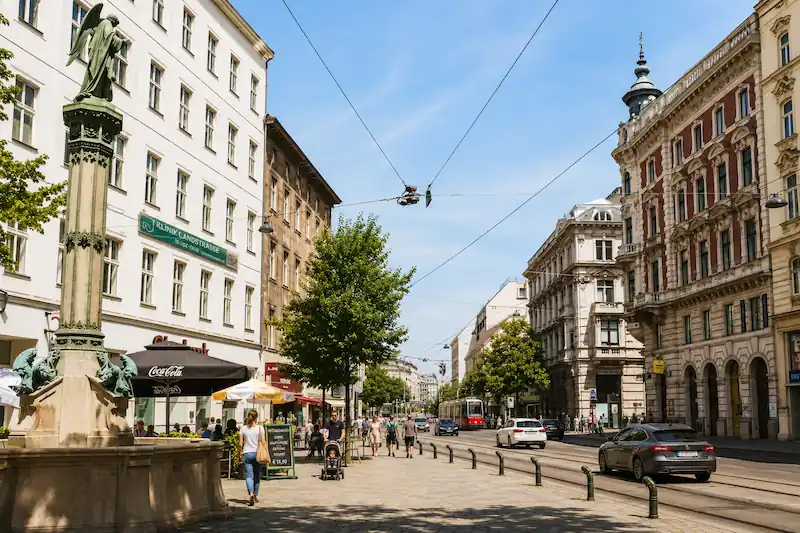
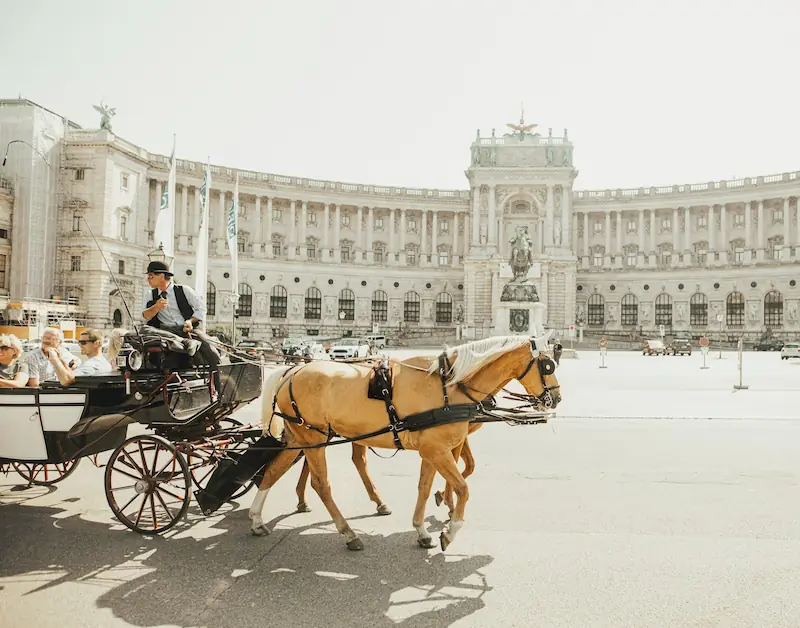
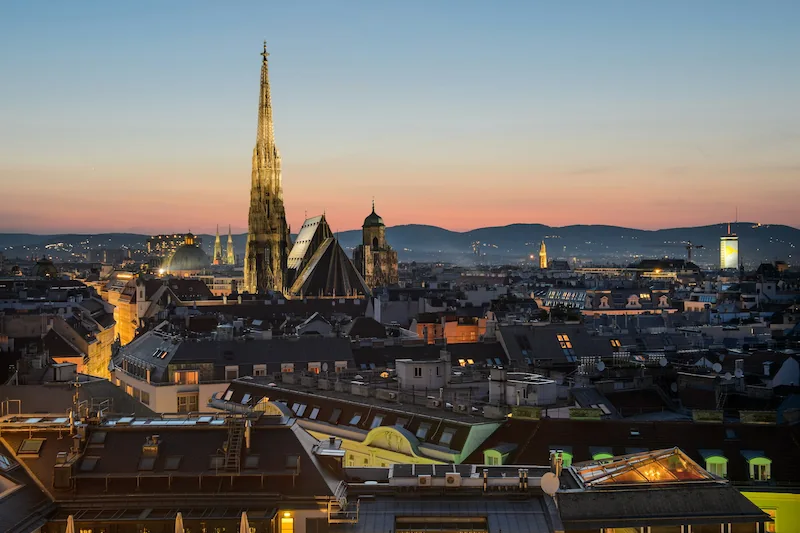
Staying in the Innere Stadt places Vienna’s historic core directly outside the hotel door. St Stephen’s Cathedral, the Hofburg, State Hall, Spanish Riding School, Graben, the State Opera, Albertina, major churches, classic coffeehouses, and many evening restaurants are reachable on foot. This is the most efficient base for a first visit or short cultural weekend, but it is also the most expensive, most polished, and most exposed to visitor traffic. Micro-location matters: the opera and Hofburg sides feel different from Schwedenplatz or the busier shopping streets.
Why stay here: Stay here when the trip is short, built around the historic center, or includes opera, concerts, formal dining, and frequent returns to the hotel. It is the best area to stay in Vienna for maximum sightseeing efficiency.
Best for: First-time visitors, short stays, luxury travelers, opera and concert trips, Christmas-market weekends, and travelers who prioritize walking over value.
Pros
Highest concentration of first-visit landmarks within walking distance.
Best base for two-night and three-night stays where every transfer matters.
Easy hotel returns between museums, coffeehouses, shopping, and evening performances.
Strongest luxury-hotel selection and several central pensions for simpler stays.
Excellent after-dark atmosphere around the opera, Hofburg, Graben, and Stephansplatz.
Cons
Highest average hotel prices and limited room size at lower price points.
More tourist-facing restaurants, shops, and streets than in adjacent districts.
Noise can be noticeable near nightlife, shopping, tram, or busy pedestrian routes.
Families and longer-stay travelers may get more space and facilities elsewhere.
The district can feel less local once the principal sights close.
Nearby highlights
St Stephen’s Cathedral, Stephansplatz, Graben, Kohlmarkt, and the medieval street network.
Hofburg courtyards, Imperial Treasury, State Hall, Spanish Riding School, and Heldenplatz.
Vienna State Opera, Albertina, Musikverein access, and elegant evening walks.
Classic coffeehouses, historic restaurants, luxury shopping, and central churches.
Direct access to multiple U-Bahn lines from Stephansplatz, Herrengasse, Karlsplatz edges, and Schwedenplatz.
Fastest possible sightseeing rhythm for a first visit with limited time.
Budget
Pension Neuer Markt – A simple, old-Vienna guesthouse in the heart of the first district, close to Kärntner Strasse and Stephansplatz. Why we recommend: One of the few genuinely central budget-leaning options that keeps first-time sightseeing almost entirely walkable. Check availability
Dan In'n Out – A compact pension near the northern edge of the Innere Stadt, within walking distance of St Stephen’s Cathedral and the Danube Canal. Why we recommend: Useful for travelers who want a central address without paying full historic-core hotel rates. Check availability
Pension Dr. Geissler – A practical guesthouse close to Schwedenplatz, with simple rooms and good access to the U-Bahn and old town. Why we recommend: It works well when central mobility matters more than design or hotel amenities. Check availability
Mid
Hotel Pension Suzanne – A traditional guesthouse near the Vienna State Opera, suited to travelers who want central access with a smaller-scale feel. Why we recommend: Its location is unusually strong for travelers planning opera, Albertina, and Innere Stadt walks. Check availability
O11 Boutique Hotel Vienna – A boutique stay by the opera area, close to the Ring, Albertina, and major central routes. Why we recommend: It gives a more contemporary hotel feel in one of Vienna’s most useful central positions. Check availability
Steigenberger Hotel Herrenhof – A polished central hotel near the Hofburg, Herrengasse, and the most elegant part of the first district. Why we recommend: It is stronger than most central business-style hotels because the location serves both culture and evening walks. Check availability
Upscale
The Guesthouse Vienna – A refined central hotel beside the Albertina, with a polished but not overly formal atmosphere. Why we recommend: It offers one of the best balances of luxury, design restraint, and true walkability in the first district. Check availability
Park Hyatt Vienna – A luxury hotel in a historic building near Am Hof and the most elegant shopping streets of the center. Why we recommend: It is a strong choice when you want full-service luxury without giving up old-town immediacy. Check availability
Palais Coburg Hotel Residenz – An upscale all-suite hotel in a restored palace setting within the historic center. Why we recommend: It suits travelers who want a high-end Vienna stay with space, privacy, and architectural presence. Check availability
Neubau
Neubau is Vienna’s strongest all-round base for travelers who want culture close by without sleeping inside the formal old center. MuseumsQuartier, the Leopold Museum, mumok, Spittelberg, Mariahilfer Strasse, independent shops, cafés, bars, and restaurants create a neighborhood with both daytime purpose and evening life. The district is compact enough to walk into the Ring, but varied enough that exact streets matter: the museum edge, Spittelberg, and the western residential blocks offer different levels of activity.
Why stay here: Stay here for the best balance of museum access, restaurant choice, boutique hotels, design, shopping, and a more contemporary Vienna atmosphere. It is the smartest default for many couples and culture-focused first-time visitors.
Best for: Couples, culture-focused travelers, food and design lovers, boutique-hotel seekers, solo travelers, and first-time visitors wanting a less formal central base.
Pros
Immediate access to MuseumsQuartier, the Ring museum cluster, and Spittelberg.
One of the best inner districts for restaurants, cafés, bars, design shops, and boutique hotels.
Easy walk or short public-transport ride to the Innere Stadt.
More neighborhood texture and evening choice than the most formal central districts.
Works equally well for first visits, repeat visits, couples, solo travelers, and culture-heavy trips.
Cons
Popular boutique hotels can be expensive and sell out early.
Mariahilfer Strasse and some nightlife streets can feel busy or noisy.
Not every block is equally close to the Ring or an U-Bahn station.
Less suitable for travelers seeking palace-style Vienna outside the hotel.
Family room inventory can be tighter than in Leopoldstadt or apartment-led districts.
Nearby highlights
MuseumsQuartier, Leopold Museum, mumok, Kunsthistorisches Museum, and Natural History Museum.
Spittelberg lanes, neighborhood restaurants, cafés, galleries, and seasonal market atmosphere.
Mariahilfer Strasse for shopping, services, and U-Bahn access.
Quick routes to Parliament, Rathaus, Hofburg, and the Innere Stadt.
Easy access to adjacent Mariahilf, which can offer similar convenience with more hotel choice.
A natural evening base after museum days without returning to the busiest tourist center.
Budget
UrbanKey Pods - Vienna Neubau – A compact, budget-focused pod-style stay in Neubau, suited to travelers who prioritize district access over classic hotel space. Why we recommend: It keeps costs low in a district where well-located rooms often rise quickly. Check availability
Hotel Pension Museum – A straightforward pension near the museum district, useful for culture-heavy stays on a controlled budget. Why we recommend: Its main advantage is simple: museum access is excellent without needing first-district pricing. Check availability
Hotel Admiral – A practical hotel close to MuseumsQuartier and Mariahilfer Strasse, with simple rooms and a central-adjacent address. Why we recommend: It is a sensible pick when location matters more than boutique character. Check availability
Mid
Max Brown Hotel 7th District, part of Sircle Collection – A stylish, informal hotel in the 7th district, suited to travelers who want a relaxed design-led base. Why we recommend: It has more personality than many mid-range Vienna hotels while staying useful for Neubau dining and culture. Check availability
Boutique Hotel Kugel Wien – A small historic-building hotel in Neubau, close to Spittelberg and the museum district. Why we recommend: It works well for travelers who want neighborhood scale rather than a large central hotel. Check availability
The Weekend Hotel – A practical hotel in the wider Neubau area with modern rooms and good access to public transport. Why we recommend: It can offer better room value than the most central Neubau boutique options. Check availability
Upscale
Small Luxury Hotel Altstadt Vienna – A characterful boutique hotel in a historic building near Spittelberg and MuseumsQuartier. Why we recommend: It is one of Vienna’s strongest boutique choices for travelers who care about art, interiors, and neighborhood feel. Check availability
Hotel Sans Souci Wien – An upscale hotel facing the museum district, with spa facilities and immediate Ring-adjacent access. Why we recommend: It gives luxury comfort while still feeling tied to Vienna’s cultural quarter rather than only the old town. Check availability
25hours Hotel beim MuseumsQuartier – A playful design hotel near MuseumsQuartier, Parliament, and the Ring. Why we recommend: It suits travelers who want a more contemporary, less formal upscale base close to major culture. Check availability
Josefstadt
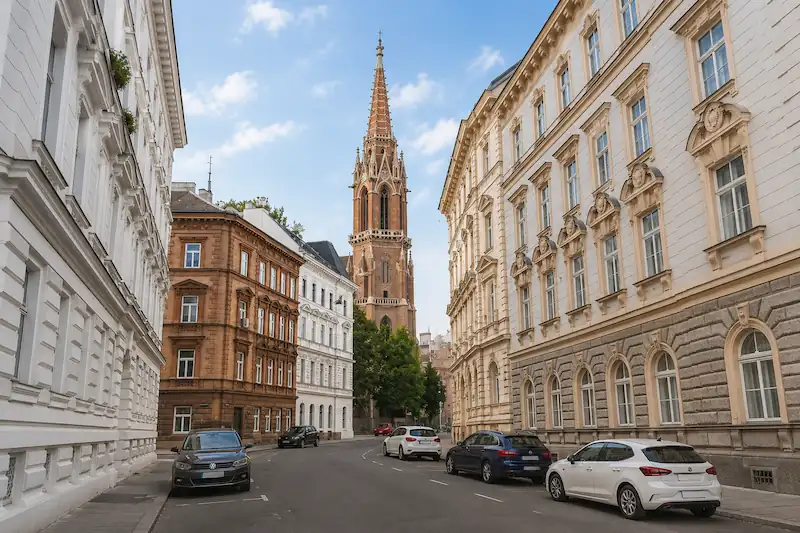
Josefstadt offers a quieter version of central Vienna just behind the Ring. Rathaus, Parliament, Burgtheater, the university area, Volksgarten, and the major museum cluster remain close, but residential streets and traditional pensions soften the daily rhythm. The district is small, elegant, and well suited to travelers who value calm, though restaurant and nightlife density is lower than in Neubau or Wieden.
Why stay here: Stay here when you want calm residential streets, traditional Vienna character, and easy cultural access without first-district prices or pressure.
Best for: Quiet culture trips, couples, solo travelers, repeat visitors, traditional pensions, and travelers who want calm near the Ring.
Pros
Quiet central-adjacent streets within easy reach of Rathaus, Parliament, and museums.
Good selection of traditional pensions, smaller hotels, and characterful boutique stays.
Strong fit for couples, solo travelers, mature city breaks, and museum-focused trips.
Pleasant morning and evening atmosphere with less visitor traffic.
Useful tram links and walkable access to the Ring.
Cons
Less restaurant, bar, and shopping density than Neubau or Wieden.
No major U-Bahn station in the heart of every micro-area, making tram access important.
Some hotels feel traditional rather than contemporary.
Less immediate old-town spectacle than Innere Stadt.
Not ideal for travelers who want high-energy evenings near the hotel.
Nearby highlights
Rathaus, Parliament, Burgtheater, university buildings, and Ringstrasse architecture.
Easy walking access to MuseumsQuartier, Kunsthistorisches Museum, and Volksgarten.
Josefstädter Strasse cafés, local restaurants, theaters, and residential streets.
Tram routes that connect quickly to the center and other inner districts.
Nearby Alsergrund as an alternative for longer, quieter, more residential stays.
Calm hotel returns after concerts, museums, and busy central sightseeing.
Budget
Hotel-Pension Wild – A quiet guesthouse in Josefstadt, with simple rooms and a useful position near the Rathaus area. Why we recommend: It is one of the most reliable low-cost choices for staying central-adjacent without losing calm. Check availability
Hotel Graf Stadion – A traditional hotel in Josefstadt, close to Rathaus and public transport. Why we recommend: It works well for travelers who want historic district character at a restrained price point. Check availability
Hotel Korotan – A simple hotel on a quiet Josefstadt side street, within reach of the Ring and university area. Why we recommend: It keeps the stay practical and calm without pushing you far from the cultural core. Check availability
Mid
Hotel Zipser – A family-run hotel near Rathaus, with an easy central-adjacent location and traditional Vienna feel. Why we recommend: It is a strong mid-range option for travelers who want quiet streets and quick Ring access. Check availability
Pension Lehrerhaus – A traditional pension in Josefstadt, close to the Rathaus area and central transport links. Why we recommend: It is useful when you want a simple, location-smart stay rather than hotel amenities. Check availability
Hotel Josefshof am Rathaus – A polished hotel on a quiet side street near Rathaus and the Ring. Why we recommend: It gives more comfort than most pensions while preserving Josefstadt’s calm location logic. Check availability
Upscale
ARTIST Boutique Hotel – A boutique hotel in Josefstadt with a cultural personality and easy access to Rathaus and the Ring. Why we recommend: It gives Josefstadt a more design-conscious option without losing the district’s quiet advantage. Check availability
Hotel Rathaus - Wein & Design – A wine-themed boutique hotel in Josefstadt, with individually styled rooms and a calm central-adjacent position. Why we recommend: It stands out for character in a district where many hotels are more traditional. Check availability
Flemings Selection Hotel Wien-City – A larger upscale hotel near the Rathaus and Ring, suited to travelers who want comfort and strong transport access. Why we recommend: It offers a more full-service stay while keeping Josefstadt’s cultural geography practical. Check availability
Wieden
Wieden sits at one of Vienna’s most useful crossroads. Karlsplatz, Karlskirche, the Wien Museum, Secession, Naschmarkt, the opera edge, Belvedere, and several U-Bahn lines are within easy reach, while the district itself mixes elegant streets, student life, restaurants, services, and residential blocks. It is less visually consistent than Josefstadt and less fashion-led than Neubau, but few areas support such a varied itinerary so efficiently.
Why stay here: Stay here when your plans combine the historic center, Belvedere, modernist Vienna, Naschmarkt, food, and public transport. It is one of the most flexible areas for a first or repeat visit.
Best for: Travelers wanting museums, food, public transport, Belvedere access, and a balanced central-adjacent base.
Pros
Excellent access to Karlsplatz, the opera, Naschmarkt, Secession, Wien Museum, and Belvedere.
Strong U-Bahn and tram connections, including useful routes toward Schönbrunn and the center.
Good restaurant, café, grocery, and everyday-service mix.
Often better value than the Innere Stadt for nearly central access.
Works well for culture trips, food-focused stays, couples, and families.
Cons
Atmosphere changes significantly between Karlsplatz, residential streets, and the Gürtel side.
Some addresses are traffic-heavy or feel more functional than charming.
Hotel listings sometimes describe nearby Margareten or Mariahilf locations as central Wieden.
Nightlife is scattered rather than concentrated.
Not the quietest choice for travelers seeking purely residential calm.
Nearby highlights
Karlsplatz, Karlskirche, Wien Museum, Secession, and Otto Wagner architecture.
Naschmarkt, Freihausviertel, Schleifmühlgasse, cafés, restaurants, and bars.
Easy walks to the State Opera, Ringstrasse, Belvedere, and the Innere Stadt.
U1, U4, trams, and buses for fast movement across the city.
Adjacent Mariahilf and Margareten for similar access at potentially lower prices.
One of the easiest bases for combining imperial, modernist, food, and neighborhood Vienna.
Budget
Carlton Boutique Hotel – A family-run hotel near Naschmarkt and the opera area, with a traditional building and practical central-adjacent access. Why we recommend: It is a good value-oriented choice for travelers who want Wieden’s location without paying first-district rates. Check availability
Suite Hotel 900 m zur Oper – A straightforward hotel south of the opera area, close to Naschmarkt and Karlsplatz connections. Why we recommend: It gives useful walkability for travelers who prioritize access over design polish. Check availability
Hotel Attaché – A simple hotel in Wieden with contactless check-in and practical transport access. Why we recommend: It is most useful when budget and transit matter more than neighborhood charm. Check availability
Mid
Saint SHERMIN bed, breakfast & champagne – A stylish small hotel near Karlsplatz and Naschmarkt, with a more personal feel than standard mid-range options. Why we recommend: It gives Wieden’s practical location a boutique edge without moving into full luxury pricing. Check availability
Hotel Erzherzog Rainer – A traditional Viennese hotel close to Karlsplatz and the opera area, with classic service and central access. Why we recommend: It is a reliable mid-range choice for travelers who prefer old-school comfort to design trends. Check availability
Hotel Johann Strauss – A well-positioned hotel near Taubstummengasse U-Bahn, useful for Wieden, Karlsplatz, and Belvedere access. Why we recommend: It balances transport convenience with a more composed district feel than station-adjacent hotels. Check availability
Upscale
Boutiquehotel Das Tyrol – A refined boutique hotel near the museum district and Mariahilfer Strasse, close to the Wieden-Neubau cultural edge. Why we recommend: It is one of the stronger boutique choices when you want culture, shopping, and design within easy reach. Check availability
Radisson Blu Das Triest Hotel, Vienna – An upscale hotel near Karlsplatz and Naschmarkt, with a polished urban feel and central-adjacent access. Why we recommend: It suits travelers who want comfort and location efficiency without sleeping in the busiest historic core. Check availability
The Amauris Vienna - Relais & Châteaux – A luxury hotel on the Ringstrasse edge near the opera, blending first-district access with Wieden proximity. Why we recommend: It is best for travelers who want high-end comfort while keeping Karlsplatz and the opera area central to the stay. Check availability
Leopoldstadt
Leopoldstadt gives Vienna more space and a less formal rhythm immediately east of the historic center. The district ranges from the canal-side Karmeliterviertel, where the old town remains walkable, to Praterstern, Messe-Prater, Augarten, and the green Prater. This variation means micro-location is crucial, but it also creates some of the city’s best options for family rooms, apartments, parks, running routes, and value.
Why stay here: Stay here for family-friendly space, apartment-style accommodation, Prater, Karmeliterviertel, and fast U-Bahn access without central hotel prices.
Best for: Families, apartment stays, longer visits, runners, park lovers, budget-conscious travelers, and visitors who prefer space over old-town immediacy.
Pros
More family rooms, apartments, and spacious accommodation than many central districts.
Prater, Augarten, playgrounds, running paths, and open space close by.
Fast connections to Stephansplatz from several U-Bahn stations.
Karmeliterviertel adds cafés, market life, restaurants, and a more local atmosphere.
Often stronger value than Innere Stadt, Neubau, or the museum belt.
Cons
The district is large and atmosphere varies sharply by station and street.
Praterstern and Messe areas can feel functional compared with Karmeliterviertel.
Most major imperial sights require a walk or short transit ride.
Evening atmosphere is more casual and dispersed than in the center or Neubau.
Hotels near large roads or transport hubs may trade charm for convenience.
Nearby highlights
Prater amusement park, Giant Ferris Wheel, green Hauptallee, and family attractions.
Karmelitermarkt, Karmeliterviertel, Augarten, cafés, and neighborhood restaurants.
Danube Canal walks and quick pedestrian or U-Bahn access to the Innere Stadt.
Jewish Vienna heritage and guided-history routes.
Excellent transport from Schwedenplatz edge, Taborstrasse, Nestroyplatz, Praterstern, and Messe-Prater.
One of the best districts for combining city sightseeing with outdoor time and larger accommodation.
Budget
Ibis budget Wien Messe – A low-cost hotel near Messe-Prater and Prater access, suited to practical stays with transit use. Why we recommend: It is a dependable budget option when price and U-Bahn access matter more than atmosphere. Check availability
myNext - Hotel Leo – A simple stay in Leopoldstadt, useful for travelers who want lower rates and public transport access. Why we recommend: It can work well for budget-focused visitors who do not need to sleep in the historic core. Check availability
Hotel Vienna beim Prater – A traditional hotel near Praterstern, with access to Prater and U-Bahn connections. Why we recommend: It offers a practical Leopoldstadt base with more local texture than chain-budget options. Check availability
Mid
Austria Classic Hotel Wien – A well-established hotel near Praterstern, suited to travelers who want reliability and fast transport. Why we recommend: It is one of Leopoldstadt’s strongest mid-range choices for combining comfort and connectivity. Check availability
The Social Hub Vienna – A contemporary hotel with communal spaces, practical facilities, and a young, informal energy. Why we recommend: It suits longer, social, or work-leisure stays better than many traditional Vienna hotels. Check availability
Der Wilhelmshof – A colorful hotel near Praterstern and Prater, with family-friendly room logic and easy transport. Why we recommend: It is a strong Leopoldstadt pick for travelers wanting personality without losing practical access. Check availability
Upscale
SO/ Vienna – A design-led upscale hotel by the Danube Canal, close to Schwedenplatz and the old center edge. Why we recommend: It gives Leopoldstadt a more high-end stay while preserving easy access back into the historic core. Check availability
Novotel Wien City – A comfortable hotel near the Danube Canal and central transport, useful for families and business-leisure stays. Why we recommend: It is a practical upscale-leaning option when location and room functionality matter more than boutique character. Check availability
Zoku Vienna – A modern apartment-hotel near Prater, designed for longer stays, work trips, and flexible living space. Why we recommend: It stands out for travelers who need more than a standard hotel room in a well-connected district. Check availability
Landstrasse
Landstrasse is Vienna’s most practical central-adjacent base when transport and eastern or southern sights shape the trip. Belvedere, Stadtpark, Wien Mitte, airport rail services, Rochusmarkt, Hundertwasser House, and tram routes toward the center are spread across the district. It is less consistently atmospheric than Neubau or Josefstadt, but selected micro-areas around Stadtpark, Rochusmarkt, Wien Mitte, and Belvedere can make short stays exceptionally smooth.
Why stay here: Stay here when airport access, Wien Mitte, Belvedere, rail connections, or a frictionless arrival and departure matter more than having the most characterful streets.
Best for: Airport transfers, rail trips, Belvedere-focused stays, business-leisure travel, short efficient visits, and travelers prioritizing hotel functionality.
Pros
Best access to Wien Mitte and several airport-transfer options.
Excellent for Belvedere, Stadtpark, Hundertwasser, and eastern central Vienna.
Good U-Bahn, S-Bahn, tram, and rail connections from selected micro-locations.
Wide range of business, lifestyle, apartment, and upscale hotel formats.
Often better value and more room than equivalent first-district properties.
Cons
Large district with uneven atmosphere and long distances between sub-areas.
Some hotels marketed as Belvedere or Landstrasse are closer to Hauptbahnhof than to the historic center.
Less concentrated nightlife, boutique shopping, and café culture.
Functional roads and office zones reduce neighborhood charm in places.
Exact station and tram access matter more than the district name itself.
Nearby highlights
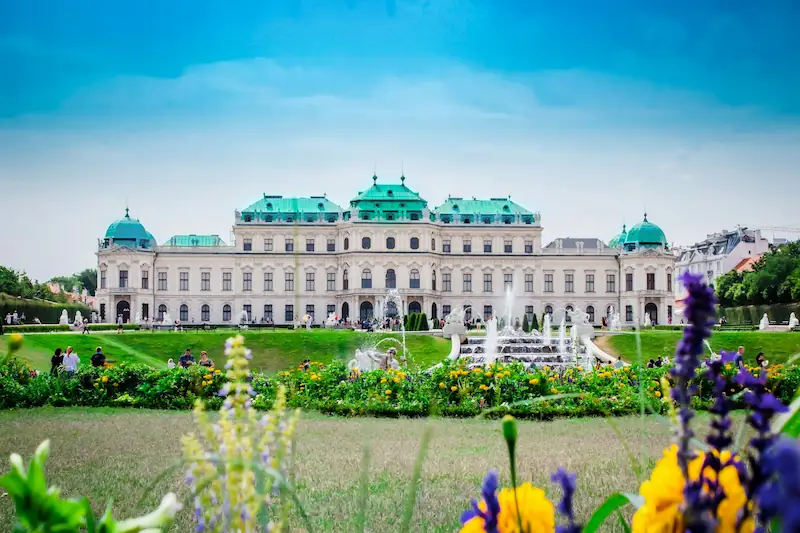
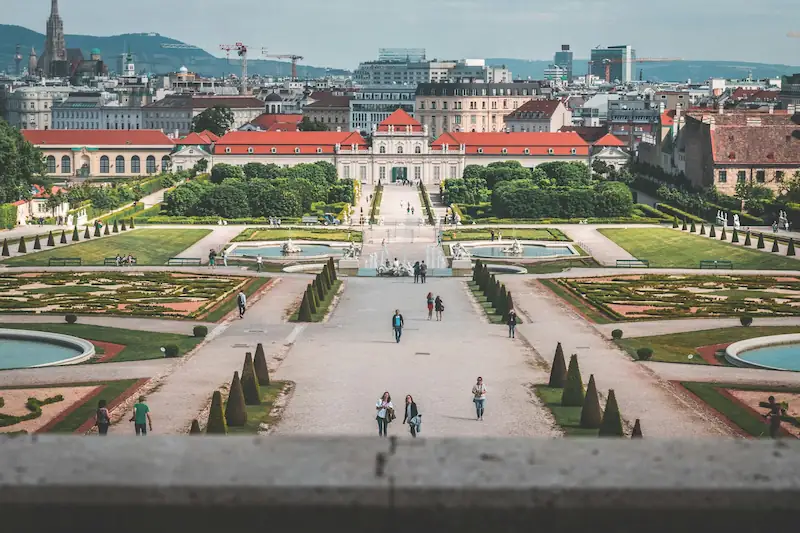
Upper and Lower Belvedere, gardens, Klimt, and the palace cultural district.
Wien Mitte for airport rail, S-Bahn, U-Bahn, shopping, and fast central access.
Stadtpark, Rochusmarkt, Hundertwasser House, Kunst Haus Wien, and Danube Canal edges.
Tram routes toward the Ring, opera, and central districts.
Belvedere and Hauptbahnhof hotel clusters for travelers continuing by rail.
Practical combination of arrival logistics and major cultural access.
Budget
KIBI Rooms self check-in – A simple self-check-in stay near Rochusmarkt and U-Bahn access in Landstrasse. Why we recommend: It is useful for travelers who want low-friction transport and a lower-cost base near the center. Check availability
Hotel Urania – A family-run hotel near the Danube Canal and Hundertwasser House, with practical access to the center. Why we recommend: It gives budget-conscious travelers a more distinctive location than many purely functional hotels. Check availability
Hotel Pribitzer – A simple hotel within reach of Belvedere, suited to travelers who want a low-cost practical stay. Why we recommend: It is most useful when Belvedere proximity and price matter more than hotel style. Check availability
Mid
Ruby Sofie Hotel Vienna – A design-conscious hotel in a former concert-hall setting near Landstrasse-Wien Mitte. Why we recommend: It adds character to a practical district and works well for travelers using airport rail links. Check availability
Hotel Daniel Vienna – A smart lifestyle hotel beside Belvedere and close to the main train station area. Why we recommend: It is a strong fit for travelers who want Belvedere access and a contemporary, informal hotel style. Check availability
Hotel Enziana Wien – A practical hotel near Belvedere, with tram connections toward the Ring and central sights. Why we recommend: It is useful when you want a straightforward Landstrasse stay with cultural access nearby. Check availability
Upscale
InterContinental Wien by IHG – A full-service hotel facing Stadtpark, close to the Ring and central transport. Why we recommend: It works for travelers who want international-hotel reliability with easy access to both Landstrasse and the center. Check availability
Hilton Vienna Park – A large upscale hotel by Stadtpark and Wien Mitte, useful for airport rail, business travel, and central access. Why we recommend: It is one of the most efficient choices when airport connection and hotel infrastructure matter. Check availability
Andaz Vienna Am Belvedere – A modern upscale hotel near Belvedere and the main station area, with strong room quality and contemporary design. Why we recommend: It is best when you want a high-comfort stay outside the old center with rail and Belvedere access. Check availability
Where to stay in Vienna for a first visit
First-time visitors should stay close enough to understand Vienna quickly while choosing the atmosphere they want after sightseeing. Innere Stadt gives maximum landmark access; Neubau gives the best overall balance; Wieden and Josefstadt offer strong alternatives with less visitor pressure.
Choose Innere Stadt for a two- or three-night first visit when walking to St Stephen’s, the Hofburg, State Opera, and central restaurants is worth the premium.
Choose Neubau for the strongest all-round first stay if museums, restaurants, cafés, shopping, and a more contemporary evening atmosphere matter.
Choose Wieden when you want Karlsplatz, Naschmarkt, Belvedere, modernist architecture, and excellent transport in one base.
Choose Josefstadt when quiet streets and proximity to Rathaus, Parliament, and the museum belt matter more than nightlife.
Choose Leopoldstadt only when family space, Prater, apartment accommodation, or value outweigh walking access to every central sight.
Choose Landstrasse for a first visit mainly when airport, rail, Wien Mitte, or Belvedere logistics are unusually important.
StayStyle
BestArea
TradeOff
Maximum convenience
Innere Stadt
Highest prices, smaller rooms, and more visitor pressure
Best all-round
Neubau
Less immediate old-town atmosphere
Quiet and central
Josefstadt
Fewer restaurants and quieter evenings
Food, culture, and transport
Wieden
More uneven atmosphere by street
Family space and value
Leopoldstadt
Requires more public transport
Where to stay in Vienna with family
The best family base in Vienna depends on whether you prioritize room size, parks, walkability, or arrival logistics. Families should check connecting rooms, sofa-bed dimensions, apartment kitchens, lifts, air conditioning, and the route from the nearest station—not only the district name.
Choose Leopoldstadt for the best combination of larger rooms, apartments, Prater, Augarten, playgrounds, and quick U-Bahn access.
Choose Innere Stadt for a short family trip when central hotel returns and minimal walking with tired children justify higher prices and smaller rooms.
Choose Wieden for food options, supermarkets, Karlsplatz transport, Belvedere, and a practical mixed neighborhood.
Choose Landstrasse for apartment-style stays, Wien Mitte airport access, Belvedere, and efficient arrivals or departures.
Consider Hietzing only when Schönbrunn Zoo, gardens, calm residential space, or a longer stay is central to the trip; it is less convenient for a short first visit.
Avoid assuming every family room sleeps four comfortably; verify bed types, room separation, lift access, and breakfast rules.
FamilyNeed
BestArea
Why
Space, parks, and apartments
Leopoldstadt
Prater, Augarten, and larger accommodation make daily routines easier.
Shortest landmark walks
Innere Stadt
Easy hotel returns reduce fatigue on a short trip.
Food, services, and transport
Wieden
Karlsplatz and neighborhood amenities simplify varied days.
Airport and rail simplicity
Landstrasse
Wien Mitte and Belvedere-side transport reduce arrival friction.
Schönbrunn-focused longer stay
Hietzing
Calm and family attractions nearby, but farther from the central core.
Where to stay in Vienna for nightlife and evenings
Vienna’s evening appeal is spread across restaurants, wine bars, cocktail bars, concerts, opera, canal-side venues, and neighborhood streets rather than one dominant nightlife district. Choose the base according to the kind of evening you want, not simply the latest closing time.
Choose Neubau for the strongest overall mix of restaurants, bars, cafés, design hotels, Spittelberg, and informal evenings.
Choose Innere Stadt for opera, concerts, grand hotels, classic restaurants, cocktail bars, and elegant night walks.
Choose Wieden for Naschmarkt, Freihausviertel, Karlsplatz, restaurants, and useful late transport.
Choose Leopoldstadt—especially Karmeliterviertel or the canal edge—for relaxed restaurants, bars, summer waterside venues, and less formal evenings.
Consider Mariahilf for shopping, restaurants, LGBTQ+ nightlife access, and value close to Neubau, even though it is not included as a principal area card.
Avoid Josefstadt if nightlife is a major priority; choose it for calm evenings and cultural access instead.
EveningStyle
BestArea
TradeOff
Restaurants and bars
Neubau
Some streets can be lively or noisy
Opera, concerts, and polished nights
Innere Stadt
Higher hotel and dining prices
Food and mixed local evenings
Wieden
Nightlife is dispersed
Canal-side and relaxed
Leopoldstadt
Less formal and more seasonal
Where to stay in Vienna on a budget
Affordable accommodation in Vienna is less about finding the cheapest district than preserving a direct route to the places you will actually visit. A modest pension near the Ring or a simple hotel beside an U-Bahn can cost more per night but save time, transport friction, and late-night taxis.
Leopoldstadt often offers the strongest balance of price, room size, apartment supply, parks, and fast transport.
Landstrasse can offer good rates near Wien Mitte, Rochusmarkt, Belvedere, or tram routes, but avoid isolated addresses deep in the district.
Josefstadt and Alsergrund have traditional pensions that can outperform cheaper chain hotels farther from the center.
Mariahilf and Margareten can provide lower prices close to Wieden and Neubau when the hotel is near U3, U4, or a direct tram.
The Hauptbahnhof and Favoriten hotel cluster can be good value for rail travelers, but it is primarily a transport strategy rather than an atmospheric first-visit base.
Innere Stadt budget options are usually pensions, guesthouses, shared-bathroom rooms, or older properties; book early and check lift and air-conditioning details.
Do not stay far outside the inner districts solely to save a small amount unless the public-transport route is direct and the room is substantially better.
BudgetStrategy
Area
WatchOut
Best value with room space
Leopoldstadt
Choose a useful station and check the exact micro-area.
Practical airport or rail value
Landstrasse or Hauptbahnhof edge
Atmosphere varies and some hotels are far from evening areas.
Traditional central-adjacent pensions
Josefstadt or Alsergrund
Rooms may be simple, traditional, or without full hotel facilities.
Shopping and inner-district value
Mariahilf or Wieden edge
Traffic and street noise vary.
Cheap but fully central
Innere Stadt guesthouses
Small rooms, older buildings, and limited amenities.
Where to stay depending on trip length
The shorter the visit, the more valuable a central or Ring-adjacent hotel becomes. From four nights onward, restaurant choice, space, neighborhood atmosphere, and room comfort can outweigh the ability to walk to every landmark.
Label
Stay
Avoid
Why
1 night or stopover
Landstrasse near Wien Mitte, Hauptbahnhof/Belvedere edge, or Innere Stadt if sightseeing is the priority
Remote residential areas without a direct airport or station route
Arrival, departure, and one efficient central evening matter more than neighborhood depth.
2 nights
Innere Stadt, immediate Ring edge, Neubau, or Wieden near Karlsplatz
Outer areas chosen only for a modest price saving
Walking access and fast orientation justify paying more on a very short stay.
3 days
Innere Stadt, Neubau, Josefstadt, or Wieden
Poorly connected hotel clusters beyond the inner districts
These areas keep the historic center, major museums, one palace day, cafés, and evening culture easy to combine.
4 to 5 days
Neubau, Josefstadt, Wieden, Leopoldstadt, or selected Landstrasse micro-areas
Overpaying for Innere Stadt if room comfort and local evenings matter more
Longer trips benefit from restaurant choice, quiet returns, and a sustainable neighborhood rhythm.
1 week
Leopoldstadt, Wieden, Landstrasse, Neubau, Alsergrund, or Hietzing for a specialist stay
Very small central rooms with weak storage or no useful services
Space, laundry, kitchens, parks, supermarkets, and easy transport become more important.
Culture-first trip
Neubau, Josefstadt, Innere Stadt, or Wieden
A hotel that creates long returns after museums, opera, or concerts
Museum and performance days are easier when cafés, restaurants, and cultural venues surround the base.
Family stay
Leopoldstadt, Wieden, Landstrasse, or Innere Stadt for a short premium stay
Hotels with unclear bed layouts, no lift, or difficult station access
Room configuration, parks, transport, and easy resets matter more than postcard atmosphere.
Christmas markets
Innere Stadt, Josefstadt/Rathaus edge, Neubau, or Wieden/Karlsplatz
Areas requiring several changes after cold evening market visits
The best base depends on whether Stephansplatz, Rathausplatz, Spittelberg, or Karlsplatz is your principal evening cluster.
Repeat visit
Neubau, Leopoldstadt/Karmeliterviertel, Wieden, Alsergrund, Hietzing, or Döbling
Automatically paying for the old center again
Neighborhood restaurants, architecture, parks, vineyards, and specialist interests can lead the trip.
How to choose a hotel in Vienna
After choosing the area, evaluate the exact property and street. Vienna hotels range from historic pensions in buildings without modern circulation to new lifestyle hotels beside transport hubs. Location labels can be generous, so verify the walking route, station entrance, room layout, noise exposure, and seasonal comfort before comparing price alone.
Topic
WhatToDo
WhatToAvoid
WhyItMatters
Check the exact street and useful edge of the district
Map the hotel against the U-Bahn or tram entrance, evening restaurants, and the attractions you will visit most.
Assuming every address within a named district offers the same convenience.
Leopoldstadt, Landstrasse, Wieden, and Neubau change significantly from one edge to another.
Verify room configuration, not only occupancy
Check exact bed types, sofa-bed dimensions, connecting-room guarantees, bathroom count, and whether children share existing beds.
Relying on a “family room” label without reading the layout.
Vienna’s historic buildings often create irregular rooms, and nominal capacity may not mean comfortable family space.
Check lift access and entrance steps
Confirm whether the lift starts at street level and reaches the actual room floor.
Assuming every historic pension has step-free access.
Older buildings may have half-landings, small lifts, or stairs before reception.
Take summer air conditioning seriously
Confirm that air conditioning is in the room, individually controlled, and not limited to public areas.
Treating “fan available” or naturally cool historic rooms as equivalent.
Vienna can be hot in summer, especially in upper-floor rooms and street-facing historic buildings.
Protect sleep on busy streets
Request courtyard-facing or high-floor rooms near nightlife, shopping streets, tram lines, Praterstern, Karlsplatz, or major roads.
Choosing the busiest frontage simply because it looks central.
A quiet room can matter more than saving five minutes of walking after full cultural days.
Prioritize transit in Leopoldstadt and Landstrasse
Stay near a direct U-Bahn, tram, Wien Mitte, Praterstern, or rail route that serves your actual itinerary.
A cheaper hotel requiring daily transfers or long station walks.
These districts deliver value only when their transport advantage is real.
Book boutique and family inventory early
Reserve distinctive Neubau, Josefstadt, central boutique, and multi-bed family rooms early for spring, autumn, December, and holidays.
Waiting until only generic rooms, non-refundable rates, or awkward layouts remain.
The most desirable room types sell before the city appears fully booked.
Match hotel style to trip length
For two nights, prioritize location; for a week, prioritize room size, storage, laundry, breakfast flexibility, workspace, and neighborhood services.
Paying for a tiny central room throughout a long stay.
Comfort and daily routine become increasingly important as the stay lengthens.
Compare total cost, not headline rate
Include breakfast, taxes, child supplements, parking, cancellation terms, and airport-transfer savings.
Choosing a cheaper non-refundable room with costly extras or poor flexibility.
Vienna hotel value can change materially once meal and room-occupancy rules are included.
Check construction and renovation status
Read recent reviews for scaffolding, street works, breakfast-room changes, or partial renovation.
Relying only on polished official photography.
Historic buildings and central streets are frequently renovated, affecting noise, views, and access.
Use the station area for the right reason
Choose Hauptbahnhof or Wien Mitte when early trains, late arrivals, airport access, or onward travel genuinely dominate the schedule.
Selecting a station hotel as the default cheapest option for a romantic first visit.
Transport convenience is valuable, but it does not automatically create the best evening base.
FAQ: where to stay in Vienna
These answers cover the main decisions behind choosing a Vienna neighborhood: first visits, trip length, families, budget, nightlife, transport hubs, Christmas markets, Schönbrunn, vineyards, safety, and hotel micro-location.
What is the best area to stay in Vienna for first-time visitors?
Innere Stadt is the most convenient choice for a short first visit because St Stephen’s Cathedral, the Hofburg, State Opera, cafés, and central restaurants are walkable. Neubau is the best all-round alternative for visitors who want museums, dining, design, and a more contemporary neighborhood while remaining close to the center.
What is the best overall neighborhood to stay in Vienna?
For many travelers, Neubau offers the best overall balance of location, culture, restaurants, cafés, boutique hotels, shopping, and evening atmosphere. Innere Stadt wins for pure convenience, while Wieden and Josefstadt are stronger for practical access or quiet.
Where should I stay in Vienna for a 2-night trip?
Stay in Innere Stadt, near the immediate Ring, in Neubau close to MuseumsQuartier, or in Wieden near Karlsplatz. On a two-night stay, central access usually matters more than room size or saving a small amount on the nightly rate.
Where should I stay in Vienna for 3 days?
Choose Innere Stadt, Neubau, Josefstadt, or Wieden. These districts keep the historic center, museums, cafés, one palace visit, and evening culture close enough to combine without losing time to repeated transfers.
Where should I stay in Vienna for 4 or 5 days?
Neubau, Josefstadt, Wieden, Leopoldstadt, and selected parts of Landstrasse become especially attractive for four or five days. They offer stronger neighborhood life, restaurants, room value, or transport while remaining close enough for daily sightseeing.
Is it worth staying in Innere Stadt?
Yes for first visits, short stays, luxury trips, Christmas-market weekends, opera or concert trips, and travelers who want to walk almost everywhere. It is less compelling for long stays, larger families, budget travelers, or visitors who prefer local neighborhood evenings.
Is Neubau a good place to stay in Vienna?
Yes. Neubau is one of Vienna’s strongest bases for MuseumsQuartier, restaurants, cafés, design shops, bars, and boutique hotels. It feels more contemporary than the historic center while remaining within walking distance or a short ride of the main sights.
Is Josefstadt a good area to stay?
Josefstadt is excellent for quiet, culturally focused stays near Rathaus, Parliament, Burgtheater, and the museum district. It suits couples and solo travelers who value calm streets more than nightlife, extensive shopping, or a large restaurant scene.
Is Wieden a good area to stay in Vienna?
Wieden is one of the most practical central-adjacent districts. It offers access to Karlsplatz, Naschmarkt, Secession, Wien Museum, Belvedere, the opera area, and several transport lines. The precise street matters because the district varies from elegant and residential to busy and functional.
Is Leopoldstadt a good area for tourists?
Yes, especially for families, apartment stays, parks, Prater, Karmeliterviertel, runners, and travelers seeking more room or value. Choose a hotel near a useful U-Bahn station or close to the canal side if easy central access is important.
Is Landstrasse a good area to stay in Vienna?
Landstrasse is best for travelers prioritizing Wien Mitte, airport access, Belvedere, Stadtpark, rail links, or efficient arrival logistics. It is less consistently atmospheric than Neubau or Josefstadt, so choose the exact micro-area carefully.
Where should families stay in Vienna?
Leopoldstadt is usually the strongest family choice for larger rooms, apartments, Prater, Augarten, and quick transport. Wieden and Landstrasse are practical for services and connections, while Innere Stadt works well for a short premium stay with easy hotel returns.
Where should couples stay in Vienna?
Neubau suits couples who want restaurants, cafés, design, and museums. Innere Stadt is best for a romantic luxury or first visit, Josefstadt for quiet elegance, Wieden for food and culture, and Döbling or Hietzing for a slower repeat visit.
Where should solo travelers stay in Vienna?
Neubau, Josefstadt, Wieden, and Innere Stadt are all strong. Neubau offers the easiest mix of cafés and evenings, Josefstadt is calm, Wieden is practical, and Innere Stadt minimizes navigation on a short first trip.
Where should I stay in Vienna on a budget?
Look first at Leopoldstadt, Landstrasse, Josefstadt pensions, Mariahilf, Margareten, or the Hauptbahnhof edge. Prioritize a direct U-Bahn or tram route and compare the total cost of transport, breakfast, and room configuration rather than the room rate alone.
What is the best area to stay in Vienna for luxury hotels?
Innere Stadt has the strongest concentration of palace hotels, international luxury brands, historic properties, and high-end restaurants. The Ring edge, Neubau near MuseumsQuartier, and selected Landstrasse or Belvedere hotels offer alternatives with spa or design appeal.
What is the best area for boutique hotels in Vienna?
Neubau is the strongest boutique-hotel district, particularly around Spittelberg and MuseumsQuartier. Josefstadt has smaller characterful hotels, while Innere Stadt offers refined luxury boutiques at higher prices.
What area of Vienna has the best nightlife?
Neubau offers the best overall mix of bars, restaurants, cafés, and informal evening life. Wieden and Mariahilf provide scattered bars and dining, Leopoldstadt works for Karmeliterviertel and canal-side evenings, and Innere Stadt is best for opera, concerts, cocktail bars, and polished late walks.
Where should I stay for Vienna Christmas markets?
Innere Stadt is best for Stephansplatz, Freyung, Am Hof, and central markets. Josefstadt or the Rathaus edge suits Rathausplatz, Neubau suits Spittelberg, and Wieden near Karlsplatz works well for the Karlsplatz market. Book early for late November and December weekends.
Where should I stay near Schönbrunn Palace?
Stay in Hietzing if Schönbrunn Palace, the zoo, gardens, calm residential streets, or a family-focused longer visit is central to the trip. For a typical first visit, Wieden, Neubau, or Innere Stadt usually offer a better overall base with a simple U4 journey to Schönbrunn.
Should I stay near Vienna Hauptbahnhof?
The Main Station area is useful for early trains, late arrivals, rail-based day trips, and often good-value modern hotels. It is not the most atmospheric first-visit base, but the Belvedere side offers a better balance than staying solely for the station.
Should I stay near Wien Mitte?
Wien Mitte is one of the best practical locations for airport connections, U-Bahn and S-Bahn access, Stadtpark, and walking into the center. It suits short efficient stays and business-leisure trips, though it has less neighborhood character than Neubau or Josefstadt.
Where should I stay for easy airport access?
Landstrasse near Wien Mitte is the clearest choice for airport rail connections. Hauptbahnhof can also work depending on the transfer used, while central hotels may be convenient for taxis or private transfers. Compare the actual airport route and departure time before choosing.
Where should I stay for day trips by train?
Hauptbahnhof and the Belvedere side are strongest for Salzburg, Graz, Budapest, and other main-line routes. Wien Mitte is useful for regional and airport connections, while hotels near Westbahnhof can suit western routes and provide access to Mariahilf and Neubau.
Is Vienna safe and which areas feel safest?
Vienna is generally safe across the main visitor districts. Innere Stadt, Josefstadt, Neubau, Wieden, Leopoldstadt, and Landstrasse are all common choices. For the calmest residential feel, Josefstadt and selected Wieden or Neubau streets stand out; normal city awareness is still appropriate near busy stations and nightlife.
Which Vienna district is closest to the main attractions?
Innere Stadt contains or directly borders the highest concentration of headline attractions. Neubau, Josefstadt, and Wieden sit immediately outside the Ring and can be nearly as practical depending on which museums, restaurants, and transport lines matter most.
Can I stay outside central Vienna and still visit easily?
Yes, provided the hotel is near a direct U-Bahn or tram. Hietzing, Alsergrund, Margareten, Mariahilf, Favoriten, and Döbling can work for specific budgets or interests, but a short first visit is usually smoother in one of the six principal areas.
Where should repeat visitors stay in Vienna?
Repeat visitors can look beyond the historic core to Karmeliterviertel in Leopoldstadt, Wieden, Alsergrund, Hietzing, or Döbling and Grinzing. These areas support neighborhood restaurants, architecture, parks, vineyards, and slower local experiences.
Is it better to stay near an U-Bahn station or in the old town?
For a two- or three-night first visit, old-town or Ring-adjacent walkability is usually worth more. For longer stays, families, or lower budgets, a good hotel beside a direct U-Bahn can be more comfortable and nearly as efficient.
What should I check before booking a hotel in Vienna?
Check the exact street, walking route to transport, air conditioning, lift access, room and bed configuration, courtyard or street exposure, breakfast price, cancellation terms, construction reviews, and whether the hotel’s neighborhood label accurately reflects its location.
The best area to stay in Vienna is the one that supports your actual days and evenings: choose the district first, then verify the exact street, transport route, room layout, and seasonal comfort before booking.
Continue planning your Vienna trip
Once you have chosen the right Vienna neighborhood, connect it with the city guide, the complete things-to-do guide, and an itinerary that keeps palaces, museums, coffeehouses, concerts, family time, and neighborhood evenings geographically coherent.
Find the best places to stay, how to get there, and move around with ease.
Build a smarter trip base
Turn the right neighborhood into the right itinerary
Once you know where to stay in Vienna, the next step is structuring the rest of your trip around that base. Use the planner to build a route that fits your pace, priorities, and how you actually want your days to unfold.