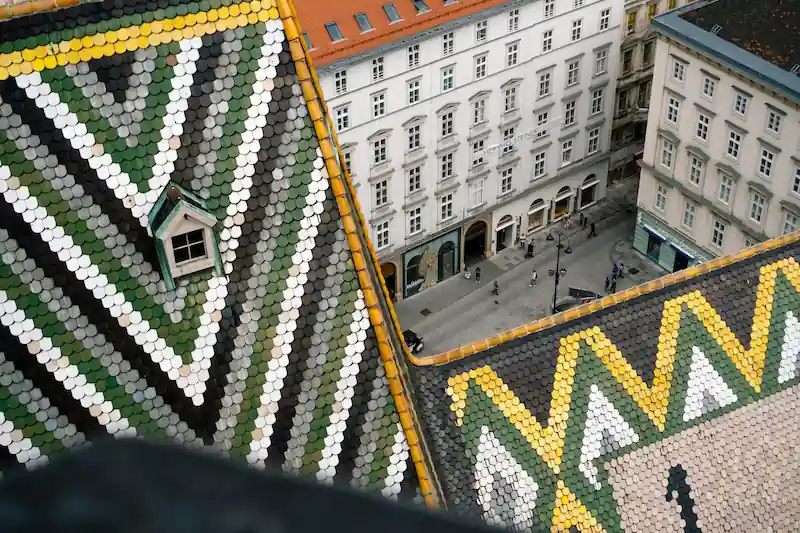
Where to stay in Vienna
Find the best neighborhoods and hotels in Vienna.
Open page →
Plan your trip to Vienna, choose the right area to stay, and understand which experiences deserve your time. Vienna combines imperial palaces, major art collections, classical music, coffeehouse culture, modernist architecture, green parks, neighborhood markets, and vineyards within one highly navigable capital. The city is easy to visit, but it rewards selective planning: one major cultural anchor at a time, enough space for cafés and streets, and a clear balance between ceremonial Vienna and the city people live in today.
Find the best neighborhoods and hotels in Vienna.
Open page →
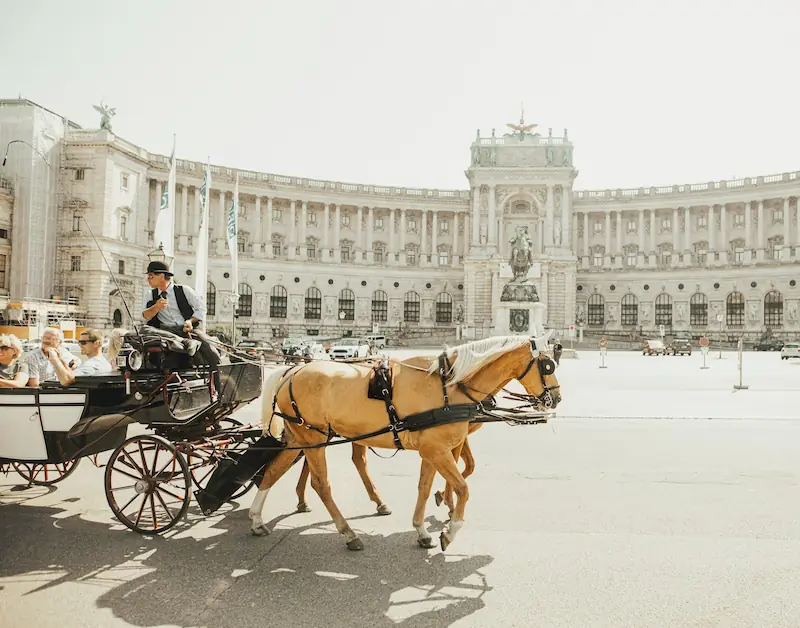
Prioritize the activities that deserve your time in Vienna.
Open page →
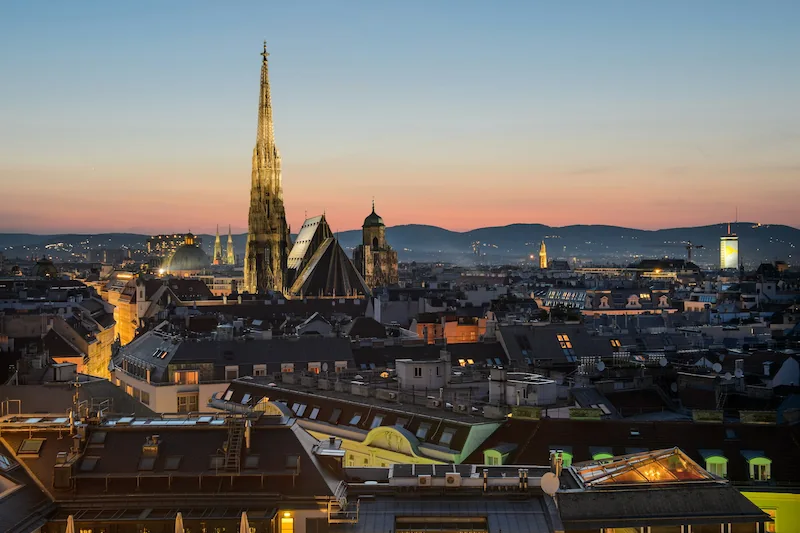
2 Days in Vienna: Essential First-Time Itinerary
Open itinerary →
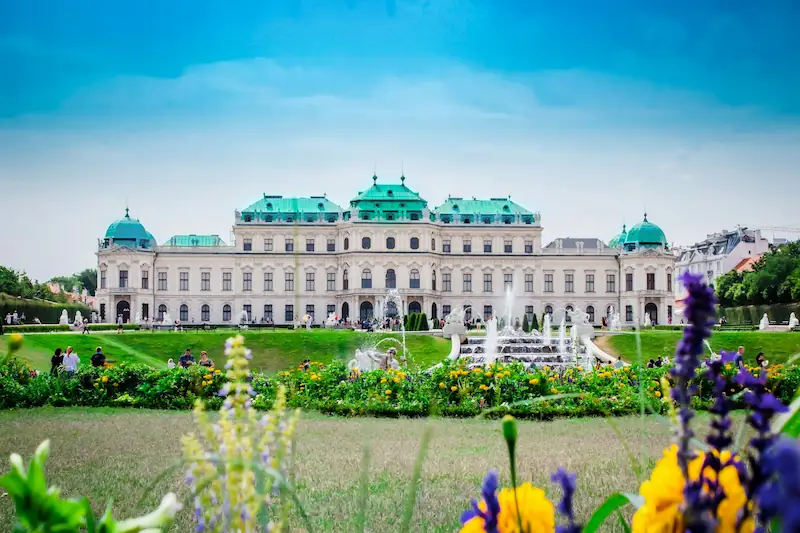
3 Days in Vienna: Best Art & Culture Itinerary
Open itinerary →
4 Days in Vienna: Best Neighborhood Itinerary
Open itinerary →
Vienna is built around three useful visitor layers: the compact Innere Stadt, the Ringstrasse and museum belt, and the inner residential districts that soften the city beyond its imperial image. Add the western palace landscape of Schönbrunn, the eastern green space of Prater, and the northern wine hills, and the city becomes much broader than its historic center.
Vienna is worth building a trip around because few European capitals combine this much cultural depth with such low logistical friction. You can move from Habsburg palaces and Klimt to modern design, interactive music, neighborhood markets, large parks, and vineyard taverns without turning the trip into a transport exercise. Its greatest strength is not only the number of famous sights, but the way museums, music, cafés, public space, and daily routines still reinforce one another.
Best time: April–June or September–October for the best balance of weather, gardens, museums, music, and manageable crowds.
Ideal trip length: 3 days covers the essentials; 4 to 5 days allows Vienna’s cultural and neighborhood rhythm to emerge; 7 days supports deeper exploration and a day trip.
Vienna is moderately expensive, but its public transport, museum pricing, free public spaces, and broad hotel supply make costs easier to control than in many Western European capitals. Central hotels, opera or concert seats, fine dining, and multiple paid palace experiences drive the budget most. Staying just outside the Innere Stadt and choosing one major paid anchor per day usually delivers the best value.
Vienna’s visitor map begins with the Innere Stadt inside the Ringstrasse. Around it sit the Hofburg, opera, Rathaus, Parliament, major museums, and MuseumsQuartier. Wieden and Landstrasse extend the cultural core toward Karlsplatz and Belvedere; Neubau and Josefstadt add restaurants, cafés, design, and quieter streets; Leopoldstadt opens toward Prater and the Danube Canal. Schönbrunn is a separate western half-day, while the wine hills around Nussdorf and Grinzing form a slower northern edge.
Central Vienna is mostly flat and structured more by the Ringstrasse, tram lines, parks, and district boundaries than by the Danube itself. The Danube Canal marks the eastern edge of the historic core, while the main river and Old Danube sit farther out. This makes walking efficient in the center, but public transport valuable for Schönbrunn, Prater, the Danube, and the vineyards.
Vienna works best in deliberate phases: a palace, museum, or historic cluster in the morning; lunch and a slower district in the afternoon; then a concert, opera, neighborhood dinner, coffeehouse, or Prater evening. The city rarely rewards sprinting. Its atmosphere appears through repetition—trams, café interiors, formal gardens, residential facades, and the shift from daytime institutions to evening performance culture.
Think of Vienna as five connected experiences: the medieval and imperial center, the Ringstrasse cultural belt, one major palace, one lived-in inner district, and one evening shaped by music or local ritual. Once those are protected, add specialist museums, Prater, Hundertwasser, the vineyards, or the Danube according to interest.
Open the planner
Start with the Innere Stadt and Hofburg so the rest of Vienna has a clear geographic and historical reference point. Protect one heavyweight cultural anchor per day: Schönbrunn, the Kunsthistorisches Museum, Upper Belvedere, a Hofburg interior cluster, or a major performance. Treat Schönbrunn as a self-contained western half-day and combine its palace rooms, gardens, and Gloriette rather than squeezing it between central sights. Use the Hofburg selectively: the Spanish Riding School, State Hall, Imperial Treasury, Sisi Museum, and Imperial Apartments serve different interests and should not all be forced into one visit. Pair nearby areas intelligently: Belvedere with Karlsplatz and Wieden; MuseumsQuartier with Neubau; Prater with Leopoldstadt; Hundertwasser with Stadtpark or the Danube Canal. Reserve at least one slower half-day for cafés, neighborhood streets, Prater, or the wine hills so the trip is not entirely made of formal interiors. Choose concerts by venue, ensemble, and repertoire rather than booking the first Mozart-branded option. Keep one flexible block for weather, energy, and exhibitions; Vienna has enough strong indoor choices that every hour does not need to be fixed.
Vibe: Formal, central, historic, and dense with cultural weight.
Why go: Choose the Innere Stadt for direct access to St Stephen’s Cathedral, the Hofburg, State Opera, major coffeehouses, churches, shopping streets, and the easiest first-day orientation.
Who it fits: First-time visitors, short stays, luxury travelers, culture-heavy weekends, and anyone who wants the city at their doorstep.
Not for: Travelers who prefer quiet residential streets, better-value hotels, or a stronger sense of everyday local life.
Where to stay: The Innere Stadt is the most convenient base for a first Vienna trip, especially with limited time, but it is also the most expensive and most visitor-facing area.
Vibe: Creative, walkable, design-aware, and close to major museums without feeling formal.
Why go: Choose Neubau for Vienna’s strongest all-round mix of MuseumsQuartier, art museums, Spittelberg, independent shops, cafés, restaurants, and easy walks into the center.
Who it fits: Design-minded travelers, repeat visitors, couples, solo travelers, and first-timers who want culture plus neighborhood texture.
Not for: Travelers who want palace-door grandeur or the shortest possible walk to every historic landmark.
Where to stay: Neubau gives Vienna a more contemporary edge while keeping the city's cultural core close, making it the strongest all-round stay for many visitors.
Vibe: Elegant, residential, quiet, and close to the Ring without the center's intensity.
Why go: Choose Josefstadt for quiet residential elegance close to Rathaus, Parliament, Burgtheater, the university, and the western Ringstrasse museum cluster.
Who it fits: Couples, calm city breakers, culturally focused travelers, and visitors who prefer graceful streets over nightlife.
Not for: Travelers who want the strongest restaurant density, nightlife, or instant monument access outside the hotel door.
Where to stay: Josefstadt is a polished inner-district base that keeps Vienna calm in the mornings and reachable during the day.
Vibe: Open, practical, greener, and more relaxed than the historic center.
Why go: Choose Leopoldstadt for Prater, green space, family-friendly room options, Karmeliterviertel, Jewish heritage, and quick transport across the Danube Canal into the center.
Who it fits: Families, longer stays, runners, value-conscious travelers, and visitors who want more breathing room.
Not for: Travelers who want every evening to unfold in the old center or who dislike using transit after dinner.
Where to stay: Leopoldstadt is a strong practical base when space, parks, and value matter more than historic-center atmosphere.
Vibe: Cultured, central-adjacent, slightly student-like, and useful for both museums and food.
Why go: Choose Wieden for Karlsplatz, Karlskirche, Naschmarkt, Secession architecture, Belvedere access, restaurants, and some of Vienna’s most useful transport connections.
Who it fits: Museum visitors, food-oriented travelers, couples, and anyone who wants a balanced base south of the center.
Not for: Travelers who want an old-town-only atmosphere or the quietest residential setting.
Where to stay: Wieden is one of Vienna's most useful base areas for travelers who want central access with a more mixed urban feel.
Vibe: Practical, museum-adjacent, residential in parts, and anchored by Belvedere.
Why go: Choose Landstrasse for Upper Belvedere, Hundertwasser architecture, Stadtpark, Wien Mitte airport connections, and a practical base just east of the center.
Who it fits: Train-focused travelers, museum visitors, business-leisure stays, and those who value efficient connections.
Not for: Travelers seeking the strongest evening atmosphere or the most characterful café-and-boutique streets.
Where to stay: Landstrasse is less romantic than Neubau or Josefstadt, but it can be highly convenient for Belvedere, transport, and a smoother arrival or departure.
Vienna’s essential experiences form a clear hierarchy: understand the imperial center, choose one palace and one major collection, experience the city’s musical identity, then add coffeehouses, neighborhoods, parks, modern architecture, or vineyards. Choose the layers that match your interests rather than attempting every attraction.
Planning tip: Build each day around one major anchor and one contrasting, lower-intensity experience; Vienna becomes repetitive when palaces and museums are stacked without a change of pace.
The Ringstrasse is Vienna's great urban narrative, wrapping museums, theatres, government buildings, parks, and monuments around the old center. Walking parts of it gives the city structure before individual sights compete for attention.
Tip: Use short sections rather than trying to complete the whole boulevard in one continuous walk.
The Hofburg is not one sight but a district of power, ceremony, museums, courtyards, and state memory. Its scale explains why Vienna feels less like a medieval old town and more like a capital built around institutions.
Tip: Choose the specific Hofburg interiors or museums that matter to you rather than treating the whole complex as one mandatory visit.
The Spanish Riding School is one of Vienna’s most distinctive living imperial traditions. Performances combine Lipizzaner horses, classical riding, music, and the Baroque architecture of the Hofburg’s Winter Riding School in a way no static palace room can reproduce.
Tip: Choose a formal performance for the complete experience; morning exercise is shorter and less choreographed.
The State Hall delivers one of Vienna’s strongest architectural interiors in a compact visit. Its Baroque dome, historic book collection, statues, and imperial scale make it an ideal Hofburg addition for travelers who want visual impact without another long museum.
Tip: Combine it with Josefsplatz, the Hofburg courtyards, or the Imperial Treasury; most visitors need under an hour inside.
Schönbrunn carries Vienna's imperial story westward, shifting the experience from dense urban palaces to gardens, axes, rooms, and controlled landscape. It is one of the few sights that can legitimately define half a day.
Tip: Plan the palace and gardens together; separating them weakens the scale of the experience.
St Stephen's Cathedral gives the Innere Stadt its vertical anchor, but the surrounding streets matter just as much. This is where Vienna's compact center feels most compressed, with shoppers, visitors, church bells, and narrow passages crossing in quick succession.
Tip: Look beyond the main square into the smaller lanes nearby, where the historic center becomes easier to absorb.
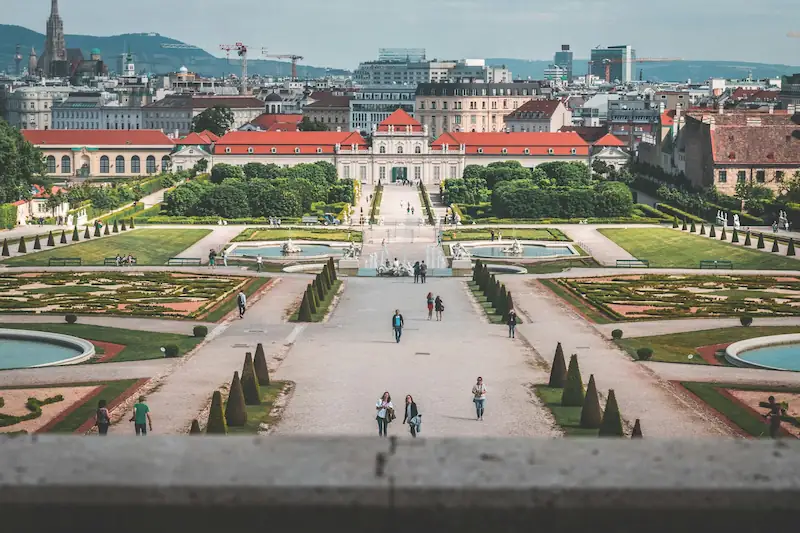
Belvedere works because it combines a major art collection with one of Vienna's clearest palace-and-garden compositions. The approach through the grounds helps frame the museum before you step inside.
Tip: Allow time for the exterior axis as well as the galleries; the setting is part of the visit.
Vienna's performance culture is not an accessory; it is one of the ways the city still functions as a cultural capital. Even if you are not a specialist, an evening performance changes the pace and formality of the trip.
Tip: Choose the venue and format that match your interest level, from major opera to shorter chamber concerts.
The Kunsthistorisches Museum is one of Vienna's strongest arguments for slowing down. Its collections are deep enough to overwhelm, but the building, galleries, and pacing make it a defining cultural experience.
Tip: Enter with a small set of priorities rather than trying to see every gallery.
MuseumsQuartier shifts Vienna from imperial culture to modern cultural infrastructure. It is a place for major museums, but also for sitting, crossing, pausing, and seeing how the city handles contemporary public space.
Tip: Use the courtyard as a transition point between museums, not just as an entrance zone.
Check guided tours →
Vienna's modernist and Secessionist layer prevents the city from becoming a purely imperial destination. Around Karlsplatz, architecture, design history, and urban movement intersect in a way that sharpens the city's cultural profile.
Tip: Combine this area with Wieden or Naschmarkt for a broader reading of the district.
Leopoldstadt adds a deeper historical layer to Vienna through Jewish heritage, memory, displacement, and renewed community life. It is quieter than the center, but its history changes the way the city is understood.
Tip: A guided walk can add context here because much of the story is not obvious from the streets alone.
The Wien Museum provides the clearest overview of Vienna as a city rather than an imperial collection. It connects Roman origins, urban growth, Habsburg power, modernism, war, reconstruction, and contemporary life, making later architecture and neighborhoods easier to read.
Tip: Pair it with Karlskirche, the Secession, Naschmarkt, or Wieden for one of Vienna’s most coherent culture-and-city days.
Check guided tours →
Hundertwasser House and nearby Kunst Haus Wien break sharply from Vienna’s formal symmetry. Their irregular forms, vegetation, color, and environmental ideas reveal a more experimental architectural identity that is especially valuable after the Ringstrasse and imperial center.
Tip: View the residential Hundertwasser House from outside, then use Kunst Haus Wien for the deeper museum experience.
Coffeehouses are one of Vienna's most important civic interiors, not simply places for cake. They slow the day down and make the city feel less like a sequence of sights.
Tip: Treat the stop as a seated pause, not a takeaway break.
Check guided tours →
Neubau and Spittelberg bring Vienna down to a more human scale, with galleries, shops, cafés, and narrow streets close to the museum belt. The shift from monumental stone to smaller facades is one of the city's best transitions.
Tip: Come between museum time and dinner, when the neighborhood has movement without feeling rushed.
Check guided tours →
Prater gives Vienna physical release after museums, churches, and formal streets. Its long paths and open spaces show how the city breathes beyond the Ring.
Tip: Use it when the trip starts to feel interior-heavy.
Check guided tours →
The Danube Canal gives Vienna a less formal edge, especially near the center and Leopoldstadt. It is not the city's grandest landscape, but it changes the evening texture with water, bridges, and looser social energy.
Tip: Use it as a post-dinner or early-evening walk rather than a main sightseeing objective.
Check guided tours →
Vienna’s vineyards are one of the clearest reasons to leave the monumental center. Around Nussdorf, Grinzing, and the northern hills, walking routes, city views, local wine, and Heuriger taverns create a rural-feeling experience without leaving Vienna.
Tip: Go in good weather from late afternoon, verify tavern opening days, and let the walk and meal replace other sightseeing rather than squeeze them around timed tickets.
Wiener Schnitzel is worth doing properly because it connects food, service, and dining-room culture rather than just a single dish. The best versions feel crisp, simple, and precise.
Tip: Choose a restaurant known for Austrian classics rather than ordering it randomly near major tourist streets.
Check food options →
Naschmarkt is not Vienna's deepest food experience, but it is useful for seeing the city in a looser, more social register. The market's movement contrasts well with nearby museums and Karlsplatz.
Tip: Go for atmosphere and a meal break, not as the single definitive expression of Viennese cuisine.
Cake and coffee can easily become a cliché in Vienna, but the ritual still matters when treated with time. It gives the day a pause between heavy cultural interiors.
Tip: A quieter café can be better than the most photographed room if the point is to slow down.
Check food options →
Vienna's food scene is stronger when you look beyond the old clichés. Modern Austrian cooking, natural wine bars, and neighborhood restaurants help balance the city's formal culinary image.
Tip: Neubau, Wieden, and adjacent districts are useful hunting grounds for a more current dining mood.
Check food options →
A Würstelstand shows a faster and less formal food tradition than Vienna’s dining rooms and coffeehouses. Käsekrainer, bratwurst, and frankfurters work especially well after a concert, an opera, or a long central walk.
Tip: Treat it as a quick local ritual rather than a destination meal, and choose a stand with steady local traffic.
Check food options →
Vienna rewards confident editing. A first trip needs the historic and imperial framework, one major art or museum experience, one musical or living cultural tradition, and enough unstructured time for cafés, neighborhoods, parks, or vineyards to change the pace.
Vienna is one of Europe’s easier major cities with children because public transport is reliable, distances are manageable, and strong family attractions sit close to parks and cafés. The main planning rule is contrast: alternate one formal sight with something interactive or outdoors. Schönbrunn, Prater, House of Music, ZOOM Children’s Museum, the Natural History Museum, and the Science and Technology Museum can carry a family itinerary without reducing the trip to adult attractions.
Vienna itineraries should protect attention as carefully as time. Three days gives you the essential structure; five days lets the city breathe; seven days opens the surrounding cultural landscape without rushing the capital itself.
Open the planner →
Vienna is straightforward to visit, but its depth makes prioritization more important than logistics. Public transport covers every major visitor zone, the center is walkable, and poor weather rarely stops the trip. The best planning decisions concern sequence: which major interior deserves the day, where to slow down afterward, and which evening experience needs advance booking.
April to June and September to October are the strongest all-round periods. December offers Christmas markets and festive atmosphere but higher hotel demand and crowded central squares. July and August favor parks, Danube activities, and long evenings but can be hot. January and February are quieter and work well for museums, coffeehouses, balls, concerts, and indoor culture.
Three full days is the practical minimum for a first visit: historic center and Hofburg, one palace, one major museum, one neighborhood layer, and one evening experience. Four to five days is the sweet spot for adding Prater, modernist Vienna, Hundertwasser, vineyards, or deeper music and museum choices.
Stay in the Innere Stadt for maximum convenience and short-trip intensity, Neubau for the best all-round balance, Josefstadt for quiet elegance, Wieden for culture and food access, Leopoldstadt for space and families, and Landstrasse for practical transport and Belvedere proximity.
Vienna International Airport connects to the city through regular rail services, the City Airport Train, buses, taxis, and private transfers. Vienna Hauptbahnhof and Wien Meidling provide strong rail links across Austria and Central Europe, including Salzburg, Bratislava, Budapest, Prague, Munich, and Graz.
The U-Bahn, trams, buses, and walking routes make a car unnecessary. Walk within the historic core and museum belt; use trams for surface orientation; take the U-Bahn or regional transit for Schönbrunn, Prater, the main station, the Danube, and vineyard access. Validate or activate the correct ticket type before travel where required.
Vienna is generally safe, orderly, and comfortable for visitors, including solo travelers and families. Usual city awareness applies around busy stations, crowded squares, markets, and late-night transport. Tap water is drinkable, pharmacies are reliable, and emergency services are well organized.
The best time to visit Vienna depends on whether you want outdoor ease, cultural intensity, or winter atmosphere. Spring and autumn offer the strongest overall balance, with mild weather, good walking conditions, and full cultural depth. Summer is pleasant for parks and long evenings but can feel hot and more tourist-driven in exposed central areas. Winter shifts the city indoors, where cafés, concerts, museums, and Christmas markets take over; the glow from market stalls can make central squares feel dense after dark.
April to June combines gardens, vineyard walks, outdoor cafés, full cultural programming, and comfortable sightseeing weather. Easter periods and late spring weekends can be busy, so reserve major timed attractions and central hotels early.
July and August bring long evenings, outdoor events, Prater, Danube swimming, and vineyard time, but exposed palace grounds and squares can be hot. Start major sightseeing early, use museums during the warmest hours, and shift outdoor plans later.
September and October are excellent for museums, architecture walks, wine taverns, and neighborhoods. Cultural programming is active, temperatures are usually comfortable, and the vineyard harvest layer gives the city a particularly distinctive seasonal dimension.
Late November and December revolve around Christmas markets, concerts, decorated streets, cafés, and high hotel demand. January and February are colder and quieter, with strong value for museum-led trips, performance culture, and Vienna’s ball season.
Not seeing your next stop yet? Build a fully personalized itinerary anywhere in Austria.
These answers cover the decisions that shape a Vienna trip: how long to stay, which palace or museum to choose, where to base yourself, what to reserve, how to experience music, and how to balance famous landmarks with local life.
Three full days is enough for a strong first visit covering the historic center, Hofburg, one palace, one major museum, coffeehouse culture, and an evening experience. Four to five days is ideal for adding MuseumsQuartier, Prater, Hundertwasser, the wine hills, family attractions, or deeper museum and music choices.
Yes. Vienna combines imperial architecture, major European art collections, classical music, modernism, coffeehouse culture, parks, safe public space, and vineyards in an unusually manageable city. It suits both first-time European travelers and repeat visitors looking for cultural depth.
Vienna is best known for Habsburg palaces, classical music, the State Opera, Klimt, major museums, coffeehouses, Schönbrunn, the Hofburg, and elegant Ringstrasse architecture. It is also distinctive for its modernist legacy, public parks, wine taverns, and strong everyday quality of life.
For a first visit, prioritize St Stephen’s Cathedral and the historic center, the Hofburg, Schönbrunn or Upper Belvedere, one major museum such as the Kunsthistorisches Museum, and one evening shaped by music or performance. The Spanish Riding School and State Hall are high-value additions within the Hofburg cluster.
The Innere Stadt is the most convenient choice for short first visits and maximum walkability. Neubau is often the best all-round alternative for museums, restaurants, design, and a more contemporary atmosphere. Wieden and Josefstadt are strong central-adjacent choices, while Leopoldstadt suits families and travelers seeking more space.
Vienna is moderately expensive, particularly for central hotels, top concert seats, and restaurant-heavy trips, but it offers predictable public transport, many free public spaces, and excellent museums for the price. Staying outside the Innere Stadt and limiting each day to one major paid attraction controls costs effectively.
April to June and September to October provide the best overall conditions for walking, gardens, museums, cafés, and cultural programming. December is atmospheric but busy for Christmas markets. Summer works well for parks and the Danube, while January and February favor quieter indoor culture.
Choose Schönbrunn for the grandest imperial estate and gardens, the Hofburg for central Habsburg history and several focused museums, or Upper Belvedere for Klimt and Austrian art in a palace setting. On a short trip, one principal palace experience is usually enough.
Yes, if you allow at least three hours and combine the palace with its gardens and Gloriette. It is one of Vienna’s defining experiences, but it should be treated as a self-contained half-day rather than a quick stop between central attractions.
The Hofburg is a cluster rather than one attraction. Choose among the Spanish Riding School, State Hall of the Austrian National Library, Imperial Treasury, Sisi Museum, Imperial Apartments, Weltmuseum, and the public courtyards. Select according to interest instead of attempting every interior.
Choose the Kunsthistorisches Museum for old masters and imperial collections, Upper Belvedere for Klimt, the Leopold Museum for Schiele and Austrian modernism, the Albertina for central exhibitions, the Wien Museum for city history, or the Natural History Museum for science and families.
Compare venue, ensemble, repertoire, duration, and seating. The State Opera, Musikverein, Konzerthaus, church concerts, chamber performances, and tourist-oriented Mozart programs deliver very different experiences. Book by the musical and architectural experience you want, not by title alone.
It is particularly worthwhile for horse lovers, families, and visitors interested in a living Habsburg tradition. A formal performance offers the complete experience; morning exercise is shorter and less theatrical but still provides access to the Lipizzaners and Baroque riding hall.
Spend real time in a coffeehouse, walk Neubau or Karmeliterviertel, use the green Prater, eat at a Würstelstand, follow the Danube Canal, or take public transport to the northern vineyards for a walk and Heuriger meal. These experiences prevent the trip from becoming only palaces and museums.
Yes. Vienna is safe, easy to navigate, and offers Schönbrunn Zoo, Prater, House of Music, ZOOM Children’s Museum, the Natural History Museum, the Science and Technology Museum, parks, and efficient public transport. Alternate formal attractions with interactive or outdoor time.
Yes. Most visitors should not use a car. The historic core is walkable, while the U-Bahn, trams, and buses connect Schönbrunn, Belvedere, Prater, the main station, the Danube, and vineyard access efficiently.
Reserve Schönbrunn Palace interiors, Upper Belvedere timed entry, Spanish Riding School performances, opera and important concerts, Vienna Boys’ Choir dates, and popular guided tours. Major museums are often manageable without advance tickets, but booking can reduce queues in busy periods.
The Wachau Valley and Melk Abbey offer the strongest scenery and cultural contrast. Bratislava is the easiest second-capital trip. Baden and the Vienna Woods provide a gentler excursion, while Salzburg is possible but long and is better when Vienna itself has at least four days.
Yes. Winter suits museums, concerts, opera, coffeehouses, palace interiors, and Christmas markets. December is atmospheric and busy; January and February are colder but quieter and can offer better hotel value. Plan shorter outdoor blocks and stronger indoor anchors.
Focus on the Wien Museum, Hundertwasser and Otto Wagner architecture, Jewish Vienna, the Central Cemetery, smaller music venues, Karmeliterviertel, outer markets, vineyard walks, Heuriger taverns, and warm-weather time around the Old Danube or Danube Island.
Vienna becomes most rewarding when you combine its imperial framework with one deep cultural choice, one living tradition, one slower local ritual, and enough time for the city’s rhythm to replace the checklist.
Find the best places to stay, how to get there, and move around with ease.
Build a smarter trip base
Once you understand how Vienna works and what matters most for your trip, the next step is turning that direction into a real itinerary. Use the planner to organize your days around the right areas, experiences, and rhythm so the trip feels clear before you go.