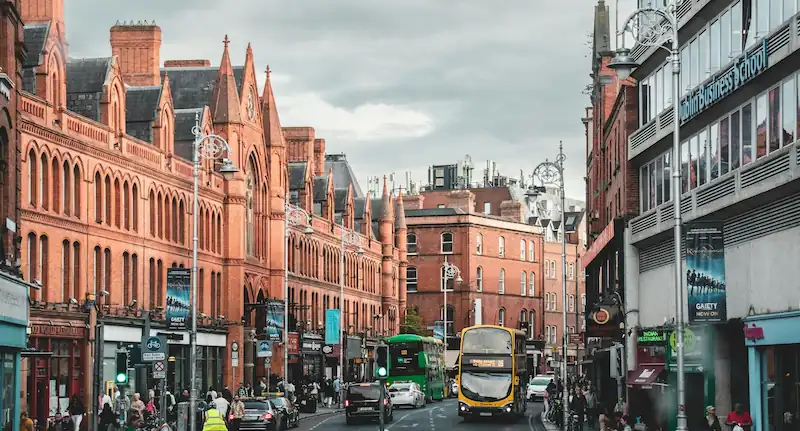
Where to stay in Dublin for the right kind of trip
Find the best areas to stay in Dublin by matching the hotel base to the way the city actually works: compact central sightseeing, Georgian streets, pub-led evenings, north-side local texture, modern Docklands infrastructure, and a few west-side or canal-side pockets that change the feel of the trip. Dublin is walkable enough to make location powerful, but the wrong base can still trap you in noisy nightlife streets, inflated central rates, or repeated crossings that make short stays feel less efficient than they should.
Best areas
Stay around Trinity, Grafton Street, or St Stephen’s Green for the easiest first visit; choose Smithfield, Stoneybatter, Portobello, or The Liberties for more local rhythm; use Docklands for modern hotels, business, theatre, or waterfront space.
Booking timing
Book early for central weekends, summer dates, concerts, rugby fixtures, college events, and St Patrick’s period, when Dublin’s best-located hotels can disappear or become disproportionately expensive.
Best areas to stay in Dublin at a glance
Trinity and Grafton Street – Best for: first-time visitors and short stays · Vibe: central, polished, practical · Stay here if: You want to walk to major sights, museums, shops, and restaurants without decoding transport. · Avoid if: You want lower prices, quiet nights, or a more residential base.
St Stephen’s Green and Georgian Dublin – Best for: comfort, culture, and calmer central stays · Vibe: elegant, composed, walkable · Stay here if: You want central access with more space, better streets, and a refined hotel scene. · Avoid if: You prefer nightlife directly outside the door or need the lowest possible rates.
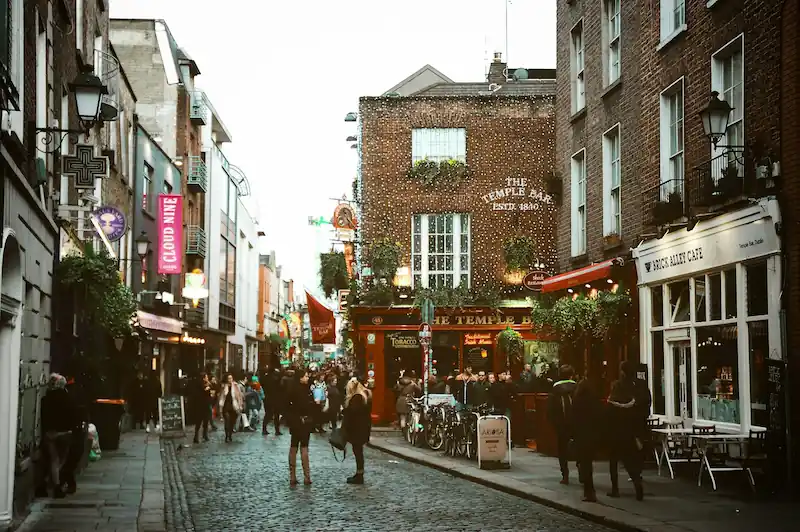
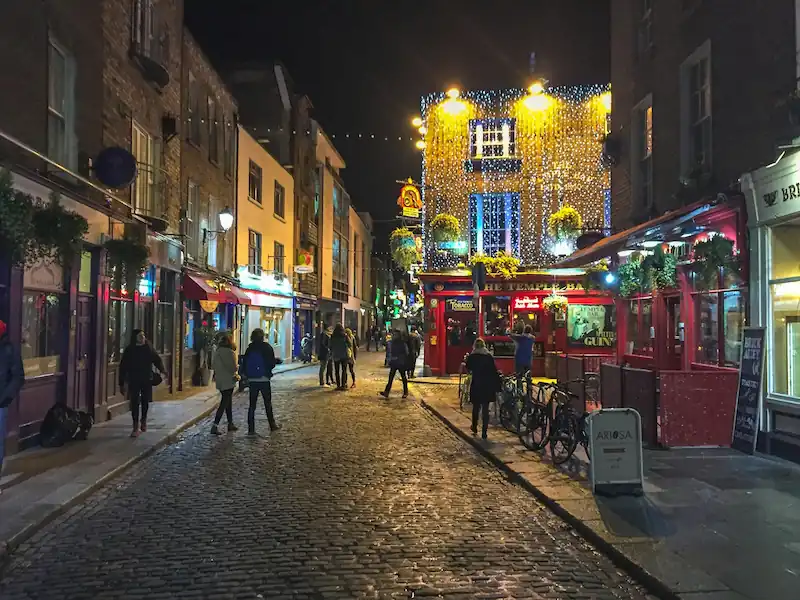
Temple Bar and the Creative Quarter – Best for: nightlife and maximum central energy · Vibe: lively, loud, visitor-heavy · Stay here if: You want bars, restaurants, galleries, and late-night streets within minutes. · Avoid if: Noise, crowds, and premium tourist pricing will frustrate you.
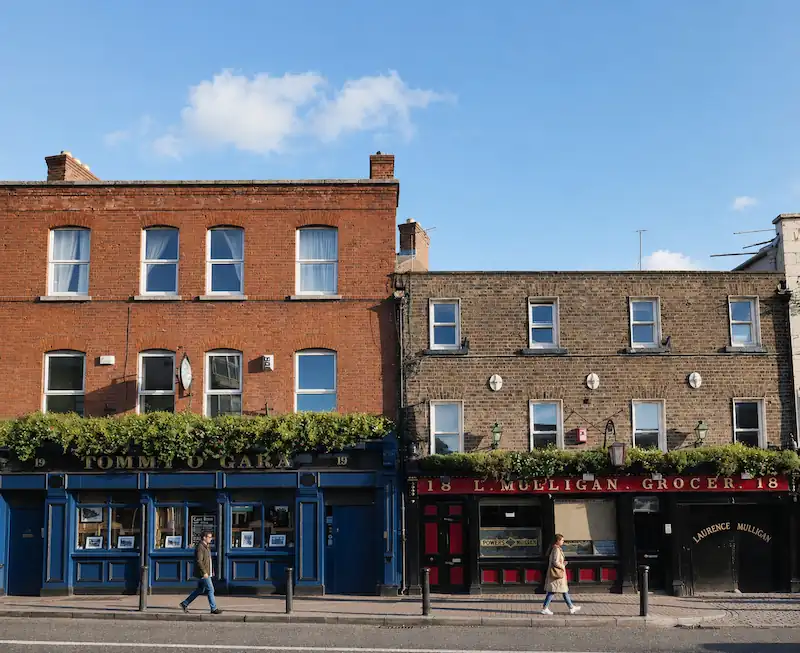
Smithfield and Stoneybatter – Best for: local texture and better-value central stays · Vibe: creative, social, less polished · Stay here if: You want pubs, cafés, markets, and a north-side base with personality. · Avoid if: You want the classic south-side landmarks immediately outside your hotel.
Portobello and the Grand Canal – Best for: calmer evenings and longer stays · Vibe: residential, café-led, slower · Stay here if: You want restaurants, canal walks, and a neighborhood feel still close to the center. · Avoid if: You need the most direct base for every first-time attraction.
The Liberties and Kilmainham – Best for: Guinness, whiskey, history, and better-value west-side stays · Vibe: historic, gritty, practical, increasingly hotel-friendly · Stay here if: You want easy access to Guinness, St Patrick’s Cathedral, Teeling, Kilmainham, and a less polished but distinctive Dublin base. · Avoid if: You want the most elegant central streets, immediate Grafton Street access, or the easiest first-morning orientation.
Docklands and Grand Canal Dock – Best for: modern hotels, business trips, and waterfront space · Vibe: clean, spacious, contemporary · Stay here if: You want newer hotels, theatre access, water views, or a quieter modern base. · Avoid if: You want historic Dublin atmosphere and pub culture on your doorstep.
How to choose where to stay in Dublin
Choosing where to stay in Dublin is less about distance on the map than about the kind of city you want outside the hotel door. The center is compact, but noise, price, room size, transport logic, and neighborhood mood change quickly from one street to the next. A good base should reduce friction without flattening Dublin into only Temple Bar, Grafton Street, and the most obvious visitor corridors.
Choose Trinity, Grafton Street, or St Stephen’s Green if this is your first trip and you want the simplest walking logic.
Use Temple Bar carefully: it is extremely convenient, but the noisiest streets can be a weak-value hotel choice unless nightlife is the point.
Look to Smithfield, Stoneybatter, Portobello, or The Liberties if local pubs, cafés, food, whiskey, and west-side history matter more than postcard centrality.
Treat the Docklands as a comfort-and-infrastructure choice: strong for newer hotels, business, theatre, events, and waterfront space, weaker for old-Dublin atmosphere.
Do not add coastal towns such as Howth, Dún Laoghaire, Dalkey, or Sandymount as default bases for a first Dublin city break; they work better as DART day or half-day trips.
Consider Ballsbridge, Ranelagh, Rathmines, Drumcondra, or airport hotels only when your trip has a specific reason: rugby, business, family space, longer stays, local evenings, or early flights.
Prioritize the exact street as much as the district name, because quiet side streets can outperform headline locations in a city where pub noise and event demand change the stay quickly.
How Dublin’s geography affects where you stay
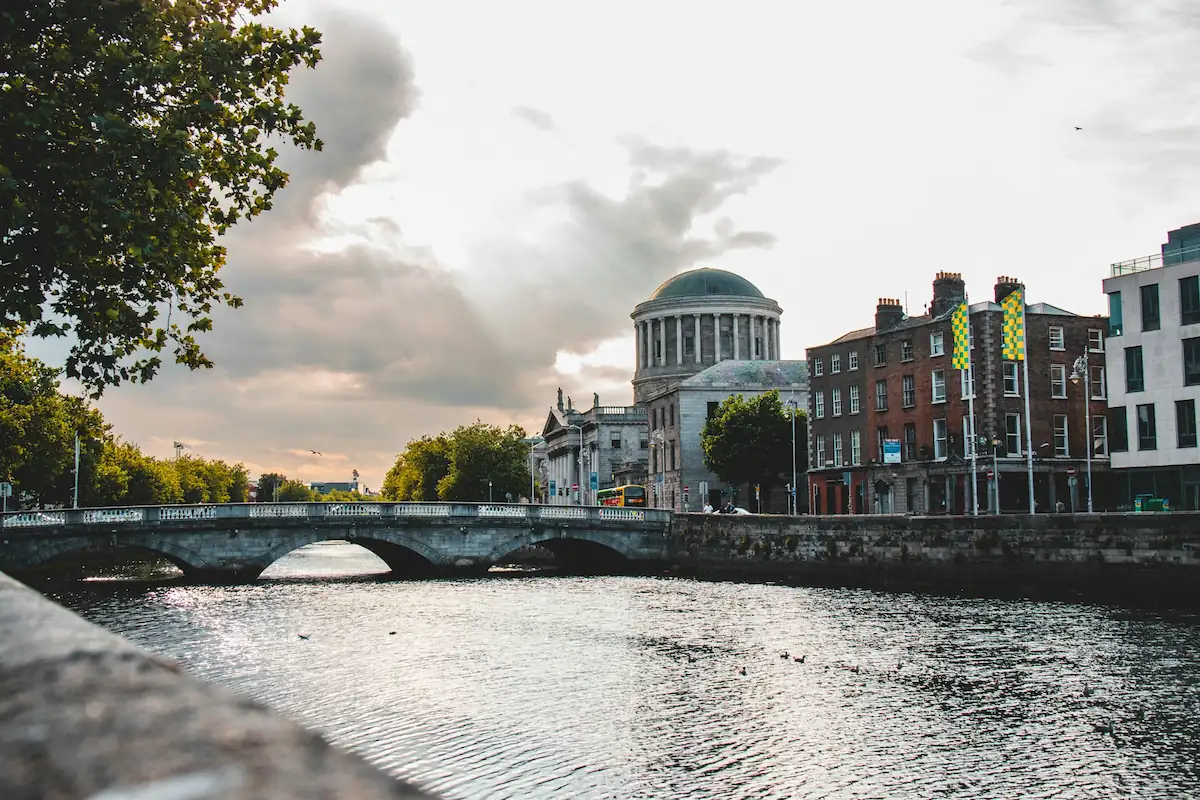
Dublin looks simple on a map because the center is compact, but the stay experience changes with the river, canals, nightlife pockets, west-side history, and the shift from Georgian south side to local north-west neighborhoods. The Liffey is not a barrier, yet repeated crossings can make short stays feel less efficient. For accommodation, the strongest bases are those that let you walk into the day and still enjoy the evening without a second logistics plan.
The south-side core is easiest for first-time sightseeing, especially around Trinity, Grafton Street, St Stephen’s Green, and Georgian Dublin.
The north-west inner city around Smithfield and Stoneybatter gives stronger local texture while staying close to central routes and Luas access.
The Liberties and Kilmainham create a west-side logic around Guinness, whiskey, cathedrals, Dublinia, IMMA, and Kilmainham Gaol.
Temple Bar is central but compressed; the exact street determines whether the location feels convenient or exhausting.
Portobello and the Grand Canal are softer and more residential, better for evenings and longer stays than pure first-time sightseeing efficiency.
Docklands hotels often offer newer rooms, business access, theatre convenience, and waterfront space, but the area can feel detached from classic Dublin if you stay too far east.
Ranelagh, Rathmines, Ballsbridge, Drumcondra, Phibsborough, and Sandymount can be useful for specific needs, but they are better handled as secondary options than core first-time bases.
Coastal areas such as Howth, Dún Laoghaire, Dalkey, Sandycove, and Killiney are usually better visited by DART than used as a base for a first Dublin city stay.
Hyper-central first-timer cluster – Trinity, Grafton Street, Temple Bar edges, and St Stephen’s Green create the easiest walking base for a short Dublin stay.
Calmer central Georgian cluster – St Stephen’s Green, Merrion Square, Kildare Street, and nearby Georgian streets suit travelers who want museums, parks, refined hotels, and quieter addresses.
Nightlife-heavy central cluster – Temple Bar, the Creative Quarter, Camden Street, and Harcourt Street put bars and restaurants close, but noise control becomes a key booking filter.
Local north-west cluster – Smithfield, Stoneybatter, and nearby Phibsborough work well for pubs, cafés, value, and a less polished but more lived-in Dublin base.
West-side history cluster – The Liberties, Kilmainham, Christchurch, and the Guinness axis suit travelers who want brewing, whiskey, cathedrals, political history, and practical modern hotels.
Canal and residential south-side cluster – Portobello, the Grand Canal, Rathmines, and Ranelagh are better for longer stays, calmer evenings, cafés, restaurants, and neighborhood habit.
Modern waterfront cluster – Docklands, Grand Canal Dock, and the 3Arena corridor prioritize newer hotels, business access, theatre, events, and water views over historic atmosphere.
Outer-purpose cluster – Ballsbridge, Sandymount, Drumcondra, and airport hotels make sense for rugby, concerts, embassy/business needs, coastal calm, or early flights, but not as default first-time bases.
Best areas to stay in Dublin
Dublin’s best hotel areas overlap physically, but they create very different trips. The right choice depends on whether you want first-time efficiency, calmer central streets, nightlife, local evenings, west-side history, modern comfort, or a softer residential rhythm. These are the bases that shape how most visitors actually experience the capital.
Trinity and Grafton Street
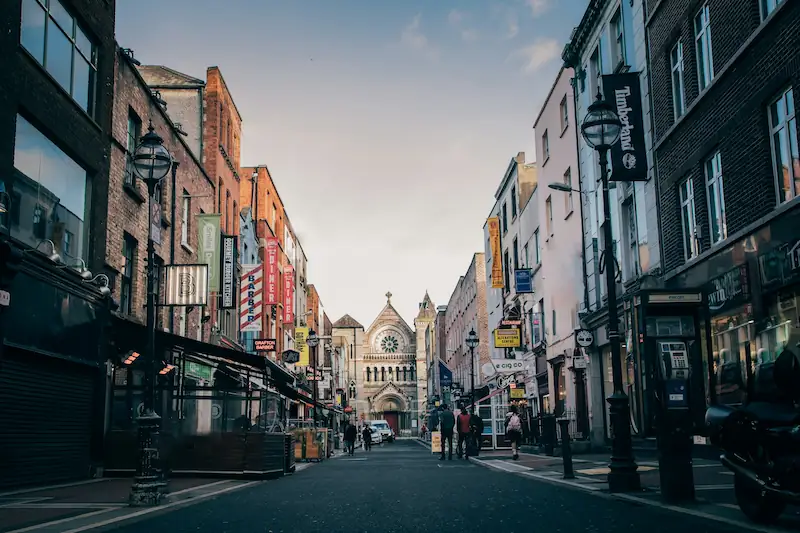
Staying around Trinity and Grafton Street gives Dublin its cleanest first-time structure. You wake up within easy reach of Trinity College, the Book of Kells, Grafton Street, St Stephen’s Green, museums, restaurants, the Liffey, and the edge of Temple Bar without needing to sleep in the loudest pub lanes. The area feels busy rather than deeply local, but that is the point: it turns a short Dublin trip into a simple walkable sequence. Morning foot traffic builds around college gates and shopfronts, making the district practical from the first hour.
Why stay here: This is the best area to stay in Dublin for first-time visitors who want to walk almost everywhere and minimize decision fatigue. It is especially strong for two- or three-night stays, solo travelers, and anyone visiting Dublin without a car.
Best for: First-time visitors, short stays, solo travelers, couples, and anyone asking for the most convenient area to stay in Dublin.
Pros
Best overall walking access for a first Dublin trip
Immediate reach to Trinity College, Grafton Street, St Stephen’s Green, museums, and the Liffey
More practical and polished than Temple Bar while staying highly central
Strong base for 2-day and 3-day Dublin itineraries
Works well without a car, taxis, or complex transport planning
Good restaurant and café density for travelers who do not want to plan every meal
Cons
Hotel prices rise sharply on weekends, summer dates, and event periods
Some streets feel commercial rather than intimate or local
Budget options are limited compared with Smithfield, The Liberties, or outer districts
Rooms can be compact because location drives pricing more than space
Nearby highlights
Trinity College and the Book of Kells within the easiest first-morning reach
Grafton Street shopping, buskers, cafés, and central movement
Short walk to St Stephen’s Green and Georgian Dublin
Easy access to the National Gallery, Merrion Square, and Kildare Street museums
Temple Bar close enough for atmosphere without necessarily sleeping inside it
Simple orientation for travelers who want the city to feel immediately legible
Budget
Ashfield Hostel – Simple hostel accommodation close to Trinity College and the main south-side sights. Why we recommend: One of the few true budget options that keeps the first-time Dublin location genuinely central. Check availability
Motel One Dublin – Compact, modern rooms in a highly walkable central position near the Liffey and Trinity area. Why we recommend: A strong value choice when you want clean design and location without full boutique pricing. Check availability
Drury Court Hotel – Independent central hotel near Grafton Street with straightforward rooms and useful family options. Why we recommend: It stays practical and well-located without chasing luxury rates. Check availability
Mid
The Grafton Hotel – Contemporary hotel close to Grafton Street, St Stephen’s Green, and the Creative Quarter. Why we recommend: It offers stronger room quality and design than many central mid-range alternatives. Check availability
Brooks Hotel – Comfortable hotel on a quieter central street between Grafton Street and the Creative Quarter. Why we recommend: It is unusually calm for such a walkable south-side location. Check availability
Wren Urban Nest – Compact, design-led hotel with small rooms and a sharp central location near Dame Street. Why we recommend: Best for travelers who value efficient design and location more than generous room size. Check availability
Upscale
The Westbury Hotel – Polished luxury hotel just off Grafton Street with strong dining, service, and central access. Why we recommend: It is one of Dublin’s most convenient upscale stays for a classic first-time trip. Check availability
The College Green Hotel Dublin – Grand historic hotel beside Trinity College and College Green, with a formal central feel. Why we recommend: It gives the most ceremonial version of the Trinity-area stay. Check availability
The Trinity City Hotel – Boldly styled hotel close to Trinity College, Pearse Street, and the south-bank core. Why we recommend: It works well when you want a central hotel with more personality than standard chains. Check availability
Temple Bar and the Creative Quarter
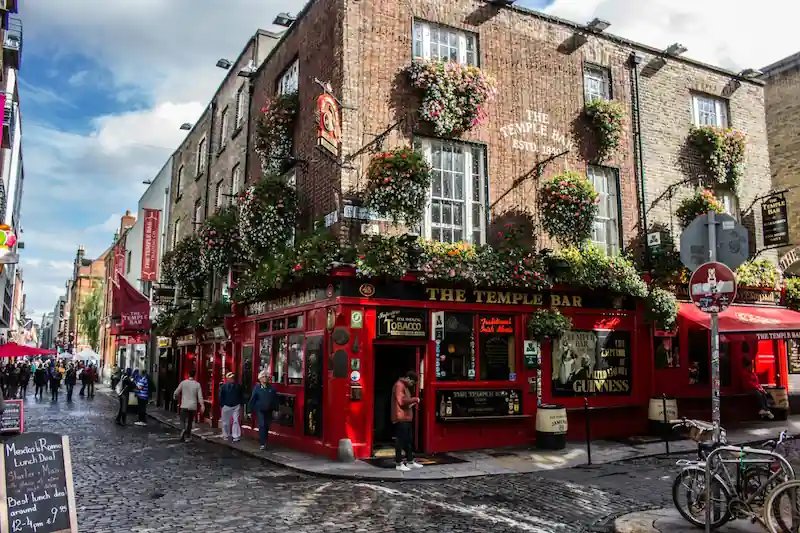
Temple Bar is Dublin’s most obvious central stay, but it needs careful handling. It places you near pubs, galleries, restaurants, the Liffey, Dublin Castle, Trinity College, and many visitor routes, yet its most famous lanes can feel noisy, compressed, and expensive. The Creative Quarter softens the choice with better restaurants, design shops, cocktail bars, cafés, and smaller streets that feel less one-note than the pub core. At dusk, the area becomes atmospheric quickly, but the same energy can be difficult if sleep matters.
Why stay here: Stay here if nightlife, central energy, and walk-everywhere convenience matter more than quiet or value. For most travelers, the best version is a hotel on the edge of Temple Bar or in the Creative Quarter rather than directly above the busiest pub streets.
Best for: Nightlife-focused travelers, first-timers who want central energy, and short stays where convenience matters more than calm.
Pros
Maximum centrality for nightlife and short city breaks
Easy walk to Trinity, Dublin Castle, the Liffey, and Grafton Street
Strong bar, restaurant, gallery, and entertainment density
Useful for travelers who want late-night options without taxis
Best base if late-night walking distance matters more than calm
Useful for theatre, restaurants, bars, galleries, and spontaneous evenings
Cons
Noise can be a serious issue on pub-heavy streets
Hotel value is often weaker than nearby districts
The most tourist-facing streets can feel repetitive after the first evening
Not ideal for families or light sleepers
Street-by-street noise differences are dramatic
Not the strongest choice for families, early mornings, or travelers sensitive to crowds
Nearby highlights
Immediate access to Temple Bar nightlife and music pubs
Easy walk to Dublin Castle and Christ Church Cathedral
Close to the Liffey bridges for north-south movement
Quick access to the Creative Quarter’s restaurants and small shops
Walkable to Trinity College without needing transport
Good base for late dinners, theatre, and casual evenings
Good access to Olympia Theatre, Dame Street, and central evening plans
Creative Quarter dining and shopping can make the area feel more balanced
Budget
Blooms Hotel – Straightforward central hotel in Temple Bar with simple rooms and a nightlife-heavy location. Why we recommend: A practical lower-cost choice if you accept the area’s noise and energy. Check availability
Handel’s Hotel – Simple hotel near Christ Church and Temple Bar, slightly removed from the loudest pub streets. Why we recommend: It gives Temple Bar access with a more manageable location than the core pub lanes. Check availability
Harding Hotel – Classic, unfussy hotel beside Christ Church Cathedral and close to Temple Bar. Why we recommend: One of the better-value central stays for travelers who want old-city access over polish. Check availability
Mid
The Fleet – Stylish central hotel on Fleet Street, close to Temple Bar and Trinity College. Why we recommend: It brings stronger design and comfort than many hotels in this nightlife-heavy zone. Check availability
Temple Bar Hotel – Modern hotel in the center of the district with direct access to pubs, restaurants, and the Liffey. Why we recommend: It is one of the most convenient choices for travelers who deliberately want the Temple Bar base. Check availability
NYX Hotel Dublin Christchurch – Contemporary hotel near Dublin Castle and Christ Church, with easy access to Temple Bar. Why we recommend: A better-balanced option for travelers who want central energy without sleeping on the busiest lanes. Check availability
Upscale
The Clarence – Boutique hotel on Wellington Quay with river access and a strong Temple Bar address. Why we recommend: It is the district’s most characterful upscale choice for travelers who want the location intentionally. Check availability
The Morgan Hotel – Polished hotel in Temple Bar with contemporary rooms and a nightlife-adjacent location. Why we recommend: It suits travelers who want comfort while staying close to Dublin’s busiest evening streets. Check availability
Zanzibar Locke – Design-led aparthotel on the quays with apartment-style rooms and strong central access. Why we recommend: A good upscale-adjacent option when space and flexibility matter more than classic hotel service. Check availability
St Stephen’s Green and Georgian Dublin
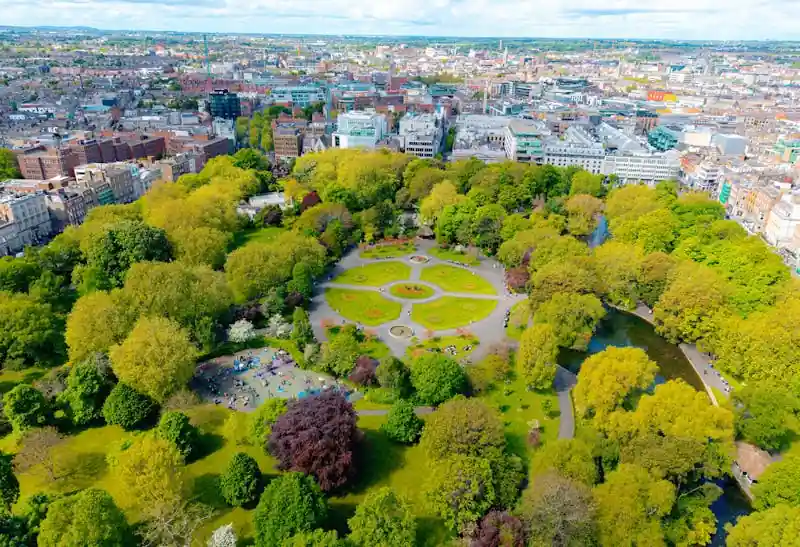
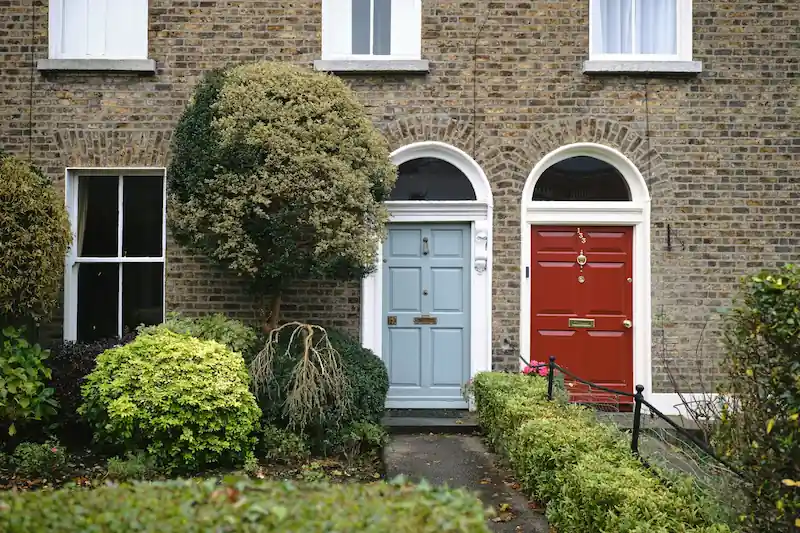
St Stephen’s Green and Georgian Dublin offer the city’s most elegant central stay. The streets are still close to the core, but the atmosphere shifts toward brick townhouses, railings, museums, garden squares, embassies, and quieter approaches to the center. This is where Dublin feels most composed without becoming detached from restaurants, parks, and major landmarks. In the morning, light settles across Georgian doors and pavements before Grafton Street fully wakes up.
Why stay here: This area is strategically attractive when you want central Dublin with better sleep, stronger architecture, and a more refined hotel mix. It is the best compromise between first-time convenience and calm, especially for couples, families, and culture-led trips.
Best for: Couples, families, culture-focused travelers, luxury stays, and anyone seeking the safest-feeling central area to stay in Dublin.
Pros
Excellent for couples, culture trips, and upscale stays
Walkable to Trinity, Grafton Street, museums, and major parks
Quieter side streets than Temple Bar or the busiest shopping corridors
Strong boutique, townhouse, and luxury hotel options
Good base for families who want calm without losing centrality
Best central choice for travelers who want a calmer and more premium feel
Strong access to Georgian Dublin, Merrion Square, National Gallery, and Kildare Street museums
Cons
Premium hotels can be expensive, especially around the park
Nightlife is nearby rather than immediately immersive
Some addresses are more formal than social
The most desirable hotels around the park can command very high rates
Some streets feel formal rather than lively after dinner
Nearby highlights
Easy access to St Stephen’s Green for breaks between sights
Walkable to the National Gallery and Merrion Square
Close to Grafton Street without sleeping in the shopping flow
Good restaurant access around Camden Street, Dawson Street, and the Georgian south side
Strong base for museum-led days and quieter evenings
More room for boutique and townhouse-style hotel choices
Budget
Harcourt Hotel – Simple central hotel on Harcourt Street, near St Stephen’s Green and the Luas. Why we recommend: A useful lower-cost option in an area where truly budget hotels are rare. Check availability
Marlin Hotel Stephens Green – Compact modern hotel close to St Stephen’s Green, Grafton Street, and the Creative Quarter. Why we recommend: It keeps prices more controlled by using efficient rooms in a prime central location. Check availability
The Green – Central hotel near St Stephen’s Green with practical rooms and strong access to the south-side core. Why we recommend: It is a straightforward way to stay near the park without moving into full luxury pricing. Check availability
Mid
Stauntons on the Green Hotel – Georgian townhouse hotel overlooking St Stephen’s Green with a calmer central feel. Why we recommend: It delivers the area’s townhouse character without the formality of the grand luxury hotels. Check availability
Iveagh Garden Hotel – Modern hotel near Iveagh Gardens and St Stephen’s Green, with clean design and central access. Why we recommend: A strong mid-range choice for travelers who want quiet-adjacent centrality. Check availability
Number 31 – Characterful guesthouse mixing Georgian townhouse atmosphere with modernist design details. Why we recommend: It stands out for personality and breakfast quality in a calm south-side location. Check availability
Upscale
The Merrion Hotel – Luxury hotel set across Georgian townhouses near Merrion Square and government buildings. Why we recommend: The best choice for understated Dublin luxury with serious architectural character. Check availability
The Shelbourne, Autograph Collection – Historic grand hotel overlooking St Stephen’s Green with formal service and major city presence. Why we recommend: It is the classic luxury address for travelers who want Dublin’s ceremonial side. Check availability
The Fitzwilliam Hotel – Upscale hotel beside St Stephen’s Green with contemporary rooms and immediate central access. Why we recommend: It balances luxury positioning with one of the easiest south-side locations. Check availability
Smithfield and Stoneybatter
Smithfield and Stoneybatter are the best areas to stay in Dublin if you want the city to feel less pre-packaged. Smithfield gives you Luas access, open space, the Jameson axis, and a practical north-west city base; Stoneybatter adds pubs, cafés, casual restaurants, markets, and a more lived-in evening pace. It is close enough to the center but not swallowed by the main visitor streets. The atmosphere is rougher at the edges in places, yet that is part of why it feels more local.
Why stay here: Choose this area when you want better value, strong pub and food texture, and a base that still connects easily to the center. It is especially good for return visitors, independent travelers, and people who want local Dublin without staying far out.
Best for: Return visitors, budget-conscious travelers, pub culture, local food, and anyone who wants a less tourist-facing neighborhood.
Pros
More local atmosphere than the south-side core
Good access to pubs, cafés, casual restaurants, and Smithfield
Often better value than Grafton Street or St Stephen’s Green
Luas access makes movement easier than the map suggests
Strong for repeat visitors who want a different Dublin base
Cons
Less immediately classic for a first Dublin visit
Some routes back from the center feel less polished late at night
Hotel choice is narrower than in the main south-side districts
Nearby highlights
Easy access to Smithfield square and the Jameson area
Walkable to Stoneybatter pubs and casual restaurants
Good base for Guinness Storehouse and west-side sights
Luas connections into the center without relying only on taxis
More local evening rhythm than Temple Bar
Useful for travelers who want value without staying far outside Dublin
Easy westward logic toward Phoenix Park, Collins Barracks, and The Liberties
Better base for repeat visitors than simply rebooking the Grafton Street core
Budget
Generator Dublin – Large hostel in Smithfield with private rooms, dorms, and a social atmosphere. Why we recommend: The most obvious budget choice here, especially if you want central access and low cost. Check availability
easyHotel Dublin – Basic, compact rooms near Smithfield and the north-west edge of the center. Why we recommend: A functional low-cost option when location matters more than hotel atmosphere. Check availability
McGettigan’s Townhouse – Small townhouse-style stay near the north quays and Smithfield area. Why we recommend: It offers a more personal alternative to budget chains and large hostels. Check availability
Mid
Maldron Hotel Smithfield Dublin City – Modern hotel directly in Smithfield with practical rooms and easy Luas access. Why we recommend: The most straightforward hotel choice for staying in Smithfield without overcomplicating logistics. Check availability
The Hendrick Smithfield – Compact, design-led hotel close to Smithfield square and north-side evening options. Why we recommend: It gives the area a sharper, more contemporary hotel option than standard mid-range stays. Check availability
Staycity Aparthotels Dublin City Centre – Aparthotel-style rooms near the north-west city center with useful self-catering flexibility. Why we recommend: A strong pick when space and simple food preparation matter more than hotel service. Check availability
Upscale
The Morrison Dublin, Curio Collection by Hilton – Polished riverside hotel close to the Liffey, Temple Bar edge, and north-bank routes. Why we recommend: A better upscale fit when you want Smithfield access but prefer a more refined hotel base. Check availability
Zanzibar Locke – Stylish aparthotel on the north quays with larger-feeling rooms and central access. Why we recommend: It works well for travelers who want apartment flexibility near the local north-side corridor. Check availability
NYX Hotel Dublin Christchurch – Contemporary hotel across the river from the Smithfield axis and close to the old-city core. Why we recommend: A useful upscale-adjacent compromise when Smithfield itself has limited premium supply. Check availability
Portobello and the Grand Canal
Portobello and the Grand Canal suit travelers who want Dublin to feel lived-in from the start. This is a softer south-side base, with canal paths, cafés, restaurants, pubs, Camden Street access, and easy movement toward St Stephen’s Green and the wider center. It is not the most frictionless choice for a very short first visit, but it gives evenings more depth and mornings more calm. Late in the day, the canal catches low light while residents move slowly along the railings.
Why stay here: Stay here if you value neighborhood atmosphere, food, and calmer nights more than being beside every landmark. It becomes especially attractive for longer stays, couples, repeat visitors, and travelers choosing between Dublin neighborhoods rather than just tourist zones.
Best for: Couples, longer stays, food-focused travelers, return visitors, and travelers looking for a quieter local area to stay in Dublin.
Pros
Calmer and more residential than the main central districts
Good access to restaurants, cafés, pubs, and canal walks
Still close enough to reach the center on foot or by short ride
Strong for couples and longer stays
Better sense of local Dublin than the most tourist-facing areas
Cons
Less efficient for very short first-time stays
Hotel supply is more scattered and street-dependent
Some addresses sit farther from the core than the neighborhood name suggests
Nearby highlights
Canal walks that make mornings and evenings feel less compressed
Easy access to Camden Street dining and nightlife without sleeping in the busiest core
Walkable or short-ride access to St Stephen’s Green
Better café and restaurant rhythm than many hotel-heavy districts
Good base for travelers who want local streets after sightseeing
A calmer alternative to Temple Bar for social evenings
A natural bridge toward Rathmines and Ranelagh for travelers who want more residential dining and bar options
Good for longer stays where daily cafés and groceries matter
Budget
Keavan’s Port Hotel – Large value-focused hotel in a converted pub setting near Camden Street and Portobello. Why we recommend: One of the most useful low-cost choices near the canal-side south-center fringe. Check availability
Camden Deluxe Hotel – Simple rooms near Camden Street nightlife and the south-side city center. Why we recommend: A budget option for travelers who want south-side access and do not need a quiet boutique stay. Check availability
Harrington Hall – Traditional hotel in a Georgian building near Harcourt Street and the south-side core. Why we recommend: It offers character and location at a more accessible price point than nearby park hotels. Check availability
Mid
Camden Court Hotel – Reliable full-service hotel between Camden Street, Portobello, and St Stephen’s Green. Why we recommend: A practical mid-range anchor for travelers who want neighborhood access with hotel facilities. Check availability
Clayton Hotel Charlemont – Modern canal-side hotel with comfortable rooms and good access to Portobello and the Luas. Why we recommend: It gives one of the strongest canal-edge stays without losing central practicality. Check availability
Maldron Hotel Kevin Street – Modern hotel near the Liberties and south-west side of the center, within reach of Portobello. Why we recommend: Useful for travelers who want newer rooms and a practical base between neighborhoods. Check availability
Upscale
The Dean Dublin – Design-led hotel on Harcourt Street with a lively rooftop and strong restaurant-and-bar energy. Why we recommend: Best for travelers who want boutique personality and nightlife-adjacent south-side access. Check availability
Hyatt Centric The Liberties Dublin – Polished modern hotel near the Liberties, St Patrick’s Cathedral, and south-west city routes. Why we recommend: A strong upscale choice when you want comfort near local food, history, and pub texture. Check availability
Aloft Dublin City – Modern hotel near the Liberties with elevated city views and contemporary rooms. Why we recommend: It works for travelers who want design, comfort, and a less obvious south-side location. Check availability
The Liberties and Kilmainham
The Liberties and Kilmainham create Dublin’s strongest west-side stay for travelers who want history, whiskey, Guinness, cathedrals, and a less polished urban texture. The area is not as immediately graceful as Georgian Dublin and not as frictionless as Trinity, but it gives the trip a clear sense of old streets, brewing history, civic memory, and practical hotel value. Staying here can work very well if your plans include Guinness Storehouse, Teeling, St Patrick’s Cathedral, Dublinia, IMMA, or Kilmainham Gaol, and if you are comfortable with a slightly more mixed city fabric.
Why stay here: Stay here if you want a distinctive Dublin base with strong west-side sights, better-value modern hotels, whiskey and brewing context, and easier access to Kilmainham or Phoenix Park than the south-east core can offer.
Best for: Guinness and whiskey visitors, history-focused travelers, repeat visitors, smart-value city stays, and travelers who want a west-side base with character.
Pros
Excellent for Guinness Storehouse, Teeling Distillery, St Patrick’s Cathedral, Dublinia, and the old city edge
More distinctive and less polished than the most obvious central hotel zones
Often better value than St Stephen’s Green, Trinity, or the best Temple Bar addresses
Good for travelers who want history, pubs, whiskey, and west-side movement
Useful bridge between central Dublin, Kilmainham Gaol, IMMA, and Phoenix Park
Growing supply of modern hotels and aparthotels with practical room standards
Cons
Not as elegant or immediately legible as Georgian Dublin
Some streets feel uneven, especially late or on quieter edges
Less ideal for a very short first visit focused only on Trinity and Grafton Street
Hotel choice is improving but still more limited than the central south side
Nearby highlights
Guinness Storehouse and the Liberties brewing heritage
Teeling Distillery and whiskey-led experiences
St Patrick’s Cathedral, Dublinia, and the medieval-city edge
Kilmainham Gaol and IMMA as serious west-side cultural anchors
Easy movement toward Phoenix Park when you want open space
Better-value modern hotels compared with the most polished central districts
Budget
Garden Lane Backpackers – Small hostel-style accommodation in The Liberties with shared and simple private options. Why we recommend: A practical budget option for travelers who want The Liberties location without central hotel pricing. Check availability
Staycity Aparthotels Dublin Tivoli – Aparthotel-style rooms near The Liberties with kitchenettes and flexible layouts. Why we recommend: A strong value choice for longer stays, families, or travelers who want more control over meals. Check availability
Maldron Hotel Kevin Street – Modern hotel between The Liberties, St Patrick’s Cathedral, and the south-west city center. Why we recommend: It gives reliable room standards and a practical position between old-city sights and local streets. Check availability
Mid
Hyatt Centric The Liberties Dublin – Polished modern hotel in The Liberties, close to St Patrick’s Cathedral and whiskey-led sights. Why we recommend: The best all-round hotel for travelers who want comfort while staying in this distinctive west-side district. Check availability
Aloft Dublin City – Contemporary hotel near The Liberties with modern rooms, elevated views, and a younger design feel. Why we recommend: It works well when you want a less obvious base without sacrificing comfort or design. Check availability
Radisson Blu Royal Hotel Dublin – Comfortable full-service hotel on the edge of Dublin Castle, The Liberties, and the old city core. Why we recommend: A useful bridge between central convenience and west-side cultural access. Check availability
Upscale
The Chancery Hotel – Modern upscale hotel near Dublin Castle and the western edge of the central core. Why we recommend: A polished option for travelers who want contemporary comfort close to The Liberties and old-city sights. Check availability
NYX Hotel Dublin Christchurch – Design-led hotel near Christ Church, Dublin Castle, Temple Bar edges, and The Liberties. Why we recommend: A strong compromise for travelers who want style, central access, and a more interesting west-side position. Check availability
The Dean Dublin – Lively design hotel near Harcourt Street and the south-west city edge, within reach of The Liberties and Portobello. Why we recommend: Best for travelers who want boutique energy, bars, and restaurants while staying outside the most obvious hotel grid. Check availability
Docklands and Grand Canal Dock
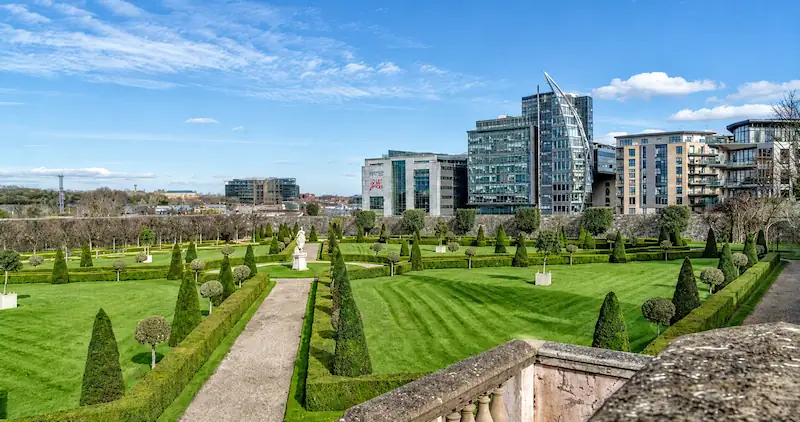
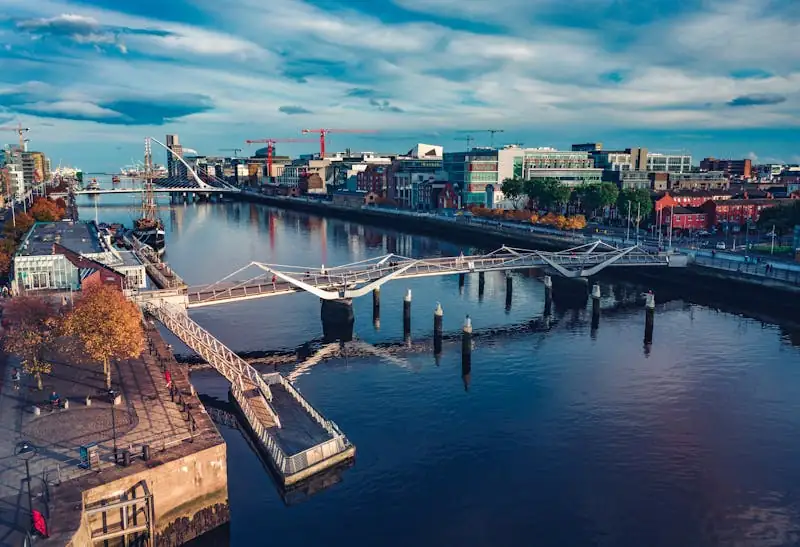
The Docklands and Grand Canal Dock are Dublin’s modern-stay choice. The streets feel wider, the hotels newer, and the mood more corporate, residential, and waterfront-led than historic. This area is practical for business trips, convention stays, theatre nights, 3Arena events, and travelers who prefer clean infrastructure over old-city atmosphere. The open water and glass façades give the district a calmer scale after the tighter central streets.
Why stay here: Choose the Docklands if you want modern rooms, quieter evenings, business access, event convenience, or a waterfront base. It is less ideal if this is your only chance to feel historic Dublin.
Best for: Business travelers, theatre trips, modern-hotel seekers, longer stays, and visitors who want calmer waterfront space.
Pros
Good supply of modern hotels and aparthotels
Useful for business travel, theatre, 3Arena, and waterfront stays
Quieter at night than Temple Bar or Camden Street
Good for travelers who value room quality and infrastructure
DART and walking routes can connect well depending on the exact address
Cons
Less atmospheric than Georgian Dublin or the older core
Some addresses feel removed from classic pubs and first-time sights
Evenings can be quiet outside dining and theatre zones
Nearby highlights
Easy access to Grand Canal Dock and waterfront walking routes
Convenient for Bord Gáis Energy Theatre and event-led stays
Useful for business districts and modern office areas
Good base for travelers who prefer newer hotels and quieter nights
Walkable toward Trinity and the south-bank core from the western Docklands
Better room and aparthotel supply than many older central districts
Budget
Travelodge PLUS Dublin City Centre – Modern value-focused hotel near the east side of the center and Docklands approach. Why we recommend: A practical lower-cost option for travelers who want newer rooms near the waterfront corridor. Check availability
Staycity Aparthotels City Quay – Apartment-style rooms near the quays with simple self-catering flexibility. Why we recommend: Useful for longer stays or budget-conscious travelers who want more control over meals. Check availability
Maldron Hotel Pearse Street – Straightforward hotel between Pearse Street, Grand Canal Dock, and the south-east city center. Why we recommend: It gives practical access to Docklands without paying full waterfront premiums. Check availability
Mid
The Samuel Hotel – Modern hotel near the Convention Centre, riverfront, and eastern Docklands. Why we recommend: A strong business-and-events choice with newer rooms and good transport logic. Check availability
Clayton Hotel Cardiff Lane – Large modern hotel near Grand Canal Dock, the theatre, and waterfront offices. Why we recommend: It is one of the most practical mid-range anchors for staying in the Docklands. Check availability
Hilton Garden Inn Dublin City Centre – Reliable hotel beside the Custom House Quay with river access and central walkability. Why we recommend: It balances chain reliability with a useful position between the old center and Docklands. Check availability
Upscale
Anantara The Marker Dublin – High-end Docklands hotel with spa facilities, modern rooms, and Grand Canal Dock positioning. Why we recommend: The strongest luxury choice for travelers who want the modern waterfront version of Dublin. Check availability
The Spencer Hotel – Polished hotel on the north quays with spa facilities and strong business-district access. Why we recommend: It works well when comfort, river access, and modern facilities matter more than old-city mood. Check availability
The Mayson – Design-led hotel near the river and 3Arena with compact rooms, restaurants, and strong visual character. Why we recommend: A better fit than standard Docklands hotels if you want personality as well as modern infrastructure. Check availability
Where to stay in Dublin for first-time visitors
First-time visitors should choose a base that makes Dublin legible from the first morning. The best first-stay areas keep Trinity, Georgian Dublin, the Liffey, museums, restaurants, and pub culture close without forcing the whole trip into nightlife streets.
Best overall: Trinity and Grafton Street for the easiest walking access to major sights, shops, museums, restaurants, and the Liffey.
Best calmer central choice: St Stephen’s Green and Georgian Dublin for culture, comfort, parks, museums, and quieter streets.
Best if nightlife is a priority: Temple Bar and the Creative Quarter, but only if you actively want that late-night energy and check the exact street.
Best for a more local first trip: Smithfield and Stoneybatter if you are comfortable being slightly outside the classic south-side core.
Best west-side alternative: The Liberties and Kilmainham if Guinness, whiskey, cathedrals, Kilmainham, and practical modern hotels matter to you.
Avoid staying too far outside the center on a short trip; savings can disappear through transport time, weaker evening access, and less spontaneous walking.
TravelerNeed
BestArea
TradeOff
Easiest first visit
Trinity and Grafton Street
Higher prices and a more commercial central feel
Quieter but central
St Stephen’s Green and Georgian Dublin
Less direct nightlife energy
Bars and late nights
Temple Bar and the Creative Quarter
Noise, crowds, and weaker value
Local but still central
Smithfield and Stoneybatter
Less classic south-side polish
Guinness, whiskey, and history
The Liberties and Kilmainham
More uneven streets and less first-morning simplicity
Where to stay in Dublin with family
Families usually do best in areas that reduce daily walking stress without placing the hotel in the loudest nightlife streets. Room size, breakfast access, nearby parks, transport simplicity, and calm evenings matter as much as headline centrality.
St Stephen’s Green and Georgian Dublin are the strongest family choice for central parks, museums, and calmer streets.
Trinity and Grafton Street work well for families on short stays who want maximum walkability and simple first-time routing.
Portobello and the Grand Canal suit families who prefer quieter evenings, apartment-style stays, cafés, and local restaurants.
Docklands can work for families who want newer hotels, waterfront space, theatre/event access, and easier room standards.
The Liberties can be useful for families who want aparthotels, Dublinia, St Patrick’s Cathedral, Guinness, and west-side access, but street choice matters.
Temple Bar is usually not the best family base unless the hotel is on a quieter edge and nightlife noise is clearly manageable.
FamilyPriority
BestArea
WatchOutFor
Central and calm
St Stephen’s Green and Georgian Dublin
Premium rates near the park
Shortest sightseeing walks
Trinity and Grafton Street
Busy shopping streets and compact rooms
More space and quieter evenings
Portobello or Docklands
Less immediate access to every classic sight
Aparthotel and west-side sights
The Liberties and Kilmainham
More mixed street feel and less classic central polish
Where to stay in Dublin for nightlife
Dublin nightlife is not confined to one district, and that is the key to choosing well. Temple Bar gives the obvious version, while the Creative Quarter, Camden Street, Portobello, Smithfield, Stoneybatter, and The Liberties often feel more rewarding after the first drink.
Temple Bar is best if you want nightlife directly outside the hotel and do not mind crowds, noise, and tourist pricing.
The Creative Quarter gives a more balanced central evening with restaurants, cocktail bars, pubs, and easier daytime access.
Portobello and Camden Street work better for travelers who want food, bars, and a younger local rhythm.
Smithfield and Stoneybatter are strong for pubs and casual evenings without the full visitor crush.
The Liberties suit whiskey, Guinness, older pubs, and a grittier west-side evening, especially if you do not need polished nightlife streets.
St Stephen’s Green is better if you want to access nightlife without sleeping in it.
Avoid sleeping directly above or beside late bars if you need quiet; in Dublin, the exact street can matter more than the district name.
NightlifeStyle
BestArea
MainRisk
Classic visitor nightlife
Temple Bar
Noise and inflated pricing
Restaurants and bars
Creative Quarter, Portobello, or Camden Street
Some hotels sit on lively streets
Local pubs
Smithfield and Stoneybatter
Less landmark convenience
Whiskey, Guinness, and older pubs
The Liberties and Kilmainham
More uneven evening atmosphere
Quiet sleep after going out
St Stephen’s Green or Georgian Dublin
Less instant late-night energy
Where to stay in Dublin on a budget
Budget stays in Dublin require realism: the city is expensive, and the cheapest room is not always the best-value choice. The aim is to stay connected enough that you do not lose the trip to transport, weak evening access, or a base that feels disconnected from the city you came to see.
Smithfield and Stoneybatter often offer better value while keeping central Dublin reachable.
The Liberties and Kilmainham can give useful value in modern hotels and aparthotels, especially for travelers focused on west-side sights.
Look at hostels or compact hotels near Trinity and Grafton Street if location matters more than room size.
Portobello, Camden Street, and Harcourt Street can provide better south-side value than St Stephen’s Green itself, but noise varies sharply.
Docklands budget choices work best when the exact address is still walkable or well connected, not when the hotel sits too far east for a short stay.
Consider Phibsborough, Drumcondra, Rathmines, or Ballsbridge only when prices or trip purpose justify the extra movement; they are not the default first-time bases.
Be careful with airport or suburban hotels unless you are staying for logistical reasons, not sightseeing.
For weekends and summer dates, book earlier rather than expecting last-minute central bargains.
BudgetNeed
BestArea
Compromise
Cheapest central access
Smithfield or central hostels
Less polish or smaller rooms
West-side value
The Liberties and Kilmainham
More mixed atmosphere and less classic centrality
South-side location
Portobello, Camden Street, or compact central hotels
Street noise can vary
Modern rooms
Docklands fringe
Less historic atmosphere
Event or longer-stay workaround
Drumcondra, Rathmines, Ballsbridge, or Phibsborough
More transport planning and less first-time simplicity
Where to stay depending on your Dublin trip length
The shorter the trip, the more the hotel location should do the work for you. With more time, a local, canal-side, west-side, or modern waterfront base becomes easier to justify because the stay can absorb slower movement and more neighborhood habit.
Label
Stay
Avoid
Why
1–2 nights
Trinity and Grafton Street or St Stephen’s Green
Outer neighborhoods, far Docklands addresses, airport hotels, and coastal bases
Short trips need the least friction; paying for central access protects limited time and keeps evenings simple.
3 days
Trinity, St Stephen’s Green, or a quiet Temple Bar edge
Nightlife streets unless bars are the main reason for the trip
Three days can cover the core well if the hotel keeps walking routes simple.
4–5 days
Smithfield, Stoneybatter, Portobello, The Liberties, or the Grand Canal become stronger options
Choosing only by lowest nightly rate
A slightly more local or west-side base adds evening quality once the main sights are no longer the whole trip.
1 week
Portobello, Smithfield, Stoneybatter, The Liberties, Docklands, or a well-connected residential district
Overpaying for the most central tourist streets every night
Longer stays benefit from cafés, laundry access, quieter rooms, apartment-style facilities, and neighborhood habit.
First trip to Ireland
St Stephen’s Green or Trinity if Dublin is the opening chapter
Treating Dublin as only an airport stop
A clear central base helps you understand the capital before moving into wider Ireland.
Return trip
Smithfield, Stoneybatter, Portobello, The Liberties, Docklands, Rathmines, or Ranelagh
Repeating the same tourist-core stay by habit
Return visits are better when the accommodation shifts the trip toward local streets and everyday rhythm.
Business or event trip
Docklands, Grand Canal Dock, Ballsbridge, or the area closest to the venue
Choosing the prettiest area if the event schedule makes movement repetitive
For conferences, theatre, 3Arena, Aviva, or business meetings, venue logic can matter more than first-time sightseeing logic.
Early flight or late arrival
Central if you still want to sightsee; airport only if the flight timing dominates the trip
Airport-area hotels for a normal Dublin city break
Dublin Airport is close enough for transfers, but repeated city-airport movement weakens the stay.
How to choose the right Dublin hotel
Once the area is chosen, the hotel decision in Dublin should focus on street position, noise, room size, transport, cancellation flexibility, and how the property supports your actual days. A slightly less famous address can outperform a headline district if it gives better sleep, easier evening movement, and fewer compromises around weather or peak pricing.
Topic
WhatToDo
WhatToAvoid
WhyItMatters
Street-level noise
Check whether the hotel sits on a pub street, main nightlife corridor, or quieter side street.
Booking purely by neighborhood name in Temple Bar, Camden Street, or central pub areas.
A hotel can be technically well located but still compromise the stay if sleep quality collapses.
Room size
Expect compact rooms in central and design-led hotels; prioritize aparthotels or townhouse rooms if space matters.
Assuming mid-range prices automatically mean generous rooms in central Dublin.
Dublin hotel pricing often reflects location more than room size.
Central premium
Pay for Trinity, Grafton Street, or St Stephen’s Green on short stays when walkability saves time.
Saving money far outside the core if you only have two or three days.
Transport time and weak evening access can erase the value of a cheaper room.
Boutique versus chain
Choose boutique or townhouse hotels for atmosphere; choose chains when reliability, facilities, or room standards matter more.
Expecting every Georgian or boutique property to offer modern room proportions.
Dublin’s historic buildings can be characterful but uneven in layout.
Aparthotel logic
Use aparthotels for longer stays, families, or travelers who want breakfast and light meals in-room.
Choosing aparthotels only for price if the location weakens the trip.
Kitchen flexibility is valuable, but the base still needs to support walking and evenings.
Event pressure
Check concerts, rugby fixtures, festivals, and St Patrick’s period before judging rates.
Assuming a high price always means a better hotel.
Dublin prices can spike because of demand rather than property quality.
Airport convenience
Stay central unless your flight timing truly makes an airport hotel necessary.
Using airport-area hotels for sightseeing because they look cheaper.
Dublin Airport is not the city center, and road traffic can make repeated movement frustrating.
Family and apartment stays
Prioritize aparthotels, rooms with sofa beds, breakfast flexibility, and areas with parks or calmer evenings.
Assuming every central hotel can comfortably fit families into standard rooms.
Dublin rooms can be compact, and family comfort often depends more on layout than star rating.
DART and coast access
Stay central and use DART for Howth, Dún Laoghaire, Dalkey, Sandycove, or Sandymount as day trips.
Using the coast as your base for a short first Dublin stay unless the coast is the point of the trip.
The coast is one of Dublin’s strengths, but it usually works better as an excursion than as a sightseeing base.
Neighborhood intent
Choose The Liberties for Guinness and west-side history, Smithfield for local pubs, Portobello for canal evenings, and Docklands for modern infrastructure.
Treating all central Dublin neighborhoods as interchangeable because they look close together on the map.
Dublin is compact, but each base creates a different daily rhythm and evening mood.
FAQ: where to stay in Dublin
The best place to stay in Dublin depends on whether you want first-time convenience, quieter central streets, local pubs, nightlife, family comfort, better value, west-side history, modern hotels, or easy event logistics.
What is the best area to stay in Dublin for first-time visitors?
Trinity and Grafton Street is the best overall area for first-time visitors because it keeps Trinity College, Grafton Street, St Stephen’s Green, museums, restaurants, and the Liffey within easy walking distance. St Stephen’s Green and Georgian Dublin are better if you want a calmer and more elegant central base.
Where should I stay in Dublin for a weekend?
For a weekend, stay in Trinity and Grafton Street, St Stephen’s Green, or a quieter edge of Temple Bar. These areas reduce transport friction and make it easier to combine sights, restaurants, pubs, and short walks without losing time.
Is Temple Bar a good area to stay in Dublin?
Temple Bar is good for nightlife and maximum centrality, but it is not the best choice for everyone. It can be noisy, crowded, and expensive, so many travelers are better staying nearby in the Creative Quarter, Trinity area, or St Stephen’s Green.
What is the safest-feeling area to stay in Dublin?
St Stephen’s Green, Georgian Dublin, Trinity, and Grafton Street are among the most comfortable central choices for visitors. Safety also depends on the exact street, late-night behavior, and whether the hotel is near heavy nightlife.
Where should families stay in Dublin?
Families usually do best around St Stephen’s Green, Georgian Dublin, Trinity, selected Docklands hotels, or Portobello aparthotels. These areas offer central access, parks, museums, calmer evenings, and a better chance of practical room layouts.
Where should I stay in Dublin on a budget?
Smithfield and Stoneybatter often offer better value while staying close to the center. The Liberties can also work well for modern hotels and aparthotels near Guinness, whiskey, and west-side sights. Budget travelers can also look at hostels or compact hotels near Trinity, Camden Street, or the Docklands fringe.
Is The Liberties a good area to stay in Dublin?
The Liberties is a good choice if you want Guinness Storehouse, Teeling Distillery, St Patrick’s Cathedral, Dublinia, Kilmainham access, and a more distinctive west-side atmosphere. It is less polished than Georgian Dublin and less frictionless than Trinity, so it works best for travelers who like character and do not need the classic central hotel zone.
Is Smithfield a good place to stay in Dublin?
Smithfield is a good base for travelers who want value, Luas access, local pubs, the Jameson area, and a less tourist-facing feel. It is especially useful for repeat visitors and independent travelers, though first-timers should accept that the classic south-side landmarks are not directly outside the hotel.
Is Stoneybatter too far from central Dublin?
Stoneybatter is not too far if you are comfortable walking, using Luas, or taking short taxis when needed. It is better for local evenings and repeat visits than for travelers who want every first-time sight immediately around the hotel.
Is Portobello a good area to stay in Dublin?
Portobello is strong for couples, longer stays, food-focused trips, and travelers who want a calmer neighborhood feel near the Grand Canal. It is less efficient than Trinity for a very short first visit, but it gives Dublin a more lived-in evening rhythm.
Is it worth staying in the Docklands?
The Docklands are worth considering for business trips, modern hotels, theatre stays, 3Arena events, waterfront space, or longer stays. For a first leisure visit, they are less atmospheric than Trinity, St Stephen’s Green, Temple Bar edges, The Liberties, or local inner neighborhoods.
Where should I stay in Dublin without a car?
Most visitors should stay centrally without a car. Trinity, Grafton Street, St Stephen’s Green, Temple Bar edges, Smithfield, Portobello, The Liberties, and the western Docklands all work if the exact hotel is walkable or well connected.
Is central Dublin worth the higher hotel price?
For two or three nights, central Dublin is usually worth the premium because it saves time and keeps evenings easy. For longer stays, Smithfield, Stoneybatter, Portobello, The Liberties, or Docklands can make more sense if they match your rhythm.
Where should couples stay in Dublin?
Couples usually do best around St Stephen’s Green and Georgian Dublin for calm and style, Portobello for restaurants and canal-side atmosphere, or Trinity for a first visit with maximum walkability. Temple Bar suits couples only if nightlife is a priority.
Where should solo travelers stay in Dublin?
Solo travelers usually benefit from walkable central areas such as Trinity, Grafton Street, St Stephen’s Green, or Smithfield. Hostels and compact hotels can work well, but the key is choosing a base with easy evening movement and good transport.
Where should I stay in Dublin for nightlife?
Stay in Temple Bar if you want the most obvious nightlife on your doorstep. Choose the Creative Quarter, Camden Street, Portobello, Smithfield, Stoneybatter, or The Liberties if you want bars and pubs with a better balance of local atmosphere and sleep potential.
Where should I stay in Dublin for Guinness Storehouse?
The Liberties and Kilmainham are the best bases if Guinness Storehouse, Teeling Distillery, St Patrick’s Cathedral, Dublinia, or Kilmainham Gaol are central to your trip. Trinity and St Stephen’s Green also work if you prefer a classic central base and visit Guinness as one planned west-side outing.
Where should I stay for concerts, rugby, or events in Dublin?
For Aviva Stadium, consider Ballsbridge, Sandymount, Docklands, or the south-east center. For 3Arena and Convention Centre events, Docklands and Grand Canal Dock are strongest. For central theatre and nightlife, Temple Bar edges, Trinity, and St Stephen’s Green work well.
Should I stay near Dublin Airport?
Stay near Dublin Airport only for very early flights, late arrivals, or airport-focused logistics. For normal sightseeing, a central Dublin hotel is usually better because it keeps walks, restaurants, pubs, and attractions within reach.
Should I stay in Howth, Dún Laoghaire, or Dalkey?
Howth, Dún Laoghaire, Dalkey, Sandycove, and Killiney are better as DART day or half-day trips for most first-time visitors. They can work as bases for a coast-focused stay, but they make central Dublin sightseeing less immediate.
What areas should I avoid staying in Dublin?
Avoid choosing a hotel only because it is cheap if it sits far from the center, poorly connected, or directly on a noisy nightlife street. Temple Bar, Camden Street, and Harcourt Street can be great or difficult depending on the exact hotel and your noise tolerance.
What is the best area in Dublin for a longer stay?
For longer stays, Portobello, the Grand Canal, Smithfield, Stoneybatter, The Liberties, Docklands, Rathmines, or Ranelagh often work better than the busiest tourist core because they offer cafés, groceries, quieter routines, and more practical room types.
What is the best overall hotel area in Dublin?
For most first-time visitors, the best overall hotel area is Trinity and Grafton Street. For a more comfortable and calmer version of central Dublin, choose St Stephen’s Green and Georgian Dublin. For more local character, choose Smithfield, Stoneybatter, Portobello, or The Liberties.
For most travelers, the smartest Dublin stay is central enough to walk, selective enough to avoid the city’s noisiest streets, and intentional enough to match how the trip will actually unfold.
Continue planning your Dublin trip
Once your base is clear, use the Dublin travel guide, things to do guide, and itineraries to shape the rest of the stay around the city’s best walking routes, cultural anchors, pubs, west-side history, modern Docklands, and coastal escapes.
Find the best places to stay, how to get there, and move around with ease.
Build a smarter trip base
Turn the right neighborhood into the right itinerary
Once you know where to stay in Dublin, the next step is structuring the rest of your trip around that base. Use the planner to build a route that fits your pace, priorities, and how you actually want your days to unfold.