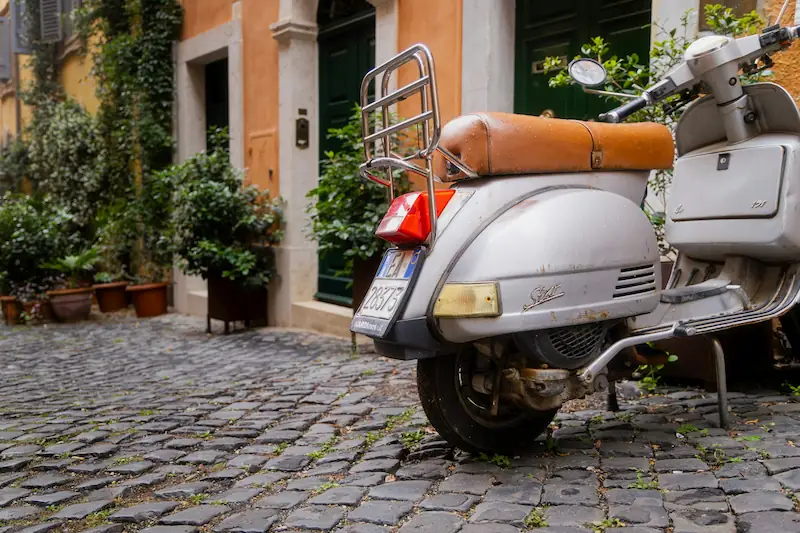
Discover the best things to do in Florence, from iconic Renaissance landmarks and world-class museums to local markets, Oltrarno workshops, hilltop viewpoints, gardens, food-led experiences and smart Tuscan day trips. Florence is compact, but it is also dense: the best plan is not to collect every famous name, but to combine a few high-intensity masterpieces with slower streets, river light, churches, courtyards and food breaks that let the city stay vivid.
Best time
April to June and September to October give the best balance of daylight, museum demand, terrace evenings and walkable weather; winter is excellent for lower-pressure museum time if you accept shorter days.
Ideal trip length
Two full days cover the core icons; three to four days let you add Oltrarno, gardens, secondary museums, food experiences and one strong Tuscan day trip.
Continue planning your Florence trip
Use this activity guide to decide what deserves your time, then connect it with the Florence city guide, where-to-stay guide and itinerary ideas to shape a trip that feels complete rather than overstuffed.
The best things to do in Florence first
See the Uffizi without rushing the Renaissance – Area: Historic Center · Best for: Botticelli, Leonardo and Medici Florence · Time needed: 2 to 3 hours · Worth it: Essential, but only if you enter with a selective route. · Book ahead: Yes, timed entry is strongly recommended.
Stand in front of Michelangelo’s David – Area: San Marco · Best for: One defining artwork in a compact visit · Time needed: 60 to 90 minutes · Worth it: High payoff even for short stays. · Book ahead: Yes, especially from spring to autumn.
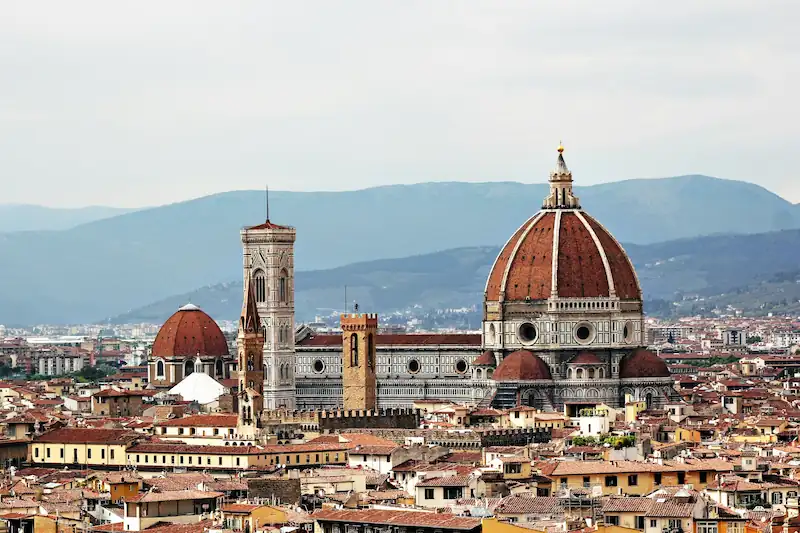
Climb Brunelleschi’s Dome – Area: Duomo · Best for: Architecture, views and physical perspective · Time needed: 1 to 1.5 hours · Worth it: Worth it if stairs and confined spaces are not an issue. · Book ahead: Yes, dome slots can sell out.
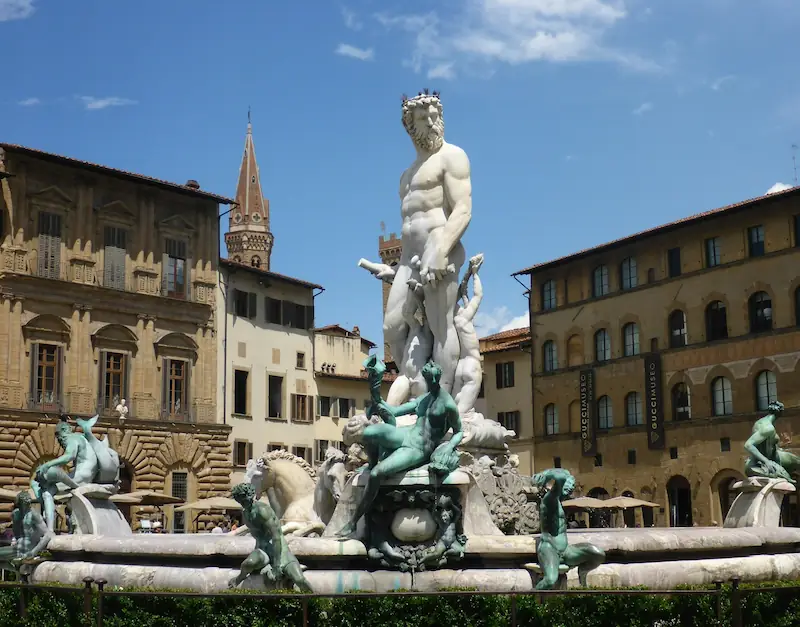
Walk Piazza della Signoria after the day crowds thin – Area: Historic Center · Best for: Outdoor sculpture and civic drama · Time needed: 30 to 45 minutes · Worth it: One of Florence’s strongest free experiences. · Book ahead: No.
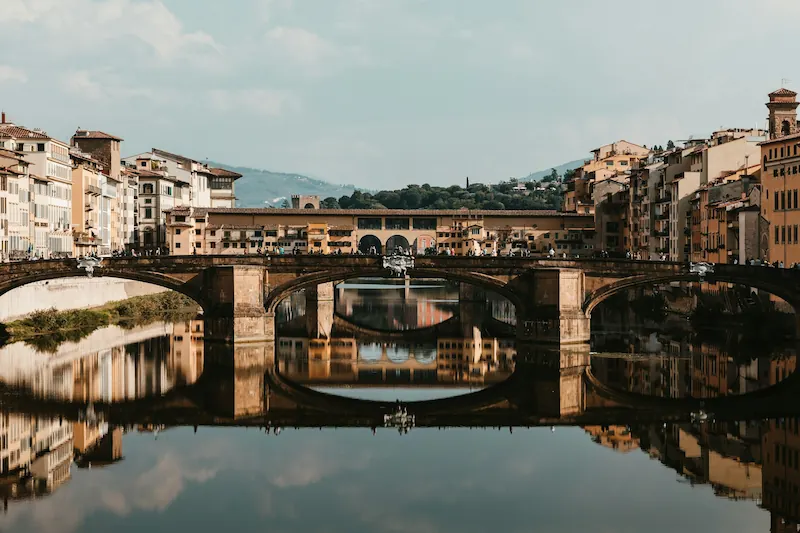
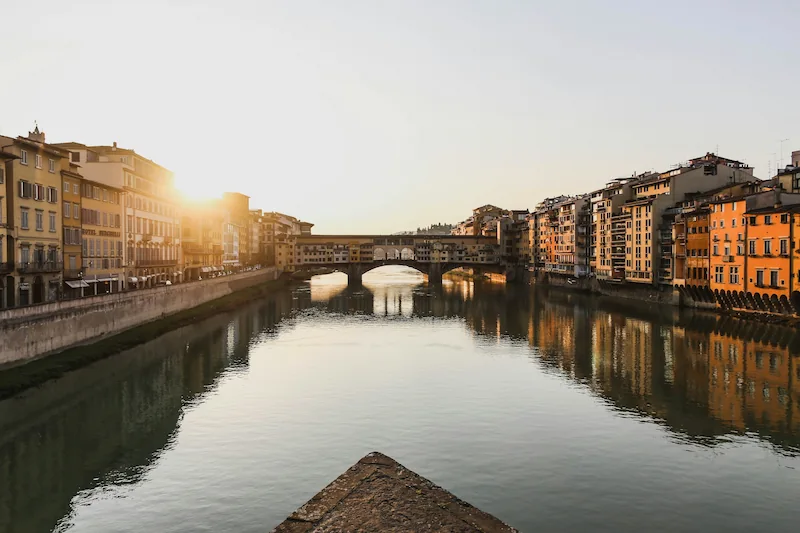
Cross Ponte Vecchio into Oltrarno – Area: Arno / Oltrarno · Best for: Classic views followed by quieter streets · Time needed: 1 to 2 hours · Worth it: Best when treated as a transition, not just a photo stop. · Book ahead: No.
Use Palazzo Pitti and Boboli Gardens as a slower counterweight – Area: Oltrarno · Best for: Palace scale, gardens and a less compressed afternoon · Time needed: 2 to 4 hours · Worth it: Excellent if Florence feels too dense. · Book ahead: Helpful in peak season.
Watch sunset from Piazzale Michelangelo or San Miniato al Monte – Area: Oltrarno hills · Best for: City views and evening orientation · Time needed: 1 to 1.5 hours · Worth it: Very worth it, especially if you continue to San Miniato. · Book ahead: No.
Eat your way through Sant’Ambrogio or the Central Market area – Area: Sant’Ambrogio / San Lorenzo · Best for: Market rhythm, quick meals and local food texture · Time needed: 1 to 2 hours · Worth it: Best done earlier in the day, before the energy fades. · Book ahead: No, unless joining a food tour.
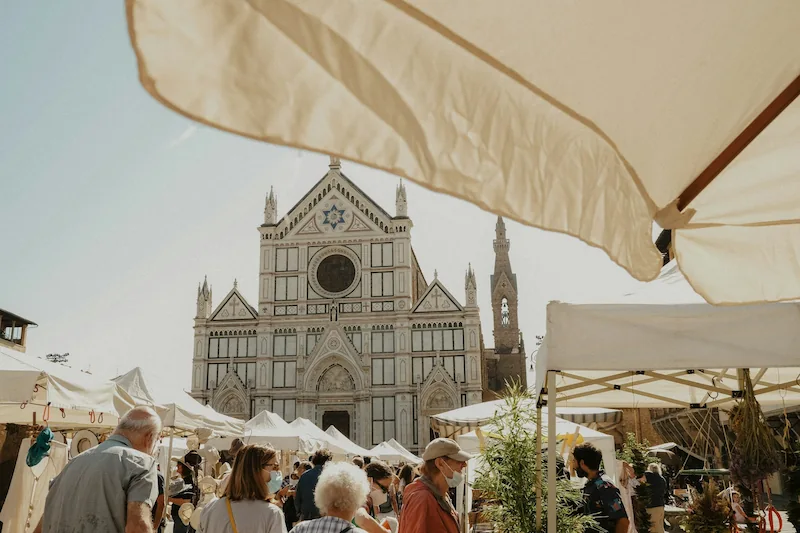
Explore Santa Croce beyond the basilica façade – Area: Santa Croce · Best for: Tombs, leather workshops and evening streets · Time needed: 1.5 to 3 hours · Worth it: Strong for travelers who want Florence beyond the Duomo axis. · Book ahead: Usually no, but tickets help on busy days.
Visit the Opera del Duomo Museum – Area: Duomo · Best for: understanding the cathedral complex without street-level chaos · Time needed: 1.5 to 2 hours · Worth it: Very, especially if you care about architecture, sculpture and the real story behind the façade. · Book ahead: Helpful, usually bundled with Duomo complex tickets.
Enter Palazzo Vecchio, not just the square – Area: Historic Center · Best for: civic Florence, Medici power and tower views · Time needed: 1.5 to 2.5 hours · Worth it: Worth it for travelers who want Florence as a political city, not only an art city. · Book ahead: Helpful in busy periods; tower access can be weather-dependent.
See the Bargello for sculpture without the biggest crowds – Area: Historic Center · Best for: Donatello, Michelangelo and quieter Renaissance depth · Time needed: 1.5 to 2 hours · Worth it: Very for culture-focused trips and an excellent second-tier museum choice. · Book ahead: Helpful but less urgent than Uffizi or Accademia.
Visit Santa Maria Novella or the Medici Chapels – Area: Santa Maria Novella / San Lorenzo · Best for: major church interiors, frescoes and Medici context · Time needed: 1 to 2 hours · Worth it: Strong if you want depth around the station and San Lorenzo side of the city. · Book ahead: Useful in peak season, not always essential.
Take one Tuscan day trip if you have a third day – Area: Siena, Pisa, Chianti or Lucca · Best for: Seeing Florence as part of Tuscany, not an isolated city · Time needed: Half day to full day · Worth it: Worth it after the Florence essentials, not before. · Book ahead: Yes for winery routes or multi-stop excursions.
How to choose what is actually worth doing in Florence
Florence is compact, but it is not effortless. The main mistake is stacking too many masterpieces into the same day until every church, corridor and painted ceiling begins to blur. The smartest plan is to choose a few high-intensity anchors, then let the city breathe between them through markets, bridges, courtyards, gardens, artisan streets and evening walks. Florence also rewards the traveler who knows what to leave out: a selective museum route can be more memorable than an overstuffed Renaissance marathon.
Treat the Uffizi, Accademia and Duomo complex as separate headline commitments, not quick add-ons.
Book the scarce timed-entry sights first, then build free walks, food stops and neighborhood wandering around them.
Do not judge Florence only from the Duomo-to-Ponte-Vecchio corridor; Oltrarno, Sant’Ambrogio, San Niccolò and Santa Croce change the pace completely.
Use early morning for major exteriors and viewpoints, late afternoon for river crossings, and evenings for squares, wine bars and softly lit bridges rather than more museum rooms.
Choose one secondary museum or church for depth — Bargello, San Marco, Santa Maria Novella, Santa Croce, Brancacci or Medici Chapels — instead of trying to clear them all.
Use markets and food experiences as rhythm tools: they keep art-heavy days from becoming visually exhausting.
Add a day trip only once the core city has landed — Tuscany works best as an extension, not a substitute for Florence.
Iconic Florence attractions that still earn their place
Florence’s most famous sights are famous for good reason, but they demand discipline. The marble, domes, piazzas and museum rooms can feel overwhelming if you move through them without hierarchy. This is the bucket for the city’s highest-payoff places — the ones to book, sequence and experience with enough space around them.
Visit the Uffizi with a focused route – The Uffizi is not a museum to complete; it is a museum to edit. Prioritize Botticelli, Leonardo, Michelangelo, Raphael and the rooms that explain Florence’s artistic power, then leave before fatigue flattens the experience. (First-time essential · Best for: Renaissance masterpieces without museum overload)Find tours & experiences
See David at the Accademia, then move on deliberately – Michelangelo’s David is one of the few single artworks that justifies planning an entire slot around it. The visit is shorter and more concentrated than the Uffizi, which makes it ideal on a first morning or before a slower neighborhood walk. (High payoff · Best for: A compact, unforgettable art stop)Find tours & experiences
Climb Brunelleschi’s Dome for the city’s best vertical lesson – The dome climb is physical, narrow and not for everyone, but it reveals Florence in section: frescoes above, brick engineering around you, red roofs below. It is more than a viewpoint because the route makes the architecture legible. (Worth it · Best for: Architecture, views and a sense of scale)Find tours & experiences
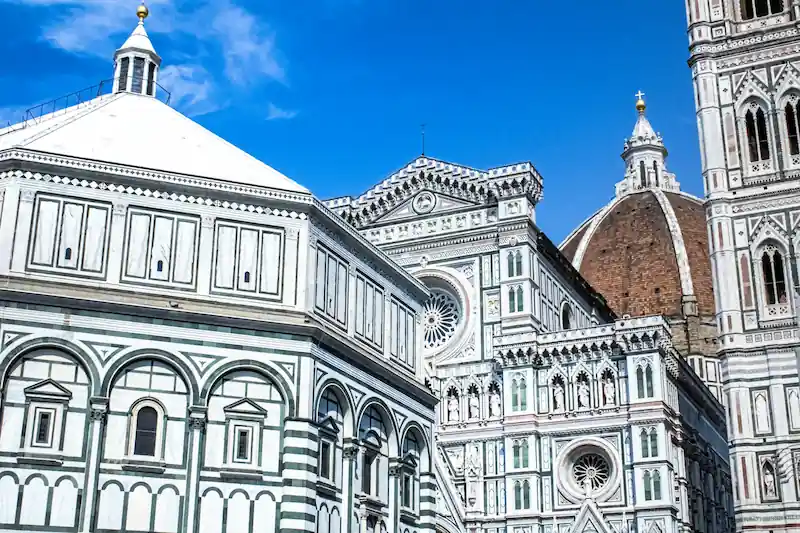
Use the Duomo complex selectively – Santa Maria del Fiore, the Baptistery, Giotto’s Bell Tower, the crypt and the museum can easily consume too much of a short trip. Choose the dome or bell tower for the physical experience, then use the cathedral exterior and museum to understand the whole complex without chasing every entrance. (Best for: Travelers who want structure around the Duomo area)Find tours & experiences
Read Piazza della Signoria as an open-air power stage – This is Florence’s civic theatre: Palazzo Vecchio, the Loggia dei Lanzi, Neptune and the outdoor sculptures all compress politics, art and spectacle into one square. Go early for space or after dark when the stone feels cooler and the statues regain their edges. (Free · Best for: A free, high-impact historic center anchor)
Cross Ponte Vecchio, but do not stop there – Ponte Vecchio is at its best as a threshold between the dense historic center and the slower south bank. The bridge itself is crowded, but the approach, river views and continuation into Oltrarno make it feel like a shift in the city’s temperature. (Best for: Classic Florence views with a useful route)
Pair Palazzo Pitti with Boboli Gardens – Palazzo Pitti changes the register from tight Renaissance rooms to courtly scale. Add Boboli Gardens when you need air, gravel paths and a long view back toward the city rather than another compressed museum interior. (Best for: A slower, more spacious Florence afternoon)Find tours & experiences
End the day at Piazzale Michelangelo and San Miniato al Monte – Piazzale Michelangelo gives the broad postcard view, but San Miniato adds stillness and proportion above it. Walk up before sunset, then let the return downhill carry you back into the city as the Arno and rooflines darken. (Best in the evening · Best for: Views, orientation and a memorable final hour)
Visit the Opera del Duomo Museum before or after the dome – The cathedral exterior is overwhelming, but the museum explains it. Original sculptures, façade fragments, Ghiberti’s doors and Brunelleschi context make the Duomo complex far more intelligible than simply circling the square. (High payoff · Best for: travelers who want the Duomo to make sense, not just look impressive)Find tours & experiences
Choose Giotto’s Bell Tower if the dome climb is not right for you – The bell tower offers a more open-feeling climb and a direct view of Brunelleschi’s dome from outside. It is a strong alternative for travelers who want height and architecture without the same enclosed dome route. (Alternative viewpoint · Best for: views, photography and travelers unsure about the dome climb)Find tours & experiences
Enter the Baptistery for mosaics and early Florence – The Baptistery is easy to underestimate beside the cathedral, but its mosaics and older urban role give the Duomo area historical depth. It works best as a compact, meaningful addition rather than a rushed extra. (Best for: travelers who want the religious core of Florence in context)Find tours & experiences
Go inside Palazzo Vecchio for civic Florence – Piazza della Signoria gives the stage, but Palazzo Vecchio shows the machinery behind it: halls, apartments, symbols of power and a tower option that makes the surrounding streets feel politically legible. (Worth it · Best for: history-minded travelers and families who want variety beyond paintings)Find tours & experiences
Use Santa Maria Novella as the station-side masterpiece – Santa Maria Novella is more than a convenient stop near the station. Its frescoes, cloisters and clean architectural rhythm make it one of Florence’s best major church interiors, especially when arrival or departure keeps you on this side of the city. (High payoff · Best for: church interiors, frescoes and efficient routing near the station)Find tours & experiences
Cultural things to do in Florence beyond the obvious queue
Florence rewards cultural selection more than cultural accumulation. Some of its best experiences sit in chapels, cloisters, libraries and churches where the crowd thins and the city becomes quieter under stone arcades. This category is for travelers who want depth without turning the trip into a checklist.
Choose Santa Croce for memory, monuments and scale – Santa Croce is one of Florence’s most rewarding church visits because it combines architecture, tombs, frescoes and a strong sense of civic memory. It works especially well when paired with the surrounding streets and artisan shops rather than treated as a standalone box to tick. (Best for: A major church with emotional and historic weight)Find tours & experiences
Visit San Marco for Fra Angelico’s quiet intensity – San Marco is one of Florence’s best antidotes to blockbuster museum fatigue. The former convent, with Fra Angelico’s frescoed cells, asks for slower looking and rewards visitors who want spiritual atmosphere rather than spectacle. (High payoff · Best for: Quiet Renaissance depth)
See the Brancacci Chapel in Oltrarno – The Brancacci Chapel is small, controlled and artistically important, which makes it a strong choice for travelers who prefer one concentrated masterpiece to another large museum. Its frescoes also give Oltrarno a cultural anchor beyond shopping and aperitivo. (Best for: A precise, underused art stop)
Step into the Laurentian Library if architecture matters to you – The Laurentian Library is a sharp, cerebral Michelangelo experience: stairs, stone, proportion and pressure rather than a famous statue. It is best for travelers who enjoy architecture as a physical language. (Best for: Design, architecture and Michelangelo beyond David)
Visit the Bargello for sculpture without the Accademia crush – The Bargello is one of Florence’s strongest museum choices after the headline stops. Donatello, Michelangelo and Renaissance sculpture sit in a fortress-like setting that feels calmer and more spatially varied than the busiest galleries. (Worth it · Best for: Sculpture, quieter rooms and serious art depth)Find tours & experiences
Look at Florence through the Vasari Corridor if access fits your plans – The reopened Vasari Corridor adds a rare linear experience to Florence: an elevated Medici passage connecting power, privacy and views across the Arno. It is not a first-stop essential, but it is highly distinctive for repeat visitors or travelers interested in how the city was controlled as much as displayed. (Unique · Best for: Repeat visitors and Medici-era perspective)
Add the Medici Chapels when San Lorenzo is already on your route – The Medici Chapels give Florence’s ruling family a more physical and dynastic presence than many museum rooms can. They are most useful when paired with San Lorenzo, the market area or a morning around the northern historic center. (Best for: Medici history, Michelangelo architecture and compact cultural depth)Find tours & experiences
Use Palazzo Medici Riccardi for an easier Medici layer – This palace is a quieter way to understand the Medici domestic and ceremonial world without committing to another large museum. The Magi Chapel gives the visit a clear payoff in a compact format. (Best for: short cultural stops and Medici context near San Lorenzo)
Visit the Museo Galileo for Florence beyond painting – The Museo Galileo shifts the city from Renaissance art toward science, instruments and observation. It is especially useful for families, repeat visitors and travelers who want a different kind of Florentine intelligence. (Unique · Best for: science, families and a break from painting-heavy days)
See Orsanmichele as a bridge between faith, guilds and sculpture – Orsanmichele is one of Florence’s smartest short stops because it compresses religion, commerce and public sculpture into a single building. It works perfectly between the Duomo, Signoria and shopping streets. (Short stop · Best for: architecture and sculpture without a long museum commitment)
Choose the Ospedale degli Innocenti for architecture and social history – Brunelleschi’s loggia and the museum’s story of care give Florence a more humane register. It is a strong add-on around San Marco and the Accademia for travelers who want architecture with social meaning. (Best for: architecture, quieter museums and family-history context)
Local experiences and slower ways to feel Florence
Florence’s local texture appears when you leave the straight line between the station, the Duomo and the Uffizi. It is in working markets, small workshops, residential edges and the south-bank streets where shutters, scooters and evening voices soften the museum-city image. These experiences are not about avoiding famous Florence; they help the famous parts feel less isolated.
Spend a morning around Sant’Ambrogio Market – Sant’Ambrogio is more useful than decorative: food stalls, neighborhood errands, simple lunches and a rhythm that starts early. Go before lunch, when the market still feels like part of the city’s working day rather than an attraction. (Best for: Market life and a less tourist-shaped morning)
Follow Oltrarno’s artisan streets without over-planning – Oltrarno is strongest when explored slowly: leather, paper, restoration, frame-making and small design shops appear between ordinary residential corners. The point is not to shop aggressively, but to feel the city’s hand-made layer still operating behind the palace façades. (Best for: Craft, workshops and slower streets)Find tours & experiences
Use San Niccolò as a bridge between river and hillside – San Niccolò works because it links a neighborhood walk with the climb toward Florence’s best viewpoints. Late afternoon gives the area its best logic: narrow streets, aperitivo energy, then the slope toward San Miniato or Piazzale Michelangelo. (Best in the evening · Best for: A local-feeling route before sunset)
Look for small cloisters and courtyards between headline stops – Florence can feel hard-edged at street level, especially in peak hours. Small cloisters, church courtyards and museum interiors reset the pace and give the city more air without requiring a major detour. (Best for: Short pauses between dense cultural visits)
Walk the river at blue hour instead of chasing another interior – The Arno is not just a view; it is Florence’s best decompression route. After a museum-heavy day, walk between Santa Trinita, Ponte Vecchio and San Niccolò when the façades lose their glare and the bridges begin to frame the evening. (Free · Best for: Low-effort atmosphere after a full day)
Walk through the Rose Garden below Piazzale Michelangelo – The Rose Garden turns the viewpoint route into something softer and less abrupt. It is best on clear afternoons or spring visits, when the climb toward San Miniato can become a layered hillside walk rather than a simple photo mission. (Free · Best for: viewpoint walks, couples and slower afternoons)
Use the Bardini Garden for quieter views and terraces – Bardini is one of Florence’s best alternatives to the busier viewpoint circuit. Terraces, wisteria season, stairways and city views make it especially strong for travelers who want views with less crowd pressure than Piazzale Michelangelo. (Worth it · Best for: garden views, photography and a slower Oltrarno afternoon)Find tours & experiences
Step into the Officina Profumo-Farmaceutica di Santa Maria Novella – This historic perfumery is one of Florence’s most atmospheric low-effort stops, especially near the station side of the city. It adds a sensory layer of scent, rooms and craft without requiring another major ticketed visit. (Unique · Best for: design, scent, heritage retail and short atmospheric pauses)
Notice Florence’s wine windows without turning them into a gimmick – The buchette del vino are small, memorable traces of the city’s wine culture and urban history. They work best as details encountered during walks through Oltrarno, Santa Croce or the historic center, not as a forced scavenger hunt. (Unique · Best for: small city details and food-history curiosity)
Food experiences in Florence worth building time around
Florence is not a city where every meal needs to become a production. The best food experiences often come from timing: a market before noon, a wine bar before dinner, a simple lampredotto stop when the streets are moving around you. Use food to break up art-heavy days rather than adding another layer of obligation.
Eat lunch around Mercato Centrale without treating it as the whole food scene – The Central Market area is convenient, energetic and easy to fit between San Lorenzo, the Medici Chapels and the Duomo. Use it for a casual lunch or food hall stop, but balance it with more local-feeling food areas elsewhere. (Best for: Easy logistics and broad choice)
Try Sant’Ambrogio for a more grounded market meal – Sant’Ambrogio gives a better sense of everyday Florence than the most central food stops. It is ideal for travelers who want market energy, simple plates and a neighborhood setting before returning to museums or Santa Croce. (Best for: A market meal with less performance)
Book one Florentine food walk if you want context, not just snacks – A good food tour can help decode Tuscan ingredients, wine habits, markets and local specialties without wasting meals on random stops. It is most useful early in the stay, when it can shape where you eat next. (Best for: First-timers who want edible orientation)Find tours & experiences
Make aperitivo part of an Oltrarno evening – Oltrarno’s wine bars and small squares work well after Ponte Vecchio and before dinner. The experience is less about one famous address than about letting the south bank slow the day down. (Best in the evening · Best for: A relaxed transition into dinner)
Use gelato as a walking pause, not a destination chase – Florence has excellent gelato, but turning it into a cross-city mission rarely improves the day. Choose a strong gelateria near your route and use it as a reset between dense sights. (Best for: Families, short breaks and low-cost pleasure)
Try lampredotto if you want Florence’s street-food identity – Lampredotto is not for everyone, but it is one of the clearest local food signatures in the city. Treat it as a quick, specific experience around markets or street stands rather than as a full meal plan. (Local classic · Best for: curious eaters and street-food stops)
Plan one bistecca alla Fiorentina meal carefully – Bistecca alla Fiorentina is worth making space for if you enjoy beef, but it should be treated as a shared, deliberate dinner rather than a casual order. Choose the restaurant for sourcing and grill confidence, not just central location. (Worth it · Best for: meat lovers and one proper Tuscan dinner)
Take a Tuscan cooking class when you need a slower indoor block – A cooking class can be more useful in Florence than another marginal museum if rain, heat or cultural fatigue sets in. The best versions connect pasta, sauces, seasonal ingredients and Tuscan habits rather than simply filling time. (Good in rain · Best for: food-first travelers, families with older children and slower stays)Find tours & experiences
Use an enoteca or wine bar to understand Tuscany without leaving town – A good wine bar can give you Chianti, Brunello, Vernaccia or Super Tuscan context without committing to a full countryside day. It works especially well on short stays when a winery trip would steal too much city time. (Best in the evening · Best for: wine-curious travelers with limited time)Find tours & experiences
What to do in Florence on a first trip
First-time Florence works best when you separate the essentials from the merely famous. Build around one major museum, one Duomo experience, one river crossing, one viewpoint and one slower neighborhood.
Book either the Uffizi or Accademia for your first full day; doing both back-to-back is possible but rarely ideal.
Walk the Duomo exterior, Piazza della Signoria and Ponte Vecchio early or late to avoid the most compressed hours.
Choose one Duomo complex experience: Brunelleschi’s Dome, Giotto’s Bell Tower, the Baptistery or the Opera del Duomo Museum.
Use Oltrarno to change pace after the historic center rather than adding another central church immediately.
Reserve sunset for Piazzale Michelangelo, San Miniato al Monte, Bardini Garden or a simpler Arno bridge walk depending on energy.
Add Santa Croce, San Marco, Bargello or Santa Maria Novella only if you have enough attention left for a second cultural layer.
Add a Tuscan day trip only if you have at least three nights or a repeat visit.
Priority
BestChoice
Why
Essential
Uffizi, Accademia, Duomo exterior, Piazza della Signoria, Ponte Vecchio
These define Florence quickly and clearly.
Strong add-on
Dome climb, Boboli Gardens, Santa Croce, San Miniato
Bargello, Santa Croce, San Marco, Opera del Duomo Museum or Santa Maria Novella
These deepen Florence once the headline icons are already protected.
Best free things to do in Florence
Florence can be expensive once timed-entry museums stack up, but some of its strongest experiences cost nothing. The key is to use free sights as meaningful structure, not filler between tickets.
Walk Piazza della Signoria and the Loggia dei Lanzi for outdoor sculpture and civic scale.
Cross Ponte Vecchio, then step back to Ponte Santa Trinita for the better view of the bridge.
Climb or walk up to Piazzale Michelangelo for the broadest free panorama of Florence.
Continue to San Miniato al Monte for a quieter hilltop experience above the crowd line.
Explore Oltrarno’s artisan streets, Piazza Santo Spirito and San Niccolò without turning the area into a shopping mission.
Use the Duomo exterior, Baptistery doors and surrounding marble façades as an architectural experience even if you skip paid entries.
Walk through Sant’Ambrogio or San Lorenzo market areas for atmosphere, even if you do not stop for a full meal.
Follow the Arno at blue hour between Ponte Santa Trinita, Ponte Vecchio and San Niccolò.
Look for wine windows and small historic details while walking, rather than chasing only major monuments.
FreeActivity
BestTime
BestFor
Piazza della Signoria
Early morning or evening
Outdoor art and historic atmosphere
Piazzale Michelangelo
Sunset or early morning
Wide city views
Oltrarno walk
Late afternoon
Local texture and slower streets
Arno bridges
Blue hour
Low-effort photography and decompression
Unique and unusual things to do in Florence
The most distinctive Florence experiences are rarely about novelty for its own sake. They reveal another layer of the city: private passageways, working craft, small chapels, scientific collections and viewpoints that shift how the historic center fits together.
Check access to the Vasari Corridor for a rare Medici route above the river and city streets.
Visit the Brancacci Chapel for a concentrated fresco experience away from the biggest queues.
Explore San Marco’s frescoed cells if you want quiet rather than spectacle.
Look into artisan workshops in Oltrarno, especially paper, leather, restoration, marbling and frame-making.
Visit La Specola or the Museo Galileo if you want Florence beyond Renaissance painting.
Walk from San Niccolò through the Rose Garden to San Miniato al Monte instead of stopping only at Piazzale Michelangelo.
Choose the Bargello when you want major sculpture in a less obvious setting.
Use the Officina Profumo-Farmaceutica di Santa Maria Novella for heritage, scent and interior atmosphere.
Notice wine windows as small urban-history details, especially around Oltrarno and the historic center.
Things to do in Florence at night
Florence at night is less about late-night intensity and more about stone, squares, bridges and a cooler pace after the day crowds loosen. Plan evenings around walking, views, aperitivo and softly lit public spaces.
Walk Piazza della Signoria after dinner, when the sculptures feel more theatrical and the square opens up.
Cross Ponte Vecchio late, then step back to Ponte Santa Trinita for the better view.
Have aperitivo around Santo Spirito, San Niccolò or Sant’Ambrogio before dinner.
Go to Piazzale Michelangelo for sunset, then continue to San Miniato or return downhill as the city lights come on.
Choose an evening concert in a church or small venue if you want a seated cultural experience.
Use the Arno as a low-effort night walk after a museum-heavy day.
Book one serious Tuscan dinner, bistecca meal or wine bar evening instead of trying to keep sightseeing after dark.
NightActivity
EnergyLevel
BestFor
Piazza della Signoria
Easy
Atmosphere without booking
Oltrarno aperitivo
Moderate
Food, wine and local evening rhythm
Sunset viewpoint
Moderate to active
Views and a strong final hour
Church concert
Easy
Rainy evenings or quieter travelers
Things to do in Florence with kids
Florence with kids works when you reduce museum density and add movement, views, food breaks and outdoor space. The city is walkable, but stone streets, queues and heat can wear families down quickly.
Choose the Accademia over the Uffizi for a shorter, clearer masterpiece experience.
Use Boboli Gardens, Bardini Garden or the Rose Garden when children need space after tight historic-center streets.
Climb Giotto’s Bell Tower or the dome only with kids who enjoy stairs and enclosed routes.
Break the day with gelato near your route rather than making a special detour.
Visit the Leonardo da Vinci Museum, Museo Galileo or a hands-on workshop if you need an indoor reset.
Walk the Arno bridges at dusk for an easy activity without another ticket.
Use Palazzo Vecchio for rooms, towers and story if you want more variety than another painting-heavy museum.
Consider Lucca as a family-friendly day trip because the walls, bikes and slower rhythm are easier than another dense museum day.
Activity
AgeFit
TimeFit
WeatherFit
Accademia Gallery
Older children and teens
Short
Good in rain
Boboli Gardens
All ages with energy
Flexible
Best in dry weather
Leonardo-style hands-on museum
Younger children
Short to medium
Good in rain
Lucca day trip
Families who want space
Full day
Best in mild weather
Things to do in Florence when it rains
Rain can make Florence’s narrow streets feel congested, so rainy-day planning should be decisive. Choose interiors with real value, keep transfers short and avoid turning the day into a damp march between minor sights.
Book or move toward the Uffizi if you can secure a timed slot and want a major indoor anchor.
Visit the Accademia for a shorter indoor activity with a clear payoff.
Use the Bargello, San Marco, Santa Maria Novella, Medici Chapels or Palazzo Pitti when the headline museums are too crowded.
Choose Mercato Centrale or Sant’Ambrogio for a food break that does not depend on sunshine.
Add a cooking class, wine tasting or food workshop if rain is heavy and you want a seated experience.
Visit Santa Croce, Santa Maria Novella or the Opera del Duomo Museum for interiors with enough scale to justify the stop.
Use Museo Galileo or a Leonardo-style museum for families who need a different kind of indoor activity.
Save viewpoints, Boboli Gardens, Bardini Garden and long Oltrarno wandering for clearer weather.
RainyDayOption
BestFor
BookingNeed
Uffizi
Major art commitment
High
Accademia
Shorter indoor highlight
High
Bargello or San Marco
Lower-pressure culture
Moderate
Cooking class
Hands-on indoor time
Moderate to high
Things to do in Florence by area
Duomo and San Lorenzo
This is the densest first-time zone, where Florence feels bright, crowded and architecturally immediate. Use it for the cathedral complex, Medici context and market breaks, but avoid spending your entire stay in this orbit.
See the Duomo exterior early before the square tightens.
Book the dome or bell tower if you want a vertical experience.
Visit the Opera del Duomo Museum for context without the street crush.
Use Mercato Centrale for an easy food stop.
Add the Medici Chapels if family power and sculpture interest you.
Uffizi, Piazza della Signoria and Santa Croce
This area carries Florence’s strongest civic and artistic charge. It works best as a structured half day: museum, square, river edge, then east toward Santa Croce when the historic center begins to loosen.
Book the Uffizi as the main anchor, not a casual drop-in.
Walk Piazza della Signoria and the Loggia dei Lanzi for free outdoor sculpture.
Visit Palazzo Vecchio if political Florence interests you.
Continue to Santa Croce for church scale and quieter side streets.
Use the Arno nearby for a visual reset after dense interiors.
Oltrarno and Santo Spirito
Oltrarno is where Florence becomes more tactile and less polished. Cross the river for workshops, palace scale, gardens, wine bars and streets that feel lived-in rather than staged.
Pair Palazzo Pitti with Boboli Gardens if you need space.
Walk artisan streets without turning the area into a shopping checklist.
Use Piazza Santo Spirito for aperitivo or a slower evening.
Visit the Brancacci Chapel for a focused cultural stop.
Return across Ponte Santa Trinita for one of the best bridge views.
San Niccolò and the southern hills
This zone gives Florence its best end-of-day rhythm. The streets narrow, the climb begins, and the city slowly opens into wide views from Piazzale Michelangelo and San Miniato al Monte.
Start in San Niccolò before the uphill walk.
Reach Piazzale Michelangelo before sunset if skies are clear.
Continue to San Miniato al Monte for a quieter, more complete viewpoint.
Return downhill for dinner or drinks in Oltrarno.
Avoid doing this in the hottest part of summer afternoons.
San Marco and the northern historic center
North of the Duomo, Florence becomes more museum-led but also more manageable if you choose carefully. This is the best area for David, San Marco and a more precise cultural morning.
Book the Accademia for Michelangelo’s David.
Visit San Marco for Fra Angelico and a quieter mood.
Use the area as a morning before returning toward the Duomo or Sant’Ambrogio.
Avoid stacking too many secondary museums unless you are deeply art-focused.
Pair with a simple lunch rather than another major interior.
Sant’Ambrogio
Sant’Ambrogio gives Florence a more practical, food-led texture. It is not removed from the center, but the rhythm changes: market stalls, lunch counters, local errands and streets that feel less performance-driven.
Go to Sant’Ambrogio Market in the morning or around lunch.
Pair the area with Santa Croce for an efficient east-side route.
Use it for food rather than souvenir browsing.
Choose it when you want a local experience without leaving central Florence.
Avoid arriving too late, when the market energy has passed.
Santa Maria Novella and station side
This area is often treated as purely logistical, but it contains one of Florence’s strongest church interiors, historic perfumery rooms, practical hotels and useful arrival-day routing. It is best used when you want culture and convenience on the same side of the city.
Visit Santa Maria Novella for frescoes, cloisters and architectural calm.
Step into the Officina Profumo-Farmaceutica di Santa Maria Novella for a sensory heritage stop.
Use the area for arrival-day or departure-day sightseeing without dragging luggage across the city.
Walk toward San Lorenzo or the Arno rather than treating the station zone as a dead space.
Choose food and hotel options carefully because quality varies sharply around transit corridors.
Bargello and Badia Fiorentina pocket
Between the Duomo, Signoria and Santa Croce, this compact pocket gives Florence a serious sculpture and medieval-street layer without the full pressure of the blockbuster route.
Visit the Bargello for sculpture in a calmer fortress setting.
Use Badia Fiorentina and nearby lanes as short atmospheric pauses.
Connect the area naturally with Piazza della Signoria or Santa Croce.
Choose this pocket when the Uffizi or Accademia feel too crowded.
Keep the visit focused; the area works best as depth, not a full-day base.
What to prioritize in Florence by trip length
Florence rewards firm editing. The difference between a good visit and a tiring one is usually not how much you see, but whether each day has one clear anchor, one open-air release and one slower neighborhood shift.
Profile
Prioritize
Skip
Structure
Half day
Duomo exterior, Piazza della Signoria, Ponte Vecchio and one short viewpoint or river walk.
Paid museum interiors unless you already have a timed ticket.
Stay outdoors, move in a clean line, and treat the visit as orientation rather than completion.
1 full day
One major museum, the Duomo area, Piazza della Signoria, Ponte Vecchio and an Oltrarno evening.
Trying to do Uffizi, Accademia, dome climb and Pitti in the same day.
Morning timed-entry anchor, midday historic center, late afternoon across the river.
2 days
Uffizi, Accademia or Duomo climb, Santa Croce or San Marco, Oltrarno and a sunset viewpoint.
A full-day excursion unless this is a repeat visit.
Use one intense cultural anchor per half day and separate them with markets, bridges and gardens.
3 days
The main icons, one secondary museum, Palazzo Pitti or Boboli, Sant’Ambrogio and one nearby Tuscan extension.
Multiple rushed day trips from Florence.
Two city-focused days, then one carefully chosen excursion or a slower Oltrarno-heavy day.
Culture-first stay
Uffizi, Accademia, Bargello, San Marco, Brancacci Chapel and Santa Croce.
Generic shopping streets and long café-hopping routes in peak museum hours.
Alternate blockbuster museums with smaller, quieter interiors to protect attention.
Repeat visit
Vasari Corridor access, Oltrarno workshops, San Miniato, La Specola, smaller chapels and one specific Tuscan town.
Repeating every headline attraction out of habit.
Build the trip around texture, access and slower corners rather than another first-time circuit.
Family trip
Accademia, Palazzo Vecchio, gelato breaks, Boboli or Bardini Gardens, Arno walks and one hands-on museum or workshop.
Long back-to-back museum blocks and midday hill climbs in summer.
Keep each day to one serious cultural anchor, one outdoor release and one food or gelato reset.
Rainy day
Uffizi, Accademia, Bargello, San Marco, Santa Maria Novella, Palazzo Pitti, Museo Galileo or a cooking class.
Piazzale Michelangelo, Boboli, Bardini and long Oltrarno wandering until the weather clears.
Cluster indoor stops by area so the day does not become a wet cross-city march.
Food-first stay
Sant’Ambrogio, Mercato Centrale, Oltrarno aperitivo, one bistecca dinner, one wine bar and possibly a cooking class.
Random restaurants on the main Duomo-to-Ponte-Vecchio route.
Use food to shape movement through neighborhoods rather than adding meals after sightseeing is already fixed.
Best day trips from Florence
Day trips from Florence make sense once you have given the city enough attention. Choose one based on the type of contrast you want: medieval streets, wine country, family-friendly space, architecture or a broader Tuscan sampler.
Excursion
Best for
Time needed
First trip?
Transport
Book ahead
Siena
A serious Tuscan city with medieval structure and a strong main square
Full day
Yes, if you have at least three days in Florence
Bus or guided tour usually works better than train for central access
Book ahead for guided combinations or Siena Cathedral in peak periods. Check options
Pisa
A simple architectural half day centered on the Leaning Tower and Campo dei Miracoli
Half day to easy full day
Yes, if you want an easy train trip
Direct train from Florence, then local walk or bus
Book tower climb slots if climbing matters. Check options
Chianti wine country
Vineyards, tastings and countryside without driving after wine
Half day to full day
Yes, if food and wine are a priority
Guided tour is the most practical option
Yes, especially for small-group winery visits. Check options
Lucca
A calmer walled city, cycling and family-friendly space
Full day
Best if you prefer slower towns over landmark chasing
Train via Pisa or regional connections
No for the town itself; book bikes or tours only if needed.
San Gimignano
Hill-town atmosphere and medieval towers
Full day
Best as part of a wider Tuscan route
Guided tour or car is easier than public transport
Book ahead for multi-stop Tuscany tours. Check options
Siena, San Gimignano and Pisa combination
Travelers who want a broad Tuscan sampler in one day
Long full day
Only if you accept a fast pace
Guided tour is strongly preferable
Yes, this is a logistics-heavy excursion. Check options
Fiesole
A short hillside escape with views, Etruscan-Roman layers and less commitment than a full Tuscan day trip
Half day
Yes, especially if you want a lighter excursion without losing a full Florence day
Local bus or taxi from Florence
No for a simple visit; book only for guided context.
Arezzo
Art, antiques, a less obvious Tuscan city and Piero della Francesca context
Full day
Better for repeat visitors or longer stays
Train from Florence
Useful for specific fresco or guided art visits.
Val d’Orcia
Iconic Tuscan landscapes, villages and a full countryside day
Long full day
Only with four days or more, or if countryside is a major priority
Guided tour or car is much easier than public transport
Yes, especially for small-group scenic and wine routes. Check options
Bologna
Food, porticoes and a different Italian city rhythm by fast train
Full day
Only if you have already protected enough Florence time
High-speed train
Train tickets and food experiences are worth booking ahead.
Smart Florence activity combinations
These are not full itineraries. They are activity pairings that work because the geography, energy level and timing support each other.
Uffizi, Piazza della Signoria and an Arno reset – Start with the Uffizi while attention is fresh, then step directly into Piazza della Signoria to connect the art with Florence’s civic stage. Finish with a river walk instead of another interior so the morning has space to settle.
Accademia, San Marco and a market lunch – This combination keeps the morning compact and culturally sharp. David gives the headline moment, San Marco slows the pace, and a market lunch prevents the day from becoming a museum chain.
Duomo climb, cathedral museum and late Oltrarno – The dome climb gives physical intensity, while the museum explains what the exterior alone cannot. Move to Oltrarno later in the day so the route shifts from marble crowds to lower streets, workshops and wine bars.
Santa Croce, Sant’Ambrogio and San Niccolò sunset – This east-side route avoids doubling back through the busiest central lanes. It moves from church scale to food texture, then toward the hill for a sunset finish that feels earned rather than staged.
Pitti Palace, Boboli Gardens and Santo Spirito evening – This is the best Florence combination when you need air and slower movement. Palace rooms, garden paths and an Oltrarno evening create a full south-bank experience without turning the day into a race.
Santa Maria Novella, San Lorenzo and Medici Chapels – This is a smart arrival-side cultural route. It keeps the first or last day geographically coherent while giving you church frescoes, Medici context, market energy and a useful food break without crossing the whole city.
Bargello, Palazzo Vecchio and Piazza della Signoria after dark – This combination keeps Florence’s civic and sculptural layer concentrated. Use the Bargello for quieter sculpture, Palazzo Vecchio for power and rooms, then let the same political geography return as atmosphere in the evening square.
Bardini Garden, San Niccolò and San Miniato – This is the more layered version of the classic viewpoint outing. Instead of only aiming for Piazzale Michelangelo, you move through garden terraces, a local-feeling neighborhood and a quieter hilltop church.
Sant’Ambrogio market, Santa Croce and a food-led evening – This east-side combination works because it starts with local food texture, adds one major church and then stays in a district where dinner and wine bars can carry the evening without backtracking.
What to book ahead in Florence
Florence is one of the Italian cities where booking strategy changes the quality of the trip. Reserve the few experiences with real capacity pressure, and keep the rest flexible enough for weather, appetite and fatigue.
Late afternoon is often strongest for light and views.
No; go independently unless combined with a garden-focused visit.
Vasari Corridor
Yes when access is available.
Best for repeat visitors or art-history focused stays.
Yes if it includes meaningful Medici and Uffizi context.
Florence things to do FAQ
These answers focus on activity choices, time trade-offs, museum strategy, food experiences, family planning, rainy-day decisions and day trips from Florence.
What are the best things to do in Florence for a first visit?
Prioritize the Uffizi, Michelangelo’s David at the Accademia, the Duomo exterior or dome climb, Piazza della Signoria, Ponte Vecchio, Oltrarno and a sunset viewpoint. These give the clearest first understanding of Florence without scattering your time.
How many days do you need to see the top things to do in Florence?
Two full days are enough for the main Florence highlights if you book carefully. Three days are better if you want Palazzo Pitti, Boboli Gardens, smaller museums, food experiences or one day trip into Tuscany.
Is the Uffizi worth it in Florence?
Yes, if you enjoy art or want to understand why Florence matters. It is not worth doing casually without a timed ticket or route, because the collection is large and museum fatigue can set in quickly.
Should I book the Accademia in advance?
Yes. The Accademia is a shorter visit than the Uffizi, but demand for Michelangelo’s David is intense. Timed entry protects your day from a queue that can distort the rest of your plan.
Is Brunelleschi’s Dome climb worth it?
Yes if you like architecture, views and physical experiences. Skip it if enclosed stairs, height or heat are an issue; Giotto’s Bell Tower or the Opera del Duomo Museum may be better alternatives.
What should I choose: the dome, Giotto’s Bell Tower or the Duomo Museum?
Choose the dome for the most iconic physical experience, Giotto’s Bell Tower for a view of the dome itself, and the Opera del Duomo Museum if you want the clearest explanation of the cathedral complex without another climb.
What are the best free things to do in Florence?
The best free experiences include Piazza della Signoria, the Loggia dei Lanzi, Ponte Vecchio, the Arno bridges, Oltrarno walks, Piazzale Michelangelo and San Miniato al Monte. These are not filler; they are essential parts of how Florence is experienced.
What should you do in Florence at night?
Walk Piazza della Signoria, cross the Arno bridges, have aperitivo in Oltrarno, or go to Piazzale Michelangelo around sunset. Florence is not a hard-party city for most travelers; its best evenings are atmospheric and walkable.
What are good things to do in Florence with kids?
Choose short, high-payoff sights such as the Accademia, add Boboli or Bardini Gardens for space, use gelato and markets as breaks, and consider Palazzo Vecchio, Museo Galileo or hands-on workshops on rainy days.
What can you do in Florence when it rains?
Use rain for the Uffizi, Accademia, Bargello, San Marco, Palazzo Pitti, Santa Maria Novella, Santa Croce, food markets, Museo Galileo or a cooking class. Save viewpoints, gardens and long Oltrarno wandering for clearer weather.
What is the best day trip from Florence?
Siena is the strongest all-around cultural day trip, Chianti is best for wine, Pisa is easiest by train, Lucca is excellent for families, and San Gimignano works best as part of a wider Tuscan route. Choose one, not several, unless you deliberately want a fast guided sampler.
Are Pisa and the Leaning Tower worth a day trip from Florence?
Pisa is worth it if you want an easy half-day or simple train excursion, especially for the Campo dei Miracoli. It is less rewarding than Siena for a full cultural day unless the tower is a personal priority.
Is Siena or San Gimignano better from Florence?
Siena is better if you want a complete Tuscan city with architecture, streets and a major square. San Gimignano is better for hill-town atmosphere and towers, but it is usually easier as part of a guided or car-based route.
What are the most underrated things to do in Florence?
The Bargello, San Marco, Brancacci Chapel, Santa Maria Novella, Bardini Garden, Museo Galileo, Orsanmichele and Sant’Ambrogio Market are among the best underused choices. They add depth without simply repeating the blockbuster circuit.
What is the best viewpoint in Florence?
Piazzale Michelangelo gives the broadest classic view, San Miniato al Monte adds a quieter and more complete hilltop experience, Giotto’s Bell Tower frames the Duomo, and Bardini Garden offers a softer terrace view with fewer crowds.
Is Palazzo Pitti worth visiting?
Yes if you want palace scale, Medici context, gardens or a slower Oltrarno afternoon. It is less essential than the Uffizi or Accademia on a very short first trip, but strong for three-day stays.
Is the Bargello worth visiting?
Yes for travelers interested in sculpture, Donatello, Michelangelo or a quieter museum experience. It is one of the best second-tier Florence museums because it feels serious without the same crowd pressure.
What is the best area of Florence for food experiences?
Sant’Ambrogio is best for a more grounded market feel, San Lorenzo and Mercato Centrale are easiest for central logistics, and Oltrarno works well for aperitivo, wine bars and dinner after sightseeing.
What food should you try in Florence?
Good Florence food experiences include lampredotto, ribollita, pappa al pomodoro, crostini, bistecca alla Fiorentina, cantucci with vin santo, gelato and Tuscan wine. The key is to avoid tourist-heavy menus on the busiest corridors.
Are Florence food tours worth it?
A food tour is worth it if it gives market context, Tuscan ingredients and neighborhoods such as Sant’Ambrogio or Oltrarno rather than only generic snacks. It is most useful early in the stay.
What should repeat visitors do in Florence?
Repeat visitors should look beyond the Uffizi-Accademia-Duomo circuit: try the Vasari Corridor when accessible, Bargello, San Marco, Brancacci Chapel, Bardini Garden, La Specola or Museo Galileo, Oltrarno workshops and a more specific Tuscan day trip.
Can you visit Florence without booking museums?
Yes, but the trip will be more exterior and atmosphere-led. You can still enjoy the Duomo exterior, Piazza della Signoria, Ponte Vecchio, Oltrarno, markets, viewpoints, churches with easier access and the Arno. For a first trip, booking at least one major museum is still recommended.
What should you skip in Florence if you only have one day?
Skip full-day excursions, multiple major museums, deep palace visits and distant garden time. Keep one timed-entry anchor, the Duomo area, Piazza della Signoria, Ponte Vecchio and a late Oltrarno or viewpoint finish.
How do you avoid museum fatigue in Florence?
Limit each day to one major museum or two shorter cultural stops, separate interiors with markets, gardens, bridges or river walks, and book the most demanding visit for the time when your attention is strongest.
Florence is most rewarding when you choose fewer masterpieces, sequence them well, and leave enough room for the city between them.
Turn the right experiences into the right itinerary
Once you know what you want to do in Florence, the next step is turning those ideas into a trip that actually works day by day. Use the planner to organize the right mix of highlights, neighborhoods, and pace into a route that feels coherent, not crowded.