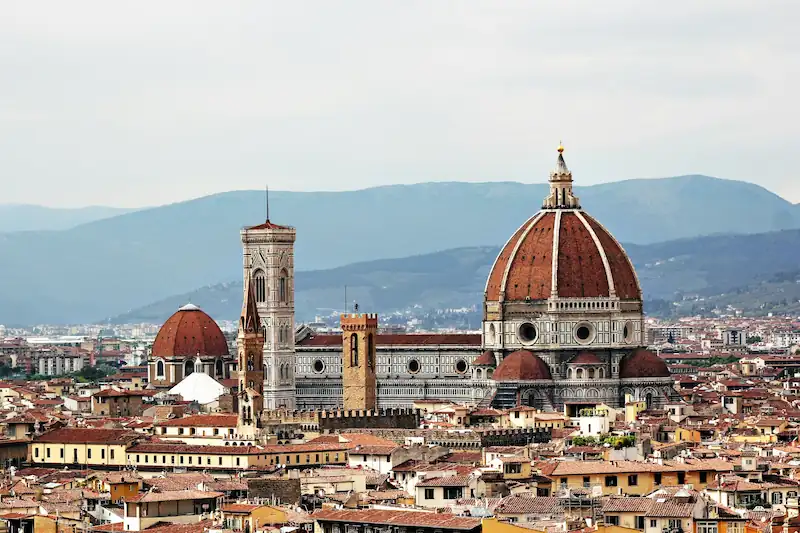
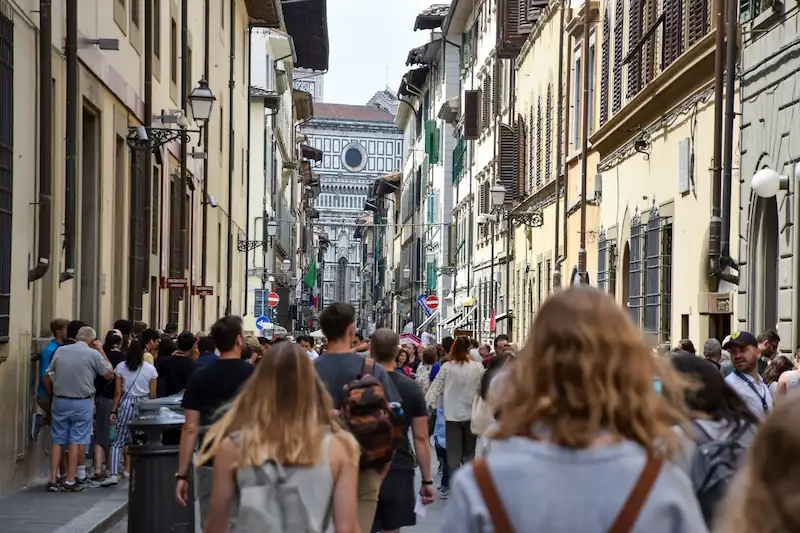
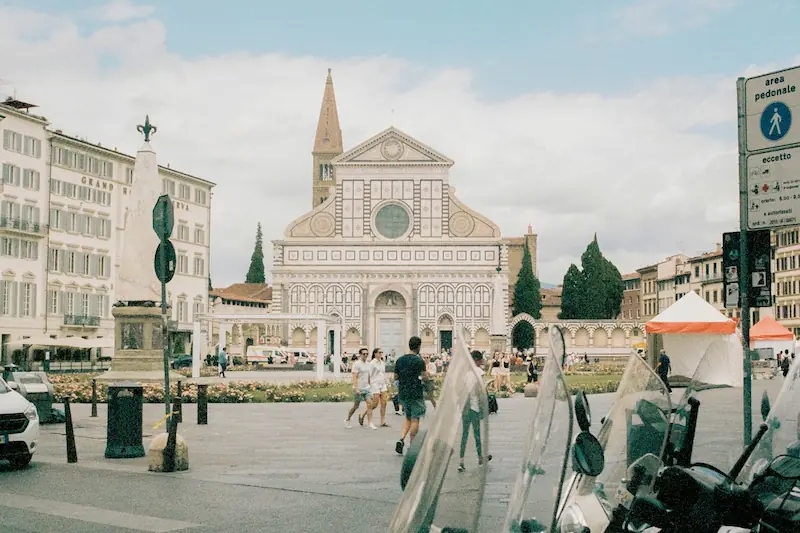
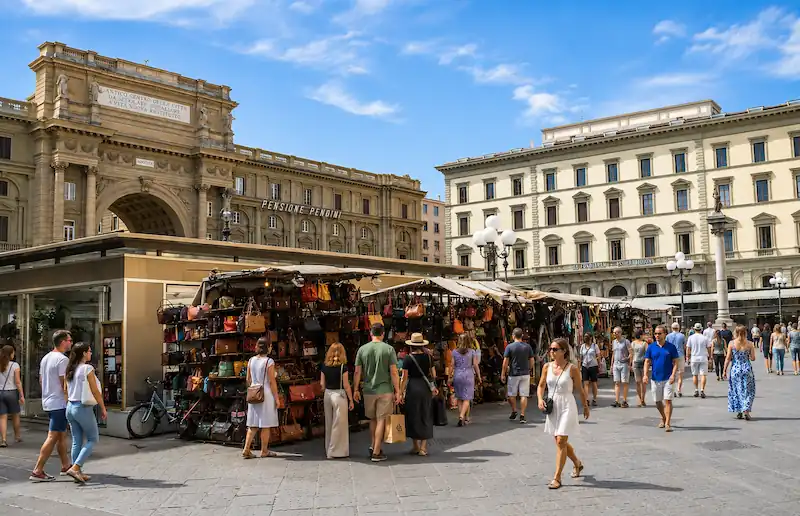
Find the best areas to stay in Florence based on your travel style, trip length, museum plans, arrival logistics, and how you want the city to feel at the end of each day. Florence looks simple because the historic centre is compact, but the wrong base can turn a refined cultural stay into a loop of crowded corridors, badly timed museum entries, noisy streets, and unnecessary river crossings. This guide is built to help you choose a neighborhood first, then a hotel micro-location that protects your energy, meals, and daily rhythm.
Best areas
Historic Centre is best for first-timers and short stays; Santa Maria Novella is best for trains and day trips; San Lorenzo is best for central value and market access; Santa Croce is best for calm central culture; Oltrarno is best for longer stays, restaurants, and local texture; San Niccolò is best for quiet, views, and romantic hillside atmosphere.
Booking timing
Book early for April to June, September to October, holidays, exhibition periods, and any stay near the Duomo, Uffizi, Ponte Vecchio, Piazza della Signoria, Santa Maria Novella station, or the best Oltrarno boutique hotels.
Best areas to stay in Florence at a glance
Historic Centre – Best for: first-time visitors, short stays, and maximum sightseeing efficiency · Vibe: monumental, central, crowded, and high-convenience · Stay here if: you want the Duomo, Uffizi, Piazza della Signoria, Ponte Vecchio, and major museums within the easiest walking radius. · Avoid if: you want quiet evenings, larger rooms for the money, or a more residential Florence feeling.
Santa Maria Novella – Best for: train arrivals, day trips, and practical short stays · Vibe: connected, efficient, slightly roomier, and more logistical than romantic · Stay here if: you want smooth station access while staying close enough to walk into the historic centre within minutes. · Avoid if: you want every street outside the hotel to feel atmospheric or intimate.
San Lorenzo – Best for: central value, markets, food access, and practical museum days · Vibe: busy, informal, market-led, and street-by-street variable · Stay here if: you want lower central prices, easy lunches, Mercato Centrale, Medici sites, and quick walks to the Duomo or Accademia. · Avoid if: you prefer polished streets, boutique calm, or a more elegant evening base.
Santa Croce – Best for: central culture with calmer evenings and good restaurants · Vibe: balanced, historic, slightly quieter, and still walkable · Stay here if: you want to stay near the Uffizi, Piazza della Signoria, Sant’Ambrogio, and the eastern centre without sleeping in the tightest Duomo flow. · Avoid if: you want the fastest possible station access or to be directly beside the cathedral.
Oltrarno – Best for: longer stays, couples, restaurants, artisans, and local-feeling evenings · Vibe: artisan, residential, social, and more lived-in across the river · Stay here if: you want Santo Spirito, San Frediano, Palazzo Pitti, Boboli, workshops, wine bars, and a softer end-of-day rhythm. · Avoid if: you want every first-time sight within a few flat minutes or dislike repeated river crossings.
San Niccolò – Best for: quiet views, romantic stays, repeat visitors, and confident walkers · Vibe: hillside, intimate, scenic, and lower-key after dark · Stay here if: you want a quieter base near the Arno, Piazzale Michelangelo, San Miniato al Monte, and the edge of Oltrarno. · Avoid if: you want flat routes, maximum hotel choice, or late-night density outside the door.
How to choose where to stay in Florence
Choosing where to stay in Florence is less about finding the prettiest neighborhood and more about controlling the friction created by museum timings, crowd corridors, summer heat, stone streets, river crossings, and evening restaurant plans. The city is small enough that almost every central area can look reasonable on a map, but the experience changes sharply between sleeping beside the Duomo, near the station, around Santa Croce, or across the Arno. The smartest Florence base is the one that protects your main cultural days while giving the end of each day the rhythm you actually want.
For a first trip of two or three nights, convenience usually beats romance: stay close to the cultural spine unless you have a clear reason not to.
For four nights or more, a calmer base such as Santa Croce, Oltrarno, or San Niccolò can improve the whole stay because Florence becomes less about rushing between landmarks.
Do not judge distance only by walking minutes on a map; the Duomo, Ponte Vecchio, Uffizi, and station corridors can move slowly at peak hours.
A quiet side street inside a busy district is often better than a prettier address that sits outside your real daily route.
Near-station hotels are useful in Florence when chosen carefully, but the immediate street matters more than the district label.
Across the river, Oltrarno and San Niccolò work best for travelers who value evening atmosphere, restaurants, craft streets, and views more than pure first-sight efficiency.
If you are planning day trips, prioritize Santa Maria Novella or a nearby central edge; if you are planning slow Florence, prioritize the district where you want to end the evening.
For families and older travelers, check elevators, stairs, taxi access, and final walking route before being seduced by a charming palazzo.
Florence stay geography: how the map affects your base
Florence looks simple because the historic centre is compact, but accommodation choices behave differently depending on which side of the Arno, which station edge, which museum corridor, and which evening district you choose. The best base is usually within walking distance of the centre, but not necessarily on the most obvious landmark street. Staying well means using the map to reduce repeated crossings, station friction, museum-day fatigue, and late-night returns.
The north-bank historic core is the most efficient zone for first-time sightseeing, especially around the Duomo, Uffizi, Palazzo Vecchio, and Ponte Vecchio.
Santa Maria Novella is the practical gateway for train arrivals, onward travel, and day trips to Pisa, Lucca, Bologna, or other Tuscan stops.
San Lorenzo gives central access with more market movement, budget supply, Accademia access, and more variable street quality.
Santa Croce stays central while shifting slightly away from the densest Duomo flow and closer to Sant’Ambrogio and the eastern centre.
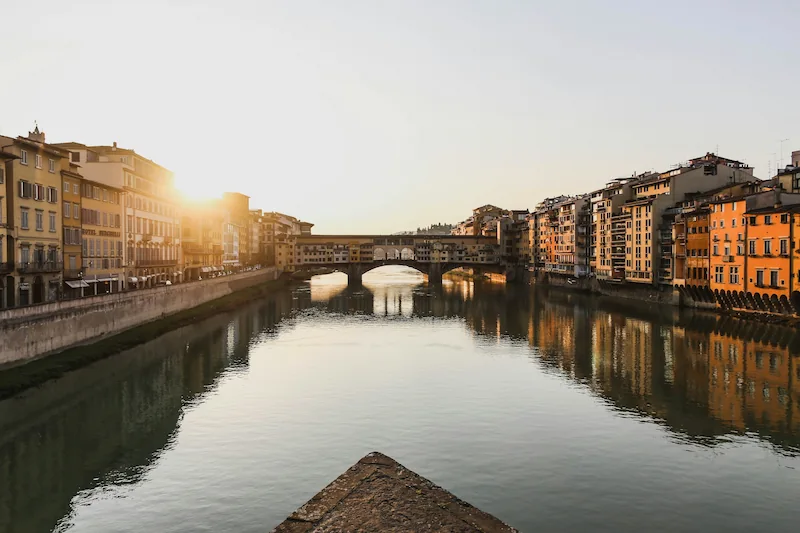
Oltrarno and San Niccolò add evening atmosphere, workshops, restaurants, gardens, and views, but make the trip more dependent on river crossings.
The Arno is not a major barrier, but repeated back-and-forth movement matters on hot, rainy, or overfilled days.
Viewpoint and hillside bases can feel magical at night but should be avoided if slopes, luggage, or mobility are concerns.
Hotel quality changes block by block; in Florence, micro-location is often more important than the neighborhood label.
Hyper-central cultural cluster – Historic Centre, Duomo, Piazza della Signoria, Uffizi, Bargello, and Ponte Vecchio; best for short stays and first-time efficiency.
Rail-and-value cluster – Santa Maria Novella and San Lorenzo; best for arrivals, departures, day trips, central value, Accademia access, and travelers who need logistics to stay simple.
Calmer central culture cluster – Santa Croce, Sant’Ambrogio, and the eastern historic centre; best for visitors who want walkability with softer evenings and stronger food rhythm.
South-bank local cluster – Oltrarno, Santo Spirito, San Frediano, Palazzo Pitti, and Boboli; best for longer stays, restaurants, workshops, and a more lived-in base.
Hillside-view cluster – San Niccolò and the approach to Piazzale Michelangelo, San Miniato, Bardini, and the Rose Garden; best for quiet stays, views, and travelers who accept slopes.
Best areas to stay in Florence
The best neighborhoods to stay in Florence each solve a different travel problem: maximum access, easier arrivals, food convenience, calmer evenings, local texture, or hillside atmosphere. Use this section as the real decision layer before choosing a hotel.
Historic Centre
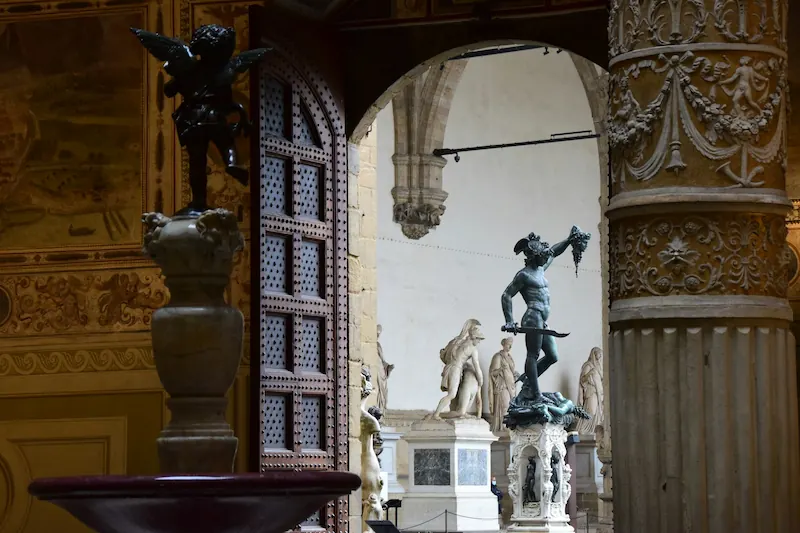
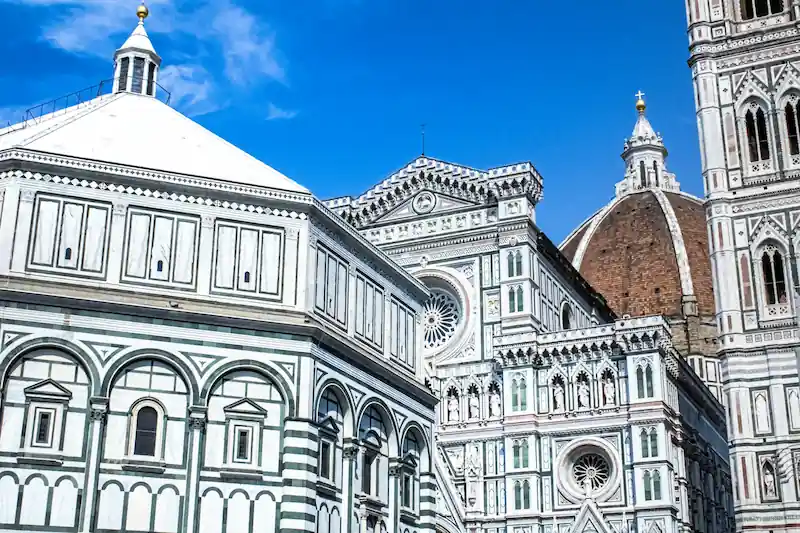
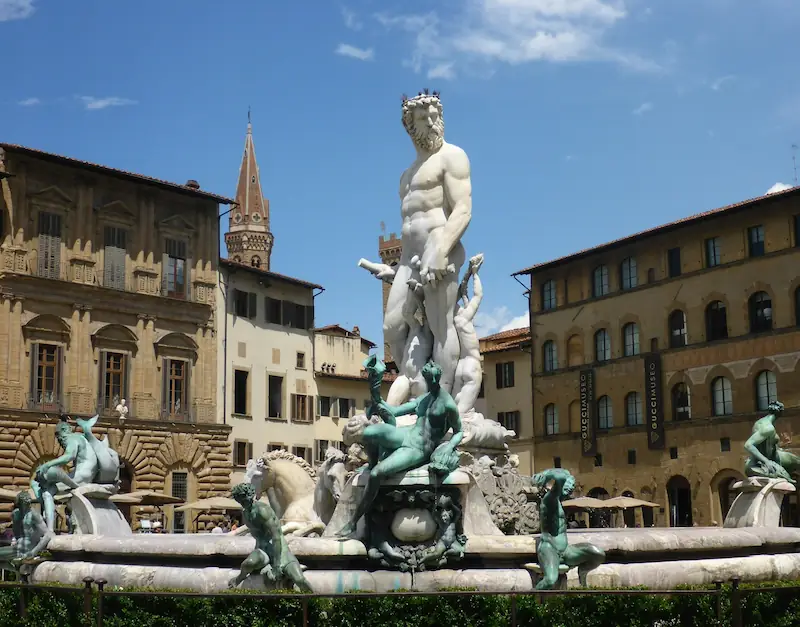
Staying in the Historic Centre puts Florence’s major cultural sequence directly outside your door. The Duomo, Piazza della Signoria, Palazzo Vecchio, the Uffizi, Ponte Vecchio, the Bargello, and the main shopping streets sit close enough that a short stay becomes far easier to structure. This is the area that reduces decision fatigue fastest: you can start early before the cathedral square tightens, return between timed museum entries, and use the river or piazzas for easy evening resets. The trade-off is intensity. Foot traffic builds early, hotel rates rise quickly, and some streets feel more transactional than atmospheric. Morning bells, delivery carts, rolling suitcases, and tour groups are part of the soundscape here.
Why stay here: Choose the Historic Centre if this is your first time in Florence, your stay is short, or you want the most convenient area for museums, landmarks, luxury shopping, and classic evening walks. It is the best central area when time is more valuable than quiet.
Best for: First-time visitors, short trips, museum-focused stays, luxury shoppers, and travelers who want the most convenient area in Florence.
Pros
Most major first-time sights are walkable without transport planning.
Best area for a weekend, 2-night, or 3-day Florence stay with timed museum entries.
Strong choice for hotels near the Duomo, Uffizi, Palazzo Vecchio, Bargello, and Ponte Vecchio.
Easy to return to the hotel between museum visits, meals, shopping, and evening walks.
Wide range of boutique, historic, upscale, and luxury hotels.
Best fit if Florence is one stop in a wider Italy itinerary and you cannot afford daily friction.
Cons
Higher prices for rooms that may still be small.
Crowds, street noise, and restaurant traps are more common on the busiest axes.
Not the best fit if you want a residential or local-feeling base.
Some hotel locations sound central but sit on very busy pedestrian routes.
Summer heat and midday congestion feel strongest around the Duomo and Ponte Vecchio.
Parking and car access are poor, so this is not ideal if driving logistics dominate.
Nearby highlights
Walk to the Duomo before the main daytime crowd builds.
Reach the Uffizi, Palazzo Vecchio, Bargello, and Piazza della Signoria without crossing the city.
Return to your hotel easily between timed museum entries.
Use Ponte Vecchio, Ponte Santa Trinita, and the Arno for short evening walks.
Stay close to high-end shopping, cafés, rooftop bars, and central restaurants.
Reduce decision fatigue on a two-night or three-day Florence stay.
Keep rainy-day pivots simple because several major interiors sit nearby.
Budget
Hotel Bavaria – Simple historic-centre rooms in an old building close to the Duomo and Bargello area. Why we recommend: One of the rare budget options that keeps you genuinely central without pretending to be design-led. Check availability
Hotel Por Santa Maria – Small, straightforward hotel near Piazza della Signoria and Ponte Vecchio. Why we recommend: Useful when location is the priority and you can accept basic room standards. Check availability
Hotel Costantini – No-frills rooms beside the Duomo, suitable for travelers who expect to spend most of the day outside. Why we recommend: Its value is the address: few budget stays put you this close to the cathedral. Check availability
Mid
Hotel Pendini – Traditional hotel overlooking Piazza della Repubblica, between the Duomo and the shopping streets. Why we recommend: A central classic with stronger atmosphere than many mid-range hotels in the same location. Check availability
Hotel Davanzati – Well-located small hotel near Palazzo Strozzi, Ponte Vecchio, and Piazza della Signoria. Why we recommend: A practical mid-range choice for travelers who want central access without a large-hotel feel. Check availability
Hotel Calimala – Stylish central hotel between the Duomo, Piazza della Signoria, and the river. Why we recommend: Better design character than most mid-range options in this high-pressure part of Florence. Check availability
Upscale
Hotel Spadai – Polished hotel steps from the Duomo and Palazzo Medici Riccardi. Why we recommend: A strong upscale choice when you want high comfort without moving away from the cultural core. Check availability
Hotel Milu Florence – Design-forward boutique hotel on Via de’ Tornabuoni, close to the river and luxury shopping. Why we recommend: It offers more contemporary style than many historic-centre hotels at this level. Check availability
Rocco Forte Hotel Savoy – Luxury hotel on Piazza della Repubblica with immediate access to the Duomo, shops, and central museums. Why we recommend: Best for travelers who want full-service luxury at the absolute centre of Florence. Check availability
Santa Maria Novella
Santa Maria Novella is the most practical area to stay in Florence if your trip depends on trains, day trips, or a smooth arrival. The station edge can feel busy and uneven, but the district improves quickly as you move toward the church, Via della Scala, Piazza Ognissanti, and the western side of the historic centre. It gives you central access with less pressure than the Duomo core, and the wide piazza offers a rare sense of space. Suitcases on paving stones are still part of the picture here, but so is genuine logistical relief. For travelers combining Florence with Pisa, Lucca, Bologna, Rome, Venice, or Siena, this can be the smartest base in the city.
Why stay here: Stay in Santa Maria Novella if you want convenience without committing to the busiest sightseeing streets. It is especially strong for rail travelers, short trips, day-trip planners, and itineraries that need a smooth arrival or early departure.
Best for: Train travelers, day-trip planners, practical first-timers, short stays, and anyone who wants Florence to feel easy from arrival to departure.
Pros
Best area for arriving and leaving by train.
Good base for day trips without dragging luggage through the historic centre.
Walkable to the Duomo, San Lorenzo, the river, western central sights, and shopping streets.
Often better hotel value than the most symbolic central addresses.
Works well for travelers who want convenience more than romance.
Strong upscale hotel options around the piazza and western centre.
Cons
The streets closest to the station can feel less refined.
Some hotels use the district name while sitting on less appealing blocks.
Not as atmospheric as Santa Croce, Oltrarno, or San Niccolò in the evening.
Traffic, station movement, and luggage flow are more visible than in the deep centre.
You need to check the exact block carefully because the atmosphere changes fast.
Not the best choice if your evenings will all be in Santo Spirito or San Niccolò.
Nearby highlights
Fast access to Santa Maria Novella station for regional and high-speed trains.
Short walks to the Duomo, San Lorenzo Market, and central shopping streets.
Easier luggage logistics than staying deep in pedestrian lanes.
Good base for Pisa, Lucca, Siena, Bologna, Rome, or onward Italy travel.
Close to Santa Maria Novella church, Ognissanti, and the western historic centre.
Often more room choice in mid-range and upscale categories.
Useful compromise when one traveler wants convenience and another wants classic Florence.
Budget
Hotel Delle Nazioni – Straightforward hotel close to Santa Maria Novella station, useful for arrivals and onward rail travel. Why we recommend: A practical budget-leaning option when logistics matter more than neighborhood charm. Check availability
Hotel Margaret – Simple accommodation between the station and the western historic centre. Why we recommend: Works for travelers who want a low-friction base without paying deep-centre rates. Check availability
Hotel Bijou – Basic hotel near the station and San Lorenzo side of the centre. Why we recommend: A functional choice when budget and train access are the main filters. Check availability
Mid
Hotel Boccaccio – Traditional hotel close to Santa Maria Novella station and the western edge of the historic centre. Why we recommend: A sensible mid-range base for travelers who value transport access but still want walkability. Check availability
Hotel Alba Palace – Comfortable hotel near the station with easy access to Santa Maria Novella and central streets. Why we recommend: A stronger option than many station-area hotels because it balances convenience with a calmer interior feel. Check availability
Hotel Santa Maria Novella – Refined hotel overlooking Piazza Santa Maria Novella, close to both the station and the centre. Why we recommend: It gives the district its most elegant version without losing the logistical advantage. Check availability
Upscale
The Place Firenze – Intimate luxury hotel on Piazza Santa Maria Novella with polished rooms and strong service. Why we recommend: One of the best choices in Florence for travelers who want discretion, design, and central logistics together. Check availability
Grand Hotel Minerva – Upscale hotel on Piazza Santa Maria Novella with a rooftop pool and central access. Why we recommend: The rooftop and station convenience make it unusually versatile for a Florence hotel. Check availability
25hours Hotel Florence Piazza San Paolino – Design-led hotel between Santa Maria Novella and the western historic centre. Why we recommend: A strong boutique-style option if you want personality without giving up practical access. Check availability
San Lorenzo
San Lorenzo is central Florence with more edges showing: markets, food halls, Medici sites, leather stalls, student movement, and budget-conscious hotels. It is not the most polished area, but it can be one of the most efficient bases for travelers who want central value and casual food close by. The district changes street by street, so hotel choice requires more care than in Santa Croce or the Historic Centre. Morning market activity gives the area a working pulse before the sightseeing crowd thickens, and the proximity to the Accademia, Medici Chapels, Duomo, and station makes it unusually practical.
Why stay here: Choose San Lorenzo if you want to stay central on a tighter budget while remaining close to the Duomo, Accademia, station, Medici sites, and food options. It is one of the best areas when value and access matter more than refinement.
Best for: Budget-conscious central stays, food access, Accademia visits, train convenience, and travelers who want Florence close rather than polished.
Pros
Very central without always carrying the highest Duomo-area premium.
Strong access to Mercato Centrale, Basilica di San Lorenzo, Medici Chapels, Accademia, and the station.
Good for casual meals, quick lunches, markets, and informal food stops.
Convenient for first-timers who plan to walk everywhere.
Often has more budget and mid-range room supply than prettier central pockets.
Works well for practical culture-heavy trips where the hotel is mainly a base.
Cons
Some streets feel cluttered, commercial, or market-heavy during the day.
Not as calm or romantic as Santa Croce, Oltrarno, or San Niccolò.
Hotel quality can vary sharply within a few blocks.
Evening atmosphere is less elegant than the south-bank neighborhoods.
Leather-market surroundings can feel generic if you choose the wrong street.
Not the best area for a polished honeymoon or quiet luxury stay.
Nearby highlights
Walk quickly to Mercato Centrale for casual food and daytime market energy.
Reach the Duomo without relying on buses or taxis.
Stay near the Medici Chapels, San Lorenzo, Laurentian Library, and Accademia.
Keep Santa Maria Novella station within an easy luggage distance.
Use the district as a value base for short, culture-heavy trips.
Find more informal dining nearby than around the most formal luxury streets.
Build a practical morning around David, San Lorenzo, and a market lunch.
Budget
Hotel Lorena – Simple hotel close to San Lorenzo, the Medici Chapels, and the Duomo. Why we recommend: A dependable budget pick for travelers who want a central address over extra amenities. Check availability
Hotel Collodi Firenze – Small hotel near San Lorenzo and Mercato Centrale with traditional rooms. Why we recommend: It gives better neighborhood character than many low-cost central options. Check availability
Hotel Centro – Basic central hotel near San Lorenzo and the Accademia side of the historic centre. Why we recommend: Useful for budget travelers who want to stay inside the cultural radius. Check availability
Mid
Hotel Globus – Modern mid-range hotel near Mercato Centrale and San Lorenzo. Why we recommend: A cleaner, more contemporary choice than many traditional hotels in this price band. Check availability
Hotel Ginori Al Duomo – Historic hotel between San Lorenzo and the Duomo with a more atmospheric interior style. Why we recommend: Good for travelers who want centrality and character without moving into luxury pricing. Check availability
Palazzo Castri 1874 – Comfortable hotel near San Lorenzo and the station, with garden space and a polished feel. Why we recommend: It offers more calm and facilities than most mid-range options around the market streets. Check availability
Upscale
Glance Hotel Florence – Contemporary hotel near San Lorenzo with rooftop pool and easy access to the station and centre. Why we recommend: A smart upscale choice when you want facilities and location without full luxury formality. Check availability
Cellai Hotel Florence – Boutique-style hotel near San Lorenzo and the northern historic centre. Why we recommend: Better suited to travelers who want an artful interior rather than a standard chain feel. Check availability
Firenze Number Nine – Upscale hotel between San Lorenzo and the Duomo with large rooms and wellness facilities. Why we recommend: A strong choice for comfort-focused travelers who still want a central cultural base. Check availability
Santa Croce
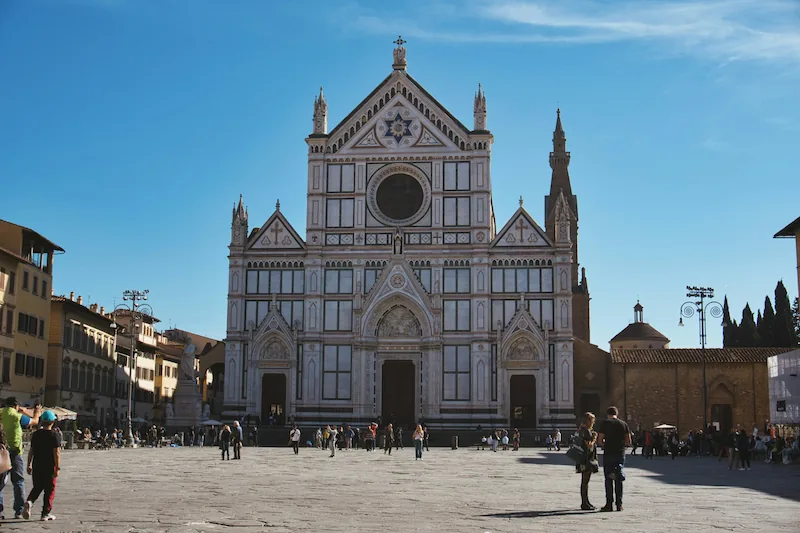
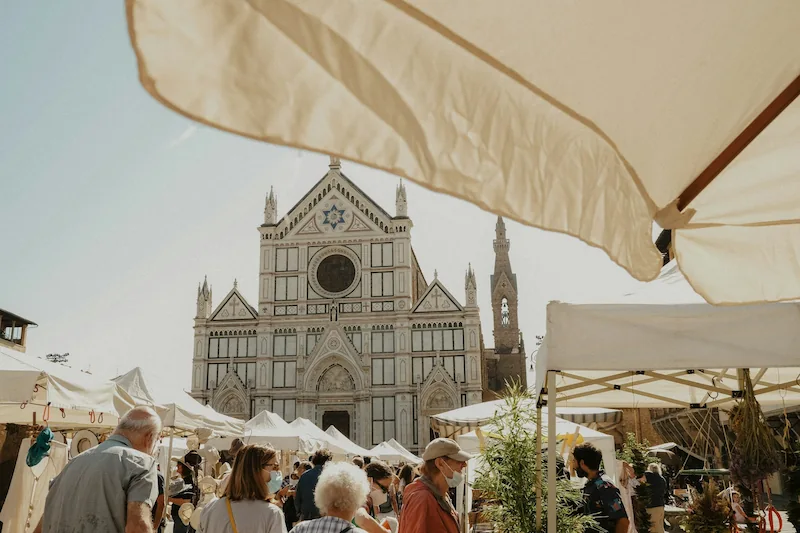
Santa Croce gives you a central Florence stay with more breathing room than the Duomo and Ponte Vecchio axis. The basilica square, side streets, restaurants, artisan edges, Sant’Ambrogio access, and proximity to the eastern historic centre create a base that still feels cultural without being entirely consumed by day-tripper flow. It is especially good for travelers who want walkability but care about where the evening ends. Late light spreads across the broad piazza before the district settles into dinner movement, and the walk back from the Uffizi or Palazzo Vecchio rarely feels like a logistical mistake.
Why stay here: Stay in Santa Croce if you want a refined compromise: close to the centre, strong for culture, good for food, and better for evening atmosphere than the busiest landmark corridors. It is one of the safest and most balanced areas for couples, culture-focused visitors, and longer first trips.
Best for: Couples, culture-first travelers, calmer central stays, food-focused visitors, and travelers who want Florence to feel walkable but not overcompressed.
Pros
Walkable to the Duomo, Uffizi, river, Piazza della Signoria, and eastern historic centre.
More relaxed evening rhythm than the most compressed central streets.
Good restaurant access without relying only on tourist-heavy corridors.
Strong fit for culture-focused stays around churches, museums, Sant’Ambrogio, and artisan streets.
Often feels more residential at the edges while remaining central.
Excellent compromise for 4- or 5-day stays.
Cons
Less convenient than Santa Maria Novella for train-heavy itineraries.
Not quite as efficient as the Duomo core for a very short first stay.
Some nightlife-adjacent streets can be lively late.
Hotel supply is more selective than in the station and San Lorenzo zones.
Longer walk back if most of your evenings are in Oltrarno.
Can be expensive around the best historic palazzi and river-facing properties.
Nearby highlights
Easy access to Basilica di Santa Croce and the eastern historic centre.
Walk to the Uffizi, Bargello, and Piazza della Signoria without staying inside the busiest core.
Better evening dining radius than many hyper-central hotel pockets.
Good base for relaxed walks toward Sant’Ambrogio and the Arno.
Useful for travelers who want central safety with less station-area movement.
Works well for four- or five-day stays focused on culture and food.
Strong base if you want a local morning at Sant’Ambrogio without leaving the centre.
Budget
Hotel Bodoni – Simple hotel near Santa Croce and Sant’Ambrogio with practical rooms and central access. Why we recommend: One of the more useful budget choices east of the main tourist core. Check availability
Hotel Santa Croce – Small, straightforward hotel near Piazza Santa Croce and Piazza della Signoria. Why we recommend: A rare low-cost option that still keeps the Santa Croce location advantage. Check availability
B&B La Casa dei Tintori – Guesthouse near Santa Croce and the river with a more intimate stay format. Why we recommend: Good for travelers who prefer a small property over a basic hotel block. Check availability
Mid
Hotel La Casa di Morfeo – Comfortable small hotel near Santa Croce with a calmer feel than many central options. Why we recommend: A strong mid-range fit for travelers who want quiet without leaving the centre. Check availability
Plaza Hotel Lucchesi – Riverside hotel near Santa Croce with views and a rooftop pool. Why we recommend: It gives Santa Croce a scenic edge while keeping the Uffizi and centre walkable. Check availability
Hotel Regency - Small Luxury Hotels of the World – Elegant hotel on a quieter piazza east of Santa Croce, suited to travelers who want calm, service, and a less tourist-heavy setting. Why we recommend: It gives Santa Croce a refined residential edge without pushing the stay into the busiest centre. Check availability
Upscale
Palazzo Firenze by Baglioni Hotels & Resorts – Luxury hotel in a historic palazzo near Santa Croce, with grand interiors and a quieter cultural address than the Duomo core. Why we recommend: Best for travelers who want old-world atmosphere, cultural depth, and high service without sleeping in the most crowded central streets. Check availability
Eurostars Florence Boutique – Boutique hotel near Santa Croce and the Arno, slightly removed from the busiest centre. Why we recommend: It suits travelers who want a quieter address with design elements and river access. Check availability
LHP Hotel River & SPA – Upscale riverside hotel near Santa Croce with wellness facilities and a calmer edge-of-centre feel. Why we recommend: Useful when comfort and a less crowded setting matter as much as centrality. Check availability
Oltrarno
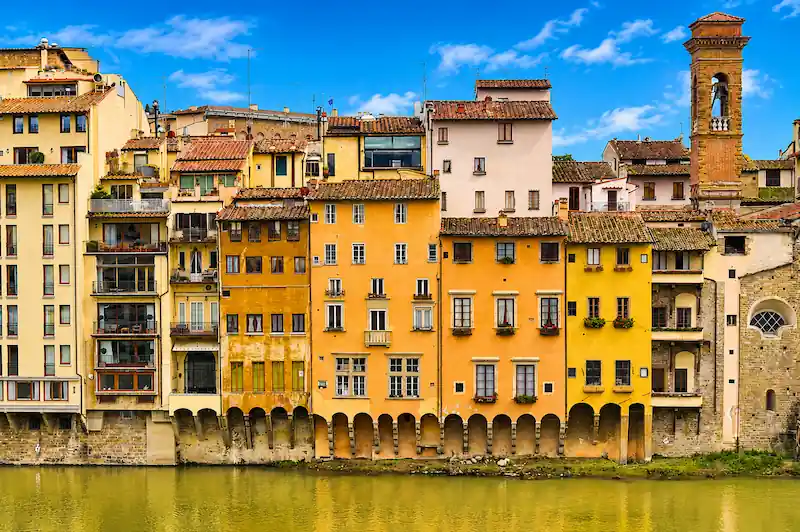
Oltrarno is the best area to stay in Florence if you want the city to feel less like a visitor circuit and more like a lived neighborhood. Across the Arno, the streets around Santo Spirito, San Frediano, Palazzo Pitti, and Boboli trade constant landmark pressure for workshops, trattorie, small bars, artisan shops, and evening squares. It is still walkable to the centre, but the daily rhythm shifts: you cross into the museums, then return to a softer base. At night, voices sit lower in the piazzas and the streets feel less hurried. This is where Florence often becomes more memorable for travelers staying four nights or more.
Why stay here: Choose Oltrarno for a longer stay, a return trip, a romantic stay, or a more local area without giving up walkability. It is the best neighborhood if evening atmosphere, artisan texture, restaurants, and south-bank rhythm matter more than being beside the Duomo.
Best for: Longer stays, couples, return visitors, boutique-hotel seekers, food-focused travelers, and visitors who want Florence with more local texture.
Pros
More local-feeling than the north-bank historic core.
Excellent for Santo Spirito, San Frediano, Palazzo Pitti, Boboli, Brancacci Chapel, and artisan streets.
Strong evening dining and bar rhythm without relying on transport.
Good choice for boutique hotels, guesthouses, and apartments with character.
Still walkable to Ponte Vecchio, Uffizi, and central Florence.
Better emotional rhythm for longer stays than the tightest sightseeing core.
Cons
Less efficient for very short first-time trips focused only on headline sights.
Repeated river crossings can become tiring if the itinerary is overloaded.
Some streets are quieter late, which may not suit nightlife-focused travelers.
Hotel supply is more uneven for true budget stays.
Not all Oltrarno addresses are equally convenient; some sit farther west or uphill.
Families should check walking routes carefully if children tire easily.
Nearby highlights
Easy evenings around Santo Spirito and San Frediano without needing taxis or long walks back.
Quick access to Palazzo Pitti, Boboli Gardens, Bardini Garden, and Brancacci Chapel.
A more natural base for artisan workshops and independent shops.
Short river crossings to Ponte Vecchio, the Uffizi, and the central core.
Better fit for slower mornings and late dinners than the Duomo axis.
Good area for boutique hotels in Florence with more character than standard central properties.
Strong choice when you want the stay to feel Florentine beyond museum hours.
Budget
Hotel Palazzo Guadagni – Historic guesthouse-style hotel on Piazza Santo Spirito with atmospheric rooms and terrace views. Why we recommend: A characterful Oltrarno stay that often feels more special than its category suggests. Check availability
Soggiorno Pitti – Simple rooms facing Palazzo Pitti, close to Santo Spirito and Ponte Vecchio. Why we recommend: A practical low-cost choice for travelers who want the Oltrarno address over hotel polish. Check availability
Hotel Annalena – Traditional hotel near the Boboli Gardens and Palazzo Pitti. Why we recommend: It keeps costs relatively controlled for a location with strong south-bank atmosphere. Check availability
Mid
Hotel La Scaletta al Ponte Vecchio – Well-located hotel near Ponte Vecchio with rooftop views and quick access to both banks. Why we recommend: It is one of the most convenient ways to stay in Oltrarno without feeling far from the centre. Check availability
Hotel Pitti Palace al Ponte Vecchio – Central south-bank hotel beside Ponte Vecchio with easy access to the Uffizi and Pitti. Why we recommend: A useful compromise for first-timers who want Oltrarno but still need maximum walkability. Check availability
SoprArno Suites – Design-led guesthouse in the Oltrarno with large rooms and strong neighborhood character. Why we recommend: Better suited to travelers who want a boutique feel rather than a standard hotel format. Check availability
Upscale
Hotel Lungarno – Luxury riverside hotel by Ponte Vecchio with Arno views and refined interiors. Why we recommend: One of Florence’s strongest upscale choices for combining river setting and central access. Check availability
Portrait Firenze – High-end suite hotel on the Arno near Ponte Vecchio, with a discreet residential feel. Why we recommend: Best for travelers who want apartment-like luxury without losing five-star service. Check availability
Villa Cora – Grand luxury hotel near the Boboli and hillside edge, with gardens and a resort-like feel. Why we recommend: A rare Florence option for travelers who want space, pool comfort, and distance from the dense core. Check availability
San Niccolò
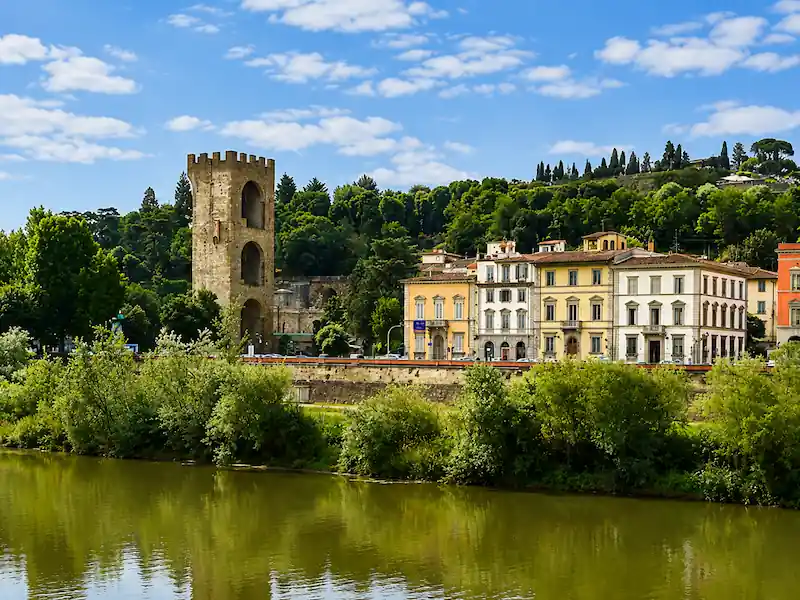
San Niccolò sits where Florence begins to rise toward Piazzale Michelangelo and San Miniato al Monte. It feels close to the centre but less obvious, with smaller streets, hillside approaches, river access, and a quieter night profile than Santo Spirito. This is not the most efficient base for a packed first-time checklist, but it can make Florence feel more personal and spatially open. The shift from riverbank to slope changes the pace of each return to the hotel, and the reward is a base that naturally connects the Arno, Oltrarno, gardens, and the city’s best viewpoints.
Why stay here: Stay in San Niccolò if you want a quieter, romantic area with access to viewpoints, the river, and the Oltrarno without staying in the busiest nightlife pockets. It works best for confident walkers, repeat visitors, and slower stays.
Best for: Romantic stays, quiet evenings, viewpoint lovers, repeat visitors, photographers, and travelers who do not mind elevation.
Pros
Excellent access to Piazzale Michelangelo, San Miniato, Bardini Garden, Rose Garden, and scenic walks.
Quieter than the Historic Centre and Santo Spirito late at night.
Good for romantic stays and travelers who prefer smaller streets.
Still walkable to the Uffizi, Ponte Vecchio, Santa Croce, and central Florence.
Feels more distinctive than a purely logistical base.
Best Florence base for travelers who want views to shape the stay.
Cons
Some hotels involve slopes or longer walks than the map first suggests.
Less hotel supply than larger central neighborhoods.
Not ideal for heavy luggage, mobility limits, or travelers avoiding hills.
Fewer immediate late-night options than Santo Spirito or the central core.
Not the best base for a first 2-night Florence checklist.
Taxis may be useful more often than in the flat central areas.
Nearby highlights
Walk up to Piazzale Michelangelo without turning it into a special expedition.
Reach San Miniato al Monte for Florence’s best high city reading.
Stay close to the Arno while avoiding the busiest bridge corridors.
Use nearby Oltrarno restaurants without sleeping in the busiest square.
Enjoy a quieter return after central museum days.
Good fit for boutique stays with a more intimate Florence rhythm.
Use Bardini or Rose Garden as a soft, scenic counterweight to museum days.
Budget
Serristori Palace Residence – Apartment-style accommodation near San Niccolò and the river, useful for longer stays that need more space. Why we recommend: It suits travelers who want the area’s quiet rhythm without paying for a full-service luxury hotel. Check availability
Serristori Palace Residence – Apartment-style accommodation near San Niccolò and the river. Why we recommend: Useful for longer stays that benefit from more space than a standard hotel room. Check availability
Hotel David – Friendly hotel east of San Niccolò with parking and a quieter setting. Why we recommend: A smart option if you want value, calm, and easier car logistics outside the tight core. Check availability
Mid
Plaza Hotel Lucchesi – Riverside hotel between Santa Croce and San Niccolò, with rooftop views and central access. Why we recommend: It works well for travelers who want San Niccolò proximity without giving up hotel facilities. Check availability
Hotel Silla – Comfortable riverside hotel near San Niccolò with easy walks to the centre and Oltrarno. Why we recommend: A practical choice because it captures the San Niccolò edge without the steepest hillside trade-offs. Check availability
Residence Michelangiolo – Villa-style residence near the San Niccolò and Piazzale Michelangelo side of Florence. Why we recommend: Good for travelers who value space, garden calm, and a less conventional Florence base. Check availability
Upscale
Art Hotel Villa Agape – Elegant villa hotel above the Oltrarno with gardens, calm, and easy access toward the Piazzale Michelangelo side. Why we recommend: A strong upscale choice when space, views, and quiet matter more than immediate Duomo proximity. Check availability
Villa Cora – Grand luxury hotel near the Boboli and hillside edge, with gardens, pool comfort, and a resort-like feel. Why we recommend: Best when you want Florence as a scenic retreat rather than a purely central hotel stay. Check availability
Hotel Ville sull'Arno – Upscale riverside hotel east of the centre with spa facilities and a quieter atmosphere. Why we recommend: It suits travelers who want comfort and river calm while accepting a less central address. Check availability
Where to stay in Florence for first-time visitors
First-time visitors should usually prioritize walkability, timed-entry reliability, and simple evening returns over a more romantic but less efficient base. Florence rewards depth, but a short first stay still needs proximity to the cultural core.
Choose the Historic Centre for the easiest first-time stay if you have two or three nights and want the Duomo, Uffizi, Palazzo Vecchio, and Ponte Vecchio close.
Use Santa Maria Novella if you arrive by train, plan day trips, or want to reduce luggage friction.
Pick Santa Croce if you want central access with calmer evenings, better restaurants, and a less compressed end-of-day rhythm.
Choose Oltrarno only if you are comfortable crossing the river for the main museums and want a more local-feeling base.
San Lorenzo works well when central value and market access matter more than polish.
Avoid staying too far outside the centre on a short first trip; saved room cost can disappear into friction quickly.
If you book near the Duomo, prioritize a quiet side street or courtyard-facing room rather than the most obvious piazza frontage.
StayType
BestArea
Reason
1 night or late arrival
Santa Maria Novella
Station access and lower luggage friction matter most.
2-night first trip
Historic Centre
Maximum access with minimal route planning.
3-day first trip
Historic Centre or Santa Maria Novella
Efficient for timed museums, arrivals, and classic walking routes.
First trip with calmer evenings
Santa Croce
Central without the hardest Duomo-area pressure.
First trip, boutique/local feel
Oltrarno near Ponte Vecchio or Santo Spirito
More atmosphere, but still walkable if you choose the right micro-location.
Where to stay in Florence with family
Families need shorter walks, easy breaks, larger room options, elevators, and streets that do not make every return to the hotel feel like a crowd negotiation. In Florence, room layout and immediate street calm matter as much as district name.
Santa Maria Novella works well for families arriving by train or planning day trips because it reduces luggage and departure stress.
Santa Croce is a good family base when you want calmer evenings but still need central walking access.
The Historic Centre is convenient with children, but choose a quiet side street rather than the busiest Duomo, Via Calzaiuoli, or Ponte Vecchio blocks.
Oltrarno can be excellent for longer family stays if you choose accommodation near Ponte Vecchio, Pitti, or Santo Spirito rather than too far west.
San Niccolò is better for families with older children who can handle slopes and longer walks.
San Lorenzo can work for value and quick food, but families should check noise, street quality, and room size carefully.
Prioritize elevators, family rooms, air conditioning, and a simple taxi or station route over pure charm.
Family priority
Best area
Watch point
Shortest walks
Historic Centre
Noise, small rooms, and peak crowds
Train convenience
Santa Maria Novella
Immediate station streets
Calmer central base
Santa Croce
Slightly longer walks to the station
More local rhythm
Oltrarno
Repeated river crossings
Space and views
San Niccolò or hillside edge
Slopes and taxi dependence
Where to stay in Florence for nightlife and evenings
Florence nightlife is not about large club districts for most visitors; it is about aperitivo, wine bars, late dinners, student pockets, live music, and squares that stay social after dark. The best base depends on whether you want evening energy nearby or quiet sleep after going out.
Oltrarno, especially around Santo Spirito and San Frediano, is the strongest choice for social evenings with local texture.
Santa Croce gives a lively but still cultural evening base with good dining access and easier walks back from the centre.
San Lorenzo can work for casual food and student energy, but it is less polished and varies sharply by street.
The Historic Centre is convenient for late walks and hotel bars but can feel tourist-heavy after dark in the busiest corridors.
San Niccolò is better for quiet, romantic evenings and viewpoint walks than for nightlife.
Santa Maria Novella is practical but usually not the best base if evening atmosphere is your priority.
If sleep quality matters, choose a side street or courtyard-facing room rather than a room facing a major piazza.
Evening style
Best area
Trade Off
Aperitivo and lively squares
Oltrarno
More river crossings during sightseeing days
Restaurants and central access
Santa Croce
Some streets stay active late
Casual food and student feel
San Lorenzo
Less refined atmosphere
Romantic quiet
San Niccolò
Less late-night density
Polished hotel bars and late central walks
Historic Centre
Tourist-heavy corridors
Where to stay in Florence on a budget
Budget hotels in Florence are easiest to find around San Lorenzo, Santa Maria Novella, and selected pockets of the Historic Centre. The key is not just price: a poorly located cheap room can make the city more tiring than a slightly better central base.
San Lorenzo is often the best central-value area if you accept a busier, less polished setting.
Santa Maria Novella can offer good value, especially when rail access and day trips matter.
Historic Centre budget hotels exist, but expect simpler rooms, older buildings, and fewer comforts.
Oltrarno budget stays are more limited, but guesthouses and apartment-style stays can be worthwhile for longer trips.
Santa Croce can be good value if you find a small hotel or guesthouse away from the main square.
Avoid far-out accommodation unless the savings are substantial and transport is genuinely easy.
Check the exact street, elevator access, air conditioning, and review comments on noise before booking a cheap Florence hotel.
Mestre-style savings do not apply here: Florence is compact, so staying too far out usually weakens the trip more than it helps.
Budget strategy
Best area
Best fit
Central but simple
San Lorenzo
Travelers who want walkability over polish
Transport-focused
Santa Maria Novella
Rail arrivals and day trips
Basic landmark access
Historic Centre
Short stays with minimal room expectations
Longer stay value
Oltrarno
Guesthouses or apartment-style stays
Calmer low-key base
Santa Croce edges
Travelers who want central but softer evenings
Where to stay depending on your Florence trip length
Trip length changes the right base in Florence. A short stay should remove friction and keep the main cultural sequence close; a longer stay can trade some central efficiency for atmosphere, quieter nights, larger rooms, better restaurants, or a more local rhythm.
Label
Stay
Avoid
Why
1 night
Santa Maria Novella or Historic Centre
Oltrarno, San Niccolò, or far-out value addresses
With one night, arrival and the first walk matter more than neighborhood depth.
2 nights
Historic Centre
San Niccolò or outer-value addresses
Two nights leave little margin for repeated crossings, long walks, or transport-based savings.
3 days
Historic Centre, Santa Maria Novella, or Santa Croce
A base chosen only for romance if it complicates museum timing
Three days can cover the essentials, but only if the hotel keeps the main cultural sequence close.
4 to 5 days
Santa Croce or Oltrarno
Overpaying for the exact Duomo core if you want slower evenings
Longer stays benefit from a calmer base because Florence starts to feel repetitive if every hour runs through the same crowded streets.
1 week
Oltrarno, San Niccolò, or Santa Croce
Treating every day as if it were a first-time sightseeing sprint
A week lets you value neighborhood rhythm, restaurant choice, quiet returns, and day-trip logistics more than pure landmark proximity.
Train-heavy itinerary
Santa Maria Novella
Deep Oltrarno or hillside bases with luggage
Station proximity matters when Florence is part of a larger Italy route or day-trip plan.
Family trip
Santa Maria Novella, Santa Croce, or a quiet Historic Centre side street
Noisy piazza rooms, upper floors without lifts, or hillside bases with young children
Families need easy breaks, larger rooms, and simple end-of-day returns.
Romantic stay
Oltrarno, San Niccolò, Santa Croce, or a refined Historic Centre boutique hotel
Station-edge blocks chosen only for price
Evening atmosphere and hotel feel matter more when the stay is experiential rather than purely logistical.
Budget trip
San Lorenzo, Santa Maria Novella, or selected Historic Centre budget hotels
Cheap outer addresses that require daily transit
Florence rewards central simplicity; bad location can erase the saving.
Return trip
Oltrarno, San Niccolò, or Santa Croce
Defaulting to the Duomo area out of habit
Repeat visitors usually gain more from evening texture and quieter streets than from maximum first-time convenience.
How to choose the right hotel in Florence
Once you choose the area, the hotel decision should become more precise: exact street, noise exposure, room size, elevator access, air conditioning, breakfast needs, taxi approach, and the kind of stay you want. Florence rewards careful hotel selection because a difference of two streets can change the whole feel of the base.
Topic
WhatToDo
WhatToAvoid
WhyItMatters
Exact street
Check whether the hotel sits on a quiet side street, piazza, shopping corridor, market street, river edge, or station approach.
Booking only because the district name looks right.
Florence neighborhoods vary block by block, especially around San Lorenzo, Santa Maria Novella, and the Duomo.
Noise
Prioritize courtyard-facing rooms or quieter streets if you are staying near piazzas, nightlife, markets, or pedestrian corridors.
Assuming pedestrian streets are quiet at night.
Rolling suitcases, terraces, deliveries, bells, and late walkers can carry through narrow stone streets.
Room size
Read room categories carefully, especially in historic palazzi, budget hotels, and boutique guesthouses.
Comparing hotels only by star rating or photos of the best room.
Central Florence hotels can be atmospheric but compact, and room variation inside one property can be significant.
Elevators and stairs
Confirm elevator access if you have luggage, children, mobility needs, or older travelers in the group.
Assuming every historic building has modern access.
Many appealing small hotels and guesthouses sit in older buildings where stairs can shape the stay.
Air conditioning and heat
Treat air conditioning as a serious filter from late spring through early autumn.
Assuming thick old walls or fans will be enough in summer.
Florence heat can sit in stone streets and small rooms, especially after long museum days.
Station proximity
Stay near Santa Maria Novella when trains and day trips are central to the itinerary.
Choosing station proximity if you will spend every evening in Oltrarno or Santa Croce.
Convenience is only valuable when it matches the daily pattern of the trip.
Boutique versus full-service
Choose boutique hotels for character and full-service hotels for facilities, staff depth, luggage help, parking advice, and smoother logistics.
Expecting every boutique stay to solve practical issues like parking, lifts, or late arrivals.
Florence has excellent boutique hotels, but service model matters as much as design.
View premium
Pay for views only when you will actually use the room, terrace, rooftop, or breakfast space.
Overpaying for a partial landmark view on a short museum-heavy stay.
Florence views can be special, but location and comfort usually matter more for first-time efficiency.
Car and parking
Avoid bringing a car into central Florence unless the hotel has clear parking or ZTL guidance.
Booking a central hotel and figuring out driving rules on arrival.
Limited traffic zones and parking costs can quickly turn a hotel choice into stress.
Restaurant radius
Check whether the area gives you good dinner choices within an easy final walk.
Choosing a hotel only for daytime sightseeing if every evening will require another crowded crossing.
Florence feels much better when dinner and the walk back are part of the plan.
FAQ: where to stay in Florence
These answers resolve the most common accommodation decisions in Florence, from first-time areas to family bases, budget stays, nightlife, and whether central hotels are worth the premium.
What is the best area to stay in Florence for first-time visitors?
The Historic Centre is the best area for most first-time visitors because it keeps the Duomo, Uffizi, Piazza della Signoria, Palazzo Vecchio, Ponte Vecchio, and major museums within easy walking distance. Choose Santa Croce if you want central access with calmer evenings, or Santa Maria Novella if train convenience matters.
Where should I stay in Florence for 3 days?
For 3 days in Florence, stay in the Historic Centre, Santa Maria Novella, or Santa Croce. These areas reduce wasted time and make it easier to manage timed museum entries, meals, short evening walks, and arrival or departure logistics.
Is it better to stay near the Duomo or across the river in Oltrarno?
Stay near the Duomo if it is your first visit, a short trip, or a museum-heavy stay. Stay in Oltrarno if you want a more local-feeling base, better evening atmosphere, artisan streets, and do not mind crossing the river for the main museums.
What is the most convenient area to stay in Florence?
The Historic Centre is the most convenient area for sightseeing, while Santa Maria Novella is the most convenient area for train arrivals, luggage, and day trips. The right answer depends on whether your trip is museum-focused or logistics-heavy.
Where should families stay in Florence?
Families usually do best in Santa Croce, Santa Maria Novella, or a quiet side street in the Historic Centre. These areas keep walking manageable while offering easier breaks, food access, and less end-of-day friction. Families staying longer can also consider Oltrarno near Ponte Vecchio or Santo Spirito.
Where should I stay in Florence on a budget?
San Lorenzo and Santa Maria Novella are usually the strongest areas for budget hotels in Florence. The Historic Centre also has simple budget stays, but room quality can be basic and prices rise quickly in peak periods. Oltrarno can work for guesthouses or apartment-style longer stays.
What is the best area in Florence for nightlife?
Oltrarno, especially around Santo Spirito and San Frediano, is the best area for social evenings, aperitivo, wine bars, and late dinners. Santa Croce is also good if you want evening energy while staying closer to the central cultural core.
What are the safest areas to stay in Florence?
The Historic Centre, Santa Croce, Oltrarno, San Niccolò, and the better parts of Santa Maria Novella are generally safe for visitors. As in most busy cities, be more alert around station crowds, major tourist corridors, and late-night nightlife streets.
Is it worth paying more to stay central in Florence?
Yes, especially for a short first trip. Florence is walkable, but central accommodation saves time, reduces fatigue, and makes timed museums easier. For longer stays, Santa Croce, Oltrarno, or San Niccolò can offer better atmosphere for the same budget.
Should I stay near Santa Maria Novella station?
Stay near Santa Maria Novella if you arrive by train, leave early, or plan several day trips. It is less romantic than Oltrarno or Santa Croce, but it can make the whole trip easier. Choose a hotel toward the church or western historic centre rather than a purely station-facing block if atmosphere matters.
Is San Lorenzo a good area to stay in Florence?
San Lorenzo is a good area if you want central value, market access, casual food, and easy walks to the Duomo, Accademia, Medici Chapels, and station. It is less polished than Santa Croce or Oltrarno, so exact hotel street matters a lot.
Is Santa Croce a good place to stay in Florence?
Yes. Santa Croce is one of the best balanced areas in Florence because it stays central while feeling less compressed than the Duomo core. It is strong for culture, restaurants, Sant’Ambrogio, and calmer evening walks.
Is Oltrarno a good base for a first trip to Florence?
Oltrarno can be a good first-trip base if you choose a convenient micro-location near Ponte Vecchio, Santo Spirito, or Palazzo Pitti and accept river crossings. For a very short first stay, the Historic Centre is usually easier.
Where should couples stay in Florence?
Couples should look at Oltrarno, San Niccolò, Santa Croce, or a refined Historic Centre boutique hotel. Oltrarno gives the best evening rhythm, San Niccolò gives quiet and views, and Santa Croce balances romance with central access.
Where should I stay in Florence for luxury hotels?
For luxury, choose the Historic Centre for full-service landmark convenience, Santa Maria Novella for refined logistics, Oltrarno for riverside or boutique atmosphere, and San Niccolò or the hillside edge for a more retreat-like stay.
Where should I stay in Florence without a car?
Most visitors should stay without a car in the Historic Centre, Santa Maria Novella, Santa Croce, San Lorenzo, or Oltrarno. Florence is highly walkable, and central traffic restrictions make driving more of a burden than an advantage.
Where should I stay in Florence with a car?
If you have a car, avoid deep central streets unless your hotel gives clear parking and ZTL guidance. Santa Maria Novella, San Niccolò edge addresses, or hotels with dedicated parking arrangements are usually easier than the tight Duomo core.
What area is best for day trips from Florence?
Santa Maria Novella is the best area for day trips because the main train station is close and luggage logistics are simpler. It works especially well for Pisa, Lucca, Bologna, Rome, Venice connections, and many regional train itineraries.
Where should I stay in Florence for food?
Oltrarno is best for evening restaurants, wine bars, and local atmosphere. San Lorenzo is best for market access and casual central food. Santa Croce is excellent for a balanced food-and-culture stay near Sant’Ambrogio.
Is San Niccolò too far from central Florence?
San Niccolò is not too far for confident walkers, but it is less efficient than the Historic Centre for a short first-time checklist. It is better for quiet views, romantic stays, and repeat visitors than for travelers who want the fastest possible museum access.
Which Florence area should I avoid staying in?
There is no single central area to avoid, but you should be cautious with hotels chosen only by price far outside the centre, station-edge blocks with poor reviews, noisy piazza-facing rooms, and addresses that make every museum day require extra transit.
Is the Historic Centre too crowded to stay in?
It can be crowded, especially around the Duomo, Via Calzaiuoli, Piazza della Signoria, and Ponte Vecchio. But a quiet side street in the Historic Centre can still be excellent for a short first trip because the location saves so much time.
Where should I stay in Florence in summer?
In summer, prioritize air conditioning, shade breaks, and easy hotel returns. Historic Centre works well for short stays, Santa Croce can soften the evening, and Oltrarno is appealing if you want slower nights. Avoid remote bases that force long midday walks.
Where should I stay in Florence for a longer stay?
For five nights or more, Oltrarno, Santa Croce, and San Niccolò usually become more appealing than the tightest Duomo core. Longer stays benefit from better restaurants, quieter returns, larger rooms, and a base that feels like a neighborhood.
The smartest Florence base is the one that protects your cultural time while giving the end of each day the rhythm you actually want.
Continue planning your Florence trip
Once your base is clear, use the Florence city guide, things to do page, and itineraries to shape the rest of your stay around museums, neighborhoods, food, river crossings, viewpoints, and day-by-day pacing.
Turn the right neighborhood into the right itinerary
Once you know where to stay in Florence, the next step is structuring the rest of your trip around that base. Use the planner to build a route that fits your pace, priorities, and how you actually want your days to unfold.