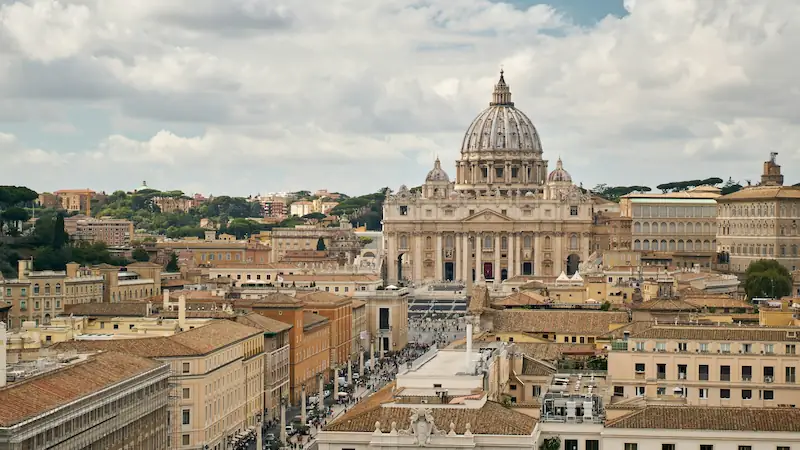
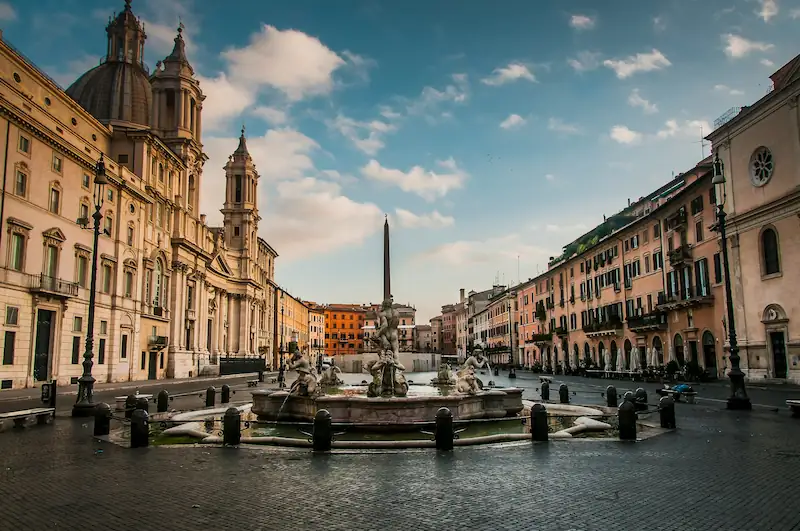
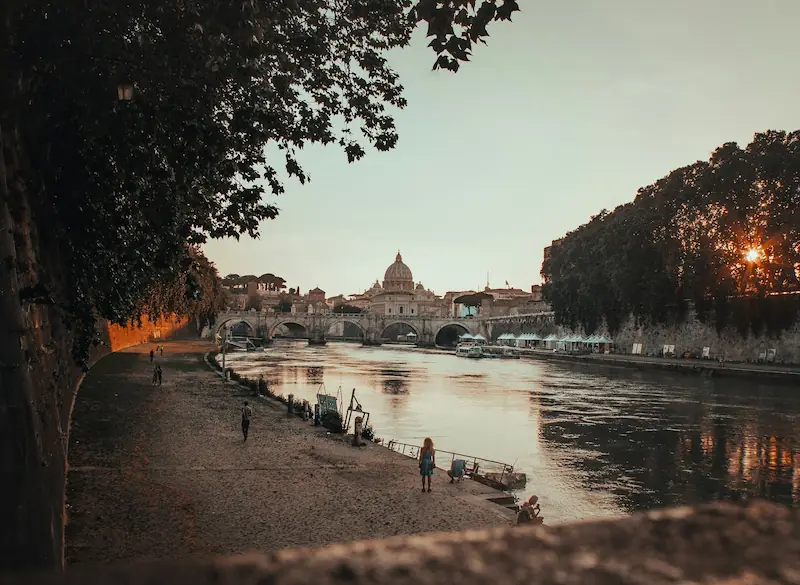
Find the best areas to stay in Rome based on your trip length, travel style, sightseeing priorities, evening rhythm, and tolerance for noise, walking, heat, and crowds. Rome is not a city where hotel location is a minor detail: the right base can make the Colosseum, Vatican, Pantheon, Trastevere, food districts, and evening walks feel natural, while the wrong base can turn short distances into repeated friction. This guide compares Rome neighborhoods as practical travel bases, not just attractive districts, so you can choose where to sleep according to how the whole trip should work.
Best areas
Centro Storico is the most convenient base for first-time visitors and short stays; Monti is the best central alternative with character; Trastevere is strongest for atmosphere, food and nightlife; Prati is the easiest calmer base for families and Vatican access; Campo de' Fiori & Jewish Ghetto is excellent for central food-led stays; Testaccio suits return visitors; Aventine is best for quiet romantic stays; Vatican & Borgo is strategic for Vatican-heavy itineraries.
Booking timing
Book early for spring, early summer, autumn, Easter, major holidays, and weekends. The best Rome hotel locations often sell out before the city feels fully booked, especially in Centro Storico, Trastevere, Monti, and the quieter high-quality streets near the Pantheon, Campo de' Fiori, Prati, and Aventine.
Quick answer: where to stay in Rome
Historic Center (Centro Storico) – Best for: first-time trips with maximum walkability · Vibe: classic Rome, dense, landmark-heavy, always in motion · Stay here if: you want to cover the big sights on foot and keep logistics simple. Best trip length: 2 to 4 days. You walk more than you ride, but luggage and taxis can be awkward in narrow central streets. · Avoid if: you want quiet evenings, easy taxi access, or larger rooms for the price
Trastevere – Best for: evenings, atmosphere, and a more lived-in feel · Vibe: restaurant-filled, textured, social, slightly chaotic · Stay here if: you want Rome to feel lively after dark and enjoy wandering back on foot. Best trip length: 3 to 5 days or repeat stays. Great on foot for evenings, weaker for seamless metro access; route planning matters. · Avoid if: you are sensitive to noise or want the smoothest public-transport base
Monti – Best for: a first trip with more character than polish · Vibe: central, stylish, low-key, café-and-wine-bar Rome · Stay here if: you want to stay near the Colosseum area without sleeping in the busiest tourist core. Best trip length: 3 to 5 days. Good walking base near ancient Rome with useful metro access around Cavour and Colosseo. · Avoid if: you want the broadest hotel choice or the most elegant streetscape
Prati – Best for: calmer stays, families, and cleaner city logic · Vibe: residential, orderly, spacious, less theatrical · Stay here if: you want quieter nights, better room value, and strong metro access. Best trip length: 3 days to 1 week. One of Rome's cleaner transport bases thanks to metro access and more rational streets. · Avoid if: you want to step outside into Rome’s most atmospheric streets
Campo de' Fiori & Jewish Ghetto – Best for: food-focused stays and short central trips · Vibe: historic, compact, lively, restaurant-rich · Stay here if: you want a central base with strong evening life and easy cross-city walking. Best trip length: 2 to 4 days. Excellent walking position; public transport is secondary to central location. · Avoid if: you want serenity late at night or a more residential feel
Testaccio – Best for: return trips and more local Rome · Vibe: grounded, food-led, less polished, more authentic · Stay here if: you care more about neighborhood life and restaurants than postcard immediacy. Best trip length: 4 days to 1 week, especially repeat visits. More dependent on buses, taxis, or longer walks; better for travelers comfortable leaving the postcard core. · Avoid if: you want to walk to every major sight without thinking about transport
Aventine – Best for: calmer romantic stays and a more peaceful Rome · Vibe: quiet, elevated, residential, understated · Stay here if: you want a refined base with greenery, softer evenings, and a slower rhythm. Best trip length: 4 days to 1 week, especially couples. Central but quieter; expect more walking, occasional taxis, and fewer instant transport shortcuts. · Avoid if: you want dense restaurant streets and immediate nightlife outside the hotel
Vatican & Borgo – Best for: Vatican-heavy trips and cleaner day structure · Vibe: practical, strategic, calmer, less atmospheric at night · Stay here if: you want to prioritize St. Peter’s and Vatican Museums without repeated cross-city setup. Best trip length: 2 to 4 days when Vatican access matters. Strong for Vatican mornings and river crossings; weaker for Trastevere or ancient Rome nights unless planned. · Avoid if: you want Rome’s strongest evening atmosphere built into the neighborhood
How to choose the right area in Rome
The main mistake in Rome is confusing famous with practical. A beautiful address can still cost you time every day if it leaves you in noisy streets, awkward transport pockets, or the wrong evening rhythm. The best area to stay in Rome is not the one with the most name recognition; it is the one that matches how you want the city to work once your feet are tired, the crowds build, and you need the hotel location to make the trip easier.
Prioritize street-by-street walkability over broad district branding: in Rome, one block can change noise, comfort, taxi access, and late-night return logic dramatically.
If this is your first trip and you want to cover the essentials efficiently, Centro Storico, Monti, or Campo de' Fiori & Jewish Ghetto usually pay off more than chasing room size farther out.
Choose Trastevere or Campo de' Fiori for evenings, restaurants, atmosphere, and social energy, not for perfect transport logic.
Choose Prati if you value calmer nights, easier family logistics, Vatican access, wider streets, and more practical hotel layouts.
Choose Monti when you want Colosseum access, centrality, restaurants, and neighborhood character without sleeping in Rome’s busiest postcard core.
Choose Aventine if you want a quieter, more romantic, more residential Rome without leaving the center behind completely.
Choose Vatican & Borgo when major reserved Vatican visits shape the trip more than nightlife, central wandering, or ancient-Rome access.
Do not assume that being near a monument guarantees a good stay: some of Rome’s most photogenic streets are also the least restful at night.
How Rome works spatially for choosing where to stay
Rome is walkable in bursts, not evenly. On the map, many areas look close together, but river crossings, uneven pavements, crowded streets, limited metro coverage, and monument-heavy detours make some routes feel longer than expected. The smartest base is the one that reduces how often you need to stitch together separate parts of the city in a single day.
The historic center is dense and efficient for walking, but it is not always smooth for luggage, taxis, or quiet nights.
Trastevere feels close to the center, but crossing back and forth repeatedly can add friction over several days.
Monti connects well to Ancient Rome, the Colosseum, and central sightseeing, but its experience changes street by street.
Prati is geographically rational and easier to navigate, especially for Vatican access, even if it feels less atmospheric.
Vatican & Borgo work best when Vatican timing matters more than evening atmosphere or Ancient Rome access.
Aventine is calm and central enough to matter, but it is a different kind of centrality: softer, quieter, and less dense.
Testaccio is not far in absolute terms, but it functions like a different kind of stay: more local, more food-led, and less instant.
The Tiber is not a barrier in theory, but it changes how evenings, river crossings, and return walks feel in practice.
Hyper-central classic core – Centro Storico and the Navona-Pantheon-Campo network are best if you want Rome’s major sights and restaurant zones tightly packed into walkable days.
Character-first central cluster – Monti gives you a central base with more neighborhood texture and slightly less tourist overload than the classic core.
Evening-heavy west-of-center cluster – Trastevere works best for travelers who want their dinners, bars, and night walks built into the neighborhood itself.
Calmer practical cluster – Prati and Vatican & Borgo are the cleanest choices for quieter nights, Vatican access, and travelers who prefer urban order over postcard density.
Quiet scenic cluster – Aventine suits travelers who want a calmer, greener, more romantic version of Rome without leaving the center behind.
Local southern cluster – Testaccio suits travelers who want food, neighborhood life, and a more everyday version of Rome, even if it costs some sightseeing efficiency.
Best areas to stay in Rome in depth
These are the strongest neighborhoods to base yourself in Rome if you want the trip to run smoothly. Each one solves the city differently, so the right choice depends less on status and more on how you want your days and evenings to flow.
Historic Center (Centro Storico)
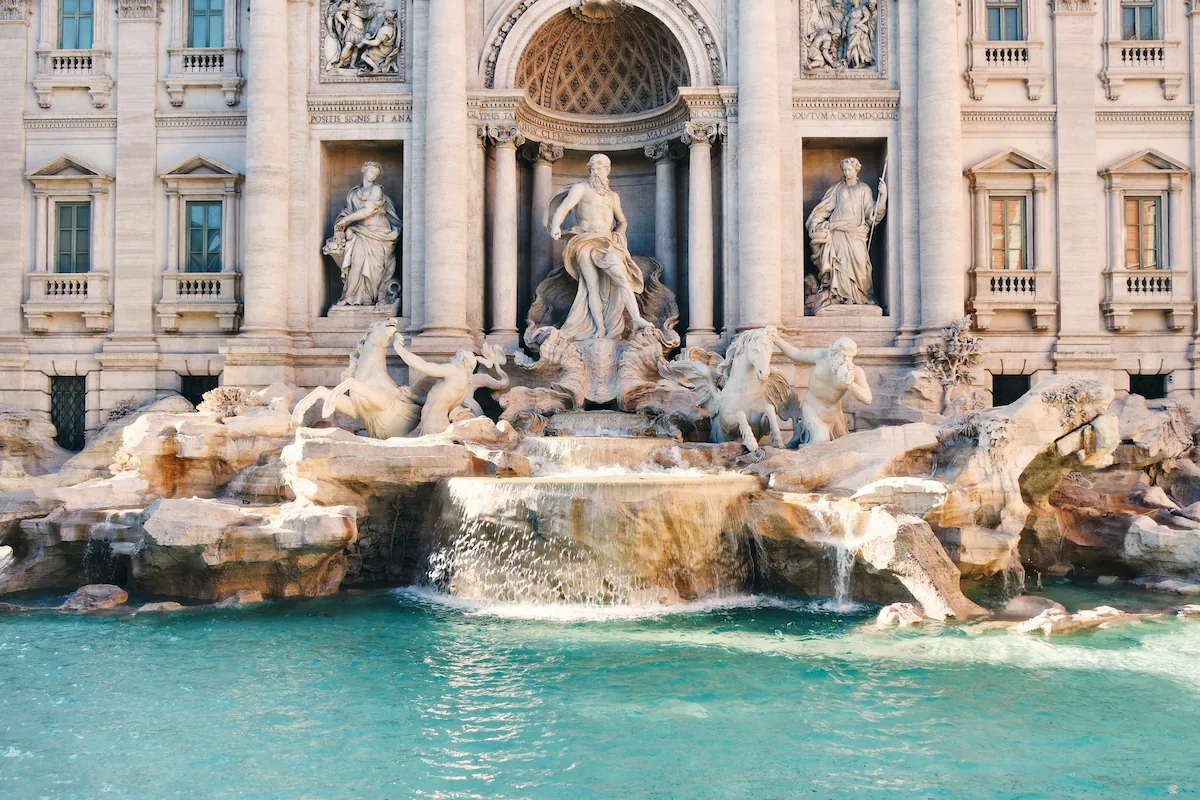
Staying in Rome’s historic center means waking up inside the version of the city most first-time visitors come to see. The Pantheon, Piazza Navona, Trevi Fountain, Campo de' Fiori, churches, cafés, and evening walking routes sit in a dense pedestrian system where much of the trip can happen on foot. It is the easiest base for a short first stay because sightseeing starts almost immediately outside the hotel. The trade-off is constant movement, higher prices for smaller rooms, uneven taxi access, and a bigger gap between a charming side street and a noisy tourist lane. Choose Centro Storico if walkability, classic Rome atmosphere, and short-trip efficiency matter more than calm or room size.
Why stay here: This is the smartest base for first-time visitors who want to reduce transport decisions and stay close to Rome’s major sights. It makes short trips feel fuller because you waste less time moving around.
Best for: first-time visitors, short stays, and travelers who want Rome’s headline sights within walking distance
Pros
Best overall walkability for first-time sightseeing
Easy access to the Pantheon, Piazza Navona, Trevi, and key churches
Strong restaurant and café density throughout the day
Ideal for weekend trips and short stays
Feels unmistakably like Rome from morning to night
Cons
Rooms are often smaller for the price
Some streets are noisy late into the evening
Taxi drop-off and luggage logistics can be awkward on narrow lanes
Nearby highlights
Walk to the Pantheon, Piazza Navona, Trevi Fountain, and Campo de' Fiori without structuring the day around transport
Easy early-morning access to the Trevi Fountain and central churches before the city fills
Simple returns to the hotel between sightseeing blocks
Strong café, restaurant, and gelato density throughout the day
Best fit for an efficient 2- to 3-day classic Rome itinerary
Look for quieter secondary streets near the Pantheon, Piazza Navona, Campo de' Fiori, or Largo Argentina rather than the loudest restaurant lanes
Budget
Hotel Barrett – Compact central hotel near Torre Argentina, well placed for heavy sightseeing on foot. Why we recommend: One of the few lower-priced central stays that still gives you a truly useful location. Check availability
Arch Rome Suites – Small-format stay near Largo Argentina with a strong center-of-the-map position. Why we recommend: It gets you into Rome’s most practical core without paying classic luxury-center rates. Check availability
Pantheon Relais – Simple central rooms close to the Pantheon and major pedestrian routes. Why we recommend: The location does most of the work, especially for short city breaks. Check availability
Mid
Hotel Pantheon – Traditional hotel steps from the Pantheon, ideal for travelers who want centrality over flash. Why we recommend: It delivers one of Rome’s clearest first-trip locations without drifting into full luxury pricing. Check availability
Argentina Residenza Style Hotel – Refined mid-range option between Pantheon, Navona, and Campo de' Fiori. Why we recommend: It sits in the sweet spot between polish and genuinely useful central positioning. Check availability
iQ Hotel Roma – Well-run modern hotel on the edge of the center with easier access and more comfort than many old-core properties. Why we recommend: It offers stronger room quality and operational reliability than many similarly priced historic-center stays. Check availability
Upscale
Albergo del Senato – Classic upscale stay facing one of Rome’s most iconic settings near the Pantheon. Why we recommend: Few hotels in Rome make the historic center feel this immediate without sacrificing comfort. Check availability
Hotel Lunetta – Polished central hotel near Piazza Navona and Campo de' Fiori with a more complete full-service feel. Why we recommend: It gives you rare balance in the old center: location, comfort, and a calmer finish to the day. Check availability
Hotel Martis Palace – Smart upscale base in the historic core, close to Navona and Campo routes. Why we recommend: It is one of the better choices when you want central Rome without the tired feel some classic addresses carry. Check availability
Trastevere
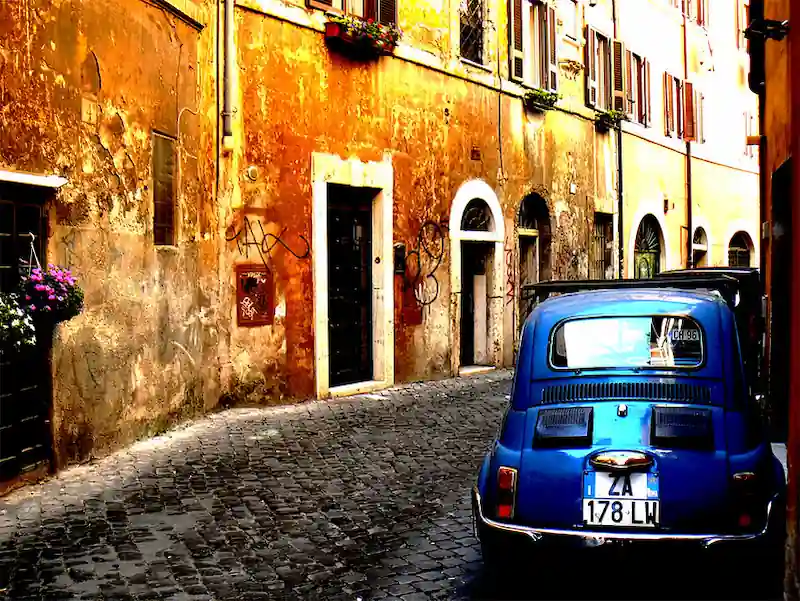
Trastevere works best when you want Rome to feel textured, social, and alive after dark. The neighborhood is full of restaurant streets, small piazzas, ivy-covered corners, and evening movement that makes it easy to stay out without planning much. It is one of Rome’s most atmospheric bases, but also one of the least neutral: some travelers love its energy, while others find it noisy or less convenient for tightly scheduled sightseeing. Staying here is less about pure efficiency and more about enjoying Rome as a place to inhabit. Choose Trastevere if dinners, bars, side streets, and a lively walk home matter as much as daytime monument access.
Why stay here: Trastevere is right when evenings matter almost as much as sightseeing and when you want a neighborhood with real identity, not just centrality. It suits travelers who like atmosphere to continue after the museums close.
Best for: couples, food-focused travelers, and anyone who wants lively evenings built into the stay
Pros
Excellent restaurant and bar density
Strong sense of place and evening energy
Walkable to Campo de' Fiori and parts of the center
More memorable neighborhood feel than many purely practical districts
Good fit for couples and return visitors
Cons
Noise can be a real issue on the wrong street
Transport is less seamless than the map suggests
Crowds build quickly in peak season and on weekends
Nearby highlights
Easy dinners and drinks without needing to cross the city after dark
Quick walks to Santa Maria in Trastevere and the neighborhood’s busiest evening streets
Reasonable walking access to Campo de' Fiori, the river, and central bridges
Better late-night atmosphere than most of central Rome
Good base for couples and food-focused travelers who want Rome to feel social
Stay near the river or on a calmer edge if you want atmosphere without maximum noise
Budget
Trastevere Rooms – Straightforward modern rooms with easy access to the neighborhood’s core. Why we recommend: A sensible lower-cost option when you want the Trastevere location more than hotel frills. Check availability
Casa Mia in Trastevere – Classic 3-star base in the thick of the district, useful for travelers who plan to be out a lot. Why we recommend: It puts you in the heart of Trastevere without pretending to be something more expensive. Check availability
Le Clarisse Trastevere – Courtyard-centered stay with more quiet than many addresses in the same area. Why we recommend: It is one of the better-value Trastevere picks if you want atmosphere with a little breathing room. Check availability
Mid
Residenza San Calisto – Character-filled stay close to Santa Maria in Trastevere, ideal for travelers who want old-Rome texture. Why we recommend: It captures the area’s spirit better than many generic mid-range options. Check availability
Tankara Suite – Small-format central stay near the district’s liveliest lanes. Why we recommend: It gives you a very strong location with a more intimate feel than a standard hotel. Check availability
Nikis Collection Trastevere – Well-located and calmer than many nearby addresses despite being close to the action. Why we recommend: A smart choice when you want Trastevere energy without paying for full boutique-hotel pricing. Check availability
Upscale
Hotel Santa Maria – Highly appealing boutique-style stay with a garden-courtyard feel rare in this part of Rome. Why we recommend: It delivers real Trastevere charm without the overdesigned boutique cliché. Check availability
Loly Boutique Hotel Roma – More polished and design-aware than many Trastevere options, while still feeling neighborhood-based. Why we recommend: Its finish level is stronger than most local alternatives in the same zone. Check availability
Horti 14 Borgo Trastevere Hotel – Refined 4-star option with a calmer edge of Trastevere position and better overall comfort. Why we recommend: One of the best picks if you want Trastevere character without accepting full Trastevere chaos. Check availability
Monti
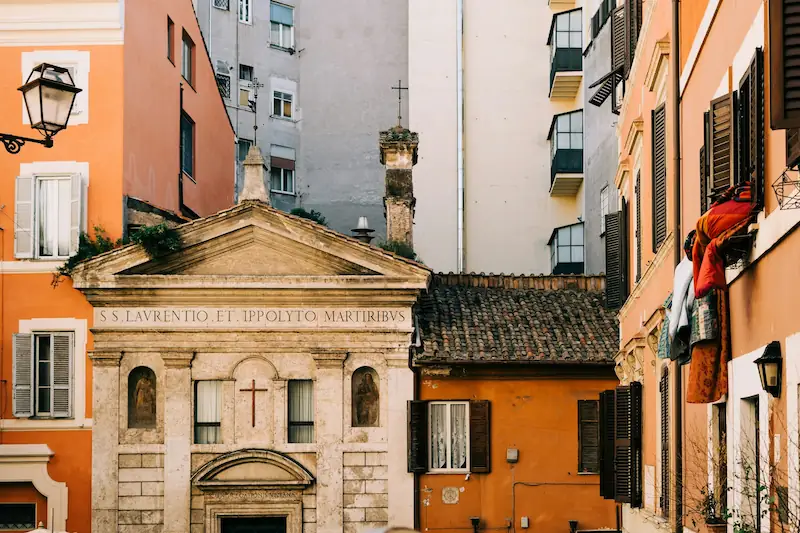
Monti is one of the best compromises in Rome. It feels more local, stylish, and lived-in than the historic center, but it still keeps the Colosseum, Roman Forum, Via dei Fori Imperiali, and central routes within easy reach. Around Via Urbana, Via del Boschetto, and the streets below the Colosseum, you get wine bars, boutiques, cafés, restaurants, and a looser pace than in the old core. It is not as polished as Prati and not as theatrical as Trastevere, which is exactly why many travelers like it. Choose Monti if you want centrality, Colosseum access, and neighborhood character without sleeping in Rome’s busiest postcard streets.
Why stay here: Choose Monti when you want Rome to feel central but not overexposed. It is especially strong for travelers who want a more stylish, less obvious first base.
Best for: travelers who want a central stay with character, design, and slightly calmer evenings
Pros
Central enough to keep major sights close
More character than generic hotel districts
Good food and bar scene without Trastevere-level noise
Works well for both first trips and return visits
Easy access to the Colosseum and Roman Forum area
Cons
Not every street feels equally polished
Hotel inventory is good but less broad than in the center
Some uphill walking and patchy pavement can wear on you
Nearby highlights
Walk to the Colosseum and Roman Forum early without long transit planning
Easy crossover between Ancient Rome, Via Nazionale, and the historic center
Good café, wine bar, and restaurant density without Trastevere-level noise
Strong base for splitting days between major sights and slower evenings
Useful compromise between sightseeing efficiency and neighborhood feel
Look around Via Urbana, Via dei Serpenti, Via del Boschetto, or quieter streets near Cavour for the best balance
Budget
Hotel Centro Cavour Roma – Simple, efficient stay close to Cavour metro and the Colosseum side of Monti. Why we recommend: One of the most practical lower-cost bases in Monti if location is your priority. Check availability
Re Monti – Guesthouse-style option for travelers who care most about sleeping centrally and moving easily. Why we recommend: It gives you Monti positioning without forcing you into upscale price bands. Check availability
Monti 66 Hotel – Compact modern option near the upper edge of Monti, useful for shorter city stays. Why we recommend: It is a cleaner, more contemporary budget-leaning choice than many older local addresses. Check availability
Mid
FH55 Grand Hotel Palatino – Larger hotel close to Cavour and the Colosseum, convenient for travelers who want straightforward functionality. Why we recommend: It works well when you value location and room inventory over boutique atmosphere. Check availability
Leonardo Boutique Hotel Rome Monti – Comfortable mid-range stay with a more finished feel than many neighboring options. Why we recommend: A reliable choice for travelers who want Monti character with fewer compromises on comfort. Check availability
iQ Hotel Roma – Modern, operationally smooth hotel on Monti’s broader central edge. Why we recommend: It is unusually dependable for Rome and often feels better run than similarly priced competitors. Check availability
Upscale
Monti Palace Hotel – Design-forward 4-star hotel steps from Cavour metro with easy access to both Monti and ancient Rome. Why we recommend: It balances style, location, and comfort better than many central Rome hotels. Check availability
Roma Luxus Hotel – Higher-end Monti option with a more polished, cocooned feel near the Forum side of the district. Why we recommend: It brings real upscale comfort to an area that often leans more casual than luxurious. Check availability
Hotel Palazzo Manfredi – Small Luxury Hotels of the World – Luxury stay with one of Rome’s most striking Colosseum-adjacent settings. Why we recommend: For a special trip, very few addresses turn Monti’s ancient-Rome positioning into something this memorable. Check availability
Prati
Prati feels different from much of Rome: wider streets, straighter urban logic, cleaner building lines, and less visual chaos. It is not the most atmospheric district in the city, but it is one of the easiest to live in for several days. Around Lepanto, Ottaviano, Cola di Rienzo, and the Vatican side streets, you get calmer nights, better room value, useful metro access, and more predictable daily movement than in the old center. That makes Prati especially strong for families, Vatican-focused stays, longer trips, and travelers who prefer comfort and order to constant postcard atmosphere. Choose it if you want Rome to feel easier, calmer, and more practical.
Why stay here: Prati is right for travelers who want a more comfortable day-to-day stay and do not need to sleep inside the most cinematic streets. It trades some atmosphere for calm, room quality, and cleaner logistics.
Best for: families, calmer stays, Vatican access, and travelers who prefer city logic over maximum atmosphere
Pros
Quieter and more orderly than most central districts
Often better value for room size and hotel standards
Excellent metro access for cross-city movement
Good choice for family stays and longer trips
Useful for Vatican-focused itineraries
Cons
Less atmospheric than Centro Storico or Trastevere
Can feel residential rather than immersive
You may walk more to reach the classic evening heart of Rome
Nearby highlights
Easy access to Vatican Museums and St. Peter’s without a dedicated cross-city setup
Useful metro connections via Ottaviano and Lepanto
Better chance of larger rooms and more functional hotel layouts
Pleasant local dining streets away from the heaviest tourist churn
More restful nights than most first-time travelers expect to find in Rome
Stay between Lepanto, Ottaviano, Cola di Rienzo, and the river-facing side of Prati for the best mix of access and calm
Budget
Domus Terenzio – Well-located smaller stay within easy reach of St. Peter’s and the river crossings toward the center. Why we recommend: A strong value pick in Prati when you want a quieter base without losing central access. Check availability
Eccelso Hotel – Clean, practical option near Ottaviano that keeps Vatican and metro access simple. Why we recommend: One of the better lower-cost choices here if functional location matters most. Check availability
Relais Roma Vaticano - METRO station Ottaviano – Budget-friendly stay close to the metro with an efficient location for first-time logistics. Why we recommend: It solves the practical side of staying in Prati especially well. Check availability
Mid
Hotel Relais Dei Papi – Comfortable Prati base between Vatican access and broader central movement. Why we recommend: It offers a better balance of comfort and price than many similarly placed Rome hotels. Check availability
NH Collection Roma Centro – Larger full-service hotel on Prati’s city-facing side, useful for both Vatican and historic-center days. Why we recommend: A dependable option for travelers who want smoother operations and broader amenities. Check availability
Orazio Palace Hotel – Modern-feeling Prati stay with easier access to central Rome than the Vatican-edge addresses. Why we recommend: It is a smart middle ground if you want Prati calm without feeling too far removed. Check availability
Upscale
Starhotels Michelangelo Rome – Polished higher-end hotel near St. Peter’s, useful for travelers who want classic comfort and easy Vatican access. Why we recommend: A reliable upscale option when service consistency matters as much as location. Check availability
Palazzo Cardinal Cesi – Historic building stay near St. Peter’s with more character than a standard chain-style hotel. Why we recommend: It gives Prati-side convenience with a stronger sense of place than many nearby competitors. Check availability
The First Musica - Preferred Hotels & Resorts – Refined luxury address on the Prati side of the river, better suited to travelers who want a polished city stay. Why we recommend: It brings genuine high-end finish to an area often chosen for practicality rather than glamour. Check availability
Testaccio
Testaccio is one of the best areas in Rome if you care more about how the city lives than how it poses. This is a food-first, local-feeling district with market culture, casual bars, strong trattoria depth, and far fewer visitors sleeping there than in the historic center or Trastevere. It does not flatter a rushed first-time itinerary, but it can make a return trip or longer stay feel smarter and more grounded. The mood is everyday Roman rather than polished postcard Rome. Choose Testaccio if food, local rhythm, and a less tourist-saturated base matter more than instant access to every major sight.
Why stay here: Testaccio is the right base when local rhythm, food, and a less touristic sleep environment matter more than instant access to every major sight. It rewards travelers who are happy to trade some walkability for a stronger neighborhood feel.
Best for: return trips, food-led stays, and travelers who want a more lived-in Roman base
Pros
Much more local atmosphere than Rome’s usual visitor zones
Excellent food scene from market lunches to serious dinners
Calmer and more grounded than central nightlife districts
Good value compared with more famous neighborhoods
Strong fit for return visitors
Cons
Not ideal if you want every major sight on foot
Less visually dramatic than the historic core
Transport matters more here, especially for short trips
Nearby highlights
Easy access to Testaccio Market and one of Rome’s strongest everyday food scenes
Better chance of eating well without relying on tourist-heavy restaurant strips
Useful base for exploring Aventine, Ostiense, and southern Rome
More local nightlife and aperitivo rhythm than monument-driven districts
Good fit for return visitors, longer stays, and food-led Rome trips
Stay close enough to the market, river, Aventine edge, or Ostiense connections so the area remains useful rather than isolated
Budget
Bob W Rome Testaccio – Modern, efficient stay for travelers who want a cleaner, design-light base in this part of the city. Why we recommend: It is one of the easiest Testaccio-area options to book with confidence. Check availability
Seven Suites – Contemporary rooms near Testaccio with simple logistics and a functional setup. Why we recommend: A good choice when you want the neighborhood and do not need full hotel services. Check availability
Lungotevere Suite – Apartment-style stay near the Trastevere-Testaccio side of the river, helpful for longer or more flexible stays. Why we recommend: It offers more space and self-contained comfort than many lower-priced central Rome options. Check availability
Mid
Hotel San Francesco – Well-placed boutique-leaning stay between Testaccio and Trastevere dynamics. Why we recommend: It is one of the best-value picks for travelers who want local atmosphere without going too far out. Check availability
Gasometer Urban Suites – Larger-format suites on the Ostiense-Testaccio side, useful for longer stays or travelers who want more room. Why we recommend: It gives you more space and practical comfort than many central Rome hotels. Check availability
47 Boutique Hotel – Refined stay at the edge of Testaccio and the historic center, with easy access to Bocca della Verità and the river. Why we recommend: It bridges local Rome and central sightseeing better than most hotels in this zone. Check availability
Upscale
47 Boutique Hotel – Sharp upscale option on Testaccio’s better-connected edge with rooftop appeal and stronger finish. Why we recommend: It is the most complete higher-end choice if you want this side of Rome without compromise. Check availability
Hotel Palazzo Manfredi – Small Luxury Hotels of the World – Luxury stay within reach of the broader southern-central Rome zone, suited to special trips. Why we recommend: It adds true occasion value if you want to stay nearer this side of the city in style. Check availability
The First Musica - Preferred Hotels & Resorts – High-end riverside option for travelers who want more polish while remaining outside the most crowded core. Why we recommend: It is a stronger luxury fallback than trying to force a weak high-end choice inside Testaccio itself. Check availability
Campo de' Fiori & Jewish Ghetto
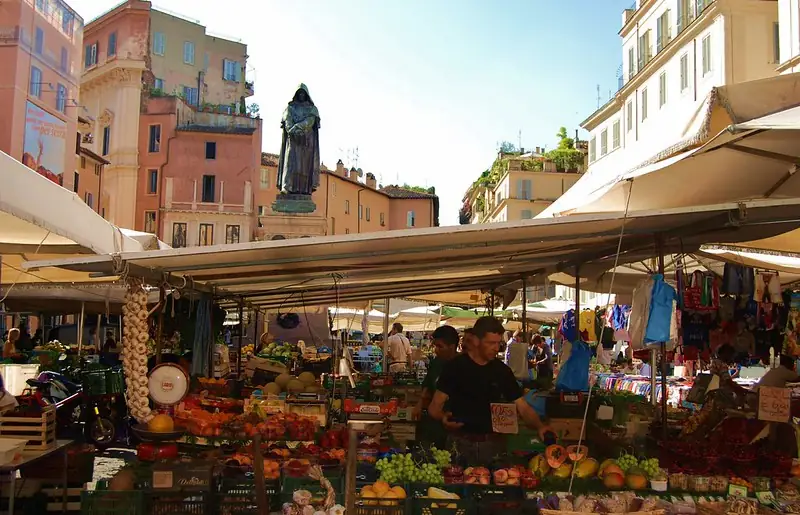
Campo de' Fiori and the Jewish Ghetto form one of Rome’s smartest central bases for travelers who want food, history, evening usefulness, and strong walking access without staying in the most obvious tourist funnel. Campo de' Fiori brings market-square energy and late dinners; the Jewish Ghetto adds deeper historical texture, quieter streets, Roman-Jewish food, and easy links toward Teatro Marcello, Largo Argentina, Piazza Navona, and the river. The weakness is noise around the busiest lanes and less residential calm than Prati or Aventine. The strength is that many of Rome’s best walking days and dinners start naturally here.
Why stay here: This is one of the best Rome bases for travelers who want centrality with stronger evening life and food identity than the broad historic center. It is especially effective for 2- to 4-day stays.
Best for: food-focused travelers, couples, and short stays that need strong evening usefulness
Pros
Very central without feeling as diffuse as Centro Storico
Excellent food and evening dining options
Strong walking access to Navona, Pantheon, Trastevere bridges, and the river
Good balance of sightseeing and night-time usefulness
Particularly efficient for weekend stays
Cons
Some streets are noisy late
Busy restaurant zones can feel crowded and overly public
Not the best area if you want restful residential evenings
Nearby highlights
Easy dinners around Campo de' Fiori and the Jewish Ghetto without cross-city planning
Fast walks to Piazza Navona, Largo Argentina, the Pantheon zone, and Teatro Marcello
Excellent positioning for combining the historic center with Trastevere evenings
Strong food identity, especially around Roman-Jewish cooking and central trattorie
Very efficient base for maximizing walking and minimizing dead time
Stay slightly off the loudest Campo de' Fiori edges or closer to the Jewish Ghetto if you want centrality with more composure
Budget
Hotel Smeraldo – Classic central-value choice close to Campo de' Fiori with strong practical positioning. Why we recommend: It is one of the most reliable budget-leaning picks in this exact zone. Check availability
Hotel Damaso – Highly useful central hotel near Navona and Campo, excellent for compact Rome stays. Why we recommend: It consistently solves the short-trip Rome problem very well. Check availability
HT6 Hotel Roma – Stylish small-format hotel in the Jewish Ghetto with a stronger sense of place than many peers. Why we recommend: It gives this micro-area real identity without needing full luxury spend. Check availability
Mid
Argentina Residenza Style Hotel – Refined base between the Pantheon side and Campo area, well suited to balanced Rome itineraries. Why we recommend: Its location lets you use several major central zones without friction. Check availability
Chapter Roma – Design-conscious hotel near Campo de' Fiori and the Ghetto, with a more contemporary edge. Why we recommend: It stands out when you want a more modern hotel personality in historic Rome. Check availability
Hotel Pantheon – Traditional central stay that still works well for Campo-Ghetto walkers who want the old core at hand. Why we recommend: A dependable classic option when location outranks novelty. Check availability
Upscale
Hotel Lunetta – Higher-end central base with easy access to Navona, Campo, and riverside walking routes. Why we recommend: It is one of the best polished hotels in this part of Rome without losing practicality. Check availability
Hotel Martis Palace – Upscale historic-core stay close to Campo routes and key evening streets. Why we recommend: It combines location and finish level better than many neighboring boutique properties. Check availability
Albergo del Senato – Elegant classic Roman address within reach of both the Pantheon side and Campo circuits. Why we recommend: It adds real occasion value to one of the most useful walking zones in Rome. Check availability
Aventine
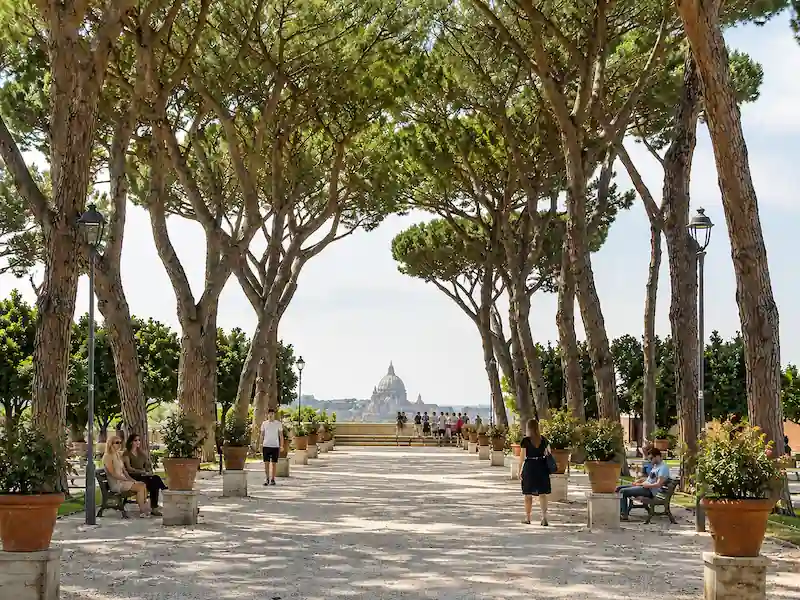
Aventine is one of Rome’s calmest and most quietly rewarding central bases. It is not the district for travelers who want dense restaurant streets or nightlife outside the door, but it is one of the best areas if you want a more refined, residential, and peaceful version of the city. The hill gives you greenery, measured streets, churches, viewpoints, and access to some of Rome’s loveliest late-day sequences. It works emotionally as much as practically: it softens the trip. Choose Aventine for couples, slower stays, romantic trips, and travelers who want central Rome to feel beautiful without being relentlessly busy.
Why stay here: Choose Aventine if you want a quieter, more elegant Roman base that still stays broadly central. It is one of the smartest choices for travelers who want atmosphere without constant crowd exposure.
Best for: couples, slower travelers, romantic stays, and anyone prioritizing calm over constant activity
Pros
Much calmer than the historic core and Trastevere
Strong fit for couples and romantic stays
Beautiful late-day walking atmosphere
Good access to Testaccio, Circus Maximus, and parts of the center
More restorative after long sightseeing days
Cons
Less immediate for nightlife and denser restaurant choice
Hotel selection is narrower
Not the best fit if you want the absolute shortest routes to every major sight
Nearby highlights
Easy access to the Orange Garden and Aventine viewpoints
Useful crossover to Testaccio for stronger food days
Quieter returns after central sightseeing
A more breathable version of Rome than the busiest core districts
Strong fit for couples, slower travelers, and romantic stays
Choose hotels close enough to Aventine viewpoints, Circus Maximus, Testaccio, or the Ancient Rome edge so the calm does not become inconvenient
Budget
Hotel Aventino – Simple and classic small hotel in a quiet Aventine setting. Why we recommend: One of the most direct ways to access Aventine calm without paying full luxury pricing. Check availability
Hotel Villa San Pio – Traditional hotel with a peaceful setting and more personality than a generic city stay. Why we recommend: It matches the district’s quieter, more residential tone especially well. Check availability
Casa per Ferie Ravasco San Pietro – Simple accommodation with calmer surroundings and practical value logic. Why we recommend: Useful if you want a low-drama stay in a less frantic part of Rome. Check availability
Mid
Hotel San Anselmo – Boutique-leaning stay with real Aventine atmosphere and a more intimate feel. Why we recommend: One of the best-fit hotels for travelers choosing Aventine for mood as much as location. Check availability
The Corner Roma – Design-conscious option near the Aventine/Circus Maximus side of Rome. Why we recommend: A stronger choice if you want some personality without losing calm. Check availability
47 Boutique Hotel – Upscale-leaning stay on the Aventine-Testaccio-Centro seam. Why we recommend: A smart compromise if you want quieter geography without becoming too detached. Check availability
Upscale
Hotel San Anselmo – Still one of the strongest premium-feeling stays for travelers who want Aventine serenity with genuine character. Why we recommend: Its atmosphere is unusually aligned with why travelers choose this district in the first place. Check availability
47 Boutique Hotel – Polished higher-end option near the district edge with stronger service and comfort. Why we recommend: A good fit if you want Aventine proximity with more upscale consistency. Check availability
Palazzo Velabro – Luxury stay on the calmer ancient-Rome/Aventine edge with excellent spatial logic. Why we recommend: One of the best choices if you want this side of Rome to feel elevated and special. Check availability
Vatican & Borgo
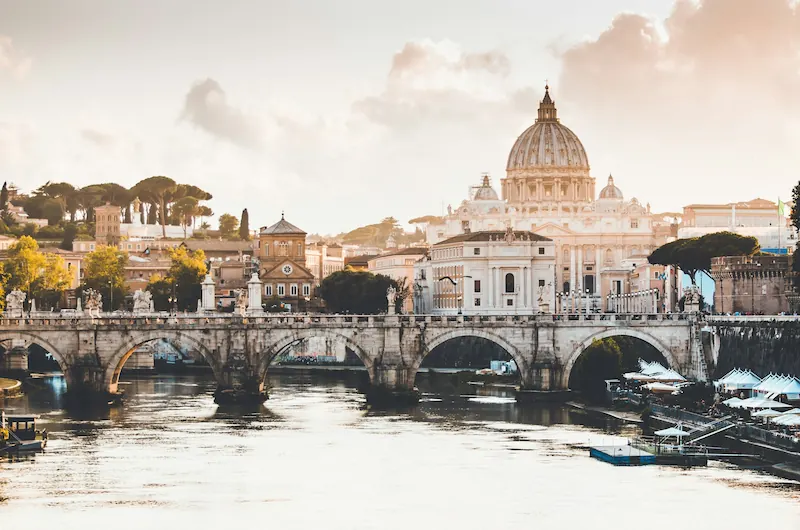
Vatican & Borgo are not the most atmospheric answer for every Rome trip, but they are one of the smartest choices when Vatican timing shapes your stay. This area works particularly well when early entry at the Vatican Museums, St. Peter’s Basilica, or a Vatican-focused itinerary matters heavily, because it removes one of Rome’s most annoying frictions: starting a major morning already in transit. Borgo has more historic texture than many travelers expect, even if it cannot compete with Trastevere or Centro Storico for evening charm. Choose this area when practical Vatican access matters more than nightlife or old-center atmosphere.
Why stay here: Choose Vatican & Borgo if the Vatican is one of your top priorities and you want cleaner morning execution, calmer nights, and a more strategic base than a purely atmospheric one.
Best for: Vatican-focused trips, calmer short stays, and travelers who value cleaner logistics
Pros
Best area for easy Vatican mornings
Calmer nights than many historic-core districts
Good fit for shorter stays with heavily booked Vatican plans
Useful for Prati crossover and river access
More strategic than many first-time visitors realize
Cons
Less atmospheric at night than Trastevere or the historic center
Dining is more uneven street to street
Not the best area if you want Rome’s classic evening energy outside the door
Nearby highlights
Simple early access to Vatican Museums and St. Peter’s Basilica
Useful crossover into Prati for calmer dining and broader hotel options
Quieter returns than the busiest tourist core
Good fit for travelers who want Vatican logistics to feel less stressful
Better for structure-led trips than nightlife-led ones
Favor Borgo or Prati-facing streets with clean walking routes to Vatican entries rather than souvenir-heavy stretches
Budget
Eccelso Hotel – Simple and practical Vatican-side hotel that works well for reservation-heavy trips. Why we recommend: Good location logic for the price when Vatican proximity is the main objective. Check availability
Relais Roma Vaticano - METRO station Ottaviano – Budget-friendly stay close to Vatican transport and morning access points. Why we recommend: Strong for first-timers who want to reduce Vatican-day friction. Check availability
Hotel Casa Tra Noi – Simple quieter stay on the Vatican side with more breathing room than denser central districts. Why we recommend: A sensible choice when you want calmer surroundings and do not need nightlife. Check availability
Mid
Palazzo Cardinal Cesi – Historic building stay near St. Peter’s with more character than many nearby practical hotels. Why we recommend: One of the best ways to make this strategic district feel less purely functional. Check availability
Starhotels Michelangelo Rome – Reliable full-service option close to St. Peter’s and good for smoother short stays. Why we recommend: It solves comfort and Vatican access in one move. Check availability
Orazio Palace Hotel – A stronger all-rounder if you want Vatican access but slightly easier broader Rome movement. Why we recommend: Good middle ground between strict Vatican proximity and wider city usability. Check availability
Upscale
Palazzo Cardinal Cesi – Historic and more characterful than many upscale Vatican-side options. Why we recommend: It turns a strategic area into a more memorable stay. Check availability
Starhotels Michelangelo Rome – Refined higher-end choice with very strong Vatican positioning. Why we recommend: A dependable premium pick when comfort and location both matter strongly. Check availability
The First Musica - Preferred Hotels & Resorts – Luxury riverside option for travelers who want more polish while staying on the Vatican-Prati side of the city. Why we recommend: A stronger luxury answer than forcing a weaker option inside Borgo itself. Check availability
Where to stay in Rome for first time
If this is your first Rome trip, the best choice is usually the one that simplifies your walking days and keeps your evening options open. The smartest bases are not necessarily the prettiest on a map; they are the ones that reduce wasted crossings.
Choose Centro Storico if you want the clearest first-trip logistics and plan to see the classic sights on foot.
Choose Monti if you want a first-time base that still feels central but slightly less exposed and tourist-heavy.
Choose Campo de' Fiori & Jewish Ghetto if you want centrality with stronger evening dining than a broader old-center address.
Choose Vatican & Borgo if Vatican timing is one of the main drivers of your trip.
Avoid Testaccio for a first trip shorter than 3 days unless local neighborhood life matters more than sight coverage.
If you are unsure, stay as central as your budget allows rather than maximizing room size farther out.
Profile
BestArea
Why
classic first trip
Historic Center (Centro Storico)
best overall walkability and easiest landmark coverage
first trip with character
Monti
central, atmospheric, and easier to live in than the busiest core
first trip with strong evenings
Campo de' Fiori & Jewish Ghetto
very central with better night usefulness
first trip with Vatican priority
Vatican & Borgo
cleanest Vatican-day logistics
Where to stay in Rome with family
For family stays in Rome, calm, room layout, and everyday movement matter more than romance. The best family area is often the one that feels slightly less cinematic at first glance.
Prati is usually the safest all-round family choice thanks to calmer streets, better room logic, and easier day-to-day movement.
Historic Center works for families on short stays if you want to minimize transport, but choose carefully for noise and access.
Monti can work well with older children who will spend long days on foot.
Vatican & Borgo can work well for family stays built around early Vatican plans and calmer nights.
Testaccio is a good family fit for longer stays if you want local food life and less tourist saturation.
Avoid the busiest Trastevere lanes if your evenings end early or your children are light sleepers.
Profile
BestArea
Why
young children
Prati
quieter nights and more practical hotel setups
short family city break
Historic Center (Centro Storico)
cuts down transfers and keeps the main sights close
older kids and mixed sightseeing
Monti
central enough for walking, softer rhythm than the old core
family with Vatican priority
Vatican & Borgo
clean morning setup and calmer sleep environment
Where to stay in Rome for nightlife
Rome nightlife is more about late dinners, bars, terraces, and neighborhood energy than big-club geography. The best nightlife area is the one where the evening stays easy after the museums close.
Trastevere is the clearest nightlife choice if you want Rome to stay alive around you after dark.
Campo de' Fiori works well if you want a central evening base but still need strong daytime walkability.
Monti is better for wine bars, lower-key evenings, and a more curated night feel.
Centro Storico gives you options, but nightlife there can feel more diffuse and tourist-heavy.
Aventine is not a nightlife district, but it works well if you want romantic evenings followed by real calm.
If you want lively evenings but restful sleep, book on the quieter edge of Trastevere rather than in its busiest core.
Style
BestArea
TradeOff
busy late dinners and bars
Trastevere
higher noise risk
central social base
Campo de' Fiori & Jewish Ghetto
crowded late-evening streets
smarter, lower-key evenings
Monti
less all-out energy
quiet romantic evenings
Aventine
far less nightlife density
Where to stay in Rome on a budget
Budget in Rome is rarely just about nightly rate. A cheaper hotel in the wrong place can cost you more in time, taxis, and energy than a smaller but better-located room.
For a short trip, a simpler room in Centro Storico or Monti usually beats a bigger room far out.
Prati often gives better value per square meter without becoming inconvenient.
Vatican & Borgo can work well for budget-conscious travelers whose days are Vatican-led rather than nightlife-led.
Testaccio can work well for budget-conscious return visitors who do not need instant access to every sight.
Trastevere budget choices are appealing on paper but can be noisy and inconsistent street to street.
Always check exact walking distance to metro, river crossings, and your likely evening routes, not just the district name.
Approach
Area
Why
best short-trip value
Monti
central enough to save time while avoiding some old-center premiums
best room-value compromise
Prati
more functional hotels and calmer urban layout
best strategic-value stay
Vatican & Borgo
can save money and simplify Vatican-heavy itineraries
best local-value stay
Testaccio
good food scene and less tourist inflation, but weaker first-trip convenience
Where to stay in Rome depending on your trip
Trip length changes what makes sense in Rome. The shorter the stay, the less you should compromise on centrality; the longer the stay, the more comfort, quiet, room quality, and neighborhood rhythm start to matter.
Label
Stay
Avoid
Why
2 nights
Historic Center (Centro Storico), Campo de' Fiori & Jewish Ghetto, or Vatican & Borgo if Vatican-heavy
Testaccio or any base chosen mainly for local atmosphere
On a very short trip, every extra transfer and evening crossing costs too much.
3 days
Historic Center, Monti, Campo de' Fiori & Jewish Ghetto, or Vatican & Borgo
outer-value logic that only saves money on paper
You want enough centrality to keep Rome feeling compact while still leaving room for one neighborhood evening.
4 to 5 days
Monti, Prati, Trastevere, Aventine, or selected quieter central streets
choosing the busiest streets just for atmosphere
With a few more days, comfort and evening fit start to matter as much as raw centrality.
1 week
Prati, Aventine, Testaccio, or Monti if you still want central access
the noisiest lanes in the historic center
Longer stays benefit from calmer nights, better room comfort, local food options, and a more repeatable daily rhythm.
First trip
Historic Center, Monti, Campo de' Fiori & Jewish Ghetto, or Vatican & Borgo if the Vatican is a major priority
overcorrecting toward local authenticity
Your first Rome stay should make the city easier before it makes it more niche.
Return trip
Trastevere, Testaccio, Aventine, Prati, or a quieter part of Monti
defaulting automatically to the old center
Once you know the classic sights, neighborhood life, food culture, and calmer routines become better filters.
Family trip
Prati, Monti, or selected quieter Centro Storico streets
deep nightlife lanes in Trastevere or Campo de' Fiori
Families benefit from calmer nights, practical room layouts, access, and simpler daily movement.
Food or evening-led trip
Trastevere, Testaccio, Campo de' Fiori & Jewish Ghetto, or Monti
staying beside a famous monument and hoping the food will follow
Rome food and evening atmosphere work best when the neighborhood itself supports the way you want to eat and return after dinner.
How to choose the right hotel in Rome once you know the area
In Rome, the hotel decision is often won or lost below neighborhood level. A good area can still produce a frustrating stay if the street is noisy, the building is awkward, the room is too small for your trip length, or the hotel does not support easy returns after long sightseeing days.
Topic
WhatToDo
WhatToAvoid
WhyItMatters
Street quality
Check whether the hotel sits on a busy restaurant lane, a quieter side street, or a hard-to-access pedestrian pocket.
Booking on neighborhood name alone.
Rome changes block by block, especially for noise, luggage access, taxi drop-offs, and sleep quality.
Real walking routes
Measure the walk to the sights, restaurants, metro stops, bridges, or Vatican entries you will actually use.
Assuming that “central Rome” means equally easy access to everything.
A hotel can look central on the map and still add daily friction once heat, crowds, cobblestones, and river crossings are involved.
Night noise
Be especially careful in Trastevere, Campo de' Fiori, and the busiest old-center lanes.
Treating every charming street as a good sleep environment.
Rome’s most attractive evening zones are often the least restful if the exact street is wrong.
Room size versus location
For 2 to 3 nights, accept a smaller room if it meaningfully improves your base; for longer stays, give more weight to comfort and space.
Going too far out just to gain room size on a short first trip.
Location usually pays back more than square meters when time is limited, but comfort matters more once the stay gets longer.
Elevators, stairs and luggage
Confirm elevator access, luggage handling, taxi access, and floor level in guesthouses, palazzi, and townhouse hotels.
Assuming historic charm includes modern accessibility.
Rome’s older buildings often have small lifts, stairs, uneven entrances, or awkward arrival logistics.
Air conditioning and summer comfort
Check recent summer reviews if traveling from June to September.
Assuming all older Rome properties manage heat equally well.
Heat can make a beautiful room feel unusable after long days at the Colosseum, Vatican, Forum, or historic center.
Family practicality
Check room layout, connecting rooms, breakfast ease, elevator access, and nearby dinner options.
Booking the most romantic central address without considering daily family logistics.
Families need calm, space, predictable returns, and easy meals more than postcard atmosphere alone.
Review recency
Prioritize recent reviews mentioning noise, bathrooms, air conditioning, bedding, and staff responsiveness.
Relying only on old average scores, star rating, or pretty photos.
Rome hotels can vary significantly in maintenance, operations, and room condition.
Booking timing
Book early for spring, autumn, Easter, Christmas/New Year, major events, family rooms, and the best central or boutique stays.
Waiting too long if location, room setup, or neighborhood quality matters.
The best-value hotels in Centro Storico, Monti, Trastevere, Prati, Campo de' Fiori, and Aventine often disappear before Rome feels fully booked.
FAQ: where to stay in Rome
These Rome accommodation questions cover first-time visits, families, couples, nightlife, food, Vatican access, budget, trip length, hotel logistics, and the neighborhood trade-offs that matter most before booking.
What is the best area to stay in Rome for first-time visitors?
For most first-time visitors, the Historic Center is the easiest choice because it keeps the Pantheon, Piazza Navona, Trevi Fountain, restaurants, and evening walks close. Monti is the best alternative if you want centrality with more neighborhood character and easier Colosseum access.
Where should I stay in Rome for 2 nights?
For 2 nights in Rome, stay as central as possible. Centro Storico, Campo de' Fiori & Jewish Ghetto, or Monti are the strongest choices because they reduce transfers and keep the main sights within practical walking distance.
Where should I stay in Rome for 3 days?
For 3 days, choose Centro Storico for maximum efficiency, Monti for character and Colosseum access, Campo de' Fiori & Jewish Ghetto for central food-led evenings, or Vatican & Borgo if your itinerary is heavily Vatican-focused.
Where should I stay in Rome for 5 days?
For 5 days, you can move beyond pure centrality. Monti, Prati, Trastevere, Aventine, or selected quieter central streets often work better because comfort, sleep quality, food options, and evening rhythm start to matter more.
Where should I stay in Rome for one week?
For one week in Rome, Prati, Aventine, Testaccio, or Monti can be smarter than the busiest historic-center streets. Longer stays benefit from calmer nights, better room comfort, local restaurants, and a base that feels livable.
Is Centro Storico the most convenient area to stay in Rome?
Yes, for classic sightseeing Centro Storico is usually the most convenient area. The trade-off is that rooms can be smaller, streets can be noisy, and taxi or luggage access can vary sharply from one lane to the next.
Is Monti a good area to stay in Rome?
Yes. Monti is one of the best areas to stay in Rome if you want Colosseum access, restaurants, wine bars, central walking, and more neighborhood character than the most tourist-heavy parts of the historic center.
Is Trastevere a good place to stay in Rome?
Yes, if atmosphere, restaurants, bars, and lively evenings matter to you. It is less ideal if you are sensitive to noise, want the cleanest transport logic, or prefer a calmer neighborhood.
Is Prati a good area to stay in Rome?
Yes. Prati is a strong choice for families, Vatican access, calmer nights, wider streets, and more practical hotel layouts. It is less atmospheric than Centro Storico or Trastevere, but often easier to live in.
Is Testaccio too far from the main sights?
Testaccio is not extremely far, but it is not the most efficient base for a short first trip. It works best for return visitors, food lovers, longer stays, and travelers comfortable using taxis, buses, or longer walks.
Is Aventine a good place to stay in Rome?
Yes, especially for couples and slower stays. Aventine is one of the best areas if you want a quieter, more residential, more romantic version of central Rome.
What is the best area to stay in Rome near the Vatican?
Vatican & Borgo are the closest and most strategic choices if Vatican Museums or St. Peter’s Basilica shape your trip. Prati is usually the better all-round option if you want Vatican access plus calmer streets and stronger local infrastructure.
Should I stay near the Colosseum or the Vatican?
Stay near the Colosseum or in Monti if Ancient Rome, the Forum, and central walking are your priorities. Stay near the Vatican only if Vatican timing is a major driver of the trip.
Is Vatican City a good area to stay in Rome?
Vatican & Borgo can be a good base if early Vatican entries, St. Peter’s Basilica, or Vatican Museums are central to your stay. For broader sightseeing, nightlife, and classic Rome atmosphere, Centro Storico, Monti, or Trastevere may work better.
Is it better to stay central or near the Vatican?
For most first-time visitors, central is better unless Vatican access is the main purpose of the trip. Near-Vatican areas are strategic, but they are not the best all-round base for every Rome itinerary.
Where should I stay in Rome with family?
Prati is often the safest family choice because it is calmer, more orderly, and more likely to offer practical room layouts. Centro Storico can work for short family stays focused on walkability, while Monti suits older children who can handle long walking days.
Where should I stay in Rome with teenagers?
Monti is especially strong with teenagers because it combines Colosseum access, cafés, restaurants, and a more current neighborhood feel. Centro Storico is better for maximum sightseeing, while Prati is better for calmer family logistics.
Where should couples stay in Rome?
Couples should choose based on evening style. Trastevere is best for dinner and lively atmosphere, Monti for boutique character and central access, Aventine for quiet romance, and Campo de' Fiori & Jewish Ghetto for central food-led walking.
Where should I stay in Rome for nightlife?
Trastevere is the clearest nightlife choice if you want late dinners, bars, and social energy nearby. Campo de' Fiori also works well, while Monti is better for lower-key wine bars and more curated evenings.
Where should I stay in Rome for the best restaurants?
Testaccio is best for serious Roman food culture, Trastevere for easy dinner density, Campo de' Fiori & Jewish Ghetto for central food plus history, and Monti for wine bars and stylish casual evenings.
Where should food lovers stay in Rome?
Food travelers should choose a base that makes meals natural rather than forcing cross-city restaurant trips. Testaccio, Trastevere, Campo de' Fiori & Jewish Ghetto, and Monti are the strongest food-led areas.
Where should I stay in Rome on a budget?
Monti and Prati usually offer the best balance between price and usefulness. Vatican & Borgo can also work for budget-conscious travelers whose trip is structured around Vatican visits rather than nightlife.
Is it worth paying more to stay central in Rome?
Usually yes, especially for first trips and short stays. The premium often buys back time, energy, easier evenings, and fewer transport decisions, which matters a lot in Rome.
What is the most walkable area to stay in Rome?
Centro Storico is the most walkable area for classic Rome sightseeing. Campo de' Fiori & Jewish Ghetto and Monti are also highly walkable, with slightly different strengths.
Where should I stay in Rome if I want to walk everywhere?
Choose Centro Storico, Campo de' Fiori & Jewish Ghetto, or Monti. You will still not literally walk everywhere, but these bases reduce transfers and make the main sights feel connected.
What is the quietest central area to stay in Rome?
Aventine and Prati are the quietest strong central choices. Aventine is more romantic and scenic, while Prati is more practical, orderly, and family-friendly.
Where should I stay in Rome if I hate crowds?
Prati and Aventine are the best calmer choices. Testaccio can work for return visitors who want fewer tourists, while Monti is a good compromise if you still need central access.
Where should I stay in Rome if I want local atmosphere?
Testaccio is the strongest local-feeling option, followed by selected parts of Monti and Trastevere. Prati feels local in a calmer, more residential way, while Centro Storico is more visitor-facing.
Where should I stay in Rome if I want classic postcard atmosphere?
Centro Storico is the clearest answer, especially around the Pantheon, Piazza Navona, and surrounding streets. Trastevere and Monti add atmosphere in a more neighborhood-based way.
Should I stay in Trastevere or Centro Storico?
Choose Trastevere for atmosphere, restaurants, bars, and lively evenings. Choose Centro Storico for maximum walkability and first-time sightseeing efficiency.
Should I stay in Monti or Trastevere?
Choose Monti if you want a central base close to Ancient Rome with a stylish but manageable neighborhood feel. Choose Trastevere if evening atmosphere, restaurants, and nightlife matter more than smooth transport.
Should I stay in Prati or Centro Storico?
Choose Centro Storico for a short first trip focused on walking to the main sights. Choose Prati for a calmer, more practical stay, especially with family, Vatican plans, or a longer trip.
Should I stay in Campo de' Fiori or Trastevere?
Choose Campo de' Fiori & Jewish Ghetto if you want stronger central walkability and food-led evenings. Choose Trastevere if you want a more atmospheric neighborhood that stays lively late.
Should I stay in Prati or Vatican & Borgo?
Choose Prati for calmer family logistics, wider streets, and broader local infrastructure. Choose Vatican & Borgo for the shortest Vatican morning routes.
Should I stay in Aventine or Testaccio?
Choose Aventine for quiet romance, greenery, and refined calm. Choose Testaccio for food, local rhythm, and return-visit depth.
Is Termini a good area to stay in Rome?
Termini can be practical and budget-friendly, especially for rail connections, but it is not the most atmospheric choice for a leisure-focused Rome trip. Monti is often a better nearby compromise.
Where should I stay in Rome if arriving by train?
If arriving at Termini, Monti is a strong choice because it stays convenient without forcing you to sleep right by the station. Centro Storico is better for classic sightseeing, while Prati works if you want calmer nights and metro access.
Where should I stay in Rome without a car?
Almost all visitors should stay in Rome without a car. Choose Centro Storico, Monti, Campo de' Fiori & Jewish Ghetto, Prati, or Trastevere depending on your priorities; parking and driving are not useful for most Rome city stays.
How important is metro access when choosing where to stay in Rome?
Metro access is helpful, especially in Prati and Monti, but Rome is not a metro-first sightseeing city. Walking geography, street quality, and proximity to your real daily routes usually matter more.
Where should I stay in Rome in summer?
In summer, choose a base that reduces long midday transfers. Centro Storico and Monti keep walks efficient, while Prati and Aventine offer calmer recovery. Air conditioning, shade, and easy hotel returns matter more than in cooler months.
Where should I stay in Rome in winter?
In winter, Centro Storico, Monti, and Campo de' Fiori & Jewish Ghetto are especially practical because shorter daylight makes central walks and indoor sights more important. Prati also works well for Vatican and museum-focused stays.
Where should I stay in Rome for Christmas or Easter?
For Christmas, Easter, and major religious periods, book early and consider Vatican & Borgo or Prati if Vatican access matters. Centro Storico and Monti remain better if you want broader sightseeing and evening atmosphere.
Where should I stay in Rome for museums?
Centro Storico, Monti, and Prati are the most useful museum bases depending on priorities. Prati is best for Vatican Museums, Monti for Ancient Rome and central access, and Centro Storico for church art and historic-center walking.
Where should I stay for Rome day trips?
If you plan several day trips by train, Monti or a well-chosen area near Termini can be practical. For most travelers, do not sacrifice the Rome stay itself for day-trip logistics unless rail travel is a major part of the itinerary.
Where should older travelers stay in Rome?
Older travelers often do best in Prati, selected quieter Centro Storico streets, or well-located Monti hotels. Prioritize elevator access, taxi access, pavement conditions, and proximity to the sights you actually plan to visit.
Where should I stay in Rome if I have limited mobility?
Choose carefully within Prati, selected Centro Storico streets, or full-service hotels with clear elevator and taxi access. Cobblestones, stairs, small lifts, and awkward luggage paths matter more than many visitors expect.
What is the best area in Rome for boutique hotels?
Monti, Centro Storico, Trastevere, and Campo de' Fiori & Jewish Ghetto are strong for boutique hotels. Aventine is excellent for quieter boutique-style stays, though the selection is narrower.
What is the best area in Rome for apartment stays?
Prati and Testaccio are often good for apartment-style stays because they feel more residential and practical. Centro Storico apartments can be atmospheric but may involve stairs, noise, and older-building quirks.
Should I prioritize hotel quality or neighborhood in Rome?
For 2 to 3 nights, prioritize neighborhood and exact street location. For 5 nights or more, hotel comfort becomes more important. The best answer is a useful area plus strong recent reviews on noise, air conditioning, and room condition.
Are hotels in Rome small?
Many central Rome hotels and guesthouses have smaller rooms than travelers expect, especially in historic buildings. A compact room can work for 2 nights but feel limiting for a longer stay.
Is it worth staying in a hotel with a rooftop in Rome?
A rooftop can be worth it if the hotel is already in the right area and the room quality is strong. Do not choose a weaker location just for a rooftop; Rome rewards daily street-level convenience more than occasional views.
What is the best area for a luxury first trip to Rome?
For a luxury first trip, Centro Storico is the most iconic choice, Monti works for Colosseum-adjacent design luxury, and Aventine or Prati can be better if quiet comfort matters more than being in the busiest central core.
What area should I avoid staying in Rome?
There is no single area everyone must avoid, but be careful with far-out districts chosen only for price, very noisy nightlife lanes, and station-adjacent hotels that feel practical but not enjoyable. The key is matching the area to the trip.
Can you stay outside the historic center in Rome and still have a good trip?
Yes, but the choice needs to be intentional. Prati, Monti, Trastevere, Testaccio, Aventine, and Vatican & Borgo can all work if they match your trip style; they should not be chosen simply because they are cheaper.
What is the best area to stay in Rome overall?
For most travelers, the best overall area is either Centro Storico or Monti. Centro Storico gives maximum walkability and classic first-trip convenience, while Monti offers centrality, character, restaurants, and slightly less tourist pressure.
The best area to stay in Rome is not the most famous district; it is the base that makes your days easier, your evenings better, and your hotel choice feel intentional.
Continue planning your Rome trip
Once you know where to stay in Rome, connect that base to the Rome city guide, the what-to-do guide, and ready-made itineraries. The strongest trips use the hotel area as the starting point for smarter daily routing, not as a separate booking decision.
Turn the right neighborhood into the right itinerary
Once you know where to stay in Rome, the next step is structuring the rest of your trip around that base. Use the planner to build a route that fits your pace, priorities, and how you actually want your days to unfold.