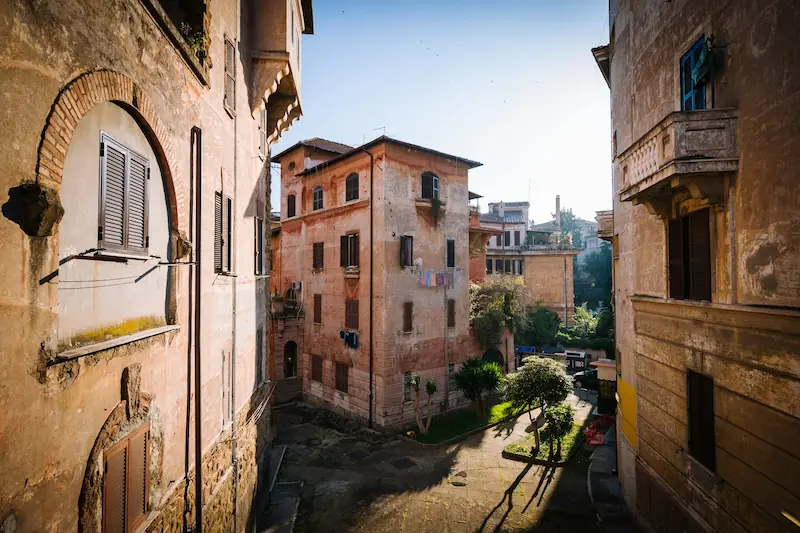
Where to stay in Rome
Find the best neighborhoods and hotels in Rome.
Open page →
Plan your trip to Rome with a clear strategy for where to stay, what to prioritize, and how to structure your days around the city’s main historical layers. Rome is not a simple checklist city: imperial ruins, papal grandeur, Baroque piazzas, church interiors, food neighborhoods, hills, viewpoints, and ordinary street life overlap constantly. The best trips use that density deliberately, balancing the Colosseum and Vatican with central walks, slower districts, Roman food culture, and enough open time for the city’s atmosphere to work. Plan a smarter trip to Rome with this complete travel guide: best areas to stay, key neighborhoods, top attractions, Vatican and Colosseum strategy, food districts, walking routes, seasonal advice, family tips, day planning, transport logic, and common mistakes to avoid.
Find the best neighborhoods and hotels in Rome.
Open page →
Prioritize the activities that deserve your time in Rome.
Open page →
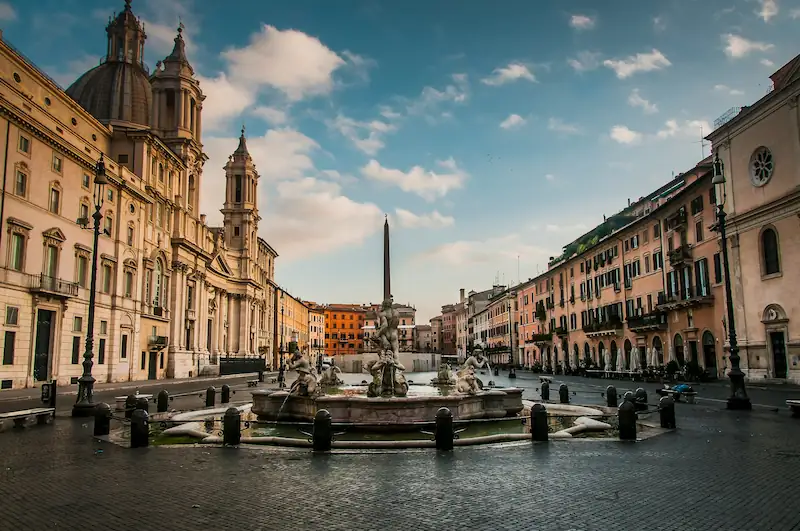
1 Day in Rome Itinerary: Best Things to See in 24 Hours
Open itinerary →
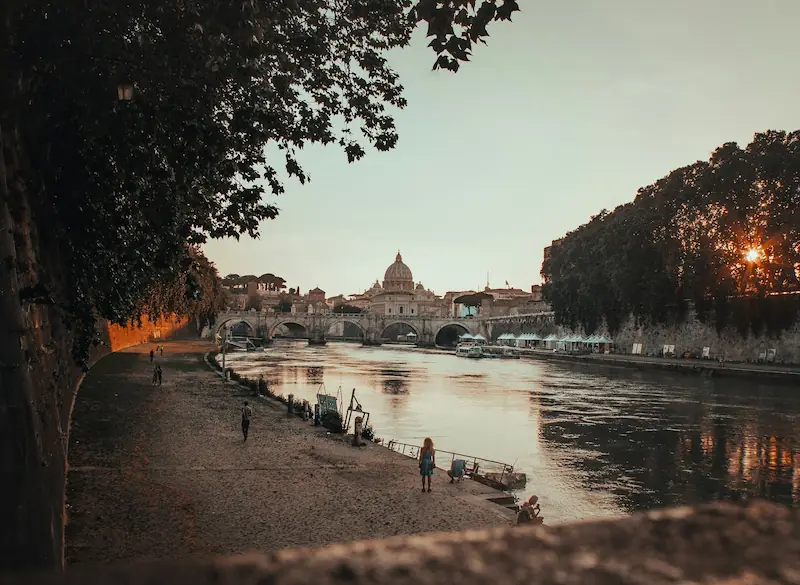
2 Days in Rome Itinerary: Best First-Time Weekend Plan
Open itinerary →
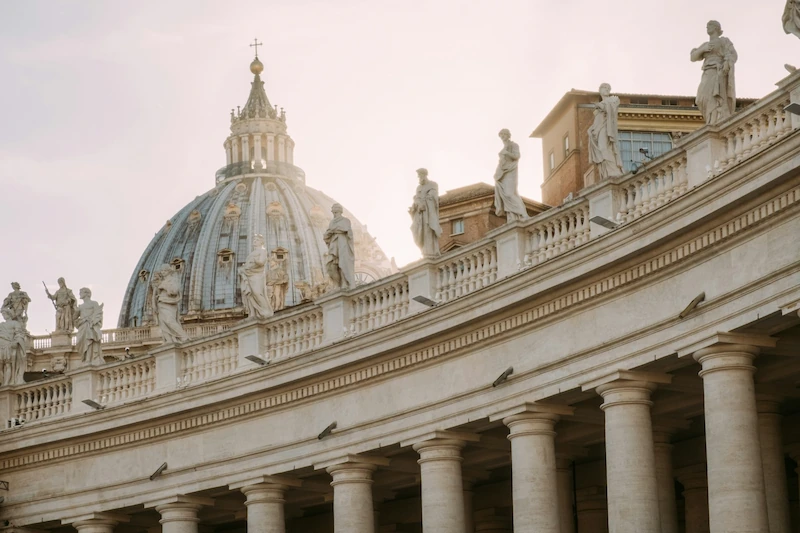
3 Days in Rome Itinerary: Classic First-Time Route With Vatican
Open itinerary →
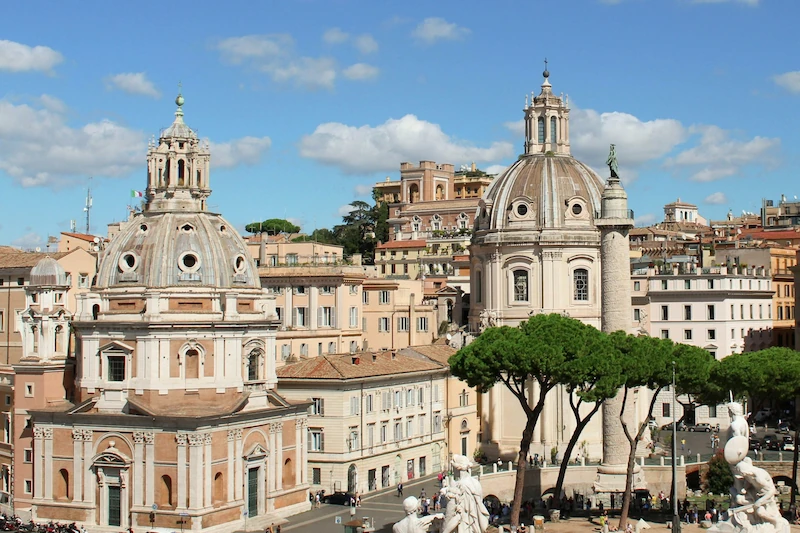
5 Days in Rome Itinerary: Best Neighborhood-Based Trip Plan
Open itinerary →
Rome is a dense historical field rather than a neatly ordered capital, and that is exactly why planning matters. Antiquity, Baroque staging, Vatican power, neighborhood food culture, churches, viewpoints, and heavy visitor flows all occupy a compact but uneven core. The city rewards travelers who understand its zones — Ancient Rome, Vatican/Borgo, Centro Storico, Trastevere, Monti, Testaccio, Prati, Aventine, and the river crossings — instead of treating every famous place as equally urgent. Rome feels richest when a trip combines one major historical anchor per day with connective walking, shaded pauses, and a neighborhood or food-led evening.
Few cities compress civilizational weight so tightly into daily urban life. Rome is not efficient in the modern sense, but it is unusually rewarding for travelers who want architecture, religion, politics, archaeology, art, and food culture to read as one continuous story rather than separate attractions. Within one day you can move from the Colosseum and Roman Forum to Caravaggio in a church, Roman-Jewish cooking in the Ghetto, an evening in Trastevere, or a quiet hill view over domes and rooftops. The city’s strongest value is not just the number of sights, but the way each layer changes the meaning of the next.
Best time: April–June and September–October for the strongest mix of walkability, light, outdoor dining, and manageable pressure; winter is better than many travelers expect for churches, museums, food, and lower-friction central walking.
Ideal trip length: 3 full days for a strong first visit; 4 days for a more balanced first trip; 5 to 7 days if you want Vatican depth, Ancient Rome, major museums, food neighborhoods, viewpoints, and one day trip without turning the city into a race.
Rome’s main cost pressure comes from central accommodation, timed-entry demand for the Colosseum, Vatican Museums and Borghese Gallery, and the temptation to overpay in monument-adjacent dining zones. A well-located base in Centro Storico, Monti, Trastevere, Prati, Campo de' Fiori/Jewish Ghetto or the Vatican/Borgo edge often costs more upfront but saves energy in a city where heat, cobblestones, taxi needs, and crowd friction compound quickly. Food can stay relatively good value if you shift even slightly away from the most exposed visitor corridors and use Roman neighborhoods such as Testaccio, Monti, Trastevere, Prati, and the Jewish Ghetto intentionally.
Rome’s center operates less like a grid than like an accumulation of historical layers stitched together by piazzas, churches, bridges, hills, and irregular streets. Ancient Rome, papal Rome, civic Rome, Baroque Rome, and neighborhood Rome overlap constantly, but each has its own density, timing, visitor pressure, and emotional register. Centro Storico is made for connective walking; Ancient Rome needs half-day focus; the Vatican behaves like a separate strategic zone; Trastevere and Testaccio work best through food and evening rhythm; Prati and the Aventine show quieter versions of the city.
The Tiber acts as both connector and psychological boundary. Vatican/Borgo and Prati sit west/northwest of the river, Trastevere feels socially distinct across the water, while Ancient Rome, Monti, Centro Storico, Testaccio, and the Aventine form a denser east/south sequence. Rome’s hills, long stone perspectives, irregular lanes, and sudden piazza openings make movement feel more dramatic than the map suggests. The right plan uses bridges, shaded streets, and district transitions as part of the experience rather than treating them as empty transit.
Morning is the most valuable time in Rome: it suits the Colosseum, Forum, Vatican, Pantheon, Borghese, major basilicas, and clearer street photography. Midday is the hardest period in warm months, when crowds, light, heat, and standing fatigue converge; this is when lunch, churches, shaded lanes, or a controlled museum often work better than exposed archaeology. Evenings soften Rome materially, especially in Trastevere, the Ghetto, Monti, the historic center, and around bridges and viewpoints, where the city starts to feel less like a queue system and more like a lived place.
Think of Rome as five strong readings rather than one endless center: ancient-imperial Rome, Vatican Rome, Baroque-historic-center Rome, hill-and-viewpoint Rome, and neighborhood-food Rome. A strong first trip usually samples all five in different proportions, while a deeper trip adds church art, Testaccio, the Appian Way, Prati, Aventine, and one day trip. This mental frame turns a famous but chaotic city into a set of choices: what to book, where to walk, where to eat, where to stay, and what to save for another visit.
Open the planner
Build each Rome day around one primary historical layer or one side of the river rather than mixing the Vatican, Ancient Rome, Trastevere, and distant neighborhoods mechanically. Use the first major site of the day to set the geography: a Vatican morning, Colosseum and Forum morning, Borghese morning, or Centro Storico morning should each lead to a different downstream route. Keep the densest interiors and highest-friction tickets early, then let churches, piazzas, viewpoints, and connective walks carry the looser second half of the day. Pair archaeology with lighter evenings, because the Colosseum, Roman Forum, Palatine Hill, and Vatican Museums are mentally heavier than their map footprint suggests. Protect at least one slower evening in Trastevere, Monti, the Jewish Ghetto, Testaccio, Prati, or the historic center so Rome is not reduced to monuments and reservation systems. Treat food as district logic, not a separate agenda: Testaccio, Trastevere, Monti, Campo de' Fiori, Prati, and the Jewish Ghetto each create a different Roman meal rhythm. In summer, plan by temperature first: exposed archaeology early, interiors or shaded streets at midday, and neighborhood walking after the light softens. Use 5 days as the threshold where Rome becomes interpretable instead of simply impressive; below that, choose sharply rather than trying to clear the city.
Vibe: Civic Rome at its most theatrical — baroque façades, political institutions, and perpetual movement.
Why go: You remain within walking distance of the Pantheon, Piazza Navona, Trevi Fountain, Campo de' Fiori, major churches, political Rome, and countless smaller masterpieces that rarely make short itineraries.
Who it fits: First stays, short visits, architecture-focused trips, walkers who want the highest density of classic Rome.
Not for: Travelers seeking quiet evenings, larger rooms, lower prices, or modern infrastructure.
Where to stay: Choose a smaller townhouse hotel on a secondary street to reduce nighttime noise while staying embedded in the historic fabric. Best strategic base for a first 2- to 3-day Rome trip if walkability and classic sights matter more than calm. Best for first-time walkability, Pantheon/Navona/Trevi access, short stays. Trade-off: noise, smaller rooms, tourist pressure. Best trip length: 2 to 4 days.
Vibe: Cobblestone intimacy with a distinctly Roman social pulse after dark.
Why go: The neighborhood transitions from artisan calm and church squares to evening conviviality, dinner energy, and side-street wandering without feeling as formal as the historic core.
Who it fits: Couples, atmosphere-first travelers, food-oriented stays, return visitors, and travelers who want Rome to feel social after dark.
Not for: Ultra-light sleepers in peak season or travelers who want the fastest morning access to the Vatican or Colosseum.
Where to stay: Boutique guesthouses near the river balance accessibility with atmospheric lanes; deeper pockets are more local but less efficient. Best for travelers who want a Roman evening base and do not mind trading a little pure sightseeing efficiency for atmosphere. Best for evenings, couples, food atmosphere, slower stays. Trade-off: can be noisy and less direct for some morning sights. Best trip length: 3 to 5 days.
Vibe: Creative energy layered onto one of Rome's oldest quarters.
Why go: Independent shops, wine bars, small restaurants, and proximity to the Colosseum create a rare mix of convenience, character, and ancient-Rome access.
Who it fits: Design-aware travelers, walk-heavy itineraries, younger couples, solo travelers, and first-timers who want a slightly less obvious base.
Not for: Those expecting grand boulevards, hotel abundance, or the most polished luxury inventory.
Where to stay: Look for design-forward hotels or guesthouses tucked away from Via Cavour while staying close enough to metro and Colosseum routes. Best crossover neighborhood for Ancient Rome access plus local texture, especially on 3- to 5-day trips. Best for Colosseum access, design energy, local texture, younger travelers. Trade-off: less polished and less central-west than Centro Storico. Best trip length: 3 to 5 days.
Vibe: Ordered, residential, and quietly affluent.
Why go: Wide sidewalks, rational streets, Vatican access, better room logic, and calmer evenings provide relief after the historic center’s density.
Who it fits: Families, Vatican-focused travelers, calmer first stays, comfort-led travelers, and visitors who value space and transport.
Not for: Travelers wanting medieval atmosphere, maximum nightlife, or instant immersion in the old center.
Where to stay: Elegant mid-range hotels near Ottaviano, Lepanto, or the Vatican edge offer strong value if the trip includes Vatican mornings. Best practical base for Vatican access and calmer nights, especially for families or travelers booking several timed entries. Best for Vatican access, families, calmer nights, wider streets. Trade-off: less old-Rome atmosphere after dark. Best trip length: 3 to 6 days.
Vibe: Working-class roots evolving into a serious culinary enclave.
Why go: Markets, traditional trattorie, everyday streets, and fewer transient visitors reveal daily Roman habits and one of the city’s strongest food identities.
Who it fits: Food-driven travelers, longer stays, repeat visitors, apartment stays, and travelers who prefer local rhythm to postcard convenience.
Not for: Monument-focused first trips of only 2 nights or travelers who want the main sights at their door.
Where to stay: Modern apartments and practical stays dominate; it is ideal when space and food culture matter more than immediate landmark views. Best for food-led or longer Rome stays where a local base matters more than classic sightseeing compression. Best for food culture, longer stays, local rhythm. Trade-off: less efficient for short first trips. Best trip length: 5+ days or repeat visits.
Vibe: Intellectually layered streets shaped by centuries of coexistence.
Why go: Within minutes you move from Renaissance market culture to one of Europe’s oldest Jewish communities, Teatro Marcello, Roman-Jewish food, and dense central walking routes.
Who it fits: Travelers who enjoy historical nuance, central food options, atmospheric evenings, and compact walking days.
Not for: Those sensitive to weekend nightlife spillover, market noise, or tight old-center streets.
Where to stay: Small heritage hotels deliver atmosphere without sacrificing centrality; exact street choice matters strongly. Best for travelers who want centrality with more texture than the Trevi/Pantheon tourist funnel. Best for central food/history mix, compact walking, atmospheric stays. Trade-off: weekend noise and tight streets. Best trip length: 3 to 5 days.
Vibe: Calm, elevated, residential, and quietly beautiful.
Why go: The Aventine offers one of the most serene versions of central Rome, with gardens, churches, views, and a spacious emotional register close to Testaccio and Circus Maximus.
Who it fits: Couples, slower travelers, romantic stays, repeat visitors, and travelers who want calm without leaving central Rome completely.
Not for: Travelers who want nightlife, dense hotel choice, or the busiest evening atmosphere right outside the hotel.
Where to stay: Aventine works best for refined quiet stays; it trades a little immediacy for peace, views, and residential elegance. Best for calm, romantic, and slower Rome stays that still want access to Testaccio, Ancient Rome, and viewpoints. Best for quiet, romantic, elevated, slower stays. Trade-off: less hotel choice and less immediate nightlife. Best trip length: 4+ days.
Vibe: Practical, Vatican-adjacent, and more strategic than romantic.
Why go: This area is strategic when Vatican access matters heavily and you want cleaner morning logistics than crossing the city for timed entries.
Who it fits: First-timers prioritizing Vatican mornings, short stays with reserved entries, families, and travelers who value practical structure.
Not for: Travelers looking for Rome’s strongest evening atmosphere, local dining depth, or the most romantic old-center feel.
Where to stay: Borgo and the Vatican edge make sense when geography and timing matter more than maximal local charm; Prati may be calmer for longer stays. Best tactical base for Vatican-focused itineraries, but less ideal as a universal Rome base if the trip is mostly centered east of the river. Best for Vatican mornings, short tactical stays, reserved entries. Trade-off: not Rome’s richest evening base. Best trip length: 2 to 4 days.
Rome makes the most sense when experiences are sequenced by meaning rather than popularity: power, faith, spectacle, then neighborhood life. The city’s emotional weight often arrives through stone, shadow, and spatial compression rather than through any single attraction alone.
Planning tip: Front-load the most reservation-dependent interiors, then let outdoor connective walks, viewpoints, and churches carry the flexible parts of the day.
Seen without context, it is monumental; understood as imperial messaging, it becomes a lesson in spectacle as governance. It works best when placed in the right day sequence rather than treated as an isolated tick-box.
Tip: Book the earliest timed entry to bypass tour-group congestion.
Beyond the ceiling lies a compressed narrative of theological debate and artistic rivalry. It works best when placed in the right day sequence rather than treated as an isolated tick-box.
Tip: Late-afternoon slots often feel marginally less compressed.
A mathematical triumph whose proportions still shape Western architecture. It works best when placed in the right day sequence rather than treated as an isolated tick-box.
Tip: Arrive at opening to experience the interior before echo levels rise.
Ruins reorganize into narrative once you picture speeches, triumphs, and legislative drama. It works best when placed in the right day sequence rather than treated as an isolated tick-box.
Tip: Climb Palatine Hill first for spatial orientation.
Without daytime choreography, the fountain reads as baroque scenography rather than spectacle. It works best when placed in the right day sequence rather than treated as an isolated tick-box.
Tip: Approach from smaller streets to avoid crowd funnels.
Check guided tours →
The ascent reframes Vatican scale and reveals Rome's surprisingly green horizon. It works best when placed in the right day sequence rather than treated as an isolated tick-box.
Tip: Take the elevator halfway if heat is building.
This part of Rome reveals how much the city gains when monument pressure gives way to air, trees, and measured views. It works best when placed in the right day sequence rather than treated as an isolated tick-box.
Tip: Use it late in the day, not in the harshest midday light.
Check guided tours →
This is one of the easiest places to understand how Rome opens and closes spatially between grand axes and softer hills. It works best when placed in the right day sequence rather than treated as an isolated tick-box.
Tip: Pair it with Borghese or the Spanish Steps side rather than isolating it.
Check guided tours →
Three canvases that rewired European painting through light and psychological tension. It works best when placed in the right day sequence rather than treated as an isolated tick-box.
Tip: Bring coins to activate the illumination panel.
Sculpture here maps Rome's evolving identity from republic to empire. It works best when placed in the right day sequence rather than treated as an isolated tick-box.
Tip: Cross the underground passage for forum views.
Bernini's kinetic sculptures demand slow circulation rather than checklist viewing. It works best when placed in the right day sequence rather than treated as an isolated tick-box.
Tip: Reserve at least two weeks ahead in spring and fall.
A quiet church containing works by Raphael and Caravaggio — a reminder that masterpieces in Rome often hide in plain sight. It works best when placed in the right day sequence rather than treated as an isolated tick-box.
Tip: Visit mid-morning when tour groups cluster elsewhere.
Check guided tours →
Few places make Rome’s layered chronology feel this tangible. The descent matters as much as the monument itself. It works best when placed in the right day sequence rather than treated as an isolated tick-box.
Tip: Do it on a day when you still have mental bandwidth for historical layering.
Check guided tours →
Caracalla gives Rome’s ancient scale more breathing room, making it easier to read spatially than some of the denser flagship sites. It works best when placed in the right day sequence rather than treated as an isolated tick-box.
Tip: Use it as a secondary ancient-Rome anchor, not as rushed filler.
Check guided tours →
A ritual revealing Roman efficiency and social choreography. It works best when placed in the right day sequence rather than treated as an isolated tick-box.
Tip: Pay first, then present the receipt at the bar.
Check guided tours →
Bridges briefly align traffic, light, and skyline into cinematic order. It works best when placed in the right day sequence rather than treated as an isolated tick-box.
Tip: Ponte Sant'Angelo offers the most balanced view.
Check guided tours →
Before souvenirs dominate, vendors still negotiate with locals. It works best when placed in the right day sequence rather than treated as an isolated tick-box.
Tip: Arrive before 9am for authenticity.
Check guided tours →
A social promenade where conversation outweighs destination. It works best when placed in the right day sequence rather than treated as an isolated tick-box.
Tip: Walk without headphones — the soundscape matters.
Check guided tours →
Few central Rome sequences combine such historical weight with such a strong everyday food identity in so little space. It works best when placed in the right day sequence rather than treated as an isolated tick-box.
Tip: Do it near lunch or early evening rather than as a purely abstract walk.
Check guided tours →
This is one of the best parts of Rome for feeling the city breathe more slowly without leaving the center behind. It works best when placed in the right day sequence rather than treated as an isolated tick-box.
Tip: Pair it with Testaccio or Circus Maximus-side routing.
Check guided tours →
Cacio e pepe, carbonara, amatriciana, gricia — subtle variations reveal culinary lineage. It works best when placed in the right day sequence rather than treated as an isolated tick-box.
Tip: Ask which pasta is made fresh that day.
Fried rice croquettes that balance texture and comfort. It works best when placed in the right day sequence rather than treated as an isolated tick-box.
Tip: Eat immediately — structure fades fast.
Check food options →
Modern stalls reinterpret Roman tradition without losing discipline. It works best when placed in the right day sequence rather than treated as an isolated tick-box.
Tip: Share plates to sample widely.
Check food options →
This is one of Rome’s most distinctive culinary threads, where local history and food identity are unusually inseparable. It works best when placed in the right day sequence rather than treated as an isolated tick-box.
Tip: Use it for one deliberate meal rather than trying to sample everything in one pass.
Check food options →
Seek muted colors and seasonal flavors — signals of craft. It works best when placed in the right day sequence rather than treated as an isolated tick-box.
Tip: Avoid towering displays.
Check food options →
In Rome, aperitivo works best when it gives shape to an evening, not when it becomes a forced ritual. It works best when placed in the right day sequence rather than treated as an isolated tick-box.
Tip: Use it in the right district and hour rather than wherever you happen to be hungry.
Check food options →
Rome expands fast when every famous site is treated as equally urgent. A strong plan protects the experiences that explain the city’s logic first, then widens outward toward churches, neighborhoods, food, viewpoints, and day trips only when the core has been properly read. The goal is not to do less for the sake of minimalism, but to avoid draining the city of meaning by forcing too many high-friction sights into the same day.
Rome can work well with children if expectations stay realistic and days are built around one major anchor plus open-air breaks. The city offers spectacle, ruins, fountains, gelato, parks, and enough visual surprise to hold attention, but heat, queues, cobblestones, and long museum corridors make over-ambitious planning fail quickly. Family-friendly Rome is less about finding child-only attractions and more about shaping the city at the right scale: one strong sight, one flexible meal, one park or piazza reset, and shorter walking links.
Time changes Rome more than many other cities. A short stay captures its monumental force; a longer one reveals how neighborhoods, churches, food culture, lower-pressure archaeology, and evening pacing deepen the experience. Use these itinerary lengths as strategy markers rather than rigid templates: 3 days for the essential structure, 5 days for depth without losing clarity, and 7 days for a more local, layered version of Rome.
Open the planner →
Rome becomes much easier once its frictions are accepted rather than fought. Timing, heat, hotel placement, reservation logic, and walking fatigue shape comfort more than raw distance does. A strong Rome trip keeps reservation pressure under control. Book the experiences that can break the structure first, then leave flexible space for churches, piazzas, food, and neighborhood walks.
April to June and late September to October are usually the strongest windows because Rome remains highly walkable without the full force of summer heat. These periods preserve the pleasures that matter most: long enough days, outdoor meals, coherent monument mornings, and the ability to combine the Vatican or Colosseum with slower evening atmospheres. Winter can work very well for church-rich, museum-led, and food-focused trips. July and August are possible, but they require early starts, midday shade or interiors, and a willingness to let evenings carry more of the trip.
Three full days is the minimum for Rome to feel coherent rather than compressed: one Ancient Rome anchor, one Vatican side, and one historic-center/neighborhood structure. Four days is more comfortable for a first trip because it allows Borghese, Ghetto, Trastevere, Testaccio, Aventine, or a slower church route. Five or more days lets the city become layered instead of merely impressive.
Prioritize walkability, evening fit, and zone logic over hotel size alone. Centro Storico is the safest choice for first-time Rome sightseeing, Monti works well for Colosseum access with more local texture, Trastevere is strongest for atmosphere and evenings, while Prati and Vatican-adjacent streets make sense for calmer stays and early Vatican visits. Campo de' Fiori and the Jewish Ghetto suit central food-and-history trips, Testaccio works better for longer food-led stays, and Aventine is best for quiet, romantic Rome. A cheaper hotel that depends on repeated transport decisions can cost more in fatigue than it saves, especially after dinner or during summer heat.
Most travelers arrive through Fiumicino, with Ciampino serving some low-cost routes. Termini is the main rail gateway for high-speed trains, but it is not automatically the best area to stay unless onward rail access or budget logistics dominate. Your arrival point should shape day one lightly: avoid forcing a high-friction reserved site immediately after arrival unless timing is extremely clean.
Walking carries much of the real experience inside the core, while taxis help strategically when heat, fatigue, luggage, or cross-city jumps start to distort the day. The metro is useful for certain corridors but limited compared with the sightseeing geography; buses can be helpful but should not be the backbone of a tightly timed day. Rome works best when transit sets up a walk rather than replaces one. Rome is a walking city, but not a frictionless one. The best plans combine short, meaningful walks with selective taxi or metro use rather than pretending the city can be crossed repeatedly without cost.
Rome is generally straightforward for visitors, with predictable tourist-area safety patterns. The main practical concerns are pickpocketing in dense zones, heat stress in warmer months, traffic awareness at crossings, and fatigue from underestimating stone surfaces and long standing time. Good pacing, hydration, and a hotel location that supports easy evening returns solve more issues than overcomplicated precautions.
Rome changes less through weather extremes than through how climate, light, and visitor pressure alter the practical shape of a day. Spring and early autumn are the best all-round windows because they preserve walking appetite and allow major sites, churches, outdoor meals, and evening neighborhood life to coexist comfortably. Summer favors disciplined travelers who start early and shift intensity away from midday. Winter suits visitors who care more about interiors, atmosphere, food, and lower-friction cultural planning than peak open-air conditions.
Spring gives Rome its most balanced cultural rhythm: churches, archaeology, long walks, food neighborhoods, and evening piazzas can all belong to the same trip without punishing fatigue. It is ideal for first-time visitors, but advance booking still matters because demand is high around the Vatican, Colosseum, and Borghese.
Summer gives long bright days and strong evening energy, but heat becomes a planning constraint rather than a minor discomfort. Outdoor archaeology belongs early, interiors and lunches belong at midday, and Trastevere, Monti, Ghetto, Testaccio, bridges, and viewpoints work better once the light softens.
Autumn is one of Rome’s strongest seasons for repeat visitors and culture-led stays because the city regains physical comfort without losing energy. It is excellent for museum-plus-neighborhood days, food-led wandering, and slower evening routes through the center.
Winter works well for travelers who value churches, museums, and a less overheated reading of Rome. Shorter daylight naturally encourages selectivity, while interiors, trattorie, quieter streets, and low-season hotel opportunities can make the city feel more manageable.
These are the planning questions that most often determine whether Rome feels coherent, exhausting, or genuinely rewarding.
Three full days is the practical minimum for a strong first visit covering Ancient Rome, the Vatican, and the historic center. Four days is more comfortable because it gives room for Borghese, Trastevere, the Jewish Ghetto, Testaccio, Aventine, or a slower church route. Five days or more lets Rome feel layered rather than compressed.
Yes, 3 full days is enough for a satisfying first trip if you prioritize sharply: one Ancient Rome day, one Vatican side, and one historic-center plus neighborhood day. It is not enough if you also want multiple secondary museums, Appian Way, Testaccio, Borghese, and a day trip without rushing.
Two days can work for a tight first taste, but it forces choices. Focus on Colosseum/Forum, Vatican or St. Peter’s, Pantheon/Navona/Trevi, and one evening area such as Trastevere or the Ghetto. Do not try to include every major museum.
Centro Storico is the most walkable first-time base, Monti is excellent for Colosseum access plus character, Prati or Vatican/Borgo works if Vatican logistics dominate, and Trastevere suits travelers who value evening atmosphere. The best choice depends on whether your trip is monument-first, food-first, romantic, family-focused, or convenience-led.
Centro Storico is often the best choice for a short first visit because it keeps the Pantheon, Piazza Navona, Trevi, Campo de' Fiori, churches, and central walking routes close. The trade-off is higher prices, smaller rooms, and more visitor pressure.
Yes, Trastevere is excellent for atmosphere, restaurants, couples, and evening wandering. It is less efficient than Centro Storico for a very short landmark sprint, and some streets can be noisy, but it gives Rome a more social and lived-in feel.
Monti is one of the strongest crossover areas in Rome because it sits near the Colosseum while still offering independent restaurants, small shops, wine bars, and neighborhood texture. It is especially good for 3- to 5-day trips and travelers who want convenience without staying in the most obvious tourist core.
Prati is a very good choice for families, Vatican-focused trips, and travelers who want calmer streets, wider sidewalks, and better room logic. It lacks some old-center atmosphere after dark, but it is practical, comfortable, and often good value.
Staying near the Vatican makes sense if you have early Vatican Museums or St. Peter’s plans, want a calmer base, or are traveling with family. It is less ideal if your evenings are mainly in Trastevere, Monti, or the historic center and you want the strongest Roman atmosphere outside the door.
Protect the Colosseum and Forum, Vatican Museums and Sistine Chapel, St. Peter’s Basilica, Pantheon, Piazza Navona, Trevi Fountain, and one neighborhood evening. Add Borghese, the Jewish Ghetto, Testaccio, Aventine, or a Caravaggio church route only if your trip length allows it.
Book the Vatican Museums, Colosseum/Forum/Palatine, and Borghese Gallery first. Also consider advance booking for St. Peter’s Dome options, food tours, cooking classes, catacombs, Domus Aurea, and high-demand restaurants if they are central to your plan.
You can, but it is rarely the best version of Rome. Both are high-friction, high-density experiences, and combining them often produces fatigue. It works only with excellent timed entries, an early start, and acceptance that the day will be more efficient than atmospheric.
Yes if you care about art, papal Rome, and the Sistine Chapel, but treat it as a major museum visit. It is not a quick add-on. A timed slot, realistic pacing, and a lighter second half of the day make the experience much stronger.
Yes, especially on a first trip. The exterior is iconic, but the interior, Forum, and Palatine give the historical and spatial context that makes Ancient Rome meaningful rather than just photogenic.
Yes, provided you give it context and enough time. Without framing, the Forum can feel like scattered ruins; with a guide, audio route, or prior orientation, it becomes one of the clearest ways to understand political Rome.
Yes, the Borghese Gallery is one of Rome’s best museum choices because the collection is exceptional and the visit is limited in scale. It is especially valuable for travelers who want Bernini, Caravaggio, and focused art without the sprawl of the Vatican Museums.
The Vatican Museums are the biggest cultural anchor, Borghese Gallery is the strongest compact art museum, Capitoline Museums are excellent for ancient and civic Rome, Palazzo Massimo is strong for classical art, and smaller church-based art routes can be just as memorable.
Beyond St. Peter’s, consider San Luigi dei Francesi for Caravaggio, Santa Maria del Popolo, Santa Maria Maggiore, Santa Maria sopra Minerva, San Clemente, and Santa Maria in Trastevere. Rome’s churches are not filler; they are central to understanding the city.
Top free experiences include historic-center walking, many major churches, Trevi Fountain, Spanish Steps, Piazza Navona, Trastevere wandering, the Jewish Ghetto, Aventine/Orange Garden, Janiculum views, bridges over the Tiber, and piazza life.
The best viewpoints include the Janiculum, Aventine/Orange Garden, Pincian Terrace, St. Peter’s Dome, Capitoline viewpoints, Castel Sant’Angelo, and selected rooftop terraces. Choose one or two rather than chasing every view.
Testaccio is the strongest food-first neighborhood, the Jewish Ghetto is essential for Roman-Jewish cooking, Trastevere works well for dinner atmosphere, Monti offers compact dining and wine bars, and Prati is useful around Vatican days.
Move away from the most exposed monument edges, especially directly beside major piazzas and fountains. Use neighborhoods such as Testaccio, Monti, Trastevere, Prati, and the Jewish Ghetto, and prioritize places that feel tied to a district rather than a view.
Rome is known for carbonara, cacio e pepe, amatriciana, gricia, supplì, pizza al taglio, Roman-Jewish artichokes, seasonal vegetables, offal traditions in Testaccio, espresso bar culture, and gelato when chosen carefully.
Yes, especially for food-focused travelers and repeat visitors. Testaccio offers market culture, Roman trattorie, everyday streets, and a more grounded version of Rome than the historic center.
Yes. It is one of Rome’s richest compact areas because it combines deep history, Roman-Jewish food, Teatro Marcello, quieter central streets, and a different emotional register from the main tourist corridors.
The Appian Way is worth it if you have at least 4 days, enjoy atmospheric history, or are on a repeat visit. It gives ancient Rome a more open, rural, and layered feel than the central archaeological core.
Yes if you want underground history and a different kind of ancient Rome. They are best paired with the Appian Way or a guided route rather than squeezed randomly into a packed central day.
Yes for travelers who want ancient Roman scale without Colosseum-level crowd pressure. The site is spacious, visual, and easier to absorb physically than many dense ruin areas.
Yes. The Pantheon is one of Rome’s highest-value interiors because it is compact, architecturally astonishing, and easy to integrate into a central walk.
Wander Trastevere, walk through Piazza Navona and the Pantheon area, see Trevi after the main daytime crush, cross the Tiber near Castel Sant’Angelo, have dinner in the Ghetto or Monti, or use a viewpoint or rooftop selectively.
Yes, but the most romantic Rome is often slower and better timed: Trastevere evenings, Aventine views, Pincian Terrace, bridges over the Tiber, small hotels, long dinners, and central walks after the day crowds thin.
Couples should balance one or two major sights with evenings in Trastevere or the Ghetto, an Aventine or Pincian viewpoint, a focused museum such as Borghese, and unhurried meals. Rome is better for couples when not over-scheduled.
Yes, if each day has one major anchor and enough breaks. The Colosseum, Villa Borghese, fountains, gelato, short central walks, Baths of Caracalla, and cooking classes often work better than long museum chains.
Families should avoid stacking the Vatican Museums, Colosseum/Forum, and multiple churches in one day, especially in heat. Long standing time, queues, and cobblestones can make even short distances tiring.
Use rainy days for the Capitoline Museums, Borghese Gallery, Vatican Museums if already booked, church interiors, Pantheon, San Clemente, Palazzo Massimo, food experiences, or a cooking class. Avoid building the day around exposed Forum or Appian Way walking.
Start early, place exposed archaeology in the morning, use churches or museums around midday, take longer shaded breaks, and shift neighborhood walking to late afternoon and evening. Summer Rome is enjoyable when heat becomes the planning framework.
Yes. Winter is good for museums, churches, food, lower hotel pressure, and quieter walking, though daylight is shorter and weather can be wetter. It suits thoughtful cultural trips especially well.
Tivoli, Ostia Antica, Orvieto, Castel Gandolfo/Castelli Romani, Frascati, Bracciano, Tarquinia/Cerveteri, Pompeii/Naples, and Florence are all possible, but not all make sense for a short first stay. Tivoli and Ostia Antica are often the most balanced.
Pompeii is possible from Rome, but it is a long day. It makes sense only if Pompeii is a personal priority and you already have enough time for Rome itself. Otherwise Ostia Antica is a more efficient ancient-ruins extension.
Florence is possible by high-speed train, but it works more as a sample than a deep visit. It is better if your Rome stay is long and you understand that the day will be transport-heavy.
Yes. Ostia Antica is one of the best lower-friction excursions from Rome for ancient ruins, especially if you want space, atmosphere, and less pressure than Pompeii.
Yes, especially for Villa d’Este, Villa Adriana, gardens, architecture, and a calmer day out. It makes most sense after the main Rome essentials are covered.
A Rome pass can help only if it matches your exact museum and transport plan. Many key experiences, especially Vatican-related ones, sit outside simple pass logic, so compare your actual reserved sights before buying.
Start early, book timed entries, avoid placing major sights at midday, use secondary churches and neighborhoods during peak pressure, and save Trevi, Spanish Steps, and central piazzas for early morning or late evening.
On a short trip, skip distant day trips, too many secondary museums, social-media restaurant queues, and extra viewpoints if they compete with the Colosseum, Vatican, Pantheon, central walking, and one neighborhood evening.
Rome is generally safe for tourists, but pickpocketing is common in crowded visitor zones and transit areas. The main practical risks are crowded-area theft, heat stress, traffic awareness, and fatigue from over-walking.
You can walk much of central Rome, but not every day should be a forced march. Use clusters, allow breaks, and take taxis or metro selectively when switching between far zones or when heat and fatigue build.
Solo travelers often do well in Monti, Centro Storico, Trastevere, Prati, or Campo de' Fiori/Ghetto depending on their preferred evening rhythm. The key is staying somewhere that feels easy to return to after dinner.
A strong first evening is usually a gentle historic-center walk, Trastevere dinner, Monti aperitivo, or a Ghetto meal rather than a major ticketed experience. The goal is to let Rome’s atmosphere settle without creating arrival-day friction.
Use one day for Ancient Rome, one for the Vatican, one for Centro Storico and churches, one for Borghese/Aventine/Trastevere or Ghetto, and one for Testaccio, Appian Way, Capitoline, or a day trip. The structure should vary intensity rather than repeat major-site pressure daily.
Rome’s difference is the compression of ancient, papal, Baroque, political, and everyday neighborhood layers in one city. It is less polished than Florence and less logistically smooth than many capitals, but richer when planned around depth rather than efficiency.
Rome rewards selectivity more than speed: choose the right zones, protect the right reservations, and leave enough room for the city to work between the monuments.
Find the best places to stay, how to get there, and move around with ease.
Build a smarter trip base
Once you understand how Rome works and what matters most for your trip, the next step is turning that direction into a real itinerary. Use the planner to organize your days around the right areas, experiences, and rhythm so the trip feels clear before you go.