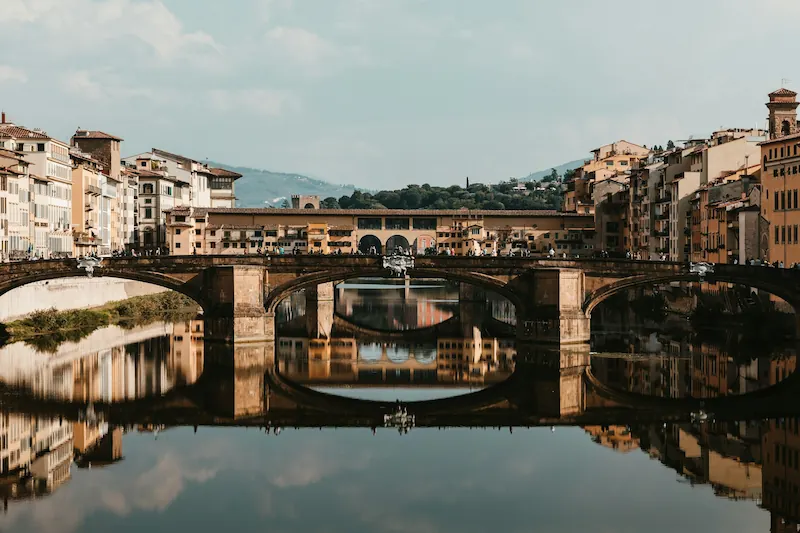
Where to stay in Florence
Find the best neighborhoods and hotels in Florence.
Open page →
Plan your trip to Florence, choose the right area to stay, and understand what is genuinely worth doing. Florence is compact, but its cultural weight is intense: the best trip balances Duomo architecture, Renaissance masterpieces, river crossings, Oltrarno texture, market rhythm and Tuscan extensions instead of turning every day into a museum race.
Find the best neighborhoods and hotels in Florence.
Open page →
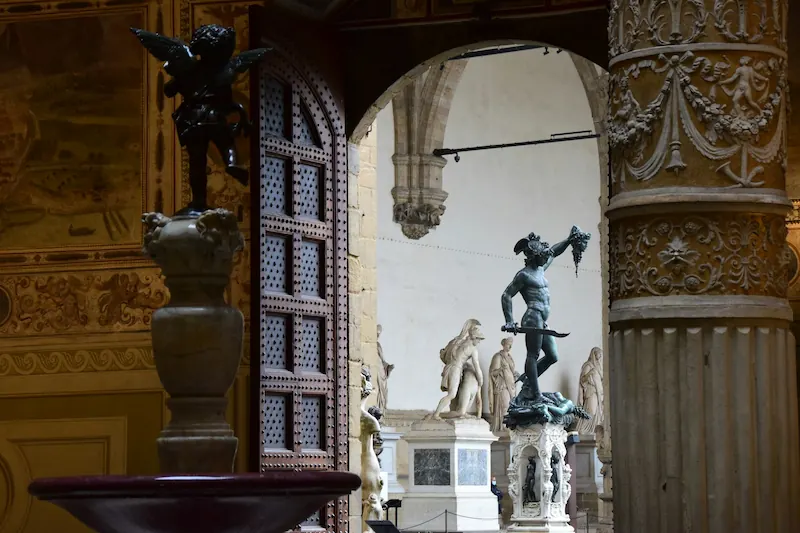
Prioritize the activities that deserve your time in Florence.
Open page →
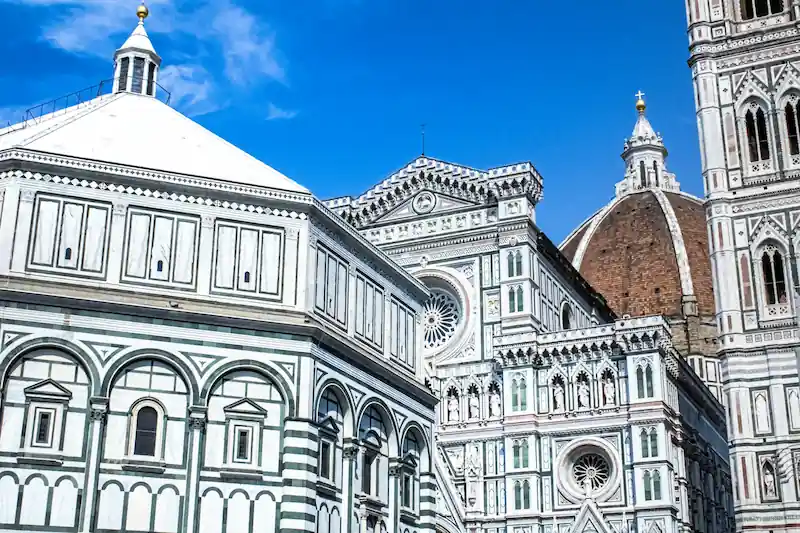
2 Days in Florence: Best Itinerary
Open itinerary →
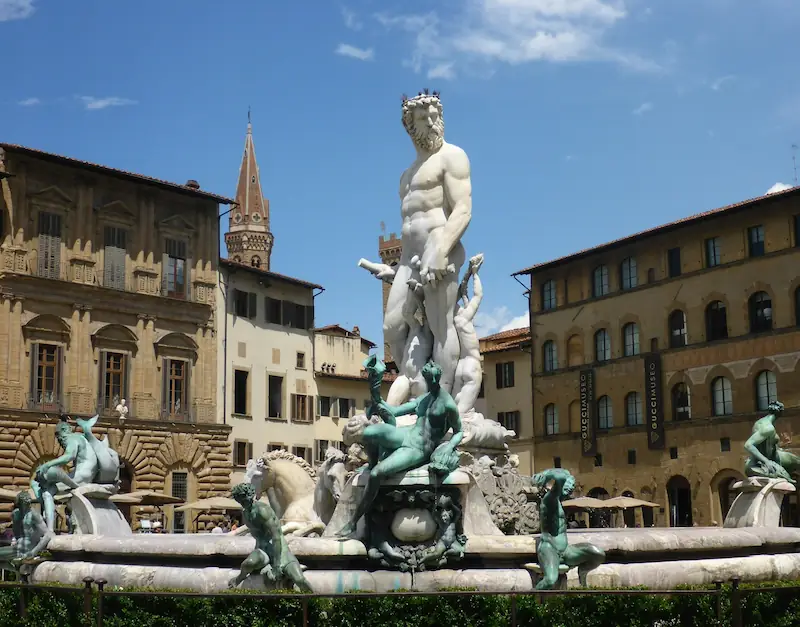
3 Days in Florence: Best Itinerary
Open itinerary →
4 Days in Florence: Best Itinerary
Open itinerary →
5 Days in Florence: Best Itinerary
Open itinerary →
Florence is small on the map and dense in experience. The Duomo, Uffizi, Accademia, Palazzo Vecchio, Santa Croce and Ponte Vecchio sit close together, but they do not all ask for the same kind of attention. The city works best when you read it as a sequence of cultural rooms and neighborhood shifts: ceremonial marble around the Duomo, civic power around Piazza della Signoria, museum intensity around the Uffizi and Accademia, and a slower handmade Florence across the Arno in Oltrarno.
Florence rewards travelers who want depth more than speed. It concentrates Renaissance painting, sculpture, architecture, craft, Tuscan food and Medici history into a walkable urban fabric where the Arno, the Duomo, Piazza della Signoria and the Oltrarno create clear mental anchors. The city is not only a collection of masterpieces: it is a place where museums, church interiors, markets, workshops and evening piazzas still sit close enough to shape the same day.
Best time: April to June and September to October for the best mix of light, walkability, museum planning and outdoor evenings.
Ideal trip length: 3 days for a strong first visit; 5 days if you want secondary museums, Oltrarno, gardens, food experiences and one Tuscan day trip.
Florence is less logistically expensive than Venice, but its compact historic center creates strong price pressure around well-located hotels, major museum dates, spring weekends, summer travel and autumn demand. The smartest spending is usually on location, timed-entry priorities and one or two high-quality food experiences rather than constant upgrades. Costs become easier to control once you move meals away from the Duomo–Ponte Vecchio corridor and choose accommodation according to trip length.
Florence is organized around a compact historic core on the north bank of the Arno, with the Duomo acting as the strongest orientation point and Piazza della Signoria as the civic counterweight. The main first-time cultural axis runs from Santa Maria Novella and San Lorenzo to the Duomo, Palazzo Vecchio, the Uffizi and the river. Santa Croce pulls the center east into a more spacious cultural quarter, while the Oltrarno shifts the trip from monument density to workshops, gardens, palace scale and evening neighborhood life.
The Arno divides Florence into two useful travel modes. North of the river, the trip is dominated by churches, museums, civic squares and the most intense visitor flow. South of the river, Oltrarno, Santo Spirito, San Frediano and San Niccolò give the city more tactile texture, more evening ease and access to hillside viewpoints. The city is mostly flat until it rises toward Piazzale Michelangelo, San Miniato and the southern gardens, where Florence finally opens from compressed stone streets into broad roofline views.
Florence changes sharply through the day. Early mornings suit the Duomo exterior, quieter piazzas, museum entries and market movement. Midday compresses around major sights and can become draining in summer. Late afternoon belongs to bridges, the Arno, Boboli or Bardini, and the move into Oltrarno. Evenings work best in Santo Spirito, San Frediano, Santa Croce or along the river, when the city becomes less about ticking monuments and more about stone, voices, shutters and softer light.
Think of Florence as a layered cultural core with two banks, not as a large capital to cover end to end. The north bank delivers the essential Renaissance sequence; the south bank gives the city its human scale. The best first visit alternates masterpiece moments with ordinary streets, markets, viewpoints and meals so Florence does not collapse into a sequence of museum rooms.
Open the planner
Build each day around one primary cultural anchor, then let the surrounding district carry the rest of the day. Keep the Duomo, Piazza della Signoria, Uffizi, Palazzo Vecchio and Ponte Vecchio in a clean central sequence rather than scattering them across multiple days. Book the Uffizi, Accademia and Dome before filling the plan with flexible walks, markets and viewpoints. Use the Oltrarno as a slower counterweight after high-density museum or church time. Place viewpoint moments at the edge of the day, when the climb or taxi transfer earns softer light and less fatigue. Separate heavy Renaissance interiors with open-air intervals such as Boboli, Bardini, river walks or artisan streets. Treat food as part of neighborhood planning, not an emergency near the nearest monument. Use a Tuscany day trip only once Florence itself has at least three protected days.
Vibe: Dense, monumental, and constantly in motion.
Why go: This is Florence’s highest-density cultural zone, where the Duomo, Piazza della Signoria, Palazzo Vecchio, the Uffizi, Ponte Vecchio and the main shopping streets sit within a short walk.
Who it fits: First-time visitors who want maximum convenience and the strongest sense of being inside the cultural core.
Not for: Travelers sensitive to crowds, street noise, premium pricing, or days that begin and end inside the busiest visitor flow.
Where to stay: Best for a first stay of 2–3 nights when reducing transit and decision fatigue matters more than space or calm. For longer stays, it remains convenient but can feel repetitive if every meal and evening stays in the same orbit.
Vibe: Practical, central, and slightly more spacious than the Duomo core.
Why go: It gives easy access to the station, western historic center, Santa Maria Novella, San Lorenzo and major sights without placing every movement inside the tightest Duomo flow.
Who it fits: Travelers arriving by train, short-stay visitors, and anyone planning a Tuscany or Pisa connection.
Not for: Those seeking the most romantic or residential version of Florence.
Where to stay: A smart base when logistics matter, especially for first arrivals, rail travelers, day trips to Pisa or Bologna, and mixed city-plus-Tuscany stays.
Vibe: Busy, food-oriented, and more everyday than polished.
Why go: San Lorenzo combines market energy, Medici history, affordable eating, the Central Market, Medici Chapels and easy access to both the Duomo and station.
Who it fits: Food-focused travelers, budget-conscious visitors, and people who like central convenience with rougher edges.
Not for: Travelers wanting quiet evenings or boutique refinement.
Where to stay: Useful for a practical Florence stay with strong food access and central movement, though street-level atmosphere changes sharply from market-busy to quieter side lanes.
Vibe: Cultural, slightly quieter, and good for evening walking.
Why go: It places you near Santa Croce, Sant’Ambrogio, the Bargello, the eastern historic center and evening streets while pulling you just far enough from the Duomo axis to feel less compressed.
Who it fits: Couples, repeat visitors, and travelers who want cultural access with a softer night rhythm.
Not for: Visitors who want the station or every headline sight immediately at the door.
Where to stay: A balanced base for 3–5 days, especially if you want cultural access, good dinners, a softer night rhythm and less constant pressure than the Duomo core.
Vibe: Artisan, lived-in, and more relaxed after dark.
Why go: The Oltrarno gives Florence space to exhale through workshops, Santo Spirito, San Frediano, Boboli, Palazzo Pitti, the Brancacci Chapel and less polished dining streets.
Who it fits: Travelers who prefer local texture, longer stays, and evenings away from the most photographed routes.
Not for: First-timers who want to be steps from the Uffizi and Duomo at all times.
Where to stay: Excellent for a 4–7 day stay, repeat visit or slower first trip, especially if you want Florence to feel like a neighborhood city rather than a museum core.
Vibe: Hillside, atmospheric, and quietly cinematic without being remote.
Why go: It connects the Oltrarno, river walks, Rose Garden, Bardini edges, San Miniato and Piazzale Michelangelo with a more intimate edge-of-center feeling.
Who it fits: Couples, photographers, repeat visitors, and travelers who like walks with elevation changes.
Not for: Anyone avoiding slopes, longer walks, or quieter late-night surroundings.
Where to stay: Best for confident walkers who want views, hillside atmosphere and evening character more than pure central efficiency.
Florence reveals itself best through layers: one architectural anchor, one major museum, one civic square, one river crossing, one south-bank sequence and one food-led pause. The strongest choices are not about collecting every church and museum, but about understanding why each layer changes the way Florence reads.
Planning tip: Protect the Uffizi, Accademia and Dome as reservation-led anchors; leave afternoons and evenings for the Arno, Oltrarno, gardens, markets and viewpoints.
The Duomo is Florence’s strongest spatial anchor, but the experience works best as a complex: cathedral, dome, bell tower, baptistery, museum, and the pressure of the piazza around them. It sets the scale of the city before any museum does.
Tip: Choose either the dome climb or Giotto’s bell tower if you do not want to spend the day in timed entries.
The Uffizi is the essential Florence museum because it explains the city’s artistic power in sequence rather than in isolated highlights. Its long corridors create a slow rhythm of movement between rooms, windows, and concentrated works.
Tip: Go in with a short priority list; trying to absorb every room weakens the experience.
Piazza della Signoria is Florence’s civic stage, where sculpture, power, and public space are compressed into one open room. It helps the city feel political as well as artistic.
Tip: Return at two different times of day; the square changes more than its map position suggests.
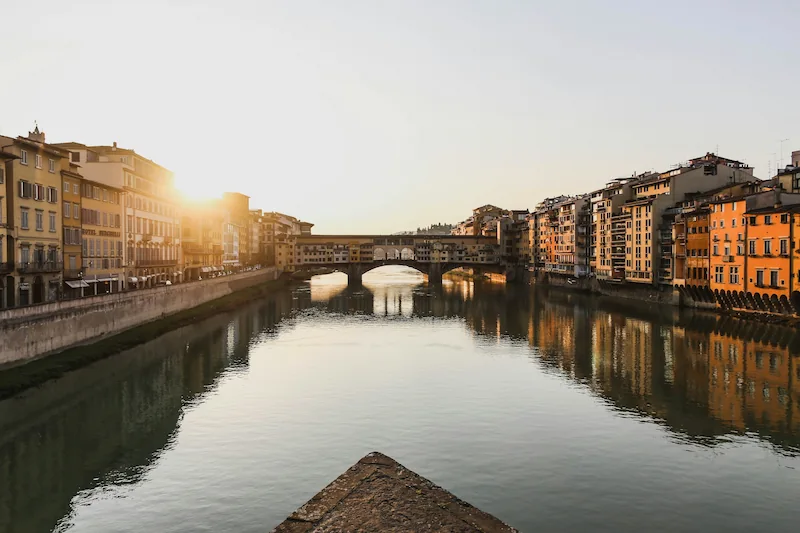
The Ponte Vecchio is less a bridge than a threshold between the formal centre and the Oltrarno. Its value is strongest from the riverbanks, where the city’s two sides line up across the water.
Tip: Cross it once, but view it from Ponte Santa Trinita for the cleaner spatial reading.
Check guided tours →
The Accademia is a shorter, more focused visit than the Uffizi, but David’s placement gives the museum a powerful single-axis drama. The approach through the hall matters almost as much as the sculpture itself.
Tip: Pair it with San Marco or San Lorenzo rather than treating it as a full museum day.
San Miniato gives the most complete high reading of Florence: river, dome, rooftops, walls, and hills in one frame. The climb also shifts the city from dense stone corridors to open air.
Tip: Continue above Piazzale Michelangelo if you want a quieter viewpoint.
Check guided tours →
The Opera del Duomo Museum is the clearest way to understand the Duomo complex as architecture, sculpture and long civic project rather than only as a façade and dome. It also helps the Baptistery, campanile and cathedral exterior feel less like isolated monuments.
Tip: Use it after seeing the exterior, or instead of adding another climb if the day already feels physically heavy.
Palazzo Vecchio turns Piazza della Signoria from an outdoor stage into a political interior. It gives Florence a civic and Medici power layer that balances the more purely artistic weight of the Uffizi and Accademia.
Tip: Pair it with Piazza della Signoria and the Uffizi rather than making a separate cross-city detour.
Pitti and Boboli reveal Florence as courtly, expansive, and connected to the hillside rather than only to churches and museums. The gardens give the eye distance after the close interiors of the centre.
Tip: Visit when you want open space, not as an add-on after a full Uffizi morning.
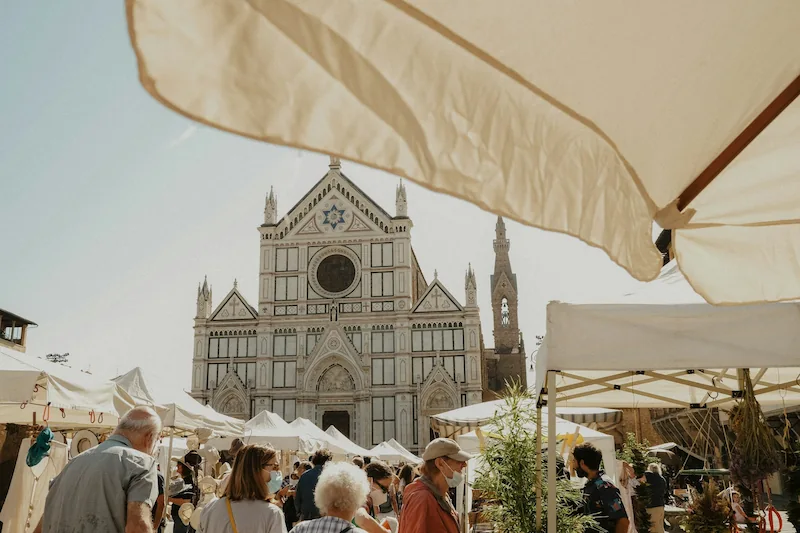
Santa Croce adds civic memory to Florence’s artistic narrative, linking architecture, tombs, frescoes, and national figures in one large interior. It has a quieter gravity than the Duomo area.
Tip: Give it enough time for the chapels, not just the main nave.
San Marco offers a different Florence: restrained, contemplative, and less crowded than the headline museums. Its cells and cloisters slow the pace of looking.
Tip: Use it as a cultural reset after a more crowded central morning.
Check guided tours →
San Lorenzo explains the Medici presence through church, chapel, library, market, and neighborhood texture. It is one of the clearest places to connect dynastic power with the everyday city.
Tip: Keep the market and chapels in the same half-day to understand the area properly.
The Bargello is one of Florence’s best second-tier museums because it is not second-rate. It gives sculpture, Donatello, Michelangelo context and a fortress-like setting with less blockbuster pressure than the Uffizi or Accademia.
Tip: Choose it when you want serious art depth without committing to another huge museum block.
Santa Maria Novella is easy to underrate because of its station-side geography, but it is one of Florence’s most useful cultural anchors. Church, frescoes, cloisters and piazza give the western side of the center real depth.
Tip: Use it on arrival day or before a train connection, when its location becomes an advantage rather than a compromise.
The Brancacci Chapel gives the Oltrarno a precise cultural reason, not just an atmospheric one. It is ideal when you want one focused Renaissance experience rather than another long gallery sequence.
Tip: Book or check access carefully, then fold it into a Santo Spirito or San Frediano route.
Check guided tours →
Bardini is useful because it combines garden time, hillside movement and views without the same feel as the classic Piazzale Michelangelo stop. It gives Florence a more graceful, slower viewpoint layer.
Tip: Use it when Boboli feels too large or when you want a view integrated into a south-bank walk.
Check guided tours →
Santo Spirito is where Florence feels less staged after the main museums close. The square carries a low evening murmur that makes the Oltrarno feel social without becoming theatrical.
Tip: Arrive before dinner to see the square fill gradually rather than dropping in late.
Check guided tours →
The Oltrarno’s workshop streets show Florence as a working craft city, not only a preserved artistic capital. They add texture to the trip between palace visits and evening meals.
Tip: Look for streets around Santo Spirito and San Frediano rather than expecting one single craft district.
Sant’Ambrogio gives a more functional food rhythm than the central market areas. It works best in the morning, when shopping activity still shapes the space.
Tip: Go early enough for the market to feel operational, not just like a lunch stop.
Check guided tours →
The Arno walk rebalances the city after dense interiors, giving Florence a horizontal line and a slower tempo. It is one of the simplest ways to understand both banks together.
Tip: Use Ponte Santa Trinita and the Lungarni rather than staying only on Ponte Vecchio.
Check guided tours →
San Frediano helps the Oltrarno feel less polished and more lived-in. It is a useful counterweight to the museum core, especially when you want dinner, small bars and ordinary streets rather than another formal sight.
Tip: Treat it as an evening district and keep the route loose rather than over-planning specific stops.
Check guided tours →
Sant’Ambrogio is one of the best ways to make Florence feel like a working city rather than only an art destination. It pairs naturally with Santa Croce, food stops and an east-side walking day.
Tip: Go before lunch; arriving too late turns a living market into a leftover food stop.
Bistecca is Florence’s most defining meat ritual, but it is best treated as a shared meal rather than a quick order. The experience depends on cut, cooking confidence, and the room around it.
Tip: Choose a restaurant known for the dish and confirm the weight before ordering.
Lampredotto gives Florence a direct street-food register that contrasts with the formality of its museums. It is quick, local, and best understood at a simple stand.
Tip: Order it where there is steady local turnover rather than where the menu tries to explain everything in five languages.
Aperitivo works well in Florence because it creates a transition between museum hours and dinner. The light lowers, the streets loosen, and the day stops feeling like a sequence of reservations.
Tip: Use it in the Oltrarno or Santa Croce when you want the evening to slow down.
Check food options →
Florence’s food scene is strongest when you commit to one properly paced Tuscan meal instead of grazing around landmarks all day. A good trattoria gives the city a slower, grounded finish.
Tip: Book the meal that matters most, then keep the rest of the day flexible.
Florence’s wine windows are small, but they give the city a memorable everyday ritual rather than another heavy meal. They work best as a short pause in a wider walk, not as a standalone destination.
Tip: Fold one into an Oltrarno or historic-center evening route rather than crossing town just for the novelty.
Mercato Centrale and Sant’Ambrogio do different jobs: one is easy and broad, the other more neighborhood-led. Together, they show why food planning in Florence should follow area and timing, not just famous restaurant lists.
Tip: Use Central Market for logistics, Sant’Ambrogio for local rhythm, and avoid making either one your entire food strategy.
Florence becomes clearer when you protect depth instead of adding more stops. The city’s value sits in a few high-intensity cultural anchors, then in the quieter spaces between them where stone, river light, and workshop streets reset the pace.
Florence can work well with children because distances are short, but the cultural density can become tiring quickly. The best family plan alternates one structured visit with open piazzas, gelato pauses, river crossings, gardens and a clear physical goal. Stone streets amplify heat and fatigue in summer, so shorter blocks work better than long museum stretches.
Florence itineraries should protect a cultural spine while leaving enough room for slower streets, meals, markets and the south bank. The best plan changes pace before the city starts to feel like a museum sequence.
Open the planner →
Florence is easy to enter and easy to walk, but its compactness can mislead visitors into planning too much. Practical success comes from managing timed sights, museum load, heat, closures, restaurant geography and the small frictions of a city where many visitors want the same few streets at the same hours.
April–May and September–October offer the best balance of weather, light, and cultural access; winter is calmer but cooler and darker, while July and August can be physically draining.
Three days is the practical minimum for the Duomo, Uffizi, Accademia or Palazzo Vecchio, the Arno and one Oltrarno evening. Five days is the better threshold for a rounded cultural stay with secondary museums, gardens, markets and one slower day.
Stay in the Historic Centre for a short first visit, Santa Maria Novella for rail convenience, San Lorenzo for practical food-and-station access, Santa Croce for a calmer central base, Oltrarno for a more lived-in evening rhythm, or San Niccolò for views and confident walking.
Florence is best reached by train from Rome, Milan, Bologna, Venice, or Pisa. The main station, Santa Maria Novella, sits close to the historic centre, which makes rail arrivals especially efficient.
Walking is the main mode inside the centre. Taxis can help for luggage, late evenings, heat, or hillside viewpoints, while buses and trams matter more for outer districts than for the core visitor experience.
Florence is generally safe for visitors, with the usual pickpocket awareness needed around station areas, crowded museum approaches, and major bridge corridors. Summer heat is the main comfort risk, especially in exposed stone spaces.
The best time to visit Florence is usually spring or autumn, when walking is comfortable, museums are easier to structure and the city’s stone, gardens and river light are more enjoyable. Summer brings long days and high demand, but heat and crowd compression can make the historic center feel heavy. Winter is quieter and better for museum-focused trips, though shorter daylight changes the rhythm. The best choice depends less on weather alone than on how much crowd pressure, interior time and outdoor walking you are willing to manage.
April, May and early June are among the best periods for Florence, with mild walking weather, garden time, long enough evenings and strong but manageable demand when reservations are handled early.
June to August brings long days, high visitor pressure and heat that lingers in stone streets and piazzas. It can work with early starts, longer rests, fewer midday ambitions and more evening time across the Arno.
September and October are excellent for culture, food, markets and evening walks, though they remain popular. Light softens on the river and hotel prices can stay high deep into the season.
November to February is the calmest period outside holidays, with better museum space and lower accommodation pressure. Expect cooler weather, shorter days and a quieter city rhythm that suits interiors and slower meals.
Not seeing your next stop yet? Build a fully personalized itinerary anywhere in Italy.
Florence is simple to reach but easy to overfill. These answers focus on the decisions that most affect a first trip: time, area, museums, day trips, and pacing.
Three days is the strongest minimum for a first visit, covering the Duomo, Uffizi, Accademia or Palazzo Vecchio, the historic center, the Arno and one Oltrarno evening. Five days is better if you want Florence to feel rich rather than compressed, with time for Santa Croce, San Lorenzo, Bargello, gardens, markets and one Tuscan day trip.
The Historic Centre is the easiest base for a short first stay. Santa Maria Novella is best for train convenience, San Lorenzo works for practical food-and-station access, Santa Croce gives a calmer central feel, and the Oltrarno suits longer or more atmospheric stays.
Yes, Florence is highly walkable inside the historic center and across the Arno. The main challenge is not distance but crowd flow, summer heat, stone paving and the fatigue created by dense cultural days.
April to June and September to October are the strongest periods for weather, walking, gardens and overall atmosphere. Winter is quieter and often better for museums, while July and August require careful pacing because of heat and crowds.
Yes. Advance booking is strongly recommended for the Uffizi and Accademia, especially in spring, summer, autumn weekends and holidays. Timed entries protect the structure of a short stay and reduce the risk of losing your best hours to queues.
Yes if you enjoy architecture, views and physical experiences, but it is not for everyone. The climb is narrow and stair-heavy, so travelers who dislike confined spaces may prefer Giotto’s Bell Tower, the Opera del Duomo Museum, or a hilltop viewpoint instead.
Prioritize the Duomo complex, one major museum such as the Uffizi or Accademia, Piazza della Signoria, Ponte Vecchio, one Oltrarno evening and one viewpoint. That combination gives Florence structure without turning the trip into a list of interiors.
Yes. The Oltrarno is essential if you want Florence to feel less like a museum core and more like a lived-in city. It adds Santo Spirito, San Frediano, workshops, Palazzo Pitti, Boboli, the Brancacci Chapel and a better evening rhythm.
Yes, especially for rail travelers, short stays and visitors planning day trips. It is not the most romantic area overall, but it gives practical access to the station, the western historic center, San Lorenzo and the main sights.
The biggest mistakes are overloading museum days, booking too far from the center to save small amounts, eating only near the Duomo or Ponte Vecchio, skipping the Oltrarno, and adding a Tuscany day trip before Florence itself has enough time.
Florence can be good for families if days are kept short and varied. Mix one main cultural visit with piazzas, gelato, gardens, river walks and a clear physical goal such as a climb or viewpoint.
Yes. Florence is one of the best bases for Tuscany day trips by train, bus, tour or car. Siena, Lucca, Pisa, Fiesole, Chianti and the Val d’Orcia all work, but short Florence stays should prioritize the city first.
Florence can be expensive in the most central hotel zones and around major museum periods. Food and daily costs are more controllable if you move away from the Duomo–Ponte Vecchio corridor and choose neighborhoods according to trip length.
Piazzale Michelangelo gives the most famous broad view, San Miniato al Monte adds a quieter and more complete hilltop experience, and Bardini Garden gives a softer garden-based viewpoint. For many travelers, San Miniato or Bardini feels more rewarding than stopping only at the crowded piazzale.
Winter is a good choice for travelers who prioritize museums, quieter streets and lower accommodation pressure over long outdoor evenings. It is less ideal for gardens and long viewpoint walks, but the cultural core can feel more manageable.
Choose one major anchor, not all of them. A strong one-day plan is the Duomo exterior, Piazza della Signoria, either the Uffizi or Accademia, Ponte Vecchio, and a short Oltrarno or viewpoint finish.
Repeat visitors should look beyond the standard Uffizi–Duomo–David circuit: Bargello, San Marco, Brancacci Chapel, Bardini Garden, San Frediano, Sant’Ambrogio, Santa Maria Novella and a focused Tuscan day trip all deepen the city.
No for Florence itself. The historic center is best experienced on foot, and a car is a liability for parking and restricted zones. Consider a car only for specific countryside plans outside the city, and even then many day trips work by train or guided tour.
Plan Florence around a few protected cultural anchors, then let the river, piazzas, and Oltrarno give the city its slower shape.
Find the best places to stay, how to get there, and move around with ease.
Build a smarter trip base
Once you understand how Florence works and what matters most for your trip, the next step is turning that direction into a real itinerary. Use the planner to organize your days around the right areas, experiences, and rhythm so the trip feels clear before you go.