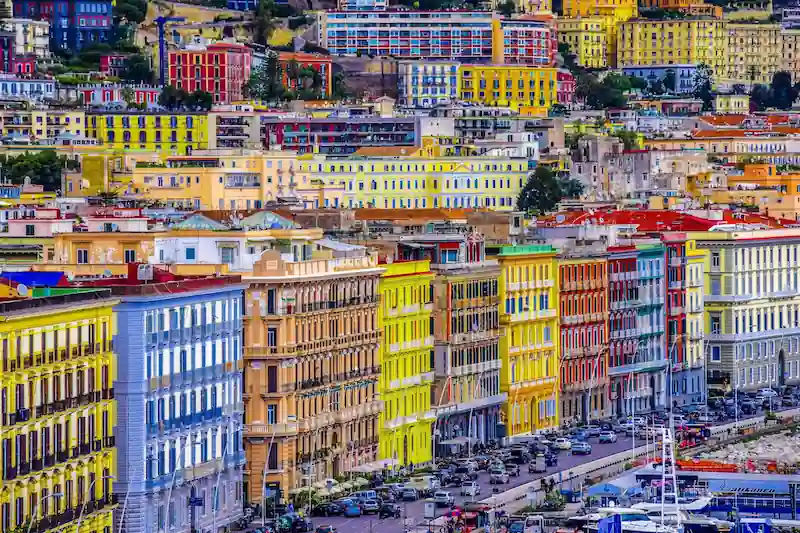
Where to stay in Naples
Find the best neighborhoods and hotels in Naples.
Open page →
Plan your trip to Naples, choose the right area to stay, and understand how to structure your days. Naples is not a city that rewards neutral sightseeing: it works through pressure and release, from Greek street lines and crowded food counters to hill views, underground spaces, seafront air, and the volcanic geography of the bay.
Find the best neighborhoods and hotels in Naples.
Open page →
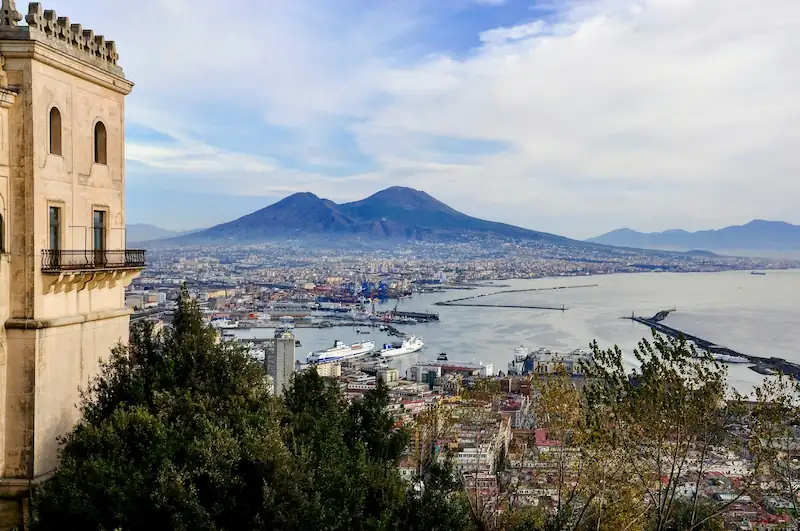
Prioritize the activities that deserve your time in Naples.
Open page →
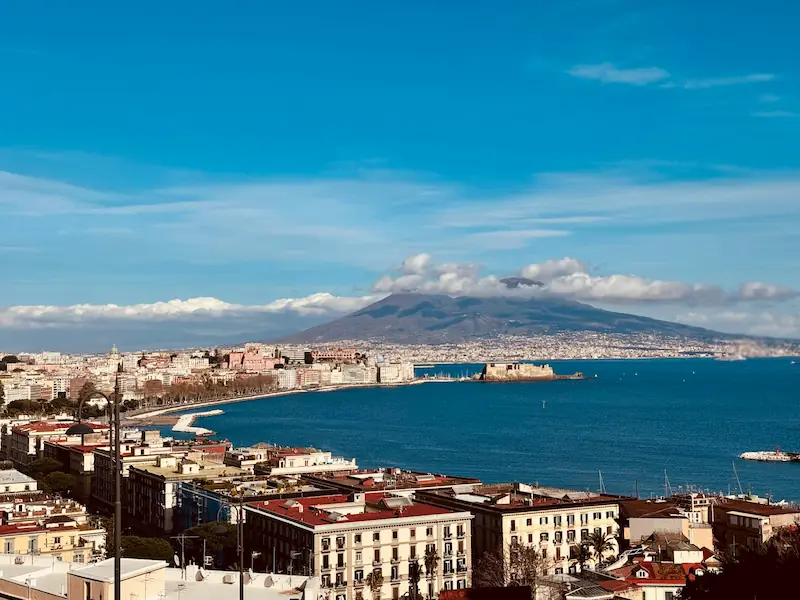
2 Days in Naples: Essential First Trip Itinerary
Open itinerary →
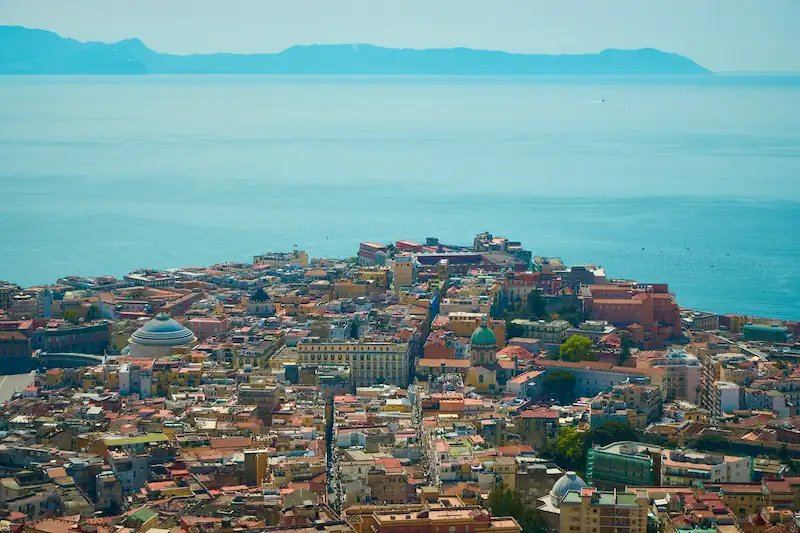
3 Days in Naples: Food, Streets, Markets and Bay Itinerary
Open itinerary →
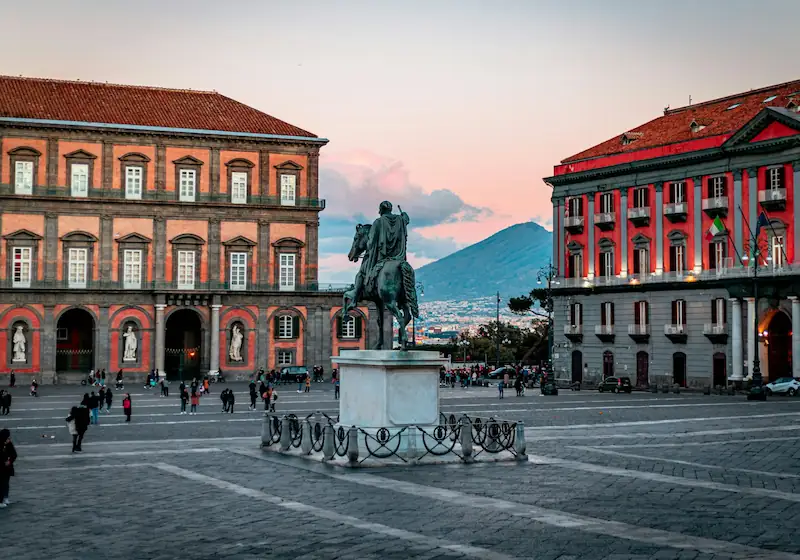
4 Days in Naples: History Rich City Itinerary
Open itinerary →
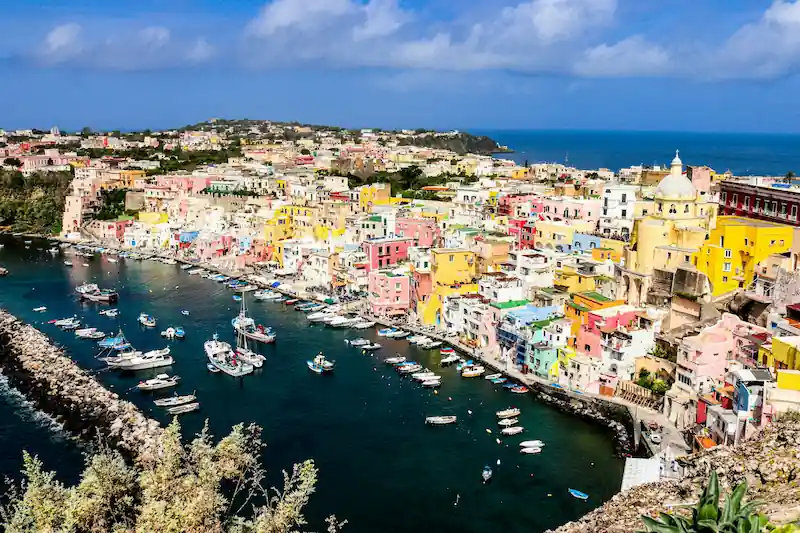
5 Days in Naples: Complete City, Procida and Waterfront Itinerary
Open itinerary →
Naples is dense, theatrical, and unusually spatial: the historic center runs east-west through the decumani, Via Toledo cuts a modern commercial spine beside the Spanish Quarter, Vomero and Capodimonte rise above the center, and the Lungomare opens the city toward the bay. The best trips use these contrasts deliberately instead of treating Naples as a prelude to Pompeii or the Amalfi Coast.
Naples deserves more than a stop before Pompeii or the Amalfi Coast because it explains southern Italy with unusual force: ancient strata under modern streets, high culture beside everyday noise, religious devotion beside football mythology, and a food scene rooted in daily rhythm rather than performance. The city can feel disorderly at first, but its logic becomes clear once you read the line from Spaccanapoli to Via Toledo, the climb to Vomero, the north-side depth of La Sanità, and the release of the Lungomare. In late afternoon, the old center tightens around voices and scooters while the bay begins to pull the day outward.
Best time: April–June and September–October offer the best balance of weather, daylight, street life, and day-trip reliability.
Ideal trip length: 3 days for Naples itself; 5–7 days if adding Pompeii, Herculaneum, Vesuvius, Capri, Ischia, Procida, or the Amalfi Coast.
Naples is usually better value than Rome, Florence, or Venice, especially for food, guesthouses, and mid-range stays. Cost pressure rises around Chiaia, Santa Lucia, seafront rooms, high-demand weekends, and guided day trips. The city can be inexpensive at street level, but the total trip budget climbs quickly when you add timed chapel tickets, underground tours, ferries, Pompeii or Herculaneum guides, and Amalfi Coast logistics.
Naples works as a layered city with a tight historic core, a commercial spine along Via Toledo, residential pressure in the Spanish Quarter, aristocratic and seaside districts to the west, and hill neighborhoods above the center. The decumani of the Centro Storico carry the oldest east-west logic, while Toledo and the funicular routes create a stronger north-south movement between lower streets and Vomero. To the north, La Sanità and Capodimonte add a separate layer of catacombs, palazzi, parkland, and neighborhood identity that should not be confused with the main tourist core.
The bay is not just scenery; it orients the city and gives relief from its density. Vomero and Capodimonte sit above the center, so moving uphill changes both perspective and pace. The Lungomare, Santa Lucia, Mergellina, and Posillipo create a flatter, more open rhythm along the water, while Vesuvius and the Campanian islands turn Naples into a base for archaeology, ferries, and coastal days as well as a destination in its own right.
Naples is most intense in the middle of the day in its historic streets, when shops, food queues, scooters, school groups, delivery movement, and visitors overlap. Morning gives clearer walking lines and better market energy, afternoon is useful for museums or hill districts, and evening shifts toward pizza ovens, terrace noise, Via Partenope, Chiaia, and Piazza Bellini. The city rarely becomes quiet, but its energy changes register as the day moves from stone lanes to sea air.
Read Naples as a city of pressure and release: dense old streets, then wider axes, then underground depth, then hill views or bay air. Its major sights matter, but the city is understood through transitions between districts as much as through monuments. First-time visitors grasp it best when they structure contrast into every day rather than trying to soften Naples into a conventional checklist city.
Open the planner
Anchor one day in the Centro Storico, keeping Spaccanapoli, Via dei Tribunali, churches, Cappella Sansevero, food stops, and one underground layer within the same walkable field. Use a second day to connect Via Toledo, the Spanish Quarter, Piazza del Plebiscito, Chiaia, Santa Lucia, and the Lungomare so the city gradually opens toward the bay. Reserve a separate half-day for Vomero, Castel Sant’Elmo, San Martino, or the Pedamentina, because hill movement changes timing and energy more than the map implies. Give La Sanità its own block if you want catacombs, neighborhood texture, and Capodimonte access; it is too rich to treat as a five-minute detour. Keep Pompeii, Herculaneum, Vesuvius, Capri, Ischia, Procida, and the Amalfi Coast outside your core Naples day structure unless you have at least five days. Pair one high-intensity district with one release point each day: dense lanes with seafront walking, museum time with café terraces, catacombs with a neighborhood lunch, or stair streets with a viewpoint. Let food shape geography: pizza near the old center, street snacks around Pignasecca or Via dei Tribunali, seafood toward Santa Lucia or Mergellina, and calmer evening dining in Chiaia or Vomero. Protect unscheduled walking time, because Naples’s strongest moments often happen between named places rather than inside them.
Vibe: Dense, historic, loud, layered, and intensely walkable.
Why go: This is where Naples’s oldest street plan, churches, pizzerias, artisan lanes, underground sites, San Gregorio Armeno, Via dei Tribunali, and everyday compression sit on top of one another.
Who it fits: First-time visitors who want maximum immersion and do not mind noise, crowds, or rough edges.
Not for: Travelers seeking quiet nights, polished surroundings, or easy taxi access to every door.
Where to stay: Best for a short, experience-heavy stay where walking access matters more than calm, and where noise is accepted as part of the choice.
Vibe: Elegant, social, polished, and easier at night than the historic core.
Why go: Chiaia gives access to restaurants, shops, the seafront, Villa Comunale, and a calmer residential rhythm while staying close to the center and Santa Lucia.
Who it fits: Couples, comfort-focused travelers, repeat visitors, and anyone who wants Naples with softer edges.
Not for: Travelers who want the oldest streets directly outside the hotel door.
Where to stay: A strong base for comfort, dining, and evening walks without feeling detached from the city.
Vibe: Close, vertical, expressive, and deeply residential.
Why go: The Spanish Quarter shows Naples’s everyday density just behind Via Toledo, with stair lanes, small eateries, street art, Maradona imagery, and a strong local pulse.
Who it fits: Confident walkers who like lived-in neighborhoods and want immediate access to Toledo and the old city.
Not for: Visitors uncomfortable with tight lanes, noise, scooters, and limited hotel polish.
Where to stay: Good for atmosphere and centrality, but best chosen carefully street by street.
Vibe: Residential, airy, organized, and view-led.
Why go: Vomero gives distance from the central intensity, strong views, funicular access, Castel Sant’Elmo, San Martino, and a more composed daily rhythm.
Who it fits: Families, longer stays, repeat visitors, and travelers who want quieter evenings.
Not for: Visitors who want to step directly into the historic center each morning.
Where to stay: Best for a calmer base if you accept the hill-to-center movement as part of the stay.
Vibe: Seafront, spacious, scenic, and slower than the center.
Why go: Santa Lucia places you near the Lungomare, Castel dell’Ovo, Piazza del Plebiscito, the Royal Palace, and the city’s most open bay-facing walks.
Who it fits: Travelers who want views, easier evening strolls, and a more relaxed base.
Not for: Those who want budget density or immediate access to the old food streets.
Where to stay: A comfortable seafront choice, especially for couples or short stays with a higher budget.
Vibe: Coastal, residential, open, and slightly removed.
Why go: Mergellina is useful for bay views, seaside walking, ferries, Posillipo access, and a quieter stay with a more local coastal rhythm.
Who it fits: Longer-stay travelers, sea-view seekers, and visitors combining Naples with island or coastal movement.
Not for: First-timers who want the historic center to be the daily default.
Where to stay: Better for a slower coastal version of Naples than for a fast cultural weekend.
The best things to do in Naples work when they are layered: ancient streets, archaeological depth, underground spaces, hill views, food rituals, neighborhood texture, and the bay. The city reveals itself through movement more than through isolated monuments, so these experience cards are designed as planning anchors rather than an exhaustive attraction list.
Planning tip: Keep the most intense historic sights for morning or early afternoon, then let the day loosen toward La Sanità, Vomero, Chiaia, Posillipo, or the waterfront rather than staying inside the same central pressure all day.
This is the essential urban line of Naples: not one sight, but a corridor of churches, food counters, courtyards, shrines, and street pressure. The cadence of footsteps changes constantly as lanes narrow, open, and compress again.
Tip: Start near Piazza del Gesù Nuovo and move east slowly rather than treating it as a straight crossing.
Cappella Sansevero is one of Naples’s most concentrated interiors, where sculpture, esoteric symbolism, and spatial intimacy sit inside the density of the old city. Its small scale is part of its force.
Tip: Treat it as a timed focal point, not something to improvise between food stops.
The museum gives Naples its archaeological scale, especially through material from Pompeii and Herculaneum. It is the place where the city’s volcanic hinterland and classical past become legible.
Tip: Give it a protected block rather than squeezing it after the historic center.
This is where Naples suddenly becomes broad and ceremonial after the compression of Toledo and the Spanish Quarter. The open stone of the square changes the city’s scale in a single step.
Tip: Combine it with Teatro San Carlo, Galleria Umberto I, and a walk toward Santa Lucia.
Check guided tours →
The Lungomare is the city’s release valve, replacing narrow-street tension with air, water, and long views. It works especially well after a dense central day.
Tip: Time it for late afternoon or early evening rather than using it as a midday transit route.
Check guided tours →
From Vomero, Naples’s layout becomes visible: the historic grid, the bay curve, the port, and Vesuvius align in a way they rarely do at street level. The city becomes a map without losing its density.
Tip: Use the funicular and pair the view with Certosa di San Martino or a slow descent.
Check guided tours →
Pompeii and Herculaneum are not just add-ons; they change how Naples reads as a city. The Archaeological Museum holds the objects, the ruins hold the streets, and Vesuvius explains why the whole region feels historically charged.
Tip: Choose Pompeii for scale, Herculaneum for a tighter half-day, and avoid stacking either with too many central Naples sights.
The islands are tempting from the first glimpse of the bay, but they work best when Naples is not being squeezed into fragments. Capri is the iconic scenic day, Ischia is slower and more thermal, and Procida is smaller, quieter, and more local in feel.
Tip: Use an island day only if you have at least four or five nights in the area, or if scenery is the main purpose of the trip.
Naples’s underground spaces turn the city’s layers into physical experience, from Greek and Roman traces to later water systems and wartime use. The temperature drops as soon as the stone closes around the path.
Tip: Choose a guided slot; this is an interpretation-led visit rather than a simple walk-through.
The Duomo anchors the religious and civic identity of the historic center, with layers that do not read as a single period. It gives a quieter counterweight to the street intensity outside.
Tip: Look beyond the main nave and allow time for the chapels and older architectural fragments.
Check guided tours →
Capodimonte shifts Naples into a different register: royal collections, parkland, and altitude rather than tight streets. It is most rewarding when treated as a separate cultural and spatial excursion.
Tip: Do not pair it with too many central sights; the transfer and scale deserve room.
Check guided tours →
Churches such as Santa Chiara, Gesù Nuovo, and San Lorenzo Maggiore reveal Naples through texture, reconstruction, and layered ground levels. They slow the rhythm without removing you from the old city.
Tip: Choose two or three instead of trying to sample every church along the decumani.
Check guided tours →
La Sanità is one of the clearest ways to move beyond the obvious core: catacombs, baroque churches, palazzi, bakeries, civic renewal, and a neighborhood identity that feels separate from Spaccanapoli. It turns underground heritage into a fuller city reading.
Tip: Pair a guided catacomb visit with a slow neighborhood walk rather than leaving immediately after the tour.
Pio Monte della Misericordia is a compact but high-value cultural stop because it links Naples’s religious institutions, charitable history, and Caravaggio’s southern Italian intensity inside the working fabric of the old city.
Tip: Use it as one precise art stop in the historic center rather than adding several churches without focus.
MADRE helps balance the city’s heavy archaeological and baroque identity. It shows Naples as a contemporary cultural city too, especially useful on rainy days or for travelers who do not want every indoor stop to be ancient or religious.
Tip: Fit it near the Duomo or northern historic-center route rather than making it a standalone cross-city detour.
Check guided tours →
Pignasecca is one of the easiest ways to feel Naples as a working food city, close to Toledo but more local in its rhythm. Voices, crates, knives, and scooters share the same narrow operating space.
Tip: Go before lunch, when market movement still has purpose rather than becoming mainly visitor browsing.
Check guided tours →
The Pedamentina makes Naples’s vertical geography physical, linking the hill city to the lower center through steps, walls, glimpses, and changing sound. It turns elevation into part of the trip rather than a viewpoint alone.
Tip: Descend rather than climb unless you specifically want the effort.
Check guided tours →
Via Partenope gives Naples its evening exhale, especially after the sensory overload of the central grid. The sound opens out here, with terrace voices carrying across the promenade instead of bouncing between façades.
Tip: Come for the walk first; choose dinner carefully because the most visible seafront places are not always the most rewarding.
Check guided tours →
Toledo is the city’s accessible spine, but the side streets immediately change the register into steeper, tighter, more residential Naples. The shift happens in a few meters.
Tip: Use the side lanes selectively rather than wandering without orientation if you are short on time.
Check guided tours →
The Maradona murals are not just a photo stop. They reveal how football, memory, class, and neighborhood identity become part of the city’s public language, especially in the tight lanes behind Via Toledo.
Tip: Go in daylight, keep the visit respectful, and connect it with Via Toledo rather than treating it as an isolated mural hunt.
Naples’s metro art stations are useful because they turn ordinary movement into a cultural layer, especially around Toledo, Università, Municipio, Museo, and Dante. They also help visitors move between central districts without treating transport as dead time.
Tip: Use Line 1 strategically when connecting the station, historic center, Toledo, and Vomero rather than building a separate metro checklist.
Check guided tours →
Porta Nolana and Forcella show a sharper, more working-city version of Naples than the polished visitor routes. They are valuable for confident walkers who want food markets, street texture, and a less curated edge near the historic core.
Tip: Go in the morning, keep the visit purposeful, and do not use this as a late-night wandering zone on a first trip.
Check guided tours →
Posillipo gives Naples a different emotional register: more air, more distance, and a clearer sense of the bay as geography rather than backdrop. It works as an evening release when the central city has become too compressed.
Tip: Use it selectively; it is not essential on a short stay, but it is one of the best ways to make a longer Naples visit feel spacious.
Check guided tours →
Pizza in Naples is not just a dish; it organizes streets, timings, and expectations. The best experiences often feel fast, informal, and focused rather than leisurely.
Tip: Go early or late if you want less waiting; peak times can turn a simple meal into the day’s main logistical event.
Sfogliatella is best understood as a morning rhythm: crisp pastry, quick coffee, counter movement, and little ceremony. It fits Naples’s speed better than a long breakfast.
Tip: Order at the counter where locals are moving quickly, then step aside rather than occupying the flow.
Check food options →
Fried street food belongs to the moving city, eaten between churches, errands, and narrow-lane crossings. It is informal, immediate, and closely tied to the texture of the old center.
Tip: Use it as a snack, not a substitute for every meal; heavy street food can slow a walking day quickly.
The bay changes the food mood from quick central bites to slower seafood meals, especially around Santa Lucia, Mergellina, and nearby coastal pockets. Salt air replaces the heat of the central lanes.
Tip: Prioritize places with a clear local menu rather than the most visible waterfront terrace.
Check food options →
Naples is too often reduced to sit-down pizza, but the street-food layer is just as important: pizza fritta, frittatine, taralli, fried seafood cones, and quick pastry stops turn the old center into a moving food sequence.
Tip: Keep portions small and spread them across the walk; too many fried stops can make the afternoon heavy.
Naples rewards travelers who protect its contrasts rather than filling every hour with named sights. The right trip gives time to the old streets, one archaeological or cultural anchor, an underground or neighborhood layer, the food culture, a hill or bay perspective, and enough unstructured walking for the city to reveal itself between planned stops.
Naples can work very well with children, but it asks for realistic pacing. The city is stimulating, noisy, and walkable in short bursts, with castles, underground spaces, pizza, pastries, funiculars, ferries, and open waterfront breaks helping to balance the narrow central streets. The biggest challenge is not boredom; it is managing traffic, heat, uneven paving, waiting times, and sensory intensity.
A good Naples itinerary should alternate density and release: old streets, cultural depth, food, hill views, neighborhood texture, and water. The city becomes easier when each day has one clear center of gravity and one deliberate change of register.
Open the planner →
Naples is practical once you stop expecting it to behave like a polished northern Italian city. Movement is possible, food is accessible, and major sights are close, but street density, traffic, queues, stairways, ferries, and vertical geography shape the day more than distance alone.
The best time to visit Naples is April to June or September to October, when walking conditions, daylight, food culture, and day trips all work well without the strongest summer heat.
Stay at least 3 days for Naples itself. Add 2 to 4 more days if Pompeii, Herculaneum, Vesuvius, Capri, Ischia, Procida, Campi Flegrei, or the Amalfi Coast are part of the trip.
Stay in the Centro Storico for intensity and access, Chiaia for comfort and evening ease, Vomero for calm and views, Santa Lucia for seafront space, Mergellina for a slower coastal base, and the Spanish Quarter only if atmosphere and centrality matter more than polish.
Naples is well connected by high-speed rail to Rome, Florence, Milan, and other major Italian cities. Naples Centrale is the main rail gateway, Naples International Airport sits close to the city, and ferries connect the city with Capri, Ischia, Procida, Sorrento, and seasonal coastal routes.
Walking is essential in the historic center, while metro, funiculars, taxis, ferries, and regional trains help connect hill districts, the seafront, Pompeii, Herculaneum, and wider Campania. Line 1 is useful for several central movements, funiculars make Vomero easier, and taxis can be worth using late or when transfers become awkward.
Naples is generally manageable for visitors who use normal urban awareness. Petty theft, bag exposure, scooter movement, uneven paving, station-area judgment, and late-night route choice matter more than dramatic safety fears. In summer, heat and limited shade can make long central walks and archaeological sites tiring.
Naples is a year-round city, but the quality of the trip changes sharply with heat, daylight, rain, visibility, and excursion pressure. Spring and autumn are the most balanced seasons because the old streets remain active without becoming oppressive, and Pompeii, Herculaneum, Vesuvius, and the bay are easier to manage. Summer brings long evenings and coastal energy, but central walking and archaeological sites can become physically demanding. Winter is quieter and more local, with softer prices, shorter days, stronger rain risk, and good museum-and-food value.
April to June is one of the best windows for Naples, with warm daylight, strong street life, comfortable walking, and good conditions for museums, archaeological day trips, and the bay.
July and August bring heat, dense central streets, pressure on islands and the Amalfi Coast, and tiring archaeological visits. Evenings are lively, but midday planning becomes essential.
September and October offer warm weather, good visibility, and a renewed city rhythm after summer. It is especially strong for food, walking, Pompeii, Herculaneum, and bay excursions.
November to February is quieter and more atmospheric in the historic center, with fewer visitors and shorter days. Rain is more likely, but museums, underground visits, food, and local life remain rewarding.
December brings extra atmosphere around San Gregorio Armeno and presepe workshops, but the old center can become very compressed around weekends and holiday shopping.
Not seeing your next stop yet? Build a fully personalized itinerary anywhere in italy.
These answers focus on the practical decisions that shape a first trip to Naples: timing, areas, safety, food, day trips, transport, family travel, and how much time to protect for the city itself.
Three days is the best minimum for Naples itself. Five days is better if you want to add Pompeii, Herculaneum, Vesuvius, Capri, Ischia, Procida, Campi Flegrei, or the Amalfi Coast without reducing the city to a transit base.
Centro Storico is best for maximum immersion and walking access, while Chiaia is better for comfort, restaurants, and easier evenings. Vomero works well for a calmer stay if you do not mind using the funicular or metro.
Naples is manageable for visitors using normal city awareness. The main issues are petty theft, busy traffic, uneven streets, crowded food areas, and station-area judgment rather than serious risk in the main visitor districts.
April to June and September to October are the strongest windows. The weather is generally good for walking, food, views, Pompeii, Herculaneum, and bay trips, while the city remains active without the toughest summer heat.
Yes, especially if you want a more intense, lived-in, southern Italian city with strong food culture, archaeological depth, a bay setting, and a very different street rhythm from Rome or Florence.
No. Naples is strong enough as a destination in its own right. Pompeii, Herculaneum, Capri, and the Amalfi Coast are valuable extensions, but the city itself needs time for the historic center, food, museums, underground sites, hill views, and the seafront.
Yes. Pompeii is one of the classic day trips from Naples and can be reached by regional rail or guided transfer. It should be treated as a substantial half-day or full-day experience, especially in warm weather.
Choose Pompeii for scale, famous ruins, and a full archaeological day. Choose Herculaneum if you want a shorter, more contained site that is often easier with children, heat, or limited time.
Capri is worth it if island scenery is a priority and you have enough time in the area. On a short Naples stay, it can consume too much energy; Procida or a Naples-focused day may be smarter if you want less pressure.
Capri is the most iconic and busiest scenic choice. Ischia is better for a slower island day with thermal and coastal character, while Procida is smaller, quieter, and often better for travelers who want a more local-feeling bay escape.
Yes, but it is a long and logistics-heavy day. It works best if coastal scenery matters more than city depth, or if you use a structured transfer or tour. For a short stay, prioritize Naples and Pompeii first.
Prioritize the Centro Storico and Spaccanapoli, Cappella Sansevero or one major art stop, the National Archaeological Museum if archaeology matters, a proper pizza or street-food experience, and a hill or seafront perspective.
Use a pressure-and-release structure: start in the historic center, move through Via Toledo or the Spanish Quarter, go uphill to Vomero or out to the Lungomare, and keep one focused cultural stop rather than collecting too many monuments.
Naples can be good with kids if you pace it carefully. Castles, pizza, underground tours, pastries, funiculars, ferries, and the seafront help, but traffic, noise, heat, and narrow streets require realistic planning.
No. A car is usually a liability inside Naples. Walking, metro, funiculars, taxis, trains, and ferries are more useful for most city stays and common day trips.
Walk inside the historic center, use Line 1 and funiculars for longer central and hill movements, take taxis when transfers become awkward, use regional trains for Pompeii or Herculaneum, and ferries for Capri, Ischia, Procida, and some coastal routes.
It can be noisy, especially near major food streets and nightlife pockets. Stay there if you want maximum atmosphere and walking access; choose Chiaia, Santa Lucia, or Vomero if sleep quality and easier evenings matter more.
Chiaia is polished and restaurant-friendly, Santa Lucia is more seafront and scenic near Castel dell’Ovo, and Mergellina is slower and more residential with bay access and useful movement toward Posillipo or ferries.
The Spanish Quarter is central, atmospheric, and close to Via Toledo, but it is tight, noisy, steep, and uneven in polish. It suits confident travelers more than those wanting a calm first Naples base.
Yes, especially if you want catacombs, neighborhood texture, bakeries, palazzi, and a Naples experience beyond the most obvious center. It is best treated as a deliberate half-day, not a quick detour.
The National Archaeological Museum is the essential museum for Pompeii and Herculaneum context. Capodimonte is best for art and parkland, MADRE is useful for contemporary Naples, and smaller chapel or church-based sites add focused depth.
Book Cappella Sansevero, Naples Sotterranea, Galleria Borbonica, catacomb tours, guided Pompeii or Herculaneum visits, Capri boats, and Amalfi Coast day trips ahead in busy periods. Keep ordinary food stops more flexible.
Avoid rushing the city as a checklist, staying in the historic center while expecting silence, leaving no time for the waterfront or hill views, stacking too many churches, and using Naples only as a base for elsewhere.
Yes. Naples is one of Italy’s strongest food cities for pizza, pizza fritta, fried snacks, sfogliatella, babà, espresso, seafood, markets, and everyday counter culture. Food should be treated as part of the itinerary, not just a break.
A good first evening pairs an easy walk along the Lungomare or Santa Lucia with a simple dinner, or a focused pizza plan if you are staying central. Avoid turning the first night into an over-ambitious late walk through unfamiliar lanes.
Both are excellent. Spring gives longer daylight and strong street life, while autumn often has warm weather, good food rhythm, and easier walking after summer heat. Either is better than midsummer for most first-time visitors.
Naples is easiest to love when you plan for its intensity, protect contrast inside each day, and give the city more status than a gateway to somewhere else.
Find the best places to stay, how to get there, and move around with ease.
Build a smarter trip base
Once you understand how Naples works and what matters most for your trip, the next step is turning that direction into a real itinerary. Use the planner to organize your days around the right areas, experiences, and rhythm so the trip feels clear before you go.