Best things to do in Naples, from classics to deeper local experiences
Discover the best things to do in Naples, from iconic landmarks and essential museums to underground sites, food-led experiences, neighborhood walks, sea views and strategic day trips. Naples rewards visitors who choose with discipline: a few major sights, one strong food thread, at least one hill or waterfront perspective, and enough unscheduled space to let its street rhythm do some of the work.
Best time
Spring and autumn give the best balance of outdoor walking, clear bay views, ferry options and manageable crowds at major archaeological sites. Summer works best with early starts, indoor midday breaks and evenings near the water.
Ideal trip length
Allow 2 full days for Naples itself, or 3 to 4 days if Pompeii, Herculaneum, Capri, Ischia, Procida, Vesuvius or the Amalfi Coast matter.
Continue planning your Naples trip
Use the main Naples travel guide for broader city planning, then connect this activity list with itinerary and where-to-stay guidance when shaping your days.
What to do in Naples first
Explore Spaccanapoli, Via dei Tribunali and the historic center – Area: Centro Storico · Best for: First contact with Naples’s density · Time needed: 2 to 4 hours · Worth it: Essential, but better slow than checklist-driven. · Book ahead: No, unless joining a focused walking or food tour.
See the Veiled Christ at Cappella Sansevero – Area: Centro Storico · Best for: One unforgettable art stop · Time needed: 30 to 45 minutes · Worth it: High payoff for a short visit. · Book ahead: Yes, timed tickets are required or strongly recommended.
Visit the National Archaeological Museum – Area: Museo / Piazza Cavour · Best for: Pompeii and Herculaneum context · Time needed: 2 to 3 hours · Worth it: One of Naples’s most important indoor experiences. · Book ahead: Useful in peak season, not always essential.
Go underground beneath Naples – Area: Centro Storico / Spanish Quarter / Sanità · Best for: A layered city experience · Time needed: 1 to 1.5 hours · Worth it: Very worthwhile if you want Naples beyond street level. · Book ahead: Yes, guided access is usually required.
Eat pizza, fried snacks and pastries as part of the plan – Area: Centro Storico / Materdei / Chiaia / Sanità · Best for: Food-led city reading · Time needed: 1 to 3 hours · Worth it: Essential, but avoid choosing only by social-media queue. · Book ahead: No for classic pizzerias; yes for classes and food tours.
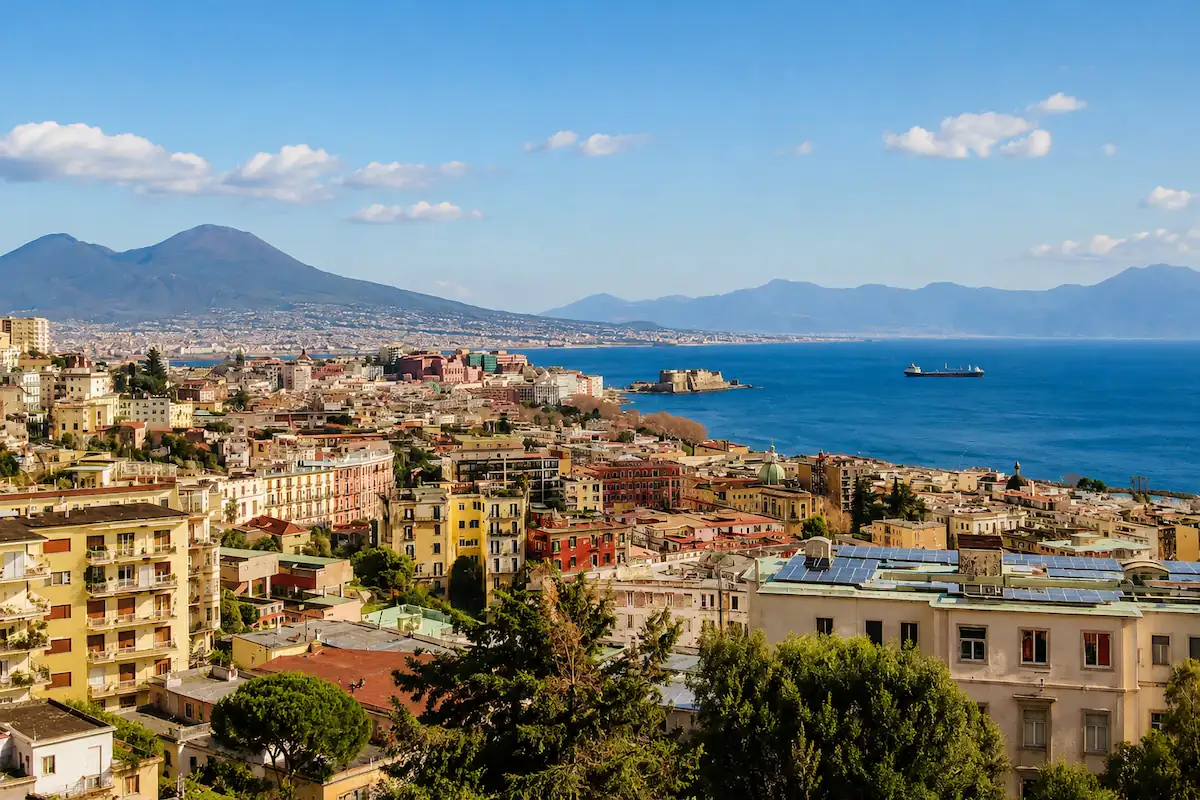
Take in the view from Castel Sant’Elmo and San Martino – Area: Vomero · Best for: Understanding Naples’s shape · Time needed: 1.5 to 3 hours · Worth it: One of the clearest ways to read the bay, Vesuvius and historic center. · Book ahead: No for the view; check museum hours if visiting San Martino.
Walk the Lungomare to Castel dell’Ovo – Area: Santa Lucia / Lungomare · Best for: Sea air and an easier pace · Time needed: 1 to 2 hours · Worth it: A necessary counterweight to the historic center. · Book ahead: No.
Spend time in Rione Sanità – Area: La Sanità · Best for: Local texture, catacombs, Fontanelle and bakeries · Time needed: 2 to 4 hours · Worth it: Excellent once you have seen the central core. · Book ahead: Book catacomb visits ahead; check Fontanelle access.
Choose Pompeii, Herculaneum or Vesuvius strategically – Area: Outside Naples · Best for: Ancient Roman sites and volcanic landscape · Time needed: Half day to full day · Worth it: Pompeii is major; Herculaneum is tighter; Vesuvius adds landscape. · Book ahead: Yes for guided tours, timed access and peak periods.
Cross to Capri, Ischia or Procida, or follow the Amalfi Coast – Area: Bay of Naples / Coast · Best for: A scenic day beyond the city · Time needed: Full day · Worth it: Worthwhile if you have at least 3 days in the area. · Book ahead: Yes for ferries, boat trips and summer departures.
How to choose what is actually worth doing
Naples is a poor city for rigid sightseeing and a strong city for layered selection. The smartest plans combine one major cultural anchor, one food-led experience, one neighborhood walk, and one wider viewpoint rather than racing from church to church through streets that already demand attention.
Prioritize contrast: pair the historic center’s narrow intensity with Vomero, Capodimonte, La Sanità or the Lungomare so the city does not feel like one continuous crush.
Do not overload the same day with Pompeii, the Archaeological Museum and multiple churches; ancient history lands better when given space.
Book the small, high-demand places first: Cappella Sansevero, underground tours, catacombs, Pompeii guides, ferry departures and structured day trips are the easiest to mis-time.
Use food as an activity, not a break: pizza, fried pizza, frittatine, sfogliatella, babà, espresso, markets and seafood show different sides of the city.
Keep at least one unscheduled walk in the historic center, Spanish Quarter or Sanità; too much planning flattens Naples’s strongest quality.
Treat Capri, Amalfi, Pompeii, Ischia and Procida as strategic choices, not automatic add-ons; each consumes a different kind of day.
Separate Naples’s underground options by mood: Naples Sotterranea for city layers, Galleria Borbonica for wartime and Bourbon-era drama, catacombs for early Christian heritage, Fontanelle for devotion and popular belief.
Use the bay as a planning tool: when the center feels too compressed, shift toward Mergellina, Posillipo, Santa Lucia or an island day rather than adding another dense interior.
Iconic things to do in Naples
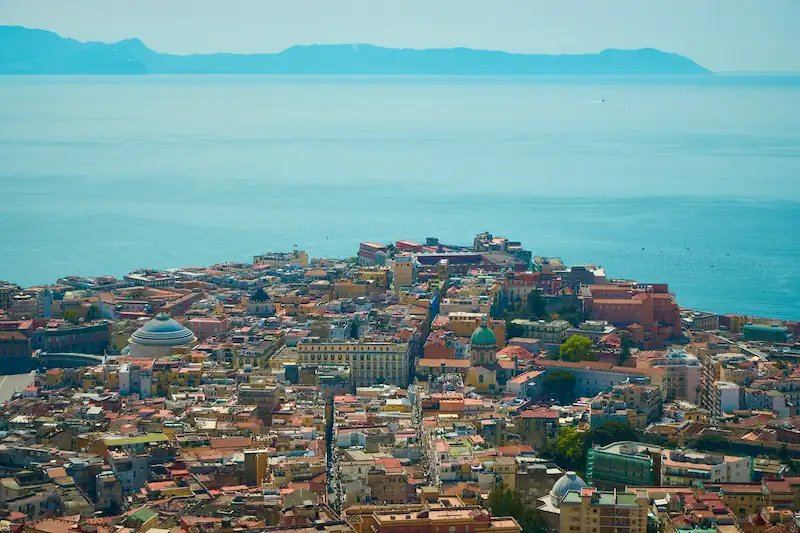
The most recognizable Naples experiences work best when they reveal scale, pressure and geography rather than just ticking off landmarks. Move from the compressed historic center to the bay, the royal quarter or the hills and the city begins to make sense: stone lanes, sudden shrines, laundry above balconies, a wide blue opening toward Vesuvius and a ceremonial axis around Piazza del Plebiscito.
Walk Spaccanapoli without treating it as a straight line – Spaccanapoli is less a single attraction than a corridor through Naples’s old urban pressure. Step into side streets, courtyards, pastry counters and churches instead of simply following the crowd from one end to the other. (First-time essential · Best for: Orientation through the historic center)Find tours & experiences
Follow Via dei Tribunali for pizza, churches and street rhythm – Via dei Tribunali is one of the best ways to feel the old center in motion: pizzerias, religious façades, scooters, snack counters and sudden courtyards. It works especially well when paired with San Lorenzo, San Gregorio Armeno or the Duomo area. (Classic Naples · Best for: Street life, food stops and historic-center texture)Find tours & experiences
See the Veiled Christ inside Cappella Sansevero – Cappella Sansevero is compact, controlled and intensely popular. The Veiled Christ is the reason most people come, but the chapel works best when you give it a quiet timed slot rather than squeezing it between loud street stops. (High payoff · Best for: A short, powerful art experience)Find tours & experiences
Go below street level at Naples Sotterranea – Naples’s underground routes turn the city from noise into layers: Greek foundations, Roman traces, wartime shelters and narrow passages under busy streets. It is one of the clearest ways to understand why the city feels so compressed above ground. (Worth it · Best for: Underground history and rainy days)Find tours & experiences
Look over the city from Castel Sant’Elmo – From Vomero, Naples stops feeling chaotic and becomes legible: the bay, the historic center, the port, Vesuvius and the long urban spread all align. Go late afternoon if the light is clear and the city below starts to soften. (Best in the evening · Best for: Big-picture views)
Pair Castel Sant’Elmo with Certosa di San Martino – San Martino adds interiors, cloisters and museum depth to the hilltop view. It is the right move if you want Vomero to be more than a panorama, especially on a culture-first or repeat visit. (Smart add-on · Best for: Views with cultural depth)
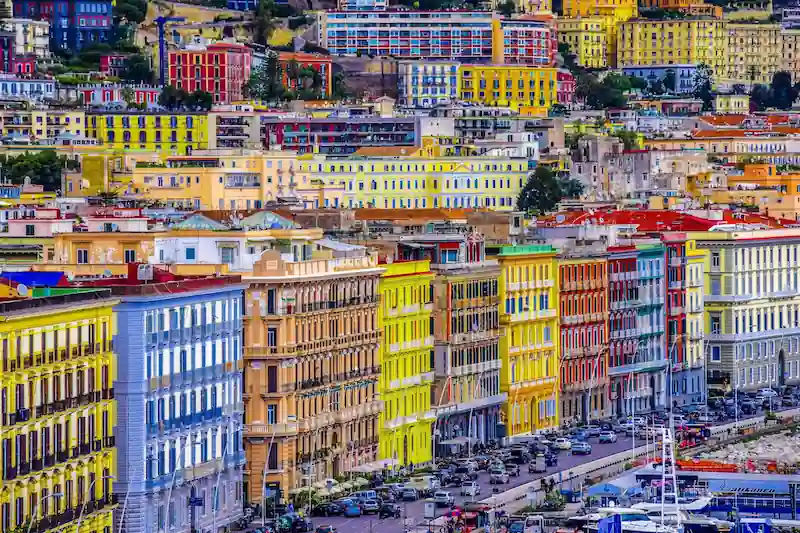
Walk the Lungomare to Castel dell’Ovo – The Lungomare gives Naples room to breathe. It is not the city’s most complex experience, but it is one of the most necessary after the enclosed lanes of the center, especially around dusk or after a heavy museum day. (Best for: Sea views and a gentler rhythm)
Stand in Piazza del Plebiscito and step toward the royal quarter – Piazza del Plebiscito opens the city into ceremony, architecture and official scale. Combine it with the Royal Palace, Teatro di San Carlo exterior, Galleria Umberto I and nearby cafés rather than treating it as a quick photo stop. (Monumental Naples · Best for: Royal-quarter scale and classic Naples landmarks)Find tours & experiences
Look up inside Galleria Umberto I – Galleria Umberto I is quick, central and easy to combine with Via Toledo, Teatro di San Carlo and Piazza del Plebiscito. Its value is less as a destination than as a short architectural pause in a busy central sequence. (Quick stop · Best for: Architecture between central sights)
Follow Via San Gregorio Armeno outside peak crush – The nativity-workshop street is touristy, but still specific to Naples when visited with the right expectations. Go early or later in the day, look at the craft details, and avoid reducing it to souvenir browsing. (Only if timed well · Best for: Craft tradition and street detail)
Cultural things to do in Naples
Naples’s cultural weight is not polished into one museum district. It sits in archaeological collections, baroque interiors, hillside palaces, contemporary art, Caravaggio-linked chapels, underground burial sites and streets where sacred images appear beside scooters and shop shutters.
Use the National Archaeological Museum to unlock Pompeii – The museum holds many of the objects that give Pompeii and Herculaneum their human detail. Visit before the ruins if you want context, or after them if you want the fragments to connect. (First-time essential · Best for: Ancient history with depth)Find tours & experiences
Visit the Catacombs of San Gennaro – In La Sanità, the catacombs connect early Christian history with a neighborhood that has become one of Naples’s most interesting cultural areas. The guided format helps make the scale, frescoes and symbolism clear. (Worth it · Best for: Underground heritage with local context)Find tours & experiences
Add the Catacombs of San Gaudioso if Sanità is your focus – San Gaudioso is the stronger add-on when you want the Sanità story to feel complete rather than isolated around one site. It suits travelers interested in early Christian heritage, burial practices and the neighborhood’s layered identity. (Deeper Sanità · Best for: Second underground visit with meaning)Find tours & experiences
Climb into Capodimonte for art and air – Capodimonte takes effort, but that is part of its value. The museum and park sit above the tight center, giving you art, space and a slower rhythm in one move. (Best for: Art lovers with more than one day)Find tours & experiences
See Caravaggio at Pio Monte della Misericordia – Pio Monte della Misericordia is one of the most efficient high-value art stops in the historic center. It adds a Caravaggio anchor to a Via dei Tribunali walk without requiring a long museum slot. (High-value art stop · Best for: Caravaggio, baroque Naples and short culture breaks)
Choose one major church instead of collecting five – Gesù Nuovo, Santa Chiara and the Duomo all justify attention, but church-hopping quickly blurs. Pick one or two based on location and mood, then leave room for the streets between them. (Best for: Focused historic-center culture)
Slow down in Santa Chiara’s majolica cloister – Santa Chiara is useful because it changes the temperature of a historic-center day. The cloister gives color, symmetry and quiet after Spaccanapoli’s density, making it better as a pause than a rushed tick-box. (Calm in the center · Best for: A gentler cultural break)
Step inside Teatro di San Carlo or see its royal surroundings – San Carlo brings a different Naples into view: formal, European, theatrical and closely tied to royal power. A guided visit is useful if you care about architecture and performance history. (Only if you have time · Best for: Opera, architecture and old-world interiors)Find tours & experiences
Use Museo Madre for contemporary Naples – MADRE is the right cultural counterweight when Naples starts to feel only ancient, baroque or archaeological. It gives contemporary art and a different register of the historic center, especially useful for repeat visitors. (Repeat visitor · Best for: Contemporary art and contrast)
Visit the Royal Palace if you want formal interiors – The Royal Palace works best as part of a Piazza del Plebiscito and San Carlo sequence. It is less essential than the Archaeological Museum, but useful for travelers interested in Bourbon Naples, royal apartments and official city scale. (Good rainy-day option · Best for: Royal history and formal interiors)Find tours & experiences
Local experiences and neighborhood-led things to do
Naples is strongest when the activity is not isolated from the street around it. A market, a shrine, a viewpoint, a metro station, a cemetery, a football mural or a waterfront walk often works because of the surrounding noise, gestures and proximity rather than because it behaves like a classic attraction.
Read the Spanish Quarter through its murals and stairways – The Quartieri Spagnoli are no longer just a rough-edged shortcut behind Via Toledo. Go for stairways, shrines, street art, laundry lines and the Maradona imagery that turns football devotion into civic language. (Best for: Street texture and photography)Find tours & experiences
Spend a half-day in Rione Sanità – La Sanità rewards visitors who slow down: catacombs, Fontanelle, palazzi, bakeries, courtyards and a neighborhood identity that feels distinct from the historic center. It is best approached as a compact cultural zone rather than a quick detour. (High payoff · Best for: Repeat visitors and curious first-timers)Find tours & experiences
Visit Cimitero delle Fontanelle if access aligns – Fontanelle is one of the strongest places to understand Naples’s relationship with death, devotion and popular belief. Because access and guided formats can change, treat it as a planned Sanità stop rather than a casual walk-in assumption. (Unique Naples · Best for: Devotional culture and unusual sites)
Take the funicular to Vomero and walk back into the view – Vomero gives you a different city surface: calmer streets, wider pavements, hilltop air and views that explain the center below. Pair it with Castel Sant’Elmo, San Martino or a slow descent if you want movement as part of the experience. (Best for: A break from the old center)
Browse Pignasecca market with restraint – Pignasecca is compact, noisy and practical, with fish, fruit, fried snacks and everyday shopping compressed into a tight street rhythm. It works best as a short sensory stop, not a long market expedition. (Best for: Everyday Naples and quick food stops)
Use Toledo metro station as a quick design stop – Toledo is useful because it turns a transit move into a small visual experience. It is not worth crossing the city for alone, but it fits naturally between Via Toledo, the Spanish Quarter and the royal quarter. (Quick urban detail · Best for: Metro art and easy transitions)
Watch sunset from Posillipo or the Mergellina waterfront – Posillipo shifts Naples into a more spacious register, with villas, sea air and views across the bay. It is less about ticking off sights than ending the day with distance from the center’s heat and sound. (Best in the evening · Best for: Bay views and slower evenings)
Look at the city from Parco Virgiliano – Parco Virgiliano is less central than the Lungomare, but the views toward the bay, islands and coast make it one of the best open-air choices when you want a scenic Naples that is not only historic-center intensity. (Best with clear weather · Best for: Wide views, photography and slower afternoons)
Food experiences worth building time around
In Naples, food is not a side category. Pizza, espresso, fried snacks, pastry, markets, seafood and simple counters are part of how the city moves: quick bars, hot ovens, narrow queues, paper cones, busy markets and tables that turn faster than visitors expect.
Eat Neapolitan pizza without chasing only the longest queue – A famous pizzeria can be worth the wait, but Naples has more depth than one viral address. Choose by area, timing and oven turnover; a slightly less famous room at the right hour often beats a two-hour queue. (First-time essential · Best for: The city’s defining food experience)
Try fried pizza and frittatine as street-level Naples – Pizza fritta and pasta frittatine make sense as short, standing food stops rather than full meals. They are useful for turning a historic-center walk into something more local and less attraction-led. (Street-food classic · Best for: Quick bites between sights)Find tours & experiences
Take a street-food walk through the historic center – Fried pizza, frittatine, taralli, sfogliatella, babà and espresso turn the old center into a sequence of short stops. A good food walk helps you pace the city without sitting down for every bite. (Worth it · Best for: Food variety in limited time)Find tours & experiences
Try a pizza-making class if you want structure – Pizza-making classes are tourist-facing, but they can be worthwhile if you want a hands-on activity rather than another meal. They are especially useful for families, rainy days or travelers who like food with a clear format. (Best for: Hands-on food activity)Find tours & experiences
Use espresso as a short ritual, not a long stop – Coffee in Naples is quick, social and precise. Stand at the bar, keep it brief, and let the rhythm of the counter teach you more than a long café pause would. (Best for: Everyday local rhythm)
Compare sfogliatella and babà with fresh eyes – Pastry is one of Naples’s easiest pleasures, but it becomes more interesting when treated as a small tasting rather than dessert after a heavy meal. Try one crisp, layered sfogliatella and one rum-soaked babà at different moments. (Best for: Sweet breaks between walks)
Use a market as a short food experience – Pignasecca and Porta Nolana are better as compact food windows than long market expeditions. Go in the morning for produce, fish, noise and snack counters, then move on before the experience becomes repetitive. (Morning only · Best for: Markets, quick snacks and everyday Naples)Find tours & experiences
Make one seafood meal part of a waterfront or island day – Pizza dominates the Naples conversation, but seafood belongs in the plan if you are spending time near Mergellina, Santa Lucia, Procida, Ischia or Capri. Keep it simple and location-led rather than chasing formal dining. (Good with the bay · Best for: Seafood, waterfront meals and island days)
Best things to do in Naples for first-timers
First-time visitors should avoid trying to master the whole city. The strongest first pass combines the historic center, one major cultural interior, one view, one food-led sequence and one calmer open-air counterweight.
Start with Spaccanapoli, Via dei Tribunali and the Centro Storico, but leave time for detours rather than walking them as straight lines.
Book Cappella Sansevero if the Veiled Christ matters; it is small, popular and easy to miss without planning.
Use the National Archaeological Museum if Pompeii or Herculaneum is part of your trip.
Add Castel Sant’Elmo or San Martino for a hilltop view that makes the city’s geography clearer.
Walk the Lungomare when you need space, light and a break from the historic center.
Choose either Naples Sotterranea, Galleria Borbonica or the catacombs on a very short stay; do not stack all underground experiences immediately.
Make food part of the sightseeing plan: pizza, fried snacks, sfogliatella and espresso give the city a readable rhythm.
Keep one evening simple around Chiaia, Piazza Bellini, Vomero or the Lungomare rather than overextending after a dense day.
Priority
BestChoices
Why
Essential
Historic center, Cappella Sansevero, pizza, Castel Sant’Elmo view, Lungomare
These give density, art, food, geography and release without overloading the day.
Strong add-on
Archaeological Museum, Naples Sotterranea, La Sanità, Royal Palace area
Best when you have a second day or specific interest.
Only with more time
Capodimonte, MADRE, Teatro di San Carlo interiors, extended Posillipo walk, Fontanelle
Rewarding, but less efficient for a first pass unless they match your interests.
Free things to do in Naples
Naples is unusually strong for free wandering, but the best free experiences are not random. Choose streets, viewpoints and waterfront spaces that show different city registers.
Walk Spaccanapoli early or late, when the street feels less like a visitor corridor.
Follow Via dei Tribunali and side streets for shrines, courtyards, pizzerias and small architectural details.
Explore Piazza del Plebiscito, Via Toledo, Galleria Umberto I and the edges of the royal quarter.
Follow the Lungomare to Castel dell’Ovo exterior for bay views and easier walking.
Climb or ride up toward Vomero for wide views from the Sant’Elmo and San Martino area.
Browse Pignasecca market in the morning for everyday noise, produce and snack counters.
Look for the Maradona murals and football shrines in the Spanish Quarter.
Walk into Santa Chiara’s exterior spaces and surrounding streets, even if you skip paid areas.
Use Mergellina or Posillipo for a slower sea-facing pause when the center feels too dense.
FreeExperience
Where
BestTime
Best free view
Vomero / Sant’Elmo surroundings
Late afternoon on a clear day
Best free walk
Spaccanapoli, Via dei Tribunali and side streets
Morning before peak pressure
Best free sea moment
Lungomare and Castel dell’Ovo exterior
Sunset or early evening
Best free local texture
Spanish Quarter and Pignasecca
Morning to late afternoon
Best free royal-quarter sequence
Via Toledo, Galleria Umberto I and Piazza del Plebiscito
Late afternoon or early evening
Unique and unusual things to do in Naples
The most distinctive experiences in Naples usually come from depth rather than novelty. Underground layers, devotional streets, football mythology and food rituals all feel specific to the city.
Go underground at Naples Sotterranea to feel Greek, Roman and wartime layers under the historic center.
Choose Galleria Borbonica if you want a more dramatic underground route tied to Bourbon-era planning and wartime shelter use.
Visit the Catacombs of San Gennaro and continue into La Sanità rather than leaving immediately.
Add San Gaudioso or Fontanelle if you are especially interested in burial culture, devotion and the city’s relationship with the dead.
Follow Maradona imagery in the Spanish Quarter as a form of civic storytelling, not just football fandom.
Step into Via San Gregorio Armeno outside the most crowded hours to see nativity craft up close.
Build a small tasting route around fried pizza, frittatine, sfogliatella, babà, espresso and taralli.
Use the funicular system as part of the experience, moving from dense lower streets to hilltop air.
Look for contemporary contrast at MADRE or the Toledo metro station instead of treating Naples only as an ancient city.
UniqueExperience
Where
BestFor
Most layered underground choice
Naples Sotterranea
First-time visitors who want the city beneath the streets
Most atmospheric devotional choice
Fontanelle / La Sanità
Travelers interested in belief, memory and popular culture
Best football-culture walk
Spanish Quarter
Street art, Maradona imagery and local identity
Best food-led unusual experience
Historic center
Fried pizza, frittatine, pastries and espresso rituals
Things to do in Naples at night
Night in Naples is best handled selectively. The historic center can feel intense, while the Lungomare, Chiaia, Piazza Bellini and parts of Vomero offer easier evening rhythms.
Walk the Lungomare at dusk, when the bay opens and the day’s heat drops.
Have pizza early or late to avoid the heaviest dinner queue.
Use Piazza Bellini for a lively but central evening drink.
Stay around Chiaia for a more polished dinner-and-walk rhythm.
Go to Vomero for a calmer evening with views and less street pressure.
Consider Teatro di San Carlo if a performance fits your dates.
Use Mergellina for a quieter sea-facing evening if the historic center feels too intense.
Avoid turning the Spanish Quarter into a late-night wandering route if you are tired or unfamiliar with the city.
Keep late-night transport simple; Naples is more enjoyable at night when the route home is obvious.
NightOption
Area
Fit
Best easy evening
Lungomare / Santa Lucia
Couples, families, first-timers
Best lively evening
Piazza Bellini / Centro Storico
Bars, students, informal energy
Best calmer evening
Vomero
Views, dinner, less intensity
Best polished evening
Chiaia
Dinner, wine bars, less chaotic streets
Best performance option
Teatro di San Carlo / Royal quarter
Opera, music and formal interiors
Things to do in Naples with kids
Naples with children works best when days are broken into short, vivid pieces. Mix one structured visit with food, a view or waterfront space rather than pushing through too many churches and lanes.
Choose Naples Sotterranea, Galleria Borbonica or a pizza-making class for a contained, memorable activity.
Use the Lungomare and Castel dell’Ovo exterior for space after the tight historic center.
Visit the Archaeological Museum before Pompeii if children respond well to objects, mosaics and visual stories.
Pick Herculaneum over Pompeii for a shorter, more manageable ancient-site experience.
Take the funicular to Vomero for the movement, view and change of pace.
Keep food stops simple: pizza, pastries, gelato, fried snacks and short espresso-bar stops for adults are easy wins.
Use Capodimonte park or the waterfront when children need air rather than another interior.
Avoid overlong historic-center wandering in the hottest part of the day.
Be selective with catacombs and Fontanelle depending on age and sensitivity; some children find them fascinating, others may find them heavy.
Activity
AgeFit
WeatherFit
Pizza-making class
School-age children and teens
Excellent for rainy or hot days
Herculaneum
Curious children who can walk for 1 to 2 hours
Best in mild weather
Lungomare
All ages
Best early or late in the day
Funicular to Vomero
All ages
Good in most weather if views are clear
Naples Sotterranea
Better for confident children who are comfortable underground
Strong rainy-day option
Things to do in Naples when it rains
Rain does not ruin Naples, but it changes the right choices. Shift from viewpoints and markets to museums, underground sites, churches and food experiences with reservations.
Spend 2 to 3 hours at the National Archaeological Museum.
Book Naples Sotterranea or Galleria Borbonica for a guided underground route.
Visit Cappella Sansevero if timed tickets are still available.
Use churches such as Gesù Nuovo, Santa Chiara or the Duomo as focused indoor stops.
Take a pizza-making class instead of waiting outdoors for a famous pizzeria.
Choose Teatro di San Carlo, the Royal Palace or Pio Monte della Misericordia if you want formal interiors.
Use MADRE or Capodimonte if you want a museum day beyond archaeology.
Keep food touring compact and central; rain makes long cross-city wandering less enjoyable.
Avoid planning Pompeii, Vesuvius, Posillipo viewpoints, Capri boat time or the Amalfi Coast around heavy rain.
RainyOption
TimeNeeded
BookingNeed
Best museum
2 to 3 hours
Useful in peak periods
Best underground activity
1 to 1.5 hours
Usually required
Best food activity
2 to 3 hours
Recommended
Best short art stop
30 to 60 minutes
Required or recommended for Sansevero
Best formal interiors
1 to 2 hours
Useful for guided visits
Things to do in Naples by area
Centro Storico
The historic center is the activity core: dense, loud, walkable and full of short high-value stops. It justifies repeated passes, but not a single overloaded march.
Walk Spaccanapoli, Via dei Tribunali and the Decumani
See Cappella Sansevero with a timed ticket
Visit Naples Sotterranea, Santa Chiara, Gesù Nuovo or the Duomo
Eat pizza, fried snacks, sfogliatella and babà between sights
Browse Via San Gregorio Armeno outside peak crush
Use Pio Monte della Misericordia as a compact Caravaggio stop
Forcella and Via Duomo
Forcella and the eastern edge of the historic center add intensity, food stops and a less polished city texture. This area is best folded into a daytime old-center walk rather than treated as a standalone evening plan.
Use Via Duomo for the cathedral and museum-side transitions
Add Forcella for pizza, street texture and a grittier edge of the old center
Stay aware of traffic and street rhythm rather than wandering distracted
Pair with Pio Monte, San Gregorio Armeno or Via dei Tribunali
Keep visits daytime or early evening if you are unfamiliar with the area
Spanish Quarter and Via Toledo
This zone is best for street texture, murals, shopping flow and quick transitions between central Naples and the hill routes. It is energetic rather than restful.
Look for Maradona murals and football shrines
Walk Via Toledo for movement, metro access and shopping flow
Use Toledo station and nearby funicular connections to Vomero
Stop for casual food rather than formal sightseeing
Visit with awareness at night if unfamiliar with the area
Vomero and San Martino
Vomero gives Naples air, views and orientation. Use it when the lower city starts to feel too compressed.
Visit Castel Sant’Elmo for the clearest panorama
Pair the view with Certosa di San Martino if time allows
Arrive by funicular for an easy shift in altitude
Stay for sunset if visibility is good
Return downhill slowly or by transit depending on energy
Lungomare, Santa Lucia and Chiaia
This is Naples’s sea-facing release valve. It works for relaxed walking, views, dinner, and a softer evening rhythm.
Walk toward Castel dell’Ovo
Use the waterfront for sunset and bay views
Choose Chiaia for a more polished dinner base
Pause here after a heavy historic-center day
Keep it simple rather than over-planning
Mergellina and Posillipo
Mergellina and Posillipo shift Naples toward sea air, villas, views and slower evenings. They are less efficient for first-timers but very useful when you need space or want a more scenic side of the bay.
Use Mergellina for waterfront walks and seafood
Continue toward Posillipo for broader bay views
Consider Parco Virgiliano in clear weather
Treat the area as a late-afternoon or evening release valve
Do not force it into a very short first visit unless views are a priority
Rione Sanità
La Sanità is one of the strongest areas for visitors who want more than the obvious core. It combines underground heritage, neighborhood renewal, food stops, Fontanelle and a distinct local identity.
Tour the Catacombs of San Gennaro or San Gaudioso
Continue into the neighborhood rather than leaving immediately
Check Fontanelle access if it matters to your visit
Look for palazzi, courtyards and bakeries
Consider a guided walk for context
Pair with the Archaeological Museum if planning a north-side day
Capodimonte
Capodimonte is less efficient but more spacious. It suits travelers who want art, parkland and distance from the center’s intensity.
Visit the museum for major art collections
Walk in the Real Bosco for greenery
Use it as a half-day rather than a quick stop
Combine with La Sanità only if you have stamina
Avoid squeezing it into a one-day first visit
Porta Nolana and the station-side markets
This area is more practical and less polished than the visitor core, but it adds a useful food-and-market layer when approached with clear timing. It is best in the morning and not the right place for aimless late wandering.
Use Porta Nolana for fish-market energy and local food texture
Keep the visit short and purposeful
Pair with a station transfer or a food-focused morning
Avoid bringing valuables into crowded market movement
Choose Pignasecca instead if you want an easier first market experience
What to prioritize depending on your time
Naples rewards sharp choices. The mistake is not missing a minor sight; it is giving every attraction equal weight until the city becomes exhausting.
Profile
Prioritize
Skip
Structure
Half day
Spaccanapoli or Via dei Tribunali, one food stop, Cappella Sansevero if booked, and a short Lungomare or viewpoint finish.
Pompeii, Capodimonte, multiple churches, islands and deep neighborhood detours.
Stay central and choose one paid interior only.
1 full day
Historic center, Cappella Sansevero, pizza, Castel Sant’Elmo or Lungomare, and one evening area.
Trying to add both Pompeii and the Archaeological Museum unless ancient history is the whole purpose.
Dense morning, structured interior midday, open-air perspective late afternoon.
2 days
Add the Archaeological Museum, Naples Sotterranea or La Sanità, plus a more deliberate food route and one sea-facing evening.
Capri or Amalfi if it means cutting Naples itself to fragments.
One day for the core, one day for depth and contrast.
3 days or more
Choose one major day trip: Pompeii, Herculaneum, Capri, Ischia, Procida, Vesuvius, Caserta or the Amalfi Coast.
Stacking several big excursions back-to-back without recovery time in Naples.
Alternate city intensity with one wider bay, archaeological or coastal day.
Culture-first stay
Archaeological Museum, Cappella Sansevero, Pio Monte, catacombs, Capodimonte, San Martino and one carefully chosen church cluster.
Overlong food queues and purely scenic day trips.
Anchor each day around one major cultural visit, then add streets and food around it.
Food-first stay
Pizza, fried snacks, markets, pastry, espresso, street-food walk and one seafood or island meal.
Treating food as only lunch and dinner between attractions.
Build short food stops into walks rather than stacking heavy meals.
Family-smart stay
Lungomare, pizza-making class, Herculaneum, funicular to Vomero, short museum slots and open-air breaks.
Overlong churches, crowded midday historic-center wandering and too many underground sites.
One vivid activity per half-day, with food and space between.
Repeat visit
La Sanità, Fontanelle, Posillipo, Capodimonte, MADRE, markets, lesser-known churches and slower neighborhood walks.
Repeating only Spaccanapoli, Sansevero and the same famous pizzerias.
Use neighborhoods as the unit of planning rather than attractions.
Best day trips and excursions from Naples
Naples is one of Italy’s strongest bases for day trips, but each excursion has a different cost in time and energy. Pick based on what your trip is missing: ancient ruins, volcanic landscape, island scenery or coast.
Excursion
Best for
Time needed
First trip?
Transport
Book ahead
Pompeii
The major archaeological experience
Half day to full day
Yes, if ancient history matters
Circumvesuviana train, Campania Express in season, or guided transfer
Book tickets or a guide in peak season. Check options
These are not full itineraries. They are compact pairings that make sense because the energy, geography or subject matter fits together.
Historic center + Cappella Sansevero + street food – This is the strongest first-time combination if you only have limited time. The street energy gives context, Sansevero provides one concentrated art moment, and food stops keep the day from becoming a museum route.
Via dei Tribunali + Pio Monte + pizza – This works when you want a compact old-center sequence with real payoff: a Caravaggio-linked art stop, street movement, and one of the city’s defining food experiences without crossing town.
Archaeological Museum + Herculaneum or Pompeii – This pairing works when ancient history is a priority. The museum gives detail and objects; the ruins give streets, houses and scale. Avoid adding too many other sights the same day.
La Sanità + Catacombs + Fontanelle or bakery stop – This combination turns a single underground visit into a fuller neighborhood experience. It works best in the morning or early afternoon, when the area feels active and food stops are easy.
Vomero view + San Martino + Lungomare evening – Use this when Naples feels too dense. The hilltop view explains the city from above, San Martino adds cultural depth, then the waterfront gives a slower finish with sea air and a more open horizon.
Spanish Quarter + Via Toledo + Piazza Bellini at night – This is a good evening sequence for travelers comfortable with urban energy. Keep it informal, stay aware of your route, and let the movement between murals, shopping streets and bars shape the night.
Royal quarter + Galleria Umberto I + Chiaia dinner – This pairing gives a more polished Naples: monumental architecture, a central arcade, theater façades and an easier evening rhythm than the tight historic center.
Capodimonte + Sanità – This is a strong second-day or repeat-visit pairing if you have stamina. It connects hilltop art and parkland with one of Naples’s most layered neighborhoods, but it should not be rushed.
Mergellina + Posillipo + Parco Virgiliano – This is the right pairing for views, sunset and a less compressed version of Naples. It works best in clear weather and with enough time to avoid feeling like you are commuting for a photo.
What to book ahead in Naples
Naples can feel spontaneous, but several high-value experiences depend on timed access, guided entry or transport logistics. Book the friction points, then leave the street-level parts open.
Activity
Book ahead
Timing
Tour worth it?
Cappella Sansevero and the Veiled Christ Check options
Yes
Book as soon as your date is fixed, especially weekends and peak season.
A guide helps if you want symbolism and context; otherwise timed entry is enough.
Plan as a full long day, not a casual afternoon add-on.
Usually worth it from Naples because logistics can consume the day.
Pizza-making class, market walk or food tour Check options
Recommended
Useful for rainy days, families or evenings when you want structure.
Worth it if the format is hands-on, market-led or neighborhood-specific.
Things to do in Naples: quick answers
Use these answers to make fast decisions without flattening the city into a checklist.
What are the best things to do in Naples for a first visit?
Start with Spaccanapoli, Via dei Tribunali and the historic center, book Cappella Sansevero, eat proper Neapolitan pizza, see the view from Castel Sant’Elmo, and walk the Lungomare. Add the Archaeological Museum if Pompeii or Herculaneum is part of your trip.
How many days do you need for the main things to do in Naples?
Two full days is the best minimum for Naples itself. Add a third or fourth day if you want Pompeii, Herculaneum, Capri, Ischia, Procida, Vesuvius or the Amalfi Coast without cutting the city too thin.
Is Naples worth visiting if I am mainly interested in Pompeii?
Yes, because Naples gives Pompeii context. The National Archaeological Museum holds many of the objects that make Pompeii and Herculaneum easier to understand, while the city itself shows the density, food culture and bay geography that make the area more than a ruins trip.
Is Pompeii a must-do from Naples?
Pompeii is worth it if ancient history, ruins and scale matter to you. If you want a shorter, easier site, Herculaneum may be the smarter choice, especially with children, limited time or very hot weather.
Should I visit Pompeii or Herculaneum from Naples?
Choose Pompeii for scale, streets and the sense of a whole city. Choose Herculaneum for a more compact site with strong detail and less walking. If you have two full archaeology-focused days, visiting both can work, but most short trips should choose one and pair it with the Archaeological Museum.
What should I book ahead in Naples?
Book Cappella Sansevero, underground tours, catacombs, Pompeii guides, Vesuvius access, Capri or island ferries, boat tours and Amalfi Coast day trips ahead. Pizza and street wandering should usually stay flexible unless you are booking a class or food tour.
What are the best free things to do in Naples?
Walk Spaccanapoli, Via dei Tribunali and the Spanish Quarter, follow the Lungomare to Castel dell’Ovo, browse Pignasecca market, explore Piazza del Plebiscito and go up toward Vomero for views. The city’s free experiences are strongest when you vary dense streets with open viewpoints.
What can you do in Naples at night?
Choose the Lungomare for an easy evening, Piazza Bellini for a lively central drink, Chiaia for a more polished dinner, or Vomero for a calmer hilltop feel. Avoid over-ambitious late-night wandering if you are tired or unfamiliar with the city.
What are good things to do in Naples with kids?
Good choices include a pizza-making class, Naples Sotterranea, the Lungomare, the funicular to Vomero and Herculaneum as a compact ruins experience. Keep days short and varied; the historic center can be intense for children.
What should you do in Naples when it rains?
Prioritize the National Archaeological Museum, Cappella Sansevero, Naples Sotterranea, Galleria Borbonica, churches, the Royal Palace, MADRE, Capodimonte or a pizza-making class. Avoid planning Capri, Vesuvius, Pompeii or major viewpoints around heavy rain.
What is the most unique thing to do in Naples?
The most distinctive experiences are underground Naples, the Catacombs of San Gennaro with La Sanità, Cimitero delle Fontanelle when access aligns, and the way food rituals shape the historic center. Naples feels most unique when you connect attractions to streets, neighborhoods and daily rhythm.
Is Naples good for food tours?
Yes, especially if the route stays specific: fried pizza, frittatine, sfogliatella, babà, espresso, markets and historic-center counters. A food tour is most useful on a short visit because it turns eating into orientation rather than just another meal.
Where should I go for the best views in Naples?
Castel Sant’Elmo is the clearest all-round view for first-timers. San Martino adds cultural context nearby, the Lungomare gives sea-level views, and Posillipo or Parco Virgiliano work better when you want wider bay and island perspectives.
Is Naples Sotterranea worth it?
Yes, if you want a guided experience that explains the city’s underground layers. It is especially useful on rainy days or first visits, but it should not be confused with the catacombs or Galleria Borbonica, which tell different underground stories.
Naples Sotterranea or Galleria Borbonica: which is better?
Choose Naples Sotterranea for the classic historic-center underground experience and the sense of ancient layers below the streets. Choose Galleria Borbonica for a more dramatic route tied to Bourbon-era infrastructure and wartime shelter history.
Are the Catacombs of San Gennaro worth visiting?
Yes, especially if you also spend time in Rione Sanità. The catacombs are more meaningful when treated as part of a neighborhood visit rather than a standalone underground stop.
Is Cimitero delle Fontanelle open and worth planning around?
Cimitero delle Fontanelle is one of Naples’s most unusual devotional sites, but access conditions can change, so it is best to check current entry or guided-tour rules before building your day around it. If open during your trip, it pairs naturally with La Sanità.
What are the best museums in Naples?
The National Archaeological Museum is the essential museum for most visitors. Capodimonte is best for art and space, San Martino for views plus history, MADRE for contemporary art, and Pio Monte della Misericordia for a compact Caravaggio-focused stop.
What is the best area for a short walk in Naples?
For a first visit, choose Spaccanapoli, Via dei Tribunali and the surrounding historic center. For a softer walk, choose the Lungomare. For street texture, choose the Spanish Quarter. For a more local cultural walk, choose Rione Sanità.
Can you visit Capri as a day trip from Naples?
Yes, Capri works as a full-day trip from Naples, but it is best with an early ferry and a clear plan. It can be crowded and expensive in peak season, so Ischia or Procida may be better if you want a slower island day.
Is Ischia or Procida better than Capri from Naples?
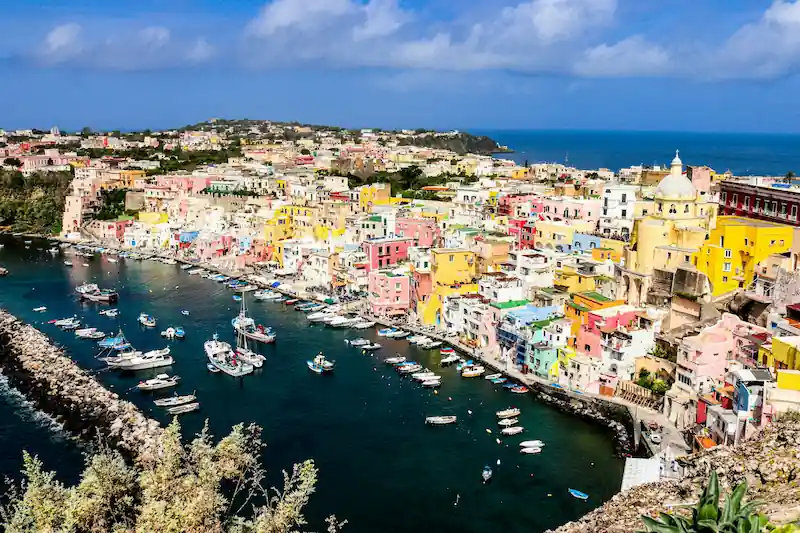
Capri is the iconic choice for dramatic scenery and boat-tour energy. Ischia is better for thermal atmosphere, gardens, beaches and a more relaxed island day. Procida is smaller, colorful and slower, with a gentler scale for travelers who want harbor views rather than a big checklist.
Is the Amalfi Coast worth a day trip from Naples?
It can be worth it if coastal scenery is a priority, but it is a long day and logistics matter. From a short Naples stay, Pompeii, Herculaneum or an island may be more efficient; choose the Amalfi Coast only if you accept the travel time.
What should I avoid doing in Naples?
Avoid treating Naples like a tidy checklist city. Do not stack too many churches, underground sites and food queues into one day, do not plan Pompeii in the hottest hours if you can avoid it, and do not add Capri or Amalfi at the expense of seeing Naples itself.
What is the best way to structure one day in Naples?
Use the morning for the historic center and Cappella Sansevero, midday for pizza or a museum, late afternoon for Castel Sant’Elmo or the Lungomare, and evening in Chiaia, Piazza Bellini, Vomero or Santa Lucia. The key is contrast rather than maximum coverage.
The best Naples plans are selective, food-aware and built around contrast: dense streets, underground layers, hilltop views, sea air, and one carefully chosen wider excursion rather than maximum coverage.
Turn the right experiences into the right itinerary
Once you know what you want to do in Naples, the next step is turning those ideas into a trip that actually works day by day. Use the planner to organize the right mix of highlights, neighborhoods, and pace into a route that feels coherent, not crowded.