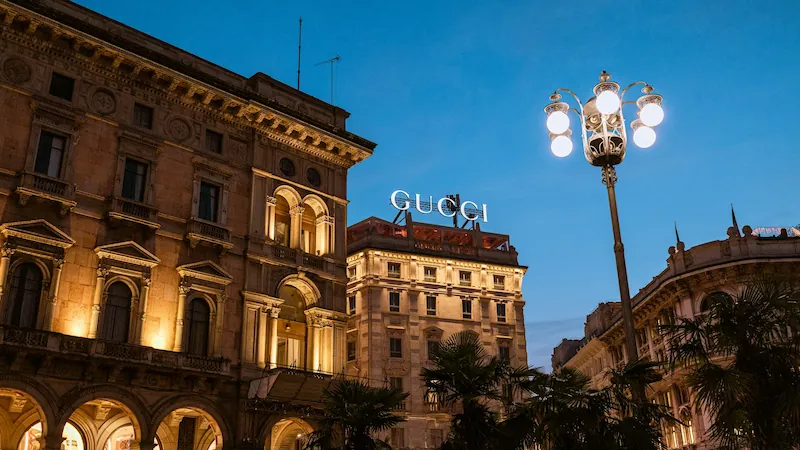
Where to stay in Milan
Find the best neighborhoods and hotels in Milan.
Open page →
Plan a smarter trip to Milan with a clear sense of where to stay, what to prioritize, and how the city actually works. Milan is not a continuous old-town experience: it is a set of distinct urban worlds — Duomo ceremony, Brera culture, fashion-quarter polish, Navigli evenings, Porta Nuova architecture, and local residential districts — and the best trips use those contrasts deliberately.
Find the best neighborhoods and hotels in Milan.
Open page →
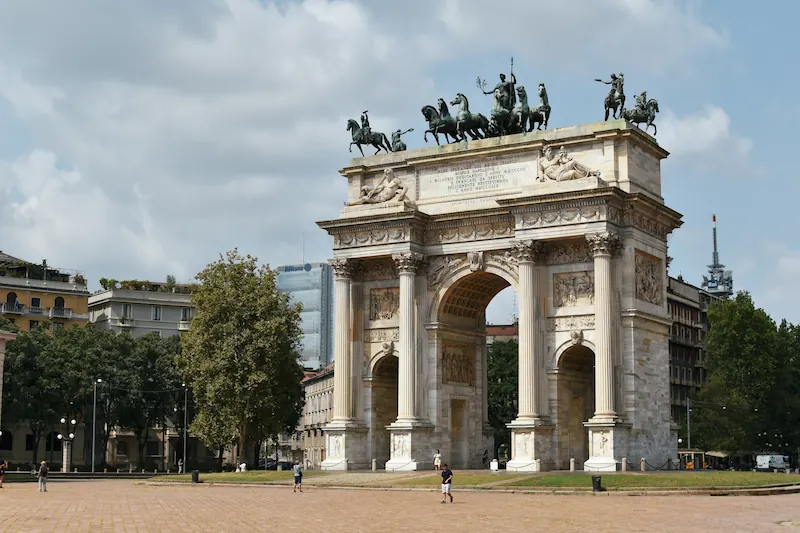
Prioritize the activities that deserve your time in Milan.
Open page →
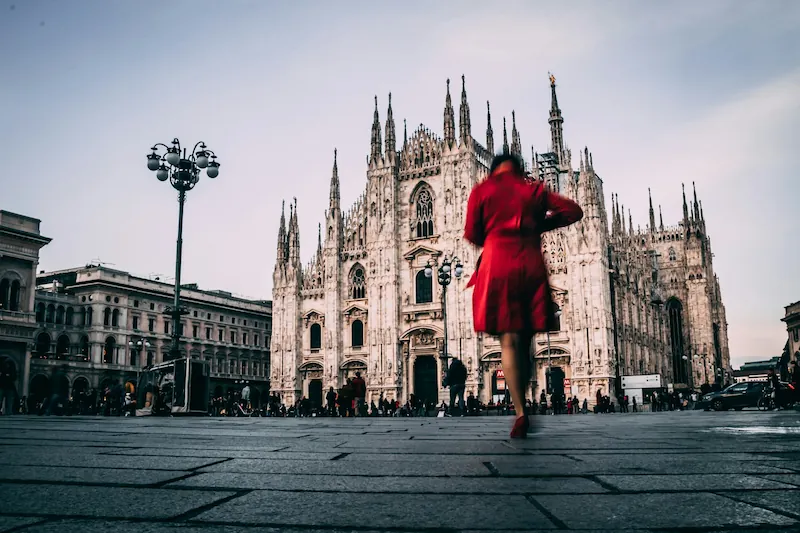
1 Day in Milan: Walkable First-Time Itinerary
Open itinerary →
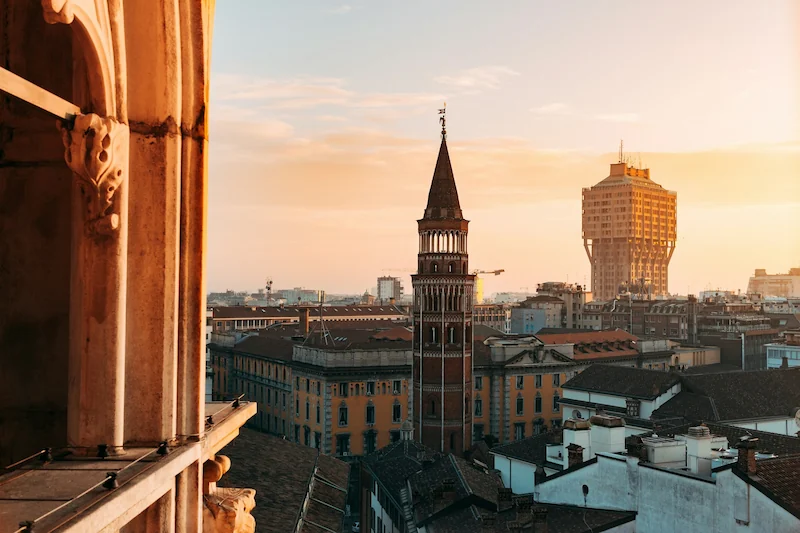
2 Days in Milan: First-Time Itinerary & What to See
Open itinerary →
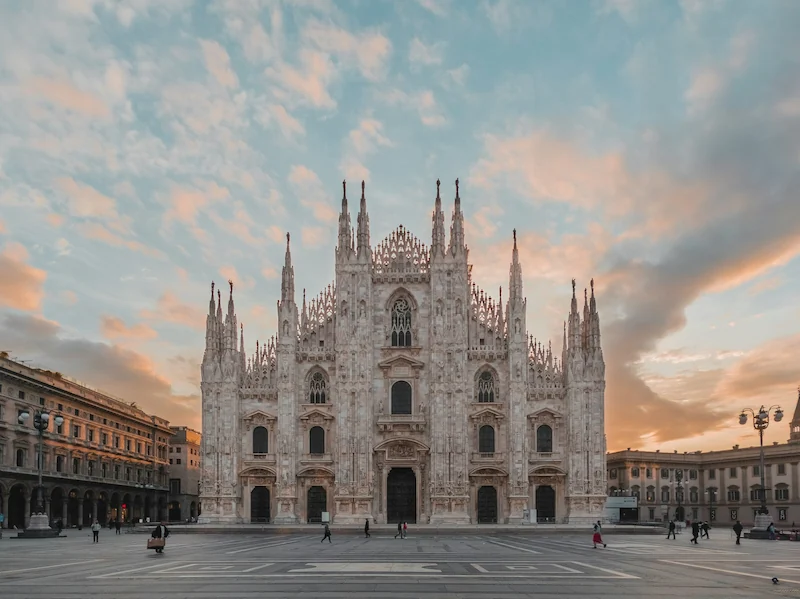
3 Days in Milan: Design, Duomo & Navigli Itinerary
Open itinerary →
Milan works through clusters, not sprawl. The Duomo core gives the ceremonial introduction; Brera adds art and neighborhood texture; Porta Venezia and Porta Romana make the city feel lived-in; Navigli carries the evening rhythm; Porta Nuova and Isola explain contemporary Milan; and the fashion/design layer runs through the Quadrilatero, Triennale, Tortona, and major events. First-time visitors lose time when they expect one historic center to explain the whole city. The right Milan trip is directional: choose the essential anchors, then move between districts with purpose.
Milan is worth structuring a trip around because it offers a different Italian city model: commercial, design-led, culturally dense in selected pockets, and more dependent on rhythm than spectacle. It rewards travelers who care about how people use a city — where they work, dress, eat, shop, move, and gather after office hours. The strongest version of Milan appears when a booked masterpiece or rooftop view is followed by a district that changes the pace completely: a quiet Brera lane, a canal-side aperitivo, a fashion-window sequence, or a late-afternoon skyline walk around Porta Nuova.
Best time: April to June and September to October for the clearest all-round Milan trip
Ideal trip length: 2 to 3 days for a strong first visit; 4 to 5 days if you want design districts, deeper museums, slower evenings, or a day trip
Milan is one of Italy’s more expensive city breaks, but the pressure is uneven. Hotels around Duomo, Brera, the fashion district, and major fair or fashion-week periods rise fastest. Well-connected bases such as Porta Venezia, Porta Romana, Centrale-adjacent streets, or parts of Isola can soften nightly rates without making the trip feel remote. Dining also splits sharply between polished central addresses and very good neighborhood restaurants a few metro stops away.
Milan is best understood as a gateway city inside Italy itself: a point of arrival, exchange, production, and projection rather than a fully self-contained historic stage set. The Duomo area remains the ceremonial anchor, but the city’s real identity unfolds laterally through Brera, the Quadrilatero, Porta Venezia, Navigli, Porta Romana, Porta Nuova, Isola, Tortona, and selected cultural outposts. These places are linked less by postcard continuity than by use: worship, commerce, design, dining, work, nightlife, sport, and exhibition culture.
The city sits on a largely flat plain, which makes walking easy once you are inside a district but hides the time cost of moving between quarters. There is no riverfront or hilltop sequence to orient the whole stay, so Milan reads through axes, metro lines, tram corridors, stations, canals, ring roads, and sudden material shifts. Stone around the Duomo, red brick near Sant’Ambrogio, glass around Porta Nuova, and canal edges in Navigli all signal different versions of the city before the map does.
Morning Milan is efficient and composed: cafés fill quickly, trams carry office traffic, and the central streets feel purposeful rather than leisurely. Midday is best used selectively — galleries, churches, shopping passages, museum interiors, or a planned lunch — especially when light hardens on the paving. By early evening the city changes character: aperitivo tables fill, Navigli and Isola become social, Brera grows softer, and Porta Nuova shifts from business district to skyline promenade.
Do not judge Milan by asking whether every street looks classically Italian. Read it as a set of controlled transitions: cathedral to arcade, masterpiece to neighborhood, fashion display to residential dinner street, canal edge to contemporary skyline. Once that frame is clear, Milan stops feeling sparse between sights and starts becoming one of Italy’s clearest cities for understanding modern urban life.
Open the planner
Start with the Duomo core because it gives the clearest civic and visual orientation before the city begins to separate into districts. Protect one major fixed-time experience early in the trip — usually The Last Supper, the Duomo rooftop, a major exhibition, or a performance — then build the surrounding half-day geographically. Use Brera as the best bridge between classic Milan and lived-in Milan: it pairs naturally with the center, Castello Sforzesco, Pinacoteca di Brera, and early evening wandering. Let the Quadrilatero, Villa Necchi, and selected house museums carry the fashion-and-design story instead of treating shopping as a purely commercial detour. Put Navigli, Isola, Porta Venezia, or Brera into the evening slot; Milan’s social geography matters more after 18:00 than it does at midday. Use Porta Nuova and BAM deliberately as the contemporary-city counterpoint to the Duomo, not as filler between older sights. Keep San Siro, HangarBicocca, Tortona, or deeper museum stops for travelers with a specific interest or enough time; they are valuable, but they can distort a short first visit. If the stay goes beyond three days, shift from sight coverage to district intelligence, design interiors, food rhythm, and one selective day trip rather than adding random attractions.
Vibe: refined village inside the center
Why go: Brera gives first-time visitors the best blend of atmosphere, cultural depth, and central walkability.
Who it fits: travelers who want atmosphere, walkability, and easy cultural access
Not for: price-first stays or travelers arriving by car
Where to stay: This is Milan’s strongest all-round base for many travelers: elegant but not stiff, central without feeling purely transactional, and especially good when you want evenings to begin on foot. It also helps the city feel warmer after the harder geometry of the Duomo core.
Vibe: ceremonial and high-access
Why go: This is the most efficient base for short stays built around the Duomo, Galleria, La Scala, major shopping, and fast orientation.
Who it fits: first-time visitors with limited time
Not for: travelers looking for residential calm or value
Where to stay: The center reduces friction more than it adds intimacy. It works best when time is short, major sights matter, and you want to minimize transit. For longer stays, pair it with deliberate evening moves into Brera, Navigli, Porta Venezia, or Isola.
Vibe: broad, stylish, and socially mixed
Why go: Porta Venezia offers one of the best blends of metro convenience, Liberty architecture, restaurants, bars, and everyday Milan.
Who it fits: travelers who want local dining and fast metro access
Not for: those expecting a compact old-town feel
Where to stay: A very smart base for return visits, food-led stays, and slightly longer trips. It gives you stronger local texture than the center while keeping fast access to Duomo, Centrale, Brera, and the fashion district.
Vibe: social and evening-led
Why go: Navigli works best for travelers who want dinner, bars, canal-side atmosphere, and late-day energy built into the stay.
Who it fits: nightlife-minded travelers and social weekend breaks
Not for: light sleepers or museum-first pacing
Where to stay: The area is strongest from aperitivo onward. It can be atmospheric and memorable, but it is not the quietest or most efficient first-time base. Treat it as an evening district first, a hotel base second.
Vibe: polished and contemporary
Why go: Porta Nuova gives access to Milan’s contemporary architecture, skyline walks, BAM park, Isola, and practical transport links.
Who it fits: business travelers and design-focused urban stays
Not for: visitors seeking classic Italian street texture all day
Where to stay: Efficient, polished, and visually coherent, this base suits business travelers and design-minded visitors. It is less intimate than Brera or Porta Venezia, but it explains modern Milan better than almost anywhere else.
Vibe: residential and quietly social
Why go: Porta Romana gives a more local Milan rhythm with good dining, quieter evenings, and manageable access to the center.
Who it fits: slower travelers and return visitors
Not for: one-night stays built around maximum monument access
Where to stay: A strong choice when you want Milan to feel inhabited rather than staged. It is better for lingering dinners, longer stays, and repeat visitors than for one-night landmark efficiency.
Milan reveals itself through sequencing more than spectacle: one monumental anchor, one reservation-led masterpiece or museum layer, one district that shows how the city lives, and one evening zone that changes the tone completely. The city becomes richer once you stop asking only what to see and start asking which version of Milan each experience opens: sacred, commercial, artistic, design-led, social, contemporary, or residential.
Planning tip: Use your most time-sensitive reservation as the day’s anchor, then let the surrounding district carry the rest of the experience instead of crossing the city for unrelated stops.
This is the clearest single introduction to Milan’s visual logic: ceremonial center below, marble spires around you, and a city that stretches out as grids, rooftops, tram lines, and glass towers rather than a romantic panorama. It should be one of the first fixed anchors of a first visit.
Tip: Book a timed slot and aim for early morning or late afternoon for cleaner movement and better rooftop conditions.
The visit is short, tightly controlled, and highly structured, which is exactly why it belongs near the top of a Milan trip. It condenses art history, access pressure, and Milan’s reservation-led culture into one concentrated stop.
Tip: Treat this as a fixed-time anchor and build Santa Maria delle Grazie, Sant’Ambrogio, or a western historic-core walk around it.
Seen quickly, the Galleria is just a transit corridor near the Duomo. Walked slowly, it explains Milan’s public elegance and the way retail, architecture, civic display, and social theatre were designed to work together.
Tip: Use it as part of the Duomo–Galleria–La Scala axis, ideally before crowds turn it into pure passage.
Check guided tours →
The castle works best as a spatial hinge between the center and Parco Sempione rather than as an all-consuming museum block. It broadens the trip from ceremonial Milan into a more civic, historical, and open-air version of the city.
Tip: Pair it with open-air time rather than stacking it after a heavy museum sequence.
Check guided tours →
This is where Milan’s future-facing identity becomes explicit: corporate, landscaped, polished, vertical, and sharply different from the Duomo axis. It matters because it completes the city’s story rather than because it replaces the older center.
Tip: Walk from Piazza Gae Aulenti through BAM toward Isola in late afternoon, when the district feels less purely office-led.
Check guided tours →
The Quadrilatero della Moda is not essential only for shoppers. It explains how Milan turns fashion, display, heritage façades, and urban control into a public experience. Treated as city-reading rather than retail pressure, it becomes one of the clearest ways to understand Milan’s global identity.
Tip: Pair it with Via Manzoni, Villa Necchi, or Poldi Pezzoli rather than treating it as a standalone shopping mission.
Check guided tours →
Right by the Duomo, this cluster is the most efficient way to add depth without breaking the day’s geography. Palazzo Reale is strongest for major exhibitions, while Museo del Novecento gives a compact modern Italian art layer that fits naturally into a first or rainy-day visit.
Tip: Check exhibition schedules before committing; this stop is high-value when the programming matches your interests.
Check guided tours →
San Siro is not a universal first-trip essential, but it is a major Milan experience for football fans, families with sport-focused children, and travelers visiting around a match. It adds a completely different version of the city: mass culture, local identity, and big-event movement.
Tip: Treat match days as a separate planning condition because transport and timing become part of the experience.
Brera gives Milan one of its most coherent art experiences because it is serious without feeling oversized. It suits travelers who want one strong cultural layer that fits naturally into the surrounding district rather than dominating the whole day.
Tip: Keep the visit selective, then return to the streets of Brera before museum fatigue flattens the neighborhood.
Check guided tours →
Sant’Ambrogio changes the register of a Milan trip by bringing in a quieter, earlier, Romanesque city layer. The shift in material, light, and scale is immediate once the traffic noise drops behind the courtyard.
Tip: Give this stop room around it instead of squeezing it between faster-paced center visits.
Check guided tours →
For travelers interested in architecture, sculpture, and overlooked urban layers, the Monumental Cemetery is one of Milan’s most revealing side experiences. It shows the city’s relationship to memory, patronage, and built display more specifically than many conventional museum detours.
Tip: Only add this if design, architecture, or quieter city layers genuinely matter to you.
Check guided tours →
La Scala matters as part of Milan’s cultural infrastructure, but it rarely needs to dominate the trip unless opera is a central interest. A museum visit or performance slot works best when it supports the broader rhythm rather than replacing it.
Tip: Keep expectations specific: this is a prestige stop, not automatically a core Milan highlight for everyone.
Fondazione Prada is the right cultural card when you want Milan to feel less predictable. It brings together contemporary art, architecture, exhibition design, and a polished southern-city edge that contrasts strongly with the Duomo and Brera logic.
Tip: Best for repeat visitors, design-minded travelers, or anyone with three days or more; check the exhibition program before routing around it.
Triennale is one of the cleanest ways to let Milan’s design identity enter the trip without turning the day into a specialist itinerary. It works especially well after Castello Sforzesco or before a slower Parco Sempione pause.
Tip: Use it as a flexible cultural add-on; it is strongest when exhibitions or design themes match your interests.
Villa Necchi Campiglio, Poldi Pezzoli, and Bagatti Valsecchi show a Milan that is intimate, cultivated, and design-conscious rather than monumental. One house museum is enough for most trips, but it can be one of the best ways to connect fashion-quarter elegance with real domestic taste.
Tip: Choose this instead of another large museum if interiors, architecture, or design history matter to you.
Check guided tours →
The Museo Nazionale Scienza e Tecnologia Leonardo da Vinci is not a must for every first-timer, but it is one of Milan’s strongest family and rainy-day choices. It also gives Leonardo context beyond the Last Supper, especially for children or travelers who prefer practical invention to picture galleries.
Tip: Use it when traveling with children, teens, or on a rain-heavy day; otherwise keep it secondary to Brera or the core art stops.
Check guided tours →
Aperitivo is not a side activity in Milan; it is one of the clearest ways to watch the city recompose itself after the workday. The canal edge gives the postcard version, but the more useful experience is choosing one area and letting the evening build rather than chasing multiple addresses.
Tip: Arrive slightly before peak hour if you want choice without losing the social build-up.
Check guided tours →
This is not luxury Milan, and that is exactly why it is useful. A short section of Corso Buenos Aires shows the city at a more everyday commercial register: fast-moving, practical, and less curated than the center or fashion quarter.
Tip: Use only a section of the boulevard, preferably linked to Porta Venezia, unless shopping is one of your trip priorities.
Check guided tours →
Porta Venezia shows Milan at a more mixed and socially elastic scale than the center. It is a useful district for reading how locals actually transition from movement to dinner and evening without the tourist concentration of Navigli.
Tip: This works best as a late-day district rather than a first stop of the morning.
Check guided tours →
The park is less about ticking off green space than about resetting the trip’s tempo. After stone-heavy central Milan, the slower footfall and softened sound level change how the rest of the day feels.
Tip: Use it after the castle or center rather than as a destination on its own.
Check guided tours →
Isola is the softer counterpoint to Porta Nuova: close to the skyline, but more relaxed, residential, and bar-led. It is one of the best districts for travelers who want contemporary Milan without the polish of the business district or the tourist concentration of Navigli.
Tip: Use it after BAM or Piazza Gae Aulenti, especially on a second or third night.
Check guided tours →
Many visitors reduce Navigli to one canal photo, but Darsena helps the district make spatial sense. It shows the wider water edge, the movement between aperitivo streets, and why this part of Milan works best as a late-day experience rather than a daytime monument stop.
Tip: Arrive before dinner, walk Darsena first, then choose one canal-side or side-street area rather than drifting randomly.
Check guided tours →
Tortona is valuable because it points to Milan’s design and exhibition economy, not because every visitor needs to spend time there. It becomes most relevant around design programming, MUDEC, galleries, or when the trip is deliberately looking beyond the central checklist.
Tip: Do not add it to a short first trip unless design, MUDEC, or the Navigli/Porta Genova side already fits the day.
Check guided tours →
QC Terme is not a cultural essential, but it is a useful Milan card for couples, winter trips, rainy days, or travelers who want the city to slow down. It works because it turns Porta Romana into a restorative evening rather than another sightseeing zone.
Tip: Book ahead at busy times and treat it as an evening reset, not as a replacement for Milan’s core experiences.
Check guided tours →
A serious Milanese meal gives the trip more depth than grazing randomly around the Duomo. Risotto alla milanese, ossobuco, cotoletta, mondeghili, and seasonal northern Italian cooking all help explain the city’s preference for controlled comfort rather than theatrical abundance.
Tip: Prioritize a strong trattoria or classic room in a neighborhood you already plan to spend the evening in.
Check food options →
Cotoletta belongs in a Milan trip because it reflects the city’s preference for recognizable classics done with control. It works best when treated as part of the local dining grammar, not as a novelty order.
Tip: Check the house style before ordering; thickness and cut can vary meaningfully by address.
Check food options →
In Milan, aperitivo is a city rhythm as much as a food habit, and it can structure the whole evening. Doing it once as a real meal-forming stop helps explain how the city moves socially after work hours.
Tip: Choose one place for the ritual itself rather than drifting through several mediocre stops.
Check food options →
Milan’s café culture is functional but refined, and its pastry tradition — including panettone when seasonally relevant — gives mornings a sharper local rhythm than a generic hotel breakfast. It is a small experience, but it helps the day start in a Milanese register.
Tip: Stand at the bar at least once if you want the local rhythm rather than a drawn-out table pause.
Check food options →
Food in Milan works best when attached to a district: Brera for polished ease, Porta Venezia for variety, Isola for a looser modern mood, Navigli for social energy, and Porta Romana for a calmer residential dinner. The neighborhood often matters more than one famous address.
Tip: Pick the dinner district before late afternoon so the evening does not dissolve into last-minute searching.
Check food options →
Milan is not only classic risotto and polished aperitivo. Chinatown and Isola give the trip a more contemporary, casual, and local food register, especially useful for repeat visitors, younger travelers, or anyone who wants a break from central formality.
Tip: Use this as a second or third evening, not as a replacement for one classic Milanese meal.
Check food options →
Milan expands quickly once you add districts, design stops, shopping, football, spa time, major exhibitions, and day trips. The strongest trip protects the layers that actually explain the city and downgrades what only sounds important on paper.
Milan can work well with children, but more as a structured city break than as a free-form sightseeing marathon. The easiest version mixes one clear anchor activity with parks, trams, food breaks, broad public spaces, and one family-fit indoor stop rather than long sequences of churches or picture galleries. Late afternoon is often the most comfortable family moment, when the light softens and pedestrian areas feel less hard-edged.
Milan scales well when the stay is honest about its depth: short for the core, longer for district intelligence, design layers, slower meals, and evening life. The city is rarely improved by adding random stops; it is improved by making each day spatially coherent.
Open the planner →
Milan is easy to mishandle if you treat it as either a monument sprint or a generic business city. The smoother trip comes from matching the right base, the right entry points, the right reservations, and the right daily tempo to the city’s real scale.
For most travelers, the smartest answer is April to June or September to October. You get full city energy, comfortable walking conditions, and evenings that still carry social life without the heavy heat drag of midsummer. Winter is perfectly workable if you value easier bookings, opera, shopping passages, and indoor culture more than long daylight. August can work, but some restaurants and local addresses may close and the city can feel less complete.
Two nights is the minimum threshold at which Milan starts making sense beyond a rushed cathedral stop. One day can cover the Duomo area and maybe one fixed reservation, but it rarely explains the city. Three days is the strongest first-visit baseline.
Choose your base by deciding what must feel effortless: landmark access, neighborhood atmosphere, nightlife, modern comfort, or value. Duomo reduces transit friction, Brera gives the best central atmosphere, Porta Venezia adds dining and local rhythm, Navigli is evening-led, Porta Nuova is modern and efficient, and Porta Romana is calmer and more residential. If you stay outside the core, metro access matters more than nominal distance on the map.
Milan is served primarily by Linate, Malpensa, and Bergamo airports. Linate is the most convenient for short city breaks, Malpensa handles many international and long-haul routes with rail and bus links into the city, and Bergamo is often used by low-cost carriers but requires more transfer time. Milano Centrale is also one of Italy’s major rail gateways, making the city easy to combine with Lake Como, Bergamo, Turin, Bologna, Verona, or Switzerland-facing routes.
Within districts, Milan is best handled on foot because the city reveals itself through street transitions, courtyards, passages, tram corridors, and changes in building material. For bigger jumps, the metro is the cleanest tool. Trams are slower but useful for reading the surface city. Taxis and ride-hailing make more sense at the edges of the day, after late dinners, with luggage, or when moving between areas that do not connect cleanly by metro.
Milan is a straightforward city for visitors, with reliable services and generally orderly streets. The main travel concern is ordinary big-city attentiveness: watch bags and phones around transport hubs, crowded metro platforms, the Duomo area, shopping streets, and compressed evening zones. Match days, fairs, and fashion-week periods can make the city feel busier and more expensive rather than unsafe.
Milan changes less through dramatic climate shifts than through variations in light, pace, pricing, and how fully the city is operating. Spring and autumn produce the most complete version: walkable, socially active, culturally programmed, and balanced enough for architecture, shopping, museums, and evening life. Winter suits travelers who want fewer crowds, opera, cafés, shopping passages, and indoor culture. Summer works best for flexible travelers who can start early, pause indoors, and accept that August may feel quieter or less representative.
This is the most legible season for a first or second Milan trip because the city feels fully switched on without becoming exhausting to walk. The mix of clear light, workable temperatures, active exhibitions, and evening terraces makes it easy to pair major sights with neighborhood time. Around design and fair periods, book hotels and restaurants earlier than usual.
Summer creates a more selective Milan: stronger for shopping, interiors, early starts, and later dinners than for long midday movement. Heat settles into broad paved areas, and August can bring a flatter local rhythm or selected closures. The season suits repeat visitors, flexible planners, and travelers who do not need the city at its most business-like.
Early autumn brings back one of Milan’s strongest combinations: active streets, stable urban rhythm, fashion and cultural energy, and enough evening life to make district-based nights worth protecting. It suits nearly everyone, especially travelers who want a balanced mix of culture, dining, shopping, and neighborhood atmosphere.
Winter turns Milan into a tighter, more interior city break built around museums, churches, cafés, shopping passages, opera, design stores, and deliberate evening plans. Shorter daylight changes the shape of the day, but lower pressure often makes the city easier to navigate and less performative. It suits travelers who prefer focused cultural time over long outdoor wandering.
These are the practical questions that usually shape a smoother Milan stay, better area choices, and a more strategic use of time.
Three days is the strongest baseline for a first Milan trip. That gives enough room for the Duomo core, one reservation-led cultural anchor such as The Last Supper, Brera or Castello, one contemporary-city layer, and at least one evening district. Two days is possible, but it makes Milan feel narrower and more checklist-driven.
Yes, especially if you want a sharper, more contemporary contrast to Rome, Florence, Venice, or Naples. Milan is not the most romantic or ancient-feeling Italian city, but it is one of the clearest for design, fashion, modern architecture, aperitivo culture, and urban rhythm.
Brera is usually the smartest all-round choice because it balances atmosphere, central access, culture, and easy evenings. Duomo works best if time is very short and you want maximum efficiency. Porta Venezia is excellent if dining, bars, and local neighborhood energy matter as much as monument access.
Milan is very walkable within its individual districts, but not every district that matters sits inside one comfortable all-day loop. The best strategy is to walk deeply once you arrive in a zone, then use the metro for larger resets between the Duomo, Navigli, Porta Nuova, Porta Venezia, San Siro, or more distant cultural stops.
The clearest first-trip essentials are the Duomo rooftop, The Last Supper, the Duomo-Galleria-La Scala axis, Brera, Castello Sforzesco with Parco Sempione, and one evening in Navigli, Brera, Porta Venezia, or Isola. Porta Nuova and BAM are the best way to add modern Milan without overcomplicating the trip.
Yes for The Last Supper, which should be treated as a fixed reservation rather than a flexible attraction. Duomo rooftop slots, La Scala performances, major Palazzo Reale exhibitions, Fondazione Prada programming, San Siro tours, and popular spa or restaurant bookings are also safer when reserved ahead during busy periods.
April to June and September to October are the best all-round periods because the city is active, walkable, and socially complete without the heaviest summer fatigue. Winter is a valid alternative for museums, opera, cafés, and shopping. August can work, but some local addresses close and the city may feel less representative.
Yes, but unevenly so. Central hotels, fashion-week periods, fairs, visible dining zones, and luxury shopping areas create the biggest cost spikes. Connected districts such as Porta Venezia, Porta Romana, Isola, or Centrale-adjacent areas can soften the budget without damaging the trip if metro access is strong.
The most common mistakes are overestimating how much fits into one day, treating the city as a single historic center, leaving key reservations too late, choosing restaurants by visibility near the Duomo, and burning the best evening hours moving between unrelated districts.
Yes, three days is enough for a strong first trip if you structure it by district and protect one or two high-value anchors. It is not enough to do every museum, design stop, and day trip, but it is enough to understand why Milan matters beyond its headline sights.
Two days can work if you are selective. Prioritize the Duomo rooftop, The Last Supper if booked, Brera, Castello or Museo del Novecento, and one evening district. Skip distant specialist stops unless they match a clear interest.
Brera is the best central area for atmosphere because it combines walkability, art, cafés, streets, and evening texture. Porta Venezia feels more local and socially mixed. Navigli is strongest for a lively canal-side evening, while Isola works well for a contemporary, less obvious night out.
Stay near the Duomo if you have very limited time, want maximum landmark access, or prefer hotel efficiency over neighborhood character. For a richer stay, Brera, Porta Venezia, Porta Romana, Navigli, or Porta Nuova often produce a better day-to-night rhythm.
Yes, but mostly in the late afternoon and evening. Navigli is not Milan’s most important daytime sightseeing area; it works because of aperitivo, canal-side movement, dinner, bars, Darsena, and social energy. Treat it as an evening district rather than a monument hunt.
Yes. The rooftop is usually more rewarding than the cathedral interior alone because it gives Milan its clearest visual payoff: marble spires at close range, the city grid below, and the contrast between the historic core and modern skyline.
Yes, if you can book it without distorting the whole trip. The visit is short and controlled, but the cultural weight is exceptional. It is one of the few Milan experiences that can feel genuinely regrettable to miss if art history matters to you.
Milan can work well with kids if you avoid overloading the day with interiors. Use the Duomo exterior, Galleria, Castello grounds, Parco Sempione, trams, BAM, the Science and Technology Museum, and San Siro if football is a real interest.
Rain usually pushes Milan into one of its strengths: museums, cafés, shopping passages, churches, exhibitions, and design interiors. The best rainy-day choices include Museo del Novecento, Palazzo Reale, Pinacoteca di Brera, Fondazione Prada, Triennale, the Science and Technology Museum, and selected house museums.
Yes, but it is not a food city that reveals itself only through famous dishes. The best food rhythm is coffee and pastry, one proper Milanese meal, aperitivo, and a neighborhood dinner in Brera, Porta Venezia, Isola, Navigli, or Porta Romana. Risotto alla milanese, cotoletta, ossobuco, panettone, and aperitivo culture give useful local anchors.
No. Fashion and retail are central to Milan’s identity, but the city is much stronger when shopping is treated as one layer among culture, architecture, design, food, and neighborhoods. The Quadrilatero is worth seeing even without buying anything because it explains Milan’s relationship to display and taste.
San Siro is worth visiting if football is part of the trip, if you are traveling with sport-focused children or teens, or if there is a match that interests you. It is not a universal first-trip essential, and it should not replace the Duomo, Last Supper, or core city districts on a short stay.
Porta Nuova and BAM are the clearest modern Milan experience, especially when paired with Isola. This route gives you towers, public space, contemporary landscaping, and a very different city mood from the Duomo or Brera.
For most first-time visitors, Pinacoteca di Brera is the strongest classic museum because it is serious without becoming overwhelming. Museo del Novecento is the easiest central modern-art option, while Fondazione Prada is best for contemporary-art and architecture-focused travelers.
You can, but it will be a compressed version of the city. Focus on the Duomo, Galleria, a short central walk, and either the Last Supper if booked or Brera. Do not try to add Navigli, Porta Nuova, San Siro, and multiple museums in the same day.
Lake Como is the classic first choice if scenery matters and you have at least three full days overall. Bergamo is easier and more city-focused. Turin, Verona, Lake Maggiore, Pavia, and the Bernina route make sense for longer stays or more specific interests.
Milan is strongest when the trip protects rhythm, districts, and reservations as carefully as it protects sights.
Find the best places to stay, how to get there, and move around with ease.
Build a smarter trip base
Once you understand how Milan works and what matters most for your trip, the next step is turning that direction into a real itinerary. Use the planner to organize your days around the right areas, experiences, and rhythm so the trip feels clear before you go.