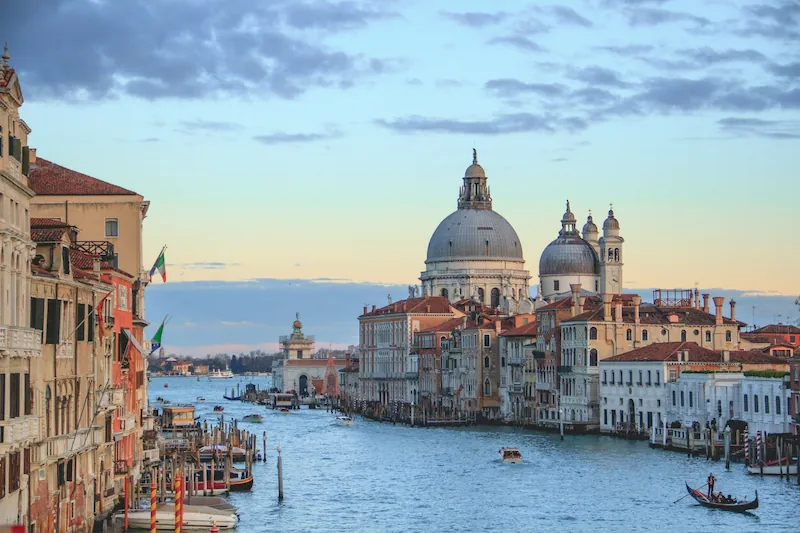
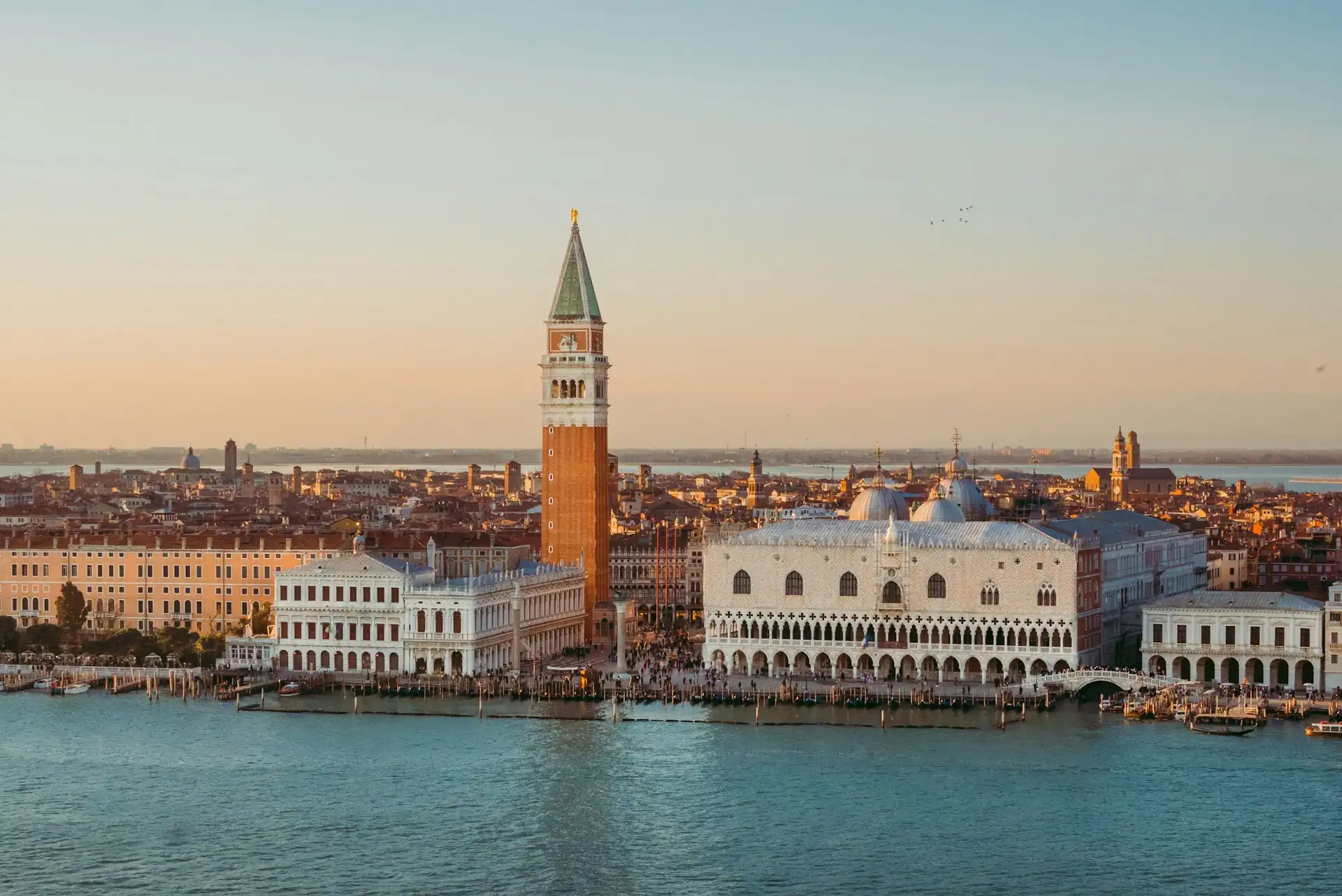
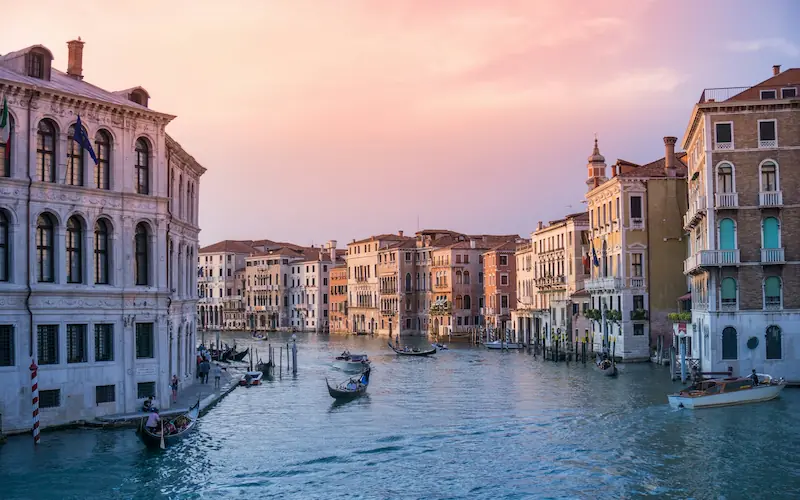
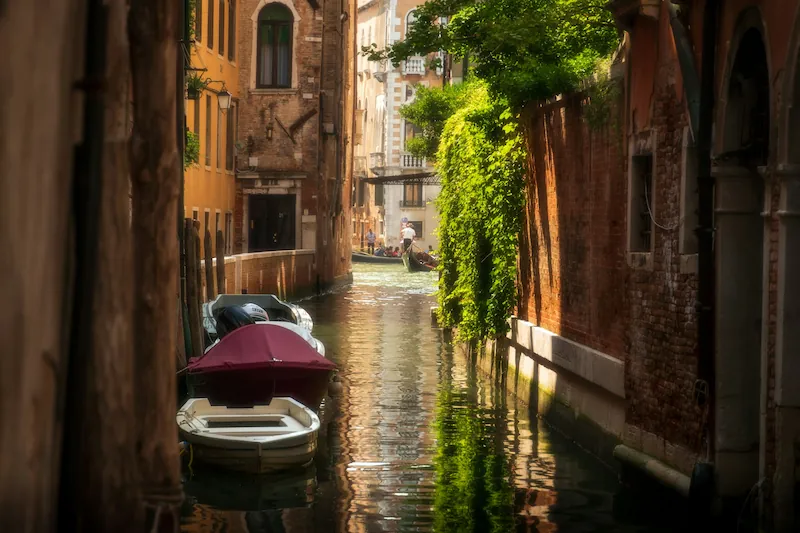
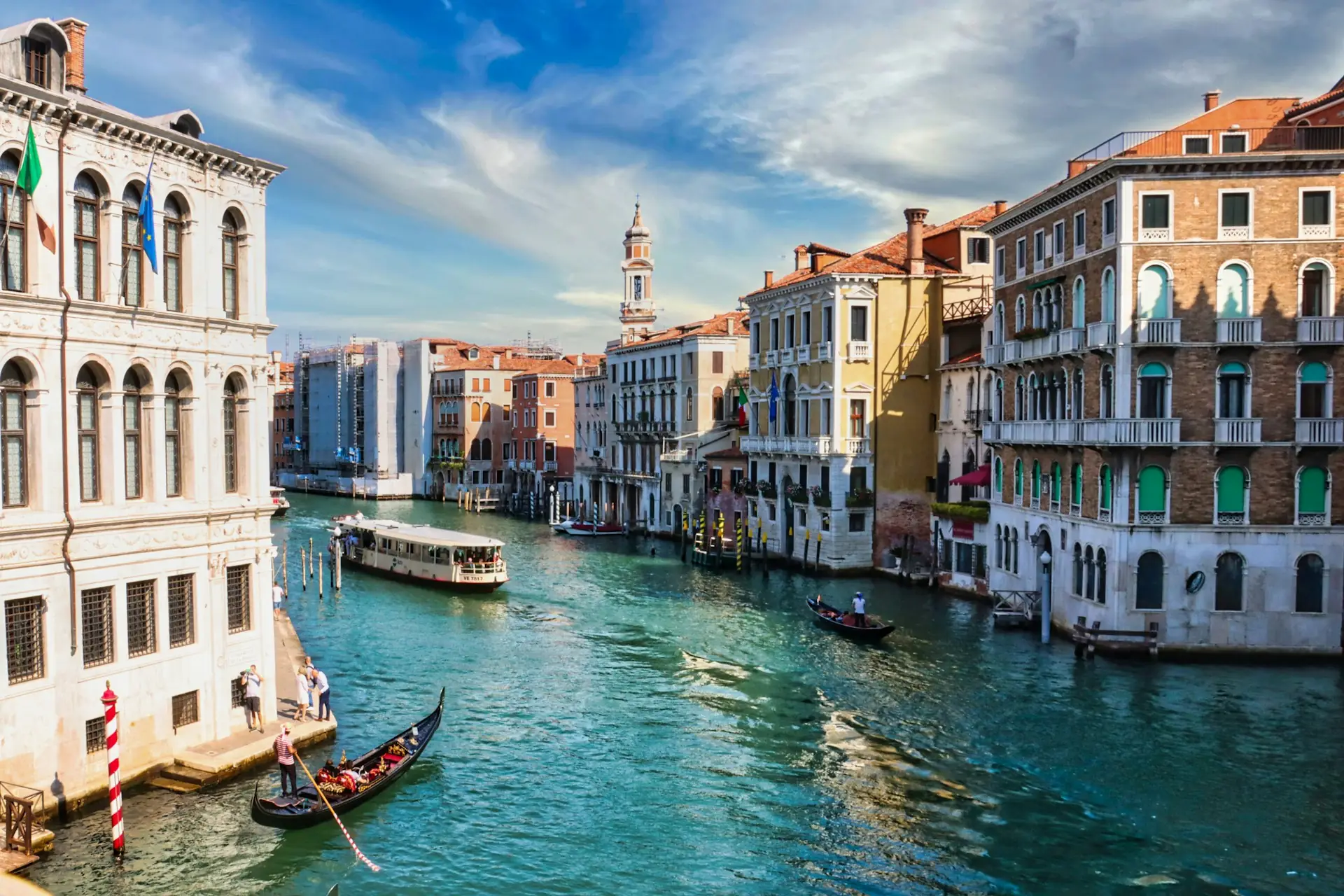
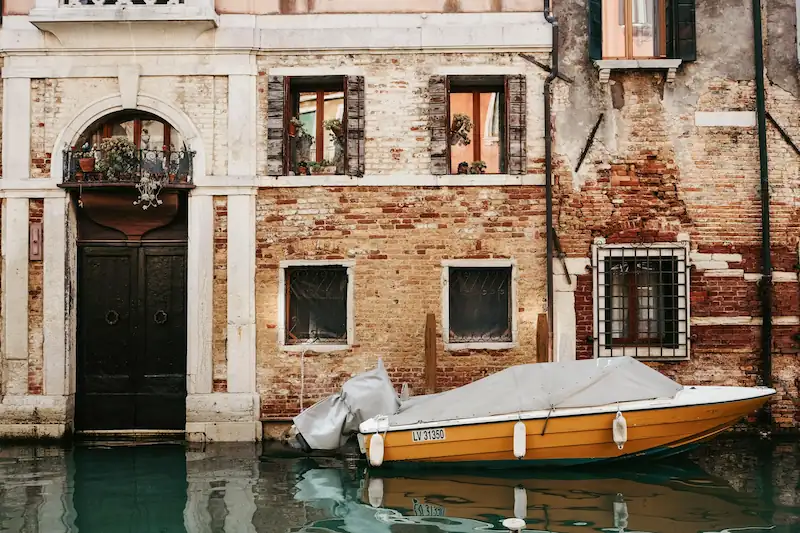
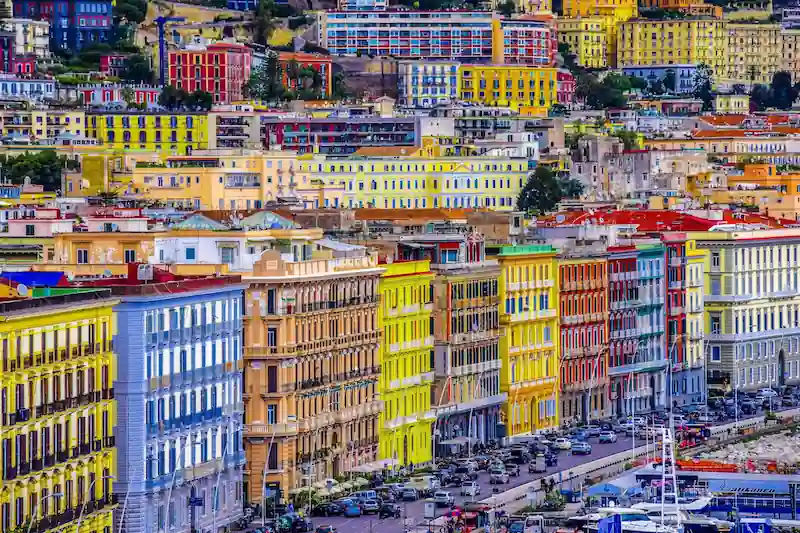
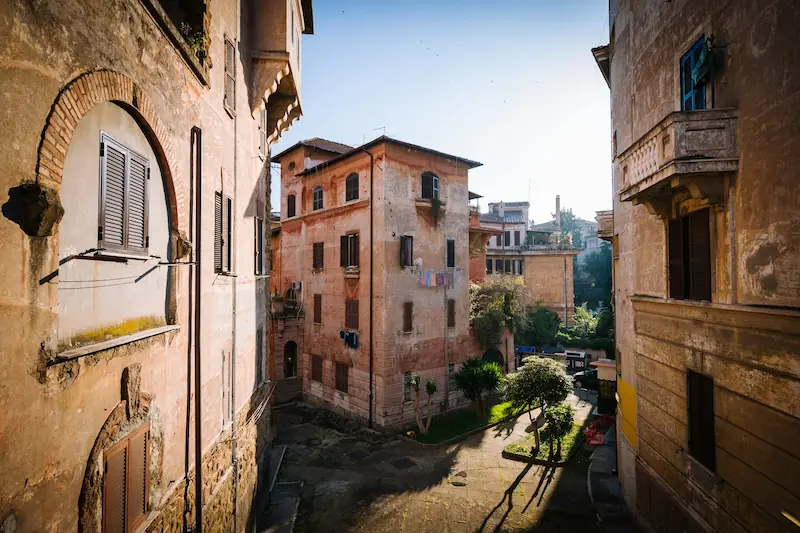
Find the best areas to stay in Venice based on your trip length, arrival route, budget, hotel style, and how you want the city to feel day by day. Venice is not a normal historic center where every central address works the same way: bridges, vaporetto stops, luggage routes, crowd bottlenecks, late-night returns, and the exact side of a canal all change the quality of the stay. This guide is built to help you choose a base that reduces friction, protects the best hours of the day, and matches the version of Venice you actually want: ceremonial, cultural, local, practical, or retreat-like.
Best areas
San Marco is the most efficient base for a short first trip, San Polo and Rialto are best for central food-and-market access, Dorsoduro is the smartest all-round balance, Cannaregio gives stronger local value, Castello feels central but airier, Santa Croce simplifies arrivals, and Giudecca trades immediacy for quiet lagoon space.
Booking timing
Book early if you care about a specific neighborhood, canal-side setting, quiet micro-location, family-sized room, or boutique hotel. In Venice, the best stays disappear not only by price band, but by bridge count, vaporetto convenience, and whether the hotel sits on the right side of the district for your daily routes.
Best areas to stay in Venice at a glance
San Marco – Best for: first-time efficiency, luxury stays, and shortest sightseeing days · Vibe: classic Venice at its most polished and busiest · Stay here if: you want St Mark's Square, the Basilica, the Doge's Palace, La Fenice, and lagoon-front walks within the simplest possible walking radius · Avoid if: you want quiet evenings, lower prices, or a more residential feel
San Polo and Rialto – Best for: central food access, market mornings, and Grand Canal movement · Vibe: commercial, historic, lively, and intensely useful · Stay here if: you want to stay central without sleeping in San Marco, with Rialto, bacari, markets, and cross-city routes close by · Avoid if: you want quiet, romance-first streets every night, or the easiest luggage arrival
Dorsoduro – Best for: best overall balance between atmosphere, culture, calm, and walkability · Vibe: elegant, slower, and more livable without feeling remote · Stay here if: you want a beautiful, lower-pressure base for museums, Zattere walks, Salute, Accademia, and calmer evenings · Avoid if: you want to be right beside St Mark's Square
Cannaregio – Best for: value, local restaurants, station access, and longer stays · Vibe: less stage-set, more everyday Venice · Stay here if: you want stronger food rhythm, more everyday Venice, easier Santa Lucia access, and less polished tourist pressure · Avoid if: you want the most polished postcard setting outside your door
Castello – Best for: central-but-calmer stays, Biennale access, and repeat visitors · Vibe: broad, quieter, and more varied from San Zaccaria to Sant'Elena · Stay here if: you want to remain close to San Marco while sleeping in a district that opens into quieter campi, lagoon edges, and residential pockets · Avoid if: you want station convenience or the easiest dining density at night
Santa Croce – Best for: easy arrivals, luggage-light logistics, one-night stays, and rail connections · Vibe: functional, understated, and much more strategic than romantic · Stay here if: you are arriving by train, bus, or airport coach and want to avoid dragging luggage across too many bridges · Avoid if: you want the full atmospheric Venice feeling the moment you step outside
Giudecca – Best for: quiet retreats, luxury hotels, skyline views, and slower lagoon stays · Vibe: calmer, more open, and lagoon-facing · Stay here if: you value peace, terraces, open water, and hotel time more than spontaneous walk-out access to every landmark · Avoid if: you dislike relying on the vaporetto several times a day
How to choose the right area in Venice
Choosing where to stay in Venice is less about being 'central' and more about reducing the specific frictions that can make the city feel harder than it is. A hotel that looks close on the map may still involve bridges, narrow crowd corridors, a slow vaporetto transfer, or an awkward late-night return. The best Venice neighborhood is the one that protects your weakest moments: arrival with luggage, the first early sightseeing block, the midday break, dinner, and the final walk back at night.
Choose by trip length first: San Marco or nearby Castello works best for two nights, while Dorsoduro and Cannaregio often become better as the stay lengthens.
Add San Polo and Rialto to your shortlist if you want a central base built around food, markets, and cross-city movement rather than pure monument access.
Prioritize exact micro-location over district reputation: a quiet lane near a vaporetto stop often beats a famous address buried behind several bridges.
For families, room size, final access, and calmer evenings matter more than being as close as possible to St Mark's Square.
For couples, decide whether you want ceremonial Venice, elegant Dorsoduro, atmospheric Cannaregio, or retreat-like Giudecca before comparing hotels.
For budget stays, do not chase the cheapest room if it pushes you into repeated transport, heavy luggage routes, or weak evening dining options.
If you plan Murano, Burano, Lido, or airport boat transfers, check vaporetto access as carefully as walking distance.
If you are sensitive to crowds, avoid sleeping exactly where you will already spend the busiest parts of the day.
How Venice works as a place to stay
Venice feels compact only until you start carrying luggage, crossing bridges, timing a vaporetto, or returning at night from a district that looked close on the map. From a stay perspective, the city works as a set of movement systems: the ceremonial San Marco core, the commercial Rialto-San Polo spine, the cultural Dorsoduro edge, the local Cannaregio arc, the quieter Castello extension, the arrival-focused Santa Croce side, and the separated Giudecca retreat zone.
San Marco gives the shortest sightseeing days but the highest crowd and price pressure.
San Polo and Rialto give the strongest food-market-centrality mix, but the bridge and market approaches can be crowded.
Dorsoduro is often the best balance because it is central enough for classic Venice while feeling more breathable.
Cannaregio works well when you want value, restaurants, station access, and a more lived-in evening mood.
Castello depends heavily on exact position: the San Zaccaria side is practical, the eastern side is quieter and more residential.
Santa Croce is not always the most beautiful choice, but it can be the smartest choice for arrivals, departures, and luggage.
Giudecca changes the stay from walk-out immersion to boat-linked retreat, which is excellent for some travelers and frustrating for others.
Your exact distance to a vaporetto stop, bridge crossing, and likely dinner route matters as much as the district name.
hyper-central ceremonial core – San Marco and its immediate edges: best for first-time efficiency, luxury hotels, iconic views, and shortest access to the Basilica and Doge's Palace.
commercial food-and-crossing spine – San Polo and Rialto: best for market mornings, bacari, central walking routes, and Grand Canal orientation without sleeping directly in San Marco.
balanced cultural center – Dorsoduro: calmer, elegant, museum-rich, and still practical enough for most classic Venice itineraries.
local-value western arc – Cannaregio and parts of Santa Croce: better for value, food, station access, and a more lived-in Venice rhythm.
central-but-airier eastern side – Castello: close enough to the major highlights while offering quieter streets, Biennale access, and more spacious pockets.
retreat island zone – Giudecca: strongest for calm, views, and separation, but built around vaporetto dependence rather than spontaneous walkability.
Best areas to stay in Venice
These are the neighborhoods that make the strongest practical sense for most Venice trips. Each one improves the stay in a different way, and the right choice depends on whether you value immediate access, calmer evenings, arrival ease, local texture, or a more retreat-like base.
San Marco
San Marco is the most efficient place to stay in Venice if this is your first trip, your time is short, or you want the city's headline monuments to sit inside your natural daily radius. Early mornings are the real argument for staying here: the Basilica, Doge's Palace, lagoon edge, La Fenice, and polished hotel streets are available before the city hardens into its busiest flow. The trade-off is clear. San Marco is expensive, crowded, and less local than other sestieri, but it removes a lot of hesitation from a two- or three-night stay. It is the base for travelers who want Venice to open immediately rather than unfold slowly.
Why stay here: Stay here if your priority is frictionless first-time sightseeing, a polished hotel base, and the ability to experience the ceremonial core before and after the day-tripper peak.
Best for: first-time visitors, luxury stays, short breaks, couples, and travelers who want Venice's landmarks on foot
Pros
Best central location for a first trip
Easy to reach major landmarks before crowds build
Strong density of polished hotels and high-service stays
Excellent for late evening walks after day-trippers leave
Good fit for couples prioritizing atmosphere and efficiency
Cons
Most crowded part of Venice during peak hours
Higher prices for smaller rooms
Restaurants immediately around the square can be less rewarding
Less local feeling than other districts
Nearby highlights
Walking access to St Mark's Square before tour groups fully build
Fast reach to the Doge's Palace and Basilica without transport planning
Easy evening returns after dinner, concerts, or a late lagoon walk
Quick access to luxury shopping streets and polished hotel service zones
Short walk to major vaporetto stops for Murano, Lido, and lagoon routes
Useful base for sunrise and blue-hour photography around the ceremonial core
Budget
Hotel Firenze – Compact classic hotel just off the San Marco core, suited to travelers who want a central base without moving into full luxury pricing. Why we recommend: One of the clearest location wins in the area for travelers who care more about positioning than room size. Check availability
Hotel Casanova – Reliable central stay near La Fenice and the square, practical for short breaks built around walking everywhere. Why we recommend: It gives you a genuinely efficient San Marco address without trying to sell itself as something more rarefied than it is. Check availability
Albergo San Marco – Straightforward historic option steps from the square, best for travelers who want the core at their doorstep. Why we recommend: Few hotels at this level put you this close to the city's ceremonial center. Check availability
Mid
Hotel Montecarlo – Well-placed Venetian-style hotel that works especially well for first-timers wanting a central but comfortable base. Why we recommend: It balances location, service, and comfort better than many similarly positioned alternatives. Check availability
Hotel Donà Palace – Canal-facing boutique-style stay close to the square, good for couples wanting more character without moving into top-end pricing. Why we recommend: It offers stronger atmosphere than many central competitors while keeping the location extremely easy. Check availability
Al Theatro Palace – Refined modern-classic option near La Fenice, well suited to travelers who want a polished short-stay base in the heart of things. Why we recommend: The address is unusually useful for guests who want San Marco convenience with a more composed feel. Check availability
Upscale
Splendid Venice - Starhotels Collezione – High-comfort upscale hotel on a canal in the Mercerie area, very strong for travelers who want centrality with better room standards. Why we recommend: It is one of the smartest all-around upgrade choices in central Venice. Check availability
The St. Regis Venice – Top-tier lagoon-facing luxury for travelers prioritizing service, polish, and a more serene edge to San Marco. Why we recommend: It delivers true luxury while still keeping the ceremonial core within easy reach. Check availability
Baglioni Hotel Luna - The Leading Hotels of the World – Historic flagship address near the square, best for travelers who want classic Venetian grandeur rather than understated design. Why we recommend: Few hotels in Venice match its sense of occasion this close to the city's symbolic center. Check availability
San Polo and Rialto
San Polo and Rialto form Venice's most useful central alternative to San Marco. The area is historic, commercial, food-led, and extremely connected, with the Rialto Bridge, market streets, bacari, Grand Canal crossings, and routes toward Santa Croce, Dorsoduro, and San Marco all close at hand. It is not as polished or ceremonial as San Marco and not as calm as Dorsoduro, but it is one of the smartest bases if you want the city to feel active, practical, and edible from the moment you step outside. The exact street matters: Rialto itself can feel busy and exposed, while the lanes toward Campo San Polo, Frari, and San Rocco become more textured and rewarding.
Why stay here: Stay here if you want to be central without defaulting to San Marco, especially if food, markets, wine bars, Grand Canal access, and flexible walking routes matter to your Venice stay. It is a strong three-night base for travelers who want convenience with more local texture than the ceremonial core.
Best for: food-focused travelers, central walkers, repeat visitors, and first-timers who want practicality without sleeping in San Marco
Pros
Very central without being San Marco
Best base for Rialto Market, bacari, and food-led wandering
Excellent walking links toward San Marco, Dorsoduro, Santa Croce, and Cannaregio
Strong Grand Canal orientation and easy bridge-based movement
Good for travelers who want Venice to feel lively rather than purely scenic
Cons
Rialto itself can be crowded and noisy during the day
Arrival with luggage may involve awkward bridge crossings depending on the hotel
Less calm and elegant than Dorsoduro
Not every hotel has the polished feel of San Marco or the retreat mood of Giudecca
Nearby highlights
Rialto Bridge and Grand Canal crossings at the heart of the city
Rialto Market mornings and quick access to bacari for cicchetti stops
Campo San Polo, Frari, and Scuola Grande di San Rocco for cultural depth
Walkable routes toward San Marco without staying inside the most ceremonial district
Good positioning for Dorsoduro, Santa Croce, and Cannaregio without constant vaporetto dependence
Useful evening base if you prefer food streets and campi over luxury hotel lobbies
Budget
Pensione Guerrato – Atmospheric, old-Venice guesthouse close to Rialto Market, best for travelers who value location and character over polished hotel services. Why we recommend: It places budget-minded travelers in the market heart of Venice without pushing them into a generic transit area. Check availability
Ca' San Polo – Simple townhouse-style stay in the San Polo side streets, useful for travelers who want central access with a softer neighborhood feel. Why we recommend: It works well when you want to be close to Rialto and Frari without sleeping directly in the busiest flow. Check availability
Hotel Marconi – Traditional hotel by the Rialto Bridge, suited to travelers who want the Grand Canal and central routes immediately outside. Why we recommend: The location is the reason to book it: few budget-leaning central stays place you this close to Rialto. Check availability
Mid
Riva del Vin Boutique Hotel – Boutique-style stay near Rialto with a sharper, more contemporary feel than many traditional central hotels. Why we recommend: It is a smart choice for travelers who want the practical Rialto location without giving up comfort and style. Check availability
Palazzo Morosini Degli Spezieri – Apartment-style accommodation in San Polo, strong for travelers who want more space, independence, and a local-feeling base. Why we recommend: It is especially useful for longer stays or families who want San Polo's centrality without a small hotel room. Check availability
Hotel L'Orologio Venezia – Polished hotel near Rialto with a refined design mood and excellent central positioning. Why we recommend: It gives the Rialto area a more composed hotel option for travelers who want convenience without rough edges. Check availability
Upscale
H10 Palazzo Canova – Stylish Grand Canal hotel near Rialto, ideal for travelers who want centrality, views, and a cleaner contemporary polish. Why we recommend: It is one of the best upgrade options when you want San Polo/Rialto convenience with a more premium hotel experience. Check availability
Aman Venice – Ultra-luxury Grand Canal palace stay in San Polo, best for travelers whose hotel is a central part of the trip itself. Why we recommend: It is one of Venice's most exceptional luxury addresses and gives San Polo true destination-hotel weight. Check availability
Palazzina Grassi – Design-led high-end hotel near the San Samuele edge, useful for travelers who want a more creative luxury mood close to San Polo and Dorsoduro routes. Why we recommend: It brings a less conventional luxury identity than Venice's classic grand hotels while remaining very central. Check availability
Dorsoduro
Dorsoduro is the best all-round answer for many Venice stays because it gives the city beauty, culture, and space without making the trip feel remote. The Accademia, Peggy Guggenheim Collection, Salute, Punta della Dogana, Campo Santa Margherita, and the Zattere create a district that works in several moods: museum morning, waterfront afternoon, quieter dinner, and calmer return. It is less instantly iconic than San Marco but often more livable. For a three-night or longer stay, Dorsoduro is frequently the smartest compromise between atmosphere and strategy.
Why stay here: Stay here if you want Venice to feel elegant and readable rather than constantly compressed, especially on a cultural, couple-led, or slower-paced first trip.
Best for: couples, culture-led trips, stylish stays, calmer evenings, and travelers who want the best overall Venice balance
Pros
More breathing room than San Marco
Excellent fit for art-focused and slower-paced trips
Good balance of beauty and livability
Pleasant evening atmosphere with less crowd pressure
Strong museum and waterfront access
Cons
Not as instantly central for first-time landmark ticking
Some pockets feel quieter than travelers expect at night
Arrival with luggage can be less simple depending on exact street
You need to think slightly more about daily routing
Nearby highlights
Easy access to the Accademia and the Peggy Guggenheim Collection
Long Zattere walks with open water views and better evening breathing room
More attractive café and wine-bar rhythm than the ceremonial core
Good launching point for crossing toward San Marco without sleeping inside its densest zone
Useful for combining museum time, quieter mornings, and canal-side dinners
Better chance of finishing the day in a district that still feels composed rather than overloaded
Budget
Domus Cavanis – Simple value option near Accademia, best for travelers who want Dorsoduro positioning more than design or indulgence. Why we recommend: It is one of the easier ways to stay in a strong district without paying for boutique styling. Check availability
Hotel Agli Alboretti – Small hotel in a very practical cultural pocket, ideal for museum-heavy stays and walkable days. Why we recommend: The location is especially smart for travelers who want Dorsoduro's better rhythm without guesswork. Check availability
Hotel Messner – Traditional stay near Salute and the vaporetto, useful for travelers who value the district's calm over hotel frills. Why we recommend: It places you in one of Dorsoduro's most distinctive settings without full upscale pricing. Check availability
Mid
Palazzo Veneziano - Venice Collection – Polished canal-side hotel on the Zattere side, strong for comfort-focused travelers wanting a calmer edge of the center. Why we recommend: It combines style, comfort, and a practical Dorsoduro position unusually well. Check availability
Avani Rio Novo Venice Hotel – Modern, comfortable hotel at the easier-access end of Dorsoduro, especially useful for station arrivals and shorter stays. Why we recommend: It is one of the best choices when you want lower arrival friction without giving up a Venice-island stay. Check availability
Hotel Palazzo Stern – Grand Canal hotel with more character than a standard mid-range stay, suited to couples and slower itineraries. Why we recommend: It offers real sense of place and a stronger setting than many peers in its band. Check availability
Upscale
Il Palazzo Experimental – Design-forward hotel with a softer contemporary mood, ideal for travelers who want style without losing neighborhood calm. Why we recommend: It has more personality than many upscale Venice hotels without feeling performative. Check availability
Sina Centurion Palace – Luxury hotel by the Salute with dramatic water-facing positioning and more of a statement feel. Why we recommend: It turns Dorsoduro's waterfront setting into a full upgrade in atmosphere. Check availability
Ca' Pisani Hotel – Boutique design hotel in the Accademia area, best for travelers wanting a more curated and intimate upscale stay. Why we recommend: It gives Dorsoduro a rarer boutique angle than the city's more generic luxury addresses. Check availability
Cannaregio
Cannaregio is the best area to stay in Venice when you want stronger local texture, better value, easier station access, and a food scene that feels less engineered for one-time visitors. It is a large district, so exact placement matters: the station side is practical, the Jewish Ghetto and canal-side stretches feel more lived-in, and the routes toward Rialto become increasingly central. Cannaregio is not always the most polished base, but it is often the most satisfying for travelers who want Venice to feel plausible after dark. It works especially well for longer stays, repeat visits, and budget-conscious travelers who still want to stay on the islands.
Why stay here: Stay here if you want a more local Venice base with strong restaurants, better price logic, and easier rail arrival without leaving the historic city.
Best for: food-driven stays, budget-conscious travelers, repeat visitors, longer trips, and travelers arriving by train
Pros
Better value than San Marco
Easier station access than much of Venice
More local dining and evening life
Strong mix of busy and quieter pockets
Good fit for longer stays or repeat visits
Cons
Quality varies more street by street
Some sections are less instantly beautiful than the core postcard areas
Not every part feels equally convenient for first-time sightseeing
You need to choose your exact micro-location carefully
Nearby highlights
Easy access to Lista di Spagna and station approaches without sleeping beside pure transit flow
Strong bacari and dinner options that make evenings easier and more enjoyable
Good base for walking toward Rialto while keeping a more residential night-time mood
Useful for the Jewish Ghetto area and quieter canals with less day-trip pressure
Better chance of finding more generous room value than in San Marco
Convenient vaporetto links while still allowing plenty of walking days
Budget
Hotel Guerrini – Simple, practical hotel near the station side of Cannaregio, best for budget-minded travelers wanting a Venice-island base. Why we recommend: It keeps arrival and departure unusually easy for this price level. Check availability
Hotel Minerva & Nettuno di Venezia – No-frills option for travelers who want to stay central enough on the island while keeping costs controlled. Why we recommend: It is a workable base when budget matters more than hotel atmosphere. Check availability
Hotel Mezzo Pozzo – Traditional Cannaregio stay in a more atmospheric pocket, better suited to travelers who want charm at a lower price point. Why we recommend: It offers more neighborhood feel than many cheaper options near the station. Check availability
Mid
Hotel Giorgione – Classic Venetian hotel in a very useful part of Cannaregio, good for travelers wanting character and solid access to the center. Why we recommend: It gives you a stronger sense of place than many mid-range competitors. Check availability
Eurostars Residenza Cannaregio – Peaceful former-monastery setting in a quieter part of the district, suited to longer or calmer stays. Why we recommend: It is one of the better choices when you want Cannaregio's local feel without late-night street noise. Check availability
Carnival Palace - Venice Collection – More contemporary and comfortable than many Venice mid-range hotels, particularly useful near the northern Cannaregio side. Why we recommend: Room comfort is stronger than average in this segment. Check availability
Upscale
Radisson Collection Hotel, Palazzo Nani Venice – Refined palace conversion with upscale service, best for travelers who want Cannaregio calm with luxury standards. Why we recommend: It is a polished high-end option in a district that usually feels less inflated than San Marco. Check availability
The Venice Venice Hotel – Highly stylized luxury stay on the Grand Canal edge of Cannaregio, suited to travelers who want design and statement value. Why we recommend: It brings a fresher design identity than most Venetian luxury hotels. Check availability
Madama Garden Retreat – Small upscale retreat with a calmer garden-led mood, ideal for travelers seeking intimacy over grand-hotel formality. Why we recommend: It offers a rarer sense of quiet seclusion while remaining well placed. Check availability
Castello
Castello is Venice's most useful central-but-calmer district, stretching from the San Marco edge toward the Arsenale, Giardini, and Sant'Elena. That scale gives it several different personalities: near San Zaccaria it is highly practical for first-timers; around Santa Maria Formosa it feels atmospheric and central; farther east it becomes greener, quieter, and more residential. It is a particularly strong choice if you want to stay close enough to the icons while giving the trip more breathing room. During Biennale periods, it also becomes one of the city's most strategic bases.
Why stay here: Stay here if you want central access without the full San Marco premium and crowd pressure, or if Biennale, Arsenale, and quieter lagoon-side walks matter to your trip.
Best for: central-but-calmer stays, Biennale visitors, walkers, repeat visitors, and first-timers who want a softer base
Pros
Close to major sights while often quieter than San Marco
More spacious feel in many pockets
Good fit for walkers and slower return evenings
Strong range from practical central to calmer eastern addresses
Useful for Biennale-season stays
Cons
Large district, so the exact address matters a lot
Eastern sections can feel less convenient for short first visits
Dining density is less consistently strong than Cannaregio
Not as arrival-friendly as Santa Croce or station-adjacent areas
Nearby highlights
Quick access to the Riva degli Schiavoni and lagoon-front walks
Easy reach to San Marco without sleeping in its busiest streets
Useful access to Biennale areas and the greener Sant'Elena side
More comfortable late-night returns in quieter lanes and campi
Strong base for combining major sights with a more residential sleep experience
Good choice for travelers who like walking farther through the city rather than staying at its most compressed center
Budget
Hotel Rio – Practical budget stay near San Zaccaria and the San Marco edge, best for travelers wanting strong positioning over hotel character. Why we recommend: Few low-cost options put you this close to the main sights without drifting into a generic transit zone. Check availability
Hotel Caneva – Very simple central option between Rialto and San Marco, useful for budget travelers prioritizing location above all else. Why we recommend: It works because the address does most of the work. Check availability
Hotel Canada – Basic old-Venice stay around the Santa Maria Formosa pocket, better for travelers who plan to spend most of the day out. Why we recommend: It is one of the more workable lower-budget ways to stay in a very useful slice of Castello. Check availability
Mid
Hotel Casa Verardo Residenza d'Epoca – Historic stay very close to the San Marco side of Castello, strong for couples wanting charm and manageable sightseeing days. Why we recommend: It gives you period atmosphere without sacrificing practical access. Check availability
Hotel Palazzo Vitturi – Character-rich hotel on Campo Santa Maria Formosa, especially good for travelers who want a memorable old-Venice setting. Why we recommend: The square-side position gives it a stronger sense of place than many mid-range peers. Check availability
Aqua Palace – Designer-leaning hotel in a very strategic Castello location, balancing comfort, quiet, and walkability. Why we recommend: It is one of the sharper all-around picks for travelers who want central convenience without the full San Marco crush. Check availability
Upscale
Hotel Metropole Venezia – Lagoon-facing luxury hotel with a more theatrical, old-world personality, best for travelers who want a high-drama stay. Why we recommend: Its style is far more distinctive than many polished but interchangeable luxury options. Check availability
Locanda Vivaldi – Waterfront upscale stay near San Zaccaria, suited to travelers who want lagoon views and easy central access. Why we recommend: The setting gives you a stronger outward-facing Venice feel than many interior-lane hotels. Check availability
Hotel Indigo Venice - Sant'Elena by IHG – More relaxed upscale option in the greener eastern part of Castello, ideal for repeat visitors or travelers wanting real quiet. Why we recommend: It is one of the clearest choices when you want space and calm rather than immediate monument density. Check availability
Santa Croce
Santa Croce is the most practical answer to where to stay in Venice when arrival and departure logistics matter. It is the district that reduces the risk of starting the trip tired, sweaty, and irritated by luggage over bridges. The best pockets near the Grand Canal, San Stae, and the station approach can still feel atmospheric, while the most functional edges near Piazzale Roma are chosen for convenience rather than romance. Santa Croce is rarely the dreamiest Venice base, but for one- or two-night stays, families with bags, early trains, or multi-city Italy itineraries, it can be the smartest choice.
Why stay here: Stay here if your Venice trip is short, luggage-heavy, rail-linked, or built around minimizing arrival friction while staying on the island.
Best for: short stays, early departures, train arrivals, families with luggage, and practical Venice itineraries
Pros
Best district for easy arrival and departure logistics
Good fit for one- and two-night stays
Useful for train and bus connections
Can still offer attractive canal-side hotels
Often slightly less pressured than the central core
Cons
Not the most romantic district overall
Some streets feel more transit-oriented than atmospheric
You may spend more time crossing into the heart of the city each day
Quality varies sharply between practical and truly appealing pockets
Nearby highlights
Fast access from Santa Lucia station and Piazzale Roma
Easier hotel check-in day when arriving tired or with bulky bags
Good Grand Canal positioning in the better hotel pockets
Useful for early departures without sacrificing a Venice-island stay
Convenient base for travelers combining Venice with onward rail travel
Some strong canal-side stays near San Stae and the station approach
Budget
Hotel Al Malcanton – Good-value small hotel in a quieter pocket, useful for travelers who want practicality with a softer neighborhood feel. Why we recommend: It is one of the better lower-cost choices that does not feel purely transit-driven. Check availability
Hotel Arlecchino – Straightforward hotel near Piazzale Roma, especially useful for train, bus, or airport coach arrivals. Why we recommend: It solves Venice arrival friction better than most hotels at this level. Check availability
Albergo Marin – Simple, well-positioned budget base near the station side of Santa Croce, practical for short stays. Why we recommend: It keeps the logistics easy while still leaving you on the island rather than in Mestre. Check availability
Mid
Hotel Santa Chiara – Well-known practical favorite at Piazzale Roma with Grand Canal views, ideal for travelers who want ease without leaving Venice proper. Why we recommend: Few hotels handle the arrival-departure equation this well while still feeling like a real Venice stay. Check availability
Hotel Antiche Figure – Grand Canal hotel opposite the station, strong for travelers who want convenience plus immediate visual payoff. Why we recommend: It is one of the clearest examples of a logistical hotel that still feels atmospheric. Check availability
Canal Grande – Small boutique-style canal-side stay, best for travelers wanting more romance than the district usually suggests. Why we recommend: It adds genuine style and intimacy to an area often chosen for practicality alone. Check availability
Upscale
Palazzo Venart Luxury Hotel – High-end Grand Canal palace for travelers who want refined luxury away from San Marco's pressure. Why we recommend: It delivers one of the most elegant luxury stays in Venice without the same crowd intensity outside the door. Check availability
Hotel Moresco – Highly regarded upscale hotel with rich interiors and a more intimate feel, suited to couples and slower stays. Why we recommend: It is unusually warm and well judged for travelers wanting comfort with character. Check availability
Ca' Nigra Lagoon Resort – Grand Canal resort-style stay with garden advantages rare in Venice, ideal for travelers seeking calm and elegance. Why we recommend: The combination of canal frontage and outdoor space makes it stand out clearly. Check availability
Giudecca
Giudecca is the right base when you want Venice as a retreat rather than a constant immersion. Across the water from the main islands, it offers open skyline views, calmer evenings, larger hotel footprints, and a sense of separation that can feel restorative after days in San Marco, Rialto, and Dorsoduro. The trade-off is structural: you rely on boats, you lose spontaneous walk-out access, and midday returns need more intention. Giudecca is strongest for luxury stays, slower trips, couples who value quiet, and travelers who want the lagoon to be part of the hotel experience rather than just a sightseeing backdrop.
Why stay here: Stay here if quiet, views, hotel time, and retreat value matter more to you than instant pedestrian access to the core sights.
Best for: quiet stays, luxury retreats, couples, lagoon views, and slower travelers comfortable with vaporetto dependence
Pros
Much quieter than the main tourist core
Open lagoon views and more visual breathing room
Excellent fit for retreat-style and luxury stays
Good for travelers who enjoy returning somewhere calm
Can feel refreshingly separate after crowded sightseeing days
Cons
Not walkable to the main sights in the same way as the central sestieri
Vaporetto dependence matters day and night
Less spontaneous for quick midday hotel breaks
Hotel choice is narrower, especially in true budget-mid categories
Nearby highlights
Open views back toward San Marco that make mornings and evenings feel more spacious
A clearer retreat rhythm after crowded sightseeing days
Strong fit for travelers planning hotel time, terrace time, or slower lagoon evenings
Useful for couples who value separation and quiet over nonstop central immersion
Direct water access keeps the lagoon itself part of the stay experience
One of the few areas where Venice can feel genuinely restful rather than constantly dense
Budget
Generator Venice – Stylish hostel-style base with private room options, best for younger travelers or budget-conscious stays that still want a Giudecca address. Why we recommend: The view value and island mood are unusually strong for the price level. Check availability
Hotel Giudecca Venezia – Classic quiet-island hotel with generous room feel compared with tighter central Venice options. Why we recommend: It is one of the most dependable ways to get Giudecca calm without moving into luxury pricing. Check availability
Al Battello Apartments – Apartment-style stay for travelers who want more space and a quieter local rhythm on Giudecca. Why we recommend: It makes sense for guests who want the island's residential feel rather than a formal hotel setup. Check availability
Mid
Maison Boutique Al Redentore – Small upscale-leaning boutique address with a quieter, more intimate Giudecca feel. Why we recommend: It gives the island a more refined boutique option than the usual practical mid-range choices. Check availability
Al Redentore Di Venezia – Apartment-style accommodation near the vaporetto, suited to travelers wanting more flexibility and a calm island base. Why we recommend: It works particularly well for travelers who want Giudecca peace without hotel formality. Check availability
Casa Dolce Forno – Well-rated smaller-scale stay on Giudecca, better for travelers prioritizing neighborhood calm and extra space. Why we recommend: It is a strong alternative when traditional hotel inventory on Giudecca feels too limited or overpriced. Check availability
Upscale
Hilton Molino Stucky Venice – Large-scale landmark hotel in a converted mill, best for travelers who want full-service comfort and facilities with Giudecca quiet. Why we recommend: It is the easiest way to combine resort-like comfort with a real Venice-island setting. Check availability
Hotel Cipriani, A Belmond Hotel, Venice – Legendary ultra-luxury retreat at the Giudecca edge, suited to travelers who want one of Venice's most iconic high-end stays. Why we recommend: This is the definitive choice when the hotel itself is part of the trip's purpose. Check availability
JW Marriott Venice Resort & Spa – Separate private-island resort in the lagoon, not on Giudecca itself but relevant for travelers considering a Venice retreat with resort depth. Why we recommend: It is the strongest luxury alternative when Giudecca's own hotel stock feels too limited for a full retreat stay. Check availability
Where to stay in Venice for first time
For a first Venice trip, the best base is the one that makes the city easier before it makes it cheaper. Venice is slow to cross, tiring with luggage, and crowded in predictable corridors, so first-timers usually benefit from staying close to the experiences that define the trip: San Marco, Rialto, Dorsoduro, or the San Zaccaria side of Castello.
Choose San Marco for a two-night first trip if you want the Basilica, Doge's Palace, La Fenice, and lagoon edge within the simplest walking radius.
Choose Castello near San Zaccaria or Santa Maria Formosa if you want centrality with less San Marco pressure.
Choose Dorsoduro for a more elegant, calmer first trip with museums, Zattere, Salute, and better evening rhythm.
Choose San Polo and Rialto if food, markets, Grand Canal movement, and central walking routes matter as much as monuments.
Avoid choosing Mestre or a remote lagoon base for a short first visit unless price or hotel style clearly matters more than Venice rhythm.
If this is a special or romantic trip, pay for the right district before upgrading a room in the wrong location.
Profile
Best choice
Why
2-night first trip
San Marco
Maximum efficiency and easiest landmark access
3-night first trip
San Marco, Castello, or Dorsoduro
Centrality still matters, but rhythm and crowd relief begin to matter too
Food-focused first trip
San Polo and Rialto
Markets, bacari, Rialto routes, and Grand Canal access stay close
First trip, slower pace
Dorsoduro
More breathing room without giving up a real Venice base
Where to stay in Venice with family
Families in Venice usually do best in districts that reduce bridge stress, support short breaks, and make dinner easy without long late returns. Room size, apartment options, final hotel access, and calmer evenings often matter more than sleeping as close as possible to St Mark's Square.
Dorsoduro is one of the best family choices if you want calm, open waterfront walks, museums, and a less compressed sleep environment.
Santa Croce works well for families arriving by train, airport coach, or with bulky luggage because it reduces the hardest first and last moments.
Cannaregio often gives better room value, apartment options, and easy dinners than the central core.
Castello works well if you choose the San Zaccaria or Santa Maria Formosa side for access, or the eastern side for quiet and space.
San Polo and Rialto can work for older children and food-focused families, but choose a quieter side street rather than the busiest bridge approaches.
Giudecca suits families who like space and quiet, but only if the vaporetto will feel like part of the adventure rather than daily friction.
Priority
Best area
Trade Off
easy arrival
Santa Croce
less romantic overall
calmer nights
Dorsoduro or Giudecca
less immediate access to every core sight
better value and dining
Cannaregio
micro-location varies a lot
central but manageable
Castello
far eastern pockets can feel too removed for short stays
Where to stay in Venice for nightlife
Venice is not a nightlife city in the same way as Barcelona, Lisbon, or Berlin. The useful question is where evenings feel alive, easy, and atmospheric after the daytime visitors thin out. For most travelers, that means food streets, wine bars, campi, and a pleasant final walk rather than clubs.
Cannaregio is usually the best area for evening energy, bacari, casual restaurants, and a more local-feeling night rhythm.
San Polo and Rialto work well for food-led evenings, especially if you want to stay central after cicchetti or dinner.
Dorsoduro is better for relaxed bars, couple-friendly evenings, Campo Santa Margherita energy, and Zattere walks.
San Marco works for polished hotel bars, concerts, La Fenice, and late-night atmosphere, but not for local nightlife.
Giudecca is best for quiet hotel bars and views, not for spontaneous evenings out.
Avoid choosing a very quiet remote pocket if your ideal Venice night involves several casual stops before walking home.
Evening style
Best area
Why
bacari and casual bars
Cannaregio
strongest local-feeling evening rhythm
food-led central nights
San Polo and Rialto
markets, wine bars, and central walking routes stay close
stylish calmer evenings
Dorsoduro
good balance of bars, waterfront, and lower pressure
quiet retreat
Giudecca
views and calm replace street energy
Where to stay in Venice on a budget
Budget in Venice is always relative, and the cheapest room is rarely the best deal if it creates long transfers, weak food options, or exhausting bridge routes. The smartest budget strategy is to decide which friction you are willing to accept: smaller rooms, less polish, a quieter edge, or more boat dependence.
Cannaregio is usually the strongest budget area because it balances price, food, station access, and real Venice atmosphere.
Santa Croce is very useful for short budget stays when arrival and departure convenience save time and stress.
San Polo and Rialto can be good value if you find a simple guesthouse, because the central location reduces transport and backtracking.
Castello can be a smart compromise if you stay near the San Marco side rather than too far east on a first trip.
Giudecca can offer calmer value, but factor in vaporetto tickets and the cost of less spontaneous movement.
Mestre can cut hotel cost, but it is usually a different kind of Venice trip and less rewarding for short stays.
Budget logic
Area
Why it works
best all-round value
Cannaregio
better balance of price, food, and access
short trip simplicity
Santa Croce
lower arrival friction protects limited time
central low-friction value
San Polo and Rialto
simple hotels can be highly useful because the location is strong
quiet with trade-offs
Giudecca
possible savings, but transport dependence rises
Where to stay depending on your trip
The right area changes with trip length, arrival route, and the role your hotel plays in the stay. Venice punishes generic booking logic: a perfect base for two nights can feel too intense for a week, while a peaceful retreat base can feel frustrating on a short first trip.
Label
Stay
Avoid
Why
1 night
Santa Croce or station-side Cannaregio
deep Giudecca, far Castello, or hidden bridge-heavy addresses
Arrival and departure friction matter more than atmosphere on a very short stop.
2 nights
San Marco or San Zaccaria-side Castello
Giudecca unless the hotel itself is the point
On a very short first visit, centrality saves meaningful time every day.
3 days
San Marco, Castello, Dorsoduro, or San Polo/Rialto
far eastern Castello unless you specifically want quiet
You still benefit from central access, but food rhythm and crowd relief begin to matter too.
4 to 5 days
Dorsoduro, Cannaregio, or San Polo/Rialto
paying San Marco premiums if you no longer need pure efficiency
Once you have time, atmosphere, food rhythm, and evening comfort matter more.
1 week
Cannaregio, Dorsoduro, Castello, or Giudecca
staying in the densest San Marco pocket the whole time
Longer stays benefit from a base you can actually live in, not just admire.
first trip
San Marco, Castello, Dorsoduro, or San Polo/Rialto
choosing only on price
Your first Venice experience improves dramatically when movement is simple.
family trip
Dorsoduro, Santa Croce, Cannaregio, or calmer Castello
very noisy Rialto lanes or bridge-heavy hidden addresses
Families need easy breaks, calmer evenings, and manageable final access.
romantic trip
Dorsoduro, San Marco, Giudecca, or a quieter San Polo pocket
The best romantic base is atmospheric but still easy enough to enjoy after dinner.
return trip
Cannaregio, Dorsoduro, Castello, Giudecca, or San Polo
automatically defaulting back to San Marco
Repeat visitors often enjoy Venice more once they sleep outside its most compressed zone.
How to choose the right hotel in Venice once the area is selected
In Venice, the hotel decision is a three-layer choice: district, micro-location, and building type. A smart booking checks the final approach from the vaporetto or station, the number of bridges with luggage, the likely dinner route, room size, and whether you want the hotel to be a retreat or simply a launchpad.
Topic
WhatToDo
WhatToAvoid
WhyItMatters
Micro-location inside the district
Check the final route from the nearest vaporetto stop or station, including bridges and narrow lanes.
Assuming every hotel in the same sestiere offers the same convenience.
Two addresses five minutes apart can feel completely different once luggage, crowds, or rain enter the equation.
Quiet versus centrality
For sleep quality, prefer a quiet side street, small canal, or campo-adjacent position rather than a famous bottleneck.
Booking directly on the busiest San Marco or Rialto flows without considering noise and foot traffic.
Venice can be acoustically busy in exposed central pockets even when there are no cars.
Arrival friction
If arriving with luggage, prioritize Santa Croce, station-side Cannaregio, a clear vaporetto stop, or a hotel with easy water-taxi access.
Underestimating the final walk from station, bus, or boat stop to hotel.
A bad arrival can make Venice feel harder than it actually is.
Room size and layout
Treat room comfort, apartment options, and elevator access as real filters, especially for families or longer stays.
Paying for centrality and then accepting a room that makes the stay feel cramped or impractical.
Venice rooms can be small, historic buildings vary, and stairs can matter more than expected.
Hotel style fit
Choose a palace hotel for occasion, boutique hotel for atmosphere, apartment for space, or service-led hotel for predictability.
Assuming all Venetian-style interiors mean charm or all modern hotels mean less character.
Some hotels deliver real sense of place; others only deliver décor.
Transport dependence
Be honest about whether you are happy taking boats several times a day, especially on Giudecca or far edges.
Choosing a peaceful location because it looks romantic on paper alone.
What feels restful in theory can become friction if you want frequent midday returns.
Food and evening route
Check whether you will have good dinner options within an easy final walk, especially in quieter districts.
Assuming every central area has equally good restaurants nearby.
Venice evenings are better when dinner and the walk home are part of the same district logic.
Price logic by trip length
Pay more for the right central location on short stays, then shift toward better-value districts on longer stays.
Using the same booking logic for a two-night first trip and a six-night return trip.
The return on centrality changes significantly with trip length.
Mainland versus island stay
Use Mestre mainly when budget, car logistics, or wider Italy rail movement outweigh Venice immersion.
Choosing the mainland for a short Venice-first trip without calculating daily transfer loss.
A mainland hotel can be cheaper but often weakens mornings, evenings, and spontaneous breaks.
Venice accommodation FAQ
These answers cover the questions travelers usually ask when choosing a Venice base: first-time areas, family stays, budget decisions, San Marco premiums, Mestre trade-offs, vaporetto dependence, and the difference between a beautiful district and a practical hotel location.
What is the best area to stay in Venice for first-time visitors?
San Marco is the most efficient first-time base for a very short trip because the main landmarks are close and mornings are easier. Castello near San Zaccaria, Dorsoduro, and San Polo/Rialto are the best alternatives if you want centrality with less of the San Marco premium or crowd pressure.
Where should I stay in Venice for a short trip without wasting time?
For one to three nights, choose San Marco, San Zaccaria-side Castello, San Polo/Rialto, or selected parts of Santa Croce. The goal is to reduce arrival friction, keep the first sightseeing block simple, and avoid repeated cross-city returns.
Is San Marco worth the premium?
San Marco is often worth the premium for a two-night or celebratory first trip because it buys back time and early access. It becomes less necessary on longer stays, when Dorsoduro, Cannaregio, San Polo, or Castello usually offer a better balance of price, atmosphere, and livability.
Is San Polo a good area to stay in Venice?
Yes. San Polo and Rialto are excellent if you want a central base with market mornings, bacari, Grand Canal crossings, and quick walking routes in several directions. Avoid the busiest Rialto bridge approaches if quiet sleep is your priority.
Where is the best area to stay near Rialto Bridge?
Stay on the San Polo side if you want food, market access, and a slightly more local central feel. Stay closer to the San Marco side if you want polished hotels and a more classic first-time sightseeing radius. In both cases, check noise and bridge access before booking.
Is Dorsoduro the best area to stay in Venice?
Dorsoduro is often the best all-round area because it combines beauty, museums, calmer evenings, waterfront walks, and practical access. It is especially strong for couples, culture-led trips, and travelers staying three nights or more.
Where should I stay in Venice with family?
Dorsoduro, Santa Croce, Cannaregio, and calmer parts of Castello are usually the smartest family choices. They offer better sleep conditions, easier logistics, more apartment-style options, and less constant crowd pressure than the tightest San Marco lanes.
What is the safest area to stay in Venice?
Venice is generally safe for visitors, so the more useful question is comfort rather than safety. Dorsoduro, Giudecca, much of Castello, and quieter Cannaregio often feel more relaxed at night than the busiest central corridors.
Where should I stay in Venice on a budget?
Cannaregio is usually the strongest budget area because it balances value, food options, rail access, and real Venice atmosphere. Santa Croce works well for short practical stays, while San Polo can offer strong value if you find a simple central guesthouse.
Should I stay in Mestre to save money?
Mestre can save money, especially on longer Italy itineraries or car-linked trips, but it changes the Venice experience. For a short first visit, staying on the islands usually protects mornings, evenings, and spontaneous breaks enough to justify the higher cost.
Is Giudecca a good place to stay in Venice?
Giudecca is excellent if you want quiet, views, hotel time, and a retreat-like rhythm. It is less suitable if you want to walk out repeatedly into the main sights or return to the hotel several times during the day.
Where should couples stay in Venice?
Couples usually do best in Dorsoduro for elegance and calm, San Marco for occasion and classic romance, Giudecca for retreat value, or a quieter San Polo/Castello pocket for atmosphere without the densest crowds.
Where should I stay in Venice for nightlife?
Cannaregio is the best district for local-feeling evening energy, bacari, and casual bars. San Polo/Rialto works well for food-led central nights, while Dorsoduro is better for relaxed bars and couple-friendly evenings.
What is the most convenient area near Venice Santa Lucia station?
Santa Croce and station-side Cannaregio are the most convenient areas for rail arrivals. They are especially useful for one-night stays, early departures, or travelers with heavy luggage.
Where should I stay in Venice before an early train or airport transfer?
Choose Santa Croce, Piazzale Roma-adjacent hotels, or station-side Cannaregio if you want the easiest early departure. If using an airport boat, also check whether your hotel has a simple vaporetto or Alilaguna connection.
Is Castello a good area to stay in Venice?
Yes, especially if you want central access with more breathing room. The San Zaccaria and Santa Maria Formosa sides work well for first-timers, while eastern Castello suits repeat visitors, Biennale trips, and travelers who want quiet.
Where should I stay for the Venice Biennale?
Castello is the most strategic base for the Biennale, especially around Arsenale, Giardini, and Sant'Elena. Dorsoduro can also work if you want galleries, museums, and a more balanced city stay.
Which Venice area is best without using the vaporetto much?
San Marco, San Polo/Rialto, central Castello, and Dorsoduro are the best choices if you want to walk most of the time. Giudecca and far eastern Castello require more boat planning.
Is it better to stay near San Marco or Rialto?
Stay near San Marco if your priority is the Basilica, Doge's Palace, luxury hotels, and classic first-time access. Stay near Rialto if you want food, markets, Grand Canal movement, and a more commercial central Venice rhythm.
Where should I stay in Venice for food?
Cannaregio and San Polo/Rialto are the strongest food areas for most travelers. Dorsoduro is also good for calmer meals and wine bars, while San Marco requires more careful restaurant selection.
What is the quietest area to stay in Venice?
Giudecca is the clearest quiet retreat choice. Dorsoduro, eastern Castello, and selected Cannaregio pockets can also be calm while keeping stronger walkability than Giudecca.
Where should I stay in Venice for luxury hotels?
San Marco is the classic luxury base, especially for lagoon views and grand hotel service. Giudecca works for resort-like retreat luxury, while Dorsoduro and San Polo offer more selective boutique or palace-style high-end stays.
What area should I avoid staying in Venice?
There is no single area to avoid, but avoid booking blindly in the noisiest San Marco/Rialto bottlenecks, far edges without checking transport, or mainland hotels for a short Venice-first trip. The bad choice is usually a poor micro-location, not the district name itself.
How early should I book hotels in Venice?
Book as early as possible if your trip falls in spring, early autumn, Carnival, Biennale periods, major holidays, or if you need family rooms, canal views, a specific neighborhood, or a quiet boutique stay. Venice inventory becomes restrictive quickly because location quality is highly uneven.
In Venice, the best area is the one that removes friction from the trip you are actually taking, not the one that looks best in isolation.
Continue planning your Venice trip
Once you know where to stay in Venice, use the city guide to understand the district logic, the things to do page to choose the right experiences, and the itinerary pages to turn your base into a smoother day-by-day rhythm.
Turn the right neighborhood into the right itinerary
Once you know where to stay in Venice, the next step is structuring the rest of your trip around that base. Use the planner to build a route that fits your pace, priorities, and how you actually want your days to unfold.