Discover the best things to do in Venice, from iconic landmarks and cultural highlights to lagoon islands, food-led experiences, evening walks, viewpoints, museums, family-friendly ideas and smarter day-trip options. This guide is built for travelers who want to choose well, not just collect famous names. Venice rewards selective planning: the right mix of major sights, quieter canals, lagoon islands, local food stops and well-timed walks matters far more than trying to do everything.
Best time
Best for activity balance: April to June and September to early November, when walking days are easier, lagoon excursions are more enjoyable, and outdoor experiences such as Zattere, Burano, San Giorgio Maggiore and Lido make more sense.
Ideal trip length
Ideal trip length: 2 to 3 full days for Venice itself, with 1 extra day if you want Murano, Burano, Torcello, Lido, or a stronger art and museum program.
Continue planning your Venice trip
Use this page to decide what deserves your time, then move into the Venice city guide, where to stay guide and itinerary pages to structure the rest of your stay more intelligently.
Best things to do in Venice first
St. Mark’s Basilica – Area: San Marco · Best for: first-time essential · Time needed: 1 to 1.5 hours · Worth it: Yes, especially for first-timers who want Venice’s most symbolic interior. · Book ahead: Yes, strongly recommended.
Doge’s Palace – Area: San Marco · Best for: history and architecture · Time needed: 1.5 to 2.5 hours · Worth it: Yes, one of the clearest high-payoff visits in the city. · Book ahead: Yes, especially in busy periods.
Grand Canal by vaporetto – Area: Across the city · Best for: seeing Venice efficiently · Time needed: 45 minutes to 1 hour · Worth it: Very, if you want the city’s best moving overview without a private boat splurge. · Book ahead: No.
Rialto Market and Rialto area walk – Area: San Polo · Best for: local texture and food · Time needed: 1 to 2 hours · Worth it: Yes, especially in the morning. · Book ahead: No.
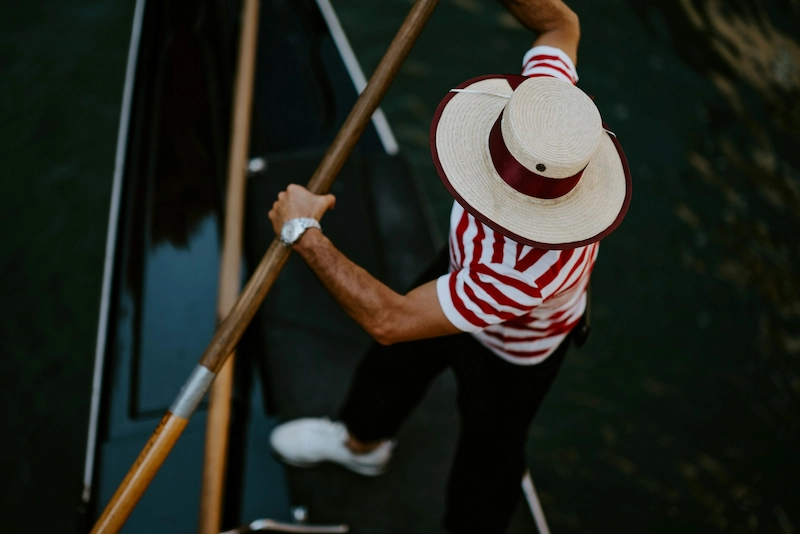
Classic gondola ride in smaller canals – Area: San Marco / Dorsoduro / San Polo · Best for: iconic Venice from the water · Time needed: 30 to 45 minutes · Worth it: Worth it if this is your first Venice trip and expectations are realistic. · Book ahead: Usually not essential, but useful at peak times.
San Giorgio Maggiore viewpoint – Area: San Giorgio Maggiore · Best for: lagoon views and photography · Time needed: 1 to 1.5 hours · Worth it: Yes, one of the best ways to understand Venice from across the water. · Book ahead: Usually no.
Murano – Area: Venetian Lagoon · Best for: glassmaking and lagoon contrast · Time needed: half day · Worth it: Yes, if you want more than central Venice and can avoid rushed tours. · Book ahead: Not essential unless using a packaged boat trip or specific glass workshop.
Burano – Area: Venetian Lagoon · Best for: lagoon scenery and slower pace · Time needed: half day · Worth it: Yes, but better with time and decent weather. · Book ahead: No, unless joining a combined excursion.
Gallerie dell’Accademia – Area: Dorsoduro · Best for: art-focused travelers · Time needed: 1.5 to 2 hours · Worth it: Very for culture-first trips; optional for ultra-short stays. · Book ahead: Helpful, not always necessary.
Frari and San Rocco – Area: San Polo · Best for: Venetian art without the San Marco pressure · Time needed: 1.5 to 2.5 hours · Worth it: Yes for culture-first travelers and repeat visitors. · Book ahead: Usually no.
Sunset walk from Zattere to Dorsoduro – Area: Dorsoduro · Best for: evening atmosphere without crowds · Time needed: 1 to 2 hours · Worth it: Yes, one of the smartest low-cost experiences in Venice. · Book ahead: No.
Cannaregio canal-side evening – Area: Cannaregio · Best for: apéritivo and local-feeling night · Time needed: 2 to 3 hours · Worth it: Yes, especially if you want Venice after the day-trippers fade. · Book ahead: No.
How to choose well in Venice
Venice is easy to misread. Travelers often overfocus on the postcard core, underestimate walking time, and treat the lagoon islands as a quick add-on when they deserve real space. The best approach is to separate true first-trip essentials from atmospheric extras, then build each day around one dense area or one boat-based arc rather than zigzagging across bridges and ferry stops.
Treat St. Mark’s Basilica and the Doge’s Palace as the main first-trip anchors, then add quieter experiences around them instead of stacking only major-ticket sights.
Use the vaporetto strategically: one Grand Canal ride can replace a lot of inefficient backtracking and doubles as sightseeing.
Do not force Murano, Burano and Torcello into a short Venice stay unless you have enough time for the lagoon to feel like an experience rather than a transfer chain.
A gondola is best framed as a symbolic Venice experience, not as your main city transport or best-value activity.
For culture, choose between Accademia, Frari, San Rocco, Peggy Guggenheim, Ca’ Rezzonico and La Fenice according to your interests instead of turning the trip into a museum checklist.
Morning is strongest for markets, major monuments and photography; late afternoon and evening are strongest for canalside walking, cicchetti, San Giorgio views, Dorsoduro, Cannaregio and a less crowded city.
If you only have one day, favor San Marco, Rialto, the Grand Canal and one well-chosen atmospheric district over a rushed island-hopping schedule.
If you have three days or more, add a real lagoon layer, a deeper art stop, and one slower neighborhood sequence in Castello, Giudecca or Cannaregio.
Iconic Venice done properly
Venice’s most famous experiences are worth your time, but only when handled with discipline. The city’s icons work best as a compact first layer: a ceremonial square, a political palace, water-level views, one or two classic canal experiences, and a viewpoint that helps you understand the lagoon setting. Get the essentials right, then move outward before the city turns into a queue-management exercise.
Enter St. Mark’s Basilica, not just the square – The square is the visual symbol, but the basilica is where Venice’s ceremonial weight becomes real. Go inside for the gold-ground mosaics, the Byzantine influence, and the sense of Venice as a maritime power rather than just a photogenic city. (First-time essential · Best for: travelers who want the clearest symbolic introduction to Venice)Find tours & experiences
Visit the Doge’s Palace with enough time to read it – This is not just another palace stop. It explains how Venice governed itself, projected power, and staged prestige, all in one building. Give it time for the chambers, ceremonial rooms, Bridge of Sighs sequence and prison route rather than speeding through the highlights. (High payoff · Best for: first-timers who want one major visit that genuinely earns its place)Find tours & experiences
Use Piazza San Marco as a timed experience, not a base – Piazza San Marco is essential, but it is rarely where Venice feels best for long. See it early, late, or around a booked visit, then move on before the square becomes the whole trip. It works as an opening scene or evening return, not as an all-day plan. (Classic Venice · Best for: first-timers, photographers and travelers with limited time)
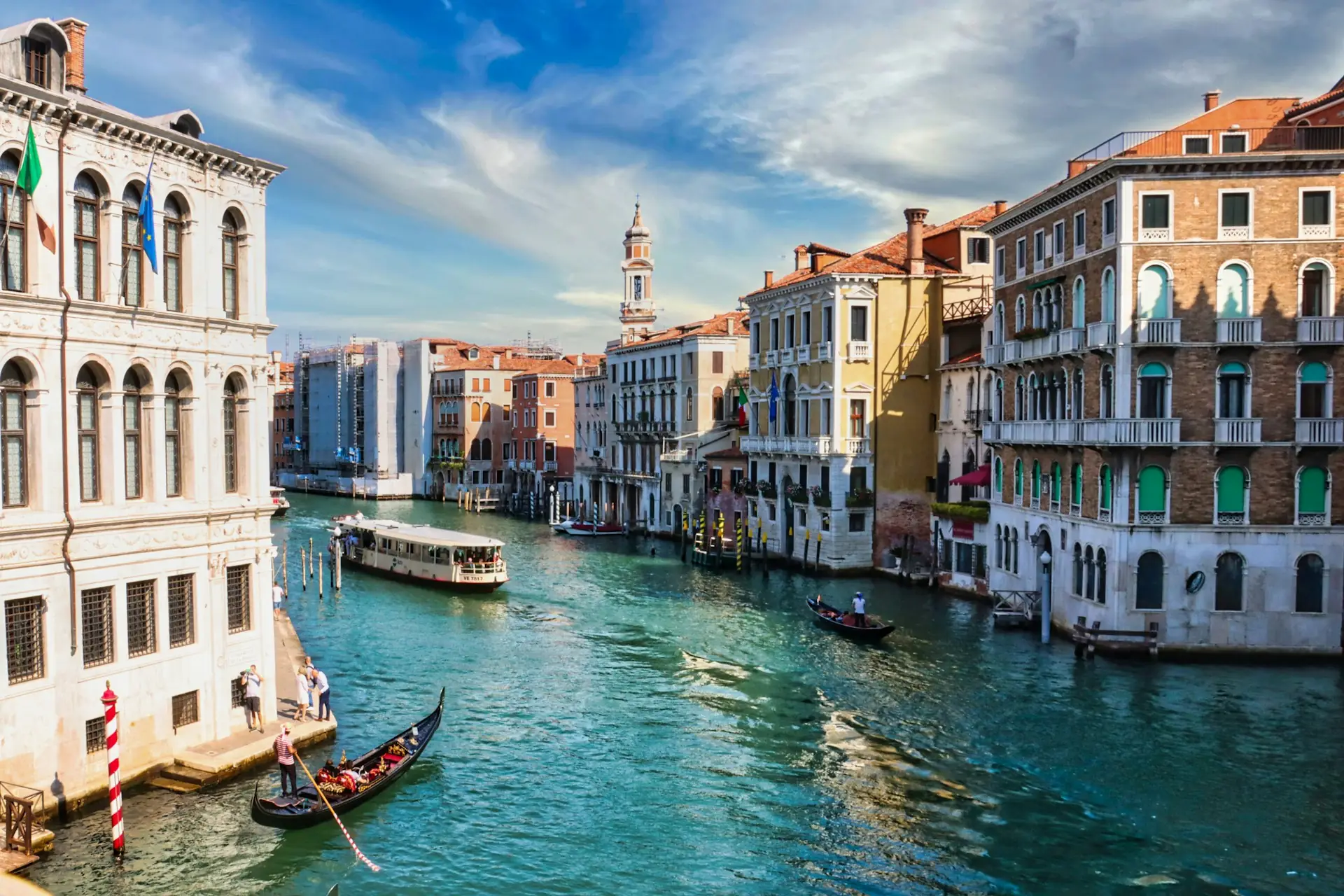
Ride the Grand Canal by vaporetto – This is one of Venice’s smartest classic experiences because it combines movement, orientation, and spectacle in one simple ride. Done early or late in the day, it gives you a clear read on the city without the price tag of a private boat. (Worth it · Best for: travelers who want the most efficient scenic overview)
Take a gondola in quieter canals, not just the busiest strip – A gondola is most convincing when it slips into narrower canals where the city feels close, silent, and compressed. Choose it for atmosphere and ritual, not for historical interpretation or major route coverage. (Worth it · Best for: couples and first-time visitors who want the iconic water-level perspective)Find tours & experiences
Cross the Rialto Bridge, then stay for the surrounding lanes – The bridge itself is brief, but the real value is the rhythm around it: the market side, side streets, canal edges, and quick food stops. It works best as a living hub rather than a standalone sight. (Best for: short stays and first-day orientation)
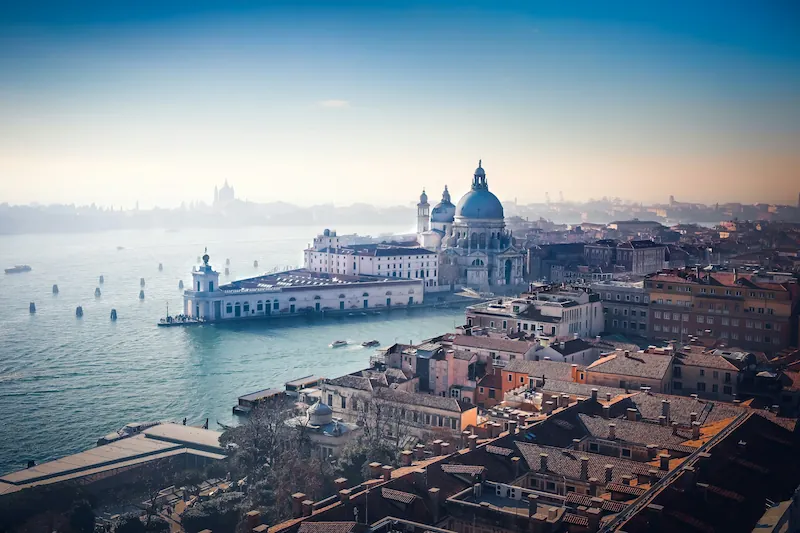
See Venice from the Campanile if visibility is clear – The view is not intimate, but it is useful. From above, Venice stops being a maze and starts to make sense as a built lagoon, with islands, water corridors, roofs and density laid out clearly. (Only if you have time · Best for: first-timers who like visual orientation)Find tours & experiences
Go to San Giorgio Maggiore for the best city-wide view – San Giorgio gives you a cleaner, less crowded perspective than most central viewpoints because you see Venice from across the basin. It is especially strong late in the day, when the city, the lagoon and the San Marco waterfront align in one readable scene. (High payoff · Best for: photographers, repeat visitors and travelers who want Venice to feel like a lagoon city)
Use the Bridge of Sighs as part of the Doge’s Palace story – The Bridge of Sighs is easy to reduce to a photo stop, but it works better when connected to the palace and prison route. See the exterior from the waterfront, then understand its meaning from inside the Doge’s Palace sequence. (Best for: first-timers who want the classic Venice symbols with context)
Cultural things to do in Venice that go beyond the obvious
Venice has enough artistic depth to support an entirely culture-first trip. The strongest visits are not all concentrated in San Marco: some of the most rewarding museum, church and performance experiences happen in Dorsoduro, San Polo, Santa Croce, Castello and around the lagoon. Choose one classic Venetian art stop and one more specific cultural layer rather than trying to clear every major institution.
Read Venetian painting at the Gallerie dell’Accademia – If you want to understand the city in visual terms, this is the museum that pays off most directly. It is strongest for travelers who care about Venice as an artistic civilization, not just as a setting. (High payoff · Best for: art lovers and repeat visitors)
Use the Peggy Guggenheim Collection as a sharp cultural contrast – This is one of the best ways to break the expected visual rhythm of Venice. Modern art in a Grand Canal palazzo gives the city a different register and works particularly well on a second cultural stop or rainy afternoon. (Best for: travelers who want a more selective museum than the big civic institutions)
Visit Scuola Grande di San Rocco for Tintoretto at full scale – This is one of the city’s most concentrated artistic experiences and still feels more focused than the biggest museums. It suits travelers who want intensity over breadth and are willing to slow down inside one extraordinary interior world. (Worth it · Best for: culture-first stays with limited time)
Pair the Frari with San Rocco for a serious San Polo culture block – The Basilica dei Frari gives Venice a different kind of grandeur from San Marco: more grounded, more local, and rich in major artworks. It combines naturally with San Rocco and the surrounding San Polo lanes for one of the best non-obvious cultural sequences in the city. (High payoff · Best for: travelers who want major art without spending the whole day in San Marco)
Tour Teatro La Fenice during the day or book a performance at night – La Fenice works in two different ways: as a compact daytime visit for architecture and music history, or as a more memorable evening if there is a performance that fits your dates. Either version adds a formal cultural layer that walking alone cannot provide. (Best in the evening · Best for: music lovers, couples and culture-led trips)Find tours & experiences
Use Ca’ Rezzonico for Venice’s palazzo and 18th-century world – Ca’ Rezzonico is useful when you want Venice to feel domestic, aristocratic and lived through interiors rather than only through churches and palaces of state. It is a strong rainy-day or repeat-visit museum because it expands the city beyond the obvious icons. (Rainy-day smart · Best for: repeat visitors, design lovers and travelers interested in Venetian interiors)
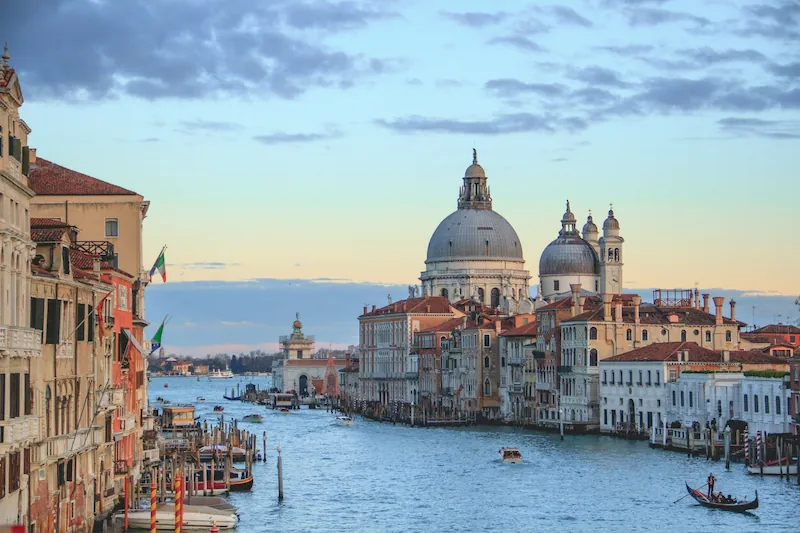
Step into Santa Maria della Salute while walking Dorsoduro – The Salute is one of Venice’s great skyline markers, but it also works as a practical pause between the Grand Canal, Punta della Dogana and the Zattere. It gives Dorsoduro a ceremonial counterweight to San Marco across the water. (Best for: walkers, photographers and travelers linking art with waterfront views)
Explore the Biennale, Arsenale and Giardini if dates align – When a Biennale edition is running, Venice’s contemporary culture shifts toward Castello, the Arsenale and the Giardini. This is not an essential first-trip stop for everyone, but it can become one of the most important cultural reasons to visit the city. (Seasonal · Best for: contemporary art and architecture travelers)
Local experiences that make Venice feel lived-in
The most memorable Venice moments are often quieter than the headline sights. A side canal in Cannaregio, a morning market lane in San Polo, a working gondola yard in Dorsoduro, a long waterfront in Castello or a late view from Giudecca can say more about the city than another queue-heavy stop. This is where Venice stops performing and starts feeling inhabited.
Walk Cannaregio after the day crowds fade – Cannaregio gives you a calmer, more local-feeling Venice without turning the experience into a forced search for obscurity. It is strongest in late afternoon and evening, when canalside bars fill and the city loosens up. (Best in the evening · Best for: travelers who want atmosphere without a checklist)
See Rialto Market early, then drift into San Polo – This is one of the best morning sequences in the city because it links food, commerce, and old urban fabric in a compact area. It works especially well before the city’s circulation peaks. (Best for: early risers and food-curious travelers)
Take the Zattere waterfront at sunset – Zattere gives you breathing room, broad water, and a less compressed side of Venice. It is not a monument-driven stop; it is where you go when you want the city to feel expansive rather than crowded. (High payoff · Best for: evening walkers and repeat visitors)
Watch the Squero di San Trovaso from the outside – This historic gondola yard gives Dorsoduro a working-city detail that most rushed Venice plans miss. You do not need to overbuild the stop; passing by on a Dorsoduro walk is often enough to connect the gondola symbol with actual craft and maintenance. (Unique · Best for: travelers who like small city-specific details)
Use a traghetto crossing for a small local ritual – A traghetto is brief, practical, and easy to miss, which is part of its appeal. It gives you a tiny piece of everyday lagoon logic without turning transport into a performance. (Unique · Best for: travelers who like small city-specific details)
Explore the Jewish Ghetto and surrounding lanes – This part of Cannaregio offers one of the city’s most layered urban experiences, with a different spatial feel from the most photographed quarters. It rewards travelers who want substance, not just views. (Best for: history-minded travelers who prefer quieter areas)
Walk deeper into Castello beyond the San Marco spillover – Castello is where Venice starts to slow down without becoming empty. The further you move from the San Marco pressure, the more the city becomes residential, green-edged and everyday, especially around quieter campos and the eastern waterfront. (Low-key · Best for: repeat visitors and travelers who prefer wandering with a purpose)
Cross to Giudecca for distance from the postcard city – Giudecca is useful because it lets you look back at Venice instead of being trapped inside the densest routes. It works for a slow waterfront walk, a quieter drink, or a different read on the city’s scale across the water. (Repeat-visit smart · Best for: travelers who want breathing room and skyline views)
Stop at Libreria Acqua Alta without building the day around it – Libreria Acqua Alta is popular for a reason, but it is best treated as a short, curious stop while you are already moving through Castello or eastern San Marco. It adds texture, not a full itinerary anchor. (Quick stop · Best for: book lovers, photographers and short detours)
Food experiences in Venice worth making space for
Venice is not a city where you need elaborate restaurant choreography for every meal, but it does reward targeted choices. The strongest food moments come from timing, neighborhood choice, and knowing when a casual cicchetti stop is more useful than a long sit-down meal. Build food into your movement through the city rather than treating it as a separate agenda.
Do a cicchetti crawl instead of one heavy lunch – Small Venetian bar snacks paired with short stops suit the city’s rhythm better than a long, central, tourist-heavy meal. This is one of the easiest ways to turn food into part of the experience rather than a pause from it. (Worth it · Best for: first-timers who want local format over formal dining)Find tours & experiences
Use Rialto for a market-led morning stop – This is the clearest food district anchor in central Venice and works best earlier in the day. Even if you do not buy much, the market area sharpens your sense of the city’s edible side and sets up a natural San Polo walk. (Best for: travelers who like market atmosphere)
Build an aperitivo evening around bacari, not one famous bar – Venice’s best casual food rhythm is cumulative: one or two cicchetti stops, an ombra or spritz, and a canal-side walk rather than a single destination meal. Cannaregio, San Polo and Dorsoduro are usually stronger than the most exposed routes around San Marco. (Best in the evening · Best for: couples, groups and travelers who want a local-feeling night)Find tours & experiences
Plan one proper seafood meal away from the busiest lanes – Venice can deliver excellent lagoon-driven seafood, but location matters. A quieter evening table in Cannaregio, Castello, Giudecca or deeper Dorsoduro usually pays off more than the obvious restaurant strips. (Best for: travelers who want one strong dinner rather than constant snacking)
Try a hands-on cooking or market-to-table class – A cooking class is not essential on a first short trip, but it can be one of the better food-led experiences if you want more structure than casual bar hopping. It is especially useful in poor weather or on a slower second visit. (Only if you have time · Best for: food-first travelers and slower stays)Find tours & experiences
Learn what to order before you choose where to eat – Venice is easier to enjoy when you understand the local food vocabulary: cicchetti, baccalà mantecato, sarde in saor, risotto, lagoon seafood and simple seasonal vegetables. Knowing the format helps you avoid overpaying for generic menus in the most crowded corridors. (Smart planning · Best for: food-curious travelers who want better meals without overplanning)
What to do in Venice for first-timers
On a first trip, Venice works best when you combine ceremonial icons with one or two softer, lived-in layers. The goal is not to cover everything, but to leave with a real sense of the city rather than a stack of rushed photos.
Start with St. Mark’s Basilica and the Doge’s Palace; they earn priority because they explain the city’s symbolic and political core.
Add one Grand Canal vaporetto ride early in the trip so the city makes visual sense before you overwalk it.
Use Rialto and San Polo for market energy, bridge views and food stops rather than treating them as quick pass-through zones.
Choose either a gondola or a lagoon island half day on a short stay; do not force both if you only have one full day.
Add one Dorsoduro or Cannaregio evening so Venice feels less staged after the day-tripper pressure drops.
If you want one viewpoint, choose San Giorgio Maggiore or the Campanile depending on whether you prefer a city-wide lagoon view or a central tower view.
Keep museums selective: Accademia, Peggy Guggenheim, Frari/San Rocco or Ca’ Rezzonico can all be strong, but not all belong in the same short itinerary.
Priority
What
Why
Time
Highest
St. Mark’s Basilica + Doge’s Palace
Best first-trip payoff
Half day
High
Grand Canal vaporetto
Fast city overview
1 hour
High
Rialto + San Polo
Atmosphere, bridges and food
1 to 2 hours
High
Cannaregio or Dorsoduro evening
Best softer layer after the icons
2 to 3 hours
Selective
Gondola, San Giorgio or Murano/Burano
Choose based on time, weather and budget
30 minutes to half day
Free things to do in Venice
Venice is expensive in headline form, but some of its best experiences cost very little. The city’s shape, light, canal edges, bridges, campos and neighborhood transitions do a lot of the work if you are willing to walk intelligently.
Walk from Rialto into San Polo early in the day before the city becomes congested.
Take a long evening walk through Cannaregio for one of Venice’s best low-cost atmospheres.
Use the Zattere waterfront for a broad, open-air lagoon perspective at sunset.
Explore Castello beyond the most obvious routes for a quieter side of Venice.
Cross major bridges for shifting city views rather than chasing paid panoramas.
Spend time in Campo Santa Margherita or canalside edges in Dorsoduro to watch the city’s everyday rhythm.
Return to Piazza San Marco after dark for atmosphere without treating it as your whole evening.
Walk toward Santa Maria della Salute, Punta della Dogana and the Grand Canal edge for one of the best free visual sequences in Dorsoduro.
Cross to Giudecca for a slower waterfront view back toward Venice if you already have a vaporetto pass.
Type
Best Area
Best Time
Why it works
Walk
Cannaregio
Evening
Atmosphere improves as crowds thin
Waterfront
Zattere
Sunset
Broad views and breathing room
Market district
Rialto / San Polo
Morning
City texture without ticket cost
Lagoon view
Giudecca / San Giorgio
Late afternoon
Distance makes the skyline easier to read
Unique things to do in Venice
Venice does not need gimmicks to feel distinctive. The most unusual experiences are usually the ones that reveal its lagoon logic, working rituals, craft traditions or quieter urban details rather than chasing novelty for its own sake.
Take a traghetto crossing for a tiny but very Venice-specific experience.
Visit Murano for glassmaking context rather than just souvenir shopping.
Choose Burano for color and lagoon mood, but only if you can give it real time.
Add Torcello if you want the lagoon’s older, quieter history rather than another dense central stop.
See Tintoretto in San Rocco if you want intensity beyond the standard monument list.
Pass by the Squero di San Trovaso to connect the gondola image with a real working boatyard.
Do a late-day Dorsoduro or Giudecca walk instead of another central landmark queue.
Book a mask-making, glass-focused or craft-led experience only if you want a hands-on break from passive sightseeing.
Use Libreria Acqua Alta as a short curious detour, not as the backbone of a day.
Experience
Best for
Time needed
Best fit
Traghetto crossing
tiny local ritual
10 minutes
Walkers already near a crossing
Squero di San Trovaso
gondola craft context
15 to 30 minutes
Dorsoduro walks
Torcello
older lagoon history
Half day with Burano
3-day or repeat visits
Things to do in Venice at night
Night is when Venice often improves. The city gets quieter, surfaces soften, and the main routes lose some of their daytime fatigue. Focus on walks, canalside drinks, music, views, or one elegant cultural stop rather than trying to crowd in more museum time.
Walk Cannaregio for bars, canals, and a looser local energy.
Take Dorsoduro and the Zattere for a calmer, more spacious evening rhythm.
Book La Fenice, an opera, a chamber concert or a historic-palazzo performance if you want a more formal cultural night.
Do a gondola only if you want mood and symbolism, not interpretation.
Use San Marco after dark for atmosphere, not as your entire evening plan.
Build an easy bacari sequence in San Polo, Cannaregio or Dorsoduro instead of overcommitting to one tourist-heavy dinner.
Cross the basin or use a vaporetto ride at dusk if you want Venice to feel more cinematic without paying for a private boat.
Night option
Best for
Time needed
Book ahead
Cannaregio bacari and canals
local-feeling evening
2 to 3 hours
No
La Fenice or concert
formal culture
2 to 3 hours
Yes
San Marco after dark
classic atmosphere
30 to 60 minutes
No
Things to do in Venice with kids
Venice with children works best when you lean into boats, visual drama, open movement, short-format visits and practical pauses. Long museum chains and overstuffed schedules tend to collapse quickly here because walking fatigue builds faster than most adults expect.
Use vaporetto rides as part transport, part sightseeing; children usually engage with the city better from the water.
Choose the Doge’s Palace over more static museums if you want scale, bridges, chambers, prisons and stronger visual storytelling.
Keep Murano as the better island choice for a first family outing thanks to the glassmaking angle.
Add one workshop-style activity, such as mask decoration, glass-related craft or a simple cooking class, if the trip needs variety.
Build in open pauses at broad waterfront stretches such as Zattere or Giudecca instead of forcing dense bridge-to-bridge walking all day.
Consider Lido in warm weather if the family needs beach time and a break from museums and crowds.
Favor one major sight plus one playful, water-based or food-led layer per day.
Keep Burano for older children or slower trips, because the travel time matters more than the photos.
Option
Best age fit
Weather fit
Why
Vaporetto ride
All ages
Any
Movement keeps attention high
Doge’s Palace
School age+
Any
Strong visuals and variety
Murano
School age+
Best in good weather
Glassmaking adds interest
Lido
All ages
Warm, dry days
Beach break from dense sightseeing
Things to do in Venice when it rains
Rain narrows the city fast, so the best move is to pivot early rather than stubbornly sticking to a canal-heavy walking plan. Venice has enough strong interiors to absorb bad weather if you group them by area and avoid long exposed transfers.
Prioritize the Doge’s Palace and St. Mark’s Basilica if you already have timed entry.
Use the Gallerie dell’Accademia for a substantial art-led block.
Choose the Peggy Guggenheim Collection for a tighter, more modern museum visit.
Add Scuola Grande di San Rocco and the Frari if you want another high-value cultural interior in San Polo.
Use Ca’ Rezzonico for a palazzo-focused rainy-day museum in Dorsoduro.
Tour La Fenice if you want a compact indoor visit that is not another church or painting museum.
Turn to cicchetti bars and longer lunch stops when walking conditions deteriorate.
A cooking class, guided food experience or craft workshop can work well in poor weather on a slower trip.
Avoid forcing Murano, Burano or Lido in heavy rain unless you have a specific indoor booking.
Indoor option
Best for
Time needed
Strength
Doge’s Palace
first-timers
1.5 to 2.5 hours
Major landmark and shelter
Gallerie dell’Accademia
art lovers
1.5 to 2 hours
Deep cultural payoff
Peggy Guggenheim Collection
lighter museum visit
1 to 1.5 hours
Sharper and more compact
Frari + San Rocco
Venetian art
1.5 to 2.5 hours
Strong area pairing
La Fenice
music and architecture
45 minutes to 1.5 hours
Compact indoor culture
Things to do in Venice by area
San Marco
This is Venice at its most ceremonial and crowded. Use it for the basilica, the Doge’s Palace, the campanile, the Bridge of Sighs, La Fenice, and one carefully timed pass through the square rather than an all-day drift.
St. Mark’s Basilica
Doge’s Palace
Campanile viewpoint
Bridge of Sighs
La Fenice
Early or late pass through Piazza San Marco
San Polo and Rialto
Best for market atmosphere, bridge crossings, cicchetti, and serious Venetian art around Frari and San Rocco. It works especially well in the morning and around lunch, when the area feels active rather than purely touristic.
Rialto Bridge
Rialto Market
Cicchetti stops
Frari
Scuola Grande di San Rocco
Short canal-side detours
Dorsoduro
One of the strongest zones for travelers who want museums, softer walking, working-city details and a less compressed pace. It is also one of Venice’s best evening districts because Accademia, the Guggenheim, Salute, Zattere and San Trovaso link naturally.
Gallerie dell’Accademia
Peggy Guggenheim Collection
Santa Maria della Salute
Zattere walk
Squero di San Trovaso
Campo Santa Margherita area
Cannaregio
Cannaregio gives you one of the best lived-in versions of Venice. Come here for evening drinks, quieter canals, the Jewish Ghetto, small churches, and a more local-feeling social rhythm.
Jewish Ghetto area
Canalside bars
Long evening walks
Less crowded backstreets
Madonna dell’Orto area
Castello
Castello is useful when you want Venice to slow down and open out. It suits travelers who like wandering with a purpose but do not need every block to deliver a headline sight, and it becomes especially important when the Biennale, Arsenale or Giardini are part of the trip.
Quieter residential streets
Arsenale and Giardini
Libreria Acqua Alta detour
Churches and local squares
Eastern stretches away from San Marco pressure
Low-key walking routes
Giudecca and San Giorgio
These islands are close to the center but create useful distance from it. Use San Giorgio for a high-payoff viewpoint and Giudecca for a slower waterfront mood, skyline views and a break from the densest walking corridors.
San Giorgio Maggiore viewpoint
Giudecca waterfront
Views back to San Marco
Quieter aperitivo stops
Lagoon-facing walks
Lagoon islands
Murano, Burano, Torcello and Lido work as half-day, full-day or seasonal extensions, not as throwaway extras. Go when the weather is decent, the core city has enough time of its own, and you are ready for Venice to become more horizontal, boat-led and spacious.
Murano glassmaking
Burano color and canals
Torcello mosaics and older lagoon history
Lido beach time in warm weather
Boat-based city contrast
Slower pacing outside the center
What to prioritize in Venice depending on your trip
Venice rewards sharp editing. These scenarios help you choose what genuinely fits your time instead of flattening the city into a generic highlights list.
Profile
Prioritize
Skip
Structure
Half day
San Marco core, one exterior sweep, one vaporetto or Rialto pass
Start in San Marco, keep the visit exterior-heavy unless you have a timed entry, then finish with a Grand Canal ride or Rialto pass.
1 day
St. Mark’s Basilica, Doge’s Palace, Grand Canal, Rialto, one evening district
Trying to add both major islands or too many museums
Do San Marco early, shift toward Rialto and San Polo, then end in Cannaregio or Dorsoduro.
2 days
Core monuments plus one art stop, one local-feeling district and one water-based experience
Too many paid entries back-to-back
Day one for essentials, day two for Dorsoduro, Cannaregio, San Giorgio or one lagoon extension.
3 days+
A fuller city reading with islands, art, viewpoints, food and evening time
Overplanning every slot
Use one day for icons, one for cultural Venice, and one for lagoon or slower district-led exploration.
First trip
Basilica, Doge’s Palace, Grand Canal, Rialto, one atmospheric evening, optional gondola or San Giorgio
Turning the trip into a museum collection exercise
Build around the city’s most legible symbols, then add one or two softer layers.
Repeat visit
Cannaregio, Dorsoduro, San Rocco, Frari, Ca’ Rezzonico, Castello, Giudecca, Torcello
Repeating every central queue-heavy classic
Use the trip to deepen the city rather than rehearse its postcard layer.
Family trip
Vaporetto rides, Doge’s Palace, Murano, Lido in warm weather, short workshops
Long museum chains and long bridge-heavy walking days
Anchor each day with one major activity, then add a boat ride, food stop or open waterfront pause.
Rainy day
Doge’s Palace, Basilica, Accademia, Peggy Guggenheim, Frari/San Rocco, La Fenice
Exposed island-hopping unless you have fixed indoor plans
Group interiors by area so rain does not turn the day into a sequence of wet transfers.
Best day trips and lagoon excursions from Venice
Day trips make sense from Venice, but they should remain secondary to the city itself. On a short first trip, keep them selective. On a longer stay, lagoon islands and nearby mainland cities add useful contrast, but only when the core city has enough space.
Excursion
Best for
Time needed
First trip?
Transport
Book ahead
Murano
first lagoon extension and glassmaking context
Half day
Yes, if you have enough time in Venice first
Vaporetto or organized boat trip
No, unless joining a packaged excursion or specific glass experience Check options
No, unless part of a guided lagoon trip Check options
Lido
beach time, families, cycling and a summer break from dense sightseeing
Half day to full day
Only if weather, season and trip length make it logical
Vaporetto
No for casual visits; yes for private beach clubs or specific seasonal plans
Padua
art, architecture, Giotto and a mainland contrast
Full day
Better on a repeat or longer trip
Train
No for the train; book key chapel slots if that is your main reason to go
Verona
Roman heritage, squares and a bigger mainland city contrast
Full day
Only with 4+ nights or if you prefer day trips to museums
Train
No for general sightseeing; yes for arena performances or major events
Smart activity combinations that work well
These are not itineraries. They are combinations that make sense together in real time and reduce unnecessary backtracking.
San Marco icons + Grand Canal reset – Start with St. Mark’s Basilica and the Doge’s Palace while energy is high, then step away from the square and use a vaporetto ride to decompress. It keeps the most crowded part of Venice contained and gives the day a cleaner rhythm.
Rialto morning + cicchetti lunch + Cannaregio evening – This works well for travelers who want Venice to feel lived-in rather than purely monumental. Market energy in the morning, small-plate food in the middle, and a looser canalside finish create a strong full-day arc.
Accademia + Guggenheim + Salute + Zattere sunset – This is one of the strongest culture-first combinations in Venice. It balances serious museum time with a more open, slower finish by the water, which helps the day breathe.
Frari + San Rocco + San Polo lanes – This pairing gives you a dense cultural block without returning to San Marco. It is especially useful on a second day or rainy afternoon because the art, churches and neighborhood texture sit close together.
Murano half day + Dorsoduro evening – A lagoon extension followed by a calmer city-side evening works better than trying to pack islands and central Venice together. You get contrast without turning the day into pure logistics.
San Giorgio view + Giudecca waterfront – This combination is about distance and perspective. It lets you look back at Venice from across the basin, then continue into a slower waterside rhythm instead of re-entering the busiest lanes immediately.
Castello walk + Arsenale or Giardini + Libreria Acqua Alta – This is a good repeat-visit or Biennale-era sequence. It keeps the eastern side of the city coherent and avoids treating Castello as just the overflow zone behind San Marco.
What to book ahead in Venice and what can stay flexible
Venice does not require overbooking everything, but a few headline experiences are much smoother with advance planning. The trick is to reserve only what genuinely benefits from timed entry, performance dates or packaged boat logistics, while leaving enough flexibility for weather, walking fatigue and tides.
Reserve once you know which evening or rainy-day slot you want to protect
Yes if you want help avoiding generic tourist menus and understanding cicchetti culture
San Giorgio Maggiore viewpoint
Usually no
Go when visibility is clear, ideally late afternoon
No; the value is the view and the short lagoon crossing
Venice activities FAQ
These answers are built around the real questions travelers ask before deciding what Venice is actually worth doing.
What are the best things to do in Venice for a first trip?
Start with St. Mark’s Basilica, the Doge’s Palace, a Grand Canal vaporetto ride, and time around Rialto. Then add either a gondola, San Giorgio Maggiore, or a quieter district such as Cannaregio or Dorsoduro. That combination gives you symbolic Venice, water-level Venice, and a more livable version of the city.
Is a gondola ride in Venice actually worth it?
Yes, for many first-time visitors, but only if you treat it as a short symbolic experience rather than a major sightseeing investment. It is most rewarding in smaller canals and works better as atmosphere than as practical transport or historical explanation.
How many days do you need for Venice?
Two to three full days is the sweet spot for most travelers who want the main sights, some slower neighborhood time, and at least one evening that does not feel rushed. Add another day if you want Murano, Burano, Torcello, Lido, or a stronger museum program.
What should I book ahead in Venice?
Book St. Mark’s Basilica and the Doge’s Palace ahead if you want smoother timing, especially in busy periods. Book La Fenice or concert tickets once dates are fixed. Gondolas can stay flexible unless you want a fixed slot, and lagoon excursions are worth reserving only when you want bundled boat logistics.
What are the best free things to do in Venice?
The best free experiences are mostly spatial: walking Cannaregio in the evening, using the Zattere waterfront at sunset, exploring Rialto and San Polo in the morning, crossing bridges for changing canal views, and letting the city’s campos and canal edges do the work. Venice rewards good walking more than expensive overprogramming.
What is worth doing in Venice at night?
Evenings are best for Cannaregio bars, Dorsoduro walks, a concert or opera, a simple bacari route, or revisiting San Marco after the daytime pressure drops. Venice usually becomes more appealing at night because movement gets easier and the city feels less performative.
What are the best things to do in Venice with kids?
Vaporetto rides, the Doge’s Palace, Murano glassmaking, Lido in warm weather, gelato stops and short workshop-style activities usually work better than long museum chains. Keep days lighter than you think you need, because bridges and walking fatigue build quickly for families.
What should I do in Venice when it rains?
Shift quickly to interiors: the Doge’s Palace, St. Mark’s Basilica, the Gallerie dell’Accademia, the Peggy Guggenheim Collection, Frari, San Rocco, Ca’ Rezzonico and La Fenice are the strongest pivots. Rain makes Venice feel narrower fast, so grouping indoor stops by area matters more than usual.
Are Murano and Burano worth it from Venice?
Yes, but they are best treated as real half-day or day extensions, not as quick extras squeezed into an already short stay. Murano is the more practical first island choice; Burano is strongest when weather and timing are on your side. Add Torcello only if you have enough time for a slower lagoon day.
What are the must-see attractions in Venice?
The clearest must-sees are St. Mark’s Basilica, the Doge’s Palace, the Grand Canal, Rialto, and at least one atmospheric district such as Cannaregio or Dorsoduro. After that, the best additions depend on your trip style: a gondola for symbolism, San Giorgio for views, Accademia or Frari/San Rocco for art, and Murano or Burano for the lagoon.
What should I skip in Venice if I only have one day?
Skip Murano and Burano unless island-hopping is your main goal, and avoid stacking multiple museums. With one day, Venice works better if you keep the core tight: San Marco, the Doge’s Palace or basilica, a Grand Canal ride, Rialto, and one evening walk.
Is San Giorgio Maggiore worth visiting?
Yes, especially if you want one of the best views of Venice and the lagoon without staying inside the busiest central routes. It is a strong late-afternoon stop and pairs well with Giudecca or a wider Dorsoduro waterside plan.
Is La Fenice worth visiting in Venice?
La Fenice is worth it if you enjoy music, historic interiors, or want a compact cultural stop that is not another church or museum. A performance is more memorable than a daytime visit, but even a short tour can work well on a rainy day or culture-focused itinerary.
Where should I go in Venice to avoid crowds?
No central area is completely crowd-free, but Cannaregio, deeper Dorsoduro, Castello, Giudecca and parts of Santa Croce usually feel calmer than the San Marco-Rialto corridor. The key is timing: early mornings, late afternoons and evenings change Venice more than secret addresses do.
What are the best museums in Venice?
For classic Venetian art, choose the Gallerie dell’Accademia. For modern art, choose Peggy Guggenheim. For palazzo interiors, choose Ca’ Rezzonico. For concentrated Tintoretto and a powerful church-led pairing, choose San Rocco and the Frari. The Doge’s Palace is the best first-trip museum-style visit because it explains Venice’s political world.
What are the best viewpoints in Venice?
The Campanile gives the classic central high view, while San Giorgio Maggiore gives a wider view back toward Venice across the water. Zattere, Giudecca and the Grand Canal by vaporetto are not tower viewpoints, but they often give a better sense of Venice as a lagoon city.
What are the best food experiences in Venice?
A cicchetti crawl, a Rialto market-led morning, a bacari evening, and one proper seafood meal away from the busiest lanes are the strongest food experiences for most travelers. A cooking class or food tour is useful if you want structure or are visiting in poor weather.
Is the Venice Biennale worth planning around?
Yes if contemporary art or architecture matters to you. When a Biennale edition is running, the Arsenale and Giardini can become major cultural anchors. For a first short trip, however, prioritize Venice’s core sights first unless the Biennale is one of your main reasons for traveling.
Can you visit Venice on a budget?
Yes, but you need to be selective. Spend on one or two high-value entries such as the Doge’s Palace or St. Mark’s Basilica, use walking and vaporetto rides strategically, eat through cicchetti and simple local formats, and rely on free areas such as Cannaregio, Zattere, Rialto, Castello and Dorsoduro for atmosphere.
What is the best island to visit from Venice?
Murano is the easiest first island because it is close and has a clear glassmaking identity. Burano is more visually distinctive but takes more time. Torcello is best for older lagoon history, and Lido is best when you want beach time or a family break from dense sightseeing.
In Venice, the smartest plan is rarely the longest one; it is the one that edits the city well.
Turn the right experiences into the right itinerary
Once you know what you want to do in Venice, the next step is turning those ideas into a trip that actually works day by day. Use the planner to organize the right mix of highlights, neighborhoods, and pace into a route that feels coherent, not crowded.