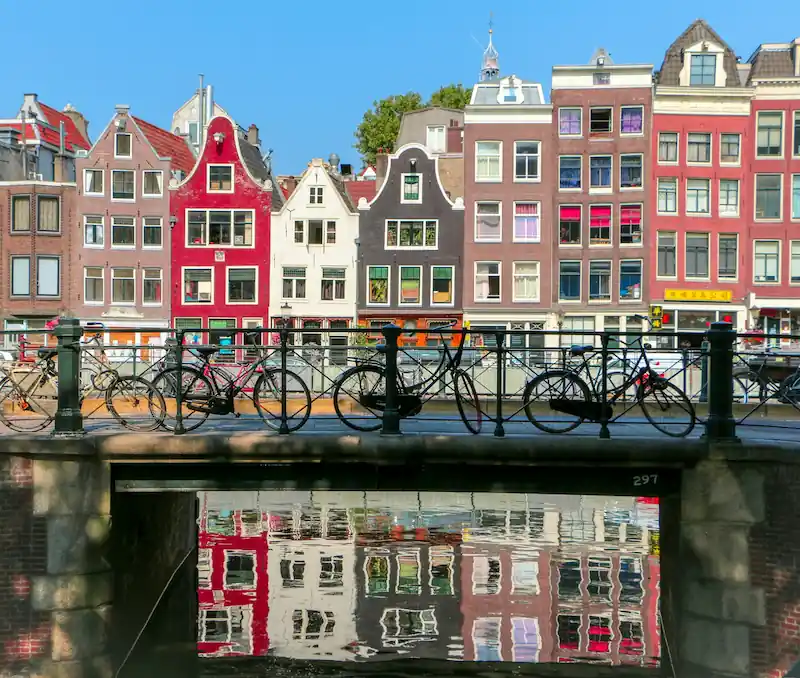
Where to stay in Amsterdam
Find the best neighborhoods and hotels in Amsterdam.
Open page →
Plan your trip to Amsterdam with a clear sense of where to stay, what to prioritize, and how to structure your days. Amsterdam is compact, but it is not simple: the canal belt, Museum Quarter, Jordaan, De Pijp, Noord, Plantage, and the old center all sit close together while creating very different rhythms. The strongest trips do not try to treat the city as one continuous checklist. They combine one or two fixed cultural anchors with walkable district sequences, water-based perspective, and evenings that stay close to the neighborhoods where the day naturally lands.
Find the best neighborhoods and hotels in Amsterdam.
Open page →
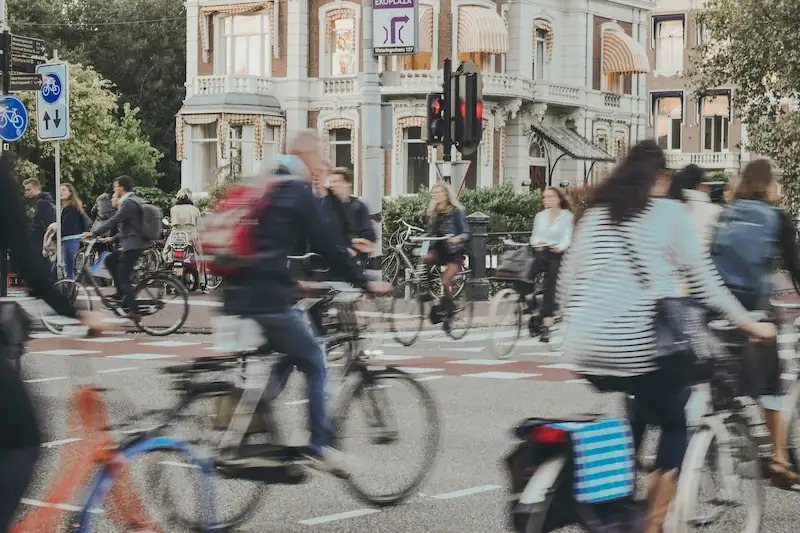
Prioritize the activities that deserve your time in Amsterdam.
Open page →
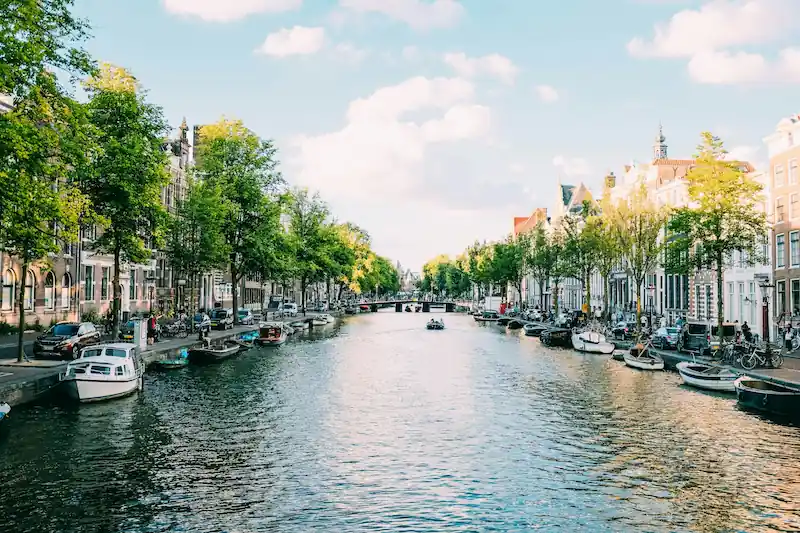
2 Days in Amsterdam: Essential Itinerary
Open itinerary →
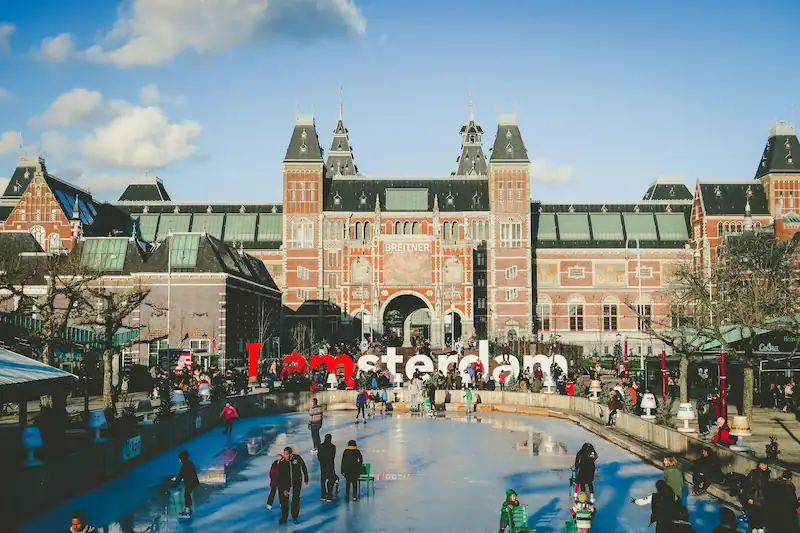
3 Days in Amsterdam: Walkable First-Trip Itinerary
Open itinerary →
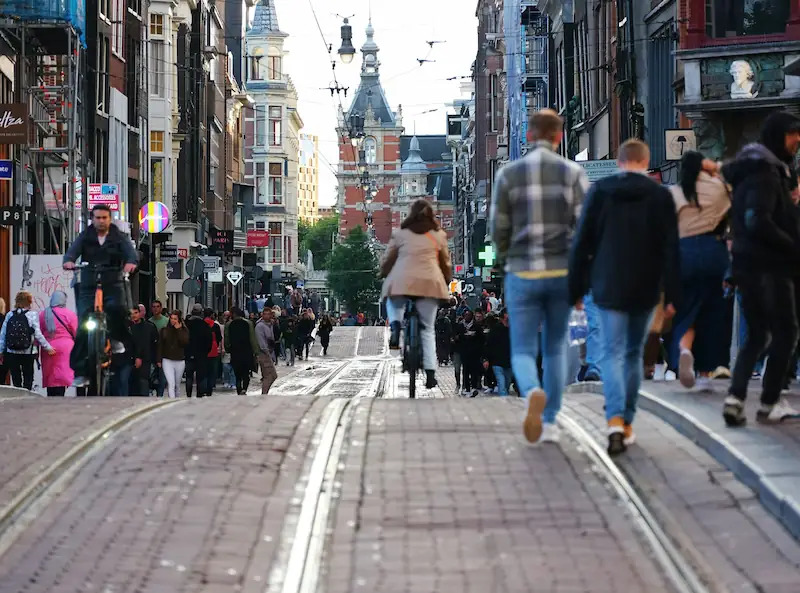
5 Days in Amsterdam: Neighborhood Itinerary
Open itinerary →
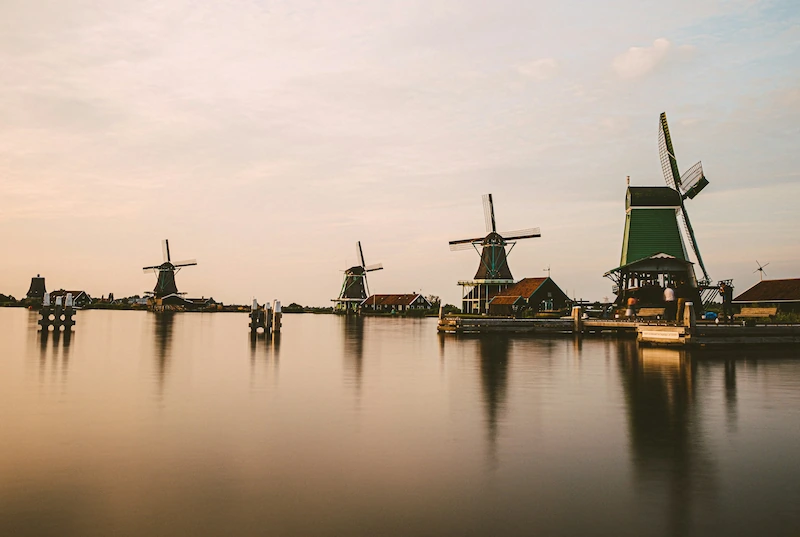
7 Days in Amsterdam: One-Week Itinerary
Open itinerary →
Amsterdam is a canal city that feels small on a map but expands through layers: the historic core and Dam axis, the UNESCO canal belt, the Jordaan and western canals, the Museum Quarter, De Pijp, the eastern Plantage and Jewish Quarter, Westerpark, and the regenerated north bank. It works best when approached as a set of adjacent atmospheres rather than one single center. The city rewards travelers who plan a few fixed entries carefully, move on foot or by tram, pause often, and let one district lead naturally into the next.
Amsterdam stands out because its major sights, local life, and strong visual identity all sit within a relatively compact urban frame. You can move from Golden Age facades to Rembrandt and Van Gogh, from Anne Frank House to Jordaan cafés, from the old Jewish Quarter to Artis and Hortus, and from Centraal Station to contemporary Noord without the city losing coherence. That makes it unusually strong for short, well-structured trips and longer stays that widen beyond the postcard center. In the late afternoon, canal edges soften and the city becomes less about landmarks than about how one neighborhood spills quietly into the next.
Best time: Late spring and early autumn for the best balance of light, walkability, and manageable pressure.
Ideal trip length: 3 days for a strong first visit; 4 to 5 days if museums, neighborhoods, food, and slower evenings matter; 6 to 7 days if you want day trips without diluting the city.
Amsterdam is expensive by European city-break standards, especially for centrally located hotels, Friday-to-Sunday stays, and peak spring or summer dates. The main cost pressure comes from accommodation and timed-entry attractions, not basic transport, because many core districts are walkable and trams cover useful gaps. Food can range widely depending on whether you stay in tourist corridors or shift into De Pijp, Jordaan, Oud-West, Westerpark, or other residential edges for meals.
Amsterdam is organized less like a city of isolated districts and more like a series of rings, canals, and adjoining quarters. The old center and Dam axis give the city its historical entry point; the canal belt creates the signature visual structure; Jordaan and the western canals make that structure more intimate; Museumplein anchors the south; De Pijp changes the tone into markets, food, and residential street life; Plantage adds green, Jewish history, and family-friendly cultural stops; Westerpark adds an industrial-cultural edge; and Noord shifts the whole city across water into a broader contemporary register. Because these zones sit close together, transitions matter as much as destinations.
Water shapes almost every movement decision here. Canals create beauty and orientation, but they also bend routes, multiply bridge crossings, and make a walk feel more segmented than the map suggests. Centraal Station is the northern hinge, useful for arrivals, ferries, and old-center access, while Museumplein and De Pijp pull the trip south. Noord is not far, but it feels psychologically separate because the IJ crossing changes light, scale, and urban texture.
Amsterdam starts gently, with mornings that still belong to residents, deliveries, and quieter museum approaches. Midday brings the heaviest pressure to the canal belt, Museumplein, Damrak, Dam Square, and major shopping corridors, while late afternoon is the best moment for Jordaan, western canals, Vondelpark, and ferry transitions. Evenings redistribute energy into De Pijp, Jordaan, Oud-West, brown cafés, concerts, and canal-side walks. After dark, the city works better when it stays intimate rather than spectacle-driven.
Read Amsterdam as a city of layers, not a city of boxes to tick. The old center explains the entry point, the canal belt explains the image, Museumplein explains the cultural weight, Jordaan explains the atmosphere, De Pijp explains the everyday social city, Plantage explains a greener and more historical eastern layer, and Noord explains the contemporary counterpoint. A good first trip usually combines one fixed-entry anchor with one flexible neighborhood sequence each day.
Open the planner
Build each day around one primary urban band rather than treating the whole center as interchangeable. Pair the canal belt with either Jordaan, the Nine Streets, or an Anne Frank House slot, not with distant additions that change the day’s tempo completely. Give the Museumplein area its own half day if one major museum matters, and close to a full day if you want both Rijksmuseum and Van Gogh without fatigue. Use De Pijp as a natural extension of Museumplein or Albert Cuyp Market, especially for dinner, rather than as a random cross-city detour. Use Plantage and the Jewish Quarter for a quieter cultural day with Artis, Hortus, the Resistance Museum, Rembrandt House, or Jewish history rather than forcing everything through the canal belt. Use Amsterdam Noord as a contrast day or late-day extension, especially when you want contemporary architecture, waterside space, NDSM, or a less heritage-heavy mood. Protect at least one slower evening for canals, brown cafés, De Pijp dining, Foodhallen, or a concert rather than using every night as restaurant logistics. On a short stay, combine one reservation-led anchor with one flexible neighborhood sequence so the trip keeps breathing room. Treat food and bar exploration as district-based, because crossing the city for dinner often costs more atmosphere than it adds value.
Vibe: classic canals with local polish
Why go: Jordaan gives you canal-house Amsterdam with a more residential, intimate rhythm than the busiest parts of the center.
Who it fits: Best for first-timers who want atmosphere, walkability, and strong dinner options without sleeping inside the most crowded core.
Not for: Not for travelers seeking the lowest prices or immediate nightlife energy.
Where to stay: This is one of the most balanced bases in the city: beautiful, central, and easier to inhabit than the densest canal-belt corridors. Evenings feel gently lived-in, with terrace noise and bike movement replacing the daytime museum crush.
Vibe: historic Amsterdam at full visual intensity
Why go: Staying in the Canal Belt places you inside the city’s signature scenery and within easy reach of major first-visit landmarks.
Who it fits: Best for short stays, landmark-led visits, and travelers who want the classic Amsterdam frame outside the door.
Not for: Not for budget-sensitive stays or travelers who want a more local night rhythm.
Where to stay: The setting is hard to beat, but the trade-off is price and a more visitor-heavy atmosphere. It works best when convenience and visual context matter more than neighborhood intimacy.
Vibe: cultural and polished
Why go: The Museum Quarter is the most practical base if your trip revolves around Rijksmuseum, Van Gogh Museum, Stedelijk, Vondelpark, elegant streets, and a calmer evening tone.
Who it fits: Best for art-focused travelers, couples, and visitors who prefer a more orderly pace.
Not for: Not for those wanting old-core canal intimacy or late-night social energy.
Where to stay: This area trades some postcard canal density for comfort, space, and quick access to the city’s strongest museum cluster. It feels especially good for stays where one major museum each day is enough.
Vibe: young, social, and food-led
Why go: De Pijp works well if you want a more contemporary local feel, Albert Cuyp Market, stronger casual dining, and easier evening energy than the historic core.
Who it fits: Best for return visitors, food-focused stays, and travelers who like city texture over postcard framing.
Not for: Not for travelers wanting immediate access to the old center’s major sights on the doorstep.
Where to stay: This is one of Amsterdam’s easiest districts to inhabit rather than simply visit. It gives you a stronger everyday city feel, while still keeping the museum district and canal core within reach.
Vibe: compact, stylish, and central
Why go: The Nine Streets combine centrality with a slightly more curated, boutique-facing feel than the broadest tourist corridors.
Who it fits: Best for design-conscious travelers and short-break visitors who want to walk almost everywhere.
Not for: Not for travelers seeking quiet nights or lower hotel rates.
Where to stay: As a base, this area is efficient and appealing, especially for a compact first trip. It gives you quick movement across the canal core while keeping a stronger sense of neighborhood than the busiest central strips.
Vibe: modern waterside contrast
Why go: Amsterdam Noord offers a different urban register, with ferries, NDSM, creative spaces, modern architecture, and a looser visual field than the canal districts.
Who it fits: Best for repeat visitors, design and architecture travelers, and those happy with a less classic base.
Not for: Not for travelers wanting to step directly into old-Amsterdam scenery each morning.
Where to stay: This is the city’s strongest contrast base, useful when you want room, newer hotels, and distance from the busiest central flows. It works best if you see the ferry crossing as part of the trip rather than a nuisance.
Amsterdam reveals itself best when you alternate between image-defining experiences and slower district reading. The city is not only about famous stops; it becomes clearer when grand museums, canal movement, neighborhood texture, and contemporary contrasts are allowed to speak to each other.
Planning tip: Lock in fixed-entry highlights first, then leave your second half of day flexible for canals, neighborhoods, or food-led wandering.
A canal cruise is not just a scenic add-on here; it clarifies the city’s structure, showing how the canal rings and facades fit together as an urban system. It also gives relief from street-level density and helps first-time visitors understand spatial relationships faster.
Tip: Choose a later-afternoon or early-evening departure for softer light and a calmer transition into dinner.
The Rijksmuseum is where Amsterdam’s civic, commercial, and artistic self-image becomes legible. Even a selective visit helps explain how the city’s wealth, aesthetics, and global outlook were built.
Tip: Go with a shortlist rather than a completion mindset, because visual fatigue arrives faster than expected.
This museum works best as a concentrated experience rather than a box to tick after other major institutions. Its value lies in seeing artistic evolution with enough attention to notice shifts in mood, color, and control.
Tip: Book a timed slot early in the day if you want museum energy before the district fully thickens.
This is one of Amsterdam’s most important visits, but its meaning depends on treating it as a historical and moral encounter rather than a quick landmark stop. The surrounding neighborhood context matters, because the city outside and the hidden rooms inside form a powerful contrast.
Tip: This is a fixed-priority booking, not a same-day gamble.
This sequence captures one of Amsterdam’s most satisfying urban transitions: from curated retail streets into quieter canal edges and residential texture. It explains why the city works so well on foot when you let one district bleed into another.
Tip: Do it in the morning or late afternoon, when the area feels less like a shopping corridor and more like a neighborhood.
Check guided tours →
A high viewpoint is useful here not because Amsterdam is a skyline city, but because it reveals the canal geometry and low-rise consistency that street level can obscure. One well-chosen panorama is enough to make later walks more intelligible.
Tip: Use a viewpoint as a framing tool early in the stay, not as a grand finale.
Check guided tours →
Dam Square and the Royal Palace matter because they explain Amsterdam’s civic center and old urban axis, but they should not dominate the trip. They work best as a short orientation point between Centraal, the old center, and the canal belt.
Tip: Use the palace interior only if civic history interests you; otherwise let the square function as a geographic hinge.
Cycling is central to Amsterdam’s identity, but visitors should treat it as a serious street system rather than a novelty. A guided ride or carefully chosen outer-neighborhood route can reveal scale, bridges, parks, and residential areas better than walking alone.
Tip: Avoid making your first Amsterdam activity an unguided ride through the old center if you are not confident in dense bike traffic.
North of the IJ, Amsterdam shifts away from canal nostalgia and toward contemporary architecture, adaptive reuse, and a different sense of scale. This adds needed contrast to a heritage-heavy first visit.
Tip: Pair Noord with a waterside lunch or sunset return rather than a rushed in-and-out crossing.
Check guided tours →
Amsterdam’s cultural credibility is not limited to museums. A classical evening here adds refinement and rhythm to a trip, especially after days shaped by walking and visual density.
Tip: This works best on a museum-district day so the evening continues the same cultural register.
Check guided tours →
Smaller museums often explain Amsterdam’s domestic scale, mercantile history, and lived architecture more quietly than the headline institutions. They are also useful antidotes to major-museum saturation.
Tip: Use one smaller museum on the same day as neighborhood walking rather than stacking only blockbuster entries.
Check guided tours →
Amsterdam’s architecture is more than photogenic scenery; it is evidence of wealth, trade, and urban compression. Reading facades, warehouses, and canal proportions turns a simple walk into a deeper historical encounter.
Tip: Do this with one or two sharp reference points in mind, otherwise the visual repetition becomes flattening.
The Rembrandt House and surrounding Jewish Quarter add a more specific historical layer than another canal walk. This part of the city connects art, commerce, wartime memory, and a quieter eastern-center rhythm that many first visits miss.
Tip: Pair it with Plantage, Hortus, or the Resistance Museum instead of forcing it into a Museumplein day.
Plantage is one of Amsterdam’s most useful planning layers because it combines green space, Artis, Hortus Botanicus, Jewish history, and calmer streets. It is especially valuable for families, rainy-day planning, or a second cultural day that does not repeat Museumplein.
Tip: Use Plantage as a half-day ecosystem rather than a single-stop detour.
The Stedelijk is not a universal first-stop museum, but it matters when Amsterdam’s cultural story needs a modern and contemporary counterweight to Dutch masters and Van Gogh. It also keeps the day geographically efficient because it sits inside the Museumplein cluster.
Tip: Choose it instead of a third historical museum, not on top of every other major visit.
The free ferry is one of the simplest ways to feel the city change register. In a few minutes, canal intimacy gives way to broader water, more sky, and a looser urban field.
Tip: Treat the crossing as part of the experience, not just transport.
Check guided tours →
Jordaan makes the strongest impression when you leave the best-known corners and linger in the small transitions between canals, side streets, and cafés. The city quiets slightly here, and the rhythm becomes easier to inhabit.
Tip: Late afternoon is the best moment, when the light lowers and the streets shift from circulation to local use.
Check guided tours →
Neighborhood markets give useful local texture, but they work better as one layer within a district day than as a destination in themselves. They show how daily life sits beside the curated city-break version of Amsterdam.
Tip: Combine a market with De Pijp or another residential district rather than crossing the city solely for it.
Check guided tours →
Amsterdam often lands best at the end of the day, when the visual noise settles and the canal edges become more legible. This is less about checking off a route than absorbing the city’s low-volume evening texture.
Tip: Choose one district and stay within it instead of trying to string together too many postcard stops after dark.
Check guided tours →
Westerpark and Westergas give Amsterdam a different everyday register: park space, cafés, markets, cultural venues, and industrial reuse. It is not a must for a rushed first weekend, but it is one of the easiest ways to widen the trip without leaving the city.
Tip: Use it late afternoon or early evening when you want a lower-pressure alternative to another canal loop.
Check guided tours →
Vondelpark is not one of Amsterdam’s most dramatic sights, but it is one of the most useful. It gives a museum-heavy or family trip breathing space and makes the south side of the city feel less like a sequence of indoor appointments.
Tip: Use it between Rijksmuseum, Van Gogh, or Stedelijk and an evening in De Pijp or Oud-West.
Check guided tours →
Begijnhof is useful because it interrupts the noise of the old center with a small, enclosed historical pause. It is not a reason to reroute a whole day, but it works well when moving between Spui, the canal belt, and the central shopping axis.
Tip: Keep it quiet and brief; the value is the contrast with the surrounding streets.
Check guided tours →
Brown cafés explain a side of Amsterdam that monuments cannot: close-scale interiors, easy conversation, and a social culture built around staying rather than performing. They are especially effective on cooler or wetter evenings.
Tip: Go early enough to settle in before the room fully fills and noise takes over.
Check food options →
Rijsttafel is one of Amsterdam’s most meaningful meals because it connects dining to the city’s colonial history and restaurant culture. It gives the trip a culinary identity that is more specific than generic Dutch snacking.
Tip: Book ahead for stronger addresses, especially on Friday and Saturday evenings.
De Pijp is one of the easiest places to eat well without over-curating the evening. The district’s value lies in density and variety, which make spontaneous choices more rewarding than in the center’s tourist-heavy strips.
Tip: Use De Pijp for dinner after a museum or market-led day so the route stays coherent.
Check food options →
A canal-side lunch is most satisfying when it happens just outside the densest souvenir corridors. The pleasure comes from the setting and the pause in movement, not from chasing one heavily photographed address.
Tip: Aim slightly west or south of the most obvious center streets for a better balance of view and pace.
Check food options →
Foodhallen and the surrounding Oud-West streets are useful when a group needs options, weather is poor, or the day has already created decision fatigue. It is not the city’s deepest food experience, but it is practical, social, and easier than forcing a formal dinner plan.
Tip: Use it after Vondelpark, Museumplein, or a west-side walking day.
Check food options →
Dutch snacks can add fun and local texture, but they should not become the whole food strategy. A few casual stops work best when folded into market time, a walking route, or a rainy-day pause.
Tip: Use snacks as punctuation, then save the stronger food memory for rijsttafel, De Pijp, Oud-West, or a brown café evening.
Amsterdam expands quickly when every canal, museum, market, and neighborhood seems equally important. The strongest trips protect what explains the city best, then let the rest support that core. The goal is not to list everything, but to decide which experiences shape the structure of the trip.
Amsterdam can work well with children if you keep the trip compact, outdoors-heavy, and realistic about museum tolerance. The city’s flatness helps, but bridge crossings, bikes, tram tracks, and narrow pavements require more attention than in a park-like capital. On bright days, the water, ferries, Vondelpark, Artis, NEMO, and open squares make movement easier; in bad weather, indoor patience runs thin faster than adults expect.
Amsterdam is unusually responsive to trip length: three days give you a sharp first read, five days add neighborhood depth, and a full week lets the city breathe beyond its most photographed frame.
Open the planner →
Amsterdam is easy to enjoy but easy to misread. The most useful planning decisions concern timing, base selection, booking discipline, bike awareness, and how much museum and cross-city movement your days can realistically absorb.
For most travelers, the smartest window is late spring or early autumn, when the city keeps enough daylight and outdoor ease without carrying summer’s heaviest compression. April to June suits first trips especially well, but accommodation and top-entry demand rise fast around peak spring periods. September is often the smoother choice if you want a more controlled pace with strong city energy still intact.
Two nights is the absolute minimum for the city to register beyond a rushed center walk. Three full days are enough for a strong first read. Four to five days let you add Noord, De Pijp, Plantage, smaller museums, and slower evenings without forcing day trips too early.
Choose a base according to how you want the city to feel when you step outside in the morning and return at night. For a first trip, the best balance is usually just outside the hardest-hit center rather than in its busiest corridors. Jordaan and the western canal belt are strong for atmosphere, the Museum Quarter for culture and calmer evenings, De Pijp for food and local energy, the Nine Streets for compact centrality, and Noord for repeat visitors who value space and modern contrast.
Most international arrivals come through Schiphol, which is unusually efficient for city access. The train connection to Amsterdam Centraal is fast and frequent, making rail the default choice for most visitors arriving by air. If you arrive by train from elsewhere in Europe, Centraal gives immediate access to ferries, trams, and the historic core, but not every hotel area is most convenient from there on foot.
Amsterdam works best as a walk-and-transit city. Central districts are highly walkable, but bridge crossings, bike traffic, tram tracks, and visual stop-start movement make days feel denser than the map suggests. Trams and metro help when shifting between broader zones, ferries make Noord easy and atmospheric, while taxis and ride-hailing are usually backup tools rather than the main logic of a stay. Cycling can be excellent, but first-time visitors should be realistic about confidence and route choice.
Amsterdam is generally safe and medically reliable for visitors, with strong infrastructure and straightforward day-to-day logistics. The main attention points are practical rather than dramatic: active bike lanes, tram tracks, slick pavements in wet weather, canal edges after dark, and petty theft risk in crowded central areas. At night, the city is usually manageable if you stay aware in nightlife-heavy zones and do not treat the Red Light District as the default evening plan.
Amsterdam changes less through temperature extremes than through light, outdoor comfort, crowd pressure, and the practical elasticity of a day. Spring gives the city brightness and freshness that suit first visits well, while summer extends evenings but compresses the center. Early autumn is often the strongest compromise for travelers who want both urban energy and smoother movement. Winter can work beautifully for museum-led stays, brown cafés, concerts, and low-light canal atmosphere, but the city narrows inward and demands more weather tolerance.
Spring is one of Amsterdam’s clearest first-time seasons because the city opens outward without yet feeling as compressed as high summer. Days are good for long district walks, canal movement, tulip-season excursions, and mixed indoor-outdoor structure, while the softer light suits brick, water, and tree-lined edges. The trade-off is demand: book hotels and fixed-entry highlights early.
Summer creates the longest days and the easiest late-evening rhythm, which can make the city feel socially generous and visually open well into the night. It suits terraces, canal-side lingering, festivals, and stretched-out evenings more than quiet movement. The trade-off is that the center absorbs demand heavily, so the best summer trips need sharper district discipline and earlier starts.
Early autumn is excellent for travelers who want Amsterdam with maturity rather than peak-performance brightness. The city remains active, but the pace often feels more coherent, with easier transitions between museum time, neighborhood walking, and evening dining. As light drops later in the season, canal edges, brown cafés, and interiors take on a more intimate register.
Winter suits travelers who care more about atmosphere, museums, music, food, and slow urban texture than maximizing outdoor range. Short daylight narrows what a day can hold, but it also gives the city clearer structure: one museum, one neighborhood, one good evening. The low light on water and the quiet weight of old streets can be deeply rewarding if you do not expect a summer-style walking city.
These are the planning decisions that most directly shape whether Amsterdam feels elegant and easy or crowded and fragmented.
Three days are enough for a strong first visit if you combine one major museum cluster, one canal-belt sequence, and one or two neighborhood-led stretches. Four to five days are better if you want the city to feel lived rather than sampled, with time for Noord, De Pijp, Plantage, smaller museums, and slower evenings. A week only makes sense if you like repeat walks, day trips, and deeper district contrast.
For most first-timers, Jordaan, the western canal belt, or the Nine Streets area offer the best balance of atmosphere, centrality, and livability. The Museum Quarter is stronger if art and calmer evenings matter most. De Pijp is better for food-led and more local-feeling stays. The hardest-hit central strips around the old core are convenient on paper but often weaker in day-to-day experience.
Late spring and early autumn are usually the best overall windows. They combine strong walking conditions, good light, and a more manageable practical rhythm than peak summer. April and May are beautiful but can be expensive and busy around tulip season. September is often smoother if you want city energy without the strongest summer compression.
Yes, very much so, but walkability here is shaped by bridges, bikes, tram tracks, and constant visual interruption. Distances look short, yet days can feel dense because movement is rarely purely linear. The city works best when you combine walking with selective tram, metro, or ferry use.
Yes for fixed-demand highlights, especially the Anne Frank House and Van Gogh Museum. Rijksmuseum is also worth booking ahead if you care about a specific start time. Amsterdam is not a city where spontaneous entry works reliably for the most sought-after visits in busy periods, so book the anchors first and let flexible neighborhood time sit around them.
The biggest errors are overstacking museums, staying in the wrong hyper-central micro-zone, and assuming all canal areas offer the same value. Many travelers also waste energy crossing the city for minor additions that do not change the quality of the trip. Amsterdam improves quickly when you plan by district and accept selective omission.
Yes, if your expectations are sharp rather than maximal. Three days can cover the essential canal-city identity, one or two major cultural anchors, and a meaningful neighborhood experience. It is enough for a satisfying first read, but not for a deep, slow version of the city.
Amsterdam is expensive above all in accommodation, especially in central areas and high-demand months. Food and daily movement can be managed more flexibly if you avoid the most obvious tourist corridors. The smartest way to control costs is not necessarily to stay far out, but to choose a better-value district with strong local infrastructure.
The essential areas are the canal belt, Jordaan, Museum Quarter, Nine Streets, De Pijp, and Amsterdam Noord if you have enough time. Plantage and the Jewish Quarter are highly valuable for culture, families, and repeat visitors, while Westerpark is useful when you want green space and a local-cultural edge.
Yes, especially on trips of three days or more, or when the historic core starts to feel visually repetitive. Noord adds ferries, open water, contemporary architecture, NDSM, and a broader sky. It is not mandatory for a rushed first day, but it is one of the clearest ways to understand that Amsterdam is more than canals and museums.
Centraal is useful for arrivals, trains, ferries, and tram connections, but it is not automatically the best place to sleep. The immediate surroundings can feel busy and transit-heavy. For a better first-trip balance, many travelers do better in Jordaan, the western canal belt, Nine Streets, Museum Quarter, or De Pijp, depending on their priorities.
No. It is part of the old center and many visitors are curious about it, but it should not define your Amsterdam plan. If you go, treat it as a short, respectful evening pass-through rather than a major attraction. The city’s better nighttime rhythm usually comes from canals, brown cafés, concerts, De Pijp, Jordaan, or Oud-West.
Cycling can be excellent, but it is not compulsory and should not be treated casually. Amsterdam bike traffic is real traffic, not a theme-park experience. If you are confident, choose quieter routes or a guided ride. If not, walking, trams, metro, and ferries will still give you a strong trip.
Choose Rijksmuseum first if you want the broadest understanding of Dutch art, wealth, history, and civic identity. Choose Van Gogh Museum first if you prefer a more focused, emotionally direct art experience. Trying to do both back-to-back can work for museum-focused travelers, but most visitors enjoy them more when separated by a park, meal, or different district.
Yes if you want a quieter cultural layer, are traveling with children, or need a break from the canal belt and Museumplein. Plantage works through Artis, Hortus Botanicus, Jewish history, the Resistance Museum, green streets, and a calmer eastern-center rhythm. It is especially useful on a second or third day.
De Pijp is one of the easiest choices for casual dining density and social evening energy. Jordaan works better for brown cafés and intimate canal-side atmosphere. Oud-West and Foodhallen are practical for groups and bad weather, while the canal belt is strongest when the setting matters more than spontaneity.
Absolutely. A well-structured Amsterdam stay can easily fill three to five days through museums, neighborhoods, Noord, Plantage, parks, markets, food, and evenings. Day trips are useful when you have extra time or a specific interest, not because Amsterdam itself lacks depth.
Zaanse Schans is the simplest high-recognition windmill option, Haarlem is the easiest nearby city extension, Utrecht gives another canal-city rhythm, and Keukenhof is the obvious seasonal spring choice. Day trips make most sense once your Amsterdam anchors are already protected.
Yes, if the trip alternates culture with movement, water, parks, and short distances. NEMO, Artis, canal cruises, ferries, Vondelpark, and Plantage are especially useful. The main challenge is not a lack of activities, but keeping bike lanes, museum fatigue, rain, and dinner logistics under control.
Start with one orientation experience: a canal walk, a canal cruise, or a compact old-center-to-canal-belt sequence. Avoid opening with too many museums or distant neighborhoods. The first day should help the city make spatial sense, then settle into Jordaan, the western canals, De Pijp, or a brown café evening rather than becoming a checklist.
Amsterdam rewards structure, but it rewards restraint even more: the right district sequence matters more than a longer checklist.
Find the best places to stay, how to get there, and move around with ease.
Build a smarter trip base
Once you understand how Amsterdam works and what matters most for your trip, the next step is turning that direction into a real itinerary. Use the planner to organize your days around the right areas, experiences, and rhythm so the trip feels clear before you go.