Discover the best things to do in Madrid, from the Prado, Retiro and the Royal Palace to tapas districts, rooftops, flamenco, family-friendly ideas and high-value day trips. Use this guide to decide what deserves your best hours, what can stay flexible, and what only makes sense on a longer stay. Madrid works best when serious art, open-air public life, late meals and neighborhood rhythm are balanced rather than stacked into one rushed checklist.
Best time
Best activity window: March to June and September to November, when museum days, long walks, terrace evenings, Retiro time, and day trips fit together without the sharpest summer heat.
Ideal trip length
Ideal trip length: 2 to 3 full days for the essentials, 4 to 5 days if you want deeper museum time, neighborhood evenings, football or flamenco, and one day trip such as Toledo or Segovia.
Continue planning your Madrid trip
Use the Madrid city guide to structure the stay as a whole, then move into where-to-stay guidance and itineraries once you know which experiences actually deserve your time. This page helps you choose what to do; the rest of the trip planning should build around those priorities.
Top things to do in Madrid first
See the Prado Museum with a clear plan – Area: Paseo del Prado · Best for: first-time visitors choosing one major museum · Time needed: 2 to 3 hours · Worth it: Essential if you choose one museum in Madrid. Go in with a route rather than trying to cover every room. · Book ahead: Yes, recommended
Pair Retiro with the Prado or a museum morning – Area: Retiro / Paseo del Prado · Best for: open-air balance between cultural visits · Time needed: 1.5 to 3 hours · Worth it: Best when used as the day’s breathing space after the art triangle or before a long lunch. · Book ahead: No
Visit the Royal Palace and western historic core – Area: Palacio / Ópera · Best for: travelers who want royal Madrid and ceremonial scale · Time needed: 2 to 3 hours · Worth it: Strong if you pair the palace with Plaza de Oriente, Almudena, Sabatini Gardens and the older western center. · Book ahead: Recommended
Choose one second museum: Reina Sofía or Thyssen – Area: Art Triangle · Best for: culture-first travelers with more than one day · Time needed: 1.5 to 3 hours · Worth it: Choose Reina Sofía for modern art and Guernica; choose Thyssen for range, easier pacing and a lighter second museum. · Book ahead: Recommended
Spend an evening in La Latina – Area: La Latina / Centro · Best for: tapas, bars and classic Madrid evening rhythm · Time needed: 3 to 4 hours · Worth it: One of the easiest ways to feel Madrid after dark, especially when dinner is allowed to unfold slowly. · Book ahead: No
Walk Barrio de las Letras after the museums – Area: Huertas / Letras · Best for: a cultural evening without overplanning · Time needed: 2 to 3 hours · Worth it: A natural bridge between museum Madrid, literary streets, wine bars and dinner. · Book ahead: No
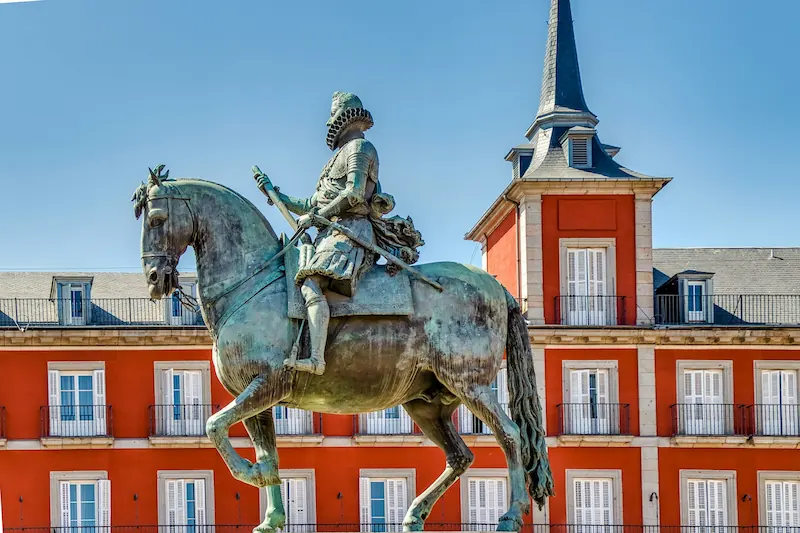
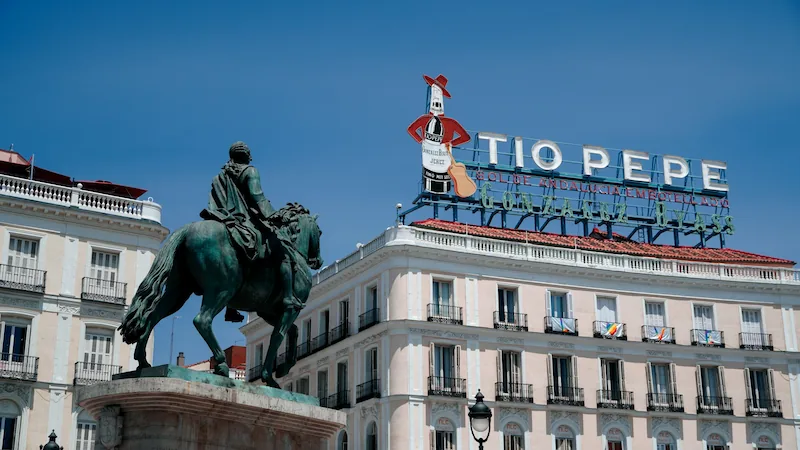
Use Sol, Plaza Mayor and Gran Vía as an orientation loop – Area: Centro · Best for: first-time orientation and city scale · Time needed: 1.5 to 2.5 hours · Worth it: Useful early in the trip, especially if you keep moving toward stronger food, culture or neighborhood areas afterward. · Book ahead: No
Choose a flamenco show carefully – Area: Centro / Letras / La Latina · Best for: a structured night activity with cultural payoff · Time needed: 1.5 to 2.5 hours · Worth it: Worthwhile when the venue is strong and you want one planned evening rather than another open-ended dinner. · Book ahead: Recommended
Build one market-and-tapas block into the trip – Area: La Latina / Chueca / Chamberí / Centro · Best for: food-first travelers and lunch-led pacing · Time needed: 2 to 3 hours · Worth it: Best when it links a market, bar or neighborhood walk instead of relying only on the most obvious central stops. · Book ahead: No
Take a day trip to Toledo or Segovia if you have 4+ days – Area: Toledo / Segovia · Best for: longer stays that want one classic excursion · Time needed: 6 to 10 hours · Worth it: High payoff once Madrid itself has enough room; Toledo is denser and more atmospheric, Segovia is clearer and more visual. · Book ahead: Recommended
How to choose well in Madrid
Madrid is less about one blockbuster attraction than about how art, royal scale, public space and neighborhood life fit together across the day. The city works best when a serious cultural visit is followed by Retiro, a long lunch, a food district or an evening that lands naturally. A well-timed dinner, rooftop, flamenco show or late walk can shape the trip as much as a daytime ticket.
Choose the Art Triangle carefully: Prado is the first anchor for most visitors, while Reina Sofía or Thyssen should match your taste and available time.
Pair one serious cultural visit with Retiro, Letras, La Latina, Chamberí or a food-led district so the day has space to breathe.
Use Sol, Plaza Mayor and Gran Vía for orientation, scale and movement, then continue toward areas with stronger food, culture or neighborhood rhythm.
Give Madrid’s evenings real weight: tapas, vermouth, rooftops, wine bars and flamenco are part of the city’s core experience.
On a two-day trip, keep the focus on Madrid itself rather than losing a full day to an excursion too early.
Build each day around one main version of the city — museum Madrid, royal Madrid, food Madrid or neighborhood Madrid — then let the next layer support it.
Plan around the climate: summer afternoons need indoor or shaded time, while winter evenings reward food, culture and shorter outdoor blocks.
Book the main anchors, then keep enough flexibility for food, light, weather and the slower moments that make Madrid work.
Iconic Madrid experiences
Madrid’s highest-payoff experiences combine major art, royal scale, broad public space and big-city evening energy. Use this section to anchor a first trip, then add only the options that fit your time, interests and daily rhythm.
See the Prado Museum with a clear plan – The Prado is the strongest first museum choice in Madrid. Choose a focused route — Spanish masters, headline works or a guided selection — and give it your freshest hours rather than treating it as a casual stop between walks. (First-time essential · Best for: travelers choosing one major museum)Find tours & experiences
Use Retiro after the Prado or a museum morning – Retiro gives museum-heavy days the open air they need. Use it before lunch, after the Prado, or as the point where a dense cultural morning opens into trees, water, shade and easier movement. (Worth it · Best for: short breaks that need open air and reset time)
Visit the Royal Palace and its ceremonial surroundings – The palace delivers Madrid’s clearest royal scale through state rooms, courtyards and its western setting. Pair it with Plaza de Oriente, Almudena Cathedral, Sabatini Gardens or the Royal Collections if court history is a real interest. (High payoff · Best for: travelers who want royal Madrid, not only museum Madrid)Find tours & experiences
Use Sol, Plaza Mayor and Gran Vía as Madrid’s first orientation loop – This central loop gives a first-time visitor orientation, movement and big-city scale quickly. It works best as a beginning or connector before you move toward Letras, La Latina, Chueca, Retiro or the palace side. (Best for: first walks and fast city orientation)
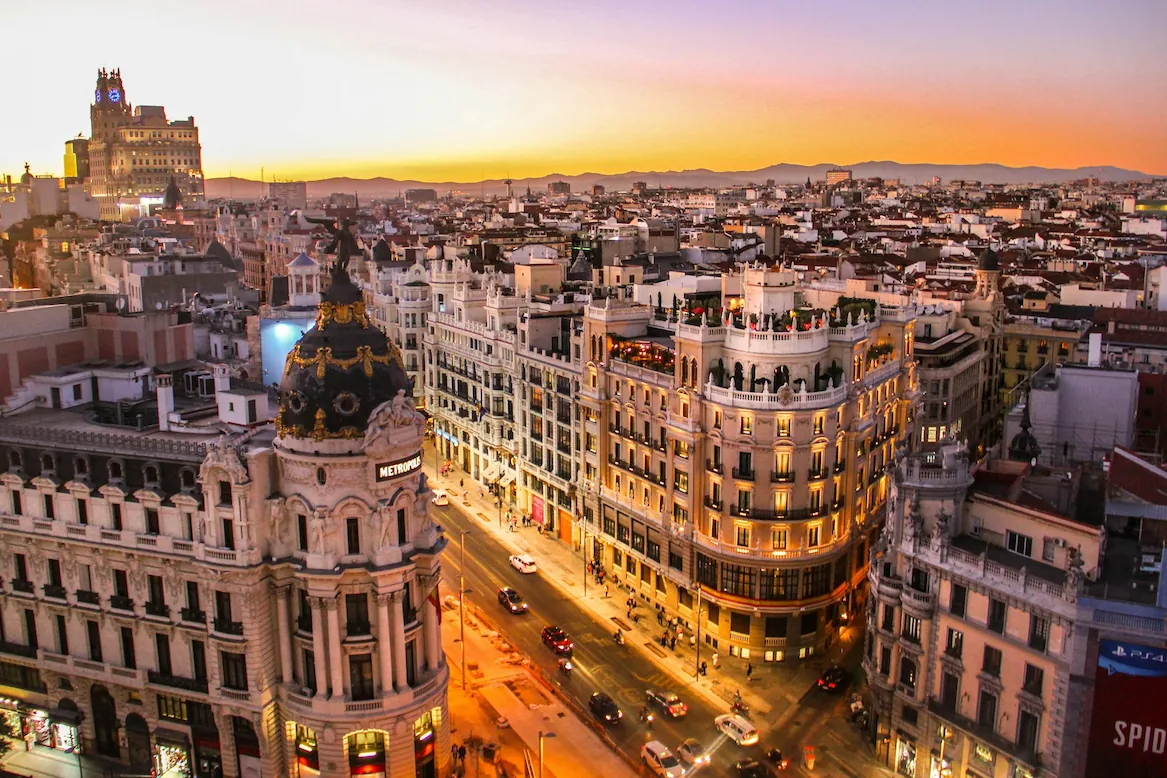
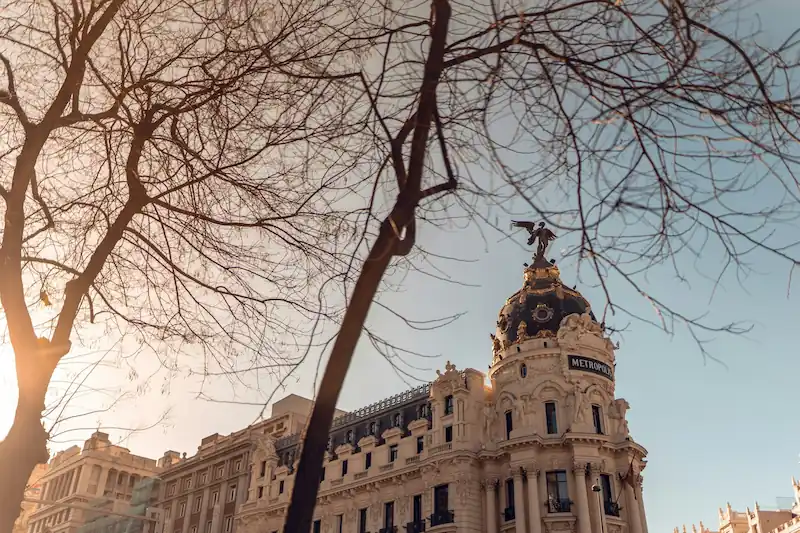
Take in Gran Vía as a city-scale urban experience – Gran Vía is Madrid’s theatrical city corridor: architecture, cinemas, shops, traffic, rooftops and evening light all come together. It is strongest late afternoon or after dark, when the avenue feels fully awake. (Best in the evening · Best for: travelers who want big-city energy)
Choose one rooftop or elevated viewpoint – One good elevated view is enough to understand Madrid’s rooftops, domes and inland scale. Choose a rooftop, Cibeles-style viewpoint or hotel terrace around golden hour rather than building the day around viewpoints. (Best for: short stays wanting one strong visual finish)
Add Temple of Debod for sunset only if timing works – Temple of Debod works best as the sunset finish to a palace-side or Plaza de España sequence. It gives the western edge of Madrid a softer ending without demanding a separate cross-city detour. (Timing-dependent · Best for: sunset seekers and relaxed western-center walks)
Visit Santiago Bernabéu if football matters to the trip – The Bernabéu is a major modern Madrid landmark for football fans and families with older kids. Keep it for trips where Real Madrid, stadium architecture or sports culture genuinely matter. (Style-specific · Best for: football fans and older kids)Find tours & experiences
Cultural things to do in Madrid
Madrid’s cultural strength is depth, but the best visits come from choosing well. Decide whether you want classic painting, modern art, royal history, literary streets or a smaller cultural stop, then let the rest of the day breathe around it.
Choose Reina Sofía for modern art and Guernica – Reina Sofía is the strongest choice when you want modern art, political weight and Guernica at the center of the visit. It works well as the second major museum after the Prado, but it benefits from a clear route. (Best for: modern art and contemporary culture travelers)Find tours & experiences
Use Thyssen if you want breadth over specialization – Thyssen is often the easiest second museum because it offers range without the density of the Prado or the emotional intensity of Reina Sofía. Choose it when you want breadth, pacing and a more comfortable cultural block. (Best for: visitors who want an easier art museum complement)Find tours & experiences
Walk Barrio de las Letras as a cultural district – Letras links literary history, museum proximity, wine bars, restaurants and evening streets in one compact area. It is one of the simplest ways to keep culture alive after the museum doors close. (Worth it · Best for: travelers who want an accessible culture-led evening)
Add the Royal Collections after the Palace – The Royal Collections Gallery is most useful when it extends a palace visit rather than replacing it. Add it if court culture, decorative arts and dynastic history are part of what draws you to royal Madrid. (Only if you have time · Best for: travelers leaning toward royal and court culture)Find tours & experiences
Choose flamenco as a proper evening plan – Flamenco can be a strong Madrid night when the venue and performance quality are chosen carefully. Treat it as the evening’s anchor, with dinner before or after nearby, rather than as a last-minute add-on. (Best in the evening · Best for: travelers who want one structured cultural night)Find tours & experiences
Add CaixaForum or CentroCentro for a compact cultural layer – CaixaForum, CentroCentro and similar spaces work well when you want architecture, exhibitions or a short indoor cultural stop without committing to another major museum. They are especially useful in rain or between larger plans. (Rainy-day useful · Best for: repeat visitors and flexible culture blocks)
Use the Sorolla Museum for a quieter, more intimate Madrid – The Sorolla Museum gives Madrid a gentler cultural register: domestic rooms, garden light and a focused artist-led visit. It is especially good for repeat visitors or anyone avoiding another large museum block. (Underrated · Best for: art lovers avoiding museum fatigue)
Visit the National Archaeological Museum if history matters more than paintings – The National Archaeological Museum is a strong alternative when you want Spain’s deeper historical layers instead of another painting collection. It pairs naturally with Retiro, Salamanca or a calmer culture-first day. (Best for: history-focused travelers and rainy days)
Local-feeling experiences in Madrid
These experiences work best between the major sights: cafés, markets, plazas, bars, parks and neighborhoods that carry the day from planned visits into Madrid’s later rhythm. Use them when you want the city to feel less formal and more lived-in.
Let La Latina carry one full evening – La Latina works when you let the evening unfold slowly: a first bar, a shared plate, a short walk, then another stop nearby. It is one of the most natural districts for Madrid’s late rhythm. (High payoff · Best for: first evenings and short trips)
Spend time in Chamberí for a calmer, more lived-in Madrid – Chamberí gives the trip a steadier residential frame through cafés, markets, vermouth bars and elegant streets. It is particularly useful on repeat visits or when you want an afternoon away from the busiest central corridors. (Best for: repeat visits and slower afternoons)
Use Chueca and Salesas for streets, terraces, and urban energy – Chueca and Salesas are strong for café stops, boutiques, bars, terraces and a more contemporary central mood. They work well late afternoon, when shopping, drinks and dinner can flow into one another. (Best for: travelers who want city energy without a rigid plan)
Walk through Lavapiés with a specific food or culture anchor – Lavapiés is strongest with a clear reason to be there: Reina Sofía nearby, a food stop, a cultural venue or a street-level walk that suits travelers comfortable with a denser, less polished urban texture. (Best for: travelers who like denser, less polished urban texture)
Build one vermouth or aperitivo pause into the day – A vermouth stop can reset the day between sightseeing and dinner. Use it in La Latina, Chamberí, Chueca, Salesas or Letras when you want Madrid’s social rhythm to take over naturally. (Worth it · Best for: food-led travelers and longer lunches)
Use Malasaña selectively for nightlife and younger energy – Malasaña is best when you want casual bars, vintage shops, late cafés and a younger central mood. It works better as a deliberate evening choice than as a vague daytime detour. (Best for: younger travelers, bars, and casual nights)
Use El Rastro as a Sunday street scene – El Rastro is at its best as a Sunday neighborhood event around La Latina and Lavapiés. Go early, expect crowds and treat it as atmosphere first, shopping second. (Sunday only · Best for: market energy and casual local atmosphere)
Let Casa de Campo or Madrid Río reset a family or longer stay – Casa de Campo and Madrid Río give families, runners, cyclists and longer-stay travelers the space central Madrid sometimes lacks. Pair them with the western side or Matadero rather than forcing them into a tight first-day plan. (Best for: families, open-air breaks, and repeat visitors)
Food experiences worth your time in Madrid
Madrid is one of Europe’s easiest great food cities, but timing and district choice matter. A market stop, tapas evening, long lunch or vermouth pause can shape the day as clearly as a museum visit when it lands in the right neighborhood.
Build a tapas evening in La Latina, Chamberí or Chueca – Madrid tapas work best when the stops are close together and the evening can move naturally. La Latina is the classic first choice, while Chamberí, Chueca, Salesas and Letras can give the night a different tone. (High payoff · Best for: first-time visitors wanting a real Madrid evening)Find tours & experiences
Use Mercado de San Miguel as a short central food stop – San Miguel is polished, central and easy to understand. Use it for a short tasting or first look near Plaza Mayor, then continue toward La Latina, Letras, Chueca or Chamberí for a fuller meal rhythm. (Best for: first-time market exposure)
Try a neighborhood market for a slower food block – Markets such as San Antón, Vallehermoso or Antón Martín can make a food-led day feel more local and less staged. Choose one that fits your route rather than crossing the city only for the market. (Good for repeat visits · Best for: food-led travelers and longer stays)
Keep one meal for classic Madrid cooking – Keep space for one traditional lunch or dinner so the trip is not only tapas and trend-led dining. Cocido, callos, roast meats or old-school dining rooms give Madrid a more grounded food memory. (Best for: travelers who want a more destination-specific meal)
Use vermouth, wine bars and aperitivo as a real pause – Late afternoon is one of Madrid’s best food moments. A drink, a few plates and an unhurried bar can bridge the day into dinner better than another low-priority sight. (Worth it · Best for: travelers who prefer rhythm over rigid reservations)
Book a food walk when you want quick confidence on a short stay – A guided food walk is most useful when you have little time, want a stronger first night or prefer someone to connect markets, bars and neighborhood habits quickly. Independent travelers can often build their own route. (Best for: short breaks and first-night planning)Find tours & experiences
Give lunch more weight than you might expect – A long lunch can structure a Madrid day better than another minor stop, especially in Chamberí, Salamanca, Retiro, La Latina or Letras. Use it when the itinerary needs a deliberate reset. (Best for: slow travelers and food-first itineraries)
Keep churros and chocolate as a quick classic ritual – Churros con chocolate work best as a short morning, late-night or family-friendly stop. Keep it simple and let it support the day rather than turning it into a major food event. (Quick classic · Best for: families and first-time visitors)
What first-time visitors should do in Madrid
A first trip to Madrid should combine one major museum, one royal or historic block, one large open-air pause, and one strong evening district. The city does not need to be overcomplicated to work well.
Start with the Prado, Retiro, and either the Royal Palace or one strong historic-center walk.
Use Sol and Plaza Mayor for orientation, then move quickly toward neighborhoods with better texture and food.
Keep one evening for La Latina, Letras, or Chueca rather than spending every night in the same central corridor.
Choose between Reina Sofía and Thyssen based on taste; do not visit both by default.
Add flamenco only if you want a purposeful night plan, not because every itinerary is supposed to include it.
Use one rooftop or Temple of Debod-style sunset moment as a finish, not as a separate sightseeing mission.
Leave day trips for longer stays unless Madrid itself is already well covered.
Priority
Best choices
Why
Non-negotiable
Prado, Retiro, old center or Royal Palace
These give Madrid its clearest first reading
Strong additions
La Latina evening, Letras walk, second museum, flamenco
They deepen the stay without bloating it
Only with extra time
Day trip, third museum, Bernabéu, specialist cultural stop
Useful once the core city logic is in place
Free things to do in Madrid
Madrid is generous with public space, which means some of its best hours cost very little. The strongest free experiences come from walking well, choosing the right districts, and using the city’s plazas and parks intelligently.
Walk Retiro Park and the Paseo del Prado area without turning every stop into a paid visit.
Move through Sol, Plaza Mayor, and the old center for orientation, then continue into nearby neighborhoods.
Spend late afternoon in La Latina, Chueca, Salesas, or Chamberí with only drinks and small stops as needed.
Use Gran Vía and surrounding streets as an architectural and city-life walk.
Browse markets selectively for atmosphere even if you do not eat there.
Take an evening walk through Letras or central Madrid once the daytime pressure softens.
Use Temple of Debod, Madrid Río, or Casa de Campo when you want open-air time without another ticket.
Check free-entry windows at major museums only if the timing genuinely fits; do not let a free slot distort your best day.
Free option
Best area
Best for
Park and boulevard time
Retiro / Paseo del Prado
open-air reset and walking
Historic-center wandering
Sol / Plaza Mayor / Palacio side
first-day orientation
Neighborhood atmosphere
La Latina / Chueca / Chamberí
late afternoon and evening
Sunset or wide-space reset
Temple of Debod / Madrid Río / Casa de Campo
families, longer stays, and budget-conscious trips
Unique things to do in Madrid
Madrid’s most distinctive experiences are not necessarily obscure. They come from the city’s particular mix of major art, late urban life, and the ease with which a museum day can dissolve into tapas, vermouth, and long evening streets.
Pair the Prado with Retiro and a slower Letras evening instead of stacking museums all day.
Choose flamenco as a serious evening plan when the venue and timing are right.
Build a long aperitivo or vermouth block into the schedule as one of the day’s main pauses.
Use Chamberí, Chueca, Salesas or Malasaña to see Madrid beyond the ceremonial center.
Extend a Royal Palace visit with the Royal Collections if court culture and decorative arts interest you.
Treat a rooftop as part of the evening rhythm rather than a daytime box to tick.
Use Sorolla, CaixaForum, CentroCentro or the Archaeological Museum when you want cultural depth without another blockbuster visit.
Go to El Rastro when a Sunday street scene sounds appealing, not because every Madrid itinerary needs it.
Things to do in Madrid at night
Madrid is one of Europe’s strongest evening cities, and that should shape how you plan your days. Nighttime here is not an afterthought; it is one of the reasons the city works so well.
Do tapas and bar-hopping in La Latina if you want a classic first-night plan.
Use Barrio de las Letras for a more polished culture-meets-dining evening.
Go to a flamenco show if you want a structured night with real payoff.
Take a rooftop drink around Gran Vía, Cibeles, or central Madrid at the right hour.
Walk central streets later rather than rushing back too early after dinner.
Use Chueca for bars and urban energy if you want a more contemporary city feel.
Use Malasaña selectively for a younger, more casual night out.
Do not overplan late night after a heavy museum day; Madrid evenings work best when they have room to stretch.
Night plan
Best area
Who it suits
Tapas-led evening
La Latina
most first-time visitors
Culture-led evening
Letras / flamenco venues
couples and culture-first trips
Rooftop or city-light evening
Gran Vía / Cibeles / Centro
short stays needing one memorable finish
Contemporary bars
Chueca / Malasaña
travelers who want more urban nightlife energy
Things to do in Madrid with kids
Madrid works well with children when you avoid overloading the trip with formal museum time. The best family days mix one structured visit with parks, easy walking, and enough flexibility for food and breaks.
Retiro is one of the city’s easiest family wins because it gives space, movement, and low-pressure time.
The Royal Palace can work well for older children if you keep the visit focused and not too long.
Choose one museum carefully; many families will do better with one good indoor visit than with an art-heavy day.
The Bernabéu tour can be a major hit if anyone in the family cares about football.
Casa de Campo, Madrid Río, the cable car, Zoo Aquarium, and Parque de Atracciones are useful when the trip needs more kid-led energy.
Markets and tapas districts are useful with kids at lunch more than late at night.
Rooftops, plazas, and broad central walks can add variety without much logistical effort.
A day trip to Segovia can work for families if the stay is long enough and travel tolerance is good.
Option
Best age fit
Why it works
Retiro Park
Most ages
Space, flexibility, and easy pacing
Royal Palace
Older kids
Scale and ceremonial interest
Bernabéu tour
Football-minded kids and teens
Clear, visual, and easy to understand
Casa de Campo / Madrid Río
Younger kids and active families
Open space and pressure release
Segovia day trip
Families with a longer stay
Clear visuals and manageable excursion structure
What to do in Madrid when it rains
Madrid handles rain well because the city’s indoor cultural backbone is strong. Wet weather is a good moment to lean into museums, the Royal Palace, covered cultural venues and longer meals rather than forcing outdoor sightseeing.
Use the Prado, Reina Sofía or Thyssen as the center of the day rather than as a rushed add-on.
Add the Royal Palace, Royal Collections, Sorolla Museum, or Archaeological Museum if your energy still supports it.
Choose a market, café block, or longer lunch as a practical anchor between indoor visits.
Flamenco works well as a rainy-night option when you want a fixed evening plan.
Use CaixaForum, CentroCentro, or a temporary exhibition when you want a compact indoor stop.
Keep Retiro, Temple of Debod, and extended old-town wandering for clearer weather.
If you only have one rainy day, make it your main museum day and keep Retiro, Temple of Debod and extended outdoor wandering for clearer weather.
This is Madrid’s highest-value cultural axis, where the city’s great museums sit beside one of its most useful open-air breaks. It justifies a full half-day or more, especially on a first trip.
Prado Museum
Reina Sofía or Thyssen
Retiro Park
Landscape of Light boulevard walking
Royal Botanical Garden and CaixaForum as optional layers
Palacio and western historic center
This is where ceremonial Madrid and the older core overlap most convincingly. It is the right area for royal architecture, broad historic framing, and one of the city’s clearest first-day blocks.
Royal Palace
Almudena Cathedral surroundings
Plaza de Oriente and Sabatini Gardens
Temple of Debod sunset if timing works
Historic-center walking toward Plaza Mayor
Sol, Plaza Mayor, and central core
This area matters for orientation, movement, and first impressions, but not necessarily for your deepest hours. Use it as a connector between stronger cultural or food-led zones.
Puerta del Sol
Plaza Mayor
Mercado de San Miguel as a short stop
Fast first-time orientation
Connections into nearby neighborhoods
Barrio de las Letras
Letras is one of Madrid’s easiest all-round districts because it combines walkability, literary framing, food, and evening life. It works especially well after museums or as a lower-effort night plan.
Literary quarter walking
Dinner and bar options
Easy evening atmosphere
Useful pairing with Prado area
Good base for flamenco or wine-bar evenings
La Latina
La Latina is one of the city’s strongest food-and-evening districts and earns time through how well it handles movement and appetite. It is less about monuments than about urban rhythm.
Tapas and bar-hopping
Sunday El Rastro nearby
Late afternoon and evening use
Local-feeling street life
Easy extension from the center
Chueca and Salesas
This side of central Madrid feels more contemporary, style-conscious, and socially active than the older core. It is a strong zone for shopping, café stops, bars, galleries, and a different urban mood.
Contemporary city energy
Cafés and bars
Shopping streets
Gallery and design atmosphere
Good evening flexibility
Chamberí
Chamberí is where Madrid starts to feel less like a capital on display and more like a city being lived in. It is particularly good for longer stays, slower lunches, vermouth, and repeat visits.
Residential elegance
Cafés and vermouth bars
Sorolla Museum nearby
Lower visitor density
Relaxed neighborhood time
Lavapiés and Atocha
This area is useful when you want Madrid’s denser, more mixed, and more contemporary side. It works best with a clear anchor such as Reina Sofía, a food stop, or a cultural venue rather than as aimless wandering.
Reina Sofía access
Lavapiés food and street texture
Atocha arrival or departure logic
CaixaForum and cultural spaces
Good for contemporary Madrid context
Casa de Campo, Madrid Río, and Moncloa
This western side is not the first Madrid most visitors come for, but it becomes valuable on family trips, longer stays, and days needing air, views, or a break from central density.
Casa de Campo open space
Madrid Río riverside walks
Temple of Debod
Cable car when operating
Family-friendly pressure release
What to prioritize depending on your trip
Madrid improves when you choose the right version of the city for the time you actually have. The goal is not to compress the same list harder, but to decide what kind of Madrid this trip should deliver.
Profile
Prioritize
Skip
Structure
Half day
One major museum or the Royal Palace plus one neighborhood meal block
Second museums and any day-trip thinking
One headline visit, one good lunch or evening district, then stop
1 day
Prado, Retiro, and either the Royal Palace area or La Latina/Letras evening
Trying to do the entire Art Triangle
Culture first, air and walking second, food-led evening third
2 days
Prado, Retiro, historic core, one strong evening district, and one second museum or flamenco plan
Day trips and overextended shopping detours
One art-heavy day, one royal or neighborhood-heavy day
3 days
Core museums selectively, royal Madrid, local neighborhoods, and proper food time
Low-priority detours that add movement without changing the trip
Big culture, then balance, then local texture
4 days
Chamberí, Chueca, slower meals, deeper museum choices, and one day trip
Repeating the central core without purpose
Cover the essentials early, then widen into district logic and excursions
5 days or more
A second or third cultural layer, a family/open-air reset, and Toledo or Segovia
Overfilling every evening after museum-heavy days
Alternate serious culture with local and open-air days
First trip
Prado, Retiro, Royal Palace or old center, La Latina/Letras evening
Specialist museums and distant neighborhoods unless they match your style
Build Madrid around art, royal scale, food, and evening rhythm
Family trip
Retiro, Royal Palace, Bernabéu if relevant, Casa de Campo or Madrid Río, one easy museum
Long Art Triangle days and late tapas crawls with tired kids
One structured stop, one open-air reset, one flexible meal block
Repeat visit
Chamberí, Salesas, Sorolla, markets beyond San Miguel, food depth and smaller museums
Rebuilding the standard first-time route by habit
Use Madrid as a city to inhabit, not just a route to complete
Best day trips from Madrid
Madrid has some of Spain’s strongest day-trip options, but they work best once the city itself is not being shortchanged. On a first short stay, Madrid should usually keep the focus.
Excursion
Best for
Time needed
First trip?
Transport
Book ahead
Toledo
first-time visitors who want the strongest classic day trip from Madrid
These are not itineraries. They are combinations that work especially well because the geography, energy, and city rhythm make sense together.
Prado + Retiro + Letras evening – This is one of Madrid’s strongest first-time combinations because it moves from serious culture into open air and then into a district that handles dinner and evening walking naturally. It gives the city depth without turning the day into a museum marathon.
Royal Palace + old center + La Latina tapas – This pairing works because ceremonial Madrid transitions cleanly into a more social and food-led version of the city. The day starts with formality and ends with appetite, which is often exactly how Madrid feels at its best.
Reina Sofía + Lavapiés lunch + rooftop evening – This is a strong combination for travelers who want a more contemporary reading of Madrid. It moves from modern art into a denser neighborhood and finishes with a broader city view, which gives the day contrast without scattering it.
Thyssen + Chueca/Salesas + Gran Vía night – This suits travelers who want culture without excessive museum fatigue. The museum gives structure, Chueca and Salesas add contemporary city life, and Gran Vía brings scale and evening momentum.
Retiro morning + long lunch + flamenco night – This works particularly well when you want a lighter daytime rhythm but still want the evening to feel substantial. It lets Madrid’s pacing do the work rather than overloading the schedule with too many formal visits.
Temple of Debod + Plaza de España + rooftop or Malasaña evening – This is a useful western-center combination when you want sunset, city scale, and a less museum-led evening. It should be timed for late day rather than forced into a prime morning slot.
Chamberí + Sorolla Museum + vermouth or long lunch – This is a strong repeat-visitor sequence because it gives Madrid a calmer, more residential frame. It adds culture, neighborhood texture, and food without relying on the standard Centro circuit.
Bernabéu + Salamanca or Chamberí meal block – For football-led travelers, this keeps the stadium from feeling isolated. Add a nearby polished lunch, café stop, or Chamberí walk so the visit becomes part of Madrid rather than a detached side trip.
What to book ahead in Madrid
Madrid is easier than some European capitals to keep flexible, but a few experiences are much better when reserved in advance. Book the true anchors, then leave room for neighborhoods, food, and weather-led adjustments.
Reserve if combining multiple stops or traveling on weekends
Useful when logistics or interpretation matter; less necessary for simple independent visits
Retiro, central walks, neighborhoods, and rooftop time
No
Keep flexible for weather, light, and energy levels
Usually no; these experiences work best at your own pace
FAQ: what to do in Madrid
These are the questions travelers most often need answered before they can shape the city well.
What are the best things to do in Madrid on a first trip?
Start with the Prado, Retiro, and either the Royal Palace or a focused walk through the old center. Then add one strong evening district such as La Latina or Barrio de las Letras. That gives you art, city scale, and the social side of Madrid without overloading the trip.
How many days do you need for Madrid?
Two to three full days is enough for a strong first visit. That gives you time for the main museum layer, royal or historic Madrid, and evenings that do not feel rushed. Four or more days let you add deeper neighborhood time and a day trip.
What should I book ahead in Madrid?
Reserve the Prado, the Royal Palace, and any flamenco show or guided food experience that matters to your trip. Day trips to Toledo or Segovia also benefit from advance booking, especially on busier dates. Much of Madrid’s neighborhood time can remain flexible.
Is the Prado Museum worth it?
Yes. If you visit only one museum in Madrid, the Prado is usually the strongest choice. The key is to visit with a clear route rather than trying to see everything. A two- to three-hour visit focused on Spanish masters and selected highlights is often ideal.
Should I visit Prado, Reina Sofía, or Thyssen?
Choose Prado for the essential Madrid museum experience, Reina Sofía for modern art and political intensity, and Thyssen for a broader, easier-ranging collection. On a short first visit, do Prado plus one of the other two only if museums are a real priority.
Is the Royal Palace worth visiting in Madrid?
Yes, especially if you want more than museums from the city. The payoff is strongest when you pair the palace with the surrounding western historic core rather than treating it as a stand-alone stop. If royal history does not interest you, other parts of Madrid may matter more.
Is Retiro Park worth visiting?
Yes. Retiro is one of Madrid’s best open-air experiences and works especially well with the Prado or the wider Landscape of Light area. It is not just filler; it gives the trip breathing room and shows how Madrid uses public space.
What are the best free things to do in Madrid?
Retiro, the Paseo del Prado, central walks through Sol and Plaza Mayor, Gran Vía, Temple of Debod, Madrid Río, and neighborhood time in La Latina, Chueca, or Chamberí all work well without much spending. Madrid is generous with public space, so some of its best hours come from walking and eating selectively rather than buying constant tickets.
What are the best things to do in Madrid at night?
Madrid shines after dark through tapas, bars, later dinners, rooftops, and selected cultural evenings such as flamenco. La Latina and Letras are especially useful for first-time visitors, while Chueca, Malasaña, and Gran Vía add a more contemporary and urban feel.
Is flamenco in Madrid worth it?
It can be, if you choose the venue carefully and treat it as a proper evening plan. Madrid is not Andalusia, but it has serious flamenco venues and can deliver a strong performance experience. Avoid booking a show just because it appears on every tourist list.
What should I do in Madrid when it rains?
Use the weather to make it your main museum day. The Prado, Reina Sofía, Thyssen, Royal Palace, Royal Collections, Sorolla Museum, and Archaeological Museum all work well indoors, and a long lunch or evening flamenco plan fits naturally around them.
Is Madrid good for families with kids?
Yes, as long as the trip is not built entirely around formal museums. Retiro is especially useful, the Royal Palace can work well for older children, and football-minded families may enjoy the Bernabéu tour. Casa de Campo, Madrid Río, and the zoo or amusement park can help balance the trip.
What are the best things to do in Madrid with kids?
Retiro, the Royal Palace, Bernabéu tour, Casa de Campo, Madrid Río, Zoo Aquarium, Parque de Atracciones, and one carefully chosen museum are among the easiest family-friendly choices. The strongest family days mix one structured visit with open space and easy meals.
Are day trips from Madrid worth it?
Yes, but only once Madrid itself is not being squeezed too hard. Toledo and Segovia are the clearest high-payoff choices, while El Escorial, Alcalá de Henares, Aranjuez, Ávila, and Salamanca make more sense on longer or more specific trips. On a very short first visit, the city should usually stay the focus.
What is the best day trip from Madrid?
Toledo is usually the strongest default because it gives a dense historic contrast to Madrid and works well for first-time visitors. Segovia is nearly as strong if you want a clearer visual payoff with the aqueduct, old town, and Alcázar.
Is Toledo or Segovia better from Madrid?
Choose Toledo for layered history, atmosphere, and a more complex old-city experience. Choose Segovia for a cleaner, more visually immediate day built around the aqueduct, cathedral, and Alcázar. Both are strong, but Toledo is often the default first choice.
What should I skip in Madrid?
Avoid trying to complete every major museum unless art is the main reason for your trip. After you have oriented yourself around Sol and Plaza Mayor, move into Retiro, Letras, La Latina, Chueca, Chamberí or a stronger food plan rather than spending too many hours in the most exposed central corridors.
Is Mercado de San Miguel worth visiting?
Yes as a short, central, visual market stop. Use it briefly near Plaza Mayor, then build fuller eating time in La Latina, Letras, Chueca, Chamberí or another neighborhood with stronger local rhythm.
What are the best neighborhoods to explore in Madrid?
Barrio de las Letras, La Latina, Chueca, Salesas, Chamberí, Lavapiés, and Malasaña all add something different. The best choice depends on the mood: Letras for culture and dining, La Latina for tapas, Chueca and Salesas for contemporary energy, Chamberí for calmer local life, Lavapiés for denser texture, and Malasaña for younger nightlife.
Is Santiago Bernabéu worth visiting?
Yes if Real Madrid, football history, or stadium experiences matter to you. It is not a universal must-do for every Madrid trip, but it can be a high-payoff activity for football fans and families with older children.
What is the best area for tapas in Madrid?
La Latina is the easiest classic answer for a first trip, especially for a moving tapas evening. Chamberí, Chueca, Salesas, and Barrio de las Letras are also strong depending on whether you want traditional bars, contemporary dining, or a more polished night out.
What can couples do in Madrid?
Couples usually do well with Prado or Thyssen, Retiro, a Letras evening, rooftop drinks, flamenco, and a slower food-led night in La Latina, Chueca, or Chamberí. Madrid is more romantic through pacing and evenings than through a single landmark.
What are unique things to do in Madrid?
A Sorolla Museum visit, Chamberí vermouth stop, serious flamenco evening, El Rastro Sunday, rooftop at golden hour or a museum-to-neighborhood sequence can feel more distinctive than chasing lesser-known sights for their own sake.
Can you see Madrid in one day?
You can get a strong outline in one day if you choose sharply: Prado or Royal Palace, Retiro or the historic center, then La Latina or Letras in the evening. Do not try to fit the full Art Triangle, a stadium tour, and a day trip into the same short stay.
What is the best season for things to do in Madrid?
Spring and autumn are the easiest seasons for combining museums, walking, Retiro, terraces, and day trips. Summer can still work, but afternoons require more indoor time and slower pacing. Winter is good for museums, food, and culture-led city breaks.
Madrid is best when you balance major culture with neighborhood life instead of trying to turn every hour into a headline attraction.
Turn the right experiences into the right itinerary
Once you know what you want to do in Madrid, the next step is turning those ideas into a trip that actually works day by day. Use the planner to organize the right mix of highlights, neighborhoods, and pace into a route that feels coherent, not crowded.