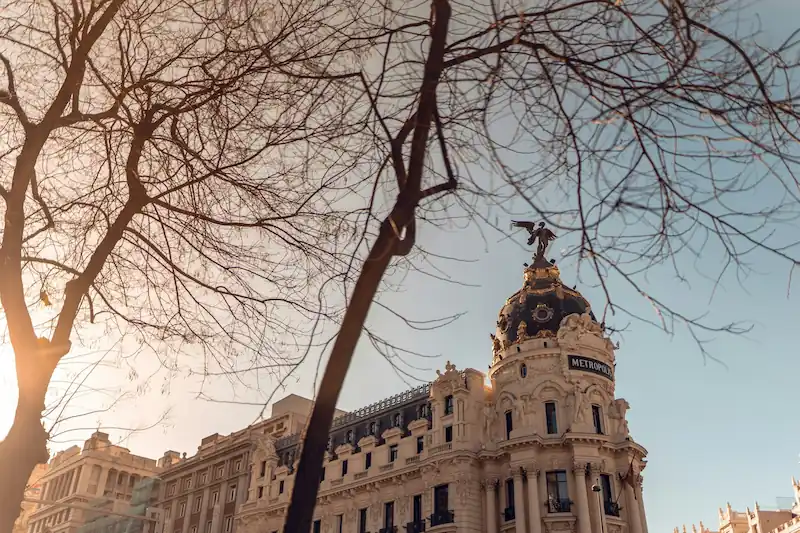
Where to stay in Madrid
Find the best neighborhoods and hotels in Madrid.
Open page →
Plan your trip to Madrid with a clearer sense of where to stay, what to prioritize and how the city’s rhythm works. Madrid is best understood through strong daily sequences: the museum axis in the morning, Retiro or a neighborhood pause when the day needs air, and a late social reset once terraces, tapas bars and wide avenues begin to fill.
Find the best neighborhoods and hotels in Madrid.
Open page →
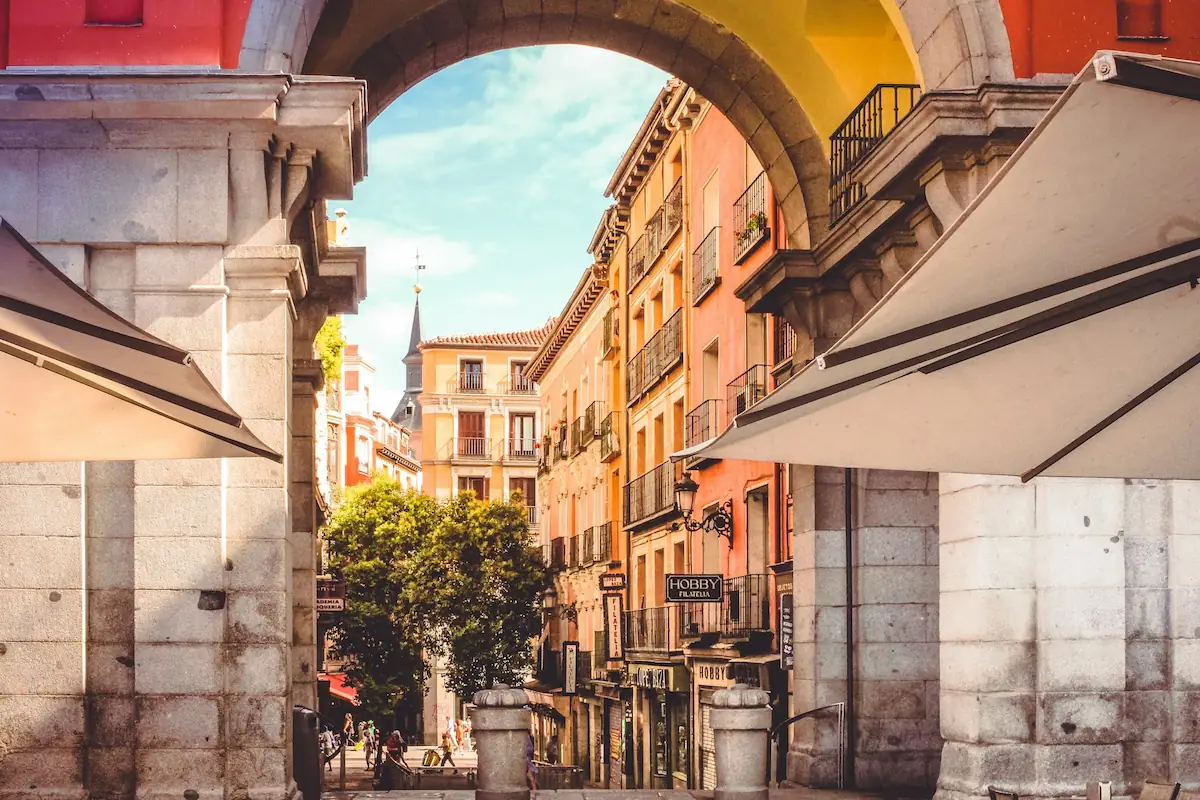
Prioritize the activities that deserve your time in Madrid.
Open page →
2 Days in Madrid: Food-Led Itinerary with Tapas, Markets and Prado
Open itinerary →
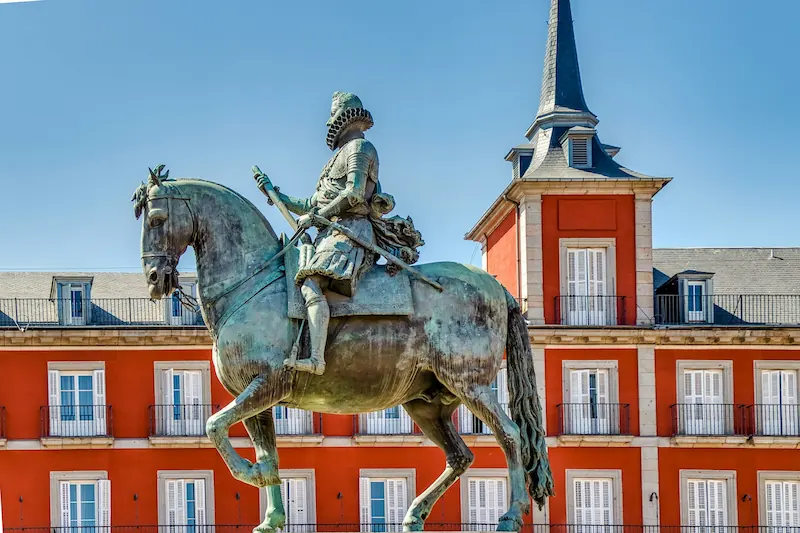
3 Days in Madrid: Walkable Itinerary for Museums, Plazas and Tapas
Open itinerary →
5 Days in Madrid: Family-Friendly Itinerary with Parks, Prado and Toledo
Open itinerary →
7 Days in Madrid: Deep Itinerary with Museums, Neighborhoods and Toledo
Open itinerary →
Madrid is a high-plateau capital shaped by corridors, institutions and daily life rather than by one single postcard view. The Prado axis and Retiro give the city civic weight; the Royal Palace and old center give it ceremonial depth; Gran Vía / Sol make short stays easy; and neighborhoods such as Letras, Chueca / Salesas, La Latina, Malasaña, Chamberí and Salamanca reveal how social life stretches into the evening. Madrid works best when art, food, parks and late hours are sequenced instead of squeezed into a monument checklist.
Madrid offers unusual equilibrium: world-class museums, royal scale, parkland, serious food culture and residential neighborhoods all within short urban jumps. Its appeal is not built on one dominant view, but on the consistency of how it functions. The city becomes most persuasive when you move between museums and open space without changing pace, then let dinner become part of the day’s structure rather than its afterthought.
Best time: Late spring and early autumn for the best mix of museum comfort, park time, walkability, terraces, and day-trip flexibility.
Ideal trip length: 3 days for a strong first visit; 5 days if museums, neighborhoods, food rhythm, and one day trip matter.
Madrid is often better value than Paris, London, or Barcelona, but costs rise quickly around prime central hotels, high-demand restaurants, major cultural dates, and last-minute stays. The city rewards paying for the right base because evenings matter as much as daytime sightseeing: a well-positioned stay near Letras, Retiro, Salamanca, Gran Vía, or Chamberí can reduce both transport friction and late-night fatigue. Food value remains strong if you avoid relying entirely on the most exposed Sol and Plaza Mayor corridors.
Madrid is organized radially, with Sol as a symbolic center, the Royal Palace and old core to the west, the Prado-Retiro cultural spine to the east, and later expansions stretching north through Gran Vía, Salamanca, Chamberí, Castellana, and beyond. Major arteries such as Gran Vía, Paseo del Prado, Alcalá, and Castellana do more than connect places: they stabilize how the city is read. Madrid becomes easier once those corridors are treated as planning anchors rather than as traffic-heavy interruptions.
Set on a high plateau, Madrid trades coastal drama for dry air, wide skies, and a horizontal urban reading. The city falls gently west toward the Manzanares and opens differently around Retiro, Casa de Campo, Madrid Río, and the palace plateau. That means the best Madrid days often move from dense culture into parkland or broader air before returning to streets that become more social after dark.
Mornings favor museums, markets, and palace visits while attention is fresh and temperatures are easier. Midday belongs to shade, cafés, long lunches, or a controlled indoor block, especially in warmer months. Evenings are when Madrid becomes fully itself: terraces fill, tapas routes lengthen, neighborhoods wake again, and movement becomes more social than functional.
Think in corridors rather than isolated districts: Prado to Retiro, Royal Palace to La Latina and Temple of Debod, Letras to Sol and Gran Vía, Chueca / Salesas to Malasaña, Salamanca to Castellana, Chamberí to local dining streets, or Madrid Río to Casa de Campo. That model reduces decision fatigue because it turns Madrid into a set of coherent urban bands instead of a scattered list of sights.
Open the planner
Build days around one primary corridor — Prado and Retiro, Royal Palace to La Latina, Gran Vía to Malasaña, Chueca / Salesas to Salamanca, or Chamberí for a more residential reading — instead of crossing the capital repeatedly for isolated stops. Keep major museum interiors as anchors, not add-ons, because Madrid’s strongest collections absorb far more attention than their facades suggest. Use Retiro, Madrid Río, Casa de Campo, or a neighborhood café sequence to reset after dense cultural blocks rather than forcing continuous indoor intensity. Let dinner geography shape the second half of the day, since Madrid’s social rhythm is strongest when evenings unfold locally rather than through long relocations. Treat Salamanca, Chamberí, Chueca, Salesas, and Malasaña as slower urban readings rather than places to tick off quickly. Place the palace, Almudena, Plaza de Oriente, Sabatini Gardens, La Latina, and Temple of Debod inside the same broader western arc whenever possible. Use the Prado-Reina Sofía-Thyssen triangle selectively: one major museum can define a day; two can work with a park or lunch reset; three is a specialist choice. In summer, front-load serious walking and heavier museum decisions before heat begins to flatten the day.
Vibe: Measured, walkable, historically literate, and unusually practical.
Why go: Proximity to the Prado triangle keeps cultural days compact, while smaller streets make dinner, cafés, and late returns easy without the pressure of heavier nightlife zones.
Who it fits: First-time visitors balancing museums, walkability, and evening dining.
Not for: Travelers seeking nightlife density or the most residential feel.
Where to stay: Central without being theatrical — ideal for structured museum days followed by short evening returns.
Vibe: Central, energetic, practical, and constantly in motion.
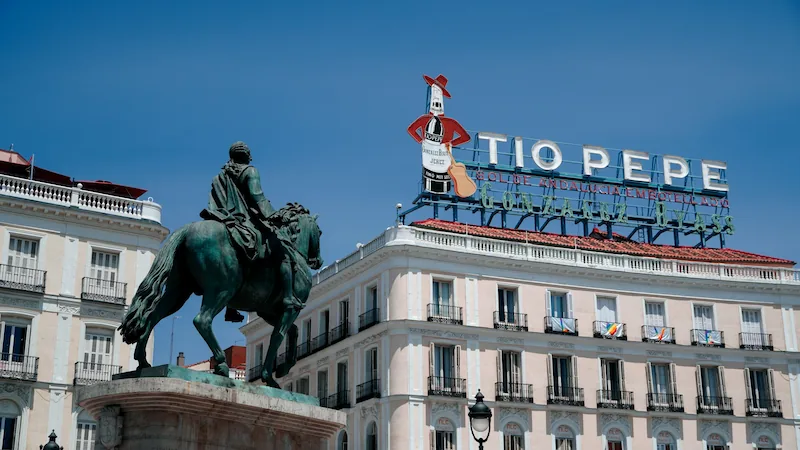
Why go: This is Madrid’s easiest orientation zone: Sol, Gran Vía, Plaza Mayor, Chueca, Letras, theatres, rooftops and metro links sit within quick reach.
Who it fits: Short stays, first-time visitors, solo travelers, shopping weekends, and anyone who values logistics over quiet.
Not for: Travelers who want calm, subtle neighborhood life or a residential feel.
Where to stay: Best when convenience matters most: useful for two-night stays, late arrivals and travelers who want the city’s main corridors immediately available.
Vibe: Ordered, residential, quietly affluent, and polished after dark.
Why go: Predictable street geometry, strong lodging, refined dining, and access toward Retiro and Castellana simplify higher-comfort stays.
Who it fits: Travelers prioritizing calm evenings, shopping, comfort, and dependable hotel standards.
Not for: Visitors expecting historic irregularity or lower-cost atmosphere.
Where to stay: Spatial clarity and consistent building stock translate into one of Madrid’s most comfortable stay areas.
Vibe: Stylish, social, inclusive, and more polished than its nightlife reputation suggests.
Why go: Chueca brings cafés, restaurants and LGBTQ+ nightlife, while Salesas adds boutique streets, calmer edges and a more refined central stay.
Who it fits: Couples, LGBTQ+ travelers, design-conscious city breakers, repeat visitors, and travelers who want central Madrid with personality.
Not for: Visitors who need complete quiet or want the most museum-first base.
Where to stay: A strong central alternative to Sol and Malasaña when you want energy, style and walkability without giving up hotel polish.
Vibe: Social, compressed, food-led, and oriented toward the street.
Why go: Tapas routes form naturally here, especially when the palace side or old center needs to turn into a more lived evening.
Who it fits: Food-led travelers and return visitors comfortable with ambient noise.
Not for: Early sleepers or travelers who want polished hotel stock.
Where to stay: Atmospheric but acoustically active — choose upper floors or sound-insulated rooms.
Vibe: Independent, youthful, creative, and slightly improvised.
Why go: Compact scale supports spontaneous café stops, vintage retail, bars, and an alternative reading of central Madrid beyond ceremonial spaces.
Who it fits: Travelers reading cities through subculture, cafés, shops, and late streets.
Not for: Those seeking architectural uniformity, quiet nights, or luxury polish.
Where to stay: Best for short stays where neighborhood texture matters more than hotel size.
Vibe: Residential, leafy, practical, and open-air by Madrid standards.
Why go: Retiro operates as a breathing space after dense museum corridors, while Ibiza adds neighborhood restaurants and calmer evenings.
Who it fits: Families, long-stay travelers, park-first visitors, and museum travelers wanting breathing room.
Not for: Visitors wanting nightlife downstairs or maximum old-center immersion.
Where to stay: Airier surroundings with dependable transit links back to the core.
Vibe: Local, composed, rhythmically residential, and quietly food-focused.
Why go: Reveals the capital outside visitor circuits through cafés, vermouth bars, elegant streets, and lower-density everyday life.
Who it fits: Travelers who calibrate trips around everyday life, longer stays, and repeat visits.
Not for: Short stays focused on monuments or first-time checklist efficiency.
Where to stay: Authentic residential feel with straightforward metro access and stronger food texture than many visitors expect.
Madrid works best when the day has a clear shape: a museum or palace anchor, an open-air pause, then an evening that lands in the right neighborhood. The experiences below show the layers that make the capital feel coherent rather than rushed.
Planning tip: Keep the heaviest cultural interior early, choose one park, café or food-led reset, and make sure the evening finishes in a district where you actually want to spend time.
The Prado, Thyssen and Reina Sofía sit close enough to shape a cultural day, but the strongest visit usually means choosing one main museum and using the boulevard and Retiro as the reset.
Tip: Start early if the Prado is your anchor.
The palace, Almudena, Plaza de Oriente, Sabatini Gardens and nearby viewpoints work best as one western sequence, giving Madrid a ceremonial scale that feels very different from the museum axis.
Tip: Continue toward Temple of Debod for the cleanest late-day finish.
Check guided tours →
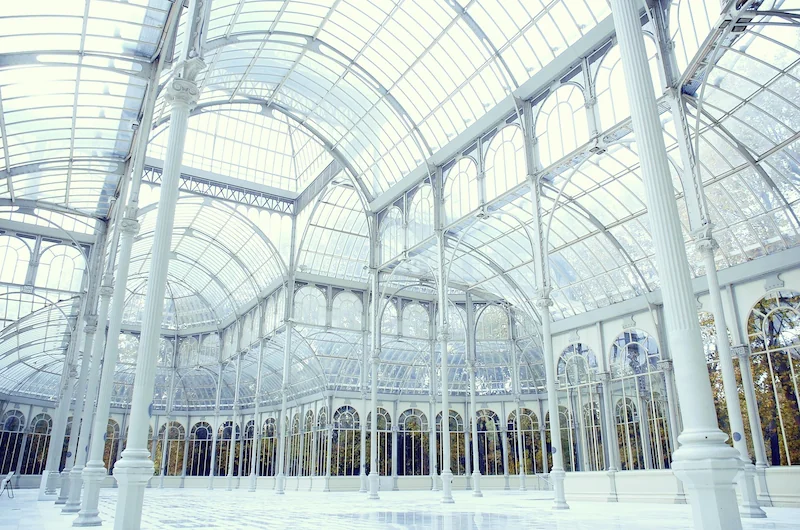
Retiro is the easiest reset after the Prado or a dense museum morning: water, paths, shade, lawns and the Crystal Palace give the day room without leaving central Madrid.
Tip: Pair it with the Prado axis rather than treating it as a separate outing.
Check guided tours →
Gran Vía is at its best around blue hour, when theatres, rooftops, traffic and stone facades turn the avenue into Madrid’s most cinematic central corridor.
Tip: Use a rooftop if you want the view without the pavement rush.
Check guided tours →
San Miguel is polished and busy, but it can work well as a quick tasting stop near Plaza Mayor when you keep expectations realistic and do not build the whole meal around it.
Tip: Go before peak evening density.
Temple of Debod gives the palace side a simple sunset finish and helps you understand how Madrid drops west toward Casa de Campo.
Tip: Pair it with the palace side, not as a standalone cross-city detour.
Check guided tours →
The Bernabéu is not essential for every visitor, but it is a major contemporary Madrid landmark and an easy win for football-led or family trips.
Tip: Book only if football matters; otherwise keep the time for museums or neighborhoods.
The Prado is more rewarding when you choose a route instead of trying to absorb everything. Focus on Velázquez, Goya and a few core rooms before museum fatigue takes over.
Tip: Use the museum map; room order matters.
Reina Sofía works best when you enter with a clear priority, especially if Guernica is the reason you came. It is a strong second museum, but it needs more focus than a casual add-on.
Tip: Head to Guernica first, then branch outward.
El Rastro is less about buying something specific than joining Madrid’s Sunday street rhythm around La Latina and Lavapiés.
Tip: Arrive early if you want space to move.
Check guided tours →
Thyssen is the easiest bridge between the Prado’s old masters and Reina Sofía’s modern intensity, especially when you want range without another heavy museum day.
Tip: Choose it as your second museum when you want range, not intensity.
The Royal Palace gives Madrid its clearest ceremonial scale. The state rooms are the main visit, while the Royal Collections Gallery adds context on court culture, dynastic display and the objects that shaped royal life.
Tip: Book the palace first; add the Royal Collections if royal Madrid is a real theme of your trip.
Matadero gives Madrid a different cultural scale: large industrial spaces, exhibitions, events and a natural link to Madrid Río for a longer, more contemporary afternoon.
Tip: Pair it with Madrid Río rather than squeezing it between central museums.
Check guided tours →
Walking is a social act here, not just transit.
Tip: Match local timing — around 8pm.
Check guided tours →
A café pause is not filler in Madrid. It helps the day shift from museums or walking into the later dinner rhythm the city is built around.
Tip: Stand at the bar for faster service.
Check guided tours →
Fast transfers keep district-hopping realistic.
Tip: Buy a 10-trip card immediately.
Check guided tours →
Chueca and Salesas are useful when you want central Madrid with style, cafés, restaurants and social energy without defaulting to Sol or heavier nightlife streets.
Tip: Arrive late afternoon and let the area become dinner rather than a pass-through.
Check guided tours →
Madrid Río is not the first thing every visitor needs, but it is a useful reset for families, runners, cyclists, and longer stays needing open space beyond Retiro.
Tip: Pair it with Matadero or Casa de Campo rather than crossing the city just for a short look.
Check guided tours →
Casa de Campo makes Madrid feel larger, greener, and less institutional; it works best for families or repeat visitors who want air after dense central days.
Tip: Use metro or cable-car logic; do not fold it into an already crowded museum day.
Check guided tours →
Malasaña changes gradually from cafés and shops into bars and late streets, which makes it better for a loose evening than for a tightly scheduled sightseeing block.
Tip: Use it deliberately if you want a younger central rhythm, not if you want quiet.
Check guided tours →
A simple jamón stop can be one of Madrid’s most direct food moments: quick, local, unfussy and easy to place before a longer dinner or evening walk.
Tip: Order by weight rather than portion names.
Check food options →
Madrid tapas work best in a compact area, with two or three stops close together rather than a long cross-city crawl.
Tip: Limit each stop to one dish.
Churros make sense when they fit Madrid’s late rhythm: after dinner, a show or a long evening walk, not as a forced daytime snack.
Tip: Share — portions are substantial.
Check food options →
A vermouth stop gives the day a natural pause before Madrid’s late dinner rhythm takes over.
Tip: Use it around La Latina, Chamberí, Chueca, or Salesas.
Check food options →
Make time for one proper Madrid meal rather than turning every evening into tapas. Cocido, callos or a traditional roast can give the trip more depth than another bar route.
Tip: Make it lunch if you want the meal to shape the day properly.
Check food options →
Markets such as Antón Martín, Vallehermoso or San Antón can give food-led travelers a more useful everyday view of Madrid than relying only on San Miguel.
Tip: Choose based on the district you are already using, not as a cross-town detour.
Check food options →
Madrid can look simple on the map, but it expands fast when museums, food routes, parks, football, royal history, rooftops and late evenings all compete for the same hours. Protect the experiences that shape the city first, then widen by trip length and travel style.
Madrid can work very well with children because the city offers broad sidewalks, major parks, good metro coverage, stadium energy, and relatively clear urban structure. The main compromise is timing: the capital’s strongest social rhythm runs later, while summer heat can make ambitious daytime plans fail faster than expected. Families do best when one cultural anchor is balanced with Retiro, Madrid Río, Casa de Campo, easy food, and enough space to reset.
Time changes Madrid’s meaning: a shorter stay reveals the museum-and-boulevard capital, while a longer one lets neighborhood life, parks, and the city’s late social clock fully register.
Open the planner →
Madrid becomes easier once you align with its clock, corridors, museum intensity, and heat pattern. The city is not hard to navigate, but it is easy to mis-time if you plan it on the wrong rhythm.
April to June and September to October are usually the strongest windows because light stays clear, parks remain attractive, terraces are active, and museum-plus-neighborhood days still work comfortably on foot. Madrid can also be rewarding in winter for travelers more interested in culture and food than in long outdoor hours. The most demanding period is midsummer, when dry heat changes not just comfort but the useful shape of the day.
Two full days can cover Madrid’s outline, but the capital starts to make much more sense from day three onward, once its museum axis, park logic, royal west side, and evening culture have time to interact. A shorter stay often captures institutions but not the city’s lived rhythm. Five days is the more complete version if you want one day trip without sacrificing Madrid itself.
For a first trip, Barrio de las Letras is the most balanced base, while Gran Vía / Sol works best when the stay is very short and convenience matters most. Salamanca gives polish and calmer nights; Chueca / Salesas adds boutique central energy; Retiro / Ibiza works well for families and park access; Chamberí suits longer stays; La Latina and Malasaña are strongest when evening energy is intentional. Treat Ópera / Palacio and Atocha / Lavapiés as useful micro-locations rather than the main stay framework.
Most arrivals come through Adolfo Suárez Madrid-Barajas Airport, which connects well to the city by metro, commuter rail, taxi, and ride-hailing, while Atocha and Chamartín matter for rail-based arrival logic. The airport is not usually the friction point; the bigger question is how quickly your arrival places you inside the right corridor for the first day. Madrid rewards entering cleanly into the district logic you actually plan to use.
Metro coverage is extensive, legible, and often the fastest way to protect energy between larger district bands, while walking is best kept for coherent local corridors rather than every cross-city move. Taxis are useful late at night or in heat, but they lose value in dense central traffic. Madrid works best when metro and walking are combined strategically: walk the Prado axis, Letras, La Latina, Salamanca, or Chamberí locally, then use metro for the larger jump.
Madrid is generally straightforward for visitors, with reliable healthcare, calm daytime movement, and a familiar large-city safety profile. The most relevant practical issues are pickpocketing in dense tourist corridors, heat stress in summer, and poor energy management on late-running days rather than any broader safety concern. A little attention to hydration, timing, and urban basics goes a long way here.
Madrid changes across the year less through rain or dramatic landscape shifts than through temperature, daylight, and how the city’s social clock interacts with them. Late spring and early autumn are the strongest options for most travelers because museums, parks, boulevards, day trips, and late evenings can all belong to the same day without too much physical cost. Summer works best for travelers who are happy to treat midday as a reduced or interior period, while winter suits those who want a clearer focus on culture, food, and neighborhood rhythm.
Spring is one of Madrid’s most complete seasons because the city’s full structure remains available at once: museums, parks, boulevard walks, and late dinners all fit inside a coherent day. It suits first-time visitors, culture-heavy stays, and travelers who want Madrid’s civic and social sides to feel equally active. The dry light on stone and foliage can make the city feel especially open in this period.
Summer suits travelers willing to build around heat and accept that the day must be divided more sharply than in other seasons. Long evenings can be excellent, but exposed walking, palace-side wandering, and full outdoor pacing become much harder once the afternoon intensity rises. It works best when museums, cafés, hotel rest, and late dinners are used as structural tools rather than accidental pauses.
Autumn often gives Madrid its best overall balance, with enough warmth for public-space life and less physical strain than summer. It suits repeat visitors, museum-and-food trips, and anyone who wants the capital’s slower neighborhood side without losing urban energy. Terrace noise and evening movement often feel especially proportionate at this time of year.
Winter works well for travelers focused on museums, markets, cafés, and the capital’s lived-in urban identity rather than on park-heavy or late-sunset plans. The city stays highly usable, and lower pressure can make cultural days feel cleaner, but shorter daylight narrows the outdoor window. It suits thoughtful city breaks more than maximum-coverage first visits.
Not seeing your next stop yet? Build a fully personalized itinerary anywhere in Spain.
These are the planning questions that most often determine whether Madrid feels smooth, tiring, or properly understood.
Three days is the strongest minimum for a first visit because it gives enough time for the Prado-Retiro axis, one palace or old-center sequence, and Madrid’s evening rhythm to interact. Five days works much better if neighborhoods, slower meals, smaller museums, and one day trip matter to you.
Barrio de las Letras is the safest all-round base because it keeps museums, dining, Sol, Gran Vía and Retiro close without placing you in the busiest transport core. Gran Vía / Sol is better for very short stays, while Salamanca, Retiro / Ibiza and Chueca / Salesas work well when comfort, calm or style matter more.
Protect the Prado axis, Retiro, one major old-center sequence around the Royal Palace or La Latina, and one evening built around Madrid’s actual social timing. The city makes most sense when culture, open space, food, and late urban life are experienced together rather than as separate lists.
Madrid is very walkable within strong district or corridor bands, especially Letras, Sol, the Prado-Retiro axis, La Latina, Salamanca, Malasaña, and Chamberí. It is larger than it first appears, so the best approach is to use metro for long jumps and save walking energy for areas that actually reward it.
Late spring and early autumn are the most balanced periods because museums, parks, terraces, and late evenings all stay usable without the full stress of summer heat. Winter can also be excellent for culture-and-food-focused trips, while midsummer requires a much sharper indoor and late-evening rhythm.
Yes for the Prado, palace interiors, major temporary exhibitions, and popular guided experiences such as flamenco or food tours. Madrid is otherwise easy to navigate, but poorly timed queues at key cultural anchors can disrupt a carefully structured day.
Usually yes, but only if you visit selectively. A focused Prado visit around Velázquez, Goya, Bosch, or Spanish masters can be one of Madrid’s clearest experiences, while a full collection marathon is unnecessary for most travelers.
Yes if art is a major reason for visiting Madrid, but not necessarily on a short first stay. For most travelers, Prado plus either Reina Sofía or Thyssen is enough; all three work best over three or more days with Retiro or food-led resets between them.
Yes if royal history, ceremonial interiors or the western side of the city interest you. The palace is strongest when paired with Plaza de Oriente, Almudena, Sabatini Gardens and possibly the Royal Collections Gallery, rather than as a rushed interior between unrelated sights.
Yes for most visitors. Retiro is not just a park break; it completes the Prado axis and gives Madrid open air, family flexibility, and a reset after museum density. It is especially valuable on a first trip or during warmer months.
It is the Prado-Retiro axis, where museums, boulevards, fountains, gardens and civic institutions sit close together. For travelers, the practical value is simple: pair a major museum with Retiro or a shaded walk instead of treating each stop as separate.
The most common mistakes are dining too early, stacking too many major museums together, underestimating summer heat, and treating neighborhoods as interchangeable. Madrid works better when each day follows a corridor and each evening lands in a deliberate food or social district.
Yes, especially if you balance culture with parks and space. Retiro, Madrid Río, Casa de Campo, shorter museum visits, churros, easy metro use, and the Bernabéu for football-focused children can all make Madrid work well for families.
It is worth it if football matters to your group or if you want to include a modern Madrid spectacle beyond museums and royal landmarks. If football does not interest you, it should not displace the Prado-Retiro axis, the palace side, or neighborhood evenings.
Chamberí is the best residential choice, La Latina is strongest for food-led evenings, Malasaña gives a more creative late rhythm, and Chueca / Salesas adds a stylish central layer. Gran Vía / Sol is useful, but it is more about convenience than local texture.
Yes, but Madrid nightlife is broader than clubs. Tapas, vermouth, long dinners, wine bars, rooftops, flamenco, Chueca, La Latina, Malasaña, and late walks all matter. The city’s evening strength is one of the main reasons to avoid overloading the daytime.
Build one evening around La Latina or Letras, take a rooftop or Gran Vía blue-hour view, book flamenco if you want a structured cultural night, or use Chueca/Malasaña for bars and contemporary energy. The key is to let dinner geography shape the night.
Retiro and the Prado axis are the strongest free or low-cost experience if you treat them as a real sequence. Other strong free options include Gran Vía at night, Plaza Mayor and the old center, Temple of Debod at sunset, and neighborhood walks in La Latina, Letras, Chueca, or Chamberí.
Use the weather for a museum or palace day. The Prado, Reina Sofía, Thyssen, Royal Palace, Royal Collections, National Archaeological Museum, CaixaForum, and longer lunches all work well indoors. Rain is usually a reason to lean further into Madrid’s cultural strengths.
Very much so. Madrid rewards repetition: returning to the same promenade, café, market, park, or district often reveals more than adding another isolated attraction. Its strongest qualities are patterns of use as much as monuments.
Only if you have enough time. Toledo and Segovia are excellent, but on a two- or three-day first visit they can weaken Madrid itself. With four or five days, one day trip can add real regional depth without distorting the capital.
Toledo is usually the stronger first choice for layered history and density; Segovia is clearer, more visual, and often easier for families. Both work well, but the choice should depend on whether you want complexity or a cleaner historic excursion.
Madrid is strongest when all three interact. The art gives the city depth, the food gives it rhythm, and the neighborhoods keep it from feeling purely institutional. A trip focused on only one layer can work, but the most satisfying first visit usually balances them.
Skip trying to complete the entire Art Triangle, crossing town for isolated meals, and treating Sol and Plaza Mayor as the whole city. On a short trip, prioritize Prado or one major museum, Retiro, the palace or old center, and one strong evening district.
Madrid organizes itself once you align with its timing and corridors.
Find the best places to stay, how to get there, and move around with ease.
Build a smarter trip base
Once you understand how Madrid works and what matters most for your trip, the next step is turning that direction into a real itinerary. Use the planner to organize your days around the right areas, experiences, and rhythm so the trip feels clear before you go.