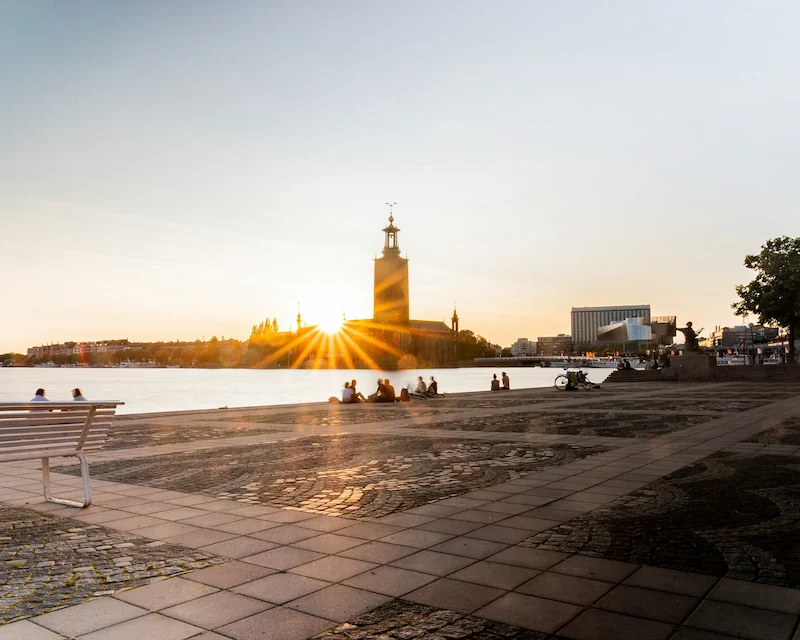
Find the best areas to stay in Stockholm, based on your travel style, how you want to experience the city, and which neighborhoods make the most practical sense for your trip. Stockholm rewards a smart base: the right area can turn ferries, museums, food halls, old streets, design shops, waterfront walks and evening neighborhoods into a clean rhythm instead of a set of scattered journeys across islands.
Best areas
Norrmalm is the easiest first-time base; Gamla Stan is the most atmospheric; Södermalm is best for restaurants and local evenings; Östermalm is strongest for polished comfort, food halls and design; Vasastan and Kungsholmen give calmer value; Djurgården & Skeppsholmen suit culture-focused waterfront stays.
Booking timing
Book early for June to August, weekends, central waterfront stays, family rooms, boutique hotels and properties near Stockholm Central, because the best-located hotels disappear before the cheapest hotels do.
Best areas to stay in Stockholm at a glance
Norrmalm – Best for: first-time convenience and short stays · Vibe: central, connected, practical · Stay here if: you want the easiest base for transport, airport rail, hotels, shopping, restaurants, rainy-day flexibility and short stays without losing time. · Avoid if: you want intimate old-town atmosphere, quiet residential evenings or a strongly local nightlife district.
Gamla Stan – Best for: historic atmosphere and old-town immersion · Vibe: old-city, compact, ceremonial · Stay here if: you want to sleep among historic lanes, royal landmarks, church towers, small squares and waterfront edges. · Avoid if: you dislike tourist pressure, small rooms, narrow streets, uneven restaurant value or limited local nightlife.
Södermalm – Best for: restaurants, bars and local evenings · Vibe: creative, residential, social · Stay here if: you want independent shops, bars, viewpoints, cafés, bakeries, Fotografiska access and a less formal version of Stockholm. · Avoid if: you want the fastest access to every first-time museum, Stockholm Central and royal landmark.
Östermalm – Best for: luxury hotels, food halls and design-led comfort · Vibe: elegant, ordered, polished · Stay here if: you want restaurants, shopping, Östermalms Saluhall, Strandvägen, harbor access, Djurgården approaches and a quieter premium base. · Avoid if: you are trying to keep accommodation costs low or want strong late-night energy outside the door.
Vasastan – Best for: calm local value and longer stays · Vibe: residential, café-led, relaxed · Stay here if: you want a quieter neighborhood with good cafés, bakeries, restaurants, Stockholm Public Library access and transport back to the core. · Avoid if: you want to step directly into the old town, stay beside the main museum cluster or avoid daily transit.
Kungsholmen – Best for: waterfront calm near the center · Vibe: local, spacious, practical · Stay here if: you want a quieter central base with long water walks, City Hall access, good transport, larger-room potential and less tourist density. · Avoid if: you want dense nightlife, old-town atmosphere or the strongest museum access outside your door.
Djurgården & Skeppsholmen – Best for: museums, water and quiet culture · Vibe: green, cultural, scenic, calm · Stay here if: you want Vasa Museum, Skansen, Nordic Museum, Moderna Museet, waterfront paths and quieter nights to shape the stay. · Avoid if: you need dense restaurants, late bars, broad hotel choice, budget depth or the fastest access to Stockholm Central.
How to choose where to stay in Stockholm
Choosing where to stay in Stockholm is less about finding one universal best area and more about deciding how much convenience, atmosphere, calm, evening life and water-based movement you want around your hotel. The city’s islands make the map slightly deceptive: a hotel can look central but still add awkward crossings, transfers, hillier approaches or dead evening space. A good base should reduce friction without flattening the city into a purely practical stay.
Choose Norrmalm if you are staying for 2 or 3 nights and want the least complicated base for Stockholm Central, airport rail, metro lines and cross-city movement.
Choose Gamla Stan for historic atmosphere, but check room size, street noise, luggage access and restaurant quality carefully.
Choose Södermalm if restaurants, bars, cafés, viewpoints and a more lived-in evening rhythm matter more than immediate royal-landmark proximity.
Choose Östermalm when comfort, food halls, design shopping, Strandvägen, harbor access and a calmer premium location justify the higher rates.
Choose Vasastan or Kungsholmen for quieter value, longer stays and family space, but only if the hotel sits near useful metro, bus or walking connections.
Choose Djurgården & Skeppsholmen only when museums, water, calm and culture are the purpose of the stay, not as a default first-time base.
Do not choose solely by distance to Gamla Stan; Stockholm’s best stay often depends on evening plans, transit lines, ferry logic and seasonal daylight as much as sightseeing.
How Stockholm’s geography affects where you should stay
Stockholm’s hotel map is shaped by islands, bridges, metro lines, ferries, trams and water. A hotel can look close to everything but still sit awkwardly for your actual plans, especially if you are moving between Gamla Stan, Djurgården, Södermalm, Stockholm Central and the airport rail. The best base is the one that reduces the crossings you repeat every day and matches when you actually leave the hotel: morning sightseeing, museum afternoons, ferry departures, dinner, bars or quiet waterfront walks.
Gamla Stan is geographically central but not always the easiest hotel base for room size, taxis, luggage, strollers or quiet.
Norrmalm is the strongest transport hub and the safest default for short, practical stays, winter trips and first visits.
Södermalm is central in experience but slightly less central in transport logic for some museum-heavy and rail-arrival days.
Östermalm works well when you want design, dining, food halls, harbor access and a calmer premium stay near Djurgården routes.
Vasastan and Kungsholmen can be excellent value bases, but only when the hotel sits near useful metro, commuter rail, bus or walking links.
Djurgården and Skeppsholmen feel special but should be chosen deliberately, because they trade convenience for calm, culture and waterfront atmosphere.
Gärdet, Hammarby Sjöstad, Liljeholmen, Solna and Lidingö can make sense for value, events, apartments or specific transport lines, but they are secondary choices for most first-time city breaks.
Hyper-central convenience – Norrmalm and the station-side core are best for short stays, airport rail, mixed itineraries, winter trips and travelers who want to simplify every day.
Historic atmosphere – Gamla Stan gives the strongest old-city setting, but its compact lanes, tourist density and older buildings make hotel choice more important.
Evening and local life – Södermalm is the best cluster for restaurants, bars, cafés, independent shops, viewpoints and a less formal Stockholm rhythm.
Polished culture and dining – Östermalm and the harbor edge suit travelers who want restaurants, design, food halls, Strandvägen, Djurgården access and calmer premium streets.
Quieter value – Vasastan and Kungsholmen work best for longer stays, families and travelers who prefer residential calm over instant sightseeing.
Museum and waterfront calm – Djurgården and Skeppsholmen are best for culture-focused stays where quiet, water and museums matter more than nightlife or dense hotel choice.
Secondary value alternatives – Gärdet, Hammarby Sjöstad, Liljeholmen, Solna and Lidingö can be useful when room quality, price or a specific event matters, but they require stronger transport checks.
Best areas to stay in Stockholm
Stockholm’s best hotel areas each create a different kind of trip. The strongest choice depends on whether you want maximum efficiency, old-town atmosphere, dining and nightlife, refined comfort, residential calm, waterfront space, or museum-focused stillness. These seven areas cover the main stay decisions most visitors face: other useful districts such as Gärdet, Hammarby Sjöstad, Liljeholmen, Solna or Lidingö can be considered for specific budgets or logistics, but they are not better default bases for most visitors.
Norrmalm
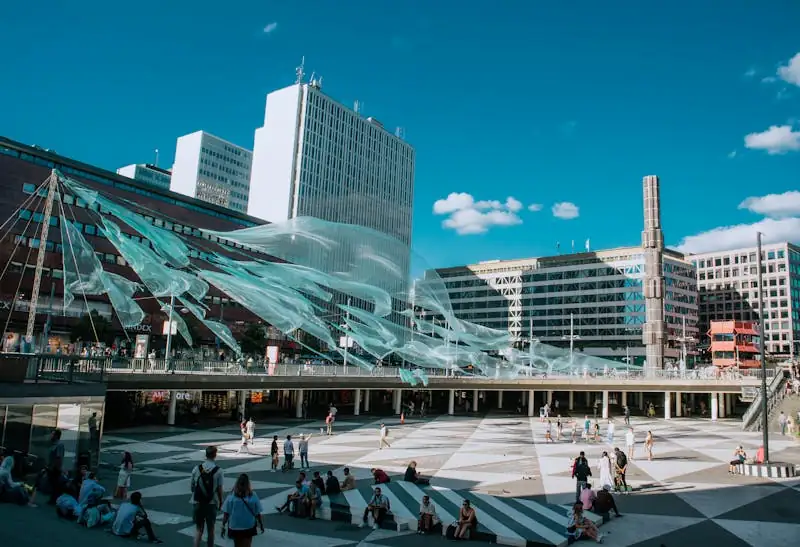
Norrmalm is the most practical area to stay in Stockholm, especially for a first visit, a short trip, a rail arrival, or a winter stay when daylight and weather make logistics matter more. It is not the city’s most romantic district, but it sits at the center of the transport web and makes almost every other neighborhood easier to reach. Hotels here work well when you want the trip to run smoothly: Gamla Stan, Östermalm, Vasastan, Kungsholmen, ferries, shops, food halls, Nationalmuseum, metro art stations, and cultural stops all sit within a manageable radius. The atmosphere is busier and more commercial, with station movement, shopping streets, office blocks and hotel lobbies replacing the softer sound of residential sidewalks.
Why stay here: Stay in Norrmalm if convenience is your highest priority and you want the best area to stay in Stockholm without wasting time on logistics.
Best for: First-time visitors, 2- or 3-night stays, rail arrivals, business-leisure trips, and travelers who want the most convenient central base.
Pros
Best overall base for first-time visitors, 2-night stays, 3-day trips and travelers arriving by train or airport rail.
Excellent access to Stockholm Central Station, Arlanda Express, metro lines, commuter trains, buses and trams.
Easy walking distance to Gamla Stan, Östermalm, City Hall, Nationalmuseum, shopping streets, waterfront routes and many restaurants.
Largest concentration of reliable hotels across budget, mid-range, design, business and upscale categories.
Strong choice for travelers who plan to move across several neighborhoods each day or need a weather-proof base.
Cons
Less intimate and less atmospheric than Gamla Stan, Södermalm, Vasastan or the island hotel areas.
Some blocks feel businesslike, shopping-led or station-adjacent rather than local.
Street feel varies sharply: Brunkebergstorg, Kungsträdgården, Hötorget and Central Station do not offer the same mood.
Not the strongest base if your evenings are mostly in Södermalm or your trip is built around quiet waterfront calm.
Nearby highlights
Walkable access to Stockholm Central Station, Arlanda Express and the main public transport network.
Easy first-day route toward Gamla Stan, the Royal Palace area, City Hall and the central waterfront.
Quick access to Östermalm food halls, Nationalmuseum, Kungsträdgården, shopping streets and design-led hotels.
Strong metro and tram access for Djurgården, Södermalm, Vasastan, Kungsholmen and metro art routes.
Plenty of restaurants, hotel bars and casual meal options for low-friction evenings.
Good base for visitors who want flexibility in poor weather, short daylight or tight weekend schedules.
Budget
Generator Stockholm – A central hostel-hotel hybrid with private rooms and social spaces near the station side of Norrmalm. Why we recommend: One of the few lower-cost stays that keeps Stockholm Central, shops, and transport genuinely close. Check availability
City Backpackers Hostel – A long-running budget option with private and shared rooms in a useful central location. Why we recommend: Better positioned than most budget accommodation for travelers who still want to walk into the core. Check availability
Comfort Hotel Xpress Stockholm Central – Simple, compact accommodation beside Stockholm Central and the airport train corridor. Why we recommend: A practical choice when location and transport matter more than room size or hotel atmosphere. Check availability
Mid
Hotel C Stockholm – A central hotel close to the station, airport links, shopping streets, and key transport connections. Why we recommend: It works especially well for short stays where train access and central movement are priorities. Check availability
Scandic No 53 – A compact Scandic option in central Norrmalm with easy access to shops, restaurants, and metro lines. Why we recommend: A solid mid-range choice when you want centrality without paying for a full design-hotel experience. Check availability
Haymarket by Scandic – A larger central hotel with Art Deco character beside Hötorget and the city’s shopping core. Why we recommend: It has more personality than many standard mid-range central hotels while staying very convenient. Check availability
Upscale
Downtown Camper by Scandic – A large lifestyle hotel near Brunkebergstorg with activity-led programming and strong central access. Why we recommend: It gives Norrmalm more energy and design character than a conventional business hotel. Check availability
At Six – A polished design hotel in central Norrmalm with a stronger restaurant and bar profile than most nearby stays. Why we recommend: One of the best upscale choices for travelers who want central convenience without blandness. Check availability
Bank Hotel – A refined hotel close to the waterfront, Nationalmuseum, Östermalm, and the old town approach. Why we recommend: It gives a more elegant cultural base than most Norrmalm hotels while keeping the location highly walkable. Check availability
Gamla Stan
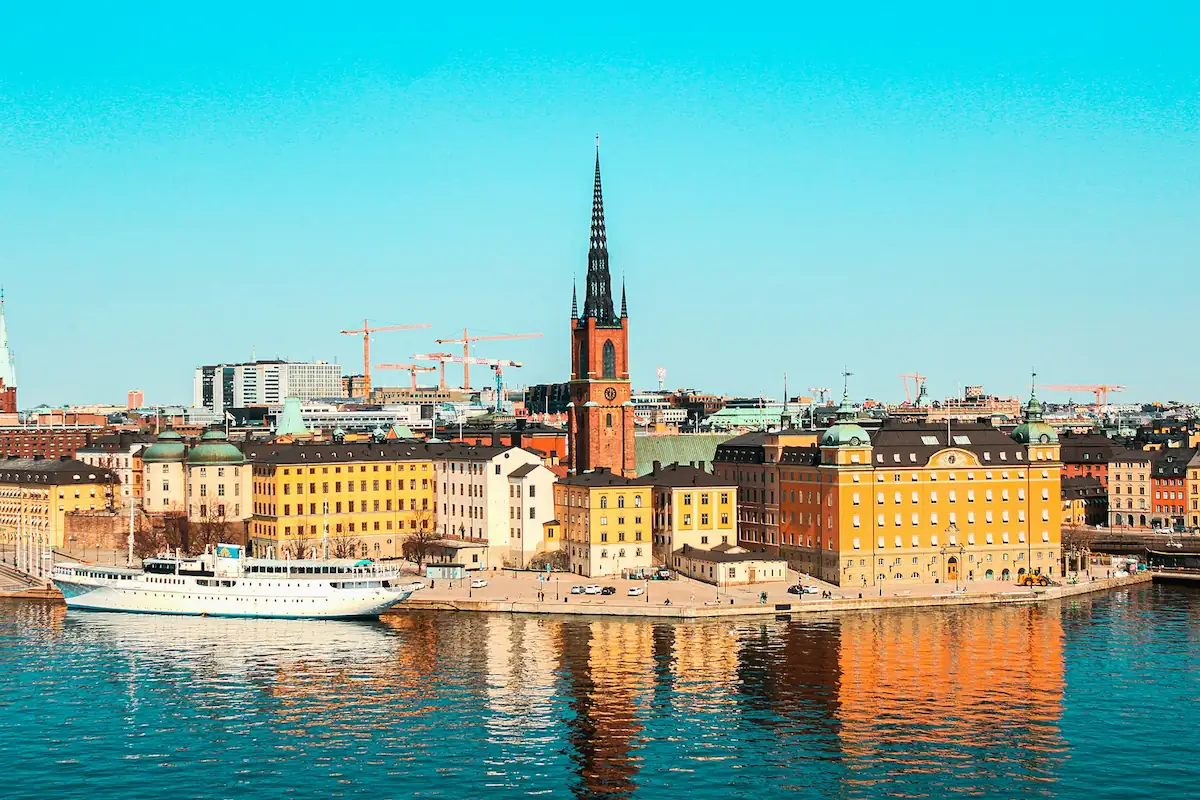
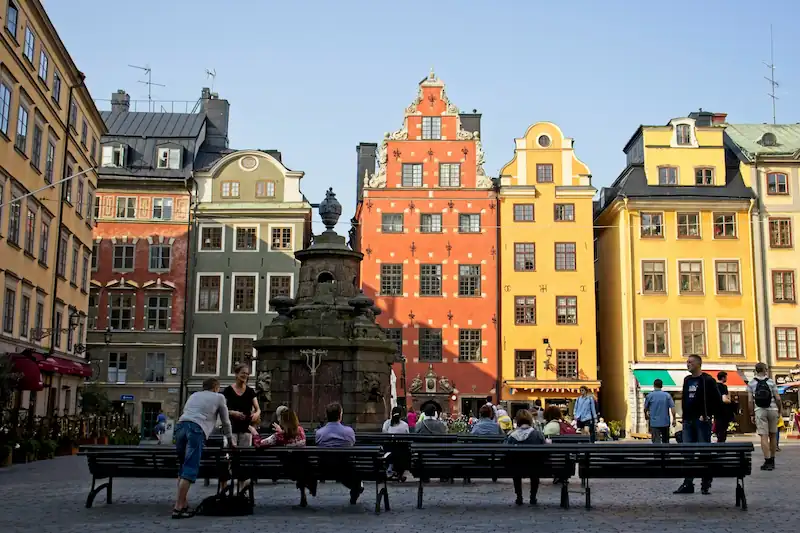
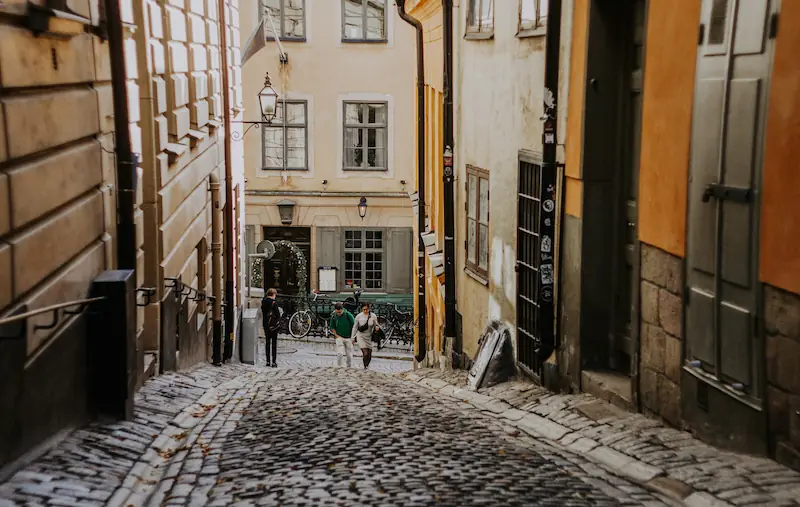
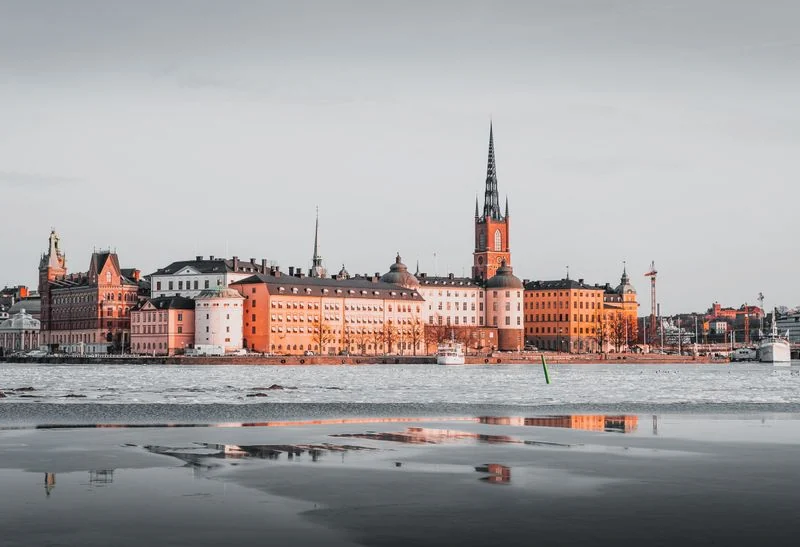
Gamla Stan is the most atmospheric place to stay in Stockholm, but also the easiest to misunderstand. Staying here means waking up inside the old city: narrow lanes, stone paving, Stortorget, Storkyrkan, the Royal Palace, the Royal Armoury, Riddarholmen, small squares and water on several sides. It can feel intimate early and late, when footsteps carry through the lanes and the old facades hold the low light. During peak hours, however, the same compact geography can become crowded, souvenir-heavy and less practical than it appears, especially with luggage, strollers or a longer stay.
Why stay here: Stay in Gamla Stan if you want old-city atmosphere and immediate access to Stockholm’s historic core more than room size, modern convenience, or nightlife depth.
Best for: Historic atmosphere, first-time city breaks, couples, short stays, and travelers who want the old town directly outside the hotel door.
Pros
Most atmospheric base for a first visit focused on history, old streets and immediate sense of place.
Immediate access to the Royal Palace, Storkyrkan, Stortorget, Nobel Prize Museum, Royal Armoury, Riddarholmen and waterfront edges.
Walkable to Norrmalm, Södermalm, City Hall, Nationalmuseum and several ferry or bridge routes.
Excellent for early-morning and late-evening old-town walks before day crowds build.
Strong emotional sense of arrival for couples, short stays and travelers who want Stockholm to feel historic from the first minute.
Cons
Rooms can be small, older, less soundproofed or less efficient than in newer hotel districts.
Main lanes get crowded during the day and can feel tourist-focused.
Restaurant choice is uneven, with some poor-value central options if you do not choose carefully.
Not ideal for travelers who want local nightlife, large modern hotels, easy taxi access to every door or stroller-friendly movement.
Nearby highlights
Step directly into Gamla Stan’s lanes before the busiest visitor movement begins.
Walk easily to the Royal Palace, Storkyrkan, Stortorget, the Nobel Prize Museum, Royal Armoury and Riddarholmen.
Cross quickly toward Norrmalm for transport, shopping, Nationalmuseum and restaurants.
Use the bridges toward Södermalm for Monteliusvägen viewpoints and evening food.
Reach waterfront paths, ferry edges and central harbor views without needing transport.
Build a compact first day with the old town, City Hall, the harbor edge and a short water crossing.
Budget
Castle House Inn – A simple guesthouse-style stay in the old town, close to the Royal Palace and narrow historic streets. Why we recommend: One of the few lower-cost options that keeps you properly inside Gamla Stan. Check availability
Lord Nelson Hotel – A small maritime-themed hotel in a narrow old-town building with compact rooms and strong location value. Why we recommend: A characterful choice for travelers who accept smaller rooms in exchange for real old-town placement. Check availability
Scandic Gamla Stan – A traditional hotel set in the old town, suited to travelers who want familiar standards in a historic setting. Why we recommend: It offers a safer mid-budget structure than many very small old-town properties. Check availability
Mid
Hotel Gamla Stan, BW Signature Collection – A waterfront-facing old-town hotel within walking distance of the Royal Palace and main central sights. Why we recommend: A good choice when you want Gamla Stan atmosphere with slightly more conventional hotel comfort. Check availability
Lady Hamilton Hotel – A historic-style hotel close to the Royal Palace, with period detail and compact old-town character. Why we recommend: It suits travelers who want the neighborhood’s historic texture without choosing a very basic stay. Check availability
Hotell Sven Vintappare – A small heritage property in Gamla Stan with a more intimate old-building feel. Why we recommend: It stands out for travelers who want a genuinely small-scale historic stay rather than a chain format. Check availability
Upscale
Victory Hotel – A distinctive old-town hotel with maritime antiques, a strong sense of place, and close metro access. Why we recommend: One of Gamla Stan’s best choices for character without sacrificing practical access. Check availability
Hôtel Reisen in The Unbound Collection by Hyatt – A waterfront hotel in the old town with more polished rooms and a stronger premium profile. Why we recommend: The best fit for travelers who want Gamla Stan plus water views and upscale comfort. Check availability
Collector's Victory Hotel – A higher-character boutique stay in the old town with a strong maritime identity and historic setting. Why we recommend: It gives Gamla Stan a more memorable hotel experience than most standard central options. Check availability
Södermalm
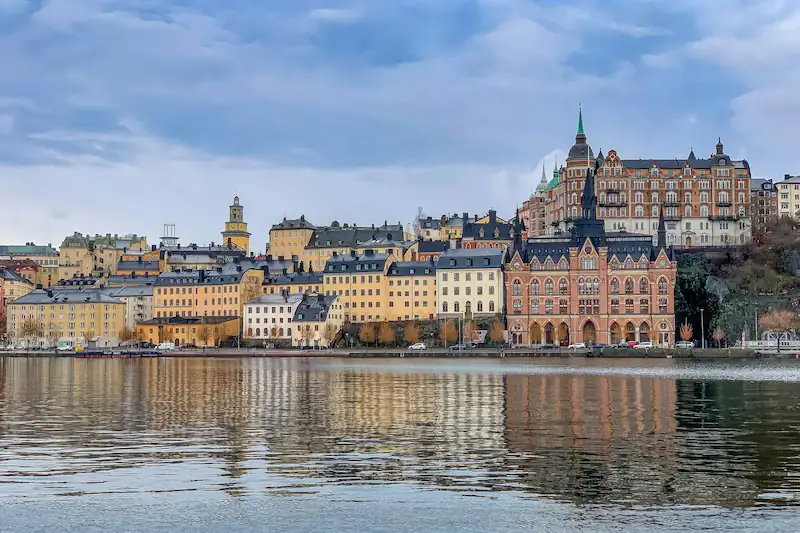
Södermalm is the best area to stay in Stockholm if you want the city to feel more lived-in after dark. It is still central, but the mood is less formal than Norrmalm or Östermalm: cafés, small restaurants, bars, bakeries, viewpoints, residential streets and independent shops spread across a larger island. A stay here has more texture, especially in the evening, when warm windows and low street noise replace the daytime pull of museums and royal landmarks. The trade-off is that first-time sightseeing, rail arrivals and Djurgården museum routes require slightly more routing, especially if the hotel sits far from Slussen, Mariatorget, Medborgarplatsen or Skanstull.
Why stay here: Stay in Södermalm if restaurants, cafés, bars, viewpoints, and local energy matter more than sleeping beside the main first-time attractions.
Best for: Nightlife, restaurants, couples, creative city breaks, local texture, and travelers who want evenings to feel easy without staying in the old town.
Pros
Best Stockholm base for restaurants, casual bars, cafés, bakeries and local evening atmosphere.
Strong access to viewpoints, Fotografiska, Mariatorget, SoFo, Hornstull, Slussen and waterside walks.
Often better value and stronger neighborhood identity than the most polished central hotels.
Good fit for couples, repeat visitors, food-focused stays and travelers who want less formal energy.
Easy metro and bridge connections back to Gamla Stan, Norrmalm and central transport when chosen near the right stations.
Cons
Less convenient than Norrmalm for rail arrivals, airport rail and multi-direction sightseeing.
Some areas are hilly, which matters with luggage, strollers or tired children.
Nightlife-friendly streets can be noisier on weekends.
Hotel choice is more limited than in Norrmalm, and the best boutique stays can price up quickly.
Not every part of Södermalm is equally useful for a first visit; check the exact station and walking routes.
Nearby highlights
Easy evening access to Södermalm restaurants, bars, cafés, bakeries and casual food.
Walkable viewpoints such as Monteliusvägen, Skinnarviksberget and northern Södermalm edges.
Good base for Fotografiska, Slussen, Mariatorget, SoFo, Hornstull and waterfront walks.
Fast metro or bridge access to Gamla Stan and the central core from the right pockets.
Better local-feeling streets than most first-time hotel districts.
Strong base for travelers who prioritize dinners, drinks and neighborhood rhythm over hotel formality.
Budget
Motel L Hammarby Sjöstad – A modern budget-friendly hotel near tram links, slightly away from the densest Södermalm core. Why we recommend: It offers stronger room quality than many central budget options if you accept a less classic location. Check availability
Rygerfjord Hotel & Hostel – A floating budget stay near the water between Södermalm and the old town approach. Why we recommend: A distinctive low-cost option with water proximity that still keeps central Stockholm reachable. Check availability
Hotel Tre Små Rum – A small, simple guesthouse-style property in Södermalm with a residential feel. Why we recommend: Useful for travelers who want Södermalm without paying full boutique-hotel rates. Check availability
Mid
Hellstens Glashus – A design-aware hotel near Mariatorget with easy access to Södermalm evenings and old-town crossings. Why we recommend: It balances local atmosphere and practical central access better than many Södermalm stays. Check availability
Clarion Hotel Stockholm – A larger hotel near Skanstull with good metro access and practical facilities. Why we recommend: A reliable option for travelers who want Södermalm energy with chain-level comfort and space. Check availability
NOFO Hotel, WorldHotels Crafted – A characterful boutique hotel in eastern Södermalm with strong neighborhood identity. Why we recommend: One of the best mid-to-upscale choices if you want Södermalm’s local texture built into the hotel stay. Check availability
Upscale
Hotel Frantz, WorldHotels Crafted – A small boutique hotel near Slussen, positioned between Södermalm, Gamla Stan, and central crossings. Why we recommend: It gives unusually strong location logic for travelers who want both atmosphere and efficiency. Check availability
Hotel Rival – A polished Södermalm hotel by Mariatorget with a stronger cultural and evening identity than standard central hotels. Why we recommend: It is one of the safest upscale choices for travelers who want Södermalm without sacrificing comfort. Check availability
Hilton Stockholm Slussen – A large hotel at the Södermalm edge with views, central access, and quick crossings toward Gamla Stan. Why we recommend: Best for travelers who want Södermalm placement but still need major-hotel infrastructure. Check availability
Östermalm
Östermalm is Stockholm’s most refined hotel base: composed streets, polished restaurants, design shops, food halls, harbor approaches, Strandvägen and a quieter evening rhythm. It works especially well for travelers who want cultural access without the rough edges of nightlife districts or the crowds of Gamla Stan. Staying here puts you close to Östermalms Saluhall, Stureplan, Nybroviken, Djurgården approaches, premium shopping, galleries and several of the city’s best dining areas. The district’s restraint is part of its appeal: footsteps soften on wide pavements, the hotel stock skews polished, and the city feels less hurried than in the commercial core.
Why stay here: Stay in Östermalm if you want the best upscale area to stay in Stockholm for comfort, restaurants, design, and calm central positioning.
Best for: Luxury stays, boutique hotels, design travelers, food-focused trips, couples, and calm central comfort.
Pros
Excellent for upscale hotels, boutique stays, restaurants, design-led shopping and polished streets.
Good access to Östermalms Saluhall, Strandvägen, Nybroviken, Djurgården, harbor walks and Nationalmuseum.
Quieter and more refined than Norrmalm while still central.
Strong fit for couples, luxury travelers, design-focused visitors and food-led stays.
Easy to combine with museums, waterfront walks, shopping, galleries and a short walk or tram toward Djurgården.
Cons
Generally more expensive than Vasastan, Kungsholmen, Hammarby Sjöstad, Gärdet or parts of Södermalm.
Less useful for travelers seeking budget accommodation or casual late-night energy.
Some streets feel formal rather than intimate.
Not as immediately atmospheric as Gamla Stan for a first arrival.
Stureplan-adjacent pockets can be noisier and more nightlife-oriented than the calmer residential streets.
Nearby highlights
Close to Östermalms Saluhall for food hall lunches and Swedish classics.
Easy access to Strandvägen, Nybroviken, harbor walks and the Djurgården approach.
Strong base for design shops, refined restaurants, galleries, polished cafés and premium hotels.
Walkable or short-transit access to Nationalmuseum, Norrmalm, Skeppsholmen and central attractions.
Better evening calm than many central hotel districts when you avoid the busiest nightlife pockets.
Useful for travelers who want premium comfort without staying in a purely tourist area.
Budget
Best Western Hotel Karlaplan – A practical lower-cost hotel near Karlaplan with access to Östermalm streets and Djurgården approaches. Why we recommend: A rare budget-conscious option in an area that usually prices higher. Check availability
Unique Hotel Jungfrugatan – A simple Östermalm stay with a quieter location than the central station hotel cluster. Why we recommend: Useful when you want Östermalm placement without paying full premium rates. Check availability
Mornington Hotel Stockholm – A bookish, neighborhood-oriented hotel in Östermalm with a comfortable but not overly formal feel. Why we recommend: It often gives better character than standard budget-mid hotels in the district. Check availability
Mid
ProfilHotels Riddargatan – A compact hotel near Östermalm’s shopping, dining, and central waterfront edges. Why we recommend: A useful mid-range base when you want Östermalm access without a grand-hotel price point. Check availability
Elite Eden Park Hotel – A polished hotel by Humlegården with good access to Östermalm, Stureplan, and central restaurants. Why we recommend: It gives a stronger sense of district calm than many busier central mid-range options. Check availability
The Sparrow Hotel – A boutique-style hotel near Östermalm and Stureplan with a more intimate scale. Why we recommend: A strong choice for travelers who want personality and location without going fully luxury. Check availability
Upscale
Hotel Diplomat Stockholm – A classic waterfront-facing hotel on Strandvägen with elegant rooms and immediate harbor access. Why we recommend: One of Stockholm’s best choices for refined location, water proximity, and cultural access. Check availability
Villa Dagmar – A sophisticated hotel beside Östermalms Saluhall with strong design, dining, and neighborhood placement. Why we recommend: It is one of the clearest matches for culture-first travelers who want food, design, and comfort in one base. Check availability
Nobis Hotel Stockholm – A high-end design hotel near Norrmalmstorg, linking Östermalm, Norrmalm, and the waterfront. Why we recommend: It works well when you want premium design with easier access across central Stockholm. Check availability
Vasastan
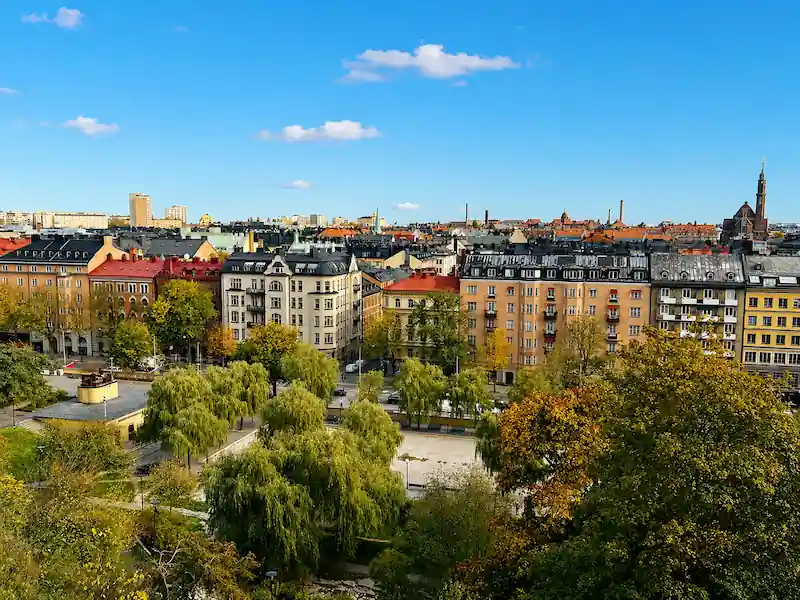
Vasastan is where Stockholm becomes calmer, more residential and more useful for travelers who do not need to sleep beside every landmark. The district has broad streets, cafés, bakeries, restaurants, apartment facades, Stockholm Public Library, Odenplan, parks and a steadier local rhythm than the old town or the commercial center. It is a strong choice for longer stays, repeat visitors, families who want quieter evenings and travelers who prefer good value over instant sightseeing access. Morning light often lands softly across café terraces and residential pavements, giving the area a slower start than the central hotel corridors.
Why stay here: Stay in Vasastan if you want a quieter local base with good value, cafés, restaurants, and transport back into the center.
Best for: Longer stays, calmer value, families, café culture, repeat visitors, and travelers who want a more residential Stockholm base.
Pros
Calmer than Norrmalm, Gamla Stan and Södermalm’s busiest evening streets.
Good café, bakery, neighborhood restaurant and everyday-service density.
Often better value for room quality than the most central hotel districts, especially on longer stays.
Strong fit for longer stays, families, repeat visitors and travelers who want a residential base.
Useful metro, commuter rail and bus connections through Odenplan and nearby stations.
Cons
Not the most efficient base for a very short first trip.
Requires more transit planning for Djurgården, Gamla Stan and waterfront sightseeing.
Less dramatic as an arrival base than Gamla Stan, Östermalm or the waterfront areas.
Some northern or edge locations feel less central than the area name suggests.
Nearby highlights
Easy access to cafés, bakeries, neighborhood restaurants, parks and calmer residential streets.
Good base for Stockholm Public Library, Odenplan, Observatorielunden, Vasaparken and everyday city life.
Useful transport back to Norrmalm, Stockholm Central and the central core.
Better room-value potential than the most central hotel clusters.
Pleasant area for mornings and slower evenings without feeling remote.
Strong fit when the trip includes more than one or two nights and you want the city to feel lived-in.
Budget
Rex Petit – A compact budget hotel near Rådmansgatan, suited to travelers who need a lower-cost private room. Why we recommend: One of the few genuinely budget-friendly private-room options with useful central access. Check availability
Lilla Rådmannen – A small hotel near Tegnérlunden and Vasastan’s southern edge, with easy access toward Norrmalm. Why we recommend: It keeps a neighborhood feel while staying close enough to the central core. Check availability
Ibis Styles Stockholm Odenplan – A practical hotel near Odenplan with good transport and access to Vasastan cafés. Why we recommend: A sensible value pick for travelers who want a calm base with metro and commuter rail nearby. Check availability
Mid
Hotel Ruth, WorldHotels Crafted – A warm, neighborhood-feeling hotel in Vasastan with a stronger personality than standard chain stays. Why we recommend: It captures the district’s local rhythm better than most mid-range hotels nearby. Check availability
Best Western Plus Time Hotel – A comfortable hotel in a quieter residential part of Vasastan with practical room standards. Why we recommend: Good for travelers who want space, calm, and reliability rather than tourist-core atmosphere. Check availability
Blique by Nobis – A design-forward hotel on the Vasastan edge, with a more contemporary feel and good social spaces. Why we recommend: It offers stronger design value than most hotels in this price band outside the core. Check availability
Upscale
Elite Palace Hotel – A larger upscale hotel in Vasastan with practical facilities and quieter surroundings. Why we recommend: A strong option when comfort and room reliability matter more than old-town atmosphere. Check availability
Stallmästaregården Hotel – A historic inn-style hotel near parkland and water north of Vasastan’s core. Why we recommend: It suits travelers who want a softer, more retreat-like stay while staying connected to the city. Check availability
Clas på Hörnet – A historic boutique-style property near Vasastan and Norrmalm with a quieter city feel. Why we recommend: It gives more character than standard business hotels while remaining practical for central Stockholm. Check availability
Kungsholmen
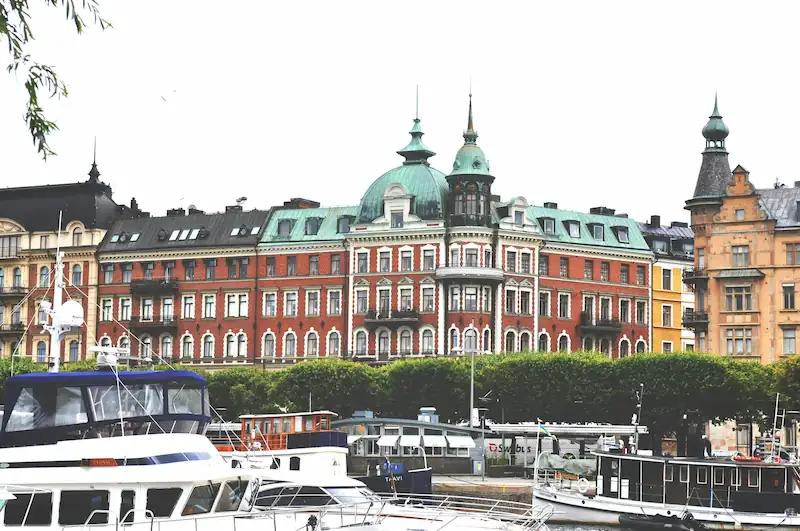
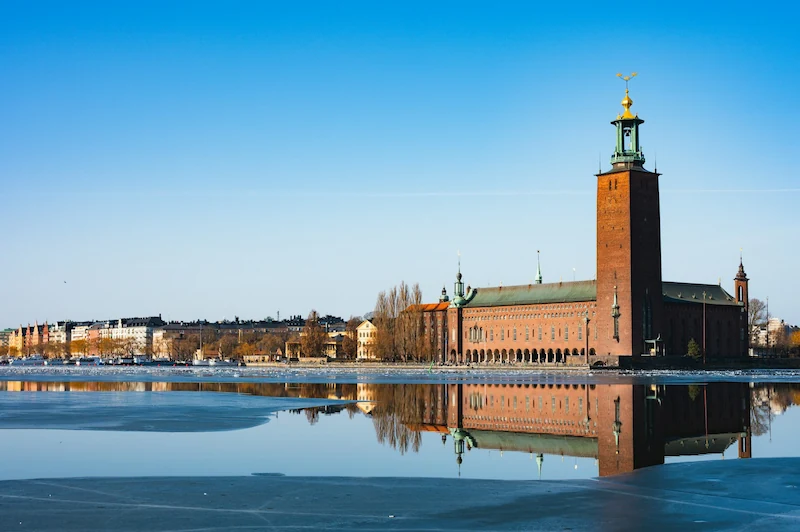
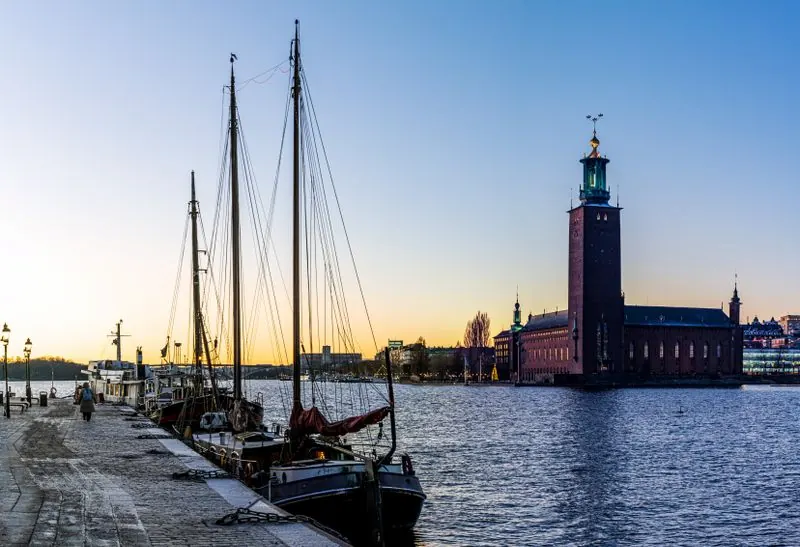
Kungsholmen is a good Stockholm base when you want central access without staying inside the most obvious tourist or shopping districts. It sits west of the core, with City Hall, Norr Mälarstrand, long waterfront paths, residential blocks, metro links and a calmer evening profile. The area feels more spacious than Gamla Stan and less commercially intense than Norrmalm, which makes it especially appealing for longer stays, families and travelers who like walking by the water. Its appeal is subtle: boats, benches, apartments and low conversations along the quay rather than a headline sight every few steps.
Why stay here: Stay in Kungsholmen if you want waterfront calm, good transport, and practical central value without the full density of the main tourist core.
Best for: Waterfront calm, longer stays, families, practical value, runners, and travelers who want central access without central noise.
Pros
Good balance of central access and calmer residential atmosphere.
Excellent for waterfront walks, runners, families and travelers who like open urban space.
Useful access to City Hall, Norrmalm, Stockholm Central, Fridhemsplan and metro connections.
Often better value than the most polished central areas, especially for practical or apartment-style stays.
Strong fit for longer stays and families who do not need nightlife outside the door.
Cons
Less atmospheric than Gamla Stan and less dining-led than Södermalm.
Some hotels sit in practical rather than characterful blocks.
Not ideal if you want to walk everywhere without transit.
Limited luxury-hotel depth compared with Östermalm, central Norrmalm and the waterfront grand hotels.
Western pockets can add extra travel time if your days are mostly Gamla Stan and Djurgården.
Nearby highlights
Easy access to Stockholm City Hall and the western waterfront.
Long walks along Norr Mälarstrand, Rålambshovsparken and quieter residential quays.
Good metro connections from Fridhemsplan and nearby stations.
Quick movement into Norrmalm and Stockholm Central without sleeping in the commercial core.
Better evening calm than many first-time central hotel zones.
Useful area for travelers who want larger rooms, apartment-style stays or waterfront routines.
Budget
Connect Hotel City – A straightforward hotel in Kungsholmen with practical access to Fridhemsplan and central transit. Why we recommend: A sensible lower-cost option for travelers who value function over atmosphere. Check availability
Lodge32 Hostel – A basic budget option near the water and City Hall side of Kungsholmen. Why we recommend: Useful for very price-sensitive travelers who still want a central-waterfront district. Check availability
Aiden by Best Western Stockholm City – A practical value hotel on the Kungsholmen side, with access to transport and residential streets. Why we recommend: A workable choice when central Stockholm prices are high and location still matters. Check availability
Mid
Best Western Hotel Fridhemsplan – A practical hotel near Fridhemsplan with strong metro access and local services nearby. Why we recommend: It is well positioned for travelers who want daily transport ease more than hotel atmosphere. Check availability
Sky Hotel Apartments Stockholm – Apartment-style rooms in Kungsholmen, useful for longer stays and travelers wanting more independence. Why we recommend: One of the better choices when room function matters more than central hotel glamour. Check availability
Clarion Hotel Amaranten – A larger hotel near Kungsholmen’s central connections, with restaurant and bar facilities. Why we recommend: A solid mid-range base when you want more services than a small residential hotel can offer. Check availability
Upscale
Courtyard by Marriott Stockholm Kungsholmen – A comfortable larger hotel by Rålambshovsparken, suited to travelers who want space and reliability. Why we recommend: It is one of Kungsholmen’s strongest comfort choices for families and longer stays. Check availability
Radisson Blu Waterfront Hotel – A polished hotel by the central waterfront and station edge, bridging Norrmalm and Kungsholmen logic. Why we recommend: Best for travelers who want water proximity, rail access, and upscale reliability in one place. Check availability
Sheraton Stockholm Hotel – A large upscale hotel close to the water, City Hall, Norrmalm, and Gamla Stan crossings. Why we recommend: It gives broad central access while staying close to Kungsholmen’s waterfront routes. Check availability
Djurgården & Skeppsholmen
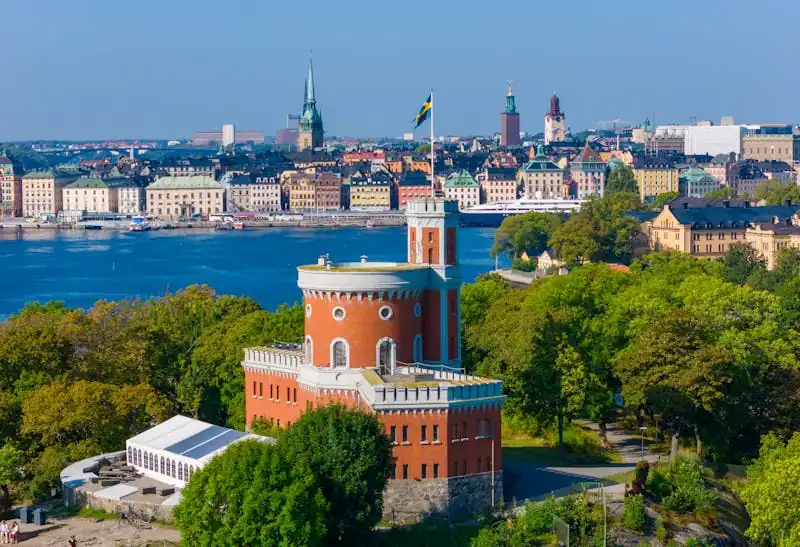
Djurgården and Skeppsholmen are not the default answer to where to stay in Stockholm, but they can be exceptional for the right traveler. These islands put museums, parkland, waterfront paths, boats, historic buildings and quieter nights ahead of restaurant density and transport speed. The experience is more cultural and scenic than practical: mornings feel open, with water, trees and museum facades replacing the station rhythm of central hotels. The limitation is clear: there are fewer hotels, fewer casual evening options and more dependence on bridges, trams, ferries or walking routes. Choose this area because you want the stay itself to feel shaped by culture and water, not because it looks central on a map.
Why stay here: Stay around Djurgården or Skeppsholmen if museums, water, quiet nights, and cultural atmosphere matter more than nightlife, shopping, or dense hotel choice.
Best for: Museum lovers, families, calm luxury stays, waterfront views, and travelers who want Stockholm to feel cultural rather than commercial.
Pros
Best base for a culture-first stay focused on museums, water, parkland and quiet nights.
Immediate access to Vasa Museum, Nordic Museum, Skansen, ABBA The Museum, Junibacken, Moderna Museet, the East Asian Museum and waterfront paths.
Quieter nights than most central hotel districts.
Strong fit for families, museum lovers, calm luxury stays and travelers who value scenic walks.
Distinctive hotels with more sense of place than many business-center stays.
Cons
Limited hotel inventory, especially in budget and mid-range categories.
Less convenient for late restaurants, nightlife, Stockholm Central and spontaneous cross-city plans.
Some stays require more walking, ferry, tram or taxi planning.
Not the best base for a first-time 2-night trip unless museums and calm are the main focus.
Weather and winter darkness affect the experience more than in Norrmalm or Södermalm.
Nearby highlights
Immediate or easy access to the Vasa Museum, Nordic Museum, Skansen, Junibacken, ABBA The Museum and Gröna Lund.
Skeppsholmen access to Moderna Museet, the East Asian Museum and calmer island walks.
Waterfront paths that make morning and evening walks part of the stay.
Useful base for families spending significant time on Djurgården.
Quieter nighttime setting than Norrmalm, Gamla Stan, Södermalm or the Stureplan side of Östermalm.
Strong visual connection to Stockholm’s maritime, cultural and museum identity.
Budget
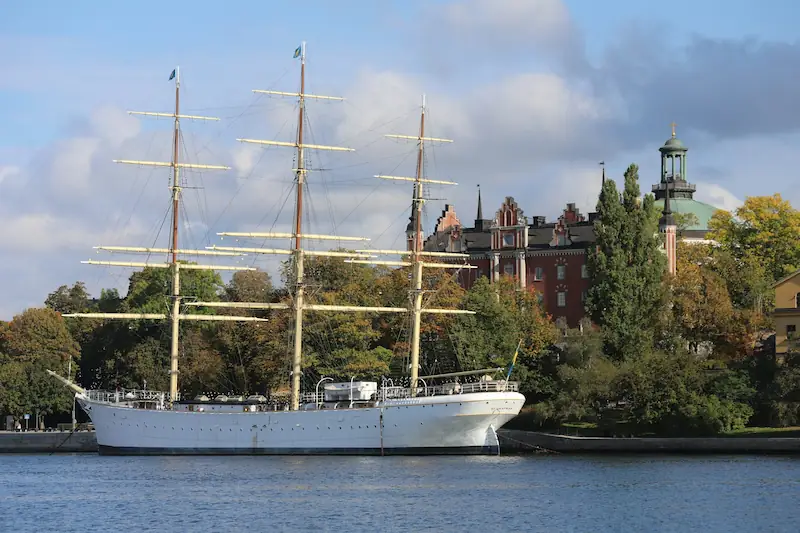
STF af Chapman & Skeppsholmen – A hostel and guesthouse-style stay on Skeppsholmen, including accommodation connected to a historic ship setting. Why we recommend: The strongest lower-cost choice for travelers who want island atmosphere without luxury pricing. Check availability
STF Gärdet Hotel & Hostel – A practical budget-friendly option north of Djurgården with access toward museums and green areas. Why we recommend: A useful fallback when true island stays are too expensive or unavailable. Check availability
Biz Apartment Gärdet – Apartment-style accommodation near Gärdet, useful for longer family stays close to Djurgården’s eastern side. Why we recommend: It gives more independence and space than typical hotel rooms near the museum district. Check availability
Mid
Backstage Hotel Stockholm – A themed hotel by ABBA The Museum on Djurgården, close to several family and museum attractions. Why we recommend: Best for travelers who want to be directly inside Djurgården’s attraction cluster. Check availability
Hotel Hasselbacken – A historic Djurgården hotel close to Skansen, Gröna Lund, ABBA The Museum, and museum routes. Why we recommend: It offers the most complete classic hotel base for families focused on Djurgården. Check availability
Villa Källhagen – A quieter hotel near water and green space on the Djurgården edge. Why we recommend: Good for travelers who want calm and nature-adjacent Stockholm without leaving the city. Check availability
Upscale
Hotel Skeppsholmen – A refined island hotel in historic buildings on Skeppsholmen, with water and museum access nearby. Why we recommend: One of Stockholm’s best culture-first hotels for calm, design, and island atmosphere. Check availability
Lydmar Hotel – A high-end waterfront hotel near Nationalmuseum, the harbor, and the bridge toward Skeppsholmen. Why we recommend: It suits travelers who want cultural access, water, and luxury without being isolated on an island. Check availability
Grand Hôtel Stockholm – A landmark luxury hotel on the waterfront facing the palace and close to Nationalmuseum and island crossings. Why we recommend: The strongest classic luxury base for travelers who want water, culture, service, and central prestige. Check availability
Where to stay in Stockholm for the first time
First-time visitors should prioritize orientation, transport, and easy access to the old town, museums, waterfront and at least one ferry or water crossing. The best first base depends on whether you value efficiency, atmosphere or evening life most.
Choose Norrmalm for the easiest first visit, especially if you arrive by train, use airport rail, visit in winter or only have 2 or 3 nights.
Choose Gamla Stan if old streets, palace proximity and historic atmosphere matter more than room size, modern convenience or local nightlife.
Choose Södermalm if you want your evenings to feel more local, restaurant-led and less formal.
Choose Östermalm if you prefer a calmer premium base with design, food halls, Strandvägen, harbor access and easy movement toward Djurgården.
Choose Djurgården & Skeppsholmen only if museums, parkland and quiet water views are the main reason for the trip.
Avoid staying too far beyond the central districts on a first short trip unless hotel value is significantly better and metro access is excellent.
TravelerType
BestArea
Why
First visit, short stay
Norrmalm
It minimizes transport friction and keeps most areas reachable.
First visit, atmosphere
Gamla Stan
It puts the old town, palace, Storkyrkan and historic lanes outside the door.
First visit, evenings
Södermalm
It gives stronger restaurants, bars, cafés and a more lived-in rhythm.
First visit, premium comfort
Östermalm
It balances refined hotels, food halls, design streets and museum access.
Where to stay in Stockholm with family
Families should think less about postcard centrality and more about room size, transport, quiet evenings, stroller routes, breakfast flexibility and easy resets between museums and meals.
Choose Norrmalm for the simplest transport, broadest hotel choice and easiest rainy-day adjustments.
Choose Kungsholmen if you want calmer streets, waterfront walks, parks, apartment-style options and a more spacious feel.
Choose Vasastan for cafés, residential calm, family-friendly room value and better longer-stay rhythm.
Choose Djurgården or nearby Gärdet if the trip is strongly focused on Skansen, Junibacken, Vasa, Gröna Lund or park time.
Be cautious with Gamla Stan if you need larger rooms, stroller-friendly movement, direct taxi access or quiet daytimes.
Apartment-style stays can be more useful than classic hotels for week-long family trips, especially in Kungsholmen, Vasastan, Gärdet or Hammarby Sjöstad.
FamilyPriority
BestArea
Caution
Easy first-time logistics
Norrmalm
Some station-adjacent streets feel busy.
Quiet and space
Kungsholmen
Less immediate sightseeing atmosphere.
Residential calm
Vasastan
Requires more transit for Djurgården and the old town.
Museums and attractions
Djurgården & Skeppsholmen
Fewer evening restaurants and hotel options.
Where to stay in Stockholm for nightlife and restaurants
Stockholm nightlife is not concentrated like in some larger capitals. The better question is whether you want casual bars, restaurants, late dinners, hotel bars, cocktails, live music, or a quieter walk home.
Södermalm is the best overall area for bars, casual restaurants, music-adjacent evenings and local-feeling nights.
Östermalm and the Stureplan area work better for polished restaurants, cocktails and a more dressed-up evening.
Norrmalm is practical for hotel bars, late transport and easy returns from different districts.
Gamla Stan is atmospheric at night but not the strongest base for varied nightlife or local restaurants.
Vasastan is better for relaxed neighborhood restaurants and cafés than late-night energy.
Check the immediate street around your hotel, because one block can be calm while the next is weekend-noisy.
EveningStyle
BestArea
TradeOff
Casual bars and restaurants
Södermalm
Less convenient for some first-time museum routes.
Cocktails and polished dining
Östermalm
Higher accommodation and dining costs.
Low-friction central evenings
Norrmalm
Less neighborhood character.
Where to stay in Stockholm on a budget
Budget travel in Stockholm is usually about controlled compromises: a smaller room, a less atmospheric block, apartment-style lodging, a hostel-private-room hybrid, or a base slightly outside the most desirable streets.
Look first at Norrmalm if transport savings and time savings matter more than charm.
Use Vasastan for calmer value and better room quality outside the tourist core.
Consider Kungsholmen for apartment-style stays and practical access without the premium of Östermalm.
Södermalm can work well if you find a simple hotel near metro lines rather than the most fashionable pockets.
Gamla Stan budget stays can be atmospheric but often mean smaller rooms, older buildings and weaker soundproofing.
Consider Gärdet, Hammarby Sjöstad, Liljeholmen or Solna only when the hotel is clearly cheaper and transit is direct.
Do not save money by staying far from metro access; daily friction can erase the value quickly.
BudgetStrategy
BestArea
WatchOut
Cheapest central private rooms
Norrmalm or Gamla Stan
Room size and noise can vary sharply.
Better value for longer stays
Vasastan or Kungsholmen
You will use transport more often.
Local evenings on a budget
Södermalm
Weekend noise and hotel scarcity can push rates up.
Where to stay in Stockholm for luxury hotels
Luxury in Stockholm is strongest when the hotel adds water, design, dining, history or calm to the trip. The best premium base is not always the most expensive room; it is the place where the location changes how the city feels.
Choose Östermalm for refined streets, Strandvägen, food halls, design shops and polished hotel comfort.
Choose the waterfront edge between Norrmalm, Blasieholmen and the harbor for classic luxury, Nationalmuseum, island views and palace-facing atmosphere.
Choose Gamla Stan only if old-town character and water proximity matter more than large-room predictability.
Choose Skeppsholmen for calm, design and island atmosphere rather than dense restaurant choice.
Use Norrmalm for upscale convenience if you want a central design hotel with easy transport rather than a grand waterfront mood.
Do not pay luxury prices for a generic central room unless the hotel delivers a clear location or design advantage.
LuxuryStyle
BestArea
Why
Classic waterfront luxury
Norrmalm / Blasieholmen / harbor edge
Best for water views, Nationalmuseum, palace-facing walks and central prestige.
Polished neighborhood luxury
Östermalm
Best for food halls, design streets, refined restaurants and calmer premium evenings.
Quiet design retreat
Skeppsholmen
Best when calm, water and culture matter more than nightlife.
Where to stay in Stockholm for couples
Couples should choose according to evening rhythm: old-town atmosphere, waterfront calm, design-led comfort or restaurants and viewpoints. Stockholm is romantic when the base makes walking, dinner and water part of the same evening.
Choose Gamla Stan for historic lanes, church towers, palace edges and early or late old-town walks.
Choose Södermalm for restaurants, bars, Monteliusvägen, cafés and a more relaxed local evening.
Choose Östermalm for boutique comfort, food halls, Strandvägen and refined dining.
Choose Skeppsholmen or the harbor edge for water, calm and a more scenic hotel experience.
Choose Norrmalm if convenience matters more than romance, especially on a short stay.
Be careful with nightlife-heavy streets if you want quiet sleep rather than late energy.
CoupleStyle
BestArea
TradeOff
Historic and atmospheric
Gamla Stan
Smaller rooms and more daytime tourist pressure.
Restaurants and viewpoints
Södermalm
Slightly less convenient for some museum routes.
Polished and design-led
Östermalm
Higher rates and less casual nightlife.
Waterfront calm
Skeppsholmen or harbor edge
Fewer spontaneous late-night options.
Where to stay in Stockholm for a longer stay
For five nights or more, the best area is usually not the most central one. Room size, cafés, groceries, laundry, quiet sleep, parks, transport and everyday rhythm start to matter as much as first-day sightseeing.
Choose Vasastan if you want cafés, bakeries, residential calm and good public transport.
Choose Kungsholmen if waterfront walks, larger rooms and apartment-style stays matter.
Choose Södermalm if restaurants, bars and neighborhood energy will shape most evenings.
Choose Östermalm if budget allows and you want comfort, design, food halls and calm centrality.
Use Norrmalm for longer stays only if daily cross-city movement is more important than neighborhood texture.
Consider Hammarby Sjöstad, Gärdet, Liljeholmen or Solna as value alternatives only when transit and room quality clearly justify the trade-off.
StayNeed
BestArea
Why
Residential rhythm
Vasastan
Good cafés, calmer streets and practical transport.
Space and water walks
Kungsholmen
Better for larger rooms, apartment-style stays and everyday waterfront routines.
Evening life
Södermalm
Restaurants, bars and local atmosphere matter more over a longer stay.
Where to stay in Stockholm in winter
Winter changes the best base in Stockholm because daylight is shorter, pavements can be cold or slippery, and the trip shifts toward museums, cafés, restaurants, metro art and compact walks.
Choose Norrmalm for the easiest winter logistics, indoor shopping, transport links and flexible plans.
Choose Östermalm for comfortable hotels, restaurants, food halls and shorter movement toward Djurgården and the harbor.
Choose Gamla Stan if atmospheric evenings matter, but be realistic about narrow lanes and tourist restaurants.
Choose Södermalm if cafés, bars and restaurants will anchor the evenings.
Be cautious with Djurgården & Skeppsholmen in winter unless you want quiet and are comfortable with more deliberate transport.
Use hotels close to metro, tram or bus lines rather than relying on long winter walks.
WinterPriority
BestArea
Why
Easy logistics
Norrmalm
Best for transport, indoor options and fast adjustments.
Comfort and dining
Östermalm
Strong for food halls, restaurants and refined hotel bases.
Evening atmosphere
Södermalm or Gamla Stan
Choose Södermalm for food and bars, Gamla Stan for historic mood.
Where to stay near Stockholm Central Station
Staying near Stockholm Central is useful for early trains, late arrivals, airport rail, short business-leisure trips and first visits with limited time. The trade-off is that the immediate station environment is practical rather than intimate.
Choose station-side Norrmalm if airport rail, trains and transport are the priority.
Move slightly toward Brunkebergstorg, Kungsträdgården or the waterfront if you want more design, restaurants or atmosphere while staying central.
Use Radisson Blu Waterfront, Sheraton-side locations or nearby central hotels when you want water and City Hall access as well as transport.
Do not assume every central hotel feels the same; the station side, shopping core, waterfront and Norrmalmstorg each create a different stay.
Near-station hotels are strongest for 1 or 2 nights, early departures, business travel or trips with several day routes.
StationNeed
BestArea
TradeOff
Airport rail and trains
Norrmalm near Stockholm Central
Less atmospheric streets.
Central but more polished
Brunkebergstorg / Norrmalmstorg edge
Higher rates.
Station plus water
Waterfront / City Hall edge
Less neighborhood texture at night.
Where to stay in Stockholm for design, food and shopping
Design and food are central to Stockholm’s appeal, but they sit across several districts. The best base depends on whether you want polished food halls, independent shops, casual restaurants or a design-hotel environment.
Choose Östermalm for Östermalms Saluhall, Strandvägen, refined dining and design-led shopping.
Choose Norrmalm for department stores, design hotels, broad restaurant access and easy movement across the city.
Choose Södermalm for independent shops, casual restaurants, bars, bakeries and a less formal food scene.
Choose Vasastan if cafés, bakeries and neighborhood restaurants matter more than shopping.
Use Gamla Stan for atmosphere, but do not rely on it for the best restaurant value.
Book key dinners ahead on Friday and Saturday nights, especially in Södermalm, Östermalm and central Norrmalm.
Focus
BestArea
Why
Food halls and polished dining
Östermalm
Best access to Östermalms Saluhall, Strandvägen and refined restaurants.
Design hotels and shopping
Norrmalm
Best for central retail, design properties and transport.
Casual restaurants and bars
Södermalm
Best for local-feeling evenings and independent places.
Where to stay in Stockholm for a quiet trip
Quiet in Stockholm is not only about distance from the center. The calmest stay often comes from the right micro-location: residential streets, island hotels, waterfront paths and hotels away from weekend bar clusters.
Choose Kungsholmen for waterfront calm, residential streets and practical central access.
Choose Vasastan for café-led residential rhythm and quieter evenings.
Choose Skeppsholmen for the strongest quiet island feel if budget and logistics work.
Choose Östermalm away from Stureplan for polished calm near restaurants and museums.
Be careful with Gamla Stan and Södermalm if your hotel sits on a busy tourist or nightlife street.
Check reviews for noise, tram lines, bar streets and room position before booking.
QuietStyle
BestArea
Why
Residential calm
Vasastan or Kungsholmen
Good balance of local rhythm and central access.
Island calm
Skeppsholmen
Best for water, museums and quiet nights.
Premium calm
Östermalm
Refined streets and good restaurants when chosen away from nightlife pockets.
Where to stay depending on your trip length
The shorter the stay, the more Stockholm rewards a central and connected base. The longer the stay, the more value there is in choosing a district that matches your evenings, food habits, room needs, ferry plans, museum priorities and tolerance for daily transport.
Label
Stay
Avoid
Why
1 night
Norrmalm near Stockholm Central or the central waterfront.
Gamla Stan lanes with difficult luggage, distant residential districts, or island hotels unless the hotel itself is the point.
With one night, airport rail, train access, check-in friction and an easy dinner matter more than neighborhood depth.
2 nights
Norrmalm or Gamla Stan; Södermalm only if evenings are the priority.
Vasastan, Kungsholmen, Gärdet, Hammarby Sjöstad or Djurgården unless you have a very specific reason.
With only two nights, every crossing and transfer matters; convenience or atmosphere should dominate the decision.
3 days
Norrmalm for efficiency, Södermalm for evenings, Gamla Stan for historic immersion, or Östermalm for premium calm.
Hotels far from metro lines, deep inside quieter residential pockets, or chosen only because they are cheaper.
Three days is enough for a fuller rhythm, but not enough to absorb poor location choices.
4 to 5 days
Södermalm, Östermalm, Vasastan, Kungsholmen or Norrmalm depending on evening style and room needs.
Choosing only for first-day sightseeing or staying in a tiny old-town room if comfort matters.
With more time, evening atmosphere, restaurant access, calm and room quality become more important.
1 week
Vasastan, Kungsholmen, Södermalm, Östermalm or apartment-style stays near good transport.
Small old-town rooms unless atmosphere is the main purpose.
A longer stay benefits from residential rhythm, laundry or room function, cafés, groceries and quieter evenings.
Culture-first trip
Östermalm, Norrmalm, Djurgården & Skeppsholmen, or the harbor edge.
Nightlife-first streets if museums, water and calm are the priority.
Museum routes, food halls, Nationalmuseum, Moderna Museet, Vasa, Skansen and Djurgården become easier from these bases.
Family trip
Norrmalm for logistics, Kungsholmen or Vasastan for calm, Djurgården/Gärdet for museum-heavy days.
Crowded old-town lanes and nightlife streets unless the hotel is clearly suitable.
Families gain more from transport, space and quiet than from being on the most photogenic street.
Return visit
Södermalm, Vasastan, Kungsholmen, Östermalm or a specific boutique/waterfront hotel.
Defaulting automatically to Gamla Stan or Stockholm Central.
A return trip is better served by restaurants, cafés, design, residential streets and slower neighborhood depth.
How to choose the right hotel in Stockholm
Once you have chosen the area, the exact street and hotel format matter almost as much as the district name. Stockholm has many good hotels, but the wrong micro-location can create noise, awkward transfers, small rooms, expensive meals, weak evening options or unnecessary island crossings.
Topic
WhatToDo
WhatToAvoid
WhyItMatters
Prioritize transport over map-center distance
Choose a hotel near a useful metro, tram, ferry, or station connection.
Picking a hotel because it appears close to Gamla Stan on the map.
Stockholm’s water and bridges make actual movement more important than straight-line distance.
Check the immediate street
Look for quieter side streets in central areas, especially in Gamla Stan, Södermalm, and Norrmalm.
Assuming every hotel in a good district has the same atmosphere.
One block can shift from calm residential pavement to weekend noise or tourist traffic.
Match room size to stay length
Use larger hotels, apartment-style stays, or residential districts for longer trips.
Booking a tiny old-town room for a week because the location feels romantic.
Small rooms are manageable for two nights but can make longer stays feel cramped.
Use boutique hotels selectively
Choose boutique properties in Södermalm, Östermalm, Gamla Stan, or Skeppsholmen when the hotel adds real place character.
Paying boutique rates for design language without a better location or better room quality.
Stockholm has strong design culture, but not every stylish hotel improves the trip.
Treat breakfast and cafés strategically
Skip hotel breakfast if the neighborhood has strong bakeries and cafés nearby.
Paying extra for weak breakfast in areas where fika and bakeries are part of the experience.
In Stockholm, breakfast and coffee choices can become part of the neighborhood rhythm.
Be careful with station convenience
Use station-side hotels for early trains, late arrivals, or short stays.
Expecting the station area to provide the city’s most atmospheric base.
Station convenience is valuable, but the immediate environment can feel more functional than memorable.
Book summer and weekends early
Secure the right neighborhood first, then refine by hotel style and room type.
Waiting until only poor-location hotels remain and trying to solve it with daily transport.
The best Stockholm stays are often defined by location quality, not just hotel category.
Use luxury where it changes the stay
Pay more for waterfront, harbor, island, or food-led locations when they genuinely shape the trip.
Paying premium rates for a generic central room with no location advantage.
The best upscale hotels in Stockholm add water, culture, calm, or design logic to the stay.
Choose the exact pocket, not just the district
Compare the station side, waterfront side, old-town lane, nightlife block or residential edge before booking.
Assuming every hotel in Norrmalm, Södermalm or Östermalm gives the same experience.
Stockholm’s districts are broad enough that the micro-location can change the trip more than the area label.
Plan around your evening base
Stay near the district where you expect to eat or go out most often.
Choosing a sightseeing base that forces a late transfer every night.
Stockholm is easy to move around, but the best stays feel effortless after dinner.
Check ferry, tram and metro logic for Djurgården
If museums are a priority, choose Norrmalm, Östermalm, Djurgården, Skeppsholmen or a tram-connected base.
Booking a hotel that makes every museum day depend on multiple transfers.
Vasa, Skansen, Nordic Museum, Junibacken and ABBA The Museum cluster well only when access is simple.
Use secondary areas only with a clear reason
Consider Gärdet, Hammarby Sjöstad, Liljeholmen, Solna or Lidingö for price, apartments, events or specific transport lines.
Choosing them as generic first-time bases because they look close on the map.
They can work well, but only when the transport and trip purpose are specific.
FAQ: where to stay in Stockholm
Choosing where to stay in Stockholm usually comes down to convenience, atmosphere, evening rhythm, hotel style, transport access and how much island-to-island movement you want to repeat each day.
What is the best area to stay in Stockholm for first-time visitors?
Norrmalm is the best area for most first-time visitors because it is central, connected and practical for transport, shopping, restaurants, Gamla Stan, City Hall, Östermalm and museum routes. Choose Gamla Stan instead if historic atmosphere matters more than room size or convenience, or Södermalm if evenings matter most.
Where should I stay in Stockholm for 3 days?
For 3 days, stay in Norrmalm for the easiest logistics, Gamla Stan for historic atmosphere, Södermalm for restaurants and evening life, or Östermalm for polished comfort and food halls. Avoid staying far from metro, tram or ferry connections on a short visit.
Is Gamla Stan a good area to stay in Stockholm?
Gamla Stan is excellent for atmosphere, old streets, royal landmarks and first-time historic sightseeing. It is less ideal if you want larger rooms, quieter daytime streets, modern hotels, strong local nightlife, easy taxi access or consistently good-value restaurants.
Is Norrmalm the best place to stay in Stockholm?
Norrmalm is the safest default for convenience, especially for short stays, airport rail, train arrivals and first visits. It is not the most charming area, but it reduces friction better than any other district.
Should I stay in Södermalm or Norrmalm?
Stay in Norrmalm if convenience, transport and short-trip efficiency are the priority. Stay in Södermalm if restaurants, bars, cafés, viewpoints and a more local evening rhythm matter more than being beside Stockholm Central.
Should I stay in Gamla Stan or Norrmalm?
Choose Gamla Stan for old-town atmosphere and romantic historic streets. Choose Norrmalm for better transport, broader hotel choice, easier luggage handling, more practical meals and smoother access across the city.
What is the best area to stay in Stockholm with family?
Norrmalm is the easiest family base for transport and hotel choice. Kungsholmen and Vasastan are calmer for longer stays, while Djurgården or nearby Gärdet can work well if your trip is centered on Skansen, Junibacken, Vasa, Gröna Lund or park time.
Where should I stay in Stockholm for nightlife?
Södermalm is the best overall area for casual nightlife, restaurants, bars and a more local evening rhythm. Östermalm around Stureplan is better for polished dining and cocktails, while Norrmalm is practical for late transport and hotel bars.
Where can I stay in Stockholm on a budget?
Look at Norrmalm for central budget options, Vasastan for calmer value, Kungsholmen for practical apartment-style stays and selected parts of Södermalm for simple hotels near transport. Gärdet, Hammarby Sjöstad, Liljeholmen and Solna can work if transit is strong and the price saving is meaningful.
What is the safest area to stay in Stockholm?
Most central Stockholm hotel areas are generally safe for visitors. Norrmalm, Östermalm, Vasastan, Kungsholmen, Gamla Stan, Södermalm and Djurgården are all reasonable choices, though street-level noise and late-night atmosphere vary by exact block.
Is it worth paying more to stay centrally in Stockholm?
Yes for short stays, first visits, winter trips, early departures or travelers who want to minimize transfers. For longer stays, it can be smarter to choose Vasastan, Kungsholmen or Södermalm if the hotel quality and neighborhood rhythm are stronger.
Should I stay near Stockholm Central Station?
Staying near Stockholm Central is very practical for airport rail, trains, early departures and short trips. It is not the most atmospheric choice, so it works best when convenience matters more than quiet, charm or a strongly local neighborhood feel.
What is the best luxury area to stay in Stockholm?
Östermalm is the best luxury neighborhood for refined streets, food halls, design, dining and calm. The harbor edge around Norrmalm and Blasieholmen is best for classic waterfront luxury, while Skeppsholmen works for quiet design-led stays.
Where should couples stay in Stockholm?
Couples should choose Gamla Stan for historic atmosphere, Södermalm for restaurants and viewpoints, Östermalm for polished comfort and design, or the harbor/Skeppsholmen edge for water and calm. Norrmalm is best when convenience matters more than romance.
Where should I stay in Stockholm for one night?
For one night, stay in Norrmalm near Stockholm Central or the central waterfront. The area gives the easiest airport rail, train access, dinner options and morning departure logic without losing time to transfers.
Where should I stay in Stockholm for a week?
For a week, Vasastan, Kungsholmen, Södermalm and apartment-style stays near good transport become more attractive than tiny old-town rooms. Longer stays benefit from cafés, groceries, laundry, room size, parks and quiet evenings.
Is Östermalm a good area to stay in Stockholm?
Yes. Östermalm is one of the best areas for upscale hotels, food halls, design shops, Strandvägen, restaurants and calmer central comfort. It is less ideal for strict budgets or travelers seeking casual nightlife.
Is Vasastan a good area to stay in Stockholm?
Vasastan is a strong choice for longer stays, cafés, residential calm and better room value. It is less efficient for a very short first visit because you will use public transport more often for Gamla Stan and Djurgården.
Is Kungsholmen a good area to stay in Stockholm?
Kungsholmen is good for waterfront calm, families, longer stays, runners and travelers who want central access without the busiest tourist streets. It is less atmospheric than Gamla Stan and less restaurant-led than Södermalm.
Should I stay on Djurgården or Skeppsholmen?
Stay on Djurgården or Skeppsholmen only if museums, water, quiet nights and cultural atmosphere are the point of the trip. These areas are special, but they have fewer hotels, fewer evening restaurants and less spontaneous transport convenience.
What areas should I avoid staying in Stockholm?
Most central areas are fine, but avoid hotels far from useful public transport unless the price or room quality is clearly worth it. For a first short trip, be cautious with distant suburbs, deep residential pockets and secondary areas chosen only because they look close on the map.
Where should I stay in Stockholm without a car?
You do not need a car in Stockholm. Stay in Norrmalm, Gamla Stan, Södermalm, Östermalm, Vasastan or Kungsholmen near metro, tram, bus or ferry links. A car is more likely to add parking cost and friction than convenience.
Where should I stay in Stockholm in winter?
In winter, Norrmalm is the easiest base because transport, indoor options and short daylight planning matter more. Östermalm works well for comfort and food, while Södermalm is strong if cafés, restaurants and bars will anchor the evenings.
Where should I stay for the Stockholm archipelago?
For archipelago day trips, stay in Norrmalm, Östermalm, the harbor edge or near ferry-accessible routes so departures are easy. Do not choose a distant hotel just because you plan one island day; city access still matters for the rest of the trip.
Is Hammarby Sjöstad a good place to stay in Stockholm?
Hammarby Sjöstad can work for modern apartment-style stays, families or better value if tram and ferry connections fit your plans. It is not a better default than Norrmalm, Södermalm or Östermalm for a first short city break.
Is Gärdet a good area to stay in Stockholm?
Gärdet can be useful for families or travelers focused on Djurgården, museums, green space or larger-room value. It is calmer but less atmospheric and less central-feeling than the main hotel districts.
Is Solna a good place to stay for Stockholm?
Solna can make sense for specific events, business, Friends Arena, Mall of Scandinavia or cheaper hotels near good transit. For sightseeing-focused visitors, central Stockholm areas usually create a smoother trip.
Which Stockholm area has the best hotels?
Norrmalm has the broadest hotel choice, Östermalm has the strongest refined and design-led feel, the harbor edge has classic luxury, Södermalm has characterful boutique options and Kungsholmen or Vasastan can offer better longer-stay value.
The smartest Stockholm base is the one that matches your trip rhythm, not just the one closest to Gamla Stan or Stockholm Central.
Continue planning your Stockholm trip
Once you have chosen where to stay, use the full Stockholm city guide, things to do guide and itineraries to shape your days around the right neighborhoods, museums, ferries, food stops, water routes and seasonal pacing.
Find the best places to stay, how to get there, and move around with ease.
Build a smarter trip base
Turn the right neighborhood into the right itinerary
Once you know where to stay in Stockholm, the next step is structuring the rest of your trip around that base. Use the planner to build a route that fits your pace, priorities, and how you actually want your days to unfold.