
Where to stay in Edinburgh
Find the best neighborhoods and hotels in Edinburgh.
Open page →
Plan your trip to Edinburgh with a clearer sense of how the city actually works: where to stay, which areas matter, what to prioritize, and how to build days that move naturally between the Old Town ridge, the Georgian New Town, volcanic viewpoints, village-like neighborhoods, cultural interiors, and the Leith waterfront. Edinburgh is compact, but it is not frictionless; the smartest trips are shaped around slopes, weather, festival pressure, and the difference between sights that define the city and stops that only make sense once the core is understood.
Find the best neighborhoods and hotels in Edinburgh.
Open page →
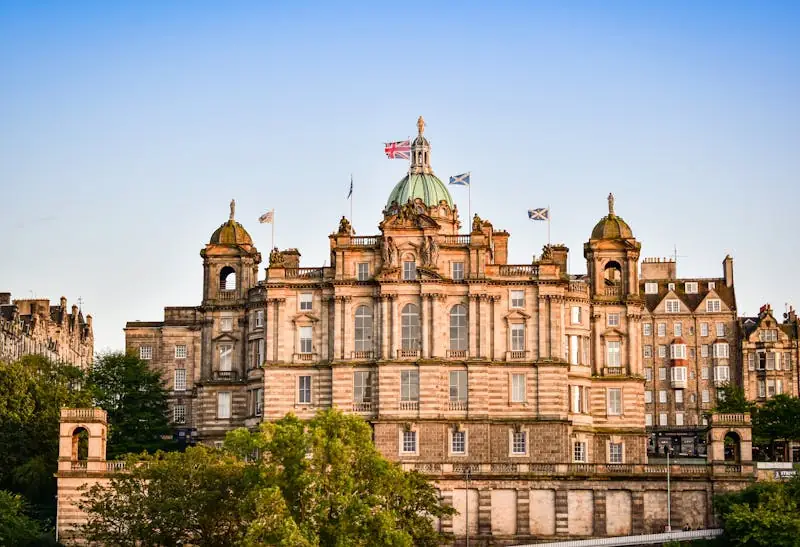
Prioritize the activities that deserve your time in Edinburgh.
Open page →
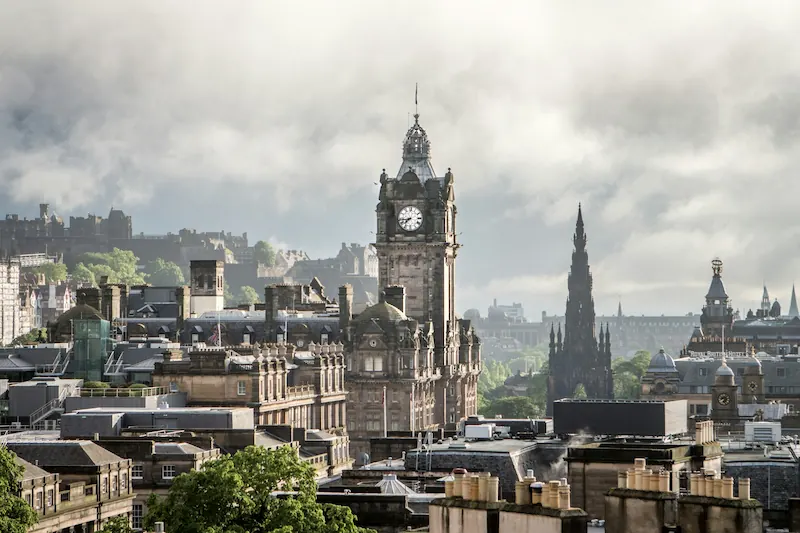
2 Days in Edinburgh Itinerary: Best First-Time Weekend Route
Open itinerary →
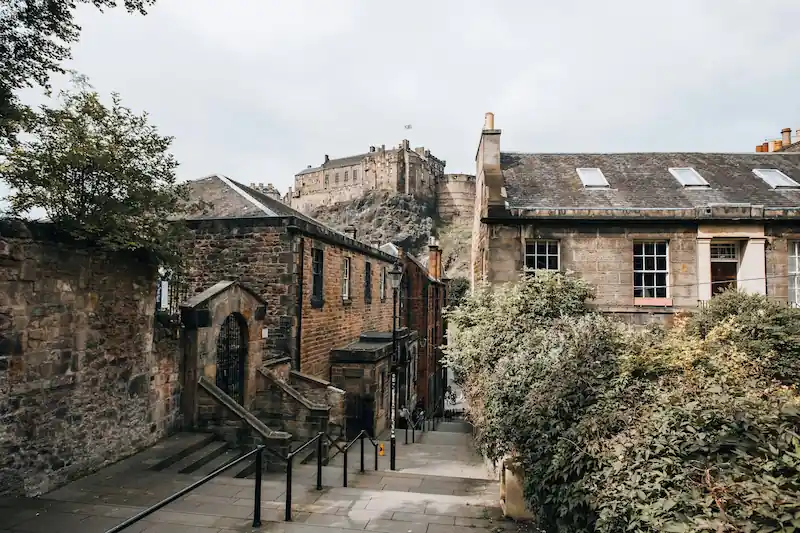
3 Days in Edinburgh Itinerary: History, Museums & Hill Views
Open itinerary →

4 Days in Edinburgh Itinerary: Old Town, Leith, Arthur’s Seat & Coast
Open itinerary →
Edinburgh is a layered capital rather than a sprawling metropolis: the medieval ridge of the Old Town, the ordered geometry of the New Town, the village-like feel of Stockbridge, the university-and-meadows texture of the Southside, and the port-facing edge of Leith each create a different version of the city. It is compact enough to feel walkable, but the slopes, steps, wind, and density of stops can make days heavier than the map suggests. The city works best when read in bands rather than as one continuous centre.
Few cities in Europe deliver this much contrast within such a compact footprint. Edinburgh gives you ceremonial avenues, volcanic viewpoints, medieval grain, strong museum depth, literary identity, atmospheric underground history, and a more lived food and waterfront scene than its postcard image suggests. In late afternoon, when stone facades start holding the last flat light and the Castle ridge reappears between streets, the city feels especially coherent: not just scenic, but legible.
Best time: May to June and September for the best balance of light, walkability, festival-adjacent culture, and manageable city pressure.
Ideal trip length: 3 days for a strong first visit; 4 to 5 days if you want Leith, Stockbridge, museums, and one day trip without rushing.
Edinburgh is one of the more expensive short-break cities in the UK once central accommodation enters the equation. Price pressure comes less from daily transport and more from hotel rates, major event dates, and the premium paid for staying within easy walking range of the Old Town and New Town. Costs rise sharply in August, during the winter festive period, around major rugby weekends, and over high-demand school-holiday windows. Shoulder-season value improves most when you book your hotel early rather than when you cut spending once you are on the ground.
Edinburgh is best understood as a city of layers placed side by side rather than one centre unfolding evenly in all directions. The Old Town runs along a medieval ridge from Castle to Holyrood, while the New Town opens north of it in a calmer Georgian grid. Beyond those headline zones, Stockbridge, Dean Village, the Southside, the Botanic Garden edge, and Leith act almost like separate chapters with distinct social and spatial identities.
Topography shapes the city at every scale. Volcanic ridges, abrupt slopes, green edges, long viewpoints, and the coast beyond Leith create drama but also fragment movement, so short distances often involve more effort than expected. You feel this especially when stepping out of the dense closes of the Old Town into the broader lines of Princes Street, then down again toward the Water of Leith corridor or outward toward Holyrood Park.
Mornings belong to the historic core, the Castle, and major viewpoints before foot traffic thickens. Midday pulls energy toward museums, galleries, shopping streets, and indoor heritage sites, while evenings split between performance-led festival culture, restaurant-led New Town addresses, pub-lined Old Town lanes, and the more local pull of Leith. After rain, the city darkens quickly on stone and pavement, and central routes feel narrower and busier.
Think of Edinburgh as five useful bands: the ridge of the Old Town, the ordered New Town, the village-and-water texture to the northwest, the Holyrood-and-volcanic landscape edge to the east, and the waterfront extension to the northeast. Once you stop treating it as a single walk-everywhere centre, the city becomes easier to read. The clearest approach is not to chase every famous name, but to understand which band of the city you are in and what kind of experience it is built to deliver.
Open the planner
Build the first full day around the Old Town ridge and its immediate anchors, because that is where the city’s historical logic becomes clearest. Give the New Town and adjacent museum-and-gallery layer a separate half-day or full day, rather than treating it as overflow from the Royal Mile. Pair Stockbridge, Dean Village, and the Water of Leith when you want a slower, lower-pressure urban texture with less monument density. Treat Leith as a destination block, not a casual add-on after central sightseeing, because it rewards a different pace, the Royal Yacht Britannia, waterfront walking, and often a later food-led finish. Keep major viewpoints attached to nearby neighborhoods instead of stacking them as isolated scenic stops across the city. Use a museum-heavy day to absorb weather variation, then reserve clearer conditions for the ridge, gardens, Salisbury Crags, Arthur’s Seat, and panoramic climbs. In August, plan the trip around festival realities first: book accommodation, shows, restaurants, and high-demand attractions before assuming normal city-break flexibility. If you have more than three days, spend the extra time widening the city rather than repeating the centre: Leith, Stockbridge, Southside, the Botanic Garden, Portobello, or a day trip add more value than overworking the Royal Mile. Protect at least one evening for the city after the daytime surge, when pub interiors, stone lanes, performance venues, and dining streets start to reveal a more lived Edinburgh.
Vibe: medieval core with constant visual drama
Why go: This is the strongest base for a first trip if you want immediate access to the city’s historic spine and major sights.
Who it fits: first-timers, short-break travelers, history-led stays
Not for: light sleepers, travelers wanting calm evenings, anyone sensitive to hills and heavy foot traffic
Where to stay: Staying here keeps the city’s most symbolic layer on your doorstep, which matters on a short visit. The trade-off is noise, gradient, and a more tourism-exposed dining and hotel mix.
Vibe: ordered Georgian elegance with easier breathing space
Why go: New Town offers a more polished, comfortable base with strong dining, shopping, and walkable access to both the historic core and quieter residential streets.
Who it fits: couples, repeat visitors, design-minded travelers, mid-to-upscale stays
Not for: travelers wanting to step straight into the medieval core without any transitional walk
Where to stay: For many visitors, this is the most balanced place to stay. It gives you centrality without the full compression of the Royal Mile zone and usually a stronger hotel experience.
Vibe: village feel with local texture
Why go: Stockbridge suits travelers who want Edinburgh to feel lived-in rather than ceremonial, while still staying within reach of the centre.
Who it fits: slow travelers, café-and-bookshop wanderers, longer stays
Not for: travelers who want the castle and Royal Mile outside the door
Where to stay: This is one of the city’s most pleasant bases if you value neighborhood rhythm over monument immediacy. It works especially well when your trip is long enough to absorb a quieter morning-and-evening pattern.
Vibe: waterfront edge with independent energy
Why go: Leith gives you a broader, more local-feeling Edinburgh with strong food credentials and a clear sense of distance from the postcard core.
Who it fits: food-led stays, repeat visitors, travelers wanting a less obvious base
Not for: ultra-short trips built around constant castle-and-Royal-Mile access
Where to stay: Leith works best when you want the city to open outward rather than inward. With the tram line now improving connections, it is more practical than it once was, but it still feels like a deliberate choice rather than default centrality.
Vibe: lived-in, mixed, and practical
Why go: Southside is a smart choice if you want a slightly less polished but more functional base close to university energy, museums, and Arthur’s Seat access.
Who it fits: budget-aware travelers, mixed-purpose stays, walkers
Not for: travelers wanting the prettiest first impression or a quiet heritage-hotel atmosphere
Where to stay: This area often gives you better value and more local movement than the classic central zones. It makes sense for travelers willing to trade prestige for usefulness and a stronger everyday city feel.
Vibe: functional transport-friendly base
Why go: Haymarket is one of the easiest places to stay if you want rail access, airport convenience, and better price-to-location balance.
Who it fits: rail travelers, business-leisure stays, short visits with early departures
Not for: travelers seeking Edinburgh’s strongest atmosphere outside the hotel door
Where to stay: The appeal here is efficiency rather than romance. It is a reliable base when arrival and departure logistics matter and when you want to keep accommodation costs more contained without moving far from the centre.
Edinburgh reveals itself best when you move from the ridge and monuments into its secondary textures: closes, underground spaces, museums, festival venues, village-like streets, gardens, viewpoints, and the waterfront edge. The strongest trip is not the one that sees the most, but the one that understands how these layers change the city’s meaning.
Planning tip: Time the Castle, Mary King’s Close, Camera Obscura, or Palace early enough that the rest of the day can widen outward from that anchor rather than doubling back through the centre.
The key experience is not just seeing the Royal Mile but understanding it as the city’s historic spine, where closes, courts, institutions, and viewpoint breaks explain how Edinburgh was built along a ridge. Done slowly, it gives the clearest first reading of the city.
Tip: Start high and move downhill so the city opens gradually instead of feeling like a crowded climb.
Mary King’s Close gives Edinburgh’s layered urban history a spatial form. It explains the Old Town vertically and socially, not just as a scenic street pattern. For travelers who need one guided experience that turns the city’s density into a story, this is usually the strongest choice.
Tip: Book a timed slot and treat it as the interior counterpoint to walking the Royal Mile, not as a random add-on.
The castle matters less as a checklist fort than as the political and topographic anchor of the city. Without some historical framing, parts of it can feel fragmented; with context, it becomes the clearest point from which to read Edinburgh’s power structure and geography.
Tip: Book a timed entry early in the day or it becomes harder to fit around the rest of the Old Town.
This is one of the most useful overview points in the city because it shows how the centre sits between ridges, formal planning, and open horizon. It sharpens the rest of the trip by making the city legible in one sweep.
Tip: Go when visibility is clear rather than automatically at sunset, when the summit can feel more crowded than reflective.
Check guided tours →
Arthur’s Seat is not simply a viewpoint; it resets the scale of the whole city and shows how unusual Edinburgh’s natural setting is. It works best when you want to break the museum-and-monument rhythm with open air and long perspective.
Tip: Use a dry-weather window and decent shoes, because the reward depends on ease of footing as much as on the final view.
Check guided tours →
Salisbury Crags are the smarter middle option between a quick Calton Hill hit and a full Arthur’s Seat climb. They still reveal the volcanic edge of the city and the relationship between Holyrood, Old Town, and the wider basin, but with a less summit-driven rhythm.
Tip: Use this route when weather, footwear, or energy make Arthur’s Seat feel like too much commitment.
Check guided tours →
Holyrood makes more sense when seen as the counterweight to the Castle, completing the political line of the Old Town. It adds courtly and dynastic context to a city otherwise often read only through its medieval and literary image, and it works especially well when paired with the lower Royal Mile or Holyrood Park.
Tip: Pair it with the lower Royal Mile and nearby landscape edge rather than squeezing it between unrelated central stops.
Britannia is valuable less because every traveler needs royal interiors and more because it gives Leith a clear daytime anchor. It helps turn the waterfront into a purposeful half-day rather than a vague dinner district, especially on longer first visits.
Tip: Pair it with a Leith waterfront walk and a later meal so the area feels like a full city layer.
From here, the relationship between natural drop, formal garden, and fortified skyline becomes especially clear. It is one of the best places to feel how theatrical the city’s topography is without entering a monument.
Tip: Use this as a transition between Old Town and New Town, not as a standalone scenic detour.
Check guided tours →
Victoria Street and Grassmarket should not become a separate checklist mission, but they are important because they show how the Old Town drops, curves, and changes mood below the Castle. Used well, they turn movement between sights into part of the city reading.
Tip: Fold this into an Old Town walk rather than crossing the centre just for a photo.
Check guided tours →
This is one of the city’s best depth-builders because it widens the trip beyond the postcard image into science, empire, design, natural history, and national identity. It helps Edinburgh feel less frozen in one historical register.
Tip: Do not try to cover it exhaustively; enter with a theme or a time limit.
Check guided tours →
Camera Obscura matters strategically because it solves a real planning problem: how to keep the Castlehill area useful for families or mixed-age groups without adding another heavy historical interior. It also gives rooftop orientation in a more playful format.
Tip: Book ahead in school holidays and place it before or after the Castle, not on the other side of town.
St Giles is less about devotional spectacle than about Edinburgh’s civic and ecclesiastical weight across centuries. It sits at the city’s symbolic centre and adds seriousness to a Royal Mile visit that can otherwise tilt too quickly toward surface impressions.
Tip: Go early or late in the day for a quieter reading of the interior volume.
Check guided tours →
The National Gallery belongs to the city’s Georgian and intellectual layer rather than its medieval one. Visiting it shifts the trip’s tone and helps balance Edinburgh’s public image with a more measured cultural rhythm.
Tip: Place it on a New Town day rather than squeezing it into a Royal Mile-heavy itinerary.
Check guided tours →
In August, Edinburgh stops behaving like a normal sightseeing city. The festivals affect accommodation, restaurants, walking pace, and evening priorities, so they belong in the trip structure from the beginning rather than being treated as optional entertainment.
Tip: Book fewer daytime sights during festival days and leave room for shows, queues, and slower central movement.
Check guided tours →
Edinburgh’s literary and historic-house layer can be rewarding, but only if chosen selectively. One strong interior or theme-led stop adds texture; too many can flatten into a similar sequence of rooms and plaques.
Tip: Pick the site that aligns with your actual interest rather than collecting names out of duty.
Check guided tours →
Surgeons’ Hall is not for every first-timer, but it gives Edinburgh a more specific intellectual and medical-history dimension than another general museum stop. It is best for travelers who like unusual collections and do not need every cultural visit to be broad or family-safe.
Tip: Use it as a Southside cultural stop, not as a substitute for the National Museum on a first trip.
Check guided tours →
This area shows Edinburgh in a lower-key register: less ceremonial, more residential, and easier to inhabit at walking pace. It is one of the best counterweights to the intensity of the historic centre.
Tip: Go after the main central sights, when you need the city to loosen rather than intensify.
Check guided tours →
Leith changes the city’s social register. It feels broader, more outward-looking, and often more contemporary in mood than the centre, especially once the evening crowd settles into restaurants and bars rather than touring streets.
Tip: Make it a destination evening with enough time for the area itself, not just a restaurant booking.
Check guided tours →
Dean Village is visually distinctive, but its real value lies in how it links to wider walking rhythm rather than as a major standalone stop. Treated lightly, it adds texture; overworked, it can feel like a short detour inflated by image culture.
Tip: Pair it with Stockbridge or the gallery-and-New-Town side of the city rather than crossing Edinburgh just for this.
Check guided tours →
The Botanic Garden is the most useful non-central green counterweight to Edinburgh’s stone-heavy core. It changes the pace of a trip, especially when paired with Stockbridge or a slower northern afternoon.
Tip: Use it after a dense Old Town morning, when the trip needs space rather than another enclosed attraction.
Check guided tours →
The Meadows and Bruntsfield are not headline Edinburgh, but they are useful because they show the city breathing around the university and residential south. They help longer stays feel less trapped between monuments and hotel corridors.
Tip: Best as a soft afternoon walk or café-led reset after the National Museum or Southside.
Check guided tours →
Portobello is not essential on a short first trip, but it is the easiest way to make Edinburgh feel coastal rather than only stone-built and inland. It is especially useful for families, repeat visitors, or longer stays that need a looser outdoor break.
Tip: Save it for a good-weather half-day, not a rushed gap between central sights.
Check guided tours →
Edinburgh after dark can feel more atmospheric than by day, especially once the day-trip flow thins and the medieval grain regains some depth. But the right move is not any random lane: it is choosing pockets where the evening city still feels textured rather than over-programmed.
Tip: Aim for an early evening pass before nightlife crowds, especially on weekends.
Leith is where Edinburgh’s food scene often feels most current and least tied to visitor default patterns. It rewards travelers willing to leave the centre for a more destination-style evening built around eating well.
Tip: Reserve ahead on weekends, because the best addresses fill before central visitors even decide to leave the core.
A well-chosen modern Scottish meal gives the trip a clearer sense of place than a sequence of convenient pub dinners around the Royal Mile. This is where Edinburgh starts to feel like a living capital rather than a heritage set.
Tip: Spend your food budget on one strong dinner in New Town or Leith instead of several average central meals.
Check food options →
A good pub is part of Edinburgh’s social grammar, especially in poor weather or after a hill-heavy day. But relying on pubs for every dinner can narrow the trip, because the city’s stronger dining range often sits outside the obvious heritage frame.
Tip: Use pubs for lunch, a pause, or one characterful evening rather than as your full food strategy.
Check food options →
Whisky can be a meaningful Edinburgh experience when it is comparative, guided, and connected to Scotland’s regional styles. It becomes weaker when treated as a purely theatrical attraction or a souvenir purchase with a tasting attached.
Tip: Use this as a late-afternoon or early-evening indoor anchor, especially when rain makes another outdoor walk less appealing.
Whisky is the obvious Scottish drink story, but Edinburgh’s gin and cocktail scene can be a better fit for travelers who want a lighter, more social evening. It also broadens the food-and-drink layer beyond the expected tourist script.
Tip: Place it after a New Town dinner or before a performance rather than as a daytime attraction.
Afternoon tea can fit Edinburgh’s more ceremonial side, but it is best treated as a deliberate slow-down rather than a default must-do. It works when the trip has room for pause and weather makes indoor pacing appealing.
Tip: Place it on a museum or New Town day, not between hill climbs and timed attractions.
Check food options →
Because the city’s walking days can become unexpectedly dense, a well-placed café stop has real strategic value. It helps preserve the trip’s rhythm rather than simply filling a break between attractions.
Tip: Use one around late morning or mid-afternoon to stop the centre from feeling relentlessly compressed.
Check food options →
Edinburgh expands quickly when you treat every famous stop as equal. The strongest trips protect the city’s major structural experiences first, then widen into secondary layers only when time genuinely allows.
Edinburgh works well with children if you plan around slope, weather, and fatigue rather than trying to maximize landmarks. The city gives you castles, open viewpoints, interactive interiors, museums, parks, and waterfront space, but the hills and stone-heavy core can make overpacked days unravel fast. On brighter afternoons, the open skyline from parks and high ground often matters as much as any indoor attraction.
Edinburgh can deliver a strong city break in three days, but it becomes much more complete once you have enough time to move beyond the symbolic centre and let its secondary layers breathe. The right itinerary is less about adding sights than about choosing the correct rhythm for weather, hills, meals, and evening energy.
Open the planner →
Edinburgh is straightforward to plan once you accept that it is not a flat, frictionless city break. Good trips come from aligning your base, your walking tolerance, your attraction bookings, and your timing with the city’s real shape.
For most travelers, late spring and early autumn are the strongest windows because the city stays highly walkable, daylight is generous enough for full days, and the centre feels less compressed than it does in peak festival season. Summer brings the longest days, but August in particular changes the experience with festival demand, hotel pricing, show schedules, restaurant pressure, and much slower central circulation. Winter can be rewarding for atmosphere and lower routine friction, but it asks you to plan around short light and weather shifts.
Two full days is the minimum threshold at which Edinburgh starts to make sense, but it will feel selective and compressed. Three full days is where the city begins to breathe, because you can give both the historic core and at least one secondary layer proper space. Four or five days are ideal if you want Leith, Stockbridge, museums, gardens, food, and a day trip without turning the trip into a race.
The key decision is whether you want symbolic centrality or a better-balanced base. Old Town gives immediate access to headline history but comes with more slope, noise, and crowd exposure, while New Town is often the smarter all-round choice for comfort, dining, hotel quality, and easier movement. Stockbridge and Leith work best when your trip is long enough to justify a more deliberate neighborhood identity; Haymarket works when rail, airport, or price logic matters more than atmosphere.
Edinburgh Airport is the main air gateway and connects efficiently to the city by tram, with direct service into the centre and onward toward Leith. Waverley is the most useful central rail arrival point for most visitors, especially if you are staying near the Old Town or New Town, while Haymarket is practical for the west side and airport-linked stays. If you arrive by train, hotel location matters more than distance alone because luggage and gradients can make short walks feel longer.
Central Edinburgh is best experienced on foot, but it is not an easy flat walking city. The tram is useful for airport transfers, the west end, central spine links, and Leith, while buses help fill in the wider network. Taxis and ride-hailing become more useful in bad weather, after long uphill days, with children, or when crossing between zones that look close but involve tiring elevation change.
Edinburgh is generally a safe and well-organized city for visitors, with reliable healthcare infrastructure by UK standards. The main practical issues are not serious safety concerns but slips on wet stone, uneven pavement, and the physical strain of hill-heavy days. Standard urban awareness is enough in busy central areas and late-night entertainment zones.
Edinburgh changes meaningfully across the year because light, wind, event pressure, and walking comfort all shape the experience. Late spring and early autumn usually create the best all-round city break: enough daylight to build layered days, enough calm to preserve flexibility, and enough softness in pace to enjoy the city beyond its headliners. Summer works best for travelers who value long days and event energy more than ease; August is exceptional but operationally demanding because the festivals reshape the city. Winter suits slower, moodier, more indoor-led stays. The right season depends less on temperature alone than on how you want the city to move around you.
Spring gives Edinburgh some of its clearest all-round balance. Days lengthen, the city becomes easier to walk for longer stretches, and the shift between gardens, ridge views, and stone streets feels especially coherent. It suits first-time visitors well because the city opens without the full compression of peak season, and the cleaner daylight helps the topography read sharply.
Summer is the season of maximum usable daylight and the easiest time to stretch days from early viewpoints to late dinners. It suits travelers who want energy, open-air movement, and a fuller evening city, but the trade-off is operational pressure, especially during August festival season. When light lingers on the upper stone facades late into the evening, the city can feel expansive rather than compact, provided the trip has been booked with enough discipline.
Early autumn is one of the strongest periods for travelers who want the city at a more measured pace without losing too much daylight. Museums, neighborhood walks, and dining-led evenings tend to fall into place more easily, and the trip often feels more selective and less reactive. It particularly suits travelers who value structure, atmosphere, and lower planning stress over festival intensity.
Winter sharpens Edinburgh’s darker material character: stone, wind, interior refuge, and shorter, more deliberate days. It works best for travelers happy to build around museums, pubs, whisky tastings, strong meals, and selective outdoor windows rather than long panoramic walking days. Around festive periods the city regains energy and price pressure; outside those dates the quieter rhythm can suit repeat visitors and slower urban stays.
Not seeing your next stop yet? Build a fully personalized itinerary anywhere in uk.
These are the planning decisions that most strongly shape an Edinburgh trip, especially on a first visit.
Three full days is the right starting point for most first visits. That gives you enough time for the Old Town, New Town, one major viewpoint, and at least one secondary layer such as Stockbridge, Leith, or a museum-heavy block. Two days is possible, but it feels compressed quickly; four or five days are better if you want day trips, food, gardens, or slower neighborhoods.
New Town is often the best all-round base because it balances comfort, dining, hotel quality, and easy access to the historic core. Old Town is more dramatic and immediate, but also steeper, noisier, and more exposed to visitor pressure. For most travelers, New Town produces a smoother stay.
Yes, but not in the effortless way the word often implies. The centre is compact enough to cover on foot, yet slopes, stairs, uneven paving, and repeated climbs make walking days more tiring than the map suggests. Walkability is one of Edinburgh’s strengths, but it comes with physical friction.
May to June and September are usually the best choices for most travelers. You get strong daylight, good city rhythm, and less compression than in August, when festival demand changes hotel pricing and crowd levels significantly. Winter can work well too, but it creates a more indoor-leaning trip.
August is excellent if you want festival energy, performances, late evenings, and a city that feels culturally charged. It is not the easiest time for a relaxed first trip: accommodation is expensive, restaurants book up, central streets move slowly, and normal sightseeing requires more advance planning.
Yes, especially in high season, weekends, and any compressed short stay where timing matters. The Castle is one of the main anchors of the central city, so failure to secure a useful slot can distort the rest of your day. Early timed entries are usually the easiest to structure around.
Yes for most first-time visitors, because it combines history, setting, skyline, and orientation in one place. It is busy and can feel fragmented without context, so either read ahead, use an audio guide, or choose a guided format if you want the visit to feel more coherent.
Yes in clear weather if you have the energy and footwear for it. The climb gives the strongest city-and-landscape perspective in Edinburgh. If time, weather, or fitness are limiting factors, Salisbury Crags or Calton Hill can deliver a more efficient version of the same spatial logic.
For many short trips, yes. Calton Hill is easier, faster, and still highly useful for understanding the city’s skyline and layout. Arthur’s Seat is more dramatic and physical, but Calton Hill is the smarter choice when you need a high-payoff viewpoint without spending half a day on it.
Yes if you like guided interpretation and want Edinburgh’s Old Town to feel less like a pretty surface. It is one of the best ways to understand the city’s vertical layers, cramped historical life, and hidden spaces. It is less suited to travelers who prefer fully independent wandering.
Camera Obscura is especially useful for families, mixed-age groups, and rainy spells near the Castle. It is not as essential as the Castle or a major viewpoint, but it solves a real itinerary problem by making the Castlehill area interactive and playful rather than purely historical.
Yes, if you have at least three full days and want Edinburgh to feel broader than its heritage core. Leith is especially worthwhile as a dinner-led evening or a half-day extension because it gives the city a more local, waterfront, and contemporary dimension. It matters less on a very compressed two-day stay.
Britannia is worth considering if Leith is already part of your trip or if royal, maritime, or twentieth-century history interests you. It is less essential than the Castle on a first visit, but it can be a strong anchor for a wider Leith half-day.
New Town usually gives the best balance. It is central without being as compressed as the Old Town, has strong dining and shopping, and keeps both Waverley, Princes Street Gardens, the Royal Mile, and Stockbridge within practical reach.
Old Town is best for atmosphere and immediate access to the city’s most symbolic sights. It is not always the best practical choice because it can be steep, noisy, crowded, and more tourist-facing. It works best for short stays where drama matters more than calm.
Stockbridge is usually the best slower central-adjacent choice, especially if you like cafés, independent shops, the Water of Leith, and a more residential feel. Leith is stronger if you want food, waterfront atmosphere, and a more contemporary edge.
Yes. A car is unnecessary for the city itself and can become a burden around central streets, parking, and accommodation. Walking, trams, buses, taxis, and trains cover the needs of most visitors. A car only starts to make sense for specific countryside extensions.
The National Museum of Scotland, Scottish National Gallery, St Giles’ Cathedral, The Real Mary King’s Close, Camera Obscura, whisky tastings, and selected performances all work well in rain. The best strategy is to pivot early rather than forcing a full exposed walking route.
Yes, as long as you alternate historic sights with interactive interiors and open space. Edinburgh Castle, Camera Obscura, the National Museum of Scotland, Dynamic Earth, Princes Street Gardens, Holyrood Park, and Portobello all help balance energy levels.
Avoid overloading the Royal Mile, treating every viewpoint as mandatory, booking accommodation too late for August, and adding a day trip before the city itself has had enough time. The most common mistake is trying to see too much in a city whose hills and crowds slow everything down.
It can be, especially for centrally located accommodation and especially in August or around major event periods. Daily movement costs are manageable, but hotels drive the overall budget more than local transport does. Booking the right area early usually saves more than cutting back once you are on the ground.
The city is strongest when you combine all three selectively. History defines the first impression, nature gives the city its unusual drama through Arthur’s Seat, Calton Hill, and Holyrood Park, and food becomes more rewarding once you move beyond the most obvious tourist streets.
Only after you have protected enough time for Edinburgh itself. St Andrews, North Berwick, Stirling, Loch Lomond, and the Highlands can all work, but day trips make most sense on stays of four days or more, or for travelers who already know the city.
North Berwick is the easiest coastal change by train, Stirling is the most straightforward history-led extension, and Loch Lomond or the Highlands give a broader landscape shift if you accept a long day. The best choice depends on whether you want coast, castles, or scenery.
Build shorter outdoor windows around clear daylight and use museums, galleries, pubs, whisky tastings, and strong meals as structural anchors. Winter Edinburgh can be atmospheric, but the trip works best when it is deliberately slower and less viewpoint-dependent.
The best Edinburgh trips are selective, layered, and paced around the city’s real geography rather than around a checklist of famous names.
Find the best places to stay, how to get there, and move around with ease.
Build a smarter trip base
Once you understand how Edinburgh works and what matters most for your trip, the next step is turning that direction into a real itinerary. Use the planner to organize your days around the right areas, experiences, and rhythm so the trip feels clear before you go.