Discover the best things to do in Edinburgh, from headline attractions and historic streets to local walks, museums, whisky experiences, family-friendly stops, free viewpoints and day trips beyond the city. This guide is designed to help you choose well rather than simply tick off a list: what deserves priority on a first visit, what works best in bad weather, what to book ahead, which neighborhoods reward extra time, and which experiences add real depth once the Old Town essentials are covered.
Best time
Best from May to September for long daylight, festival energy, gardens, coast walks and easier hill climbs. April, October and December can also work well for lower-friction cultural trips, while winter favors museums, pubs, galleries, whisky tastings and atmospheric Old Town evenings.
Ideal trip length
2 to 3 days is the sweet spot for Edinburgh itself. One day covers the Castle-Royal Mile-viewpoint essentials only; 4 days gives you room for Leith, Stockbridge, Portobello, gardens, food-led evenings or one strong day trip.
Continue planning your Edinburgh trip
Use the main Edinburgh city guide for the bigger planning logic, the where-to-stay guide for choosing the right neighborhood, and the itinerary pages once you know which experiences deserve your time most.
Top things to do in Edinburgh first
Edinburgh Castle – Area: Castlehill / Old Town · Best for: first-time essentials and city history · Time needed: 2 to 3 hours · Worth it: Yes. It is busy and obvious, but it remains the city’s clearest headline sight because it combines fortress drama, royal objects, military history and big views in one stop. · Book ahead: Yes, strongly recommended, especially in summer, weekends and festival periods.
Walk the Royal Mile properly – Area: Old Town · Best for: orientation, atmosphere and hidden closes · Time needed: 1.5 to 3 hours · Worth it: Yes, but only if you treat it as a sequence of closes, churches, courtyards, viewpoints and short interiors rather than a straight souvenir-street walk. · Book ahead: No.
Arthur’s Seat or Salisbury Crags – Area: Holyrood Park · Best for: views, active mornings and city scale · Time needed: 1.5 to 3 hours · Worth it: Yes. Arthur’s Seat gives the full panoramic payoff; Salisbury Crags is the smarter lower-effort alternative when weather, time or knees argue against the summit. · Book ahead: No.
National Museum of Scotland – Area: Chambers Street / Old Town edge · Best for: rainy day, families and smart context · Time needed: 1.5 to 3 hours · Worth it: Yes, especially if you want one indoor stop that adds depth across Scottish history, design, science and world collections without feeling too narrow. · Book ahead: No for general entry.
Calton Hill at golden hour – Area: East end / Calton · Best for: short scenic payoff and photography · Time needed: 45 minutes to 1.5 hours · Worth it: Yes. It is the easiest way to understand Edinburgh’s skyline quickly, especially if you do not have time or weather for Arthur’s Seat. · Book ahead: No.
The Real Mary King’s Close – Area: Royal Mile · Best for: story-led history and rainy weather · Time needed: 1 hour · Worth it: Yes, if you like guided interpretation and want Edinburgh’s layered Old Town history to feel spatial rather than abstract. · Book ahead: Yes.
Palace of Holyroodhouse – Area: Holyrood · Best for: royal history and the lower Royal Mile · Time needed: 1.5 to 2 hours · Worth it: Yes, especially if you want a more courtly, domestic and royal counterpoint to the Castle. · Book ahead: Recommended in busier periods.
Camera Obscura & World of Illusions – Area: Castlehill / Old Town · Best for: families, rainy days and playful city views · Time needed: 1.5 to 2 hours · Worth it: Yes, particularly with children or mixed-age groups who need a break from heritage-heavy sightseeing. · Book ahead: Wise at weekends, school holidays and peak season.
Dean Village to Stockbridge walk – Area: West End / Water of Leith / Stockbridge · Best for: local texture and slower mornings · Time needed: 1.5 to 2.5 hours · Worth it: Yes, especially on a second morning when you want stone, water, bridges, cafés and a calmer Edinburgh beyond the busiest core. · Book ahead: No.
Leith waterfront and Royal Yacht Britannia – Area: Leith · Best for: longer stays, food and waterfront contrast · Time needed: 2.5 to 4.5 hours · Worth it: Yes, if you want the city to feel broader than the Old Town and New Town. Britannia gives the anchor; Leith gives the neighborhood payoff. · Book ahead: Britannia: recommended. Waterfront stroll and food stops: no, except specific restaurants.
Royal Botanic Garden Edinburgh – Area: Inverleith / north of New Town · Best for: slow travel, gardens and low-pressure afternoons · Time needed: 1.5 to 3 hours · Worth it: Yes on longer stays, spring and summer trips, or any itinerary that needs an elegant green reset after the Old Town. · Book ahead: Usually no for the gardens; check special exhibitions separately.
Whisky tasting, gin tasting or a serious drinks experience – Area: Old Town / New Town / Leith · Best for: Scotland-themed evenings and indoor plans · Time needed: 1 to 2 hours · Worth it: Yes, when the tasting has structure, comparison and guidance rather than only theatrical packaging. · Book ahead: Often yes for premium tastings and evening slots.
How to choose well in Edinburgh
Edinburgh rewards selection more than volume. The city is compact enough to look easy on a map, but the real friction comes from hills, cobbles, queues, one-way sightseeing pressure, festival crowding and the temptation to stack too many heritage interiors into a single day. The smartest approach is to combine one headline sight, one viewpoint, one neighborhood stretch, one strong indoor backup and one atmospheric evening move.
Do not spend your whole trip inside the Old Town spine; it is essential, but Edinburgh becomes more interesting when you also use New Town, Stockbridge, Leith, Holyrood Park or the waterfront.
Choose the right history mix: Castle for fortress-and-state drama, Holyroodhouse for royal domestic narrative, Mary King’s Close for underground story, and St Giles’ for a short civic-religious pause.
Use viewpoints strategically: Arthur’s Seat is the bigger commitment, Salisbury Crags is the practical compromise, and Calton Hill is the fast high-payoff option.
When rain arrives, pivot early to the National Museum, galleries, Mary King’s Close, Camera Obscura, Dynamic Earth, whisky tastings, pubs with character or covered cultural stops.
Add local texture with Dean Village, Stockbridge, the Water of Leith, Leith waterfront, Portobello, the Botanic Garden or a market rather than searching for forced hidden gems.
Families should alternate visual sights, interactive interiors and open space; long back-to-back historical visits can drain the day quickly.
In August especially, book major attractions, festival events, evening tours and popular restaurants early; spontaneity becomes expensive in both time and availability.
Day trips are worthwhile only after Edinburgh itself has enough space. On short stays, a better second neighborhood usually beats a rushed Highlands headline.
Iconic Edinburgh
This is the Edinburgh most travelers come for: volcanic skyline, fortress drama, steep closes, cathedral stone, royal processions, old courts and the city opening in layers as you climb or turn a corner. The point is not to tick every famous attraction, but to choose the sights that give you the strongest feel for scale, setting and historical weight.
Explore Edinburgh Castle beyond the postcard view – The Castle is the city’s most obvious first stop, but the real value lies in how it anchors everything around it: Castle Rock, the defensive logic of the Old Town, the city skyline, the Crown Jewels, the Great Hall, military spaces and panoramic terraces. Go early if you want structure and crowd control, or late if you want softer light and a less frantic finish. (First-time essential · Best for: first visits and high-impact context)Find tours & experiences
Walk the Royal Mile with detours into closes and courtyards – Handled badly, the Royal Mile becomes a crowded souvenir corridor. Handled well, it becomes the most efficient way to read the Old Town through closes, wynds, churches, stairways, quick museum stops and shifting views between Castle and Holyrood. Build in pauses rather than treating it as a route to finish. (Worth it · Best for: orientation on day one)
Climb Arthur’s Seat for the full city read – Arthur’s Seat is not just a viewpoint; it explains Edinburgh’s relationship to landscape. From the summit, the Old Town ridge, New Town grid, Holyrood Park, Leith and the coast all start making geographic sense. Choose a clear morning, wear proper shoes and avoid treating it as a casual ten-minute detour. (High payoff · Best for: clear weather and active mornings)
Use Salisbury Crags when Arthur’s Seat is too much – Salisbury Crags gives much of the Holyrood Park drama with less commitment than the summit. It is a smart compromise for shorter stays, windy days, families who want a real walk without a full climb, or travelers who want a strong city panorama before returning to the lower Royal Mile. (Smart alternative · Best for: views with less effort)
Use Calton Hill for a shorter skyline hit – If Arthur’s Seat feels too ambitious, Calton Hill gives you the fastest scenic return in central Edinburgh. It works especially well late in the day, when the monuments, rooftops, Castle, Arthur’s Seat and Firth of Forth align into one of the city’s clearest visual summaries. (Best in the evening · Best for: short stays and sunset views)
Visit the Palace of Holyroodhouse – Holyroodhouse adds a different register from the Castle: more courtly, more domestic and more directly tied to royal narrative. It is especially worthwhile if you are already spending time at the lower end of the Royal Mile, pairing it with Holyrood Park, Dynamic Earth or a slower afternoon around the palace grounds. (Best for: royal history and quieter pacing)Find tours & experiences
Go underground at The Real Mary King’s Close – This is one of Edinburgh’s most effective guided experiences because it turns layered Old Town history into something spatial and immediate. It is a strong choice when you want story, atmosphere and access rather than another static display, and it works particularly well as a rainy-day or evening-adjacent anchor. (Book ahead · Best for: guided interpretation and rainy weather)Find tours & experiences
Stand in St Giles’ Cathedral and read the Old Town around it – St Giles’ is less about spending half a day inside and more about understanding its position in the civic and religious life of the Royal Mile. Step in for the stained glass, stonework, Thistle Chapel and a pause from the street flow, then continue outward into Parliament Square and the surrounding closes. (Short stop · Best for: historical texture without a long visit)
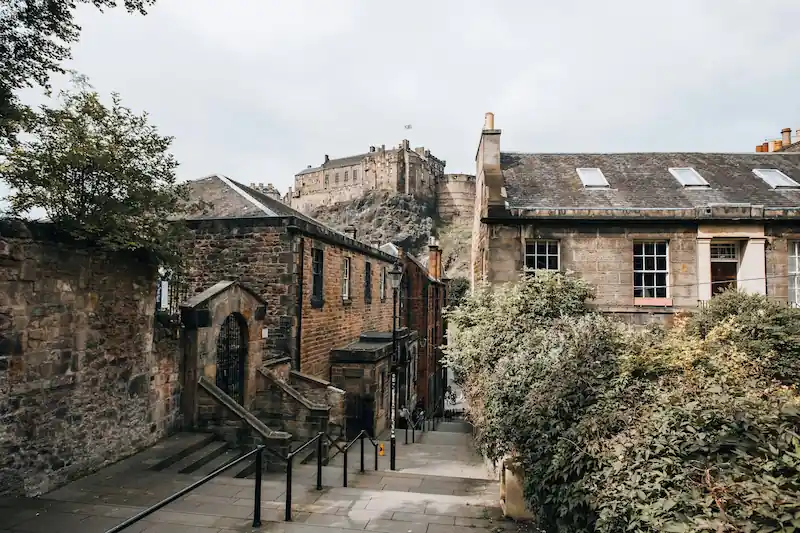
Loop Victoria Street, Grassmarket and the Castle below – Victoria Street and Grassmarket are famous for color, curve and castle drama, but they work best as part of a practical Old Town loop rather than a standalone photo stop. Use them to connect the Royal Mile, Cowgate, Greyfriars and Castlehill while seeing how the city drops and folds below the main ridge. (Photogenic · Best for: Old Town atmosphere and photography)
Climb or admire the Scott Monument – The Scott Monument is one of the strongest visual anchors between Princes Street Gardens and the New Town. Climbing it is narrow and not for everyone, but even from ground level it helps connect Edinburgh’s literary identity, Gothic verticality and the dramatic divide between Old Town and New Town. (Classic skyline · Best for: views, literature and New Town context)
Cultural things to do in Edinburgh
Edinburgh’s cultural strength is not just that it has museums and galleries, but that many of them fit cleanly into a real trip without demanding a specialist day. This is where the city works especially well in bad weather: stone streets outside, quieter interiors inside, and a sense that you are still moving the trip forward rather than filling time.
Start with the National Museum of Scotland – If you only choose one major museum, make it this one. It gives range rather than narrow depth, so it works for first-time visitors, families and travelers trying to add context without committing to a heavy scholarly stop. The building itself also gives a useful pause from the Old Town’s weather and crowds. (Rainy-day essential · Best for: smart all-round coverage)
Choose one National Galleries stop, not all of them – Edinburgh has several worthwhile gallery options, but most short stays benefit from one focused visit rather than gallery-hopping. Choose the National for a central art pause, Portrait for Scottish identity and people, or Modern if you are deliberately heading west and want a cleaner contemporary break. (Best for: art lovers on a short break)
Use Camera Obscura as the playful cultural reset – Camera Obscura sits beside the Castle, which makes it easy to dismiss as touristy, but it solves a real planning problem: mixed-age groups often need something visual, playful and weatherproof after heavy history. It also keeps you in the heart of the Old Town without forcing another traditional museum. (Family favorite · Best for: families, teens and rainy days)Find tours & experiences
See a festival, performance or evening cultural event – In festival periods, Edinburgh becomes a city where what to do is defined by what is on as much as by what is permanent. Even outside August, live music, comedy, theater, literary programming and seasonal events can be a more memorable evening use of time than defaulting to another pub-only night. (Best in the evening · Best for: repeat visits and cultural stays)
Visit the Writers’ Museum or a literary stop if you want specificity – Edinburgh’s City of Literature identity can feel abstract until you choose a small, focused literary stop. The Writers’ Museum works best for travelers already interested in Scottish writing, language, Robert Burns, Walter Scott, Robert Louis Stevenson and the city’s quieter intellectual side. (Only if you have time · Best for: literary travelers)
Use Dynamic Earth for a more interactive indoor visit – Dynamic Earth is a good corrective if your trip is becoming too castle-and-cathedral heavy. It is interactive, family-friendly and especially useful when you want an indoor option that feels more experiential than traditional museum-going while staying close to Holyrood Park. (Best for: families and rainy afternoons)
Look inside the Scottish Parliament contextually – The Scottish Parliament is not always a classic tourist priority, but it adds useful modern context beside Holyroodhouse and Holyrood Park. The exterior alone helps frame Edinburgh as a living capital rather than only a historic stage set, and tours or debates can be worthwhile for politics and architecture-minded visitors. (Context stop · Best for: architecture, politics and modern Scotland)
Add Surgeons’ Hall Museums if you want a darker specialist stop – Surgeons’ Hall is not for every traveler, but it is one of Edinburgh’s more distinctive specialist museums. It suits visitors interested in medical history, anatomy, the city’s scientific past and a more unusual rainy-day option beyond the standard museum circuit. (Specialist · Best for: medical history and unusual museums)
Use the Museum of Childhood for a short family-friendly Old Town pause – The Museum of Childhood works best as a compact add-on rather than a major anchor. It gives families and nostalgia-minded travelers a quick indoor pause on or near the Royal Mile without requiring the time, energy or planning of a larger paid attraction. (Short indoor stop · Best for: families and quick rainy breaks)
Local experiences and slower Edinburgh
The most rewarding second layer of Edinburgh is not hidden; it is simply less concentrated. Leave the busiest Royal Mile corridor and the city shifts into residential elegance, riverside calm, gardens, market rhythms, waterfront energy, beach air and a more lived-in pace.
Walk Dean Village into Stockbridge – This is one of the best local-feeling walks in Edinburgh because it replaces headline monumentality with water, stone, bridges and neighborhood scale. It suits slower mornings, photography, coffee stops and anyone needing relief from the heaviest Old Town traffic. (High payoff · Best for: second mornings and repeat visitors)
Follow the Water of Leith for a calmer city rhythm – The Water of Leith gives Edinburgh a different tempo: less performance, more continuity. Use it to connect Dean Village, Stockbridge and greener pockets without feeling as if you are chasing attractions. It is especially useful when the Old Town feels too crowded. (Slow travel · Best for: walkers and low-pressure mornings)
Spend part of a day in Leith beyond Britannia – Leith works best when treated as more than a single attraction district. Come for the waterfront, independent food and drink scene, maritime texture and the feeling that Edinburgh opens outward rather than folding back into the same medieval core. (Best for: longer stays and food-led trips)
Browse Stockbridge and its market rhythm – Stockbridge is one of the easiest ways to add local texture without leaving central Edinburgh too dramatically. It works for independent shops, bakeries, cafés, weekend market browsing and a calmer transition after Dean Village or the Botanic Garden. (Best for: slow travel and local texture)
Take a serious cemetery, closes and viewpoint walk – Edinburgh is unusually good for self-made atmospheric walks that combine graveyards, alleys, lookout points and steep transitions between levels. Greyfriars, the Cowgate edges, closes off the Royal Mile and the Castle views below the ridge make the city feel cinematic without requiring a formal ticket. (Free · Best for: independent walkers)
Use the Royal Botanic Garden as a green reset – The Royal Botanic Garden is one of the best ways to slow Edinburgh down. It is most valuable on longer stays, spring and summer trips, or afternoons when the city’s stone, hills and crowds need balancing with gardens, glasshouses context and a quieter northern edge. (Green escape · Best for: gardens, couples and slow afternoons)
Go to Portobello if you want sea air – Portobello is not central enough to make sense on every first trip, but it is a smart escape when you want a promenade mood, beach air and a softer urban edge. It works especially well in warmer months, with children, or after a museum-heavy morning. (Only if you have time · Best for: long weekends and good weather)
Try Cramond or the coastal edge if you already know the city – Cramond is better for repeat visitors or longer stays than for a first 48 hours. The appeal is the coast, the tidal-island mood and the feeling of Edinburgh stretching beyond its classic visitor core. Check tide conditions before treating the island walk as part of the plan. (Repeat visit · Best for: coastal walks and quieter escapes)
Food and drink experiences worth your time
Edinburgh’s food scene is not about racing between famous dishes. It is stronger when approached through neighborhoods, pubs with substance, modern Scottish cooking, bakeries, market browsing, whisky, gin and deliberately chosen tastings that add depth without turning the trip into a culinary checklist.
Book one good modern Scottish meal – Rather than spreading your budget across average tourist-center dinners, choose one restaurant that handles Scottish ingredients with confidence and restraint. This gives you a clearer sense of place than a string of generic pub meals and helps turn one evening into a real travel memory. (Worth it · Best for: couples and food-led trips)
Do a whisky tasting instead of a purely theatrical whisky stop – Edinburgh has both educational and entertainment-led whisky experiences. If you are genuinely curious, choose a guided tasting with comparative structure, regions and flavor logic rather than only the most obvious tourist packaging. (Book ahead · Best for: adults and evening plans)Find tours & experiences
Use Leith for stronger destination dining – Leith is where food starts becoming a reason to shift neighborhoods, not just an add-on to sightseeing. If your trip includes a longer lunch, a better dinner or a bar-first evening, this is often the area to lean into after the main city sights. (Best for: return visitors and better dining)
Try a guided food tour only if you want context, not just samples – Food tours in Edinburgh are most useful when they teach neighborhood and culinary context at the same time. They are less necessary if you are comfortable choosing pubs, bakeries and restaurants independently, but helpful if you want haggis, whisky, local ingredients and Old Town history tied together. (Best for: first-time visitors who like structured discovery)Find tours & experiences
Build a pub evening around atmosphere, not just convenience – A good Edinburgh pub stop can be one of the most satisfying evening experiences in the city, especially when the weather turns and the streets are slick with rain. Prioritize character, cask options, whisky depth, live music or neighborhood mood over whatever is closest to a major attraction. (Best in the evening · Best for: classic Edinburgh nights)
Add a gin tasting or distillery-style experience – Whisky gets the obvious attention, but gin can be a good alternative for travelers who want a lighter, more social tasting. It works well as an early evening activity in the New Town or central areas, especially when not everyone in the group is deeply whisky-focused. (Alternative tasting · Best for: groups and lighter drinks experiences)Find tours & experiences
Use bakeries, cafés and brunch as neighborhood anchors – Edinburgh’s better food moments are not only dinners. A strong bakery stop in Stockbridge, a café break near the Meadows, a Leith brunch or a New Town coffee pause can structure slower days and stop the itinerary from becoming too attraction-heavy. (Local rhythm · Best for: slow mornings and neighborhood days)
Try haggis thoughtfully rather than as a dare – Haggis is often treated as a novelty, but it makes more sense as part of a good pub meal or modern Scottish menu than as a box to tick. Choose somewhere that handles traditional dishes well rather than ordering it in the most tourist-facing setting by default. (Scottish classic · Best for: first-timers and food-curious travelers)
Browse a market when it fits the neighborhood plan – Markets are not the main reason to visit Edinburgh, but they are useful when paired with Stockbridge, Leith or a slower weekend morning. Treat them as texture and food discovery rather than as a major sightseeing anchor. (Weekend texture · Best for: market browsing and casual food)
Best things to do in Edinburgh for first-time visitors
For a first trip, Edinburgh works best when you anchor the visit around the Old Town spine, one big viewpoint, one strong indoor cultural stop and one evening experience. The mistake is trying to turn every neighborhood and every famous attraction into a priority on a short stay.
Start with Edinburgh Castle, the Royal Mile and either Calton Hill or Arthur’s Seat; this gives you history, atmosphere and the city’s topographical logic.
Add the National Museum of Scotland if the weather turns or you want broad context without overcomplicating the plan.
Choose Holyroodhouse if royal history appeals; skip it on a very tight schedule if the Castle already covers your main historical curiosity.
Use The Real Mary King’s Close when you want a guided, story-led experience that feels distinctly Edinburgh and works well in rain.
Add Camera Obscura if traveling with children, teens or a mixed group that needs something playful near the Castle.
Use Dean Village, Stockbridge or the Botanic Garden only once the Old Town logic is done; they are excellent second-layer choices, not replacements for the core.
Leith is a strong add-on for 3-day trips, especially if you want Britannia, waterfront energy or better destination dining.
In peak season, prebook the Castle and one timed indoor or evening attraction so the day has structure rather than waiting-time risk.
TripLength
BestCore
BestAddOn
Avoid
First 24 hours
Castle, Royal Mile, Calton Hill
National Museum or Mary King’s Close
Leith plus Holyroodhouse plus Arthur’s Seat in the same compressed day
2 days
Old Town, viewpoint, museum or palace
Dean Village / Stockbridge or Leith
Too many similar heritage interiors
3 days
Full Old Town plus Holyrood and one local area
Britannia, Botanic Garden, Portobello or a serious food evening
A rushed long-distance day trip before the city feels complete
Free things to do in Edinburgh
Edinburgh is unusually strong for free experiences because so much of its appeal is spatial: ridgelines, viewpoints, closes, church interiors, graveyards, gardens, parks and long urban walks. You can build a very strong half-day or even a budget-friendly weekend without paying for every major ticket.
Climb Arthur’s Seat for the biggest free view, or choose Salisbury Crags for a shorter Holyrood Park walk with excellent city perspective.
Use Calton Hill for the fastest free skyline payoff, especially at golden hour or when time is tight.
Walk the Royal Mile and duck into closes, courtyards, viewpoints and church spaces rather than staying only on the main tourist stream.
Visit the National Museum of Scotland for one of the city’s best-value indoor options and a reliable rainy-day anchor.
Stroll Dean Village and continue into Stockbridge for a slower local-feeling route with water, stone and cafés.
Browse Greyfriars Kirkyard and the surrounding Old Town lanes for atmosphere, literary associations and urban texture.
Use Princes Street Gardens as an easy reset between Old Town and New Town, especially when the Castle view is clear.
Walk parts of the Water of Leith when you want calmer city rhythm rather than more monumentality.
Head to Portobello Beach on longer stays when sea air matters more than another central attraction.
Type
BestOption
WhyItWorks
TimeNeeded
Fast viewpoint
Calton Hill
Fast scenic payoff with minimal effort and strong skyline orientation
45 to 90 minutes
Longer free walk
Arthur’s Seat / Holyrood Park
Best city-and-landscape read when the weather is clear
2 to 3 hours
Lower-effort hill walk
Salisbury Crags
Still dramatic, less committing than the summit
1.5 to 2 hours
Indoor free stop
National Museum of Scotland
Strong rainy-day backup with real substance
1.5 to 3 hours
Local-feeling walk
Dean Village to Stockbridge
Water, stone, bridges and neighborhood texture
1.5 to 2.5 hours
Unique and unusual things to do in Edinburgh
Edinburgh does not need gimmicks to feel distinctive. The city’s most unusual experiences often come from its topography, underground spaces, story-led history, medical and literary heritage, atmospheric closes, whisky culture and the way raw landscape sits so close to formal urban order.
Go underground at The Real Mary King’s Close for one of the city’s most specific spatial-history experiences.
Take a ghost or hidden-history tour if you want atmosphere and storytelling, but choose carefully if you prefer serious history over theatrical performance.
Climb Arthur’s Seat or walk Salisbury Crags to feel how abruptly the city gives way to volcanic landscape.
Pair closes, kirkyards, stairways and viewpoints into a self-guided Old Town route rather than following only headline attractions.
Visit Surgeons’ Hall Museums if you want a specialist, darker and more medical-history-focused rainy-day stop.
Use a serious whisky tasting to access Scottish culture through craft, comparison and interpretation rather than only spectacle.
Explore literary Edinburgh through the Writers’ Museum, the Scott Monument and the city’s wider storytelling identity.
Go to Cramond or Portobello on longer stays for the coastal side of Edinburgh that many first-time itineraries miss.
Interest
BestChoice
Why
Atmospheric history
Mary King’s Close or a serious ghost walk
Guided storytelling uses Edinburgh’s physical layers well
Unusual museum
Surgeons’ Hall Museums
More specialist and distinctive than the standard museum circuit
Landscape inside the city
Arthur’s Seat or Salisbury Crags
The volcanic setting is what makes Edinburgh spatially unusual
Things to do in Edinburgh at night
Edinburgh is stronger at night than many first-time visitors expect. The city’s best evenings usually combine one structured experience with one atmospheric street, neighborhood, pub or performance rather than trying to build a full nightlife crawl.
Watch the Old Town after dark from Calton Hill or selected viewpoints if the weather is clear and visibility still feels safe.
Book a ghost, underground or hidden-history evening tour if you want the city to feel more theatrical after sunset.
Do a whisky tasting, gin tasting or guided drinks experience instead of defaulting to a random pub circuit.
Use live music, comedy, theater or festival programming for a more memorable evening, especially in August and other event-heavy periods.
Build dinner and drinks around Leith, the New Town or select Old Town pockets depending on whether you want waterfront, elegance or medieval atmosphere.
Use Victoria Street, Grassmarket and the Castle edges for a short atmospheric evening walk before or after dinner.
Keep late-night plans realistic: hills, closes and cobbles are part of the mood, but they also make overambitious nighttime movement tiring.
Mood
BestOption
BestTiming
Atmospheric and historic
Ghost tour, Mary King’s Close or Old Town walk
After dinner or early evening
Classic Scotland
Whisky tasting then character pub
Late afternoon into evening
Food-led
Leith dinner and waterfront drinks
Evening on a 3-day stay
Culture-led
Comedy, live music, theater or festival event
Book ahead for peak dates
Things to do in Edinburgh with kids
Edinburgh with kids works best when you alternate high-visual sights, interactive interiors and open space. The city is compact, but steep streets, cobbles, weather and long historical visits can drain momentum quickly if you overload the schedule.
Camera Obscura & World of Illusions is one of the easiest family wins near the Castle zone because it is playful, visual and weatherproof.
The National Museum of Scotland is strong because it combines indoor shelter with enough variety to hold mixed ages without requiring a narrow historical interest.
Dynamic Earth is a smart pick when you want a more interactive visit than a traditional museum, especially near Holyrood Park.
Edinburgh Castle can work very well for children if you keep the visit focused and avoid stacking another long heritage attraction immediately after.
Holyrood Park, Salisbury Crags or a partial Arthur’s Seat walk give active families room to move when weather is kind.
The Royal Yacht Britannia can work for children who enjoy ships, royal stories and audio-led visits, especially when paired with food in Leith.
Portobello Beach can be useful on longer stays when the family needs a looser outdoor stretch and fewer timed entries.
Avoid building a child-focused day entirely around the Royal Mile; mix in parks, museums, food breaks and one playful attraction.
Activity
BestAgeFit
WeatherFit
TimeFit
Camera Obscura
school age and up
excellent in rain
1.5 to 2 hours
National Museum of Scotland
broad range
excellent in rain
1.5 to 3 hours
Dynamic Earth
curious kids and school-age children
excellent in rain
1.5 to 2.5 hours
Arthur’s Seat / Salisbury Crags / Holyrood Park
active families
good in clear weather
1.5 to 3 hours
Royal Yacht Britannia
families who like ships and stories
good in mixed weather
1.5 to 2.5 hours
Things to do in Edinburgh when it rains
Rain does not ruin Edinburgh; in some ways it sharpens it. The best response is to pivot quickly toward strong interiors, short covered transitions and atmospheric evening plans, then save exposed hills, gardens and coast walks for when the sky opens up again.
Use the National Museum of Scotland as your first serious rainy-day fallback because it is large, central, free to enter and varied enough for different interests.
Choose The Real Mary King’s Close if you want an indoor experience that still feels distinctively Edinburgh rather than generic rain cover.
Use Camera Obscura when traveling with children or when the group needs a lighter, more playful indoor stop near the Castle.
Do a whisky tasting, gin tasting, distillery-style visit or guided drinks experience in the late afternoon or evening.
Add galleries, St Giles’, the Scottish National Gallery, the Portrait Gallery or a compact museum if the rain is persistent rather than passing.
Consider Dynamic Earth for families or travelers staying near Holyrood who want something interactive indoors.
Keep Old Town walking stretches short and purposeful instead of forcing a full outdoor sightseeing loop in bad visibility.
Save Arthur’s Seat, Calton Hill, Portobello and the Botanic Garden for a clearer window unless the rain is light and wind is manageable.
Need
Answer
Why
Best broad indoor option
National Museum of Scotland
Depth, flexibility, central location and no weather penalty
Most Edinburgh-specific indoor experience
The Real Mary King’s Close
History through place, access and guided storytelling
Best family rainy plan
Camera Obscura or Dynamic Earth
Interactive, visual and less heritage-heavy
Best late-day rainy plan
Whisky tasting, gin tasting or performance
Works well once outdoor visibility fades
Best short indoor pause
St Giles’, a gallery or a compact museum
Useful between Old Town walking sections
Things to do in Edinburgh by area
Old Town
This is Edinburgh at its most concentrated: fortress views, closes, cathedrals, underground history, museums, Grassmarket drama and the city’s main visitor spine. It deserves the biggest share of first-time attention, but it is also where overpacking becomes easiest.
Edinburgh Castle
Royal Mile walks and hidden closes
St Giles’ Cathedral
The Real Mary King’s Close
National Museum of Scotland nearby
Camera Obscura near Castlehill
Victoria Street and Grassmarket
Greyfriars Kirkyard and Old Town lanes
Strong evening atmosphere after dark
Holyrood and Holyrood Park
This area works best when you want Edinburgh to open out into wider space. It combines royal narrative, parliament-edge modernity, Dynamic Earth and the outdoor payoff of Arthur’s Seat, Salisbury Crags and surrounding parkland.
Palace of Holyroodhouse
Arthur’s Seat climb
Salisbury Crags walk
Holyrood Park open space
Dynamic Earth
Scottish Parliament exterior and tours
Lower Royal Mile context
Calton and the east end
This is one of the best zones for short scenic payoff. It is less dense in attractions than the Old Town, but very useful for skyline views, monumentality, photography and quick orientation between the Old Town, New Town and Leith direction.
Calton Hill
National Monument views
Nelson Monument area
Golden-hour photography
Quick link between Old Town and New Town
Useful evening viewpoint
New Town
The New Town gives Edinburgh a different register: ordered, elegant, broader and better suited to galleries, shopping, Georgian streets, coffee, drinks and evening dining than to medieval drama. It is less urgent than the Old Town on a first day, but important for balance.
Georgian streets and squares
Scottish National Gallery and Portrait Gallery options
Princes Street Gardens edge
Scott Monument and Princes Street views
Bars, restaurants and evening plans
Shopping and café pauses
Dean Village and Stockbridge
Come here when you want Edinburgh outside its highest-volume circuit. The reward is atmosphere, water, stone architecture, bridges, independent retail, cafés, market texture and a slower rhythm that feels earned after the city’s major sights.
Dean Village walk
Water of Leith stretches
Stockbridge independent shops
Weekend market browsing
Coffee-and-walk mornings
Easy link toward the Royal Botanic Garden
Leith
Leith makes sense once you want a different Edinburgh: waterfront, food-led, maritime and less tied to the city’s most obvious historical imagery. It is especially effective on 3-day stays, return visits and evenings built around dinner.
Royal Yacht Britannia
Leith waterfront walks
Stronger destination dining
Bars and evening energy
Broader modern city feel
Good contrast after Old Town-heavy days
Southside, the Meadows and Bruntsfield
This area is not usually the headline for first-time sightseeing, but it helps longer stays feel more lived-in. It works for cafés, independent food, student-city energy, open lawns, casual walks and a softer daily rhythm away from the Royal Mile.
The Meadows
Bruntsfield cafés and restaurants
Easy links to the National Museum and university quarter
Good casual food and coffee stops
Useful breathing room after Old Town crowds
Coastal Edinburgh
The coast is not essential on a short first visit, but it adds a valuable release on longer stays. Portobello is the easiest beach choice, while Cramond feels quieter and more tidal. Both work best when you want Edinburgh to feel less like a compact heritage city and more like a lived capital by the water.
Portobello Beach and promenade
Cramond waterfront
Sea-air reset on warmer days
Good family decompression
Best saved for longer stays or repeat visits
What to prioritize depending on your trip
Edinburgh improves when the activity mix matches the time you actually have. These are the clearest trade-offs for first-timers, families, rainy days, repeat visitors and longer stays.
Profile
Prioritize
Skip
Structure
Half day
Royal Mile, one major viewpoint and one quick interior if weather demands it
Leith, Portobello, Botanic Garden, multiple ticketed heritage sites and long day trips
Old Town walk + Calton Hill or Castle exterior logic + compact indoor stop
1 day
Castle, Royal Mile and either Arthur’s Seat, Calton Hill or the National Museum
Trying to cover Castle, Holyroodhouse, Leith, Dean Village and a hill climb in one sweep
One headline ticket + one outdoor payoff + one atmospheric neighborhood or indoor stop
2 days
Old Town core, one major viewpoint, museum or palace, plus one local-feeling area
Overloading with smaller museums that add little differentiation
Day 1 core highlights; day 2 balance with Holyrood, Dean Village, Stockbridge, Botanic Garden or Leith
3 days+
A fuller district spread, better dining, one slower neighborhood and possibly one strong day trip
Repeating similar heritage interiors just because they are nearby
Core Edinburgh first, then Leith, Stockbridge, gardens, coast or a city-plus-countryside extension
First trip
Castle, Royal Mile, skyline views, National Museum or Mary King’s Close, and one atmospheric evening
Too many niche stops before the city’s main historical and spatial logic is clear
Build around the Old Town spine, then branch outward selectively
Treating the trip like a rerun of the same Castle-centred circuit
Use the core only as a connector and let neighborhoods, culture and food define the stay
Families
Camera Obscura, National Museum, Dynamic Earth, focused Castle visit, Holyrood Park and Portobello if time allows
Long chains of adult-focused history stops with no open-space reset
One major sight + one interactive indoor stop + one park or food break
Rainy day
National Museum, Mary King’s Close, Camera Obscura, galleries, whisky or gin tasting, performance
Exposed hill climbs, long uncovered Royal Mile wandering and distant coastal plans
Central indoor anchor + short atmospheric walks + structured evening
Best day trips from Edinburgh
Day trips do make sense from Edinburgh, but they should stay secondary to the city unless you already have at least two solid days for Edinburgh itself. The strongest options add coastline, university-town atmosphere, palace-and-bridge scenery, historic castles or a broader Scottish landscape shift.
Excursion
Best for
Time needed
First trip?
Transport
Book ahead
St Andrews
coastal change, golf heritage, university atmosphere and a slower historic town day
Full day
Good on 4-day stays, not essential on shorter first trips
Train plus local bus, car, or guided day tour
Only if using a tour, golf-related planning or traveling in peak periods Check options
North Berwick
easy coast, sea air, beaches, harbour mood and a lighter outing
Half day to full day
Better as an add-on for longer stays than as a first-day priority
Easy by train
No, unless planning a specific boat trip or restaurant
Rosslyn Chapel and nearby countryside
shorter history-focused extension with chapel architecture and symbolism
Half day
Good if you want one focused excursion rather than a full long day
architecture, music, museums, food and a different urban Scotland
Full day
Good for urban travelers on longer stays, but not a substitute for finishing Edinburgh properly
Easy by train
No for transport unless traveling at peak times; yes for specific performances or restaurants
Falkirk Wheel and the Kelpies
engineering, public art and a family-friendly half-to-full-day add-on
Half day to full day
Better for families or repeat visitors than first-time short stays
Train plus local transfer, car or guided trip
Wise for boat trips or guided excursions Check options
Smart combinations that work well together
These are not full itineraries, but pairings and trios that make practical sense on the ground. Use them to avoid crossing the city unnecessarily or stacking experiences with the same energy.
Castle + Royal Mile + Mary King’s Close – This is the cleanest high-impact first-day combination if you want Edinburgh’s historical core in one arc. The transitions are natural, the storytelling compounds as you move downhill, and you avoid wasting time crossing the city.
Castle + Camera Obscura + Grassmarket – This works especially well with families or mixed groups. Start with the big historic anchor, switch into something playful and visual, then drop toward Victoria Street and Grassmarket for a looser Old Town finish.
Arthur’s Seat or Salisbury Crags + Holyroodhouse + relaxed Old Town evening – Use this when you want one active outdoor block balanced by one major interior. The climb or crags give spatial perspective early, while the rest of the day can descend into a calmer lower-Royal-Mile rhythm.
National Museum + Greyfriars / closes walk + whisky tasting – This is one of the best rainy-day structures in Edinburgh because it mixes a serious indoor stop with short atmospheric outdoor transitions and a strong evening finish. It feels varied without becoming logistically messy.
Dean Village + Stockbridge + Royal Botanic Garden – This combination suits travelers who have already covered the core sights and want a more elegant, lived-in side of the city. The pacing is slower, the scenery is softer, and the day can unfold around water, cafés, shops and gardens.
Leith waterfront + Royal Yacht Britannia + destination dinner – This works best for longer stays when you want Edinburgh to feel broader and less medieval. It replaces sight overload with a different urban atmosphere and gives the evening a stronger sense of destination.
Calton Hill + New Town galleries + New Town drinks – Use this when you want an easier day with good views, art and evening polish. It is less intense than an Old Town-heavy plan and works well after a morning of travel or a previous day with too many hills.
Portobello or Cramond + casual food + quiet evening – This is not a first-day structure, but it is useful on longer stays when the city center feels saturated. The coast gives breathing room, then the evening can return to the center or stay low-key.
What to book ahead in Edinburgh
Edinburgh can be spontaneous in the street, but not always in its highest-demand experiences. Book the parts of the trip that can distort your day if they sell out, require timed entry or create long waits, especially during summer, weekends and festival periods.
Recommended but not always critical outside peak periods
Best combined with a wider Leith half-day rather than treated as an isolated out-and-back
Usually no; the visit works well independently
Festival performances and special events
Absolutely yes during festival periods
Evening slots and high-demand shows sell fastest
Not relevant; the main question is securing the right event early
Popular restaurants and destination dining
Yes for better restaurants, weekends, festival periods and Leith destination dinners
Book dinner first if the evening depends on a specific neighborhood
Not relevant; choose the restaurant around the neighborhood plan
Guided day trips into the countryside, lochs or Highlands Check options
Yes for guided departures
Full-day commitment; avoid placing after a late festival night
Often yes, because transport packaging saves planning time
FAQ: what to do in Edinburgh
These are the questions travelers ask most often when deciding what is actually worth their time in Edinburgh, how to prioritize the city, what to book, what to skip and how to adapt the plan by weather, budget, interests and trip length.
What are the best things to do in Edinburgh for a first trip?
Start with Edinburgh Castle, the Royal Mile and one strong viewpoint such as Arthur’s Seat, Salisbury Crags or Calton Hill. Add the National Museum of Scotland, The Real Mary King’s Close or Holyroodhouse depending on whether you want broad context, story-led history or royal history.
How many days do you need for Edinburgh?
Two to three days is the sweet spot for seeing Edinburgh properly without rushing. One day covers the essentials only; four days lets you add Leith, Stockbridge, the Botanic Garden, Portobello, better dining or a day trip.
Is Edinburgh Castle worth it?
Yes. It is busy and obvious, but it remains one of the clearest high-payoff experiences in the city because it combines major history, dramatic setting, royal objects, military spaces and broad views in one visit.
Is the Royal Mile worth visiting?
Yes, but not as a rushed straight-line walk. It works best when you use closes, courtyards, St Giles’, quick museum stops and the transition between Castle and Holyrood to understand the Old Town rather than treating it as a souvenir corridor.
Should I climb Arthur’s Seat or go to Calton Hill?
Choose Arthur’s Seat if you want the bigger landscape experience and have clear weather, proper shoes and 2 to 3 hours. Choose Calton Hill if you want an easier viewpoint, sunset photos or a fast orientation hit. Salisbury Crags is the best compromise between the two.
What should I book ahead in Edinburgh?
Book Edinburgh Castle, The Real Mary King’s Close, Camera Obscura during busy periods, premium whisky or gin tastings, popular ghost tours, festival events, better restaurants and any guided day trip you care about. On peak dates, these can shape your whole day if left too late.
What are the best free things to do in Edinburgh?
Arthur’s Seat, Salisbury Crags, Calton Hill, the Royal Mile, Greyfriars-area walks, Dean Village, the Water of Leith, Princes Street Gardens and the National Museum of Scotland are the strongest free options. Together they already give you views, atmosphere, walking and cultural depth.
What can you do in Edinburgh at night?
The best evenings usually combine one structured experience with one atmospheric area. Think ghost tours, whisky tastings, gin tastings, live music, comedy, festival performances, or a strong dinner-and-pub evening in the Old Town, New Town or Leith.
What are the best things to do in Edinburgh with kids?
Camera Obscura, the National Museum of Scotland, Dynamic Earth, Edinburgh Castle, Holyrood Park, the Royal Yacht Britannia and Portobello are some of the best family choices. The key is to alternate interactive indoor stops with open-air breaks rather than stacking long history visits.
What should I do in Edinburgh when it rains?
Pivot quickly to the National Museum of Scotland, The Real Mary King’s Close, Camera Obscura, Dynamic Earth, galleries, St Giles’, church interiors, whisky tastings, gin tastings or a performance. Edinburgh remains strong in wet weather if you stop treating rain as a reason to pause the trip.
What are the best hidden gems in Edinburgh?
The better second-layer experiences are not obscure for the sake of it: Dean Village, the Water of Leith, Stockbridge, Surgeons’ Hall Museums, the Botanic Garden, Cramond, quieter closes, Salisbury Crags and Leith all add depth once the main Old Town sights are covered.
What are the most overrated things to do in Edinburgh?
The Royal Mile can feel overrated if you only walk the main strip with the crowds. Some theatrical attractions and generic souvenir-focused stops also lose value if they replace stronger Edinburgh-specific experiences. The solution is not to skip the famous areas, but to use them more intelligently.
Is The Real Mary King’s Close worth it?
Yes if you enjoy guided storytelling and want a place-based understanding of Old Town history. It is less ideal if you dislike timed tours or prefer independent wandering, but it is one of the city’s strongest rainy-day and story-led experiences.
Is Camera Obscura worth it?
Yes for families, teenagers, groups and rainy days. It is not the deepest cultural stop in Edinburgh, but it is one of the easiest ways to keep the Castlehill area fun, visual and weatherproof.
Is the Palace of Holyroodhouse worth visiting?
Yes if royal history interests you or if you are already spending time at the lower end of the Royal Mile. On a very short first visit, choose between the Castle and Holyroodhouse rather than forcing both if the day becomes rushed.
Is the Royal Yacht Britannia worth it?
Yes on longer stays, especially when paired with Leith rather than treated as an isolated attraction. It adds a different side of Edinburgh: royal life, maritime setting and a waterfront neighborhood with strong food options.
What is the best area of Edinburgh for things to do?
Old Town has the highest concentration of first-time sights, including the Castle, Royal Mile, St Giles’, Mary King’s Close and the National Museum nearby. Holyrood, New Town, Stockbridge and Leith are the best areas for balancing the trip after the Old Town core.
What should I do in Edinburgh in one day?
Focus on Edinburgh Castle or Castlehill, walk the Royal Mile with detours, choose either Calton Hill or the National Museum depending on weather, and finish with a pub, ghost tour, whisky tasting or atmospheric Old Town evening. Do not try to include Leith, Portobello and multiple paid heritage sites.
What should I do in Edinburgh in two days?
Use day one for the Old Town core, Castle, Royal Mile and a viewpoint. Use day two for Holyroodhouse or Arthur’s Seat, the National Museum if not already visited, and one local-feeling area such as Dean Village, Stockbridge, the Botanic Garden or Leith.
What should I do in Edinburgh in three days?
Three days lets you cover the Old Town, a major viewpoint, one or two indoor cultural stops, Holyrood, Dean Village or Stockbridge, and Leith or the Botanic Garden. You can also add Portobello or a light day trip if the city core already feels complete.
Are day trips from Edinburgh worth doing?
Yes, but usually only after you have given Edinburgh itself enough time. They make the most sense on stays of four days or more, or for travelers who already know the city and want coast, lochs, castles or a broader Scottish landscape shift.
What is the best day trip from Edinburgh?
The best choice depends on your goal. North Berwick is easiest for coast, St Andrews is best for a historic university-and-seaside day, Stirling works well for castle history, Loch Lomond and the Trossachs offer accessible scenery, and the Highlands or Loch Ness are for travelers willing to accept a very long day.
What are the best things to do in Edinburgh for couples?
Couples usually do best with Calton Hill at golden hour, a Dean Village and Stockbridge walk, one strong modern Scottish dinner, a whisky or gin tasting, the Botanic Garden, Leith dining or a quieter New Town evening rather than an overloaded attraction checklist.
What are the best things to do in Edinburgh for solo travelers?
Solo travelers can build excellent days around the National Museum, galleries, independent walks through closes and viewpoints, Stockbridge cafés, Leith, walking tours, whisky tastings and live cultural events. Edinburgh is especially good for structured walking and low-pressure cultural stops.
What are the best things to do in Edinburgh on a budget?
Prioritize free walks and views: Calton Hill, Arthur’s Seat, Salisbury Crags, the Royal Mile, Greyfriars, Dean Village, the Water of Leith, Princes Street Gardens and the National Museum. Pay selectively for one experience such as the Castle, Mary King’s Close or a tasting.
What should I skip in Edinburgh if I have limited time?
Skip distant coastal plans, repeated similar museums, long day trips and multiple ticketed heritage interiors if you only have one or two days. Focus first on the Old Town, one viewpoint, one meaningful indoor stop and one evening experience.
When is the best time to visit Edinburgh for things to do?
May to September gives long daylight, festival energy and better conditions for hills, gardens and coastal walks. Winter is still rewarding for museums, pubs, whisky tastings, galleries and atmospheric Old Town evenings, but outdoor plans need more flexibility.
Is Edinburgh walkable?
Yes, Edinburgh is very walkable in distance, but not always effortless. Hills, cobbles, stairs, wind and festival crowds can make short map distances feel slower. Build days by area rather than crossing the city repeatedly.
What are the best viewpoints in Edinburgh?
Arthur’s Seat gives the biggest natural panorama, Salisbury Crags gives a lower-effort Holyrood Park view, Calton Hill gives the fastest central skyline payoff, and the Castle terraces, Scott Monument and selected New Town views add different angles.
What is the best neighborhood to explore beyond the Old Town?
Stockbridge and Dean Village are the best easy second layer for slower walks, cafés and local texture. Leith is better for waterfront energy and destination dining, while New Town gives a more elegant, structured contrast.
Can you visit Edinburgh without a car?
Yes. The core city is best explored on foot, and buses, trams, taxis and trains cover most practical needs. A car is unnecessary for central Edinburgh and can be more trouble than help, though it can be useful for some countryside day trips.
Edinburgh rewards selective planning: choose the right layers, and even a short stay feels rich without becoming overloaded.
Turn the right experiences into the right itinerary
Once you know what you want to do in Edinburgh, the next step is turning those ideas into a trip that actually works day by day. Use the planner to organize the right mix of highlights, neighborhoods, and pace into a route that feels coherent, not crowded.