Find the best areas to stay in London based on your travel style, trip length, budget, airport or rail arrival, evening plans, and the neighborhoods you will actually use. London is too large for a vague hotel choice: the wrong base can turn a strong itinerary into a sequence of transfers, while the right area makes sightseeing, dinners, theatre, museums, parks, and day trips feel connected. This guide is built to help you choose a London neighborhood deliberately, comparing the real trade-offs between walkability, value, room comfort, nightlife, family practicality, transport, and local atmosphere.
Best areas
Covent Garden & Soho are the strongest short-stay bases for first-time visitors who want maximum walkability and evening energy. Westminster is best for landmark-heavy trips and a calmer ceremonial setting. South Bank & Southwark offer one of the best balances of centrality, river access, culture, transport, and value. The City & Shoreditch work well for nightlife, food, business-leisure stays, and contemporary East London. Kensington & Chelsea are best for families, museums, and a calmer upscale rhythm. Marylebone is the best quiet-central compromise. Notting Hill is strongest for residential charm, couples, repeat visitors, and slower west London stays.
Booking timing
Book early if you care about a specific London neighborhood, not just a room somewhere in the city. The best-located hotels in Covent Garden, Soho, Marylebone, Westminster, South Bank, and South Kensington can fill or price up quickly around school holidays, summer, major events, Christmas shopping, theatre weekends, and peak museum or exhibition periods.
Quick answer: where to stay in London
Westminster – Best for: first-time landmark access with a more composed feel · Vibe: ceremonial, political, grand, and quieter at night than the West End · Stay here if: you want to wake up close to Buckingham Palace, Westminster Abbey, St James's Park, and direct transport links · Avoid if: you want London to feel more sociable, local, or lively after dinner
Covent Garden & Soho – Best for: a short stay with maximum walkability and evening energy · Vibe: dense, theatrical, restaurant-heavy, and constantly in motion · Stay here if: you want to do a lot on foot and keep dinner, bars, theatre, and central sightseeing in the same orbit · Avoid if: you are sensitive to noise or want a calmer base
South Bank & Southwark – Best for: a balanced stay with good access and slightly more breathing room · Vibe: cultural, riverside, practical, and easier than it first looks on the map · Stay here if: you want strong transport, walkable riverfront scenery, and better value than the West End · Avoid if: you want classic London polish right outside the door
The City & Shoreditch – Best for: food, nightlife, creative energy, and smarter weekday value · Vibe: business by day, bars and restaurants by night, sharper and less traditional · Stay here if: you like a more contemporary London and do not need to sleep next to the classic landmarks · Avoid if: your priority is postcard London within a short walk
Kensington & Chelsea – Best for: families, museums, and a calmer upscale stay · Vibe: residential, polished, slower-paced, and easier to decompress in · Stay here if: you want elegant streets, better room logic for longer stays, and museum access without West End intensity · Avoid if: you want nightlife or the tightest sightseeing radius
Marylebone – Best for: quiet centrality, couples, and a polished but less hectic stay · Vibe: elegant, residential, central, and quietly upscale · Stay here if: you want a calmer base that still keeps the West End, Regent's Park, and central London within easy reach · Avoid if: you want nightlife immediately outside the hotel door
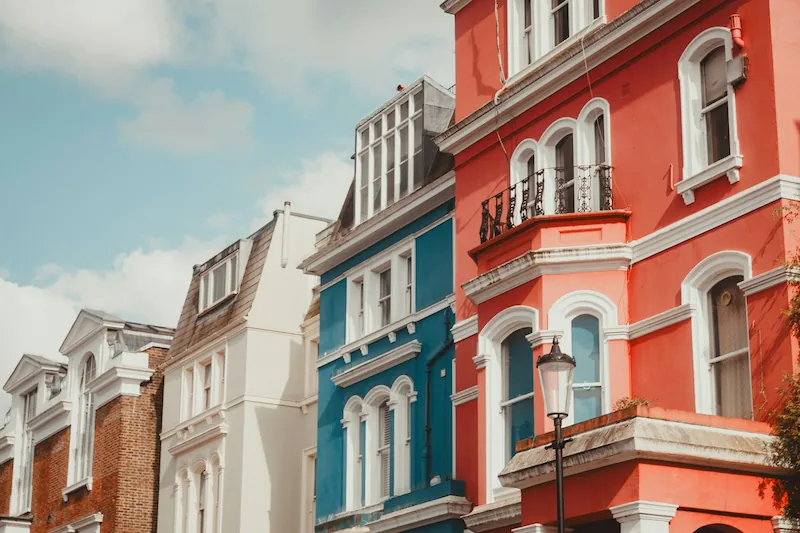
Notting Hill – Best for: residential charm, slower mornings, and west London atmosphere · Vibe: photogenic, village-like, residential, and softly upscale · Stay here if: you want a more local-feeling stay with cafes, good-looking streets, and easier breathing room · Avoid if: your trip is only 2 nights and you want the absolute most efficient sightseeing radius
How to choose the right London base
Choosing where to stay in London is mostly about reducing friction. The best area is not the same for every traveler: it depends on whether your trip is built around landmarks, theatre, museums, family comfort, quieter evenings, budget control or fast transport links.
Choose Covent Garden, Soho or the West End if this is your first trip and you want the easiest mix of restaurants, theatre, nightlife and central walking.
Choose Westminster if landmark efficiency matters more than neighbourhood atmosphere, especially for short stays focused on Big Ben, Parliament, the Abbey and royal London.
Choose South Bank or Southwark if you want river walks, cultural access, modern hotels and easy links between Westminster, the City and Bankside.
Choose Kensington or South Kensington for museums, parks, calmer streets and family-friendly stays with strong Tube access.
Choose Marylebone if you want a polished, quieter central base that still keeps the West End, Regent’s Park and major stations within reach.
Choose Notting Hill, Shoreditch or East London if atmosphere, food, markets or repeat-visitor texture matter more than maximum landmark efficiency.
Do not choose only by nightly rate: in London, a cheaper base can cost you time, transfers and evening energy if it sits far from the areas you will use most.
How London works geographically from a stay perspective
London is not a single center with neat concentric rings. It is a large, layered city with several activity clusters, and the quality of your stay depends on whether your hotel sits inside the cluster you will actually use most. The map matters, but so do the river crossings, station choice, and what part of the day you are likely to be moving.
The West End cluster is the most efficient for short stays because sightseeing, dining, theatre, and transit overlap tightly.
Westminster feels close to everything on a map, but its evenings are quieter and its energy is more formal.
South Bank and Southwark sit closer to central action than many travelers assume and often give better value without major sacrifice.
The City and Shoreditch are strong if food, nightlife, and contemporary London matter more than postcard proximity.
Marylebone is one of the best quiet-central districts if you want centrality without full West End pressure.
Kensington works best when calm, museums, and room comfort matter more than maximum density.
Notting Hill is best read as a residential west London base rather than a pure first-time sightseeing hub.
Hyper-central West End cluster – Covent Garden, Soho, Leicester Square, and nearby streets; best for short first trips, theatre, restaurants, and maximum walkability.
Ceremonial central cluster – Westminster and St James's; best for iconic landmarks, parks, and a more ordered first-time London stay.
Riverside cultural cluster – South Bank, Bankside, and Southwark; best for balanced centrality, river walks, and slightly better room value.
City and creative east cluster – The City, Liverpool Street, Shoreditch, and nearby areas; best for contemporary London, business access, food, and nightlife.
Residential museum cluster – Kensington, Chelsea, and nearby streets; best for families, calmer stays, museums, and polished residential atmosphere.
Quiet central-west cluster – Marylebone and nearby streets; best for calm centrality, polished dining, and a more composed version of central London.
Residential west London charm cluster – Notting Hill and nearby west-side streets; best for local atmosphere, slower mornings, and couples or repeat visitors.
The best areas to stay in London, in depth
These are the London areas that work best for most travelers once you factor in time loss, transport friction, evening usability, room quality, and the kind of trip you are actually taking. The goal is not to crown one universal winner, but to show which part of the city makes the rest of your stay easier.
Westminster
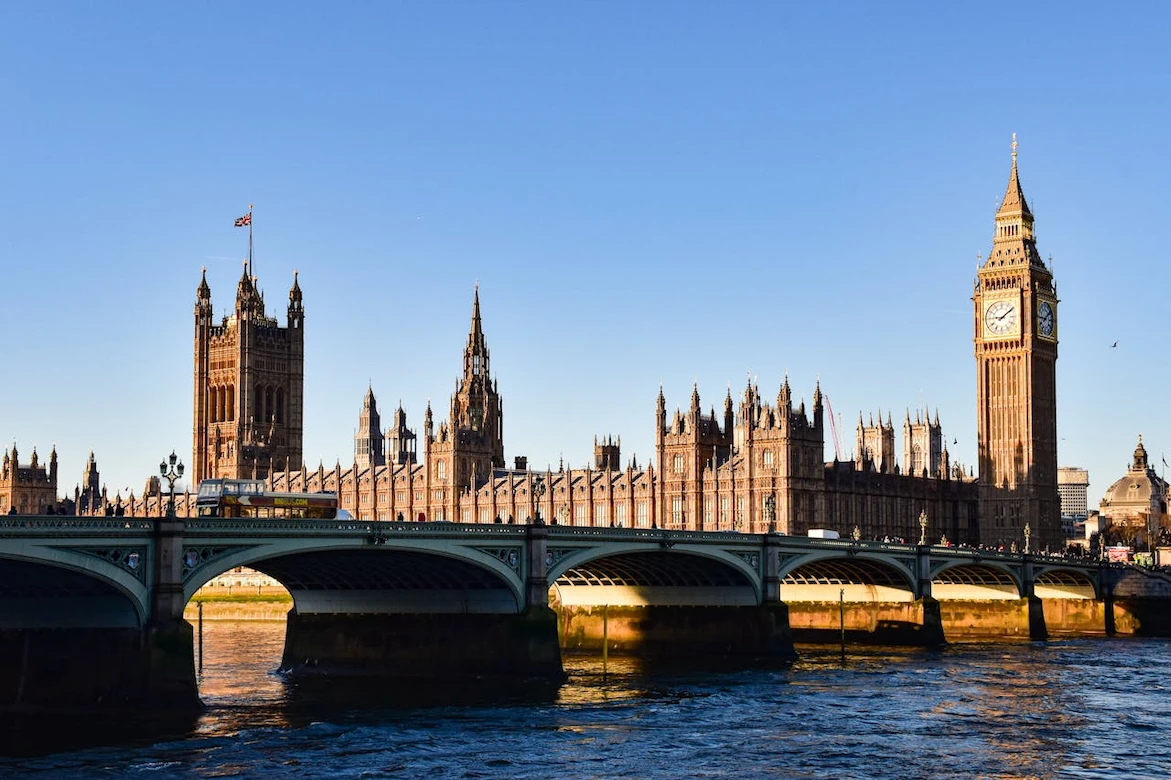
Westminster gives London a grand, ceremonial front door. Staying here means early walks past official buildings, royal landmarks, broad avenues, and parks that make the city feel stately rather than hectic. It is one of the easiest areas for classic first-time sightseeing, especially if your image of London is tied to Parliament, the Abbey, St James's, and Buckingham Palace. At night it often feels calmer than the West End, which some travelers find restorative and others find slightly flat. The decision should come down to whether this area's daily rhythm matches your trip: morning access, evening return, Tube convenience, room comfort, and the type of London you want immediately outside the hotel.
Why stay here: Choose Westminster if you want a landmark-first London stay with strong transport and less nighttime chaos than Soho. It works especially well for first-time visitors who value order, orientation, and easy access to the classic city image.
Best for: first-time visitors who want classic London without unnecessary friction
Pros
Excellent access to Buckingham Palace, Westminster Abbey, Big Ben, and St James's Park
Strong Tube and rail connections through Victoria, Westminster, and St James's Park
More composed and quieter at night than the West End
Good fit for short first visits built around major landmarks
Easy to pair sightseeing with park time and ceremonial London walks
Cons
Can feel formal rather than atmospheric after dark
Food and evening options are thinner than in Soho or Shoreditch
Hotels in the best pockets price up quickly
Nearby highlights
Easy morning access to Westminster Abbey before the day thickens with visitors
Walkable route through St James's Park toward Buckingham Palace
Simple connection to Trafalgar Square and the West End
Fast access to Victoria for airport rail links and onward day trips
Strong proximity to the Thames for classic central London walks
Convenient base for a landmark-heavy weekend without much backtracking
Budget
Point A Hotel London Westminster – Compact, efficient rooms close to the South Bank edge of Westminster. Best for travelers who care more about location than in-room space. Why we recommend: One of the strongest low-cost options this close to central sights and useful transport. Check availability
Best Western Buckingham Palace Rd – Simple, well-placed stay near Victoria for travelers prioritizing transport and practical access. More functional than characterful. Why we recommend: Useful if you want Westminster reach with Victoria convenience and a more manageable rate. Check availability
The Sanctuary House Hotel – Traditional small hotel above a pub, with a more personal feel than many chain options. Better for travelers who like staying in a recognizably British setting. Why we recommend: Its location is unusually strong for a smaller-format hotel in the Westminster core. Check availability
Mid
The Resident Victoria – Refined, quietly efficient hotel near Buckingham Palace with rooms that work well for a comfortable city base. Feels polished without tipping into old-school formality. Why we recommend: It delivers one of the smartest location-to-comfort ratios in this part of London. Check availability
The Clermont London, Victoria – Historic station hotel with direct practicality for rail arrivals, airport connections, and landmark-focused trips. Best for travelers who want everything to run smoothly. Why we recommend: Few Westminster hotels make logistics this easy while still feeling substantial. Check availability
St. Ermin's Hotel, Autograph Collection – Elegant, full-service stay tucked just off the main flow. Better suited to travelers who want Westminster convenience with a more finished hotel experience. Why we recommend: It feels calmer and more polished than many similarly located alternatives. Check availability
Upscale
Conrad London St James – High-end Westminster base with strong service and easy landmark access. Works well for travelers who want classic central London with full hotel comfort. Why we recommend: Its location is hard to improve if Parliament, St James's, and quick central movement matter most. Check availability
The Guardsman - Preferred Hotels and Resorts – Boutique-leaning luxury near Buckingham Palace with a more discreet feel than larger grand hotels. Best for travelers who want centrality without overt pomp. Why we recommend: It offers a more intimate upscale option in an area dominated by larger-format hotels. Check availability
The Trafalgar St James London Curio Collection by Hilton – Stylish, high-energy luxury on the Westminster-West End seam. Best for travelers who want ceremony by day and immediate central London action by night. Why we recommend: It gives you a sharper social location than many more formal Westminster addresses. Check availability
Covent Garden & Soho
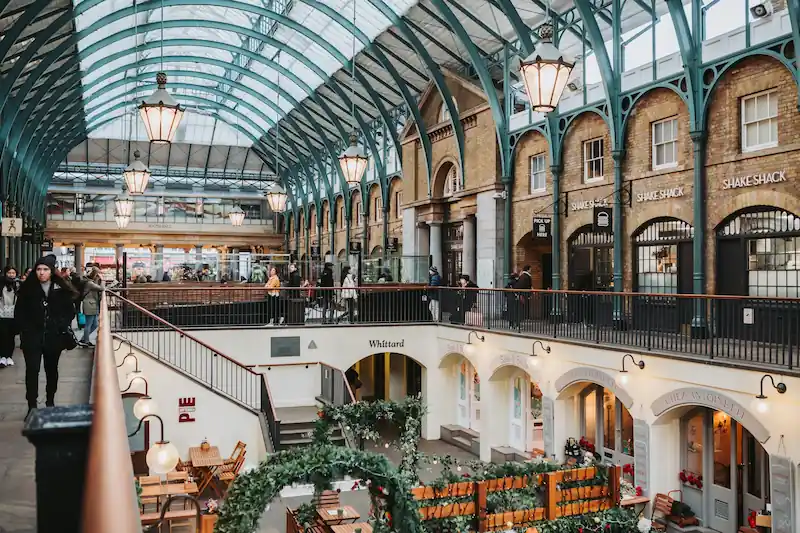
If you want London to feel immediate, dense, and usable on foot from breakfast through late evening, this is the strongest all-round short-stay base. Covent Garden and Soho put theatres, restaurants, bars, shopping, and major central sights into one compact radius, which is why they work so well for first-timers and weekend trips. You pay for that compression in higher rates, smaller rooms, and more noise, but the reduction in daily friction is real. This is the part of London where you can do the most without spending the trip in transit. The decision should come down to whether this area's daily rhythm matches your trip: morning access, evening return, Tube convenience, room comfort, and the type of London you want immediately outside the hotel.
Why stay here: Choose this area when your priority is to waste as little time as possible on a short stay. It is the clearest answer for travelers who want a highly walkable, evening-friendly, central London base.
Best for: a first London trip, a weekend, or anyone prioritizing walkability and evening life
Pros
Best overall walkability for a 2- to 3-day London trip
Excellent for theatre, dining, bars, and spontaneous evenings
Easy reach to Trafalgar Square, the British Museum, and the Strand
Strong central Tube coverage if you do need transport
Keeps mornings, afternoons, and evenings in one practical orbit
Cons
Noise can be a real issue, especially on weekends
Rooms are often smaller and pricier than elsewhere
The area can feel relentlessly busy if you want calm
Nearby highlights
Easy theatre nights without a late transport calculation
Dense restaurant choice that keeps dinner decisions simple
Fast walks to Trafalgar Square, Leicester Square, and the Strand
Short access to Seven Dials, shopping streets, and café-heavy pockets
Convenient positioning for museum time, theatre, and West End dining in the same day
Strong late-evening usability compared with quieter central districts
Budget
Assembly Leicester Square – Ultra-central and compact, designed for travelers who plan to use the room mainly as a base. Best for location-first city breaks. Why we recommend: It puts you in one of the most efficient sightseeing positions in London without full West End luxury pricing. Check availability
The Z Hotel Covent Garden – Small rooms but a very strong West End position. Works for short stays where being central matters more than spending time in the hotel. Why we recommend: A reliable way to buy into Covent Garden location without paying for unnecessary space. Check availability
Strand Palace – Large, dependable central hotel with practical room stock and broad appeal. A good fit for first-timers wanting a known quantity. Why we recommend: It combines an excellent location with easier booking logic than many smaller West End properties. Check availability
Mid
Hotel AMANO Covent Garden – Contemporary stay close to the action with a sharper design sensibility than many standard mid-range options. Best for travelers who want a modern base in the West End core. Why we recommend: It feels more intentional and better positioned than many similarly priced central hotels. Check availability
Radisson Blu Hotel, London Mercer Street – Well-placed Seven Dials stay that keeps Covent Garden highly usable while feeling slightly less exposed than Leicester Square addresses. Why we recommend: The location is central without dropping you into the noisiest part of the West End. Check availability
The Resident Soho – Quietly efficient Soho hotel with room setups that work well for travelers who value comfort and practical in-room amenities. A strong fit for adult city breaks. Why we recommend: It offers a calmer stay experience than many hotels in equally central positions. Check availability
Upscale
St Martins Lane London – Design-led West End hotel with real style and a location that supports theatre, dining, and fast central movement. Best for travelers who want their stay to feel distinctly urban. Why we recommend: It has stronger design identity than many upscale hotels in this zone. Check availability
Middle Eight - Covent Garden - Preferred Hotels and Resorts – Polished contemporary hotel on the Covent Garden-Holborn edge with strong room quality and a more composed feel. Good for travelers who want centrality without full Soho intensity. Why we recommend: It balances access and comfort especially well for a premium short stay. Check availability
NoMad London – Distinctive luxury near the Royal Opera House with a stronger sense of place than standard high-end chains. Better for travelers who want a memorable hotel as part of the trip. Why we recommend: It is one of the most characterful upscale options in the Covent Garden orbit. Check availability
South Bank & Southwark
South Bank and Southwark are among London's smartest stay choices if you want central access without paying West End premiums for every square meter and every hour of sleep. The river gives this part of the city an open, legible feel, while the transport and walking connections are better than many first-time visitors assume. You get culture, useful food scenes, major sights, and easier room value, often with slightly more physical breathing room. It is less theatrical than Covent Garden, but often easier to live with for several nights. The decision should come down to whether this area's daily rhythm matches your trip: morning access, evening return, Tube convenience, room comfort, and the type of London you want immediately outside the hotel.
Why stay here: Choose South Bank or Southwark if you want a balanced London base that stays central, connected, and more forgiving on value. It works especially well for couples, return visitors, and families who do not need to sleep inside the West End crush.
Best for: travelers who want central London to feel smoother, calmer, and a bit better value
Pros
Strong balance of centrality, scenery, and relative value
Good Tube, rail, and walking links across both sides of the river
Useful access to Tate Modern, Borough Market, the South Bank, and Waterloo
Often better room quality for the money than the West End
Works well for both short stays and slightly longer trips
Cons
Some pockets feel more functional than atmospheric
Evening energy is uneven depending on the exact street
You are not as immediately plugged into Soho or theatreland
Nearby highlights
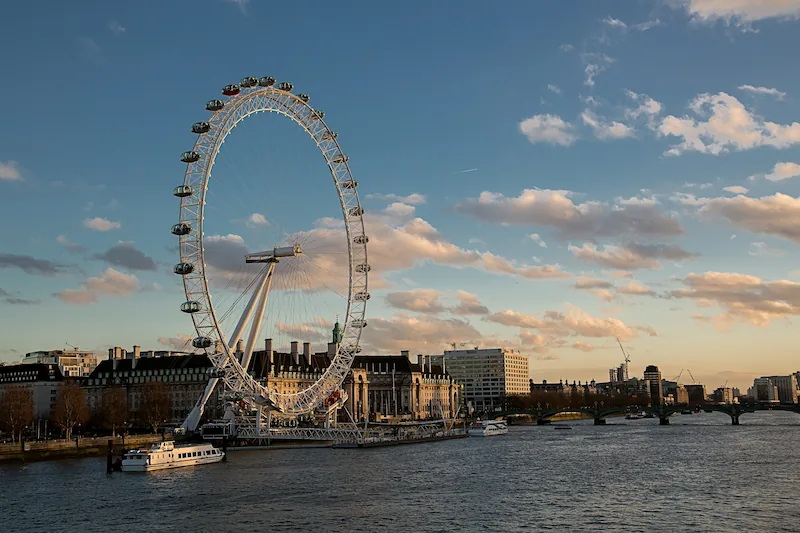
Walkable riverfront routes for London Eye, Southbank Centre, and Tate Modern
Easy Borough Market access for flexible lunches and casual evenings
Quick movement through Waterloo and London Bridge for wider city coverage
Simple crossings into Westminster and Covent Garden
Good positioning for culture-heavy itineraries without constant Tube dependence
Better chance of finding larger rooms or more practical layouts
Budget
ibis London Blackfriars – Straightforward modern hotel near Southwark and Blackfriars, ideal for travelers who want efficient central access. More practical than atmospheric. Why we recommend: Its location does a lot of work for the price point. Check availability
ibis Styles London Southwark - near Borough Market – Lively, well-located budget-leaning option near Borough Market and the river. Good for travelers who want Southwark convenience without overspending. Why we recommend: Few lower-priced stays here combine this much location value with this little friction. Check availability
citizenM London Bankside – Compact but polished rooms in a prime Bankside position. Best for design-conscious travelers comfortable with smaller room formats. Why we recommend: It gives you a notably stronger experience than many similarly sized central rooms. Check availability
Mid
London Bridge Hotel – Reliable, comfortable base right by London Bridge Station with strong transport and practical reach. A smart option for travelers who want smooth logistics. Why we recommend: It is one of the most dependable mid-range stays for this part of central London. Check availability
Park Plaza County Hall London – Modern full-service option on the South Bank side of Westminster Bridge. Particularly useful for families and travelers who want a familiar hotel format. Why we recommend: Its room logic and location make it unusually versatile for mixed itineraries. Check availability
Novotel London Blackfriars – Practical contemporary hotel with useful facilities and strong transport access. Better suited to travelers who want convenience over boutique character. Why we recommend: It works especially well when room functionality matters more than atmosphere. Check availability
Upscale
Sea Containers London – Stylish riverside hotel with a stronger social feel than many South Bank options. Good for travelers who want the hotel to contribute to the evening as well as the day. Why we recommend: It brings more character and energy than most upscale stays on this stretch of the river. Check availability
Bankside Hotel, Autograph Collection – Design-forward premium stay that fits the cultural tone of Bankside. Best for travelers who want a polished hotel without traditional luxury stiffness. Why we recommend: It feels more considered and more local to the area than generic upscale alternatives. Check availability
Shangri-La The Shard, London – High-rise luxury with dramatic views and a very different London mood from street-level stays. Best for travelers who want the hotel itself to be part of the experience. Why we recommend: Few London hotels feel this visually distinctive once you are in the room. Check availability
The City & Shoreditch
This part of London works best when you want the city to feel sharper, younger, and more contemporary than the classic first-timer circuit. The City brings weekday business convenience and fast links, while Shoreditch adds restaurants, bars, creative energy, and a more informal social rhythm. You are not sleeping inside the postcard version of London, but you often get better value, more interesting food, and stronger nightlife. It is a very good base if you already know you do not need to spend every day around Westminster and Covent Garden. The decision should come down to whether this area's daily rhythm matches your trip: morning access, evening return, Tube convenience, room comfort, and the type of London you want immediately outside the hotel.
Why stay here: Choose The City and Shoreditch if you want a more modern London stay with good food, nightlife, and smart connectivity. It is especially strong for return visitors, couples, and travelers who care more about urban energy than ceremonial London imagery.
Best for: return visitors, food-led stays, nightlife, and a more contemporary London
Pros
Strong food, bar, and nightlife scene, especially in Shoreditch
Good weekday value and excellent transport around Liverpool Street
Easy access to East London, markets, and contemporary cultural spots
A stronger sense of local urban life than the West End
Useful fit for shorter business-leisure hybrid trips
Cons
Not the most efficient base for landmark-first sightseeing
Some streets can feel too quiet on weekends in the pure City core
The atmosphere is less classic if that is what you came for
Nearby highlights
Quick access to Shoreditch dining, bars, and late-night options
Strong links through Liverpool Street for the rest of London
Easy movement to Brick Lane, Spitalfields, and east-side creative districts
Short reach to St Paul's and the Tower corridor from City-side hotels
Useful for travelers mixing work, social plans, and city exploration
Often better value than West End addresses with similar design ambition
Budget
ibis London City - Shoreditch – Practical, dependable choice by Aldgate East with strong reach into both The City and Shoreditch. Best for travelers prioritizing location efficiency. Why we recommend: It is one of the easiest lower-cost entries into this part of central London. Check availability
Point A Hotel London Shoreditch – Compact rooms and a location that keeps Shoreditch highly usable on foot. Better for short stays than for anyone wanting roomier downtime. Why we recommend: It gives you strong East London positioning without unnecessary extras. Check availability
Hampton By Hilton London Old Street – Modern, comfortable base for travelers who want a slightly easier, more standardized stay format. A good fit for business-leisure overlap. Why we recommend: It offers more room comfort than many similarly priced East London options. Check availability
Mid
citizenM London Shoreditch – Compact, design-forward hotel in the thick of Shoreditch. Best for travelers who value mood, efficiency, and shared spaces over larger rooms. Why we recommend: It feels far more intentional than a typical mid-range chain stay. Check availability
Maldron Hotel Shoreditch London – Fresh contemporary option with a practical location for East London movement. Good for travelers wanting a newer hotel without going luxury. Why we recommend: It is one of the cleaner modern mid-range picks in the Shoreditch orbit. Check availability
Town Hall Hotel - Shoreditch – Character-rich stay in a landmark building with more space and individuality than many East London hotels. Better for travelers who want the neighborhood reflected in the hotel. Why we recommend: It has a stronger sense of place than most hotels in this category. Check availability
Upscale
One Hundred Shoreditch – Stylish upscale base in the heart of Shoreditch with a social, urban feel. Best for travelers who want East London energy right outside the door. Why we recommend: It captures the neighborhood's mood better than more generic premium options. Check availability
Pan Pacific London – High-end City hotel near Liverpool Street with excellent transport and a calm, refined interior mood. Good for travelers who want luxury without West End bustle. Why we recommend: It is one of the strongest luxury choices for a connected but composed London stay. Check availability
The Hoxton, Southwark – Design-led hotel bridging central London access and a more contemporary social feel. Works for travelers who want style and city energy without full West End intensity. Why we recommend: It is a sharper lifestyle-hotel alternative to standard premium chains. Check availability
Kensington & Chelsea
Kensington and Chelsea offer a quieter, more polished kind of London base. The streets feel more residential, the pace is less compressed, and the overall stay tends to suit travelers who want museums, shopping, and an elegant atmosphere without sleeping in the busiest central core. This is often one of the safest choices for families, longer weekends, and travelers who care about room comfort and neighborhood calm. The trade-off is simple: you gain serenity and sometimes better room value, but you give up some of the instant walk-to-everything intensity of Covent Garden or Soho. The decision should come down to whether this area's daily rhythm matches your trip: morning access, evening return, Tube convenience, room comfort, and the type of London you want immediately outside the hotel.
Why stay here: Choose Kensington and Chelsea if you want London to feel calmer, more residential, and easier to live in for several nights. It is one of the best answers for families, museum-focused stays, and travelers who do not want their hotel zone to feel relentlessly busy.
Best for: families, museum-led trips, longer weekends, and a calmer upscale stay
Pros
Calmer streets and more polished residential atmosphere
Excellent fit for museums, families, and longer stays
Good Tube access across South Kensington, Gloucester Road, Earl's Court, and Sloane Square
Often stronger room comfort than tighter West End stock
Easy access to Hyde Park, Knightsbridge, and the museum quarter
Cons
Less immediate for theatre and late-night central energy
Some parts can feel too quiet if you want spontaneous evenings
The district is broad, so exact station proximity matters
Nearby highlights
Easy access to the V&A, Natural History Museum, and Science Museum
Useful proximity to Hyde Park for slower starts and family time
Strong shopping links to Kensington High Street and Knightsbridge
Better chance of finding calmer nights after long sightseeing days
Good base for museum-heavy itineraries without constant cross-city travel
Useful fit for travelers who want London to feel elegant rather than intense
Budget
easyHotel South Kensington – Very compact but well-placed option for travelers who want the district more than the room. Best for price-sensitive stays in a high-value area. Why we recommend: It is one of the clearest low-cost ways to access South Kensington. Check availability
Holiday Inn London Kensington High St. by IHG – Large practical hotel near Kensington High Street with useful facilities and a familiar format. Good for travelers who want predictability. Why we recommend: It works well when location and hotel functionality matter more than boutique character. Check availability
Sloane Place – Smart, compact stay near Chelsea with a more polished feel than a standard budget pick. Best for travelers wanting style without full luxury pricing. Why we recommend: Its Chelsea address and calmer surroundings make it feel more upscale than its rate often suggests. Check availability
Mid
The Resident Kensington – Comfortable, quietly efficient hotel near Earl's Court with room layouts that suit several-night stays. Good for travelers who want practical comfort over showiness. Why we recommend: It consistently gets the stay fundamentals right in a useful part of the district. Check availability
The Bailey's Hotel London Kensington – Classic hotel in a handsome historic building with strong South Kensington convenience. Best for travelers who want a more traditional London hotel feel. Why we recommend: It delivers a more characterful stay than many similarly placed chain-style options. Check availability
The Hari London – Refined boutique-leaning hotel on the Chelsea-Belgravia side of the district. Better for travelers wanting upscale intimacy rather than grand-hotel formality. Why we recommend: It is a strong premium pick when you want polish without a conventional luxury mood. Check availability
Upscale
The Ampersand Hotel - Small Luxury Hotels of the World – Design-conscious South Kensington hotel with a lively but controlled personality. Excellent for couples and museum-first city breaks. Why we recommend: It has more character than most upscale hotels in this part of London. Check availability
Number Sixteen, Firmdale Hotels – Quiet, polished boutique hotel on a beautiful South Kensington street. Best for travelers who want discretion, comfort, and a residential feel. Why we recommend: It is one of the strongest boutique stays for travelers who value atmosphere without noise. Check availability
The Kensington Hotel – Classic upscale South Kensington hotel with strong museum access and a more traditional townhouse-hotel feel. Why we recommend: It is a better fit for travelers who want Kensington polish, museum proximity, and a fully premium stay without West End intensity. Check availability
Marylebone
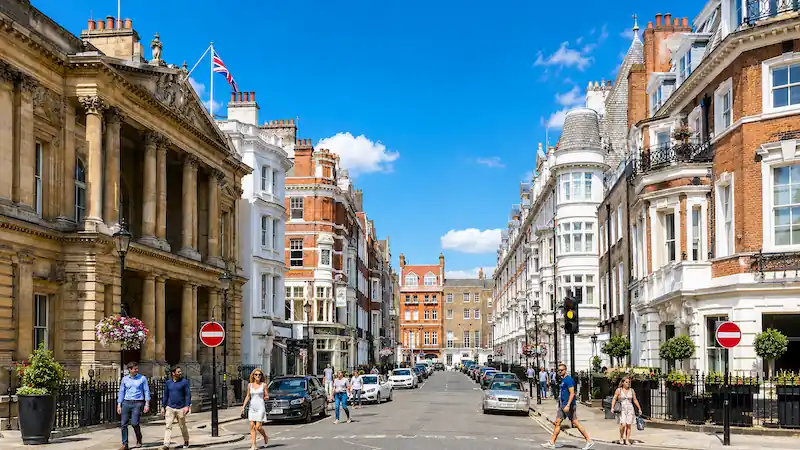
Marylebone is one of London's smartest quiet-central stays. It sits close enough to the West End, Regent's Park, Oxford Street, and several major transport lines to feel highly practical, but it avoids much of the noise, crowd pressure, and hotel churn that define busier central districts. The area feels polished, residential, and lived-in rather than theatrical. For many travelers, especially couples and return visitors, it hits a particularly strong balance between elegance, calm, and real usability. The decision should come down to whether this area's daily rhythm matches your trip: morning access, evening return, Tube convenience, room comfort, and the type of London you want immediately outside the hotel.
Why stay here: Choose Marylebone if you want a central London base that feels refined, calmer than Soho, and easier to live with for several nights. It is especially strong for travelers who want restaurants, boutiques, and central access without committing to full West End intensity.
Best for: couples, repeat visitors, and travelers seeking quiet central London with polish
Pros
Quiet-central positioning with strong practical access to the West End and Regent's Park
More polished and residential-feeling than many equally central districts
Good restaurant, cafe, and boutique density without overwhelming nightlife pressure
Better sleep and calmer evenings than Soho or Covent Garden
Strong fit for couples, return visitors, and comfort-led stays
Cons
Less immediate for theatre and nightlife than Covent Garden or Soho
Premium hotels can be expensive for the amount of visible 'action' outside
The calm can feel too restrained if you want a more energetic London trip
Nearby highlights
Easy access to Marylebone High Street and its cafe-boutique rhythm
Short reach to Regent's Park for calmer starts or resets during the day
Good positioning for Oxford Street, Fitzrovia, and the West End without sleeping inside them
Useful fit for museum and shopping combinations in central-west London
Stronger residential atmosphere than busier central districts
A good compromise between centrality and sleep quality
Budget
The Z Hotel Gloucester Place – Compact, central, and practical for travelers buying into Marylebone access rather than room size. Best for short stays. Why we recommend: A relatively efficient way into one of central London's most useful districts. Check availability
Americana Hotel – Simple, functional stay with useful Marylebone positioning. Better for practicality than design or atmosphere. Why we recommend: It gives you a hard-to-beat location logic for the price in this part of town. Check availability
Astor Court Hotel – Straightforward period-building hotel near Regent Street and Marylebone, useful for travelers who want central access without paying boutique rates. Why we recommend: It keeps Marylebone, Oxford Circus, Regent’s Park, and the West End practical while staying closer to budget-conscious pricing. Check availability
Mid
The Resident Marylebone – Quietly efficient hotel with strong room practicality and one of the smartest central locations in London. Why we recommend: It fits the neighborhood perfectly: understated, highly functional, and well judged. Check availability
Holmes Hotel London – Characterful Marylebone hotel with more personality than a standard business-style stay. Best for travelers wanting central comfort with some style. Why we recommend: It blends neighborhood fit, polish, and comfort especially well. Check availability
The Prince Akatoki London – Calm, design-conscious hotel with a restrained luxury feel. Best for travelers who value quiet sophistication. Why we recommend: It offers a more composed, design-led version of Marylebone staying. Check availability
Upscale
The Marylebone Hotel – One of the district's most reliable upscale bases, with strong room comfort and a very useful location. Why we recommend: It is one of the clearest all-rounders for a premium stay in Marylebone. Check availability
Nobu Hotel London Portman Square – Polished luxury with a stronger lifestyle-hotel feel than many classic central options. Why we recommend: A good fit if you want Marylebone calm with a more social premium edge. Check availability
Home House - Private Member's Club – Distinctive, high-character stay for travelers wanting something more intimate and memorable than a standard luxury hotel. Why we recommend: It delivers one of the strongest sense-of-place stays in the Marylebone orbit. Check availability
Notting Hill
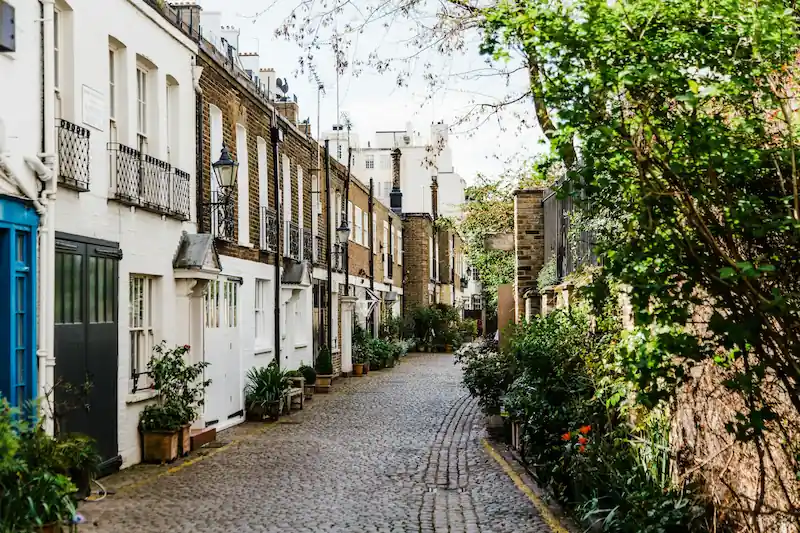
Notting Hill offers one of the most attractive residential stays in west London, especially for travelers who want a more local-feeling base with visual charm, cafes, and easier breathing room than the busiest central districts. The area works best when you want the trip to include neighborhood rhythm, slower mornings, and a softer urban register rather than full sightseeing compression. It is less efficient than Covent Garden or Westminster for a very short first-time trip, but it can be a much better fit for couples, repeat visitors, and anyone wanting London to feel lived-in rather than relentlessly programmed. The decision should come down to whether this area's daily rhythm matches your trip: morning access, evening return, Tube convenience, room comfort, and the type of London you want immediately outside the hotel.
Why stay here: Choose Notting Hill if atmosphere, residential charm, and a slower west London base matter more to you than shaving every minute off landmark access. It is especially good for couples, longer weekends, and return visitors.
Best for: couples, repeat visitors, and travelers wanting residential west London character
Pros
Strong neighborhood atmosphere with attractive residential streets and local cafes
More spacious and calmer-feeling than the densest central zones
Good fit for slower mornings, neighborhood walks, and a more lived-in version of London
Useful west London position with decent transport depending on exact station
Stronger charm factor than many more practical but less memorable bases
Cons
Less efficient than the West End for short landmark-first trips
Portobello and surrounding streets can get very busy at certain times
The district name covers pockets with meaningfully different convenience levels
Nearby highlights
Portobello Road and surrounding side streets for neighborhood texture
Useful access toward Kensington Gardens and west-side museum districts
Good cafe and brunch rhythm for slower starts
Residential walks that feel distinct from the classic central-London script
A more photogenic and domestic version of west London staying
Useful for travelers who want charm without full Chelsea formality
Budget
The Abbey Court Notting Hill – Simple, well-placed stay that works best for travelers prioritizing location and neighborhood feel over larger rooms. Why we recommend: A practical entry point into Notting Hill without jumping straight to boutique pricing. Check availability
Blue Bells Hotel – Traditional-style budget option in a residential setting. More about location and atmosphere than polish. Why we recommend: Useful for staying inside the neighborhood rather than just near it. Check availability
Garden Court Hotel – Straightforward period-building stay with decent west London positioning for travelers keeping expectations realistic. Why we recommend: A solid budget-conscious choice for the Notting Hill/Bayswater edge. Check availability
Mid
Princes Square Hotel – Clean, practical Bayswater and Notting Hill edge option with easier access to the west London neighborhood rhythm than many cheaper central alternatives. Why we recommend: It protects the west London location logic while keeping the price point more realistic than the area’s boutique hotels. Check availability
Ruby Zoe Hotel London – Stylish, newer-feeling stay on the Notting Hill side of west central London. Good for travelers wanting modern energy without full Soho density. Why we recommend: A useful option when you want some design edge without losing neighborhood access. Check availability
55 by Le Mirage – Sharper boutique-leaning option for travelers who want a more polished stay in the Notting Hill orbit. Why we recommend: It gives a more considered experience than many similarly located west London hotels. Check availability
Upscale
The Portobello Hotel – High-character boutique stay that leans into neighborhood mood rather than standardized luxury. Why we recommend: A particularly good fit if charm and story matter as much as comfort. Check availability
The Laslett – Still one of the strongest premium-feeling choices if you want Notting Hill to feel stylish, local, and composed. Why we recommend: Its neighborhood fit remains one of the best in the area. Check availability
Milestone Hotel Kensington – A more classic luxury option nearby for travelers wanting west London elegance with stronger traditional service. Why we recommend: A good crossover choice if you want Notting Hill atmosphere but more formal high-end hotel standards. Check availability
Where to stay in London for first time
For a first London trip, the right area is the one that keeps the city legible. That usually means prioritizing walkability and easy transport over squeezing out a slightly cheaper nightly rate.
Choose Covent Garden & Soho if your trip is short and you want the strongest all-day walkability.
Choose Westminster if your priorities are iconic landmarks, ceremonial London, and a calmer base at night.
Choose South Bank & Southwark if you want a central stay with slightly better room value and good transport.
Choose Marylebone if you want centrality with more calm and slightly less West End intensity.
Avoid staying too far west on a first 2-night trip unless neighborhood atmosphere matters more than pure efficiency.
If theatre, dining, and evening spontaneity matter, Covent Garden beats Westminster.
Option
Best if
Trade Off
Covent Garden & Soho
you want maximum walkability
more noise and higher prices
Westminster
you want classic landmarks nearby
less evening energy
South Bank & Southwark
you want balance and better value
slightly less immediate West End access
Marylebone
you want calm centrality
less nightlife on the doorstep
Where to stay in London with family
Family stays in London work best when the area is calm, well connected, and forgiving after a long day. The best district is rarely the one with the loudest central buzz.
Kensington & Chelsea are the safest default for families who want calmer streets, museums, and better room logic.
South Bank & Southwark work well for families who want central access without sleeping in the busiest West End streets.
Westminster is useful for landmark-first itineraries if you prefer parks and order over nightlife.
Marylebone works well for families wanting a composed central base with easier pacing.
Covent Garden & Soho can work with older kids, but room size and evening noise are real drawbacks.
Prioritize station proximity, lift access, and room configuration over district prestige alone.
Area
Why it works
Watch for
Kensington & Chelsea
calmer streets and museums
less nightlife and less instant West End access
South Bank & Southwark
balanced centrality and room value
street feel varies a lot by exact location
Marylebone
quiet central comfort
fewer big family-hotel formats
Where to stay in London for nightlife
If nightlife matters, stay where London remains usable after dinner. That usually means accepting more noise in exchange for shorter nights and easier spontaneity.
Covent Garden & Soho are the best all-round choice for bars, restaurants, theatre spillover, and late central energy.
The City & Shoreditch are better if your nightlife leans more toward cocktail bars, music, and a younger East London crowd.
South Bank works if you want evening life nearby without committing to full nightlife intensity.
Marylebone and Notting Hill are weaker nightlife bases unless your evenings are more dinner-led than bar-led.
Book the quieter street, not just the right district, if sleep quality matters.
If you want late returns on foot, Soho and Shoreditch outperform most other London areas.
Area
Best for
Watch for
Covent Garden & Soho
classic central London nights
weekend noise
The City & Shoreditch
bars and East London energy
less landmark convenience
South Bank & Southwark
lighter evening scene with balance
not every block stays lively late
Where to stay in London on a budget
Budget in London is always relative. The smarter move is usually to protect location quality while accepting a smaller room, rather than going far out and paying in time. London accommodation value is not only about nightly rate. A cheaper hotel can become expensive if it creates daily transfers, late-night taxis, or a weaker trip rhythm.
For a short trip, a compact room in a central area is often better value than a larger room far from your daily route.
South Bank & Southwark offer some of the best balance between price, access, and room practicality.
The City & Shoreditch can produce better weekday value, especially if you do not need to be next to the landmarks.
Kensington budget stays can work well if they are close to the right Tube stop.
Notting Hill budget choices can work if atmosphere matters and you accept slightly less sightseeing efficiency.
Do not confuse a famous postcode with a useful hotel location inside that postcode.
For 2 to 3 nights, location usually matters more than room size.
For 4 nights or more, room comfort, storage, quiet, and neighborhood rhythm become more important.
A compact central room can be a smart budget choice if the location replaces several transport decisions.
A larger room farther out only works if transport is direct, frequent, and aligned with your itinerary.
Family travelers should compare total room configuration cost, not just the headline nightly rate.
West End premiums are worth paying only when you will use the area in the evening.
South Bank, Southwark, The City, Shoreditch, and selected west London edges often create the strongest value compromises.
Area
Budget logic
Best for
South Bank & Southwark
central with better value
balanced city breaks
The City & Shoreditch
good weekday deals and food scene
modern London stays
Notting Hill
pay for atmosphere, accept some distance
slower west London stays
Where to stay in London by travel style and trip length
The shorter the trip, the more central and frictionless your base should be. Longer stays can justify calmer, greener or more local neighbourhoods because you have more time to absorb transport trade-offs.
Label
Stay
Avoid
Why
First trip, 2 to 3 nights
Covent Garden, Soho, Westminster or South Bank
Farther neighbourhoods unless price is the overriding constraint.
Short stays need maximum walkability, easy evenings and fast access to the main sightseeing clusters.
First trip, 4 to 5 nights
Covent Garden, South Bank, Kensington, Marylebone or Westminster
Choosing purely for one attraction if the rest of the trip sits elsewhere.
You have enough time for museums, markets, parks and theatre, so the base should balance centrality with comfort.
Families
South Kensington, Kensington, South Bank or Marylebone
Noisy nightlife-heavy blocks or poorly connected budget areas.
Museums, parks, larger rooms, easy Tube links and simple dinner logistics matter more than being at the absolute centre.
Theatre and nightlife
Covent Garden, Soho, Leicester Square, Fitzrovia or Marylebone
Bases that require long late-night returns after dinner or shows.
London evenings work best when restaurants, bars, theatres and the hotel sit within a simple walking or short Tube radius.
Museums and calmer comfort
South Kensington, Kensington, Bloomsbury or Marylebone
Overpaying for West End energy if your days are mostly museum- and park-led.
These areas give strong cultural access with a softer rhythm than the busiest central districts.
Budget-conscious trip
King’s Cross, Paddington, Earl’s Court, Southwark, Bloomsbury or well-connected Zone 2 areas
Cheap hotels with weak Tube links or awkward airport transfers.
The best value is usually a practical transport base, not simply the lowest nightly rate.
Repeat visit or slower stay
Notting Hill, Marylebone, Shoreditch, Hampstead, Greenwich or Richmond
Rebuilding the whole trip around the same first-time landmark circuit.
A longer or repeat stay can trade some central efficiency for food, parks, local texture and a more lived-in version of London.
How to choose the right London hotel once the area is selected
After choosing the area, the exact hotel still matters. In London, two hotels a few streets apart can feel very different because Tube access, noise, room size, station geography and evening routes all affect the stay.
Topic
WhatToDo
WhatToAvoid
WhyItMatters
Tube and rail access
Check the exact station, line and walking time, not just the neighbourhood name.
Assuming every central hotel is equally convenient.
London is easy when your most-used line matches your itinerary, and tiring when every day starts with awkward transfers.
Street-level atmosphere
Look at whether the hotel sits on a nightlife street, office block, quiet square, tourist corridor or residential side street.
Booking a famous area without checking the immediate street.
Covent Garden, Soho, South Bank, Kensington and Shoreditch can all feel very different from one block to the next.
Room size and practical comfort
Prioritize room size, lift access, air conditioning, family rooms or breakfast when the trip is longer or family-led.
Choosing the smallest central room for a stay with children, luggage or long days outside.
London hotel rooms can be compact, and practical comfort often matters more than decorative style.
Evening return
Check how easy it is to get back after theatre, dinner, pubs or late museum openings.
Saving money in a location that makes every night finish with a long or awkward return.
Evening convenience is one of the biggest differences between a smooth London stay and a tiring one.
Airport and station logic
Use Heathrow, Gatwick, Stansted, Luton, City Airport, St Pancras, Paddington, Victoria or King’s Cross connections to shape the first and last night when useful.
Ignoring arrival and departure geography until the final transfer.
A smart base can make the first and last half-day easier without compromising the whole trip.
Price versus wasted time
Compare total trip value: nightly rate, transport time, evening ease, breakfast, family needs and attraction access.
Choosing the cheapest room if it creates daily friction.
In London, the best-value hotel is often the one that protects time and energy, not the one with the lowest headline price.
FAQ: where to stay in London
These are the accommodation questions travelers most often need answered before choosing a London neighborhood, comparing hotel areas, or deciding whether central convenience is worth the premium.
What is the best area to stay in London for first-time visitors?
For most first-time visitors, Covent Garden & Soho are the strongest all-round choice because they keep sightseeing, restaurants, theatre, shopping, and evening energy in one compact area. Westminster is better if your trip is mainly about landmarks and a calmer ceremonial feel. South Bank & Southwark and Marylebone are strong alternatives if you want central access with more balance and less intensity.
Where should I stay in London for a 2-night trip?
For only 2 nights, stay as central and walkable as possible. Covent Garden & Soho are usually best, followed by Westminster, South Bank & Southwark, or Marylebone. On a short stay, saving money by staying farther out often costs too much in travel time and weakens the trip.
Where should I stay in London for 3 days?
For 3 days in London, choose Covent Garden & Soho for maximum walkability, Westminster for landmarks, South Bank & Southwark for balance and value, or Marylebone for calmer centrality. These areas let you combine one landmark cluster, one museum, one evening district, and river or neighborhood time without constant backtracking.
Where should I stay in London for 4 or 5 days?
For 4 to 5 days, you can widen the choice beyond the most compressed central core. South Bank & Southwark, Kensington & Chelsea, Marylebone, Notting Hill, and The City & Shoreditch become more attractive because comfort, room quality, restaurants, parks, and neighborhood rhythm matter more over several nights.
What is the best area to stay in London with family?
Kensington & Chelsea are the safest default for families because they combine calmer streets, major museums, Hyde Park access, and more practical hotel stock. South Bank & Southwark, Marylebone, and Westminster can also work very well depending on your itinerary, room needs, and tolerance for central crowds.
Where should couples stay in London?
Marylebone is one of the best areas for couples who want quiet central polish, good restaurants, and easy access. Covent Garden & Soho are better for theatre, bars, and short romantic weekends. Notting Hill suits couples who want charm and slower mornings, while South Bank & Southwark work well for river walks and culture.
What is the best area to stay in London for nightlife?
Soho is the classic central nightlife base, especially if you want bars, restaurants, theatre spillover, and late-night energy within walking distance. Shoreditch is better for a more contemporary East London scene with bars, restaurants, and a younger urban feel. Covent Garden is excellent if nightlife is paired with theatre and dining.
Where should I stay in London for theatre?
Stay in Covent Garden, Soho, Leicester Square-adjacent streets, or Marylebone if theatre is central to the trip. These areas reduce the stress of pre-show dinner, curtain time, and late returns. Westminster and South Bank can also work, but they are less immediately embedded in the West End theatre rhythm.
Is Covent Garden a good place to stay in London?
Yes. Covent Garden is one of the best areas to stay in London for first-time visitors, short breaks, theatre, dining, and walkability. The trade-offs are higher prices, smaller rooms, heavy foot traffic, and potential noise, so exact street choice matters.
Is Soho a good place to stay in London?
Soho is excellent if you want restaurants, bars, nightlife, theatre proximity, and central energy. It is less ideal if you are sensitive to noise, traveling with young children, or want a calm hotel environment. A quieter side street or well-insulated hotel is important.
Is Westminster a good area to stay in London?
Westminster is very good for landmark-focused first visits. You are close to Westminster Abbey, Parliament, Buckingham Palace, St James's Park, and the Thames. It feels more formal and calmer at night than Soho or Covent Garden, so it suits travelers who prioritize order and classic sights over nightlife.
Is South Bank a good place to stay in London?
South Bank is one of the smartest London bases for travelers who want central access, river walks, culture, and slightly more breathing room than the West End. It is especially useful for the London Eye, Tate Modern, Southbank Centre, Waterloo, and walks across the river to Westminster or Covent Garden.
Is Southwark a good place to stay in London?
Yes, especially around Bankside, Borough, London Bridge, and Southwark. Southwark can offer better value than the West End while keeping central London highly usable. It is strong for Borough Market, Tate Modern, river walks, and transport, though street atmosphere varies by exact location.
Is Shoreditch a good area to stay in London?
Shoreditch is a strong choice for return visitors, nightlife, restaurants, bars, design hotels, and a more contemporary London feel. It is not the best base if your priority is classic first-time sightseeing around Westminster, Buckingham Palace, and the West End.
Is The City a good area to stay in London?
The City can be very practical, especially near Liverpool Street, Bank, Moorgate, or St Paul's. It works well for business-leisure trips, weekday value, architecture, and access to Shoreditch or the Tower of London. Some streets feel quiet on weekends, so pair it with the right exact location.
Is Kensington a good place to stay in London?
Kensington is excellent for families, museum-led trips, calmer streets, Hyde Park access, and longer stays. It is less immediate for theatre and nightlife, so it works best when comfort and west London elegance matter more than maximum evening buzz.
Is Chelsea a good area to stay in London?
Chelsea is polished, residential, and attractive, with good dining and shopping in some pockets. It can be excellent for a calmer upscale stay, but exact transport access matters because parts of Chelsea are less Tube-convenient than South Kensington, Earl's Court, or Westminster.
Is Marylebone a good place to stay in London?
Marylebone is one of the best quiet-central London bases. It works well for couples, repeat visitors, comfort-led stays, and travelers who want restaurants, boutiques, Regent's Park, and central access without full Soho or Covent Garden intensity.
Is Notting Hill a good place to stay in London?
Notting Hill is excellent for couples, repeat visitors, residential charm, cafes, Portobello Road, and slower west London stays. It is less efficient than Covent Garden or Westminster for a very short first-time trip, so choose it when atmosphere matters more than sightseeing compression.
What is the most walkable area to stay in London?
Covent Garden & Soho are usually the most walkable areas for a short visitor stay because theatre, restaurants, shopping, Trafalgar Square, the British Museum, the National Gallery, and multiple Tube lines sit close together. Westminster and South Bank are also highly walkable for landmark and river-focused trips.
Where should I stay in London without a car?
Nearly all London visitors should stay without a car. Choose a hotel near a useful Tube or rail station in Covent Garden, Soho, Westminster, South Bank, Southwark, Marylebone, Kensington, or Shoreditch. Driving is usually unnecessary and often counterproductive for central London.
Which London areas are best for public transport?
Covent Garden & Soho, South Bank & Southwark, Marylebone, Westminster, and The City around Liverpool Street or Bank are especially strong for public transport. The best choice depends on which lines and stations match your itinerary, not just how central the area looks on a map.
Where should I stay in London for Heathrow airport access?
Paddington is the most obvious Heathrow-linked base, but it is not always the best overall area unless your itinerary also fits west or central London. Kensington, Notting Hill/Bayswater, Marylebone, and some central areas can work well depending on whether you prioritize airport ease or sightseeing walkability.
Where should I stay in London for Gatwick airport access?
Victoria and Westminster are practical for Gatwick-linked trips because of rail connections and central landmark access. South Bank and London Bridge can also work depending on the train route and your final hotel location.
Where should I stay in London if arriving by Eurostar?
King's Cross and St Pancras are the most convenient for Eurostar, but many travelers may prefer to continue to Covent Garden, Marylebone, South Bank, or Westminster for a more visitor-focused base. Stay near St Pancras if rail convenience matters more than neighborhood atmosphere.
What is the safest area to stay in London?
For travelers seeking a calm and comfortable base, Kensington & Chelsea, Marylebone, Westminster, and many parts of South Bank and west central London are strong choices. London safety depends heavily on exact street, late-night route, and crowd density, so choose a well-located hotel near transport rather than relying on district reputation alone.
Where should I stay in London on a budget?
For budget-conscious travelers, South Bank & Southwark, The City & Shoreditch, and selected Kensington, Bayswater, or Notting Hill edges can offer good value. In the West End, budget usually means accepting a smaller room. Avoid saving money in areas that require long daily transfers.
Is it worth staying outside central London to save money?
Only if the hotel is directly on a fast, reliable Tube or rail line and your trip is long enough to absorb the extra travel. For 2 to 3 nights, staying farther out often weakens the trip because the time cost is higher than the room savings suggest.
What are the best central areas to stay in London?
The strongest central areas are Covent Garden & Soho, Westminster, South Bank & Southwark, Marylebone, and parts of The City. Each central base has a different logic: nightlife, landmarks, river/culture, quiet polish, or business/east London access.
Which London area has the best hotel value?
South Bank & Southwark often offer the best balance of centrality, room quality, and price. The City & Shoreditch can also be strong value depending on weekday or weekend demand. Kensington edges may work well for families and longer stays if station access is good.
Where should I stay in London for museums?
Kensington & Chelsea are best for the V&A, Natural History Museum, Science Museum, and Hyde Park. South Bank & Southwark are best for Tate Modern, Bankside, and river culture. Covent Garden, Soho, and Marylebone work well for the British Museum, National Gallery, and a broader central cultural mix.
Where should I stay in London for shopping?
Marylebone is excellent for polished boutiques and Oxford Street access without sleeping in the busiest shopping zone. Covent Garden & Soho are strong for central shopping, Seven Dials, and West End browsing. Kensington & Chelsea work for Knightsbridge, King's Road, and more upscale west London shopping.
Where should I stay in London for food?
Covent Garden & Soho are best for dense central eating and easy dinners. Shoreditch and The City are strong for contemporary restaurants, bars, Spitalfields, and Brick Lane. South Bank & Southwark work well for Borough Market, Bankside dining, and river-adjacent meals.
Where should I stay in London for a quiet trip?
Marylebone is the best quiet-central choice. Kensington & Chelsea are strong for a calmer upscale stay, while Notting Hill works for residential charm. Westminster can also be quiet at night, though it feels more formal than local.
Where should I stay in London for a luxury trip?
Choose Westminster for classic landmark luxury, Covent Garden & Soho for theatre and dining luxury, Marylebone for quiet central polish, South Bank or The Shard area for views, Kensington & Chelsea for residential elegance, and Shoreditch/The City for modern design-led luxury.
Where should solo travelers stay in London?
Solo travelers usually do best in Covent Garden & Soho, South Bank & Southwark, Marylebone, or Shoreditch. These areas keep restaurants, transport, and evening movement easy. Prioritize a lively but not chaotic street, strong station access, and a hotel with good recent reviews.
Where should I stay in London for a romantic weekend?
Marylebone, Notting Hill, Covent Garden, and South Bank are the strongest romantic-weekend bases, depending on the mood you want. Marylebone is polished and calm, Notting Hill is charming and residential, Covent Garden is lively and theatre-led, and South Bank gives scenic river walks.
Where should I stay in London at Christmas?
For Christmas lights, shopping, theatre, and festive central energy, Covent Garden & Soho, Marylebone, Westminster, and South Bank are strong choices. Book early because hotel demand around festive weekends, school holidays, and shopping periods can rise quickly.
What area should I avoid staying in London?
There is no single area every traveler must avoid, but you should be careful with hotels that are far from useful transport, on very noisy nightlife streets, or chosen only because the postcode sounds familiar. Leicester Square, deep Shoreditch, Paddington, Bayswater, Canary Wharf, and far outer areas can all work for some trips but are not universal choices.
Is Paddington a good area to stay in London?
Paddington is very useful for Heathrow access and can be practical for some trips, but it is not automatically the best area for sightseeing atmosphere. Choose it if airport convenience or west-side access matters; otherwise compare it with Marylebone, Kensington, Notting Hill, or more central areas.
Is King's Cross a good place to stay in London?
King's Cross is excellent for rail and Eurostar access and has improved significantly, but it is not always the most atmospheric visitor base. It works well if transport is a priority; for classic first-time sightseeing or theatre, Covent Garden, South Bank, Marylebone, or Westminster may feel more natural.
Is Canary Wharf a good area to stay in London?
Canary Wharf is modern, clean, and useful for business, but it is usually not the best area for a first London sightseeing trip. It can work if you have meetings nearby, want modern hotels, or prefer a quieter skyline setting, but it feels detached from much of historic central London.
Should I stay north or south of the Thames?
Both can work. North of the Thames gives more classic West End, Westminster, Marylebone, Kensington, and Soho access. South Bank and Southwark, south of the river, are excellent for culture, views, value, and quick crossings. The better choice depends on the exact area and station, not the river side alone.
How important is Tube access when choosing a London hotel?
Tube and rail access are critical. A hotel near the right station can save more time than a hotel in a more famous but poorly connected pocket. Check the lines, the walking route to the station, and whether those lines match your actual daily plans.
What is the best area to stay in London for a week?
For a week, Marylebone, Kensington & Chelsea, Notting Hill, South Bank & Southwark, and The City & Shoreditch become stronger than ultra-compressed West End pockets. Over a longer stay, room comfort, neighborhood rhythm, restaurants, parks, and quiet evenings matter more.
How do I choose between Covent Garden, Westminster, and South Bank?
Choose Covent Garden if you want nightlife, theatre, dining, and maximum walkability. Choose Westminster if landmarks, parks, and classic ceremonial London matter most. Choose South Bank if you want river scenery, culture, strong transport, and a more balanced value-centrality trade-off.
How do I choose between Marylebone and Notting Hill?
Choose Marylebone if you want quiet centrality with easy access to the West End, Regent's Park, shopping, and restaurants. Choose Notting Hill if charm, residential streets, cafes, and a slower west London atmosphere matter more than pure efficiency.
How do I choose between Kensington and South Bank?
Choose Kensington if your trip is family-led, museum-heavy, calmer, and west London-focused. Choose South Bank if you want a more central river base with Tate Modern, Borough Market, Waterloo, London Bridge, and easier access across both sides of the Thames.
How do I choose between Shoreditch and Soho?
Choose Soho if you want classic central nightlife, theatre, and dense West End dining. Choose Shoreditch if you prefer contemporary East London, bars, design hotels, street-level creative energy, and better access to Spitalfields, Brick Lane, and The City.
The best place to stay in London is not the most famous area; it is the area that makes your actual days and evenings work with the least friction.
Keep planning your London trip
Use the London city guide for the wider city framework, the things-to-do guide for attraction and experience choices, and ready-made itineraries to turn your chosen base into a coherent daily route. Once the right area is chosen, the rest of the trip becomes far easier to structure.
Turn the right neighborhood into the right itinerary
Once you know where to stay in London, the next step is structuring the rest of your trip around that base. Use the planner to build a route that fits your pace, priorities, and how you actually want your days to unfold.