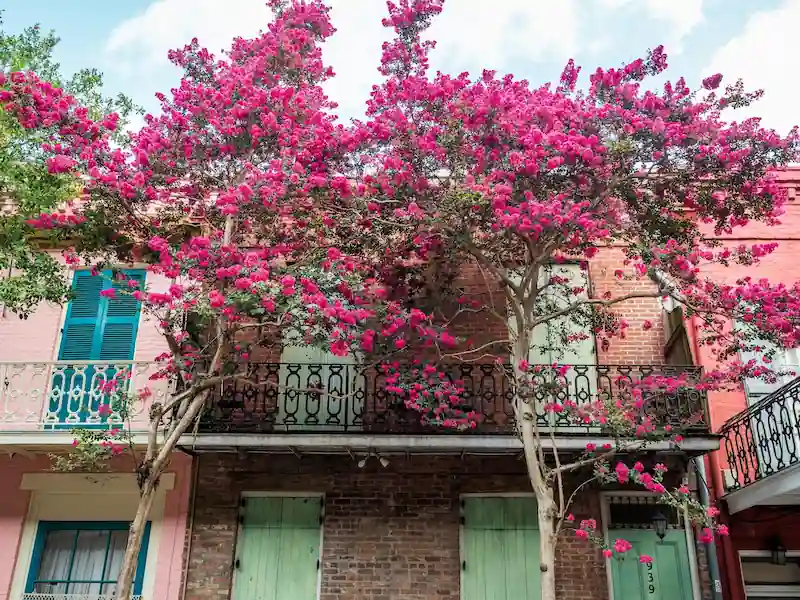
Find the best areas to stay in Miami based on your travel style, hotel priorities, beach needs, restaurant habits and how much time you want to spend crossing the bay. Miami is not a one-center destination: South Beach, Brickell, Downtown, Wynwood, Little Havana, Coconut Grove and the Design District all create very different trips. The smartest base is not simply the most famous one, but the area that makes your daily rhythm easier, whether that means beach access, city logistics, calmer evenings, stronger food neighborhoods, museum proximity or a more local-feeling stay.
Best areas
Brickell is the strongest all-round base for most first-time city-led stays, South Beach is the classic beach-first choice, Coconut Grove is best for calmer longer stays, Wynwood is strongest for nightlife and food, Little Havana adds cultural texture, Downtown & Omni works for museums and practical short stays, and the Design District is best for style-led travelers who want a curated mainland base.
Booking timing
Book early for December to April, major event weeks, Art Basel / Miami Art Week, spring weekends, cruise-heavy dates, and any stay where exact hotel location matters more than headline price.
Where to stay in Miami at a glance
Brickell – Best for: the strongest all-round mainland base · Vibe: polished high-rise city base · Stay here if: you want restaurants, walkability, airport access, Metromover convenience, and smoother access to Downtown, Little Havana, Wynwood and Coconut Grove · Avoid if: you want the beach outside your hotel door or a low-rise neighborhood feel
South Beach – Best for: classic first-timers and beach-led stays · Vibe: beach-led and highly visible · Stay here if: you want to walk to the sand, Art Deco streets, South Pointe, Ocean Drive and late-night activity without planning around transport · Avoid if: you dislike noise, resort fees, valet costs, small rooms or paying a premium for symbolic location
Downtown & Omni – Best for: museums, cruise stays and practical short trips · Vibe: civic, bayfront, functional · Stay here if: you want Museum Park, Frost Science, PAMM, transit, arena events, cruise logistics and better hotel value than the beach · Avoid if: you want the prettiest neighborhood atmosphere or a romantic stay
Wynwood – Best for: food, bars, murals and social weekends · Vibe: creative and socially active · Stay here if: you want restaurants, going out, street-art energy and easy access to the Design District more than beach time · Avoid if: you want calm evenings, classic luxury, or a clean all-purpose first-time base
Little Havana – Best for: culture, Cuban food and local texture · Vibe: street-facing, local, culturally grounded · Stay here if: you want Calle Ocho, cafecito, music, food and a version of Miami that feels more culturally grounded than beach-and-tower shorthand · Avoid if: you want polished resort service, immediate beach access or deep luxury hotel inventory
Coconut Grove – Best for: calmer couples, families and longer stays · Vibe: leafy and slower-paced · Stay here if: you want shade, terraces, bay proximity, slower evenings and a more residential rhythm without losing good dining · Avoid if: you want the city’s most immediate nightlife, beach access or first-time action outside the hotel
Design District – Best for: design-forward and style-led short stays · Vibe: curated and fashion-led · Stay here if: you care about architecture, public art, restaurants, shopping, newer hotel stock and easy Wynwood / Midtown access · Avoid if: you want heritage, lower costs, beach access or broad sightseeing convenience
How to choose the right area in Miami
The biggest accommodation mistake in Miami is choosing by name recognition instead of daily movement. South Beach may be iconic, but it can be the wrong base for a mainland-heavy trip. Brickell may be efficient, but it will not satisfy travelers who want the ocean outside the door. Coconut Grove may be calmer, but it can feel too removed for a compressed highlights trip. The right question is not which neighborhood is best in the abstract; it is which area removes the most friction from the version of Miami you actually want.
Choose beach access only if you plan to use it repeatedly; otherwise the room premium, fees and causeway logic can work against the stay.
Do not confuse central on the map with convenient in practice; bay crossings, traffic and valet logistics make some short-looking moves feel longer than expected.
A quieter street inside a strong district usually beats the loudest hotel address in the supposedly best area.
For two or three nights, convenience matters more than perfect atmosphere; for longer stays, neighborhood texture and hotel comfort start paying off.
If evenings matter, prioritize dining density and easy returns over daytime symbolism.
In Miami, micro-location matters almost as much as district choice: one or two blocks can change noise, walkability, beach access, restaurant options and late-night comfort.
If you want both beach and mainland depth, a split stay can outperform forcing one base to solve everything.
Little Havana, Wynwood and the Design District are not universal first-trip answers, but they become valuable when food, nightlife, culture or style matters more than broad convenience.
Families should read hotel choice through room size, pool quality, beach practicality and easy reset time, not just the neighborhood name.
Budget travelers should compare total cost, including parking, resort fees, ride-hailing and wasted transfer time, not just nightly rate.
Miami stay geography: how the city works on the map
Miami does not behave like a compact historic city with one obvious center. From a stay perspective, the city works as linked zones separated by water, traffic patterns, causeways and different daily rhythms. Choosing where to sleep is really choosing which movements you want to repeat and which ones you want to avoid.
Miami Beach and the mainland are close in distance but not always close in lived time.
Brickell and Downtown form the strongest practical central cluster for city-led and no-car stays.
Wynwood and the Design District work best as a northern mainland pairing rather than as isolated choices.
Coconut Grove creates a southern, calmer version of the trip that rewards slower pacing and longer stays.
Little Havana is central enough to be useful, but works best when culture and food actively shape the stay.
South Beach is extremely convenient for beach time but inefficient for repeated mainland-heavy days.
Airport, cruise port and event logistics can make Downtown, Brickell or Omni more useful than the famous beach districts.
The wrong hotel on the wrong edge of a district can add friction even when the neighborhood choice itself is sound.
Beach-first cluster – South Beach if the shoreline, Art Deco streets and a classic Miami visual identity should shape the stay from morning onward.
Urban core cluster – Brickell and Downtown & Omni for the most efficient city-based version of Miami, with stronger logistics, transit, restaurants and museum access.
Creative north cluster – Wynwood and the Design District for restaurants, nightlife, design, newer hotels and shorter hops between social and retail-led districts.
Quieter southern cluster – Coconut Grove for a greener, lower-rise, more residential Miami with calmer evenings, good dining and longer-stay appeal.
Culture-and-food cluster – Little Havana when neighborhood identity, Cuban food and a more grounded Miami matter more than mainstream hotel-zone convenience.
Nearby specialist beach / nature layer – Key Biscayne, North Beach, Surfside, Coral Gables, the Everglades and Biscayne National Park are important planning layers, but not main default hotel bases for most first stays.
Best areas to stay in Miami
These are the Miami neighborhoods that make the strongest bases for different trip styles. The key is not to read them as a ranking from best to worst, but as different stay logics with different rewards, trade-offs, and hotel personalities.
Brickell
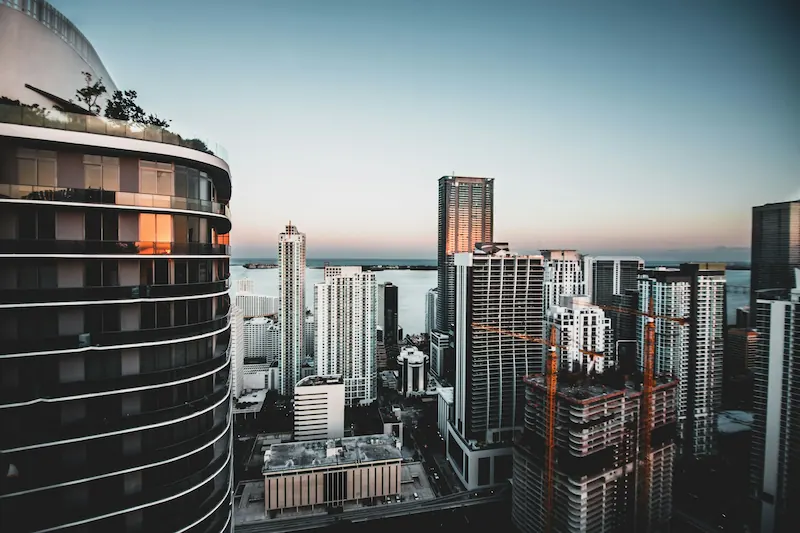
Brickell is the most efficient version of Miami for travelers who want the city to work cleanly. You get strong hotel stock, serious restaurant density, Metromover access, quick airport logic and easier links to Downtown, Little Havana, Wynwood and Coconut Grove without paying for a beach-first location you may only use once or twice. The district feels vertical and polished rather than intimate, but that is part of its value: it removes a lot of practical noise from the stay. At dusk, when the towers catch the last light and terraces fill, the area finally feels less corporate and more social.
Why stay here: Stay here if you want Miami to feel smooth, well-connected, restaurant-friendly and easy to operate from. It is usually the strongest all-round answer for first-time visitors who want the mainland to work well.
Best for: first-time visitors who want the smartest all-round base, couples, work-leisure stays, short city breaks, no-car mainland trips
Pros
Best all-round mainland base for many first-time visitors
Dense dining, bars and rooftop options within easy walking range
Strong hotel quality across multiple price bands
Easier airport and Downtown access than South Beach
Free Metromover access for useful downtown / Brickell movement
Good fit for short stays, work-leisure trips and no-car visitors
Useful launch point for Little Havana, Wynwood, Coconut Grove and Museum Park
Cons
No beach-at-the-door feeling
Can feel sleek and high-rise rather than intimate or historic
Valet, parking and premium hotel costs can add up quickly
Not ideal if your trip is mostly beach and South Beach nightlife
Nearby highlights
easy dinner plans without cross-city transport
Brickell City Centre, rooftop bars and dense restaurant streets
Metromover links toward Downtown and Museum Park
better airport practicality for late arrivals or short stays
walkable evening energy without relying on beach nightlife
good launch point for Little Havana, Wynwood, Coconut Grove and Key Biscayne
strong base for a split city-and-beach itinerary
Budget
Tru By Hilton Miami West Brickell – Modern, straightforward choice on the western edge of Brickell. Better for practicality than atmosphere, but useful for short stays and early departures. Why we recommend: One of the clearer lower-cost options when you want Brickell logistics without paying for a prime tower address. Check availability
Atwell Suites Miami Brickell by IHG – All-suite-leaning setup with more room than many nearby budget-to-lower-mid options. Works well if you want a little breathing space in a central base. Why we recommend: Stronger space-to-location balance than many similarly positioned Brickell stays. Check availability
AC Hotel By Marriott Miami Brickell – Clean, reliable, businesslike hotel near Brickell’s core movement lines. Better for an efficient stay than for boutique character. Why we recommend: A dependable pick when you want the district without paying for higher-end lifestyle branding. Check availability
Mid
citizenM Miami Brickell – Compact rooms but sharp design, good social spaces, and a genuinely useful location for a city-first Miami trip. Why we recommend: One of the best-value style-conscious stays in central Brickell if room size is not your priority. Check availability
Novotel Miami Brickell – Well-run, modern hotel with a slightly calmer position than the busiest core addresses. Good for travelers who want order more than scene. Why we recommend: Often the better compromise when you want quality and location without moving into upscale pricing. Check availability
Hotel Indigo Miami Brickell by IHG – Boutique-leaning chain option with more personality than standard business hotels nearby. Works well for couples and shorter leisure stays. Why we recommend: A stronger design pick than many mid-range Brickell hotels without losing location efficiency. Check availability
Upscale
JW Marriott Miami – Classic upscale Brickell stay with larger-hotel reliability and a polished but not overperformed atmosphere. Why we recommend: Good for travelers who want established upscale service in a genuinely useful location. Check availability
EAST Miami – Contemporary high-rise hotel tied closely to Brickell City Centre, with strong design and a more lifestyle-led feel. Why we recommend: One of the most persuasive luxury choices here if you want Brickell to feel social, modern, and easy. Check availability
SLS LUX Brickell – More image-conscious and more indulgent than the average Brickell hotel, with a stronger resort-lifestyle edge. Why we recommend: Best when you want Brickell convenience but do not want the stay to feel purely businesslike. Check availability
South Beach
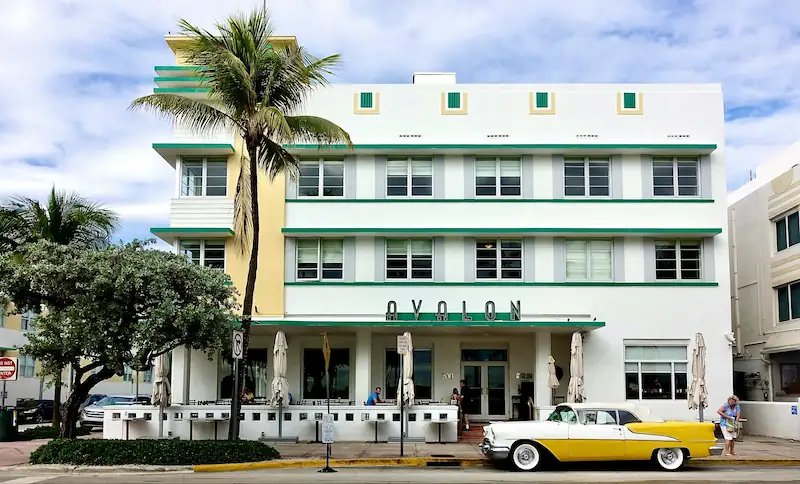
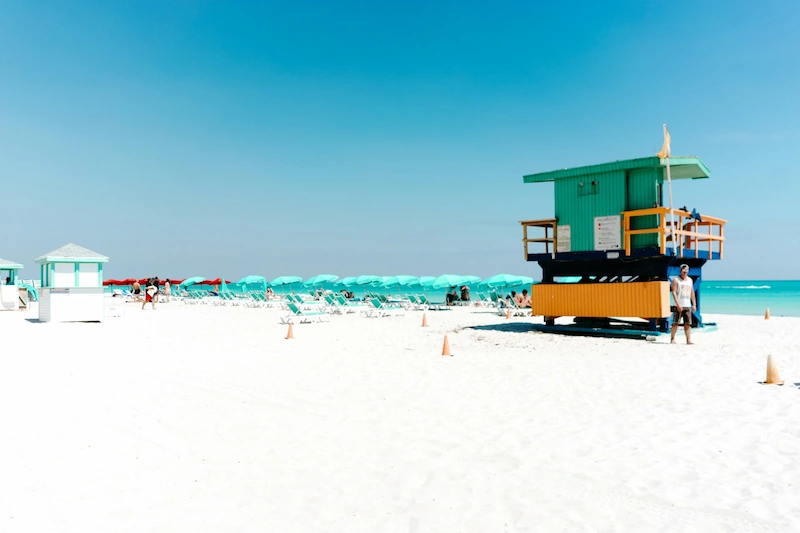
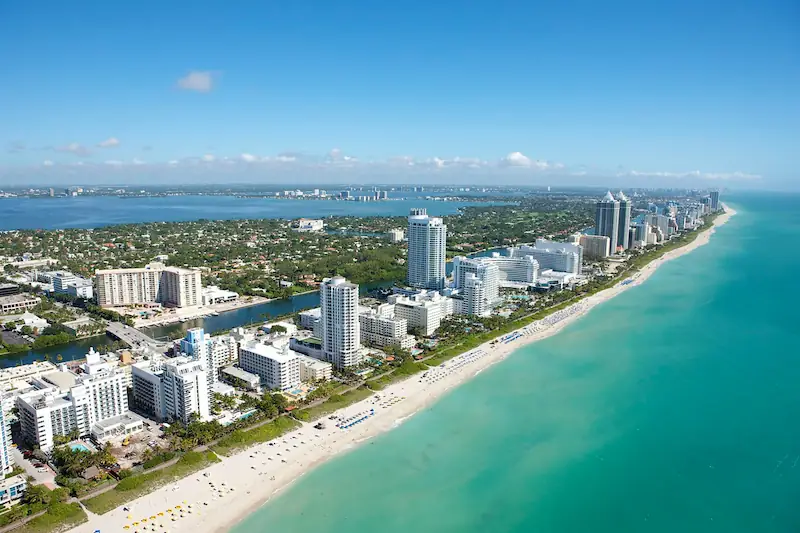
South Beach is still the classic answer for where to stay in Miami if the city in your head is built around sand, Art Deco, and walking back from dinner without thinking about transport. It is the easiest place to turn the trip into a beach-led stay and the easiest place to understand Miami’s visual mythology on foot. The trade-off is that you pay for that immediacy, and not every traveler actually needs it. In the morning, before the streets fully wake up, the low-rise facades and salt air make the district feel more graceful than loud.
Why stay here: Stay here if beach access, recognizable Miami atmosphere, and an easy first-time rhythm matter more than logistics or value.
Best for: first-timers, beach lovers, short weekend stays, classic Miami imagery, travelers who want sand and Art Deco within walking distance
Pros
Immediate beach access and strong first-timer legibility
Walkable cluster of restaurants, bars, Art Deco streets and South Pointe access
No need to build the day around transport just to reach the shoreline
Best fit for short beach-first stays and classic Miami weekends
More atmospheric on foot than many mainland districts
Good for early beach walks, Ocean Drive, Española Way and Lincoln Road if used selectively
Cons
Higher rates, resort fees and valet costs for what is often a smaller room
Noise and street activity can wear thin quickly
Less efficient if most of your trip is mainland-based
Not every block is equally pleasant, especially late at night or near louder nightlife pockets
Nearby highlights
walkable access to the beach at different times of day
Art Deco blocks and Ocean Drive without transport planning
South Pointe Park and the South of Fifth edge
easy late-night dining and drinks on foot
simple sunrise or early-morning shoreline walks
strong people-watching and street energy close to the hotel
good base if the trip centers more on beach atmosphere than mainland logistics
Budget
The Julia Hotel – Small-scale hotel in the South of Fifth side of South Beach. Better for a calmer beach stay than for nonstop party energy. Why we recommend: A rare lower-priced South Beach option that still feels well-positioned and low-drama. Check availability
Liberty Park Hotel South Beach – Simple boutique stay with a practical location for beach access and the northern end of South Beach. Why we recommend: Useful when you want South Beach proximity without moving immediately into lifestyle-hotel pricing. Check availability
Viajero Miami – Livelier, more social hotel with a central South Beach position. Better for travelers comfortable with energy over quiet. Why we recommend: A good value play for travelers who want to be in the middle of South Beach rather than adjacent to it. Check availability
Mid
Nassau Suite South Beach, an All Suite Hotel – Suite-style setup on Collins with more space than many nearby classic South Beach rooms. Helpful for longer beach stays. Why we recommend: The extra room makes it stand out in an area where many hotels trade heavily on location alone. Check availability
The Local House – South of Fifth hotel with a calmer feel than central Ocean Drive properties and easy access to both beach and dining. Why we recommend: One of the better picks when you want South Beach without choosing maximum noise. Check availability
The Marlin Hotel – Well-located boutique stay close to the core action, but with more polish than a purely budget South Beach option. Why we recommend: A strong compromise between position, comfort, and a more grown-up tone. Check availability
Upscale
Esme Miami Beach – Stylish, more design-conscious stay around Española Way, with a stronger boutique identity than many larger resorts. Why we recommend: Best for travelers who want South Beach style without defaulting to a big beachfront tower. Check availability
The Betsy Hotel, South Beach – Refined, more composed South Beach luxury on Ocean Drive, with direct beach access but a more restrained tone. Why we recommend: One of the best choices when you want South Beach prestige without maximal spectacle. Check availability
Loews Miami Beach Hotel – Large beachfront resort with strong amenities and a classic higher-end South Beach profile. Why we recommend: A very practical upscale choice for travelers who want full-service beachfront convenience. Check availability
Downtown & Omni
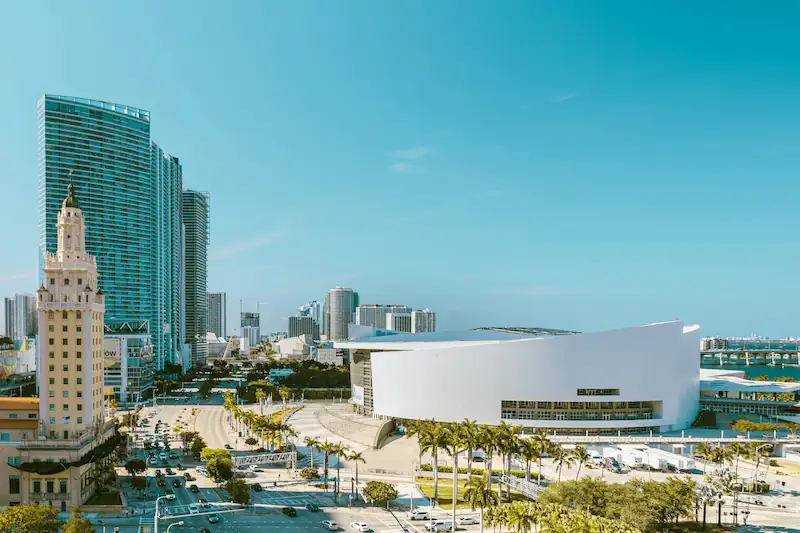
Downtown and Omni are more useful than seductive, but that is exactly why they work for many trips. This is where Miami feels most civic and bayfront-oriented, with museums, arenas, transit, and practical hotel stock doing more of the work than neighborhood romance. If your trip is short, museum-led, cruise-adjacent, or built around efficient movement rather than symbolic atmosphere, this zone can outperform more famous addresses. By the water, with the bay open and the towers stepping back, the district feels broader and lighter than its reputation suggests.
Why stay here: Stay here if you want museum access, transport convenience, and stronger practical value than South Beach.
Best for: museum-focused stays, practical short trips, pre- or post-cruise nights, arena events, travelers prioritizing utility and value
Pros
Excellent for Museum Park, PAMM, Frost Science and bayfront walking
Often better value than South Beach or top Brickell addresses
Useful transit, Metromover, arena and event access
Good fit for short stopovers, cruise-linked stays and museum-led trips
Some rooms offer stronger bay or skyline views than more expensive areas
Practical for travelers who want to avoid beach premiums
Cons
Less intimate and less neighborhood-rich than Coconut Grove or South Beach
Some blocks feel functional rather than inviting
Not the best choice if your evenings depend on charm
Can feel uneven after office hours if the hotel is poorly positioned
Nearby highlights
easy access to Pérez Art Museum Miami and Frost Science
bayfront views and open waterfront space close to the hotel
Metromover and links to Brickell and other mainland districts
better value for skyline or water-view rooms
simple logistics for Kaseya Center events and cruise transitions
less need to pay a beach premium if sand is not central to the trip
useful base for one-night or two-night stopovers
Budget
YVE Hotel Miami – Compact downtown hotel with an excellent bayfront-adjacent position. Works best when location matters more than room size. Why we recommend: Useful for travelers who want to stay central without paying for higher-end towers nearby. Check availability
Holiday Inn Hotel Port of Miami-Downtown by IHG – Simple, very practical option opposite Bayside with clear utility for short overnights and cruise-linked stays. Why we recommend: The location does most of the work here, which is exactly the point for certain itineraries. Check availability
YOTEL Miami – Compact, contemporary downtown stay with a functional location for travelers who do not need a traditional full-service hotel feel. Why we recommend: A strong pick when you want modern efficiency and centrality over old-school comfort. Check availability
Mid
citizenM Miami Worldcenter – Design-led hotel with small rooms but sharp shared spaces and a highly usable Worldcenter location. Why we recommend: One of the better-value style plays in the Downtown/Omni orbit if you travel light. Check availability
The Elser Hotel Miami - An All-Suite Hotel – All-suite setup with more room and stronger stay-in comfort than many downtown competitors. Why we recommend: A smarter choice than a standard room if space, balcony time, or a longer stay matters. Check availability
Miami Marriott Biscayne Bay – Well-placed bayfront hotel on the Omni side, useful for Museum Park and a calmer waterfront setting. Why we recommend: A better fit than the core downtown grid if you want water and museums closer at hand. Check availability
Upscale
InterContinental Miami by IHG – Classic bayfront high-rise with strong views and a polished large-hotel feel close to Downtown’s key practical anchors. Why we recommend: Still one of the best luxury answers here when you want views and convenience in equal measure. Check availability
Kimpton EPIC Hotel by IHG, Miami – Upscale river-meets-bay address with more personality than a standard downtown business hotel. Why we recommend: A more stylish luxury option if you want Downtown convenience without sacrificing atmosphere. Check availability
Gale Miami Hotel & Residences An All-Suite Hotel – Newer all-suite-leaning property in the Worldcenter area with a stronger leisure feel than many nearby towers. Why we recommend: Good for travelers who want more space and a fresher product in a practical Downtown location. Check availability
Wynwood
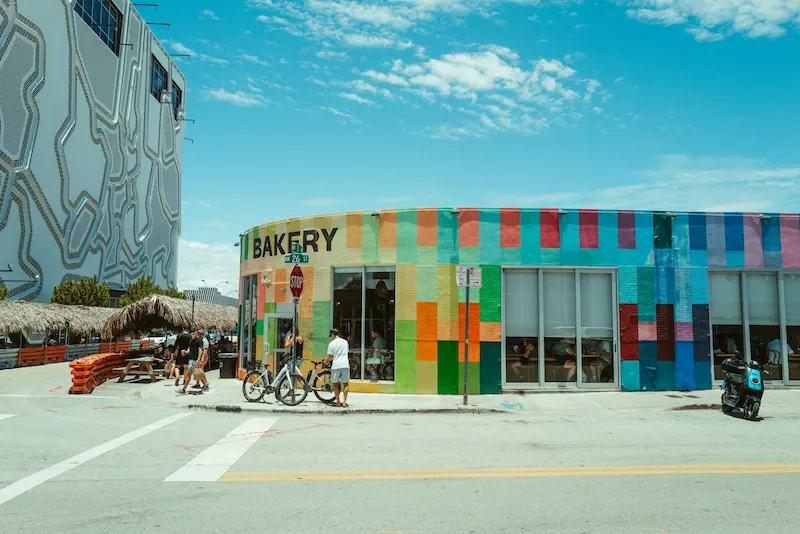
Wynwood is the stay for travelers who want Miami to feel younger, looser, and more food-and-nightlife-led than beach-scripted. It works less as a classic sightseeing base than as a district where going out becomes the organizing principle of the stay. The area is best when you lean into that identity instead of expecting calm luxury or broad first-time convenience. In the evening, with mural walls fading into restaurant light and music carrying across the blocks, the neighborhood feels more social than scenic.
Why stay here: Stay here if dinners, bars, and creative energy matter more than beach access or polished urban efficiency.
Best for: nightlife, food-focused stays, groups, return visitors, mural / art weekends, travelers who want Miami after dark as much as by day
Pros
Strong concentration of restaurants, bars, murals and social energy
Clear neighborhood identity rather than generic high-rise centrality
Good fit for younger travelers, groups and repeat visitors
Easy to pair with the Design District, Midtown and Little River
Better for nightlife-led stays than Coconut Grove or Downtown
Hotels and apartment-style stays can feel more contemporary than older districts
Cons
Not the cleanest first-time base for a broad Miami overview
Less calm and less all-purpose than Brickell
Some stays are more apartment-style than full-service hotel
Limited beach logic and weaker fit for families wanting easy resets
Nearby highlights
easy evening restaurant and bar choices on foot
direct access to Wynwood Walls and surrounding street-art blocks
good proximity to the Design District, Midtown and Little River
less need to rely on late-night transport after going out
stronger social payoff for shorter leisure weekends
a more distinct neighborhood feel than many central high-rise zones
useful base for travelers who already know South Beach is not the point
Budget
Casa Rosa Wynwood – Guesthouse-style stay that suits travelers who care more about being in Wynwood than about traditional hotel services. Why we recommend: Useful for keeping costs lower while staying inside the neighborhood logic itself. Check availability
Renzzi Villas – Villa-style option with a more casual setup than a standard hotel. Better for travelers comfortable with simpler accommodation in exchange for location. Why we recommend: One of the clearer budget-conscious ways to stay close to Wynwood’s core activity. Check availability
Art Graffiti – Low-cost, no-frills stay oriented toward travelers prioritizing price and location over hotel comforts. Why we recommend: Best reserved for travelers who want Wynwood access at the lowest reasonable entry point. Check availability
Mid
Moxy Miami Wynwood – Lively, design-forward hotel with a more social tone than a standard mid-range chain stay. Why we recommend: A natural match for the area if you want the hotel to participate in the neighborhood’s energy. Check availability
Sentral Wynwood – Apartment-style accommodation with extra space and practical amenities, well suited to longer or group stays. Why we recommend: Stronger than many local alternatives if you want room to spread out without leaving the area. Check availability
Up Midtown – Simpler Midtown-adjacent option that works as a lower-cost base for Wynwood and the Design District together. Why we recommend: Good value if your priority is staying near the action rather than inside a polished hotel product. Check availability
Upscale
Arlo Wynwood Miami – The clearest upscale hotel in Wynwood itself, with stronger design and a more complete leisure feel than most nearby options. Why we recommend: The best-fit luxury-leaning choice if you want to stay in Wynwood rather than just visit it. Check availability
Hyde Suites Midtown Miami – Nearby upscale design hotel that works well for travelers splitting time between Wynwood and the Design District. Why we recommend: A smart upgrade path when you want better comfort but still want Wynwood and the Design District close. Check availability
AC Hotel Miami Wynwood – Stylish Midtown/Design District edge hotel that works well for travelers wanting a cleaner, more composed base near Wynwood. Why we recommend: Better for travelers who like Wynwood nearby but do not want the hotel itself to feel chaotic. Check availability
Little Havana
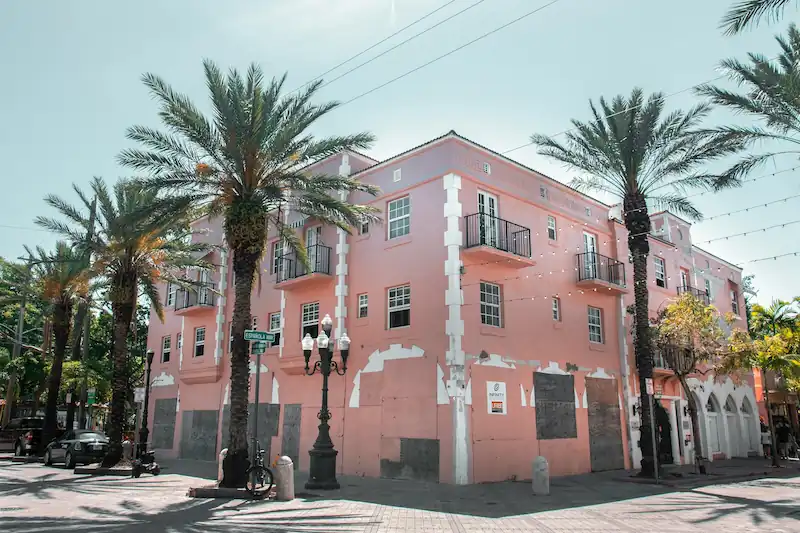
Little Havana is not the default answer to where to stay in Miami, but it becomes a very compelling one if cultural identity, Cuban food, and a more grounded version of the city matter more than polished convenience. It is one of the clearest ways to make Miami feel specific rather than generic, and one of the few neighborhoods where the stay itself can reshape your understanding of the city. It works best for travelers who are willing to trade some classic first-time convenience for texture, language, and local rhythm. The district feels more alive through storefronts, cafés, and music than through skyline or resort logic.
Why stay here: Stay here if you want Miami beyond beach cliché, and want your base to feel culturally specific, food-led, and less hotel-zone generic.
Best for: food-focused travelers, repeat visitors, culture-led trips, Cuban culture, travelers who want a more local-feeling Miami
Pros
One of Miami’s most distinctive neighborhood identities
Strong Cuban food, café culture and music built into daily life
Better local character than many more famous hotel districts
Useful for food-led and culture-led repeat visits
Can make the stay feel far more grounded than a generic central hotel
Central enough to pair with Brickell, Downtown and Coconut Grove if planned well
Cons
Less polished hotel stock than Brickell or South Beach
Not the easiest base for travelers prioritizing beach access
More selective hotel choice required than in mainstream stay districts
True luxury inventory is limited, so upscale travelers need nearby fallbacks
Nearby highlights
easy access to Calle Ocho food, coffee and street life
strong evening atmosphere without needing beach nightlife
a more culturally specific version of Miami from the hotel outward
better fit for neighborhood-led mornings and late lunches
useful contrast if the rest of the trip includes Brickell or the beach
one of the best areas to stay if food and identity matter more than prestige
good base for travelers comfortable trading polish for character
Budget
Selina Miami River – Casual, flexible stay on the broader Little Havana / Miami River edge with more personality than a standard chain option. Why we recommend: Useful when you want character and location logic without aiming for polished luxury. Check availability
Life House, Little Havana – Design-aware small hotel that fits the neighborhood much better than a generic downtown fallback. Why we recommend: One of the strongest true neighborhood stays if you want Little Havana itself to matter. Check availability
Extended Stay America Premier Suites - Miami - Downtown Brickell – A practical Brickell / Little Havana edge fallback with simple extended-stay functionality rather than neighborhood romance. Why we recommend: Useful when you want lower-cost access to Little Havana but still need a more predictable hotel format. Check availability
Mid
Life House, Little Havana – Boutique property with more style and place-specificity than the usual practical alternatives nearby. Why we recommend: The clearest best-fit hotel if you are intentionally choosing Little Havana as your base. Check availability
Riverview Hotel – More practical than glamorous, but useful for travelers wanting Miami River access and Little Havana proximity. Why we recommend: Can work if you want the area’s logic without needing a boutique-first stay. Check availability
Atwell Suites Miami Brickell by IHG – A suite-leaning Brickell edge fallback that keeps Little Havana reachable while giving more predictable room comfort. Why we recommend: A smart compromise when Little Havana is part of the stay but hotel function matters more than exact neighborhood placement. Check availability
Upscale
SLS LUX Brickell – Not inside Little Havana, but a useful upscale fallback if you want easy access to the neighborhood while keeping a polished hotel base. Why we recommend: Best when Little Havana matters a lot, but you still want full upscale comfort. Check availability
EAST Miami – A polished Brickell fallback with strong design, restaurants, and easy access back toward Little Havana by short ride. Why we recommend: Useful when you want Little Havana as a recurring neighborhood layer without giving up a high-end stay. Check availability
Kimpton EPIC Hotel by IHG, Miami – Upscale Miami River / Downtown fallback with more personality than a standard business hotel and workable access to Little Havana. Why we recommend: A strong compromise for travelers who want culture nearby but prefer luxury services and bay / river positioning. Check availability
Coconut Grove
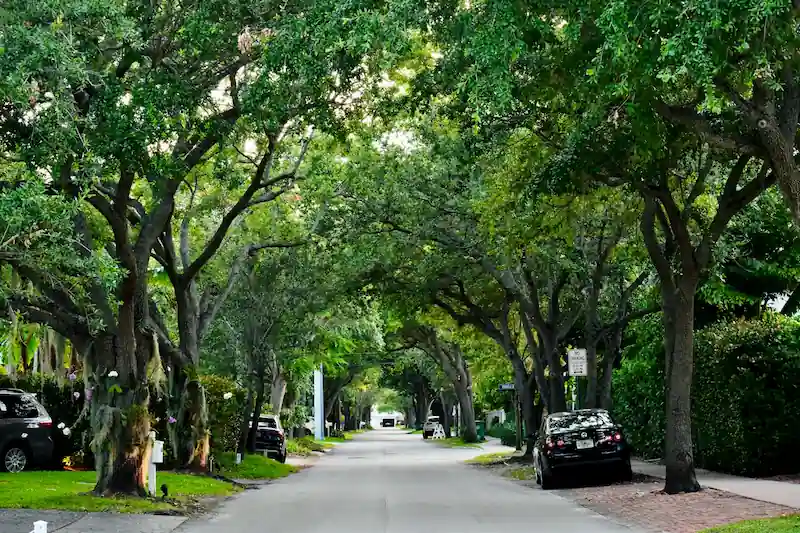
Coconut Grove is for travelers who want Miami to breathe. It trades the city’s louder edges for shade, bay proximity, terrace life, and a more residential rhythm that still feels distinctly part of the trip rather than removed from it. The Grove is not the most efficient choice for a maximal first-time overview, but it is often the most pleasant place to come back to at the end of the day. Under the tree canopy, with restaurant light filtering across the sidewalks, the district feels slower and more grounded than the rest of the city.
Why stay here: Stay here if you want a calmer, greener, more lived-in Miami with strong dining and better evening ease than many visitors expect.
Best for: couples, families, longer stays, calmer Miami, travelers who want shade, terraces and neighborhood texture
Pros
Quieter and more residential than South Beach, Brickell or Wynwood
Good dining scene without full nightlife overload
Stronger shade, terraces and lower-rise human scale
Excellent fit for couples, families and longer stays
Easy pairing with Vizcaya and southern bayfront logic
One of the most pleasant areas to return to after busy sightseeing days
Cons
Less efficient for a compressed first-time highlights trip
Not the best base if beach access is the main point
Fewer broad sightseeing anchors within immediate walking range
Can feel too quiet for nightlife-first groups
Nearby highlights
easy terrace dinners without high-friction transport
proximity to Cocowalk and surrounding Grove dining
short links to Vizcaya and southern bayfront outings
more pleasant day-to-day walking than hotter exposed districts
a calmer evening reset after busier central days
good fit for travelers who want a less performative Miami
useful base for families who value room comfort and quieter evenings
Budget
Hampton Inn Miami-Coconut Grove/Coral Gables – Reliable, practical lower-cost base with easy access to the Grove without boutique pricing. Why we recommend: One of the few straightforward budget-conscious choices that still keeps the Grove workable. Check availability
Arya Hotel & Suites Coconut Grove, WorldHotels Distinctive – Older-style property with useful views and apartment-like practicality rather than polished luxury. Why we recommend: A sensible value play when location matters more than having the newest product. Check availability
Courtyard Miami Coconut Grove – Predictable and easy to use, with solid positioning for Grove restaurants and bay-adjacent movement. Why we recommend: A dependable choice when you want Coconut Grove without committing to boutique or luxury rates. Check availability
Mid
The Mutiny Luxury Suites Hotel – Suite-based hotel that works especially well for families, longer stays, or anyone wanting more space. Why we recommend: Room size and bay-facing feel make it more useful than a standard room in this part of Miami. Check availability
Mayfair House Hotel & Garden – Design-forward hotel with stronger identity than most Grove competitors and a stronger sense of place. Why we recommend: Best when you want Coconut Grove to feel distinctive rather than simply convenient. Check availability
Hotel Arya Coconut Grove – Apartment-style and bay-view oriented option that can work well for longer stays and travelers who value flexibility. Why we recommend: A useful midpoint between standard hotel predictability and the extra space that makes the Grove easier for longer trips. Check availability
Upscale
Mr. C Miami - Coconut Grove – Sleek luxury hotel with a refined, more composed take on Miami glamour and an excellent Grove position. Why we recommend: One of the best luxury answers in Miami if you want elegance without South Beach theatrics. Check availability
The Ritz-Carlton Coconut Grove, Miami – Classic full-service luxury with a calmer, more residential feel than the city’s beach-driven resorts. Why we recommend: Strong for travelers who want established luxury in Miami’s quieter premium district. Check availability
Mayfair House Hotel & Garden – Boutique-leaning upscale stay with stronger design character than most conventional luxury options nearby. Why we recommend: A better stylistic fit than a classic chain hotel if design matters as much as comfort. Check availability
Design District
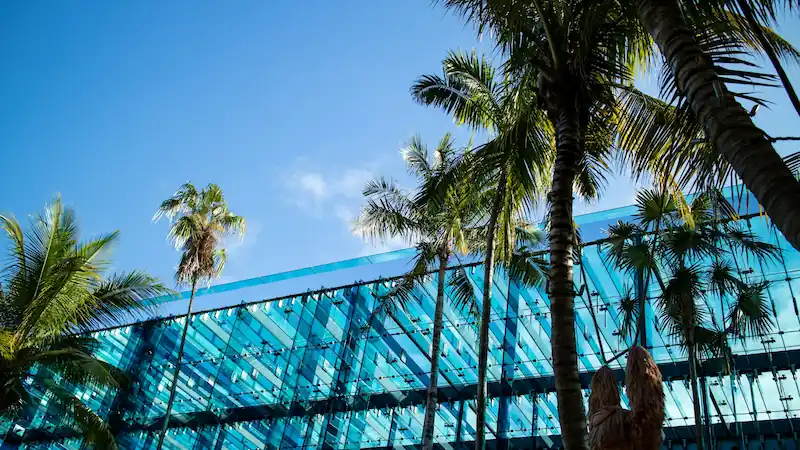
The Design District is a niche but very coherent place to stay if you want Miami to feel curated, fashion-led, and visually controlled. It is not the default answer for a broad first trip, but it can be a very satisfying one for travelers who care about design retail, newer hospitality, and being close to both Wynwood and Midtown. The district feels more composed than spontaneous, which is either the appeal or the limitation depending on what you want. In the late afternoon, when the light skims the facades and public spaces stay bright and open, the area feels precise rather than hectic.
Why stay here: Stay here if design, shopping, newer hotel stock, and proximity to Wynwood matter more than beach symbolism or classic neighborhood charm.
Best for: design-led stays, shopping weekends, couples, style-conscious travelers, short luxury-leaning mainland stays
Pros
Strongest fit for design-forward travelers
Good hotel quality in Midtown / Design District-adjacent stock
Easy pairing with Wynwood, Midtown and Little River
More polished and composed than Wynwood itself
Useful for short luxury-leaning city stays
Good for travelers who want restaurants, galleries, retail and public art close together
Cons
Less emotionally rich than Coconut Grove or South Beach
Not the best one-size-fits-all first-time base
Can feel curated to the point of being slightly controlled
Beach and classic Miami imagery require additional movement
Nearby highlights
easy access to design retail and architecture-led streets
simple pairing with Wynwood for food and nightlife
newer hotel stock than many older Miami districts
good restaurant choices in Midtown, Design District and surrounding areas
more polished public realm than most mainland neighborhoods
strong fit for travelers who want their base to feel visually considered
useful base for art, design and food-led repeat visits
Budget
Up Midtown – Plain but useful Midtown stay close to the Design District’s practical orbit. Why we recommend: One of the easier lower-cost ways to stay near the district without luxury pricing. Check availability
Hampton Inn & Suites Miami Wynwood Design District, FL – Very practical hotel with free-breakfast utility and a useful position between key mainland districts. Why we recommend: A strong budget-conscious answer when you want convenience and newer rooms over boutique character. Check availability
Casa Rosa Wynwood – Lower-cost alternative close enough to keep the Design District workable for travelers prioritizing price. Why we recommend: Useful if you want to stay in this broader zone without paying Midtown hotel rates. Check availability
Mid
AC Hotel Miami Wynwood – Stylish, well-located Midtown/Design District hotel with a more polished tone than many nearby alternatives. Why we recommend: Probably the cleanest mid-range choice if the Design District itself is your reference point. Check availability
Hyde Suites Midtown Miami – Midtown-based stay with more space and amenities than a standard room hotel, useful for longer city weekends. Why we recommend: A better comfort play than many local competitors if you want this zone to feel upscale but livable. Check availability
Sentral Wynwood – Apartment-style option just beyond the district itself, with strong practicality for longer or more flexible stays. Why we recommend: Helps if you want the Design District nearby but prefer more room and self-sufficiency. Check availability
Upscale
Arlo Wynwood Miami – Nearby upscale hotel that works well for travelers splitting time between the Design District and Wynwood. Why we recommend: A strong luxury-leaning option if you want atmosphere as well as location. Check availability
Hyde Suites Midtown Miami – One of the stronger upscale-adjacent hotel products in the immediate broader Design District orbit. Why we recommend: More livable and more comfortable than many standard rooms in this zone. Check availability
The Vagabond Hotel – A design-conscious Biscayne Boulevard fallback north of the Design District with a more distinctive Miami personality than many generic options. Why we recommend: Useful when you want style and character near the Design District without staying in a conventional tower hotel. Check availability
Where to stay in Miami for first-time visitors
For a first trip, the best area is usually the one that keeps Miami readable. That means either choosing the classic beach version of the city or choosing the mainland base that makes neighborhoods, museums and dinners easier.
Choose Brickell if you want the smoothest first stay overall and expect to split time between restaurants, museums, Little Havana, Wynwood and the bayfront.
Choose South Beach if your first image of Miami is beach-led and you want sand, Art Deco streets and late-night atmosphere within walking distance.
Choose Downtown & Omni if museums, bayfront views, arena events, cruise logistics or a short practical stop matter more than neighborhood charm.
Avoid Wynwood as your first base unless nightlife and dining are clearly more important than broad city convenience.
Choose Coconut Grove only if you already know you want a calmer, more residential version of Miami rather than the headline version.
Choose Little Havana only if culture, food and local texture matter more than symbolic first-time convenience.
Choose the Design District for a style-led short stay, not as the easiest all-purpose first Miami base.
Profile
Area
Why
best all-round first stay
Brickell
best balance of convenience, restaurants, airport access and mainland movement
classic first-time Miami
South Beach
beach, Art Deco and walkable atmosphere in one place
practical museum / cruise stay
Downtown & Omni
Museum Park, transit, bayfront and better value than the beach
Where to stay in Miami with family
Families usually do better in areas that reduce noise, allow easier returns to the hotel, and offer more room flexibility. In Miami, the best family base is often not the loudest or most famous district.
Coconut Grove is usually the most comfortable family base if you want calmer evenings, shade and a more residential rhythm.
Brickell works well for families who want a central stay with strong hotel stock, pool options and reliable transport logic.
Downtown & Omni is useful if Frost Science, PAMM, Museum Park, bayfront walking or short practical overnights matter more than atmosphere.
South Beach works for families only if beach access is central and the hotel is carefully filtered for street calm, pool quality and room setup.
Suite-style properties matter more in Miami because midday heat often makes hotel downtime useful.
Key Biscayne is a great family beach outing, but it is better treated as an activity layer than a main hotel base for most first trips.
Families should compare total convenience, not just nightly price: parking, resort fees and rideshares can change the real cost quickly.
better logistics, strong hotel choice and easy dining
family stay near museums
Downtown & Omni
practical for Frost Science, PAMM and bayfront movement
Where to stay in Miami for nightlife
Nightlife in Miami does not mean the same thing everywhere. The real choice is between beach spectacle, restaurant-and-bar density, polished skyline evenings and more neighborhood-led music or food.
Choose South Beach for the classic high-visibility version of Miami nights.
Choose Wynwood if bars, restaurants and a younger social feel matter more than beach-club symbolism.
Choose Brickell if you want polished dinners, rooftops and easier returns without South Beach’s intensity.
Choose Little Havana if live music, cocktails and Cuban cultural texture are more appealing than generic clubbing.
Avoid Coconut Grove if the trip is built around staying out late; it is better for slower dinners than nightlife-first travel.
If going out matters every night, staying in the right district matters more than saving slightly on the room.
Style
Area
TradeOff
classic Miami nightlife
South Beach
best energy, more noise and higher rates
restaurant-and-bar nightlife
Wynwood
best social density, less all-purpose convenience
polished evening scene
Brickell
easier and cleaner, less iconic
Where to stay in Miami on a budget
Budget in Miami usually means choosing a more practical district, a simpler hotel, or a better-value edge of the right area rather than expecting bargain centrality. Cutting the wrong corner can create more transport cost and wasted time than it saves.
Downtown and lower-cost Brickell edges often give better value than South Beach for city-led trips.
South Beach budget stays work only if you genuinely want to use the beach location enough to justify the premium.
Wynwood can work on a budget if nightlife matters and you are comfortable with simpler or apartment-style accommodation.
The Design District and nearby Midtown can deliver acceptable value when you prioritize newer rooms over heritage or classic atmosphere.
Little Havana can be good value for culture-led travelers, but hotel choice is narrower and needs more careful filtering.
Pay close attention to parking, resort, destination and valet fees; in Miami, these can erase the savings of a cheaper headline rate.
Budget travelers without a car should prioritize walkable dining and transit/rideshare logic over the cheapest room in isolation.
BudgetType
Area
Logic
best value for first-timers
Brickell / Downtown edge
lower friction often offsets the room premium
budget beach stay
South Beach
worth it only if beach access is central to the trip
budget nightlife stay
Wynwood
good if going out matters more than broad convenience
Where to stay in Miami for a more local feel
Some travelers want Miami to feel less like a branded resort city and more like a layered place with food, language, neighborhood rhythm and everyday street life. If that is the goal, the best base is not always the most famous one.
Choose Little Havana if cultural identity, Cuban food and everyday street life matter more than prestige and polish.
Choose Coconut Grove if you want a greener, calmer and more residential version of Miami.
Choose Wynwood if your idea of local feel includes bars, casual dining, murals and younger social energy.
Choose the Design District only if you want curated style rather than organic neighborhood texture.
Avoid South Beach if you specifically want Miami beyond the postcard version.
Brickell is convenient and urban, but it feels more polished and high-rise than locally textured.
Profile
Area
Why
cultural local feel
Little Havana
street life, Cuban food and stronger neighborhood identity
calmer local feel
Coconut Grove
shade, terraces and residential rhythm
younger local feel
Wynwood
creative energy, bars and street activity
Where to stay in Miami for couples
Couples should choose Miami based on the kind of evening they want after the day’s sightseeing. A romantic Miami stay can mean beachfront atmosphere, skyline polish, shaded terraces, design-led dining or a calmer boutique base.
Choose Coconut Grove for the calmest, most residential-feeling couples base.
Choose Brickell for polished dinners, rooftops and easy logistics without South Beach intensity.
Choose South Beach for a classic beach-and-Art-Deco couple’s weekend if you accept noise and price pressure.
Choose the Design District for a stylish short stay built around restaurants, retail, galleries and visual polish.
Choose Little Havana if food, music and cultural texture matter more than luxury atmosphere.
Avoid Wynwood for couples seeking quiet romance; it is better for social energy and going out.
CoupleStyle
Area
Why
calm and refined
Coconut Grove
shade, restaurants and slower evenings
skyline and restaurants
Brickell
easy dinners, rooftops and smooth transport
classic beach weekend
South Beach
sand, Art Deco and immediate atmosphere
Where to stay in Miami without a car
Miami is not fully car-free in the way compact European cities are, but a no-car stay can work very well if you choose a district with walkable evenings and build each day around tight clusters.
Brickell is the strongest car-free base for most travelers because restaurants, hotels, Metromover and Downtown links work well together.
South Beach is also strong without a car if your stay is beach-first and you plan mainland trips selectively.
Downtown & Omni works without a car for Museum Park, Metromover, arena events and cruise-linked stays.
Wynwood can work without a car if most evenings are in the neighborhood, but broader sightseeing will rely on rideshares.
Coconut Grove is pleasant on foot once there, but it is less convenient without a car for a fast first-time highlights trip.
Little Havana is possible without a car, but hotel choice and evening return logic matter more.
Do not stay in a weak edge location simply because it looks close on the map; walkability in Miami is highly block-specific.
TripType
Area
Why
best no-car all-rounder
Brickell
walkable dining plus Metromover and central rideshare logic
best no-car beach stay
South Beach
beach, Art Deco and dining on foot
best no-car museum stay
Downtown & Omni
Museum Park, bayfront and transit access
Where to stay in Miami for beach access
Beach access is the clearest reason to choose Miami Beach over the mainland. It is worth paying for only when the beach will shape several mornings, afternoons or evenings, not just one symbolic visit.
Choose South Beach if you want the classic Miami Beach experience with Art Deco streets and nightlife nearby.
Stay toward South of Fifth or calmer side streets if you want beach access without maximum noise.
Do not pay a South Beach premium if your itinerary is mostly Brickell, Wynwood, Little Havana, museums and restaurants.
Key Biscayne, North Beach and Surfside are important beach alternatives, but they are better treated as day or specialist stay options than core all-purpose bases in this guide.
Families should prioritize hotel pool, room size and calmer access over the most famous beach address.
Couples should decide whether they want beach atmosphere or easier mainland dining before booking.
BeachGoal
Area
Why
classic Miami beach
South Beach
most walkable beach + Art Deco experience
beach plus quieter rhythm
calmer South Beach / South of Fifth
better balance of access and sleep quality
beach as an outing only
Brickell or Coconut Grove base
visit the coast selectively without paying beach premiums all stay
Where to stay in Miami for luxury hotels
Luxury in Miami splits into beachfront glamour, skyline lifestyle hotels, calmer residential luxury and design-led mainland stays. The best choice depends on whether you want the hotel to deliver beach, restaurants, views or retreat.
Choose South Beach for classic beachfront luxury and the most recognizable Miami stay.
Choose Brickell for high-rise lifestyle luxury, restaurants and skyline polish.
Choose Coconut Grove for quieter luxury with a more residential and less performative mood.
Choose the Design District / Midtown orbit for a shorter design-led stay with easy access to restaurants and galleries.
Downtown luxury works best for views, events and cruise-adjacent convenience, not for romance-first stays.
Luxury travelers who want both beach and mainland depth should seriously consider a split stay.
LuxuryStyle
Area
Why
beachfront luxury
South Beach
classic Miami Beach atmosphere and full-service resort options
urban lifestyle luxury
Brickell
restaurants, rooftops and skyline hotels
quiet luxury
Coconut Grove
calmer, greener and more residential
Where to stay in Miami for longer stays
Longer Miami stays reward comfort, room size, calmer evenings and a base that does not become tiring after the first two nights. The famous address is not always the best long-stay answer.
Coconut Grove is one of the best longer-stay areas because it stays pleasant on ordinary evenings.
Brickell works well for longer stays if dining, transport and convenience matter more than neighborhood intimacy.
South Beach can become expensive and noisy over a longer stay unless beach access is the whole point.
Wynwood is better for shorter social weekends than for calm long stays, unless nightlife and food are the main priorities.
Apartment-style hotels in Downtown, Wynwood, Brickell or Coconut Grove can be more useful than standard rooms.
A split stay can work very well over five nights or more: beach first, then mainland depth, or the reverse.
Length
BestArea
Why
4 to 5 nights
Brickell or Coconut Grove
good balance of convenience and comfort
1 week
Coconut Grove or split stay
calmer rhythm and more sustainable evenings
longer work-leisure stay
Brickell / Downtown
transport, dining and apartment-style options
Where to stay in Miami for food
Miami food planning works best when the hotel base supports the kind of eating you actually want: Cuban and cultural, polished and high-rise, creative and casual, or slower and terrace-led.
Choose Brickell for dense, convenient restaurant access and polished dinners without long rides.
Choose Little Havana if Cuban food, cafecito, music and cultural context are central to the stay.
Choose Wynwood if restaurants, bars and casual social energy matter more than beach time.
Choose Coconut Grove for slower brunches, terrace dinners and a calmer food-led stay.
Choose the Design District for one of the most style-conscious dining environments in the city.
South Beach has plenty of restaurants, but the area works better when beach atmosphere is the point, not when food value is the only goal.
FoodStyle
Area
Why
polished restaurant density
Brickell
easy dinners and rooftops close to hotels
Cuban food and culture
Little Havana
strongest neighborhood identity through food
creative casual nights
Wynwood
bars, restaurants and social energy
Where to stay depending on trip length and trip style
The shorter the trip, the less forgiving Miami becomes. A weaker base can waste hours surprisingly fast, while the right one makes the city feel much smaller and easier.
Label
Stay
Avoid
Why
1 night
Downtown & Omni, Brickell, or South Beach depending on arrival purpose
Coconut Grove, Little Havana or Wynwood unless the stay is very intentional
One night should minimize transfer friction and protect either airport/cruise/event logistics or immediate beach payoff.
2 nights
Brickell or South Beach
Coconut Grove or Little Havana unless you already know you want a slower, more neighborhood-led stay
A very short trip needs either immediate beach payoff or the cleanest central logistics.
3 days
Brickell for balance; South Beach for a beach-led first stay; Downtown for museum / cruise practicality
Wynwood as the only base unless nightlife is the core purpose
Three days is enough for contrast, but not enough for inefficient daily crossings.
4 to 5 days
Brickell, Coconut Grove, Little Havana, or a split stay between city and beach
Choosing purely by name recognition
At this length, comfort and neighborhood texture start to matter more than pure centrality.
1 week
Coconut Grove, Brickell, or a city-plus-beach split
Remaining in the busiest edge of South Beach all week unless beach and nightlife are the whole trip
Longer stays benefit from a base that remains pleasant on ordinary evenings, not just exciting on arrival.
First trip
Brickell or South Beach
Over-specialized niche bases unless your trip has a clear food, nightlife or culture focus
These two areas make Miami easiest to understand quickly.
Return trip
Wynwood, Coconut Grove, Little Havana, or Design District
Defaulting back to South Beach unless the beach is the point
Once the headline version of Miami is familiar, more distinctive neighborhood bases pay off.
Family trip
Coconut Grove, Brickell, or a carefully chosen calmer South Beach hotel
The loudest South Beach or Wynwood addresses
Families need reset time, room function, pool quality and calmer returns more than maximum nightlife proximity.
Couples trip
Coconut Grove, Brickell, South Beach, or Design District depending on mood
A purely practical downtown block if atmosphere is central
Couples benefit most from matching the hotel base to evening rhythm: beach, skyline, design or calm.
Food-focused stay
Brickell, Little Havana, Wynwood, Coconut Grove or Design District
Paying for beachfront location if dining is the real reason for the trip
Food-led Miami is highly neighborhood-specific, and the best base depends on the style of eating you want.
How to choose the right hotel once you know the area
In Miami, district choice gets you halfway there. The hotel itself still needs to match the street, the rhythm, and the kind of return you want at the end of the day.
Topic
WhatToDo
WhatToAvoid
WhyItMatters
Street calm inside busy areas
Prefer quieter edges, side streets, South of Fifth-style calmer pockets, or the calmer end of a strong district when available.
Booking the loudest possible address just because it looks central.
A two-block difference can change sleep quality, noise, beach access and whether the hotel still feels good after dinner.
Beach premium
Pay it only if you expect to use the beach location repeatedly and at different times of day.
Assuming ocean proximity automatically makes the stay better.
For many trips, the beach premium buys symbolism more than actual convenience.
Room size versus location
Accept smaller rooms only when the position clearly improves the whole trip.
Paying a beach or skyline premium for a cramped room if you will spend most of the trip elsewhere.
Miami’s heat, humidity and pool culture make hotel downtime more relevant than in some other cities.
Parking, resort and destination fees
Check valet, parking, resort, destination and amenity fees before comparing rates.
Comparing headline prices without the full cost structure.
Miami is one of those cities where secondary fees can materially distort apparent value.
No-car logistics
Choose hotels with genuinely walkable dining, Metromover access, beach access or easy rideshare pickup depending on the district.
Hotels that are technically in the right area but require constant rides for basic evening plans.
Daily convenience in Miami is often won or lost at the hotel-address level.
Apartment-style versus full-service hotel
Choose suite or apartment-style stays in Wynwood, Downtown, Brickell or Coconut Grove when space and flexibility matter.
Assuming full service is always the better option.
Extra space can matter more than daily service on longer, family-oriented or work-leisure stays.
Brand reliability versus boutique character
Use chains for smoother short stays and boutique hotels when neighborhood feel is part of the decision.
Choosing boutique style if operational consistency matters more than design personality.
The best hotel is not the most stylish one, but the one aligned with the trip’s actual priorities.
Split-stay logic
Consider splitting beach and mainland stays when you have five nights or more and want both versions of Miami.
Forcing South Beach to solve a mainland-heavy trip or Brickell to solve a beach-heavy one.
A split stay can reduce repeated causeway crossings and make each part of the trip feel more intentional.
Event and cruise calendars
Check major event weeks, cruise timing, Art Basel / Miami Art Week and peak winter weekends before committing to a district.
Assuming normal hotel pricing and dinner access during major demand spikes.
Miami prices and availability can move sharply around events, even outside classic holiday dates.
Hotel pool and shaded spaces
Value pool quality, terraces, shade and indoor common areas more highly than you might in a cooler city.
Treating the hotel as only a place to sleep if your trip falls in hotter or wetter months.
In Miami, a good hotel reset can be the difference between a smooth trip and an overheated one.
FAQ: where to stay in Miami
These are the accommodation questions that most often determine whether a Miami trip feels easy, expensive, calm, or unnecessarily fragmented.
What is the best area to stay in Miami for first-time visitors?
Brickell is usually the smartest all-round first-time base because it balances restaurants, centrality, airport access and easier mainland logistics. South Beach is the better answer when beach access and classic Miami atmosphere are the main priority. The real choice is city efficiency versus beach immediacy.
Is South Beach the best place to stay in Miami?
South Beach is best when you want beach access, Art Deco streets and the classic Miami image outside the hotel door. It is less convincing if your plans are mostly Brickell, Little Havana, Wynwood, Coconut Grove, museums or restaurants on the mainland. It is iconic, but not automatically the smartest base.
Is Brickell better than South Beach?
Brickell is better for a smoother all-round stay, especially if your trip is city-led, restaurant-focused or short. South Beach is better for a beach-led first trip and for travelers who want Miami’s classic visual identity right outside the hotel. Brickell is more efficient; South Beach is more emblematic.
Where should I stay in Miami without a car?
Brickell is the strongest answer for most car-free stays because it gives you restaurants, hotels, Metromover access and easier links to Downtown. South Beach also works well without a car if the trip is beach-first. Downtown & Omni is useful for museums, cruise logistics and arena events.
What is the safest area to stay in Miami?
For most visitors, Brickell, Coconut Grove, the better-positioned Design District / Midtown hotels and calmer parts of South Beach are straightforward choices. Safety is less about one magic district and more about choosing a strong micro-location, avoiding weak edges, returning sensibly late and not leaving valuables visible in cars.
Where should families stay in Miami?
Coconut Grove is often the best family base if you want calmer evenings, shade and a more residential setting. Brickell is the better family choice if convenience and hotel choice matter most. South Beach works for families when direct beach time is central and the hotel is filtered carefully for noise, pool quality and room function.
Where should couples stay in Miami?
Coconut Grove is strongest for a calmer, more romantic stay; Brickell is best for polished dinners and skyline energy; South Beach works for a classic beach weekend; and the Design District suits couples who want style, dining and a curated mainland setting.
What is the best neighborhood in Miami for nightlife?
South Beach is the classic nightlife base, Wynwood is the stronger restaurant-and-bar base, Brickell is the cleaner upscale evening base, and Little Havana works for live music and cultural atmosphere. The right choice depends on whether you want spectacle, creative social energy, polished convenience or local character.
Where should I stay in Miami on a budget?
Downtown, lower-cost Brickell edges, selected Wynwood or Midtown hotels and carefully chosen Little Havana options often make more sense than chasing a cheap South Beach room. Always compare total cost including parking, resort fees, rideshares and wasted time.
Is Little Havana a good area to stay in Miami?
Little Havana can be an excellent base if Cuban food, culture, music and neighborhood character matter more than polished convenience or beach access. It is not the easiest default first-time answer, but it is one of the most rewarding choices for travelers who want Miami beyond the postcard version.
Is Coconut Grove a good place to stay in Miami?
Yes, especially for couples, families, longer stays and travelers who want a greener, calmer, more residential version of Miami. It is less efficient than Brickell for a compressed first trip, but often more pleasant once evenings and hotel comfort matter.
Is Wynwood a good area to stay in Miami?
Wynwood is good if restaurants, bars, murals and nightlife are central to your trip. It is weaker as a broad first-time sightseeing base and less suitable for travelers who want calm, classic luxury or beach access. It works best for social weekends and return visits.
Is Downtown Miami a good place to stay?
Downtown & Omni are good for Museum Park, Frost Science, PAMM, Kaseya Center events, cruise logistics and practical short stays. The area is more useful than romantic, so it works best when convenience, views or value matter more than neighborhood charm.
Is the Design District a good area to stay?
The Design District is a niche but coherent choice for design-led travelers, shopping weekends, restaurant-focused stays and repeat visitors. It is not the easiest all-purpose first-time base, but it works well if you want a curated mainland environment close to Wynwood and Midtown.
Where should I stay in Miami for beach access?
South Beach is the core answer for beach access in this guide. Stay there if the beach will shape several days of your trip. If you only want one beach outing, it may be smarter to stay in Brickell, Coconut Grove or Downtown and visit South Beach or Key Biscayne selectively.
Should I stay in Miami Beach or mainland Miami?
Stay in Miami Beach if beach access and classic Miami atmosphere are the main point. Stay on the mainland if restaurants, museums, Little Havana, Wynwood, Coconut Grove, airport access and lower transport friction matter more. Many longer trips work best with a split stay.
Is it worth paying more to stay central in Miami?
Usually yes, but only if central means the right central. Paying more for Brickell or the right part of South Beach can save real time and evening friction. Paying more for a famous address that does not match your daily movement is where the premium stops being worth it.
Where should I stay in Miami before or after a cruise?
Downtown & Omni are usually the most practical choices for cruise-linked stays because they keep you close to the port, bayfront, Museum Park and short-stay logistics. Brickell is a better option if you want a more polished dinner scene before or after sailing.
Where should I stay in Miami for one night?
For one night, choose based on arrival purpose: Downtown & Omni for cruise or event logistics, Brickell for the easiest city dinner and airport logic, or South Beach if you want an immediate beach impression. Avoid niche bases unless they are the reason for the stop.
Where should I stay in Miami for a weekend?
For a first-time weekend, Brickell or South Beach are the safest answers. For a food and nightlife weekend, Wynwood or Brickell can be stronger. For a calmer couples weekend, Coconut Grove is often more satisfying than the obvious beach choice.
Where should I stay in Miami for a week?
For a week, Coconut Grove, Brickell or a beach-plus-mainland split usually work best. South Beach can be fun but may feel noisy and expensive if you stay on its busiest edges all week. Longer stays reward room size, pool quality, calmer evenings and neighborhood comfort.
Where should I stay in Miami for food?
Brickell is strongest for polished restaurant density, Little Havana for Cuban food and cultural context, Wynwood for casual restaurants and bars, Coconut Grove for slower terrace meals, and the Design District for style-led dining. South Beach has plenty of restaurants, but it is not always the best value for food-first trips.
Where should I stay in Miami for museums?
Downtown & Omni are the most practical base for PAMM, Frost Science, Museum Park and bayfront walking. Brickell is a better all-round hotel base if you also want stronger restaurants and easy evening energy.
Where should I stay in Miami for Art Basel or Miami Art Week?
Book early and choose based on your event pattern. South Beach works for beach and fair-adjacent energy, Wynwood and the Design District work for art / design / evening circuits, and Brickell works when you want a polished central base with better logistics.
Where should I stay in Miami if I’m flying into MIA?
Brickell and Downtown are usually the easiest visitor bases from Miami International Airport if you want to start the trip smoothly. South Beach is still fine if the beach is the point, but the transfer is less convenient and usually more expensive.
Where should I stay in Miami for luxury hotels?
Choose South Beach for classic beachfront luxury, Brickell for high-rise lifestyle hotels and restaurants, Coconut Grove for quieter luxury, and the Design District / Midtown orbit for a shorter design-led luxury stay. The best luxury area depends on whether you want beach, skyline, calm or style.
Where should I stay in Miami with teens?
Brickell, South Beach and Wynwood are the most useful areas with teens depending on the trip. South Beach gives beach and visual energy, Brickell gives easy dinners and skyline atmosphere, and Wynwood works if murals, casual food and social energy matter more than calm.
Where should I stay in Miami with young children?
Coconut Grove and Brickell are usually easier with young children than the loudest South Beach or Wynwood blocks. Look for room size, pool quality, shaded areas, quick food access and easy return-to-room patterns. Downtown can also work well if Frost Science and Museum Park are priorities.
Are resort fees common in Miami hotels?
Yes, many Miami and Miami Beach hotels charge resort, destination, amenity, parking or valet fees. These can materially change the true cost of a stay, so compare the full price rather than the nightly headline rate.
Should I split my stay between Miami Beach and the mainland?
A split stay can work very well if you have five nights or more and want both beach time and mainland depth. It reduces repeated causeway crossings and lets South Beach, Brickell, Coconut Grove or Wynwood each do what they do best.
What areas should I avoid staying in Miami?
Avoid weak micro-locations more than whole broad areas. A hotel can be technically in a known district but still poorly placed for walking, noise, parking or evening returns. For most visitors, it is better to stay in a proven zone than chase a cheaper room in an inconvenient edge location.
What is the biggest mistake when choosing where to stay in Miami?
The biggest mistake is choosing the famous area instead of the right movement pattern. South Beach, Brickell, Wynwood, Coconut Grove, Little Havana and Downtown all work for different trips. The best base is the one that supports your daily rhythm, not just the one with the most recognizable name.
In Miami, the best area is the one that supports your version of the trip every day, not just on arrival.
Continue planning your Miami trip
Once you know the right base, the rest of the trip becomes much easier to shape. Use the city guide, things to do page and itinerary pages to turn the right neighborhood choice into a smarter Miami stay, whether your trip is beach-led, food-led, family-led, culture-led or built around a split stay.
Turn the right neighborhood into the right itinerary
Once you know where to stay in Miami, the next step is structuring the rest of your trip around that base. Use the planner to build a route that fits your pace, priorities, and how you actually want your days to unfold.