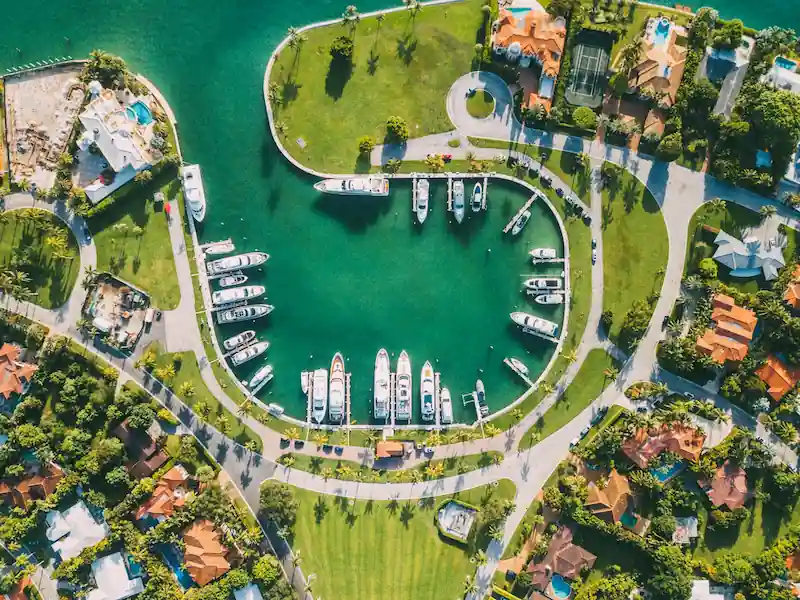
Where to stay in Miami
Find the best neighborhoods and hotels in Miami.
Open page →
Plan your trip to Miami, choose the best areas to stay, and understand what is actually worth building time around. Miami works best through contrast: South Beach and Art Deco streets, Brickell and the bayfront skyline, Little Havana and Cuban food culture, Wynwood and the Design District, Coconut Grove and Vizcaya, plus nature beyond the city when the stay is long enough. The smartest trip is not a race across famous names, but a clean sequence of beach, culture, water, food and downtime that respects heat, distance and causeway friction.
Find the best neighborhoods and hotels in Miami.
Open page →
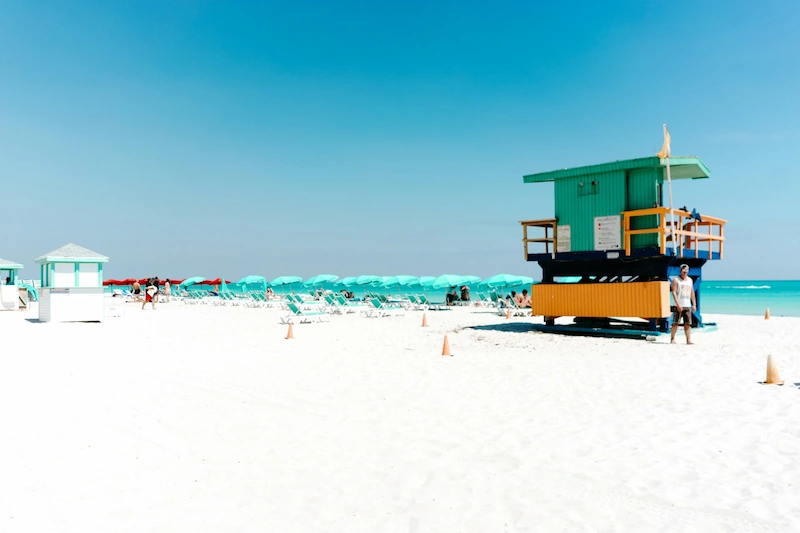
Prioritize the activities that deserve your time in Miami.
Open page →
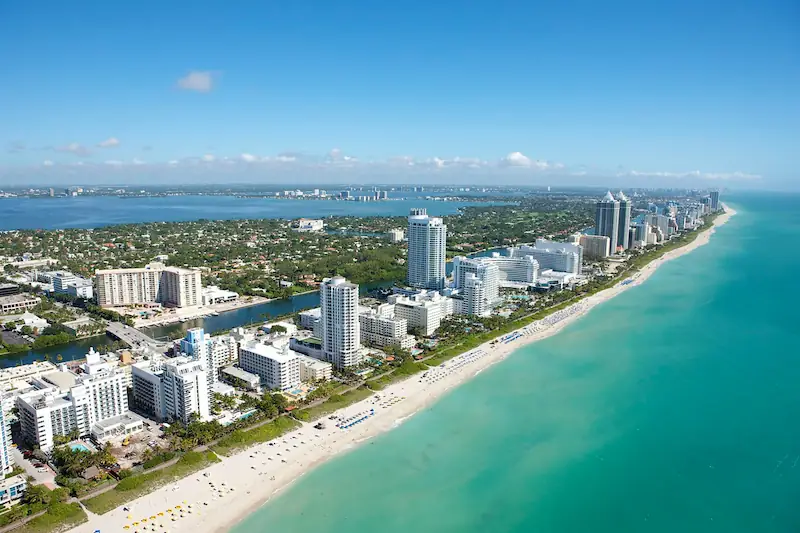
2 Days in Miami: First-Time Itinerary for Beach, Culture & Wynwood
Open itinerary →
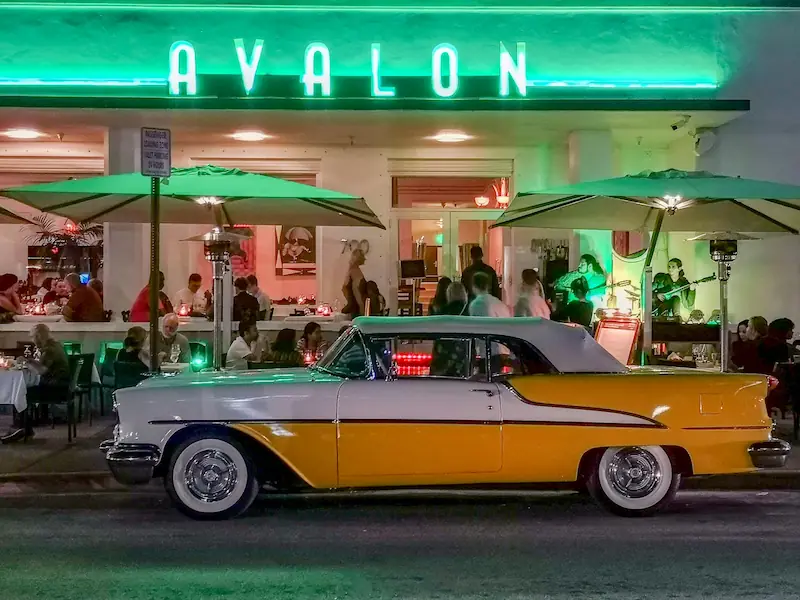
3 Days in Miami: Best Itinerary for Beach, Bay & Neighborhoods
Open itinerary →
4 Days in Miami: Romantic Itinerary for Beach, Design & Bayfront Culture
Open itinerary →
5 Days in Miami: Complete Itinerary for Beach, Culture & Key Biscayne
Open itinerary →
Miami works as a set of distinct travel zones rather than one continuous center. Beach, bayfront core, creative districts, Cuban street life, residential greenery and national-park nature each run on a different tempo, so a good trip depends on reading transitions well. By late afternoon, the city’s movement becomes more horizontal: shaded streets, waterfront promenades, terraces, rooftops and bay views matter more than ticking off another disconnected stop.
Few U.S. cities combine tropical light, beach access, Latin American and Caribbean cultural depth, contemporary hospitality, art districts, serious dining and nearby wetlands as convincingly as Miami. It can deliver South Beach, Art Deco architecture, Little Havana, Wynwood, Biscayne Bay, museums, rooftops, Coconut Grove, Key Biscayne and Everglades-style nature in one short stay, but only if you understand how heat, distances and causeways shape each day. Miami earns the trip when you want warmth and energy without giving up urban texture, and when you are willing to look beyond South Beach alone.
Best time: December to April for the strongest balance of weather, walkability, beach time and overall trip ease
Ideal trip length: 3 to 4 days for a strong first visit; 5 to 6 days if beach time, museums, neighborhoods and one nature extension all matter
Miami cost pressure comes less from admissions than from hotels, beach-area rates, valet parking, resort fees, restaurant reservations and peak-season weekends. South Beach and major event periods can push room prices sharply upward, while Brickell, Downtown and selected mainland bases often give better value for a city-led stay. You can moderate costs by staying off the beach, using transit selectively, clustering days carefully, and treating waterfront restaurants as occasional anchors rather than default meals.
Miami is best read as four interacting systems: the beach, the bayfront vertical core, the creative and cultural mainland districts, and the wider South Florida nature layer. Brickell and Downtown form the most urban center; South Beach provides the recognizable beach-and-Art-Deco image; Little Havana, Wynwood, Coconut Grove and the Design District operate as separate social scenes; Key Biscayne, Biscayne Bay and the Everglades add the open-water and wetland counterpoint. The city makes more sense as linked identities than as one continuous downtown.
Water defines movement here. Biscayne Bay separates the mainland from Miami Beach, and causeways act as filters that make transitions feel more deliberate than the mileage suggests. Flat terrain keeps the city visually open, with glare off water and glass shaping the experience by day, while shade, tree cover and waterfront breeze matter more than distance alone on older residential streets and bayfront promenades.
Mornings are the city’s most workable hours for walking, architecture, beaches and open-air districts. Midday is brighter but more draining, which naturally pushes the trip indoors, toward museums, lunch, pool, beach shade or hotel downtime. After dark, Miami redistributes itself: South Beach becomes more performative, Brickell turns social and vertical, Little Havana becomes more musical and street-facing, Wynwood becomes looser, and Coconut Grove settles into slower restaurant-led evenings.
Do not imagine Miami as a compact historic city where everything builds naturally on foot. Think in daily zones: one beach block, one bayfront or museum block, one cultural neighborhood, one food-led evening, and one optional nature or calmer-coast extension. Once you stop expecting continuity and start reading the city as rhythm, contrast and water-shaped movement, Miami becomes much easier to plan well.
Open the planner
Start with one clear identity per day: beach, urban bayfront, cultural neighborhood, design-and-art district, or nature extension. Pair South Beach with Art Deco streets, South Pointe and beach time rather than adding mainland crossings too early. Use Brickell and Downtown as one urban cluster, with Museum Park, Metromover, bayfront walking and a skyline-led evening kept together. Group Wynwood with the Design District, then let lunch, galleries or an evening reservation determine how long the day stays north. Treat Little Havana as a focused cultural-and-food block rather than an all-day sightseeing zone. Build Coconut Grove and Vizcaya as a slower southern day around shade, gardens, bay access and lower-density movement. Use Key Biscayne as the calmer coastal alternative once South Beach has done its job. Keep one late afternoon flexible for weather, pool, beach, rooftop or hotel downtime; Miami punishes over-programmed schedules. Only add Everglades or Biscayne National Park when the stay is long enough to give nature its own half day or full day. If you want both beach and city energy, a split stay can work better than forcing repeated beach-mainland transfers. If you are not renting a car, build each day around tight geographic clusters rather than trying to sample every side of the city.
Vibe: performative, beach-led, always on display
Why go: Stay here if direct beach access, Art Deco streets and Miami’s most recognizable visual identity matter more than value, parking ease or mainland efficiency.
Who it fits: Best for first-time visitors, short beach-led stays, nightlife groups and travelers who want Miami’s image at the hotel door.
Not for: Not for travelers seeking calm evenings, easy parking, or the strongest value.
Where to stay: South Beach gives you Miami’s classic beach-and-Art-Deco frame in one walkable zone. It is the most symbolic base and a strong first-trip chapter, but it can also be operationally expensive, socially loud and less restful than visitors expect.
Vibe: sleek, vertical, convenient
Why go: Stay here for a sharper city base with strong restaurants, hotel stock, bayfront walks, Metromover access and efficient movement to Downtown, Little Havana, Wynwood and the airport.
Who it fits: Best for repeat visitors, couples, work-leisure stays, restaurant-led trips and travelers who want a city-first Miami.
Not for: Not for travelers whose priority is beach access from the hotel door.
Where to stay: Brickell is one of the easiest bases to operate from if your trip is built around restaurants, skyline energy, museums, rooftops and short urban movements. It feels more polished than soulful, but it is highly functional.
Vibe: practical, civic, bayfront
Why go: Stay here if you want practical access to Museum Park, Frost Science, PAMM, Metromover, Kaseya Center, cruise logistics and generally better hotel value than the beach.
Who it fits: Best for museum-led stays, short stopovers, and travelers who prioritize logistics over romance.
Not for: Not for travelers looking for the prettiest street life or the strongest neighborhood intimacy.
Where to stay: Downtown and Omni are more useful than atmospheric, but they can make a short Miami stay noticeably smoother. The payoff is proximity to museums, transport, cruise and event infrastructure, and the bayfront rather than local intimacy.
Vibe: creative, casual, socially active
Why go: Stay here if food, bars, murals, galleries and a younger lower-rise energy matter more than classic Miami polish or direct beach access.
Who it fits: Best for groups, nightlife-focused travelers, and visitors who want restaurants and bars to shape the stay.
Not for: Not for travelers seeking a quiet base, beach access, or a polished luxury atmosphere.
Where to stay: Wynwood works best when your trip is built around going out, eating well, public art and staying in an area with visible personality. It is less complete as an all-purpose base than Brickell, but stronger for social energy and creative texture.
Vibe: cultural, social, street-facing
Why go: Stay here if cultural identity, Cuban influence, neighborhood food, music and evenings with more local character matter more than polished skyline convenience.
Who it fits: Best for repeat visitors, food-led travelers, and visitors who want Miami beyond beach-and-tower shorthand.
Not for: Not for travelers who want the easiest beach access or a highly polished hotel environment.
Where to stay: Little Havana is one of Miami’s most distinctive neighborhoods and one of the strongest ways to make the city feel grounded rather than branded. It works better as a culturally specific base than as an all-purpose first-time convenience play, but it fills a major gap in how Miami is usually read.
Vibe: leafy, residential, slower-paced
Why go: Stay here for a gentler version of Miami built around shade, bay access, terraces, residential calm and a less performative social scene.
Who it fits: Best for couples, longer stays, and travelers who prefer atmosphere over intensity.
Not for: Not for travelers who want nightlife density or constant first-timer action around them.
Where to stay: Coconut Grove gives Miami a more settled rhythm, with older trees, lower-rise streets, marinas, restaurants and a calmer evening mood. It suits travelers who want the city’s warmth without its loudest edges.
Vibe: designed, polished, fashion-forward
Why go: Stay here if design retail, newer hospitality, high-end dining and a curated urban environment appeal more than heritage character or broad sightseeing convenience.
Who it fits: Best for style-focused travelers and short luxury stays with dining and shopping priorities.
Not for: Not for travelers wanting a classic neighborhood feel or broad sightseeing convenience.
Where to stay: The Design District is compact, controlled and visually sharp, with good access to Wynwood and the northern bayfront. It works better as a stylish niche base than as the default choice for a first trip.
Miami reveals itself through contrast: one part of the trip should explain the city’s visual myth, another its cultural foundations, another its everyday social life, and another its relationship to water and wetlands. The best version is not attraction-heavy but well-sequenced, with outdoor hours protected early and slower indoor or hotel time placed when heat thickens.
Planning tip: Use early mornings for open-air districts, beaches and waterfront walks, then shift museums, long lunches, pool time, bay cruises or hotel pauses into the hotter middle of the day.
This is where Miami’s global image became architectural rather than purely beach-led. Walking the district explains how climate, leisure, and design merged into a visual language that still shapes the city’s identity.
Tip: Go early, before beach traffic and midday glare flatten the detail.
Miami’s beach works best when it gives shape to the day rather than consuming it. Early hours preserve the feeling of space and let the city still belong to walkers, swimmers, and runners rather than full social performance.
Tip: An early beach block pairs far better with the rest of the city than a late-morning start.
Check guided tours →
South Pointe Park is one of the simplest ways to make South Beach feel more spatially complete. It adds open water, movement, skyline-and-sea contrast, and a cleaner public-space perspective than Ocean Drive alone.
Tip: Use it as the start or finish of a South Beach block rather than a separate trip.
Check guided tours →
Miami is unusually readable from the water. Seeing the city from Biscayne Bay clarifies the relationship between barrier island, bayfront towers, and lower mainland districts in a way the street grid does not.
Tip: Choose a route or lookout that keeps the skyline broad rather than focusing only on the beach side.
This is the part of Miami that corrects the stereotype. Walking the core shows how much of the city’s present identity is urban, finance-linked, residential, and increasingly livable at street level.
Tip: Use the free Metromover to reduce dead walking between useful pockets.
Check guided tours →
PAMM, Frost Science, and the surrounding bayfront landscape work best as a combined urban pause rather than separate checkboxes. It is one of the clearest places to feel Miami’s civic ambition against open water and sky.
Tip: Build this into a midday block when heat makes longer street walks less rewarding.
Check guided tours →
Wynwood matters less as a single mural destination than as a district where art, hospitality, and former industrial space have fused into a new urban identity. The point is to read the neighborhood as a whole, not collect backgrounds.
Tip: Visit before lunch if you want clearer streets and less visual clutter.
Key Biscayne is one of the strongest additions to a Miami trip when you want a more open, less performative shoreline. Bill Baggs and Crandon Park are the clearest ways to experience that calmer beach logic, especially for families, repeat visitors, and anyone who finds South Beach too obvious or too crowded.
Tip: Best used as a half-day coastal reset, with Bill Baggs or Crandon making more sense than doubling down on Miami Beach if the trip already includes enough central glamour.
Check guided tours →
Miami’s strongest nature layer is not another beach. The Everglades and Biscayne National Park reveal the wetland, mangrove, bay and reef systems around the city, but they only work when given real time. Add one if you have already covered the core city, not because every Miami trip needs an automatic excursion.
Tip: Choose Everglades for wetlands and wildlife, Biscayne for water and reef logic; do not treat either as a quick leftover between city districts.
Little Havana explains Miami through migration, politics, language, and everyday commerce rather than through spectacle. Its value is interpretive: it gives the city historical and social weight that beach-only itineraries miss, especially if you treat it as a place to move through, eat in, and listen to rather than as a symbolic stop on Calle Ocho.
Tip: Give it real half-day energy with street time, food, or music if you want more than a quick pass down Calle Ocho.
Vizcaya gives historical scale to a city often read only through recent luxury and high-rise growth. The estate, bayfront setting, and garden sequence reveal how Miami’s landscape and aspiration were staged long before today’s skyline hardened.
Tip: Check opening days carefully and give it unhurried time; the place works through sequence more than speed.
Check guided tours →
PAMM is one of the clearest places to understand Miami as a hemispheric city rather than only a leisure destination. Its programming, architecture, and bayfront position give cultural shape to the city’s relationship with the Caribbean and Latin America.
Tip: This is one of the smartest hot-hour stops because the building itself is part of the experience.
Check guided tours →
Even if shopping is not the point, the district shows a deliberate version of how Miami builds image through material, shade, landscape, and branded space. It is more interesting when read as designed public realm than as pure consumption.
Tip: Pair it with Wynwood so the contrast between curated and improvised urban form becomes obvious.
Check guided tours →
Coral Gables and Venetian Pool help show that Miami has older, more stylized urban layers that do not depend on beach branding or tower glamour. They make sense as a contrast move, especially on longer or repeat trips.
Tip: Best treated as a selective add-on, not as a major first-trip priority unless you specifically want that contrast.
Check guided tours →
Coconut Grove offers a useful corrective to Miami’s louder social image. Evenings here are slower, greener, and more conversational, with the sound of terraces and traffic sitting lower under the trees.
Tip: This is one of the best districts to reserve for dinner on a trip that already has enough intensity.
Check guided tours →
The Metromover is more than a practical connector; it reveals Miami’s core as a layered system of podiums, towers, bayfront edges, and transit loops. It is one of the easiest ways to grasp how Brickell and Downtown fit together.
Tip: Ride a full loop once without treating it only as transport.
Check guided tours →
Miami’s open water edges are not secondary scenery; they are one of the city’s clearest forms of relief. A bayfront walk recalibrates the trip by giving the skyline distance, wind, and quieter space between denser urban blocks.
Tip: Choose early or late light when the waterfront feels more usable and less exposed.
Check guided tours →
Miami often works better when one part of the day is intentionally under-programmed. A pause by water or above the city preserves energy for evenings and keeps the trip from becoming a sequence of overheated transfers.
Tip: Treat this as protected time, not leftover time.
Check guided tours →
Brickell is one of the best ways to see Miami as a contemporary urban destination rather than only a coastal one. At night it works through density, polished energy, and skyline presence rather than through overt beach spectacle.
Tip: Best for one focused evening, not for trying to outdo South Beach on pure nightlife volume.
Check guided tours →
Cuban food in Miami is not only about specific dishes; it is part of the city’s social and linguistic fabric. The best version is tied to context, where coffee, pastry, lunch, and conversation all feel integrated into the street.
Tip: Go outside the busiest lunch wave if you want the room to feel more local than performative.
Miami can make a waterfront meal feel essential, but the smartest version is one well-chosen bayfront lunch or dinner rather than repeated premium views. The setting matters most when it also advances the day’s geography.
Tip: Use waterfront dining to close a district-based day rather than crossing the city just for the table.
Check food options →
Brickell concentrates a lot of useful dining into a relatively compact footprint, which makes it one of the most efficient places to end the day. Its strength is not intimacy but density, choice, and ease after urban sightseeing.
Tip: Reserve here when you want a polished dinner without adding major transport friction.
Check food options →
Part of Miami’s contemporary identity now runs through hospitality design as much as cuisine. One carefully chosen meal in the Design District, South Beach, or a strong hotel restaurant can show how the city stages dining as atmosphere and social choreography.
Tip: Choose the setting first, then the menu, when you want one distinctly Miami meal.
Check food options →
Miami expands very quickly if you try to honor every version of it in one trip. Protect the parts that explain the city best, then let the rest depend on your weather tolerance, social appetite, interest in beach time and willingness to add nature beyond the core.
Miami can work well with children if the trip is built around shorter outdoor windows, easy wins, and places where the city stays visually open. Frost Science, calmer beaches, bayfront parks, hotel pools, Key Biscayne and food-led neighborhoods all help. In the morning, when the light is still soft on the water, the city feels much more manageable for families than it does after midday heat builds.
Miami changes meaning depending on whether you lean into beach time, urban culture, food, nature or a slower neighborhood read. These itinerary lengths work best when one identity acts as the backbone and the others support it.
Open the planner →
Miami is easier to enjoy when you plan for climate, distance, causeways, parking and neighborhood identity rather than assuming a compact city-break format. A little structure goes a long way here.
For most travelers, December through April is the clearest answer: the weather is more comfortable, outdoor time is easier to protect, and the city is fully switched on. April and early May often strike the best balance between strong energy and slightly less compressed logistics. Summer can work if lower rates matter more than comfort, but the heat changes how much ground you will realistically want to cover.
Three days is the minimum threshold at which Miami starts to make sense as more than a beach add-on. With less time, the city’s transfers and contrasts can dominate the experience more than the places themselves.
Choose your base by deciding what you want your default movement to feel like. South Beach suits travelers who want the beach to be present from the moment they step outside; Brickell is better for a city-led stay with cleaner logistics; Downtown works for museums, events and cruise practicality; Coconut Grove suits calmer residential warmth; Little Havana is culturally strong but niche as a base; Wynwood and the Design District are better for social, food and style-led stays than universal convenience. If you want both beach time and mainland depth, consider a split stay instead of commuting between identities every day.
Miami International Airport is the main arrival point for most trips and is well placed for fast access to the urban core. Fort Lauderdale can also work for some itineraries, but it adds transfer time and is less convenient if Miami itself is the trip. Cruise passengers should think carefully about whether they want a beach stay, a practical overnight, or a real city break before or after sailing.
Miami is not a city to treat as purely walkable end to end, but many individual districts are very workable on foot once you are in them. Metrorail is useful for selected connections, Metromover is excellent and free in the Downtown-Brickell core, and ride-hailing often fills the gaps between neighborhood clusters. Driving adds flexibility for Coconut Grove, Key Biscayne, Coral Gables, Everglades-style outings and longer day trips, but parking and valet costs can make it less attractive in the densest visitor zones. For many first trips, you do not need a car every day if you cluster the itinerary properly.
Healthcare standards are strong, but visitors should remember that medical costs in the U.S. can be high, so insurance matters. General tourist awareness is enough in most central areas, though petty theft, late-night overconfidence, and leaving items visible in cars remain avoidable weaknesses. Heat, hydration, and sun exposure are more likely to affect the quality of the trip than serious safety concerns.
Miami changes less through cold and more through usability. Winter and early spring create the easiest version of the city, with longer comfortable outdoor windows and a stronger sense that neighborhoods can be combined without friction. Summer softens pricing in some periods but makes the trip more climate-led, pushing visitors indoors or toward pool, beach shade and shorter outdoor blocks. Autumn can be surprisingly appealing for travelers who value flexibility and lower pressure, provided they are comfortable with weather uncertainty.
Spring is one of the strongest seasons for a balanced first trip, especially March through early May once you manage event and school-break pressure. The city stays social and bright, but outdoor movement is still workable enough to combine beach, architecture, neighborhoods and waterfront time in the same day. It suits travelers who want Miami at full energy without the deepest winter compression.
Summer produces a more heat-governed Miami, where the best trips are built around short outdoor windows, indoor cultural anchors, hotel pools and evening movement. It can suit repeat visitors, pool-led stays and travelers prioritizing lower hotel pressure over constant mobility. Afternoons feel heavier and slower, so the city becomes less about coverage and more about selective pacing.
Autumn is often a better fit for travelers who value lower pressure and are comfortable trading certainty for flexibility. The city can feel looser and more breathable in practical terms, but weather requires a plan that can pivot between outdoor and indoor time. When the air clears after rain, the streets and bayfront can feel unusually open and calm.
Winter is the easiest season for most first-timers because Miami’s outdoor logic becomes much more generous. Walks, terraces, beach mornings, bayfront time and district-to-district days all feel more naturally aligned, and the city’s social energy is high. It suits travelers who want the most complete version of Miami, though booking pressure and rates are correspondingly stronger.
These are the practical questions that most affect whether a Miami trip feels smooth or fragmented.
Three days is enough for a sharp first pass, but four to five days is the more convincing answer if you want both beach time and neighborhood depth. Miami becomes much better once you stop forcing too many cross-city jumps into a short stay.
South Beach is the most immediately recognizable base if beach access is central to the trip. Brickell is often the smarter first-time choice when the stay is more city-led, restaurant-focused and logistically minded. Coconut Grove suits travelers who want a calmer, more residential atmosphere.
South Beach is best for iconic Miami imagery and immediate beach access, while Brickell is often the most efficient mainland base for a broader city-led stay. A strong first trip often combines one of those with Little Havana, Wynwood, Museum Park and either Coconut Grove or Key Biscayne.
For most travelers, December through April is the easiest and most complete season. Outdoor time is more comfortable, the city is highly active, and the beach-plus-city balance is easier to achieve. April and early May can give particularly good experience value if you want strong energy with slightly less winter pressure.
Individual districts can be very walkable, but Miami as a whole is not a compact walk-everywhere city. The best approach is to move between clusters by transit, ride-hailing or car, then walk within each neighborhood. Heat also affects walkability far more than many first-time visitors expect.
Only if your trip extends beyond the core visitor districts or includes Key Biscayne, Coral Gables, Everglades-style outings, Biscayne National Park or wider South Florida movement. For a city-focused stay in South Beach, Brickell, Downtown, Wynwood, Little Havana and Coconut Grove, a car can add parking friction and cost rather than freedom.
Stay in Miami Beach if the beach itself is central to why you are going. Stay in Brickell if you want a more city-led, restaurant-heavy, practical stay with easier airport and mainland access. Many travelers who want both versions of Miami do best with a split stay.
For a first trip, yes in some form, but it does not need to dominate the stay. The strongest version is a morning beach, Art Deco and South Pointe block rather than an all-day default that crowds out the rest of the city.
For many travelers, yes. It is one of the clearest places to understand Miami beyond the beach through food, migration history, music, language and everyday street life. It works best with enough time for food or music, not just a quick photo stop.
Yes if you enjoy murals, galleries, casual food and creative districts. It is less essential if you dislike heavily branded art districts or are short on time. Pairing Wynwood with the Design District gives the clearest contrast between improvised and curated Miami.
Yes for travelers interested in architecture, public art, fashion, design, restaurants and polished urban spaces. It is not a must for every first-time visitor, but it adds a useful modern layer when paired with Wynwood or a strong dinner plan.
Yes, especially for couples, repeat visitors and travelers who want a calmer, greener Miami. Coconut Grove works well with Vizcaya, marina walks, shaded streets and a slower meal, but it is less important if the trip is only two fast days.
Yes if you want Miami beyond beaches, nightlife and high-rises. Vizcaya gives historical atmosphere, gardens, bayfront setting and a slower architectural sequence. It is strongest when paired with Coconut Grove rather than treated as an isolated taxi stop.
PAMM is the better choice for contemporary art, architecture and a cultural read on Miami’s place between the Americas. Frost Science is stronger for families, mixed-age groups and rainy or very hot days. Together, Museum Park works well as a compact bayfront culture block.
Frost Science, Miami Children’s Museum, Key Biscayne, Crandon Park, South Pointe, calmer beach mornings and hotel pool time are usually stronger than long district-hopping days. Zoo Miami can work well, but it requires more time and a different geography from the core city.
Yes. Couples often do best with Brickell, South Beach, Coconut Grove or Design District logic depending on the mood: skyline and restaurants, beach and Art Deco, slower greenery, or design-led dining. Miami works particularly well when one part of each day is intentionally unhurried.
Use Frost Science, PAMM, The Bass, Rubell, Superblue, a long lunch, a hotel terrace, shopping or a more flexible Design District block. Avoid forcing beach, Key Biscayne or nature plans during unstable weather unless you can pivot easily.
Walk the Art Deco district, South Beach, South Pointe Park, Museum Park, Brickell Key, Wynwood’s surrounding murals, Calle Ocho, the Design District public realm and selected bayfront promenades. Miami’s best free experiences are usually walks with strong setting and timing.
Yes when you want a calmer coastal reset beyond South Beach. Bill Baggs and Crandon Park are particularly useful for families, repeat visitors and travelers who want open space rather than performance-heavy beach energy.
Yes if you have at least three to four days and want a real nature contrast. The Everglades are best treated as a half-day or full-day excursion, not squeezed between city districts. They add wetland and wildlife context that the urban core cannot provide.
Yes for water, mangroves, reefs and boat-based nature, but it requires planning because the best experience is not simply driving to a viewpoint. It suits travelers who want a quieter bay-and-reef counterpoint after the core city is covered.
It can be, but only if the long road day is part of the appeal. For most first-time Miami trips, Everglades, Biscayne National Park, Key Biscayne or Key Largo are more efficient extensions than a very long Key West out-and-back.
Little Havana is essential for Cuban food and cultural context, Brickell is efficient for polished dinners, Wynwood and Little River are strong for casual and creative dining, Coconut Grove is good for slower meals, and the Design District works for high-design reservations.
Miami at night depends heavily on the district. South Beach is the classic nightlife image, Brickell is polished and skyline-led, Little Havana is more music-and-culture driven, Wynwood is casual and social, and Coconut Grove is slower and more dinner-led.
The main visitor areas are widely used by travelers, but normal urban awareness still matters, especially late at night, around nightlife and with visible belongings in cars. For most visitors, heat, hydration, driving, parking and overconfidence after nights out are more common trip-quality issues than serious safety concerns.
It can be, especially once hotel location, peak-season rates, valet parking, resort fees and high-demand restaurants are added together. The city is more manageable if you stay off the beach, cluster days carefully and avoid making every meal a view-driven occasion.
Yes, if you stay in a useful base and cluster days carefully. Brickell, Downtown, South Beach, Wynwood and Little Havana can work with transit and ride-hailing. A car becomes more useful for Key Biscayne, Coconut Grove, Coral Gables, Everglades, Biscayne National Park or wider South Florida plans.
Skip long cross-city zigzags, repeated beach shopping strips, too many view-driven restaurants, Key West as a forced day trip, and additional paid activities that duplicate the same beach or skyline feeling. Miami improves when each stop adds a different layer.
Absolutely. The city becomes much more convincing once you add Brickell, Little Havana, Wynwood, Vizcaya, PAMM, the Design District, Coconut Grove and one bay or nature layer. South Beach matters, but it is not the whole point.
Build it around contrast: one South Beach and Art Deco block, one cultural neighborhood such as Little Havana, one art or museum layer, one bayfront or water view, one strong meal district and one flexible beach, pool or nature window. That structure avoids both beach-only and overpacked Miami.
Miami is easiest to enjoy when you plan for rhythm, not just attractions.
Find the best places to stay, how to get there, and move around with ease.
Build a smarter trip base
Once you understand how Miami works and what matters most for your trip, the next step is turning that direction into a real itinerary. Use the planner to organize your days around the right areas, experiences, and rhythm so the trip feels clear before you go.