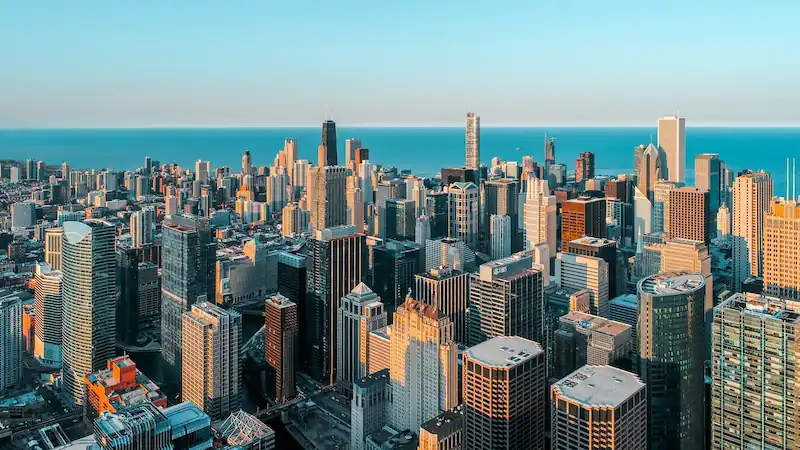
Where to stay in Chicago
Find the best neighborhoods and hotels in Chicago.
Open page →
Plan your trip to Chicago, choose the best areas to stay, and understand what deserves your time before the city turns into a long list of famous names. Chicago is best read through structure: the river cutting through downtown, the lakefront opening the city to the east, the Loop and River North forming the visitor core, and neighborhoods such as West Loop, Lincoln Park, Wicker Park, Chinatown, Pilsen, and Hyde Park adding food, culture, and local rhythm beyond the skyline.
Find the best neighborhoods and hotels in Chicago.
Open page →
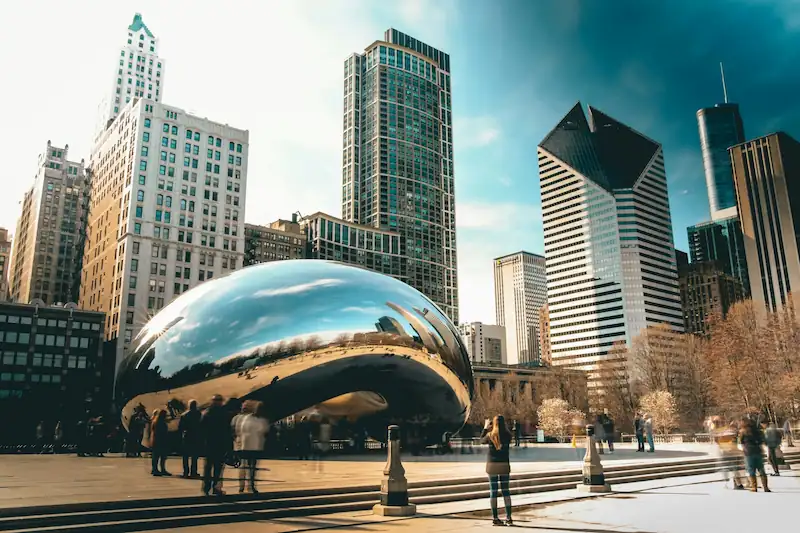
Prioritize the activities that deserve your time in Chicago.
Open page →
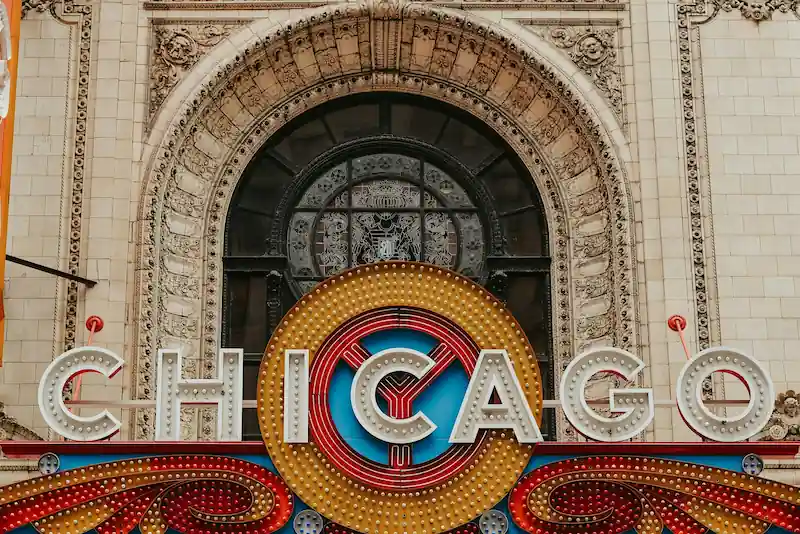
2 Days in Chicago Itinerary: First-Time Weekend Plan
Open itinerary →
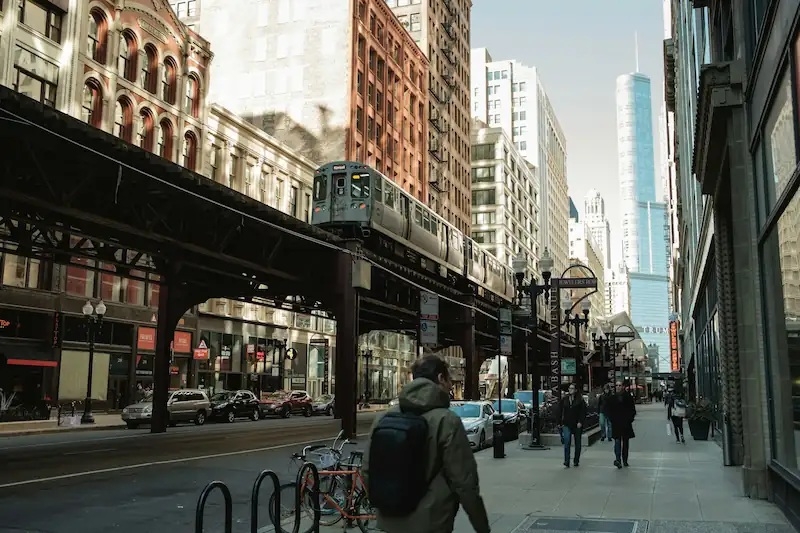
3 Days in Chicago Itinerary: Walkable First Trip Plan
Open itinerary →
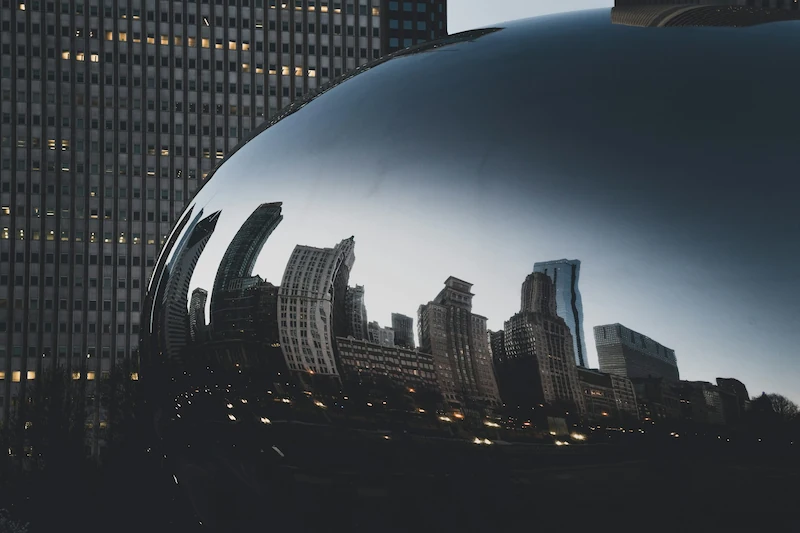
4 Days in Chicago Itinerary: Culture, Lakefront & Neighborhoods
Open itinerary →
Chicago is a major American city that remains unusually legible because its natural and urban structure is so clear. The Loop anchors the center, the Chicago River explains the skyline, Lake Michigan gives the city its open eastern edge, and the neighborhood belts add food, music, museums, baseball, murals, and residential calm. The best Chicago trip is not a race through attractions; it is a sequence of strong contrasts: river, lake, museum, architecture, food, and one or two neighborhoods beyond the polished core.
Chicago is worth structuring a trip around because it combines a world-class architectural story with serious museums, a usable lakefront, strong food neighborhoods, and a clear sense of civic scale. Few U.S. cities let you move so naturally from a river cruise to a major art museum, from a downtown theatre district to a West Loop dinner, or from lakefront space to a neighborhood such as Pilsen, Chinatown, Lincoln Park, or Wicker Park. Its strength is not just that it has famous attractions, but that those attractions help you understand how the city works.
Best time: Late spring and early autumn give Chicago the best balance of walkability, river cruises, lakefront use, neighborhood time, and manageable hotel pressure.
Ideal trip length: 3 days for a strong first visit; 5 days if you want neighborhoods, museums, food, lakefront time, and cultural depth; 7 days if architecture, South Side context, Oak Park, or day trips matter.
Chicago usually feels more financially workable than New York or San Francisco, but it is not automatically cheap. Hotel pricing can spike around summer weekends, major conventions, Lollapalooza-style event periods, sports dates, holiday weekends, and high-demand cultural calendars. Costs concentrate around central hotels, rooftop-heavy dining, river cruises, observation decks, and major museums, while casual food, the CTA, free parks, the Riverwalk, Lincoln Park Zoo, and the lakefront help keep the trip flexible. The best value usually comes from matching your base to your evenings rather than simply chasing the cheapest central room.
Chicago works through a strong center-and-corridor logic. The Loop is the civic and cultural core; the river and bridges explain downtown’s architecture; River North and the Magnificent Mile extend the visitor center north; the lakefront gives the city its open edge; and neighborhoods such as West Loop, Lincoln Park, Wicker Park, Chinatown, Pilsen, and Hyde Park add food, residential rhythm, cultural history, and evening texture. The city is large, but it becomes manageable once each district has a clear role.
Lake Michigan is not just scenery; it is Chicago’s orientation device, weather engine, and public-space edge. The river branches carve downtown into memorable corridors, the flat grid makes the city easier to navigate, and the elevated train gives movement a visible grammar. The further you move from the Loop, the more the city shifts from civic scale to neighborhood identity, which is why good Chicago planning depends on grouping areas rather than chasing every name.
Chicago changes cleanly through the day. Mornings work well for the Loop, museums, and architecture-heavy walks; midday and afternoon suit the Riverwalk, lakefront, parks, and Museum Campus; evenings pull energy into West Loop, River North, theatre, comedy, music, Wrigleyville, and selected neighborhood corridors. In warm weather, the city stretches outward toward beaches, boats, terraces, and festivals; in winter, it concentrates indoors around museums, hotels, restaurants, theatres, and historic interiors.
Read Chicago as four overlapping systems: the skyline-and-river core, the lakefront edge, the museum-and-culture layer, and the neighborhood belts. A strong first trip gives each system one protected window instead of trying to sample everything in fragments.
Open the planner
Start with the central core — Loop, river, architecture, Millennium Park, and one major museum — before expanding outward. Treat the architecture cruise as orientation, not just entertainment; it makes the rest of downtown easier to understand. Give the lakefront its own weather-friendly block because it changes the physical pace of the trip. Do not stack several major museums in one day; choose one anchor and let the surrounding area breathe. Use West Loop, River North, Wrigleyville, or a neighborhood dining corridor as an evening anchor, not as an extra afterthought. If you only have three days, protect one skyline-and-river day, one culture-and-lakefront day, and one neighborhood-or-food layer. Use Hyde Park, Pilsen, Chinatown, Oak Park, or deeper neighborhood exploration only once the city center already makes sense. Match the base to the evening: The Loop is efficient, River North is active, West Loop is food-led, Lincoln Park is calmer, and South Loop is practical for museums. Reserve your most weather-dependent outdoor sequence — river cruise, Riverwalk, lakefront, skyline deck, boat time, or beach stretch — for the clearest window. Chicago works well without a car, but it rewards geographic discipline; a good day should feel like a sequence, not a set of disconnected jumps.
Vibe: civic core with architectural weight
Why go: The Loop is the most efficient base for a first Chicago trip built around architecture, the Art Institute, Millennium Park, the Riverwalk, theatre, and quick access to the city’s classic downtown sights.
Who it fits: first-time visitors, short stays, museum-led trips, architecture-focused travelers, and anyone who wants the city’s core to be immediately legible
Not for: travelers seeking neighborhood intimacy, late-night dining texture outside theatre corridors, or a quieter residential atmosphere
Where to stay: The Loop keeps Chicago easy to read and cuts transit friction on a short stay. It is less atmospheric after office hours than River North, West Loop, or Lincoln Park, but as a strategic first-trip base it remains the most efficient option.
Vibe: polished downtown energy
Why go: River North works when you want centrality plus stronger evening energy: restaurants, galleries, nightlife, river access, the Magnificent Mile, and easy movement toward both the Loop and Near North Side.
Who it fits: short-break travelers, couples, nightlife-light travelers, restaurant-focused visitors, and first-timers who want evenings to stay easy
Not for: travelers prioritizing value, quiet sleep, residential texture, or a less polished version of Chicago
Where to stay: River North is one of the easiest areas for a stylish, low-friction stay near the core. It trades some calm and value for convenience, late-night options, restaurant density, and an always-on urban feel.
Vibe: design-led dining district
Why go: West Loop is the sharpest base for travelers who want food, bars, contemporary hotels, warehouse conversions, and evening energy to be central to the trip rather than secondary.
Who it fits: food-focused travelers, couples, repeat visitors, design-hotel travelers, and people who want a strong evening district close to downtown
Not for: travelers wanting classic landmark density, lakefront immediacy, or the simplest first-time museum-and-river routing
Where to stay: West Loop feels more contemporary and social than ceremonial downtown Chicago. It is excellent for dining-led trips, but less ideal if your days revolve around museums, the lakefront, and first-time sightseeing efficiency.
Vibe: residential lakefront ease
Why go: Lincoln Park offers a softer, greener Chicago base with neighborhood restaurants, parkland, lakefront access, the zoo, residential streets, and enough connection to downtown to stay practical.
Who it fits: families, slower city travelers, lakefront walkers, return visitors, and visitors who want mornings and evenings to feel more relaxed
Not for: travelers who want maximum nightlife concentration, the shortest possible downtown runs, or a purely landmark-led first trip
Where to stay: Lincoln Park is a strong choice when the trip needs breathing room. You gain parkland, neighborhood dining, lakefront access, and a more residential cadence, while giving up some direct central intensity.
Vibe: independent and street-smart
Why go: Wicker Park suits travelers who want a more independent, creative, local-feeling base shaped by cafés, bars, vintage shops, music, restaurants, and Blue Line access rather than landmark concentration.
Who it fits: repeat visitors, younger travelers, neighborhood walkers, food-and-bar trips, and anyone who prefers local commercial streets over downtown polish
Not for: first-timers trying to minimize transit, travelers with a museum-heavy plan, or visitors who want lakefront and classic sights nearby
Where to stay: Wicker Park gives Chicago texture quickly and feels more lived-in than the core. It is rewarding when that local rhythm is the point of the trip, but less efficient for a classic first visit.
Vibe: practical near-museum base
Why go: South Loop makes sense if museums, Museum Campus, Grant Park, the lakefront, and a more spacious central base matter more than nightlife density.
Who it fits: families, museum-heavy travelers, budget-conscious central stays, convention visitors, and people who want practical access without River North pricing
Not for: travelers who want restaurants and bars immediately outside the hotel or a strongly atmospheric neighborhood feel
Where to stay: South Loop is one of Chicago’s more pragmatic central bases. It feels less polished than River North or West Loop, but often delivers better space, better value, and easier access to Museum Campus and the lakefront.
Vibe: food-led urban contrast
Why go: Chinatown is one of the smartest additions to a Chicago trip if you want food, local street texture, and a clear change in rhythm without traveling far from the central city.
Who it fits: food-focused travelers, repeat visitors, first-timers with enough time to widen the trip, and visitors who want one easy neighborhood contrast
Not for: travelers trying to keep every day tightly centered on downtown landmarks or those who need a broad traditional hotel supply
Where to stay: Chinatown is usually better as a district to visit than as the default base for a first trip, but it adds real contrast and helps Chicago feel broader, more layered, and less downtown-only.
Vibe: creative, food-led, mural-rich
Why go: Pilsen is one of the best additions when you want murals, Mexican food, local art, and stronger neighborhood texture beyond the central visitor core.
Who it fits: repeat visitors, food-focused travelers, mural and culture seekers, and anyone wanting a more local Chicago layer
Not for: travelers trying to keep a very short trip centered on downtown landmarks or visitors who want the simplest hotel logistics
Where to stay: Pilsen is usually stronger as a district to explore than as a default first-time base, but it adds a real sense of range to Chicago and helps the city feel broader, younger, and less architecturally formal.
Chicago reveals itself best when you alternate scale and texture: skyline first, interiors next, then neighborhood life and food. The city is not short on attractions, but its real strength is how architecture, public space, museums, lakefront, music, and local corridors connect into a coherent urban story.
Planning tip: Use the trip structure directionally: protect the river cruise, one anchor museum, a lakefront block, and one neighborhood or food-led layer. Leave exhaustive activity choice for later planning rather than trying to solve everything at once.
This is the fastest way to understand why Chicago matters architecturally. From the water, the city’s chronology becomes visible: bridges, setbacks, towers, engineering ambition, and the way the river organizes downtown all come into focus at once.
Tip: Take this early in the trip so the rest of downtown starts making sense on foot.
The Art Institute rewards time, not speed. It is one of the few museums in the country where a first-time visitor can get both canonical works and a strong sense of collection depth without the building feeling overwhelming if the visit is edited well.
Tip: Go with a short route in mind instead of trying to cover the whole museum.
Check guided tours →
This is where Chicago’s engineering confidence becomes tactile. The riverwalk is not the city in miniature, but it does let you feel the transition between commercial downtown, architectural spectacle, and public waterfront in one compact sequence.
Tip: Pair it with a bridge-crossing walk rather than treating it as a stand-alone stroll.
Check guided tours →
Chicago’s relationship with Lake Michigan changes the trip more than many first-timers expect. The lakefront introduces air, scale, and physical release into an otherwise vertical city, which is why a stay built only around downtown interiors can feel incomplete.
Tip: Give this its own weather-friendly window rather than squeezing it between indoor stops.
Check guided tours →
Chicago’s skyline is especially convincing when seen from the waterline of Lake Michigan. This is one of the city’s strongest visual experiences because it shows how the towers, shoreline, and open horizon relate at full scale.
Tip: Choose one strong late-day lake or boat window instead of chasing multiple skyline angles in the same evening.
This part of the city works best as a reading tool. It shows how public art, cultural institutions, rail edges, and downtown architecture meet, making it more useful as a first-pass orientation zone than as a pure attraction checklist.
Tip: Do it at the start of a Loop walk, not at the tired end of the day.
Check guided tours →
Lincoln Park Zoo is one of the city’s most useful free activities because it combines well with the park, lakefront movement, and nearby neighborhood time. It is especially good for families, but it is also simply a strong low-friction daytime stop.
Tip: Pair it with Lincoln Park or the lakefront rather than treating it as a standalone cross-city mission.
Check guided tours →
Wrigley Field matters even beyond baseball because it opens a more local and less downtown-centered side of Chicago. In season, a Cubs game or just the wider pre-game and post-game atmosphere can add a strong city-life layer to the trip.
Tip: Only prioritize this if you want one part of the trip to feel less formal, less architectural, and more socially local.
Garfield Park Conservatory is one of Chicago’s best underused backup plans for colder, rainy, or lower-energy parts of a trip. It adds greenery, breathing room, and a different kind of indoor time than another museum-heavy block.
Tip: This works best when you want one indoor stop that feels restorative rather than another formal institution.
Check guided tours →
Museum Campus is one of Chicago’s strongest family, science, and lakefront cultural zones, but it works best when treated as one major institution plus the open setting rather than a marathon of three ticketed stops. Field, Shedd, and Adler all benefit from focus.
Tip: Pick the one museum that best fits your trip, then use the lakefront setting as part of the payoff.
The Chicago Cultural Center is one of the city’s best free indoor stops because it combines historic interiors, architectural interest, and a genuinely useful central location. It is especially strong when paired with Millennium Park and the Loop rather than treated as a random extra.
Tip: This is one of the smartest first-day additions because it adds substance without costing time or money.
Check guided tours →
A skyline deck is still a valid Chicago classic, but the smartest move is to choose one based on route and timing rather than collecting both. For most travelers, the second deck adds less than another neighborhood or lakefront layer would.
Tip: Use one observation deck only, preferably at a time that supports the rest of the day rather than dictating it.
Navy Pier is not essential for every Chicago trip, but it can still work well for families, waterfront strolls, cruise departures, or casual late-day lake views. The key is to treat it as a selective stop, not as the city’s central must-do.
Tip: Best used when it fits an existing lakefront or family day, not as a standalone mission.
Hyde Park adds intellectual and civic depth to a Chicago trip. It shifts the city away from pure skyline reading and toward university life, Black cultural history, and a different relationship with the lakefront and public institutions.
Tip: Do Hyde Park as a half-day with one clear cultural anchor rather than a rushed detour.
Check guided tours →
Oak Park deepens Chicago’s architectural story by showing where domestic innovation and Prairie design become tangible. It is especially worthwhile for travelers who want the city’s design reputation to extend beyond skyscrapers.
Tip: Only add Oak Park if architecture is a genuine priority, not as a default side trip.
Chicago’s performance culture helps shape evenings into something more than dinner reservations. Whether the focus is theatre, jazz, blues, comedy, or orchestral programming, the city has enough cultural weight that an evening show can become part of the trip’s architecture rather than an optional add-on.
Tip: Check performance schedules early because strong evenings fill in popular travel windows.
A Chicago trip becomes more complete when it expands beyond downtown’s architectural canon. Bronzeville and adjacent South Side cultural layers bring literature, music, migration, politics, and institutional history back into the city’s story.
Tip: Go with one or two specific stops in mind so the area has shape rather than becoming abstract context.
Check guided tours →
Chicago’s music identity is strongest when you hear it in a room that still feels rooted in the city’s own traditions. A jazz or blues set adds far more local specificity than another skyline drink and can become the night that most clearly stays with you.
Tip: Choose one real music night instead of layering it onto an already overloaded dinner-and-bar plan.
The MCA and Near North lakefront give Chicago a useful art-and-design layer between the downtown core and the lake. It is not a non-negotiable for every first trip, but it is a strong choice when contemporary art, design, Gold Coast walking, or a calmer north-of-river cultural block fits the stay.
Tip: Use this when you want one selective cultural stop near the lake rather than another major museum day.
Check guided tours →
This is where Chicago starts feeling less monumental and more lived. Record shops, cafés, bars, and small retail clusters make the neighborhood useful not because it is packed with sights, but because it gives the trip street texture and local cadence.
Tip: Let the area breathe instead of turning it into a box-checking crawl.
Check guided tours →
Lincoln Park shows how Chicago can loosen without losing urbanity. The lakefront, residential streets, local restaurants, and green space create a slower rhythm that is especially welcome after a downtown-heavy first day.
Tip: Pair Lincoln Park with a lakeside walk rather than another dense downtown stop.
Check guided tours →
West Loop is one of the clearest examples of Chicago’s ability to turn industrial history into contemporary social space. It works best when treated as an evening district with intention, not as one more stop after an already overbuilt day.
Tip: Book the key reservation and keep the rest of the evening walkable around it.
Check guided tours →
Chinatown is one of the easiest ways to make Chicago feel broader, more textured, and less dominated by downtown architecture. It works especially well for travelers who want one neighborhood detour that adds both atmosphere and food logic.
Tip: This is strongest as a food-led half-day or dinner district, not as a rushed stop between central attractions.
Pilsen is one of the best ways to push Chicago beyond its formal skyline-and-museum image. It works particularly well for travelers who want local texture through murals, neighborhood food, and a stronger sense of everyday urban life.
Tip: Best approached as one focused neighborhood half-day rather than a fast add-on between central districts.
The 606 and Logan Square can add a strong local walking layer, but they should not be forced into a short first trip. They work best when you already have the core covered and want Chicago to feel more residential, creative, and everyday.
Tip: Pair this with Wicker Park, Bucktown, or Logan Square food and cafés rather than treating the trail as a standalone attraction.
Check guided tours →
Deep-dish is worth understanding as part of Chicago’s food identity, but it can dominate a day if placed badly. It is best treated as one deliberate meal rather than a default lunch squeezed between major walking blocks.
Tip: Schedule it when a slower sit-down meal actually fits the day’s pace.
Check food options →
Chinatown works well because it introduces a different commercial rhythm and a different food geography into a downtown-heavy trip. It is one of the easiest ways to widen the city beyond the polished core without requiring a full side expedition.
Tip: Go hungry and keep the plan flexible enough for more than one stop.
Chicago improves when the trip includes pauses that belong to the neighborhood, not just the attraction plan. A good café stop in Lincoln Park, Wicker Park, or another local corridor helps reset the city’s scale and prevents downtown intensity from flattening the experience.
Tip: Place one slower breakfast or coffee stop before the day’s main movement begins.
Check food options →
Pilsen adds one of the most meaningful food-and-neighborhood contrasts to a Chicago trip, especially if you want something less polished and more visibly local than the main downtown restaurant zones.
Tip: Best when anchored around a neighborhood meal rather than treated as a casual snack detour.
Chicago expands quickly once you add museums, neighborhoods, food, music, baseball, and day trips. The smartest planning decision is to protect the defining layers first, then add depth only where your interests are strongest.
Chicago works well with children if the trip stays selective and outdoors are used strategically. The strongest family days combine one clear anchor — Museum Campus, Lincoln Park Zoo, MSI, a river cruise, or Maggie Daley Park — with a lakefront, park, or easy food reset. The city has major institutions, but the difference between a good family trip and an exhausting one is pacing.
Chicago can work as a sharp long weekend or as a more layered city stay. The difference is not just extra attractions; it is whether you have time to move beyond the core and let neighborhoods, lakefront time, food, and culture start shaping the rhythm.
Open the planner →
Chicago is straightforward to plan once you separate city structure from city scale. The main challenge is rarely complexity; it is judging distance, weather exposure, hotel geography, and how much one day can realistically hold.
For most travelers, late spring and early autumn are the strongest windows. You get comfortable walking weather, good light on the architecture, and enough outdoor usability for the river and lakefront to matter without the full price and crowd pressure of peak summer. Summer is lively and photogenic but often pricier and less flexible; winter works better for museum-heavy trips, performance-led evenings, restaurants, and interior architecture than for a broad outdoor first introduction.
Two full days can give you a surface-level Chicago, but three days is the minimum for a satisfying first trip. Five days is the better threshold if you want Museum Campus, lakefront time, West Loop dining, Lincoln Park, Wicker Park or Pilsen, and a more deliberate pace.
Choose your base by deciding what should feel easiest: landmarks, dining, museum access, or neighborhood pace. The Loop is best for a short first trip built around the core, River North adds stronger evening energy, West Loop works for dining-led stays, South Loop is practical for Museum Campus, and Lincoln Park or Wicker Park make more sense when local rhythm matters. In Chicago, a good base is less about being central in theory than being aligned with where your days and evenings will actually end.
Most travelers arrive through O'Hare or Midway. O'Hare handles more long-haul and international traffic, while Midway often works well for domestic routes. Both connect into the city, but arrival time matters because road transfers can stretch in traffic. If you arrive by train, Union Station puts you in a practical position for downtown, West Loop, and Loop-based stays.
Chicago is one of the easier major U.S. cities to combine walking, CTA trains, buses, taxis, rideshares, and occasional bike or lakefront movement. Most first-time visitors do not need a car. The key is to think in tight district clusters: Loop and river, Museum Campus and lakefront, Lincoln Park and North Side, West Loop evening, Pilsen or Chinatown food layer, Hyde Park cultural half-day. A badly sequenced Chicago day can feel much larger than the city looks on a map.
Healthcare quality is strong, and central visitor areas are generally straightforward for travelers using normal big-city awareness. The practical safety issue is usually less about broad neighborhood labels than late-night judgment, unfamiliar empty streets, transit timing, and overconfidence with distance. Weather is also a real planning factor, especially lake wind, winter cold, ice, and rapid shifts near the water.
Chicago changes strongly by season because weather reshapes not just comfort but the city’s usable form. In warmer months, the river, lakefront, beaches, parks, baseball, terraces, and boat trips become structural parts of the stay. In colder months, the city turns inward toward museums, restaurants, hotels, theatres, music rooms, historic interiors, and winter light. The best choice depends on whether you want Chicago as an outdoor urban composition, a cultural city break, a food-led weekend, or a lower-pressure museum-and-performance stay.
Spring is one of the best seasons for a first visit because the city opens outward without peak-summer strain. Late spring is especially strong for river cruises, architecture walks, lakefront time, museums, and neighborhoods, though temperatures can still swing sharply near the lake.
Summer gives Chicago its fullest physical expression: beaches, lakefront paths, boat time, festivals, rooftops, baseball, and long evenings. The trade-off is higher hotel pressure, more crowded waterfront areas, and less same-day flexibility for popular experiences.
Early autumn is often the most balanced season. The city keeps walkability, good light, and outdoor usability while becoming easier to structure than high summer. It is especially strong for food-led stays, architecture-focused weekends, and repeat visits.
Winter turns Chicago into a more interior city. The cold and wind can be serious, but museums, theatres, restaurants, music rooms, hotel stays, festive lights, and historic interiors become more central. It suits travelers comfortable with weather trade-offs and a denser, less outward-facing version of the city.
These are the planning questions that most shape how a Chicago trip feels once you are on the ground: where to stay, how long to spend, what to prioritize, how to handle weather, and how much neighborhood depth belongs in a first visit.
Three days is the best minimum for a first Chicago trip because it gives you time for the river, architecture, one major museum, the lakefront, and one food or neighborhood layer. Two days can work for the essentials, while five days is much better if you want West Loop, Lincoln Park, Pilsen, Chinatown, Hyde Park, or Oak Park without rushing.
The Loop is the most efficient first-time base if sightseeing, museums, and architecture are the priority. River North is better if you want centrality plus more restaurants and nightlife. South Loop works well for Museum Campus and value, while West Loop is best when dining is central to the trip.
Yes. Most first-time visitors can use walking, CTA trains and buses, taxis, rideshares, and occasional bikes or lakefront movement. The important part is sequencing: Chicago works well without a car when each day is organized around tight area clusters rather than scattered stops.
Start with an architecture river cruise or a central Loop-and-river orientation walk. Chicago becomes much easier to understand once the skyline, river, bridges, and downtown geography make sense.
Yes. It is one of the rare marquee experiences that genuinely improves the rest of the trip because it explains the city’s architectural story and downtown layout in a compact way.
Late spring and early autumn are the best all-round periods because walking, architecture, river cruises, lakefront time, and neighborhoods are all comfortable. Summer has the highest energy but also higher prices and crowds. Winter is best for museums, food, theatre, music, and interiors.
Yes, but a weekend should stay disciplined. Prioritize the architecture cruise, the Loop or Riverwalk, one major museum, one lakefront or skyline moment, and one strong dinner area. Save deeper neighborhoods or day trips for a longer stay.
The strongest first-trip anchors are the architecture river cruise, Millennium Park, the Art Institute, the Riverwalk, one skyline or lakefront viewpoint, and one major museum or neighborhood food layer. The exact mix depends on weather, trip length, and whether culture or food matters more.
Stay in The Loop if you want the most efficient access to museums, architecture, Millennium Park, theatre, and classic first-time sightseeing. Stay in River North if you want a more active evening base with restaurants, nightlife, galleries, and easy access to the river and Magnificent Mile.
West Loop is excellent for food-focused travelers, couples, repeat visitors, and design-hotel stays. It is less efficient than The Loop for classic sightseeing, but it gives the trip a stronger evening and restaurant identity.
Lincoln Park is a good base if you want a calmer, greener, more residential stay with parks, lakefront access, the zoo, and local restaurants. It is not the fastest base for a short first trip, but it is strong for families and slower city travel.
For a first extension beyond downtown, choose based on the trip: West Loop for food, Lincoln Park for park and lakefront ease, Pilsen for murals and Mexican food, Chinatown for a compact food-led contrast, Wicker Park for independent shops and bars, or Hyde Park for cultural and civic depth.
Navy Pier is worth visiting if you are with kids, catching a cruise, want easy lakefront views, or need a casual waterfront stop. It is not a mandatory priority for every short first trip.
Most travelers should choose one observation deck, not both. Pick based on route, timing, weather, and whether you prefer a Loop-based or Near North location. A second skyline deck usually adds less value than a lakefront or neighborhood block.
The Art Institute is the strongest all-round museum for most first-time visitors. Field Museum, Shedd Aquarium, Adler Planetarium, MSI, and MCA are better choices when your trip has a specific science, family, contemporary art, or culture focus.
Yes, but it works best when you choose one main institution and use the lakefront setting as part of the experience. Trying to do Field Museum, Shedd Aquarium, and Adler Planetarium in one day usually weakens the visit.
Families should look at Lincoln Park Zoo, Museum Campus, MSI, Maggie Daley Park, a short river cruise, the lakefront, and Navy Pier selectively. The best family days usually combine one anchor attraction with one outdoor reset.
Use the Art Institute, Chicago Cultural Center, Museum Campus, MSI, MCA, Garfield Park Conservatory, theatre, comedy, music, food halls, or historic interiors. Save the river cruise, lakefront, and long neighborhood walks for clearer windows.
Chicago can be very good in winter if the trip is built around museums, hotels, restaurants, theatre, music, historic interiors, and shorter outdoor links. It is less ideal for a broad first visit built around beaches, river cruises, and long walks.
Food-focused travelers should choose one classic Chicago food reference, one serious West Loop or neighborhood dinner, and one district such as Chinatown, Pilsen, Logan Square, Wicker Park, or Lincoln Park. Do not turn the trip into a checklist of heavy foods.
Pilsen is worth visiting if you want murals, Mexican food, local art, and a less downtown-centered view of Chicago. It is best as a focused half-day or food-led block rather than a rushed add-on.
Yes, especially for food-focused travelers. Chinatown is a compact way to add a different commercial rhythm and neighborhood atmosphere without committing to a long side trip.
Hyde Park is worth visiting if you want the Museum of Science and Industry, university atmosphere, South Side context, or a broader cultural reading of Chicago. It is less essential for a very short first trip.
Oak Park is worth it if Frank Lloyd Wright and architecture are important to your trip. For casual first-time visitors with only two or three days, it is usually better to stay focused on Chicago itself.
Yes, especially in summer. The lakefront is one of Chicago’s defining layers, and a beach, Lakefront Trail stretch, or skyline-from-the-lake moment can make the city feel more open and livable.
Common mistakes include over-stacking museums, treating Navy Pier as mandatory, ignoring the lakefront, choosing a hotel without thinking about evening geography, underestimating weather, and trying to sample too many neighborhoods in shallow fragments.
Chicago rewards editing far more than overfilling: choose the river, lake, culture, food, and neighborhood layers that make the city legible for your specific trip.
Find the best places to stay, how to get there, and move around with ease.
Build a smarter trip base
Once you understand how Chicago works and what matters most for your trip, the next step is turning that direction into a real itinerary. Use the planner to organize your days around the right areas, experiences, and rhythm so the trip feels clear before you go.