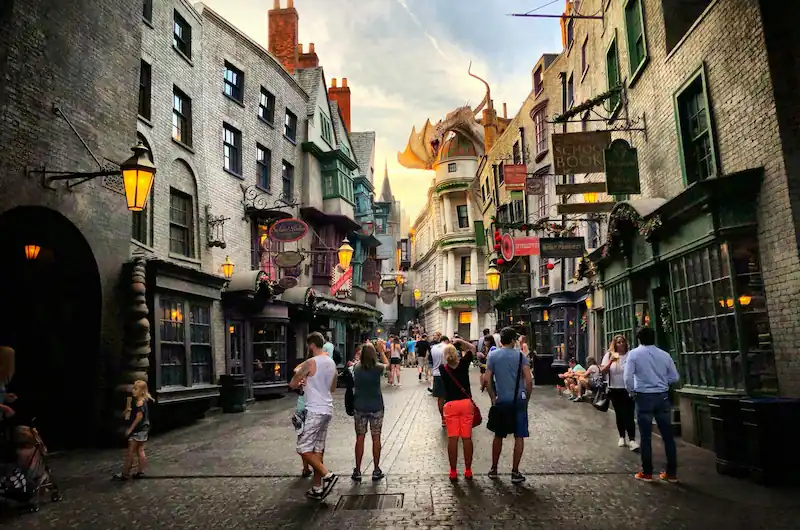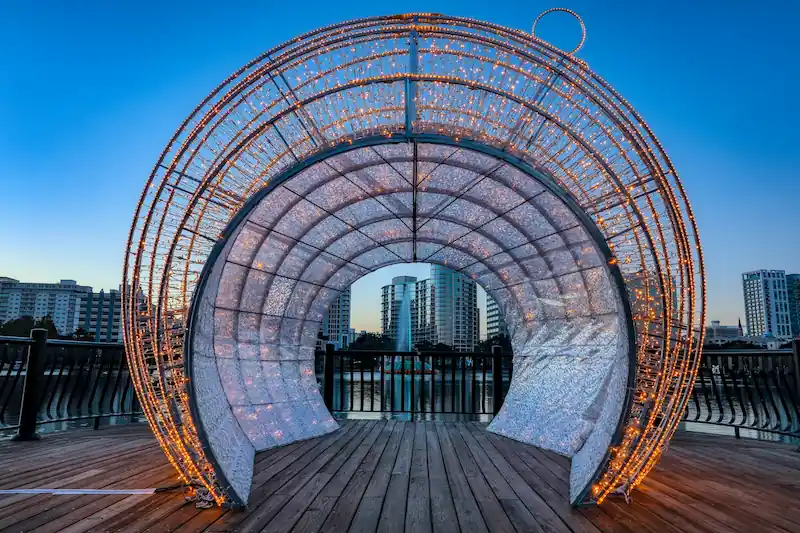
Where to stay in Orlando
Find the best neighborhoods and hotels in Orlando.
Open page →
Plan your trip to Orlando, choose the right area to stay, and understand how to structure theme parks, local neighborhoods, resort days, food districts, nature breaks, and day trips without turning the stay into constant transfers. Orlando is not one compact destination: Disney, Universal, International Drive, downtown, Winter Park, and the wider Central Florida landscape each create a different trip, so the best plan starts with geography, pacing, and the experiences that truly deserve full days.
Orlando works less like a single compact city than a set of travel zones spread across Central Florida. The classic mistake is treating downtown, Winter Park, International Drive, Universal, Disney, and the convention corridor as if they were one seamless urban core, when each asks for different timing, transport, energy, and hotel logic.
Orlando is worth structuring a trip around because it combines high-friction, high-reward flagship attractions with a softer layer of lakes, gardens, dining districts, cultural stops, neighborhood corridors, water parks, resort downtime, and easy Central Florida excursions. It can be a pure theme-park trip, but the strongest stays usually mix one or two major park days with recovery time, a premium or educational anchor such as Discovery Cove or Kennedy Space Center, and at least one local layer around Winter Park, Lake Eola, Mills 50, Audubon Park, or Doctor Phillips. When evening air settles around the lake districts and restaurant corridors, the city feels less like an attraction map and more like a usable leisure base.
Best time: February to April for the cleanest mix of weather, park stamina, and day-long flexibility; late October to early December is the best second window.
Ideal trip length: 5 days for a balanced first trip; 7 days if you want Disney or Universal plus Epic Universe, local Orlando, recovery time, and one major excursion.
Orlando’s cost pressure comes less from the city itself than from admission tickets, hotel geography, parking, rideshares, resort fees, water parks, premium add-ons, and how many full-price attraction days a trip absorbs. Staying near your main cluster matters more here than chasing a slightly cheaper room far away, because transfer time, parking, and late-night fatigue stack quickly. Food can range from easy casual chains to strong independent dining, but the real budget swing usually comes from parks, premium day experiences, on-site convenience spending, and whether you build enough lower-cost recovery days into the plan.
Orlando is best understood as a regional leisure city with multiple centers rather than a classic downtown-first destination. Downtown and Lake Eola form the symbolic urban core, Winter Park offers a polished residential-cultural counterweight to the north, Mills 50 and Audubon Park provide a more local food-and-neighborhood layer, and the southwest visitor belt holds International Drive, the convention corridor, Universal, Disney-adjacent resorts, and much of the trip-planning gravity.
The city is flat, lake-dotted, and spread horizontally, which creates a deceptive sense of ease. Lakes, wide arterial roads, highways, and resort districts produce pleasant pockets but also fragment movement, so the trip is shaped less by terrain than by driving distances, junctions, parking, and whether your base is aligned with Disney, Universal, International Drive, downtown, or the northern local districts.
Mornings matter more here than in many US cities because the day often starts with transport, parking, security, and queue logic rather than leisurely urban drift. Midday can feel mechanically dense in resort zones, especially in heat, while evening becomes the city’s most forgiving register, when restaurant districts loosen, lakefront paths quiet down, and the trip can shift from attraction management to actual leisure.
Think of Orlando as five overlapping trip types sharing one name: high-intensity attraction days, resort recovery, premium selective experiences, local city browsing, and Central Florida excursions. Once that frame is clear, the city stops feeling scattered and starts reading as a set of purposeful bases and modules rather than a single place you are supposed to cross constantly.
Open the planner
Choose one dominant geography before choosing hotel category: Disney, Universal, International Drive, downtown/Winter Park, or a wider car-based trip. Treat park days as anchor days and protect lighter evenings around them rather than stacking extra objectives. Pair downtown Orlando, Lake Eola, Mills 50, and Winter Park on city-facing days instead of scattering them across the trip. Keep Universal-area time and Disney-area time in distinct chapters unless the stay is long enough to absorb transfer drag. Use arrival or departure days for Disney Springs, CityWalk, resort downtime, outlet shopping, or a short Lake Eola reset rather than a flagship attraction. Build at least one non-park half day into a five-day stay so the trip does not flatten into queue management. For seven days, widen the rhythm with one water, garden, premium animal, nature, or easy-neighborhood day instead of adding only more admission-heavy experiences. If Epic Universe is a priority, give it a full dedicated day and avoid treating it as a side visit attached to older Universal parks. Use summer afternoons defensively: indoor attractions, pools, rest, food halls, or hotel downtime often protect the trip better than one more exposed attraction. Plan dining by geography, not only by restaurant reputation; the wrong dinner location after a park day can undo the day’s pacing.
Vibe: urban core with a softer lakefront edge
Why go: This is the strongest base for travelers who want Orlando to feel like a real city between major attraction days, with Lake Eola, downtown dining, performing arts, sports and event access, and easier links toward Mills 50 and Winter Park.
Who it fits: short stays, downtown dining, event-goers, city-first travelers, repeat visitors adding local Orlando
Not for: park-maximizers who want to minimize commuting to Universal, Disney, or resort corridors every morning
Where to stay: Lake Eola and the surrounding downtown grid give Orlando its most legible urban center, with better evening walkability than many first-time visitors expect. It works best when parks are only part of the trip, not the whole point, and when you want restaurants, performances, lakefront walks, and local neighborhoods to matter.
Vibe: polished, leafy, and quietly upscale
Why go: Winter Park suits travelers who want dining, browsing, museums, the Scenic Boat Tour, and a more composed local atmosphere than the visitor corridors deliver.
Who it fits: repeat visitors, couples, slower-paced stays, design-conscious travelers, adults without children
Not for: travelers focused on rope-drop park mornings every day or families trying to minimize Disney and Universal transfer time
Where to stay: This is Orlando’s most refined urban-residential pocket, with independent dining, the Morse Museum, Park Avenue, lakes, cafés, and a cleaner neighborhood rhythm. It is a strong antidote to resort overexposure, but less efficient for park-heavy plans.
Vibe: full-service visitor corridor
Why go: It is one of the most practical bases for mixed Orlando trips because it sits between convention activity, restaurants, I-Drive attractions, Universal access, SeaWorld, Discovery Cove, and both major park zones.
Who it fits: first-timers, conference travelers, mixed-purpose stays, mid-range hotel seekers, car-light visitor-corridor stays
Not for: travelers wanting charm, neighborhood character, local dining depth, or evening calm
Where to stay: International Drive is not elegant, but it is operationally useful. When the goal is range rather than atmosphere, few Orlando bases are more efficient, especially for travelers mixing Universal, SeaWorld, I-Drive attractions, convention activity, and easier dining.
Vibe: park-adjacent convenience with better dining
Why go: This area works well when Universal or Epic Universe is a core priority but you still want more dining quality and less all-resort insulation in the evening.
Who it fits: Universal-focused stays, Epic Universe visitors, food-first travelers, families wanting off-park dinner options
Not for: travelers centered on downtown Orlando, Disney property immersion, or walkable local-neighborhood texture
Where to stay: The Universal side of the city gains a lot when paired with Doctor Phillips dining and a more useful evening ecosystem. It feels more balanced than sleeping in a pure attraction bubble and is one of the most logical choices for Universal-heavy stays.
Vibe: resort-centered and highly convenient
Why go: If Disney is the trip’s core, this is where convenience, time protection, resort shuttles, Disney Springs evenings, and smoother family logistics usually outweigh a more generic sense of place.
Who it fits: Disney-first travelers, families, resort stays, shorter high-intensity park trips, visitors prioritizing friction reduction
Not for: travelers looking for an independent city feel, strong local food identity, or easy access to downtown and Winter Park
Where to stay: Lake Buena Vista is less about neighborhood texture than about friction reduction. For Disney-led stays, that trade often makes complete sense, especially when early starts, child stamina, hotel pools, and easier evenings matter.
Vibe: local, low-rise, and less scripted
Why go: This area suits travelers who want a softer neighborhood base close enough to downtown without sleeping in the business core itself, with cafés, local dining, lake-adjacent edges, and lower-rise Orlando texture.
Who it fits: repeat visitors, café-and-dinner travelers, lower-key weekends, local-feel stays
Not for: travelers who need fast access to the main theme-park corridors or who want strong hotel depth and resort services
Where to stay: College Park and nearby Ivanhoe give Orlando a more lived-in register, with less resort polish and more neighborhood texture. It is a niche choice, but a rewarding one when the trip is deliberately less park-led.
Orlando reveals itself best when you do not let the trip collapse into a single park narrative. Its strongest version mixes one or two flagship attraction days with selective cultural, local, premium, water, food, and slower urban layers that change the city’s texture completely without pretending the destination is compact.
Planning tip: Protect early starts for the highest-friction park or attraction days, then move lighter dining, pools, local browsing, or indoor backups into the evenings and recovery windows.
For many first-time visitors, this is still the emotional and visual center of an Orlando trip, but only if it is given enough space. The mistake is treating it as one stop among many when it works best as a full, self-contained day with room for rhythm changes.
Tip: Arrive before official opening if this is your must-protect park day.
Check guided tours →
EPCOT works best when treated as a day of changing pace rather than a checklist of countries and rides. It has more breathing room than Orlando’s tighter attraction environments, and that makes it valuable in the middle of a trip.
Tip: Keep the afternoon looser here than you would at the more ride-driven parks.
Check guided tours →
Hollywood Studios is often the better Disney fit for older kids, teens, and adults who want a higher ride-to-sentiment ratio. It is less universally iconic than Magic Kingdom, but often more targeted in what it delivers.
Tip: Choose this over Magic Kingdom if ride density and franchise-driven immersion matter more than classic Disney atmosphere.
Check guided tours →
Animal Kingdom changes the texture of an Orlando trip because it feels greener, broader, and slightly less infrastructural than the most queue-intensive parks. It works especially well for families or travelers needing a flagship day that is still full but not as asphalt-heavy.
Tip: A smart pick on a longer trip when you want a major day that feels more breathable.
Check guided tours →
Universal tends to reward a more compressed, energy-forward style of day than Disney. It suits travelers who want denser ride momentum and stronger teen or adult appeal, but it is easier to enjoy when it is not forced into a Disney-shaped schedule.
Tip: Do not pair a Universal flagship day with a major evening transfer if you can avoid it.
Check guided tours →
Epic Universe is important enough to shape an Orlando itinerary on its own, especially for travelers coming for new-generation themed environments rather than a repeat of older park circuits. Treat it as a full anchor day with its own early start, recovery margin, and nearby evening plan instead of squeezing it between Universal classics and cross-town dining.
Tip: Best placed beside a Universal-area stay or followed by a lighter morning, not stacked casually onto another full park day.
This is one of the few excursions from Orlando that genuinely changes the tone of a trip rather than merely extending the attraction model. It brings scale, engineering, and a different psychological horizon to an itinerary otherwise built around leisure infrastructure.
Tip: Treat it as a full outing and avoid attaching another headline attraction to the same day.
Discovery Cove gives Orlando a premium, all-inclusive alternative to the usual high-intensity park formula. It works especially well for couples, mixed-age families, or travelers who want one expensive but calmer day instead of another queue-driven spectacle.
Tip: Best used as a full premium day, not as a partial add-on around SeaWorld or other nearby attractions.
Check guided tours →
Disney Springs is most useful when it absorbs an arrival evening, a recovery half day, or a dinner window after a lighter schedule. It works well as connective tissue in a trip, but it should not be mistaken for one of the city’s major experiential anchors.
Tip: Use it on a lower-energy evening when you still want movement and dining options.
Check guided tours →
The Morse Museum is one of Orlando’s strongest correctives to the idea that the city is only about engineered spectacle. Its quieter, highly focused presentation changes the intellectual scale of a trip and pairs naturally with Winter Park’s more measured urban rhythm.
Tip: Combine it with Park Avenue rather than forcing it between major attraction transfers.
Check guided tours →
This is not a dramatic experience, which is exactly why it works. It helps explain central Florida’s lake-based spatial logic and gives the trip a gentler register, with only the boat engine and low conversation carrying across the water.
Tip: It works best on a non-park morning when you want a lower-stimulation tempo.
Loch Haven gives Orlando a civic-cultural layer that many visitors skip entirely. It is less about one must-see institution than about seeing the city move briefly away from pure leisure machinery toward something more resident-facing and grounded.
Tip: Use this zone when the trip needs an indoor reset without returning fully to resort mode.
Check guided tours →
The Orlando Science Center is one of the city’s best answers to families, mixed-weather days, and the need for an indoor experience that still feels active. It broadens the guide’s cultural layer beyond art and calm neighborhood browsing.
Tip: A very strong fallback on broken-weather days or when younger travelers need something hands-on rather than ornamental.
Check guided tours →
The Dr. Phillips Center helps Orlando read as a city with a genuine performing-arts dimension, not only a tourism machine. It is especially useful for adult-oriented stays that want one cleaner cultural evening outside the park logic.
Tip: Best considered when you are staying downtown or intentionally building one city-facing evening into the trip.
Check guided tours →
Lake Eola is where downtown Orlando becomes readable to visitors. The lake gives scale, relief, and a more human cadence to a center that can otherwise feel visually discontinuous.
Tip: Do this in the late afternoon or early evening rather than at midday.
Check guided tours →
Park Avenue offers one of the most convincing local rhythms in greater Orlando: walkable, shaded, and scaled for browsing rather than queueing. It is especially useful in longer itineraries that need a more ordinary kind of pleasure.
Tip: Come with enough unstructured time to browse rather than turning it into a rushed stop.
Check guided tours →
Audubon Park gives the city a more independent, neighborhood-scale identity than most visitors expect. It is not a headline zone, but it helps rebalance a trip that has become too infrastructure-heavy.
Tip: It works well as part of a slower local day rather than as a quick stop between distant districts.
Check guided tours →
Mills 50 introduces a denser food-and-night register than much of Orlando’s more polished visitor-facing geography. It works when the trip needs flavor, motion, and a looser social atmosphere after the controlled spaces of the parks.
Tip: Best used as a dinner-first evening rather than a late-night district plan.
Check guided tours →
Doctor Phillips is one of the easiest places to secure a satisfying dinner away from the most controlled resort environments. It matters not because it is hidden, but because it adds competence and variety to park-heavy stays.
Tip: Use it after Universal-area days or on an arrival night when you want a dependable landing zone.
Check food options →
Winter Park’s dining value is not just food quality but setting. It lets a meal feel like part of a neighborhood day rather than a refueling stop between logistical pushes.
Tip: This area is best when paired with browsing, museums, or the boat tour rather than visited only to eat.
Check food options →
Mills 50 is where the food scene feels least scripted for visitors. It gives the trip a welcome rougher edge and works especially well once you want a meal that feels removed from theme-park adjacency.
Tip: Go with one or two target restaurants rather than relying on pure spontaneity late in the evening.
Check food options →
Orlando’s resort dining can be convenient and occasionally very good, but it should be chosen for timing and fit, not assumed to be the city’s most interesting food layer. The strongest trips use it strategically rather than continuously.
Tip: Save resort dining for nights when transfer friction matters more than discovery.
Check food options →
Orlando expands quickly when every attraction is treated as equally important. The strongest trip protects a few defining anchors, keeps hotel geography aligned with those anchors, and uses local or lower-intensity layers to prevent the stay from becoming one long queue-management exercise.
Orlando works very well with children, but only when adults accept that logistics and energy management shape the trip as much as attractions do. It rewards families who keep daily goals selective, protect rest windows, choose parks by age fit, and understand that heat, queueing, distance, and sensory load can flatten even the most anticipated day by mid-afternoon, when sidewalks feel slower and tempers usually do too.
Orlando changes dramatically depending on whether the trip is park-led, family-balanced, Universal-heavy, Disney-first, or widened into a broader Central Florida stay. These durations cover the most useful entry points while keeping the focus on pace rather than maximum ticket count.
Open the planner →
Orlando is easy to enter but easy to misread. The city works best when arrival logic, hotel geography, heat, attraction timing, and daily recovery are planned as carefully as headline experiences.
Late winter through spring is usually the cleanest answer for a first trip because temperatures are easier, humidity is lower, and full days remain more comfortable. Late autumn is another excellent window if you want softer operational pressure without the most intense holiday surge. Summer can still work, but it asks for more tolerance for heat, storms, indoor resets, and shorter-feeling afternoons.
Three days is the minimum at which Orlando starts to make sense without feeling like pure transport and ticket management. Five days is the best first-trip shape because it can support two or three major anchors plus recovery and one non-park layer. Seven days is better for families, repeat visitors, or anyone trying to combine Disney, Universal, Epic Universe, and a wider Central Florida excursion.
Choose your base by dominant geography, not by brand or headline hotel appeal alone. Disney-first stays usually justify Lake Buena Vista convenience, Universal and Epic Universe trips work better farther north in the southwest corridor, International Drive suits mixed visitor logistics, and travelers who want Orlando to feel like more than a resort system should look at downtown, Winter Park, or nearby local districts. In this city, hotel placement is part of itinerary design.
Most international and domestic visitors arrive through Orlando International Airport (MCO), the main gateway and usually the simplest entry point for leisure trips. Driving is common, but airport-to-hotel transfers can take longer than expected once traffic builds. Orlando also connects into the wider region by rail and intercity transport, but for most travelers the decisive question is not arrival to the city, but how easily the hotel links to the trip’s main daily zone.
Orlando is manageable by car or rideshare far more easily than by treating it as a transit-led city break. Public transport exists, but it is not the core logic for most visitor itineraries, especially across park and resort geographies. Within tight clusters, movement can be simple; between clusters, travel time expands quickly and should be treated as a real part of the day.
General safety for visitors is good in the main travel zones, and healthcare access is strong by US standards, though costs can be very high without appropriate insurance. The more common practical issues are heat exposure, dehydration, storm disruption, sunburn, and fatigue after long park days. Standard city awareness still matters downtown and late at night, but Orlando’s bigger risk is usually trip strain rather than personal threat.
Orlando is less about four clean aesthetic seasons than about changing balances between temperature, humidity, school-break demand, event calendars, and how much energy you can realistically sustain across long attraction days. Spring is usually the easiest all-round choice for first-timers, while late autumn often gives a calmer, more fluid version of the city. Summer suits travelers willing to trade stamina and weather volatility for broader family-calendar convenience, and winter can be excellent outside the major holiday crunch if you want a lighter-feeling rhythm.
Spring is the most balanced season for a first Orlando trip because weather is easier, park stamina is higher, and outdoor time remains enjoyable well into the day. It suits travelers who want headline attractions without feeling physically worn down too early, though school-break timing can sharpen demand. The brighter air and longer evenings also make Lake Eola, Winter Park, Leu Gardens, outdoor dining, and resort pools feel more usable.
Summer creates the most demanding version of Orlando: long opening hours and family-calendar convenience, but heavier heat, humidity, storm interruptions, and lower midday stamina. It suits travelers whose schedules are fixed and who are comfortable shaping days around early starts, indoor resets, hotel pools, water parks, and lower expectations for nonstop momentum. The trip can still work well, but it needs more discipline and more recovery.
Autumn is one of Orlando’s smartest windows, especially from late October onward, when weather begins to ease and the city regains more operational flexibility. It suits travelers who want a smoother, more adult-feeling stay, with better odds of enjoying both major attractions and evening districts without constant climatic drag. The city often feels more breathable once the day loses its summer heaviness.
Winter can be excellent for lower-heat park days and easier outdoor movement, particularly from mid-January onward. It suits travelers escaping colder climates and those happy with a steadier, less oppressive daily pace, but Christmas and New Year are a completely different high-pressure environment. Outside the holiday peak, winter can deliver one of the cleanest versions of Orlando.
These are the planning questions that most strongly shape an Orlando stay. The right answers usually come down to geography, stamina, age fit, weather, and how much of the trip is truly park-led.
Three days is the minimum for a selective trip, but five days is the strongest first-visit format. That gives you room for major attractions, recovery time, and at least one non-park layer. Seven days works best for families, repeat visitors, or travelers widening the stay beyond pure theme-park priorities.
Stay near the geography that dominates your plans. Lake Buena Vista works best for Disney-focused trips, Universal and Doctor Phillips suit Universal-heavy stays, International Drive is useful for mixed visitor logistics, and downtown or Winter Park makes more sense when you want Orlando to feel like more than a resort corridor.
Late January to April is usually the cleanest answer, with lower humidity and easier full-day stamina. Late October to early December is another strong period if you want better operational comfort without the harshest holiday pressure. Summer is workable, but it asks more from your energy and planning.
Only in fragments. Lake Eola, Park Avenue in Winter Park, Disney Springs, CityWalk, and parts of International Drive are easy to browse on foot, but Orlando as a whole is a spread-out city of separate zones. Most visitors rely on a car, resort shuttles, or rideshares for the structure of the trip.
A car is useful if you plan to combine Disney, Universal, downtown, Winter Park, Kennedy Space Center, springs, beaches, or wider Central Florida day trips. You can avoid one on tightly resort-based stays, but once the trip crosses several zones, rideshares and shuttles become less efficient.
For major parks and high-demand periods, yes, especially when tickets, timed access, dining, or priority add-ons shape the quality of the day. Smaller local stops can stay flexible, but headline attraction days usually improve when the critical pieces are secured in advance.
The biggest mistakes are choosing the wrong hotel geography, overloading the itinerary with too many ticketed days, and underestimating how much heat, queues, and transfers drain energy. Many trips become less enjoyable not because Orlando lacks things to do, but because too much was asked of each day.
It is enough for a focused version of Orlando, but not for a broad one. Three days works if you accept a selective trip built around one or two major priorities and avoid scattering yourself across the city. It is not enough if you want multiple major park systems plus meaningful local exploration.
Yes, five days is often the best first-trip length. It can support two or three major anchors, one recovery window, and one local or non-park layer such as Winter Park, Lake Eola, Leu Gardens, or Kennedy Space Center.
No, if the trip is varied. Seven days works well for families or repeat visitors when you mix parks, pools, local districts, premium experiences, nature, and at least one excursion. It feels too long only when every day is treated as another similar ticketed attraction day.
It can be, but the main cost drivers are tickets, hotel location, parking, premium line-skipping, dining, and convenience upgrades rather than the city itself. A trip becomes expensive quickly when every day includes major admissions and high-friction transfers. Costs stay more controlled when the itinerary is geographically disciplined.
Disney is usually stronger for classic family atmosphere, younger children, and first-time emotional payoff. Universal is often better for ride density, teens, film worlds, and a more compact high-energy day. The right answer depends more on group profile than on brand fame.
Yes if it is one of your priority experiences. Treat Epic Universe as its own full day, especially on a Universal-focused stay, and avoid squeezing it between older park days and cross-town evening plans. It adds another reason to base closer to the Universal side if that park family dominates the trip.
No. Magic Kingdom is the safest classic first-time Disney pick, especially with younger children, but EPCOT can be better for adults and food-minded travelers, Hollywood Studios for older kids and ride-focused groups, and Animal Kingdom for a greener, more breathable day.
Winter Park is the most polished local-feeling area, while Lake Eola, Mills 50, Audubon Park, and College Park / Ivanhoe Village add more everyday Orlando texture. These areas are best used when the trip is not entirely park-led.
Yes, selectively. Downtown Orlando is not the main reason most visitors come, but Lake Eola, the Dr. Phillips Center, sports and events, restaurants, and nearby local districts make it useful when you want a city-facing break from resort corridors.
Yes, especially on stays of five days or more, adult trips, repeat visits, or any itinerary that needs a calmer, walkable contrast. Park Avenue, the Morse Museum, the Scenic Boat Tour, cafés, and lakes give the trip a more local and composed rhythm.
Adults should be selective rather than dismissing the city as only family-oriented. Good adult-focused choices include EPCOT, Universal, Discovery Cove, Winter Park, Mills 50, Doctor Phillips dining, Lake Eola, performance nights, food districts, and Kennedy Space Center.
International Drive is practical, especially for mixed-purpose stays, convention trips, I-Drive attractions, SeaWorld, Discovery Cove, and Universal access. It is not the best choice for charm or local atmosphere, but it can be one of the most operationally efficient bases.
Families should usually stay near the parks or attractions that dominate the trip. Lake Buena Vista works for Disney-first families, Universal-area hotels work for Universal and Epic Universe, International Drive works for mixed trips, and resort-style hotels can be worth it when pools and recovery time matter.
Choose fewer, more age-appropriate days. Magic Kingdom, Peppa Pig Theme Park, LEGOLAND Florida, hotel pools, Science Center time, and lighter evenings usually work better than stacking the biggest parks aggressively. Rest windows matter as much as attraction lists.
Teenagers often get more value from Universal, Epic Universe, Hollywood Studios, thrill rides, Kennedy Space Center, water parks, food districts, and evening energy than from preschool-oriented attractions. Build the trip around ride density, novelty, and less childish pacing.
Strong non-park options include Kennedy Space Center, Winter Park, Lake Eola, Leu Gardens, Orlando Science Center, Mills 50, East End Market, Discovery Cove, airboat rides, springs, food districts, and local performance or sports events.
Kennedy Space Center is the strongest overall day trip because it feels substantial, distinctive, and genuinely different from Orlando’s park ecosystem. Winter Park is better for a light half-day, while springs, airboat rides, and beaches work when nature or water matters.
Yes if you have enough time for a full day and want a major experience that changes the tone of the trip. It is especially strong for families, science-minded travelers, repeat visitors, and anyone who wants one day that is not shaped by theme-park logic.
Yes for the right traveler. It is expensive, but it can be worthwhile if you want a calmer, premium, all-inclusive day with animal encounters and resort-like pacing rather than another high-intensity queue-heavy park.
Use indoor and flexible options: Orlando Science Center, museums, East End Market, food halls, Disney Springs, CityWalk, indoor entertainment, or a hotel/pool recovery block if storms are intermittent. The key is not to force an exposed plan through broken weather.
Start early, protect midday recovery, use pools or indoor stops, plan water and shade carefully, and avoid heavy cross-town transfers in peak heat. Summer can work, but it needs a more defensive rhythm than spring or late autumn.
Skip attractions that are only there to fill time, especially if they force extra transfers. International Drive fillers, poorly located dinners, unnecessary extra ticketed days, and overstuffed park-hopping plans often weaken the trip more than they add.
Add Winter Park, Mills 50, Lake Eola, Audubon Park, East End Market, Doctor Phillips dining, Ivanhoe Village, or a local performance/event night. You do not need to abandon the parks; you just need to give the trip one or two local layers.
In Orlando, the smartest trip is usually the one that protects energy, cuts unnecessary movement, and chooses the right experiences for the right travelers.
Find the best places to stay, how to get there, and move around with ease.
Build a smarter trip base
Once you understand how Orlando works and what matters most for your trip, the next step is turning that direction into a real itinerary. Use the planner to organize your days around the right areas, experiences, and rhythm so the trip feels clear before you go.