
Where to stay in Las Vegas
Find the best neighborhoods and hotels in Las Vegas.
Open page →
Plan your trip to Las Vegas, choose the best area to stay, and decide what is actually worth doing. Las Vegas is not one compact sightseeing city: it is a sequence of resort zones, Downtown nightlife, off-Strip food corridors, immersive entertainment, and desert-edge escapes. The strongest trips are built around timing, energy, heat, transport, and a few high-payoff anchors rather than an attempt to consume every famous hotel, show, restaurant, and day trip at once.
Find the best neighborhoods and hotels in Las Vegas.
Open page →

Prioritize the activities that deserve your time in Las Vegas.
Open page →
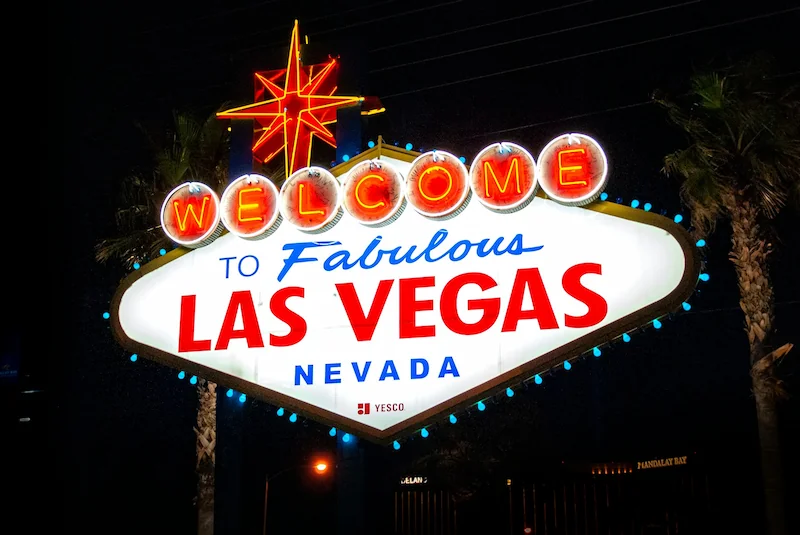
2 Days in Las Vegas: Best Itinerary
Open itinerary →
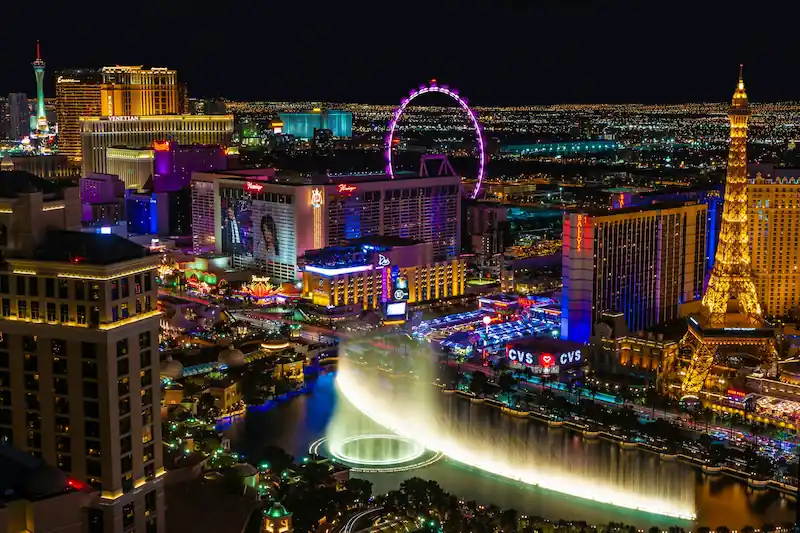
3 Days in Las Vegas: Best Itinerary
Open itinerary →
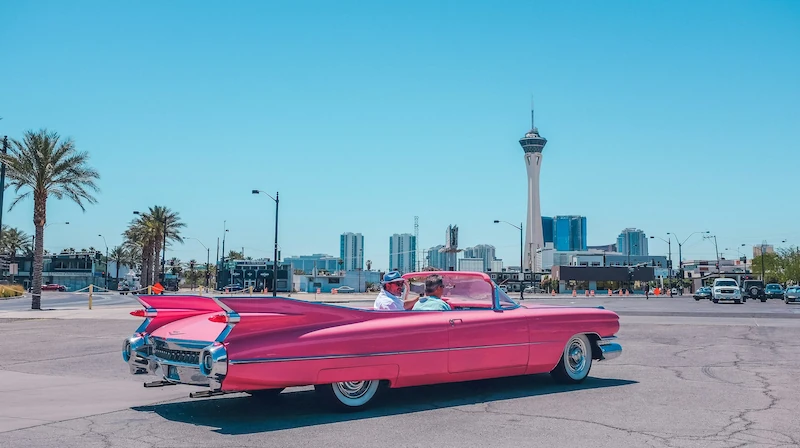
4 Days in Las Vegas: Best Itinerary
Open itinerary →
Las Vegas is a destination of engineered intensity spread across a broad desert valley. The famous Strip is the global-facing resort spine, but it is not the whole city and it does not behave like a walkable downtown. A good trip comes from choosing the right energy band: polished central spectacle, larger resort recovery, old-school Downtown, off-Strip dining, local texture, or desert contrast. Once you understand those layers, Las Vegas becomes much easier to plan and much less exhausting.
Few cities compress spectacle, hospitality, dining, nightlife, live entertainment, and desert access with the same force. Las Vegas is worth visiting because it can deliver a tight three-day hit of light, food, shows, and resort theater, or expand into a broader stay with Downtown history, the Neon Museum, the Mob Museum, AREA15, Chinatown, the Arts District, Red Rock Canyon, Hoover Dam, and Lake Mead. The city is at its best when the Strip remains the anchor but not the cage: one major spectacle, one strong dinner, one off-Strip layer, and one recovery or landscape reset usually create a sharper trip than endless casino wandering.
Best time: Spring and autumn for the strongest mix of walkable days, pool possibility, outdoor excursions, and comfortable nights.
Ideal trip length: 3 days for a sharp first visit; 5 days if shows, Downtown, off-Strip food, museums, pools, and one desert contrast all matter.
Las Vegas can look cheaper than it is because headline room rates hide resort fees, event pricing, ride-hailing, premium dining, show tickets, and pool or club costs. The biggest value lever is not only hotel category but date choice and location: midweek stays can unlock much better hotels, while major event weekends can make even ordinary rooms expensive. The smartest budget strategy is to choose two or three paid priorities and protect location rather than upgrading every meal, view, ticket, and hotel night.
Las Vegas is best read as a set of experience corridors rather than a single city center. The Central Strip carries the classic first-time trip, North and South Strip change the resort-value and space equation, Downtown supplies older Vegas energy, and the Arts District and Chinatown add the most useful local and food-led counterpoints. The city becomes easier once you stop asking what is closest and start asking which zone should own each part of the day.
The city sits in a wide desert valley, and scale matters everywhere. Straight-line distances understate the real effort of moving because resort entrances, internal corridors, bridges, rideshare pickup points, and arterial roads all add friction. This is why Central Strip is powerful for short stays, Downtown deserves its own evening, and off-Strip areas such as Chinatown or the Arts District work best when chosen deliberately rather than as afterthoughts.
Las Vegas wakes later than many city destinations. Mornings are the best time for walking, desert outings, museum visits, or anything requiring clean movement. Afternoons often split between pools, air-conditioned interiors, and recovery. Evenings intensify in layers: restaurants, shows, Strip lights, Downtown, clubs, and late-night food all compete for the same energy budget.
Think of Las Vegas as four overlapping trips: classic Strip spectacle, Downtown and museum context, off-Strip food and local texture, and desert contrast. A first visit does not need all four equally, but it becomes much better when it includes at least one moment beyond the casino-resort corridor.
Open the planner
Build the stay around zones, not individual attractions. Use Central Strip for the classic first read, but treat it as two or three clusters rather than one continuous walk. Put your biggest evening commitment — show, Sphere, headline dinner, sports event, or club — at the center of the day and keep the hours before it lighter. Use mornings for Strip walking, museums, Red Rock, Hoover Dam, or any movement that summer heat and evening fatigue would make harder. Give Downtown its own evening or half-day instead of tacking Fremont onto the end of an already full Strip night. Add one off-Strip layer — Arts District, Chinatown, AREA15, Springs Preserve, or the Atomic Museum — when the trip needs more depth than resort interiors. On 4- or 5-day stays, add Red Rock Canyon, Hoover Dam, Lake Mead, Valley of Fire, or Mount Charleston only after the core city rhythm is secured. For families, build around pools, short visual wins, indoor anchors, and lower-friction attractions rather than adult Vegas reshaped awkwardly for children. For couples, avoid overbooking; one strong dinner, one show, one viewpoint, and one calm recovery block usually land better than constant upgrades. For value, book midweek if possible and protect location before spending on room category.
Vibe: high-intensity resort core
Why go: This is the most efficient base if your priority is classic Vegas: Bellagio, major resort interiors, flagship dining, fountains, central shows, view points, and late-night flexibility with the least routing friction.
Who it fits: Best for first-timers, 2- to 4-night stays, couples, celebration trips, and travelers who want the city at full volume.
Not for: Less suited to quiet travelers, value hunters, families needing more room, or anyone who wants local texture outside the hotel door.
Where to stay: If you want the most recognizable version of Las Vegas, stay here. It minimizes decision fatigue on a short trip and protects your evenings, but the trade-off is stimulation, crowds, resort fees, and higher all-in cost.
Vibe: big-resort scale with more breathing room
Why go: North Strip works when a specific property, convention pattern, luxury resort, or value equation matters more than instant mid-Strip walkability.
Who it fits: Good for repeat visitors, convention travelers, premium hotel-led stays, and guests comfortable using rideshare strategically.
Not for: Not ideal for very short first trips built around Bellagio, central shows, and casual on-foot Strip movement.
Where to stay: North Strip can be strong when the hotel is the point, but weak when chosen only for rate. It needs deliberate planning because the gaps between resorts and the central Strip feel larger on the ground than on a map.
Vibe: practical resort base
Why go: South Strip gives you a resort version of Vegas with more space, easier airport-side logic, stronger family and pool potential, and often better room-to-price trade-offs.
Who it fits: Good for families, drivers, value-conscious resort travelers, pool-heavy stays, and road-trip combinations.
Not for: Less appealing if your main goal is to drift easily between the central Strip icons without transport.
Where to stay: This is a practical resort base rather than the most cinematic one. It can be excellent when room comfort, pool time, value, and arrival logistics matter more than being in the middle of the night-time crush.
Vibe: retro energy with looser edges
Why go: Downtown offers old-school Vegas, Fremont energy, faster bar-hopping, stronger museum access, and a looser social rhythm than the polished Strip.
Who it fits: Best for nightlife-first adults, repeat visitors, value-minded travelers, museum-and-bar combinations, and anyone who wants a less corporate-feeling Vegas.
Not for: Less suited to first-timers who still want the polished resort fantasy, luxury calm, or the strongest Strip walkability.
Where to stay: Stay Downtown when the point is a different Vegas: denser, louder, more compact, and less formal. It works best when you commit to its own evening rhythm rather than treating it as a cheaper substitute for the Strip.
Vibe: creative local reset
Why go: The Arts District gives Las Vegas a lower-rise, food-and-bar-led neighborhood layer with murals, breweries, vintage shops, and a more human-scale evening rhythm.
Who it fits: Great for repeat visitors, food-led travelers, couples who want a calmer local counterpoint, and anyone planning selective Strip nights rather than constant resort time.
Not for: Not right for first-timers seeking a full-service resort experience, big pools, casino convenience, or walkable access to major Strip landmarks.
Where to stay: This is usually better as a deliberate local layer than as a default base. It can be a smart stay for the right traveler, but only if off-Strip texture is the goal rather than a compromise.
Vibe: food-first off-Strip corridor
Why go: Chinatown is the strongest food corridor for travelers who want Las Vegas beyond resort pricing and celebrity-restaurant logic.
Who it fits: Good for food-driven repeat visitors, longer stays, groups with rideshare plans, and travelers who want restaurant depth more than landmark walkability.
Not for: Weak for first-time visitors who expect to walk from the hotel to the main Vegas icons or want scenic urban atmosphere.
Where to stay: As a base, Chinatown is functional rather than pretty, but it changes the food rhythm of a trip dramatically. Choose it only when dining depth and off-Strip movement are central to the stay.
Las Vegas reveals itself through shifts in scale, energy, and artificiality. A strong trip moves between polished spectacle, old-school visual history, immersive entertainment, local food, pool or recovery time, and desert-edge contrast. The goal is not to make Las Vegas subtle, but to use its intensity intelligently so the city stays exciting rather than draining.
Planning tip: Pre-book the few experiences where timing matters — shows, Sphere, headline dinners, Omega Mart, major events, and timed desert access — then keep daylight flexible around heat, geography, and energy.
Walking part of the Strip is still the fastest way to understand how Las Vegas manufactures scale. What matters is not covering everything, but seeing how fountains, lobbies, shopping passages, casinos, and performance spaces fold into each other to create a city that is half boulevard and half interior world.
Tip: Choose one segment per outing and enter only the resorts that genuinely interest you.
Check guided tours →
The fountains matter less as a single free attraction than as one of the city's best examples of public-stage Vegas. The real appeal is the relationship between water, boulevard, hotel frontage, and gathering crowd, especially when the evening light drops and the Strip begins to fully switch on.
Tip: Time this just before dinner so the stop becomes part of a central Strip evening rather than a separate detour.
Check guided tours →
The Bellagio Conservatory is one of the Strip’s rare free indoor experiences that still feels truly deliberate rather than incidental. It works best as part of a larger Bellagio sequence because it adds design, seasonality, and a short visual reset without demanding a major detour.
Tip: Pair it with the fountains or a nearby dinner instead of treating it as a standalone outing.
Check guided tours →
Vegas still excels when you choose one polished, high-production performance and let the city deliver its version of event night. A major show gives structure to the day and prevents the trip from dissolving into endless casual wandering across casino floors.
Tip: Anchor the day around the show and keep the afternoon intentionally lighter.
Sphere is the clearest example of contemporary Las Vegas doubling down on engineered immersion. It is not just another show ticket: it changes how the city competes for attention through architecture, screen scale, sound, and event design. It is most valuable when chosen as the night’s main event rather than layered on top of too many other expensive commitments.
Tip: Use it as your one big-ticket evening, not as an add-on after an already overloaded day.
Fremont Street works because it changes the social geometry of Vegas. The scale is tighter, the visual language is older and rougher, and the energy becomes less choreographed, which helps the city feel broader than a single luxury-resort script.
Tip: Give Fremont its own evening rather than tacking it onto an already full Strip night.
Check guided tours →
A high viewpoint can be worth it once, not because Vegas is a skyline city in the classic sense, but because elevation finally explains the scale of the valley and the relative isolation of the Strip. Seen from above, the city reads less as neon abstraction and more as a constructed corridor inside a much wider desert basin.
Tip: Do this on your first or second evening so the map of the city becomes easier to read afterward.
One of the city's defining experiences is understanding how resorts function as internal urban systems. Pick one hotel whose design language genuinely interests you and read it as architecture, circulation, commerce, and fantasy operating at once.
Tip: Choose a resort you would not otherwise enter so the visit adds range to the trip.
Check guided tours →
The Neon Museum is one of the clearest ways to understand Vegas as an evolving visual language rather than just a present-tense entertainment machine. Old signs expose the city's earlier identities, ambitions, and aesthetics in a way that makes the newer resort corridor easier to interpret.
Tip: Choose a timed visit that leaves room for Downtown before or after.
The Mob Museum is one of Las Vegas’s most reliable deeper visits because it connects organized crime, law enforcement, and the city’s own mythology without flattening everything into cliché. It gives the trip narrative weight and works especially well on a hot afternoon or lighter-weather day.
Tip: Give it a real block of time rather than squeezing it between two heavier movement segments.
The Atomic Museum adds a distinctly Nevada layer that many first-time visitors miss. It links Las Vegas to desert testing, Cold War imagination, and a broader American history that makes the city feel stranger and more rooted than the Strip alone suggests.
Tip: Use it on a longer stay or when you want one museum choice that feels less obvious than the standard Vegas shortlist.
Check guided tours →
The Arts District matters because it interrupts the scale logic of the Strip. Here the city becomes legible at street height, through storefronts, murals, kitchens, bars, and small-format social life rather than through giant lobbies and casino circulation.
Tip: Come late afternoon so the district can stretch naturally into dinner and drinks.
Check guided tours →
Beyond the canopy spectacle, Downtown rewards travelers who notice the smaller signs of continuity: older facades, inherited layouts, and remnants of a previous Vegas still visible inside the newer entertainment shell. It is one of the few places where the city feels historical rather than purely self-renewing.
Tip: Walk one or two side blocks away from the loudest core to see more texture.
Check guided tours →
Springs Preserve is one of the strongest ways to understand Las Vegas as a place rather than just a spectacle engine. It adds local history, desert ecology, and a different emotional scale, which makes it especially useful for longer stays, families, or travelers who want a more grounded city reading.
Tip: Best used on a fourth or fifth day, or when the trip needs one calmer, broader museum-and-outdoors block.
Check guided tours →
Las Vegas makes more sense once you step outside the resort corridor and see the desert scale around it. Red Rock Canyon is the easiest landscape reset, Hoover Dam gives engineering and regional context, and Lake Mead changes the mood with water and open space. This should be contrast, not itinerary padding.
Tip: For a first 3-day trip, choose one outside-the-city move at most.
A quiet off-Strip morning changes the emotional register of a Vegas trip. The low murmur of a neighborhood café and the absence of casino soundtrack help reset the city into something more usable, especially after a late night.
Tip: Do this after your biggest evening, not before it.
Check guided tours →
AREA15 and Omega Mart give Las Vegas a different kind of spectacle from the Strip: stranger, more playful, more immersive, and less dependent on casino-resort scale. This is the clearest off-Strip card to add when a trip needs rain-proof entertainment, group energy, or a contemporary attraction that still feels specific to Vegas.
Tip: Book Omega Mart ahead and pair the block with Chinatown or an easier off-Strip dinner rather than crossing back and forth across the Strip.
Fremont East adds one of the clearest local-texture transitions in central Las Vegas. It keeps some of Downtown’s energy while stepping away from the most overt spectacle, which makes it useful for travelers who want nightlife with a slightly less packaged feel.
Tip: Best used as the second half of a Downtown evening rather than as the night’s opening move.
Check guided tours →
Pools matter in Vegas, but mostly as a pacing and recovery tool. Used well, they protect energy in the hottest part of the day and keep the city from becoming a sequence of overlong indoor marches between nighttime commitments. Used badly, they absorb an entire day without giving the trip much shape.
Tip: Give it a fixed two-hour window so it restores the day instead of absorbing it.
Check guided tours →
Vegas retail can be read as part of the city's broader choreography of controlled movement and aspirational display. Even if shopping is not the goal, one well-chosen promenade helps explain how leisure, architecture, and consumption are merged here.
Tip: Keep this short and attach it to a nearby meal or show rather than making it a destination in itself.
Check guided tours →
Las Vegas is one of the easiest U.S. cities in which to lock in a high-level dinner inside a short trip. Done well, a single serious reservation gives the stay a more memorable rhythm than chasing constant upgrades, and it can become the clean bridge between pool time, show night, and late Strip movement.
Tip: Book this on a night without another long, fixed commitment afterward.
Dinner in the Arts District pulls the trip away from resort spectacle and into a more human-scale evening. The lower buildings, shorter blocks, and casual street movement make food feel like part of a neighborhood rather than another attraction package.
Tip: Arrive before full dark so you see the district transition into night.
Check food options →
The value of Chinatown is not simply saving money. It is the chance to step into one of the city's most useful off-Strip food ecosystems, where choice, specialization, and repeat local use matter more than spectacle.
Tip: Go with a short list rather than improvising on the sidewalk when everyone is already hungry.
Check food options →
Vegas evenings fill quickly, so daytime meals can carry more of the culinary weight than travelers expect. A strong brunch or lunch lets dinner stay flexible on nights when a show, Downtown plan, or club reservation already controls the clock.
Tip: Use a heavier midday meal on your busiest evening day.
Check food options →
Las Vegas expands quickly because every option competes for money, time, and attention. The best plans are edited around the experiences that explain the city: one Strip read, one major evening anchor, one food decision, one non-Strip layer, and, if time allows, one landscape or recovery reset.
Las Vegas can work with kids, but it works best as a short, controlled entertainment stop rather than a classic family city break. Families need strong hotel infrastructure, pool time, indoor anchors, easy transfers, and realistic expectations about late-night zones. The city becomes much easier when you stop trying to make adult Vegas child-friendly and instead choose a few visual, immersive, or ride-based wins.
Las Vegas is rarely improved by trying to do everything. The right itinerary depends on whether you want a clean first hit of spectacle or enough room to layer in Downtown, local food, and desert contrast.
Open the planner →
Las Vegas is easy to enter and surprisingly easy to plan badly. The city rewards travelers who respect distance, heat, event calendars, resort fees, check-in logistics, and the fact that the best hours of the day are not the same in every season.
For most travelers, spring and autumn are the strongest windows because they preserve both daytime mobility and nighttime appetite. Summer works when the trip is pool-forward, indoor-heavy, and realistic about heat. Winter can be excellent for lower-pressure sightseeing, value hunting, museums, shows, and desert outings, though pool culture weakens and evenings can be cooler than expected.
Two nights is enough to sample Las Vegas, but three full days is the point at which the city becomes legible: Strip, one evening anchor, one food decision, and one Downtown, museum, or off-Strip layer. Five days is better if you want pools, local food, desert contrast, and slower recovery.
Choose your base by deciding how many evenings should happen on foot. First-timers usually benefit from Central Strip because it reduces routing mistakes. Families and pool-led travelers often do better on South Strip. Downtown is strong for nightlife and repeat visitors. Arts District and Chinatown should be conscious alternatives, not default compromises. North Strip works best when a specific property or convention pattern justifies the geography.
Most travelers arrive through Harry Reid International Airport, which sits unusually close to the Strip by big-city standards. That short geographic distance does not always mean a frictionless arrival, since resort check-in flows and peak traffic still affect timing. If you are arriving by road, keep in mind that the final miles can feel slower than the open desert approach suggests.
Las Vegas is partly walkable but not conventionally walkable. Edited walks on the Strip, Downtown, and the Arts District work well, but cross-zone movement is usually better handled by taxi or ride-hailing. Do not underestimate resort interiors, pedestrian bridges, rideshare pickup points, or summer heat when estimating travel time.
Las Vegas is generally straightforward for visitors, with strong tourism infrastructure and reliable healthcare access in a major metro context. The most common issues are practical rather than dramatic: heat exposure, dehydration, late-night fatigue, and poor judgment after long evenings. Standard city awareness matters, especially in quieter areas away from the main resort corridors late at night.
Las Vegas changes less by traditional sightseeing season than by how temperature, pool culture, event calendars, and nighttime energy reshape the trip. Spring and autumn are the most balanced, summer is a heat-management trip with pools and interiors carrying the day, winter can be a smart value and museum-show window, and major events can override normal seasonal logic at any time.
Spring is the clearest all-round choice for first-timers. Walking remains realistic, pools return to the trip, Red Rock and Hoover Dam are easier to schedule, and evenings have enough warmth to carry shows, dinners, and Strip movement without summer-level fatigue.
Summer turns Las Vegas into an indoor, pool, and late-night destination. It can still work very well, but only if the itinerary accepts that long outdoor walking belongs early, afternoons are for recovery or air-conditioning, and desert outings require careful timing rather than casual enthusiasm.
Autumn often gives adults the strongest Las Vegas rhythm: better walking, strong restaurant and show demand, usable pool or outdoor windows early in the season, and more sustainable evenings. It is also a period when events and conventions can tighten hotel pricing quickly.
Winter suits travelers who care more about shows, dining, museums, Downtown, desert outings, and value than pool culture. Cooler air makes the Strip more manageable, but holiday periods, conventions, and major sports or entertainment weekends can still push prices up sharply.
Not seeing your next stop yet? Build a fully personalized itinerary anywhere in usa.
These are the planning decisions that most affect whether Las Vegas feels sharp and exciting or expensive and exhausting.
Three full days is the best first-time format. It gives you room for the central Strip, one major show or Sphere-level experience, one strong dinner, and either Downtown, a museum, AREA15, or a short desert contrast. Two nights can work as a sample, while five days is better if pools, food, Downtown, and day trips all matter.
Most first-time visitors should stay on the Central Strip because it reduces routing mistakes and keeps the city’s most recognizable experiences close. South Strip can work for families or better-value resort stays, but Downtown, Arts District, Chinatown, and far North Strip are better once you know exactly why you are choosing them.
Spring and autumn are usually best because they combine walkability, pool potential, outdoor excursions, and comfortable evenings. Summer works for pool-heavy and indoor-heavy trips, while winter can be a smart lower-pressure choice if warm-weather resort life is not essential.
Parts of Las Vegas are walkable, but it is not a compact city in the normal sense. The Strip and Downtown can be walked in edited segments, yet bridges, resort interiors, heat, long blocks, and rideshare pickup points make full-day walking harder than the map suggests.
Central Strip is best for first-timers, South Strip for families and resort value, Downtown for nightlife and old-Vegas contrast, North Strip for specific hotel-led stays, Arts District for local texture, and Chinatown for food-driven repeat visits.
The Strip is enough for a short first hit, but a better trip usually adds one counterpoint: Downtown, the Neon Museum, the Mob Museum, AREA15, Chinatown, the Arts District, Red Rock Canyon, Hoover Dam, or Lake Mead. Without that second layer, Las Vegas can start to feel repetitive quickly.
Yes, especially after dark or on a repeat visit. Downtown gives you Fremont energy, older casino facades, the Mob Museum, the Neon Museum nearby, and a more compressed nightlife geography than the Strip. It should usually get its own evening rather than be squeezed in after a full Strip day.
Yes if you want Las Vegas beyond resorts. The Arts District is best for bars, breweries, murals, lower-rise streets, local dining, and a calmer evening. It is not a replacement for the Strip on a first trip, but it is one of the best local-texture additions on a longer stay.
Yes for food-focused travelers. Las Vegas Chinatown gives you one of the strongest off-Strip dining corridors in the city, with better value and more local rhythm than many resort restaurants. It works best when you plan a specific dinner or food block rather than expecting a scenic sightseeing neighborhood.
Sphere can be worth it if you treat it as the main event of the evening. It is most valuable as a signature contemporary spectacle, not as one more ticket stacked into an already overloaded day. Choose it when technology-led immersion is part of what you want from Vegas.
Yes for major shows, Sphere, top dinner reservations, premium sports or concert dates, clubs, and anything central to your trip. Las Vegas has plenty of last-minute choice, but the experiences that most improve a short stay are usually the ones that book out first.
The biggest mistakes are underestimating distance, overbooking evenings, choosing a far hotel just for price, assuming cheap rooms mean a cheap trip, walking too much in heat, and never leaving the resort corridor. Las Vegas rewards editing more than ambition.
It can be, especially once resort fees, weekend pricing, shows, dining, clubs, transport, and event demand are added. It can also be good value midweek if you choose carefully. The key is to decide where to spend: location, one show, one dinner, and one special experience usually beat upgrading everything.
Downtown, the Neon Museum, the Mob Museum, the Arts District, Chinatown, AREA15, Springs Preserve, the Atomic Museum, Red Rock Canyon, Hoover Dam, and Lake Mead are the strongest ways to widen the trip beyond casino-resort life.
Las Vegas can work for families on a short, carefully structured stay. The best approach is to use pools, visual attractions, immersive spaces, aquariums, rides, and Springs Preserve rather than trying to reshape adult nightlife into a family itinerary.
South Strip and larger resort properties often work best for families because pools, room size, and easier resort infrastructure matter more than being in the loudest central zone. Central Strip can work for short landmark-led stays with older children.
Central Strip is best for a classic couples trip with dinners, shows, views, and easy late-night movement. For a quieter or more local-feeling couples stay, combine a strong hotel base with one Arts District or Chinatown evening rather than staying only in casino corridors.
You do not need a car for a classic Strip and Downtown stay. A car becomes more useful if Red Rock, Hoover Dam, Lake Mead, Valley of Fire, Mount Charleston, or repeated off-Strip food stops are part of the plan. Parking, valet costs, and traffic should be factored into the decision.
Red Rock Canyon is the easiest high-value landscape reset for most travelers. Hoover Dam is the best simple engineering-and-desert contrast, Valley of Fire is stronger for scenery and photography, and Grand Canyon South Rim or Zion are better treated as major day commitments rather than casual add-ons.
Yes, especially on a 3-day or longer stay. Red Rock is close enough to work as a half-day reset and gives the trip a clear desert contrast without requiring the logistics of a full canyon expedition.
Hoover Dam is worth it if you want an efficient half-day contrast with engineering scale, desert landscape, and regional context. It is easier to fit than Grand Canyon options and pairs well with Boulder City or Lake Mead viewpoints.
Only if the Grand Canyon is a major personal priority. Grand Canyon West is logistically easier but not the same experience as the South Rim. South Rim is more iconic but creates a very long day, so it should not be treated as a casual extra on a short Vegas trip.
In summer, structure the day around early outdoor movement, pool time, indoor attractions, shows, and late-night activity. Avoid long midday Strip walks and choose Red Rock, Valley of Fire, or Hoover Dam only with careful timing and heat planning.
Winter is good for shows, dining, museums, Downtown, Arts District, Chinatown, and desert outings when temperatures are more manageable. It is weaker for pool-focused trips but often stronger for travelers who want lower pressure and better value outside peak dates.
Yes. Shows, Sphere, restaurants, design-led resorts, Downtown, museums, AREA15, Red Rock, Hoover Dam, Chinatown, the Arts District, pools, and sports events can easily carry a trip without gambling being central.
Repeat visitors should spend less time repeating the central Strip checklist and more time with Downtown, Fremont East, Arts District, Chinatown, AREA15, Atomic Museum, Springs Preserve, Red Rock, Lake Mead, Mount Charleston, or a more specific food-and-show strategy.
Skip trying to walk the full Strip in one push, overstacking paid attractions, visiting every famous resort interior, booking every meal inside your hotel, and choosing a far hotel only for a lower rate. The city works better when you choose fewer, stronger moments.
Midweek is usually better value and easier to book, while weekends deliver more energy and more pressure. Choose midweek for hotel quality and comfort, and weekends for nightlife, events, and maximum atmosphere if you are willing to pay more.
Las Vegas rewards editing more than ambition.
Find the best places to stay, how to get there, and move around with ease.
Build a smarter trip base
Once you understand how Las Vegas works and what matters most for your trip, the next step is turning that direction into a real itinerary. Use the planner to organize your days around the right areas, experiences, and rhythm so the trip feels clear before you go.