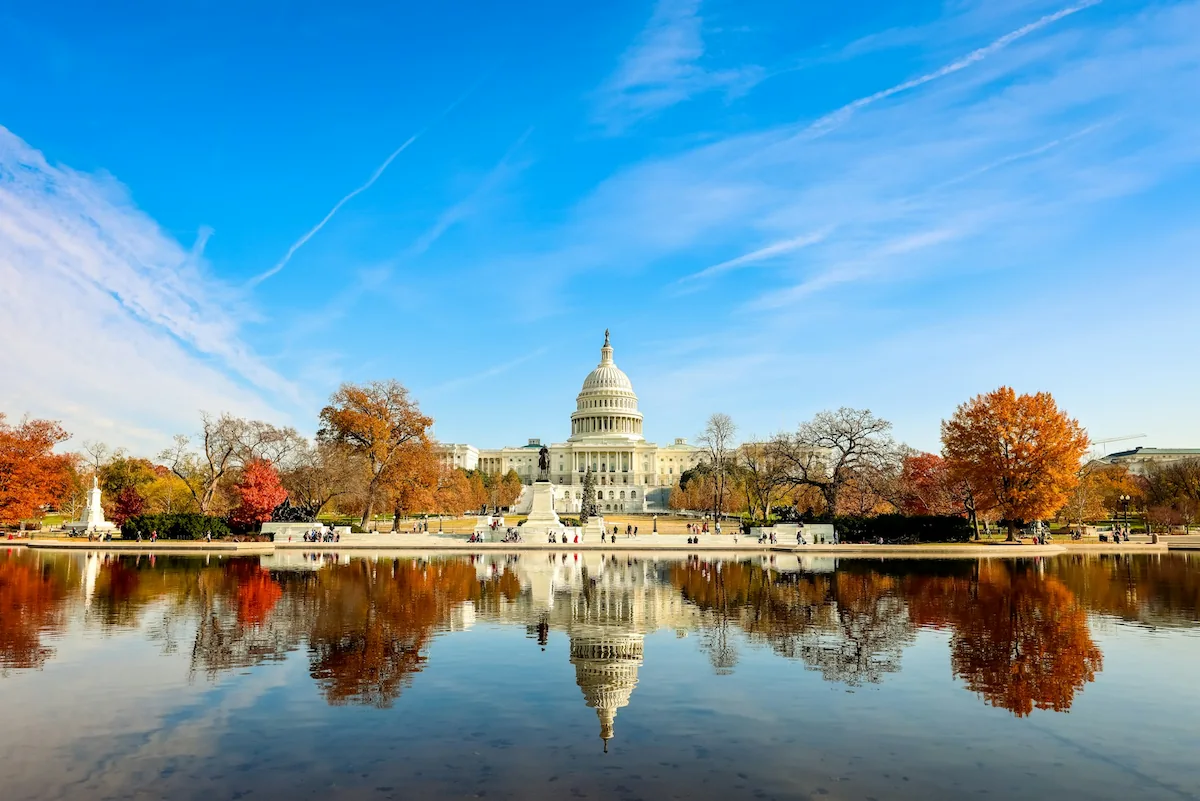
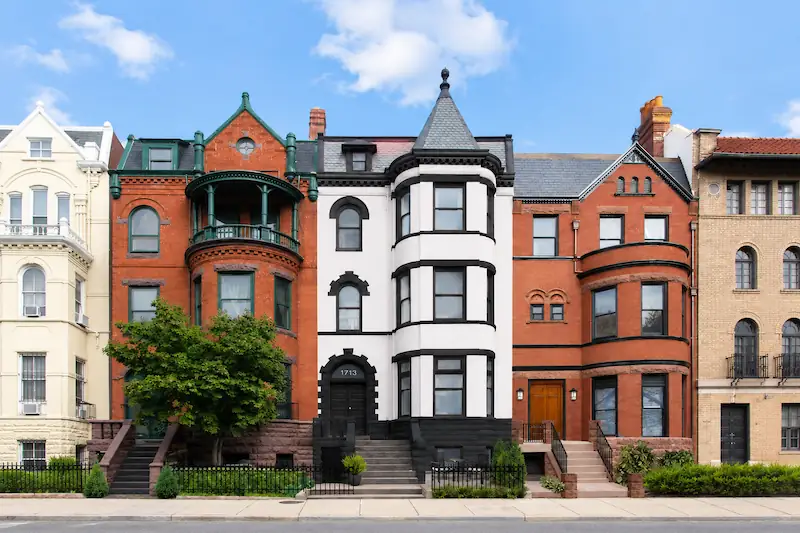
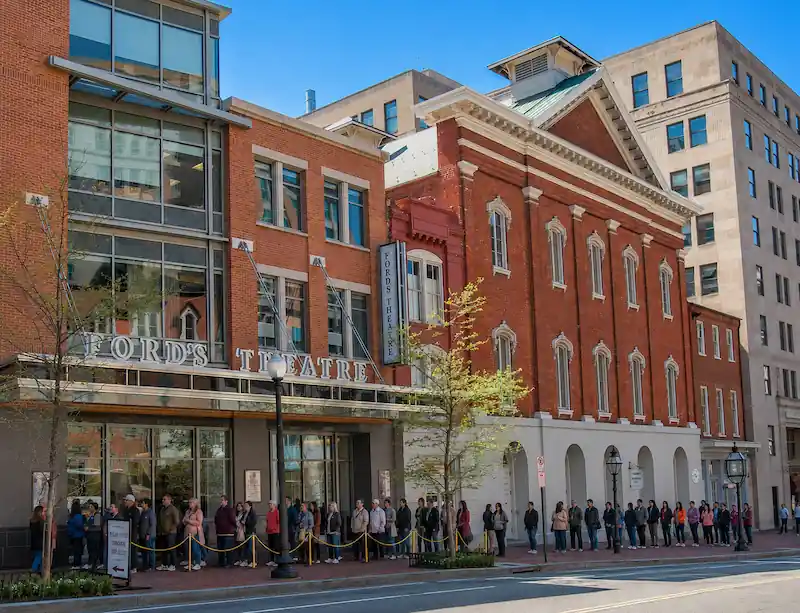
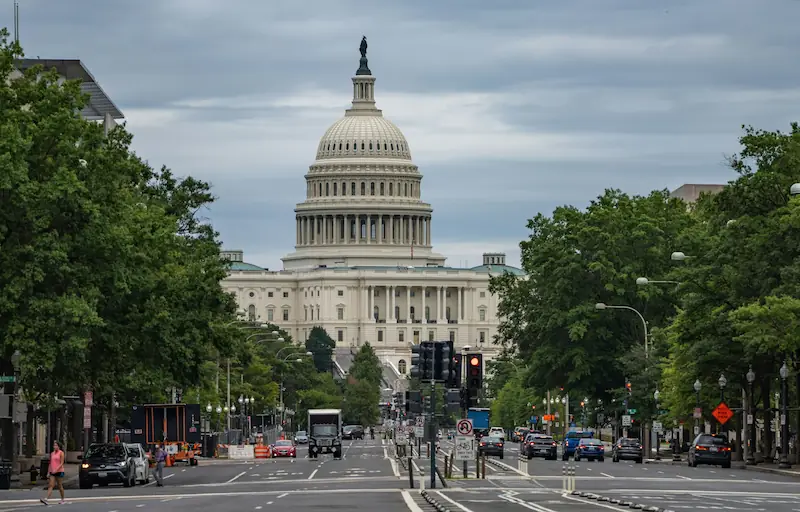
Find the best areas to stay in Washington DC, based on your travel style, trip length, museum plans, evening rhythm, and how much transport friction you want to avoid. In Washington DC, the right hotel base is not just the closest point to one landmark: it decides whether the National Mall, Smithsonian museums, Capitol Hill, Georgetown, restaurants, Metro access, and evening neighborhoods work together or pull the trip apart.
Best areas
Dupont Circle is the best all-round base, Penn Quarter is the most efficient choice for short museum-heavy first trips, Capitol Hill is strongest for calmer family-friendly stays, Georgetown is best for atmosphere and couples, Logan Circle and 14th Street are best for restaurants and nightlife, and the Wharf is best for polished waterfront weekends.
Booking timing
Book early for cherry blossom season, spring weekends, graduations, major conferences, political-event weeks, school-trip periods, and high-demand museum or event weekends if exact neighborhood and room type matter.
Quick answer: where to stay in Washington DC
Dupont Circle – Best for: best all-round first stay · Vibe: residential, connected, diplomatic, quietly polished · Stay here if: You want Metro access, restaurants, cafés, Embassy Row, and a neighborhood that still feels alive after museum hours. · Avoid if: You want the shortest possible walk to Smithsonian museums or a purely waterfront setting.
Penn Quarter – Best for: short first trips and museum-heavy stays · Vibe: central, efficient, practical, event-driven · Stay here if: You want the easiest base for the National Mall, Smithsonian museums, National Gallery, theaters, and short-stay logistics. · Avoid if: You want a romantic, residential, or highly atmospheric neighborhood after dark.
Capitol Hill – Best for: families, longer stays, and quieter central nights · Vibe: historic, residential, civic, composed · Stay here if: You want Eastern Market, rowhouse streets, the Capitol, Library of Congress, and a calmer return at night. · Avoid if: You want the strongest nightlife, easiest Georgetown access, or dense restaurant variety outside the hotel.
Georgetown – Best for: couples, boutique stays, and historic character · Vibe: historic, polished, collegiate, riverside · Stay here if: You value canal walks, old brick streets, boutique hotels, shopping, restaurants, and a slower base with real charm. · Avoid if: You are planning a Smithsonian-heavy trip and want direct Metro convenience every day.
Logan Circle and 14th Street – Best for: restaurants, bars, nightlife, and return visits · Vibe: social, contemporary, restaurant-led, energetic · Stay here if: You want dinner, drinks, cafés, and a lively evening rhythm within walking distance of your hotel. · Avoid if: You want the quietest nights, the easiest museum-first base, or a heavily family-oriented stay.
The Wharf – Best for: waterfront weekends, newer hotels, and polished evenings · Vibe: modern, leisure-focused, polished, riverfront · Stay here if: You want newer hotels, river views, restaurants, music venues, and easy promenade-style evenings after sightseeing. · Avoid if: You want historic Washington, northwest neighborhoods, or the strongest museum efficiency on your doorstep.
How to choose where to stay in Washington DC
Washington DC is not a city where every central hotel creates the same trip. The real choice is whether you want maximum daytime efficiency around museums and monuments, a neighborhood that still feels alive at night, a calmer family base, a historic romantic setting, or a modern waterfront stay. The best area is the one where your daytime sightseeing, evening meals, Metro use, room comfort, and likely fatigue all point in the same direction.
Choose by trip shape, not just by landmark distance: the National Mall, Capitol Hill, Georgetown, Dupont, Logan, and the Wharf behave like separate clusters.
For a short first trip, convenience usually beats atmosphere; Penn Quarter and Dupont Circle are the safest answers.
For stays of four nights or more, evening texture matters more than travelers expect, because the city can feel very different after museum hours.
Georgetown is excellent for charm, couples, and boutique hotels, but it is weaker for a Smithsonian-first stay because the historic core lacks direct Metro access.
Capitol Hill is a stronger family base than many visitors realize because it combines civic sights, Eastern Market, quieter streets, and practical decompression.
Logan Circle and 14th Street are best when restaurants and nightlife are part of the trip, not just a place to sleep.
The Wharf is appealing for polished waterfront evenings, but it should be chosen for that rhythm rather than as a generic central base.
Do not treat all downtown blocks as interchangeable: some are efficient but thin after dark, while others connect better to theaters, restaurants, or Metro.
During cherry blossom season, graduation weeks, and major conferences, the right neighborhood can disappear quickly; book earlier if exact location matters.
Washington’s free museums can offset higher hotel spend, so paying slightly more for a better base often improves total trip value.
How Washington DC works from a stay perspective
Washington DC is organized less like one compact historic center and more like a set of visitor clusters linked by broad avenues, Metro moves, parkland, rivers, and deceptively long walks. The National Mall holds the symbolic city, but the best hotel area is not always the one closest to a single monument. Choosing well means understanding where daytime sightseeing, evening dining, Metro access, and practical movement actually line up.
The National Mall is longer and more exposed than it looks on a map, so being theoretically central is not the same as being low-friction.
Penn Quarter and nearby downtown streets work best for museum-first and short-stay efficiency.
Dupont Circle and Logan Circle offer better evening texture while staying well connected to the center.
Capitol Hill gives the city a calmer residential and civic-east rhythm, especially useful for families and longer stays.
Georgetown feels central in reputation but behaves differently because the historic core has no direct Metro station.
The Wharf is easy for polished waterfront evenings and southwest planning, but less natural for northwest-heavy days.
Hotel placement within a neighborhood matters: a property two blocks from the right Metro stop can outperform a prettier hotel in a slower pocket.
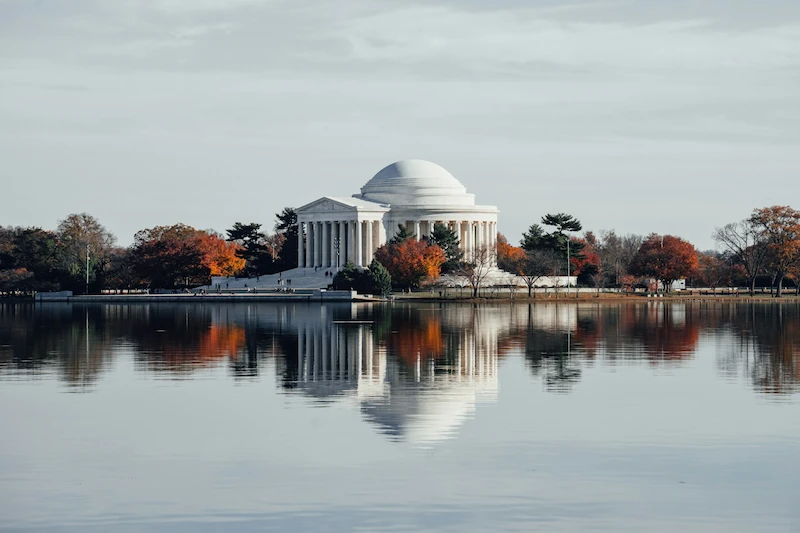
Cherry blossom season compresses movement around the Tidal Basin, so early access and recovery logistics matter more than usual.
Washington is usually easier without a car if the base has strong Metro or walkable food options.
Museum-first core – Penn Quarter and nearby downtown streets are best for short stays, first-time trips, rainy-day plans, and days centered on the Mall, Smithsonian museums, National Gallery, and major institutions.
Connected neighborhood core – Dupont Circle gives the strongest balance between sightseeing access, Metro, restaurants, Embassy Row, and a neighborhood that still feels alive once office Washington empties out.
Residential civic east – Capitol Hill suits travelers who want quieter evenings, civic architecture, Union Station logic, Eastern Market, and a base that feels more local than the standard downtown hotel grid.
Restaurant and nightlife northwest – Logan Circle and 14th Street are best when the trip values dining, bars, and contemporary city energy over maximum museum adjacency.
Historic atmosphere west – Georgetown is the strongest choice for character, boutique hotels, canal paths, and river-adjacent evenings, but it brings real transport trade-offs.
Waterfront southwest – The Wharf is ideal for newer hotels, polished promenades, river views, music venues, and a softer evening mood, especially on weekends and couples trips.
Useful nearby fallbacks – Convention Center, NoMa, Union Station edges, Foggy Bottom, and West End can be smart hotel fallbacks only when the exact block, Metro access, and evening logic remain strong.
Best areas to stay in Washington DC in depth
These are the Washington DC neighborhoods that work best as real trip bases, not just familiar names on a map. Each one changes how easily the city unfolds, what becomes natural on foot, and whether the stay feels purely practical or properly lived-in once the official core quiets down.
Dupont Circle
Dupont Circle is the strongest all-round answer for where to stay in Washington DC because it balances sightseeing access, Metro connectivity, restaurant depth, and real neighborhood life. It is close enough to the Mall, downtown, Embassy Row, Logan Circle, and northwest museums to keep the trip efficient, but it still feels residential and social when official Washington empties out. For first-time visitors who do not want a purely corporate downtown base, Dupont is often the safest recommendation. It gives the city a more layered identity: embassies, bookstores, cafés, townhouses, galleries, hotel bars, and easy transit all working together.
Why stay here: Stay here if you want the cleanest balance of convenience and atmosphere. Dupont works especially well for first-timers, couples, culture-focused travelers, car-free stays, and anyone who wants a base that remains useful after the museums close.
Best for: First-time visitors, couples, car-free stays, culture-first trips, embassy-area walks, and travelers who want the best all-round Washington DC base
Pros
Best overall balance of access, transit, dining, and atmosphere
Strong Metro links for airport arrivals, the Mall, Capitol Hill, and broader city movement
More residential character than many downtown hotel districts
Easy reach to Embassy Row, Phillips Collection, Logan Circle, and parts of downtown
Good choice for car-free visitors because the neighborhood is both walkable and connected
Reliable evening rhythm with restaurants, cafés, bookstores, and hotel bars nearby
Works for both first trips and return trips without feeling too narrow
Cons
Not the absolute closest base to the Smithsonian museum spine
Rates rise sharply in spring, conference weeks, and graduation periods
Some hotels near broad avenues feel more business-oriented than neighborhood-led
Families focused only on Mall museums may find Penn Quarter slightly easier
A few blocks can feel quieter than expected late at night, so exact hotel placement matters
Nearby highlights
Easy dinners, cafés, bookstores, and hotel bars without needing another transfer at the end of the day
Fast access to Embassy Row, Kalorama edges, the Phillips Collection, and northwest cultural layers
Good balance between museum-day practicality and neighborhood evenings
Useful Metro links for Reagan National arrivals and cross-city sightseeing
Walkable connection toward Logan Circle, downtown, and parts of the White House / Lafayette Square orbit
Stronger everyday atmosphere than most purely hotel-led central districts
A good launch point for combining the National Mall with Georgetown, U Street, or Rock Creek Park over several days
Budget
The Baron Hotel – Simple, older-school Dupont stay for travelers prioritizing neighborhood access over polish. Why we recommend: One of the few lower-cost options that still places you directly in Dupont logic. Check availability
Sonder The Quincy – Apartment-style stay with more room flexibility than many standard central hotels. Why we recommend: Useful if you want Dupont-adjacent convenience without paying boutique-hotel premiums. Check availability
Holiday Inn Washington-Central/White House by IHG – Practical central hotel that works well for short stays and dependable daily logistics. Why we recommend: A strong value play when you want centrality and a predictable full-service setup. Check availability
Mid
Lyle Washington DC – Design-aware Dupont base with a more residential feel than typical downtown chain stock. Why we recommend: It captures the neighborhood’s calmer, more refined side unusually well. Check availability
The St. Gregory Hotel – Spacious-feeling all-suite-leaning stay between Dupont and the West End. Why we recommend: Better room comfort than many similarly priced central competitors. Check availability
The Ven at Embassy Row, Washington, D.C., a Tribute Portfolio Hotel – Well-located hotel close to Dupont Circle and embassy-lined blocks. Why we recommend: A practical mid-range pick when location matters more than boutique intimacy. Check availability
Upscale
The Dupont Circle Hotel – Polished luxury stay with one of the best-positioned addresses in the neighborhood. Why we recommend: It combines true Dupont location with a much stronger room and service level than the average central option. Check availability
Hotel Madera – Refined boutique hotel on a quieter Dupont-adjacent stretch. Why we recommend: A better choice than many larger luxury hotels if you want calm and neighborhood feel together. Check availability
The Jefferson, Washington, DC – Small-scale luxury hotel with a more discreet and classic feel than scene-led competitors. Why we recommend: One of the strongest options if quiet sophistication matters more than size or spectacle. Check availability
Penn Quarter
Penn Quarter is the most convenient area to stay in Washington DC for a short first trip built around the National Mall, Smithsonian museums, National Gallery, National Archives, theaters, arena events, and straightforward logistics. It is not the city’s most romantic or residential district, but it removes a lot of friction from museum-heavy days. For two or three nights, that efficiency can matter more than charm. The area is especially useful when you want to move between monuments, museums, dining, Metro, and evening events without constantly recalculating the day.
Why stay here: Stay here if you want the classic Washington DC sightseeing map to feel as easy as possible. Penn Quarter is strongest for first-time visitors, families, short stays, museum-heavy itineraries, and travelers who want fewer transport decisions.
Best for: Short first trips, museum-heavy stays, families prioritizing convenience, winter or rainy-day trips, theater weekends, and travelers who want the most practical central base
Pros
Best central efficiency for the National Mall, Smithsonian museums, National Gallery, and Archives
Strong Metro connectivity for quick cross-city moves
Practical for families and first-time visitors who want low-friction days
Useful for theater nights, Capital One Arena events, and compact weekend trips
Good hotel inventory across budget, mid-range, and luxury categories
Makes rainy-day and winter planning easier because several indoor cultural anchors are nearby
A logical base when every hour matters
Cons
Less neighborhood charm than Dupont Circle, Capitol Hill, Georgetown, or Logan Circle
Some blocks feel corporate or quiet after office hours
The best-located hotels often price aggressively during spring and event periods
Evenings can feel functional rather than memorable unless you plan dinner or a show
Not the best base if your trip is mainly restaurants, nightlife, or Georgetown atmosphere
Nearby highlights
Easy access to the National Mall without building every day around transit legs
Straightforward Smithsonian sequencing for short stays with limited time
Good walking links to the National Archives, National Gallery, theaters, and central downtown corridors
Convenient Metro network coverage if the trip expands beyond the core
Useful hotel choice for families who want to keep daily fatigue low
A stronger base than it looks for visitors mixing museums with shows, restaurants, or arena events
Good fallback in poor weather because several major indoor stops sit nearby
Budget
Motto by Hilton Washington DC City Center – Compact, modern rooms in a highly central location that supports short stays well. Why we recommend: One of the most practical lower-cost entries into the Penn Quarter area. Check availability
Fairfield Inn & Suites by Marriott Washington, DC/Downtown – Straightforward downtown stay suited to travelers prioritizing central function over style. Why we recommend: A dependable value option with better logistics than many similarly priced alternatives. Check availability
Hampton Inn Washington DC - Convention Center – Reliable chain-led stay with solid transport and central access. Why we recommend: A safe pick when you want a predictable room product in a useful downtown position. Check availability
Mid
Riggs Washington DC – Characterful downtown hotel in a former bank building, close to Penn Quarter and the Mall orbit. Why we recommend: It offers much more personality than most central hotels without sacrificing utility. Check availability
Grand Hyatt Washington – Large-scale central hotel built for easy movement, events, and efficient city use. Why we recommend: A strong mid-range option when location and convenience matter more than boutique charm. Check availability
Kimpton Hotel Monaco Washington DC by IHG – Historic-feeling hotel near museums and civic landmarks with more character than average chain stock. Why we recommend: One of the best choices here if you want centrality without a purely generic downtown feel. Check availability
Upscale
Waldorf Astoria Washington DC – Grand luxury stay in the former Old Post Office building, close to the monumental core. Why we recommend: A landmark property that delivers true high-end quality in a highly central position. Check availability
Conrad Washington DC – Modern luxury hotel with calmer styling than many ceremonial downtown addresses. Why we recommend: A strong fit if you want premium comfort without old-school grandeur dominating the stay. Check availability
The Royal Sonesta Washington DC Capitol Hill – Polished upscale stay with newer-feeling interiors and easy access to the eastern side of the core. Why we recommend: A better option than many older downtown luxury hotels if you value fresher execution. Check availability
Capitol Hill
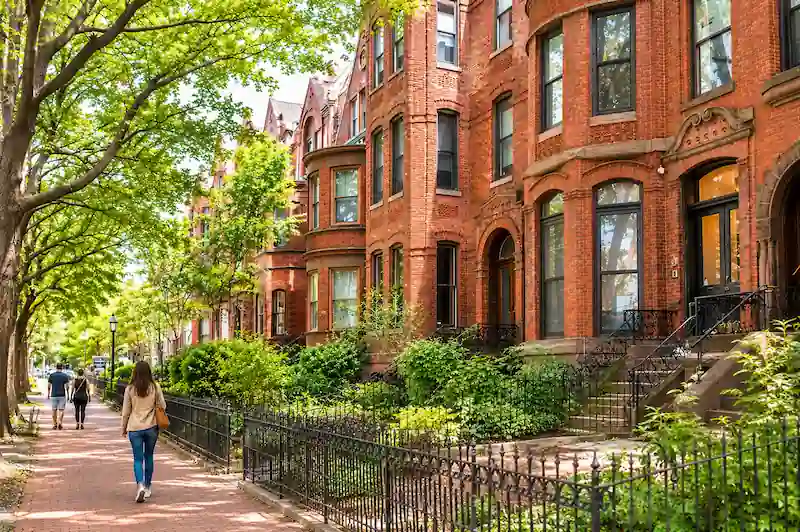
Capitol Hill is one of the best places to stay in Washington DC when you want central access with calmer evenings and a stronger residential rhythm. The area links the Capitol, Library of Congress, Supreme Court, Eastern Market, Union Station, and rowhouse streets into one coherent base. It is less nightlife-heavy than Logan and less transit-universal than Dupont, but it gives the capital a more grounded, lived-in feel. For families, longer stays, civic-history travelers, and visitors who prefer quieter nights, Capitol Hill can be more satisfying than a fully downtown hotel grid.
Why stay here: Stay here if you want a central but composed base with civic landmarks, neighborhood streets, Eastern Market, and a calmer return at night. It works especially well when the trip values rhythm and recovery as much as proximity.
Best for: Families, longer stays, civic architecture, calmer central nights, Capitol-side sightseeing, and travelers who want Washington DC to feel residential
Pros
More residential and composed than many downtown areas
Excellent for the Capitol complex, Library of Congress, Supreme Court, and east-side Mall planning
Good fit for families, longer stays, and travelers who want quieter evenings
Strong architectural character without sacrificing centrality
Eastern Market gives the stay a useful food and weekend rhythm
Good option for travelers arriving by rail through Union Station
Often more human-scaled than hotel-heavy central districts
Cons
Less convenient for Georgetown, Dupont, and northwest dining clusters
Hotel inventory is thinner than in Penn Quarter or Dupont
Some blocks feel too quiet for travelers wanting nightlife nearby
Choosing too deep a residential location can reduce transport convenience
Not ideal if you want easy access to multiple evening neighborhoods without rides
Nearby highlights
Easy access to the Capitol, Library of Congress, and Supreme Court without a heavy transport setup
Eastern Market gives the stay a useful local food and weekend rhythm
A calmer return at night than many business-led downtown districts
Good logic for museum days that start on the east side of the Mall
Pleasant rowhouse streets that make the neighborhood itself part of the trip
A better fit than most central zones for travelers who want less hotel-corridor energy
Union Station access can simplify arrivals, departures, and certain day trips
Budget
Capitol Hill Hotel – Suite-friendly neighborhood hotel with a useful location near the Capitol South area. Why we recommend: One of the clearest value options if you want actual Capitol Hill positioning. Check availability
Phoenix Park Hotel – Traditional-feeling stay by Union Station that works well for rail arrivals and east-side sightseeing. Why we recommend: A strong choice when transport convenience and neighborhood access matter equally. Check availability
Holiday Inn Washington Capitol - National Mall by IHG – Functional central option that helps if you want the Capitol side without paying luxury rates. Why we recommend: A practical lower-cost pick for museum and family-focused itineraries. Check availability
Mid
Hilton Washington DC Capitol Hill – Polished full-service hotel with convenient access to Union Station and the Capitol area. Why we recommend: It balances comfort and east-side positioning better than many comparable central hotels. Check availability
Washington Court Hotel – Reliable Capitol-adjacent stay designed for simple museum and institution-heavy itineraries. Why we recommend: A sensible choice if you want location discipline more than boutique styling. Check availability
YOTEL Washington DC – Contemporary hotel with compact design logic and easy access to the Capitol zone. Why we recommend: It feels fresher than many mid-range competitors in this part of town. Check availability
Upscale
The Royal Sonesta Washington DC Capitol Hill – Newer upscale option with refined interiors and strong access to the Capitol side. Why we recommend: One of the best higher-end choices if you want Capitol Hill proximity without dated décor. Check availability
Kimpton George Hotel by IHG – Boutique-leaning hotel near Union Station with more personality than most business-oriented peers. Why we recommend: A good upscale pick when you want a more design-aware stay in this area. Check availability
The Morrow Washington DC, Curio Collection by Hilton – Stylish upscale stay just beyond the core, useful for travelers wanting a newer room product. Why we recommend: A strong alternative when classic Capitol hotels feel too traditional or tired. Check availability
Georgetown
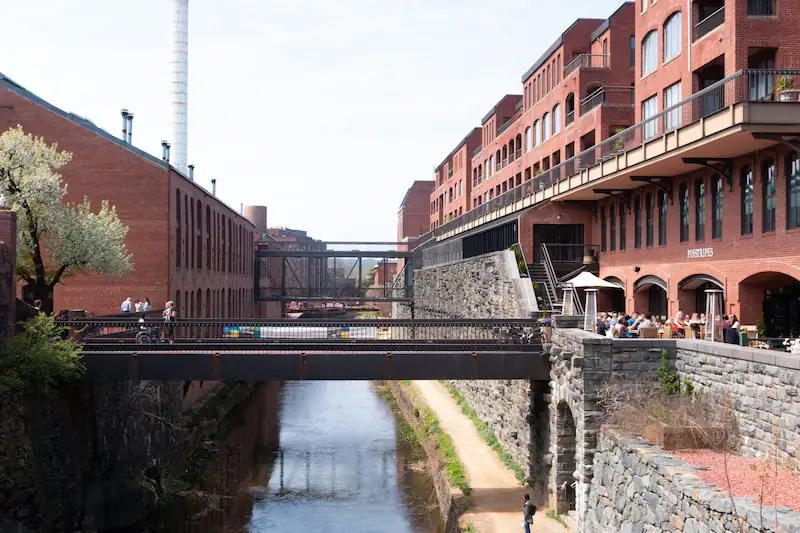
Georgetown is the most atmospheric place to stay in Washington DC if you care about historic streets, canal edges, old brick architecture, polished boutique hotels, river walks, shopping, and a slower version of the capital. It is not the smartest answer for every visitor because the lack of direct Metro access makes museum-heavy days less effortless than from Dupont or Penn Quarter. But when the hotel base itself is part of the experience, Georgetown is hard to beat. It works best for couples, design-conscious travelers, slower weekends, and visitors who value evening charm over perfect efficiency.
Why stay here: Stay here if you want Washington DC at its most historic, polished, and romantic. Georgetown is best when atmosphere, boutique hotels, restaurants, and riverside movement matter more than maximum Smithsonian convenience.
Best for: Couples, boutique hotel stays, historic atmosphere, slower weekends, premium trips, and travelers choosing character over pure efficiency
Pros
Strongest historic atmosphere among Washington’s core stay areas
Excellent for couples, boutique stays, and slower evenings
Good dining, canal walks, shopping, and waterfront access
Feels distinct from the federal and business core
Makes the hotel base itself part of the trip experience
Strong for premium stays and design-conscious travelers
A good fit when the visit is less museum-completion focused
Cons
No direct Metro station in the historic core
Less efficient for Smithsonian-heavy itineraries and short first trips
Premium pricing is common, especially for better hotels
Busy commercial stretches can feel crowded in the middle of the day
Taxis or ride-hailing become more important than in Dupont or Penn Quarter
Not ideal for travelers who dislike walking between transport and hotel
Nearby highlights
Canal-side walks and old streets make even short returns to the hotel feel rewarding
One of the best parts of Washington for dinner-led evenings without a formal plan
Easy access to riverfront stretches and slower scenic walks
Useful shopping and café density if the trip mixes sightseeing with downtime
A more character-driven base than almost anywhere else in the city
Good fit for travelers who want the stay to feel curated rather than purely practical
Works well with Kennedy Center, Foggy Bottom, and upper northwest plans when organized deliberately
Budget
Georgetown Inn – Classic Georgetown option with a rare price point for this part of the city. Why we recommend: One of the few hotels here that can sometimes deliver real value without leaving the neighborhood. Check availability
Georgetown Suites Harbour – Apartment-style hotel useful for longer stays and travelers who need more space. Why we recommend: A practical choice when Georgetown atmosphere matters but room functionality does too. Check availability
The Georgetown House Boutique Inn – Small-scale stay on the canal side with a more intimate feel than standard hotels. Why we recommend: A good lower-cost option if you want Georgetown to feel specific rather than generic. Check availability
Mid
The Graham Georgetown – Boutique hotel with a polished, neighborhood-appropriate feel close to Georgetown’s core. Why we recommend: It fits the area better than larger chain hotels trying to mimic boutique character. Check availability
Hotel AKA Washington Circle – Refined west-end option that keeps Georgetown reachable while improving citywide logistics. Why we recommend: A smart compromise if you want Georgetown access without taking on its full transport friction. Check availability
Georgetown Suites Courtyard – Suite-oriented stay that works well for travelers wanting a quieter Georgetown rhythm. Why we recommend: Useful when room size and neighborhood position matter more than full-service extras. Check availability
Upscale
Rosewood Washington, D.C. – High-end boutique luxury with canal and Georgetown positioning that feels genuinely place-specific. Why we recommend: One of the strongest luxury choices in the city if atmosphere is part of the brief. Check availability
Four Seasons Washington DC – Large-scale luxury hotel that brings deep service and comfort to Georgetown’s historic setting. Why we recommend: Still the benchmark if you want full-service luxury in this neighborhood. Check availability
The Ritz-Carlton Georgetown, Washington, D.C. – Warehouse-conversion luxury hotel with a quieter, more intimate feel than many prestige peers. Why we recommend: A better pick than many formal luxury hotels if you want character with top-tier comfort. Check availability
Logan Circle and 14th Street
Logan Circle and 14th Street are the right answer when you want Washington DC to feel current, social, and restaurant-led rather than purely civic. This is where a museum day can end naturally in dinner, drinks, cafés, and a real neighborhood evening rather than a calculated commute back to the hotel. It is not the easiest base for every first-time visitor, but it is one of the most rewarding if food, nightlife, and contemporary city texture are high on the list. For repeat visitors, couples, and friend groups, this area often feels more compelling than the obvious museum-first districts.
Why stay here: Stay here if restaurants, bars, cafés, and a lively evening rhythm are central to the trip. Logan works when you want Washington DC to feel social and current without giving up reasonable access to downtown and Dupont.
Best for: Food-focused trips, nightlife, couples, friends, repeat visitors, and travelers who want Washington DC’s contemporary evening side
Pros
Best area in this guide for restaurants, bars, and evening energy
More contemporary and lived-in than the federal core
Good fit for couples, friends, return visitors, and food-focused trips
Walkable to Dupont, Shaw, U Street, and parts of downtown from many addresses
Makes evenings feel spontaneous rather than programmed
Stronger local rhythm than Penn Quarter after dark
Good compromise for travelers who have already seen the main monuments
Cons
Less ideal for travelers focused on museum efficiency
Some streets can be noisy later into the night
Traditional hotel stock is thinner than in Penn Quarter or Dupont
Daytime transit planning matters more than in the most central zones
Not the calmest choice for families with young children
Exact block matters if sleep quality is important
Nearby highlights
Immediate access to one of Washington’s strongest restaurant corridors
Easy bar and dinner options without needing a final ride-hail decision
Useful link between Dupont, Shaw, U Street, and parts of downtown
A stronger fit than downtown for couples and friend groups who want evening texture
Better for travelers who care about how the city feels after dark
A more current version of Washington than the ceremonial core can provide
Good base for balancing daytime museums with social evenings
Budget
Sonder The Quincy – Flexible apartment-style stay with practical access to Logan and downtown-adjacent areas. Why we recommend: A useful lower-cost option when you want more space and a central-west location. Check availability
Hotel Zena Washington DC – Design-conscious hotel that lands at a more accessible price point than many peers nearby. Why we recommend: A stronger style pick than most budget-leaning central hotels. Check availability
Cambria Hotel Washington D.C. Convention Center – Functional central stay with enough proximity to Logan and 14th Street to work for dining-led trips. Why we recommend: A practical compromise if you want the area’s energy without full boutique pricing. Check availability
Mid
Viceroy Washington DC – Well-positioned boutique-leaning hotel in the heart of Logan Circle’s orbit. Why we recommend: One of the best mid-range choices if you want the neighborhood rather than just proximity to it. Check availability
Kimpton Banneker Hotel by IHG – Refined central-northwest stay with a quieter edge and good access to Logan and Dupont. Why we recommend: A smart choice when you want calmer sleep without losing dining access. Check availability
Eaton DC – Design-forward downtown-adjacent hotel with easy access to 14th Street and nearby nightlife. Why we recommend: A more distinctive option than standard chain hotels for travelers wanting contemporary DC energy. Check availability
Upscale
Le Méridien Washington, D.C., The Madison – Upscale hotel with a polished, quieter feel and a strong position for Logan-adjacent stays. Why we recommend: A good high-end pick when you want comfort without sacrificing restaurant access. Check availability
The Darcy Hotel, Washington DC – Boutique-style upscale stay with stronger neighborhood feel than many corporate luxury hotels. Why we recommend: It strikes a better balance between style, sleep quality, and location than many competitors nearby. Check availability
The Morrow Washington DC, Curio Collection by Hilton – Newer upscale property for travelers wanting a fresher room product and a more contemporary city feel. Why we recommend: One of the better choices if design and newer execution matter as much as the address. Check availability
The Wharf
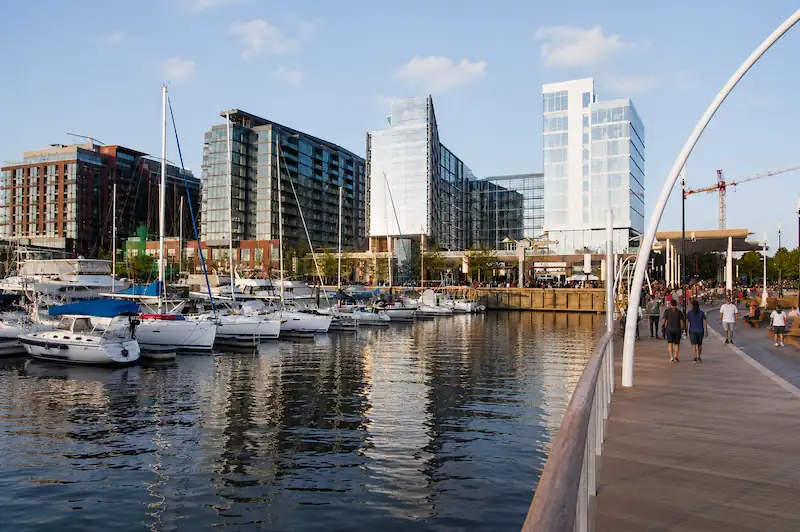
The Wharf gives Washington DC a different physical register: newer hotels, promenade life, music venues, seafood restaurants, river views, and evenings shaped by water rather than monuments. It is less historically rooted than Georgetown or Capitol Hill, but that modern polish is part of the appeal. The area suits travelers who want the city to soften at night after museum and memorial days. For couples weekends, conference-adjacent stays, polished short breaks, and travelers who like waterfront hotels, it is one of the easiest Washington bases to enjoy without overthinking the evening.
Why stay here: Stay here if you want a modern waterfront base with newer hotels, easy dining, river walks, and a polished leisure rhythm. The Wharf works best when the trip balances classic sightseeing with slower evenings by the water.
Best for: Waterfront weekends, couples, newer hotels, polished evenings, conference-style stays, and travelers who want easy leisure after sightseeing
Pros
Best waterfront hotel setting in central Washington DC
Strong for modern rooms, river views, and evening promenades
Good dining and music venue access without leaving the district
Useful contrast to the city’s more formal daytime identity
Appealing for couples, weekends, and conference-style stays
Easy choice when you want newer hotel stock and less historic heaviness
Can pair well with Mall days, Wharf dinners, and Potomac views
Cons
Less historic and less locally textured than Georgetown or Capitol Hill
Can feel self-contained rather than deeply neighborhood-driven
Premium rates are common for the best waterfront positions
Not the strongest base for northwest-focused itineraries
Less versatile than Dupont for a longer multi-neighborhood stay
Some visitors may find the area too polished or development-led
Nearby highlights
Easy river walks and low-effort evening plans directly outside the hotel
Newer hotel stock than in many older central districts
Good dining and live-music options without needing another cross-city move
Useful reset after monument-heavy or museum-heavy days
A softer, more leisure-led version of Washington after dark
One of the easiest districts for a polished couples weekend
Good access to Potomac cruises, Southwest Waterfront, and selected Mall-side plans
Budget
Hyatt House Washington DC / The Wharf – Extended-stay-friendly hotel with practical room setups in the Wharf district. Why we recommend: One of the best value entries into the waterfront area if room function matters. Check availability
Canopy by Hilton Washington DC The Wharf – Modern waterfront stay with a lighter, more contemporary feel than many full-service rivals. Why we recommend: A good choice if you want the Wharf without jumping fully into luxury rates. Check availability
Hampton Inn Washington, D.C./White House – Not directly on the Wharf but often a practical lower-cost compromise for easy access to the area. Why we recommend: Useful when true Wharf pricing spikes and you still want manageable southwest access. Check availability
Mid
InterContinental Washington D.C. - The Wharf by IHG – Full-service waterfront hotel that makes the district’s promenade logic easy to use. Why we recommend: A strong mid-range-to-upscale choice if you want the Wharf experience properly anchored to the water. Check availability
Hilton Washington DC National Mall The Wharf – Well-positioned hotel that keeps the waterfront and the Mall both within a workable frame. Why we recommend: A smart compromise if you want the Wharf feel without giving up too much museum practicality. Check availability
Hyatt Place Washington DC / National Mall – Practical hotel just inland from the waterfront with simpler rates than prime riverfront properties. Why we recommend: A useful choice when you want southwest access and lower booking pressure. Check availability
Upscale
Pendry Washington DC - The Wharf – High-end waterfront hotel with strong design, polished common spaces, and true leisure appeal. Why we recommend: The best fit here if you want the Wharf at its most elevated and most destination-like. Check availability
Salamander Washington DC – Luxury hotel near the southwest waterfront with more resort-style calm than most central addresses. Why we recommend: A better choice than many prestige hotels if you want space, quiet, and a softer mood. Check availability
The Watergate Hotel Georgetown – A Potomac-side luxury stay outside the Wharf itself, useful when you want river-adjacent polish with easier access to Kennedy Center and Georgetown. Why we recommend: A strong upscale fallback if exact Wharf pricing is high but you still want water, style, and a softer evening mood. Check availability
Where to stay in Washington DC for first-time visitors
For a first trip, the biggest mistake is choosing an area that sounds attractive but adds friction to every day. The right first-time base should reduce transfers, keep the Mall and museums manageable, and still give the trip a satisfying evening rhythm.
Dupont Circle is the best overall first-time area because it balances Metro access, restaurants, and central sightseeing better than any other single base.
Penn Quarter is the most convenient area if the priority is the National Mall, Smithsonian museums, National Gallery, Archives, and a short, highly efficient visit.
Capitol Hill works well for first-time visitors who want a calmer base and do not mind quieter evenings.
Georgetown is better for a style-led or couples-first trip than for a museum-first first visit.
The Wharf can work for a first weekend, especially for couples, but it is less versatile than Dupont or Penn Quarter if the schedule spans multiple city zones.
If you only have two or three nights, centrality usually matters more than atmosphere.
Label
Stay
Avoid
Why
Best all-round first trip
Dupont Circle
Outer locations with weak Metro access
It gives the cleanest balance between sightseeing efficiency and evenings that still feel alive.
Shortest first stay
Penn Quarter
Georgetown
The most efficient choice if the trip is built around the Mall, museums, and maximum convenience.
Calmer first stay
Capitol Hill
Nightlife-led areas
A good fit if you want a quieter residential return after busy sightseeing days.
Atmospheric first weekend
Georgetown or The Wharf
Pure business-district hotels
The base itself becomes part of the trip, but only if you accept slightly less universal convenience.
Where to stay in Washington DC with family
Family stays in Washington DC work best when the base reduces walking fatigue, keeps meals easy, and avoids overcomplicating museum days. Room size, casual dining, transit, and daily decompression matter at least as much as headline neighborhood prestige.
Penn Quarter is often the most practical family base because it keeps the Mall, Smithsonian museums, and Metro access simple.
Capitol Hill is one of the best family areas if calmer evenings, Eastern Market, and a residential environment matter more than maximum centrality.
Dupont Circle works well for families who want better dining and a broader neighborhood feel without losing connectivity.
Georgetown is less efficient with children if the itinerary depends heavily on the Smithsonian museums.
The Wharf can work for families who value newer hotels and easy waterfront evenings, but it is less flexible for northwest-heavy plans.
Look for suite-style hotels or apartment-style stays when the trip lasts more than a long weekend.
Do not underestimate how much a nearby casual dinner option helps after a full museum day.
Label
Stay
Avoid
Why
Best for short family trip
Penn Quarter
Georgetown
It cuts transport friction and keeps museum days manageable.
Best for calmer family stay
Capitol Hill
Logan Circle and 14th Street
Quieter streets and easier decompression matter with children.
Best family compromise
Dupont Circle
Isolated bargain locations
It combines better food options and transit with a less corporate feel.
Best family waterfront option
The Wharf
If the trip is heavily Smithsonian-first
Newer hotels and evening promenade logic can be useful, but central versatility is weaker.
Where to stay in Washington DC for nightlife and restaurants
Nightlife in Washington DC is less about one nonstop entertainment district than about choosing a base that makes dinner, drinks, and a lively evening feel natural. If that matters, the right hotel area changes the trip more than many first-time visitors expect.
Logan Circle and 14th Street are the best areas to stay in Washington DC for restaurants, bars, and evening street life.
Dupont Circle is the better choice if you want strong evening options with a slightly calmer neighborhood feel.
Georgetown works well for polished dinners and atmospheric evenings, but less for direct late-night convenience.
The Wharf suits travelers who want music venues, seafood, waterfront walks, and polished evenings more than bar-heavy nightlife.
Penn Quarter is more useful than exciting for evenings unless the plan includes theater, arena events, or a centrally booked dinner.
Choose a hotel on a quieter side street if you want nightlife access without paying for it in sleep quality.
Label
Stay
Avoid
Why
Best pure nightlife base
Logan Circle and 14th Street
Capitol Hill
It keeps bars, restaurants, and late evenings within easy walking distance.
Best balanced evening base
Dupont Circle
Penn Quarter if you want local atmosphere
Stronger restaurant and neighborhood rhythm without feeling too nightlife-dependent.
Best scenic evening base
The Wharf
Museum-only districts
Works best if you want polished waterfront nights rather than bar-led density.
Best polished date-night base
Georgetown
If late-night bar hopping is the goal
More romantic and atmospheric than loud or club-led.
Where to stay in Washington DC on a budget
Washington DC is rarely cheap when neighborhood quality is non-negotiable, but it is still a city where smart location discipline can save more than chasing the lowest headline rate. The goal is not just to pay less, but to avoid a false economy that adds transport, fatigue, and weak evenings.
The best budget strategy is usually a practical hotel near Metro rather than the absolute cheapest property on the map.
Penn Quarter can still work on a budget if you choose a simpler chain hotel and book early.
Capitol Hill and Dupont-adjacent areas often offer better value than travelers expect outside peak spring weeks.
Georgetown is usually a poor budget-first choice unless a rare promotional rate appears.
The Wharf often prices like a leisure district, so value there depends heavily on timing.
Consider NoMa, Convention Center, or Union Station-adjacent hotels only when transport and evening logistics still make sense.
In Washington DC, free museums can offset hotel spend, which means paying slightly more for the right base often improves total trip value.
Label
Stay
Avoid
Why
Best value for short stay
Penn Quarter
Georgetown
Centrality saves time, which matters more on a compressed trip.
Best value for longer stay
Capitol Hill or Dupont-adjacent
Waterfront premium zones
Better neighborhood quality without always paying top central rates.
Budget trap to avoid
Metro-connected central areas
Disconnected bargain hotels
Low rates lose their value when the base adds daily transport friction.
Best lower-cost fallback
Convention Center / NoMa / Union Station edge
If evening surroundings are weak
These can work only when Metro and return-at-night logic remain good.
Where to stay in Washington DC for couples
Couples usually get the most out of Washington DC when the hotel base adds atmosphere after the daytime sights. The best areas are those where dinner, walking, and a slower evening rhythm feel natural rather than logistical.
Georgetown is the most romantic and atmospheric choice, especially for boutique hotels, canal walks, and slower dinners.
Dupont Circle is the best couple-friendly all-rounder if you want atmosphere and better transit together.
The Wharf is strong for polished waterfront weekends, newer hotels, and easy promenade evenings.
Logan Circle and 14th Street work best for couples who care more about restaurants and bars than historic charm.
Penn Quarter is practical for a short culture-first trip, but less romantic unless the hotel itself is special.
Choose exact hotel placement carefully: a calm side street can matter more than being on the busiest dining corridor.
Label
Stay
Avoid
Why
Most atmospheric
Georgetown
Museum-first downtown blocks
Historic streets and boutique hotels make the base feel like part of the trip.
Best all-round couple stay
Dupont Circle
Purely functional downtown hotels
Enough charm, restaurants, and transit to support a balanced weekend.
Best modern waterfront stay
The Wharf
If you want old-city character
Newer hotels and riverfront evenings create an easy leisure rhythm.
Best restaurant-led stay
Logan Circle and 14th Street
If quiet is the top priority
Dinner and bars become effortless rather than scheduled.
Where to stay in Washington DC for museums and monuments
Museum-heavy Washington DC trips are where location discipline matters most. The National Mall is long, security checks take time, and too many cross-town corrections can turn free museums into tiring days.
Penn Quarter is the strongest museum-first base because it puts the National Mall, National Gallery, Archives, and several Smithsonian choices in the most practical frame.
Dupont Circle works better for a museum trip that also needs restaurants, Embassy Row, or a more balanced neighborhood return.
Capitol Hill is useful if your museum and institution plan leans east toward the Capitol, Library of Congress, Botanic Garden, and National Museum of the American Indian.
Georgetown is the weakest of the six for a pure museum-completion trip because it adds transport friction.
The Wharf can work if you want a softer evening after museum days, but it is less efficient than Penn Quarter for repeated Mall access.
If you are visiting NMAAHC, Air and Space, or Capitol interiors, choose the hotel after checking timed-entry plans.
Label
Stay
Avoid
Why
Most efficient museum base
Penn Quarter
Georgetown
It reduces the distance and decision load around Mall-based museums.
Best museum + evening balance
Dupont Circle
Dead downtown blocks
Good enough daytime access with better neighborhood return.
Best Capitol-side museum logic
Capitol Hill
Northwest-heavy bases
Good for Library of Congress, Botanic Garden, Capitol, and east Mall planning.
Where to stay in Washington DC without a car
Most visitors should not plan Washington DC around a car. The best hotel areas are those with Metro access, walkable meals, and reasonable rideshare use for the few places that are less transit-friendly.
Dupont Circle is the best all-round car-free base because it combines Metro, dining, and broad city access.
Penn Quarter is excellent without a car if the itinerary is museum-heavy and short.
Capitol Hill works well without a car when you stay near Metro or Union Station.
Georgetown can still be car-free, but you should expect more walking, buses, taxis, or rideshares.
The Wharf is workable without a car for waterfront stays, though northwest plans may require more rides.
Do not choose a cheaper hotel outside the core unless the Metro connection is genuinely easy and safe late at night.
Label
Stay
Avoid
Why
Best car-free all-rounder
Dupont Circle
Disconnected bargain hotels
Strong Metro access and useful neighborhood life.
Best car-free short stay
Penn Quarter
Georgetown
Most core sights become simpler without daily transfers.
Best car-free quiet base
Capitol Hill near Metro
Deep residential pockets
The area works well when exact station access is strong.
Where to stay in Washington DC for luxury hotels
Luxury in Washington DC splits between classic institutional grandeur, discreet boutique comfort, historic atmosphere, and modern waterfront polish. The best premium choice depends on whether the hotel is meant to support sightseeing or become part of the stay itself.
Dupont Circle and nearby central-west hotels are best for discreet luxury with strong neighborhood and restaurant access.
Penn Quarter and downtown are best for grand central luxury close to the Mall and civic core.
Georgetown is best for boutique luxury, couples, and historic atmosphere.
The Wharf is best for modern waterfront luxury and leisure-led weekends.
Capitol Hill luxury is more limited but useful if the east-side civic cluster matters.
Do not choose luxury purely by brand; exact base and evening rhythm often matter more in Washington.
Label
Stay
Avoid
Why
Classic central luxury
Penn Quarter / downtown
If you want neighborhood romance
Best for landmark properties and high central efficiency.
Boutique romantic luxury
Georgetown
If Metro convenience is essential
The setting and hotel character do more of the work.
Discreet neighborhood luxury
Dupont Circle
Pure business-district addresses
Strong balance of service, food, and walkable neighborhood context.
Modern waterfront luxury
The Wharf
If historic atmosphere is the goal
Newer hotels and riverfront evenings shape the stay.
Where to stay in Washington DC for a longer stay
Longer Washington DC stays need a base that can handle repetition: groceries or casual food, calmer evenings, Metro access, and enough neighborhood texture that coming back each night still feels pleasant.
Dupont Circle is usually the best longer-stay base because it remains connected, useful, and pleasant across different kinds of days.
Capitol Hill is strong for longer family stays or travelers who want quieter residential structure.
Logan Circle and 14th Street work well if restaurants and evening social life are a major part of the stay.
Georgetown is attractive for slower stays, but repeated transport friction can add up.
The Wharf is pleasant for leisure-led long weekends, but can feel less versatile across a full week.
Look for suite-style or apartment-style rooms once the trip reaches four or more nights.
Label
Stay
Avoid
Why
Best all-round longer stay
Dupont Circle
Purely museum-first blocks
It keeps the trip flexible after the core sights are done.
Best calmer longer stay
Capitol Hill
Nightlife-heavy pockets
Residential rhythm and Eastern Market help repeated days feel easier.
Best food-led longer stay
Logan Circle and 14th Street
Penn Quarter
Evenings remain strong without planning a new district every night.
Where to stay in Washington DC during cherry blossom season
Cherry blossom season changes Washington DC hotel logic because demand, walking routes, and crowd pressure concentrate around the Tidal Basin and central corridors. The best base is not necessarily right on the water; it is the one that lets you reach bloom areas early and recover easily later.
Penn Quarter is practical for short blossom trips because it keeps the Mall, Tidal Basin approaches, and museums workable.
Dupont Circle is better if you want bloom access plus stronger restaurants and a less purely tourist-heavy base.
The Wharf can be appealing for waterfront atmosphere but should be booked early and compared carefully on price.
Georgetown is beautiful in spring, but it is less direct for early-morning Tidal Basin access.
Capitol Hill works if you want a calmer base and do not need to be beside the Tidal Basin every day.
Book earlier than usual if neighborhood quality matters; late bookings often force weaker locations or inflated rates.
Label
Stay
Avoid
Why
Best short blossom stay
Penn Quarter
Late-booked fringe hotels
Keeps the main spring sights and indoor fallback options close.
Best blossom + neighborhood balance
Dupont Circle
Purely hotel-led downtown blocks
Better evenings while still staying connected.
Best spring atmosphere
Georgetown or The Wharf
If Tidal Basin efficiency is the priority
Beautiful bases, but less universally practical.
Where to stay in Washington DC by trip length and stay format
The right Washington DC neighborhood changes with the shape of the trip. A short museum-led visit rewards pure convenience; a longer stay starts to reward atmosphere, local rhythm, room function, and a base that can carry evenings without effort.
Label
Stay
Avoid
Why
1 night
Penn Quarter or a hotel near Union Station if arrival/departure matters
Georgetown unless atmosphere is the only goal
With one night, the hotel should simplify movement rather than add charm at the cost of time.
2 nights
Penn Quarter
Georgetown or weakly connected value hotels
When the trip is this short, minimizing daily movement matters more than maximizing atmosphere.
3 days
Dupont Circle or Penn Quarter
Outer value-first locations
These are the two strongest all-round answers depending on whether you lean toward efficiency or balance.
4 to 5 days
Dupont Circle or Capitol Hill
Mall-adjacent areas with weak evening life
Longer stays benefit from a neighborhood that can handle sightseeing and night-time decompression.
Couples weekend
Georgetown, Dupont Circle, or The Wharf
Purely business-led downtown blocks
The base itself should add to the trip when the stay is short and atmosphere matters.
Food-led return trip
Logan Circle and 14th Street
Penn Quarter
Repeat visitors usually get more out of restaurant density and evening energy than landmark adjacency.
Family trip
Penn Quarter or Capitol Hill
Nightlife-led pockets
Shorter transfers, calmer evenings, and practical meal options usually matter most with children.
Museum-first trip
Penn Quarter
Georgetown
The less time lost between museums, the easier it is to avoid fatigue.
Luxury stay
Georgetown, Dupont Circle, central downtown, or The Wharf depending on mood
Choosing purely by brand
Luxury value changes sharply depending on whether you want centrality, romance, discretion, or waterfront polish.
Cherry blossom trip
Penn Quarter, Dupont Circle, or The Wharf if booked early
Late-booked far-out bargains
Spring movement and hotel rates are unforgiving, so location quality matters more than usual.
One week
Dupont Circle, Capitol Hill, or Logan Circle and 14th Street
Purely functional downtown hotel zones
Longer stays need restaurants, cafés, room comfort, and a neighborhood that still feels useful after the core sights are done.
How to choose the right hotel in Washington DC once the area is set
In Washington DC, the district name helps, but the exact hotel location still matters. A good hotel choice reduces walking fatigue, late-evening friction, museum-day overload, and unnecessary transfers; a weak one can make even the right neighborhood feel less useful than it should.
Topic
WhatToDo
WhatToAvoid
WhyItMatters
Distance to Metro
Check that the hotel is within an easy walk of a useful Metro stop unless you are deliberately choosing Georgetown.
Assuming all central hotels are equally connected.
Washington spreads more than many first-time visitors expect, and Metro access keeps airport and cross-city moves simple.
Exact block quality
Look at the immediate street environment, not only the neighborhood name.
Booking the right area on a block that feels dead, noisy, or disconnected at night.
Washington’s hotel experience can change sharply within a few blocks.
Evening surroundings
Prioritize a hotel with dinner options, cafés, or active streets nearby if the stay is longer than a weekend.
Booking a central-looking hotel on a block that empties completely after office hours.
A dead evening environment changes how the whole trip feels once the main sightseeing is over.
Street-level quiet
Look for side-street positioning when staying in nightlife-led or heavily trafficked districts.
Paying for the busiest corridor if you still want proper sleep.
The best hotel is often not on the flashiest block, but one just beside it.
Room type
Choose suite-style or apartment-style options for family trips or stays of four nights or more.
Assuming every central standard room will feel comfortable once the trip stretches beyond a short city break.
Room function matters more in Washington because museum-heavy days are tiring and longer stays need recovery space.
Georgetown trade-off
Choose Georgetown only if you genuinely value atmosphere and accept slightly slower movement.
Treating Georgetown as the obvious first choice for a museum-first stay.
Its appeal is real, but so is the transport compromise.
Spring booking pressure
Book early and compare exact neighborhoods, not just headline rates, during cherry blossom season, graduations, and major event periods.
Waiting too long and then accepting a weak location because the better areas have surged.
Washington’s rates can spike sharply for calendar reasons that have nothing to do with hotel quality.
Museum fatigue
Choose a base that gives you easy breaks, meals, and short returns if the trip is museum-heavy.
Stacking museum days from a base that requires long end-of-day transfers.
Free museums still cost energy, and the wrong base makes that fatigue worse.
Family logistics
Prioritize rooms, breakfast options, casual nearby food, and short transfers over pure prestige.
Choosing the most stylish neighborhood if it complicates every museum day with children.
The best family hotel is usually the one that reduces decision-making at the end of the day.
False bargains
Pay a little more for the right location if it reduces rides and saves time.
Chasing the cheapest room and losing the savings in transport, fatigue, and poor evening options.
In a city with free museums, location often drives the real value equation more than room price alone.
FAQ: where to stay in Washington DC
Choosing where to stay in Washington DC is mainly a question of convenience versus neighborhood feel. The best answer depends less on one famous landmark and more on how you want your museum days, monument walks, restaurants, Metro use, and evenings to fit together.
What is the best area to stay in Washington DC for first-time visitors?
Dupont Circle is usually the best all-round choice because it balances Metro access, restaurants, neighborhood atmosphere, and easy movement across the city. Penn Quarter is better if your first trip is short and built heavily around the National Mall, Smithsonian museums, National Gallery, and Archives.
Is Penn Quarter the most convenient area to stay in Washington DC?
Yes for many short stays. Penn Quarter is one of the most convenient areas for museums, monuments, theaters, Metro connections, and family logistics, but it is less atmospheric at night than Dupont Circle, Georgetown, Logan Circle, or the Wharf.
Should I stay in Dupont Circle or Penn Quarter?
Choose Dupont Circle if you want the best balance of sightseeing access and neighborhood life. Choose Penn Quarter if you want maximum museum and monument efficiency, especially on a two- or three-night first trip.
Where should families stay in Washington DC?
Penn Quarter and Capitol Hill are usually the best family areas. Penn Quarter reduces transport friction for museum days, while Capitol Hill gives calmer evenings, Eastern Market, and a more residential feel. Dupont Circle is also strong if you want better dining and broader city access.
What is the best area to stay in Washington DC for nightlife?
Logan Circle and 14th Street are the best choices for nightlife, restaurant density, and evening street life. Dupont Circle is a good alternative if you want strong dining with a slightly calmer mood.
Is Georgetown a good area to stay in Washington DC?
Yes if you want atmosphere, boutique hotels, canal walks, river walks, historic streets, and a more romantic or character-driven base. It is less practical for a museum-heavy first trip because the historic core does not have direct Metro access.
Where should I stay in Washington DC without a car?
Dupont Circle, Penn Quarter, and Capitol Hill near Metro are the best choices without a car. In most central itineraries, a car adds more hassle than value because of parking, traffic, and short urban transfers.
What is the best area to stay in Washington DC on a budget?
The best budget strategy is usually a simpler hotel in Penn Quarter, Capitol Hill, or a Dupont-adjacent area rather than a disconnected bargain farther out. Paying slightly more for the right location often saves time and money overall.
Is it worth paying more to stay central in Washington DC?
Usually yes for shorter stays. The right central base reduces walking fatigue, Metro dependence, and end-of-day transport friction, which matters more than many travelers expect once museum and monument distances add up.
Where should couples stay in Washington DC?
Couples should look first at Georgetown for atmosphere, Dupont Circle for balance, the Wharf for modern waterfront polish, and Logan Circle if restaurants and bars matter most. Penn Quarter is practical but less romantic unless the hotel itself is special.
Is the Wharf a good place to stay in Washington DC?
The Wharf is a good choice for waterfront weekends, newer hotels, restaurants, music venues, and polished evenings. It is less historic than Georgetown and less versatile than Dupont, but it works well when you want a softer leisure rhythm after sightseeing.
Is Capitol Hill a good area to stay in Washington DC?
Yes, especially for families, longer stays, and travelers who want calmer evenings. It gives good access to the Capitol, Library of Congress, Supreme Court, Eastern Market, Union Station, and residential streets, but it is less nightlife-focused than Logan or Dupont.
Where should I stay for Smithsonian museums?
Penn Quarter is the best base for Smithsonian museums because it keeps the National Mall and several major institutions in the easiest frame. Dupont Circle is better if you want museum access plus stronger evenings.
Where should I stay near the National Mall?
Penn Quarter is the most practical area near the National Mall for most visitors. Capitol Hill can also work for east-side Mall access, while the Wharf is useful for a southwest waterfront angle but less universally convenient.
Is Logan Circle a good place to stay in Washington DC?
Yes if restaurants, bars, cafés, and evening energy matter. Logan Circle and 14th Street are excellent for food-led trips and repeat visitors, but less ideal for travelers focused only on museums or very quiet family nights.
Where should I stay in Washington DC for cherry blossom season?
Penn Quarter, Dupont Circle, and the Wharf are the most useful bases during cherry blossom season, depending on whether you value efficiency, evening balance, or waterfront atmosphere. Book early because rates and availability tighten quickly.
Where should I stay in Washington DC for a weekend?
For a first weekend, choose Penn Quarter for efficiency or Dupont Circle for balance. For a couples weekend, Georgetown or the Wharf may be more memorable. For a restaurant-led weekend, Logan Circle is stronger.
Where should I stay for a one-week trip to Washington DC?
For a week, Dupont Circle, Capitol Hill, or Logan Circle usually works better than a purely functional downtown base. Longer stays need cafés, restaurants, room comfort, Metro access, and a neighborhood that still feels pleasant after the main sights are done.
What area is best for luxury hotels in Washington DC?
For classic central luxury, look around Penn Quarter and downtown. For boutique romantic luxury, choose Georgetown. For discreet neighborhood luxury, choose Dupont Circle. For modern waterfront luxury, choose the Wharf.
Should I stay near Union Station?
Union Station can be useful for rail arrivals, Capitol Hill plans, and certain day trips, but exact block quality matters. It is practical rather than the most atmospheric choice, and travelers should compare it with Capitol Hill and Penn Quarter.
Is Foggy Bottom a good area to stay?
Foggy Bottom can be useful for the Kennedy Center, Georgetown access, and central-west positioning, but it is not one of the main six bases in this guide because Dupont, Georgetown, and Penn Quarter usually give clearer visitor logic.
Should I stay in NoMa or near Union Market?
NoMa and Union Market can work for value-conscious or repeat visitors if the hotel has strong Metro access and the exact block feels right. They are not the best default choices for first-time museum-heavy stays.
Is Adams Morgan a good area to stay in Washington DC?
Adams Morgan is strong for nightlife and dining, but it is less practical as a first-time hotel base than Dupont Circle or Logan Circle. It is better treated as an evening area unless the hotel and transport setup are very clear.
Where should business travelers stay in Washington DC?
Business travelers should choose based on meeting geography. Downtown and Penn Quarter are efficient for central offices and events; Dupont and West End are better if dinners and neighborhood feel matter; the Wharf suits certain conference and waterfront-event stays.
Where should I stay if I want to visit Georgetown often?
Stay in Georgetown if atmosphere is the point, or in Dupont / West End if you want easier Metro access while keeping Georgetown reachable by walk, taxi, or rideshare. For a museum-heavy trip, Dupont is usually the safer compromise.
What is the safest area to stay in Washington DC?
The areas in this guide are all common visitor bases, but safety and comfort vary by exact block, time of day, and personal expectations. Dupont Circle, Penn Quarter, Capitol Hill, Georgetown, Logan Circle, and the Wharf can all work well with normal city awareness and a sensible hotel location.
Where should I stay for museums and nightlife together?
Dupont Circle is the best compromise for museums and nightlife together. It is not as museum-efficient as Penn Quarter or as nightlife-focused as Logan Circle, but it keeps both sides of the trip workable.
Is it better to stay near the White House or the National Mall?
Staying near the White House can be central, but it is not automatically better than Dupont, Penn Quarter, or Capitol Hill. The White House itself is usually a short exterior stop, while museums, Metro, restaurants, and evening rhythm matter more for most trips.
Where should I stay for a school trip or educational family visit?
Penn Quarter is the easiest base for museum access and daily logistics. Capitol Hill is better if you want a calmer educational stay with the Capitol, Library of Congress, Eastern Market, and quieter evenings.
What area should I avoid staying in Washington DC?
Avoid choosing purely by a cheap rate in a disconnected location. A weak Metro connection, poor evening surroundings, or long returns after museum days can erase the savings quickly. The better question is whether the exact hotel supports your daily route and evening rhythm.
For most travelers, Dupont Circle is the strongest all-round answer, but the right Washington DC base depends on whether you value museum efficiency, calmer evenings, nightlife, waterfront atmosphere, historic character, or family logistics most.
Continue planning your Washington DC trip
Once you have chosen the right base, use the full Washington DC city guide and the best things to do page to shape the rest of the stay with the right pace, sightseeing logic, museum strategy, and neighborhood rhythm.
Turn the right neighborhood into the right itinerary
Once you know where to stay in Washington DC, the next step is structuring the rest of your trip around that base. Use the planner to build a route that fits your pace, priorities, and how you actually want your days to unfold.