Where to stay in Chiang Mai for the right kind of trip
Choose where to stay in Chiang Mai according to how the trip should work: temple mornings inside the moat, coffee and restaurants in Nimman, quieter riverside evenings, local food in Santitham, boutique heritage in Wat Ket or simple night-market convenience. The exact street matters almost as much as the neighborhood because heat, traffic, noise and walkability vary quickly.
Best areas
Old City is best for first-time sightseeing, Nimmanhaemin for cafés and longer stays, Riverside and Wat Ket for boutique calm, Santitham for local food and value, and the Night Bazaar Area for evening convenience and larger hotels.
Booking timing
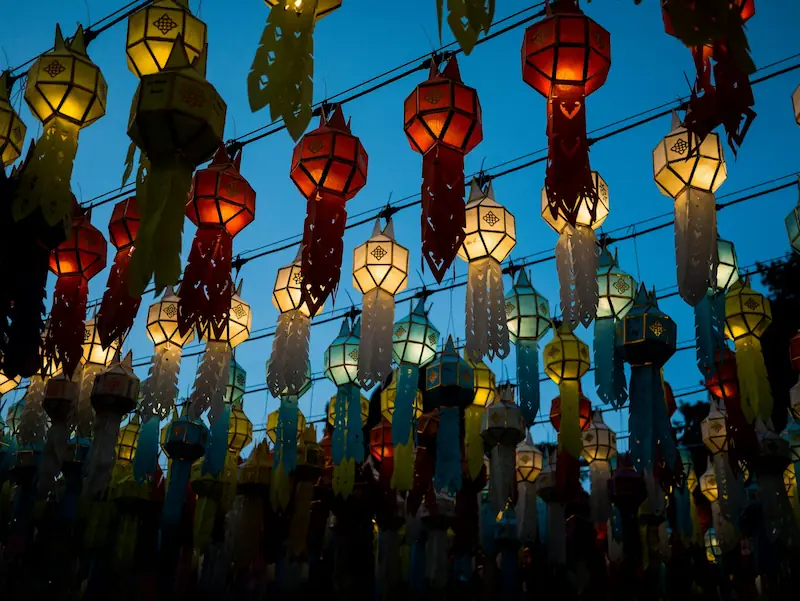
Book early for November–February, Yi Peng and Loy Krathong, Songkran, Christmas and New Year, and small boutique hotels inside the Old City or beside the Ping River. During smoke season, favor flexible cancellation when mountain views and outdoor time matter.
Best areas to stay in Chiang Mai at a glance
Old City – Best for: first-time visitors, temples and short stays · Vibe: historic, walkable, visitor-friendly and strongest in the morning · Stay here if: you want Wat Phra Singh, Wat Chedi Luang, city gates, cafés and Sunday Walking Street within an easy walking base · Avoid if: you need large rooms, contemporary dining at the door or a quieter long-stay routine
Nimmanhaemin – Best for: cafés, restaurants, remote work and longer stays · Vibe: contemporary, social, design-led and strongest after midday · Stay here if: you want specialty coffee, modern restaurants, shopping, nightlife and easy access to the western side · Avoid if: you want traditional Chiang Mai scenery or to walk to the main Old City temples
Riverside – Best for: couples, luxury, pools and quiet evenings · Vibe: green, spacious, atmospheric and hotel-led · Stay here if: you want the hotel, garden, pool and river setting to be part of the trip · Avoid if: you want to walk to temple mornings, street food and night markets every day
Santitham – Best for: local food, value, repeat visits and longer stays · Vibe: residential, practical, unpolished and food-focused · Stay here if: you want khao soi, casual restaurants, apartment-style value and short rides to both Nimman and the Old City · Avoid if: you have only two nights or need postcard atmosphere immediately outside
Wat Ket – Best for: boutique heritage, couples and slower stays · Vibe: quiet, historic, residential and connected to the river · Stay here if: you want river-trade heritage, Warorot access and intimate hotels without the Night Bazaar atmosphere · Avoid if: you want dense nightlife, direct temple walking or a very broad hotel selection
Night Bazaar Area – Best for: short stays, larger hotels and easy evenings · Vibe: commercial, busy, convenient and visitor-oriented · Stay here if: you want the Night Bazaar, Anusarn Market, restaurants, massage and full-service hotels close together · Avoid if: you want quiet neighborhood life, craft depth or the strongest sense of historic Chiang Mai
How to choose where to stay in Chiang Mai
There is no single best area for every Chiang Mai trip. The Old City minimizes sightseeing effort, Nimman supports everyday routines, Santitham improves value and local food access, and the river side trades walkability for calm and stronger hotels. Choose first by trip length and priorities, then compare the exact lane, room orientation and transport pattern.
Choose the Old City for a two- to four-night first visit centered on temples, gates and Sunday Walking Street.
Choose Nimmanhaemin for cafés, restaurants, remote work, nightlife and stays of five nights or more.
Choose Riverside when the hotel, pool, garden and evening atmosphere matter as much as sightseeing.
Choose Wat Ket for boutique heritage and Warorot access without sleeping in the busiest market zone.
Choose Santitham for value, local food and a more residential longer-stay routine.
Choose the Night Bazaar Area for straightforward hotels, evening convenience and short stays.
Treat Wua Lai, Tha Phae, Chang Phueak, Chang Moi, university side, airport side and Mae Rim as useful micro-locations for specific needs rather than default main areas.
Check festival routes, noise, air conditioning, pool shade, lift access and recent transport reviews before booking.
How Chiang Mai’s stay geography works
Chiang Mai’s accommodation map is organized around the moated Old City, Nimman to the west and the Ping River to the east. Short distances can still feel inconvenient because of heat, traffic, airport flight paths and roads that are not pleasant to walk. The best base is therefore a useful cluster, not simply the point closest to the geographic center.
The Old City’s west side suits Wat Phra Singh and quieter heritage stays; the east side suits Tha Phae and market access.
Wua Lai lies south of the moat and works for Saturday Walking Street, Wat Sri Suphan and value stays.
Nimman and the university side form the main contemporary western cluster.
Santitham and Chang Phueak connect local food, value and north-side transport.
Chang Moi links Tha Phae with Warorot and provides a creative micro-location between the Old City and river.
Wat Ket is the quieter heritage side of the Ping River; Riverside includes a wider set of hotels along both banks.
The Night Bazaar and Chang Khlan form the main large-hotel and evening-convenience corridor.
Airport-side hotels suit flight logistics but sit awkwardly for a full sightseeing stay.
Mae Rim and countryside resorts suit nature, retreats and family downtime, not a classic city-first visit.
Short rides are normal, so a quiet lane often matters more than theoretical full walkability.
Historic core – Old City, Tha Phae and Wua Lai suit temples, gates, walking streets and short first visits.
Contemporary west – Nimman, Huay Kaew and the university side support cafés, restaurants, remote work and longer stays.
Local north – Santitham and Chang Phueak offer food, value and practical access without strong landmark atmosphere.
Market and creative east – Chang Moi, Warorot and Wat Ket connect everyday trade, heritage streets, boutique stays and the river.
River hotels – Riverside works when pools, gardens, space and quiet evenings justify regular short rides.
Commercial south-east – Night Bazaar and Chang Khlan provide large hotels, markets, restaurants and straightforward logistics.
Airport and southern edge – Airport-side and Mahidol Road hotels work for early flights, business or value, but weaken a first leisure stay.
Countryside resort zone – Mae Rim and outer resorts suit retreats, nature and families who accept limited city access.
Best areas to stay in Chiang Mai
Chiang Mai’s best neighborhoods are not interchangeable. Each one changes how the trip feels: how early you start, whether you walk or ride, what your evenings become, and how much of the city you absorb between planned stops. Use these area profiles as a comparison guide rather than a ranking.
Old City
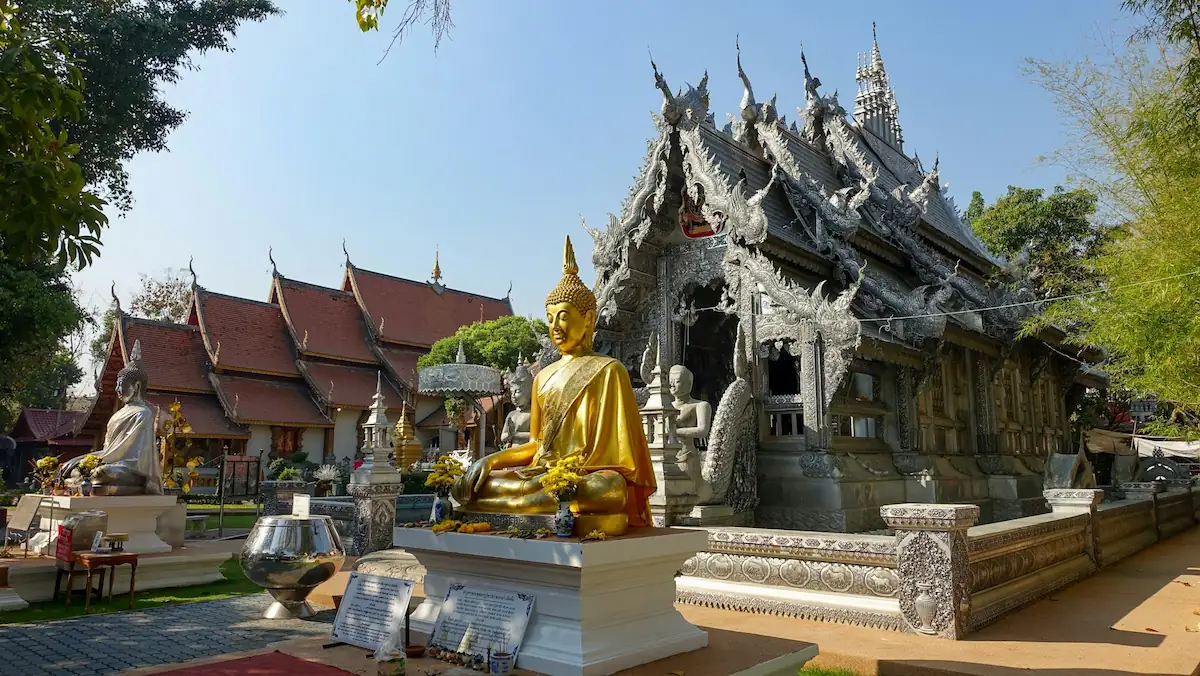
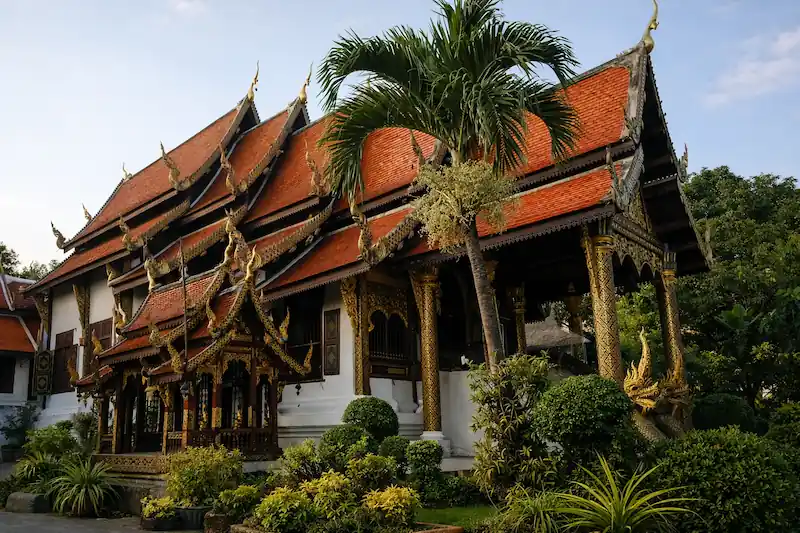
The Old City is the most efficient base for a first visit because Wat Phra Singh, Wat Chedi Luang, Wat Chiang Man, city museums, gates and Sunday Walking Street sit inside a clear moat. The west side is strongest for Wat Phra Singh and quieter heritage hotels; the east side near Tha Phae is best for evening access and quick movement toward Chang Moi and the Night Bazaar. The exact lane determines whether the stay feels contemplative or highly visitor-oriented.
Why stay here: Stay here when two to four nights need to feel immediately historic and easy. It is best for first-timers, walkers and travelers who want to begin temple days without transport.
Best for: First-timers, short stays, temple-focused travelers, walkers, and visitors who want the most convenient central base.
Pros
Best walking access to Wat Phra Singh, Wat Chedi Luang, Wat Chiang Man and the city gates.
Strongest first-time orientation because the moat creates a clear boundary.
Immediate access to Sunday Walking Street and easy rides to Doi Suthep pickups.
Wide choice of guesthouses, boutique hotels and heritage stays.
Easy midday return during hot weather.
Good café, massage and casual restaurant density.
Cons
Room size, lifts and soundproofing vary in small converted properties.
Tha Phae and major visitor lanes can feel commercial and noisy.
Sunday Walking Street affects road access and taxi drop-offs.
Nimman’s restaurants and contemporary nightlife require a ride.
Parking is awkward and unnecessary for most visitors.
Nearby highlights
Wat Phra Singh and Wat Chedi Luang.
Wat Chiang Man and northern temple lanes.
Sunday Walking Street and Tha Phae Gate.
City Arts and Cultural Centre and Lanna Folklife Museum.
Kalm Village and smaller cafés.
Easy access toward Wua Lai, Wat Sri Suphan and Chiang Mai Gate.
Budget
Saran Boutique Hotel Thapae – A simple, central small hotel near Tha Phae Gate with an unusually useful position for walking the Old City. Why we recommend: It gives budget-conscious travelers a genuinely central address without moving into dorm-style accommodation. Check availability
Thapae Happy House – A straightforward stay close to Tha Phae Gate, useful for travelers who want easy evening access. Why we recommend: It works well when location matters more than design or resort amenities. Check availability
Vieng Mantra Hotel – A small hotel near the eastern Old City edge, with enough comfort for short stays and easy walking access. Why we recommend: It is one of the more practical lower-cost options for staying near the moat without losing convenience. Check availability
Mid
POR Thapae Gate – A clean, modern hotel close to Tha Phae Gate with a strong balance between price, comfort, and location. Why we recommend: It stands out for travelers who want central convenience without choosing a traditional guesthouse. Check availability
At Tree Hotel Thaphae Gate Chiangmai – A compact hotel near the Old City’s eastern edge, useful for temple mornings and market evenings. Why we recommend: It gives a convenient address with a more polished feel than many similarly located stays. Check availability
Viang Thapae Resort – A small resort-style property near Tha Phae Gate, better suited to travelers who want a softer central stay. Why we recommend: It offers more breathing room than many compact Old City hotels while keeping strong walkability. Check availability
Upscale
Phra Singh Village – A polished boutique-style hotel near Wat Phra Singh, with strong heritage positioning and easy Old City access. Why we recommend: It is one of the better choices for travelers who want the Old City to feel refined rather than basic. Check availability
99 The Heritage Hotel – A design-forward heritage hotel in the Old City, close to major temples and quieter central lanes. Why we recommend: It has stronger atmosphere than most central hotels while staying highly practical for walking. Check availability
Chala Number 6 – A central upscale hotel near Wat Chedi Luang, suited to travelers who want comfort inside the moat. Why we recommend: It delivers high convenience without pushing guests toward a generic large-hotel experience. Check availability
Nimmanhaemin
Nimmanhaemin, usually shortened to Nimman, is Chiang Mai’s strongest contemporary base. Soi streets around Nimman Road, One Nimman and MAYA concentrate specialty coffee, restaurants, boutiques, nightlife and modern hotels. The university side extends the area west and north with a younger, more local atmosphere, while the airport flight path can create intermittent aircraft noise.
Why stay here: Stay here when the neighborhood must work every day, not only during sightseeing hours. It is especially strong for longer stays, remote work, contemporary food and repeat visits.
Best for: Longer stays, café culture, modern restaurants, remote workers, design-conscious travelers, and return visitors.
Pros
Best concentration of specialty coffee, contemporary restaurants and casual bars.
Strong hotel and apartment inventory for longer stays.
Easy access to Doi Suthep, Wat Umong, Baan Kang Wat and the university side.
Useful shopping and services around One Nimman and MAYA.
More rewarding after dark than quieter residential districts.
Good coworking and daily-life infrastructure.
Cons
Most Old City temple visits require a ride.
Traffic can be heavy around Huay Kaew and major intersections.
Aircraft noise affects some streets because of the nearby airport approach.
The area can feel polished and commercial rather than traditionally Lanna.
Popular cafés and hotels command higher prices in cool season.
Nearby highlights
One Nimman and Nimman’s café streets.
MAYA and Huay Kaew transport routes.
Chiang Mai University side.
Easy movement toward Doi Suthep and the Monk’s Trail.
Wat Suan Dok and west-side temples.
Short rides to Wat Umong and Baan Kang Wat.
Budget
Victoria Nimman Hotel – A simple hotel in the Nimman area with larger-room practicality and easy access to cafés and food streets. Why we recommend: It is a sensible choice when room size and neighborhood access matter more than design polish. Check availability
Yesterday Hotel – A characterful small hotel close to Nimman Road, with a convenient position for cafés, restaurants and university-side access. Why we recommend: It offers more personality than many budget-oriented Nimman stays while keeping the location highly practical. Check availability
Nord Studio – Compact modern accommodation near Nimman with simple rooms and easy access to the district’s daily food and café scene. Why we recommend: A sensible lower-cost choice for travelers who want location and contemporary simplicity rather than full hotel facilities. Check availability
Mid
BED Nimman – A modern adults-only hotel in the heart of Nimman, built for easy access to cafés, restaurants, and shops. Why we recommend: It is one of the cleanest mid-range answers for travelers who want Nimman without overcomplication. Check availability
The Craft Nimman – A small hotel with local design cues and a compact address in the Nimman district. Why we recommend: It has more personality than many mid-range options while staying highly walkable. Check availability
S17 Nimman – A straightforward modern stay near Nimman’s restaurants and cafés, useful for value-focused comfort. Why we recommend: It works well for guests who want a simple base in the right district without paying boutique premiums. Check availability
Upscale
Akyra Manor Chiang Mai – A polished boutique hotel with a stronger design identity than most Nimman properties. Why we recommend: It is one of Nimman’s best choices when the hotel itself should feel part of the trip. Check availability
De Chai the Oriental – A boutique hotel near Nimman’s main dining and café streets, with more comfort than basic area stays. Why we recommend: It gives travelers a refined Nimman base without losing the neighborhood’s walk-out usefulness. Check availability
CHINO@NIMMAN Luxury Boutique Hotel – A newer boutique-style hotel in Nimman, suited to travelers who want a more styled urban base. Why we recommend: It adds stronger visual character to a district where many hotels can feel functional rather than memorable. Check availability
Riverside
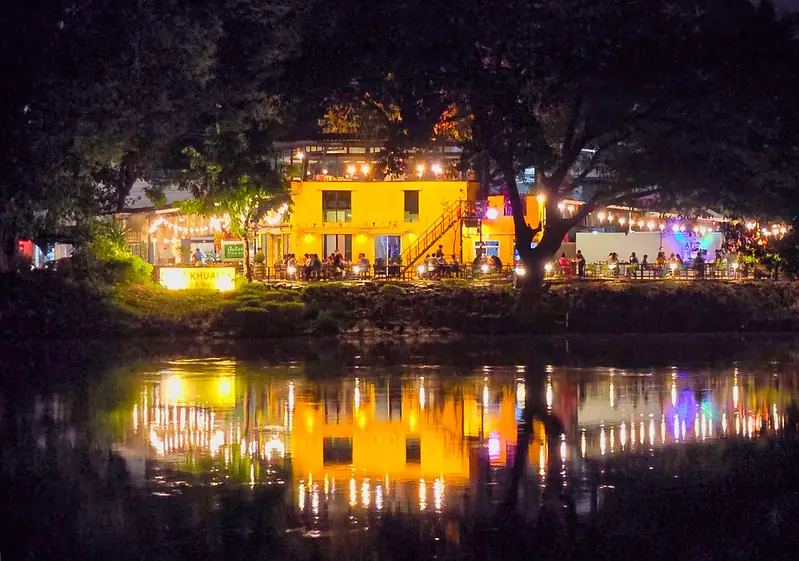
Riverside describes hotels and resorts along the Ping River rather than one uniform neighborhood. The strongest properties use gardens, pools, heritage architecture and water views to create a restorative stay, while less well-positioned hotels simply require more rides without delivering meaningful river atmosphere. The area is best when the hotel itself is a reason to stay.
Why stay here: Choose Riverside for a couple-focused, luxury or recovery-led trip where quiet evenings, pools and generous rooms matter more than walking to temples.
Best for: Couples, quieter stays, boutique hotels, comfort-led trips, and travelers who want calm evenings.
Pros
Strongest selection of resort-style city hotels, gardens and pools.
Quiet evenings and more spacious rooms than most Old City properties.
Good fit for couples, luxury stays and families needing hotel downtime.
Atmospheric river dining and easy access to Wat Ket.
Short rides to the Night Bazaar and Old City.
Useful for travelers combining sightseeing with spa or pool time.
Cons
The term Riverside covers widely separated properties with different transport needs.
Some hotels charge for a river label without providing a strong view or setting.
Old City temple mornings require rides.
Fewer walk-out food and café choices outside the strongest river clusters.
Flooding or heavy rain can occasionally affect river-edge atmosphere and access.
Nearby highlights
Ping River dining and sunset atmosphere.
Wat Ket heritage streets.
Warorot and Ton Lam Yai markets.
Night Bazaar and Anusarn Market from the central river section.
Boutique spas and garden hotels.
Easy private-driver departures for countryside days.
Budget
Rustic River Boutique – A small, simple riverside-area hotel with a more local feel than large commercial properties. Why we recommend: It gives budget travelers access to the river side of Chiang Mai without resort pricing. Check availability
Baan Songjum – A modest guesthouse-style stay near the river, suitable for travelers who prefer homely atmosphere over polish. Why we recommend: It is useful for guests who want calm and local texture on a lower budget. Check availability
Riverside House Hotel – A simple hotel near the Ping River and Night Bazaar side, practical for short stays with river access. Why we recommend: It balances lower pricing with a location that still works for evening movement. Check availability
Mid
Amata Lanna Chiang Mai One Member of The Secret Retreats – A boutique-style stay with Lanna character close to the river and Night Bazaar side of town. Why we recommend: It gives more atmosphere than generic central hotels while remaining convenient for evenings. Check availability
Rimping Village – A calm boutique hotel near the river and Wat Ket area, with a village-like feel and easy central access. Why we recommend: It is unusually composed for such a practical location near both river and city access points. Check availability
At Pingnakorn Riverside – A comfortable riverside hotel with spacious rooms, pool access and a calmer residential position north of the central river corridor. Why we recommend: A useful mid-range choice for travelers who want river atmosphere and larger rooms without full luxury-resort pricing. Check availability
Upscale
Ping Nakara Boutique Hotel And Spa – A colonial-style boutique hotel near the Ping River with refined rooms and a quieter sense of occasion. Why we recommend: It is one of the most convincing upscale boutique stays for travelers who want atmosphere over scale. Check availability
Anantara Chiang Mai Resort – A luxury riverside resort with strong service, open spaces, and a composed setting near the old river corridor. Why we recommend: It is the clearest choice when you want a polished resort stay without leaving the city. Check availability
Cross Chiang Mai Riverside – A design-led riverside hotel with a calmer, more intimate luxury profile than larger city resorts. Why we recommend: It suits travelers who want contemporary quiet and river atmosphere in the same stay. Check availability
Na Nirand Romantic Boutique Resort – Romantic riverside boutique resort with gardens, mature trees and a quieter setting near central Chiang Mai. Why we recommend: A strong upscale choice for couples who want atmosphere, greenery and easy access to the river corridor. Check availability
Santitham
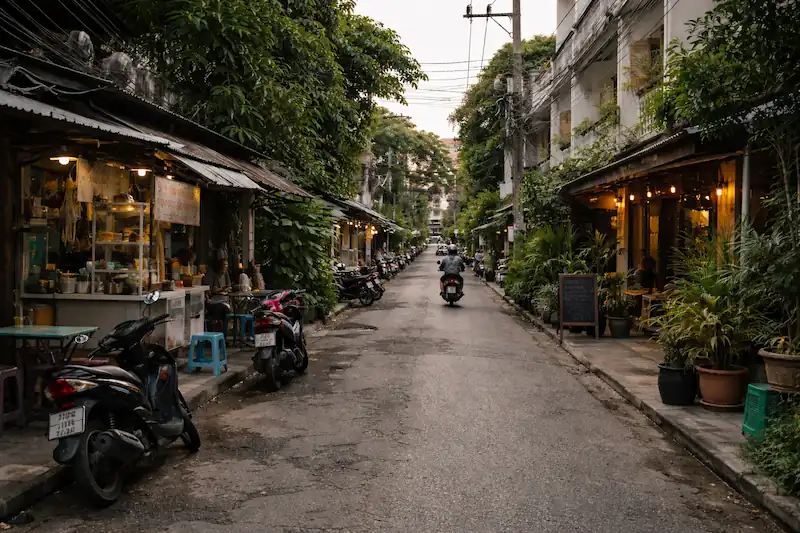
Santitham sits north-west of the moat between the Old City, Chang Phueak and Nimman. It is a practical residential district known for local restaurants, khao soi, cafés, apartments and better-value hotels rather than formal attractions. Its usefulness depends on comfort with short ride-hailing trips and streets that vary significantly in visual appeal.
Why stay here: Stay here for a longer, food-focused or budget-conscious visit after you understand Chiang Mai’s geography. It is less suitable for a two-night first trip.
Best for: Budget-conscious longer stays, local food travelers, repeat visitors, and people comfortable with less polished neighborhoods.
Pros
Strong local food and everyday restaurant access.
Better-value rooms and apartment-style formats.
Useful position between the Old City and Nimman.
Good access to Chang Phueak food stalls and northern pickups.
Fewer visitor crowds than the main hotel districts.
Practical for stays of a week or longer.
Cons
Less attractive and less immediately readable than the Old City or Nimman.
Walking routes are inconsistent and major roads interrupt some connections.
Most formal sights require short rides.
Upscale hotel choice is limited within Santitham itself.
Exact block quality matters greatly.
Nearby highlights
Santitham restaurants and cafés.
Chang Phueak Gate evening food.
North Gate Jazz and north-moat access.
Jing Jai Market by short ride.
Nimman and MAYA.
Doi Suthep and Mae Rim pickup routes.
Budget
ISTY Hotel – A modern budget-friendly hotel near Santitham and the northern edge of the Old City. Why we recommend: It gives better design and comfort than many low-cost options in this part of town. Check availability
B2 Santitham Boutique and Budget Hotel – A basic, value-led hotel in the Santitham area, suited to travelers who prioritize price and positioning. Why we recommend: It is a pragmatic choice when the goal is local access rather than hotel character. Check availability
The Opium Chiang Mai – A low-key apartment-hotel option with larger rooms and practical facilities near the Santitham side of town. Why we recommend: It suits longer stays better than most compact budget hotels. Check availability
Mid
SYN Boutique Hotel – A stylish hotel on the western side of town with better design quality than most local-area options. It sits near Santitham, Huay Kaew and the northern Nimman edge rather than in the district’s residential core. Why we recommend: It works well for travelers who want Nimman-adjacent polish without staying on the busiest streets. Check availability
Lani Chiang Mai Hotel – A practical mid-range hotel near the Santitham and Chang Phueak side, suitable for guests using short rides. Why we recommend: It offers calmer positioning than the central moat while keeping the city reachable. Check availability
Mercure Chiang Mai – A larger, familiar hotel north of the Old City, useful for travelers who prefer chain-style predictability. Why we recommend: It is reliable when you want practical comfort near local districts rather than boutique styling. Check availability
Upscale
Wintree City Resort – Full-service hotel north of the Old City with larger rooms, pools and practical access to Santitham and Chang Phueak. Why we recommend: A useful comfort-led choice for travelers who want more facilities than Santitham’s smaller hotels normally provide. Check availability
Bella Nara Hotel Chiang Mai – Polished modern hotel near the north-west moat and Santitham side, with easy access to both the Old City and Nimman. Why we recommend: It offers an upscale compromise between local north-side food and central sightseeing. Check availability
Cross Vibe Chiang Mai Decem – Contemporary hotel near Huay Kaew and the northern Nimman edge, with pools and practical transport access. It sits near Santitham, Huay Kaew and the northern Nimman edge rather than in the district’s residential core. Why we recommend: A stronger fit for travelers using Santitham as a value-oriented base while wanting modern facilities. Check availability
Wat Ket
Wat Ket lies east of the Ping River and retains more river-trade heritage and residential calm than the Night Bazaar side. Historic houses, small hotels, Wat Ket Karam, river restaurants and easy access to Warorot give it a distinctive slower character. It is one of Chiang Mai’s best boutique areas, though hotel choice is narrower and most sightseeing still requires short rides.
Why stay here: Stay here when heritage atmosphere, boutique design and quiet nights matter more than direct temple walking or nightlife density.
Best for: Quiet boutique stays, heritage-minded travelers, couples, slow walkers, and repeat visitors.
Pros
Strongest boutique-heritage atmosphere outside the Old City.
Quiet residential streets close to the river.
Easy access to Warorot, Chang Moi and river dining.
Excellent luxury and wellness properties.
Good for couples and repeat visitors.
Close enough to central Chiang Mai without feeling commercial.
Cons
Limited hotel inventory compared with the Old City and Nimman.
Most major temples require a ride.
Nightlife and shopping are limited directly inside the neighborhood.
Some properties marketed as Wat Ket sit farther east than expected.
Pedestrian river crossings and traffic routes affect daily convenience.
Nearby highlights
Wat Ket Karam and heritage streets.
Warorot and Ton Lam Yai markets.
Chang Moi Road and creative businesses.
Ping River restaurants.
Jing Jai Market by short ride.
Night Bazaar without sleeping inside it.
Budget
Ban Narai River Guesthouse – A modest guesthouse near the Ping River, suited to travelers who prefer low-key local atmosphere. Why we recommend: It keeps costs down while staying close to the quieter riverside texture of Wat Ket. Check availability
The Y Smart Hotel – A budget-oriented hotel east of the river, useful for travelers who want functional access more than charm. Why we recommend: It gives a practical lower-cost base on the quieter side of Chiang Mai. Check availability
Baan Ing Ping – A small guesthouse-style property near the Ping River with a quiet setting and simple, personal atmosphere. Why we recommend: A stronger low-cost option for travelers who want genuine riverside calm without relying on a dated chain property. Check availability
Mid
Amata Lanna Village – A Lanna-style boutique stay in a calmer residential setting east of the river. Why we recommend: It is a strong choice when you want atmosphere and quiet without paying full riverside luxury rates. Check availability
Shewe Wana Boutique Resort and Spa – A garden-like boutique resort near Wat Ket, with a slower, more enclosed feel than central hotels. Why we recommend: It suits travelers who want green calm and boutique character close to the city. Check availability
Ketawa Pet Friendly Hotel – A small design-leaning hotel in the Wat Ket area with a neighborhood feel and quieter setting. Why we recommend: It is useful for travelers seeking a more personal stay on the east side of the river. Check availability
Upscale
137 Pillars House – A refined heritage hotel in the Wat Ket area, with spacious suites and one of Chiang Mai’s strongest boutique identities. Why we recommend: It is the standout luxury choice for travelers who want history, space, and quiet in the same property. Check availability
RarinJinda Wellness Spa Resort – A wellness-focused hotel near the river with calm rooms and a more restorative positioning. Why we recommend: It is especially strong if the stay needs recovery, spa time, and riverside calm. Check availability
Hotel Ping Silhouette – Design-led boutique hotel near the Ping River and Wat Ket heritage streets, with intimate scale and strong visual identity. Why we recommend: A refined choice for travelers who want boutique character without the scale of a river resort. Check availability
Night Bazaar Area
The Night Bazaar Area covers Chang Khlan and the commercial corridor between Tha Phae and the river. It offers Chiang Mai’s broadest selection of larger hotels, easy evening food, shopping, massage and straightforward transport. It is useful for short stays, late arrivals and travelers who prefer full-service hotels, but it provides less neighborhood depth than the Old City, Wat Ket or Nimman.
Why stay here: Stay here when convenience, hotel facilities and easy evenings matter more than heritage atmosphere or local residential life.
Best for: Short stays, market evenings, first Thailand trips, convenience-first travelers, and larger hotel preference.
Pros
Immediate access to Night Bazaar and Anusarn Market.
Broad choice of full-service and international hotels.
Easy food, massage and shopping after day trips.
Good position between the Old City and Ping River.
Simple airport transfers and tour pickups.
Useful for late arrivals and very short stays.
Cons
Most commercial and visitor-oriented of the main stay areas.
Noise, traffic and souvenir-shop atmosphere vary by street.
Daytime character is weaker than the Old City or Wat Ket.
Less suitable for slow travel and local routines.
Some older large hotels may feel dated despite strong locations.
Nearby highlights
Night Bazaar and Anusarn Market.
Chang Khlan restaurants and massage.
Tha Phae Gate by short walk or ride.
Ping River and Iron Bridge.
Warorot Market.
Convenient departures for day tours.
Budget
Night Bazaar Inn – A simple hotel close to the Night Bazaar, useful for travelers who want immediate evening access. Why we recommend: It is one of the more practical low-cost choices for staying directly in the market orbit. Check availability
Nap in Chiangmai – A compact, modern budget hotel near the Night Bazaar and Tha Phae side of town. Why we recommend: It keeps the stay simple and central for travelers who will spend most time outside the room. Check availability
Lanna Thaphae Hotel – A value-oriented hotel between Tha Phae and the Night Bazaar, practical for short central stays. Why we recommend: It works when you want to split the difference between Old City access and evening convenience. Check availability
Mid
Dusit Princess Chiang Mai – A larger hotel directly tied to the Night Bazaar area, suitable for convenience-led stays. Why we recommend: It is one of the clearest choices when you want market access and hotel predictability. Check availability
De Chai Colonial Hotel & Spa – A comfortable hotel between Tha Phae Gate and the Night Bazaar, with stronger polish than basic market hotels. Why we recommend: It gives a better central compromise than staying deep in the busiest bazaar lanes. Check availability
Mövenpick Suriwongse Hotel Chiang Mai – A familiar full-service hotel in the Night Bazaar corridor, useful for travelers who want easy services. Why we recommend: It suits guests who prefer a larger hotel footprint and immediate evening convenience. Check availability
Upscale
Chiang Mai Marriott Hotel – A large upscale hotel near the Night Bazaar with strong service infrastructure and easy city access. Why we recommend: It is the strongest choice in this area for travelers who want brand reliability and convenience. Check availability
Melia Chiang Mai – A modern upscale hotel near the Night Bazaar and river side, with a more contemporary feel than older large hotels. Why we recommend: It combines strong facilities with a location that works well for short, comfortable stays. Check availability
InterContinental Chiang Mai The Mae Ping – Large luxury hotel in Chang Khlan near the Night Bazaar, with extensive facilities and a contemporary Lanna-inspired redesign. Why we recommend: A strong full-service option for travelers who want luxury facilities and immediate evening convenience. Check availability
Where to stay in Chiang Mai for first-time visitors
First-time visitors should keep the Old City easy and limit the number of daily transfers. The Old City is the safest default, while Tha Phae and the Night Bazaar offer a practical eastern compromise and Riverside suits travelers willing to trade walkability for stronger hotels.
Choose the Old City for two to four nights and the clearest access to temples and Sunday Walking Street.
Choose the eastern Old City or Tha Phae edge when you also want Warorot, Chang Moi and the Night Bazaar nearby.
Choose Nimman only when contemporary food, cafés and nightlife matter more than temple walking.
Choose Riverside for a couple-focused or resort-style first visit with regular short rides.
Use Wua Lai as a micro-location when Saturday Walking Street and Wat Sri Suphan matter, but do not treat it as the easiest all-round base.
Avoid Mae Rim, airport-side hotels and remote resorts on a short first city visit.
TravelerNeed
BestArea
Why
Most convenient first base
Old City
Temples, gates, museums and Sunday Walking Street are easiest on foot.
Heritage plus evening convenience
Tha Phae edge or Night Bazaar Area
The Old City, river and markets remain close together.
Modern food-led first trip
Nimmanhaemin
Cafés and restaurants improve the daily routine, but temples require rides.
Luxury and quiet
Riverside or Wat Ket
The hotel environment becomes a major part of the stay.
Where to stay in Chiang Mai with family
Families should prioritize room size, pools, shade, short transfers and a quiet street. The best area depends on whether the trip centers on temple access, hotel downtime, food routines or countryside excursions.
Choose the Old City for compact sightseeing with school-age children.
Choose Riverside for pools, larger rooms, gardens and calmer evenings.
Choose Nimman for older children and teenagers who value food, shopping and cafés.
Consider Mae Rim only for a deliberately resort- and nature-led stay, not as a city substitute.
Airport-side hotels are practical for very early flights but weak for a full Chiang Mai visit.
Avoid rooms directly over walking streets, bazaar lanes or live-music venues.
Check connecting rooms, real bed configuration, pool shade and transport arrangements before booking.
FamilyPriority
BestArea
TradeOff
Shortest sightseeing movements
Old City
Smaller rooms and visitor activity.
Pool and recovery
Riverside
Regular rides to temples and food areas.
Restaurants and older children
Nimmanhaemin
Traffic and aircraft noise on some streets.
Nature-led resort stay
Mae Rim
Poor access to central Chiang Mai.
Where to stay in Chiang Mai for nightlife and evening access
Chiang Mai nightlife is distributed between markets, food streets, live music, contemporary bars and river restaurants. Nimman is best for a modern night out, the Night Bazaar for convenience, the Old City for Sunday Walking Street and relaxed bars, and Riverside for dinner rather than late-night density.
Choose Nimman for contemporary bars, restaurants, rooftops and a younger evening scene.
Choose the Night Bazaar Area for easy markets, food, massage and visitor-friendly nightlife.
Choose the Old City for Sunday Walking Street, Tha Phae activity and small bars.
Stay near the north moat for live music and Chang Phueak food without sleeping inside Santitham.
Use Riverside or Wat Ket for calmer dinners and atmospheric hotels.
Wua Lai is useful on Saturday but should not drive the entire hotel choice.
Stay one or two streets away from the main activity corridor when sleep matters.
EveningStyle
BestArea
Caution
Modern bars and restaurants
Nimmanhaemin
Traffic and aircraft noise vary.
Markets and easy nightlife
Night Bazaar Area
Commercial and potentially noisy.
Sunday market and small bars
Old City
Road access changes on Sunday.
Live music and local food
North moat / Chang Phueak
Best treated as a micro-location.
Quiet dinner atmosphere
Riverside or Wat Ket
Limited late-night density.
Where to stay in Chiang Mai on a budget
Chiang Mai remains affordable, but location, air conditioning, noise and recent maintenance matter more than the lowest displayed rate. The Old City gives the best short-stay value, while Santitham, Chang Phueak and the university side become stronger as the stay lengthens.
Choose the Old City for a low-cost first visit because walking reduces transport spending.
Choose Santitham or Chang Phueak for local food and longer-stay value.
Look around the university side for apartments and modern budget hotels with Nimman access.
Use the Night Bazaar for promotional rates in larger hotels, but compare renovation and noise reviews.
Wat Ket and Riverside have fewer budget options, though guesthouses can deliver calm and character.
Airport-side hotels make sense only for flight logistics or exceptional rates.
Avoid remote savings that require several ride-hailing trips every day.
BudgetGoal
BestArea
Reason
Best low-cost first stay
Old City
Walkability protects both time and transport cost.
Best longer-stay value
Santitham or Chang Phueak
Local pricing, food and apartment formats.
Budget with cafés and workspace
University side or Nimman edge
Daily routines become easier without prime Nimman prices.
Full-service hotel deals
Night Bazaar Area
Larger inventory can produce promotions outside peak dates.
Where to stay depending on your trip length
Short trips benefit most from the Old City or eastern central zone. As the stay lengthens, Nimman, Santitham, Wat Ket and Riverside become more attractive because room comfort, food routines and neighborhood character matter more.
Label
Stay
Avoid
Why
1–2 nights
Old City or Night Bazaar Area
Santitham, Mae Rim and remote resorts
Immediate sightseeing or evening access matters most.
3 days
Old City
Choosing an outer area only for a cheaper rate
The main temples, gates and market evenings remain easy.
4–5 days
Old City, Nimman, Riverside or Wat Ket
Staying only for Night Bazaar convenience
The base should support both sightseeing and daily comfort.
1 week
Nimman, Santitham or Wat Ket
A compact Old City room with limited facilities
Food routines, workspace, laundry and quieter nights become more important.
Family trip
Riverside, Old City or Nimman
Noisy walking-street and bazaar frontage
Room size, pools, shade and easy meals matter.
Couples and luxury
Riverside, Wat Ket or upscale Old City
Choosing a river label without a meaningful setting
Boutique atmosphere and hotel quality shape the trip.
Food-focused stay
Santitham, Old City or Nimman
Remote resorts
Each area offers a different mix of northern food, markets and modern dining.
Remote work
Nimman, university side or Santitham
Market-front rooms and weak Wi-Fi assumptions
Cafés, apartments and daily services support longer routines.
Festival stay
Old City, Tha Phae, Riverside or Night Bazaar according to events
Booking without checking road closures and noise
Yi Peng, Loy Krathong and Songkran change access across central Chiang Mai.
Early flight
Old City west, Nimman or airport side
Remote Riverside and Mae Rim properties
Airport proximity matters for one final night, not necessarily the entire trip.
Nature and retreat
Mae Rim or countryside resort
Expecting easy Old City evenings
The hotel and landscape become the destination.
Return visit
Wat Ket, Santitham, Nimman or Chang Moi
Repeating the Old City automatically
Neighborhood character becomes more valuable after the main sights are familiar.
How to choose the right hotel in Chiang Mai
After choosing the area, compare the exact lane, room, building and recent maintenance. Chiang Mai has excellent boutique value, but small hotels, older large properties and river resorts solve very different needs.
Topic
WhatToDo
WhatToAvoid
WhyItMatters
Exact street
Map the hotel against temples, food, evening streets and ride-hailing access.
Relying only on the district label.
Noise and walkability can change within one block.
Air conditioning and smoke
Check recent comments on air conditioning, room sealing and air purifiers when relevant.
Assuming every boutique room handles heat or smoke equally well.
Climate control can determine afternoon recovery and late-dry-season comfort.
Pool and shade
Verify pool size, sunlight, shade and whether the setting is actually restful.
Booking from a wide-angle pool photograph alone.
Pools vary from useful gardens to small decorative courtyards.
Assuming every lane is quiet or easy with luggage.
The moat is convenient, but specific streets behave differently.
Nimman aircraft noise
Read recent room-specific comments and request a quieter orientation.
Ignoring the airport approach path.
Aircraft noise is intermittent but noticeable in parts of the district.
Riverside reality
Confirm actual river frontage, view, shuttle and distance from useful streets.
Paying for the Riverside label alone.
Some properties deliver atmosphere; others only add transport.
Longer stays
Prioritize laundry, workspace, storage, refrigerator and nearby food.
Choosing a compact heritage room for a week solely for appearance.
Daily function becomes more important than landmark proximity.
Family rooms
Confirm real bed configuration, connecting rooms, pool rules and breakfast timing.
Assuming a family label guarantees adequate space.
Room layouts vary widely in boutique hotels.
Festival dates
Check procession routes, lantern events, moat activity and road closures.
Treating Yi Peng, Loy Krathong or Songkran like normal dates.
Central convenience can become noise and access disruption.
Remote resorts
Confirm shuttles, restaurant choice and the real travel time to the Old City.
Assuming a resort can function as a central base.
Mae Rim and countryside stays create a different trip.
Boutique versus chain
Choose boutique for atmosphere and chains for predictable facilities and staffing.
Assuming one format is always superior.
The right choice depends on trip length, service needs and room expectations.
Booking links and hotel status
Recheck the hotel name, operating status and current reviews before payment.
Relying on an old brand name or legacy booking page.
Properties can rebrand, renovate or close.
FAQ — Where to stay in Chiang Mai
These answers cover the main accommodation decisions in Chiang Mai, including first visits, families, luxury, budget, remote work, festivals, airport access and countryside resorts.
What is the best area to stay in Chiang Mai for first-time visitors?
The Old City is usually best because Wat Phra Singh, Wat Chedi Luang, gates, cafés and Sunday Walking Street are easy to reach. The Tha Phae edge is especially useful for access to both the moat and eastern markets.
Where should you stay in Chiang Mai for 2 nights?
Stay inside the Old City or near Tha Phae. With only two nights, immediate access to temples and evening food matters more than larger rooms or a local residential atmosphere.
Where should you stay in Chiang Mai for 3 days?
Choose the Old City. It provides the clearest first visit and keeps Doi Suthep, Sunday Walking Street, Warorot and Nimman manageable by short rides.
Is it better to stay in the Old City or Nimman?
Choose the Old City for temples, walking and a short first trip. Choose Nimman for cafés, restaurants, nightlife, remote work and a stay of five nights or more.
Is Nimmanhaemin a good place to stay?
Yes, especially for longer stays, repeat visitors and travelers interested in coffee, modern restaurants and nightlife. Check traffic and aircraft-noise reviews for the exact street.
Is Santitham a good area to stay?
Yes for value, local food and longer stays. It is less immediately attractive and requires more short rides, so it is not the easiest base for a two-night first visit.
Is Wat Ket a good area to stay?
Yes for boutique hotels, heritage streets, Warorot access and quiet nights. It suits couples and repeat visitors more than travelers wanting nightlife or direct temple walking.
Is the Night Bazaar a good area to stay?
Yes for short stays, larger hotels, easy evening food and straightforward logistics. It is commercial and less distinctive than the Old City, Wat Ket or Nimman.
Is Riverside worth staying in Chiang Mai?
Yes when the hotel provides real river atmosphere, gardens, pools or strong design. It works best for couples, families and luxury stays that accept regular short rides.
Where should families stay in Chiang Mai?
The Old City works for compact sightseeing, Riverside for pools and space, and Nimman for older children who value restaurants and shopping. Check room layout and street noise carefully.
Where should couples stay in Chiang Mai?
Riverside and Wat Ket are strongest for quiet boutique atmosphere, while upscale Old City hotels suit couples wanting heritage at the door. Nimman works for food- and nightlife-led trips.
Where should luxury travelers stay in Chiang Mai?
Choose Riverside for resort-style luxury, Wat Ket for heritage boutiques or the Old City for refined temple access. The hotel setting matters more than a broad luxury label.
Where should you stay in Chiang Mai for nightlife?
Nimman is best for modern bars and restaurants, the Night Bazaar for convenient visitor nightlife, and the Old City for Sunday Walking Street and smaller bars.
Where should you stay in Chiang Mai on a budget?
The Old City gives the best short-stay value because it reduces transport. Santitham, Chang Phueak and the university side are stronger for longer stays and apartment-style pricing.
Where should digital nomads stay in Chiang Mai?
Nimman offers the strongest café, coworking and restaurant network. Santitham and the university side provide better value with easy access to Nimman.
Where should you stay near Chiang Mai airport?
The western Old City and Nimman are already close enough for most flights. Choose an airport-side hotel only for a very early departure, late arrival or business need.
Where should you stay during Yi Peng and Loy Krathong?
Old City, Tha Phae, the river side and Night Bazaar all provide event access, but road closures, noise and crowds vary. Book early and check the location of public and ticketed events.
Where should you stay during Songkran?
Stay near the moat only when you want to be inside the water celebrations. Riverside, Wat Ket or quieter outer lanes work better when you want easier retreat from the crowds.
Where should you stay during smoke season?
Choose a well-sealed hotel with strong air conditioning and ideally air purification. Flexible cancellation matters more than choosing one particular neighborhood.
Where should you stay for Doi Suthep and the Monk’s Trail?
Nimman, the university side and the western Old City provide the easiest access. The Old City remains better when the hike is only one part of a short first trip.
Is Wua Lai a good area to stay?
Wua Lai works for Saturday Walking Street, Wat Sri Suphan, Chiang Mai Gate food and value hotels. It is a useful micro-location but less complete than the Old City or Nimman.
Is Chang Moi a good area to stay?
Chang Moi offers a creative position between Tha Phae, Warorot and the river. It suits repeat visitors and travelers who want cafés and heritage streets without staying inside the moat.
Is Chang Phueak a good area to stay?
Chang Phueak suits budget travelers, food-focused stays and north-side transport. It is practical rather than atmospheric and is often considered together with neighboring Santitham.
Should you stay in Mae Rim?
Mae Rim suits resorts, nature, gardens and family downtime. It is not a practical substitute for central Chiang Mai unless the retreat itself is the main purpose of the trip.
Do you need a car or scooter in Chiang Mai?
No for a standard city visit. Walking, songthaews, taxis and ride-hailing are sufficient. Rent a scooter only with proper licensing, insurance and riding experience.
What is the safest area to stay in Chiang Mai?
The main visitor districts are generally comfortable. Choose a well-reviewed hotel on a well-lit, accessible lane and pay close attention to road safety rather than relying on a single safest-area label.
Are hotels or apartments better in Chiang Mai?
Hotels suit short stays and daily service, while apartments are often better for longer trips in Nimman, Santitham and the university side. Check legal operation, cleaning, utilities and workspace.
Is a pool important in Chiang Mai?
A pool or shaded courtyard is genuinely useful in hot weather and for families, but verify its size, shade and atmosphere. Many boutique pools are small rather than resort-like.
Where should you stay for a quiet trip?
Wat Ket and selected Riverside hotels provide the strongest calm. Quiet lanes in the Old City also work, while Night Bazaar frontage and central Nimman require more careful room selection.
Where should you stay for a return visit?
Choose Wat Ket, Santitham, Chang Moi or Nimman to experience a stronger neighborhood rhythm after the main Old City sights are familiar.
The best Chiang Mai base is the one that matches your balance of temple access, everyday food, hotel comfort and short rides.
Continue planning your Chiang Mai trip
Use the Chiang Mai city guide to understand how the Old City, western neighborhoods, river side and mountain corridor connect, then match the hotel area to the activities and trip length you have chosen.
Turn the right neighborhood into the right itinerary
Once you know where to stay in Chiang Mai, the next step is structuring the rest of your trip around that base. Use the planner to build a route that fits your pace, priorities, and how you actually want your days to unfold.