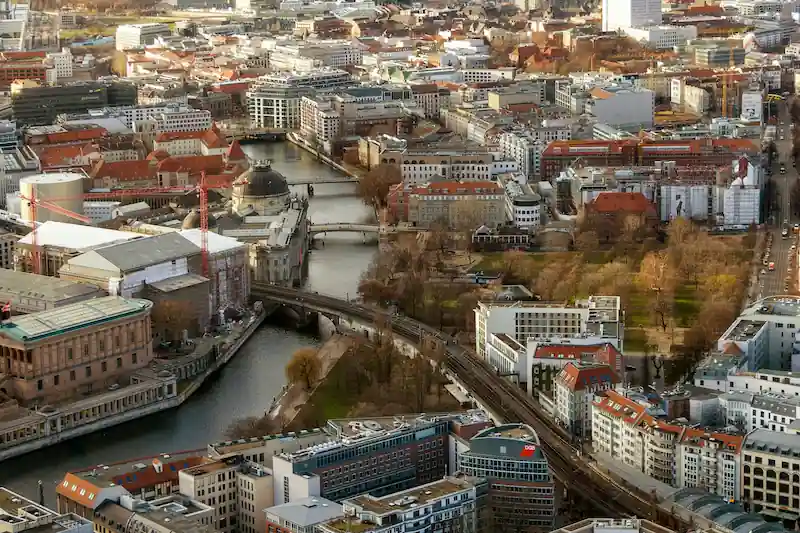
Where to stay in Berlin
Find the best neighborhoods and hotels in Berlin.
Open page →
Plan a smarter trip to Berlin with a clear view of where to stay, how the city fits together, which experiences genuinely matter, and how to avoid turning the capital into a scattered checklist. Berlin rewards travelers who understand its layers: ceremonial Mitte, Wall memory, museum islands, western elegance, canal-side neighborhoods, former runways, lake edges, and late streets where the city’s rhythm changes block by block.
Find the best neighborhoods and hotels in Berlin.
Open page →
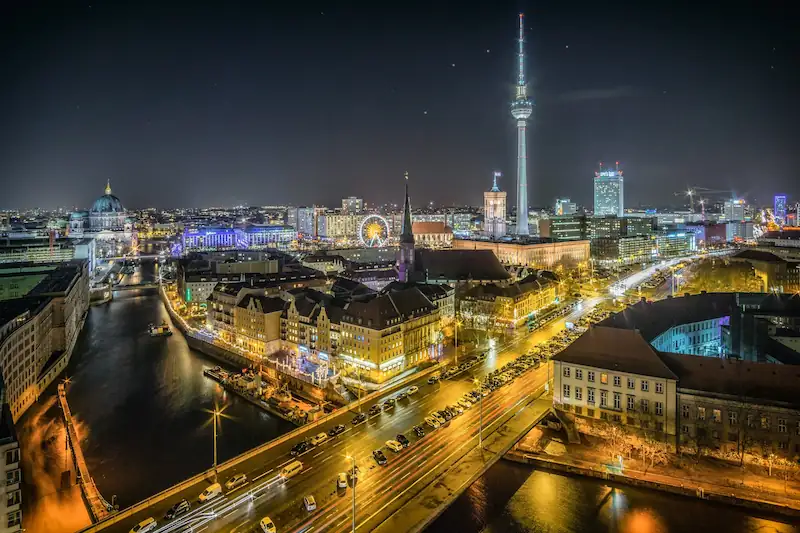
Prioritize the activities that deserve your time in Berlin.
Open page →
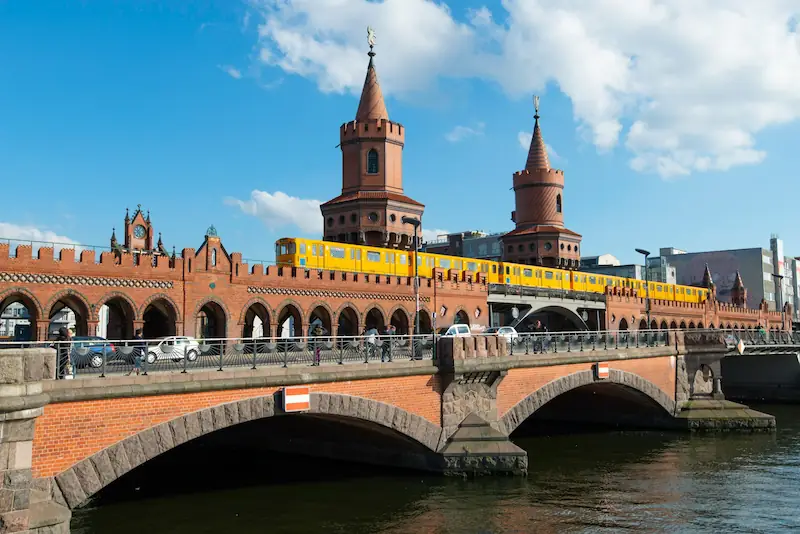
2 Days in Berlin Itinerary: First-Time Route Through History, Museums & Neighborhoods
Open itinerary →
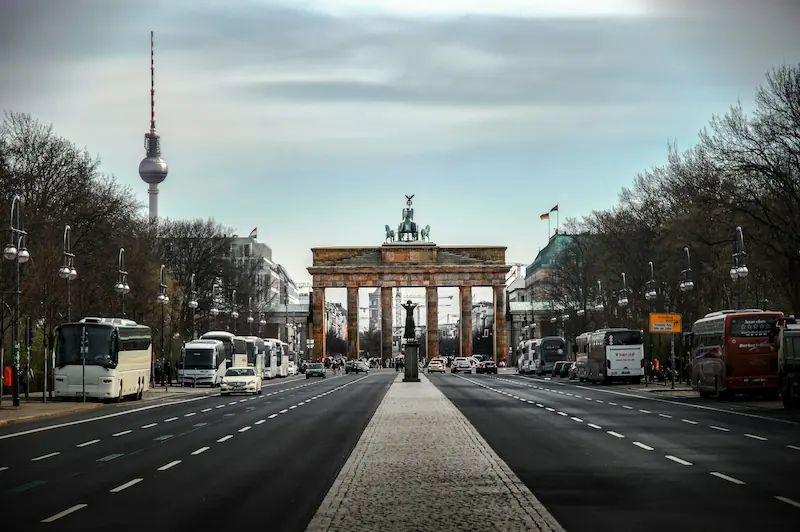
3 Days in Berlin Itinerary: Best First-Time Route for History, Museums & Kreuzberg
Open itinerary →
4 Days in Berlin Itinerary: Best Route for First Timers, Museums, Kreuzberg & City West
Open itinerary →
7 Days in Berlin Itinerary: One Week Route for Museums, Neighborhoods, Potsdam & Local Life
Open itinerary →
Berlin is a wide, low-rise capital built from interruptions rather than a single center. Its best experiences sit across distinct districts, so the city makes most sense when read as a set of historical layers, cultural pockets, open spaces, and long east-west movements rather than as a compact sightseeing circuit.
Berlin is worth structuring a trip around because few European capitals make modern history so physically legible while still feeling actively lived in. The city can move from Brandenburg Gate to a Wall memorial, from a museum court to a canal market, from a former airport runway to a late bar street without changing its core identity. Its strongest appeal is not conventional prettiness; it is the way politics, memory, culture, public space, food, nightlife, and everyday neighborhood life remain visible in the same trip.
Best time: May–June or September–early October for the best balance of weather, daylight, outdoor life, and cultural activity.
Ideal trip length: 4 days is the best minimum for a first Berlin trip; 5–7 days lets the city breathe and allows time for Potsdam, lakes, galleries, or slower neighborhoods.
Berlin is no longer the bargain capital many travelers remember, but it remains better value than Paris, Amsterdam, or Copenhagen for public transport, casual food, parks, and many cultural experiences. The main cost pressure comes from central hotels, major exhibitions, summer weekends, trade fairs, club nights, and higher-demand neighborhoods. A well-connected base outside the most central part of Mitte can improve value without weakening the trip if the U-Bahn or S-Bahn connection is strong.
Berlin is less a radial capital than a federation of districts stitched together by rail lines, broad avenues, waterways, parks, and historical breaks. Mitte carries the ceremonial and museum core, while Kreuzberg, Neukölln, Prenzlauer Berg, Charlottenburg, Friedrichshain, and Schöneberg each hold a different version of the city. The seams matter: former borders, empty lots, railway corridors, rebuilt squares, institutional axes, and softened residential streets are part of how Berlin is organized.
The Spree runs through the historic center, but Berlin’s practical geography is horizontal: flat terrain, long boulevards, large parks, canal edges, S-Bahn arcs, and outer lakes. Walking is rewarding within districts and along the Spree or Landwehr Canal, but inefficient between many clusters. The city often opens suddenly from dense streets into wide squares, rail viaducts, memorial voids, former industrial land, or green space, which is why pacing matters more than raw distance.
Berlin starts slowly compared with many capitals, gathers force through late morning and afternoon, then spreads into cafés, bars, galleries, parks, cinemas, restaurants, and music venues after dark. Weekends change the city more visibly than weekdays, especially in markets, clubs, lakeside areas, brunch-heavy neighborhoods, and Sunday flea-market culture. A good Berlin day usually needs one serious anchor, one looser district sequence, and enough space for the city’s slower edges to appear.
Think of Berlin as a layered city rather than a checklist city. The strongest trips alternate between historical sites, lived neighborhoods, museums, and open spaces instead of forcing all landmarks into one linear route. If you understand which part of Berlin each day is trying to reveal — political Berlin, divided Berlin, museum Berlin, western Berlin, food-and-nightlife Berlin, or green Berlin — the city becomes far easier to plan.
Open the planner
Anchor the first day in Mitte to understand the political, historical, and symbolic core before moving outward. Build each day around one primary district cluster, then add a nearby museum, market, canal walk, park, or evening area. Use the Spree, the Landwehr Canal, Tiergarten, and major U-Bahn or S-Bahn lines as orientation tools rather than relying only on walking distance. Pair heavy historical experiences with open-air sections, because Berlin’s best days need space between intense sites. Treat Museum Island as a selective cultural anchor, not a one-day obligation to see every collection. Use Kreuzberg, Neukölln, Friedrichshain, Prenzlauer Berg, Charlottenburg, or Schöneberg as different answers to different evening moods. Keep one evening flexible for bars, restaurants, cinemas, live music, or club culture instead of assuming nightlife must mean one famous venue. For trips of five days or more, add Potsdam, Wannsee, a lake edge, or a slower western or residential district to see how Berlin’s urban rhythm widens. Avoid planning too many east-west crossings in one day; Berlin becomes more satisfying when movement has a clear reason.
Vibe: Central, historical, museum-rich, symbolic, and highly practical.
Why go: Mitte is where Berlin’s imperial, Nazi-era, Cold War, and reunified capital layers sit closest together. It gives first-time visitors the cleanest access to Museum Island, Brandenburg Gate, Unter den Linden, the Reichstag, the Holocaust Memorial, Gendarmenmarkt, and major documentary sites.
Who it fits: First-time visitors, museum-focused travelers, short stays, political-history travelers, and anyone who wants maximum orientation with minimal transit complexity.
Not for: Travelers who want Berlin’s most residential, nightlife-heavy, canal-side, or alternative atmosphere outside their hotel door.
Where to stay: The best all-purpose base for a first Berlin trip, especially if you have three or four days and want the key historical spine, museum core, and government quarter within efficient reach.
Vibe: Canal-side, social, political, food-driven, multicultural, and late without being only club-focused.
Why go: Kreuzberg is one of the best districts for feeling Berlin beyond the monuments. It combines Landwehr Canal walks, Turkish and Middle Eastern food, Markthalle Neun, independent bars, street life, political history, and sharp traces of countercultural Berlin.
Who it fits: Food lovers, nightlife travelers, repeat visitors, younger couples, solo travelers, and visitors who like a lively but grounded base.
Not for: Visitors who want polished hotel streets, silent nights, immediate Museum Island access, or a highly curated luxury atmosphere.
Where to stay: A strong choice if you want Berlin to feel social and lived-in, with good connections back to Mitte and easy momentum for food, canals, bars, and late evenings.
Vibe: Leafy, residential, café-led, family-friendly, and easygoing.
Why go: Prenzlauer Berg shows Berlin at its most settled: restored façades, weekend markets, relaxed squares, playgrounds, independent shops, and a softer pace than Kreuzberg or Friedrichshain. It works especially well as a calmer counterweight to heavy museum or memorial days.
Who it fits: Families, couples, longer stays, café travelers, slow walkers, and visitors who prefer calmer evenings with easy transit back to Mitte.
Not for: Travelers looking for Berlin’s rawest nightlife, most direct historical concentration, or strongest late-night energy.
Where to stay: A comfortable residential base with good transit into Mitte and enough local texture to avoid feeling detached from the city.
Vibe: Elegant, western, cultural, comfortable, and more traditional.
Why go: Charlottenburg offers a different Berlin: broad streets, classic hotels, galleries, shopping, old West Berlin institutions, the Zoo and Ku’damm axis, and the palace landscape. It suits travelers who want comfort, culture, and a less improvised urban feel.
Who it fits: Luxury travelers, older couples, design shoppers, museum visitors, families using the zoo area, and those who prefer quieter evenings.
Not for: Travelers prioritizing East Berlin nightlife, canal life, alternative districts, or a walking-heavy first trip centered entirely on Mitte.
Where to stay: A polished base with strong hotels and western cultural access, best for travelers who value comfort and classic city structure over being in the middle of Berlin’s late-night energy.
Vibe: Young, post-industrial, nightlife-oriented, riverside, and open-edged.
Why go: Friedrichshain places club culture, Wall history, RAW-Gelände, rougher street texture, Spree-side redevelopment, and residential pockets close together. It has energy, but also softer moments around Boxhagener Platz and side streets.
Who it fits: Nightlife travelers, music-focused visitors, younger groups, return travelers, and anyone who wants an eastern base with late momentum.
Not for: Light sleepers, luxury-focused travelers, families needing calm evenings, or visitors who want the city’s main museums at their doorstep.
Where to stay: A good base for nightlife and East Berlin atmosphere, especially if late evenings matter more than daytime monument access.
Vibe: Creative, informal, multicultural, food-and-bar driven, and increasingly popular.
Why go: Neukölln is a strong choice for travelers interested in Berlin’s contemporary food, bar, and creative scenes. Its appeal lies less in landmarks than in the way streets, cafés, courtyards, parks, Tempelhofer Feld, and late venues connect.
Who it fits: Repeat visitors, food-and-bar travelers, creatives, longer stays, and those comfortable staying outside the classic sightseeing belt.
Not for: First-time visitors with very limited time, travelers who want polish, or anyone uncomfortable with a less curated urban environment.
Where to stay: Best as a characterful base for longer or return trips, with excellent local life but less immediate sightseeing efficiency.
The best things to do in Berlin work through contrast: political monuments, memory sites, museums, lived districts, canals, parks, food culture, and late cultural spaces. The city becomes richer when intensity is balanced with room to move, and the goal is to choose the right anchors rather than list every possible attraction.
Planning tip: Do not treat Berlin as a compact old town; its strongest experiences sit in clusters separated by real travel time, so a good plan protects energy as much as it covers sights.
This is Berlin’s ceremonial core, but it is also one of the clearest places to read rupture, reunification, and reconstruction. The open space between Brandenburg Gate, the Reichstag, the government quarter, Tiergarten, and nearby memorials gives history an unusual physical distance. It works best as an opening sequence because it immediately explains why Berlin is not just a museum city or a nightlife city, but a capital still negotiating power and memory.
Tip: Register in advance if you want the Reichstag dome; otherwise use the exterior walk as the first orientation spine of the trip.
Checkpoint Charlie matters because of what it represents, not because the site itself is one of Berlin’s most powerful experiences. Most travelers should treat it as a short contextual stop within a wider Cold War and memory route, especially when paired with Topography of Terror, the Berlin Wall Memorial, or a walk through central Mitte. It belongs in the guide because visitors search for it and expect to understand it, but it should not distort the itinerary.
Tip: Stop briefly, understand the symbolism, then continue toward stronger documentary sites.
Museum Island is Berlin’s densest cultural cluster and one of the few places where the city’s imperial ambition, archaeological collections, architecture, and river geography all meet. It deserves selection rather than exhaustion: the Neues Museum, Bode Museum, Alte Nationalgalerie, Altes Museum, and Pergamon-related exhibitions each create a different version of cultural Berlin. The point is simple: choose the museum that supports your trip rather than letting the island consume a day by default.
Tip: Choose one or two collections and pair the visit with the Spree, Berlin Cathedral, Unter den Linden, or nearby courtyards.
Alexanderplatz is one of Berlin’s most recognizable urban spaces, but it is more useful as a structural stop than as a deeply rewarding destination. The TV Tower can make sense for skyline orientation, families, or first-time visitors who want a clear high view, while the square below reveals East Berlin scale, transit movement, and postwar urban mass more than beauty. Frame it honestly: useful, iconic, sometimes worthwhile, rarely the emotional center of the trip.
Tip: Use it for orientation, transit, or the TV Tower view; do not build a whole Berlin day around the square.
The Holocaust Memorial is one of the most important stops in central Berlin because it places absence, scale, and disorientation in the middle of the capital’s political landscape. Its location near Brandenburg Gate and the Reichstag makes it easy to include, but its meaning is weakened when rushed as a photo stop. It is strongest when treated as part of Berlin’s central memory landscape alongside Topography of Terror, the government quarter, or a more focused historical walk.
Tip: Visit with time and quiet attention; avoid placing it between too many casual sightseeing stops.
Topography of Terror is one of the clearest places in Berlin to understand how Nazi power was organized, administered, and made spatially real. Because the site combines documentation, former institutional ground, and surviving Berlin Wall fragments nearby, it gives much stronger historical structure than superficial checkpoint tourism. It helps travelers understand the city, not just see it.
Tip: Give it proper reading time and pair it with Checkpoint Charlie only as a short nearby context stop.
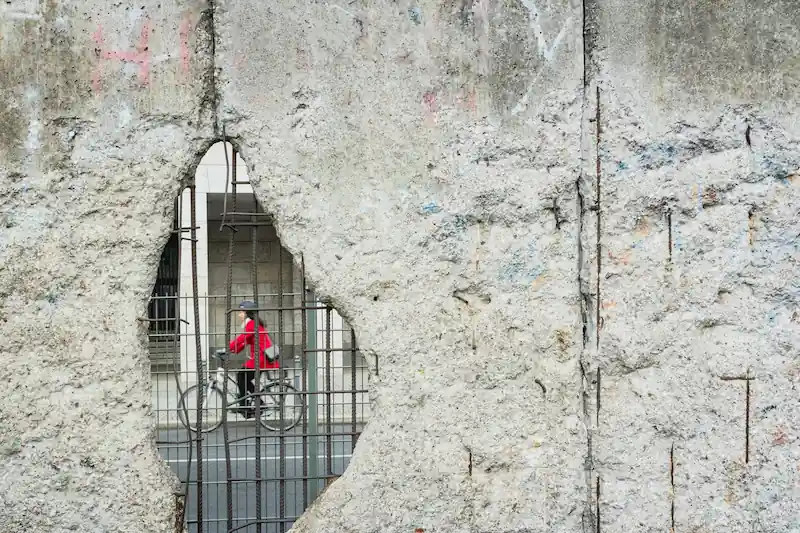
The Berlin Wall Memorial on Bernauer Strasse is the most useful Wall-history anchor for a first trip because it shows the border as a lived system: streets cut apart, buildings erased, lives compressed into a narrow strip, and escape attempts made physically legible. It is quieter than the East Side Gallery but more explanatory, which makes it central to understanding Berlin rather than merely recognizing an image.
Tip: Allow time for the outdoor memorial, viewing platform, and documentation context together.
The East Side Gallery works best as a long urban walk rather than a single mural stop. It connects Wall memory, public art, river redevelopment, Oberbaum Bridge, and Friedrichshain’s rougher edges in one exposed stretch. Use it as a bridge into an east-side afternoon or evening, not as your only Wall-history experience.
Tip: Combine it with Oberbaum Bridge, RAW-Gelände, Kreuzberg, or a Friedrichshain evening.
Check guided tours →
Gendarmenmarkt and Unter den Linden show Berlin’s more formal side: symmetry, opera houses, embassies, rebuilt grandeur, royal and state architecture, and the long symbolic line between Museum Island and Brandenburg Gate. They matter less as individual checklist stops than as connective tissue for central Berlin, especially when the day needs a calmer architectural sequence between museums and memorials.
Tip: Use this as a connector between Museum Island, Brandenburg Gate, Friedrichstraße, and the southern edge of Mitte.
Check guided tours →
Tiergarten gives central Berlin space to decompress. It is not just a park break; it explains the capital’s unusual openness between monuments, government buildings, museums, embassies, and western districts. For travelers who find Berlin heavy, Tiergarten is often the place where the city’s scale becomes manageable again.
Tip: Pair it with the Reichstag, Brandenburg Gate, the Victory Column, the zoo area, or a western museum day.
Check guided tours →
The Jewish Museum is one of Berlin’s most important cultural experiences, both for its architecture and for the depth of historical context it holds. It should not be treated as a general rainy-day fallback; it is a serious anchor that helps explain absence, continuity, rupture, and memory in Berlin. Its location also works well with Kreuzberg, Topography of Terror, or a broader day about how the city handles difficult history.
Tip: Leave mental space after the visit; this is not a light museum stop.
Cold War Berlin is easiest to grasp when political history is connected to domestic life, surveillance, bureaucracy, work, and ordinary routines. The DDR Museum gives a more accessible and central introduction, while the Stasi Museum is more demanding but stronger for institutional depth. Use one of them to deepen the Wall sites rather than adding both automatically.
Tip: Choose the Stasi Museum for depth and atmosphere; choose the DDR Museum for a central, more accessible introduction.
Check guided tours →
The Neue Nationalgalerie brings Berlin’s modernist and postwar cultural identity into focus. Its architecture is as important as the collection, with glass, steel, and open space turning the museum into a city object. It also helps balance Museum Island with a more modern Berlin, especially for travelers interested in design, architecture, or twentieth-century art.
Tip: Combine it with the Kulturforum, Potsdamer Platz, Tiergarten, or a western Berlin sequence.
Check guided tours →
Berlin’s gallery scene is one of the best ways to feel the city’s current cultural metabolism. Around Mitte, Potsdamer Straße, Charlottenburg, and parts of Kreuzberg, exhibition spaces sit close to cafés, courtyards, and unpolished streets. This is a strong repeat-visitor layer, but it can also work on a first trip if culture matters more than covering every landmark.
Tip: Check opening days before building a gallery afternoon; smaller spaces vary widely.
Check guided tours →
The Landwehr Canal shows Berlin at a more human scale: water, trees, bridges, cafés, Turkish markets, bookshops, playgrounds, and slower movement. It is one of the easiest ways to understand why the city rewards unforced time, and it gives Kreuzberg and Neukölln a softer structure than the nightlife clichés suggest.
Tip: The Kreuzberg stretch works especially well before dinner, after Markthalle Neun, or around Maybachufer market days.
Check guided tours →
Berlin nightlife is not one thing and should not be reduced to a single famous club. The city moves differently after dark depending on the district: Friedrichshain is more club-forward, Kreuzberg mixes bars and late social spillover, Neukölln is looser and more diffuse, Schöneberg carries important queer nightlife history, and Mitte can work for more structured restaurants, cinemas, and hotel bars. For most visitors, the smartest approach is to choose one lane for the night rather than chasing a mythical total Berlin experience.
Tip: Have a plan B: queues, door policies, distance, and late-night energy all make overcommitted nightlife itineraries fragile.
Tempelhofer Feld is one of Berlin’s most revealing public spaces: a former airport turned open urban commons. The scale is almost absurd, and that openness changes the way the city feels after museums, memorials, or dense neighborhoods. It is especially useful because it translates modern Berlin into a physical experience: cycling, skating, picnicking, watching kites, or simply crossing an old runway.
Tip: Go when the weather is good and combine it with Neukölln or Kreuzberg.
Check guided tours →
Mauerpark helps explain a very specific Berlin rhythm: Sunday social life built around browsing, secondhand culture, hanging out, informal performance, and low-pressure public gathering. It is not essential for every short trip, but it becomes a strong local-life addition when the stay includes a weekend and when Berlin needs to feel more lived-in than monumental.
Tip: Best on a Sunday and best approached as an atmosphere block, not as a precision shopping mission.
Berlin’s markets are useful because they connect food, neighborhood identity, and daily rhythm without requiring a major attraction. Markthalle Neun is the best-known food-led example, Maybachufer adds a more street-market rhythm, and smaller weekly markets can feel more residential. Markets matter because they give structure to otherwise loose neighborhood time.
Tip: Check the specific market day; not every market works every day of the week.
Check guided tours →
Berlin’s evening life is not limited to clubs. Bars, courtyards, cinemas, late cafés, small music rooms, restaurants, queer nightlife, and cultural venues give the city several night rhythms, from quiet terrace conversations to all-night venues. The important planning move is to choose the district by mood rather than assuming all of Berlin after dark feels the same.
Tip: Choose the district by mood: Kreuzberg for bars, Friedrichshain for clubs, Schöneberg for classic queer nightlife, Neukölln for newer scenes, Mitte or Charlottenburg for more structured evenings.
Check guided tours →
One of the things many first-time visitors miss is that Berlin is not only a city of museums, memory sites, and nightlife; in warm weather it also turns outward toward lakes, swimming areas, river edges, and waterside pauses. You do not need to build a full lake day into a short trip, but recognizing this layer helps explain why Berlin can feel expansive and breathable despite its dense history.
Tip: Only prioritize this in warm weather or on longer trips; it matters more as a seasonal Berlin rhythm than as a year-round essential.
Turkish and Middle Eastern food are central to Berlin’s everyday eating culture, especially in Kreuzberg and Neukölln. This is where casual meals often explain the city better than formal dining rooms, linking migration, late-night routines, street-level social life, and neighborhood identity. A strong Berlin food plan should include this layer rather than treating currywurst as the whole story.
Tip: Follow neighborhood density rather than online hype; busy local counters usually tell you enough.
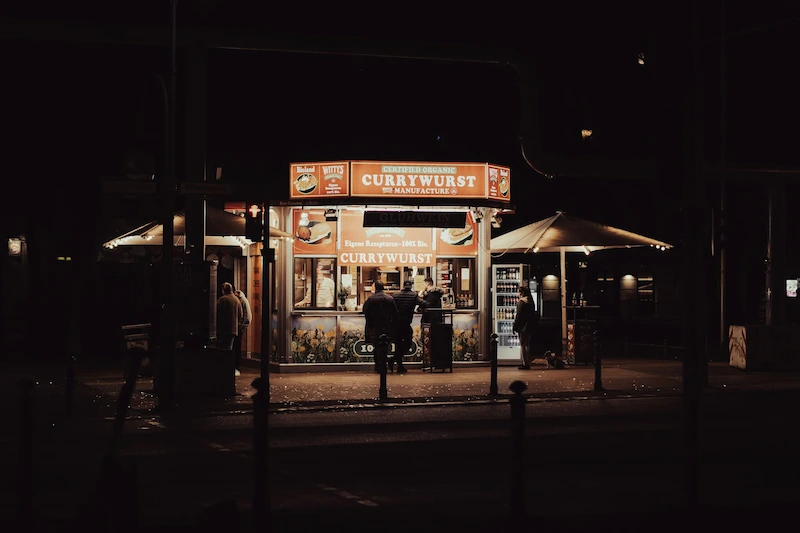
Currywurst is worth trying because it belongs to Berlin’s street-food history, but the city’s food scene is far wider than the cliché. It works best as a quick cultural note between sights, not as the defining food moment of the trip. Use it to establish the baseline, then let Turkish, Vietnamese, bakery, market, and contemporary casual food show the wider city.
Tip: Have it as a snack between sights rather than planning a full food detour around it.
Check food options →
Berlin’s cafés are not just breaks; they are part of how districts reveal themselves. Prenzlauer Berg, Kreuzberg, Neukölln, Mitte, and Charlottenburg each use café life differently, from calm residential squares to sharper creative streets and polished western boulevards. A café stop is often the best way to slow the day before another heavy historical or cultural block.
Tip: Choose cafés by neighborhood route rather than crossing the city for one address.
Check food options →
Berlin’s modern restaurant scene is strongest when it feels relaxed rather than formal. One carefully chosen dinner can reveal the city’s current confidence with vegetables, fermentation, natural wine, international influences, and casual precision. It is a useful reminder that Berlin’s food story is contemporary and hybrid, not only historical snacks and beer halls.
Tip: Reserve for Friday or Saturday evenings if the restaurant matters to the trip.
Check food options →
Berlin asks for selection because its meaning is spread across memory sites, cultural institutions, lived districts, and open spaces rather than concentrated in one old center. Protect time for the experiences that explain the city’s layers, then let secondary sights support that reading. The goal is not to see everything; it is to understand why the city feels fragmented, spacious, serious, creative, and socially alive at the same time.
Berlin can work very well with kids because it has parks, transit, informal food, large museums, playgrounds, boats, zoos, and spacious public areas. The challenge is not child-friendliness but scale: long transfers and heavy historical sites can tire families quickly. Build days with outdoor resets, keep serious history in shorter blocks, and use open spaces to release energy between structured visits.
Berlin itineraries should balance history, culture, neighborhoods, and open space. The right duration depends less on how many sights you want to tick off and more on how much time you want between the city’s heavier layers. A strong plan gives each day a clear role: central memory, museum depth, neighborhood life, western Berlin, night culture, or green escape.
Open the planner →
Berlin is easy to navigate once you respect its size, weekly rhythms, and district-based logic. The practical key is to keep the trip flexible enough for long movements, weather shifts, museum timing, Sunday closures, and the occasional late change of plan.
The best time to visit Berlin is late spring or early autumn, when daylight is generous, parks and terraces are active, and cultural planning remains manageable. Summer is best for lakes, open-air evenings, and beer gardens; winter is strongest for museums, cafés, concerts, Christmas markets, and lower-pressure sightseeing.
Three days gives a compressed first look; four to five days is the realistic minimum for history, museums, neighborhoods, open space, and one slower Berlin moment.
Choose Mitte for first-trip efficiency, Kreuzberg or Prenzlauer Berg for lived neighborhood texture, Charlottenburg for comfort and classic western Berlin, Friedrichshain or Neukölln for nightlife and contemporary local energy, and Schöneberg if LGBTQ+ nightlife or old West Berlin atmosphere matters.
Berlin Brandenburg Airport connects to the city by regional train, S-Bahn, and taxi. Main rail arrivals usually come through Berlin Hauptbahnhof, with onward S-Bahn, U-Bahn, tram, or bus connections across the city. Airport transfers are manageable but not instant, so arrival and departure days should stay lighter than the map may suggest.
Berlin’s U-Bahn, S-Bahn, trams, and buses cover the city well, but transfers can add time. Walking works best inside districts; bikes are useful in good weather and for parks or canals; taxis and ride-hailing help late at night or across awkward routes. For planning, think in clusters rather than individual sights.
Berlin is generally safe for visitors, with normal urban awareness needed around busy stations, nightlife areas, parks after dark, crowded tourist zones, and late-night transport. Cycling lanes are useful but require attention, and some nightlife settings are easier with a flexible plan and a clear route home.
Berlin changes strongly by season, and the best choice depends on whether you want outdoor life, museums, nightlife, lower prices, or Christmas atmosphere. Late spring and early autumn are the easiest all-round periods, with enough daylight for long district days and enough cultural activity to keep the trip dense. Summer brings the city outside to parks, lakes, terraces, and open-air venues, but it also raises hotel pressure and makes popular weekend spaces busier. Winter can be atmospheric and good value, yet short daylight makes careful planning more important and shifts the trip toward museums, cafés, concerts, and indoor culture.
April to June brings longer days, reopening terraces, parks coming back to life, and a strong museum-and-neighborhood balance. May and June are especially good for first trips because most experiences are available without peak-summer compression.
July and August are best for outdoor Berlin: lakes, beer gardens, open-air events, late evenings, bikes, parks, and river time. Expect higher hotel demand, warmer transit, and more competition for popular weekend spaces.
September to early October is one of the strongest periods, with mild weather, cultural momentum, good walking conditions, and less peak-summer pressure. Later autumn becomes quieter, cooler, and more museum-oriented.
Winter is best for museums, cafés, concerts, Christmas markets, restaurants, and lower-key urban exploration. Days are short and cold, so the trip works better with fewer outdoor dependencies and more structured indoor anchors.
Not seeing your next stop yet? Build a fully personalized itinerary anywhere in Germany, from major cities to smaller cultural and nature-led routes.
Berlin is straightforward once you plan around scale, neighborhoods, and the difference between historical essentials, cultural anchors, and lived city texture.
Three days is enough for a focused first visit, but four or five days is much better. Berlin’s sights are spread out, and the city needs time for museums, memorials, neighborhoods, parks, food, and evenings. Seven days works well if you want Potsdam, lakes, galleries, and slower residential districts.
Three days is enough if you stay focused: use one day for Mitte and central memory sites, one day for Wall history and a museum, and one day for a neighborhood sequence such as Kreuzberg, Prenzlauer Berg, Friedrichshain, or Charlottenburg. It will feel selective rather than complete.
Mitte is the easiest base for a first trip because it puts many major landmarks, museums, and memorials within efficient reach. Kreuzberg, Prenzlauer Berg, and Charlottenburg are better if you prefer a stronger neighborhood feel or a calmer evening base.
Mitte is best for first-trip efficiency, Kreuzberg for food and nightlife, Prenzlauer Berg for calm local texture, Charlottenburg for comfort and western Berlin culture, Friedrichshain for nightlife and East Berlin atmosphere, and Neukölln for repeat visitors who want contemporary food and bars.
Do not miss the Brandenburg Gate and Reichstag area, the Holocaust Memorial, the Berlin Wall Memorial, Museum Island or one major museum, Topography of Terror if history matters, and at least one lived neighborhood such as Kreuzberg or Prenzlauer Berg.
The best way to understand Berlin is to connect political Berlin, Wall history, museum culture, and neighborhood life instead of treating the city as a list of landmarks. A strong first trip alternates serious historical sites with canals, parks, markets, cafés, and one evening district.
Berlin is walkable within districts but not across the whole city. Mitte, Kreuzberg, Prenzlauer Berg, Friedrichshain, and Charlottenburg each work well on foot, but moving between them often requires U-Bahn, S-Bahn, tram, bus, bike, or taxi.
Yes, Berlin has strong public transport, including U-Bahn, S-Bahn, trams, and buses. The main issue is not coverage but distance: routes can take longer than expected because the city is large and spread out.
May, June, September, and early October are the best months for most travelers. They offer a strong balance of daylight, weather, cultural activity, parks, terraces, and manageable crowds.
Berlin is moderately expensive by European standards but still often better value than Paris, Amsterdam, or Copenhagen. Hotels create the biggest cost swings, especially in summer, during events, and in the most central areas.
Friedrichshain and Kreuzberg are the most practical areas for classic Berlin nightlife, while Neukölln has a newer bar and creative scene. Schöneberg remains important for LGBTQ+ nightlife and more established evening streets.
Yes, if nightlife is one of your reasons for coming, but it helps to think beyond one famous club. Berlin after dark works best when you choose a style of night — bars, live music, queer nightlife, or club culture — and keep expectations flexible.
Yes, especially for families who balance museums and history with parks, playgrounds, Tempelhofer Feld, the zoo, the aquarium, boat moments, and casual food. The main challenge is avoiding overly long transit-heavy days.
Mitte is touristy in parts, but it is also the most efficient district for understanding Berlin’s symbolic and historical core. It is a strong first-trip base if you balance it with Kreuzberg, Prenzlauer Berg, Charlottenburg, Friedrichshain, or Neukölln later in the trip.
Stay in Mitte if you want sightseeing efficiency and short transfers to museums and memorials. Stay in Kreuzberg if you want a more local, social, food-led, and evening-friendly base and do not mind using transit for central sights.
Yes, Prenzlauer Berg is one of the best areas for families, couples, longer stays, cafés, and calmer evenings. It is less dramatic than Kreuzberg or Friedrichshain but very comfortable and well connected.
Charlottenburg is a strong base if you want comfort, classic hotels, the zoo and Ku’damm area, western museums, and a calmer atmosphere. It is less efficient for East Berlin nightlife but better for travelers who prefer polish and space.
Neukölln is usually better for repeat visitors or longer stays. It has excellent food, bars, cafés, and creative energy, but it is less efficient for first-time sightseeing than Mitte, Kreuzberg, Prenzlauer Berg, or Charlottenburg.
Yes, but only briefly for most travelers. It matters as a symbolic Cold War site, yet it is usually more rewarding when treated as a short stop alongside stronger historical places such as Topography of Terror or the Berlin Wall Memorial.
Alexanderplatz is useful for transit, East Berlin scale, and the TV Tower view, but it is not one of Berlin’s most rewarding places to linger. Use it selectively rather than making it the emotional center of a Berlin day.
The TV Tower is worth it if you want a clear panorama, are traveling with first-timers, or enjoy orientation viewpoints. It is less essential if visibility is poor or if you prefer street-level history, neighborhoods, and museums.
The Berlin Wall Memorial is better for understanding the Wall as a border system and lived reality. The East Side Gallery is better for public art, photos, river walking, and Friedrichshain energy. Ideally, do both, but use Bernauer Strasse as the main history anchor.
Museum Island is the main museum cluster and the best choice for first-time cultural depth. The Kulturforum and Neue Nationalgalerie are better for modern art and architecture, while the Jewish Museum and Stasi Museum add deeper historical context.
Yes, but selectively. Even one museum, a Spree walk, the surrounding architecture, and nearby Unter den Linden can make Museum Island worthwhile. Do not force multiple collections if museums are not central to your trip.
The Berlin Wall Memorial is one of the strongest free experiences because it gives real historical understanding. Other high-value free options include Brandenburg Gate, the Reichstag exterior, the Holocaust Memorial, East Side Gallery, Topography of Terror, Tiergarten, and Tempelhofer Feld.
The best local-feeling experiences include walking the Landwehr Canal, spending time at Tempelhofer Feld, browsing Mauerpark on Sunday, eating in Kreuzberg or Neukölln, and choosing a neighborhood café or bar instead of staying only around central landmarks.
Yes, especially in good weather. Tempelhofer Feld is one of Berlin’s most distinctive spaces because the former airport runways have become public open space for cycling, skating, walking, picnics, and everyday city life.
Potsdam is worth adding if you have at least four or five days. It gives a slower palace-and-garden contrast to Berlin’s twentieth-century intensity. On a short first trip, prioritize Berlin itself before leaving the city.
In winter, focus on museums, cafés, concerts, cinemas, Christmas markets, restaurants, and shorter outdoor historical sequences. Berlin still works well, but shorter daylight means you should avoid overbuilding long outdoor walking days.
In summer, add parks, lakes, beer gardens, open-air evenings, bikes, river edges, and longer neighborhood walks. Summer is when Berlin’s outdoor rhythm becomes a major part of the trip, but hotel pressure and weekend crowds also rise.
The biggest mistake is treating Berlin like a compact old capital and stacking too many scattered sights into one day. The city works better when each day has one clear anchor and one coherent district sequence.
Beyond Brandenburg Gate and Museum Island, first-time visitors should consider the Holocaust Memorial, Topography of Terror, the Berlin Wall Memorial, one strong Kreuzberg or Neukölln evening, and a more local Berlin layer such as Tempelhofer Feld or the Landwehr Canal.
The strongest Berlin trips leave enough space for the city’s layers to connect rather than reducing it to isolated sights.
Find the best places to stay, how to get there, and move around with ease.
Build a smarter trip base
Once you understand how Berlin works and what matters most for your trip, the next step is turning that direction into a real itinerary. Use the planner to organize your days around the right areas, experiences, and rhythm so the trip feels clear before you go.