Find the best areas to stay in Berlin based on how you want the city to work day by day: fast access to landmarks, quieter family routines, canal-side evenings, nightlife, classic hotel comfort, or a more independent local base. Berlin is wide, district-based and late-moving, so the right hotel area is not just a place to sleep; it shapes how easily you reach museums and memorials, where your evenings begin, how much transit friction you absorb, and whether the city feels coherent or scattered.
Best areas
Stay in Mitte for first-time efficiency, Kreuzberg for food and bars, Prenzlauer Berg for families and calm local life, Charlottenburg for classic comfort and west Berlin culture, Friedrichshain for nightlife and East Berlin energy, and Neukölln for repeat visitors, value and a more independent stay.
Booking timing
Book early for central Mitte, quiet family rooms, distinctive boutique hotels, Kreuzberg and Friedrichshain weekends, summer stays, major events, Christmas-market periods and any trip where exact street location matters as much as price.
Best areas to stay in Berlin at a glance
Mitte – Best for: first-time visitors, short trips and museum-heavy stays · Vibe: central, historical, practical, sometimes businesslike · Stay here if: you want the cleanest access to Museum Island, Brandenburg Gate, the Reichstag area, major memorials, transport and the easiest first map of Berlin. · Avoid if: you want Berlin’s strongest local nightlife, a residential evening rhythm or better hotel value outside the formal center.
Kreuzberg – Best for: food, bars, canals and local energy · Vibe: canal-side, social, mixed, informal · Stay here if: you want Berlin to feel lived-in from the first evening, with good food, bars, markets and practical links back to the center. · Avoid if: you need polished streets, classic luxury hotels, silent nights or the shortest possible walk to museums and landmarks.
Prenzlauer Berg – Best for: families, couples and calmer local stays · Vibe: leafy, residential, café-led, easygoing · Stay here if: you want a softer base with squares, cafés, playgrounds, markets and easy links into Mitte without sleeping in a tourist core. · Avoid if: you want Berlin’s rawest nightlife, club culture, or maximum sightseeing efficiency on a very short stay.
Charlottenburg – Best for: comfort, luxury, shopping and west Berlin culture · Vibe: elegant, settled, spacious, more traditional · Stay here if: you prefer mature streets, bigger hotel rooms, classic restaurants, Ku’damm shopping, the zoo area and quieter evenings. · Avoid if: you want Kreuzberg, Friedrichshain, Neukölln or Berlin’s late eastern energy to be immediately outside the hotel.
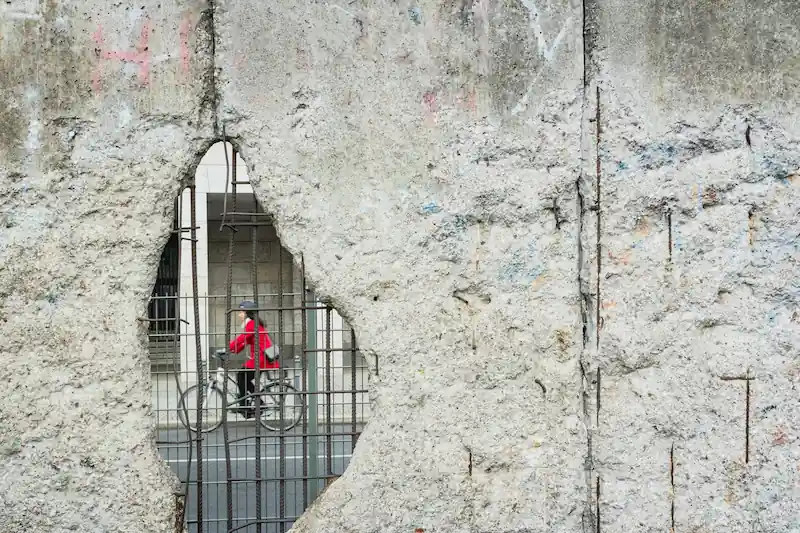
Friedrichshain – Best for: nightlife, music, East Side Gallery and younger trips · Vibe: young, post-industrial, late, rough-edged · Stay here if: you want clubs, music venues, riverside hotels, the East Side Gallery and quick movement into Kreuzberg. · Avoid if: you are a light sleeper, traveling with young children, or want a calm hotel street with classic comfort.
Neukölln – Best for: repeat visitors, value, food and creative local life · Vibe: informal, multicultural, independent, uneven · Stay here if: you already understand Berlin’s basics and want cafés, bars, casual food, Tempelhofer Feld and better value near local streets. · Avoid if: this is your first short trip and you need minimum sightseeing friction, predictable hotel quality or immediate landmark access.
How to choose where to stay in Berlin
Choosing where to stay in Berlin is less about finding the single best neighborhood and more about deciding what kind of daily rhythm you want. A central hotel can save time, but the city often becomes more memorable when your evenings begin near cafés, bars, canals, parks or residential squares. The most common mistake is booking by district name alone: Berlin neighborhoods are large, uneven and sometimes very different from one station to the next.
Keep the six main hotel areas aligned with the city guide: Mitte, Kreuzberg, Prenzlauer Berg, Charlottenburg, Friedrichshain and Neukölln are the core decisions most travelers need.
Prioritize station access over broad neighborhood branding; a direct U-Bahn, S-Bahn or tram line can matter more than a fashionable district label.
Choose Mitte for efficiency, but move outward when food, cafés, nightlife, family calm or room quality matter more than landmark proximity.
Check the exact street if you are sensitive to noise, especially in Kreuzberg, Friedrichshain, Neukölln and around major stations.
Treat Schöneberg, Tiergarten, Potsdamer Platz, Wedding and airport-side stays as use-case areas, not default first-choice bases.
Do not assume cheaper outer hotels are good value if they require repeated cross-city transfers or leave you far from the evening rhythm you want.
For families, quiet side streets, apartment-style rooms, playgrounds and simple food options usually matter more than sleeping beside a famous sight.
For weekends and summer stays, book early if the exact area matters; Berlin has many hotels, but the best location-character-price combinations disappear first.
Berlin geography from a hotel perspective
Berlin looks flatter and easier on a map than it feels in daily movement. The city is wide, district-based and shaped by rail lines rather than by one compact old center. Staying well means choosing a cluster you will actually use, not simply choosing a neighborhood name you have heard before. This is also why often-mentioned areas — Schöneberg, Potsdamer Platz, Tiergarten, Wedding, Moabit and airport-side stays — need context rather than automatic recommendation.
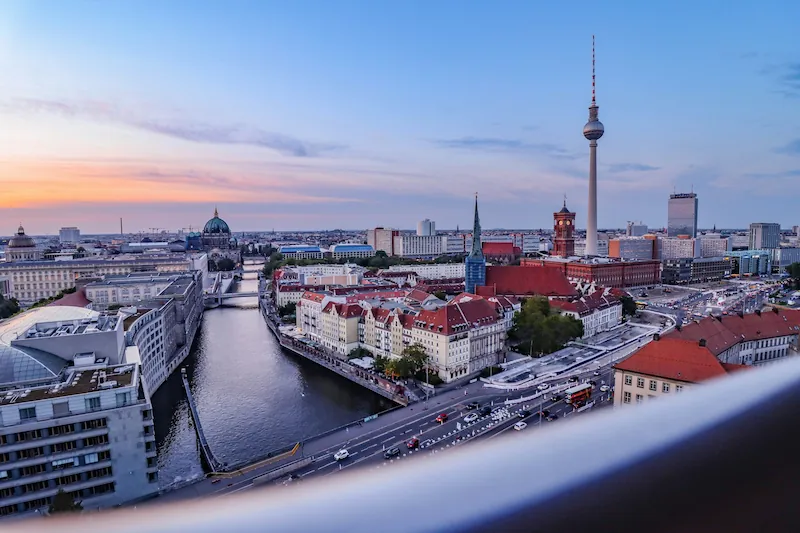
Mitte is central for landmarks, but Berlin’s best evenings often sit east, south or west of the formal center.
Kreuzberg, Friedrichshain and Neukölln work together as an east-south nightlife and local-life triangle.
Prenzlauer Berg sits close enough to Mitte for sightseeing but feels much more residential once you return at night.
Charlottenburg is excellent for west Berlin comfort but adds time to Kreuzberg, Neukölln and Friedrichshain.
Schöneberg is useful for LGBTQ+ nightlife, calmer west-side evenings and some strong hotels, but it is more of a specialist base than a must-have first-trip area.
Tiergarten and Potsdamer Platz can be practical for business, luxury or central-west positioning, but they rarely provide Berlin’s strongest neighborhood atmosphere.
Wedding and Moabit can work for value or transport reasons, but they are usually better for repeat visitors than for a first Berlin stay.
Station quality matters: direct U-Bahn, S-Bahn or tram access can outperform a more fashionable address.
Walking is best within neighborhoods; between neighborhoods, public transport usually defines the stay.
Central sightseeing cluster – Mitte, Museum Island, Unter den Linden, Brandenburg Gate, the Reichstag, Tiergarten edges and nearby memorials; best for first-time efficiency and short stays.
Local east-south cluster – Kreuzberg, Friedrichshain and Neukölln; best for bars, food, club culture, canals, markets, Tempelhofer Feld and a more lived Berlin rhythm.
Residential north-east cluster – Prenzlauer Berg and the quieter edge toward Mitte; best for families, cafés, markets, longer stays and calmer local routines.
Classic west Berlin cluster – Charlottenburg, Kurfürstendamm, Savignyplatz, the zoo area and the palace side; best for comfort, shopping, galleries, family rooms and quieter hotel stays.
Nightlife and identity specialist cluster – Schöneberg, selected Kreuzberg streets and parts of Friedrichshain; useful for LGBTQ+ nightlife, classic bars, clubs and travelers who know their evening priorities.
Business and central-west connector cluster – Potsdamer Platz, Tiergarten edges and Hauptbahnhof/Moabit-adjacent hotels; practical for business, trains or central-west logistics, but less atmospheric as default leisure bases.
Better-value outer cluster – Selected addresses in Neukölln, Friedrichshain, Wedding, Moabit and eastern Prenzlauer Berg can work when the station connection is strong and the trip is not sightseeing-heavy.
Best areas to stay in Berlin
Berlin’s best neighborhoods for hotels are not interchangeable. Each base changes how the city opens: fast historical access in Mitte, canal-side evenings in Kreuzberg, café-led local routines in Prenzlauer Berg, polished western comfort in Charlottenburg, late east-side energy in Friedrichshain, and a more independent, value-driven rhythm in Neukölln. Other names matter too — Schöneberg, Tiergarten, Potsdamer Platz, Wedding, Moabit and airport-side districts — but for most travelers they work better as specialist choices than as default bases.
Mitte
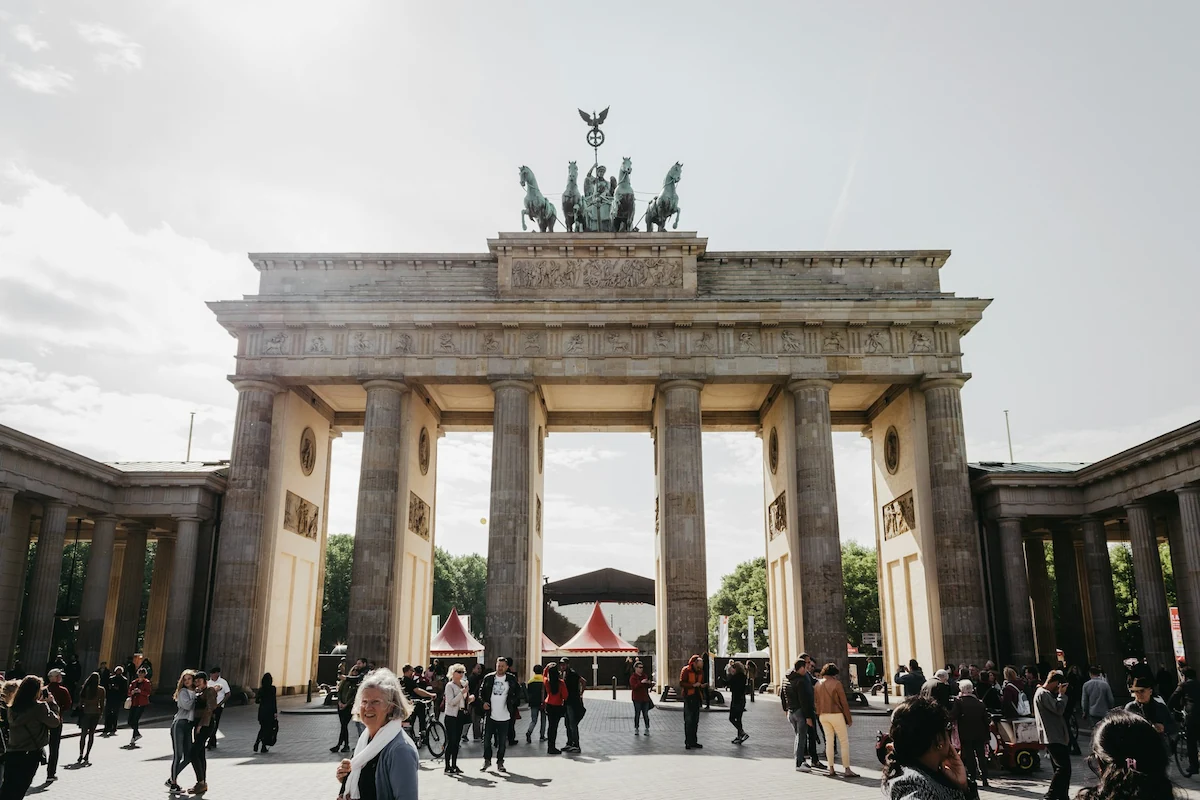
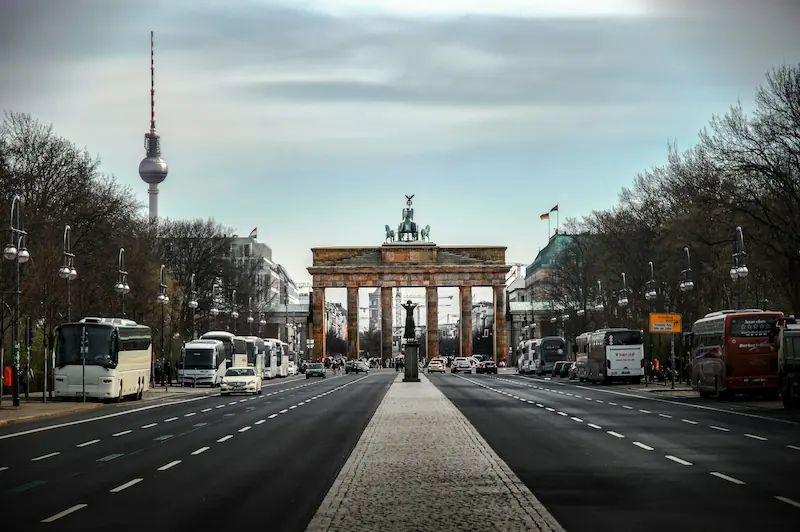
Mitte is the safest answer for a first Berlin stay because it reduces the navigation required before the city makes sense. Staying here puts you close to Museum Island, Brandenburg Gate, the Reichstag area, Unter den Linden, Gendarmenmarkt, the Holocaust Memorial and several of the capital’s major historical sites. The district is not uniformly charming: Hackescher Markt, Friedrichstraße, Alexanderplatz and the government quarter each feel different. Still, for short stays and museum-heavy trips, Mitte protects time better than almost anywhere else.
Why stay here: Stay in Mitte if your priority is time efficiency, historical orientation, major museums, memorials and strong transport rather than the most local evening atmosphere.
Best for: First-time visitors, short trips, museum-heavy stays, business travelers, older travelers who want ease, and anyone who wants Berlin to feel manageable quickly.
Pros
Best overall base for first-time visitors, 2-night stays and 3-day trips.
Easy access to Museum Island, Brandenburg Gate, the Reichstag, Unter den Linden and major memorials.
Strong U-Bahn, S-Bahn, tram and bus coverage across the city.
Wide hotel range from hostels and simple chains to serious luxury.
Useful for early museum starts, short sightseeing windows and arrival or departure days.
Good choice when you want to avoid losing time to repeated cross-city transfers.
Cons
Can feel businesslike, tourist-heavy or generic in some pockets.
Hotel value is weaker around the most obvious central locations.
Evening atmosphere is less distinctive than Kreuzberg, Prenzlauer Berg, Friedrichshain or Neukölln.
Alexanderplatz is practical but not the most atmospheric place to sleep.
Some central hotels sit on large roads or station-adjacent blocks that feel less pleasant after dark.
Nearby highlights
Walkable access to Museum Island, the Spree and central museums.
Easy reach of Brandenburg Gate, the Reichstag, Tiergarten and the Holocaust Memorial.
Strong base for Unter den Linden, Gendarmenmarkt and the historic core.
Good tram and S-Bahn links toward Prenzlauer Berg, Friedrichshain and Charlottenburg.
Convenient arrival and departure logistics through Hauptbahnhof, Friedrichstraße or Alexanderplatz.
Better for early museum starts and short sightseeing windows than more local outer bases.
Budget
Generator Berlin Alexanderplatz – A hostel-style budget stay close to Alexanderplatz with strong transport access and simple private-room options. Why we recommend: One of the few low-cost choices that keeps the central Berlin map genuinely easy. Check availability
martas Hotel Berlin-Mitte – A quiet historic building near galleries, restaurants, and central Mitte transport. Why we recommend: It gives budget-conscious travelers a calmer address than most central low-cost options. Check availability
Premier Inn Berlin Alexanderplatz – A straightforward central chain option with practical rooms and quick access to Alexanderplatz. Why we recommend: Useful when you want predictability and transport convenience without paying boutique rates. Check availability
Mid
Motel One Berlin-Alexanderplatz – A modern central hotel beside one of Berlin’s main transport hubs. Why we recommend: It works well for short stays where location efficiency matters more than room size. Check availability
Hotel AMO by AMANO Friedrichstraße – A compact design-led hotel near Friedrichstraße with easy access to central sights and northern Mitte. Why we recommend: Stronger style and location balance than many standard mid-range Mitte hotels. Check availability
Adina Apartment Hotel Berlin Hackescher Markt – Apartment-style rooms on Hackescher Markt, useful for longer stays or travelers who want more space. Why we recommend: It gives central convenience with more flexibility than a standard hotel room. Check availability
Upscale
Hotel de Rome – A grand luxury hotel in a former bank building near Bebelplatz and Unter den Linden. Why we recommend: One of the strongest addresses for travelers who want Berlin’s formal center with real hotel polish. Check availability
Regent Berlin – A classic luxury hotel near Gendarmenmarkt with spacious rooms and a quieter central setting. Why we recommend: It is more composed than many central luxury options and works well for culture-focused stays. Check availability
Hotel Luc, Autograph Collection – A refined hotel on Gendarmenmarkt with a more contemporary edge than Berlin’s traditional grand hotels. Why we recommend: It gives a premium central stay without feeling detached from the city’s architectural core. Check availability
Kreuzberg
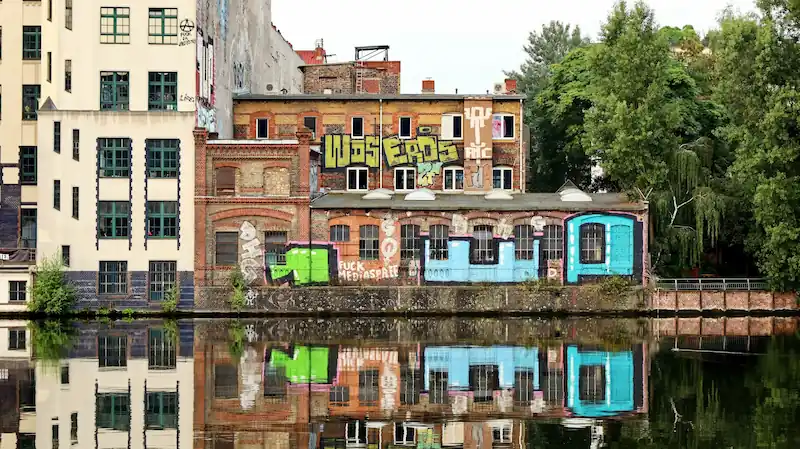
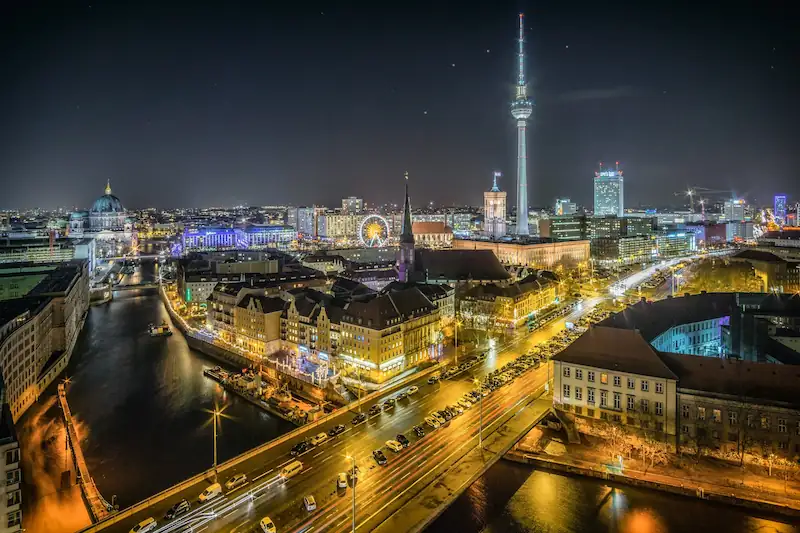
Kreuzberg is where Berlin starts to feel less like a capital and more like a place people actively inhabit. The district moves between canal paths, Turkish and Middle Eastern food counters, independent bars, market halls, galleries, side-street hotels and late terraces. It is practical without being polished, social without being one-note, and still connected enough for a first trip if you accept some transit. The key is exact location: Bergmannkiez, Graefekiez, Moritzplatz and the Kreuzkölln edge do not create the same hotel experience.
Why stay here: Stay in Kreuzberg if food, bars, local texture, canals and a flexible evening rhythm matter as much as sightseeing access.
Best for: Food-focused travelers, couples, friends, nightlife-light stays, repeat visitors and first-timers who want a more lived-in Berlin base.
Pros
One of Berlin’s best areas for food, bars, markets and informal local life.
Good access to Mitte, Neukölln, Friedrichshain and the Landwehr Canal.
Strong choice for travelers who dislike overly polished hotel zones.
More memorable evenings than most central business districts.
Good mix of boutique hotels, simple stays and apartment-style options.
Works for first-timers who want a more lived-in base without moving too far from the core.
Cons
Some streets can be noisy, especially near nightlife corridors and busy roads.
Not all parts of Kreuzberg are equally convenient for sightseeing.
Luxury hotel choice is limited compared with Mitte or Charlottenburg.
The atmosphere may feel too informal for travelers wanting classic comfort.
Exact street choice matters more here than in calmer hotel districts.
Nearby highlights
Easy access to the Landwehr Canal for slow walks between meals or cafés.
Close to Markthalle Neun, Turkish food, Bergmannkiez, Graefekiez and local bar streets.
Practical for the Jewish Museum, Berlinische Galerie, Tempelhofer Feld and southern Mitte.
Good evening density without needing to cross the city after dinner.
Fast links toward Neukölln and Friedrichshain for a broader east-south Berlin stay.
More neighborhood character than most central hotel zones.
Budget
Hotel Johann – A small, clean, understated hotel near Bergmannkiez and southern Kreuzberg. Why we recommend: A rare budget-friendly Kreuzberg stay that still feels calm and neighborhood-based. Check availability
Motel One Berlin-Mitte – A dependable design-budget option by Moritzplatz with quick U-Bahn access. Why we recommend: It keeps Kreuzberg’s local energy close while staying simple, efficient, and well connected. Check availability
acama Hotel & Hostel Kreuzberg – A simple budget hotel-hostel hybrid near the canal and transit links. Why we recommend: Useful for travelers who value price and location over atmosphere or design. Check availability
Mid
Hotel the YARD Berlin – A polished Kreuzberg hotel with garden, spa facilities, and a quieter position near the district’s western edge. Why we recommend: It offers more comfort than most Kreuzberg hotels without abandoning the neighborhood. Check availability
GINN City & Lounge Yorck Berlin – A practical hotel near Yorckstraße, useful for Kreuzberg, Schöneberg, and S-Bahn connections. Why we recommend: It works well when transport access and room quality matter more than being in the loudest part of Kreuzberg. Check availability
Nena Apartments Kreuzberg 61 – Apartment-style accommodation in Kreuzberg with more independence than a standard hotel. Why we recommend: A good fit for longer stays or travelers who want a local base with practical room layouts. Check availability
Upscale
Orania.Berlin – A characterful boutique hotel in a historic Kreuzberg building with strong design and dining presence. Why we recommend: The most convincing upscale stay for travelers who want Kreuzberg itself to be part of the trip. Check availability
Wilmina Hotel – A quietly designed hotel in a converted former courthouse and prison complex in western Berlin. Why we recommend: Worth considering if you want architectural character and calm over a textbook Kreuzberg location. Check availability
Precise Tale Berlin Potsdamer Platz – A design-led hotel near the western edge of Kreuzberg and Potsdamer Platz. Why we recommend: A strong compromise for travelers wanting comfort with access to both Kreuzberg and central sights. Check availability
Prenzlauer Berg
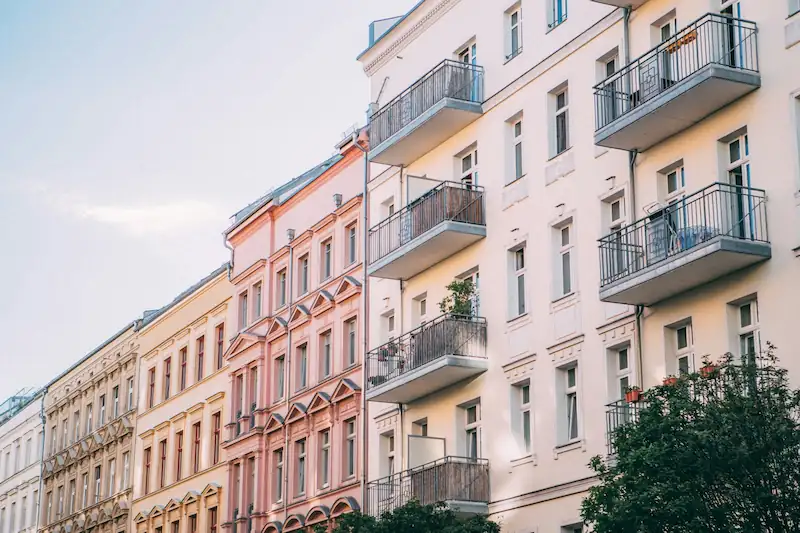
Prenzlauer Berg is Berlin at a lower volume: restored façades, leafy squares, children on bikes, calm cafés, weekend markets and a rhythm that settles earlier than Kreuzberg or Friedrichshain. It is not the most efficient base for every sight, but it makes daily life feel easy. Staying here works particularly well when you want Berlin to feel residential rather than performative, especially on family trips, longer stays or calmer couple stays. The best addresses keep you near Kollwitzplatz, Helmholtzplatz, Kastanienallee or a useful tram/U-Bahn link back toward Mitte.
Why stay here: Stay in Prenzlauer Berg if you want a calm, local, family-friendly base with cafés, markets, playgrounds and enough restaurants to make evenings easy.
Best for: Families, couples, café-focused travelers, longer stays, quieter first trips and visitors who want a gentle Berlin base without feeling suburban.
Pros
One of Berlin’s most comfortable areas for families and longer stays.
Strong café, brunch and market culture without heavy nightlife pressure.
Good tram and U-Bahn access into Mitte and Alexanderplatz.
Quiet side streets and apartment-style options suit slower travel.
Feels local quickly, even on a first visit.
Good balance between residential calm and central access if the station link is strong.
Cons
Less efficient than Mitte for museum-heavy or landmark-heavy short trips.
Nightlife is calmer and more residential than Kreuzberg or Friedrichshain.
Hotel choice is narrower than in Mitte or Charlottenburg.
Some addresses near the outer edges can add more transit time than expected.
Travelers seeking Berlin’s rougher edge may find it too settled.
Nearby highlights
Easy local life around Kollwitzplatz, Helmholtzplatz, Kastanienallee and surrounding café streets.
Good access to Mauerpark and weekend markets.
Quick tram or U-Bahn movement toward Alexanderplatz, Museum Island and northern Mitte.
Calmer evenings than Kreuzberg or Friedrichshain without feeling isolated.
More apartment-style logic for travelers who want routines, not only sightseeing.
Useful base for families who need playgrounds, groceries, cafés and manageable streets.
Budget
smartments Berlin Prenzlauer Berg – Serviced apartments near transport links, with simple self-catering facilities for independent stays. Why we recommend: A practical budget choice when you want space and routine more than hotel services. Check availability
Hotel BIRGIT Berlin Mitte – A simple, well-located hotel near Senefelderplatz with a quiet garden and easy links into central Berlin. Why we recommend: It offers one of the best location-to-price balances on the Mitte edge of Prenzlauer Berg. Check availability
Vienna House Easy by Wyndham Berlin Prenzlauer Berg – A straightforward hotel near Velodrom and transport, better for value than neighborhood charm. Why we recommend: Good when price and transit access matter more than being beside Kollwitzplatz. Check availability
Mid
Victor's Residenz-Hotel Berlin Mitte – A comfortable hotel by Volkspark Friedrichshain, between Prenzlauer Berg, Mitte, and Friedrichshain. Why we recommend: It suits travelers who want calm rooms and easy tram access without staying in a tourist core. Check availability
Myer's Hotel Berlin – A historic boutique-style hotel near Senefelderplatz with classic rooms and a quieter residential feel. Why we recommend: One of the best fits for travelers who want Prenzlauer Berg atmosphere with proper hotel comfort. Check availability
Limehome Berlin Prenzlauer Allee – Apartment-style accommodation near Prenzlauer Allee, useful for flexible and self-directed stays. Why we recommend: A strong option when independence matters more than full hotel service. Check availability
Upscale
Hotel Oderberger – A distinctive hotel in a converted public bathhouse near Mauerpark and Kastanienallee. Why we recommend: It has more local character than most upscale stays in this part of Berlin. Check availability
Vienna House by Wyndham Andel's Berlin – A large design-oriented hotel east of Prenzlauer Berg with spa facilities and strong transport links. Why we recommend: Best when you want bigger-hotel comfort and value rather than a small neighborhood property. Check availability
Gorki Apartments – Upscale apartment-style accommodation near the Mitte and Prenzlauer Berg border. Why we recommend: A strong choice for travelers who want design, space, and a local-stay rhythm close to central Berlin. Check availability
Charlottenburg
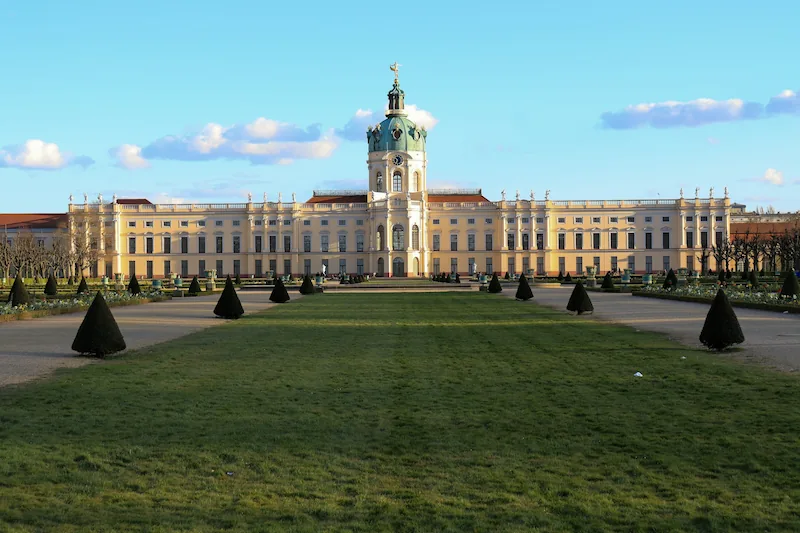
Charlottenburg is the best area to stay in Berlin if you want the city to feel more composed. Streets are broader, hotels are generally more comfortable, and the mood is closer to classic European city living than Berlin’s improvised eastern districts. Kurfürstendamm, Savignyplatz, galleries, the zoo area, Bikini Berlin and Charlottenburg Palace give the west a cultural logic of its own. It is not the place to sleep if your trip revolves around Kreuzberg bars or Friedrichshain clubs, but it is excellent for comfort, luxury, shopping and quieter evenings.
Why stay here: Stay in Charlottenburg if you value comfort, classic hotels, shopping, cultural institutions, room quality and quieter nights over being close to Berlin’s alternative east-side energy.
Best for: Luxury travelers, comfort-focused couples, design shoppers, west Berlin culture, older visitors, families wanting room quality, and quiet but connected stays.
Pros
Strongest area for classic comfort, luxury hotels and polished mid-range stays.
Good for travelers who prefer quiet evenings and mature restaurant streets.
Excellent for Kurfürstendamm, Berlin Zoo, Savignyplatz, Bikini Berlin and Charlottenburg Palace.
Often better room quality than similarly priced central Mitte hotels.
Good choice for older travelers, couples, families and culture-focused west Berlin stays.
Useful when you want a refined base without leaving the city’s transport network.
Cons
Less convenient for Kreuzberg, Neukölln and Friedrichshain evenings.
Can feel too traditional if you came for Berlin’s rawer creative side.
Some western addresses add long transfers to Museum Island and East Side Gallery.
Budget choices can be dated if selected only by price.
Not ideal for travelers who want their hotel area to feel visibly alternative or late-night.
Nearby highlights
Easy access to Kurfürstendamm shopping and classic west Berlin restaurants.
Close to Berlin Zoo, Kaiser Wilhelm Memorial Church, Bikini Berlin and the zoo station area.
Good base for Charlottenburg Palace and western museums.
Savignyplatz offers a calmer evening dining scene without long transfers.
Better hotel comfort and room size than many central areas.
Useful for travelers who want Berlin without late-night street noise.
Budget
B&B Hotel Berlin-Charlottenburg – A simple budget hotel near Charlottenburg transport links and local western streets. Why we recommend: It keeps costs controlled while still giving access to the west Berlin network. Check availability
Hotel Castell am Kurfürstendamm – A modest older-style hotel close to Ku'damm and U-Bahn stations. Why we recommend: Useful for travelers who want a central west address without paying for contemporary design. Check availability
Hotel Pension Kima – A budget pension near Kurfürstendamm in a classic Berlin building. Why we recommend: It is a low-cost way to stay in a strong western location if expectations stay realistic. Check availability
Mid
Scandic Berlin Kurfürstendamm – A reliable mid-range hotel near Ku'damm, shopping streets, and western transport. Why we recommend: It offers a practical comfort level without pushing into luxury pricing. Check availability
Hotel Q! Berlin – A design hotel on Kurfürstendamm with sharper style than most standard mid-range options. Why we recommend: Good for travelers who want west Berlin convenience without a conventional chain feel. Check availability
SANA Berlin Hotel – A modern hotel near the Ku'damm area with rooms and apartments that suit longer stays. Why we recommend: Its room flexibility makes it stronger than many classic west Berlin hotels for families or longer trips. Check availability
Upscale
Hotel Zoo Berlin – A stylish upscale hotel on Kurfürstendamm with strong design identity and a lively lobby scene. Why we recommend: One of the best boutique-feeling choices in west Berlin. Check availability
Waldorf Astoria Berlin – A luxury tower hotel near Zoologischer Garten with large rooms and strong city views. Why we recommend: Best for travelers who want full-service luxury in Berlin’s western center. Check availability
Sir Savigny Hotel, part of Sircle Collection – A boutique hotel near Savignyplatz with literary styling and a more intimate west Berlin feel. Why we recommend: It gives Charlottenburg character without losing the comfort of a premium stay. Check availability
Friedrichshain
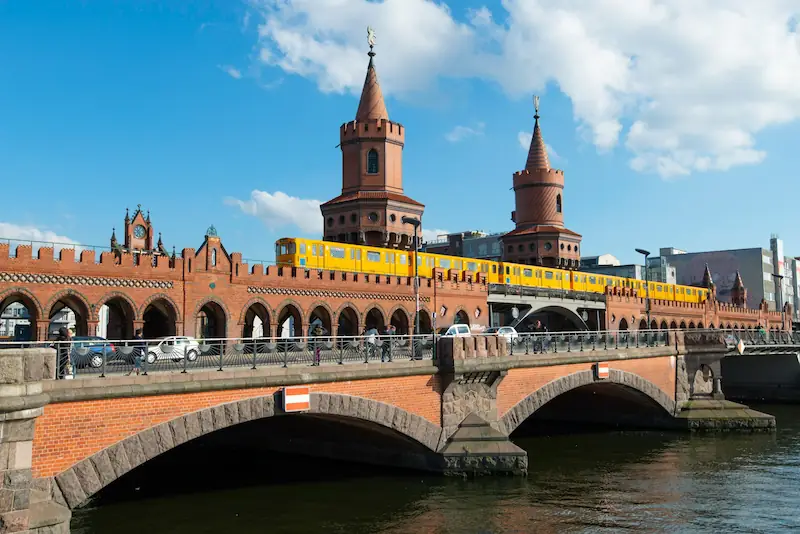
Friedrichshain is a good place to stay when Berlin’s late energy is part of the reason you are coming. The district combines club culture, the East Side Gallery, RAW-Gelände, riverside hotels, Boxhagener Platz, event venues and fast connections back toward Mitte and Kreuzberg. It can feel raw, loud and uneven, but that is also why many travelers choose it. Staying here works best when you select the exact block carefully: a riverside hotel and a room near a loud nightlife artery can produce completely different trips.
Why stay here: Stay in Friedrichshain if nightlife, music, East Berlin atmosphere, the East Side Gallery and easy access to Kreuzberg matter more than quiet polish.
Best for: Nightlife travelers, music trips, younger couples, groups, East Berlin focus, event stays and trips where late evenings matter.
Pros
Best base for many nightlife-focused Berlin trips.
Easy access to East Side Gallery, Oberbaum Bridge, RAW-Gelände and Kreuzberg.
Strong transport from Warschauer Straße, Ostbahnhof, Ostkreuz and nearby S-Bahn lines.
Good selection of design-forward, event-friendly and affordable hotels.
Works well for younger travelers, groups and music trips.
Riverside hotels can make Friedrichshain more comfortable than its reputation suggests.
Cons
Noise can be an issue near major nightlife, arenas and station areas.
Some blocks feel less polished than first-time visitors expect.
Not ideal for families seeking calm evenings.
Farther from Charlottenburg and west Berlin cultural sights.
Door policies, late nights and transit timing can make overplanned nightlife trips fragile.
Nearby highlights
Walkable access to the East Side Gallery and Oberbaum Bridge.
Easy crossing into Kreuzberg for bars, food and canal life.
Close to RAW-Gelände, clubs, music venues and late-night streets.
Good S-Bahn links toward Alexanderplatz and central Berlin.
Riverside hotels make the area more comfortable than its rougher image suggests.
Boxhagener Platz gives the district a more local daytime rhythm.
Budget
Schulz Hotel Berlin Wall at the East Side Gallery – A clean, practical hotel beside the East Side Gallery and Ostbahnhof. Why we recommend: It is one of the most convenient budget-friendly stays for Wall history and transport. Check availability
Moxy Berlin Ostbahnhof – A casual, modern hotel by Ostbahnhof with easy S-Bahn access. Why we recommend: Good for travelers who want simple rooms and strong transport near Friedrichshain. Check availability
a&o Berlin Friedrichshain – A budget hotel-hostel option near Ostkreuz and Friedrichshain nightlife. Why we recommend: Best when keeping costs low matters more than design or quiet. Check availability
Mid
Michelberger Hotel – A creative, design-conscious hotel near Warschauer Straße and the river. Why we recommend: It captures Friedrichshain’s personality better than most hotels in the area. Check availability
Hotel Indigo Berlin - East Side Gallery – A polished lifestyle hotel near the river, East Side Gallery, and Mercedes-Benz Arena. Why we recommend: A strong choice when you want Friedrichshain access with more comfort and consistency. Check availability
Holiday Inn Berlin - City East Side – A reliable hotel close to the East Side Gallery and arena area. Why we recommend: It works well for events, concerts, and travelers who prefer chain predictability. Check availability
Upscale
nhow Berlin – A bold riverside hotel with music-focused design and views across the Spree. Why we recommend: The best upscale fit if Friedrichshain’s creative and nightlife identity is central to the stay. Check availability
Locke at East Side Gallery – Apartment-style design accommodation by the Spree with strong access to Friedrichshain and Kreuzberg. Why we recommend: A smart choice for longer or more independent stays near the river. Check availability
Emma by Schulz Hotel Berlin Friedrichshain – A more upgraded, room-focused option connected to the East Side Gallery hotel cluster. Why we recommend: Useful when you want the same location logic as Schulz with a more comfortable feel. Check availability
Neukölln
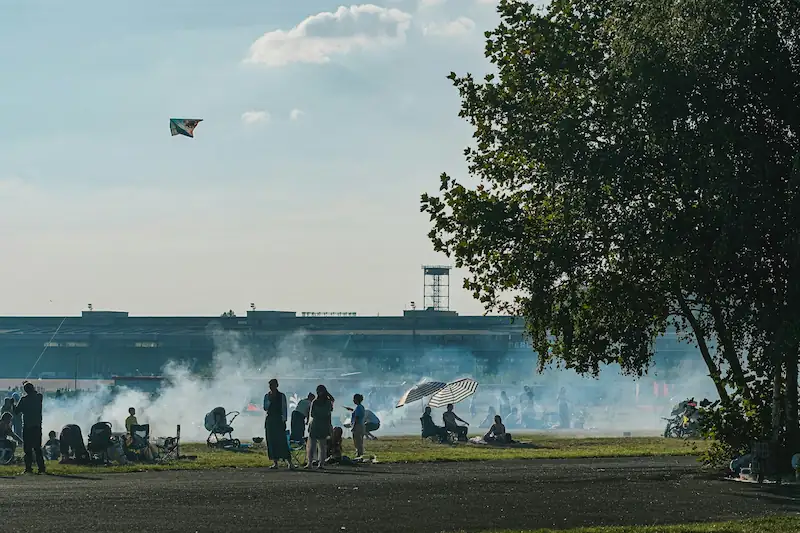
Neukölln is not the easiest Berlin base, but it can be one of the most rewarding for travelers who already understand what they are choosing. The district is informal, multicultural, creative and uneven in a way that feels more residential than curated. Staying here puts you close to Tempelhofer Feld, newer bars, casual food, cafés and the Kreuzkölln edge near the canal. It is not the default answer for a first short stay, but it becomes valuable for repeat visitors, longer stays, value-conscious travelers and anyone who wants Berlin evenings close to home.
Why stay here: Stay in Neukölln if you want local texture, food, bars, better value and Tempelhofer Feld nearby, and you do not need the city’s main sights at your door.
Best for: Repeat visitors, budget-aware travelers, creatives, longer stays, food and bar trips, and anyone comfortable with a less polished base.
Pros
Strong local food, café and bar culture.
Better value than many central neighborhoods.
Close to Tempelhofer Feld and the Kreuzberg-Neukölln canal edge.
Good for repeat visitors who want a less obvious base.
Works well for longer stays and independent travelers.
Useful when budget matters but you still want a strong local evening scene.
Cons
Not ideal for a first short trip focused on major sights.
Hotel quality and street feel vary more than in central districts.
Some areas require more careful station and street selection.
Luxury hotel choice is limited.
Southern or poorly connected addresses can make sightseeing feel unnecessarily slow.
Nearby highlights
Easy access to Tempelhofer Feld for open-air time and local rhythm.
Close to Weserstraße, Schillerkiez and the Kreuzkölln café-bar edge.
Good casual food density without central prices.
Useful for travelers who want to stay near local evenings rather than commute to them.
Better-value accommodation when exact location is chosen carefully.
Strong connection to Kreuzberg by U-Bahn, bus, bike or canal-side movement.
Budget
Motel Plus Berlin – A simple budget hotel near Neukölln transport and local streets. Why we recommend: One of the more practical low-cost options if you want to stay inside Neukölln itself. Check availability
Erlanger Hof – A straightforward hotel near Rathaus Neukölln U-Bahn with courtyard-facing rooms. Why we recommend: Its station access makes Neukölln easier than many cheaper outer stays. Check availability
Premier Inn Berlin City Süd – A simple chain hotel in southern Neukölln with easier airport-side logistics than central charm. Why we recommend: Useful for price-sensitive stays when airport or south-side access matters. Check availability
Mid
Hüttenpalast – A distinctive small hotel on the Kreuzkölln edge with indoor cabins and more conventional rooms. Why we recommend: It fits Neukölln’s local texture better than standard business hotels. Check availability
Estrel Berlin – A large hotel and convention complex in Neukölln with extensive facilities and event access. Why we recommend: Best when you need space, event logistics, or a full-service hotel in this part of Berlin. Check availability
Nena Apartments Hermannplatz – Apartment-style accommodation near the Kreuzberg-Neukölln border and strong U-Bahn links. Why we recommend: A good fit for travelers who want local life and more independence than a hotel room. Check availability
Upscale
Aeronaut Serviced Apartments Neukölln-Kreuzberg powered by Pearl 1 – Serviced apartments close to the Kreuzkölln area with practical layouts for longer stays. Why we recommend: One of the better upgraded options when you want Neukölln texture with more room control. Check availability
Schillinger-Berlin am Tempelhofer Feld – Apartment-style accommodation near Tempelhofer Feld with a more residential stay profile. Why we recommend: Strong for travelers who want the open-space rhythm of Neukölln without hotel formality. Check availability
The Rix Studios & Suites – Self-contained studio-style accommodation in Neukölln for independent urban stays. Why we recommend: A better fit than a standard hotel when privacy, space, and local routine matter. Check availability
Where to stay in Berlin for the first time
First-time visitors should choose convenience before personality unless they have enough days to absorb Berlin’s scale. The best area is usually Mitte, with Kreuzberg or Prenzlauer Berg as better choices if you want the trip to feel more local from the first evening. Charlottenburg can also work for first-timers who prefer hotel comfort and quieter nights, but it shifts the trip west.
Choose Mitte for 2 or 3 nights, heavy sightseeing, museums, memorials and the easiest first map of Berlin.
Choose Kreuzberg if you still want good access but care more about food, bars, canals and evening life.
Choose Prenzlauer Berg if you want a calmer local base and do not mind short transit rides into the center.
Choose Charlottenburg if comfort, larger rooms, shopping, zoo access and quieter nights matter more than being near east-side nightlife.
Avoid choosing Neukölln for a first short stay unless you already know why you want that atmosphere.
Treat Schöneberg, Tiergarten or Potsdamer Platz as specialist first-trip bases rather than default choices.
Stay within a short walk of U-Bahn, S-Bahn or tram links; the district name alone is not enough.
TravelerType
BestArea
Why
First trip, 2–3 nights
Mitte
Lowest routing friction and strongest access to core sights.
First trip, local feel
Kreuzberg
Better evenings, food and neighborhood texture while staying connected.
First trip, calmer stay
Prenzlauer Berg
Residential rhythm with easy links into central Berlin.
First trip, comfort focus
Charlottenburg
Better room quality, quieter nights and strong west Berlin culture.
Where to stay in Berlin with family
Families usually do best in Prenzlauer Berg, Charlottenburg or quieter parts of Mitte. The right base should reduce long transfers, provide easy food options, make playgrounds or parks reachable, and give children space between museums and memorials. Friedrichshain, Kreuzberg and Neukölln can work for older children or longer stays, but exact street choice matters more.
Prenzlauer Berg is the best all-round family area thanks to calmer streets, cafés, markets, playgrounds and apartment-style stays.
Charlottenburg works well for families who want bigger rooms, Berlin Zoo, shopping, classic restaurants and quieter evenings.
Mitte is practical for short family trips if you choose a quiet hotel street rather than a busy square or station edge.
Kreuzberg can work with older children if you want food, canals and a more local evening base, but avoid noisy nightlife pockets.
Apartment-style hotels can be more useful than classic hotel rooms for breakfasts, naps, laundry and longer stays.
Avoid nightlife-heavy parts of Friedrichshain and central Neukölln if sleep quality matters more than evening energy.
Check walking distance to the nearest station carefully; tired children make Berlin’s scale feel much larger.
Need
Best area
Watch out for
Calm local base
Prenzlauer Berg
Outer addresses that add transit time
Hotel comfort and room size
Charlottenburg
Longer transfers to east Berlin
Short sightseeing trip
Mitte
Busy squares, station edges and higher hotel prices
Food and local atmosphere
Kreuzberg
Nightlife streets and uneven hotel comfort
Where to stay in Berlin for nightlife
For nightlife, the best area depends on the kind of night you want. Friedrichshain is the strongest base for clubs and music venues, Kreuzberg is better for bars, food and flexible late evenings, Neukölln works for a more local bar scene, and Schöneberg matters for LGBTQ+ nightlife and older west Berlin evening culture even if it is not one of the six main hotel cards.
Stay in Friedrichshain for clubs, music venues, the East Side Gallery area and late-night transport around Warschauer Straße.
Stay in Kreuzberg for bars, restaurants, canal-side evenings and easier movement into Neukölln or Friedrichshain.
Stay in Neukölln if you want a more local bar scene and are comfortable with less polished streets and more variable hotel quality.
Consider Schöneberg if LGBTQ+ nightlife, classic bars and west Berlin evening streets matter more than sightseeing efficiency.
Choose your exact street carefully; the difference between lively and sleepless can be one or two blocks.
Do not stay in Charlottenburg for nightlife unless you prefer classic restaurants, mature bars and calmer west Berlin evenings.
Mitte works for a balanced trip, but it is rarely the most interesting nightlife base.
Night style
Best area
Trade Off
Clubs and music
Friedrichshain
More noise, door-policy uncertainty and rougher street texture
Bars and food
Kreuzberg
Hotel comfort varies by street
Local late scene
Neukölln
Less convenient for sightseeing
LGBTQ+ and classic west nightlife
Schöneberg
Better handled as a specialist base than a default first-trip area
Where to stay in Berlin on a budget
Berlin still offers workable budget stays, but the cheapest option is not always the best value. A low room rate loses its advantage if you spend the trip making long transfers from an awkward edge of the city. For budget travelers, the best strategy is usually a simple hotel near a strong station rather than the lowest possible price in a disconnected district.
Look first at simple hotels or hostels around Alexanderplatz, Ostbahnhof, Friedrichshain and selected Neukölln addresses.
Mitte has budget options, but the best-located ones book early and often feel functional rather than atmospheric.
Friedrichshain can offer better value if nightlife, the East Side Gallery and S-Bahn access fit your trip.
Neukölln is useful for budget stays when the exact U-Bahn connection is strong and you are comfortable with a more local base.
Charlottenburg sometimes gives better-value rooms than central Mitte, especially if you want comfort more than nightlife.
Wedding, Moabit and airport-side areas can be cheaper, but only make sense with a clear transport reason.
Avoid distant outer hotels that look cheap but add repeated transfer time.
For longer trips, serviced apartments can beat budget hotels if they reduce daily food, laundry and room-size pressure.
Budget strategy
Best area
Risk
Lowest friction
Mitte or Alexanderplatz edge
Higher prices and less atmosphere
Better value with nightlife
Friedrichshain
Noise near stations and venues
Local value
Neukölln
More variable street and hotel quality
Comfort value
Charlottenburg
Longer transfers to east and south Berlin
Lowest price only
Wedding, Moabit or outer stations
Can cost more in time than it saves in money
Where to stay depending on your Berlin trip
The shorter the trip, the more your hotel location should protect time. The longer the stay, the more it makes sense to trade central efficiency for neighborhood texture, quieter streets, better room quality or a more specific evening scene. Berlin rewards strong area choices, but punishes vague ones.
Label
Stay
Avoid
Why
1 night or airport logistics
Mitte near Hauptbahnhof, Alexanderplatz with strong rail access, or a BER-side hotel only for very early flights
Choosing a distant neighborhood for character when you will not have time to use it
With one night, transport friction matters more than local atmosphere.
2 nights
Mitte
Neukölln, Wedding or distant outer addresses
With only two nights, the cost of extra transfers is too high unless nightlife is the whole point.
3 days
Mitte or Kreuzberg
Hotels chosen only for low price beyond the Ringbahn
You need either maximum sightseeing efficiency or a base that gives the evenings enough value.
4 to 5 days
Kreuzberg, Prenzlauer Berg or Charlottenburg
Treating Mitte as mandatory
At this length, a stronger neighborhood base can improve the trip more than shaving minutes off every sight.
1 week
Prenzlauer Berg, Kreuzberg, Neukölln or Charlottenburg
Small rooms in the most expensive central pockets
Longer stays benefit from cafés, groceries, calm streets and a district that supports daily routines.
Family trip
Prenzlauer Berg, Charlottenburg or quiet Mitte
Friedrichshain nightlife pockets and noisy Kreuzberg or Neukölln streets
Sleep quality, room size, easy food and playground access matter more than being in the most exciting area.
Nightlife-focused trip
Friedrichshain, Kreuzberg, selected Neukölln or Schöneberg
Charlottenburg unless you want calmer west Berlin nights
Being near the right late-night corridor matters more than being close to daytime landmarks.
Luxury or comfort-focused stay
Charlottenburg, Mitte or selected Tiergarten/Potsdamer Platz hotels
Choosing a nightlife district just because it sounds more Berlin
Berlin’s strongest comfort hotels cluster around the center and west, not necessarily in the liveliest districts.
Return trip
Neukölln, Prenzlauer Berg, Charlottenburg, Kreuzberg or Schöneberg
Repeating a central sightseeing base by default
Once the major sights are familiar, a more specific district gives Berlin greater depth.
How to choose the right hotel in Berlin
Once you have chosen the area, the exact hotel location matters more than in many European capitals. Berlin districts are large, and the wrong street can turn a good neighborhood choice into a noisy, inconvenient or oddly disconnected stay. The best hotel is the one where area, station, street, room style and trip purpose all reinforce each other.
Topic
WhatToDo
WhatToAvoid
WhyItMatters
Check the nearest station
Choose hotels within a short walk of a useful U-Bahn, S-Bahn, tram or major bus connection, and check whether the line goes where you will actually go most.
Booking a fashionable district name without checking actual transit links.
Berlin’s distances turn weak station access into repeated daily friction.
Read the street, not just the area
Use map view to see whether the hotel sits on a side street, square, nightlife strip, transport artery or station edge.
Assuming all of Kreuzberg, Friedrichshain, Neukölln or Mitte feels the same at night.
Noise, safety perception and atmosphere vary sharply within the same neighborhood.
Match the base to the number of nights
Stay central for 1–3 nights, then consider stronger neighborhood bases once you have enough time to use them.
Choosing a distant local base for a very short trip or staying in expensive central rooms for a full week by default.
Berlin’s best area changes with trip length more than in compact cities.
Balance room quality against location
Accept a slightly less central area if the hotel is significantly calmer, better designed or more spacious.
Paying central prices for a cramped room when your trip is long enough to use a local base.
Berlin rewards comfortable neighborhood stays once you have more than three days.
Use apartment hotels carefully
Choose serviced apartments for families, longer trips or independent stays near strong transit and everyday food options.
Booking apartment-style accommodation far from useful restaurants, groceries or stations.
Extra space only helps if the location supports daily routines.
Be careful around major stations
Stay near transport hubs when speed matters, but check the immediate block and evening feel.
Assuming every station-adjacent hotel offers a pleasant base at night.
Some station areas are highly practical by day and less appealing as a place to return at night.
Book earlier for distinctive hotels
Reserve early for boutique hotels, quiet central stays, family rooms, apartment hotels, and Kreuzberg or Prenzlauer Berg weekends.
Waiting until only generic, noisy or poorly located options remain.
Berlin has many hotels, but the best location-and-character combinations are limited.
Treat price by total trip cost
Compare room savings against extra transit time, taxis, late-night transfers and the cost of eating away from your preferred area.
Picking the cheapest room without calculating how often you will cross the city.
A cheaper hotel can become bad value if it makes every day harder.
Match hotel style to trip style
Pick classic comfort in Charlottenburg, design in Mitte or Friedrichshain, local texture in Kreuzberg, space in Prenzlauer Berg and value in Neukölln.
Choosing a hotel category that fights the reason you selected the neighborhood.
The best Berlin stays make the area and the accommodation reinforce each other.
FAQ: where to stay in Berlin
These answers focus on accommodation decisions: the best area, the safest and most convenient choices, where to stay by trip style, and how to avoid choosing a Berlin hotel that makes the city harder than it needs to be.
What is the best area to stay in Berlin for first-time visitors?
Mitte is the best area for most first-time visitors because it gives the easiest access to Museum Island, Brandenburg Gate, the Reichstag, major memorials and strong public transport. It is especially useful for 2- or 3-night stays.
Where should I stay in Berlin for 3 days?
For 3 days, stay in Mitte if sightseeing efficiency is the priority, or Kreuzberg if you want better food and evening atmosphere while staying connected. Prenzlauer Berg works if you prefer calm local life, but avoid far-out budget hotels unless the savings are significant and the station connection is excellent.
Where should I stay in Berlin for 4 or 5 days?
For 4 or 5 days, Kreuzberg, Prenzlauer Berg and Charlottenburg become stronger alternatives to Mitte. You have enough time to use a neighborhood base, so the best choice depends on whether you want food and bars, family-friendly calm or classic comfort.
Where should I stay in Berlin for one week?
For one week, prioritize a livable district over the most central address. Prenzlauer Berg, Kreuzberg, Charlottenburg and selected Neukölln addresses work well because they give cafés, restaurants, groceries and a daily rhythm beyond sightseeing.
Is Mitte worth the higher hotel price?
Mitte is worth paying for if your trip is short, museum-heavy or focused on major landmarks. For longer stays, Kreuzberg, Prenzlauer Berg or Charlottenburg can offer a better overall experience if the transit connection is strong.
What part of Mitte is best to stay in?
Hackescher Markt, Museum Island edges, Gendarmenmarkt and northern Friedrichstraße are usually more useful or atmospheric than the busiest Alexanderplatz blocks. Alexanderplatz is practical for transit, but not the most refined central hotel area.
Is Alexanderplatz a good place to stay in Berlin?
Alexanderplatz is convenient for transport and budget-friendly central hotels, but it is not Berlin’s most atmospheric area. It works for short stays, value-conscious travelers and people who want quick connections, but not for those seeking charm or quiet evenings.
Where should I stay in Berlin for nightlife?
Friedrichshain is best for clubs and music venues, while Kreuzberg is better for bars, food and a flexible evening scene. Neukölln can work for local bars, and Schöneberg is important for LGBTQ+ nightlife and classic west Berlin evening streets.
Is Friedrichshain a good area to stay in?
Friedrichshain is a good area if nightlife, East Side Gallery access, music venues and East Berlin atmosphere matter. It is less suitable for families, light sleepers or travelers who want a polished hotel street.
Is Kreuzberg a good area to stay in Berlin?
Kreuzberg is one of the best areas if you want food, bars, canals, markets and local texture while staying reasonably connected to central Berlin. The exact street matters because some pockets are lively and noisy while others feel calmer.
Is Prenzlauer Berg a good place to stay?
Prenzlauer Berg is excellent for families, couples and longer stays. It is leafy, café-led and calmer than Kreuzberg or Friedrichshain, with good links into Mitte, though it is not the most efficient base for a very short museum-heavy trip.
Is Charlottenburg a good area to stay in Berlin?
Charlottenburg is a strong choice for comfort, classic hotels, shopping, the zoo area, Savignyplatz and quieter evenings. It is less convenient for Kreuzberg, Neukölln and Friedrichshain nightlife, but often better for room quality and calmer stays.
Is Neukölln a good area to stay in Berlin?
Neukölln is good for repeat visitors, longer stays, value-conscious travelers and people who want local food, bars and Tempelhofer Feld nearby. It is usually not the best choice for a first short stay because sightseeing takes more planning and hotel quality varies more.
Should I stay in East Berlin or West Berlin?
Stay east or south-east if you want nightlife, creative districts, Wall history and local food scenes. Stay west in Charlottenburg if you prefer classic comfort, shopping, quieter evenings and stronger traditional hotel options.
What is the best area to stay in Berlin with family?
Prenzlauer Berg is usually the best family base because it is calmer, leafy, café-led and practical for everyday routines. Charlottenburg is another strong choice if you want larger rooms, quieter evenings and access to the zoo and west Berlin sights.
Where should families avoid staying in Berlin?
Families should be careful with nightlife-heavy parts of Friedrichshain, noisy Kreuzberg streets, central Neukölln bar areas and station-edge hotels. These areas can still work, but quiet street selection matters more than the district name.
Where can I stay in Berlin on a budget?
Look at simple hotels or hostels around Alexanderplatz, Friedrichshain, Ostbahnhof, selected Neukölln addresses and sometimes Charlottenburg. The key is not just price: a cheap hotel far from useful transport can make Berlin feel much harder than it should.
What is the safest area to stay in Berlin?
Mitte, Prenzlauer Berg and Charlottenburg are among the easiest areas for visitors who want a comfortable, predictable base. Kreuzberg, Friedrichshain and Neukölln can also be safe choices, but the exact street matters more for noise and night-time feel.
Is Berlin walkable from one hotel base?
Berlin is walkable within neighborhoods, but not across the whole city. Choose a hotel near strong public transport and plan to explore each district on foot once you arrive there.
Should I stay near Berlin Hauptbahnhof?
Staying near Hauptbahnhof is practical for train logistics, early departures and short business-style stays, but it is not Berlin’s most atmospheric leisure base. It works best when transport convenience matters more than neighborhood life.
Should I stay near Berlin Brandenburg Airport?
Stay near BER only for a very early flight, a late arrival or a pure transit night. For a real Berlin trip, the airport area is too far from the city’s main neighborhoods and usually costs more in lost time than it saves.
Is Potsdamer Platz a good place to stay?
Potsdamer Platz is practical, central-west and useful for business, events or a polished hotel stay, but it can feel less local than Kreuzberg, Prenzlauer Berg or Charlottenburg. It is a convenience base, not the most characterful Berlin choice.
Is Tiergarten a good area to stay in Berlin?
Tiergarten edges can work well for luxury hotels, business travel, park access and central-west positioning. The area is spacious and calm, but it has less evening neighborhood density than Kreuzberg, Prenzlauer Berg or Charlottenburg.
Is Schöneberg a good place to stay in Berlin?
Schöneberg can be a good specialist base for LGBTQ+ nightlife, established west Berlin streets, calmer restaurants and access toward Charlottenburg. It is not essential as a main first-trip area, but it is worth considering if its evening culture matches your trip.
Is Wedding a good area to stay in Berlin?
Wedding can offer value and a more local feel, but it is usually better for repeat visitors or travelers with a specific reason to stay there. First-time visitors should only choose it if the station connection is excellent and the hotel value is clearly strong.
Is Moabit a good area to stay in Berlin?
Moabit can be practical near Hauptbahnhof or for better-value stays close to central transport, but it is not as immediately rewarding as Mitte, Kreuzberg or Prenzlauer Berg. It works best when logistics outweigh neighborhood atmosphere.
Where should couples stay in Berlin?
Couples should choose Kreuzberg for food and bars, Prenzlauer Berg for a calmer café-led stay, Charlottenburg for comfort and classic restaurants, or Mitte for sightseeing efficiency. The best choice depends on whether evenings or landmark access matter more.
Where should luxury travelers stay in Berlin?
Luxury travelers usually do best in Mitte, Charlottenburg or selected Tiergarten and Potsdamer Platz hotels. Charlottenburg often gives a more composed west Berlin feel, while Mitte gives the strongest access to landmarks and museums.
Where should solo travelers stay in Berlin?
Solo travelers usually do well in Mitte for ease, Kreuzberg for food and bars, or Prenzlauer Berg for calm routines. Friedrichshain works if nightlife is a priority, while Neukölln is better for confident repeat visitors.
Where should older travelers stay in Berlin?
Older travelers often prefer Mitte for convenience or Charlottenburg for comfort, quieter streets and better traditional hotel options. Prenzlauer Berg can also work if a calmer local base matters more than immediate landmark access.
Where should I stay in Berlin without a car?
Most visitors should stay without a car and choose a hotel near U-Bahn, S-Bahn or tram access. Mitte, Kreuzberg, Prenzlauer Berg, Charlottenburg and Friedrichshain all work well without a car if the exact station connection is strong.
Where should I stay in Berlin for Christmas markets?
Mitte and Charlottenburg are the most practical areas for Christmas-market trips because they keep you close to central sights, shopping streets and classic seasonal settings. Prenzlauer Berg can work for a calmer winter base.
Where should I stay in Berlin in summer?
In summer, Kreuzberg, Prenzlauer Berg and Neukölln become more appealing because cafés, canals, parks and Tempelhofer Feld matter more. Mitte remains efficient, but a local base can make warm evenings feel more rewarding.
Where should I stay in Berlin if I want museums?
Stay in Mitte for Museum Island, central memorials and the easiest museum-heavy itinerary. Charlottenburg is also strong for west Berlin culture, photography, design, the palace area and a quieter hotel base.
What is the biggest mistake when choosing a Berlin hotel?
The biggest mistake is choosing by district name or low price without checking the exact street and station. Berlin is large, and a hotel that looks close on a map can create 30- to 45-minute transfers every day.
The best place to stay in Berlin is the area that protects your time while giving your evenings, room quality and daily routines the rhythm you actually want.
Keep planning your Berlin trip
Once you have chosen where to stay, use the Berlin city guide, things to do guide and itinerary pages to shape your days around the neighborhood rhythm that fits your trip.
Turn the right neighborhood into the right itinerary
Once you know where to stay in Berlin, the next step is structuring the rest of your trip around that base. Use the planner to build a route that fits your pace, priorities, and how you actually want your days to unfold.