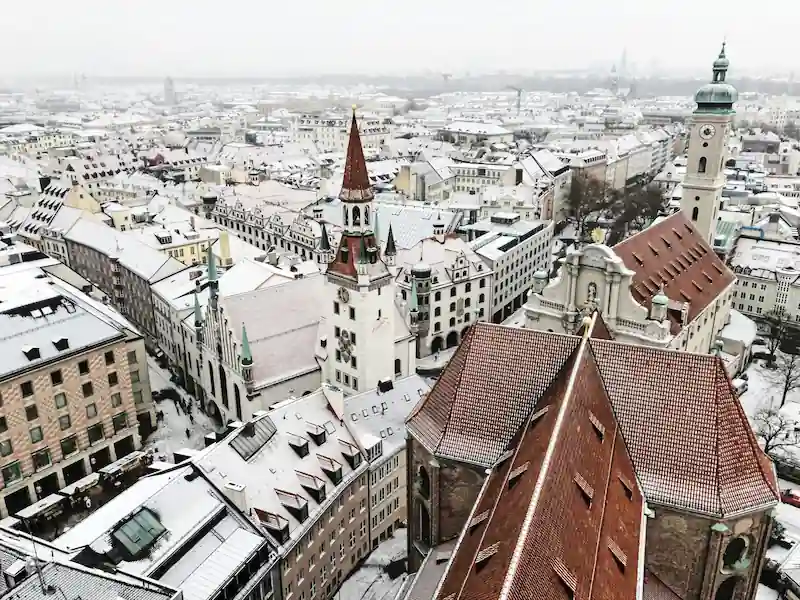
Where to stay in Munich
Find the best neighborhoods and hotels in Munich.
Open page →
Plan your trip to Munich with a clear sense of how the city works: where to stay, what to prioritize, how to sequence the old town, museums, beer gardens, parks, modern landmarks, and Bavaria-facing day trips. Munich is strongest when Marienplatz, the Residenz, Maxvorstadt museums, the English Garden, Nymphenburg, Olympiapark, BMW Welt, local neighborhoods, and seasonal rituals are organized into a deliberate stay rather than rushed into a checklist.
Find the best neighborhoods and hotels in Munich.
Open page →
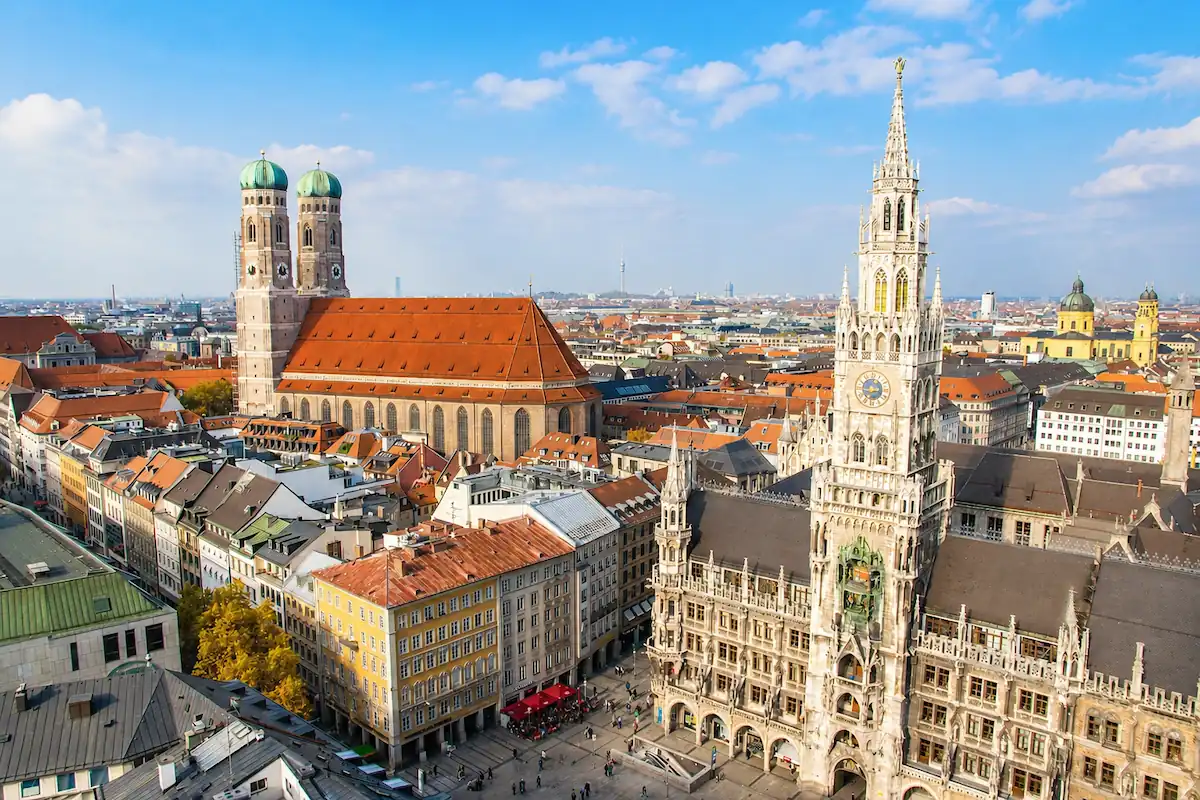
Prioritize the activities that deserve your time in Munich.
Open page →
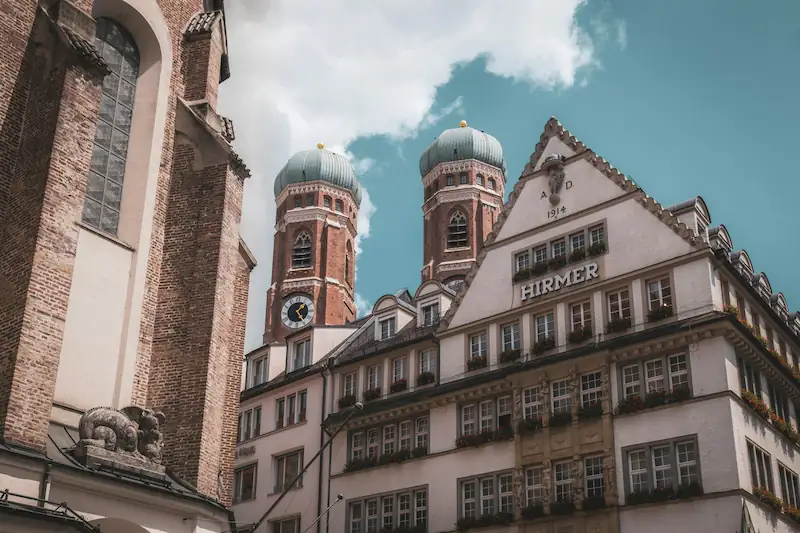
2 Days in Munich Itinerary: Best First-Time Weekend Route
Open itinerary →
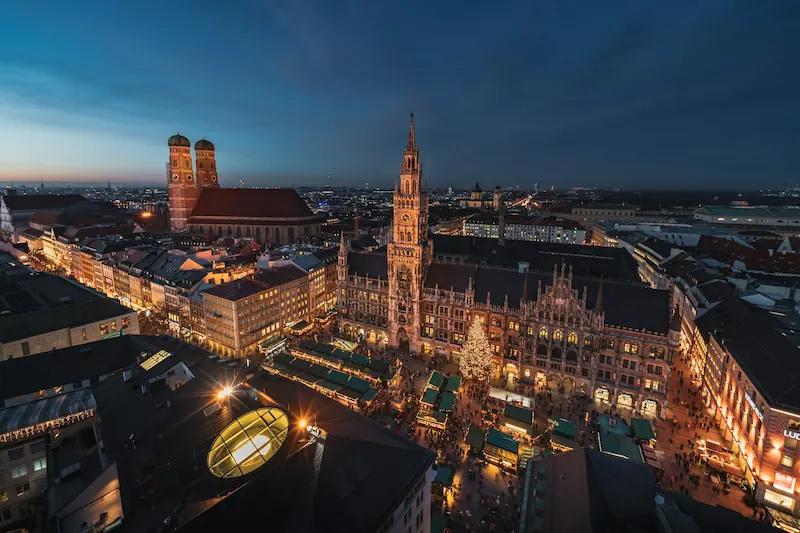
3 Days in Munich Itinerary: Best First-Time Route
Open itinerary →
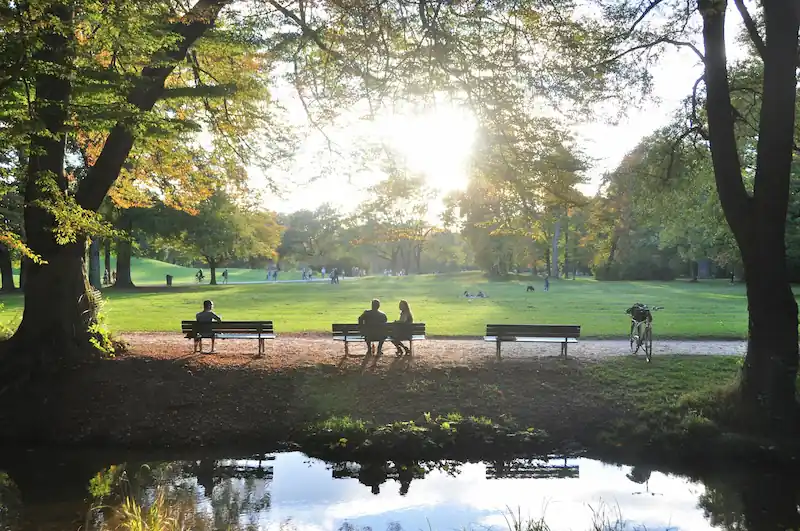
5 Days in Munich Itinerary: Best Culture, Palaces and History Route
Open itinerary →
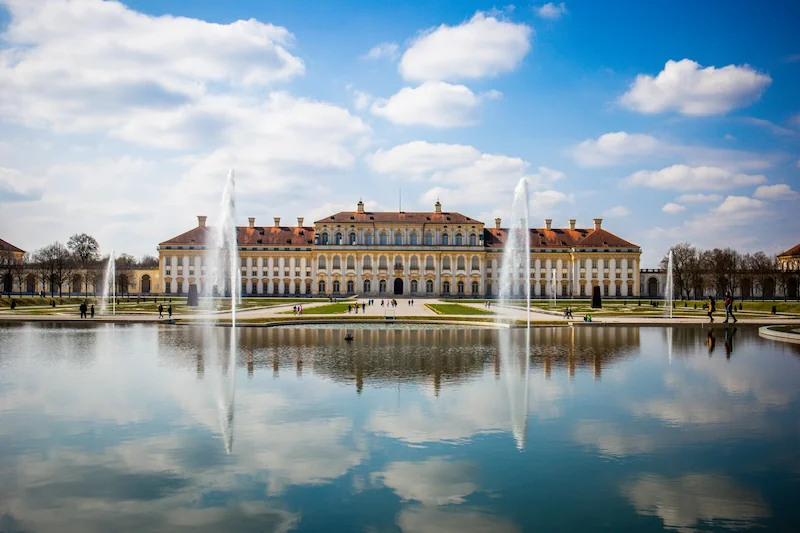
7 Days in Munich Itinerary: Best One-Week City Route
Open itinerary →
Munich is Germany’s most composed major city: historic at the center, cultured to the north, residential around its inner districts, open toward parks and the Isar, and strategically positioned for lakes, castles, Dachau, Salzburg, and the Bavarian Alps. Its travel logic depends on balance — formal squares and palaces, serious museums, outdoor pauses, Bavarian food culture, modern design, football, and carefully chosen excursions beyond the city.
Munich is worth structuring a trip around because it gives Germany a different register from Berlin, Hamburg, or Cologne: more ceremonial, more Bavarian, and more closely tied to landscape. The city combines Marienplatz, the Residenz, Frauenkirche, Viktualienmarkt, the Pinakothek museums, Nymphenburg Palace, Olympiapark, BMW Welt, the English Garden, Isar riverbanks, traditional beer gardens, and day-trip reach without losing its everyday rhythm. Late in the day, terrace conversation and the sound of beer glasses soften the formality of the old town.
Best time: May–June or September–early October for outdoor tables, parks, museums, and manageable sightseeing pressure; Advent for Christmas markets; Oktoberfest only if the festival is a deliberate priority.
Ideal trip length: 3 days for the core city; 5 days for museums, palaces, neighborhoods, and modern Munich; 7 days if you want lakes, castles, Dachau, Salzburg, or Alpine day trips without hollowing out the city itself.
Munich is one of Germany’s more expensive city breaks, especially for hotels in the Altstadt, around major trade fairs, near the main station during events, and across the city during Oktoberfest. Accommodation creates the largest pressure point; public transport, casual food, markets, museums, and beer gardens can still keep daily costs manageable. The smartest budget strategy is not simply staying far away, but matching the base to the trip: Altstadt for short first visits, Maxvorstadt for culture, Haidhausen or Schwabing for calmer longer stays, and Ludwigsvorstadt-Isarvorstadt only when logistics or value justify the immediate street context.
Munich works from a ceremonial core outward. The Altstadt holds Marienplatz, the Neues Rathaus, Frauenkirche, Peterskirche, Viktualienmarkt, the Residenz, Hofgarten, and the classic beer halls, while Maxvorstadt gathers the strongest museum concentration to the north. Around that core, Glockenbachviertel, Schwabing, Haidhausen, Lehel, and parts of Ludwigsvorstadt-Isarvorstadt soften the city into residential rhythms, cafés, restaurants, bars, station logistics, market life, and park access.
The Isar River shapes Munich’s eastern release, giving the city riverbanks, walking paths, bathing and sitting areas, and a more informal outdoor edge. The English Garden stretches north as a long civic landscape, while Nymphenburg, Olympiapark, BMW Welt, the Allianz Arena, and Hellabrunn pull visitors into distinct outer clusters. On clear days, the southern horizon points toward the Alps, making Munich feel closer to landscape than most large German cities.
Munich starts formally in the morning, with market deliveries, commuters, museum openings, and old-town visitors moving through polished streets. By afternoon, the city loosens into parks, riverbanks, beer gardens, palace grounds, museum cafés, and residential squares. In the evening, the center becomes more traditional again through beer halls and illuminated façades, while Glockenbachviertel, Haidhausen, Schwabing, and Westend carry a quieter local pulse.
Read Munich as five layers: old-town identity, royal and museum culture, everyday neighborhood life, outdoor civic space, and access to Bavaria beyond the city. A strong first trip touches each layer without letting day trips swallow Munich itself. The mental shift is simple: Munich is not only a place to see sights, but a base where civic order, cultural depth, food rituals, modern design, football, and open-air life meet.
Open the planner
Start with the Altstadt early, when Marienplatz, Frauenkirche, Peterskirche, Viktualienmarkt, Hofgarten, and the Residenz are easiest to read before the central streets thicken. Give Maxvorstadt its own half-day rather than attaching the Pinakotheken, Lenbachhaus, Brandhorst, Glyptothek, or Königsplatz casually to old-town sightseeing. Pair the Residenz with Hofgarten, Odeonsplatz, Theatinerkirche, and central churches so Munich’s royal, religious, and ceremonial layers feel connected. Use one outdoor anchor each day — the English Garden, Isar banks, Nymphenburg gardens, Olympiapark, Westpark, or a beer garden — to keep the trip from becoming too interior-heavy. Treat Olympiapark, BMW Welt, and BMW Museum as a modern Munich cluster; because the Olympic Tower is closed for renovation, use Olympiaberg and the park landscape for the current viewpoint logic. Place beer halls, beer gardens, and neighborhood dinners in the evening rhythm, when the city’s social atmosphere makes more sense than a rushed midday visit. Keep Dachau, Neuschwanstein, Salzburg, Zugspitze, and Alpine lake trips separate from major museum days because each changes the emotional and logistical energy of the trip. For a first visit, build Munich around two central days, one culture-and-neighborhood day, and optional landscape-facing time beyond the city.
Vibe: Historic, central, polished, and highly walkable, with Munich’s most important old-town sights close together.
Why go: This is the best base for a first trip if you want Marienplatz, Frauenkirche, Peterskirche, Viktualienmarkt, the Residenz, Hofgarten, Odeonsplatz, the Isar edge, and classic beer halls within easy walking distance. The district concentrates the city’s most recognizable landmarks into a compact and ceremonial frame.
Who it fits: First-time visitors, short stays, landmark-focused travelers, and anyone who wants maximum walkability.
Not for: Travelers seeking quiet evenings, lower hotel rates, or a stronger neighborhood feel.
Where to stay: Stay here for convenience and atmosphere, especially on a 2–3 day visit, but expect higher prices and heavier footfall.
Vibe: Cultured, intellectual, and well connected, with Munich’s strongest concentration of museums and university life.
Why go: Maxvorstadt is where Munich’s cultural depth becomes visible beyond the old town. The Alte Pinakothek, Pinakothek der Moderne, Museum Brandhorst, Lenbachhaus, Glyptothek, Königsplatz, university streets, cafés, and bookish side streets give the district a slower, more reflective rhythm.
Who it fits: Museum lovers, repeat visitors, solo travelers, and those who want central access without staying in the busiest streets.
Not for: Travelers who want postcard old-town views from the hotel doorstep or late-night nightlife outside the door.
Where to stay: Stay here if museums are a priority and you want an elegant, practical base between the Altstadt and Schwabing.
Vibe: Independent, social, and lived-in, with cafés, bars, design shops, restaurants, and easy access to the Isar.
Why go: Glockenbachviertel gives Munich a more contemporary and local texture. It is close enough to the center to stay practical but feels less formal, especially in the evening when small terraces and corner bars soften the grid.
Who it fits: Couples, food-focused travelers, younger visitors, and anyone who wants local evenings without losing central access.
Not for: Travelers who prefer grand hotels, landmark views, or the quietest possible nights.
Where to stay: Stay here for a more lived Munich base with strong dining and nightlife access south of the old town.
Vibe: Leafy, established, and quietly social, with access to the English Garden and a long cultural history.
Why go: Schwabing suits travelers who want Munich to feel residential rather than purely central. The district stretches toward the English Garden and carries a slower café rhythm, with wide streets, trees, market texture, and a softer northern light than the old town.
Who it fits: Longer stays, park lovers, families, and visitors who prefer calm evenings with good transport links.
Not for: Travelers who want to walk to every major old-town sight in minutes.
Where to stay: Stay here for space, neighborhood ease, and excellent access to the English Garden, especially on 4–5 day trips.
Vibe: Village-like, residential, and quietly elegant, with squares, local restaurants, and easy transit.
Why go: Haidhausen offers a gentler Munich across the river, close to the Deutsches Museum and well linked to the center through Ostbahnhof and tram connections. Its small squares and residential streets create a settled pace, with morning light catching stucco façades before the cafés fully open.
Who it fits: Families, longer stays, relaxed travelers, and those who want local restaurants over central spectacle.
Not for: Visitors who want immediate landmark density or a nightlife-heavy base.
Where to stay: Stay here for a calm, well-connected base that keeps the center accessible while giving evenings more neighborhood character.
Vibe: Practical, mixed, and central-adjacent, with station access, international restaurants, and Oktoberfest proximity.
Why go: This district is useful when logistics matter: the main station, Theresienwiese, the southern edge of the old town, and central transport connections sit close together. It is less polished than the Altstadt, and streets vary sharply, but its everyday movement gives a practical view of Munich’s working city and a convenient base for Oktoberfest or rail-heavy itineraries.
Who it fits: Rail arrivals, budget-conscious travelers, Oktoberfest visitors, and short stays needing easy transit.
Not for: Travelers looking for Munich’s most elegant setting or quietest residential atmosphere.
Where to stay: Stay here for convenience, station access, Oktoberfest logistics, and value, choosing carefully by street and hotel rather than treating the whole district as equal.
Vibe: Modern, spacious, architectural, and event-driven, with Olympic heritage and BMW attractions close together.
Why go: Olympiapark is not a classic neighborhood base for most first-timers, but it matters for Munich’s modern identity. The Olympic structures, landscaped slopes, BMW Welt, BMW Museum, Sea Life, event venues, and Olympiaberg form a distinct northern cluster with more open sky than the historic center. The Olympic Tower is closed for renovation, so the area should currently be framed around park space, architecture, BMW, events, and hill views rather than tower access.
Who it fits: Families, architecture fans, car enthusiasts, event visitors, and travelers prioritizing BMW Welt or Olympiapark.
Not for: Visitors who want old-town atmosphere, dense dining options, or easy walking access to central sights.
Where to stay: Stay here only if your trip is tied to an event, BMW, Olympiapark, or family attractions; otherwise visit as a half-day cluster.
The best things to do in Munich work best when layered: old-town landmarks first, royal and cultural depth next, then parks, beer gardens, modern architecture, football, and Bavaria-facing day trips. The city reveals itself through contrast — stone squares, museum rooms, garden paths, riverbanks, market counters, residential evenings, and broad northern spaces.
Planning tip: Protect one strong cultural block and one outdoor pause each day; Munich feels heavier when every hour is spent indoors or every day is outsourced to a distant excursion.
Marienplatz is Munich’s main orientation point and the easiest place to understand the old town’s ceremonial structure. The Glockenspiel adds a timed ritual to the square, but the real value is using the space to connect the Neues Rathaus, Peterskirche, Frauenkirche, Viktualienmarkt, Kaufingerstrasse, and surrounding lanes.
Tip: Arrive early for the square itself, then return for the Glockenspiel only if timing fits naturally; do not let it consume the whole morning.
The view from St Peter’s Church is one of the best ways to read Munich spatially. From above, the compact old town, church towers, tiled roofs, and market streets become easier to understand than they are at street level.
Tip: Go when visibility is clear; the view is far less valuable in haze or heavy rain.
Check guided tours →
Frauenkirche gives Munich its most recognizable skyline marker. The interior is restrained compared with some Bavarian churches, but the towers matter because they structure how the old town is seen from streets, viewpoints, and rooftops.
Tip: Combine it with Marienplatz, Alter Peter, and Viktualienmarkt rather than treating it as a separate detour.
Check guided tours →
The Residenz gives Munich its courtly depth: rooms, collections, chapels, treasury spaces, ceremonial interiors, and the adjacent Hofgarten that explain the city’s Bavarian confidence. It is the central attraction that most clearly turns Munich from a pretty old town into a serious cultural capital.
Tip: Do not treat it as a quick palace stop; it needs enough time to avoid becoming a blur of rooms.
Viktualienmarkt is the old town’s most useful everyday anchor, combining food shopping, quick meals, beer tables, and specialty stalls. It adds texture to the historic center because it is active rather than purely monumental.
Tip: Use it for lunch or a late-morning pause rather than just passing through between churches.
The English Garden shows how Munich releases pressure. Its paths, lawns, beer gardens, streams, and the Eisbach surfers shift the city from formal streets to open civic life, with rushing water cutting through the traffic edge.
Tip: Enter from the southern side for Eisbachwelle, then continue toward the Monopteros or Chinese Tower if you want the park to open up.
Check guided tours →
Nymphenburg expands Munich’s royal story beyond the old town. The palace is important, but the real value is the scale of the canal, gardens, pavilions, and long perspectives, which make the city feel more spacious and less compressed than the Altstadt.
Tip: Give the gardens time and avoid forcing Nymphenburg between unrelated central sights.
The Pinakothek museums make Maxvorstadt one of Germany’s strongest cultural districts. Rather than trying to see every collection, choose the museum that best matches your interests and let the district carry the rest of the half-day through cafés, Königsplatz, Lenbachhaus, or Brandhorst.
Tip: The Alte Pinakothek suits old masters; Pinakothek der Moderne shifts the day toward design, architecture, and modern art.
Check guided tours →
Lenbachhaus and Museum Brandhorst help Munich’s museum scene feel less predictable. They add modern art, design, color, and a more focused alternative to the grand Pinakothek circuit.
Tip: Choose one as a second museum only if your energy is still high after the main collection.
Check guided tours →
The Deutsches Museum is one of Munich’s most substantial indoor experiences, especially for science, engineering, transport, aviation, technology, and families. Its scale can absorb hours, so it works best as a deliberate cultural block rather than filler, particularly on rainy days or with curious children.
Tip: Prioritize sections before entering; the museum is too large to approach without choices.
Check guided tours →
Königsplatz gives Munich a different architectural and historical register: neoclassical scale, museum gravity, university life, and difficult twentieth-century layers. Together with the NS-Dokumentationszentrum, it helps visitors understand why Munich’s polished surfaces need historical context.
Tip: Pair the square with one museum or documentation stop nearby rather than treating it as a standalone photo point.
Munich’s smaller church interiors add intimacy to the grander old-town circuit. Asamkirche is the clearest example: compressed, theatrical, and easy to miss from the street if you move too quickly.
Tip: Visit between larger stops; the contrast in scale is part of the value.
Check guided tours →
The Isar gives Munich an outdoor daily rhythm that visitors often underestimate. Its banks are less about sightseeing than release, especially when the city’s polished center starts to feel too controlled; in warm months, the river becomes one of the clearest local-life experiences.
Tip: Use the river as a late-afternoon reset after museums or the old town.
Check guided tours →
Glockenbachviertel is where Munich feels most casually social. The district is best experienced without a major landmark agenda, letting dinner, a drink, and short walks carry the evening.
Tip: Come after the old town closes down mentally; the contrast makes the neighborhood clearer.
Check guided tours →
Olympiapark gives Munich a modern architectural layer that contrasts sharply with the old town. Its broad slopes, suspended rooflines, lake edges, event spaces, BMW proximity, and Olympiaberg viewpoints make the city feel more spacious and twentieth-century; the Olympic Tower is closed for renovation, so do not plan the area around tower access.
Tip: Combine it with BMW Welt or BMW Museum so the northern trip feels coherent.
Check guided tours →
BMW Welt and BMW Museum are essential if design, cars, industrial culture, or family-friendly modern architecture matter to your trip. Even non-specialists can use the area as a clear counterpoint to Munich’s historic core, especially when paired with Olympiapark.
Tip: Pair with Olympiapark rather than making a separate journey north.
Allianz Arena is one of Munich’s strongest specialist attractions, especially for football fans and families. It sits outside the central visitor map, but for FC Bayern supporters it can be a defining part of the trip.
Tip: Check match or tour availability before assigning it a fixed slot.
Viktualienmarkt is Munich’s easiest food entry point because it combines local ingredients, quick meals, and central geography. It works especially well when you want lunch without committing to a long restaurant stop.
Tip: Walk the stalls before choosing; the best decision often depends on what is busy but still moving quickly.
A beer hall is the simplest way to understand Munich’s classic food culture: hearty plates, shared tables, quick service, and a social rhythm that feels more civic than staged when chosen well. Hofbräuhaus is the famous reference point, but Augustiner, Schneider, and neighborhood taverns can feel more balanced.
Tip: Go slightly earlier than peak dinner time if you want atmosphere without a long wait.
Beer gardens are not just a warm-weather add-on in Munich; they are one of the city’s clearest social settings. The best ones feel relaxed and communal, with shade, shared tables, self-service rhythms, and the slow sound of evening conversation.
Tip: Use beer gardens for atmosphere in good weather and beer halls when the evening turns cold or wet.
Munich’s dining scene is broader than beer halls, especially in Glockenbachviertel, Haidhausen, Maxvorstadt, Schwabing, and Westend. These areas add contemporary restaurants, wine bars, international kitchens, and quieter local rooms that prevent the trip from becoming a sequence of tourist-facing halls.
Tip: Use classic Bavarian dining once, then let neighborhood restaurants carry the other evenings.
Check food options →
Not every Munich meal needs a reservation or full sit-down format. Simple snacks and casual plates fit the city’s daytime rhythm, especially between museums, markets, and park walks.
Tip: Keep one lunch flexible so the day can adapt to weather and energy.
Check food options →
Munich is most rewarding when you protect its defining contrasts: old-town identity, royal interiors, museum depth, outdoor civic life, Bavarian food culture, modern design, football, and selected regional anchors. The city loses shape when treated only as a beer-hall stop, only as a museum city, or only as a launchpad for castles.
Munich works well with kids because it offers parks, reliable public transport, informal food, major museums, football, cars, animals, palace grounds, and large outdoor spaces. The challenge is pacing: the city can feel formal in its historic interiors, so children usually need outdoor resets between cultural stops. In good weather, the English Garden, Isar banks, Nymphenburg gardens, Olympiapark, Westpark, Hellabrunn, and beer gardens make the trip much easier.
Munich itineraries should balance central structure with cultural depth and outdoor release. Three days covers the essential city, five days lets museums, palaces, modern Munich, and neighborhoods breathe, and seven days allows Bavaria’s landscapes and major day trips to become part of the experience without turning Munich into only a transit hub.
Open the planner →
Munich is straightforward to navigate, but the best trips respect its event calendar, museum patterns, public-transport geography, and strong separation between central sights and outer clusters. The city feels smooth when the day has enough space between interiors, markets, parks, modern architecture, neighborhood dinners, and evening food rituals.
May to June and September to early October offer the best balance of weather, outdoor life, and cultural access; Oktoberfest is memorable but materially changes prices and crowd pressure, while Advent is strongest for Christmas markets and winter atmosphere.
Three days is the practical minimum for a first trip; five days is better if you want museums, Nymphenburg, Olympiapark, BMW Welt, neighborhood evenings, and a more local rhythm; seven days works when day trips are a real goal.
Stay in Altstadt-Lehel for maximum convenience, Maxvorstadt for museums, Glockenbachviertel for evenings and dining, Schwabing for greenery, Haidhausen for a calmer residential base, Ludwigsvorstadt-Isarvorstadt for station access and Oktoberfest logistics, or Olympiapark only for events, BMW, and family-specific priorities.
Munich Airport is connected to the city by S-Bahn, while Munich Hauptbahnhof links the city to major German, Austrian, Swiss, Czech, and Italian routes. Rail works especially well if Munich is part of a wider Central European itinerary, but airport transfer time should still be considered for short stays and early flights.
The U-Bahn, S-Bahn, trams, and buses cover the city well, while the old town is best handled on foot. Public transport is especially useful for Nymphenburg, Olympiapark, BMW Welt, Allianz Arena, Hellabrunn, the airport, and outer residential districts; trams can be more pleasant than repeated U-Bahn hops for shorter cross-city movements.
Munich is generally safe and orderly for visitors, with standard urban caution around major stations, crowded events, beer halls, football match days, riverbanks in warm weather, and late-night transport. Emergency services are reliable, pharmacies are easy to find in central districts, and the main planning risk is usually event pressure rather than personal safety.
The best time to visit Munich depends on whether you want outdoor ease, festival energy, museum depth, football, Christmas markets, beer gardens, or lower prices. Late spring and early autumn are the strongest all-round periods because parks, markets, terraces, beer gardens, and cultural sights all work well together. Summer gives long days and lively outdoor life, but it also increases pressure on lakes, parks, and popular central areas. Winter can be rewarding for museums, beer halls, performances, and Christmas markets, though the city becomes more interior and daylight is shorter.
April to June brings improving weather, park life, and comfortable sightseeing, with May and June especially strong for beer gardens, the English Garden, the Isar, Nymphenburg gardens, and day trips before peak summer pressure.
July and August offer long days, outdoor meals, riverbank pauses, open-air swimming culture, and easy lake trips, but popular areas can feel busy and hotels remain expensive.
September to early October is excellent for weather and atmosphere, though Oktoberfest creates major price and crowd pressure across the city; later autumn shifts toward museums, restaurants, and calmer cultural weekends.
November to February shifts Munich toward museums, beer halls, churches, opera, concerts, and Christmas markets, with lower pressure outside Advent but colder, darker days and less reliable outdoor sightseeing.
Not seeing your next stop yet? Build a fully personalized itinerary anywhere in Germany.
Munich is easy to visit, but the right planning choices change the trip significantly. These answers focus on timing, neighborhoods, attractions, trip length, day trips, family planning, events, and the decisions that matter most for a first visit.
Three days is enough for the old town, the Residenz, Viktualienmarkt, one museum area, and the English Garden. Five days is better if you want Nymphenburg, Olympiapark, BMW Welt, deeper museums, and neighborhood evenings. Seven days makes sense if you plan day trips to lakes, Alpine towns, Salzburg, Dachau, Neuschwanstein, or Chiemsee.
Two days can work for a compact first visit if you stay central and prioritize Marienplatz, Frauenkirche, Alter Peter, Viktualienmarkt, the Residenz, the English Garden, and one beer hall or beer garden. It is too short for a balanced mix of Nymphenburg, Maxvorstadt museums, Olympiapark, BMW, and day trips.
Altstadt-Lehel is the best area for first-time visitors who want to walk to major sights quickly. Maxvorstadt is better for museums, Glockenbachviertel for evenings and dining, Schwabing for a greener residential feel, Haidhausen for calmer local life, and Ludwigsvorstadt-Isarvorstadt for station or Oktoberfest logistics.
The key Munich attractions are Marienplatz, the Neues Rathaus and Glockenspiel, Frauenkirche, Alter Peter, Viktualienmarkt, the Residenz, Hofgarten, the English Garden, Nymphenburg Palace, the Pinakothek museums, Deutsches Museum, Olympiapark, BMW Welt, BMW Museum, and, for football fans, Allianz Arena.
First-time visitors should prioritize the old town, the Residenz, Viktualienmarkt, one museum or cultural district, the English Garden or Isar, and one classic beer hall or beer garden. This gives a better picture of Munich than chasing every palace, museum, stadium, and day trip.
May to June and September to early October are the best overall periods. They combine good weather, outdoor life, beer gardens, parks, and strong cultural access. Oktoberfest is a major experience, but it sharply increases hotel prices and visitor pressure.
Munich is expensive by German standards, mainly because of accommodation. Food, transport, and museums can be managed reasonably, but central hotels, Oktoberfest dates, major trade fairs, and premium districts raise the overall cost of a trip.
The old town is very walkable, and many central experiences connect easily on foot. The wider city is not fully walkable for visitors because Nymphenburg, Olympiapark, BMW Welt, Allianz Arena, Hellabrunn, the airport, and several outer districts require public transport.
Munich Airport is connected to the city by S-Bahn lines S1 and S8. The airport transfer is straightforward, but it takes long enough that early departures, late arrivals, and family trips should influence where you stay.
Staying near the main station can be practical for rail arrivals, airport connections, early departures, and value hotels, but street-by-street choice matters. It is not Munich’s most atmospheric base, so many first-time visitors are happier in Altstadt-Lehel, Maxvorstadt, Haidhausen, Schwabing, or Glockenbachviertel.
Yes for short first visits, especially if you want maximum walkability to Marienplatz, the Residenz, Viktualienmarkt, Frauenkirche, Hofgarten, and beer halls. For longer stays, Maxvorstadt, Haidhausen, Schwabing, and Glockenbachviertel can offer a better balance of price, atmosphere, and local rhythm.
Yes. Maxvorstadt is one of Munich’s best areas for culture-focused travelers because it puts the Pinakothek museums, Lenbachhaus, Brandhorst, Glyptothek, Königsplatz, cafés, and the university district close together while keeping the old town accessible.
Glockenbachviertel is a strong choice for travelers who want restaurants, bars, cafés, local evenings, and easy access to the Isar. It is less landmark-heavy than the old town, but often more satisfying after dark.
Schwabing works well for longer stays, families, park lovers, and travelers who want a greener residential base near the English Garden. It is less convenient for immediate old-town sightseeing but gives Munich a calmer daily rhythm.
Haidhausen is a good base for travelers who want a calmer residential feel, local restaurants, squares, and good transit. It works especially well for repeat visitors, families, or anyone who does not need to sleep directly in the old town.
Yes. The Residenz is one of Munich’s highest-value cultural attractions because it explains the city’s royal and Bavarian identity in a central location. Allow enough time; it is not a quick palace stop.
Yes if you have more than a very short stay or want palace gardens, canals, pavilions, and a slower half-day. It is less essential than the Residenz on a two-day trip but becomes highly worthwhile on three to five days in Munich.
Yes, especially for science, technology, engineering, aviation, transport, families, and rainy days. It is a major time block rather than a backup attraction, so choose sections in advance and avoid trying to cover everything.
BMW Welt and BMW Museum are worth visiting if you like cars, design, engineering, architecture, or family-friendly modern attractions. They are strongest when combined with Olympiapark rather than treated as isolated stops.
The Olympic Tower is closed for renovation, so visitors should not plan Olympiapark around tower access. Olympiapark still works well for Olympic architecture, BMW Welt, BMW Museum, events, lake paths, and Olympiaberg views.
Alter Peter is the best central viewpoint for a first visit when visibility is good. Olympiaberg is useful for a broader park and skyline perspective while the Olympic Tower is closed. Clear days can also make old-town rooftops and distant Alpine views more rewarding.
Allianz Arena is worth visiting for FC Bayern fans, football-focused families, stadium architecture, or match-day energy. It is less essential for casual visitors because it sits away from the central sightseeing circuit.
Yes. Munich works well for families because it has reliable transport, parks, informal food options, the Deutsches Museum, English Garden, Nymphenburg gardens, BMW Welt, Olympiapark, Allianz Arena, Hellabrunn Zoo, and SEA LIFE. The key is not overloading the trip with formal interiors.
Use rainy days for the Residenz, Deutsches Museum, Kunstareal museums, BMW Museum, churches, beer halls, longer meals, cafés, and indoor family attractions. Save the English Garden, Isar, Nymphenburg gardens, beer gardens, and Alpine day trips for clearer weather if possible.
The best free experiences are walking Marienplatz, Frauenkirche, Odeonsplatz, Hofgarten, Viktualienmarkt browsing, the English Garden, Eisbachwelle, the Isar riverbanks, Olympiapark, Olympiaberg, and neighborhood walks through Schwabing, Haidhausen, or Glockenbachviertel.
Munich evenings work best around beer halls, beer gardens in warm weather, concerts, opera, football, old-town walks, Christmas markets in season, and neighborhood dining in Glockenbachviertel, Westend, Haidhausen, Schwabing, or Maxvorstadt.
Oktoberfest is a great time to visit if the festival is the reason for your trip. It is not ideal if you want normal hotel prices, calm museums, or a low-friction city break, because the event affects accommodation and transport across Munich.
Yes, Munich’s Christmas markets are worth it if you want a winter city break with old-town lights, seasonal food, churches, beer halls, and museums. Advent weekends are busier and more expensive, so book accommodation earlier.
Yes, Neuschwanstein can be visited as a day trip from Munich, often with Linderhof or other Bavarian stops, but it is a long and structured day. It works best on a longer stay, not when you only have two or three days and still want to understand Munich itself.
Dachau Memorial Site is one of the most important history-focused excursions from Munich, but it should be approached with time, attention, and the right tone. It is not a casual add-on between light sightseeing stops.
The best day trips depend on your goal: Dachau for history, Neuschwanstein and Linderhof for royal Bavaria, Salzburg for a cross-border city day, Zugspitze or Eibsee for mountains, Starnberger See or Tegernsee for lakes, Herrenchiemsee for palace and lake scenery, and Regensburg or Nuremberg for historic city texture.
On a first visit of three days or less, prioritize Munich itself. On four to seven days, add one or two day trips if they match your interests. The mistake is using Munich only as a base and missing the Residenz, Maxvorstadt, the English Garden, Isar, Nymphenburg, and neighborhood evenings.
Plan Munich as a cultured Bavarian city with outdoor space, modern landmarks, serious museums, seasonal rituals, neighborhood evenings, and regional reach — not as a short stop between beer halls and castles.
Find the best places to stay, how to get there, and move around with ease.
Build a smarter trip base
Once you understand how Munich works and what matters most for your trip, the next step is turning that direction into a real itinerary. Use the planner to organize your days around the right areas, experiences, and rhythm so the trip feels clear before you go.