Find the best area to stay in Kyoto by matching your hotel base to the way the city actually works: eastern heritage districts for atmosphere, central Kyoto for practical movement, Kyoto Station for rail logistics, Arashiyama for scenic slow travel, and Okazaki for a calmer cultural rhythm. Kyoto rewards the right base more than many cities because its highlights are spread across separate layers rather than gathered in one compact old town. Choose well and your days flow from early temple walks to food, gardens, evening streets and quiet returns; choose badly and the trip becomes a repeated exercise in buses, taxis and missed energy.
Best areas
Gion and Higashiyama are the strongest first-trip atmosphere bases, Downtown Kyoto is the smartest all-round choice, Kyoto Station is best for rail-heavy itineraries, Arashiyama is a scenic slow-stay option, and Okazaki is the best calmer cultural alternative on the eastern side.
Booking timing
Book early for Gion, Higashiyama, Arashiyama and high-character ryokan or boutique hotels, especially in cherry blossom and autumn foliage seasons. Downtown Kyoto and Kyoto Station usually have broader inventory, but the best-value rooms still disappear quickly on peak dates.
Best areas to stay in Kyoto at a glance
Higashiyama – Best for: immersive first-time Kyoto, early temple walks and old-city atmosphere · Vibe: temple slopes, stone lanes, wooden facades, early mornings and a slower heritage rhythm · Stay here if: you want the hotel location itself to make Kyoto feel immediate, especially around Kiyomizu-dera, Ninenzaka, Sannenzaka and the eastern temple belt · Avoid if: you need the easiest transport grid, larger rooms for the money or lots of late-night dining directly at the door
Gion – Best for: classic Kyoto atmosphere with the best evening utility · Vibe: polished, lantern-lit, restaurant-led and more usable after dark than deeper temple districts · Stay here if: you want heritage character, Gion walks, Pontocho access and strong dinner options without giving up too much convenience · Avoid if: you dislike premium pricing, visitor density or streets that can feel highly managed in peak hours
Downtown Kyoto – Best for: short stays, food access, shopping, rainy-day flexibility and efficient city coverage · Vibe: central, practical, food-rich, urban and easier to use as a launch point across Kyoto · Stay here if: you want Kyoto to run smoothly rather than romantically, with Nishiki, Kawaramachi, Karasuma and transport links close by · Avoid if: you want traditional Kyoto scenery immediately outside the hotel or a quieter retreat-like atmosphere
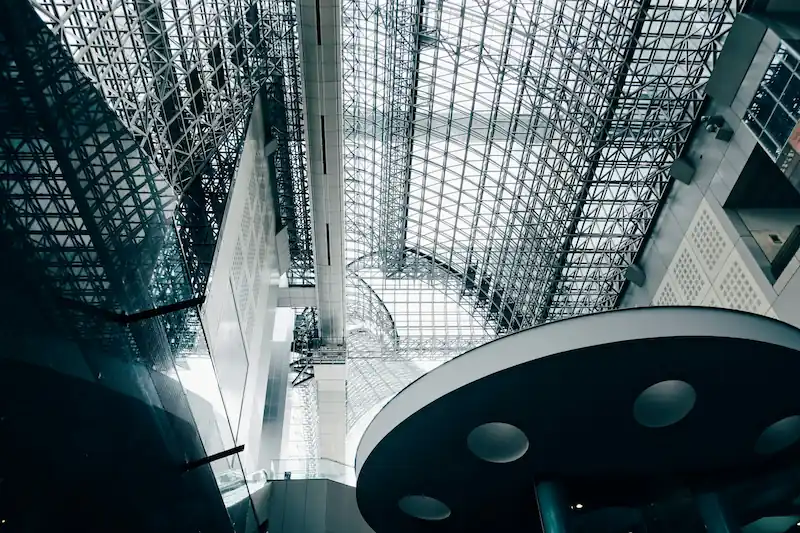
Kyoto Station Area – Best for: day trips, late arrivals, luggage logistics and rail-heavy Japan itineraries · Vibe: modern, functional, busy and highly efficient, with weaker neighborhood charm than the eastern side · Stay here if: you plan Nara, Uji, Osaka, Himeji or onward shinkansen travel and want the simplest start and finish to each travel day · Avoid if: your main goal is to feel surrounded by Kyoto’s historic lanes, evening atmosphere or boutique neighborhood character
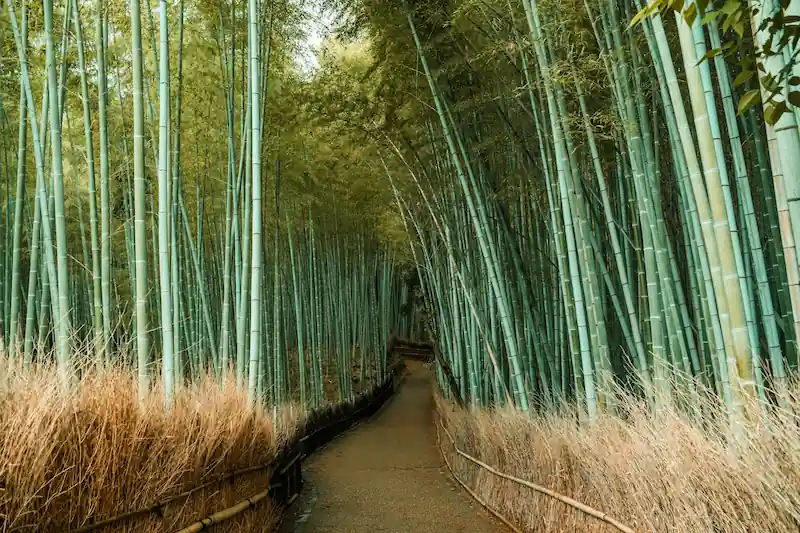
Arashiyama – Best for: slow scenic stays, ryokan atmosphere, couples and repeat visitors · Vibe: river, bamboo, wooded hills, quieter mornings and a retreat-like edge-of-city rhythm · Stay here if: you are intentionally building a slower Kyoto stay around scenery, downtime, western temples and a more restful base · Avoid if: you need to cross the city daily or want broad restaurant choice and easy late-evening options
Okazaki – Best for: families, culture-first travelers, museum days and calmer eastern Kyoto stays · Vibe: broad streets, museums, shrine space, canals, gardens and a more residential cultural calm · Stay here if: you want eastern Kyoto access without sleeping in the busiest heritage lanes, and you value quiet returns after sightseeing · Avoid if: you want maximum restaurant density, nightlife or the most postcard-famous streets immediately outside the hotel
How to choose the right area in Kyoto
Choosing where to stay in Kyoto is less about finding the single most central point and more about deciding which version of the city you want to live in for a few days. Kyoto works as a layered city: eastern heritage, central convenience, western scenery, northern gardens, southern shrine routes and quieter cultural pockets. The hotel question should follow that same geography. A good base reduces morning friction, protects evening pleasure and keeps the trip from becoming a daily commute between famous but disconnected sights.
For a first trip, pay for positioning before you pay for extra room size; Kyoto is one of the cities where doorstep atmosphere genuinely changes the stay.
Gion and Higashiyama are the strongest heritage bases, but Downtown Kyoto often creates the smoothest day-to-day rhythm.
Kyoto Station is a strategic transport choice, not a character choice; it is excellent when rail logistics matter and weaker when mood matters most.
Arashiyama should be chosen intentionally as a scenic, slower base, not because it appears near one famous attraction.
Okazaki is the best under-obvious base for travelers who want museums, gardens, family practicality and calmer evenings near eastern Kyoto.
Treat Fushimi, Uji, Nishijin, Northern Kyoto and Umekoji as experience zones rather than default hotel bases for most first trips.
On short stays, avoid any hotel that forces repeated bus-heavy transfers before and after the main sightseeing block.
In peak blossom and foliage seasons, the best-located hotels matter more than usual because crowds make inefficient movement feel much heavier.
How Kyoto works geographically from a stay perspective
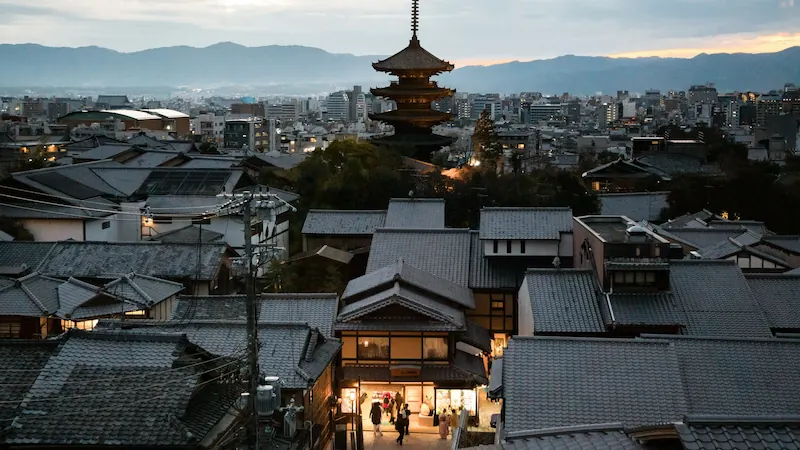
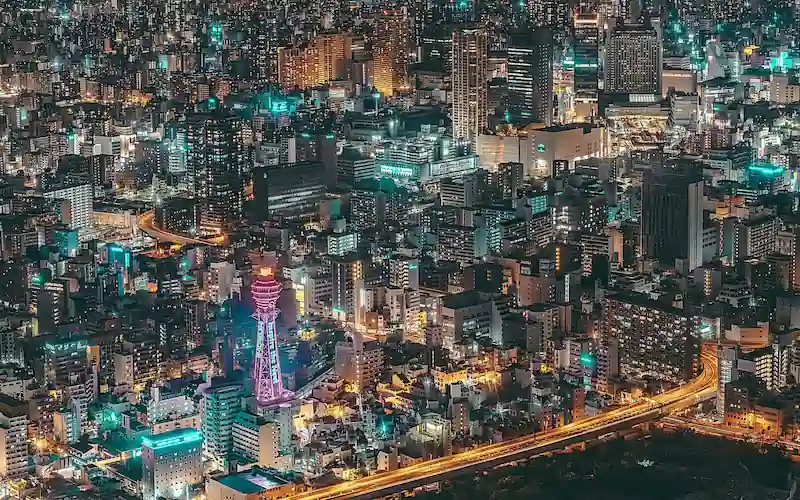
Kyoto looks simple on a map because the city is mostly low-rise and visually calm, but the stay experience changes sharply by corridor. Eastern Kyoto is where the classic temple-and-lane image is strongest. Downtown Kyoto is the practical hinge. Kyoto Station is the rail machine. Arashiyama is a scenic western edge. Okazaki is the calmer cultural east. Other important places — Fushimi, Uji, Nishijin, Northern Kyoto and Umekoji — matter for planning, but most travelers should fold them into days rather than make them the default base.
East Kyoto feels culturally dense but not always transport-efficient; exact street placement matters more here than in Downtown Kyoto.
Downtown Kyoto is the easiest area for switching between districts, eating spontaneously and surviving rain or heat without losing the day.
Kyoto Station shortens regional trips to Nara, Uji, Osaka and beyond, but it does not automatically shorten every sightseeing day inside Kyoto.
Arashiyama is rewarding when treated as a scenic stay decision, not as a central base with a famous bamboo grove attached.
Okazaki gives eastern Kyoto breathing room, with museums, gardens, shrine space and family-friendly pacing.
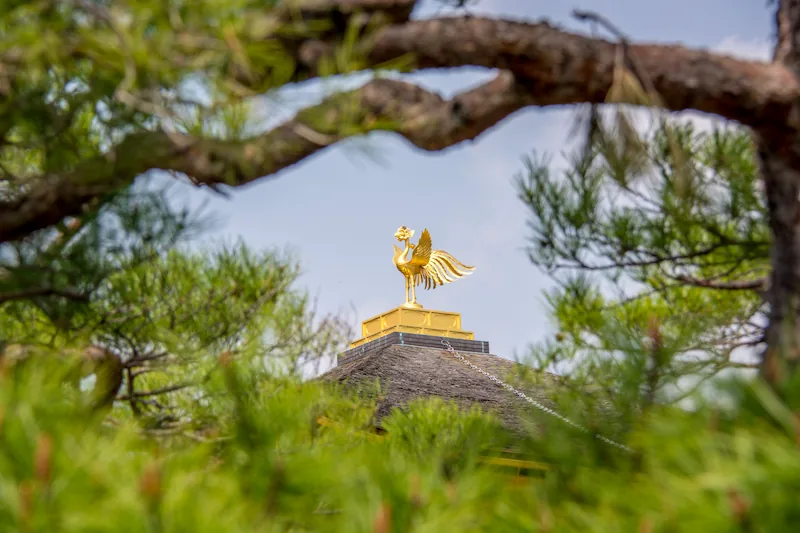
Northern Kyoto is important for Kinkaku-ji, Ryoan-ji and garden routes, but most travelers do not need to sleep there.
Fushimi is excellent for Fushimi Inari and sake-town wandering, while Uji is superb for tea and Byodo-in, but both usually work better as half-day extensions.
Nishijin adds craft and textile depth, yet its value is strongest for repeat visitors or targeted cultural stops rather than first-time hotel placement.
Historic eastern cluster – Higashiyama and Gion are the most atmospheric bases, suited to first-time visitors who want old lanes, temples, Yasaka, Kiyomizu-dera and strong early or evening walks.
Central convenience cluster – Downtown Kyoto is the strongest all-rounder, especially around Kawaramachi, Karasuma, Shijo, Nishiki and covered arcades. It trades instant heritage atmosphere for movement, food and flexibility.
Transport-led southern cluster – Kyoto Station Area is the best base for rail logistics, day trips, luggage and short stopovers. It is practical rather than romantic, and that is exactly why it works for certain trips.
Scenic western cluster – Arashiyama suits slow stays, ryokan-style trips, couples and repeat visitors who want river, bamboo, western temples and a retreat-like rhythm more than centrality.
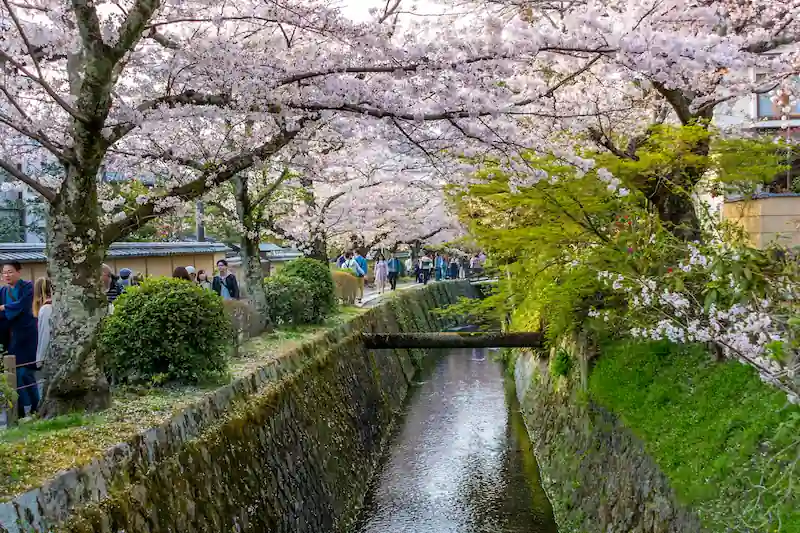
Cultural quiet-eastern cluster – Okazaki is the smart calmer base near Heian Shrine, Nanzen-ji, museums, canals and the Philosopher’s Path side of Kyoto, particularly useful for families and longer stays.
Important non-base zones – Fushimi, Uji, Nishijin, Northern Kyoto and Umekoji all add useful depth to a Kyoto trip, but they usually work better as activity zones or half-day structures than as default hotel bases.
Best areas to stay in Kyoto in depth
These are the six Kyoto bases that make the most sense for most travelers, each solving a different stay problem: atmosphere, evening ease, rail logistics, scenic downtime, cultural access, or calmer family rhythm.
Higashiyama
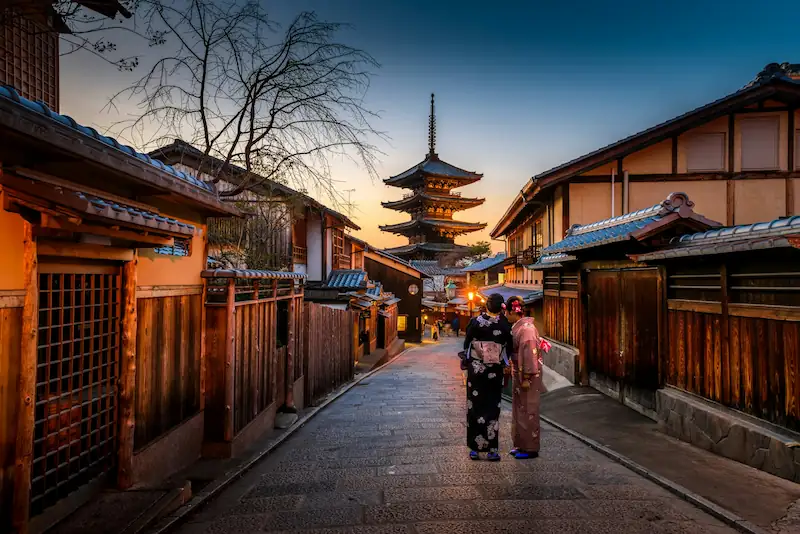
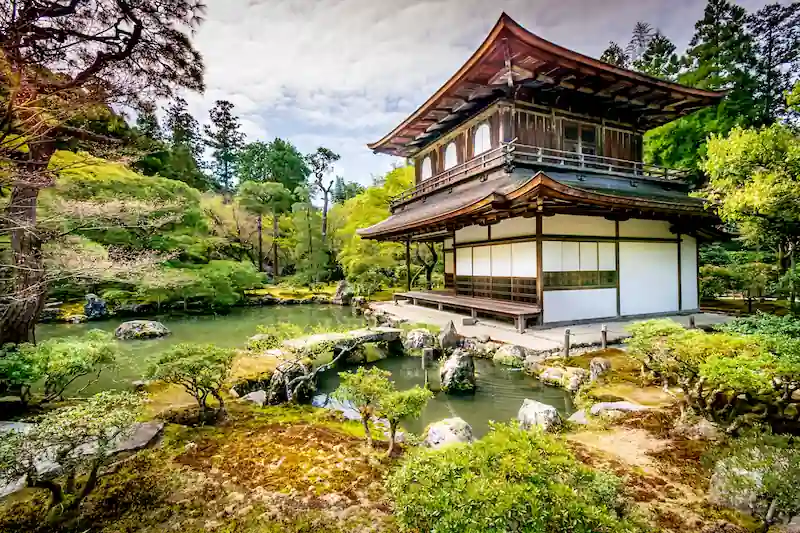
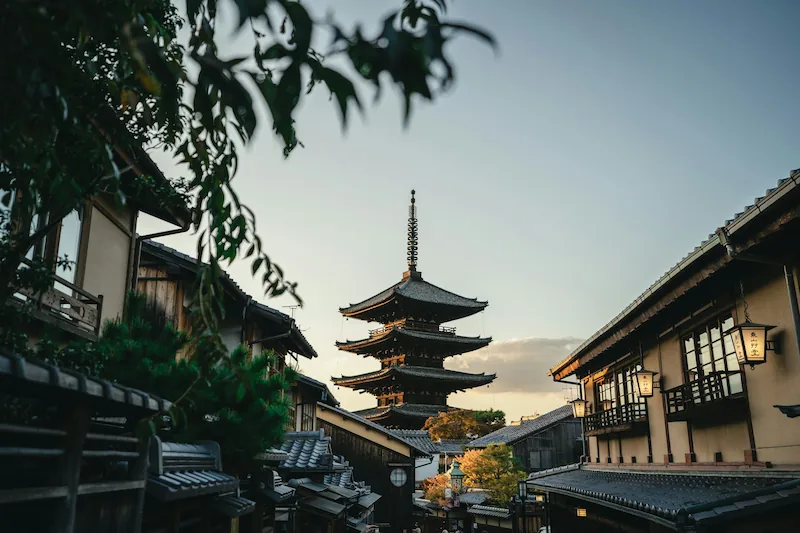
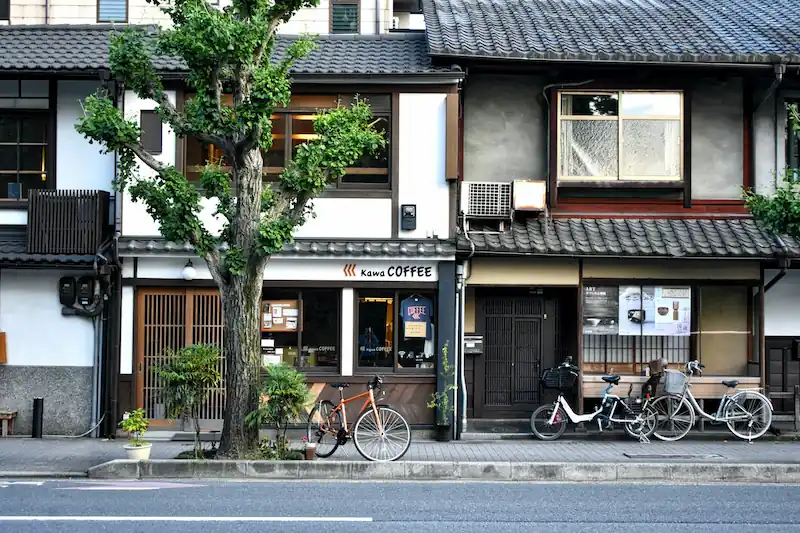
Higashiyama is where Kyoto feels most immediately like Kyoto, and that is why it remains one of the strongest places to stay for a first visit. The lanes rise around temple walls, wooden facades and stone-paved approaches, with Kiyomizu-dera, Kodai-ji, Yasaka Pagoda and southern Higashiyama walks shaping the day before you even take transit. The real advantage is timing: staying here lets you step into the old slopes early, before the dense middle of the day, and return after dark when the streets soften again. It is not the most efficient base for every district, but it gives the stay itself a sense of place that cheaper or more central hotels often cannot reproduce.
Why stay here: Stay in Higashiyama if you want Kyoto’s heritage side to define the whole trip rather than appear only during sightseeing hours. It is especially strong for travelers who care about atmosphere, early mornings, temples, gardens and the emotional continuity between hotel, streets and daily route.
Best for: first-time visitors, couples, photographers, culture-first travelers and anyone who wants Kyoto’s historic atmosphere to begin at the hotel door
Pros
Best old-Kyoto atmosphere among the major stay areas
Excellent access to Kiyomizu-dera, Kodai-ji, Yasaka Pagoda and southern Higashiyama lanes
The strongest base for early-morning heritage walks before crowds build
Boutique, ryokan-style and luxury hotels that feel connected to place
Easy movement into Gion and Yasaka for evening walks
Very strong for couples and first-time culture-focused travelers
Cons
Less efficient than Downtown Kyoto for cross-city movement
Premium pricing for the best-positioned hotels
Some lanes become crowded in the middle of the day
Dining can become thinner in quieter pockets after dark
Room sizes may be smaller than similarly priced hotels elsewhere
Not ideal if you need repeated rail access for day trips
Nearby highlights
Kiyomizu-dera before the approach streets fill
Ninenzaka and Sannenzaka in the early morning or after dusk
Yasaka Pagoda views from quieter side lanes
Kodai-ji, Entoku-in and seasonal night illumination zones
Easy walking link toward Gion and Yasaka Shrine
A strong base for southern Higashiyama temple sequencing without daily bus reliance
Tea, sweets and small craft stops that fit naturally between temple walks
Budget
Kyoto Higashiyamaso – Simple ryokan-style stay close to Kiyomizu-dera with a strong location for early starts on the eastern slopes. Why we recommend: One of the few lower-cost stays here that still gives you real Higashiyama positioning. Check availability
Terrace Kiyomizu Kyoto – Compact modern hotel within walking reach of Kiyomizu-dera and the historic lanes. Why we recommend: It delivers practical comfort in a part of Kyoto where cheaper options often mean weaker placement. Check availability
Wanosato Kyoto Musee – Small-scale property with a quieter feel near the southern edge of Gion-Higashiyama. Why we recommend: Better character than many budget-leaning options without drifting too far from the core sights. Check availability
Mid
Hotel Legasta Kyoto Higashiyama Sanjo – Well-placed hotel near the Sanjo edge of eastern Kyoto, good for mixing temple districts with transit access. Why we recommend: It is unusually useful if you want Higashiyama atmosphere without feeling cut off. Check availability
NOHGA HOTEL KIYOMIZU KYOTO – Design-conscious hotel with a more polished feel and strong access to southern Higashiyama. Why we recommend: It gives you more style and room quality than many mid-range options in this zone. Check availability
Tassel Hotel Sanjo Shirakawa – Refined eastern-side stay near the Shirakawa corridor, useful for both Higashiyama and Okazaki-facing sightseeing. Why we recommend: A calm, better-finished option that makes the eastern base feel easier to live in. Check availability
Upscale
THE HOTEL HIGASHIYAMA KYOTO TOKYU, A Pan Pacific Hotel – High-comfort luxury hotel near the quieter Higashiyama-Okazaki edge with polished service and easier room standards. Why we recommend: It gives you a more serene eastern Kyoto stay without sacrificing access. Check availability
Park Hyatt Kyoto – Top-end stay embedded in one of Kyoto's most iconic heritage settings near the Kodaiji area. Why we recommend: Few hotels in Kyoto connect luxury and location this convincingly. Check availability
Six Senses Kyoto – Contemporary luxury property on the eastern side with a calmer, more retreat-like feel than busier heritage hotels. Why we recommend: Best for travelers who want eastern Kyoto character with full modern resort-level comfort. Check availability
Gion
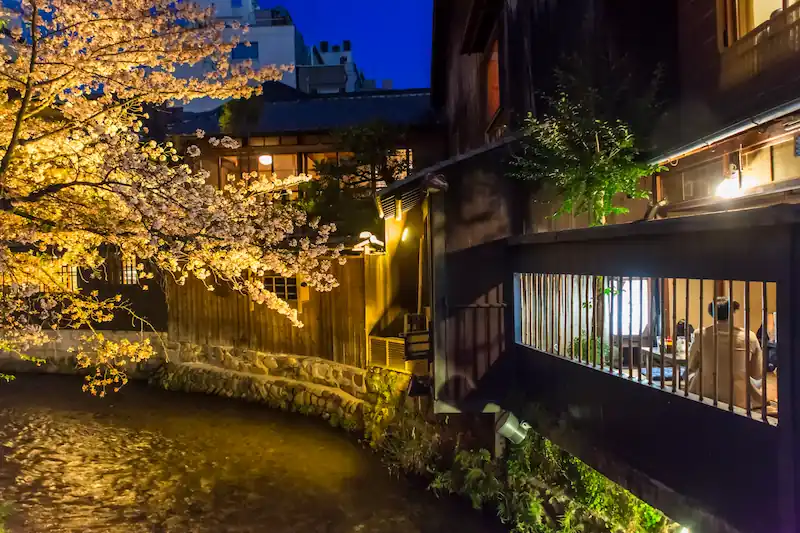
Gion is the best compromise for travelers who want Kyoto to feel classic without becoming impractical. It gives you Hanamikoji, Shirakawa, Yasaka Shrine, Pontocho access and atmospheric evening walks, while staying more connected to restaurants, bars and central movement than deeper Higashiyama pockets. The district is visitor-facing and priced accordingly, but it works because Kyoto’s nights matter: after a full sightseeing day, being able to walk to dinner, cross toward Pontocho or return through lantern-lit lanes can make the trip feel much smoother.
Why stay here: Stay in Gion if you want old-Kyoto mood with stronger evening usability. It is often the safest premium first-trip base because it connects heritage, dining and walkable nights better than any other single district.
Best for: first trips, couples, dining-led evenings, premium short breaks and travelers who want Kyoto character without giving up too much convenience
Pros
Excellent balance of atmosphere and practical evening life
Walkable to Higashiyama, Yasaka Shrine, Shirakawa and Pontocho
Strong restaurant and bar access compared with deeper temple districts
Works extremely well for couples and short stays
Hotels range from practical to very high-end
One of the easiest areas for atmospheric returns after dinner
Cons
High prices for well-located hotels
Busy streets in peak visitor hours
Some pockets can feel polished for tourism rather than local
Rooms can be compact relative to price
Not the quietest base if you are on a main lane
Privacy and etiquette rules matter around residential and geisha-district streets
Nearby highlights
Hanamikoji and Shirakawa canal walks after dusk
Yasaka Shrine and Maruyama Park on foot
Pontocho and Kamo River evenings without transit
Easy early starts into southern Higashiyama
Good access to both heritage streets and central Kyoto dining
One of the best bases for travelers who want evenings to carry the same weight as daytime sightseeing
Atmospheric but practical positioning for two- and three-night stays
Budget
KYOTO GION HOTEL – Clean, practical hotel just off the core Gion zone and useful for short stays focused on location. Why we recommend: It gets you into Gion without paying boutique-level rates. Check availability
Hotel In Kyoto Sasarindou – Older-style but very well-located hotel steps from Hanamikoji and Yasaka Shrine. Why we recommend: Location does most of the work here, and that is exactly the point in Gion. Check availability
AKARI Kyoto Gion – Straightforward stay with easy access to the heart of Gion and eastern Kyoto sights. Why we recommend: A practical way to stay in a premium area without chasing luxury. Check availability
Mid
Kyoto Granbell Hotel – Modern hotel close to Gion-Shijo with a stronger finish than many similarly located options. Why we recommend: It balances placement, comfort, and design better than much of the mid-range stock nearby. Check availability
Gion Misen Furumonzen – Smaller property in a quieter Gion pocket with easy access to the district's core lanes. Why we recommend: It feels more intimate and characterful than a standard chain-style city hotel. Check availability
Hotel The Celestine Kyoto Gion – Polished higher-mid-range stay with a more refined atmosphere and strong east-side positioning. Why we recommend: One of the safest premium-adjacent choices for first-time travelers who want Gion done well. Check availability
Upscale
Sowaka – Highly atmospheric luxury stay in a heritage setting close to the most evocative parts of Gion. Why we recommend: It is one of the rare hotels where the setting itself justifies the premium. Check availability
Hotel Chourakukan Kyoto Gion – Historic grand property with a more old-world, occasion-worthy feel than most Kyoto hotels. Why we recommend: Best for travelers who want Gion to feel distinguished rather than simply central. Check availability
Imperial Hotel, Kyoto – Ultra-premium new luxury option in the wider Gion-Higashiyama zone with major-service comfort. Why we recommend: A strong choice when you want top-tier standards in one of Kyoto's most compelling areas. Check availability
Downtown Kyoto
Downtown Kyoto is the smartest all-round base when the trip needs to function smoothly. It does not have the same immediate heritage atmosphere as Gion or Higashiyama, but it gives you the city’s most useful mix of restaurants, cafés, shopping streets, covered arcades, department-store food floors and transport links. For two or three nights, that practical flow can matter more than romance. Downtown also works well in rain, heat or fatigue, because it gives you easy fallback plans without turning the day into a logistical puzzle.
Why stay here: Stay in Downtown Kyoto if you want the most efficient base for covering the city, eating well and adjusting plans as weather, crowds or energy change. It is the best choice for travelers who want Kyoto to feel manageable rather than delicate.
Best for: short stays, food-focused travelers, budget-conscious visitors, repeat travelers, rainy-season trips and anyone prioritizing efficiency over postcard atmosphere
Pros
Best overall convenience for most short Kyoto stays
Excellent access to Nishiki Market, Teramachi, Shinkyogoku, Kawaramachi and Karasuma
Strongest concentration of everyday dining, cafés and shopping
Better value-to-location ratio than Gion or Higashiyama
Good rainy-day and low-energy backup options
Efficient movement to eastern, western and station-side routes
Cons
Less traditional atmosphere at the hotel door
Some blocks can feel generic or commercial
Street noise varies significantly by exact address
Not ideal for travelers seeking a ryokan or retreat feel
Requires intentional walks to reach Kyoto’s strongest historic textures
Can feel too practical for a romantic first impression
Nearby highlights
Nishiki Market and surrounding food streets
Teramachi and Shinkyogoku covered arcades
Kawaramachi and Shijo dining corridors
Department-store food halls for easy meals and gifts
Simple movement toward Gion, Higashiyama, Kyoto Station and Arashiyama links
Best base for flexible evenings when restaurant choice matters
Strong option when weather makes covered routes and central backups valuable
Budget
THE POCKET HOTEL Kyoto Shijo Karasuma – Very practical low-cost base near Nishiki and the Shijo-Karasuma grid. Why we recommend: Few budget options are this central without becoming awkward for the rest of the trip. Check availability
HOTEL MYSTAYS Kyoto Shijo – Reliable lower-priced central hotel with easier room standards than many entry-level options. Why we recommend: Good value for travelers who want function without sacrificing centrality. Check availability
Hotel Forza Kyoto Shijo Kawaramachi – Modern, efficient hotel right in one of the most useful central zones for food and movement. Why we recommend: One of the better budget-to-location plays in the center. Check availability
Mid
Mitsui Garden Hotel Kyoto Shijo – Well-run central hotel with strong transport access and dependable comfort. Why we recommend: It is one of the safest mid-range choices for a short, efficient Kyoto stay. Check availability
Cross Hotel Kyoto – Popular city-center hotel near Kawaramachi Sanjo with strong walkability and polished rooms. Why we recommend: It makes central Kyoto feel genuinely easy, not just technically convenient. Check availability
Mitsui Garden Hotel Kyoto Kawaramachi Jokyoji – Newer central option with better finish and calmer styling than many nearby competitors. Why we recommend: A stronger pick when you want location plus a more composed hotel feel. Check availability
Upscale
GOOD NATURE HOTEL KYOTO – Design-forward upscale hotel near Kawaramachi with a calmer, more curated atmosphere than typical central stock. Why we recommend: It stands out for quality and feel without losing central practicality. Check availability
Ace Hotel Kyoto – High-design luxury stay around the Karasuma-Oike area with stronger style identity than most Kyoto hotels. Why we recommend: Best for travelers who want a central base with real design character. Check availability
Mitsui Garden Hotel Kyoto Sanjo PREMIER – Upscale central hotel with a more elevated finish while staying firmly inside the useful downtown grid. Why we recommend: A sharper luxury-leaning pick for travelers who want convenience without a generic feel. Check availability
Kyoto Station Area
Kyoto Station Area is the most practical place to stay in Kyoto, and also the least romantic among the main options. That trade-off is clear and useful. If your trip includes late arrival, early departure, luggage movement, shinkansen travel, or day trips to Nara, Uji, Osaka or Himeji, the station area can save energy every day. What it does not provide is Kyoto’s strongest doorstep atmosphere. Choose it when rail logic is central to the trip, not because the map makes it look universally convenient.
Why stay here: Stay near Kyoto Station when the trip is transport-led: day trips, onward Japan travel, family logistics, short stopovers or bags that you do not want to move across the city. It is an efficiency base, not a heritage base.
Best for: rail-heavy itineraries, families with luggage, short stopovers, day-trip planners and travelers linking Kyoto with wider Kansai or Tokyo routes
Pros
Best rail access for shinkansen, Nara, Uji, Osaka and regional travel
Easiest area for arrivals, departures and luggage handling
Large hotel supply across budget and mid-range categories
Good choice for families who need simple movement and predictable facilities
Useful food, shopping and services inside the station complex
Strong base for one- or two-night stopovers
Cons
Weakest traditional atmosphere of the main stay areas
Evenings feel more functional than memorable
Less rewarding for casual neighborhood wandering
Can feel busy and infrastructure-heavy
Not ideal if you want Gion, Higashiyama or river walks at the door
Some hotels south of the station feel disconnected from the city’s charm
Nearby highlights
Direct rail access for Nara and Uji day trips
Shinkansen and intercity train convenience
Easy airport-bus and luggage logistics
Kyoto Station food floors and shopping levels
Straightforward taxis or buses toward major districts
Practical base for Umekoji, Kyoto Railway Museum and Kyoto Aquarium
Best choice when Kyoto is one stage in a larger Japan itinerary
Budget
Hotel Excellence Kyoto Station Nishi – Basic but very practical hotel within easy reach of Kyoto Station. Why we recommend: A clear choice when you want station convenience without paying for extras you do not need. Check availability
TUNE STAY KYOTO – Smart, modern budget-leaning stay with a more thoughtful feel than many station-area basics. Why we recommend: It brings more design and social energy than the typical low-cost station hotel. Check availability
Kyoto Tower Hotel – Classic station-front hotel that keeps everything extremely easy on a transit-heavy stay. Why we recommend: The location is hard to beat if convenience is your first filter. Check availability
Mid
Miyako City Kintetsu Kyoto Station – Directly integrated with the station, ideal for arrivals, departures, and no-fuss movement. Why we recommend: Few hotels in Kyoto handle rail logistics this cleanly. Check availability
Daiwa Roynet Hotel Kyoto-Hachijoguchi – Reliable, comfortable station-area hotel with easy access and dependable room standards. Why we recommend: A stronger room-and-value balance than many purely functional station options. Check availability
Hotel Vischio Kyoto by GRANVIA – Well-equipped station-area hotel with larger-feeling rooms and stronger comfort than many nearby options. Why we recommend: A very dependable mid-range step up from the standard station formula. Check availability
Upscale
THE THOUSAND KYOTO – Refined luxury hotel just by Kyoto Station with contemporary design and strong service standards. Why we recommend: It is the most compelling way to stay in the station area without it feeling purely functional. Check availability
Hotel Granvia Kyoto – Full-service classic luxury hotel directly integrated with Kyoto Station. Why we recommend: Hard to beat when transport ease and large-hotel amenities both matter. Check availability
Rihga Gran Kyoto – Contemporary upscale hotel within easy reach of Kyoto Station, with a more polished feel than most nearby business hotels. Why we recommend: It is one of the better ways to get station convenience without sacrificing comfort. Check availability
Arashiyama
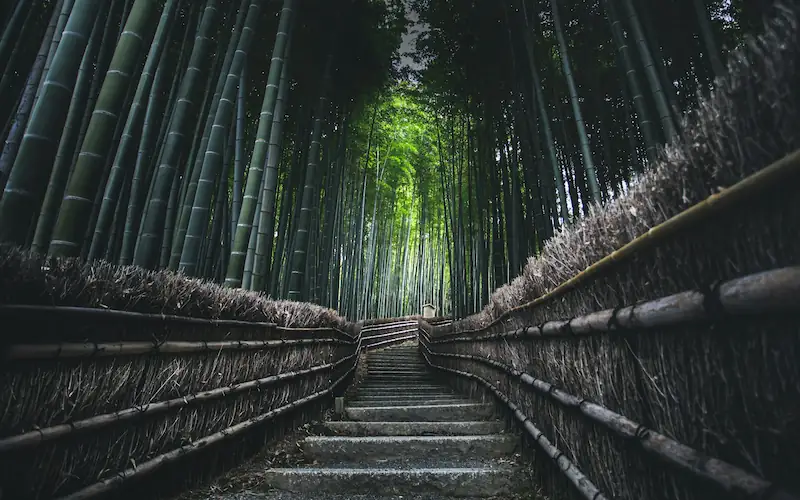
Arashiyama is Kyoto’s scenic slow-stay base. The river, wooded hills, bamboo paths and quieter mornings create a retreat-like rhythm that central districts cannot offer. It is beautiful, memorable and highly specific, but it should not be chosen casually. If you want to cover the whole city quickly, Arashiyama will create friction. If you want a slower trip, a ryokan-style stay, morning access to the western landscape and a base that feels separate from the urban grid, it can be one of the most rewarding choices in Kyoto.
Why stay here: Stay in Arashiyama if scenery and pace are part of the reason you are in Kyoto. It works best for couples, repeat visitors, luxury or ryokan stays, and travelers who want a restorative western edge rather than maximum centrality.
Best for: slow travel, couples, ryokan stays, scenic luxury, return trips and travelers who want beauty and downtime more than city coverage
Pros
Most scenic stay area in Kyoto
Beautiful access to the river, Togetsukyo Bridge, bamboo grove and western temples
Excellent for ryokan, onsen-style and retreat-like stays
Quieter mornings and evenings than the day-trip period suggests
Strong option for a split stay with central Kyoto
Makes Kyoto feel greener and more spacious
Cons
Less convenient for repeated east-side sightseeing
Limited evening dining compared with Gion or Downtown Kyoto
Not ideal for packed first-time itineraries
Best hotels can be expensive because setting carries the premium
Transfers can feel slow if you return multiple times a day
Some daytime areas still become crowded with visitors
Nearby highlights
Early bamboo grove access before the day-trip wave
Togetsukyo Bridge and Katsura River walks
Tenryu-ji and western temple options
Monkey Park and family-friendly scenic movement
Good base for slower mornings and restorative evenings
Strong split-stay contrast with Gion or Downtown Kyoto
One of the few Kyoto bases where landscape can shape the whole stay
Budget
Hotel Arashiyama – Straightforward riverside-adjacent hotel that keeps you close to the area's main sights. Why we recommend: A rare budget-friendly choice that still benefits from Arashiyama's setting. Check availability
Yado Arashiyama -13 years old or older only- – Small adult-focused stay with simple rooms and easy access to the bamboo grove side of the district. Why we recommend: It gives budget-conscious travelers a calmer, more local-feeling Arashiyama base. Check availability
Ranzan – Classic Arashiyama stay close to the river and major sights, practical for a scenic base. Why we recommend: It offers reliable placement in a district where location matters more than novelty. Check availability
Mid
Homm Stay Nagi Arashiyama Kyoto By Banyan Group – Spacious, well-finished hotel with a more contemporary take on the Arashiyama stay. Why we recommend: Room quality is stronger than much of the area's mid-range stock. Check availability
Rangetsu – Traditional ryokan-style option in a quiet pocket of Arashiyama close to the river. Why we recommend: A strong choice if you want classic Arashiyama calm without going full luxury resort. Check availability
Kadensho, Arashiyama Onsen, Kyoto - Reopening on 2026 – Onsen-oriented stay that suits travelers treating Arashiyama more as a retreat than a base for rushing around. Why we recommend: It leans into the restorative side of an Arashiyama stay better than standard hotels do. Check availability
Upscale
Muni Kyoto – Elegant luxury hotel in a prime scenic setting near the river and bamboo grove approach. Why we recommend: One of the best hotel-location pairings in Arashiyama. Check availability
Kyoto Arashiyama Onsen Ryokan Togetsutei – Traditional ryokan stay with mountain views and a stronger sense of occasion than standard hotels. Why we recommend: It is a very good fit for travelers who want the district's scenic calm fully reflected in the stay. Check availability
Suiran, a Luxury Collection Hotel, Kyoto – Top-end riverside luxury with a distinctly serene, landscape-led Arashiyama feel. Why we recommend: Best for travelers who want Arashiyama at its most refined and restful. Check availability
Okazaki
Okazaki is the strongest quiet alternative to the obvious Kyoto bases. It sits in the eastern cultural belt without the same compression as Gion or southern Higashiyama, giving you broad streets, museums, Heian Shrine, canals, Nanzen-ji access, the Philosopher’s Path side and a calmer residential feel. It is not the best area for nightlife or maximum restaurant density, but it is highly intelligent for families, return visitors and travelers who want culture, space and easier breathing room after busy temple days.
Why stay here: Stay in Okazaki if you want an eastern Kyoto base that feels calmer, more spacious and more livable than the city’s most famous lanes. It is especially strong when museums, gardens, family practicality or longer stays matter.
Best for: families, return visitors, museum lovers, garden-focused travelers, longer stays and culture-first travelers who want quiet eastern access
Pros
Calmer and more spacious than Gion or southern Higashiyama
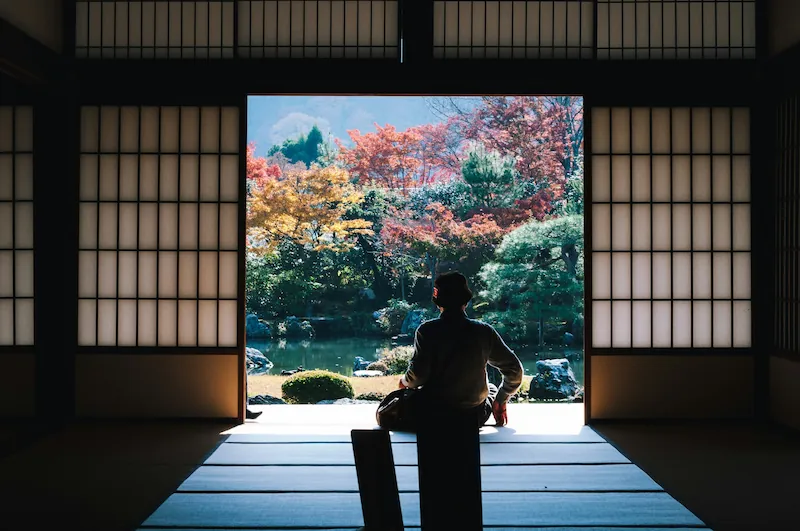
Excellent access to Heian Shrine, Nanzen-ji, museums and the Philosopher’s Path side
Very good for families and culture-first repeat visitors
More restful evenings after crowded sightseeing
Strong boutique and luxury options in a refined setting
Useful compromise between eastern atmosphere and livability
Cons
Less restaurant density than Gion or Downtown Kyoto
Can feel too quiet for travelers wanting lively nights
Not the fastest base for every part of the city
Some hotel options skew upscale rather than budget
Requires more planning for late dinners
Best appreciated by travelers who value the district’s calmer rhythm
Nearby highlights
Heian Shrine and Okazaki cultural institutions
Nanzen-ji and canal-side walks
Philosopher’s Path access without staying in the busiest heritage core
Kyoto City Zoo and family-friendly spacing
Museum and gallery days that work well in rain
Calmer returns after Gion and Higashiyama sightseeing
One of the best bases for a slower four- or five-day Kyoto stay
Budget
Heian No Mori Kyoto – Older but practical hotel in the Okazaki area with easy access to Heian Shrine and nearby sights. Why we recommend: One of the simplest lower-cost ways to stay in this otherwise refined district. Check availability
Hotel Grand Fine Kyoto Okazaki Heian Jingu Shrine – Basic stay near the Okazaki cultural zone, useful when location matters more than hotel atmosphere. Why we recommend: It keeps the price entry lower in an area that skews upscale. Check availability
Ya Do! KYOTO OKAZAKI – Simple guesthouse-style option for travelers who want a lighter-footprint stay near eastern sights. Why we recommend: A workable value choice in a district where cheaper stock is limited. Check availability
Mid
Ryokan KANADE – Traditional-leaning stay with garden atmosphere near the Nanzen-ji and Okazaki side of eastern Kyoto. Why we recommend: It gives this area a stronger Kyoto feel than a standard business-style hotel. Check availability
Waka Heian Shirakawa Hotel – Comfortable modern hotel close to the cultural eastern corridor and canal-side areas. Why we recommend: A smart choice if you want Okazaki calm with easier modern room standards. Check availability
HOTEL MASTAY jingumichi – High-quality boutique-style property with excellent access to Shoren-in, Heian Shrine, and eastern Kyoto sights. Why we recommend: One of the most convincing smaller-scale stays in this wider eastern cultural zone. Check availability
Upscale
Hotel Okura Kyoto Okazaki Bettei – Refined luxury hotel designed for a quieter, more cultivated Kyoto stay near the Okazaki cultural district. Why we recommend: It matches this neighborhood's restrained, polished character especially well. Check availability
The Westin Miyako Kyoto – Large luxury hotel on the eastern side with strong facilities and easier family comfort than many smaller heritage properties. Why we recommend: A very solid choice when you want eastern Kyoto with full-service hotel infrastructure. Check availability
Fufu Kyoto – High-end luxury retreat near the quieter eastern cultural corridor, with a more intimate and restorative feel. Why we recommend: Best for travelers who want eastern Kyoto to feel deeply calm and intentionally slow. Check availability
Where to stay in Kyoto for first-time visitors
For a first Kyoto trip, the best base is the one that makes the city feel clear rather than impressive on paper. Most first-timers should choose between Gion, Higashiyama and Downtown Kyoto, then use Kyoto Station only when rail logistics dominate the itinerary.
Choose Gion if you want the safest classic first-trip balance: atmosphere, evenings, restaurants and access to eastern Kyoto.
Choose Higashiyama if your dream version of Kyoto is early temple slopes, wooden lanes and heritage texture right outside the door.
Choose Downtown Kyoto if you want the most efficient stay for food, shopping, transit and flexible coverage across the city.
Choose Kyoto Station if Kyoto is part of a wider Japan route with Nara, Uji, Osaka, Himeji or shinkansen movement built in.
Avoid Arashiyama on a short first trip unless you are intentionally prioritizing scenery and a slower retreat-like pace.
Use Okazaki if you want a calmer eastern base, especially for families or travelers who prefer museums and gardens over late-night density.
Profile
Best area
Why
Most classic first trip
Gion
Best mix of Kyoto atmosphere, dinner access, evening walks and practical movement
Most immersive heritage trip
Higashiyama
Best for waking up near the eastern temple slopes and old lanes
Most efficient first trip
Downtown Kyoto
Best for food, transport, rainy-day flexibility and short-stay logistics
Rail-heavy first trip
Kyoto Station Area
Best when day trips and luggage matter more than neighborhood romance
Where to stay in Kyoto with family
Kyoto with children works best when the base reduces friction. Families usually need calmer streets, predictable food, practical transport, room configuration and easy reset spaces more than the most photogenic lane outside the hotel.
Okazaki is one of Kyoto’s strongest family bases because it is calmer, more spacious and close to museums, gardens, Heian Shrine, Kyoto City Zoo and eastern cultural routes.
Kyoto Station Area is very practical for families with bags, rail travel, late arrivals, early departures or day trips to Nara and Uji.
Downtown Kyoto is the best all-round family base when easy meals, shopping, pharmacy access and central movement matter.
Gion and Higashiyama can work beautifully, but choose carefully because rooms may be smaller, streets busier and dining more reservation-dependent.
Arashiyama can be excellent for a slower family stay with river space, monkeys and scenery, but it is less efficient for covering the whole city.
If Kyoto Railway Museum and Kyoto Aquarium are major priorities, staying near Kyoto Station or Downtown Kyoto is usually more useful than treating Umekoji as a main hotel base.
Priority
Best area
Why
Quiet cultural base
Okazaki
Calmer streets, family-friendly spacing and easy access to eastern sights
Luggage and train ease
Kyoto Station Area
Simplest arrivals, departures and day-trip logistics
Easy meals and flexibility
Downtown Kyoto
Best everyday convenience without being far from key districts
Scenic slow family stay
Arashiyama
Good for downtime, river walks and a lighter western Kyoto rhythm
Where to stay in Kyoto for nightlife and evenings
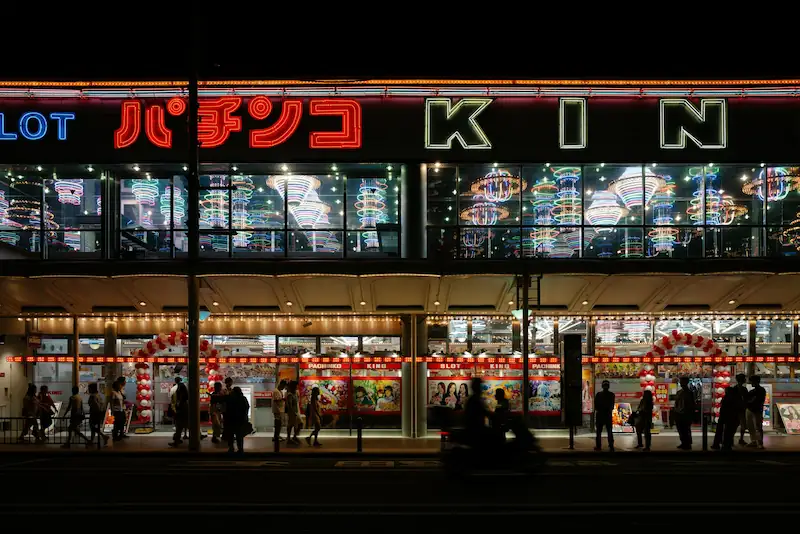
Kyoto is not a nightlife city in the Osaka or Tokyo sense. The better question is where evenings feel easy: dinner, bars, riverside walks, lantern-lit lanes and a simple return to the hotel once the daytime sightseeing rhythm is over.
Gion is the best area for atmospheric evenings, especially if you want Shirakawa, Hanamikoji, Yasaka and Pontocho within easy reach.
Downtown Kyoto is the most flexible evening base for casual restaurants, bars, shopping streets and spontaneous plans.
Pontocho itself is usually better treated as an evening zone reached from Gion or Downtown Kyoto rather than as a separate stay area.
Higashiyama is beautiful at dawn and dusk but can become quieter and less practical later at night.
Kyoto Station has dining and convenience but not the same emotional evening payoff as Gion or Downtown Kyoto.
Okazaki and Arashiyama are better for quiet evenings than for staying out late.
Style
Best area
Trade Off
Most atmospheric evenings
Gion
More expensive and busier in peak windows
Most flexible nights out
Downtown Kyoto
Less traditional atmosphere at the hotel door
Quiet refined evenings
Okazaki
Lower restaurant density and less late-night energy
Scenic retreat evenings
Arashiyama
Limited dining and slower returns from central Kyoto
Where to stay in Kyoto on a budget
Budget strategy in Kyoto should account for time as well as nightly rate. The cheapest hotel can become poor value if it forces long transfers before breakfast, after dinner or between spread-out sightseeing clusters.
Downtown Kyoto usually gives the best value-to-convenience ratio because you stay central without paying the full Gion or Higashiyama atmosphere premium.
Kyoto Station Area is often the best practical budget choice for rail access, families and day trips, with more predictable hotel inventory.
Budget rooms in Gion and Higashiyama are worth considering only when the location is genuinely strong; otherwise you may pay for the district name without enough comfort.
Okazaki can offer calmer value for travelers who do not need nightlife density, though inventory is less broad than downtown.
Arashiyama budget stays make sense only if you actively want to spend time in western Kyoto.
Avoid far-north or far-west hotels on a short stay unless they are directly tied to your plan; bus friction can erase the saving.
Budget logic
Area
Why
Best central value
Downtown Kyoto
Strongest mix of price, dining, transit and rainy-day flexibility
Best transport value
Kyoto Station Area
Broad practical hotel stock with rail and luggage advantages
Best atmospheric value
Gion or Higashiyama
Only when booked early and placed on a genuinely useful street
Best calmer value
Okazaki
Good for families and culture-first stays when nightlife is not a priority
Which area makes sense for your Kyoto stay
The right Kyoto base changes with trip length, season and travel style. A two-night first visit needs a different answer from a five-night cultural stay, a family trip, a rail-heavy Kansai route or a slow ryokan-focused escape.
Label
Stay
Avoid
Why
1 night
Kyoto Station Area or Downtown Kyoto
Higashiyama or Arashiyama unless the stay is specifically atmospheric
You need arrival, departure, meals and one focused sightseeing block to work with almost no margin.
2 nights
Gion or Downtown Kyoto
Arashiyama unless the whole trip is intentionally slow
You need a base that makes mornings, dinners and movement easy without losing too much time in transit.
3 days
Gion for classic Kyoto, Higashiyama for atmosphere, Downtown Kyoto for efficiency
Peripheral hotels chosen mainly for rate
Three days is long enough for east, west and central Kyoto, but not long enough to absorb daily location mistakes.
4 to 5 days
Downtown Kyoto, Gion, Higashiyama or Okazaki
Kyoto Station if neighborhood character matters more than day trips
With more time, a calmer or more atmospheric base can pay off because the stay becomes less purely logistical.
1 week
Okazaki, Downtown Kyoto or a split stay with Arashiyama
Spending every night in the busiest heritage streets unless you love that intensity
Longer stays benefit from livability, room comfort, evening calm and a base that still feels good after the first sightseeing wave.
First trip
Gion, Higashiyama or Downtown Kyoto
Choosing only by hotel price or map centrality
Your base will shape how legible Kyoto feels, especially at the start and end of each day.
Family trip
Okazaki, Downtown Kyoto or Kyoto Station Area
Small-room heritage hotels unless the exact property solves the comfort issue
Family success depends on calmer streets, food access, reset space, transit simplicity and room configuration.
Rail-heavy Kansai trip
Kyoto Station Area
Deep Higashiyama or Arashiyama if you have repeated early trains
Day trips to Nara, Uji, Osaka or Himeji are much easier when station access is the first priority.
Ryokan or romantic slow stay
Arashiyama, Higashiyama or selected Gion properties
The emotional quality of the stay matters more here than the fastest transfer grid.
Repeat visit
Okazaki, Arashiyama or Downtown Kyoto
Defaulting to the most famous streets if you want a different Kyoto
Second visits are often better when the base encourages gardens, craft, food, riverside time and slower neighborhoods.
How to choose the right hotel in Kyoto once the area is set
In Kyoto, the best hotel is not automatically the highest-rated or most central one. Micro-location, room layout, evening access, seasonality and how the property fits the district all matter. A modest hotel on the right street can outperform a more impressive room that forces you into awkward daily movement.
Topic
WhatToDo
WhatToAvoid
WhyItMatters
Prioritize micro-location over district name
Check the exact street, nearest station or bus corridor, and whether the hotel sits on a pleasant walking route.
Assuming every hotel labeled Gion, Higashiyama or Downtown Kyoto gives the same experience.
A few blocks can change whether mornings feel effortless, evenings feel atmospheric, or every return feels like logistics.
Pay for location before room size on short stays
For two or three nights, choose the base that protects your strongest sightseeing and dinner rhythm.
Moving far out for a larger room unless comfort needs are non-negotiable.
You will feel a weak location several times a day, while room size matters mostly when you are inside.
Use Kyoto Station deliberately
Book near the station when day trips, shinkansen travel, late arrivals or family luggage are central.
Choosing Kyoto Station simply because it appears to be the city’s obvious transport center.
It is excellent for regional movement but weaker for the emotional Kyoto experience.
Check evening usability
If dinners, drinks or after-dark walks matter, favor Gion or Downtown Kyoto, or choose Higashiyama only if you accept quieter nights.
Booking a beautiful but isolated-feeling area without noticing how little is nearby after dark.
Kyoto evenings can feel seamless or oddly inconvenient depending on the base.
Book ryokan and character stays early
Reserve ryokan-style, boutique and heritage-feeling properties as soon as dates are firm.
Waiting for last-minute options in Gion, Higashiyama or Arashiyama during peak seasons.
Character inventory is limited and disappears long before generic business-hotel rooms.
Separate ryokan fantasy from daily logistics
Use a ryokan for the nights where the stay itself matters, possibly as part of a split stay.
Choosing a remote or restrictive ryokan for every night if your days are ambitious.
A ryokan can elevate Kyoto, but it can also make packed sightseeing and late dining less flexible.
Study room configuration carefully
Check square meters, bedding, futon setup, family layouts, luggage space and bathroom type before booking.
Assuming price or star rating guarantees comfort, especially in heritage districts.
Kyoto rooms can be compact, and family or multi-night comfort depends on configuration more than neighborhood alone.
Plan around seasonality
Book early for cherry blossom, autumn foliage, Golden Week and major holiday periods; keep cancellation flexibility when possible.
Assuming Kyoto hotel prices behave like a normal city-break market year-round.
Seasonal demand changes availability, price and the value of being near your priority district.
Use taxis as part of hotel strategy
A slightly less connected but better-feeling hotel can work if you budget for selective taxis.
Relying only on crowded buses from a weak location during peak hours.
In Kyoto, one well-used taxi can protect the structure of a day more than a perfect transit theory.
Choose hotel style to match the district
In Higashiyama, Gion and Arashiyama, pay attention to atmosphere; downtown and station areas can be judged more on function and room quality.
Expecting every district to deliver both romance and efficiency at the same price.
Kyoto’s areas solve different problems, and the hotel should reinforce the problem you chose the area to solve.
Frequently asked questions about where to stay in Kyoto
These are the accommodation questions that most strongly affect how a Kyoto trip feels in practice. The answer is rarely one universal best neighborhood; it depends on whether you want atmosphere, convenience, rail access, family comfort, food, quiet, or a slower cultural stay.
What is the best area to stay in Kyoto for a first trip?
Gion is often the safest all-round answer for a first Kyoto trip because it combines classic atmosphere, walkable evenings, restaurants and access to Higashiyama. Higashiyama is stronger if you want the most immersive old-Kyoto feeling. Downtown Kyoto is better if you care more about efficiency, food choice and easy city coverage than postcard streets at the hotel door.
Is Gion or Higashiyama better to stay in Kyoto?
Choose Gion if you want atmosphere with better evening dining, Pontocho access and practical movement. Choose Higashiyama if you want to wake up near temple slopes, stone lanes and old-Kyoto texture. Gion is usually easier; Higashiyama is usually more immersive.
Is Downtown Kyoto a good place to stay?
Yes. Downtown Kyoto is often the smartest base for a short trip because it gives you restaurants, shopping, covered arcades, transport flexibility and easy access to several sightseeing directions. It is less romantic than Gion or Higashiyama, but it makes the trip run smoothly.
Should I stay near Kyoto Station?
Stay near Kyoto Station if you are arriving late, leaving early, carrying luggage often, taking the shinkansen, or planning day trips to Nara, Uji, Osaka or Himeji. Do not choose it by reflex if your main goal is traditional atmosphere; it is excellent for logistics, not for old-Kyoto mood.
Where should families stay in Kyoto?
Okazaki, Downtown Kyoto and Kyoto Station Area are usually the easiest family choices. Okazaki gives calmer streets and cultural space, Downtown Kyoto gives meals and flexibility, and Kyoto Station simplifies luggage and trains. Gion and Higashiyama can work with children, but room size and crowd density need more care.
What is the best area in Kyoto for nightlife?
Gion is the most atmospheric base for evenings, while Downtown Kyoto is the most flexible for casual restaurants, bars and staying out without complicated transport. Kyoto nightlife is not high-intensity; it is mostly about dinner, drinks, Pontocho, Gion, Kamo River walks and easy returns.
Where can I stay in Kyoto without wasting time?
Downtown Kyoto is usually the most efficient base, especially for two or three nights. Gion also works well if you want atmosphere and can pay more. Kyoto Station works best when trains and day trips dominate. The biggest time-waster is usually a cheaper peripheral hotel that forces repeated bus-heavy transfers.
Is Arashiyama a good place to stay in Kyoto?
Arashiyama is a good place to stay only for the right trip. It is beautiful for a scenic, slow, ryokan-like stay with river and bamboo access, but it is not ideal if you want to cover eastern Kyoto, central Kyoto and day trips efficiently every day.
Is Okazaki a good area to stay in Kyoto?
Yes, Okazaki is one of Kyoto’s best under-obvious bases. It suits families, museum lovers, garden-focused travelers and return visitors who want eastern Kyoto access without sleeping in the busiest heritage streets. It is quieter than Gion and less restaurant-dense than Downtown Kyoto.
Where should I stay in Kyoto for a ryokan experience?
For a ryokan or ryokan-style stay, look first at Arashiyama, Higashiyama and selected Gion or eastern Kyoto properties. Arashiyama gives the most retreat-like setting, Higashiyama gives heritage atmosphere, and Gion gives a more central evening-friendly version. Book early because high-character rooms are limited.
Where should I stay in Kyoto on a budget?
Downtown Kyoto usually gives the best budget balance because it is central, food-rich and efficient. Kyoto Station Area is also strong for practical lower-cost hotels. Budget stays in Gion or Higashiyama can be excellent if booked early, but avoid paying for the district name if the exact location or room quality is weak.
What is the most central area to stay in Kyoto?
Downtown Kyoto is the most central in practical terms, especially around Kawaramachi, Karasuma, Shijo and Sanjo. It is not the most atmospheric area, but it gives the best access to food, shopping, buses, subway connections and multiple sightseeing directions.
Which Kyoto area is best for couples?
Gion is the best couple-friendly all-rounder because evenings feel atmospheric and dinner is easy. Higashiyama is better for a more immersive heritage stay, while Arashiyama is stronger for couples who want scenery, ryokan atmosphere and a slower pace.
Where should I stay in Kyoto for day trips to Nara or Uji?
Kyoto Station Area is the easiest base for day trips to Nara and Uji. Downtown Kyoto can also work well if you want better evening life and do not mind a short transfer to the station. Gion or Higashiyama are less convenient for repeated rail-based day trips.
Should I stay in Uji when visiting Kyoto?
Most travelers should visit Uji as a half-day or day trip from Kyoto rather than stay there. Uji is excellent for tea, Byodo-in and a calmer cultural rhythm, but it is less useful as a main base for first-time Kyoto sightseeing unless your trip is specifically tea-focused or repeat-visitor oriented.
Should I stay near Fushimi Inari?
Usually no. Fushimi Inari is one of Kyoto’s best experiences, but the area is better handled as an early visit or half-day structure. Staying nearby rarely solves the rest of a Kyoto trip as well as Gion, Downtown Kyoto or Kyoto Station.
Should I stay in Northern Kyoto for Kinkaku-ji or Ryoan-ji?
Most travelers do not need to stay in Northern Kyoto just for Kinkaku-ji, Ryoan-ji or garden routes. These sights are important, but they work better as a planned half-day from a stronger base. Stay north only if you are a repeat visitor or building a very quiet, residential Kyoto stay.
Where should I stay in Kyoto if I hate crowds?
Okazaki is the best main-area answer for travelers who dislike crowds because it keeps you near eastern culture without the busiest street pressure. Arashiyama can be calm if you stay overnight and enjoy mornings and evenings, but the main visitor areas are still crowded during the day. Downtown side streets can also work if you prioritize convenience.
Where should I stay in Kyoto in cherry blossom season?
Book early and prioritize location. Higashiyama, Gion and Okazaki are strong if you want eastern walks and seasonal atmosphere, while Downtown Kyoto gives more flexibility when crowds compress movement. Avoid weak peripheral locations because peak-season transfers feel slower and more tiring.
Where should I stay in Kyoto in autumn?
For autumn foliage, Higashiyama, Gion, Okazaki and Arashiyama all make sense depending on your priorities. Higashiyama and Okazaki are strong for temple-and-garden access, Gion gives evening convenience, and Arashiyama gives a scenic western stay. Book as early as possible for the best-located hotels.
Is it better to stay in Kyoto or Osaka?
Stay in Kyoto if Kyoto’s temples, gardens, Gion evenings and slower cultural rhythm are the focus of your trip. Stay in Osaka if you want lower hotel prices, stronger nightlife and food energy, or if Kyoto is only a day trip. For a first Kyoto-focused visit, sleeping in Kyoto usually makes the days feel much better.
Can I split my stay between Kyoto neighborhoods?
A split stay can work for five nights or more, especially if you combine Gion or Downtown Kyoto with Arashiyama for a scenic final night. For two or three nights, changing hotels usually creates more friction than benefit unless a ryokan night is a major part of the trip.
What area should I avoid staying in Kyoto?
There is no single unsafe area to avoid, but short-stay visitors should be careful with hotels that are far from the districts they plan to visit or reliant on slow bus transfers. A cheap outer location can make Kyoto feel fragmented and tiring.
In Kyoto, the best place to stay is not just the most central pin on the map, but the base that matches the rhythm you want your days to have.
Continue planning your Kyoto trip
Once you have chosen your base, connect it to the full Kyoto travel guide, the things-to-do guide and the day-by-day itineraries. The right area only becomes valuable when the daily structure uses it well: eastern mornings from Gion or Higashiyama, efficient food-and-transit days from Downtown Kyoto, rail trips from Kyoto Station, scenic slow time in Arashiyama, or calmer cultural pacing from Okazaki.
Turn the right neighborhood into the right itinerary
Once you know where to stay in Kyoto, the next step is structuring the rest of your trip around that base. Use the planner to build a route that fits your pace, priorities, and how you actually want your days to unfold.