Where to stay in Osaka: the best areas for every trip
Choose where to stay in Osaka by matching the neighborhood to the way you plan to use the city. Namba puts food and nightlife outside the door, Umeda simplifies rail and day trips, Shinsaibashi balances Minami energy with better sleep, Tennoji offers value and family practicality, Nakanoshima and Honmachi provide calmer central access, and Osaka Bay works when Universal Studios Japan or Kaiyukan drives the trip. The exact station, exit, street, rail operator, and evening radius matter as much as the district name.
Best areas
Namba is best for first-time food and nightlife, Umeda for transport and Kansai day trips, Shinsaibashi for central balance, Tennoji for value and families, Nakanoshima and Honmachi for quiet central stays, and Osaka Bay for Universal Studios Japan and bay attractions.
Booking timing
Book early for cherry blossom season, Golden Week, autumn weekends, school holidays, major events, Universal Studios Japan dates, family apartments, connected rooms, ryokan-style stays, and the best station-adjacent hotels.
Best areas to stay in Osaka at a glance
Namba & Dotonbori – Best for: First-time visitors, food, nightlife, short stays, and airport access · Vibe: Bright, dense, energetic, and active late · Stay here if: You want Dotonbori, Hozenji, Uranamba, Kuromon, and late dining within walking distance. · Avoid if: You need quiet sleep, spacious streets, or repeated Kyoto and Kobe day trips.
Umeda & Kita – Best for: Rail travel, day trips, families, shopping, business, and premium hotels · Vibe: Vertical, polished, efficient, and station-centered · Stay here if: You want the easiest access to Kyoto, Kobe, Shin-Osaka, department stores, and north-side transport. · Avoid if: You want Dotonbori’s street atmosphere directly outside the hotel.
Shinsaibashi & Amerikamura – Best for: Central balance, couples, shopping, design hotels, and nightlife · Vibe: Fashion-led, youthful, walkable, and busy · Stay here if: You want to walk to Namba while sleeping slightly away from the loudest canal streets. · Avoid if: You dislike shopping density or want the strongest day-trip rail base.
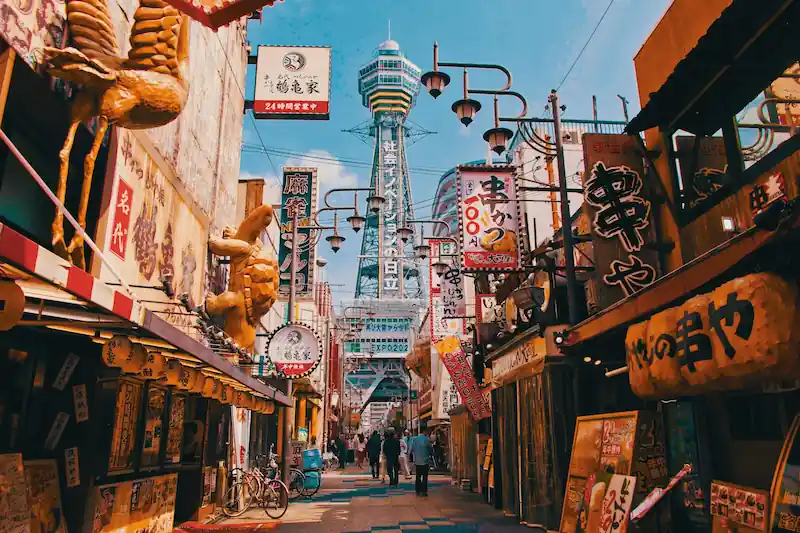
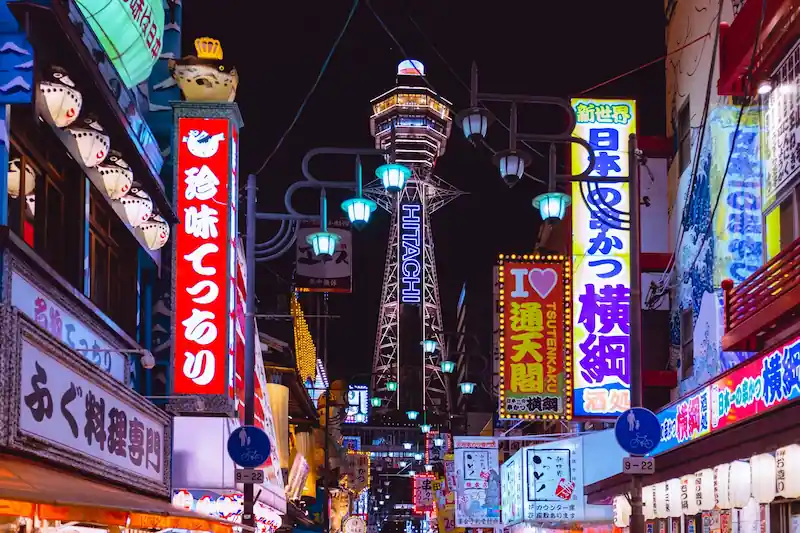
Tennoji & Abeno – Best for: Value, families, longer stays, southern Osaka, and Nara access · Vibe: Practical, local, well connected, and less polished · Stay here if: You want better room value, parks, malls, Abeno Harukas, Shinsekai, and strong southern rail links. · Avoid if: You want boutique luxury or immediate Dotonbori nightlife.
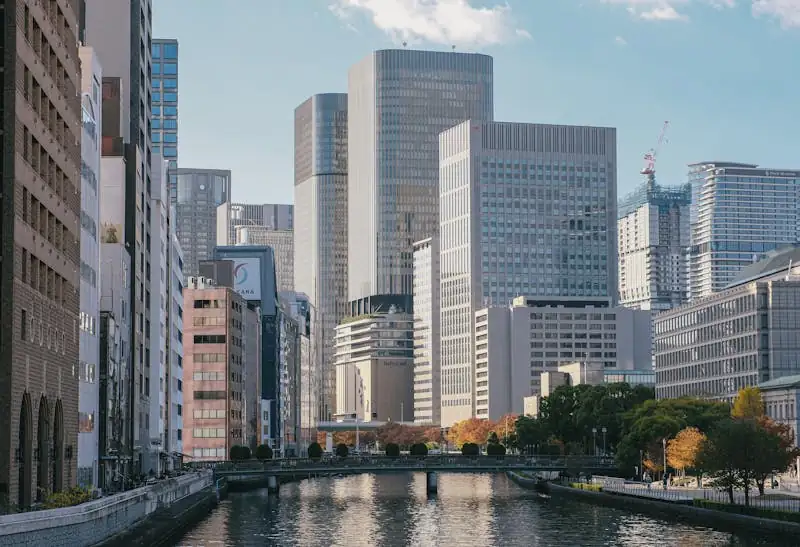
Nakanoshima & Honmachi – Best for: Quiet central stays, couples, museums, design hotels, and business · Vibe: Calm, architectural, riverside, and composed · Stay here if: You want central access, museums, better sleep, and easy movement between Kita and Minami. · Avoid if: You want late-night food and bars directly outside.
Osaka Bay & Universal City – Best for: Universal Studios Japan, Kaiyukan, families, and attraction-focused stays · Vibe: Open, planned, family-oriented, and separated from the core · Stay here if: You want the easiest park or aquarium logistics and may use midday hotel breaks. · Avoid if: You want everyday Osaka food districts, nightlife, or frequent day trips.
How to choose where to stay in Osaka
Osaka does not have one universal hotel center. The best base depends on whether the trip is organized around Minami evenings, Kita rail connections, central museums and business districts, southern value, or destination attractions by the bay. A strong choice reduces repeated station transfers, late-night returns, family fatigue, and the hidden walking inside large transport complexes.
Choose Namba when Dotonbori, food, nightlife, and short-trip atmosphere matter most.
Choose Umeda when Kyoto, Kobe, Shin-Osaka, business travel, shopping, or family logistics dominate.
Choose Shinsaibashi when you want Minami access with more distance from the loudest Dotonbori streets.
Choose Tennoji when room value, families, Nara access, and southern Osaka matter more than prestige.
Choose Nakanoshima or Honmachi for central calm, design hotels, museums, and business-leisure stays.
Choose Osaka Bay only when Universal Studios Japan, Kaiyukan, or a major event is the principal reason for the stay.
Treat Shin-Osaka as a specialist Shinkansen base rather than a default leisure neighborhood.
Treat Fukushima and Tenma as food-rich extensions of Umeda rather than separate first-time hotel answers.
Treat Tsuruhashi and Shinsekai as important experience districts but generally better for visits than for the broadest hotel choice.
Check the exact station entrance, rail operator, underground route, luggage path, and last-train implications before booking.
Osaka geography for choosing a hotel
Osaka’s hotel geography is governed by two main poles, several competing rail operators, and a central north–south corridor. Namba serves Minami and Kansai Airport, Umeda serves northern Kansai and Shin-Osaka connections, Tennoji serves southern routes and Nara, while Honmachi and Nakanoshima sit between the poles. Bay hotels function as attraction logistics rather than central-city bases.
Namba is the emotional and nightlife center, with Nankai access to Kansai Airport and strong southern-city connections.
Umeda is the best general rail base for Kyoto, Kobe, Shin-Osaka, and many business routes.
Shinsaibashi sits on the Midosuji axis between Umeda and Namba and offers the best central compromise.
Tennoji combines JR, Osaka Metro, and Kintetsu access toward Nara, Kansai Airport, and southern Osaka.
Honmachi and Nakanoshima provide central positioning but require more deliberate evening movement.
Osaka Bay and Universal City should be treated as separate attraction zones.
Shin-Osaka is highly efficient for Shinkansen travel but weak for atmosphere and general leisure.
Fukushima and Tenma are excellent dining districts close to Umeda but secondary hotel bases.
Tsuruhashi and Uehonmachi can suit food, Kintetsu rail, and Nara-focused trips but are specialist choices.
Shinsekai is a major experience area, while Tennoji is generally the stronger accommodation base nearby.
Kitahama suits business, architecture, and quiet riverside stays and fits within the wider Nakanoshima–Honmachi logic.
Station size, correct exit, underground routes, and operator choice matter more than straight-line distance.
Minami food and nightlife core – Namba, Dotonbori, Shinsaibashi, Amerikamura, Nippombashi, and the surrounding streets provide first-time atmosphere, food, shopping, and late evenings.
Kita transport and shopping core – Umeda, Osaka Station, nearby Fukushima, and Nakazakicho serve rail-heavy trips, shopping, business, dining, and premium hotels.
Central calm and business belt – Honmachi, Nakanoshima, Kitahama, and Yodoyabashi offer quiet hotels, museums, design, riverside architecture, and central metro access.
Southern value and family corridor – Tennoji, Abeno, Uehonmachi, and access toward Shinsekai provide value, family practicality, Nara connections, and southern Osaka.
Specialist multicultural and food east – Tsuruhashi and Ikuno provide Korean-Japanese food and culture, with accommodation best suited to specific interests or Kintetsu routes.
Shinkansen specialist zone – Shin-Osaka minimizes bullet-train transfers but lacks the atmosphere and evening variety of Umeda or Namba.
Bay and attraction zone – Universal City, Tempozan, and Osaka Bay serve USJ, Kaiyukan, events, and family attraction logistics.
Best areas to stay in Osaka
The best Osaka neighborhood depends on how you want the stay to function. The city is easy to move through, but the wrong base can still create unnecessary station transfers, late-night returns, or family fatigue.
Namba & Dotonbori
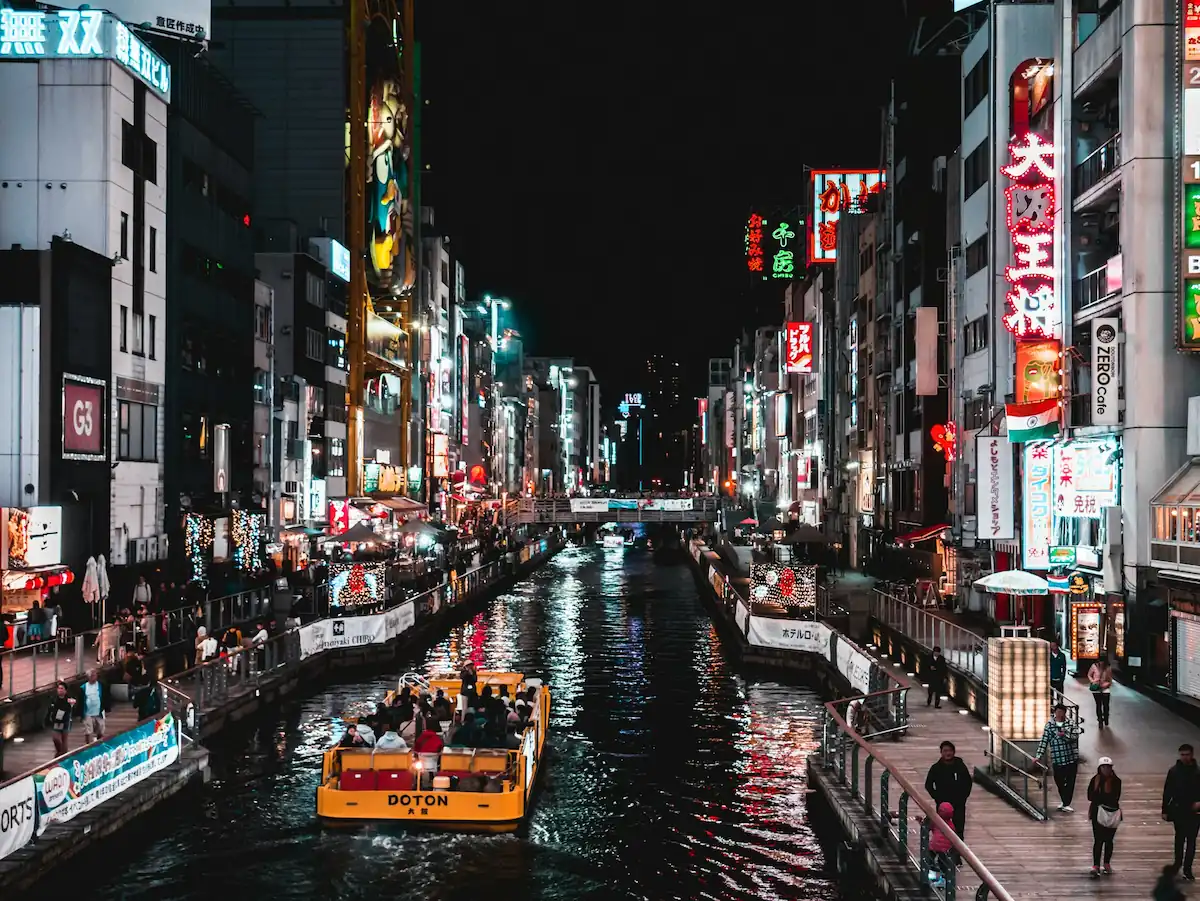
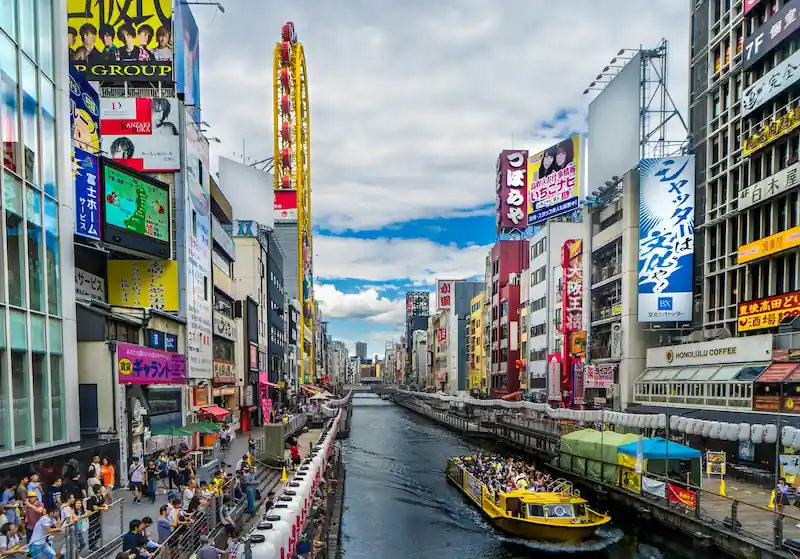
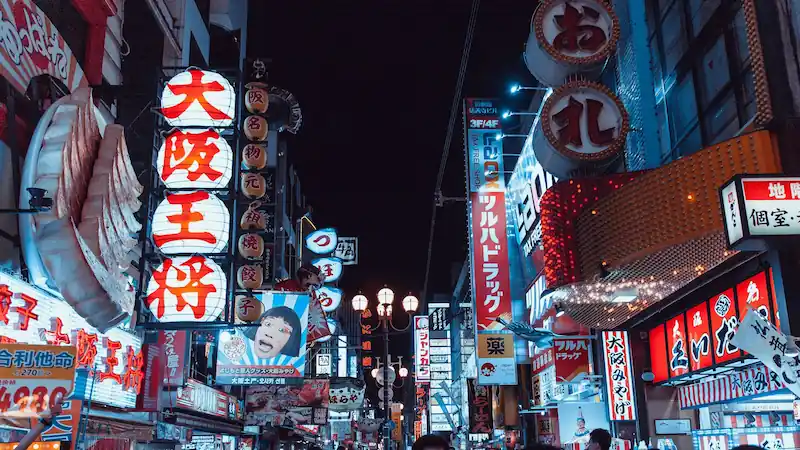
Namba and Dotonbori are Osaka’s strongest first-time base when food, nightlife, and immediate atmosphere matter most. Dotonbori, Hozenji Yokocho, Uranamba, Kuromon Market, Nippombashi, Den Den Town, Nankai airport rail, and multiple metro lines sit within a compact but intense urban zone. The best hotels are usually close enough to walk into the evening action but not directly above the loudest canal, bar, or traffic frontage.
Why stay here: Stay here if you want Osaka to begin outside the lobby and dinner to continue into a walk, bar, second dish, or late snack. Namba is especially effective for two- or three-night visits and travelers arriving through Kansai Airport.
Best for: First-time visitors, food-focused travelers, nightlife, solo trips, couples, short stays, and Kansai Airport arrivals.
Pros
Best overall base for first-time Osaka atmosphere, food, and nightlife
Walkable access to Dotonbori, Hozenji, Uranamba, Kuromon, and Nippombashi
Direct Nankai airport rail and extensive metro or private-rail connections
Excellent for late dinners without worrying about last trains
Broad hotel range including business hotels, ryokan-style stays, apartments, and luxury
Easy access to Shinsaibashi and Amerikamura
Cons
Noise, crowds, bright signage, and street activity continue late
Rooms can be compact and expensive during peak periods
The most famous streets can feel visitor-heavy
Less efficient than Umeda for repeated Kyoto, Kobe, or Shin-Osaka journeys
Hotel names using Namba may cover very different micro-locations
Nearby highlights
Dotonbori canal and night streets
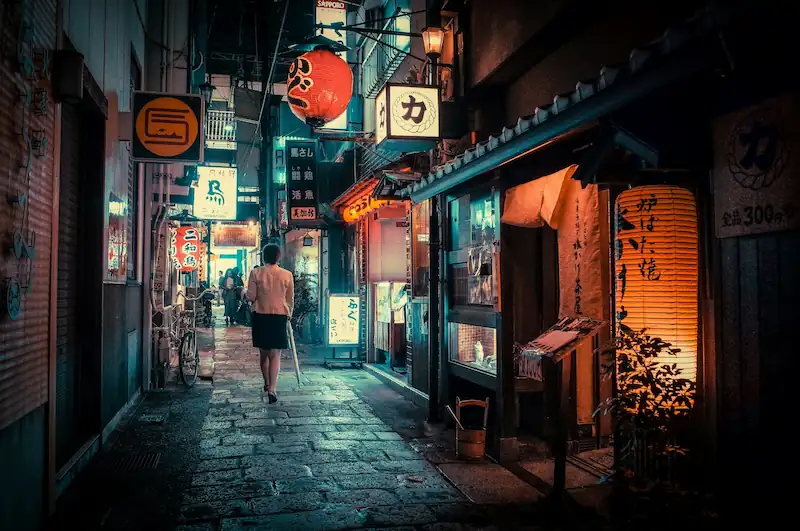
Hozenji Yokocho and Uranamba
Kuromon Ichiba Market
Nippombashi and Den Den Town
Shinsaibashi-suji and Amerikamura
Nankai Namba airport trains
National Bunraku Theatre
Extensive late dining and izakaya
Budget
Sotetsu Fresa Inn Osaka Namba – A practical business-style hotel close to Namba Station, useful for travelers who want easy transport and a central south-side base. Why we recommend: It keeps costs controlled without pushing you away from Namba’s best transport links. Check availability
Sotetsu Grand Fresa Osaka-Namba – A large, efficient hotel near Nippombashi and Dotonbori, with straightforward rooms and very useful access to food streets. Why we recommend: One of the most reliable value choices for travelers prioritizing location over character. Check availability
Osaka Ryokan Kuramoto – A simple ryokan-style stay near Namba and Nippombashi, with tatami rooms and a more traditional accommodation feel. Why we recommend: It offers a different sleep experience without leaving the central Minami zone. Check availability
Mid
Hiyori Hotel Osaka Namba Station – A well-placed hotel near Nankai Namba Station, useful for airport access, shopping, and first-night orientation. Why we recommend: It is one of the strongest mid-range choices when arrival and departure convenience matter. Check availability
Dormy Inn Premium Namba Natural Hot Spring – A comfortable central hotel with onsen-style facilities near Nippombashi and the Dotonbori edge. Why we recommend: The bathing facilities make it more restorative than many standard hotels in this busy zone. Check availability
Hiyori Hotel Flex Osaka Dotonbori – A compact, modern stay close to the Minami action, suited to travelers who want a very walkable base. Why we recommend: It works well for short trips where being close to Dotonbori saves meaningful time. Check availability
Upscale
Cross Hotel Osaka – A polished central hotel just off Dotonbori, with sharper design and better comfort than most standard hotels nearby. Why we recommend: It is unusually well-positioned for travelers who want Minami energy without dropping room quality. Check availability
Swissotel Nankai Osaka – A large upscale hotel directly connected to Nankai Namba Station, with strong transport, dining, and shopping access. Why we recommend: It is the most convenient premium option for airport rail and Namba-based stays. Check availability
Fraser Residence Nankai Osaka – Apartment-style upscale accommodation near Namba Station, useful for longer stays, families, and travelers wanting more room functionality. Why we recommend: It gives more residential practicality than most hotels in the same central location. Check availability
Umeda & Kita
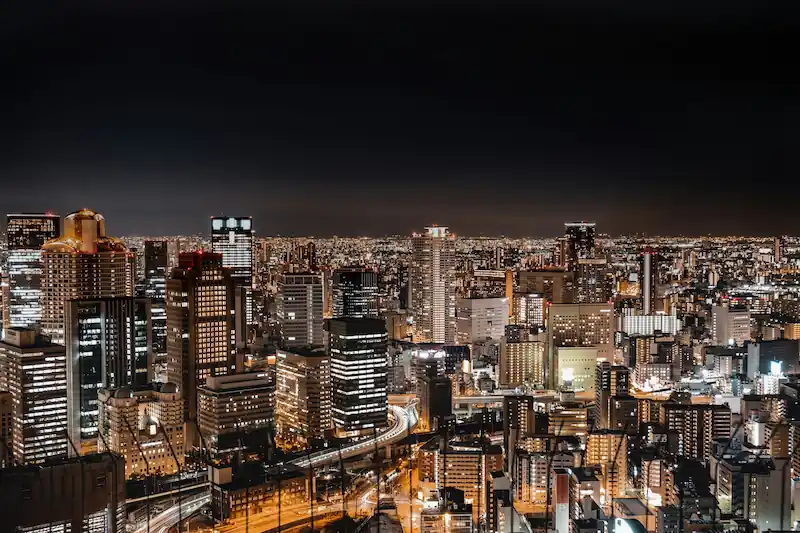
Umeda and Kita form Osaka’s northern transport, shopping, and business engine. Osaka Station, Hankyu, Hanshin, JR, subway links, department stores, Grand Front, Umeda Sky Building, premium hotels, and nearby Fukushima or Nakazakicho create a complete but highly layered urban base.
Why stay here: Stay here when the hotel needs to simplify trains, family meals, business meetings, shopping, and day trips. The district is less immediately atmospheric than Namba but often more efficient over a multi-city Kansai itinerary.
Best for: Day trips, families, business travel, shopping, luxury stays, rail-heavy itineraries, and travelers arriving through Shin-Osaka.
Pros
Best rail base for Kyoto, Kobe, Shin-Osaka, and many Kansai routes
Excellent family, business, mid-range, and luxury hotel supply
Major department stores, food halls, restaurants, and indoor infrastructure
Strong rainy-day and late-arrival practicality
Easy access to Umeda Sky Building, Nakazakicho, Fukushima, and Nakanoshima
Good choice for travelers with luggage or frequent early departures
Cons
Station navigation can be confusing and time-consuming
Street atmosphere feels commercial rather than distinctly Osaka
Premium station-adjacent hotels can become expensive
The district is not walkable to Dotonbori nightlife
A hotel described as Umeda may sit a meaningful distance from the most useful platforms
Nearby highlights
Osaka and Umeda stations
Grand Front Osaka
Umeda Sky Building
Hankyu, Hanshin, and Daimaru food halls
Nakazakicho cafés and low-rise streets
Fukushima dining district
Nakanoshima museums
Connections to Kyoto, Kobe, and Shin-Osaka
Budget
ibis Osaka Umeda – A compact, reliable hotel in the Umeda zone, close to shopping, restaurants, and multiple station connections. Why we recommend: It gives budget-conscious travelers a real Umeda address rather than a compromised outer location. Check availability
ibis Budget Osaka Umeda – A simple value hotel within walking distance of Umeda Station, suited to travelers who prioritize transport access. Why we recommend: It is one of the more practical low-cost options near the north-side hub. Check availability
Hotel LiVEMAX Umeda Central – A functional low-friction stay near the Umeda area, best for short nights and station-focused plans. Why we recommend: It works when price and north-side access matter more than space or atmosphere. Check availability
Mid
Hotel Vischio Osaka-JR Hotel Group – A modern JR-linked hotel near Osaka Station, with clean rooms and a highly practical location. Why we recommend: It is one of the strongest mid-range choices for travelers building days around rail movement. Check availability
Hotel Hankyu RESPIRE OSAKA – A large, modern hotel connected to the Umeda shopping and station ecosystem, with strong family and rail convenience. Why we recommend: It combines station access, shopping, and dining in a way that reduces daily friction. Check availability
DEL style Osaka Shin Umeda by Daiwa Roynet Hotel – A comfortable hotel west of Osaka Station, useful for Umeda access with a slightly calmer feel than the immediate station core. Why we recommend: It offers better breathing room while keeping the northern hub within reach. Check availability
Upscale
InterContinental Hotel Osaka – A high-end hotel in the Grand Front Osaka area, with large rooms, refined service, and excellent Umeda access. Why we recommend: It is the strongest luxury choice for travelers who want rail convenience without sacrificing hotel quality. Check availability
Zentis Osaka – A design-forward hotel in the Kita area with a quieter, more adult tone than the biggest station hotels. Why we recommend: It brings boutique character to a district often dominated by corporate hotels. Check availability
Hotel Hankyu GRAN RESPIRE OSAKA – A newer upscale option in the Umeda orbit, suited to travelers who want a polished stay close to the city’s northern rail core. Why we recommend: It gives Umeda a more premium feel without moving away from the transport advantage. Check availability
Shinsaibashi & Amerikamura
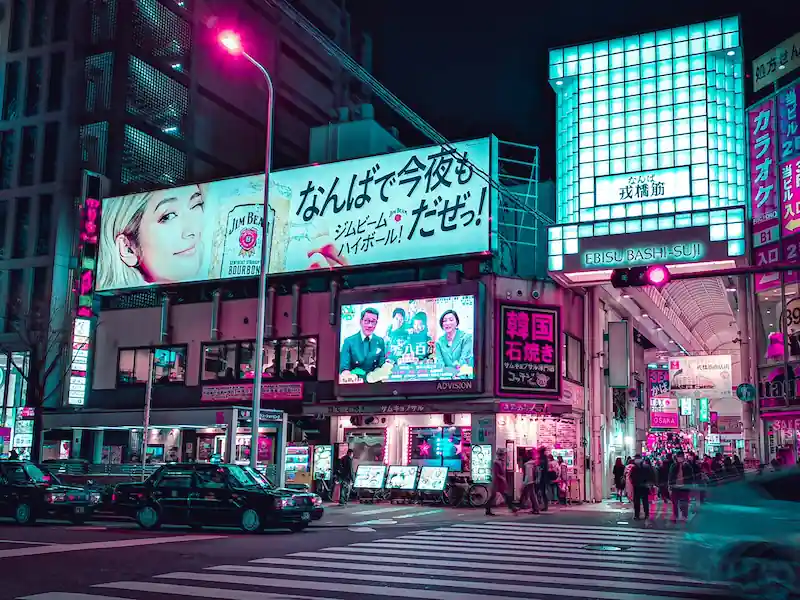
Shinsaibashi and Amerikamura offer the best compromise between Minami’s evening energy and a more controlled hotel setting. The covered Shinsaibashi arcade, Midosuji, Amerikamura, Horie, design retail, cafés, bars, and an easy walk to Dotonbori make the area exceptionally flexible.
Why stay here: Stay here when you want food, shopping, nightlife, and centrality but prefer not to sleep directly in Namba’s busiest streets. The exact side of Midosuji and distance from late bars determine how calm the hotel feels.
Best for: Couples, shoppers, design travelers, younger visitors, nightlife, central first trips, and travelers wanting Minami with better sleep.
Pros
Walkable to Namba and Dotonbori without sleeping on the canal
Strong shopping, design, café, bar, and nightlife access
Good Midosuji and Yotsubashi line connections
More design-led and apartment-style hotel choice than many central districts
Covered arcade provides useful rain and heat protection
Easy access to Horie and Honmachi
Cons
Still busy and commercial throughout the day
Some streets remain noisy late into the night
Less efficient than Umeda for northern Kansai day trips
Hotel room sizes and micro-locations vary sharply
Travelers uninterested in shopping may find parts of the area repetitive
Nearby highlights
Shinsaibashi-suji Shopping Street
Amerikamura and Triangle Park
Horie design shops and cafés
Dotonbori and Hozenji
Midosuji boulevard
Walkable Minami nightlife
Honmachi business district
Multiple metro lines
Budget
Hotel The Rock – A budget capsule-style stay near Honmachi and Shinsaibashi, best for solo travelers who want low cost and central access. Why we recommend: It is useful when location matters more than a conventional hotel room. Check availability
APA Hotel Namba-Shinsaibashi – A compact chain hotel close to the Minami core, suited to short stays and travelers comfortable with small rooms. Why we recommend: It keeps travelers close to nightlife and shopping at a typically lower price point. Check availability
Smile Hotel Premium Osaka Higashi Shinsaibashi – A simple hotel near the eastern Shinsaibashi side, with practical access to Minami food streets. Why we recommend: It works for travelers who want to stay central without paying for design extras. Check availability
Mid
The Bridge Hotel Shinsaibashi – A friendly mid-range hotel close to Shinsaibashi Station and within walking distance of Dotonbori. Why we recommend: It stands out for useful extras and a location that feels central without being chaotic. Check availability
HOTEL THE FLAG Shinsaibashi – A modern design-conscious hotel near Shinsaibashi, with clean rooms and a polished but relaxed feel. Why we recommend: It has more character than most mid-range hotels in this shopping-heavy district. Check availability
Tokyu Stay Osaka Hommachi – A practical extended-stay hotel between Shinsaibashi and Honmachi, with room features that suit longer visits. Why we recommend: In-room amenities make it more functional than a standard short-stay business hotel. Check availability
Upscale
W Osaka – A bold design hotel on Midosuji, positioned between Shinsaibashi and Honmachi with a more fashion-led tone. Why we recommend: It is the strongest choice here for travelers who want a high-design hotel rather than pure convenience. Check availability
Candeo Hotels Osaka Shinsaibashi – A polished hotel near the Minami core, with elevated facilities and stronger comfort than standard business hotels. Why we recommend: It gives central Shinsaibashi stays a more upscale, restorative edge. Check availability
MIMARU Osaka Shinsaibashi West – Apartment-style accommodation near Shinsaibashi, especially useful for families or groups wanting more room structure. Why we recommend: It solves one of Osaka’s main hotel problems: compact rooms for families and longer stays. Check availability
Tennoji & Abeno
Tennoji and Abeno provide one of Osaka’s best combinations of transport, room value, family infrastructure, and southern-city character. Abeno Harukas, Shitennoji, Tennoji Park, museums, malls, Shinsekai, Kintetsu rail, and JR links toward Nara and Kansai Airport give the area more range than its practical reputation suggests.
Why stay here: Stay here when larger rooms, lower rates, family convenience, southern Osaka, or Nara access matter more than sleeping beside Dotonbori. The district is particularly effective for four nights or longer.
Best for: Families, value-focused travelers, longer stays, Nara trips, southern Osaka, repeat visitors, and travelers wanting practical space.
Pros
Strong value compared with Namba and Umeda
Excellent JR, Osaka Metro, and Kintetsu connections
Useful for Nara, Kansai Airport, Shinsekai, and southern Osaka
Family-friendly malls, parks, casual food, and large hotels
Abeno Harukas provides premium rooms and skyline views
More everyday urban texture than the main visitor districts
Cons
Less boutique and polished than Umeda or Nakanoshima
Not walkable to Dotonbori and central nightlife
Some station edges feel busy and traffic-dominated
Luxury inventory is concentrated in a small number of properties
The area can feel spread across Tennoji, Abeno, and Uehonmachi micro-locations
Nearby highlights
Abeno Harukas and Harukas 300
Tennoji Park and Tenshiba
Shitennoji
Shinsekai and Tsutenkaku
Kintetsu and JR access toward Nara
Kansai Airport rail corridors
Family shopping and dining
Access toward Sumiyoshi and Sakai
Budget
Hotel 3 O'Clock Tennoji – A small, simple hotel near Tennoji Park, useful for travelers who want a lower-cost stay in a practical south-side location. Why we recommend: It is one of the more characterful budget choices in the Tennoji area. Check availability
APA Hotel Tennoji-Ekimae – A compact chain hotel near Tennoji Station, suited to short stays and travelers who prioritize station access. Why we recommend: It keeps the cost and location equation simple for a south-side Osaka base. Check availability
Hotel Trend Abeno Tennoji – A straightforward budget stay near Tennoji and Abeno, best for travelers who want practicality over polish. Why we recommend: It is useful when you want Tennoji access without stepping into mid-range pricing. Check availability
Mid
Miyako City Osaka Tennoji – A comfortable hotel directly connected to Tennoji Station, with strong transport access and easy family logistics. Why we recommend: Direct station connection makes it one of the most frictionless Tennoji choices. Check availability
Hotel Trusty Osaka Abeno – A polished mid-range hotel near Abeno and Tennoji, suitable for travelers wanting comfort without central premium prices. Why we recommend: It gives Tennoji a more refined hotel option while keeping the area’s value advantage. Check availability
Hotel Bali Tower Osaka Tennoji – A distinctive, amenity-rich hotel near Tennoji Station, with larger-feeling rooms and a playful tone. Why we recommend: It works well for travelers who want more personality than a standard business hotel. Check availability
Upscale
Osaka Marriott Miyako Hotel – A high-rise luxury hotel inside Abeno Harukas, with expansive views and direct access to Tennoji’s transport and shopping. Why we recommend: It is the clear premium choice in southern Osaka and turns Tennoji into a luxury base. Check availability
Sheraton Miyako Hotel Osaka – A large upscale hotel at Osaka Uehonmachi, between Tennoji and central Osaka, with strong rail access and classic hotel facilities. Why we recommend: It suits travelers who want a more traditional full-service hotel outside the busiest tourist core. Check availability
Hotel Royal Classic Osaka – An upscale hotel at the Namba edge that can work for travelers comparing Tennoji value with Minami comfort. Why we recommend: It is a strong alternative if Tennoji’s upscale supply is limited but you still want south-side access. Check availability
Nakanoshima & Honmachi
Nakanoshima, Kitahama, and Honmachi form Osaka’s calmer central belt between Kita and Minami. Riverside architecture, the National Museum of Art, Nakanoshima Museum of Art, the Science Museum, business hotels, design properties, cafés, and Midosuji access give the area a composed urban feel.
Why stay here: Stay here when quiet sleep, central positioning, museums, work facilities, and design matter more than immediate nightlife. The area is strongest for couples, business-leisure travelers, and repeat visitors comfortable using the metro after dinner.
Best for: Couples, quiet central stays, museums, design hotels, business travel, longer stays, and repeat visitors.
Pros
Central location between Umeda and Namba
Quieter nights and less crowd pressure
Strong museum, architecture, river, and café access
Good design, boutique, business, and mid-range hotel choice
Midosuji and other central metro connections
Often better room value than the most famous tourist districts
Cons
Less immediate first-time atmosphere
Late-night dining is thinner on some office-heavy blocks
Not the easiest base for repeated long-distance rail trips
Requires metro or taxi returns from Minami nightlife
Nakanoshima and Honmachi are distinct micro-locations with different station access
Nearby highlights
National Museum of Art, Osaka
Nakanoshima Museum of Art
Osaka Science Museum
Nakanoshima and Utsubo parks
Kitahama riverside and cafés
Midosuji and Hommachi stations
Easy access to Umeda and Namba
Business and conference districts
Budget
Travelodge Honmachi Osaka – A clean, simple hotel in Honmachi, useful for travelers who want central access at a controlled price. Why we recommend: It delivers practical centrality without the premium of Umeda or Namba. Check availability
HOTEL MYSTAYS Midosuji Honmachi – A functional hotel close to Hommachi Station, well suited to travelers who want to move north and south easily. Why we recommend: The Midosuji-line access makes it more useful than its price band suggests. Check availability
Osaka View Hotel Honmachi – A straightforward central hotel in Honmachi with easy metro access and a calmer business-district setting. Why we recommend: It is a practical low-friction base for travelers who do not need nightlife at the door. Check availability
Mid
Hotel Cordia Osaka Hommachi – A well-designed mid-range hotel near Hommachi, with compact but thoughtful rooms and a calmer central location. Why we recommend: It has more personality and comfort than many business hotels in the same zone. Check availability
Garner Hotel Osaka Honmachi Midosuji by IHG – A modern hotel close to Hommachi and the Midosuji line, suited to travelers who want a practical but polished base. Why we recommend: Its metro access makes it easy to split time between Kita and Minami. Check availability
MOXY Osaka Honmachi – A casual design hotel with a more social tone than standard central business properties. Why we recommend: It gives Honmachi a livelier hotel option without moving into Minami’s noise. Check availability
Upscale
Mitsui Garden Hotel Osaka Premier – A polished riverside hotel near Nakanoshima with a calmer feel, good facilities, and easy access to central Osaka. Why we recommend: It is one of the best upscale choices for travelers who want central calm over nightlife. Check availability
The Lively Osaka Honmachi – A design-forward hotel in Honmachi with a bar, social spaces, and stronger character than most business hotels nearby. Why we recommend: It suits travelers who want boutique energy without sacrificing central access. Check availability
The Royal Park Canvas Osaka Kitahama – A refined hotel near Kitahama and Nakanoshima, with a calmer riverside-adjacent location and polished public spaces. Why we recommend: It works especially well for couples who want a composed central base. Check availability
Osaka Bay & Universal City
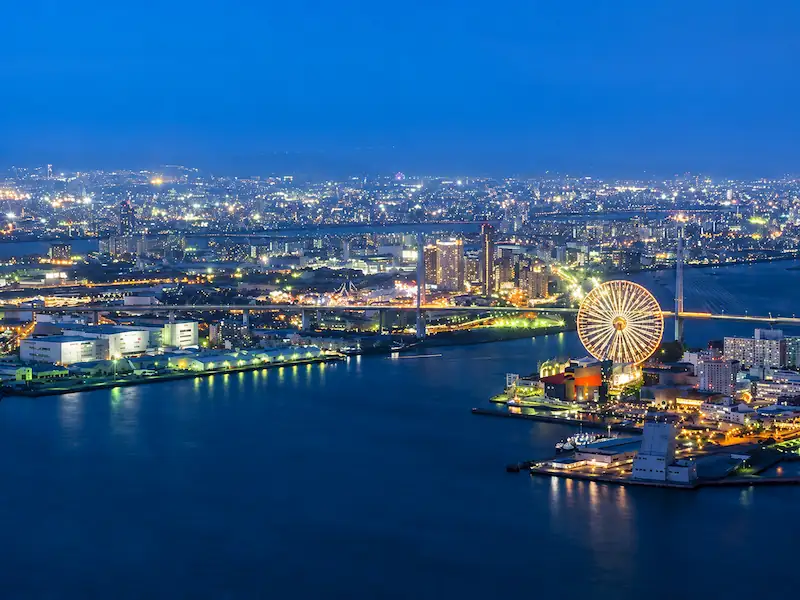
Osaka Bay and Universal City are specialist accommodation zones built around Universal Studios Japan, Kaiyukan, Tempozan, family attractions, events, and waterfront hotels. They reduce fatigue on attraction days but feel separate from the food, markets, and nightlife that define everyday Osaka.
Why stay here: Stay here when early park entry, midday hotel breaks, younger children, the aquarium, or a multi-day attraction plan is more important than central evenings. For a balanced trip, one or two bay nights can work better than basing the full stay here.
Best for: Universal Studios Japan, Kaiyukan, families, events, theme-park fans, and short attraction-focused stays.
Pros
Best possible Universal Studios Japan access
Strong family rooms and attraction-oriented hotel facilities
Convenient for Kaiyukan, Tempozan, and bay events
Useful for early starts, breaks, and tired-child returns
More open space and simpler pedestrian environments
Some hotels include spa, bath, or larger-room facilities
Cons
Separated from central Osaka’s food and nightlife
Poor general base for Kansai day trips
Limited evening variety outside attraction zones
Extra travel required for Namba, Umeda, castle, and cultural districts
Hotel prices rise sharply around major park dates
Nearby highlights
Universal Studios Japan
Universal CityWalk
Osaka Aquarium Kaiyukan
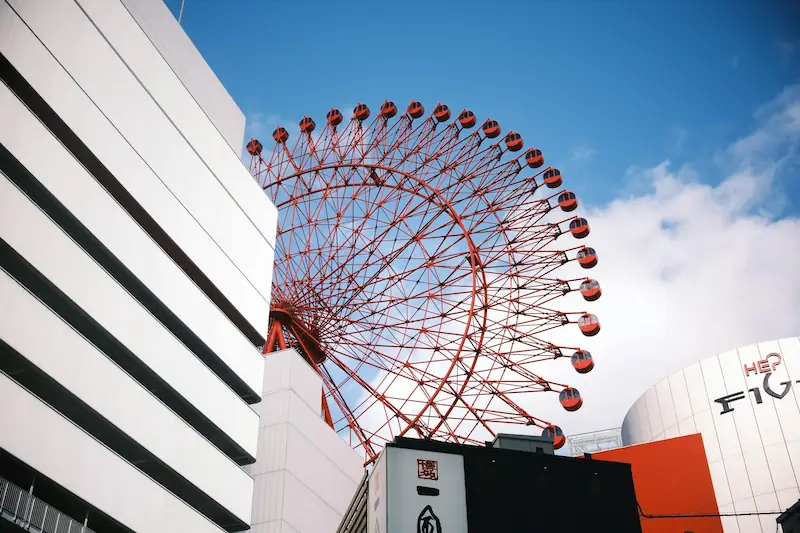
Tempozan Ferris Wheel
Bay cruises and waterfront
LEGOLAND Discovery Center
Family-oriented hotels
Event and exhibition facilities
Budget
La'gent Hotel Osaka Bay – A colorful, practical hotel near Universal City with family-friendly room options and lower prices than the closest park hotels. Why we recommend: It is one of the better-value choices for travelers who still want Osaka Bay convenience. Check availability
Bande Hotel Tenpozan Higashi – A simple hotel near the bay and aquarium side, useful for travelers focused on Kaiyukan rather than nightlife. Why we recommend: It keeps bay-area stays affordable when Universal City pricing rises. Check availability
Hotel Seagull Tenpozan Osaka – A straightforward waterfront-area hotel close to Tempozan and Kaiyukan, suited to short family or aquarium-focused stays. Why we recommend: It works when the bay itself is the priority rather than central Osaka. Check availability
Mid
The Singulari Hotel & Skyspa at Universal Studios Japan – A strong Universal City hotel with direct park-area access and skyspa facilities that help after long attraction days. Why we recommend: It balances theme-park convenience with a more restorative hotel experience. Check availability
Hotel Universal Port – A family-oriented hotel near Universal Studios Japan, with playful interiors and strong park logistics. Why we recommend: It is one of the most dependable family choices in the Universal City cluster. Check availability
Hotel Keihan Universal Tower – A large hotel beside Universal City Station, with easy transport and efficient park-day access. Why we recommend: Its station-side location makes arrival, park entry, and returns simple. Check availability
Upscale
LIBER HOTEL Osaka – A large, polished hotel in the Osaka Bay area with spacious facilities and a calmer setting than the immediate park gate. Why we recommend: It is one of the best upscale bay choices for families who want room to decompress. Check availability
Oriental Hotel Universal City – A polished Universal City hotel close to the park, with a clean, convenient setup for attraction-focused stays. Why we recommend: It gives families a smoother, more comfortable park base than cheaper outer options. Check availability
The Park Front Hotel at Universal Studios Japan – A premium hotel at the Universal Studios Japan gate, designed around maximum proximity and easy family movement. Why we recommend: It is the strongest choice when minimizing walking and transfer friction is worth the premium. Check availability
Where to stay in Osaka for first-time visitors
First-time visitors should choose between immediate Osaka atmosphere, rail efficiency, and central balance. Namba, Umeda, and Shinsaibashi are the strongest general answers; Tennoji is the value alternative, while Nakanoshima suits travelers who deliberately prefer calm.
Choose Namba for the most immediate food, nightlife, and Dotonbori experience.
Choose Umeda if Kyoto, Kobe, Shin-Osaka, shopping, or family logistics are central.
Choose Shinsaibashi if you want Minami on foot with more distance from the loudest nightlife.
Choose Tennoji for better value, family practicality, and southern rail access.
Choose Nakanoshima or Honmachi only if quiet sleep and museums matter more than first-night atmosphere.
Avoid Osaka Bay for a general first trip unless Universal Studios Japan is a defining priority.
Food, nightlife, canal streets, and immediate Osaka identity.
First visit with several day trips
Umeda & Kita
Kyoto, Kobe, Shin-Osaka, shopping, and rail efficiency.
Central first visit with better sleep
Shinsaibashi & Amerikamura
Walkable Minami access with more hotel choice away from Dotonbori.
Value-focused first visit
Tennoji & Abeno
Transport, larger rooms, families, and southern Osaka.
Where to stay in Osaka with family
Families should prioritize room dimensions, bed configuration, laundry, food access, station simplicity, lifts, and short returns. Osaka’s apartment hotels and family rooms can solve more problems than a famous address with two small beds.
Umeda is the easiest all-round family base for transport, shopping, food halls, indoor infrastructure, and day trips.
Tennoji provides better room value, parks, malls, family attractions, and simpler access toward Nara.
Osaka Bay is best when Universal Studios Japan or Kaiyukan defines one or more days.
Shinsaibashi works well with apartment-style hotels and older children who enjoy central walking.
Namba can work for families, but choose a quieter street, strong soundproofing, and a realistic room layout.
Nakanoshima and Honmachi suit families wanting calm and larger business-style rooms, provided metro use is acceptable.
Verify connecting rooms, real beds, washing machines, breakfast, luggage storage, and child policies before booking.
FamilyNeed
BestArea
TradeOff
Best all-round family base
Umeda & Kita
Large stations and less classic street atmosphere.
Best value and space
Tennoji & Abeno
Less boutique polish and more distance from Minami.
Best theme-park logistics
Osaka Bay & Universal City
Weak general city access.
Best apartment-style central stay
Shinsaibashi or Namba
Noise and compact streets require careful hotel selection.
Best calm central base
Nakanoshima & Honmachi
More metro use for evening food districts.
Where to stay in Osaka for nightlife
Osaka nightlife is strongest in the south, but different districts serve different evenings: Namba for iconic food and late energy, Shinsaibashi and Amerikamura for bars and younger nightlife, Umeda for polished dining, and Fukushima or Tenma for a more local izakaya rhythm.
Choose Namba and Dotonbori when you want to walk home after late food, bars, Hozenji, and Uranamba.
Choose Shinsaibashi and Amerikamura for bars, clubs, fashion, music, and easier access to Horie.
Choose Umeda for department-store dining, hotel bars, rooftops, and polished evenings.
Use Fukushima as a food-rich alternative near Umeda, though hotel choice is smaller.
Use Tenma for izakaya and standing bars, but it is generally better to visit than to choose as a first-time hotel base.
Choose Nakanoshima or Honmachi for quiet sleep rather than spontaneous late nights.
Tennoji suits casual southern evenings and Shinsekai access but not the city’s broadest nightlife.
NightlifeStyle
BestArea
Caution
Classic Osaka food and neon
Namba & Dotonbori
Noise, crowds, and visitor-heavy streets.
Bars, music, and younger energy
Shinsaibashi & Amerikamura
Late activity varies sharply by block.
Polished dining and rooftops
Umeda & Kita
More commercial and station-centered.
Local izakaya evenings
Umeda edge / Fukushima access
Smaller venues and less hotel choice.
Quiet hotel after dinner elsewhere
Nakanoshima & Honmachi
Requires a metro or taxi return.
Where to stay in Osaka on a budget
Osaka offers strong budget and mid-range hotel value, but the cheapest listing can lose its advantage through poor station access, small rooms, weak soundproofing, or repeated transfers. Compare the total daily route, not only the room rate.
Tennoji offers the strongest overall balance of value, transport, food, and room practicality.
Honmachi often provides the best quiet central value between Umeda and Namba.
Namba has extensive budget inventory, but the best locations sell early and room sizes can be very small.
Shinsaibashi can offer good value on the Honmachi or Nagahoribashi edges.
Umeda budget rooms are useful for day trips but can carry a location premium.
Shin-Osaka is useful only when Shinkansen convenience genuinely saves repeated travel.
Tsuruhashi and southern stations can be cheaper, but they require a specific transport or food rationale.
Avoid remote hotels unless the saving remains meaningful after extra travel and lost evening flexibility.
BudgetStrategy
BestArea
WatchFor
Best value with strong transport
Tennoji & Abeno
Less boutique atmosphere and distance from Namba.
Best quiet central value
Honmachi
Thinner late-night street life.
Best low-cost first-time energy
Namba edge
Compact rooms and noise.
Best central shopping value
Shinsaibashi edge
Exact station and street matter.
Best specialist rail value
Shin-Osaka
Weak leisure atmosphere.
Where to stay depending on trip length
Short trips reward immediate atmosphere or rail simplicity; longer stays can prioritize room size, laundry, sleep quality, and neighborhood specialization. The number and direction of day trips should influence the hotel as much as the Osaka sightseeing plan.
Label
Stay
Avoid
Why
1 night
Namba for an evening stop, Umeda for rail, or Shin-Osaka only for a very early Shinkansen
Osaka Bay or quiet business districts without a specific reason
The hotel must solve either the evening or the next departure.
2 nights
Namba, Shinsaibashi, or Umeda
Outer value hotels and specialist districts
The strongest city experiences should require minimal transfers.
3 days
Namba, Shinsaibashi, Umeda, or Tennoji
Osaka Bay unless USJ is included
A three-day trip needs both city atmosphere and practical access.
4 to 5 days
Umeda, Shinsaibashi, Nakanoshima, Honmachi, or Tennoji
Paying maximum Dotonbori rates if several days begin elsewhere
This length allows a more nuanced balance of sleep, rail, room value, and evenings.
1 week
Umeda for day trips, Tennoji for value, Nakanoshima for calm, or an apartment hotel in Shinsaibashi
Very small rooms or direct nightlife frontage
Laundry, storage, kitchens, work space, and repeat transport become decisive.
Family trip
Umeda, Tennoji, Shinsaibashi apartments, or Osaka Bay for park-heavy stays
The loudest Dotonbori streets and difficult station routes
Room format, easy food, lifts, and short returns matter more than pure atmosphere.
Food-focused trip
Namba or Shinsaibashi, with Umeda as the practical alternative
Bay hotels and isolated business districts
Late meals and spontaneous second stops should remain easy.
Northern private railways and JR reduce travel friction.
Nara and southern Kansai focus
Tennoji, Abeno, Uehonmachi, or Namba
Far northern or bay locations
Kintetsu, JR, and Nankai routes favor southern hubs.
Universal Studios Japan trip
One or two nights in Universal City, then move central if the wider city matters
Using the bay for every Osaka night by default
A split stay can protect both park energy and the city experience.
Return visit
Nakanoshima, Honmachi, Tennoji, Kitahama, or a quieter Shinsaibashi edge
Repeating Dotonbori automatically
A calmer or more specialized base reveals another Osaka.
How to choose the right hotel in Osaka
Osaka has abundant hotels, but the exact building and station relationship determine whether a stay feels easy. Room size, soundproofing, station exits, rail operators, bath facilities, laundry, and luggage handling often matter more than brand prestige.
Topic
WhatToDo
WhatToAvoid
WhyItMatters
Verify the exact station and operator
Check whether you need JR, Osaka Metro, Nankai, Kintetsu, Hankyu, Hanshin, or another line.
Assuming all stations with similar names share the same platforms or entrances.
The wrong operator can add transfers and long station walks every day.
Assuming every extended-stay hotel has the same facilities.
Laundry and storage become highly valuable after four or five nights.
Use food access as a hotel criterion
Check breakfast, convenience stores, depachika, late restaurants, and family-friendly meals nearby.
Choosing a quiet business district without a realistic evening meal plan.
Food is central to Osaka and should remain easy around the hotel.
Review recent construction and renovation reports
Check current comments on station works, nearby construction, lift queues, and facility closures.
Relying only on older reviews or official photos.
Fast-changing station districts can alter noise and access.
Book specialist inventory early
Reserve family apartments, connected rooms, ryokan-style stays, park hotels, view rooms, and small design hotels early.
Assuming Osaka’s large inventory makes every room type interchangeable.
The best formats sell before ordinary business rooms.
Compare the full price
Include taxes, breakfast, extra beds, luggage forwarding, laundry, cancellation, and transport.
Comparing only the headline nightly rate.
A slightly more expensive hotel can reduce daily travel and additional costs.
FAQ: where to stay in Osaka
These answers compare Osaka’s principal hotel areas and the specialist zones travelers often consider for first visits, families, nightlife, food, budget, day trips, Universal Studios Japan, and longer stays.
What is the best area to stay in Osaka for first-time visitors?
Namba is best for food, nightlife, and immediate Osaka atmosphere. Umeda is better for day trips, rail, shopping, and families. Shinsaibashi is the strongest middle ground when you want Minami on foot with more distance from Dotonbori.
Is Namba or Umeda better to stay in?
Choose Namba for Dotonbori, food, nightlife, and Nankai airport access. Choose Umeda for Kyoto, Kobe, Shin-Osaka, shopping, business, and easier family logistics. They solve different itineraries rather than competing as one universal center.
Is Shinsaibashi a good place to stay?
Yes. Shinsaibashi is central, walkable to Namba, well connected by the Midosuji line, and generally easier to tailor for couples, shopping, design hotels, and nightlife with better sleep than the busiest Dotonbori blocks.
Is Tennoji a good area to stay in Osaka?
Yes for value, families, larger rooms, Abeno Harukas, Shinsekai, Nara access, and southern Osaka. It is less polished than Umeda and less immediate for Dotonbori, but highly practical.
Is Nakanoshima or Honmachi a good place to stay?
Yes for quiet central hotels, museums, design, business travel, and easy metro access between Umeda and Namba. The trade-off is less spontaneous nightlife and fewer late restaurants on office-heavy blocks.
Where should families stay in Osaka?
Umeda is the easiest all-round family base, Tennoji offers strong value and space, Shinsaibashi has useful apartment hotels, and Universal City is best for a park-focused stay. Room configuration matters more than district prestige.
Where should couples stay in Osaka?
Choose Shinsaibashi for design, food, and nightlife balance; Namba for energy; Nakanoshima or Kitahama for quiet and architecture; or Umeda for luxury, views, and polished dining.
Where should solo travelers stay in Osaka?
Namba is easiest for nightlife and food, Shinsaibashi for central flexibility, Umeda for rail, and Honmachi for quiet value. Capsule hotels and compact business hotels are widely available, but exact location and luggage storage should be checked.
Where should I stay in Osaka for nightlife?
Namba and Dotonbori are strongest for iconic food and late energy. Shinsaibashi and Amerikamura suit bars, clubs, and younger nightlife. Umeda offers polished dining, while Fukushima and Tenma are excellent areas to visit for izakaya.
Where should I stay in Osaka for food?
Namba is the easiest overall food base, Shinsaibashi balances food and hotel comfort, Umeda excels in department-store and station dining, and Tennoji suits casual southern food. Tsuruhashi is best visited for yakiniku and Korean-Japanese food.
What is the best area to stay in Osaka on a budget?
Tennoji provides the strongest value and transport combination. Honmachi offers quiet central value, while Namba and Shinsaibashi have extensive budget inventory with smaller rooms and more noise.
What is the best area for luxury hotels in Osaka?
Umeda has the strongest concentration of full-service luxury hotels and rail convenience. Namba offers premium hotels with nightlife and airport access, while Abeno Harukas provides the principal southern luxury option.
What is the best area for boutique or design hotels?
Shinsaibashi, Honmachi, Nakanoshima, Kitahama, and selected parts of Kita provide the strongest design-led choices. Chinatown-style heritage inventory is limited in Osaka, so design usually comes through modern urban hotels.
Should I stay near Shin-Osaka Station?
Only when early or repeated Shinkansen journeys create a meaningful time saving. Umeda is generally a better leisure base, with stronger dining, shopping, hotel choice, and easy access to Shin-Osaka.
Where should I stay for Kyoto day trips?
Umeda is usually best because JR, Hankyu, and other routes serve different parts of Kyoto. Shin-Osaka helps for Shinkansen but is less attractive as a leisure base. The ideal line depends on the Kyoto district you plan to visit.
Where should I stay for Nara day trips?
Tennoji, Osaka Uehonmachi, or Namba are strong choices. Kintetsu routes often provide convenient access toward central Nara, while JR services from Tennoji suit other pass and itinerary patterns.
Where should I stay for Kansai Airport?
Namba is best for direct Nankai services, Tennoji for JR airport routes, and Umeda for broader city convenience with train or bus options. Choose according to departure time, luggage, and the rest of the stay.
Is Osaka Bay a good place to stay?
Yes for Universal Studios Japan, Kaiyukan, families, and attraction logistics. It is not the strongest base for a general Osaka trip because central food, nightlife, and rail hubs require extra travel.
Should I stay at Universal City for Universal Studios Japan?
It is worthwhile for one or two nights when early entry, children, or midday breaks matter. A split stay can provide park convenience without giving up central Osaka evenings for the entire trip.
Is Fukushima a good area to stay?
Fukushima is excellent for restaurants and izakaya near Umeda, but hotel choice is smaller and the district is better treated as a dining extension of Kita than a primary first-time accommodation area.
Is Tenma a good area to stay?
Tenma is lively and strong for izakaya, standing bars, and Tenjinbashisuji, but Umeda usually provides better hotel choice and transport. Tenma is more often a place to visit in the evening.
Is Tsuruhashi a good place to stay?
Tsuruhashi can suit travelers focused on Korean-Japanese food, Kintetsu rail, or lower prices, but it is a specialist choice. Tennoji, Namba, or Uehonmachi usually provide broader hotel and city access.
Is Shinsekai a good place to stay?
Shinsekai offers retro atmosphere and budget hotels, but Tennoji is generally the stronger nearby base for transport, families, room choice, and overall comfort. Visit Shinsekai for food and evening texture.
Is Kitahama a good area to stay?
Kitahama suits couples, business travelers, architecture interests, and quiet riverside stays. It fits within the broader Nakanoshima–Honmachi strategy and requires more deliberate evening planning.
What is the safest area to stay in Osaka?
Central Osaka is generally safe. Umeda, Nakanoshima, Honmachi, Shinsaibashi, Namba, Tennoji, and Universal City are widely used by travelers. The main differences concern nightlife intensity, traffic, station complexity, and sleep comfort rather than serious safety.
How many nights should I stay in Osaka?
Three nights is a strong first-time minimum. Four or five nights allow deeper neighborhoods, museums, USJ, Kaiyukan, or one day trip. A week supports Osaka as a Kansai base without reducing the city to evenings only.
Where should I stay in Osaka for one night?
Choose Namba for an evening and direct airport access, Umeda for trains and shopping, or Shin-Osaka only when an early Shinkansen is the central constraint.
Are apartment hotels a good choice in Osaka?
Yes, especially for families, groups, and stays of four nights or more. Check bed configuration, washing machines, kitchens, housekeeping frequency, luggage storage, and whether reception is available.
Are hotels with public baths worth it in Osaka?
They can add substantial value after long walking days. Confirm bath hours, tattoo policies, maintenance closures, gender arrangements, and whether the property offers a true communal bath rather than only a spa label.
What should I check before booking an Osaka hotel?
Check the exact station and operator, station exit, lift route, room size, bed width, noise exposure, laundry, luggage storage, breakfast, bath facilities, construction reports, and late-night food nearby.
How far in advance should I book Osaka hotels?
Book early for cherry blossom season, Golden Week, autumn weekends, school holidays, major events, and Universal Studios Japan dates. Family apartments, connected rooms, ryokan-style stays, and prime station hotels disappear first.
Choose the right urban pole first, then verify the station, operator, exit, room format, noise exposure, and evening food options.
Continue planning your osaka trip
Once your base is clear, use the Osaka city guide to understand the city’s north–south structure, the things-to-do guide to select experiences, and the itinerary pages to group days around rail lines, meals, weather, attraction bookings, and evening energy.
Turn the right neighborhood into the right itinerary
Once you know where to stay in Osaka, the next step is structuring the rest of your trip around that base. Use the planner to build a route that fits your pace, priorities, and how you actually want your days to unfold.