Best things to do in Osaka, from food streets to major sights
Discover the best things to do in Osaka, from Dotonbori’s neon and Osaka Castle’s broad parkland to bunraku, merchant history, covered shopping streets, market breakfasts, aquarium halls, theme-park days, retro neighborhoods, Korean food streets, public baths, and easy Kansai excursions. Osaka is strongest when each day combines one major anchor with a compact district, a specific food experience, and enough time for the city’s social rhythm.
Best time
March to May and October to November are generally easiest for walking and outdoor districts. Summer is hot and humid, while winter is colder but often clear. Covered arcades, station complexes, museums, food halls, aquariums, baths, and indoor attractions make Osaka workable year-round.
Ideal trip length
Two full days cover the essential city, three days allow stronger cultural and neighborhood depth, and four days make room for Universal Studios Japan, the Bay Area, or one substantial day trip without reducing Osaka to evening food stops.
Keep planning your osaka trip
Use the Osaka city guide to understand the city’s north–south structure, compare neighborhoods in the where-to-stay guide, and use the itinerary pages to group these activities around rail movement, meals, weather, and realistic evening energy.
Best things to do in Osaka at a glance
Walk Dotonbori, Hozenji, and Uranamba after dark – Area: Namba / Minami · Best for: Osaka’s defining evening energy, food, and first-time atmosphere · Time needed: 2 to 4 hours · Worth it: Essential, provided you move beyond the Glico sign into side lanes and smaller food streets. · Book ahead: No, unless joining a food or izakaya tour.
Visit Osaka Castle Park and the Osaka Museum of History – Area: Osaka Castle / Tanimachi · Best for: Landmark architecture, city history, seasonal landscapes, and first-time context · Time needed: 3 to 5 hours · Worth it: The park and exterior provide scale; the museum adds the historical framework the reconstructed tower cannot fully deliver. · Book ahead: Usually no; useful during cherry blossom season and busy holidays.
Explore Shinsekai, Tsutenkaku, and Janjan Yokocho – Area: Shinsekai / Tennoji · Best for: Retro streets, kushikatsu, popular culture, and southern Osaka · Time needed: 2 to 4 hours · Worth it: One of the clearest expressions of Osaka’s informal, theatrical, food-led identity. · Book ahead: No, unless reserving a specific restaurant or tower attraction.
Choose one city panorama – Area: Umeda or Tennoji · Best for: Orientation, sunset, couples, and skyline photography · Time needed: 1 to 2 hours · Worth it: Choose Umeda Sky Building for the northern rail city or Abeno Harukas for the southern city rather than paying for both by default. · Book ahead: Helpful for sunset and peak weekends.
Spend a half day at Osaka Aquarium Kaiyukan – Area: Tempozan / Osaka Bay · Best for: Families, marine life, rain, and slower-paced sightseeing · Time needed: 2.5 to 4 hours · Worth it: One of Osaka’s strongest indoor attractions and substantial enough to anchor the Bay Area. · Book ahead: Recommended for weekends, school holidays, and timed-entry periods.
Commit a full day to Universal Studios Japan – Area: Universal City · Best for: Theme parks, Nintendo, families, film attractions, and high-energy travel · Time needed: Full day · Worth it: Worth the time when the park is a trip priority; poor value as a rushed add-on. · Book ahead: Yes—tickets, Express Passes, and current timed-area procedures.
Use the National Bunraku Theatre or Noh to see performing arts – Area: Nippombashi or central Osaka · Best for: Traditional performance, specialist culture, and repeat visitors · Time needed: 1.5 to 4 hours · Worth it: A distinctive Osaka cultural experience when the performance calendar aligns with your dates. · Book ahead: Yes; schedules and suitable seats are limited.
Eat through Kuromon, Kizu, or Tsuruhashi with a clear purpose – Area: Nipponbashi / Daikokucho / Tsuruhashi · Best for: Markets, seafood, Korean-Japanese food, yakiniku, and morning exploration · Time needed: 1.5 to 3 hours · Worth it: The best choice depends on whether you want famous visitor access, a more working market, or a Korean food district. · Book ahead: No for independent visits; yes for guided food walks.
Visit Sumiyoshi Taisha – Area: Southern Osaka · Best for: Shrine architecture, quieter culture, and a break from the commercial center · Time needed: 1.5 to 3 hours including travel · Worth it: One of Osaka’s most important religious sites and a strong free cultural counterpoint to Minami. · Book ahead: No.
Explore Nakanoshima’s art, science, and river architecture – Area: Nakanoshima · Best for: Modern art, science, architecture, riverside walks, and rainy days · Time needed: 3 to 5 hours · Worth it: A composed cultural district that reveals Osaka beyond food streets and retail centers. · Book ahead: Usually no; check current exhibitions and planetarium schedules.
Experience Osaka’s public-bath culture – Area: Bay Area or neighborhood sento · Best for: Relaxation, local routine, rainy weather, and evening recovery · Time needed: 2 to 4 hours · Worth it: A valuable cultural experience when approached with bathing etiquette and chosen for atmosphere rather than spectacle alone. · Book ahead: Sometimes for large themed facilities; neighborhood sento are usually flexible.
Take the easiest first day trip to Nara – Area: Nara · Best for: Temples, deer park, historic landscapes, and a clear contrast with Osaka · Time needed: Half to full day · Worth it: The strongest first excursion for most travelers who are not already spending extensive time in Nara. · Book ahead: No independently; yes for guided multi-stop routes.
How to choose what is actually worth doing in Osaka
Osaka is a merchant and entertainment city whose strongest attractions are inseparable from food, transit, performance, and neighborhood life. Instead of collecting isolated sights, group activities by urban pole: Minami for evening food and popular culture, Kita and Nakanoshima for views and museums, Tennoji and Shinsekai for southern history and retro streets, Osaka Castle for political history and parkland, and the Bay Area for major family attractions.
Use Dotonbori as an evening gateway, then move into Hozenji, Uranamba, Shinsaibashi, or Nippombashi rather than remaining on the canal.
Pair Osaka Castle with the Osaka Museum of History, Naniwa Palace ruins, or the surrounding park to understand more than the reconstructed keep.
Choose one principal observation deck unless skyline views are a central interest.
Use Nakanoshima, Bunraku, Noh, Sumiyoshi Taisha, merchant museums, and craft or cooking experiences to add cultural depth beyond food and nightlife.
Treat Kuromon as the easiest famous market, Kizu as a more working wholesale-food experience, and Tsuruhashi as a food district rather than interchangeable stops.
Book Universal Studios Japan, major performances, sought-after food tours, workshops, and peak aquarium visits; keep arcades, shrines, parks, and neighborhood walks flexible.
With children, alternate high-energy attractions with Kaiyukan, Kids Plaza, science museums, parks, or hands-on food experiences.
Choose Nara, Kobe, Himeji, Sakai, Minoh, or Koyasan according to the contrast you want rather than adding a day trip automatically.
Iconic things to do in Osaka
Osaka’s essential sights represent different versions of the city: neon entertainment, feudal power, retro popular culture, station-city engineering, bayfront spectacle, and large-scale family attractions. The best first trip selects one experience from each relevant layer rather than repeating views or commercial districts.
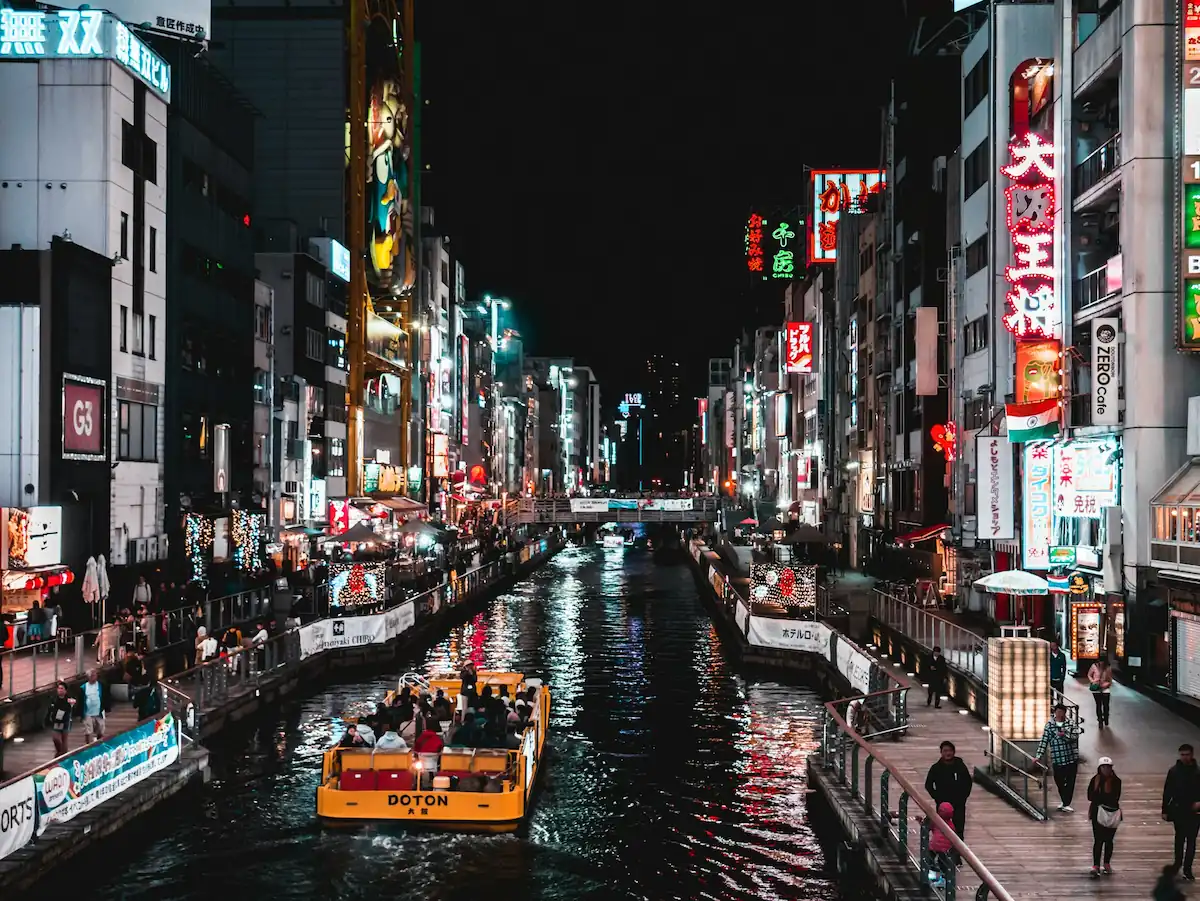
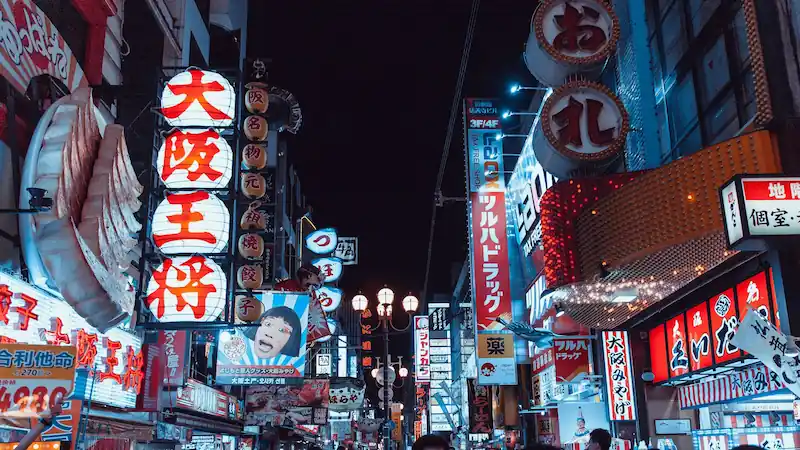
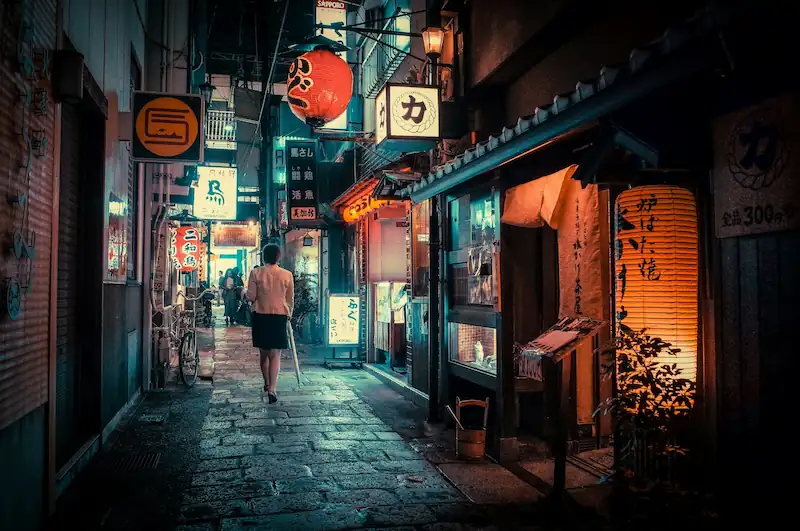
Walk Dotonbori as a complete evening district – See the canal and famous signs, but continue into Hozenji Yokocho, Sennichimae, Uranamba, and nearby food lanes. Dotonbori is most rewarding as a moving urban scene of restaurants, bridges, theaters, and crowds rather than a single photograph. (First-time essential · Best for: First-time evenings, neon, street energy, and food)Find tours & experiences
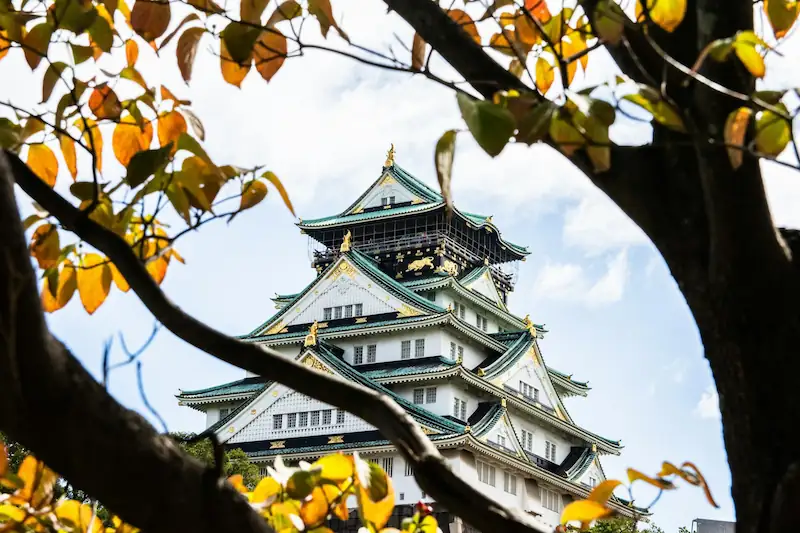
Experience Osaka Castle through park, walls, and history – The reconstructed keep is only one part of the experience. Moats, massive stone walls, gates, seasonal parkland, the Osaka Museum of History, and nearby Naniwa Palace remains provide a fuller understanding of Osaka’s political development. (High payoff · Best for: History, architecture, seasonal walks, and first-time context)Find tours & experiences
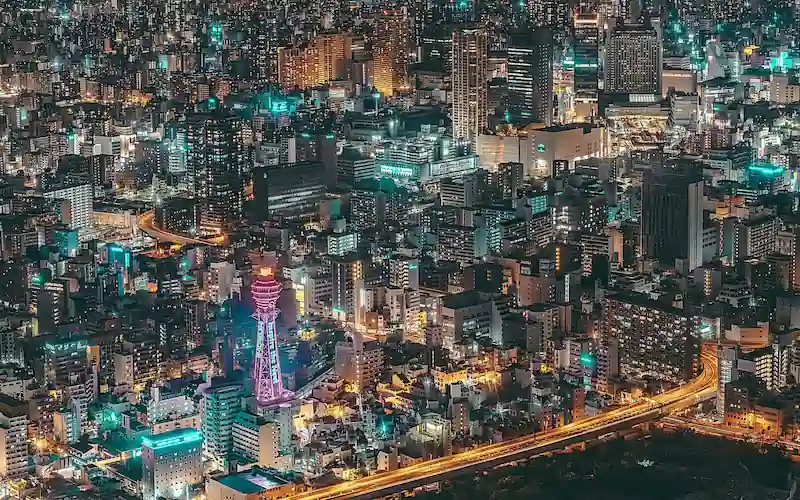
Explore Shinsekai and Tsutenkaku before dinner – Shinsekai combines Tsutenkaku, Janjan Yokocho, kushikatsu restaurants, game arcades, retro signage, and a theatrical image of popular Osaka. Visit late afternoon, then stay for dinner as the lights strengthen. (Best late afternoon · Best for: Retro Osaka, food, street photography, and popular culture)
Choose Umeda Sky Building for the northern city – The Floating Garden Observatory reveals Osaka’s rail infrastructure, towers, rivers, and the vast northern urban field. It works best when your day is already in Umeda and visibility supports a sunset or night panorama. (Best at sunset · Best for: City views, orientation, architecture, and couples)Find tours & experiences
Choose Abeno Harukas for the southern city – Abeno Harukas 300 looks across Tennoji, Shinsekai, dense southern neighborhoods, and the wider Osaka plain. Combine it with Tennoji Park, Shitennoji, or Shinsekai rather than crossing the city only for a second observation deck. (Best for: Southern skyline, architecture, Tennoji, and sunset)Find tours & experiences
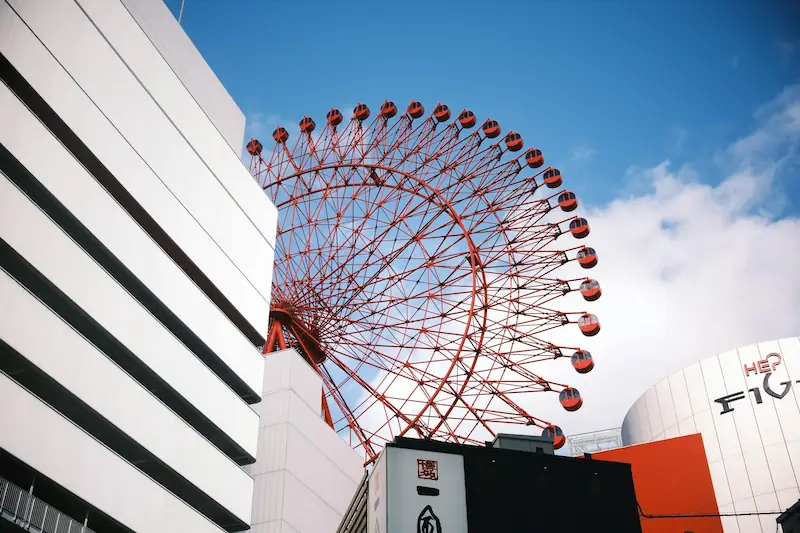
Build a real half day around Osaka Aquarium Kaiyukan – Kaiyukan’s descending route around the Pacific Ocean tank creates one of Japan’s most substantial aquarium visits. The Bay Area works best when the aquarium is the anchor, with Tempozan, the Ferris wheel, or a cruise added according to energy and weather. (Rain-proof · Best for: Families, marine life, rain, and slower travel)Find tours & experiences
Give Universal Studios Japan a full day – Universal Studios Japan requires advance ticket strategy, an early start, and realistic expectations around queues, timed areas, meals, and evening stamina. It is a destination day rather than a general city attraction. (Book ahead · Best for: Families, Nintendo, film attractions, and theme parks)Find tours & experiences
Visit Sumiyoshi Taisha for a quieter landmark – Sumiyoshi Taisha offers distinctive shrine architecture, an arched bridge, wooded grounds, and a major religious tradition away from the commercial center. It is one of Osaka’s strongest free cultural sights and pairs naturally with a southern-city day. (Best for: Shrines, architecture, free culture, and quieter mornings)
See Osaka from the Tombori River – A short river cruise changes the perspective on Dotonbori’s bridges, signs, façades, and canal-level movement. It is not essential for every traveler, but can add useful orientation and a seated pause during a crowded Minami evening. (Best for: Canal views, first-time orientation, families, and short rests)Find tours & experiences
Watch baseball or experience Osaka’s stadium culture – Professional baseball can reveal Osaka’s collective energy through songs, food, merchandise, and highly organized fan rituals. Check schedules for games involving Osaka-area teams or events at Kyocera Dome rather than assuming a match is available every night. (Seasonal · Best for: Sports, local atmosphere, families, and repeat visits)
Cultural things to do in Osaka
Osaka’s cultural identity is rooted in commerce, performance, food invention, political history, and practical urban life. Its museums and theaters work best when they explain the city’s own development rather than serving as substitutes for Kyoto.
Use the Osaka Museum of History to understand the city – The museum’s upper-floor galleries and city views connect ancient Naniwa, castle-era Osaka, merchant growth, modernization, and everyday urban life. It is the strongest historical complement to Osaka Castle and the nearby palace ruins. (Best for context · Best for: Osaka history, city context, rainy days, and first-time visitors)
See bunraku at the National Bunraku Theatre – Bunraku combines large puppets, chanters, and shamisen in a performance tradition closely associated with Osaka. Even a selected act can be meaningful, but the experience depends on the official performance calendar and ticket availability. (Check schedule · Best for: Traditional performance, theater, specialist culture, and repeat trips)
Consider a Noh performance or guided theater experience – Osaka’s Noh theaters offer another route into classical performance through restrained movement, masks, music, and highly codified staging. Choose this for genuine interest and check language support or explanatory programs. (Best for: Classical performance, masks, music, and culture-first travel)
Visit Shitennoji for an early historical layer – Shitennoji provides a quieter temple complex near Tennoji, with reconstructed gates, a central precinct, gardens, and associations with early Japanese Buddhism. It works best as part of a southern Osaka day. (Best for: Temple history, quiet mornings, Tennoji, and architecture)
Explore art and design on Nakanoshima – The National Museum of Art, Osaka and nearby cultural institutions place modern and contemporary art inside a riverside district of civic architecture. Check current exhibitions, then combine the visit with riverside walking or the science museum. (Best for: Modern art, contemporary exhibitions, architecture, and rainy days)
Use the Osaka Science Museum for a family-friendly cultural block – Interactive science exhibitions and planetarium programming make the museum a useful indoor anchor on Nakanoshima. It is strongest for families and travelers who want educational variety beyond history and art. (Family-friendly · Best for: Science, planetarium, families, and rainy weather)
Step into merchant life at the Museum of Housing and Living – The recreated Edo-period streets provide an immersive introduction to urban housing, shops, festivals, and daily life. Its location near Tenjinbashisuji makes the museum easy to connect with a living shopping arcade. (Rain-proof · Best for: Merchant history, families, rain, and immersive exhibits)
Visit the Japan Mint Museum or seasonal cherry passage – The Mint adds industrial history, coin production, architecture, and one of Osaka’s famous seasonal cherry experiences. Access and factory tours may require advance procedures, so verify current conditions before traveling. (Best for: Coins, industrial history, cherry blossoms, and specialist museums)
Learn why Osaka became a city of entrepreneurs – The Osaka Entrepreneurs’ Museum focuses on companies, inventors, merchants, and business figures who shaped the city’s modern economy. It is a specialist but highly relevant choice for travelers interested in commerce and industrial development. (Best for: Business history, entrepreneurship, design, and repeat visitors)
Take a cooking or food-craft class – A hands-on class in okonomiyaki, takoyaki, sushi, ramen, food replicas, or home cooking turns Osaka’s food reputation into a practical cultural experience. Choose small groups and clear instruction over theatrical demonstrations. (Book ahead · Best for: Hands-on culture, food travelers, families, and rain)Find tours & experiences
Local experiences and neighborhoods in Osaka
Local Osaka appears in long arcades, station basements, market mornings, public baths, narrow drinking streets, Korean food districts, small cafés, sports culture, and the spaces under or beside railway lines. These experiences work best when tied to a meal or a specific time of day.
Move from Dotonbori into Hozenji Yokocho – The stone lane, low restaurant façades, and moss-covered Mizukake Fudo statue create a dramatic change of scale beside Dotonbori. Visit at night or after rain and use it as a transition toward dinner. (Best for: Atmosphere, short detours, photography, and dinner)
Eat and drink through Uranamba – Uranamba’s narrow streets and small counters provide a more intimate food-and-drink scene than the main canal. It rewards travelers comfortable with queues, compact rooms, Japanese menus, and moving between several venues. (Best at night · Best for: Izakaya, counter dining, food tours, and nightlife)Find tours & experiences
Walk Tenjinbashisuji and visit Osaka Tenmangu – This long covered arcade combines shops, snacks, household businesses, restaurants, and everyday movement. Osaka Tenmangu and the Museum of Housing and Living add religious and historical context to a practical local route. (Best for: Covered walking, local shopping, rain, and casual food)
Explore Tsuruhashi and Osaka Korea Town – Tsuruhashi’s station-side yakiniku lanes and the wider Korean shopping streets of Ikuno reveal a major Korean-Japanese food and community layer. Go with a clear interest in barbecue, kimchi, sweets, cosmetics, or social history rather than expecting polished sightseeing. (High payoff · Best for: Korean-Japanese culture, yakiniku, markets, and food exploration)
Visit Kizu Market for a more working food market – Kizu Market retains a stronger wholesale and professional-food character than many visitor-oriented markets. Go early, observe business rhythms, and use its restaurants or bath facilities deliberately rather than expecting continuous street-food grazing. (Go early · Best for: Morning markets, seafood, wholesale culture, and repeat visits)
Slow down in Nakazakicho – Older low-rise buildings, small cafés, vintage shops, galleries, and narrow lanes create a softer neighborhood close to Umeda. It is a useful break from the enormous station district, but better for unstructured wandering than a fixed attraction list. (Best for: Cafés, vintage, low-rise streets, and repeat visitors)
Browse Amerikamura and continue into Horie – Amerikamura provides youth fashion, vintage stores, records, murals, and Triangle Park, while Horie offers calmer design shops and cafés. Treat both as one flexible browsing corridor connected to Shinsaibashi. (Best for: Street style, vintage, design, and younger travelers)
Experience a sento or urban onsen – Public bathing is a meaningful part of everyday Japanese life and can reset the body after long walking days. Choose a neighborhood sento for local simplicity or a larger themed facility for multilingual convenience, then follow bathing etiquette carefully. (Best for: Relaxation, local routine, rain, and evening recovery)
Walk Nakanoshima or Utsubo Park at a slower pace – Riverside paths, bridges, civic buildings, rose gardens, lawns, and office-district cafés offer a calmer central register. These parks are strongest as transitions between museums, business districts, and dinner rather than isolated destinations. (Best for: Parks, architecture, jogging, couples, and calm afternoons)
Explore Den Den Town for electronics, games, and pop culture – Nipponbashi’s electronics and hobby district offers anime, manga, figures, retro games, model shops, and specialist retail. It is most valuable for travelers with a real interest and combines naturally with Kuromon and Namba. (Best for: Anime, games, electronics, collectors, and shopping)
Food experiences that explain Osaka
Osaka’s reputation as Japan’s kitchen comes from more than three famous dishes. Street snacks, griddle cooking, market breakfasts, udon, sushi, yakiniku, standing bars, department-store basements, and neighborhood counters reveal a city built around fast decisions, shared appetite, and repeat customers.
Eat takoyaki fresh from a fast-moving stand – Choose a busy stall with quick turnover and eat carefully while the center is still extremely hot. Compare one classic version with a different sauce or topping rather than spending the evening chasing every famous brand. (Essential · Best for: Street food, first-time visitors, and quick snacks)
Make okonomiyaki a proper griddle meal – Okonomiyaki is filling, social, and better seated than eaten as a rushed snack. Choose Osaka-style mixed batter, understand whether staff or diners cook it, and leave time for the meal rather than treating it as a photo stop. (Essential · Best for: Comfort food, groups, families, and casual dinners)Find tours & experiences
Try negiyaki and other griddle dishes – Negiyaki replaces much of okonomiyaki’s cabbage with green onions and offers a lighter, sharper variation on Osaka griddle cooking. Add yakisoba, tonpeiyaki, or squid dishes to understand the broader teppan tradition. (Best for: Repeat food experiences, griddle cooking, and shared meals)
Eat kushikatsu in Shinsekai – Fried skewers, cabbage, beer, and quick ordering fit Shinsekai’s retro atmosphere. Choose a lively restaurant, avoid turning the meal into an excessive tasting marathon, and follow the current sauce-serving etiquette. (Best for: Retro dining, groups, casual evenings, and beer)
Compare Kuromon Market with Kizu Market – Kuromon is accessible, central, and rich in prepared seafood and fruit, while Kizu feels more connected to wholesale trade and early-morning business. Choose according to convenience and interest rather than assuming one market represents all Osaka food culture. (Best for: Markets, seafood, morning food, and photography)Find tours & experiences
Eat yakiniku in Tsuruhashi – Tsuruhashi’s barbecue lanes reflect Osaka’s Korean-Japanese food culture through grilled meat, smoke, close-set restaurants, kimchi, and market shopping. Reservations help for specific restaurants, but the district also rewards informed wandering. (High payoff · Best for: Yakiniku, Korean-Japanese food, groups, and dinner)
Try kitsune udon and Osaka-style dashi – Osaka udon is often defined by a lighter-colored but deeply flavored dashi, with kitsune udon among the city’s classic comfort dishes. It provides an inexpensive, quiet counterpoint to sauce-heavy street foods. (Best for: Udon, budget meals, local comfort food, and lunch)
Use depachika for quality and convenience – Department-store basements in Umeda and other major centers offer bento, sushi, sweets, prepared dishes, fruit, and premium groceries. They are ideal for rain, families, train meals, and groups with conflicting preferences. (Rain-proof · Best for: Families, rain, easy meals, sweets, and food shopping)
Join a focused izakaya or food tour – A strong tour helps travelers enter small venues, understand ordering, compare dishes, and move beyond the busiest tourist restaurants. Choose a route centered on Namba, Tenma, Fukushima, Tsuruhashi, or another coherent district. (Worth it · Best for: First-time food orientation, solo travelers, and small venues)Find tours & experiences
Explore standing bars and station-side dining – Tachinomi counters, under-track restaurants, and station basements reveal Osaka’s fast, social, after-work eating culture. They are best approached with flexibility, compact groups, and willingness to order simply. (Best for: Local nightlife, drinks, small plates, and repeat visits)
Best things to do in Osaka for first-timers
A first Osaka visit should establish the city’s three main identities: merchant and castle history, food-and-entertainment streets, and modern station or bay-scale attractions. Choose one historical anchor, one southern or central neighborhood cluster, one strong evening, and one food experience with enough depth to move beyond snack collecting.
Start with Dotonbori, Hozenji, and Uranamba after dark.
Pair Osaka Castle Park with the Osaka Museum of History or Naniwa Palace remains.
Use Shinsekai, Shitennoji, and Abeno Harukas as one southern Osaka cluster.
Choose Umeda Sky Building or Abeno Harukas rather than automatically visiting both.
Add one cultural experience such as bunraku, Nakanoshima art, merchant history, Sumiyoshi Taisha, or a cooking class.
Try takoyaki, okonomiyaki, and at least one deeper food layer such as Tsuruhashi yakiniku, kitsune udon, depachika, or an izakaya route.
Reserve Universal Studios Japan or Kaiyukan only when those major attractions match the trip.
Keep one half day for a local arcade, market, park, bath, or neighborhood.
Priority
BestOptions
WhyItWorks
Essential city identity
Dotonbori–Hozenji–Uranamba, Osaka Castle and history, Shinsekai
Combines food, public energy, landmark history, and popular culture.
Essential food layer
Takoyaki, okonomiyaki, one market or food district, one sit-down local meal
Shows Osaka beyond one famous street snack.
Strong cultural addition
Bunraku, Sumiyoshi Taisha, Nakanoshima museums, Housing and Living Museum
Adds performance, religion, art, or merchant history.
Trip-style anchor
Kaiyukan, Universal Studios Japan, viewpoint, baseball, or day trip
Provides one major experience aligned with the traveler’s interests.
Free things to do in Osaka
Osaka’s best free activities are district-based: parks, shrines, arcades, river walks, markets, architecture, street culture, and night scenes. A free day works best when food spending provides the structure.
Walk Dotonbori, Hozenji Yokocho, Sennichimae, and Namba side streets after dark.
Explore Osaka Castle Park, the moats, stone walls, and seasonal landscapes without entering the keep.
Visit Sumiyoshi Taisha and walk its shrine grounds.
Browse Tenjinbashisuji, Shinsaibashi-suji, and other covered shopping streets.
Walk Nakanoshima’s riverside, bridges, public architecture, and park spaces.
Explore Amerikamura, Triangle Park, Horie, and selected street-art or design areas.
Browse Tsuruhashi and Osaka Korea Town, spending only on food or shopping.
Visit Osaka Tenmangu, Shitennoji’s accessible grounds, or neighborhood shrines according to access rules.
Walk Shinsekai and Janjan Yokocho before dinner.
Use Utsubo Park, Kema Sakuranomiya Park, or Tennoji Park as green pauses.
FreeActivity
BestTime
BestFor
Best evening atmosphere
Dotonbori and Hozenji after dark
First-time impact and photography
Best historical landscape
Osaka Castle Park in the morning
Architecture, moats, and seasonal color
Best shrine visit
Sumiyoshi Taisha early or late
Religious architecture and calm
Best covered walk
Tenjinbashisuji during rain or midday
Everyday Osaka and snacks
Best calm central route
Nakanoshima late afternoon
Rivers, architecture, and parks
Unique and unusual things to do in Osaka
Osaka’s unusual experiences should reveal the city’s own character: merchant history, performance traditions, invention, public bathing, food craft, sports, and neighborhood cultures. Avoid generic Japan activities when a more locally grounded alternative is available.
See bunraku or Noh when the performance calendar aligns.
Make instant ramen at the Cup Noodles Museum Osaka Ikeda.
Join a takoyaki, okonomiyaki, sushi, or food-replica workshop.
Experience a neighborhood sento or a larger urban onsen with correct etiquette.
Watch professional baseball or explore Osaka’s stadium culture.
Visit Tsuruhashi and Osaka Korea Town for Korean-Japanese food and community history.
Use the Osaka Museum of History and Naniwa Palace remains to look beneath the modern city.
Explore the Museum of Housing and Living before walking Tenjinbashisuji.
Visit Sakai for tea culture, knives, cycling history, and ancient kofun landscapes.
Choose the National Museum of Ethnology and Expo ’70 Park for a substantial northern cultural day.
Experience
Where
Plan
Best traditional performance
National Bunraku Theatre or a Noh theater
Check dates before the trip
Best food invention experience
Cup Noodles Museum Osaka Ikeda
Allow travel and understand workshop procedures
Best local relaxation
Neighborhood sento or urban onsen
Learn bathing etiquette first
Best multicultural food district
Tsuruhashi and Osaka Korea Town
Go hungry and choose a specific food focus
Things to do in Osaka at night
Osaka’s nightlife includes neon walks, izakaya, standing bars, baseball, river cruises, viewpoints, food districts, comedy, and late shopping. Choose one district and let the evening deepen there rather than commuting between Namba, Umeda, Shinsekai, and Tenma.
Walk Dotonbori, then eat in Hozenji, Uranamba, or Sennichimae.
Use Shinsekai for kushikatsu, retro signs, Tsutenkaku, and Janjan Yokocho.
Book Umeda Sky Building or Abeno Harukas for sunset and city lights.
Explore Tenma or Fukushima for izakaya, standing bars, and a more local after-work rhythm.
Use Shinsaibashi and Amerikamura for bars, shopping, music, and youth culture.
Take a Tombori River Cruise for a seated view of central neon.
Attend baseball, bunraku, Noh, comedy, or another performance when schedules align.
Finish at a sento or late-opening bath facility when relaxation matters more than bar-hopping.
NightArea
BestFor
Caution
Namba / Dotonbori
First-time neon, food, and dense nightlife
The canal is crowded; smaller streets provide better meals.
Shinsekai
Retro atmosphere and kushikatsu
Best from late afternoon through early evening.
Umeda
Views, department-store dining, and polished bars
Station geography can consume time.
Tenma / Fukushima
Izakaya and local after-work energy
Small venues may have limited English or seating.
Tsuruhashi
Yakiniku and Korean-Japanese food
Build the night around a meal rather than general nightlife.
Things to do in Osaka with kids
Osaka is one of Japan’s strongest family cities because it combines major attractions, practical food, covered infrastructure, interactive museums, parks, and easy regional rail. Avoid stacking two high-energy attractions or a theme-park day with a demanding night.
Give Universal Studios Japan a full day with advance ticket and queue strategy.
Use Osaka Aquarium Kaiyukan as the strongest all-age indoor anchor.
Add Kids Plaza Osaka for younger children who need active play.
Choose the Osaka Science Museum or Museum of Housing and Living for indoor learning.
Visit the Cup Noodles Museum Osaka Ikeda for a hands-on food experience.
Use NIFREL and Expo ’70 Park for a northern family day.
Pair Tennoji Zoo, Tenshiba, and Abeno Harukas according to age and weather.
Use Tempozan Ferris Wheel or LEGOLAND Discovery Center as optional Bay Area additions.
Choose a cooking, food-replica, or ramen workshop for structured family time.
Keep Dotonbori brief with young children and return before late-night crowds peak.
Activity
AgeFit
TimeFit
WeatherFit
Universal Studios Japan
School-age children, teens, and theme-park fans
Full day
Mixed indoor and outdoor
Osaka Aquarium Kaiyukan
All ages
Half day
Excellent for rain or heat
Kids Plaza Osaka
Younger children
2 to 4 hours
Excellent indoor option
Cup Noodles Museum Osaka Ikeda
School-age children and families
Half day with travel
Good indoor option
NIFREL and Expo ’70 Park
Children and teens
Half to full day
Flexible indoor-outdoor combination
Science Museum / Housing and Living Museum
School-age children
2 to 3 hours
Excellent rainy-day choice
Things to do in Osaka when it rains
Rain strengthens Osaka’s covered and indoor character. Build the day around one substantial attraction, then use arcades, station complexes, food halls, baths, or workshops nearby. Avoid repeated transfers through large wet stations.
Spend a half day at Osaka Aquarium Kaiyukan.
Use the Osaka Museum of History, National Museum of Art, Science Museum, or Housing and Living Museum.
Walk Tenjinbashisuji or Shinsaibashi-suji under cover.
Explore Umeda station complexes, department stores, depachika, and dining floors.
Book a cooking, food-replica, ramen, or craft workshop.
Use Namba Parks, Kuromon Market, Den Den Town, and nearby arcades as one compact district.
Choose Kids Plaza, Cup Noodles Museum, NIFREL, or LEGOLAND with children.
Visit a sento or urban onsen for a slower afternoon or evening.
Check bunraku, Noh, theater, comedy, or baseball schedules for a structured indoor event.
Delay observation decks when low cloud removes the view.
RainPlan
BestFor
PairWith
Major indoor attraction
Families and slow travel
Kaiyukan and Tempozan dining
Museum district
Culture and adults
Nakanoshima art, science, and riverside cafés
Covered local Osaka
Budget and flexible travelers
Tenjinbashisuji and Housing and Living Museum
Food and shopping
Groups with varied interests
Umeda depachika and station complexes
Relaxation
Tired travelers and couples
Sento, onsen, or a long meal
Things to do in Osaka by area
Namba, Dotonbori, Hozenji, and Uranamba
Osaka’s most concentrated first-time evening zone combines canal neon, theaters, food streets, shrines, bars, and major transport.
Walk Dotonbori after dark
Step into Hozenji Yokocho
Eat or join a tour in Uranamba
Explore Sennichimae and Nippombashi
Use Kuromon Market earlier in the day
Consider a short Tombori River Cruise
Shinsaibashi, Amerikamura, and Horie
This central corridor shifts from a covered retail spine to youth fashion, vintage, design shops, cafés, and nightlife.
Walk Shinsaibashi-suji
Browse Amerikamura and Triangle Park
Continue into Horie
Connect naturally with Namba
Use the arcades in poor weather
Treat the area as flexible browsing, not a rigid checklist
Umeda, Nakazakicho, and Fukushima
Northern Osaka combines the main station city, department stores, views, design hotels, smaller café streets, and excellent food neighborhoods.
Visit Umeda Sky Building
Use department-store food halls
Learn the station’s elevated and underground routes
Walk Nakazakicho
Eat in Fukushima or station-side dining areas
Continue to Nakanoshima for museums
Nakanoshima, Kitahama, and Honmachi
The river island and central business belt provide Osaka’s strongest combination of modern art, science, civic architecture, parks, and calm urban space.
National Museum of Art, Osaka
Osaka Science Museum
Nakanoshima Park and riverside walks
Kitahama architecture and cafés
Utsubo Park
Easy continuation toward Umeda or Osaka Castle
Osaka Castle, Tanimachi, and Naniwa Palace
This eastern-central cluster explains Osaka’s political history through the castle landscape, major museum, ancient palace remains, and broad parkland.
Osaka Castle Park and stone walls
Osaka Museum of History
Naniwa Palace Site
Seasonal cherry and autumn landscapes
Peace Osaka for specialist interest
Morning visits before moving to Minami or Umeda
Tennoji, Abeno, Shinsekai, and Shitennoji
Southern Osaka combines temple history, retro entertainment, parks, family attractions, shopping, food, and a major skyline deck.
Shitennoji
Tennoji Park and Tenshiba
Abeno Harukas 300
Shinsekai and Tsutenkaku
Kushikatsu and Janjan Yokocho
Tennoji Zoo according to family interest
Tsuruhashi and Ikuno Korea Town
This multicultural food district is built around yakiniku, Korean groceries, kimchi, sweets, cosmetics, markets, and community history.
Tsuruhashi yakiniku lanes
Osaka Korea Town
Korean street food and groceries
Market shopping
Guided context for deeper understanding
Best approached around a planned meal
Tenma and Tenjinbashisuji
Tenma offers a long everyday arcade, shrine culture, immersive urban history, and a strong after-work food and drinking scene.
Tenjinbashisuji Shopping Street
Osaka Tenmangu
Museum of Housing and Living
Tenma izakaya and standing bars
Covered rainy-day walking
Kema Sakuranomiya Park in good weather
Osaka Bay, Tempozan, and Universal City
The waterfront is attraction-led rather than neighborhood-led, with major family destinations requiring dedicated time.
Osaka Aquarium Kaiyukan
Universal Studios Japan
Tempozan Ferris Wheel
LEGOLAND Discovery Center
Bay cruises and waterfront views
Avoid adding multiple central districts on the same day
Sumiyoshi, Sakai, and southern heritage
Southern Osaka and nearby Sakai provide shrine architecture, tea culture, knives, cycling history, and ancient burial landscapes beyond the standard center.
Sumiyoshi Taisha
Sakai Risho no Mori
Sakai knife and craft culture
Daisen Park
Mozu kofun landscapes
Best for culture-focused longer stays
What to prioritize in Osaka by trip length
Osaka rewards a clear hierarchy: one first-time evening, one historical anchor, one cultural or neighborhood layer, and food that extends beyond snacks. Major family attractions and day trips should be added only when the trip length protects enough time for Osaka itself.
Profile
Prioritize
Skip
Structure
Half day
Dotonbori, Hozenji, Uranamba, and one deliberate meal.
Castle, Bay Area, outer museums, and day trips.
Arrive late afternoon, move from neon to side lanes, and finish with dinner.
1 full day
Osaka Castle and history in the morning, Minami food and Dotonbori in the afternoon and evening.
Universal Studios Japan, multiple viewpoints, and distant neighborhoods.
Use one historical anchor and one dense food-and-entertainment district.
2 days
Add Shinsekai–Tennoji or Umeda–Nakanoshima to the core.
A day trip unless Osaka is already familiar.
Separate Minami and castle history from one northern or southern city day.
3 days
Add Nakanoshima museums, Tsuruhashi, Tenma, Kaiyukan, performance, bath, or workshop.
Repeating observation decks and commercial districts.
Give each day a distinct identity: central, southern, northern, cultural, or bay.
4 days
Protect three Osaka days, then choose Universal Studios Japan or one day trip.
Two excursions unless Osaka is a base for a longer regional stay.
Use the fourth day for the single major experience that best matches the trip.
Food-focused trip
Namba, Tsuruhashi, Tenma, markets, griddle food, udon, izakaya, and one guided experience.
Eating every meal in Dotonbori or chasing only viral venues.
Repeating the entire first-time Dotonbori circuit.
Move from headline sights toward routines, communities, and scheduled culture.
Best day trips from Osaka
Osaka is an exceptional Kansai base, but the strongest excursion depends on what is missing from the wider itinerary. Choose Nara for temple landscapes, Kobe for harbor and food, Himeji for castle architecture, Sakai for craft and ancient history, Minoh for nature, or Koyasan for a more ambitious sacred-mountain day.
Excursion
Best for
Time needed
First trip?
Transport
Book ahead
Nara
Todai-ji, Nara Park, Kasuga Taisha, deer, and historic landscapes
Half to full day
Usually the best first excursion from Osaka.
Direct JR or Kintetsu trains; choose the station according to your route.
No independently; useful for guided history and logistics. Check options
Kobe
Harbor scenery, Kitano, Chinatown, sake breweries, Kobe beef, and Mount Rokko
Half to full day
Strong for food and urban contrast.
Frequent JR, Hankyu, and Hanshin trains.
Reserve sought-after beef restaurants, sake tours, or mountain transport packages. Check options
Himeji
Himeji Castle, Koko-en Garden, and major castle architecture
Long half day to full day
Excellent for architecture and history.
Shinkansen or conventional JR trains depending on budget and time.
Usually no; start early in peak seasons. Check options
Kyoto
Temples, gardens, historic districts, and traditional architecture when Kyoto is not a separate stay
Full day
Only if Kyoto is not already part of the itinerary.
Multiple rail lines serve different Kyoto districts.
Guiding can help with a focused route; avoid trying to cover the whole city. Check options
Sakai
Tea culture, Sen no Rikyu, knives, cycling history, museums, Daisen Park, and kofun landscapes
Half to full day
Best for culture-focused longer stays and repeat visitors.
Direct rail from central Osaka depending on the district visited.
Useful for craft, knife, or tea experiences.
Minoh Park
Waterfall walks, forest, seasonal color, and a light nature escape
Half day
Best from a three- or four-day stay.
Train to Minoh, followed by walking.
No; verify trail conditions after severe weather.
Koyasan
Sacred mountain temples, Okunoin, Buddhist history, and a dramatic contrast with Osaka
Very long full day; overnight is often better
Only with enough time and strong interest.
Nankai rail and mountain transport; route planning matters.
Recommended for guided visits, temple lodging, or limited transport periods. Check options
Expo ’70 Park and the National Museum of Ethnology
Modern Japanese history, large park landscapes, ethnography, families, and NIFREL
Half to full day
Strong for families and museum-focused longer stays.
Rail and Osaka Monorail to Bampaku-kinen-koen.
Usually not for the park; check museum and attraction procedures.
Smart Osaka activity combinations
These combinations keep Osaka’s scale manageable by pairing attractions that share geography, energy, or cultural logic. Adjust them around opening days, performance schedules, weather, and meal timing.
Osaka Castle Park + Museum of History + Naniwa Palace – Use the park and castle landscape first, then move to the museum for a chronological view over the city and the ancient palace remains. The combination explains Osaka’s political history more effectively than the keep alone.
Dotonbori + Hozenji + Uranamba – Start with the iconic canal, shift into the quieter stone lane, then eat or drink in smaller Namba streets. This progression from spectacle to intimacy is Osaka’s cleanest first-night structure.
Shitennoji + Tennoji Park + Shinsekai + Abeno Harukas – A southern-city day can move from temple history and green space into retro streets, kushikatsu, and a skyline view. Begin earlier for culture and finish after dark.
Nakanoshima art + science + riverside architecture – Choose one or two institutions rather than visiting every museum, then walk the river island and continue toward Kitahama or Umeda for dinner.
Tenjinbashisuji + Housing and Living Museum + Tenma – This covered, history-rich combination works in rain and ends naturally with local food or standing bars around Tenma.
Tsuruhashi + Osaka Korea Town + yakiniku – Use the station-side market and barbecue lanes before continuing into the larger Korean shopping streets. A planned meal gives the district a strong purpose.
Kaiyukan + Tempozan + Bay cruise or Ferris wheel – Let the aquarium anchor the day, then choose one additional waterfront activity according to weather and family energy.
Sumiyoshi Taisha + Sakai heritage – Combine the major shrine with tea, knives, museums, parks, or kofun landscapes in Sakai for a quieter culture-focused southern day.
Umeda Sky Building + Nakazakicho + Fukushima dinner – Use Umeda’s vertical city view, shift to low-rise cafés and shops, then finish in a focused food district rather than staying inside station malls all day.
What to book ahead in Osaka
Osaka supports spontaneous street exploration, but high-capacity attractions, scheduled performance, workshops, sports, and popular food experiences reward advance planning. Book where timing changes the experience; keep markets, arcades, parks, and shrine walks flexible.
Evening Dotonbori and sunset waterfront slots are most popular.
The cruise itself provides the experience.
Nara, Kobe, Himeji, or Koyasan excursions Check options
Not always independently
Reserve restaurants, special access, temple lodging, or guided routes as needed.
Useful when historical context or complex routing matters.
Markets, arcades, parks, and shrines
No
Markets are best early; neighborhoods and shrines depend on weather and daily rhythm.
Guides help for food, architecture, or social history, but spontaneous visits work well.
FAQ: things to do in Osaka
These answers cover the main Osaka planning decisions: essential sights, duration, food, neighborhoods, Universal Studios Japan, families, museums, nightlife, rain, free activities, booking, and day trips.
What are the best things to do in Osaka for a first visit?
Prioritize Dotonbori, Hozenji and Namba at night; Osaka Castle Park with the Museum of History; Shinsekai and Tennoji; one viewpoint; and several different food experiences. Add Kaiyukan, Universal Studios Japan, bunraku, or a day trip according to your interests.
How many days do you need in Osaka?
Two full days cover the essential city. Three days allow museums, neighborhoods, Kaiyukan, performance, or deeper food. Four days make room for Universal Studios Japan or one day trip without weakening the Osaka visit.
Can you see Osaka in one day?
Yes, but keep it focused. Visit Osaka Castle Park and the Museum of History in the morning, move through Namba or Kuromon in the afternoon, and spend the evening around Dotonbori, Hozenji, and Uranamba.
Is Dotonbori worth visiting?
Yes, especially after dark. The value comes from the full district rather than one sign: canal bridges, food façades, theaters, Hozenji Yokocho, Sennichimae, and smaller Namba streets.
Is Osaka Castle worth visiting?
Yes for the park, moats, stone walls, seasonal landscapes, and historical importance. The reconstructed keep is most valuable when paired with the Osaka Museum of History or a guided explanation.
What is the best viewpoint in Osaka?
Choose Umeda Sky Building for views over the northern rail and tower city, or Abeno Harukas for Tennoji, Shinsekai, and southern Osaka. Most travelers do not need both.
Is Universal Studios Japan worth it?
Yes when theme parks, Nintendo, or film attractions are a major priority. It requires a full day, advance tickets, and current queue or timed-area planning. It is not a good rushed add-on to a short culture-focused trip.
Is Osaka Aquarium Kaiyukan worth visiting?
Yes, especially with children, in rain, or for marine-life interest. Its large Pacific Ocean tank and structured route make it substantial enough to anchor a half day in the Bay Area.
What are the best cultural experiences in Osaka?
The Osaka Museum of History, bunraku, Noh, Shitennoji, Sumiyoshi Taisha, Nakanoshima art museums, Museum of Housing and Living, merchant history, and cooking or craft workshops provide the strongest range.
What are the best museums in Osaka?
Choose the Osaka Museum of History for city context, National Museum of Art for modern and contemporary exhibitions, Science Museum for families and planetarium programs, Housing and Living Museum for immersive merchant-era streets, and National Museum of Ethnology for a larger northern excursion.
What food should you try in Osaka?
Try takoyaki, okonomiyaki, negiyaki, kushikatsu, kitsune udon, yakiniku in Tsuruhashi, sushi or seafood at a market, depachika food, and izakaya small plates. Osaka food is broader than the three most famous dishes.
Is Kuromon Market worth visiting?
Yes for a convenient central market with seafood, fruit, snacks, and approximately 150 shops, but go early and buy selectively. Kizu Market offers a more working-market atmosphere, while Tsuruhashi is better for Korean-Japanese food.
What is the best food district in Osaka?
Namba is the easiest all-round choice, Tsuruhashi is strongest for yakiniku and Korean-Japanese food, Tenma for izakaya and standing bars, Shinsekai for kushikatsu, and Umeda for department-store and station dining.
What are the best things to do in Osaka at night?
Walk Dotonbori and Hozenji, eat in Uranamba, visit Shinsekai, use a viewpoint, explore Tenma or Fukushima, take a river cruise, attend baseball or theater, or finish at a public bath.
What are the best free things to do in Osaka?
Walk Dotonbori and Hozenji, explore Osaka Castle Park, visit Sumiyoshi Taisha, browse Tenjinbashisuji and Shinsaibashi arcades, walk Nakanoshima, explore Amerikamura, and wander Shinsekai or Tsuruhashi.
What can you do in Osaka when it rains?
Use Kaiyukan, Nakanoshima museums, Osaka Museum of History, Museum of Housing and Living, Kids Plaza, covered arcades, Umeda department stores, workshops, performances, food halls, or an onsen.
What are the best things to do in Osaka with children?
Universal Studios Japan, Kaiyukan, Kids Plaza, Science Museum, Cup Noodles Museum, NIFREL, Expo ’70 Park, LEGOLAND Discovery Center, Tennoji Zoo, and hands-on food activities are the strongest family choices.
Is Osaka good for teenagers?
Yes. Universal Studios Japan, anime and game shopping in Den Den Town, Amerikamura, Kaiyukan, viewpoints, baseball, food streets, NIFREL, and interactive museums provide strong variety.
Is Shinsekai worth visiting?
Yes for retro signs, Tsutenkaku, Janjan Yokocho, kushikatsu, game arcades, and a popular image of old-school Osaka. Visit from late afternoon into early evening and combine it with Tennoji or Shitennoji.
Is Sumiyoshi Taisha worth visiting?
Yes for shrine architecture, religious importance, wooded grounds, and a quieter southern-city experience. It is free and particularly useful when you want culture beyond the central commercial districts.
Is Tsuruhashi worth visiting?
Yes for yakiniku, Korean groceries, markets, and Osaka Korea Town. It is best approached around a planned meal or food interest rather than as a conventional sightseeing district.
Should you visit Umeda or Namba?
Visit Namba for food, Dotonbori, nightlife, and popular street energy. Visit Umeda for station architecture, shopping, views, department-store food, and access to Nakanoshima. Most first trips benefit from both.
What should you book ahead in Osaka?
Book Universal Studios Japan, Express Passes, bunraku or Noh, food tours, workshops, sought-after restaurants, peak aquarium visits, baseball or events, and preferred sunset viewpoints.
Is Osaka easy to explore without a car?
Yes. Rail and metro cover the main districts, and most central clusters are walkable internally. The challenge is station scale and transfers, not lack of public transport.
What is the best day trip from Osaka?
Nara is the best first excursion for most travelers. Kobe suits food and harbor interests, Himeji castle architecture, Sakai craft and ancient history, Minoh nature, and Koyasan a more ambitious sacred-mountain experience.
Should you visit Kyoto as a day trip from Osaka?
Yes if Kyoto is not a separate stay, but choose a focused district route rather than trying to cover the whole city. If Kyoto is already included, Nara, Kobe, Himeji, or Sakai usually adds more contrast.
Is the Cup Noodles Museum Osaka Ikeda worth visiting?
Yes for families, food history, invention, and hands-on activities. The museum explains instant ramen’s origins in Ikeda, while workshop procedures and reservations vary by activity.
Can you experience onsen or sento in Osaka?
Yes. Neighborhood sento provide a simpler local experience, while larger urban onsen offer more facilities and easier visitor support. Check tattoo rules, closures, and bathing etiquette before visiting.
What are the best unusual things to do in Osaka?
See bunraku or Noh, make instant ramen, join a food-replica or cooking class, visit a sento, watch baseball, explore Tsuruhashi, visit Kizu Market, or spend a day in Sakai.
Is Osaka better for food or sightseeing?
Food is central to Osaka, but the city also offers substantial history, performance, museums, shrines, parks, family attractions, and modern architecture. The strongest trip uses food to connect those experiences rather than replacing them.
Osaka is most rewarding when castle and merchant history, food culture, performance, local neighborhoods, and one major modern attraction are planned as distinct but connected layers.
Turn the right experiences into the right itinerary
Once you know what you want to do in Osaka, the next step is turning those ideas into a trip that actually works day by day. Use the planner to organize the right mix of highlights, neighborhoods, and pace into a route that feels coherent, not crowded.