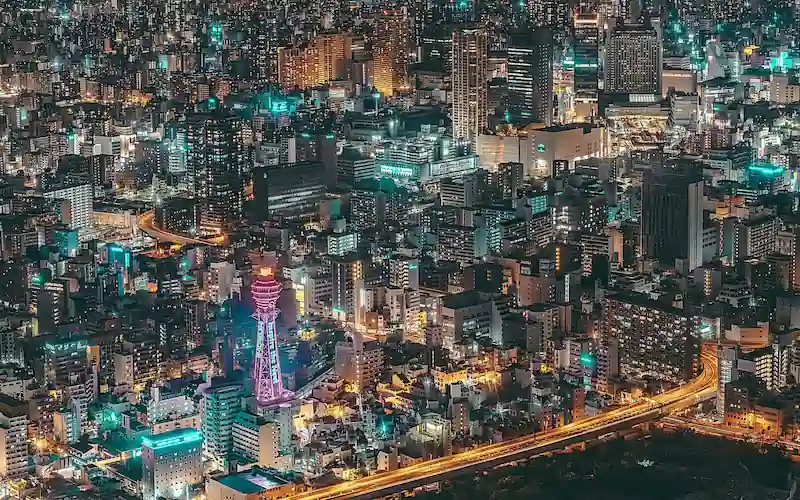
Where to stay in Osaka
Find the best neighborhoods and hotels in Osaka.
Open page →
Plan an Osaka trip around the way the city actually works: two major urban poles, food-led evenings, castle and merchant history, older southern districts, river-island culture, and destination-scale attractions by the bay. Osaka is easiest to understand when Namba and Umeda provide the basic structure, while Dotonbori, Shinsekai, Nakanoshima, Tenma, Tsuruhashi, Sumiyoshi, and the castle area add distinct layers rather than disconnected stops.
Find the best neighborhoods and hotels in Osaka.
Open page →
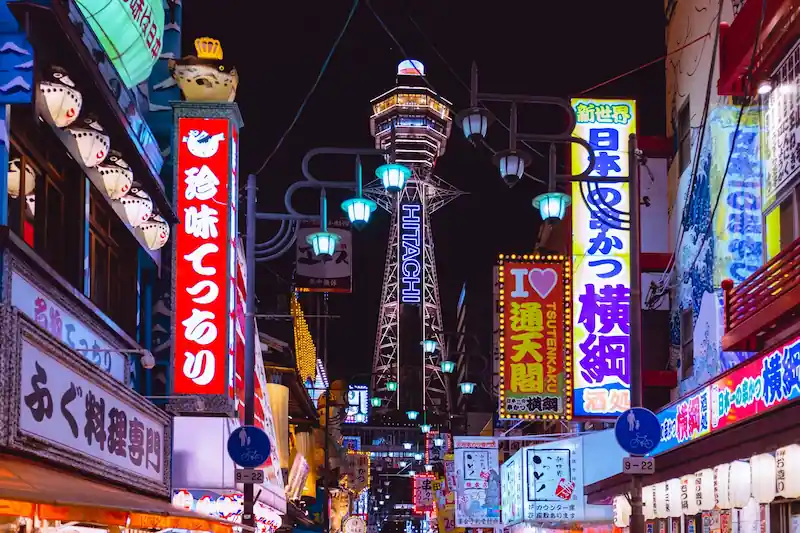
Prioritize the activities that deserve your time in Osaka.
Open page →
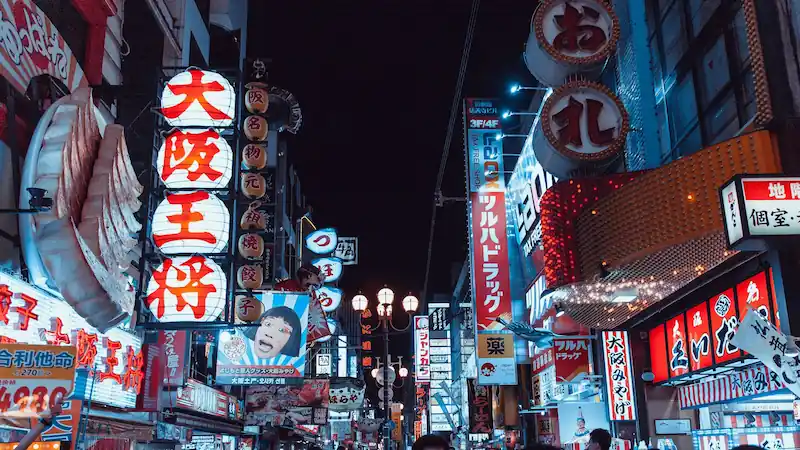
1 Day in Osaka: Best Itinerary
Open itinerary →
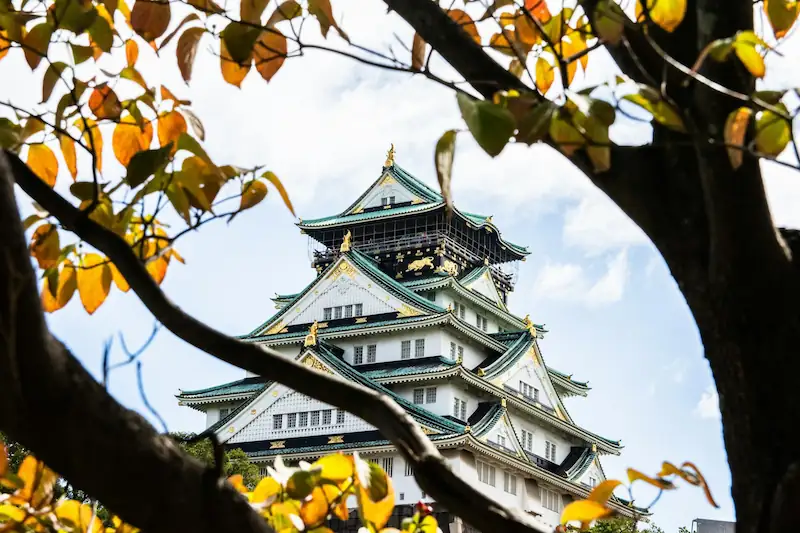
2 Days in Osaka: Best Itinerary
Open itinerary →
3 Days in Osaka: Best Itinerary
Open itinerary →
4 Days in Osaka: Best Itinerary
Open itinerary →
Osaka is Japan’s great merchant and entertainment city: more informal than Kyoto, easier to read at street level than Tokyo, and organized around appetite, rail hubs, arcades, theaters, markets, and evening districts. Kita in the north and Minami in the south form the main urban system, while Osaka Castle, Nakanoshima, Tennoji, Tsuruhashi, Sumiyoshi, and the bay each reveal a different history and rhythm.
Osaka deserves more than a hotel-and-train role between Kyoto and western Japan. The city combines Dotonbori’s public theater, castle and merchant history, traditional performance, Korean-Japanese food culture, major museums, shrine architecture, public baths, baseball, family attractions, and one of Japan’s strongest casual dining scenes. Its value comes from the way a large modern city remains social, accessible, and strongly attached to everyday pleasure.
Best time: March to May and October to November are easiest for walking and day trips. Winter is calmer and often clear; summer remains rewarding when outdoor sightseeing shifts to mornings and evenings.
Ideal trip length: Three full days provide a strong first Osaka trip. Four to five days allow Universal Studios Japan, the Bay Area, deeper museums, local neighborhoods, or one excursion. A week works well when Osaka is also a Kansai base.
Osaka generally offers better hotel and dining value than Tokyo or central Kyoto, especially in Tennoji, Honmachi, business hotels, markets, udon shops, izakaya, and department-store food halls. Prices rise around cherry blossom season, autumn weekends, Golden Week, major events, Universal Studios Japan, and premium hotels near Namba or Osaka Station. The city rewards spending on location and food variety more than on formal luxury.
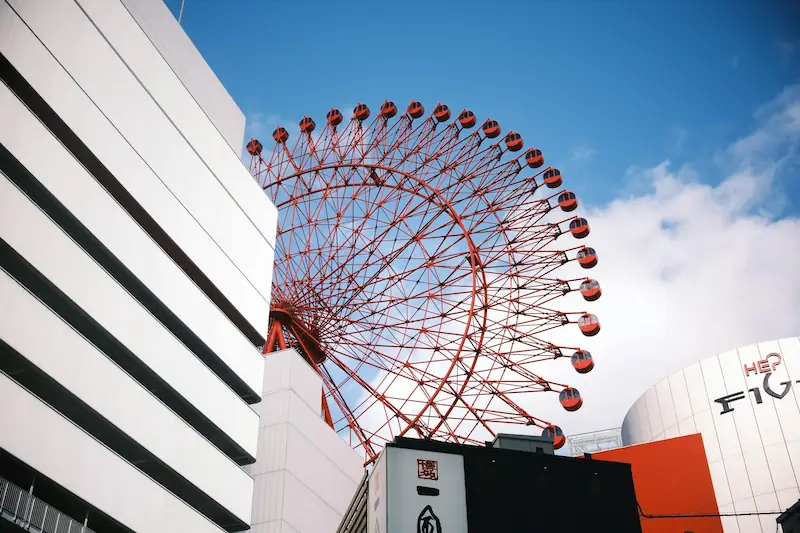
Read Osaka through seven layers. Kita around Osaka–Umeda is the transport and shopping engine; Minami around Namba–Dotonbori is the food and entertainment core; Shinsaibashi and Honmachi connect them; Nakanoshima is the civic and museum island; Osaka Castle and Tanimachi hold political history; Tennoji, Shinsekai, Sumiyoshi, and Tsuruhashi reveal older and more diverse southern Osaka; the bay contains destination attractions rather than everyday city life.
Osaka is flat, river-cut, rail-dense, and organized by stations, arcades, canals, elevated roads, and large transport interchanges. The Midosuji axis links Umeda, Honmachi, Shinsaibashi, Namba, and Tennoji, while east–west movement connects castle districts, Nakanoshima, and the bay. Walking works inside clusters, but rail usually provides the cleanest transition between them.
Morning suits Osaka Castle, Sumiyoshi Taisha, markets, parks, and museums. Midday belongs to Nakanoshima institutions, covered arcades, workshops, department stores, and long lunches. Late afternoon strengthens Shinsekai, Tsuruhashi, Nakazakicho, and viewpoints, while Minami, Tenma, Fukushima, and station-side food districts become most expressive after dark.
Use Minami for the city’s social and food identity, Kita for transport and the vertical modern city, the castle area for political history, and one additional layer—Nakanoshima culture, southern Osaka, Tsuruhashi, Sumiyoshi, or the bay—according to interest. A strong first trip needs different meal formats and neighborhoods, not only repeated visits to Dotonbori.
Open the planner
Give Minami one complete afternoon and evening, moving from Shinsaibashi or Kuromon toward Dotonbori, Hozenji, and Uranamba. Pair Osaka Castle Park with the Osaka Museum of History or Naniwa Palace remains so the landmark has real historical context. Use Umeda for arrival, rail-heavy mornings, shopping, depachika, and one city panorama rather than treating it only as a station. Build a southern Osaka day around Shitennoji, Tennoji, Shinsekai, and Abeno Harukas; add Sumiyoshi only when the route remains realistic. Use Nakanoshima as the main art, science, architecture, and riverside culture block, checking exhibitions before deciding which museum deserves time. Choose one deeper local layer such as Tsuruhashi, Tenma, a sento, baseball, Kizu Market, Nakazakicho, or Sakai rather than collecting minor neighborhoods. Treat Universal Studios Japan and Kaiyukan as separate destination days or half-days with their own ticket and transport logic. Let food structure the trip: street snack, griddle meal, market or food district, udon or sushi, izakaya, and one regional or multicultural experience. Use Osaka as a Kansai base only after protecting three substantial city blocks, including at least one evening. Keep one flexible block for weather, restaurant queues, performance schedules, or a second dinner discovered on the ground.
Vibe: Food-first, bright, busy, and immediate.
Why go: Namba and Dotonbori concentrate canal nightlife, Hozenji, Uranamba, Kuromon, Nippombashi, Den Den Town, theaters, airport rail, and Osaka’s densest food-and-entertainment streets. The area is strongest when the main canal becomes a gateway to smaller side streets.
Who it fits: First-time visitors, food trips, nightlife, short stays, solo travelers, and anyone wanting direct Kansai Airport access through Nankai.
Not for: Travelers prioritizing quiet sleep, spacious public areas, easy Kyoto–Kobe rail days, or a residential atmosphere.
Where to stay: The most immediate first-time base for food and evenings, with noise and crowds as the price of convenience.
Vibe: Efficient, vertical, connected, and businesslike.
Why go: Umeda combines Osaka Station, multiple private railways, department stores, dining floors, Umeda Sky Building, Grand Front, and quick access to Nakanoshima, Nakazakicho, and Fukushima. It is the strongest base for day trips and rail-heavy itineraries.
Who it fits: Families, first-time visitors with day trips, business travelers, shoppers, premium stays, and travelers arriving through Shin-Osaka.
Not for: Travelers wanting Dotonbori, small izakaya lanes, and Osaka’s classic night atmosphere directly outside.
Where to stay: The best transport base and a polished city experience, especially for families and Kansai exploration.
Vibe: Retail-driven, youthful, central, and constantly moving.
Why go: Shinsaibashi links the Midosuji axis, covered retail, Amerikamura, Horie, cafés, bars, design hotels, and easy walking into Namba. It balances Minami’s energy with more choice about how close to the loudest nightlife you sleep.
Who it fits: Couples, shoppers, younger travelers, nightlife visitors, design-conscious stays, and first-timers wanting central balance.
Not for: Travelers seeking traditional residential streets, major parks, or the strongest day-trip rail base.
Where to stay: A flexible Minami base with food and nightlife access but more breathing room than Dotonbori.
Vibe: Grounded, practical, slightly older, and strongly local in texture.
Why go: Tennoji and Abeno combine major rail links, Abeno Harukas, Shitennoji, Tennoji Park, museums, shopping, family facilities, and quick access to Shinsekai and southern Osaka. They offer better value and more everyday texture than the central premium districts.
Who it fits: Families, value-focused travelers, repeat visitors, longer stays, Nara-bound trips, and travelers exploring southern Osaka.
Not for: Travelers wanting boutique luxury, immediate Dotonbori nightlife, or the cleanest Kyoto and Kobe rail logistics.
Where to stay: The strongest value-and-family alternative, with excellent transport and southern Osaka character.
Vibe: Calmer, central, architectural, and restrained.
Why go: Nakanoshima and Honmachi provide riverside architecture, the National Museum of Art, Nakanoshima Museum of Art, the Science Museum, business hotels, cafés, parks, and balanced access to Kita and Minami. The area gives central Osaka a calmer and more design-conscious register.
Who it fits: Couples, museum and architecture travelers, business-leisure stays, design-hotel seekers, and repeat visitors.
Not for: Travelers who want late-night food immediately outside, direct long-distance rail, or maximum first-time atmosphere.
Where to stay: A composed central base for culture, design, and quieter evenings.
Vibe: Open-scale, family-oriented, event-driven, and separate from the core city.
Why go: The bay contains Universal Studios Japan, Kaiyukan, Tempozan, family attractions, event venues, and open waterfront space. It is a destination district with strong family hotels but limited access to Osaka’s everyday food and night neighborhoods.
Who it fits: Families, theme-park trips, aquarium visits, event travel, and stays built around early park entry.
Not for: General first-time city trips, food-focused evenings, multiple Kansai excursions, or travelers wanting neighborhood variety.
Where to stay: Choose it for one or two attraction-focused nights, not as the default base for the whole city.
Osaka’s essential experiences fall into four layers: landmark and urban-scale sights; merchant, religious, artistic, and performance culture; local districts and everyday rituals; and a food scene that ranges from street snacks to markets, griddle meals, yakiniku, udon, and izakaya. The strongest trip selects the experiences that explain those layers without reproducing a complete attraction inventory.
Planning tip: Build each day around one geographic cluster, one cultural or urban anchor, and one distinct meal format, leaving evening space for unplanned streets or a second stop.
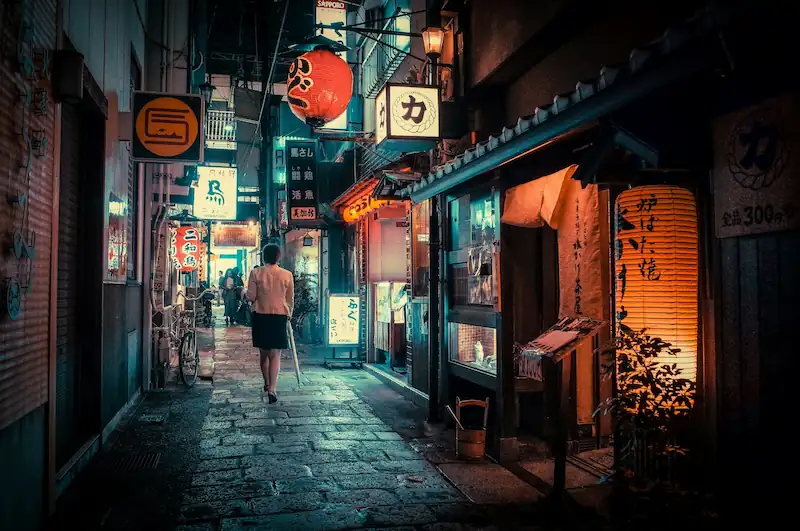
Dotonbori is Osaka’s most direct urban theatre: restaurants, signs, canal bridges, queues, snack counters, and movement compressed into a few blocks. It is not subtle, but it explains the city’s appetite better than any museum label.
Tip: Arrive before peak dinner crush, then loop back after eating when the canal reflections are stronger.
Osaka Castle gives the city scale, air, and historical framing, especially when approached through the park rather than as a single tower visit. The museum inside is modern and informative, but the wider moat, walls, and grounds carry much of the experience.
Tip: Use the park as part of the visit; the approach across stone and water matters.
Kuromon Ichiba is tourist-facing, but it remains a useful introduction to Osaka’s grazing style: seafood, skewers, fruit, sweets, and small purchases taken in sequence. The narrow aisles carry a constant clatter of trays, shutters, and short exchanges.
Tip: Go earlier in the day for fresher displays and easier movement.
Abeno Harukas helps make sense of Osaka’s sprawl, from the southern neighborhoods to the central towers and distant ridgelines. It is especially useful early in a trip, when the city’s flatness can make distance hard to judge.
Tip: Choose a clear day rather than forcing the visit in poor visibility.
Check guided tours →
Universal Studios Japan is one of Osaka’s biggest trip-shapers, especially for families and theme-park travelers. It requires its own rhythm, because ticketing, arrival time, queues, and express-pass choices can define the day.
Tip: Treat it as a full-day commitment rather than a half-day add-on.
Kaiyukan is one of the city’s most rewarding indoor experiences, with a strong sense of descent, scale, and marine environments. It pairs naturally with the bay, especially when weather makes long urban walks less appealing.
Tip: Combine it with the Tempozan waterfront rather than crossing the city only for the aquarium.
Sumiyoshi Taisha is one of Osaka’s most important religious sites, with nationally significant shrine architecture, wooded grounds, and the strongly arched Sorihashi bridge. It gives the city a historical and spiritual layer that feels very different from castle, shopping, and entertainment districts.
Tip: Visit early and combine it with southern Osaka or Sakai rather than making a separate cross-city trip.
Check guided tours →
The National Museum of Art and the Nakanoshima Museum of Art give Osaka a substantial modern and contemporary cultural layer, covering Japanese and international art, photography, sculpture, design, and the city’s own avant-garde traditions. Current exhibitions should determine which institution deserves the longer visit.
Tip: Check both exhibition programs, then combine one museum with the Science Museum, river architecture, or Kitahama.
Check guided tours →
Shitennoji brings Osaka into older religious and urban time, away from the bright speed of Minami and Umeda. Its open grounds and reconstructed structures are best read as part of the city’s long continuity rather than as a decorative stop.
Tip: Pair it with Tennoji or Shinsekai for a more complete southern Osaka day.
Osaka is one of the best places to connect with bunraku, Japan’s traditional puppet theatre. Even a short performance or theatre visit gives the city a cultural depth that balances its reputation for food and comedy.
Tip: Look for shorter introductory programs if a full performance feels too demanding.
Check guided tours →
Nakanoshima gives Osaka a quieter civic dimension: museums, historic architecture, river views, libraries, and office calm between the city’s louder poles. Late afternoon light softens the stone embankments and makes the area feel slower than its map position suggests.
Tip: Use it as a decompression block between Kita and Minami.
Check guided tours →
The Osaka Museum of History is the clearest place to understand how ancient Naniwa, castle politics, merchant wealth, modernization, and everyday urban life connect. Its elevated views also place Osaka Castle and the Naniwa Palace site into the same landscape.
Tip: Visit before or after Osaka Castle; the museum provides more useful context than treating the keep as a standalone historical visit.
Check guided tours →
Osaka’s identity was shaped by merchants, markets, theaters, food distribution, and entrepreneurship. The Museum of Housing and Living, Entrepreneurs’ Museum, historic arcades, and market districts together explain why the city still feels practical, commercial, and socially open.
Tip: Use the Housing and Living Museum with Tenjinbashisuji for the most accessible version of this cultural layer.
Check guided tours →
Nearby Sakai adds a deeper merchant-city perspective through Sen no Rikyu and tea culture, knife-making, incense, trade history, cycling, parks, and kofun landscapes. It is one of the strongest additions for culture-focused travelers staying longer than three days.
Tip: Treat Sakai as a half- or full-day extension and reserve any specialist tea or craft experience in advance.
Check guided tours →
Shinsekai is one of Osaka’s most distinctive older entertainment districts, mixing kushikatsu restaurants, retro signage, working-class history, and a slightly rougher edge. It is most interesting as atmosphere, not as a checklist.
Tip: Go before dark if you want the texture without the heaviest evening drinking mood.
Tenjinbashisuji shows Osaka’s everyday retail rhythm better than the more famous central arcades. The pleasure is in small shops, groceries, cafés, bargain stores, and the steady cadence of local errands.
Tip: Let the visit stay loose; the street works best without a strict endpoint.
Check guided tours →
Minami becomes more rewarding when you step away from the loudest canal blocks into smaller streets where bars, counters, and late kitchens sit close together. The city’s social energy feels lower and more conversational here.
Tip: Use Dotonbori as the landmark, then let side streets do the real work.
Check guided tours →
Osaka’s river walks are not as celebrated as its food streets, but they reveal the city’s quieter infrastructure: bridges, offices, museums, and water cutting through dense ground. They are useful when you need the city to breathe.
Tip: Choose this when Minami starts to feel too compressed.
Check guided tours →
Tsuruhashi and nearby Osaka Korea Town reveal the city’s Korean-Japanese community through yakiniku lanes, markets, kimchi, sweets, cosmetics, groceries, and dense station-side streets. The district adds a multicultural layer that is essential to understanding modern Osaka.
Tip: Build the visit around a meal and distinguish the Tsuruhashi station market from the larger Korea Town streets in Ikuno.
Check guided tours →
Public bathing remains an everyday Japanese ritual and offers a valuable reset after long walking days. A neighborhood sento provides local simplicity, while larger urban onsen facilities offer more amenities and easier visitor support.
Tip: Learn bathing etiquette and check tattoo policies, maintenance closures, and towel arrangements before visiting.
Check guided tours →
Baseball reveals Osaka’s collective entertainment culture through coordinated songs, food, merchandise, and intense local loyalty. A game or stadium event can be one of the city’s strongest evening experiences when the schedule fits.
Tip: Check the seasonal calendar and venue carefully; do not assume a home game is available during every visit.
Check guided tours →
Takoyaki is Osaka’s essential street snack: quick, hot, soft inside, and best eaten close to the stand rather than carried around too long. It captures the city’s casual food rhythm in a few minutes.
Tip: Wait before biting; the center stays extremely hot.
Okonomiyaki is one of the city’s most satisfying sit-down foods, especially when cooked or finished on the hotplate in front of you. The hiss of batter and sauce gives dinner a slower rhythm than street grazing.
Tip: Small counter places can be better than large tourist-facing rooms, but queues move unpredictably.
Kushikatsu suits Shinsekai’s older entertainment mood: informal, repetitive, social, and better with a few different skewers rather than one heavy order. It is one of the easiest ways to connect food with neighborhood atmosphere.
Tip: Order in rounds so the skewers stay hot.
Osaka’s depachika food halls are ideal for controlled abundance: bento, sweets, seasonal fruit, fried foods, and gifts under one roof. They are especially useful on rainy days or before a train ride.
Tip: Visit late afternoon for the widest choice before evening discount crowds arrive.
Check food options →
Tsuruhashi’s smoke-filled yakiniku lanes are inseparable from Osaka’s Korean-Japanese food history. The experience is more specific and culturally revealing than treating barbecue as another central restaurant meal.
Tip: Reserve sought-after restaurants or arrive early, then walk the market and Korea Town before or after eating.
Check food options →
Kitsune udon provides a quieter expression of Osaka food through soft noodles, sweet fried tofu, and a light-colored but deeply flavored dashi. It balances the stronger sauces and fried foods most associated with the city.
Tip: Use it for breakfast, lunch, or a simple recovery meal rather than treating every Osaka meal as a major event.
Check food options →
Kuromon is the easiest central market for visitors, while Kizu retains a stronger wholesale and professional-food rhythm. Comparing their functions gives a more accurate view of how Osaka’s food reputation is supplied and consumed.
Tip: Visit Kizu early and use its restaurants deliberately; choose Kuromon when central convenience matters more.
Check food options →
Osaka rewards travelers who balance public energy with real historical and cultural context. The essential trip needs Minami at night, castle and merchant history, at least one southern or local district, and several contrasting food formats.
Osaka is one of Japan’s strongest family cities because it combines major attractions, interactive museums, parks, informal food, covered infrastructure, and extensive rail. The main challenge is managing station scale, queues, heat, and the sensory intensity of late-night districts.
Osaka itineraries should move with the city’s pulse: practical mornings, textured afternoons, and food-led evenings. The best plans leave enough room for side streets, queues, and second dinners.
Open the planner →
Osaka is straightforward once its two main poles, rail operators, and station exits are understood. Most planning problems come from choosing the wrong hub for repeated journeys, underestimating station walking, or allowing day trips to displace the city.
March to May and October to November provide the most comfortable conditions. Winter is often clear and good value, while June to September requires stronger heat, rain, and typhoon flexibility.
Stay at least three full days for Osaka itself. Four to five days allow one major attraction or excursion without compressing neighborhoods and food; a week supports a wider Kansai base.
Choose Namba or Shinsaibashi for food and nightlife, Umeda for rail and day trips, Nakanoshima or Honmachi for calm and museums, Tennoji for value and families, and Osaka Bay only when Universal Studios Japan or Kaiyukan dominates the stay.
Kansai International Airport connects directly toward Namba by Nankai and toward Tennoji, Osaka, and Shin-Osaka through JR services, with airport buses serving major hotel districts. Shin-Osaka handles Shinkansen arrivals, while Osaka–Umeda and Namba distribute travelers across the city and Kansai.
Osaka Metro, JR, Hankyu, Hanshin, Kintetsu, Nankai, Keihan, and other operators serve different corridors. IC cards simplify payment, but route choice and the correct station entrance matter more than network memorization. Walk inside districts and use rail between them.
Osaka is generally safe, clean, and easy to navigate, including at night in central districts. Normal urban awareness is still useful around entertainment streets, crowded stations, and late-night drinking areas.
Osaka is a year-round city, but weather changes the balance between parks, neighborhoods, covered streets, museums, food, and excursions. Spring and autumn provide the easiest outdoor days, summer shifts activity toward mornings, evenings, and indoor anchors, and winter favors clear views and food-focused travel.
Mild weather, cherry blossoms, and strong walking conditions make this the most popular period. Osaka Castle Park and river corridors are especially busy, while Golden Week increases transport and attraction pressure.
Rainy-season humidity, summer heat, festivals, and occasional typhoon disruption require shorter outdoor blocks. Covered arcades, museums, aquariums, baths, station complexes, and evening food districts become more valuable.
Comfortable temperatures and autumn color create some of the year’s best conditions for Osaka and Kansai day trips. Weekends remain popular, particularly around parks, temples, and rail routes.
Cold but often clear weather supports city views, castle walks, shopping, museums, hot food, and public bathing. Outside New Year and major events, hotel value and crowd levels can improve.
Build a wider Japan itinerary through Osaka, Kyoto, Nara, Kobe, Hiroshima, Tokyo, regional food cities, temple landscapes, and coastal routes.
These answers cover the main decisions behind an Osaka trip: duration, neighborhoods, essential experiences, food, history, families, nightlife, transport, seasons, and day trips.
Three full days is the strongest minimum for Osaka itself. Four to five days allow Universal Studios Japan, Kaiyukan, deeper neighborhoods, or one day trip. A week works well when Osaka also serves as a Kansai base.
Yes, but keep the structure strict: one day for Osaka Castle and history plus Minami at night, and one day for Umeda–Nakanoshima or Tennoji–Shinsekai. Avoid adding a day trip.
Prioritize Dotonbori and smaller Namba streets after dark, Osaka Castle with historical context, one southern or local district, one viewpoint or major attraction, and several contrasting food experiences.
Namba is best for food and nightlife, Umeda for rail and day trips, and Shinsaibashi for a central balance. Tennoji offers stronger value, while Nakanoshima suits quieter culture-focused stays.
Choose Namba for Dotonbori, food, nightlife, airport access through Nankai, and immediate Osaka atmosphere. Choose Umeda for Kyoto, Kobe, Shin-Osaka, department stores, family logistics, and a polished transport base.
Yes. Osaka offers a different urban experience centered on food, nightlife, merchant history, performance, modern museums, public baths, sports, and everyday city energy. It should not be treated as a substitute for Kyoto.
Yes for the park, moats, stone walls, scale, and political history. Pair it with the Osaka Museum of History or a guide because the reconstructed keep alone provides an incomplete historical experience.
The Osaka Museum of History is best for understanding the city. The National Museum of Art and Nakanoshima Museum of Art are stronger for modern art and design, while the Housing and Living Museum is best for immersive merchant-era streets.
Osaka Castle and the Museum of History, bunraku or Noh, Sumiyoshi Taisha, Shitennoji, Nakanoshima art museums, merchant history, Tsuruhashi, Sakai craft, and a cooking or food workshop provide the strongest range.
Yes for major shrine architecture, the arched Sorihashi bridge, wooded grounds, and a quieter historical atmosphere. It is best included in a southern Osaka or Sakai day.
Yes for yakiniku, markets, Korean groceries, Osaka Korea Town, and a major Korean-Japanese cultural layer. Structure the visit around a meal rather than treating it as a conventional sightseeing district.
Try takoyaki, okonomiyaki, negiyaki, kushikatsu, kitsune udon, yakiniku, sushi or seafood, depachika food, and izakaya small plates. Markets and different food neighborhoods reveal more than viral restaurant lists.
Yes for central convenience and prepared food, especially early. Kizu Market provides a stronger working-market atmosphere, while Tsuruhashi is better for Korean-Japanese food and yakiniku.
Namba is best for first-time variety, Tsuruhashi for yakiniku and Korean-Japanese food, Tenma and Fukushima for izakaya, Shinsekai for kushikatsu, and Umeda for department-store and station dining.
Choose Umeda Sky Building for the northern rail and tower city, or Abeno Harukas for southern Osaka, Tennoji, and Shinsekai. Most visitors need only one.
Yes when theme parks, Nintendo, or film attractions are a major priority. It needs a full day and advance ticket strategy; it is not an efficient addition to a short culture-focused Osaka trip.
Yes, especially with children, during rain or heat, or for marine-life interest. It is substantial enough to anchor a Bay Area half day.
Yes. Universal Studios Japan, Kaiyukan, Kids Plaza, science museums, Cup Noodles Museum, NIFREL, parks, casual food, and excellent transport make Osaka one of Japan’s strongest family cities.
Use Kaiyukan, the Osaka Museum of History, Nakanoshima museums, Housing and Living Museum, Kids Plaza, covered arcades, department stores, workshops, performances, or a sento.
Walk Dotonbori and Hozenji, eat in Uranamba, visit Shinsekai, explore Tenma or Fukushima, choose one viewpoint, attend baseball or performance, or finish at a public bath.
Yes. Choose a neighborhood sento or visitor-friendly urban onsen, learn bathing etiquette, and check tattoo rules, towels, payment, and maintenance closures before visiting.
Yes. Osaka Metro, JR, and private railways cover nearly every visitor district. The main challenge is choosing the correct operator, station, and exit rather than a lack of public transport.
Yes. Osaka offers strong connections to Kyoto, Nara, Kobe, Himeji, Sakai, Koyasan, and Kansai International Airport. Umeda is strongest for many northern and western routes, while Namba and Tennoji suit southern and airport corridors.
Nara is the strongest first excursion for most travelers. Kobe suits food and harbor interests, Himeji castle architecture, Sakai craft and history, Minoh nature, and Koyasan a more ambitious spiritual trip.
A day trip is possible, but staying overnight is much better because Osaka’s food districts and public energy strengthen after dark. One day cannot cover both cultural context and the city’s evening rhythm.
March to May and October to November offer the easiest weather. Winter is calmer and often clear, while summer remains lively but requires more indoor time and shorter outdoor walks.
Osaka is generally good value for business hotels, casual food, transport, and mid-range stays. Prices rise during blossom season, Golden Week, autumn weekends, major events, and around Universal Studios Japan.
Book Universal Studios Japan, bunraku or Noh, sports and events, popular food tours, workshops, sought-after restaurants, peak aquarium times, and preferred sunset viewpoints.
Yes for tea culture, Sen no Rikyu, knife-making, traditional crafts, parks, and kofun history. It is best for longer stays and travelers seeking a quieter merchant-city extension.
Common mistakes include using Osaka only as a day-trip base, staying in the wrong pole for repeated journeys, reducing its history to the castle, eating only three famous dishes, and overloading the trip with excursions.
Osaka becomes most rewarding when its merchant history, food culture, performance, neighborhoods, and rail geography are planned as complementary layers.
Find the best places to stay, how to get there, and move around with ease.
Build a smarter trip base
Once you understand how Osaka works and what matters most for your trip, the next step is turning that direction into a real itinerary. Use the planner to organize your days around the right areas, experiences, and rhythm so the trip feels clear before you go.