Find the best areas to stay in Tokyo based on your travel style, trip length, evening rhythm, and how you want to move through the city. Tokyo is too large for a vague central location to be enough: the right base changes how many transfers you make, how easy late dinners feel, whether day trips are painless, and how much the city overwhelms you. This guide compares the areas that genuinely work for travelers, from Shinjuku and Shibuya to Ginza, Asakusa, Tokyo Station, Ueno, Roppongi, and Tokyo Bay.
Best areas
Shinjuku is the strongest all-round base, Ginza is the smoothest central choice, Shibuya is best for nightlife and west Tokyo, Asakusa is best for atmosphere and value, Tokyo Station / Marunouchi is best for short stays and shinkansen logistics, Ueno is strong for budget and museums, Roppongi / Akasaka suits dining and mature nightlife, and Tokyo Bay works for Disney or family-led stays.
Booking timing
Book well ahead for sakura season, autumn foliage, year-end holidays, Golden Week, major concerts, and weekends if you want the right station-side micro-location rather than merely a room in a famous district.
Best areas to stay in Tokyo at a glance
Shinjuku – Best for: first-time visitors who want maximum transport flexibility · Vibe: high-energy, highly connected, practical Tokyo · Stay here if: you want the safest all-round base for sightseeing, nightlife, restaurants, day trips, and late returns · Avoid if: you want calm streets, traditional atmosphere, or dislike large stations and neon-heavy surroundings
Shibuya – Best for: short stays, nightlife, style, and west Tokyo access · Vibe: fast, youthful, social, design-aware · Stay here if: you want evenings to unfold naturally around bars, food, shopping, Harajuku, Omotesando, Daikanyama, and Ebisu · Avoid if: you want lower prices, larger rooms, quiet family logistics, or the most balanced citywide transport
Ginza – Best for: smooth central stays, couples, comfort, and first-time ease · Vibe: polished, ordered, upscale, calmer than the western hubs · Stay here if: you want a clean, central, easy-to-navigate base with strong hotels and excellent dining access · Avoid if: you want late-night street energy, edgy local texture, or budget-first hotel pricing
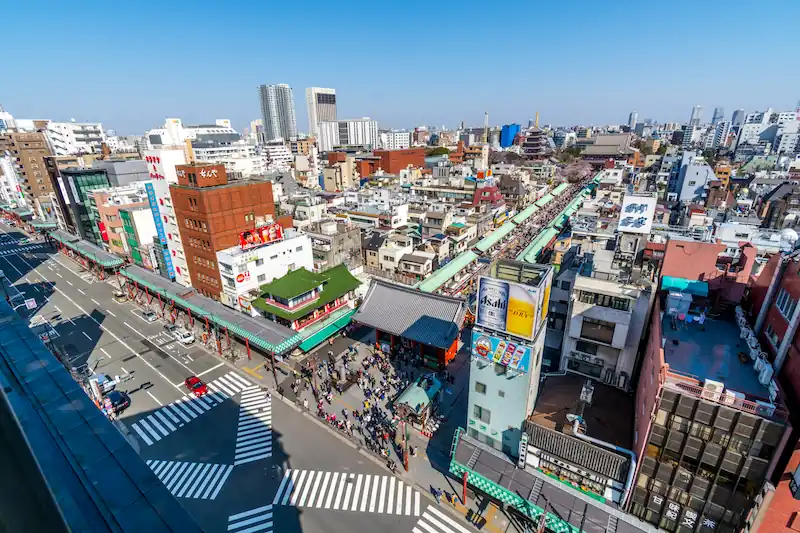
Asakusa – Best for: traditional atmosphere, value, families, and slower trips · Vibe: historic, low-rise, atmospheric, calmer after dark · Stay here if: you want Senso-ji nearby, better room value, river walks, and a base with a clearer sense of old Tokyo · Avoid if: you plan most nights around Shibuya, Shinjuku, or west Tokyo dining
Tokyo Station / Marunouchi – Best for: short stays, shinkansen, luxury, and frictionless logistics · Vibe: businesslike, elegant, central, ultra-efficient · Stay here if: you want the easiest arrivals, departures, rail links, and polished central access · Avoid if: you want neighborhood personality, budget value, or spontaneous nightlife outside the hotel
Ueno – Best for: budget-conscious stays, museums, rail links, and families · Vibe: practical, cultural, slightly rougher-edged, good value · Stay here if: you want museum access, Ueno Park, easy northern rail links, and cheaper rooms than the premium hubs · Avoid if: you want polished luxury, western Tokyo nightlife, or a refined hotel-led atmosphere
Roppongi / Akasaka – Best for: dining, mature nightlife, embassies, business-leisure stays, and couples · Vibe: international, restaurant-heavy, upscale, adult rather than youthful · Stay here if: you want good restaurants, museums, central positioning, and evenings that feel less chaotic than Shibuya or Shinjuku · Avoid if: you want the easiest rail hub, traditional Tokyo, or budget-first hotel choice
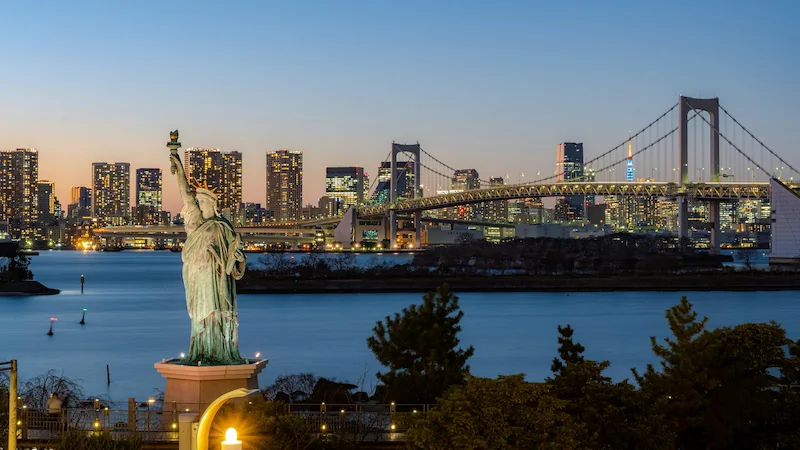
Tokyo Bay / Odaiba / Disney – Best for: Disney trips, family resorts, bay views, and split stays · Vibe: spacious, modern, resort-like, less traditionally urban · Stay here if: your trip is built around Tokyo Disney Resort, bay attractions, or a slower family-focused final night · Avoid if: you want classic Tokyo street life or daily access to Shinjuku, Shibuya, and Asakusa
How to choose the right area in Tokyo
Tokyo is not a city where the most famous district automatically gives the best stay. The right base depends on the rail lines you will use, the evenings you want, whether your trip includes Disney or shinkansen travel, how much room you need, and how well you handle major stations. The smartest choice is not simply central; it is the area that reduces daily friction while matching your pace.
Prioritize station logic over map distance: a hotel beside the right line often beats a more famous address with awkward transfers.
For a first trip, stay near a major hub or strong central connector unless atmosphere is more important than efficiency.
Separate nightlife from logistics: Shibuya and Shinjuku are exciting, but quieter edges often sleep better than the famous core.
Use Ginza or Tokyo Station if you want Tokyo to feel polished, legible, and easy rather than loud or experimental.
Use Asakusa or Ueno if value, museums, traditional atmosphere, or easier family pacing matter more than west-side nightlife.
Use Tokyo Bay only when Disney, Odaiba, or resort-like family logistics are central to the stay.
Check the exact station exit and walking route with luggage; Tokyo hotel convenience can change dramatically within the same area.
For two or three nights, pay for frictionless location. For a week, choose the district you will still enjoy returning to every evening.
How Tokyo works geographically from a stay perspective
Tokyo does not behave like a single center with neat rings around it. It is a network of powerful hubs, each with its own hotel logic. West-side areas such as Shinjuku and Shibuya are strongest for nightlife and high-energy city breaks; central areas such as Ginza and Tokyo Station make the city smoother; eastern areas such as Asakusa and Ueno offer atmosphere, museums, and value; Tokyo Bay is a specialist zone for Disney and family resort stays.
Shinjuku and Shibuya are strongest if your trip leans toward nightlife, fashion districts, west Tokyo, and high-density urban energy.
Ginza and Tokyo Station / Marunouchi are best if you want central polish, easier arrivals, shinkansen access, and a smoother hotel-led stay.
Asakusa and Ueno make sense when you want eastern Tokyo, museums, Senso-ji, better value, or a calmer pace.
Roppongi / Akasaka sits centrally but is more about dining, business, museums, and mature nightlife than rail dominance.
Tokyo Bay / Odaiba / Disney should be chosen deliberately for family resort logistics, not as a vague cheaper central alternative.
Being near the right line or station exit matters more than being in a famous district name.
Cross-city evening returns are where a weak base becomes most noticeable.
For a first trip, use the Yamanote Line and major metro nodes as your mental map, then choose the area that reduces repeated transfers.
West-side high-energy cluster – Shinjuku and Shibuya are best for nightlife, west Tokyo, fashion districts, bars, and travelers who want Tokyo to feel immediate.
Polished central cluster – Ginza, Tokyo Station, Marunouchi, and Nihombashi suit travelers who want smoother central movement, better hotel polish, and easier rail logistics.
Historic and cultural eastern cluster – Asakusa and Ueno are stronger for traditional atmosphere, museums, park access, better value, and slower family-friendly pacing.
International dining and business cluster – Roppongi and Akasaka work well for restaurants, museums, business-leisure trips, mature nightlife, and couples who want central evenings.
Bay and resort cluster – Tokyo Bay, Odaiba, and Disney-side hotels make sense for family resort stays, Disney plans, bay views, and split-stay itineraries.
Best areas to stay in Tokyo in depth
These are the Tokyo areas that make the most practical sense for travelers. Each solves a different problem: Shinjuku keeps the whole city open, Shibuya gives immediate western energy, Ginza smooths the stay, Asakusa adds atmosphere and value, Tokyo Station simplifies rail logistics, Ueno balances culture and budget, Roppongi / Akasaka works for dining and mature evenings, and Tokyo Bay is the specialist choice for Disney and family resort stays.
Shinjuku
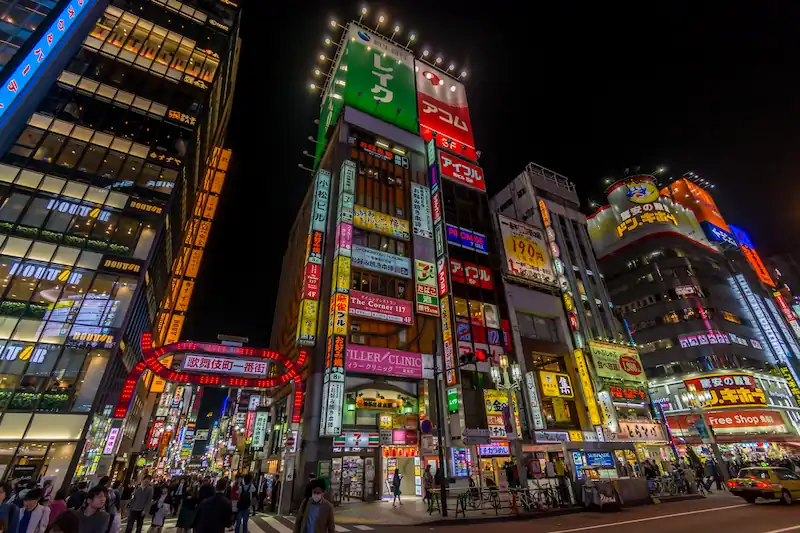
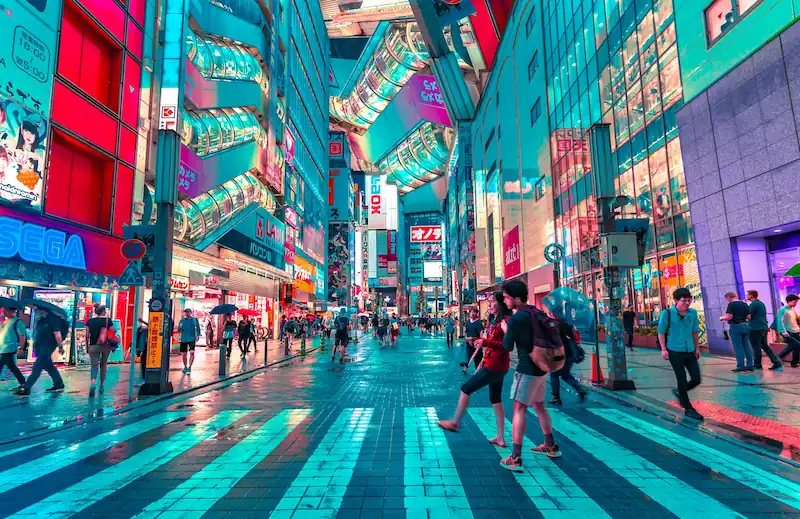
Shinjuku is the most reliable answer to where to stay in Tokyo if you want the city to feel easy. It is intense, bright, crowded, and sometimes overwhelming, but it solves almost everything a first-time visitor worries about: transport, food, shopping, late returns, day trips, and last-minute changes. The west side is more businesslike and hotel-heavy, with better family and comfort logic; the east side and Kabukicho are louder, more theatrical, and stronger for nightlife. If you want one base that keeps options open from morning to midnight, Shinjuku remains the safest all-round choice.
Why stay here: Stay here when you want the strongest all-round base in Tokyo and do not want to lose time second-guessing logistics. It is especially strong for first visits, mixed itineraries, and travelers who expect to cover several parts of the city.
Best for: first-time visitors, short stays, transport-first trips, mixed sightseeing and nightlife
Pros
Exceptional rail access across Tokyo and beyond
Huge hotel range from efficient business stays to full-service luxury
Easy dining at almost every budget level
Very practical for late arrivals, early departures, and changing plans
Strong evening life without needing extra transport
Cons
Can feel relentless, especially around the east side
Some pockets are noisy and less appealing for families
The station area is large and can be disorienting at first
Not the most atmospheric choice if you want traditional Tokyo
Nearby highlights
Fast access to JR, metro, and private rail lines for cross-city sightseeing
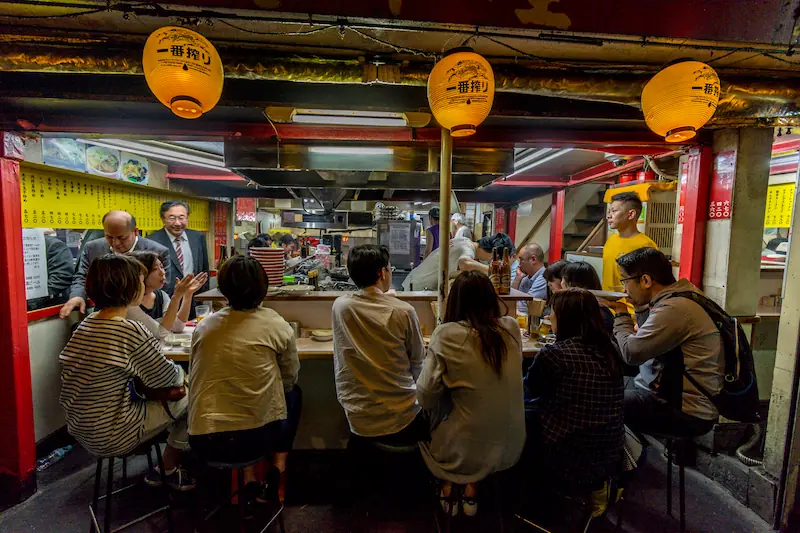
Easy evenings around Omoide Yokocho, department stores, izakaya streets, and late dining
Straightforward links to Shibuya, Harajuku, Omotesando, and western Tokyo
Walking access to the skyscraper district and Tokyo Metropolitan Government Building area
Useful base for Hakone, Mount Takao, and other west/northwest day trips
Better hotel range than most districts, from efficient business rooms to full-service luxury
Calmer west-side pockets for families and comfort-led travelers who still want Shinjuku logistics
Budget
APA Hotel Shinjuku Kabukicho Tower – Compact rooms in the heart of Kabukicho, best for travelers who want to be central and keep the budget under control. Why we recommend: One of the most practical low-cost ways to stay central in Shinjuku without giving up location. Check availability
Shinjuku Washington Hotel Annex – Business-style option on the west side, better for travelers who want a calmer base near major transport links. Why we recommend: It gives you a more functional west-Shinjuku position than many similarly priced east-side stays. Check availability
THE KNOT TOKYO Shinjuku – Design-leaning budget-friendly stay near Shinjuku Central Park, suited to travelers who want character without luxury pricing. Why we recommend: It has more personality than most hotels in this price band and a quieter setting than central Kabukicho. Check availability
Mid
JR Kyushu Hotel Blossom Shinjuku – Well-run mid-range hotel near the station, ideal for travelers who want efficiency without the feel of a generic chain. Why we recommend: The location is excellent for departures and returns while the rooms feel more composed than many competitors nearby. Check availability
Shinjuku Prince Hotel – Classic Shinjuku option right by the action, best for travelers who want east-side convenience and direct access to nightlife. Why we recommend: It puts you exactly where the area works best, without drifting into full luxury pricing. Check availability
Daiwa Roynet Hotel Nishi-Shinjuku PREMIER – More polished mid-range choice on the calmer side of Shinjuku, well suited to couples and comfort-focused travelers. Why we recommend: Room quality and day-to-day comfort feel stronger than many central Shinjuku business hotels. Check availability
Upscale
Keio Plaza Hotel Tokyo – Large full-service classic in west Shinjuku, ideal for travelers who want reliable comfort, facilities, and transport ease. Why we recommend: It remains one of the safest premium choices in Shinjuku for a stay that simply runs smoothly. Check availability
Keio Plaza Hotel Tokyo Premier Grand – Higher-end version of the Keio Plaza experience with a more elevated feel, better suited to special stays or comfort-led trips. Why we recommend: It gives you premium service and a polished atmosphere without sacrificing Shinjuku practicality. Check availability
Hotel Gracery Shinjuku – Well-known upscale-leaning stay in Kabukicho for travelers who want the energy of east Shinjuku at their doorstep. Why we recommend: The location is hard to beat if you want to stay inside the most animated side of the district. Check availability
Shibuya
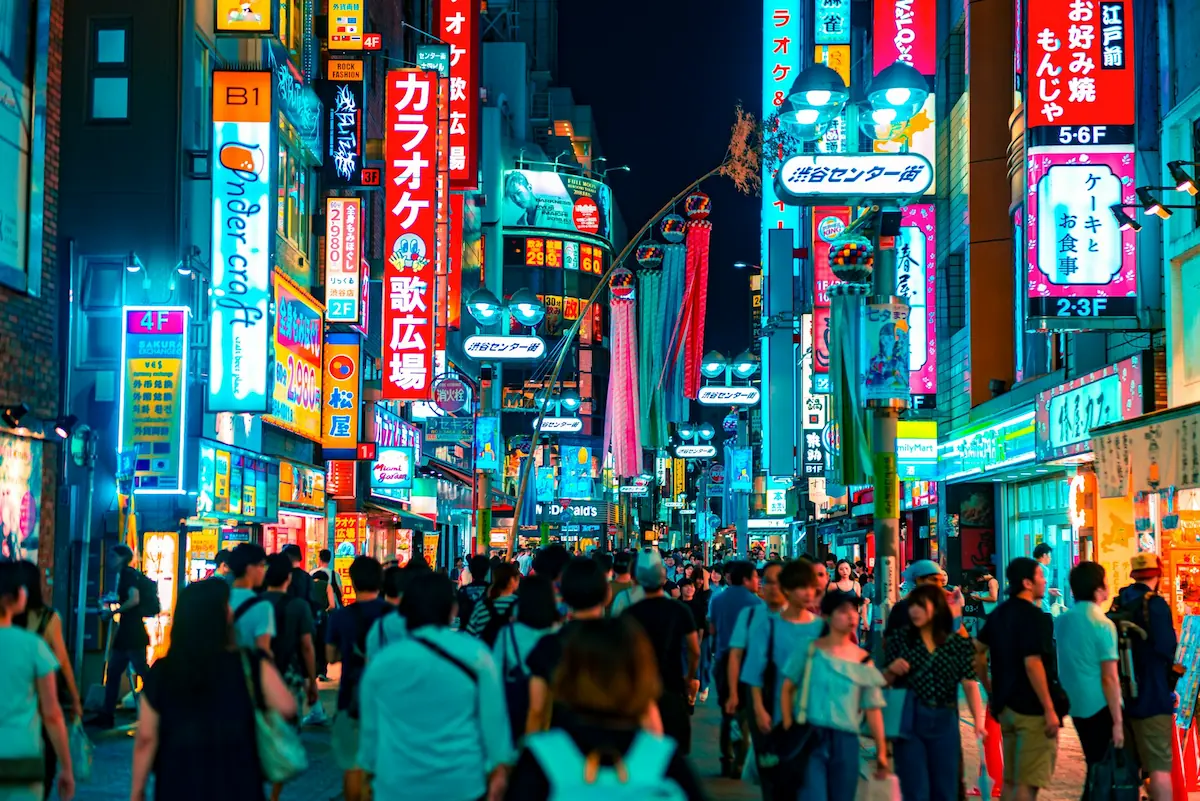
Shibuya is the best Tokyo base for travelers who want the city to feel immediate, social, stylish, and current. It is not as universally practical as Shinjuku, but it is often more enjoyable if your trip leans toward Harajuku, Omotesando, Daikanyama, Ebisu, bars, cafés, fashion, and late dinners. The trade-off is price, noise, and room size: Shibuya hotels often cost more for less space. For couples, friends, solo travelers, and return visitors, though, it can make Tokyo feel less like a transit puzzle and more like a lived-in city break.
Why stay here: Choose Shibuya when you want evenings to happen naturally around you and do not mind paying a bit more for atmosphere and west-side convenience. It is especially good for couples, return visitors, nightlife-focused trips, and shorter stays.
Best for: couples, nightlife, style-led trips, repeat visitors, west-Tokyo-focused stays
Pros
Excellent base for west Tokyo highlights like Harajuku, Omotesando, and Daikanyama
Strong restaurant, bar, café, and shopping density
Feels energetic without needing much planning
Good mix of modern lifestyle hotels and higher-end stays
Very strong for short city breaks
Cons
Can be noisy and expensive for the room size
Not the easiest area for larger family rooms on a moderate budget
Less balanced than Shinjuku for all-city logistics
Steep streets and station complexity can add friction with luggage
Nearby highlights
Direct access to Shibuya Crossing, department stores, and layered dining streets
Easy movement toward Harajuku, Omotesando, Yoyogi Park, and Meiji Jingu
Stronger late-night momentum than most polished central districts
Cafés, cocktail bars, and design-forward shopping within short walking range
Convenient base for splitting time between sightseeing and evening plans
Good launch point for exploring trendier western neighborhoods
Budget
Tokyu Stay Shibuya – Efficient and comfortable option on the quieter side of Shibuya, good for travelers who want location without full central noise. Why we recommend: It strikes one of the better price-to-practicality balances in greater Shibuya. Check availability
Prince Smart Inn Ebisu – Simple, modern, and well placed in Ebisu for travelers who want a calmer stay near Shibuya’s orbit. Why we recommend: It gives you a cleaner, quieter base while keeping one of Tokyo’s best evening neighborhoods close. Check availability
Dormy Inn Premium Shibuya-jingumae – Practical stay between Shibuya and Harajuku, ideal for travelers who want solid value and easy walking reach. Why we recommend: The position works unusually well for combining Shibuya energy with Harajuku and Omotesando access. Check availability
Mid
all day place shibuya – Contemporary hotel with a younger feel, best for travelers who want to stay inside central Shibuya’s momentum. Why we recommend: It feels more current than many similarly priced options and keeps the district highly walkable. Check availability
lyf Shibuya Tokyo – Flexible, social stay with a fresh format, suited to solo travelers, friends, and shorter city stays. Why we recommend: It brings a more communal, less generic energy than the usual business-hotel mid-range pick. Check availability
Shibuya Excel Hotel Tokyu – Reliable classic directly linked to Shibuya Station, ideal when connectivity matters as much as the neighborhood itself. Why we recommend: Few Shibuya hotels make station access this easy while still feeling fully embedded in the district. Check availability
Upscale
Hotel Indigo Tokyo Shibuya – Higher-end modern stay in the heart of Shibuya, suited to travelers who want comfort with a sharper local identity. Why we recommend: It gives you a premium Shibuya location without feeling detached from the area around it. Check availability
TRUNK(HOTEL) YOYOGI PARK – Boutique-led premium choice near Yoyogi Park for travelers who want design, calm, and access to Shibuya’s orbit. Why we recommend: It is one of the strongest options when you want Shibuya-adjacent energy but not Shibuya street noise. Check availability
Cerulean Tower Tokyu Hotel, A Pan Pacific Partner Hotel – Established high-end hotel on the quieter side of Shibuya, good for travelers who want spacious comfort and easy access. Why we recommend: It remains one of the most dependable premium choices for travelers who want Shibuya without the chaos. Check availability
Ginza
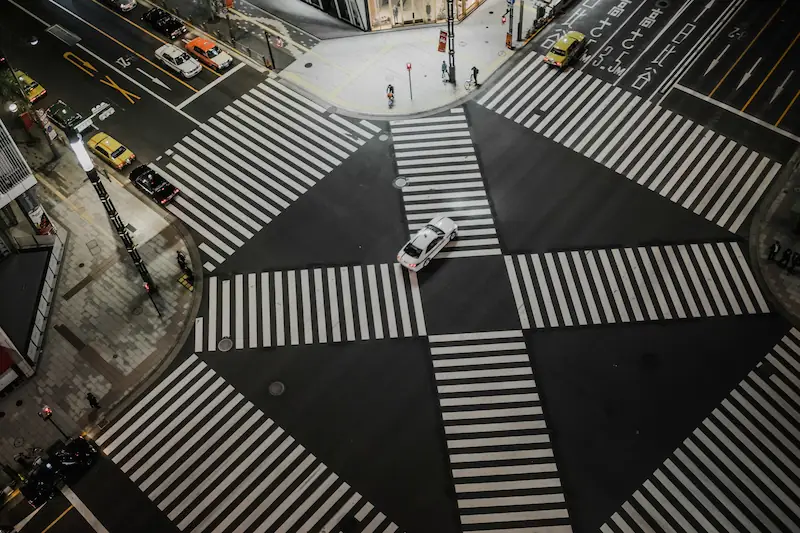
Ginza is one of the best areas to stay in Tokyo if you want centrality without sensory overload. It feels cleaner, calmer, and more polished than Shinjuku or Shibuya, with wide streets, department stores, excellent hotel stock, and simple access to Tokyo Station, Marunouchi, Tsukiji, Nihombashi, and the Imperial Palace side of the city. It is not Tokyo's most atmospheric neighborhood, but it is one of the easiest to live in for a few days. For couples, first-time visitors, business-leisure trips, and travelers who value comfort over nightlife, Ginza is a very strong default.
Why stay here: Stay in Ginza when you want central Tokyo convenience in a more composed setting, with strong hotels and simpler day-to-day movement. It works especially well for couples, mature travelers, business-leisure mixes, and shorter trips where friction matters.
Best for: central convenience, polished stays, couples, mature travelers, short efficient trips
Pros
Central but calmer than Shinjuku or Shibuya
Excellent hotel quality across several price bands
Strong access to Tokyo Station, Nihombashi, and eastern central Tokyo
Easy dining, shopping, and department-store convenience
Feels polished and comfortable even for first-time visitors
Cons
Can feel more commercial than neighborhood-driven
Less nightlife energy than Shibuya or Shinjuku
Some parts are quieter than expected at night
Not the strongest choice if traditional atmosphere matters most
Nearby highlights
Easy walks to department stores, flagship retail, and polished restaurant streets
Quick access toward Tokyo Station and Marunouchi for rail convenience
Simple connections to Tsukiji, Nihombashi, and the Imperial Palace side of town
Comfortable evening dining without needing to plan around one nightlife strip
Good balance between centrality and quieter hotel nights
Strong base for travelers who want a cleaner, less chaotic arrival into Tokyo
Budget
Hotel Monterey Ginza – Well-located classic option for travelers who want a reliable Ginza address without entering upscale pricing. Why we recommend: It is one of the few lower-cost Ginza stays that still feels properly placed rather than peripheral. Check availability
Quintessa Hotel Tokyo Ginza – Straightforward, central, and efficient stay for travelers who care more about location than extra facilities. Why we recommend: It gives you a strong Ginza position at a lower entry point than many nearby hotels. Check availability
ibis Styles Tokyo Ginza – Functional international-style option for travelers who want simple comfort in the heart of Ginza. Why we recommend: It is a practical choice when you want brand familiarity and a genuinely central address. Check availability
Mid
Hotel Musse Ginza Meitetsu – Comfortable mid-range hotel near Ginza’s southern side, well suited to city-break travelers who want easy movement. Why we recommend: It performs better than many generic business hotels thanks to its location and overall consistency. Check availability
Mitsui Garden Hotel Ginza-gochome – Modern mid-range choice with a polished feel, ideal for travelers who want centrality with better finish and comfort. Why we recommend: It offers a stronger sense of quality than many similarly priced central Tokyo hotels. Check availability
Millennium Mitsui Garden Hotel Tokyo - Ginza – Refined, dependable central stay with broad appeal for couples and comfort-focused first-time visitors. Why we recommend: It is one of the easiest Ginza hotels to recommend when you want quality without overcomplicating the decision. Check availability
Upscale
MUJI HOTEL GINZA – Design-led stay built around simplicity and material calm, ideal for travelers who want a distinct but understated experience. Why we recommend: It has far more identity than most Ginza hotels without slipping into empty style-over-substance territory. Check availability
karaksa hotel premier Tokyo Ginza – Upscale-leaning option with a highly practical location for travelers who want comfort and excellent central access. Why we recommend: It combines a smart position with a level of room comfort that is stronger than many nearby competitors. Check availability
AC Hotel by Marriott Tokyo Ginza – Modern premium stay for travelers who want a more international upscale feel in central Tokyo. Why we recommend: It is a good fit for travelers who want a polished hotel product rather than a more traditional Japanese style. Check availability
Asakusa
Asakusa is one of the best neighborhoods to stay in Tokyo if you want atmosphere, value, and a slower base rather than maximum nightlife or rail dominance. The rhythm is different from the western hubs: temple approaches in the morning, river views, low-rise streets, older shops, and evenings that settle earlier. It is not the most efficient base for repeated Shibuya or Shinjuku nights, but it gives Tokyo a clearer sense of place. For families, budget-conscious travelers, slower first trips, and travelers who want traditional Tokyo outside the door, Asakusa is much stronger than its distance on the map suggests.
Why stay here: Choose Asakusa when you value atmosphere, relative calm, and better room value over being in the city’s busiest entertainment hubs. It works especially well for slower first trips, families, and travelers interested in traditional Tokyo touches.
Best for: traditional atmosphere, value, calmer stays, families, slower first-time trips
Pros
More character and traditional atmosphere than many central districts
Often better value for room size and hotel quality
Pleasant mornings and calmer evenings
Good base for eastern Tokyo and river-side walks
Strong appeal for travelers who do not want a corporate-feeling district
Cons
Less efficient for repeated late nights in Shibuya or Shinjuku
Not the strongest base for fast west-side itineraries
Some streets quiet down early compared with western hubs
Transport is good, but not as frictionless as Shinjuku for all-city movement
Nearby highlights
Walking access to Senso-ji, Nakamise, and riverfront views
More relaxed early-morning and late-evening neighborhood feel
Easy access toward Skytree-side eastern Tokyo
Stronger sense of local rhythm than in Tokyo’s polished commercial hubs
Good base for travelers who want sightseeing to start outside the hotel door
Better odds of finding larger-feeling rooms without stepping into full luxury
Budget
Ano Hotel Asakusa – Simple lower-cost stay for travelers who want a clean base near Asakusa without overpaying for the district. Why we recommend: It is a practical value choice for travelers prioritizing location over extras. Check availability
Hotel Plus Hostel TOKYO ASAKUSA 1 – Hostel-style budget option suited to solo travelers and friends who want a low-cost base near the main sights. Why we recommend: It is one of the few genuinely cheap options that still keeps Asakusa practical. Check availability
Ryokan Asakusa Shigetsu – Traditional-style stay close to Senso-ji, best for travelers who want atmosphere more than space or facilities. Why we recommend: It delivers a more memorable sense of place than a standard budget business hotel. Check availability
Mid
Asakusa Tobu Hotel – Highly practical modern option by the station, especially good for families and travelers who value ease. Why we recommend: It combines station convenience with one of the most straightforward setups in the area. Check availability
KAIKA Tokyo by THE SHARE HOTELS – Design-conscious hotel near Asakusa’s orbit, suited to travelers who want something more distinctive than a basic city stay. Why we recommend: It offers a stronger aesthetic identity than most mid-range options nearby. Check availability
PROSTYLE RYOKAN TOKYO ASAKUSA – Ryokan-inspired modern stay for travelers who want a softer, more atmospheric hotel experience in central Asakusa. Why we recommend: It gives you a more intimate, place-specific feel than a standard mid-range chain hotel. Check availability
Upscale
Asakusa View Hotel – Established upscale option with strong views and easy access to the district’s main sights. Why we recommend: It is one of the most complete premium stays in the area if you want comfort without leaving Asakusa’s atmosphere. Check availability
Asakusa View Hotel Annex Rokku – Refined newer-feeling option in the Rokku area for travelers who want a more polished take on staying in Asakusa. Why we recommend: It gives you a quieter, better-finished experience than many central alternatives nearby. Check availability
The Gate Hotel Kaminarimon by Hulic – Stylish upscale stay near Kaminarimon, well suited to couples and travelers who want location with a more elevated feel. Why we recommend: Few Asakusa hotels combine this level of position, polish, and rooftop-era city feel so well. Check availability
Tokyo Station / Marunouchi
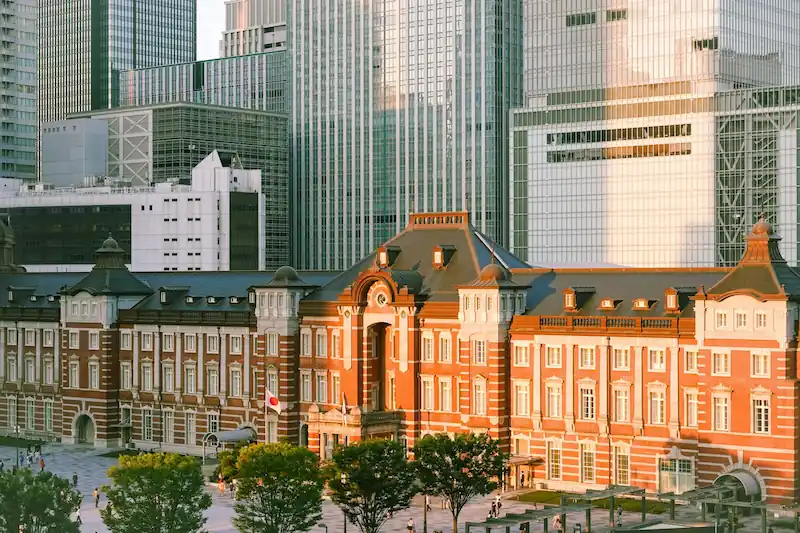
Tokyo Station / Marunouchi is the best area to stay in Tokyo when logistics matter more than neighborhood romance. It is elegant, central, businesslike, and exceptionally useful for shinkansen departures, short stays, airport transfers, and polished hotel-led trips. The streets around Marunouchi feel ordered and refined, while nearby Nihombashi and Ginza add dining and retail depth. It is not the place for gritty local atmosphere or spontaneous late-night wandering, but for a frictionless Tokyo stay it is hard to improve.
Why stay here: Stay here if your trip includes a very short Tokyo stop, a shinkansen connection, early departures, premium hotels, or a desire to make the city feel as operationally smooth as possible.
Best for: short stays, shinkansen trips, luxury, business travel, mature travelers, polished central convenience
Pros
Best Tokyo base for shinkansen access and onward Japan itineraries
Excellent for very short stays, business-leisure trips, and luxury convenience
Easy access to Ginza, Nihombashi, the Imperial Palace area, and central transport
Polished streets and strong full-service hotel stock
Low-friction arrivals and departures compared with more chaotic hubs
Cons
Less neighborhood personality than Shibuya, Asakusa, or Ueno
Premium pricing around the best hotels
Evenings are refined rather than spontaneous or street-led
Not ideal if most nights are planned in western Tokyo
Nearby highlights
Direct access to Tokyo Station and major shinkansen routes
Walkable access to Marunouchi, Nihombashi, Ginza, and the Imperial Palace outer area
Excellent choice before or after Kyoto, Osaka, Kanazawa, or northern Japan legs
Strong department-store dining and polished restaurant options nearby
Good base for travelers who want Tokyo to feel calm and legible on arrival
Useful airport links depending on route and hotel position
Budget
karaksa hotel TOKYO STATION – Efficient, modern hotel close to Tokyo Station, best for short stays and onward rail travel. Why we recommend: One of the more practical lower-cost ways to stay near Tokyo Station without losing the core logistics advantage. Check availability
Sotetsu Fresa Inn Tokyo-Kyobashi – Compact business-hotel option between Tokyo Station, Kyobashi, and Ginza, suited to travelers who value access over space. Why we recommend: It gives you a useful central position at a more manageable price than the premium station hotels. Check availability
Hotel Metropolitan Tokyo Marunouchi – Station-adjacent hotel with a businesslike feel and strong convenience for arrivals, departures, and short urban stays. Why we recommend: Few hotels make Tokyo Station logistics this easy while still delivering reliable comfort. Check availability
Mid
Hotel Ryumeikan Tokyo – Well-run central hotel near Tokyo Station with a refined Japanese-business-hotel feel and strong day-to-day practicality. Why we recommend: It balances location, service, and value better than many hotels in this expensive micro-area. Check availability
Mitsui Garden Hotel Nihonbashi Premier – Polished central stay near Nihombashi with easier atmosphere than the immediate station core. Why we recommend: A strong pick if you want Tokyo Station access with a slightly more relaxed and elegant setting. Check availability
Oakwood Premier Tokyo – Apartment-style premium stay next to Tokyo Station, useful for longer stays or travelers who want more room functionality. Why we recommend: The serviced-apartment format solves space and luggage issues better than many standard hotels nearby. Check availability
Upscale
The Tokyo Station Hotel – Historic luxury hotel inside Tokyo Station with exceptional convenience and a strong sense of occasion. Why we recommend: The right splurge when rail logistics, heritage, and polished service all matter. Check availability
Shangri-La Tokyo – High-end luxury hotel beside Tokyo Station with large rooms, strong views, and seamless service. Why we recommend: One of the most dependable luxury choices for travelers who want Tokyo to feel smooth from arrival to departure. Check availability
Four Seasons Hotel Tokyo at Marunouchi – Intimate luxury stay near Tokyo Station, suited to travelers who want discreet service and direct rail convenience. Why we recommend: It offers a calmer, more boutique-feeling luxury alternative to larger central hotels. Check availability
Ueno
Ueno is one of Tokyo's smartest value areas for travelers who want culture, rail access, and a less polished but highly practical base. It sits close to Ueno Park, major museums, Ameyoko, and useful train links, including routes toward Narita and northern Japan. The district is not as sleek as Ginza or as exciting as Shibuya, but it often gives better room economics and easier museum-heavy days. It works especially well for families, budget-conscious travelers, culture-first visitors, and trips that include eastern Tokyo.
Why stay here: Stay here if you want a practical base with stronger value than the premium hubs, easy access to museums and parks, and a less corporate version of central Tokyo.
Best for: budget-conscious travelers, families, museums, eastern Tokyo, rail practicality, longer stays
Pros
Excellent access to Ueno Park, museums, Ameyoko, and eastern Tokyo
Often better value than Shinjuku, Shibuya, or Ginza
Useful rail links for Narita and northern Japan routes
Good for families who want park space and museums nearby
Strong casual dining and local market energy
Cons
Less polished and less upscale than Ginza or Marunouchi
Nightlife is more casual and less stylish than Shibuya or Shinjuku
Some hotel streets feel functional rather than atmospheric
Not ideal if most of your trip focuses on west Tokyo
Nearby highlights
Walking access to Tokyo National Museum and the Ueno museum cluster
Ueno Park for families, seasonal walks, and pacing breaks
Ameyoko for casual food, market energy, and street-level texture
Good links toward Asakusa, Akihabara, Tokyo Station, and Narita routes
Better hotel value than many famous first-trip districts
Useful base for travelers who want substance over polish
Budget
APA Hotel Keisei Ueno Ekimae – Compact, highly practical hotel near Ueno Station and Keisei links, best for transit-minded stays. Why we recommend: Its location is especially useful for Narita access and museum-heavy itineraries. Check availability
Hotel Sardonyx Ueno – Simple, central Ueno hotel near Ameyoko and station access, suited to travelers prioritizing value and movement. Why we recommend: A practical option that keeps Ueno's best transport and food advantages close. Check availability
Ueno Touganeya Hotel – Modest, friendly, and useful stay near Ueno Station, better for budget travelers than design-seekers. Why we recommend: It delivers the basic Ueno value promise without unnecessary extras. Check availability
Mid
Nohga Hotel Ueno Tokyo – Design-conscious mid-range stay with a calmer, more considered feel than most Ueno business hotels. Why we recommend: One of the best choices if you want Ueno value with a better sense of style. Check availability
Mitsui Garden Hotel Ueno – Reliable modern hotel beside Ueno Station, good for travelers who want convenience and predictable comfort. Why we recommend: It makes Ueno especially easy for first-time visitors who want museum access without roughing it. Check availability
Minn Ueno – Apartment-style rooms that can work well for families or longer stays needing more practical space. Why we recommend: The format solves some room-size issues that standard Tokyo hotels often create. Check availability
Upscale
Hotel Resol Ueno – Polished, compact hotel with a more refined finish than basic station-area competitors. Why we recommend: A good upper-mid option for travelers who want Ueno convenience without the feel of a bare business hotel. Check availability
Centurion Hotel & Spa Ueno Station – Comfortable stay with spa-style facilities near the station and Ameyoko area. Why we recommend: Useful when you want more amenities while keeping Ueno's value and transport advantages. Check availability
Mimaru Tokyo Ueno East – Apartment-style family-friendly hotel near Ueno, suited to groups needing larger room layouts. Why we recommend: One of the stronger Ueno-area choices for families who need space and practical in-room function. Check availability
Roppongi / Akasaka
Roppongi / Akasaka is the best Tokyo base for travelers who want dining, museums, embassies, nightlife, and a more international adult atmosphere without staying in the loudest western hubs. Roppongi itself is restaurant-heavy and museum-adjacent, while Akasaka often feels more practical, businesslike, and better value. The area is central, but not as effortless for rail movement as Shinjuku or Tokyo Station. It suits couples, business-leisure travelers, mature nightlife, and repeat visitors who want evenings to feel convenient but not chaotic.
Why stay here: Stay here if you want central Tokyo with strong restaurants, bars, museums, and international comfort, especially when Shibuya feels too young and Ginza feels too polished.
Best for: couples, dining, mature nightlife, museums, business-leisure, repeat visitors
Pros
Excellent dining, bars, museums, and international services
Good for couples and business-leisure stays
More adult evening scene than Shibuya or Shinjuku
Central position for mixed Tokyo itineraries
Akasaka can offer better value than Roppongi proper
Cons
Not the strongest rail hub for first-time all-city sightseeing
Some nightlife pockets can feel less polished late at night
Hotel value varies sharply by micro-location
Less traditional atmosphere than Asakusa or Ueno
Nearby highlights
Access to Roppongi Hills, Tokyo Midtown, Mori Art Museum, and National Art Center area
Strong restaurant and bar density for adult evenings
Useful central position between west Tokyo, Ginza, and Tokyo Station
Akasaka offers a practical business-hotel alternative to pricier Roppongi addresses
Good choice for travelers who want Tokyo evenings without Shinjuku intensity
Works well for repeat visitors who already understand the rail network
Budget
Sotetsu Fresa Inn Tokyo Roppongi – Compact, practical stay in Roppongi for travelers who want the area without full upscale pricing. Why we recommend: It offers one of the more accessible entry points into a typically expensive district. Check availability
Hotel Mystays Premier Akasaka – Efficient Akasaka hotel with useful access and better value than many Roppongi-core options. Why we recommend: Akasaka gives you central convenience with a calmer and often smarter price point. Check availability
remm Roppongi – Modern compact hotel near Roppongi Station, best for short stays and nightlife-adjacent convenience. Why we recommend: It keeps Roppongi extremely easy while staying more controlled than many nightlife-area hotels. Check availability
Mid
Candeo Hotels Tokyo Roppongi – Modern hotel with useful facilities and a strong Roppongi location for dining and evening access. Why we recommend: A solid mid-to-upscale choice if you want Roppongi without jumping to luxury pricing. Check availability
Mitsui Garden Hotel Roppongi Tokyo Premier – Polished hotel near Roppongi with a more elevated feel than standard business hotels. Why we recommend: It is one of the better-balanced choices for comfort, location, and atmosphere in this area. Check availability
The Centurion Classic Akasaka – Roomier Akasaka option with suite-style practicality, good for travelers who need space near central Tokyo. Why we recommend: It can outperform more famous addresses when room format matters. Check availability
Upscale
Grand Hyatt Tokyo – Major luxury hotel in Roppongi Hills with strong dining, service, and museum-adjacent convenience. Why we recommend: The best fit when you want high-end comfort embedded in Roppongi's strongest mixed-use complex. Check availability
The Ritz-Carlton Tokyo – Top-tier luxury stay in Tokyo Midtown with skyline views and a highly polished international feel. Why we recommend: One of Tokyo's strongest luxury choices for travelers prioritizing service, views, and mature central access. Check availability
ANA InterContinental Tokyo – Large international luxury hotel between Akasaka and central business districts, useful for business-leisure travel. Why we recommend: It gives you central comfort, strong facilities, and less chaos than the western nightlife hubs. Check availability
Tokyo Bay / Odaiba / Disney
Tokyo Bay, Odaiba, and the Disney-side hotel zones are specialist choices rather than default Tokyo bases. They work very well when the trip is built around Tokyo Disney Resort, bay attractions, teamLab-style plans, family room needs, or a slower final night with more space. They work poorly if you want classic street-level Tokyo every day. The area gives bigger hotels, bay views, resort logic, and family-friendly facilities, but daily movement to Shinjuku, Shibuya, Asakusa, or Ueno can become tiring.
Why stay here: Stay here if Disney, Odaiba, bay views, family facilities, or a split stay are central to your trip. Do not choose it as a general Tokyo base unless you understand the transport trade-off.
Best for: Disney trips, families, bay views, resort stays, Odaiba, split stays, final nights
Pros
Best for Tokyo Disney Resort and family resort stays
Larger hotels and more spacious facilities than many central districts
Useful for Odaiba, bay attractions, and waterfront views
Can work well as a final-night or split-stay base
Less urban intensity than Shinjuku, Shibuya, or Ginza
Cons
Poorer choice for classic daily Tokyo sightseeing
Longer returns from west and east Tokyo neighborhoods
Less street-level local atmosphere
Evening dining can feel hotel-led or destination-led rather than neighborhood-driven
Nearby highlights
Best logistics for Tokyo Disney Resort and Disney-focused family trips
Access to Odaiba, waterfront walks, bay views, and family attractions
More spacious hotel formats than many central Tokyo districts
Useful if teamLab, Toyosu, or bay-side experiences are a major part of the itinerary
Works as a split stay after several nights in central Tokyo
Lower sensory intensity for families who need easier hotel downtime
Budget
Far East Village Hotel Tokyo Ariake – Modern bay-area hotel suited to travelers who want a lower-cost base near Ariake and Odaiba-side venues. Why we recommend: A practical budget entry into the bay area without using a full resort hotel. Check availability
Hotel JAL City Tokyo Toyosu – Efficient hotel near Toyosu, useful for market-area plans, bay-side activities, and calmer business-style stays. Why we recommend: Good if Toyosu and bay access matter more than Shinjuku or Shibuya nightlife. Check availability
Tokyo Bay Ariake Washington Hotel – Large, practical hotel near Ariake and Tokyo Big Sight, best for events, conferences, and bay-side affordability. Why we recommend: It is functional rather than atmospheric, but the location works well for the right trip format. Check availability
Mid
Hotel Metropolitan Tokyo Bay – Comfortable Disney-side option with strong family logic and good access for park-focused trips. Why we recommend: A smart mid-range choice when Disney logistics are more important than central Tokyo atmosphere. Check availability
Hotel Okura Tokyo Bay – Established Disney resort-area hotel with larger rooms and a calmer resort feel. Why we recommend: It gives families space and comfort that central Tokyo hotels often cannot match. Check availability
Hilton Tokyo Bay – Large family-friendly hotel near Tokyo Disney Resort with strong facilities and reliable service. Why we recommend: One of the safest all-round picks for families building the stay around Disney. Check availability
Upscale
Grand Nikko Tokyo Daiba – Large upscale bay hotel in Odaiba with views, facilities, and a more resort-like Tokyo feel. Why we recommend: Best when you want Odaiba and bay views to be part of the stay rather than just a commute. Check availability
Hilton Tokyo Odaiba – Waterfront upscale hotel with bay views and strong facilities, suited to families and comfort-led stays. Why we recommend: A good choice if you want a calmer, spacious Tokyo base with resort-like infrastructure. Check availability
Tokyo Disneyland Hotel – Flagship Disney hotel with maximum park convenience, theming, and family appeal. Why we recommend: The right splurge when Disney is a core part of the trip rather than a side outing. Check availability
Where to stay in Tokyo for first-time visitors
For a first trip, the best area is the one that makes Tokyo feel manageable immediately. That usually means a strong station, easy evening returns, and enough dining nearby that you do not have to solve the city again after a long day.
Choose Shinjuku if you want the safest all-round answer and expect to move across the city every day.
Choose Ginza if you want a calmer, more polished first base with strong access to Tokyo Station, Tsukiji, Marunouchi, and eastern Tokyo.
Choose Shibuya if your trip is short, social, and west-Tokyo focused, with nights around bars, cafés, shopping, and Harajuku / Omotesando.
Choose Asakusa if traditional atmosphere and room value matter more than the fastest access to Shibuya or Shinjuku.
Choose Tokyo Station / Marunouchi for a 1- or 2-night stopover, shinkansen travel, or premium convenience.
Choose Ueno if you want museums, park access, and a budget-conscious base without leaving central Tokyo's useful rail network.
Avoid Tokyo Bay unless Disney, Odaiba, or a family-resort format is central to the trip.
Profile
BestArea
Why
Safest all-round first trip
Shinjuku
Best transport coverage, dining, nightlife, and flexibility
Calmer central first trip
Ginza
Polished, easy to navigate, strong access without Shinjuku intensity
Short stylish city break
Shibuya
Best for west Tokyo, evenings, and younger urban energy
Traditional and better-value first stay
Asakusa
Atmosphere, Senso-ji, calmer evenings, and stronger room value
Rail-led Japan itinerary
Tokyo Station / Marunouchi
Best for shinkansen, arrivals, departures, and short stays
Where to stay in Tokyo with family
Families usually need a different Tokyo strategy: fewer transfers, calmer streets, realistic room layouts, easy meals, and a base that still feels comfortable after children are tired.
West Shinjuku works best for families who want transport strength but not Kabukicho street noise.
Ginza works well for families who want a polished central base, department stores, easy dining, and calmer streets.
Asakusa is one of the best family-value choices because the pace is slower and the neighborhood has more visible character.
Ueno is strong for families who want museums, Ueno Park, Ameyoko, and better room economics.
Tokyo Bay / Disney is the best choice if Disney is a main part of the trip or you need resort-style facilities and larger hotel infrastructure.
Shibuya can work for teens, but it is less ideal for younger children if sleep, space, and quiet streets matter.
Prioritize rooms that handle luggage and beds properly; Tokyo family comfort often depends more on room format than district prestige.
Priority
BestArea
WatchOutFor
Why
Best overall city logistics
West Shinjuku
Avoid the loudest east-side nightlife pockets
Strong transport and broad hotel stock
Calm central family stay
Ginza
Mid-range rooms can still be compact
Polished, central, and easy to navigate
Best value with atmosphere
Asakusa or Ueno
Longer returns from west-side evenings
More breathing room, culture, parks, and better value
Disney-focused trip
Tokyo Bay / Disney
Weak for daily central Tokyo sightseeing
Best park logistics and resort facilities
Where to stay in Tokyo for nightlife
Tokyo nightlife is fragmented by style. Shibuya, Shinjuku, Roppongi, Ebisu, and Ginza do not offer the same kind of evening, so the right base depends on whether you want bars, izakaya, late dining, clubs, polished restaurants, or simply easy returns.
Choose Shinjuku if you want the broadest late-night range and a base that still works extremely well by day.
Choose Shibuya if you want younger bars, social energy, design-led hotels, and easy access to Ebisu, Daikanyama, and Harajuku.
Choose Roppongi / Akasaka if you want adult nightlife, restaurants, hotel bars, museums, and a more international evening scene.
Choose Ginza for refined dinners, cocktail bars, and polished hotel-led evenings rather than street-level nightlife.
Avoid Asakusa, Ueno, and Tokyo Bay if nightlife is one of the main reasons for your Tokyo stay.
Sleep on the quieter edge of a nightlife district whenever possible; in Tokyo, one street can change the quality of the stay.
NightStyle
BestArea
TradeOff
Broad late-night variety
Shinjuku
Can be visually intense and noisy
Younger bars and stylish evenings
Shibuya
Pricier rooms and less calm
Adult restaurants, bars, and museums
Roppongi / Akasaka
Less efficient as a first-time rail hub
Refined dinners and hotel bars
Ginza
Less spontaneous late-night street energy
Where to stay in Tokyo on a budget
Budget strategy in Tokyo is about avoiding false savings. A cheaper hotel far from the line you need can cost you energy every day, while a compact room in the right district can make the whole trip feel easier.
Asakusa is usually the strongest budget-conscious area if you want atmosphere, value, and a calmer base.
Ueno is one of the best choices for budget travelers who want museums, rail access, and central practicality.
Shinjuku can still work on a budget if you choose the right business-hotel pocket and avoid paying only for the famous name.
Ginza budget stays make sense when the exact hotel gives you central access at an unusual value point.
Shibuya is rarely the best budget answer unless nightlife and west Tokyo are central to your trip.
Tokyo Bay can be poor value for classic sightseeing unless Disney or Odaiba is the reason you are staying there.
Always compare room layout, station walk, and last-train logic before choosing the cheapest nightly rate.
BudgetGoal
BestArea
Why
Best value with atmosphere
Asakusa
Traditional feel, calmer pace, often better room economics
Best value with rail and museums
Ueno
Central enough, useful transport, strong cultural access
Budget but maximum convenience
Shinjuku
Compact business hotels can still make logistics excellent
Budget central polish
Ginza
Works selectively when the hotel position is genuinely strong
Where to stay in Tokyo depending on your trip
The right Tokyo base changes with trip length and travel style. These are the sharpest choices when the goal is to avoid wasting time rather than simply staying somewhere popular.
Label
Stay
Avoid
Why
1 night
Tokyo Station / Marunouchi or Ginza
Outer-value areas and nightlife-led bases unless plans require them
With one night, arrival and departure friction matter more than neighborhood depth.
2 nights
Shinjuku, Ginza, or Tokyo Station
Tokyo Bay unless Disney is the point
Short stays need a base that makes the city immediately usable.
3 days
Shinjuku for all-round flexibility, Ginza for polish, Shibuya for west-side energy
Asakusa if most evenings are planned in the west
Three days reward location efficiency and easy evening returns.
4 to 5 days
Shinjuku, Ginza, Asakusa, Ueno, or Shibuya depending on pace
Choosing only for nightlife if sightseeing and museums are the main goal
At this length, neighborhood feel starts to matter alongside logistics.
1 week
Ginza for polish, Asakusa or Ueno for value and culture, Shibuya for lifestyle, Roppongi / Akasaka for dining
The loudest nightlife pockets for the whole stay unless that is the trip focus
Longer trips benefit from a base you enjoy returning to repeatedly.
First trip
Shinjuku or Ginza
Overly niche or remote neighborhood choices
These areas reduce friction and make Tokyo easier to understand quickly.
Return trip
Shibuya, Asakusa, Ueno, Roppongi / Akasaka, or a more specific lifestyle base
Automatically repeating the most practical first-trip choice
Once logistics are familiar, atmosphere and district personality become more worth prioritizing.
Disney or family resort trip
Tokyo Bay / Disney, ideally as a split stay
Using Tokyo Bay as your only base for classic city sightseeing
The area works very well for Disney logistics but poorly for daily urban exploration.
How to choose the right hotel once you have chosen the area
In Tokyo, the district decision gets you most of the way there, but the exact hotel still matters a lot. Small changes in street position, station access, and room setup can make the stay much smoother.
Topic
WhatToDo
WhatToAvoid
WhyItMatters
Distance to the right station and exit
Choose a hotel close to the line and station exit you will actually use most.
Assuming all hotels inside the same district are equally convenient.
Tokyo friction often comes from extra walking, station complexity, and awkward transfers, not map distance alone.
Quiet edge versus famous core
Use the quieter edge of Shinjuku, Shibuya, or Roppongi when you want nightlife access without poor sleep.
Booking directly above the busiest entertainment streets unless that is the point of the trip.
One block can separate useful energy from nightly fatigue.
Room size and layout
Check layout, luggage space, bed setup, and bathroom configuration, especially for couples and families.
Comparing Tokyo room categories to European or North American size expectations.
A slightly better room format can matter more than a long list of hotel facilities.
Short-stay transport logic
For one to three nights, prioritize frictionless arrivals, departures, and cross-city movement.
Choosing a charming but slower base when every hour counts.
Short Tokyo stays are easy to dilute with bad positioning.
Family practicality
Look for calmer sub-areas, easier meal options, and room categories that actually work for children and luggage.
Choosing nightlife-led hotels just because the district is famous.
Family fatigue shows up fastest in loud streets, cramped rooms, and awkward transfers.
Disney and bay-area strategy
Use Tokyo Bay or Disney-side hotels deliberately, often as a split stay after central Tokyo.
Using the bay as a cheaper base for everyday sightseeing in Shinjuku, Shibuya, Asakusa, or Ueno.
Tokyo Bay is excellent for the right trip logic and inefficient for the wrong one.
Luxury versus location
Spend on luxury when the hotel genuinely improves location, views, room size, service, or arrival/departure flow.
Paying for a prestigious hotel if it forces a district mismatch.
In Tokyo, the best hotel is the one that improves how the whole trip works, not simply the most expensive one.
Booking seasonality
Book earlier for sakura, autumn, long weekends, year-end, and concert/event periods.
Waiting until only weak micro-locations remain in the right district.
Tokyo hotel stock is broad, but the best station-adjacent options disappear first.
Tokyo where-to-stay FAQ
These are the accommodation questions that most often determine whether Tokyo feels smooth, tiring, expensive, or surprisingly easy.
What is the best area to stay in Tokyo for first-time visitors?
Shinjuku is usually the strongest first-time base because it combines transport access, huge hotel choice, easy food options, nightlife, and flexibility across the city. Ginza is the best alternative if you want a calmer, more polished central base.
Is Shinjuku or Shibuya better to stay in Tokyo?
Shinjuku is better for overall convenience, day trips, and citywide movement. Shibuya is better if you want a younger, more style-led base with stronger nightlife and easier access to Harajuku, Omotesando, Daikanyama, and Ebisu.
Is Ginza a good area to stay in Tokyo?
Yes. Ginza is one of Tokyo's best central bases if you want polished hotels, calm streets, strong dining, and easy access to Tokyo Station, Tsukiji, Marunouchi, and Nihombashi. It is less atmospheric than Asakusa and less energetic than Shibuya, but very easy to use.
Is Asakusa too far to stay in Tokyo?
Asakusa is not too far, but it suits certain trips better than others. It is excellent for traditional atmosphere, value, Senso-ji, families, and eastern Tokyo. It is less ideal if most of your nights are in Shibuya or Shinjuku.
Where should I stay in Tokyo for 3 days?
For three days, Shinjuku is the safest all-round choice. Ginza works well if you want a calmer central stay, Shibuya is best for nightlife and west Tokyo, and Tokyo Station / Marunouchi is excellent if you have shinkansen plans.
Where should I stay in Tokyo for 2 nights?
For two nights, choose Shinjuku, Ginza, or Tokyo Station / Marunouchi. This is too short to save money by staying far out unless your plans are very specific.
Where should I stay in Tokyo with family?
West Shinjuku, Ginza, Asakusa, Ueno, and Tokyo Bay can all work. West Shinjuku is best for transport, Ginza for calm central comfort, Asakusa and Ueno for value and culture, and Tokyo Bay for Disney-focused trips.
Where should I stay in Tokyo for nightlife?
Shibuya is best for younger bars and social energy, Shinjuku for the broadest late-night variety, and Roppongi / Akasaka for more adult restaurants, bars, and international nightlife. Ginza works for refined dinners rather than high-energy nightlife.
Where should I stay in Tokyo on a budget?
Asakusa and Ueno are usually the smartest budget-conscious areas because they offer better room value while staying useful for sightseeing. Shinjuku can also work if you choose a compact business hotel near the right station access.
Is Ueno a good place to stay in Tokyo?
Yes, especially for museums, Ueno Park, budget-conscious stays, Narita access, and eastern Tokyo. It is less polished than Ginza and less exciting than Shibuya or Shinjuku, but it can be a very practical base.
Is Tokyo Station a good area to stay?
Tokyo Station / Marunouchi is excellent for short stays, shinkansen travel, luxury hotels, business trips, and frictionless arrivals or departures. It is less strong if you want nightlife or a neighborhood with a lot of local street texture.
Should I stay near Tokyo Station or Shinjuku?
Choose Tokyo Station if shinkansen logistics, business, luxury, or a short stopover matter most. Choose Shinjuku if you want the stronger all-round sightseeing base with nightlife, food, and broader cross-city flexibility.
Is Roppongi a good area to stay in Tokyo?
Roppongi / Akasaka is good for dining, museums, embassies, mature nightlife, and business-leisure stays. It is not as easy a first-time rail hub as Shinjuku, but it works well for couples and repeat visitors.
Should I stay in Tokyo Bay or Odaiba?
Stay in Tokyo Bay or Odaiba only if Disney, bay attractions, family facilities, or a split stay are central to your trip. It is not the best base for classic Tokyo sightseeing every day.
Where should I stay for Tokyo Disney Resort?
Stay in the Tokyo Bay / Disney area if Disney is a major part of the trip, especially with children. For one Disney day inside a broader Tokyo trip, consider a split stay or stay central and accept the commute.
What area is best for couples in Tokyo?
Ginza is best for polished comfort, Shibuya for style and nightlife, Roppongi / Akasaka for restaurants and mature evenings, and Asakusa for a slower, more atmospheric stay.
What area is best for solo travelers in Tokyo?
Shinjuku is the safest all-round solo base because it keeps transport, food, and late returns easy. Shibuya suits social and nightlife-led solo trips, while Ueno and Asakusa can work well for budget-conscious solo travelers.
What is the safest area to stay in Tokyo?
Tokyo is generally very safe, so the better question is comfort and convenience. Ginza, Marunouchi, West Shinjuku, Asakusa, and Ueno can all feel comfortable, but the exact street and station route matter.
Is it worth paying more to stay central in Tokyo?
Usually yes on a short trip. A better-located hotel can save time and energy every day, especially when the alternative adds transfers, long station walks, or difficult late-night returns.
Which Tokyo area has the best hotels?
Ginza, Tokyo Station / Marunouchi, Shinjuku, Roppongi, and Tokyo Bay have particularly strong hotel stock. The best choice depends on whether you want luxury, transport convenience, nightlife, family facilities, or value.
Which area is best for food in Tokyo?
Shinjuku, Shibuya, Ginza, Roppongi / Akasaka, Ueno, and Asakusa all work for food, but in different ways. Shinjuku and Shibuya are best for range and late nights, Ginza for refined dining, Roppongi for restaurants and bars, and Ueno / Asakusa for casual texture and value.
Should I stay near the Yamanote Line?
For a first trip, yes if possible. Staying near the Yamanote Line or a strong metro interchange makes Tokyo easier to understand and reduces transfer friction.
How important is the station exit in Tokyo?
Very important. A hotel can be technically near a station but still inconvenient if it is far from the useful exit, involves awkward crossings, or adds extra walking with luggage.
Where should I stay in Tokyo for a one-week trip?
For a week, choose a district you will still enjoy returning to repeatedly. Ginza is smooth, Asakusa and Ueno are better value and more relaxed, Shibuya is lifestyle-led, and Roppongi / Akasaka is strong for dining and mature evenings.
What areas should first-timers avoid staying in Tokyo?
Avoid areas far from major rail lines, Disney-side hotels unless Disney is central, and nightlife-heavy micro-locations if sleep matters. Also be careful with cheap hotels marketed as central when the actual station access is weak.
Is Shinjuku too overwhelming to stay in?
It can be, especially on the east side. West Shinjuku is calmer and more hotel-led, while east Shinjuku and Kabukicho are better for travelers who actively want nightlife and intensity.
Is Shibuya good for families?
Shibuya can work for families with teens who want energy, shopping, and food nearby. For younger children, Ginza, West Shinjuku, Asakusa, Ueno, or Tokyo Bay usually offer easier sleep, space, and logistics.
Should I split my stay in Tokyo?
A split stay can make sense if you combine central Tokyo with Disney, Tokyo Bay, or a very different trip phase. For a standard first visit under five nights, it is usually better to choose one strong base and avoid repacking.
In Tokyo, the best area is the one that reduces friction for the trip you are actually taking.
Continue planning your Tokyo trip
Once you have chosen the right base, use the full Tokyo city guide to understand the city structure, the things-to-do guide to prioritize experiences, and the itinerary pages to turn your hotel location into a realistic route.
Turn the right neighborhood into the right itinerary
Once you know where to stay in Tokyo, the next step is structuring the rest of your trip around that base. Use the planner to build a route that fits your pace, priorities, and how you actually want your days to unfold.