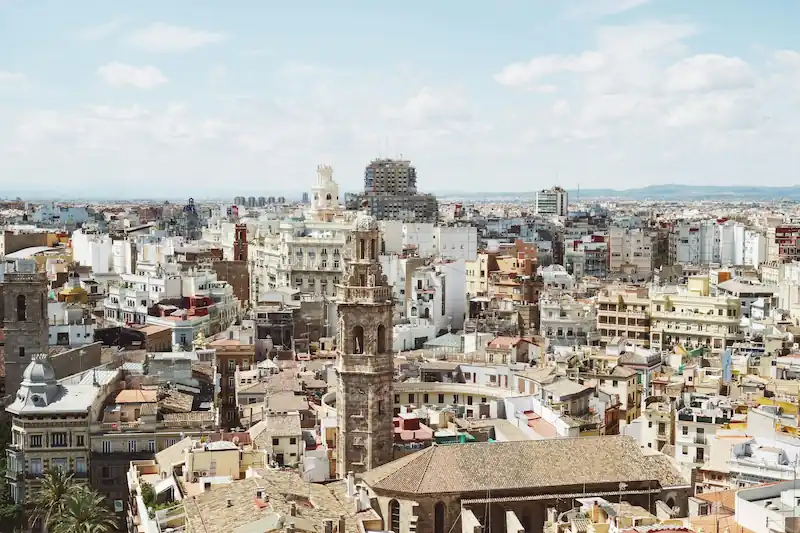
Where to stay in Seville for the right kind of trip
Choose where to stay in Seville according to how you want the trip to work: immediate monument access, easy river and tapas evenings, neighborhood atmosphere, quieter nights, family space or better value. The city is compact, but summer heat, narrow historic streets, festival routes and late-night noise make the exact address as important as the neighborhood name.
Best areas
Santa Cruz is the most atmospheric first-time base, El Arenal the best-balanced central choice, Centro the most practical, Triana the strongest neighborhood alternative, Alameda and Feria best for nightlife and longer stays, and Macarena and San Luis best for quiet, value and a more local historic setting.
Booking timing
Book several months ahead for Semana Santa, Feria de Abril, spring weekends, autumn city breaks and the most desirable courtyard or rooftop hotels. Outside peak dates, compare the exact street, room orientation, air conditioning, lift access and nighttime noise before paying for a famous postcode.
Best areas to stay in Seville at a glance
Santa Cruz – Best for: first-time visitors, couples and very short stays · Vibe: historic, intimate, highly atmospheric and visitor-heavy · Stay here if: you want the Alcázar, Cathedral, Giralda and old-city lanes immediately outside your door · Avoid if: you need larger rooms, easy taxi access, lower prices or quieter local evenings
El Arenal – Best for: first-time visitors who want the best overall balance · Vibe: central, elegant, practical and river-adjacent · Stay here if: you want monuments, tapas, the river and Triana within easy walking distance · Avoid if: you want a deeply residential atmosphere or the widest range of budget hotels
Centro – Best for: shopping, transport, hotel choice and flexible sightseeing · Vibe: active, central, convenient and varied by micro-location · Stay here if: you want to move easily toward Santa Cruz, Las Setas, Alameda, the museums and shopping streets · Avoid if: you want a clearly defined neighborhood identity or guaranteed quiet
Triana – Best for: food, local atmosphere, longer stays and riverside evenings · Vibe: proud, lived-in, social and distinct from the monument core · Stay here if: you want markets, ceramics, tapas and a neighborhood you can return to every evening · Avoid if: you want every major monument within a few minutes of the hotel
Alameda and Feria – Best for: nightlife, food, longer stays and informal local energy · Vibe: social, independent, creative and street-dependent for noise · Stay here if: you want terraces, bars, markets, San Luis and a more contemporary Seville · Avoid if: you need very quiet nights, polished streets or immediate access to the Alcázar
Macarena and San Luis – Best for: quiet, value, repeat visits and historic northern Seville · Vibe: residential, baroque, local and understated · Stay here if: you want churches, local bars, lower pressure and a slower neighborhood rhythm · Avoid if: you have only two nights or want the simplest possible route to every main sight
How to choose where to stay in Seville
Seville is compact enough that every recommended area remains usable, but the stay experience changes sharply by street. A hotel beside the Cathedral may be perfect for a two-night visit yet awkward for taxis and luggage; a Triana or Macarena address may feel more rewarding over five nights but add walking in the heat. Choose first by trip length and daily rhythm, then by the specific building.
Choose Santa Cruz for maximum monument access and historic atmosphere, accepting higher prices, narrow streets and heavier visitor pressure.
Choose El Arenal for the strongest all-round balance of sightseeing, food, river walks, taxis and access to Triana.
Choose Centro when hotel choice, shopping, transport and flexible routes matter more than a singular neighborhood mood.
Choose Triana for markets, ceramics, food and local evenings, provided you are comfortable crossing the river for the monument core.
Choose Alameda and Feria for terraces, bars, San Luis and longer stays, but verify nighttime noise street by street.
Choose Macarena and San Luis for quiet, value and baroque northern Seville rather than frictionless first-trip sightseeing.
Treat Prado de San Sebastián, Santa Justa, Nervión, Los Remedios and Cartuja as areas that suit specific travel needs for transport, business, families, events or specific attractions rather than default first-time bases.
Check air conditioning, room orientation, lift access, taxi drop-off, soundproofing and the walking route back at night before comparing hotel categories.
How Seville’s geography affects where you stay
Seville’s accommodation geography is shaped by the historic center, the Guadalquivir and several outer transport or residential zones. The city is flat, but summer heat, pedestrian streets, festival routes and the distance between northern, southern and west-bank clusters can make a poorly positioned hotel feel much farther away than the map suggests.
Santa Cruz and El Arenal form the highest-convenience first-trip core around the Alcázar, Cathedral and river.
Centro covers several micro-locations: Plaza Nueva and Magdalena are polished, Encarnación suits Las Setas and Alameda, and Museo or Duque favor shopping and bus access.
Triana is most convenient near Puente de Isabel II; deeper Triana and Los Remedios become more residential and transport-dependent.
Alameda, Feria, San Luis and Macarena form a northern old-town continuum, with nightlife strongest south and quiet increasing northward.
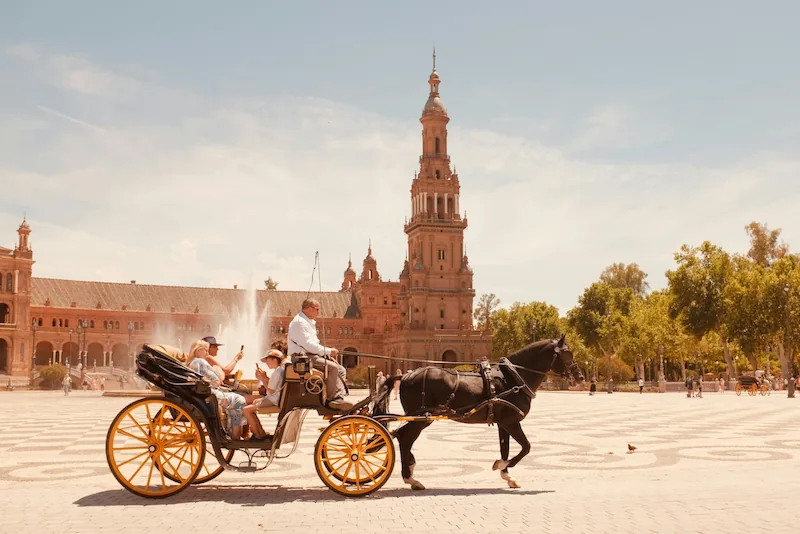
Prado de San Sebastián is a practical southern transport zone near Plaza de España, María Luisa Park, the tram and airport bus.
Santa Justa is the main rail zone; choose it for early trains or chain hotels, not for historic atmosphere.
Nervión offers modern hotels, metro, shopping, parking and football access, but most first-time sightseeing happens farther west.
Cartuja is useful for CAAC, Isla Mágica, conferences and events, yet river crossings make it weak for a short classic city break.
During Semana Santa, the most central streets may be ideal for processions but difficult for taxis, luggage and predictable movement.
During Feria de Abril, Los Remedios and the fairground side become highly strategic but unusually busy and expensive.
Monument and historic-lane core – Santa Cruz offers immediate access to the Alcázar and Cathedral, while its deepest lanes create the most access, room-size and luggage trade-offs.
Balanced river and central core – El Arenal links the Cathedral quarter, Guadalquivir, Triana and tapas streets with fewer navigation problems than Santa Cruz.
Flexible commercial and cultural center – Centro connects Las Setas, shopping, museums, palaces, Plaza Nueva and routes toward both the northern and southern old city.
West-bank neighborhood zone – Triana near the bridge is walkable and visitor-friendly; deeper Triana and Los Remedios offer space, metro access and residential calm.
Northern old-town zone – Alameda and Feria emphasize nightlife and food, while San Luis and Macarena become quieter, more historic and better value.
Southern park and transport zone – Prado de San Sebastián suits airport buses, trams, Plaza de España and María Luisa Park but lacks the atmosphere and hotel depth of the core.
Rail and modern east – Santa Justa and Nervión work for trains, business, parking, shopping and football, with weaker old-town immersion.
Cartuja event and attraction zone – Cartuja is specialized for CAAC, Isla Mágica, conferences and stadium events rather than general first-time sightseeing.
Best areas to stay in Seville
Seville’s best neighborhoods for visitors are close enough to overlap, but they create very different trips. The right area depends on whether you want first-time convenience, a quieter base, stronger food access, a more local evening rhythm or better value beyond the most obvious streets.
Santa Cruz
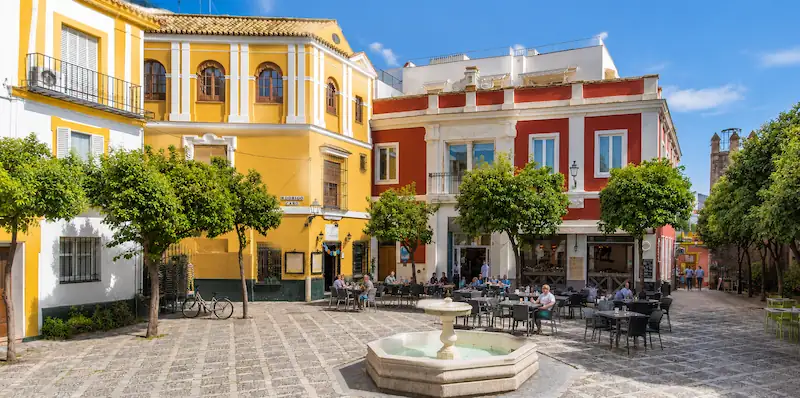
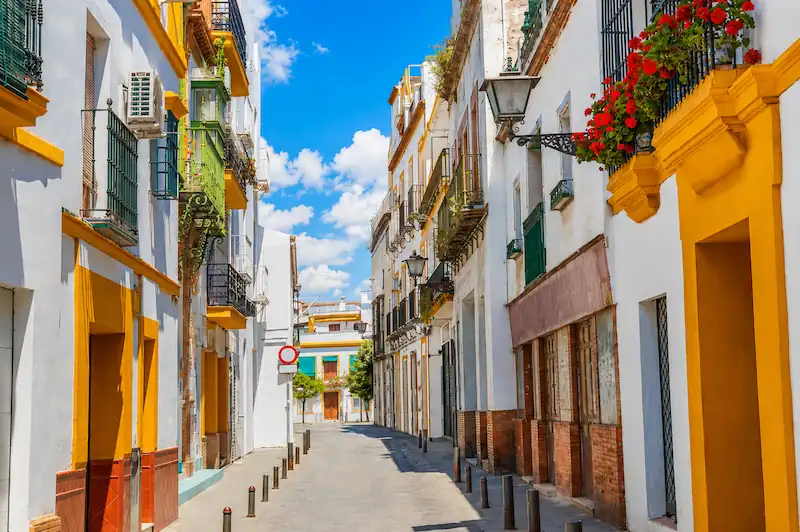
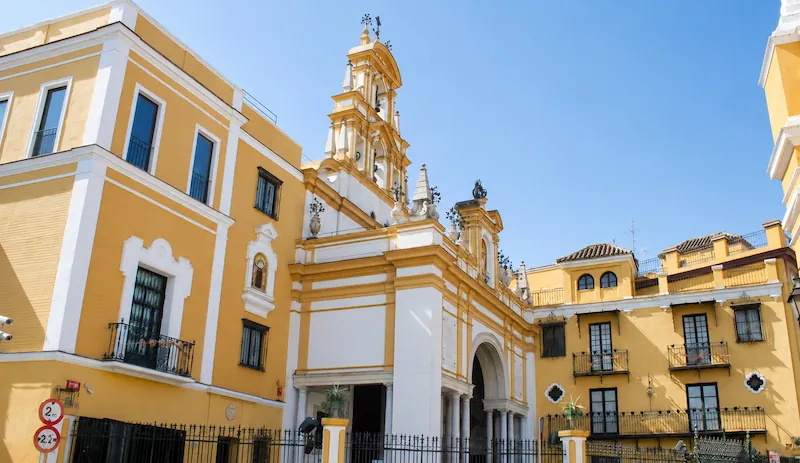
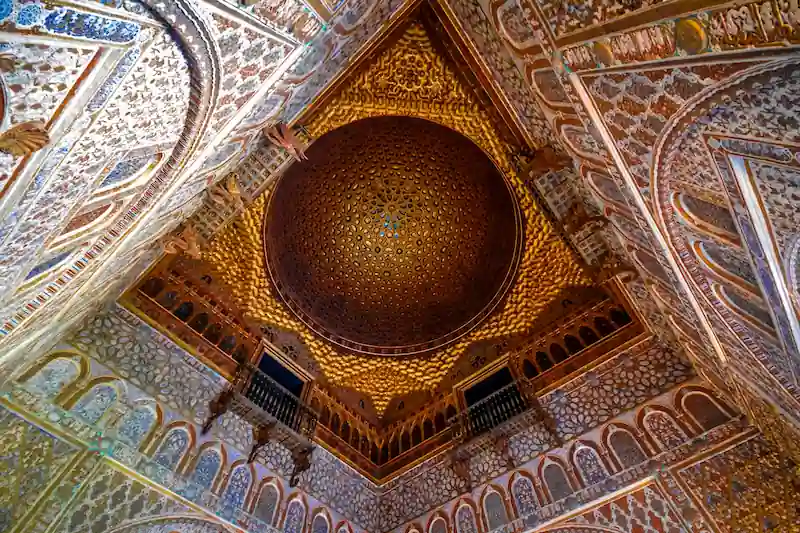
Santa Cruz is the most atmospheric area to stay in Seville for a first visit, placing you beside the Real Alcázar, Cathedral, Giralda and Archivo de Indias. Its whitewashed lanes, patios, small squares and garden edges feel especially rewarding early in the morning and after day visitors leave. The same historic form creates the trade-offs: compact rooms, uneven taxi access, confusing lanes, restaurant pressure and higher prices. Addresses near Jardines de Murillo or Puerta de la Carne can be easier for vehicles and families than the deepest lanes beside the Cathedral.
Why stay here: Stay in Santa Cruz when a short trip should feel immediately historic and you are willing to pay for walking access to Seville’s essential monuments. It is strongest for couples and first-time visitors who value atmosphere over room size or neighborhood localism.
Best for: first-time visitors, couples, short stays, landmark access and atmospheric boutique hotels
Pros
Immediate access to the Real Alcázar, Cathedral, Giralda and Archivo de Indias.
Strongest old-city atmosphere before and after peak sightseeing hours.
Excellent for two- or three-night trips with limited time.
Wide selection of courtyard hotels, historic guesthouses and romantic boutique stays.
Easy walking connection to El Arenal, Centro, Plaza de España and Prado de San Sebastián.
Puerta de la Carne and Murillo-garden edges offer somewhat easier taxi and luggage access.
Cons
Among Seville’s most expensive areas during spring and festival periods.
Narrow lanes can be awkward for taxis, luggage, strollers and first-time navigation.
Rooms in historic buildings are often smaller and less soundproofed.
Restaurants and streets closest to the Cathedral can feel visitor-oriented.
Processions and major events may affect access in the historic core.
Nearby highlights
Real Alcázar and its gardens.
Seville Cathedral, La Giralda and Patio de los Naranjos.
Archivo de Indias and the UNESCO monument ensemble.
Hospital de los Venerables and Santa Cruz squares.
Jardines de Murillo and the route toward Plaza de España.
Short walk to El Arenal, the river and central tapas streets.
Budget
nüa Santa Cruz – Simple, central guesthouse-style accommodation inside the Santa Cruz area. Best for travelers who want location over hotel facilities. Why we recommend: One of the more practical lower-cost options in a neighborhood where budget rooms are scarce. Check availability
Un Patio en Santa Cruz – Small hotel in the historic quarter with straightforward rooms and a compact local feel. It suits short stays built around walking. Why we recommend: It keeps you close to the cathedral and Alcázar without moving into full boutique pricing. Check availability
Basic Hotel Puerta de Sevilla – Unfussy, well-positioned stay near the eastern edge of Santa Cruz. Useful if you want old-city access with a lighter price point. Why we recommend: A sensible compromise for travelers who care more about location than room size or luxury polish. Check availability
Mid
Petit Palace Santa Cruz – Boutique-style hotel in a historic building within the old quarter. It works well for travelers who want comfort without leaving Santa Cruz. Why we recommend: It gives a stronger sense of place than many mid-range central hotels while staying practical. Check availability
Apartamentos Suites Santa Cruz – Apartment-style accommodation close to the cathedral and Giralda. Better for travelers who want more independence than a classic hotel room. Why we recommend: Useful for longer central stays where extra space matters more than hotel services. Check availability
Las Casas de la Judería – Large historic property made from connected houses, patios and corridors. It suits travelers who want Santa Cruz atmosphere at a fuller scale. Why we recommend: Few hotels express the neighborhood’s courtyard logic as clearly. Check availability
Upscale
Hotel Casa 1800 Sevilla – Refined boutique hotel set in a restored historic house near the cathedral. Best for travelers who want atmosphere, service and prime location. Why we recommend: It delivers one of the clearest luxury-boutique versions of staying in Santa Cruz. Check availability
Hotel Rey Alfonso X – Polished hotel beside the Santa Cruz area, with stronger facilities than many small historic stays. Good for comfort-focused travelers who still want the old city close. Why we recommend: It gives more hotel infrastructure than most character stays in the immediate area. Check availability
Hotel Amadeus Sevilla – Characterful music-themed boutique hotel in the historic center near Santa Cruz. It suits travelers looking for a more individual stay. Why we recommend: A stronger personality choice than standard central hotels without leaving the core. Check availability
El Arenal
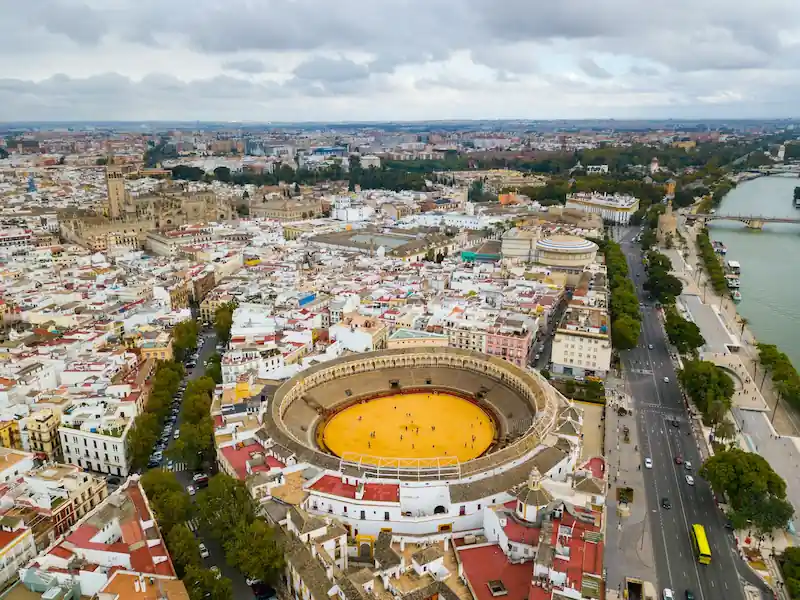
El Arenal is Seville’s best-balanced central base, sitting between the Cathedral quarter, Guadalquivir, Maestranza, Torre del Oro and Puente de Isabel II. Its streets are easier to understand than Santa Cruz, taxis and luggage are generally simpler, and evenings combine tapas, theater, river walks and quick access to Triana. The area still commands central prices and certain restaurant streets remain lively, but it creates fewer daily compromises than almost any other neighborhood.
Why stay here: Stay in El Arenal if you want first-time convenience without sleeping inside the tightest historic maze. It is particularly strong for couples, families, food-focused weekends and travelers combining the monument core with Triana.
Best for: central convenience, couples, food access, first-time visitors who want balance
Pros
Excellent walking access to the Cathedral, Alcázar, river and Triana.
Easier taxi, luggage and orientation than deep Santa Cruz.
Strong tapas, restaurant, theater and evening-walk options.
Useful for families and short stays because multiple clusters are nearby.
Good access to Torre del Oro, river cruises and Teatro de la Maestranza.
More open street pattern and easier late-night returns than many old-city lanes.
Cons
Prime central pricing, especially in spring and event periods.
Noise around restaurant and bar streets varies by exact address.
Less intimate old-city atmosphere than Santa Cruz.
Less residential and local-feeling than Triana or Macarena.
Parking remains difficult and often expensive.
Nearby highlights
Easy walk to Seville Cathedral and the Giralda without staying in Santa Cruz itself.
Quick access to the riverfront for late-afternoon walks.
Simple crossing into Triana for food, markets and evening neighborhood life.
Good access to Teatro de la Maestranza and the bullring area.
Central tapas routes within short walking distance.
Useful position for combining main monuments with more relaxed evenings.
Budget
The Spot Central Hostel – Simple hostel-style stay close to El Arenal and the main central sights. Best for budget travelers prioritizing location. Why we recommend: It is one of the few low-cost options that keeps the river, cathedral and tapas streets close. Check availability
Hotel Maestranza – Small, straightforward hotel near the bullring and river. It suits short stays where central position matters more than facilities. Why we recommend: A practical central option in a district that can otherwise price quickly upward. Check availability
Sleepin Sevilla Arenal – Apartment-style accommodation near the Maestranza area. Useful for travelers who want space and a central location on a tighter budget. Why we recommend: A good choice when apartment flexibility matters more than classic hotel service. Check availability
Mid
Las Casas de El Arenal – Elegant central hotel in a restored building close to the cathedral and river. It suits travelers who want character without Santa Cruz density. Why we recommend: One of the best mid-range fits for El Arenal’s balance of location and atmosphere. Check availability
Adriano Boutique Sevilla – Compact boutique hotel near the Maestranza and central tapas routes. Good for couples who want a walkable but manageable base. Why we recommend: It is unusually well positioned for both river access and monument walking. Check availability
Petit Palace Marqués Santa Ana – Central hotel between El Arenal and the cathedral area, with practical rooms and easy walking routes. Best for travelers who want reliable comfort. Why we recommend: A strong mid-range option when location efficiency matters more than intimate boutique mood. Check availability
Upscale
Hotel Mercer Sevilla – High-end boutique hotel in a restored palace close to El Arenal and the cathedral. It supports a refined, quiet central stay. Why we recommend: One of the strongest luxury choices for travelers who want discretion rather than scale. Check availability
Hotel Kivir – Contemporary hotel by the river near El Arenal and Triana bridge. Good for travelers who want views, design and easy evening movement. Why we recommend: Its river position gives it a different sense of space from the tighter historic-center hotels. Check availability
Vincci La Rábida – Upscale hotel in an Andalusian-style historic building near the cathedral and river. Best for travelers wanting central comfort with local architectural cues. Why we recommend: It offers more traditional Seville character than many large central hotels. Check availability
Centro
Centro is Seville’s most flexible accommodation zone, covering shopping streets, Plaza Nueva, El Salvador, Encarnación, Las Setas and routes toward the Museo de Bellas Artes. Its micro-locations behave differently: Plaza Nueva and Magdalena are polished and central, Encarnación suits Las Setas and Alameda access, while Duque and Museo offer practical hotels and shopping. Centro is less romantic than Santa Cruz but often easier for taxis, hotel choice, restaurants and multi-directional sightseeing.
Why stay here: Stay in Centro if you want the broadest choice of hotels, shops, cafés and routes without committing to one strongly defined neighborhood. It suits first-timers who prioritize practicality, repeat visitors exploring secondary palaces and museums, and travelers arriving with luggage.
Best for: central flexibility, shopping, practical hotels, first-time stays, value-conscious central booking
Pros
Broadest range of hotel styles, price points and apartment options.
Flexible walking access to Santa Cruz, Arenal, Alameda and the northern center.
Strong restaurant, café, shopping and service density.
Usually easier taxi and luggage access than Santa Cruz.
Good base for Las Setas, Antiquarium, Iglesia del Salvador and secondary palaces.
Practical connection toward Plaza de Armas bus station and airport-transfer routes.
Cons
Neighborhood identity is less distinctive than Santa Cruz, Triana or Alameda.
Commercial streets may feel busy during shopping hours.
Noise varies near plazas, bars and pedestrian routes.
Some hotels market themselves as historic-center properties despite being farther from the Cathedral than expected.
Parking and vehicle access still require planning.
Nearby highlights
Las Setas and the Antiquarium.
Iglesia del Salvador and central plazas.
Palacio de las Dueñas and Casa de Pilatos on the eastern side.
Museo de Bellas Artes and Plaza del Museo.
Plaza Nueva, Ayuntamiento and shopping streets.
Easy routes toward Alameda, Santa Cruz and El Arenal.
Budget
The Nomad Hostel – Budget hostel-style stay in central Seville with easy access to shops, restaurants and main walking routes. Best for social or low-cost travelers. Why we recommend: It keeps budget travelers central without pushing them to an inconvenient edge. Check availability
Hotel Derby Sevilla – Traditional central hotel near shopping streets and transport links. It suits travelers who want a simple base in the practical center. Why we recommend: A reliable value choice for central access rather than boutique character. Check availability
Hotel América Sevilla – Straightforward city hotel near Plaza del Duque and central shopping. Good for visitors who want services, location and simple comfort. Why we recommend: It is often a stronger practical choice than smaller old-town budget stays with awkward access. Check availability
Mid
H10 Corregidor Boutique Hotel – Comfortable boutique-style hotel near the northern side of Centro and Alameda. It works well for travelers wanting central access with a quieter feel. Why we recommend: It bridges practical Centro and the more local Alameda/Feria rhythm effectively. Check availability
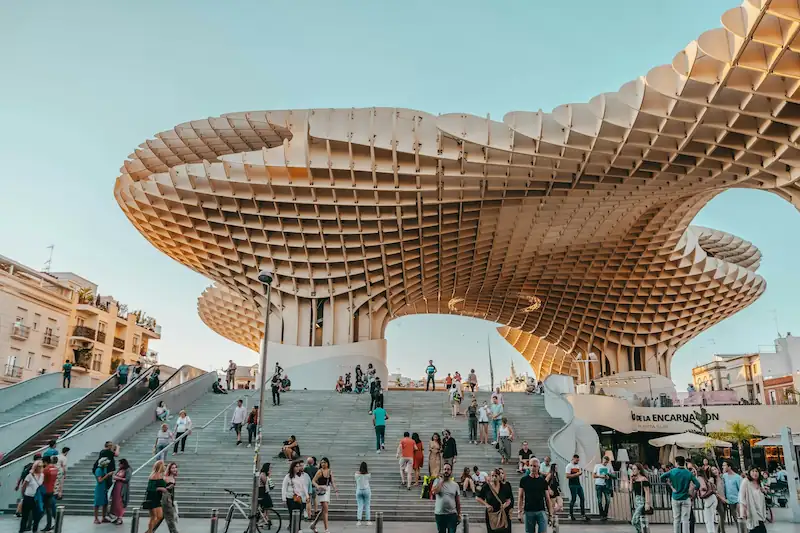
Hotel Casa de Indias by Intur – Design-led hotel near Metropol Parasol, with good access to central walking routes. Best for travelers who want a modern stay in the historic center. Why we recommend: It has more personality than many mid-range Centro hotels without losing practicality. Check availability
Abba Sevilla – Modern central hotel near Plaza de la Encarnación. It suits travelers who prefer contemporary rooms, amenities and easy movement. Why we recommend: A stronger choice for comfort and facilities than many smaller historic properties in the same price band. Check availability
Upscale
Hotel Colón Gran Meliá – Large upscale hotel in central Seville with polished service and strong access to shopping, dining and the historic core. Best for comfort-led stays. Why we recommend: It is one of the best central choices when service level and room quality matter more than neighborhood intimacy. Check availability
Radisson Collection Hotel, Magdalena Plaza Sevilla – Contemporary upscale hotel on a central square with strong access to shopping and restaurants. It fits travelers who want polished comfort in a practical location. Why we recommend: A good luxury option for guests who prefer modern ease over restored-palace character. Check availability
Hotel Unuk – Design-focused upscale hotel in the central old town, with a more intimate scale than larger luxury properties. Good for style-conscious travelers. Why we recommend: It offers stronger contemporary design character than most central upscale hotels. Check availability
Triana
Triana is the strongest place to stay when you want Seville to feel like a neighborhood rather than a monument district. The most convenient zone lies near Puente de Isabel II, Mercado de Triana, Calle San Jacinto and the northern part of Calle Betis. Deeper Triana and the Los Remedios edge offer more residential calm and space but lengthen walks to the Cathedral. The reward is a more repeatable daily rhythm built around markets, ceramics, bars and riverside evenings.
Why stay here: Stay in Triana if food, neighborhood identity, river light and local evenings matter more than waking beside the Alcázar. It works especially well for four-night trips, repeat visits, families needing apartments and travelers who enjoy crossing the river as part of the day.
Best for: local texture, food-focused stays, return visitors, longer trips, riverside evenings
Pros
Clear neighborhood identity with markets, ceramics, bars and flamenco associations.
Easy river crossing to El Arenal from the bridge-side zone.
Strong food scene and more local-feeling evenings.
Often better room size and apartment value than the Cathedral quarter.
Good river walks and sunset views toward the historic center.
Los Remedios edge can offer wider streets, metro access and family practicality.
Cons
Not directly beside the Alcázar, Cathedral or Plaza de España.
Convenience drops noticeably the farther west or south the address sits.
Hotel inventory is narrower than in Centro.
Late returns from northern or eastern central neighborhoods require more walking or taxis.
Calle Betis and selected bar streets can be noisy.
Nearby highlights
Mercado de Triana and Castillo de San Jorge site.
Centro Cerámica Triana and traditional tile streets.
Puente de Isabel II and the Arenal riverfront.
Calle Betis and views toward Torre del Oro.
Calle San Jacinto, tapas bars and neighborhood shopping.
Easy extension toward Los Remedios and Feria fairgrounds.
Budget
Noches de Triana – Simple accommodation in Triana with easy access to neighborhood bars and the river. Best for value-focused travelers who want the west-bank location. Why we recommend: It keeps you in Triana without paying for the area’s newer boutique hotels. Check availability
Resitur – Apartment-style accommodation near Triana and Los Remedios, useful for practical stays with more independence. Best for budget-conscious longer visits. Why we recommend: A functional choice when space and price matter more than boutique feel. Check availability
Pierre & Vacances Sevilla – Serviced apartments in the Triana area with kitchens and more room than a standard hotel. Good for families or longer stays on a controlled budget. Why we recommend: It offers practical apartment flexibility in a neighborhood where hotel choice is more limited. Check availability
Mid
Monte Triana – Comfortable, well-run hotel in Triana with a calm, practical feel. Good for travelers who want reliable rooms in a local-feeling district. Why we recommend: One of the strongest all-round hotels for staying in Triana without sacrificing comfort. Check availability
Ribera de Triana Hotel – Riverside hotel facing the old city across the Guadalquivir. It suits travelers who want space, views and easy walking access to Triana life. Why we recommend: Its river position gives the stay a sense of openness that central old-town hotels rarely offer. Check availability
Zenit Sevilla – Modern hotel in Triana with stronger facilities than many neighborhood properties. Good for travelers who want comfort and local access together. Why we recommend: A dependable mid-range choice with better hotel infrastructure than most small Triana stays. Check availability
Upscale
Triana House – Small design-led boutique accommodation in Triana with refined interiors and a strong neighborhood scale. Best for couples and style-conscious travelers. Why we recommend: One of the most distinctive boutique choices in Triana itself. Check availability
Eurostars Torre Sevilla – High-rise upscale hotel near Triana and Cartuja with wide city views and modern facilities. Best for travelers who want space, views and a less old-town stay. Why we recommend: It is the strongest option near Triana for travelers prioritizing room quality and skyline views. Check availability
Hotel Tayko Sevilla – Refined boutique hotel close to Puente de Triana and the Arenal side of the river. Best for travelers wanting design, service and immediate access to both banks. Why we recommend: A polished upscale alternative for travelers drawn to Triana but unwilling to sacrifice central convenience. Check availability
Alameda and Feria
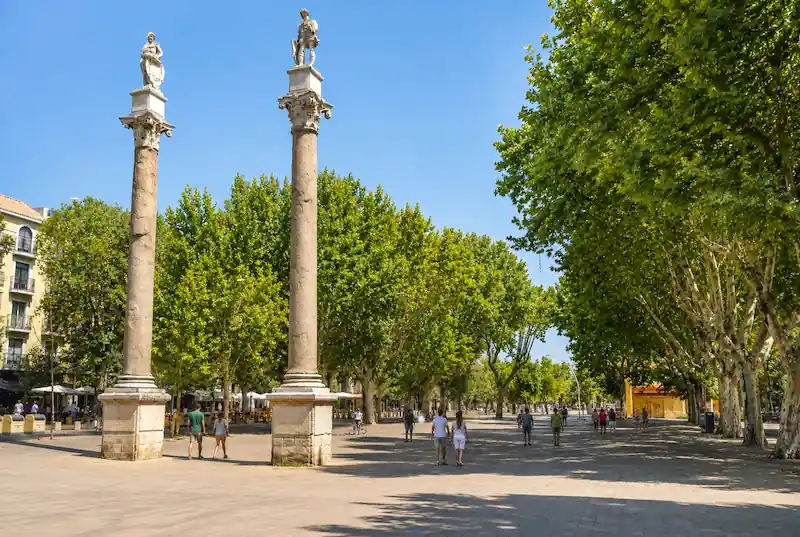
Alameda and Feria are the best areas for travelers who want Seville’s social, independent and less formal side. Alameda de Hércules concentrates terraces and nightlife, while Calle Feria, San Lorenzo and nearby streets add markets, churches, small plazas and a more everyday old-town rhythm. The area is walkable to Centro but farther from the Alcázar, and nighttime comfort depends heavily on whether the room faces the main square, a bar street or a quiet interior patio.
Why stay here: Stay here for nightlife, restaurants, markets and a neighborhood that remains interesting after the sightseeing day. It is strongest for longer stays, younger travelers, repeat visitors and anyone who values local evening life over immediate monument access.
Best for: nightlife, longer stays, local dining, budget-conscious central stays, repeat visitors
Pros
Best access to informal bars, terraces and younger nightlife.
Strong local food, market and independent-café scene.
Easy exploration of Feria, San Lorenzo, San Luis and northern Centro.
Often better value and more apartment choice than Santa Cruz.
Good fit for longer stays and repeat visits.
Walkable to Las Setas and central shopping streets.
Cons
Longer walk to the Alcázar, Cathedral and Plaza de España.
Noise changes sharply from one street or room orientation to another.
Some blocks feel less polished than the prime central districts.
Taxi access can be affected by pedestrian activity and events.
Not the easiest base for a two-night first visit.
Nearby highlights
Alameda de Hércules terraces and nightlife.
Calle Feria and Mercado de Feria.
San Lorenzo, Plaza de San Lorenzo and nearby churches.
San Luis de los Franceses within easy walking distance.
Palacio de las Dueñas and Las Setas toward Centro.
Macarena and the northern city walls.
Budget
Hostel A2C – Budget hostel near Alameda and Feria with a social, practical setup. Best for travelers who want low-cost access to the northern old town. Why we recommend: It places budget travelers close to the area’s bars and local streets without pushing them far out. Check availability
Feria Corner – Simple accommodation near Calle Feria with compact rooms and useful access to the northern center. Good for low-friction budget stays. Why we recommend: A practical low-cost fit for travelers choosing this area for location rather than amenities. Check availability
Hotel Venecia – Simple central hotel near Alameda, Plaza del Duque and the northern side of Centro. Best for travelers wanting a practical budget base close to bars and shopping. Why we recommend: It keeps Alameda and Feria within easy reach while offering a quieter fallback than the busiest nightlife streets. Check availability
Mid
Sacristía de Santa Ana – Character hotel near Alameda set in a historic building. Good for travelers wanting neighborhood energy with a more atmospheric stay. Why we recommend: It gives Alameda access with more sense of place than a standard mid-range hotel. Check availability
Patio de la Alameda – Courtyard hotel by Alameda with rooms arranged around internal patios. It suits travelers who want a local-feeling base with calm inside. Why we recommend: Its courtyard layout helps soften the area’s evening energy. Check availability
Hotel Cervantes – Traditional central hotel between Alameda and Centro with easy access to both areas. Best for travelers wanting a quieter edge of the northern center. Why we recommend: It works well when you want Alameda nearby but not directly under its busiest terrace rhythm. Check availability
Upscale
One Shot Palacio Conde de Torrejón 09 – Stylish hotel near Alameda in a restored palace setting. Good for travelers who want design, central access and a more local northern base. Why we recommend: One of the best upscale matches for Alameda’s combination of historic character and contemporary energy. Check availability
Casa Romana Hotel Boutique – Boutique hotel between Alameda, Plaza del Duque and Centro, with an intimate historic-city atmosphere. Why we recommend: A refined option that keeps Alameda nightlife close without placing the room directly on the busiest square. Check availability
Hotel Ateneo Sevilla – Refined boutique hotel near the northern center with ornate interiors and a quieter, more formal mood. Why we recommend: A distinctive stay within easy reach of Alameda, Feria and central Seville. Check availability
Macarena and San Luis
Macarena and San Luis offer the quietest and most residential stay among Seville’s main visitor areas. The district combines the Basilica de la Macarena, San Luis de los Franceses, former walls, convents, small bars and local streets with less visitor pressure than Santa Cruz. Addresses closer to Feria and Alameda preserve easier restaurant access; deeper northern streets are calmer but less efficient for short trips.
Why stay here: Stay here for value, quiet, baroque architecture and a more local historic-city atmosphere. It suits repeat visitors, four-night-or-longer stays, walkers and travelers who prefer neighborhood mornings to instant monument access.
Best for: quiet stays, value, longer trips, return visitors, local northern Seville
Pros
Quieter and more residential than the monument core.
Often better room value and more space.
Direct access to San Luis, the Basilica de la Macarena and northern churches.
Easy link to Feria and Alameda without sleeping in the busiest nightlife zone.
Strong for repeat visitors and slow travel.
More local breakfast, bar and evening rhythm.
Cons
Longer walk to the Alcázar, Cathedral and Plaza de España.
Less suitable for a two-night first visit.
Hotel supply is thinner and more uneven.
Some streets become very quiet late at night.
Fewer direct tourist transport connections than Centro or Prado.
Nearby highlights
Basilica de la Macarena and city walls.
San Luis de los Franceses.
Calle San Luis and northern historic streets.
Mercado de Feria and Alameda de Hércules.
Convents, churches and Holy Week culture.
Quieter walking routes beyond the postcard center.
Budget
Hostal La Muralla – Simple guesthouse-style stay near Macarena and the northern walls. Best for travelers who want value and a quieter old-town edge. Why we recommend: A practical low-cost option in a part of Seville where the location still has historic texture. Check availability
Jardín de la Alameda Hostal Boutique – Modest boutique-style guesthouse near Alameda and Macarena. It suits travelers seeking a budget stay with more personality than a hostel. Why we recommend: It balances price, location and local northern access better than many basic guesthouses. Check availability
Pensión Macarena – Traditional low-cost stay near Feria and Macarena, with direct access to the northern old town. Best for short, simple stays. Why we recommend: Its location is stronger than its category suggests for travelers focused on value. Check availability
Mid
Exe Sevilla Macarena – Large hotel beside the Macarena area with more facilities and room choice than most northern old-town properties. Why we recommend: A practical full-service option for travelers prioritizing space, value and straightforward taxi access. Check availability
Hotel Porcel Torneo – Modern hotel north of Macarena with comfortable rooms and easier road access than the historic core. Why we recommend: Useful for travelers arriving by car or seeking modern comfort at a lower rate. Check availability
Hotel Plaza Santa Lucía – Small modern hotel near San Julián and the eastern side of Macarena, with simple rooms and a quieter local setting. Why we recommend: A useful mid-range option for travelers wanting northern access without staying on the busiest central streets. Check availability
Upscale
Hotel San Gil – Historic hotel near the Macarena walls and San Luis, with traditional details, patios and a calmer northern setting. Why we recommend: One of the most comfortable full-service choices genuinely anchored in the Macarena area. Check availability
Alcoba del Rey de Sevilla – Small boutique hotel beside the Macarena area with Moorish-inspired interiors and an individual atmosphere. Why we recommend: A distinctive stay for couples who want character without returning to the busiest central lanes. Check availability
Palacio Bucarelli – Elegant apartment-style boutique stay near San Lorenzo, Alameda and the southern edge of the northern historic quarter. Why we recommend: A refined option for longer stays that keeps the northern old town close while adding more space and privacy. Check availability
Where to stay in Seville for a first visit
First-time visitors should choose a base that keeps the Alcázar, Cathedral and evening routes easy. Santa Cruz, El Arenal and Centro are the safest choices; Triana works when neighborhood atmosphere is a deliberate priority.
Choose Santa Cruz for the most atmospheric and monument-focused first visit.
Choose El Arenal for the best balance of monuments, river, tapas, taxis and access to Triana.
Choose Centro for the broadest hotel range, easier luggage handling and flexible routes toward several districts.
Choose Triana only if you actively want a neighborhood-led stay and are comfortable walking across the river.
Prado de San Sebastián can work for transport, Plaza de España and easy airport-bus access, but it is less atmospheric than the historic core.
Avoid Santa Justa, Nervión, Cartuja and deeper Macarena for a very short leisure trip unless transport, business or a specific event is the priority.
StayStyle
BestArea
TradeOff
Most atmospheric
Santa Cruz
Higher prices, tighter streets and more visitor pressure.
Best balanced
El Arenal
Prime central pricing and some restaurant noise.
Most practical
Centro
Less distinctive neighborhood identity.
Most local
Triana near the bridge
River crossing for the major monuments.
Where to stay in Seville with family
Families should prioritize room size, air conditioning, lift access, quiet nights and easy midday returns. In summer, a practical central hotel can be more valuable than a beautiful but awkward historic address.
El Arenal is usually the best all-round family base because it is central, easier to navigate and close to the river.
Centro offers the widest choice of apartments, family rooms, shops, taxis and practical services.
Santa Cruz works for short stays if the hotel has sufficient room, soundproofing and straightforward taxi access.
Triana and the Los Remedios edge can provide larger apartments, wider streets, metro access and calmer evenings.
Nervión can suit families prioritizing modern hotels, shopping, parking and metro access over old-town atmosphere.
Prado de San Sebastián is useful for Plaza de España, the park, airport buses and transport links.
Avoid the loudest Alameda streets and the deepest Santa Cruz lanes with strollers unless the property details are clear.
FamilyNeed
BestArea
WatchOutFor
Best overall central balance
El Arenal
Prime pricing and restaurant noise.
Apartments and services
Centro
Commercial streets and variable noise.
More space and local evenings
Triana or Los Remedios edge
Longer walk to the Alcázar.
Modern hotel and parking
Nervión
Less historic atmosphere.
Park and transport access
Prado de San Sebastián
Smaller hotel choice.
Where to stay in Seville for nightlife and evenings
Seville’s nightlife is more about terraces, tapas, bars and late social rhythm than a single party district. The right base depends on whether you want energy outside the door or easy access without sleeping on the busiest street.
Alameda and Feria are best for terraces, casual bars, music venues and a younger evening scene.
El Arenal is strongest for tapas, central dinners, theater and easy late walks without committing to a party district.
Triana works for neighborhood bars, food and riverside evenings rather than club-focused nightlife.
Centro offers broad choice around Salvador, Encarnación and central streets, but noise varies by block.
Santa Cruz is beautiful after dark but more visitor-oriented and quieter once restaurant traffic fades.
Nervión and Los Remedios are more residential and convenient for local bars or football events than for a classic visitor nightlife trip.
Always check whether the room faces Alameda, Calle Betis, a terrace square or a late bar street.
EveningStyle
BestArea
TradeOff
Bars and terraces
Alameda and Feria
Highest street-by-street noise risk.
Tapas and central dinners
El Arenal
Less local than Triana.
Neighborhood food and river views
Triana
Crossing back from the center.
Broad central choice
Centro
Atmosphere and noise vary by micro-location.
Where to stay in Seville on a budget
The best-value stay keeps daily transport and heat exposure under control. Centro, Alameda/Feria and Macarena often outperform remote bargains because they remain walkable, while Santa Justa and Nervión can make sense when modern rooms, trains or parking matter.
Centro usually offers the widest competition among hostels, simple hotels and apartments.
Alameda, Feria, Macarena and San Luis can offer better room value within the walkable old city.
Triana often provides larger apartments and better value away from Calle Betis.
Santa Justa is practical for early trains and chain hotels, but it is a practical choice for transport rather than an atmospheric first choice.
Nervión can provide modern hotels, shopping, parking and metro access at lower rates than the historic core.
Cartuja may be useful for conference, theme-park or event trips but is poorly positioned for a classic first visit.
Do not move far outside the center to save a small amount if taxis and summer travel will erase the difference.
BudgetGoal
BestArea
Compromise
Stay central
Centro
Less atmosphere than Santa Cruz.
Local old-town value
Macarena and San Luis
Longer walk to headline sights.
Food, bars and value
Alameda and Feria
Night noise varies.
Apartment space
Triana
River crossing for monuments.
Train convenience
Santa Justa
Functional rather than atmospheric.
Modern hotel and parking
Nervión
Metro or longer walk to the old city.
Where to stay depending on your trip length
The shorter the trip, the more Seville rewards Santa Cruz, El Arenal or Centro. Longer stays make Triana, Alameda and Macarena more attractive, while Santa Justa, Nervión, Los Remedios, Prado and Cartuja are best chosen for a specific logistical reason.
Label
Stay
Avoid
Why
1 to 2 nights
Santa Cruz or El Arenal
Macarena, Cartuja, Nervión or deep Triana unless logistics dictate it
Immediate access protects a very short visit from wasted time.
3 days
El Arenal, Santa Cruz or Centro
Choosing only by lowest room rate
The essential city remains easiest from the compact central core.
4 to 5 days
Triana, Centro, Alameda/Feria or El Arenal
Paying only for Cathedral proximity if neighborhood life matters
There is enough time to make food, markets and evenings part of the stay.
1 week
Triana, Alameda/Feria, Macarena/San Luis or a spacious Centro apartment
Tiny rooms in the busiest historic lanes
Space, laundry, quiet and a repeatable neighborhood become more valuable.
Family trip
El Arenal, Centro, Triana/Los Remedios edge, Prado or selected Nervión
Noisy Alameda blocks and inaccessible Santa Cruz lanes
Air conditioning, space, transport and midday returns matter most.
Nightlife trip
Alameda/Feria, Centro or El Arenal
Booking directly above the venue if sleep matters
All three keep evenings easy but offer different noise and atmosphere.
Budget trip
Centro, Macarena/San Luis, Alameda/Feria, Triana or Nervión
Remote savings without transport logic
The best value combines rate, walking and room quality.
Luxury or romantic stay
Santa Cruz, El Arenal or selected Centro palace hotels
Assuming every historic room is large or quiet
Seville’s strongest luxury comes from courtyards, palaces and central atmosphere.
Early train departure
Santa Justa, Nervión or Centro with a simple taxi route
Deep pedestrian lanes with heavy luggage
Rail logistics justify a more functional final night.
Feria de Abril trip
Los Remedios, Triana or central Seville with planned transport
Booking without understanding fairground access
The event changes demand, traffic and late-night movement.
Business or conference trip
Nervión, Cartuja, Santa Justa or Centro depending on venue
Choosing historic atmosphere far from the work location
Seville’s areas best suited to business, events or transport can be much more efficient for work travel.
Return visit
Triana, Alameda/Feria, Macarena/San Luis or selected Nervión
Repeating Santa Cruz automatically
A second stay benefits from a stronger neighborhood identity.
How to choose the right hotel in Seville
After selecting an area, evaluate the exact street, building and room category. Seville’s historic hotels can be beautiful but compact, modern hotels can be more comfortable but less atmospheric, and the same neighborhood can contain silent patios and late-night terraces only a block apart.
Topic
WhatToDo
WhatToAvoid
WhyItMatters
Exact street and micro-location
Map the hotel against your main sights, evening areas, taxi access and the route back in the heat.
Relying only on broad labels such as historic center, Triana or Alameda.
A few blocks can change noise, walking time and the whole stay experience.
Air conditioning and summer comfort
Confirm effective air conditioning, blackout curtains and an easy midday return.
Prioritizing décor over climate control from late spring to early autumn.
Heat can make the room and location central to the daily itinerary.
Historic-building layout
Check room size, windows, internal stairs, lift coverage and whether the room faces a patio.
Assuming every restored palace or courtyard hotel has modern proportions.
Character properties often have irregular rooms and access.
Noise and room orientation
Request an interior, patio-facing or higher-floor room near Alameda, Calle Betis, Arenal or busy central plazas.
Booking only by rooftop, balcony or street-view photographs.
Seville’s social evenings continue late, particularly on weekends and in spring.
Taxi and luggage access
Ask where vehicles can stop and how far the final walk is.
Assuming a central pedestrian address has door-to-door access.
Santa Cruz, festival routes and old-city restrictions can complicate arrivals.
Festival access
Check procession routes, road closures, fairground transport and hotel access during Semana Santa and Feria.
Treating festival dates like a normal city-break weekend.
The best central location can also become the hardest to reach.
Family room configuration
Confirm real bed types, connecting-room availability, kitchen facilities and lift access.
Assuming a family room is larger than a standard room with an extra bed.
Historic-center inventory can be compact and irregular.
Parking and rental cars
Choose Nervión, Los Remedios, Santa Justa or a hotel with confirmed parking if arriving by car.
Driving into the deepest historic streets without a parking plan.
A car is rarely useful inside central Seville and can create significant arrival friction.
Pool and rooftop expectations
Check pool dimensions, seasonal opening, shade and whether rooftop access is guaranteed.
Assuming every rooftop pool is suitable for swimming or children.
Many central pools are compact plunge pools with limited seating.
Short-stay value
Pay for Santa Cruz, El Arenal or central Centro when the visit is only two or three nights.
Saving slightly on a distant hotel that adds heat, taxis and lost evening time.
Location has its highest value on the shortest trips.
Long-stay comfort
Consider Triana, Alameda, Macarena, Los Remedios or a larger apartment.
Spending a week in a tiny landmark-zone room.
Longer stays benefit from space, laundry, local services and quieter mornings.
FAQ: where to stay in Seville
These answers cover the main accommodation decisions in Seville, including first-time areas, families, nightlife, budget, transport, festivals, heat, parking and specialist neighborhoods.
What is the best area to stay in Seville for first-time visitors?
Santa Cruz is the most atmospheric first-time area, while El Arenal is usually the best-balanced choice for monuments, tapas, river access and easier movement. Centro is the most practical option for hotel choice and flexible routes.
Where should you stay in Seville for 2 nights?
Stay in Santa Cruz or El Arenal. With only two nights, immediate access to the Alcázar, Cathedral and evening food streets matters more than finding a quieter or more residential neighborhood.
Where should you stay in Seville for 3 days?
El Arenal, Santa Cruz and Centro are the strongest three-day bases. Triana can also work if neighborhood atmosphere is a deliberate priority and you are comfortable crossing the river.
Is it better to stay in Santa Cruz or El Arenal?
Choose Santa Cruz for historic lanes and immediate monument atmosphere. Choose El Arenal for a more balanced base with easier taxis, river access, tapas and a shorter walk to Triana.
Is Centro a good place to stay in Seville?
Yes. Centro offers the broadest hotel choice, shopping, restaurants, Las Setas, secondary palaces and easy routes toward Santa Cruz, Arenal and Alameda. It is practical rather than strongly residential.
Is Triana a good place to stay in Seville?
Yes, especially for food, markets, ceramics and local evenings. Stay near Puente de Isabel II for the easiest access to the center; deeper Triana is quieter but less convenient for the major monuments.
Is Alameda a good place to stay in Seville?
Alameda is excellent for bars, terraces, restaurants and longer stays. It is less convenient for a very short first visit, and the exact street or room orientation matters because nighttime noise varies sharply.
Is Macarena a good place to stay in Seville?
Macarena and San Luis suit travelers seeking quiet, value, baroque architecture and local streets. They work best for longer stays and repeat visits rather than a two-night first trip.
Where should families stay in Seville?
El Arenal and Centro offer the best central balance. Triana or the Los Remedios edge can provide larger apartments and calmer evenings, while Nervión suits families wanting modern hotels, parking and metro access.
Where should couples stay in Seville?
Santa Cruz is best for romantic historic atmosphere, El Arenal for polished central convenience, and Triana for food-led evenings and river views. Courtyard hotels in Centro can also provide excellent boutique stays.
Where should you stay in Seville for nightlife?
Alameda and Feria are best for bars and terraces. El Arenal is better for tapas and central dinners, Triana for neighborhood evenings, and Centro for a broad but street-dependent selection.
Where should you stay in Seville on a budget?
Centro, Alameda/Feria, Macarena/San Luis and Triana usually provide the best balance of price and location. Nervión and Santa Justa can offer modern value when transport or parking matters more than atmosphere.
What is the safest area to stay in Seville?
Most central visitor areas are generally safe. The more meaningful accommodation questions are exact street noise, late-night comfort, festival crowds and how easily you can return to the hotel.
Is it worth paying more to stay central in Seville?
Yes for a two- or three-night trip. A central hotel reduces heat exposure, protects evening flexibility and makes timed monument visits easier. On longer stays, room comfort and neighborhood quality can justify moving outward.
Where should you stay in Seville without a car?
Santa Cruz, El Arenal, Centro, Triana near the bridge and Alameda are all practical without a car. Central Seville is walkable, with trams, buses, taxis and limited metro use for longer connections.
Where should you stay in Seville with a car?
Nervión, Santa Justa, Los Remedios or a hotel with confirmed parking are easier than the deepest historic center. Leave the car parked during central sightseeing.
Where should you stay near Seville Cathedral and the Alcázar?
Santa Cruz is closest and most atmospheric. El Arenal and the Plaza Nueva side of Centro remain within easy walking distance with simpler taxi and luggage logistics.
Where should you stay near Santa Justa station?
Stay near Santa Justa for an early train, business travel or a one-night transit stop. Nervión adds metro, shopping and modern hotels; Centro is better if sightseeing remains the priority.
Is Nervión a good place to stay in Seville?
Nervión is useful for modern hotels, shopping, parking, metro access, football and business travel. It is less atmospheric and less convenient for walking to the old city than the six main visitor areas.
Is Los Remedios a good place to stay in Seville?
Los Remedios is residential, spacious and useful for families, metro access and Feria de Abril. It is quieter than Triana but less atmospheric and farther from the Cathedral.
Is Prado de San Sebastián a good place to stay?
Prado is practical for airport buses, trams, buses, Plaza de España and María Luisa Park. Hotel choice is limited, and the area feels more functional than Santa Cruz or Arenal.
Is Cartuja a good place to stay in Seville?
Cartuja suits conferences, CAAC, Isla Mágica and selected events. It is not the best base for a short first visit because river crossings separate it from the main monument and restaurant areas.
Where should you stay during Semana Santa?
Central Santa Cruz, Arenal and Centro maximize procession access but can be difficult for taxis and luggage. Book very early, study procession routes and choose according to whether Holy Week is the main purpose of the trip.
Where should you stay during Feria de Abril?
Los Remedios and Triana provide the easiest fairground access, while central Seville offers stronger daytime sightseeing. Book early and plan late-night transport in advance.
Where should you stay in Seville in summer?
Choose a central hotel with reliable air conditioning, a lift, blackout curtains and easy midday returns. El Arenal and Centro are especially practical; families may prefer larger rooms in Triana or Nervión.
Which Seville hotels are best for a rooftop pool?
Many central hotels advertise rooftop pools, but sizes and opening periods vary. Compare recent photographs, shade, child policies and whether the pool is a real swimming pool or a small plunge pool.
Are hotels or apartments better in Seville?
Hotels are easiest for short stays, daily service and heat management. Apartments suit families and longer trips, especially in Triana, Centro or Alameda, but check air conditioning, lift access and legal check-in arrangements.
Where should you stay for a quiet trip to Seville?
Macarena and San Luis are the quietest among the main areas. Interior-patio hotels in Santa Cruz, Centro and Triana can also work when recent reviews confirm good soundproofing.
Where should luxury travelers stay in Seville?
Santa Cruz and El Arenal offer the strongest historic and romantic luxury, while Centro has several palace and design hotels with better vehicle access and larger facilities.
Where should you stay for a return visit to Seville?
Triana, Alameda/Feria and Macarena/San Luis provide a more neighborhood-led second stay. Nervión or Los Remedios can also suit specific interests, families or event travel.
The best Seville base is the one that supports your daily rhythm, not simply the hotel closest to the Cathedral.
Continue planning your Seville trip
Use the Seville city guide to understand how the monument core, Triana, northern old town and outer transport districts connect, then match the area to the activities and trip length you have chosen.
Turn the right neighborhood into the right itinerary
Once you know where to stay in Seville, the next step is structuring the rest of your trip around that base. Use the planner to build a route that fits your pace, priorities, and how you actually want your days to unfold.