Where to stay in Valencia for the right kind of trip
Choose where to stay in Valencia according to how the trip should work: immediate historic-center access, restaurant-led evenings, quieter central comfort, daily park and cycling routes, family attractions or a beach-first Mediterranean stay. The city is easy to navigate, but the exact neighborhood changes how often you cross between the old town, Turia, modern district and coast.
Best areas
Ciutat Vella is best for first-time sightseeing, Ruzafa for restaurants and nightlife, Eixample for polished central comfort, El Cabanyal and Malvarrosa for coastal stays, Turia Gardens and Alameda for families and green access, and the City of Arts and Sciences for Oceanogràfic, events and modern hotels.
Booking timing
Book several months ahead for Las Fallas, Easter, spring weekends, summer beach stays and major events. Outside peak dates, compare the exact street, room orientation, air conditioning, lift access, tram or metro connections and nighttime noise before paying for a famous postcode.
Best areas to stay in Valencia at a glance
Ciutat Vella – Best for: first-time visitors, short stays and historic atmosphere · Vibe: compact, atmospheric, highly walkable and street-dependent for noise · Stay here if: you want the Cathedral, La Almoina, Central Market, La Lonja and old-town plazas immediately outside the hotel · Avoid if: you need large modern rooms, straightforward parking, quiet nightlife or daily beach access
Ruzafa – Best for: food, nightlife, couples and longer stays · Vibe: creative, social, residential and strongest after dark · Stay here if: you want restaurants, cafés, markets and bars within easy walking distance of the center · Avoid if: you want the quietest nights or every major monument within a few minutes
Eixample – Best for: comfort, shopping, couples and first-time balance · Vibe: elegant, central, orderly and easier to navigate · Stay here if: you want broader streets, polished hotels and easy access to Ciutat Vella, Ruzafa, Colón and the station · Avoid if: you want a deeply historic or beach-led atmosphere
El Cabanyal and Malvarrosa – Best for: beaches, families, summer and longer stays · Vibe: coastal, informal, spacious and varied between neighborhood and promenade · Stay here if: you want Cabanyal, the Marina, Las Arenas, Malvarrosa or Patacona to shape most days · Avoid if: you have only two or three days and the historic center is the main priority
Turia Gardens and Alameda – Best for: families, runners, cyclists, calm and longer stays · Vibe: green, residential, connected and less compressed than the old town · Stay here if: you want park access, quieter nights and an easy route between central Valencia and the modern district · Avoid if: you want the densest restaurant scene or historic atmosphere directly outside
City of Arts and Sciences – Best for: families, aquarium visits, business and events · Vibe: modern, spacious, practical and less neighborhood-led · Stay here if: Oceanogràfic, museums, conferences, parking or a position between center and beach matter most · Avoid if: you want old-town evenings, intimate streets or spontaneous local dining
How to choose where to stay in Valencia
Valencia has no single best neighborhood for every trip. Ciutat Vella works especially well for a short first visit, Eixample offers the easiest central compromise, Ruzafa improves the evening rhythm, Turia and Alameda add space, and the coast only works as a base when the beach is part of daily life. Choose first by trip length and priority, then by the exact street and building.
Choose Ciutat Vella for the highest sightseeing efficiency and strongest historic atmosphere.
Choose Eixample for polished hotels, broader streets, station access and an easy central position.
Choose Ruzafa for restaurants, cafés, bars and a neighborhood that becomes more rewarding after sunset.
Choose El Cabanyal and Malvarrosa when the Marina, beach, seafood and coastal routine are central to the trip.
Choose Turia Gardens and Alameda for families, cyclists, runners and quieter longer stays.
Choose the City of Arts and Sciences for Oceanogràfic, museums, events, parking and modern family hotels.
Treat Patacona, Alboraya, El Saler, Benimaclet, Mestalla, Joaquín Sorolla and Cabecera Park as areas that suit specific needs rather than default first-time bases.
Check air conditioning, soundproofing, lift access, parking, festival routes and public-transport links before comparing hotel categories.
Valencia geography from a stay perspective
Valencia’s accommodation geography is defined by several connected but distinct zones. The historic center and Eixample are walkable, Turia Garden creates an east-west movement route, the City of Arts sits between the center and coast, and the beach districts require deliberate transport. A hotel can look central on a map while serving a very different daily rhythm.
Ciutat Vella contains La Seu, El Mercat and El Carme, each with different sightseeing and noise patterns.
Eixample connects Colón, Cánovas, the station area and the northern edge of Ruzafa.
Ruzafa is most convenient in its northern and central streets; the southern edge behaves more like a residential extension.
Turia and Alameda stretch from Viveros and the old town toward Mestalla, Gulliver Park and the modern district.
The City of Arts and Sciences is a large modern zone rather than a compact historic neighborhood.
Cabanyal provides coastal neighborhood life, Las Arenas and Malvarrosa provide urban beach access, and Patacona extends the promenade into Alboraya.
Joaquín Sorolla and the station side are practical for trains and value but less atmospheric.
Mestalla and Aragón work for football, metro, business and modern hotels.
Benimaclet is alternative, student-led and better suited to longer or repeat stays.
Cabecera Park and the western Turia serve Bioparc and family trips but are weak for a short classic city break.
El Saler and Albufera are focused nature or beach bases, not substitutes for central Valencia.
Historic core – Ciutat Vella is the strongest short-stay base, with La Seu, El Mercat and El Carme offering different balances of monuments, food and nightlife.
Central comfort and dining belt – Eixample and Ruzafa combine polished hotels, restaurants, station access and easy walking into the historic center.
Green central route – Turia Gardens and Alameda suit families, cyclists, runners and visitors moving between museums, Mestalla and the modern district.
Modern cultural zone – The City of Arts and Sciences serves Oceanogràfic, museums, events, parking and family-focused modern hotels.
Coastal city zone – Cabanyal, the Marina, Las Arenas and Malvarrosa combine neighborhood life, beach access, restaurants and water activities.
Northern coastal extension – Patacona and Alboraya suit longer beach stays, horchata and huerta access but sit farther from the city center.
Transport and event zone – Joaquín Sorolla, Mestalla and Aragón are practical for trains, football, business and metro access rather than historic immersion.
Alternative and areas best suited to particular needs – Benimaclet, Cabecera Park and El Saler fit specific student, family, nature or long-stay needs but are not default first-time bases.
Best areas to stay in Valencia
Valencia’s accommodation logic follows the city’s shape: a compact historic core, a dining-led southern edge, a calmer central grid, a long green park route, a modern cultural zone, and a beach district set apart from the center. The right neighborhood should match the way you want your days to unfold, not just place you near a landmark.
Ciutat Vella
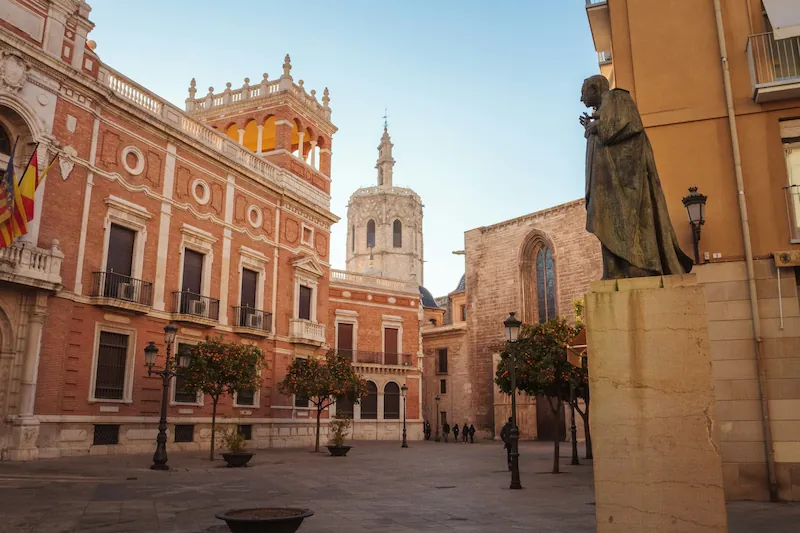
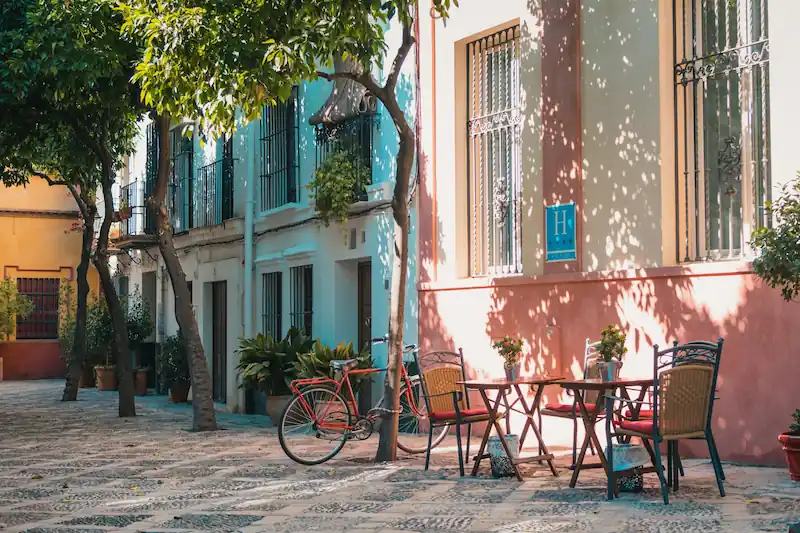
Ciutat Vella is the most efficient place to stay in Valencia for a first trip, but its subareas create different experiences. La Seu places you beside the Cathedral, La Almoina and Plaza de la Virgen; El Mercat suits the Central Market and La Lonja; El Carme is better for bars, street art and northern old-town atmosphere. The trade-offs are compact rooms, pedestrian streets, festival disruption and noise that can change within one block.
Why stay here: Stay here when two or three days need to feel immediately historic and walkable. It is strongest for first-time visitors, couples and culture-led weekends.
Best for: First-timers, short trips, culture-focused stays, couples, and travelers who want the most convenient central base.
Pros
Immediate walking access to the Cathedral, La Almoina, Central Market and La Lonja.
Best historic atmosphere early in the morning and after day visitors leave.
Strongest area for a two- or three-night first visit.
Broad selection of boutique hotels, guesthouses, apartments and palace stays.
Easy return to the hotel during summer afternoons.
Good access to El Carme, the Serranos side and Turia Garden.
Cons
Noise varies sharply around El Carme, plazas, restaurant streets and festival routes.
Historic buildings often have smaller rooms, interior windows and irregular lifts.
Taxi, luggage and parking access can be awkward in pedestrian streets.
Las Fallas and other events can make the most central addresses difficult to reach.
The beach and City of Arts and Sciences still require transport or cycling.
Nearby highlights
Valencia Cathedral, El Miguelete and La Almoina.
Central Market and La Lonja de la Seda.
San Nicolás and El Carme.
Serranos and Quart Towers.
Plaza de la Virgen, Plaza de la Reina and Plaza Redonda.
Ceramics Museum and central shopping streets.
Budget
Casual Vintage Valencia – A simple, central hotel close to Plaza del Ayuntamiento, useful for travelers who want location before extras. Why we recommend: One of the better-value central options when the old town matters more than hotel facilities. Check availability
Catalonia Excelsior – A practical central hotel between the town hall area and the old-town sights, with straightforward rooms and good walkability. Why we recommend: It works well for visitors who want a reliable central base without boutique pricing. Check availability
Hostal Antigua Morellana – A small guesthouse-style stay in the historic center, close to the market and cathedral streets. Why we recommend: A useful lower-cost option for travelers who want old-town proximity over full-service hotel amenities. Check availability
Mid
Room Mate Collection Helen Berger – A polished boutique-style hotel near the ceramics museum and the central historic walking routes. Why we recommend: It gives a more refined central stay without moving into full luxury pricing. Check availability
MYR Plaza Mercado & Spa – A central hotel beside the market area, especially convenient for travelers who want food and sightseeing close together. Why we recommend: Its position makes mornings in the historic core unusually easy. Check availability
The Valentia Cabillers – A suite-style hotel near the cathedral with larger rooms and a rooftop setting in the old town. Why we recommend: A strong choice when you want more space while staying inside the historic core. Check availability
Upscale
Caro Hotel – A high-end historic hotel set in a former palace close to the cathedral, with contemporary rooms inside heritage architecture. Why we recommend: One of the most distinctive luxury stays in the old town because the building itself adds depth to the stay. Check availability
Only YOU Hotel Valencia – A lively upscale hotel near Plaza del Ayuntamiento, with strong central access and a more social hotel atmosphere. Why we recommend: It suits travelers who want a premium central address without a quiet, formal mood. Check availability
MYR Palacio Vallier – A refined five-star hotel in the old town, close to key historic sights and central evening routes. Why we recommend: It is one of the best choices for travelers who want old-town atmosphere with a polished luxury standard. Check availability
Ruzafa
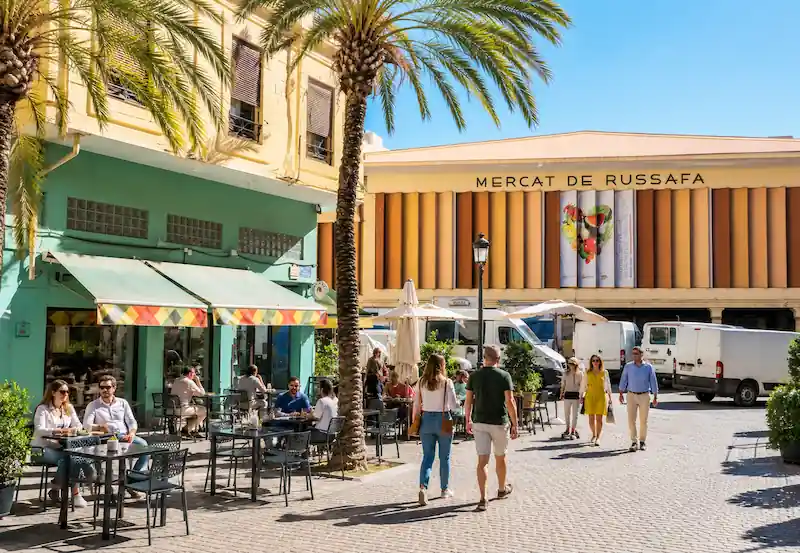
Ruzafa is the best base for travelers who want Valencia to feel social, food-led and residential rather than monument-first. The most useful streets sit around Ruzafa Market and the northern half of the district, preserving an easy walk to Eixample and Ciutat Vella. The farther south the address, the more the stay depends on buses, taxis or longer walks. Noise varies significantly between terrace streets and quieter residential blocks.
Why stay here: Stay in Ruzafa when evenings, restaurants and a repeatable neighborhood rhythm matter as much as immediate sightseeing. It is especially strong for couples, longer stays and return visits.
Best for: Food-focused travelers, nightlife without clubbing, repeat visitors, couples, digital nomads, and extended city stays.
Pros
Valencia’s strongest concentration of restaurants, cafés, bakeries and bars.
A lived-in neighborhood atmosphere within walking distance of the center.
Good apartment and boutique-hotel options for longer stays.
Easy access to Eixample, Estació del Nord and the town-hall side of Ciutat Vella.
Strong morning market and late-evening street life.
More local feeling than the main historic tourist streets.
Cons
Late-night noise varies sharply by exact street and room orientation.
The Cathedral and La Lonja are not directly outside the hotel.
The southern edge is less convenient than the northern part of the neighborhood.
Parking is difficult and beach transport is not especially direct.
Popular restaurants require reservations on busy evenings.
Nearby highlights
Ruzafa Market and neighborhood bakeries.
Restaurants, wine bars and casual nightlife.
Eixample and Colón shopping streets.
Estació del Nord and Joaquín Sorolla connections.
Short walk toward Plaza del Ayuntamiento.
Modernist streets and independent shops.
Budget
Russafa Youth Hostel – A simple, lower-cost stay near Ruzafa Market, best for travelers who want neighborhood access on a lean budget. Why we recommend: It keeps you in Ruzafa without paying central boutique rates. Check availability
ABCyou Bed&Breakfast – A modest guesthouse-style stay near the Ruzafa and Eixample edge, useful for independent travelers. Why we recommend: A good fit when you want character and walkability without a large-hotel format. Check availability
Zalamera BnB – A small guesthouse near the station side of central Valencia, practical for budget-conscious stays close to Ruzafa. Why we recommend: It gives better personality than many basic central options in this price band. Check availability
Mid
Petit Palace Ruzafa – A boutique-style hotel in Ruzafa with a strong location for dining, station access, and central walks. Why we recommend: One of the clearest mid-range choices for staying in the neighborhood itself. Check availability
Soho Valencia – An apartment-style stay close to Ruzafa and the station, suited to travelers who want more independence. Why we recommend: Its format works well for longer stays where space and self-sufficiency matter. Check availability
Senator Parque Central – A larger modern hotel south of Ruzafa, with spacious rooms and a more functional business-hotel feel. Why we recommend: A practical option when room size and value matter more than boutique character. Check availability
Upscale
YOURS boutique stay – A small adult-oriented boutique stay in Ruzafa with a calm design mood and neighborhood proximity. Why we recommend: It stands out for travelers who want Ruzafa’s energy but a softer, more intimate hotel base. Check availability
One Shot Puerta Ruzafa – A newer design-led hotel near Ruzafa and the station, with easy access to restaurants and central streets. Why we recommend: It gives Ruzafa a more polished hotel option without losing the neighborhood logic. Check availability
La Novieta Boutique Hotel – A small adults-only boutique hotel near the Ruzafa side of Valencia, with a more intimate design feel. Why we recommend: A good fit when you want a quieter boutique stay close to the city’s food-led southern edge. Check availability
Eixample
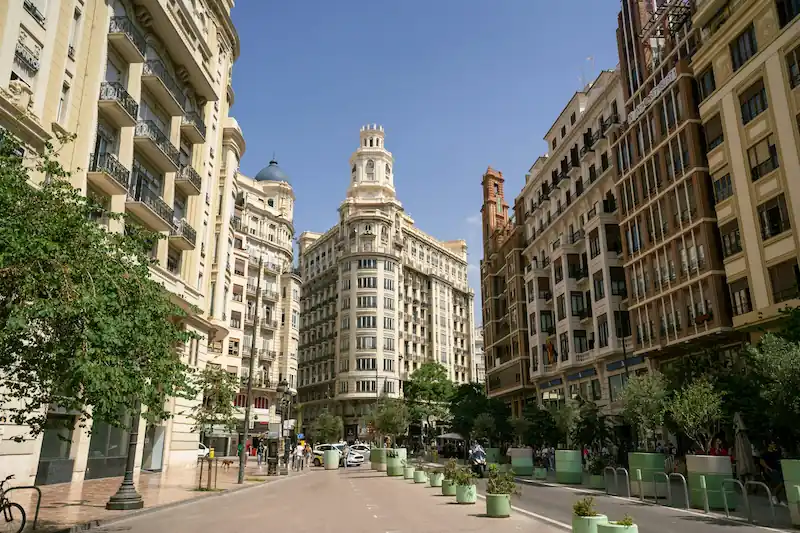
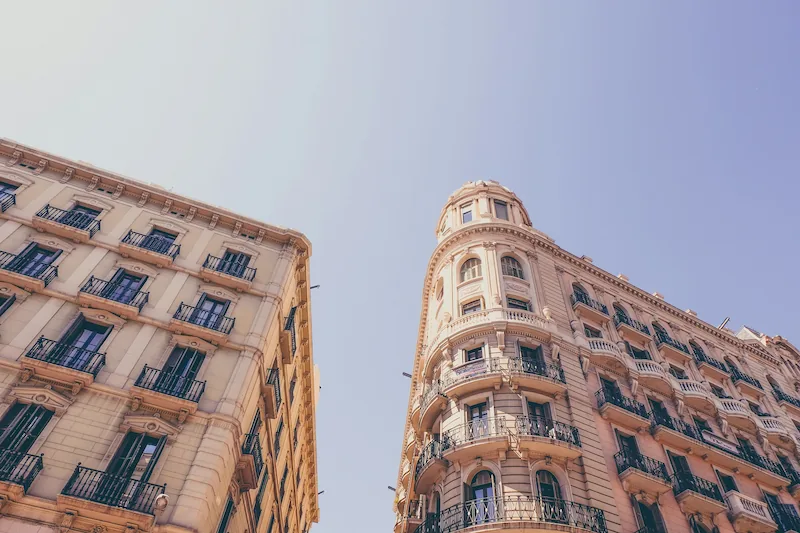
Eixample is Valencia’s strongest all-round central compromise, particularly around Colón, Gran Vía, Cánovas and the northern edge of Ruzafa. It offers broader streets, reliable hotels, shopping, restaurants and easy walking routes into both Ciutat Vella and Ruzafa. It feels less romantic than the old town, but the smoother taxi access, larger rooms and quieter side streets often improve a three- or four-night stay.
Why stay here: Stay here for central convenience without historic-center compression. It is particularly good for first-time couples, business-leisure trips, shopping and travelers arriving by train.
Best for: Comfort-focused travelers, couples, shoppers, business-leisure stays, and visitors who want a central but less chaotic base.
Pros
Best balance between Ciutat Vella, Ruzafa, Colón and the station area.
Broader streets and easier taxi or luggage access.
Strong mid-range and upscale hotel inventory.
Good restaurants, shopping and practical services.
Easy walk to Turia Garden and Alameda from the northern edge.
More predictable room standards than many old-town conversions.
Cons
Less historic atmosphere than Ciutat Vella.
Some avenues feel commercial or traffic-led.
Ruzafa-style neighborhood energy depends on the exact micro-location.
The coast still requires metro, tram, bus, taxi or bicycle.
Hotels around the station can feel more functional than elegant.
Nearby highlights
Colón Market and shopping district.
Ruzafa restaurants and market.
Estació del Nord and Joaquín Sorolla station.
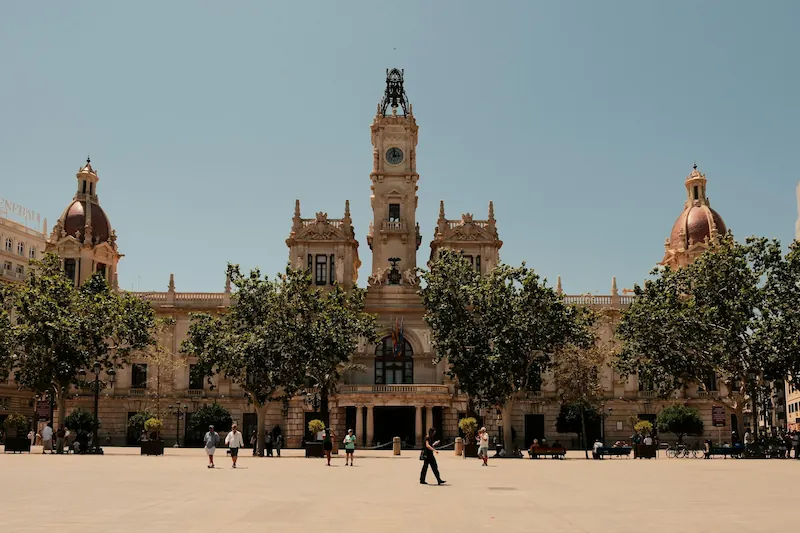
Plaza del Ayuntamiento and southern Ciutat Vella.
Cánovas dining and nightlife.
Turia Garden and Alameda from the eastern side.
Budget
Hotel Alkazar – A simple central hotel near the station and main shopping streets, best for travelers prioritizing location. Why we recommend: It offers a practical lower-cost base in an otherwise more expensive central zone. Check availability
Casual del Cine Valencia – A casual themed hotel near the town hall and Eixample edge, useful for short stays with central walking access. Why we recommend: It keeps costs controlled while staying close to both the station and historic center. Check availability
Hotel Europa – A basic hotel near central Valencia’s station and main access points, suited to budget-focused travelers. Why we recommend: A functional option when the priority is transport and centrality over design. Check availability
Mid
Vincci Lys – A well-located hotel on a quiet pedestrian street near the station, shopping routes, and the old-town edge. Why we recommend: It is unusually practical for travelers who want central access without being in the noisiest streets. Check availability
Hotel Dimar – A modern hotel near the Eixample and Turia side, useful for travelers balancing center, park, and restaurants. Why we recommend: It offers a sensible base when you want quieter central movement and good room standards. Check availability
AC Hotel Colón Valencia by Marriott – A modern hotel near Colón and the station area, with a business-friendly layout and strong central access. Why we recommend: It works well for travelers who value reliable standards and transport convenience. Check availability
Upscale
Hospes Palau de La Mar – A refined hotel in a 19th-century building near the Eixample and Turia edge, with spa facilities and a calm central position. Why we recommend: It is one of the best upscale choices for comfort without old-town compression. Check availability
NH Collection Colón Valencia – A polished central hotel near Colón, shopping streets, and the Eixample dining grid. Why we recommend: A strong fit for travelers who want upscale reliability in a highly practical location. Check availability
Palacio Santa Clara, Autograph Collection – An upscale design hotel near the central station and Eixample edge, with a more styled city-break mood. Why we recommend: It gives the central stay stronger design character than most standard business hotels nearby. Check availability
El Cabanyal and Malvarrosa
El Cabanyal and Malvarrosa form Valencia’s most useful coastal base, but the exact location matters. Cabanyal provides tiled streets, a market, restaurants and tram access; Las Arenas sits closest to the Marina and seafront hotels; Malvarrosa offers the broad urban beach; Patacona extends the promenade into Alboraya with a more residential feel. This is a lifestyle choice rather than the most efficient base for a short cultural visit.
Why stay here: Stay here when the beach, Marina, coastal food and outdoor routine should shape most days. It is strongest for summer, families, longer stays and repeat visits.
Best for: Beach stays, families, summer trips, longer stays, seafood-focused travelers, and visitors who want the Mediterranean side of Valencia daily.
Pros
Best access to Cabanyal, the Marina, Las Arenas, Malvarrosa and Patacona.
Daily beach walks, cycling and sea air without cross-city transfers.
Strong seafood and rice-restaurant options.
Good fit for families, summer trips and longer apartment stays.
Cabanyal provides neighborhood identity beyond the promenade.
Tram, bus and cycling routes connect the coast with central Valencia.
Cons
Less efficient for a two- or three-night first cultural visit.
The Cathedral and Central Market require planned transport.
Hotel quality and neighborhood atmosphere vary between Cabanyal, promenade and Patacona.
Beachfront streets can be seasonal, windy or noisy.
Patacona is attractive but belongs to Alboraya and sits farther from central attractions.
Nearby highlights
Cabanyal Market and tiled residential streets.
Valencia Marina and water activities.
Las Arenas and Malvarrosa beaches.
Patacona promenade and Alboraya edge.
Seafood, rice and esmorzaret stops.
Cycling route toward Turia Garden and the City of Arts.
Budget
Sol Playa – A simple beachfront hotel near Las Arenas, best for travelers who want sea access at controlled cost. Why we recommend: It keeps the stay focused on location rather than unnecessary extras. Check availability
Hotel Miramar Valencia – A modest seafront hotel on the promenade, practical for beach-first trips and short coastal stays. Why we recommend: A useful lower-cost beach option when central sightseeing is secondary. Check availability
Banana Beach Patacona Rooms – A simple coastal stay near Patacona, suited to travelers who want beach proximity beyond the central seafront. Why we recommend: It works for a relaxed beach-led stay without paying full beachfront boutique pricing. Check availability
Mid
Hotel Boutique Balandret – A beachfront boutique hotel on Las Arenas with bright rooms and immediate promenade access. Why we recommend: One of the best mid-range choices when the beach is genuinely central to the trip. Check availability
Hotel Boutique Sabbia Valencia – A design-minded beach hotel close to the promenade and port-side movement. Why we recommend: It adds more personality than many functional seafront hotels nearby. Check availability
El Coso – A seafront hotel by Las Arenas, useful for travelers who want beach and restaurant access together. Why we recommend: Its position makes coastal evenings easy without needing to move inland. Check availability
Upscale
Las Arenas Balneario Resort – A five-star beachfront resort with pools, spa facilities, and direct access to the seafront. Why we recommend: The strongest luxury choice in Valencia when beach comfort matters more than old-town proximity. Check availability
Hotel Neptuno – An upscale beachside hotel near the marina and Las Arenas promenade, with a more adult city-beach feel. Why we recommend: A good fit for travelers who want the seafront without choosing a full resort format. Check availability
Valencia Playa Patacona Resort – Apartment-style coastal accommodation near Patacona, useful for longer stays needing space and beach access. Why we recommend: It suits families or extended stays better than a standard hotel room. Check availability
Turia Gardens and Alameda
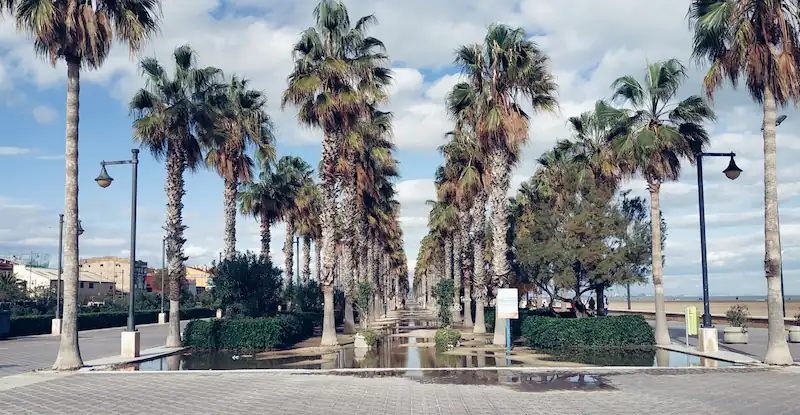
Turia Gardens and Alameda cover a broad green central edge rather than one tightly defined neighborhood. The western side reaches Viveros, Monforte Gardens, Fine Arts and the historic center; the eastern side connects Palau de la Música, Mestalla, Gulliver Park and the City of Arts. The area is ideal for families and active travelers, but the exact address determines whether the stay feels central, residential or event-oriented.
Why stay here: Stay here for quiet, park access and easy movement across the city. It works particularly well for families, runners, cyclists, longer stays and visitors attending events around Mestalla or Alameda.
Best for: Families, longer stays, runners, cyclists, calm central trips, and travelers who want park access.
Pros
Direct access to Valencia’s main green route.
Quieter nights and broader streets than much of Ciutat Vella.
Strong position between historic, residential and modern Valencia.
Excellent for running, cycling, playgrounds and family breaks.
Useful access to Fine Arts, Viveros, Monforte, Mestalla and Palau de la Música.
Good hotel and apartment formats for stays beyond a weekend.
Cons
The label covers several micro-locations with different walking times.
Restaurant density varies significantly by block.
Some hotels feel between neighborhoods rather than inside one.
Beach access is easier from the eastern side than the western side.
Mestalla events can affect noise, traffic and availability.
Nearby highlights
Turia Garden walking and cycling routes.
Fine Arts Museum, Viveros and Monforte Gardens.
Palau de la Música and Gulliver Park.
Mestalla Stadium and Alameda avenues.
Easy routes toward Ciutat Vella or City of Arts.
Cabecera Park reachable along the western Turia route.
Budget
Sweet Hotel Renasa – A practical hotel near university and park-side areas, better for value and access than atmosphere. Why we recommend: It suits budget-conscious travelers who want a quieter stay near the Turia side. Check availability
Hi Valencia Cánovas – A simple guesthouse-style option near the Cánovas and Alameda side of central Valencia. Why we recommend: A lean choice when you want central access without paying for full hotel services. Check availability
Olympia Consul del Mar – A straightforward hotel between Alameda and the port-facing side of the city, with practical access to the Turia. Why we recommend: It can work well when rates in the historic core are inflated. Check availability
Mid
Ramirez Flats Valencia – Apartment-style accommodation near the Turia Gardens, suited to families and longer stays needing more space. Why we recommend: One of the best formats in this area for travelers staying beyond a quick weekend. Check availability
MD Design Hotel Portal del Real – A small hotel near the northern old-town and Turia edge, useful for travelers balancing center and park access. Why we recommend: It offers a more intimate stay than the larger hotels near Alameda. Check availability
Hotel Olympia Universidades – Modern hotel near the northern Turia and university side, with metro access and a practical residential setting. Why we recommend: A sensible mid-range option for visitors prioritizing transport, value and quieter nights over old-town atmosphere. Check availability
Upscale
The Westin Valencia – A grand upscale hotel near the Alameda and Turia side, with larger public spaces and a calmer luxury feel. Why we recommend: A strong choice when you want comfort, space, and park access rather than old-town density. Check availability
MYR Puerta Serranos – An upscale hotel near the northern old-town edge and the Turia, well placed for both historic streets and park access. Why we recommend: It is ideal when you want heritage proximity without being buried in the old-town core. Check availability
SH Valencia Palace – Large upscale hotel opposite Palau de la Música and directly beside Turia Garden, with spacious rooms and strong park access. Why we recommend: One of the clearest full-service choices for travelers who want Alameda, Turia and central Valencia in the same stay. Check availability
City of Arts and Sciences
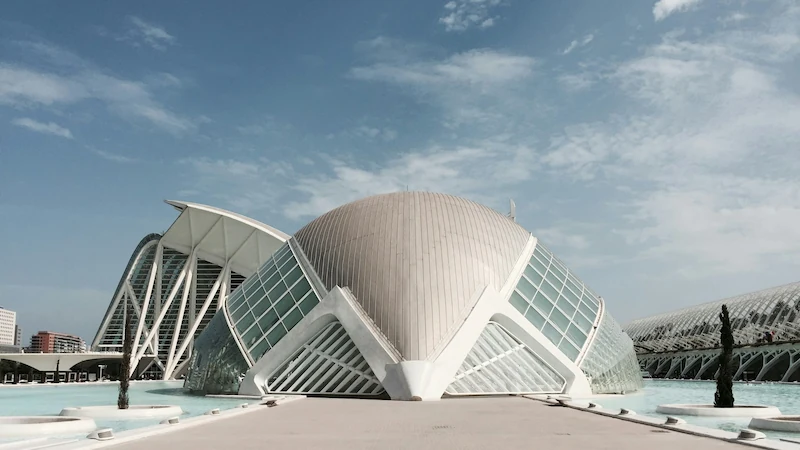
The City of Arts and Sciences area is a modern accommodation zone around Quatre Carreres, Penya-roja and the eastern Turia. It works for Oceanogràfic, the Science Museum, Hemisfèric, CaixaForum, conferences, shopping and family logistics. Hotels are often larger and easier for cars, but the area lacks the spontaneous restaurants and historic streets that make central Valencia rewarding after dark.
Why stay here: Stay here when the modern complex, family attractions, events, parking or a position between the center and coast are the main priorities. It is a base that works best for a specific type of trip rather than the default first-time choice.
Best for: Families, aquarium visits, modern hotel comfort, conference stays, and travelers splitting time between center and beach.
Pros
Immediate access to Oceanogràfic, museums and modern architecture.
Larger rooms, family facilities and predictable chain-hotel standards.
Useful position between central Valencia and the coast.
Good access to Turia Garden, Gulliver Park, Aqua and El Saler shopping areas.
Easier parking and road access than the historic center.
Strong for conferences, business travel and event-led stays.
Cons
Less atmospheric and less neighborhood-led than Ciutat Vella or Ruzafa.
The historic center requires transport or a long walk.
Large roads and open spaces can feel exposed in summer.
Dining quality is more dependent on the exact hotel and nearby complex.
A beach-first visitor may still prefer Cabanyal or Las Arenas.
Nearby highlights
Oceanogràfic, Science Museum and Hemisfèric.
CaixaForum and Palau de les Arts.
Turia Garden and Gulliver Park.
Aqua and El Saler shopping and dining.
Easy road access toward the coast.
Fallas Museum and Quatre Carreres.
Budget
NH Valencia Las Ciencias – A practical hotel close to the City of Arts and Sciences, suitable for short family or museum-focused stays. Why we recommend: It keeps you near the main modern attractions without paying for upscale facilities. Check availability
Holiday Inn Express Ciudad de las Ciencias by IHG – A functional chain hotel near the cultural complex, useful for families and straightforward overnight stays. Why we recommend: A reliable budget-to-mid option when convenience matters more than local atmosphere. Check availability
Hotel Malcom and Barret – A value-conscious hotel south of the center with access toward the City of Arts and Sciences area. Why we recommend: It is useful when you want better rates and do not need to sleep in the historic core. Check availability
Mid
Ilunion Aqua 4 – A modern hotel beside the Aqua complex and close to the City of Arts and Sciences. Why we recommend: One of the most convenient mid-range choices for museum and aquarium access. Check availability
Primus Valencia – A modern hotel near the City of Arts and Sciences with spa facilities and a practical layout. Why we recommend: A good fit when you want comfort and facilities in the modern eastern part of the city. Check availability
INNSiDE by Meliá Valencia Oceanic – A contemporary hotel near Oceanogràfic and the City of Arts and Sciences, suited to families and business-leisure stays. Why we recommend: It offers a stronger modern-hotel feel than many functional options nearby. Check availability
Upscale
Barceló Valencia – An upscale hotel close to the City of Arts and Sciences, with modern rooms and a rooftop setting. Why we recommend: It is one of the best polished options for staying near the cultural complex. Check availability
Sercotel Valencia Alameda 41 – A contemporary hotel beside the City of Arts and Sciences and Turia-side movement. Why we recommend: It gives the area a more boutique-feeling option with excellent location logic. Check availability
Valenciaflats Ciudad de las Ciencias – Apartment-style accommodation close to the cultural complex, useful for families and longer stays. Why we recommend: It stands out when space and self-catering matter more than full hotel services. Check availability
Where to stay in Valencia for the first time
First-time visitors should prioritize a base that keeps the historic center easy while preserving access to Ruzafa, Turia and one coastal outing. Ciutat Vella and Eixample are the safest choices; Ruzafa works when evenings and food deliberately take priority.
Choose Ciutat Vella for a two-night visit or maximum historic atmosphere.
Choose Eixample for the best balance of old-town walking, hotel comfort, station access and Ruzafa evenings.
Choose Ruzafa when restaurants and nightlife are as important as monuments.
Choose Turia and Alameda when traveling with children or valuing green space over doorstep atmosphere.
Use the City of Arts area only when Oceanogràfic, events or modern family logistics dominate the itinerary.
Avoid Cabanyal, Malvarrosa, Patacona, Benimaclet and outer districts for a very short first cultural trip unless their specific lifestyle is the purpose.
TravelerType
BestArea
Why
2-night first visit
Ciutat Vella
Maximum historic access and minimal sightseeing complication.
3-day balanced trip
Eixample or Ciutat Vella
Both preserve the essentials while keeping Ruzafa and Turia accessible.
Food-focused first trip
Ruzafa
The strongest restaurant and evening rhythm within walking distance of the center.
Family first trip
Turia Gardens or City of Arts
Parks, larger hotels and major child-friendly attractions.
Where to stay in Valencia with family
Families should prioritize room size, air conditioning, lifts, park or beach access and simple midday returns. Valencia is highly family-friendly, but the best base depends on whether the trip centers on historic sightseeing, Oceanogràfic, Bioparc or the coast.
Choose Turia Gardens and Alameda for parks, cycling, playgrounds and balanced central access.
Choose the City of Arts and Sciences for Oceanogràfic, Science Museum and modern family hotels.
Choose El Cabanyal and Malvarrosa for summer stays built around the beach.
Consider the western Turia or Cabecera Park side when Bioparc is a major priority.
Choose Eixample for a central family trip with larger rooms and easier taxis than Ciutat Vella.
Use Ciutat Vella only when the hotel confirms lift access, soundproofing and a practical family-room layout.
Patacona can suit longer apartment stays, while El Saler works only for a deliberately quiet beach or resort-style trip.
FamilyNeed
BestArea
WatchOutFor
Best central balance
Turia Gardens and Alameda
The exact address may sit farther from restaurants.
Oceanogràfic and museums
City of Arts and Sciences
Less atmosphere after dark.
Beach routine
El Cabanyal and Malvarrosa
Old-town sightseeing requires transport.
Central comfort
Eixample
Less immediate family open space.
Bioparc and western parks
Cabecera or western Turia
Weaker first-time evening atmosphere.
Where to stay in Valencia for nightlife and restaurants
Ruzafa is the strongest all-round nightlife and restaurant base, while El Carme suits bars and old-town atmosphere and Cánovas offers a more polished dining-and-drinks scene. The coast works for summer evenings, but it is less convenient after central nightlife.
Choose Ruzafa for restaurants, cocktails, wine bars, cafés and late neighborhood energy.
Choose Ciutat Vella, particularly El Carme, for bars and atmospheric old-town evenings, accepting greater noise risk.
Choose Eixample around Cánovas for polished restaurants and drinks with easier hotel comfort.
Choose Cabanyal and the Marina for warm-weather evenings, cultural venues and coastal bars.
Benimaclet offers a younger, alternative and student-led nightlife scene but is better for repeat visitors or longer stays.
Mestalla and Aragón suit football or event-led evenings rather than classic tourist nightlife.
Request an interior or higher-floor room near Ruzafa, El Carme, Cánovas and the Marina.
EveningStyle
BestArea
TradeOff
Restaurants and bars
Ruzafa
Noise varies by exact street.
Old-town atmosphere
Ciutat Vella / El Carme
Tourist pressure and late bar noise.
Polished dining and drinks
Eixample / Cánovas
Less neighborhood character.
Coastal evening
Cabanyal and Marina
Transport after central nights.
Where to stay in Valencia on a budget
The best-value Valencia stay combines rate, transport and room quality. Ruzafa, southern Eixample, selected Turia addresses and modern outer hotels can outperform a poor old-town bargain, especially outside Las Fallas.
Look around Ruzafa, Joaquín Sorolla and southern Eixample for walkable value.
Use simple Ciutat Vella hotels only when recent reviews confirm room condition, lift access and noise.
Consider City of Arts hotels when central prices rise and family space matters.
Mestalla, Aragón and university-side hotels can provide metro access and modern value.
Benimaclet suits younger travelers and longer stays seeking local bars and tram or metro links.
Cabanyal can offer neighborhood value away from the seafront, while beachfront hotels become expensive in summer.
Patacona apartments work for longer beach stays but add distance from the center.
Avoid remote savings if repeated taxis or transfers erase the difference.
Budget strategy
Best area
Trade Off
Central sightseeing value
Ciutat Vella or Eixample edge
Smaller rooms and noise risk.
Restaurants and walkability
Ruzafa
Late-night street noise.
Modern room value
City of Arts, Mestalla or Aragón
Less historic atmosphere.
Beach apartment value
Cabanyal or Patacona
Longer transport to Ciutat Vella.
Alternative local stay
Benimaclet
Not ideal for a short first visit.
Where to stay depending on your Valencia trip length
The shorter the trip, the more valuable Ciutat Vella or Eixample becomes. Longer stays make Ruzafa, Turia and the coast more attractive, while Patacona, Benimaclet, Mestalla, Cabecera and El Saler should be chosen for a specific reason.
Label
Stay
Avoid
Why
1–2 nights
Ciutat Vella
Beach districts, Benimaclet and outer modern zones
Immediate historic access protects a very short visit.
3 days
Ciutat Vella or Eixample
A base requiring repeated center transfers
Both preserve the core while allowing Ruzafa, Turia and one coastal outing.
4–5 days
Ruzafa, Eixample or Turia Gardens
Paying only for landmark proximity
Restaurants, room comfort and neighborhood rhythm become more important.
1 week
Ruzafa, Turia, Cabanyal or Patacona
Tiny old-town rooms without practical facilities
Longer stays benefit from space, laundry, green access and repeatable local routines.
Family trip
Turia, City of Arts, Eixample or Cabanyal
Noisy pedestrian streets and inaccessible historic hotels
Space, parks, lifts, transport and midday returns matter most.
Beach-led trip
Cabanyal, Las Arenas, Malvarrosa or Patacona
A central hotel with daily coast transfers
Staying by the sea changes the trip from occasional beach time to a coastal routine.
Nightlife and food
Ruzafa, El Carme or Cánovas
Booking directly over late bars if sleep matters
These areas offer distinct evening styles with different noise levels.
Luxury or romantic stay
Ciutat Vella, Eixample or Las Arenas
Comparing hotels without comparing their setting
Historic palace, polished city and beachfront luxury create very different trips.
Early train departure
Eixample, Ruzafa edge or Joaquín Sorolla
Deep pedestrian old-town streets with heavy luggage
Station logistics can justify a more practical final night.
Football or business trip
Mestalla, Aragón, Alameda or City of Arts
Choosing atmosphere far from the venue
Metro, road access and event proximity can matter more than old-town walking.
Las Fallas trip
Ciutat Vella, Eixample or Ruzafa according to festival priorities
Booking without checking monument sites, closures and noise
The festival transforms access and nighttime conditions across central Valencia.
Return visit
Ruzafa, Cabanyal, Benimaclet, Patacona or Turia
Repeating Ciutat Vella automatically
A second stay benefits from stronger neighborhood identity or a coastal rhythm.
How to choose the right hotel in Valencia
After choosing the area, evaluate the exact street, building and room category. Valencia’s old-town hotels, Ruzafa guesthouses, modern family hotels and beachfront properties solve different problems, and the wrong micro-location can add noise, heat or transport complication.
Topic
WhatToDo
WhatToAvoid
WhyItMatters
Exact micro-location
Map the hotel against your main sights, evening streets, transit and midday return route.
Relying only on broad labels such as Ciutat Vella, Ruzafa or beach.
A few blocks can change noise, transport and walking time.
Noise and room orientation
Request an interior, higher-floor or courtyard-facing room near El Carme, Ruzafa, Cánovas and the coast.
Booking only for a balcony or plaza view.
Restaurant and bar streets can remain active late.
Air conditioning and summer comfort
Confirm effective air conditioning, blackout curtains and an easy midday return.
Choosing décor over climate control.
Heat changes the value of both the room and location.
Historic-building access
Check lift coverage, stairs, windows, room size and taxi drop-off.
Assuming a renovated old-town hotel is fully accessible or spacious.
Historic buildings often have irregular layouts.
Beach and tram access
Check the walk to the sand, Marina and nearest tram or bus stop.
Assuming every Cabanyal or Malvarrosa address is directly beachfront.
The coastal zone extends across several distinct micro-locations.
Family room configuration
Confirm real bed types, connecting rooms, kitchens, lifts and pool rules.
Assuming a family room is substantially larger than a standard room.
Apartment-style formats may outperform hotels for longer stays.
Parking and rental cars
Choose Eixample, City of Arts, Mestalla or a property with confirmed parking.
Driving into Ciutat Vella without a parking and access plan.
A car adds little value during central sightseeing.
Las Fallas conditions
Check monument locations, mascletà routes, street closures and late-night noise.
Treating March festival dates like a normal spring weekend.
The most central location can become the most disrupted.
Train logistics
Check access to Estació del Nord and Joaquín Sorolla when using early trains.
Choosing a pedestrian old-town address without planning luggage transport.
The two main stations serve different rail patterns.
Pool and beach expectations
Verify pool size, seasonal opening, shade and actual distance to the beach.
Assuming every rooftop pool or coastal hotel provides resort-style facilities.
Many city pools are small and some coastal hotels sit behind the promenade.
Short-stay value
Pay for Ciutat Vella or Eixample when staying only two or three nights.
Saving slightly on a distant address that adds repeated transport.
Location has its highest value on the shortest trips.
Long-stay comfort
Consider Ruzafa, Turia, Cabanyal, Patacona or an apartment with laundry.
Spending a week in a compact landmark-zone room.
Longer stays benefit from services, space and neighborhood routines.
FAQ: where to stay in Valencia
These answers cover the main accommodation decisions in Valencia, including first visits, families, beaches, nightlife, budget, Las Fallas, trains, parking and areas best suited to particular needs.
What is the best area to stay in Valencia for first-time visitors?
Ciutat Vella is best for immediate historic access, while Eixample is the strongest all-round alternative for broader streets, polished hotels and easy walking to both the old town and Ruzafa.
Where should you stay in Valencia for 2 nights?
Stay in Ciutat Vella. With only two nights, proximity to the Cathedral, Central Market, La Lonja and the main plazas matters more than beach access or neighborhood space.
Where should you stay in Valencia for 3 days?
Choose Ciutat Vella or Eixample for the easiest first trip. Ruzafa works when restaurants and nightlife deliberately matter as much as historic sightseeing.
Is it better to stay in Ciutat Vella or Eixample?
Choose Ciutat Vella for historic atmosphere and maximum sightseeing access. Choose Eixample for larger hotels, easier taxis, shopping and a balanced position between the old town, Ruzafa and station.
Is Ruzafa a good area to stay in Valencia?
Yes. Ruzafa is one of Valencia’s best areas for restaurants, cafés, bars and longer stays while remaining walkable to the center. The exact street matters because late-night noise varies.
Is El Cabanyal a good place to stay?
Yes for a beach-led or longer trip. Cabanyal provides more neighborhood character, food and tram access than a promenade-only stay, but it is less efficient for a short historic visit.
Should you stay in Malvarrosa or Las Arenas?
Las Arenas is closer to the Marina, restaurants and major beachfront hotels. Malvarrosa offers a broader urban beach and a more open promenade. Both require transport to the historic center.
Is Patacona a good place to stay?
Patacona suits longer beach stays, apartments, families and travelers seeking a more residential promenade. It lies in Alboraya and is farther from central Valencia than Cabanyal or Las Arenas.
Where should families stay in Valencia?
Turia Gardens and Alameda offer the best balance of parks and central access. The City of Arts area is strongest for Oceanogràfic and modern hotels, while Cabanyal and Malvarrosa suit beach-focused summer trips.
Where should couples stay in Valencia?
Ciutat Vella suits romantic historic stays, Ruzafa suits food-led evenings, Eixample offers polished comfort, and Las Arenas works for a beachfront escape.
Where should you stay in Valencia for nightlife?
Ruzafa is best for restaurants and bars, El Carme for old-town nightlife and Cánovas for a more polished evening scene. Request a quiet room orientation in all three.
Where should you stay in Valencia on a budget?
Look at Ruzafa, southern Eixample, station-side addresses, selected Turia hotels and modern properties near Mestalla or the City of Arts. Cabanyal can offer coastal value away from the beachfront.
What is the safest area to stay in Valencia?
Most established visitor areas are generally comfortable. Exact street lighting, nighttime activity, transport and recent reviews matter more than choosing one supposedly safest district.
Where should you stay in Valencia without a car?
Ciutat Vella, Eixample, Ruzafa, Turia and Alameda all work well without a car. The City of Arts and coastal districts are also connected by public transport and cycling routes.
Where should you stay in Valencia with a car?
Eixample, Mestalla, the City of Arts or hotels with confirmed parking are easier than Ciutat Vella. Leave the car parked during central sightseeing.
Where should you stay near the City of Arts and Sciences?
Stay in the City of Arts area for Oceanogràfic, museums, family hotels and events. Turia or Alameda offer more central atmosphere while preserving a direct park or taxi route.
Where should you stay near Oceanogràfic?
The City of Arts and Sciences area is the most convenient. Families can also consider Turia-side apartments or Cabanyal when combining the aquarium with the beach.
Where should you stay near Valencia’s train stations?
Eixample and the northern edge of Ruzafa work well for Estació del Nord and Joaquín Sorolla. The station district itself is practical for early trains but less atmospheric.
Is Mestalla a good area to stay in Valencia?
Mestalla and Aragón suit football, business, metro access and modern hotels. They are practical rather than historic and work better for specific events or longer stays than a first weekend.
Is Benimaclet a good area to stay in Valencia?
Benimaclet suits students, younger travelers and repeat visitors seeking an alternative local atmosphere with metro and tram access. It is not the easiest base for a short first sightseeing trip.
Where should you stay during Las Fallas?
Ciutat Vella, Eixample and Ruzafa maximize festival access but can be extremely noisy and difficult for taxis. Book very early and study monument sites, street closures and room orientation.
Where should you stay in Valencia in summer?
Choose Cabanyal, Malvarrosa or Patacona for a beach-led stay. For a culture-first trip, Eixample or Turia offers central access with easier midday returns and reliable air conditioning.
Is it worth paying more to stay central in Valencia?
Yes for a two- or three-night trip. Ciutat Vella or Eixample reduces transport and makes midday returns easier. On longer stays, room space and neighborhood quality can justify moving outward.
Are hotels or apartments better in Valencia?
Hotels suit short stays and daily service, while apartments are often better for families and longer trips in Ruzafa, Turia, Cabanyal or Patacona. Check legal registration, air conditioning and lift access.
Where should you stay for a quiet trip to Valencia?
Turia Gardens, Alameda and selected Eixample streets offer the best central calm. Patacona and El Saler suit quieter coastal stays but add distance from the historic center.
Where should luxury travelers stay in Valencia?
Ciutat Vella offers palace and heritage luxury, Eixample provides polished city hotels and Las Arenas delivers beachfront resort comfort.
Where should you stay for a return visit to Valencia?
Ruzafa, Cabanyal, Patacona, Benimaclet or Turia provide a stronger neighborhood or coastal perspective than repeating the historic core automatically.
Is El Saler a good place to stay?
El Saler suits nature, golf, quiet beaches and Albufera access. It is not a practical substitute for central Valencia unless the trip is intentionally resort- or landscape-led.
Where should digital nomads stay in Valencia?
Ruzafa is strongest for cafés, food and central access; Eixample offers polished comfort; Benimaclet provides a younger local atmosphere; Cabanyal and Patacona suit longer coastal routines.
Which Valencia area has the best public transport?
Eixample and central Valencia offer the broadest combination of metro, buses, rail and walking. Aragón and Mestalla provide strong metro access, while the coast relies more on tram and bus connections.
The best Valencia base is the one that supports your daily rhythm between the historic center, Turia, modern district and coast.
Continue planning your valencia trip
Use the Valencia city guide to understand how the historic center, Ruzafa, Turia, modern district and coast connect, then match the area to the activities and trip length you have chosen.
Turn the right neighborhood into the right itinerary
Once you know where to stay in Valencia, the next step is structuring the rest of your trip around that base. Use the planner to build a route that fits your pace, priorities, and how you actually want your days to unfold.